Category: News

Editorial: As Indiana reaches the national championship game, Hoosiers have a moment
We’ve heard from some Chicagoland Hoosiers who often feel ignored by local media, even though northern Illinois is teeming with graduates of Indiana University, not to mention families with students who go to college in the other Bloomington, the one in Indiana.
Monday night offers a chance for some rich Indiana revenge. And, no, the future plans of the Chicago Bears are not involved.
Not only are the Indiana University Hoosiers playing for a national championship — they’ve gotten to this point with dominating style.
Perhaps we shouldn’t be surprised at where IU sits right now. It seems like forever ago, but recall that Illinois and Indiana faced off in September in what was billed as a clash of Big Ten teams not named Michigan or Ohio State that had legitimate Bowl Championship Series aspirations. In fact, Illinois came into the game ranked ninth at the time while Indiana was ranked 19th (as crazy as that sounds now). If anything, IU’s performance was more dominating than the 63-10 score indicated; that’s how one-sided that “clash” was.
“We broke their will and just pounded them,” Indiana coach Curt Cignetti said after the game. No niceties with this guy. No false modesty — “That’s a great team over there; just wasn’t their day.” Just pounded them.
Indiana has been breaking a lot of teams’ will ever since. Cignetti has become an unlikely super-coach, scowling on the sidelines no matter how much his team is overwhelming an opponent. We now know, thanks to a Wall Street Journal profile, that Cignetti eats exactly the same burrito bowl from Chipotle every single day, other than when he’s traveling with the team.
The guy is so maniacal he can’t be bothered to think about lunch options.
Then there’s quarterback Fernando Mendoza, who’s played the position so well that he easily won the Heisman Trophy and surely will be the first signal caller picked in the upcoming NFL draft. His younger brother Alberto, currently the Hoosiers’ backup QB, wants to vie for the Hoosiers’ starting job next season. Who bets against him? And who doesn’t love a heartwarming family story, as Fernando lauds his mother Elsa, who’s battling multiple sclerosis, as “my light, my inspiration”?
So, even if their governor is working to force Bears fans to travel to his state to watch their team play in a new domed stadium, our neighbors to the east will get our support tonight against the University of Miami Hurricanes.
Chicago is the unofficial capital of the Midwest, after all, and the home of the Big Ten. So as strange as it might feel, today we say: Go Hoosiers!
Submit a letter, of no more than 400 words, to the editor here or email letters@chicagotribune.com.
Extortion trial to provide window into the world of an alleged Chicago con man
Sometimes he introduced himself as the son of infamous Colombian drug lord Pablo Escobar, or claimed to be a made man in the mafia, federal prosecutors say.
To many, he seemed like a charming and successful businessman, someone who could walk into any high-end steakhouse in downtown Chicago and know everybody who was anybody. He wined and dined sophisticated women, palled around with Chicago cops, and told people he had a vast portfolio of businesses, real estate and restaurants, according to prosecutors.
But in reality, prosecutors say, Jawad Fakroune is a convicted con man who used fake identities, false promises and, at times, threats and violence to further his criminal schemes and lead a lavish lifestyle.
The facade began to crumble in spectacular fashion in November 2024, when Fakroune allegedly beat up a well-known Chicago-area restaurateur over a purported $1.5 million debt and threatened to kill him and his family, according to court records.
Fakroune, suspecting that the FBI was onto him, left the Chicago area after the incident, prosecutors say. But three weeks later, authorities knocked on the door of the New York apartment where Fakroune was staying and he fled nearly naked out a back door as two female acquaintances watched in shock, prosecutors alleged.
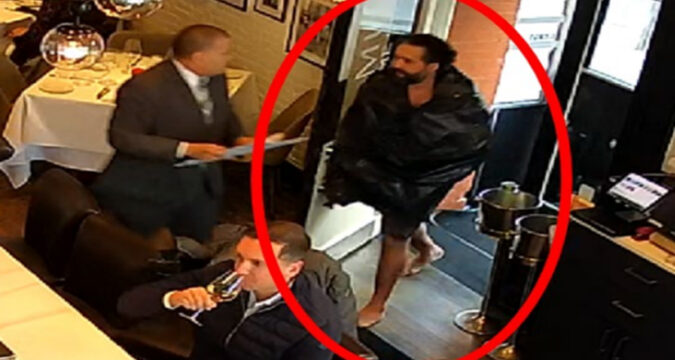
A surveillance image allegedly captured Jawad Fakroune, left, threatening and then beating a Chicago restaurateur on Nov. 25, 2024, over repayment of a $120,000 loan. Fakroune was charged with extortion and flight to avoid prosecution. The image contains areas reacted in the court filing. (U.S. attorney’s office)
He ran shoeless down the chilly streets of Manhattan for nearly a mile with nothing but a black plastic bag over his head before entering a high-end Italian restaurant, claiming he’d been robbed — an incident that was captured on surveillance footage, according to court records.
Now, Fakroune, 47, a Moroccan national also known as Angelino Escobar, Giovanni Costello and a host of other aliases, is going on trial in Chicago on extortion charges relating to the beating at Yours Truly, a now-defunct martini and oyster bar on North Wells Street in River North.
He’s also charged with fraud and tax evasion in a separate indictment alleging he bilked millions from investors who’d been promised handsome returns on various ventures, including a marijuana-growing operation, coffee shops and a Mexican restaurant, court records show.
The trial is expected to offer a fascinating window into Fakroune’s alleged life of crime and the people he encountered, from well-known Chicago restaurateurs to sports figures and a former aide to Gov. JB Pritzker.
But it’s unclear how much detail will be presented to the jury. No witness list has been publicly posted for either side, and U.S. District Judge Manish Shah last week reversed his prior ruling and said evidence of Fakroune’s seminaked escape in New York cannot be used by prosecutors to show consciousness of guilt. There will also be no mention to the jury of Fakroune’s other pending fraud case.
Fakroune’s attorney, Damon Cheronis, has said in court filings that much of the case will come down to a simple legal question of whether the money Fakroune was allegedly trying to collect on the day of the beating was in fact an extension of credit — which is a required element to prove collection of a debt by extortionate means — rather than just a business deal gone bad.
Cheronis is also expected to attack the credibility of the government’s star witness, restaurateur Adolfo Garcia, who is known for a string of popular eateries and bars from downtown Chicago to Lincoln Park and the North Shore.
A subpoena obtained by the Tribune through an open-records request showed Cheronis sought liquor license and ownership records for a total of eight restaurants associated with Garcia between 2020 and 2025.
Garcia was not seriously injured in the attack, which was captured on surveillance video as well as in an audio recording by Garcia, both of which will be played for the jury. He could not be reached for comment Friday.
An early case
Records show that Fakroune immigrated to the United States in the early 2000s and settled in New York. By 2008, he had already racked up a felony conviction under the fictitious name Foudel Ban Abdrahime on counts of bribery of a public servant, identity theft, criminal possession of stolen property, fraud and grand larceny.
Fakroune served about four years in prison and was released in 2012. According to an FBI search warrant affidavit, he was still on parole when he disappeared from the radar of New York officials, who last had contact with him on May 24, 2013. The New York Department of Corrections still considers him “to be an absconder,” the affidavit stated.
It’s unclear when exactly when Fakroune came to Chicago, but prosecutors have alleged he traveled through O’Hare International Airport to and from Morocco with his sister at least twice in the early 2020s, around the same time he was allegedly collecting millions from investors and spending the money on luxury watches, Cadillacs and other personal items.
According to prosecutors, Garcia first was introduced to Fakroune at some point in 2021 and the two quickly went into business together, with Fakroune investing around $450,000 in several restaurants, including one venture in Highland Park as well as Yours Truly.
Fakroune falsely told Garcia that some of the money had come from silent partners with ties to organized crime, according to prosecutors.
By 2024, only one of the restaurants, Americano in Lincoln Park, was still operational, according to prosecutors. Garcia repaid Fakroune about $40,000 of his investment in that establishment, with an agreement to repay the remaining $110,000 in installments.
Garcia, who around this time went to the FBI, made payments through October 2024, but then stopped, leading to a flurry of calls between him and Fakroune that were secretly being wiretapped, court records show.
In one call from Nov. 12, 2024, Fakroune grew increasingly agitated, telling Garcia to “quit saying names” of investors over the phone, court records show.
“Why?” Garica answered. “What are we doing (expletive) wrong? I thought we were doing something legit? Like what are you talking about?”
After Fakroune again implored him to be careful about what he says, Garcia replied: “(I) think you watch too many (expletive) gangster movies.”
“I don’t watch. I live in it,” Fakroune allegedly told him. “The difference between you and me, my friend? I’m on it. I don’t think you on it.”
Two weeks after that call, on Nov. 25, 2024, Garcia delivered an $8,000 check to Fakroune’s assistant that was meant to serve as repayment for a portion of his debt to Fakroune, prosecutors alleged.
Fakroune, angry about the small amount of the payment, went to Yours Truly about 10 p.m. that night and confronted Garcia in the kitchen. Fakroune “demanded repayment of money that he believed was owed to him” and threatened to kill Garcia, his ex-wife and his children, prosecutors have alleged.
During the encounter, which lasted about 20 minutes, Fakroune choked, kicked, and punched Garcia, leaving bruising and abrasions, prosecutors say.
“I will murder you before they get me. You think I’m joking?” Fakroune asked as he followed Garcia around the kitchen.
“I’m not. I just want you to leave me alone, please,” Garcia said back.
Fakroune also seemed suspicious that Garcia was cooperating with law enforcement and that he was being recorded.
At one point he looked at the kitchen surveillance camera, pointed at himself, and asked: “You think I give a (expletive) they’re watching me? My (expletive) money! Look at me in the camera if you like it. One point five million in cash to this bitch.”
After Fakroune left, Garcia “drove around to hide” from him and “ultimately slept in his home with a kitchen knife next to his pillow in case (Fakroune) came to his home,” according to a recent prosecution filing. The FBI made arrangements the next day for him to stay at a hotel.
Meanwhile, Fakroune and Garcia continued to exchange texts and phone calls, during which Fakroune continued to threaten him, saying the beating “was nothing” and that if he did not get his money, Garcia would find out “the hard way,” according to prosecutors.
On the day after Thanksgiving, Fakroune allegedly called another acquaintance and said “the feds are on me” and that, if the FBI came by, to say they didn’t know him, according to prosecutors. Around that time, defendant went to New York and, though other associates, arranged to stay at an apartment on Laight Street on Manhattan’s Lower West Side.
A knock on the door
The FBI tracked him there, and on Dec. 18, 2024, agents knocked on the front door of the apartment. Fakroune, who was inside with his girlfriend and a female assistant, fled out the back door in just his underpants, at some point picking up a garbage back to cover his upper body, according to prosecutors.
“Defendant ran down the streets of Manhattan, without a shirt, pants, or shoes, draped in a black garbage bag,” prosecutors wrote in a recent filing. “This naked jaunt occurred days before winter began. Thereafter, defendant then traveled approximately a mile uptown shoeless, pantsless, and covered in a garbage bag, and entered an upscale Italian restaurant.”
Prosecutors said Fakroune had “connections” to the restaurant and knew the staff there. Surveillance images show him talking to the the server captain near the front door, still barefoot and in the trash bag. Fakroune claimed he’d been robbed, and the employee gave him some clothing and he left out a back door, according to prosecutors.
Back at the apartment, agents executed a search warrant and found multiple cellphones, two Glock handguns, ammunition, about $191,000 in cash, and six drivers licenses with various false names, court records show.
Prosecutors say Fakroune returned to the Chicago area soon after, but did not go back to any of his former residences. Instead, he persuaded a woman he knew, identified in court records only as Victim H, to sign a lease on his behalf for a residence in Michigan City, Indiana.
In return, Fakroune promised Victim H that he would double her money and repay her $300,000 in connection with a project involving a new Mexican restaurant or coffee shop, prosecutors alleged.
Fakroune was arrested by the FBI at the Michigan City residence on Jan. 18, 2025. At the house, they found a New York driver’s license in the name of “Costello Giovanni” and nearly $60,000 in cash, according to prosecutors.
Cheronis later filed repeated motions to have Fakroune released on bond pending trial, arguing that the underlying assault of Garcia was a misdemeanor at most, and that allegations of his dangerousness or risk of flight were overblown.
Prosecutors, meanwhile, told the judge a number of witnesses have described violent episodes in Fakroune’s past, including one where he broke a bottle in a stripper’s face, and another where he attacked a restaurant worker and broke his back.
The feds also pointed to a witness, identified as Individual A, who told the FBI he left guns at Fakroune’s house that were among the weapons seized from his apartment in New York, records show.
In response, Cheronis revealed that Individual A is a Chicago police officer who had falsely reported the guns stolen.
“Individual A, a Chicago Police Officer, sat down for a proffer, told the government that he reported the guns stolen, but failed to disclose that the police report he filed included lies,” Cheronis wrote in a court filing last June. “Then, his attorney called to notify the government that his client, Individual A, lied in the initial proffer, and that the police report may contain ‘inconsistencies’ with what he had told the FBI.”
Fakroune was denied bond and has been incarcerated at the Metropolitan Correctional Center while his cases are pending.

Chicago Restaurant Week 2026: 5 menus we’re excited about
The 19th year of Chicago Restaurant Week kicks off this week, and more than 500 restaurants are taking part, including 75 that are making their debut in this annual food fest.
Participating restaurants across the city and suburbs are offering prix fixe menus priced at $30 for lunch and $45 or $60 for dinner. Do note that beverages, tax and gratuity are typically an additional cost.
While reservations have already gone fast for many of the award-winning eateries featured this year, there’s still plenty to explore. Here are five Restaurant Week menus we’re excited about.
Chicago Restaurant Week runs Jan. 23 through Feb 8. The full list of participating restaurants and their menus is available at choosechicago.com/chicago-restaurant-week.
— Kayla Samoy, food editor
Lior’s Cafe
The chicken and shrimp gumbo from Lior’s Cafe, part of their 2026 Chicago Restaurant Week dinner menu. (Brandon Lenore, Lior’s Cafe)
The South Side’s only Haitian fine dining restaurant has both a $30 lunch and $60 dinner menu for its first Chicago Restaurant Week.
For lunch, your appetizer options are flaky chicken, beef or spinach patties, crispy malanga fritters or sweet-and-tangy fried shrimp bombs. Main dishes of oxtail chili, mango habanero wings or a vegetable legume stew all come with bannann peze and pikliz, or fried plantains and pickled relish, a classic Haitian cuisine pairing. You can also choose among seven side dishes, such as Kreyol greens or Haitian mac and cheese.
The four-course dinner menu is even more elaborate, with either salad or chicken and shrimp gumbo for the first course, and a second course of either slow-cooked stew chicken; griot, citrusy marinated pork that’s Haiti’s national dish; or fried red snapper, all served with either rice or fried plantains and pickled relish. A starter option also has the patties and fritters from the lunch menu.
For dessert, chef Daniel Aurel is teaming up with local favorite Shawn Michelle’s for ice cream, and he’s doing his own pound cake. — Lauryn Azu
10500 S. Halsted St., 773-239-5467, liorscafe.com
The Little Lark
The Soul & Smoke Meat Lover’s Pizza is part of The Little Lark’s 2026 Chicago Restaurant Week dinner menu. (Steve Lewis)
This neo-Neapolitan-style pizzeria from Meadowlark Hospitality opened in late August in Avondale’s Guild Row. Its playful three-course Restaurant Week dinner, priced at $45, features collaborations with restaurants from around the neighborhood. The menu embraces what I love most about this annual food event: celebrating great local businesses.
To start, select either a Loaf Lounge/Lardon snack board with a parsnip country loaf, Lardon sage landjaeger salumi, nettle cheese, pickled fennel and apple mostarda; TriBeca Sandwich Shop’s stuffed shells with italian sausage, rotel, bechamel and cream cheese; or Kuma’s Corner zucchini antipasti that features marinated zucchini, Persian cucumbers, goat cheese, lemon, chili oil and fried breadcrumbs.
For the main course, dig into the Honey Butter Fried Chicken pizza (fried chicken tenders, herb mornay, lemon pepper, hot honey jus and, of course, honey butter) or the Soul & Smoke meat lover’s pizza (andouille chicken sausage, brisket, ham, spicy pomodoro, scamorza and mozzarella).
End the night with Dark Matter coffee tiramisu featuring barrel-aged espresso and Borghetti liqueur. — K.S.
3132 N. Rockwell St., 773-654-3191, littlelarkchicago.com
Maxwells Trading
The Japanese sweet potato dish at Maxwells Trading. (E. Jason Wambsgans/Chicago Tribune)
Three-time James Beard-nominated chef and owner Erling Wu-Bower once described his Asian influenced and intimately American restaurant as a conversation with executive chef Chris Jung. Maxwells Trading, off the Kinzie Industrial Corridor in the West Loop, has become so much more as an inclusive creative collective, earning our Critic’s Choice Award for Best New Restaurant last year.
Their Restaurant Week menu this year is a winner too, with a $60 three-course dinner that’s a deal and includes some of their signature dishes, which are the same as their regular menu, so no smaller tasting menu sizing here.
For your first course, you can choose the staff-favorite suzuki tartare or perhaps an apple and beet salad, the chicory Caesar, a whipped ricotta or the Japanese eggplant. For your second and main course, you can get the fan-favorite Japanese sweet potato (crackling with a creme brulee-esque top, over a complex basil green curry), or possibly a ravioli doppio, the mapo cabbage, a half chicken a la brasa or the redfish. For your third and dessert course, I would have to order the red bean brownie, which is actually a sundae, or you could try a pear verrine or the black sesame flip.
But let’s do the numbers! If you chose the highest-priced items (the apple and beet salad, the redfish and the red bean brownie sundae), normally $80 altogether ($20, $42 and $18 respectively), you would save $20 in total. That’s more than enough to cover Wu-Bower’s favorite Vesper Martini, or my favorite tea service, made with herbs and honey from the rooftop greenhouses above.
1516 W. Carroll Ave., 312-896-4410, maxwellstrading.com
— Louisa Kung Liu Chu
Mole Village
The poblano steak sandwich and agua de jamaica from Mole Village, part of their $30 lunch special for 2026 Chicago Restaurant Week. (J Agustín Bahena)
It’s Mole Village chef-owner J Agustín Bahena’s first time doing Chicago Restaurant Week since the restaurant opened in 2019. The two-time Mole de Mayo Festival award-winner is serving an affordable, filling $30 lunch combo that includes dessert and a large drink.
Choose between chilaquiles, vegetarian black bean enchiladas or a poblano skirt steak sandwich as your main dish. The chilaquiles are simmered in spicy garlic-tequila sauce and the steak sandwich comes with a heaping side of fries at this beloved neighborhood spot. For dessert, select either flan, arroz con leche or tres leches cake. Wash it all down with agau de jamaica or horchata, or a steaming pot of café de olla. — L.A.
2302 S. Blue Island Ave., 773-823-7159, molevillage.com
Topolobampo
Tetela de huitlacoche from Topolobampo, part of their $60 dinner special for 2026 Chicago Restaurant Week. (Topolobampo)
One of the most exciting additions to Chicago Restaurant Week this year is Topolobampo, from Rick Bayless’ dazzling team. It’s a first for the James Beard-winning and Michelin-starred restaurant, which is joining sister restaurants and past participants Bar Sótano and Frontera Grill.
For Topolobampo’s $60 three-course dinner, diners have two options for each course. But if you can’t pick and are willing to spend an extra $20 per person per course, you can have both.
The choices for the first course include mejillones encamisados: baja mussels covered in an herby polenta-style tamal, smoked salmon roe, charred tomato salsa and butter-braised radishes. Or, the tetela de hongos: triangles of crispy heirloom corn masa with a huitlacoche filling with epazote and creamy wild mushroom salsa. (Huitlacoche has a deep, earthy essence, almost like a blend of mushrooms and truffles, while epazote is a classic Mexican herb.)
The second course options include a seafood dish or a strip steak. Mole de camarón features wood-grilled Cristal Blue prawns, coastal mole made with ancho, guajillo and chilhuacle chile. The ribeye boasts a wood-grilled Creekstone New York Strip with Topolobampo’s famous mole negro made with 32 ingredients.
Options for the final course are an almond-crusted cheesecake made from house-made ricotta served with a compote using mamey, a tropical fruit from Mexico. Or a warm and gooey chocolate-mezquite cake with toasted tortilla ice cream and candied cocoa nibs.
The only caveat to this alluring menu is that reservations are getting scooped up fast. We recommend diners search for reservations for groups of three to five, as Topolobampo is booked for two-tops. The restaurant can’t accommodate walk-ins, but you can set up reservation alerts to be notified of any last-minute openings. — Zareen Syed
445 N. Clark St., 312-661-1434, topolochicago.com
Big screen or home stream, takeout or dine-in, Tribune writers are here to steer you toward your next great experience. Sign up for your free weekly Eat. Watch. Do. newsletter here.
https://www.chicagotribune.com/2026/01/19/chicago-restaurant-week-2026/

New Aurora art exhibit puts focus on struggles of immigrants
Aurora University’s Schingoethe Center is offering visitors a chance to artistically experience one of Chicago’s iconic neighborhoods forged by immigrants with a new exhibit, “Mapping Territories: The Art of Exile in Pilsen-Chicago.”
The exhibit, which opened Jan. 13, runs through May 15 at the facility inside the Hill Welcome Center at 1315 Prairie St. on the university’s campus in Aurora. It features 59 works produced by 32 printmakers “demonstrating the social and political struggles migrants face and the resilient cultural neighborhood they created,” according to a press release from the Schingoethe Center.
The release adds that Rene Arceo, a Chicago-based artist, educator and curator, organized the exhibit.
In the release, Arceo said that the prints “provide an opportunity to visualize the evidence of collective struggles, stories of migration and the building of community away from home. All this resonates with current spirited struggles of Mexican and other Latino communities in Chicagoland.”
Arceo was on hand for the opening reception for the exhibit on Jan. 13 and explained that the show was put together through the collective efforts of a number of other curators who “went through hundreds of prints” before selecting from a pool that numbered more than 70 works.
Natasha Ritsma, the center’s executive director, said the exhibit has been in the works for quite a while.
“We actually started putting this show together more two years ago before we had any idea the world would be as it is,” Ritsma said. “However, it is very timely and our student population – over 40% are Latino and Latina – so I feel like it connects very strongly to our student population as well as to our residents living here in Aurora.”
Ritsma added that the show “was important to hold here at our Schingoethe Center to show solidarity with our students as well as our community,” adding that she hopes people will learn more about “the struggles of immigrants as well as the Pilsen neighborhood which is very similar to Aurora.”
“This helps people learn about the process of immigration and the tough parts of being an immigrant and daily life,” she said of the exhibit. “It deals with tough topics to show why people immigrate and what they go through and risk and struggle with. Hopefully it makes people more empathetic and gives people in our community a voice and the opportunity to have a voice.”
Visitors on Tuesday, Jan. 13, 2026, look at art on display at a new exhibition at Aurora University’s Schingoethe Center called “Mapping Territories: The Art of Exile in Pilsen-Chicago.” (David Sharos/For The Beacon-News)
Carlos Barberena of Chicago was one of the artists who took part in the opening reception and said that three of his prints are included in the show.
“There are three different print portfolios that Rene (Arceo) has invited me to use in the past, including one called ‘Santitos’ or saints,” Barberena said. “This related to the show about the Pilsen neighborhood because there were a lot of immigrants that came from Michoacan, Mexico, in that area of Pilsen and some of the stories about these people crossing the border talked about people being helped by the saint in the picture who is called Toribio Romo – his nickname is Santo Pollero – the saint of the immigrants.”
Danica Sebastian of South Elgin is a junior at Aurora University who attended the opening reception.
“It’s pretty cool to have this here and think this immigration exhibit is pretty powerful,” Sebastian said.
The exhibition at the Schingoethe Center can be viewed from 10 a.m. to 5 p.m. Monday, Wednesday, Thursday and Friday and from 10 a.m. to 7 p.m. on Tuesday. The museum will also be open on Saturday, April 11, from 10 a.m. to 1 p.m. The exhibition ends on May 15.
Admission is free to the museum, which is open to the public. For more information, go to aurora.edu/museum.
David Sharos is a freelance reporter for The Beacon-News.
Venu Gupta: Building a beloved community is how we defend democracy
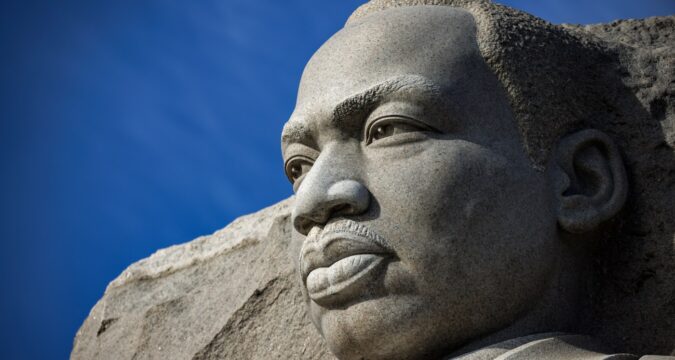
In 1967, the Rev. Martin Luther King Jr. posed a question: Will we descend into chaos or will we build a beloved community? He asked it in the final years of his life, as he watched the movement fracture and the backlash intensify, when many had lost faith that America could be redeemed.
More than 50 years later, that question remains painfully relevant.
Last week, President Donald Trump made public remarks attempting to distort civil rights, falsely alleging that white Americans are now the real victims of discrimination. This dangerous narrative ignores the lived experiences of communities affected by systemic discrimination and seeks to justify rolling back hard-fought and hard-won civil rights protections.
Over the last year, this federal administration has repeatedly disregarded the rule of law, infringed on our civil rights and threatened our democracy — engaging in violent and sometimes fatal immigration enforcement tactics, unlawfully targeting naturalized citizens and their right to vote, dismantling the U.S. Department of Education, and threatening nonprofits and anyone who appears as if they may dissent.
And on this Martin Luther King Jr. Day, we are reminded of the Trump administration’s attempts to undermine this day of remembrance by publicly attacking the legacy of the Rev. King, including by recently dropping this federal holiday — alongside Juneteenth — from the calendar of free days for national parks.
These actions certainly are disrespectful to King, our nation’s Civil Rights Movement, and its contributions to who we are today. But they are more than that. They are an attempt to erase the truth of our nation’s history and the truth about civil rights: that civil rights protections prohibit discrimination so that everyone benefits, everyone belongs and everyone is protected from unchecked abuses of power.
Authoritarianism thrives when people are isolated and disconnected. That is why, in the face of these actions, building a beloved community is no longer a question but a necessary condition for our country, and our democracy, to survive.
Civil rights organizations are the infrastructure of a beloved community. We translate the moral urgency of belonging into enforceable rights — the courtroom victories, policy changes and legal protections that ensure everyone can actually participate in the community we’re building together.
Building a beloved community requires courage, connection and compassion. Most of all, it requires forgiveness and faith: forgiveness for all of the known and unknown suffering we have caused one another and faith that we are stronger together than apart. But a beloved community is not just a disposition — it is a practice. It requires the slow, hard work of standing with those who have been most harmed by systems that were never designed for them — and then holding those systems accountable.
This moment makes that work more urgent than ever. My organization, Chicago Lawyers’ Committee for Civil Rights, has been working for decades alongside our partners to build the beloved community required to truly achieve racial justice and build systems that serve every person in our multiracial democracy. It means showing up alongside parents fighting for fully funded public schools, eligible voters facing barriers at the ballot box, renters facing unlawful discrimination and communities affected by economic inequities. It means partnering with law firm partners and pro bono attorneys and leveraging the power of the private bar to protect and advance the fight for civil rights.
These connections to each other — to our beloved community — are the key to how we are going to fight back against the gargantuan efforts to dismantle our civil rights and strip us of what we have gained. We cannot do this in isolation from each other or without knowing what the impact on the ground is from those closest to the pain this administration is inflicting.
Our community partners across Illinois and Indiana fight with us to ensure people can exercise their fundamental right to vote, file litigation with us to challenge federal overreach and show up for community members when Immigration and Customs Enforcement agents are endangering our neighborhoods.
Our collective wisdom and action make us all stronger. Only together can we move forward to hold people in power accountable and push them to build toward our collective dreams, not just taking advantage of our fears.
Recognizing our interconnectedness and humanity is exactly what King envisioned when he spoke of a beloved community rooted in justice and equity. If we want to protect our multiracial democracy and build a future worthy of that vision, let us not choose division, but rather show up for one another and make a home that works for us all.
King asked whether we would descend into chaos or build beloved community. The answer is not given to us. It is built by us.
Venu Gupta is executive director of Chicago Lawyers’ Committee for Civil Rights, a nonprofit, nonpartisan organization working to secure racial equity and economic opportunity for all.
Submit a letter, of no more than 400 words, to the editor here or email letters@chicagotribune.com.
https://www.chicagotribune.com/2026/01/19/opinion-martin-luther-king-jr-beloved-community-democracy/

Editorial: Illinois’ biometric privacy law is the gift that keeps on giving – to trial lawyers
Although well-intended legislation, Illinois’ biometric privacy law has turned into a bonanza for opportunistic lawyers under the guise of protecting everyday people against threats to their personal data.
Take what happened on Dec. 17: The 7th U.S. Circuit Court of Appeals in Chicago upheld the certification of a class-action lawsuit against Amazon, very likely increasing settlement pressure.
Illinois is home to some of the strongest consumer privacy regulation in the country and, in this case, the so-called privacy violations being challenged seem harmless. The plaintiffs allege Amazon failed to follow the burdensome notice and consent requirements for customers actively using a virtual try-on feature to see how they would look with makeup or eyewear for sale at the giant online retailer.
As we’ve written before, we are grateful for barriers to widespread misuse of such personal information. On the other hand, Illinois’ biometric data laws are responsible for regulating a marketplace that is changing by the second — and they’re just not keeping up.
More and more cases are still piling up despite legislation last year aimed at reducing the huge damage awards under a law that has left a trail of bad outcomes.
Illinois’ experience as an early adopter of restrictions on the use of biometrics shows how lawmakers struggle to keep abreast of fast-moving technologies. It’s also a glaring example of how a single state can create a legal minefield that discourages innovation while inviting exploitation from attorneys on the hunt for easy money.
The Amazon case before the 7th Circuit centered on a techy feature of the company’s mobile website and app. The retail giant’s software enabled customers to preview how its products look over an image or video of their faces before making purchases. Users agreed to let Amazon tap the camera on their phone, which would then be used to analyze their facial geometry and overlay the product.
Eye shadow too dark? Lipstick too bold? With the virtual try-on feature, there would be no need to order the product and then return it to the merchant after sampling it, if it didn’t work out.
Sounds like a good deal all around, but it involves a risk. Biometric data like fingerprints, voices, retina scans or facial features are unique to each person and unalterable. Any company collecting that data has an obligation to use it responsibly and protect it from misuse.
Illinois recognized the risk and, in a move ahead of its time in 2008, the General Assembly passed the Biometric Information Privacy Act. BIPA, as it is known, required companies to publish policies and obtain consent when using biometrics for applications that range from security screenings and financial transactions to employee timeclocks.
In practice, Illinois created a monster, mainly because it has allowed individuals to sue over alleged violations and claim enormous damages. Facebook paid a $650 million class-action settlement over its facial tagging feature, and Google settled a case over its facial grouping tool on Google Photos for $100 million. Many small companies also were threatened with the existential threat of huge judgments.
In 2023, the Illinois Supreme Court pleaded with state legislators to revisit the law in a case involving fingerprint scanners used by employees at fast-food company White Castle. The court ruled that, as written, damages accrued every time a person provided their biometric information without prior informed consent.
In other words, whenever an employee clocked in or out at a White Castle restaurant using a finger, that was a separate violation. The legal damages could have gone into the billions, though the case eventually settled for far less, which is understandable considering no harm was done and the appropriate penalty was zero.
Last year, the General Assembly finally got around to amending the law to address the potential for enormous liability every time biometric information was collected without the required consent. Courts have disagreed about whether the 2024 amendment applies to pending cases involving earlier conduct. It also kept companies on the hook for unintentional violations.
The 2024 revisions to the law fell short in other ways, too. It’s still an open question, for instance, whether data centers and cloud platforms could be subject to massive liabilities for their role in storing or analyzing computerized biometric information (we don’t think they should be). In the latest Amazon case, the judges didn’t even consider whether last year’s amendment would cap the damages that some class members may recover. That issue, they said, was “not a question before us.”
So, Illinois lawmakers went back to the drawing board and still came up with a boondoggle that threatens legitimate businesses with more of these “gotcha” judgments. If the state can’t fix this issue after years of evidence that the original law has gone wrong, then how about this solution: Repeal the entire statute and, if elected officials think they can get it right on a third try, give it a fresh shot.
Submit a letter, of no more than 400 words, to the editor here or email letters@chicagotribune.com.
https://www.chicagotribune.com/2026/01/19/bipa-biometric-data-lawsuit-amazon/

Letters: The US needs to amend its immigration policy. Immigrants are good for the country.
Regardless of your political beliefs, I pray we can all agree that current Immigration and Customs Enforcement actions are creating chaos, making American communities less safe and unleashing fear, violence and unnecessary chaos. Unbelievably, unconscionably, ICE agents are killing American citizens such as Renee Good. This must stop now.
Historically, America has been a beacon of hope. The American Dream is both real and fictional, a source of soft power around the world. Whether the American Dream is still attainable for citizens or immigrants is open to debate; however, it continues to be an inspiration.
U.S. immigration policy must be amended. Immigration is good for America. Unless you are an Indigenous person, just like me, your ancestors immigrated to America. Immigrants built America. Immigrants helped make America great.
Most immigrants are either “unskilled” or “highly skilled” (H-1B visa). America needs both. “Unskilled” immigrants perform jobs that Americans generally don’t want while providing support to grow the U.S. economy. Regarding skilled workers, our government policies should penalize corporations and companies that hire foreign workers when equally talented U.S. citizens are available. American citizens should always be given preference over foreigners even if the Americans require training or support to fill these vital positions.
We Americans need to demand that our members of Congress:
Immediately change the funding, tactics, mission and goals of ICE officers so our communities are safe.
Prevent masked ICE officers from grabbing people off the streets and at courthouses, schools, churches, workplaces or anywhere else. Any ICE actions that create a hostile environment that may result in the endangerment of American citizens must be prohibited by law.
Fix U.S. immigration policy to support our economic and societal objectives.
Hire more immigration judges to ensure timely adjudication of immigration cases.
Reinstate protected status for immigrants from countries that are unsafe.
Stop political retribution and the weaponization of the Justice Department.
Reinstate oversight of the presidency by Congress.
In addition to the above, Congress needs to demand the publication of the names of the clients identified in the Jeffrey Epstein files. Every politician, business leader or person who engaged in sexual activity with a minor must be prosecuted. To do less destroys the moral authority of America, leaves sexual predators free to potentially pursue additional victims and undermines American values, morals and democracy.
— Sally Munn, Crystal Lake
Offer path to citizenship
My paternal grandfather was processed through Ellis Island in 1906. We have the form from that day listing him along with all the other Italians on the ship. The form includes name, age, marital status, occupation, town of origin, destination (Chicago), money on person ($10), literacy and who he was going to live with (his brother Lorenzo in the old northern Italian neighborhood at 23rd Street and Oakley Avenue). Also listed was whether he was a polygamist (no) or anarchist (no). That was it. With those simple questions answered, he began his path to citizenship.
Lost in all the noise surrounding Immigration and Customs Enforcement and those resisting ICE and its tactics, predictably ending in violence and death, is the singular American tradition of offering a path to citizenship to good law-abiding people who come to our country to escape violence and poverty in their country of birth. It is curious as to why many, including Democrats and moderate Republicans, have grown silent on this initiative.
Those against it will argue to do so rewards the criminal act of sneaking over the border. Those in favor will point to the loose standards of legal immigration being no guarantee of the character and legal standing of the immigrant. The Ellis Island screening was a useless predictor of the path the immigrant would choose once in the USA .
It is time for reasonable people of both parties to resurrect a path to citizenship for undocumented but law-abiding, taxpaying mothers and fathers who now find themselves on the run or in hiding.
Let’s pick a number for length of time in America — 10 years sounds right, maybe five — and a set of criteria that we can certify, such as employment, no criminal record, taxpaying, homeownership, etc. Let’s create a path toward citizenship for our good friends and neighbors who meet our mutually agreed-upon criteria and exempt them from deportation as long as they continue on the path.
We have the choice of working to find a solution or continue with armed battles on our city streets. Let’s work together to find an answer with dialogue and compromise, rather than guns and violence. After all, that is the American way.
— Frank Moroni, River Forest
What are our leaders doing?
The Democrat-associated group Indivisible recently held a vigil for those killed by Immigration and Customs Enforcement. At the event, the organizers thanked Democratic elected officials for all they have been doing. If you keep current with the news, it is not difficult to be aware of all that Evanston Mayor Daniel Biss, Chicago Mayor Brandon Johnson and Gov. JB Pritzker have been doing.
All three have made passionate speeches condemning the actions of the Donald Trump administration and of ICE agents. They have urged their fellow citizens to document the abuses of ICE and to report when agents break the law. Biss, in particular, has joined Evanston residents in following and questioning ICE agents operating in Evanston and was even present at protest actions at the Broadview ICE facility. All in all, they have been active, responsible citizens of this state and nation.
The problem, of course, is that they are not mere citizens. They are elected officials!
They have budgets, staffs and actual power. Police chiefs respond to their mayor. The governor commands the Illinois National Guard.
What have these elected officials actually done to protect the residents of our cities and state?
The answer is clear. They have done nothing of significance. While residents of Chicago and the suburbs have been threatened, harassed, attacked, imprisoned and killed, these elected officials have looked concerned, made some speeches and offered condolences.
They have not ordered the police forces under their responsibility to monitor the thuggish behavior of ICE agents, check their credentials, require them to unmask, check the legality of their warrants or apprehended them when they act in illegal or dangerous ways.
The role of elected officials in Illinois seems to be to pacify a population that is being oppressed — like the leaders of the Vichy regime.
— Luis A. Nunes Amaral, professor, Northwestern University, Evanston
Immigration reform blocked
2025 was a horrible year for immigration law enforcement, and 2026 is starting out even worse. In 2024, we almost had a solution. Senators from both parties actually did their jobs and created a bipartisan immigration reform bill. There has not been a major immigration law since the Ronald Reagan administration. But then-candidate Donald Trump told his Republican friends in Congress to kill the bill on the grounds that it was no good. What he really wanted was for the issue to remain alive so that he had something concrete on which to campaign. He could then blame the Democrats for “doing nothing.”
This bill would have put more security at the border, hired more immigration and asylum judges, sped up asylum cases and kept families together with more visa opportunities. It was not perfect, nor did it solve all immigration problems. But it could have been an important first step toward sensibly solving the issue with more bills to follow. The senators actually worked together. They did their jobs, at first.
So instead of a rational and legal way of dealing with immigrants, agents directed by the Trump administration are now rounding up truckloads of people, sending them to awful detention camps, breaking up families, arresting people without due process of law, picking up citizens and noncitizens alike, and tear-gassing and killing protesters.
Now the Democrats have a huge issue upon which to campaign.
— Jan Goldberg, Riverside
Decide on sanctuary status
I suggest that all counties and cities in our state have a binding referendum about sanctuary policies added to the next election. People are tired of the back and forth. Let the people decide.
— Larry Geraghty, Tinley Park
So many upsetting events
Chalk another one up for the increasingly violent and corrupt Donald Trump regime. Thanks to multiple videos from different vantage points, I believe most reasonable Americans saw what unfolded in Minneapolis on Jan. 7. Yet we watched Homeland Secretary Kristi Noem and Border Patrol Cmdr. Gregory Bovino practically high-five each other at a news conference. We heard Vice President JD Vance call Renee Good a “deranged leftist,” and President Donald Trump referred to Good as a “professional agitator.” MAGA devotees have embraced that rhetoric.
Equally upsetting was the ICE response to a dying woman, a mother. While processing the events with my daughter, she said, “This country is really freaking me out.” I sadly agree.
— Moisette Sintov McNerney, Arlington Heights
They did not choose this
The letter “Good’s decision” (Jan. 13) hit me with its cruelty and falsehood. Renee Nicole Good did not choose to die and leave her children — that choice was made by the Immigration and Customs Enforcement agent who shot into her car, point blank. And by the agents who refused to let the doctor at the scene tend to her. Good did not choose to die.
Moreover, Good is far from the only person who did not choose to die — whether shot, like Good, or by inhumane conditions in ICE facilities. Keith Porter, also a parent, was shot by ICE on New Year’s Eve in Los Angeles. Thirty-two people died in ICE custody in 2025. They did not choose to die.
— Diane O’Neill, Chicago
Benefits of his leadership
During the 1960s, America’s mission in Vietnam was to halt the spread of communism before it could threaten the Western world and the capitalist way of life. That collapse never came.
Today, from peace initiatives in the Middle East to the toppling of a dictator in Venezuela, the momentum is shifting. With the fanatical Iranian regime on the brink and communism fading in Cuba, the world is changing — a transformation sparked by the leadership of President Donald Trump.
— Roberto L Garcia, Chicago
When Trump abuses power
What I can’t understand is being a Republican doesn’t mean you have to praise or ignore President Donald Trump as being acceptable when he abuses his power.
Like it or not, he has created a similar mission as the German Gestapo that rounded up Jews with little to no concern as to the cruelty. Those concerned citizens who reacted against such cruelty were punished, even those who were just observers.
Look out, Venezuela and Greenland, you have to wonder what he has in mind for you.
— Raymond Hubbard, Sandwich
Trump’s regard for Iranians
The developing situation in Iran begs the question: When did President Donald Trump become concerned about the rights of protesters? Enough so that he has directed the military to develop options for Iran.
In the recent past, we’ve seen protesters on the streets of our own country assaulted, maimed and even killed by Immigration and Customs Enforcement and the Border Patrol. Where’s the presidential outrage over this?
Oh wait, I forgot. Trump used up all his domestic compassion on the Jan. 6 protesters. There’s none left for those truly fighting for democracy.
— Dan McGee, Oak Park
Flying my flag upside down
The events associated with the Donald Trump administration two weeks ago — kidnapping the leader of a sovereign nation (even if he is a dictator); military threats against other nations, including a fellow NATO country; and the killing of a U.S. citizen during an ICE protest in Minneapolis — clearly show the country is in a state of distress.
For years, I have proudly displayed the U.S. flag on my home. Two weeks ago, I displayed it upside down, a symbol of distress for our country, residents and the rule of law, which has been broken as never before.
— Allen Jingst, Allons, Tennessee
Iran is a warning to us
The images coming out of Iran are horrific. They are what happens when narcissistic, power-hungry and incompetent leaders are allowed to rule unchecked.
What should terrify Americans is how familiar this pattern feels. Too many current U.S. leaders display the same arrogance, disregard for accountability and obsession with power.
I do not want this to be America’s future. These images are not just tragedy abroad. They are a warning to our country.
— Steven Sapyta, Brookfield, Wisconsin
Submit a letter, of no more than 400 words, to the editor here or email letters@chicagotribune.com.
https://www.chicagotribune.com/2026/01/19/letters-011926-immigration-ice/

Germany Forces Lexus To Deactivate Remote Start With Over-The-Air Update
Germany Forces Lexus To Deactivate Remote Start With Over-The-Air Update
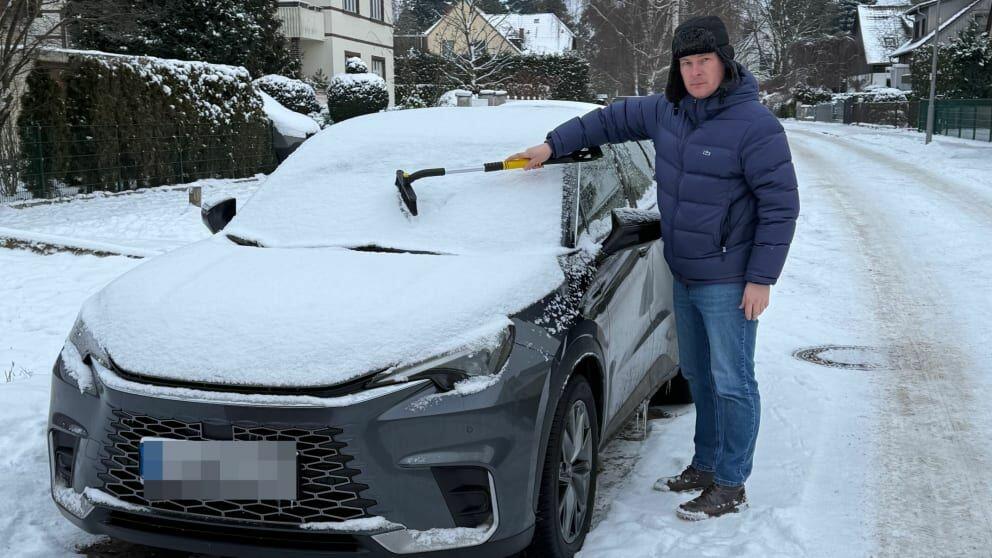
Germany – whose chancellor just admitted they made a ‘serious strategic mistake‘ chasing green unicorns when they shut down their nuclear plants – has just forced Lexus to deactivate the remote start feature which pre-warms an owner’s car so they don’t freeze their nethers off first thing in the morning in the winter.
Toyota spokesman Ralph Müller confirmed the measure, telling BILD that the pre-heating feature, which was previously free via MyToyota or Lexus Link Plus apps – is now deactivated on all combustine-engine vehicles across the country, as legislators consider remote engine warm-up “unnecessary running” that creates “avoidable exhaust pollution.”
What’s more, Toyota has used remote access to disable the function to comply with the order, protecting owners from potential penalties by German authoritarian regulatory enforcers. The feature is still available on pure EVs and plug-in hybrids, which allows for cabin heating without starting the combustion engine.
🇩🇪‼️🚨 BIG BROTHER: German authorities forced Lexus to turn off the parking heating in Lexus cars! Just when it got cold and people needed it!
Imagine you bought a car and paid for specific features, but the government just turns it off because it’s NOT GREEN!
I’m not joking,… pic.twitter.com/x3wMmwVCNu
— Lord Bebo (@MyLordBebo) January 15, 2026
As Gadget Review notes further, Car idling bans stem from Germany’s broader assault on fossil fuel heating systems.
This crackdown connects to Germany’s Building Energy Act, requiring 65% renewable energy in new heating systems by 2024. The law aims to phase out gas and oil heating by 2045, but critics highlight massive costs and slow adoption rates—gas still heats 56% of Germany’s 43 million apartments.
Coalition plans to reform the controversial “heating law” by February 2026 promise more flexibility and technology openness. But car owners are collateral damage in this green transition, where authorities apparently can’t distinguish between heating a building and de-icing a windshield.
Your luxury car just became the latest battlefield in Europe’s climate wars, where bureaucrats decide which buttons work in your own vehicle. The real question isn’t whether remote start causes pollution—it’s whether you still own the features you bought.
Tyler Durden
Mon, 01/19/2026 – 05:45
https://www.zerohedge.com/geopolitical/germany-forces-lexus-deactivate-remote-start-over-air-update

PCR: The EU Elite Have Banned European Democracy
PCR: The EU Elite Have Banned European Democracy
Authored by Paul Craig Roberts,
In a democracy, the government in office cannot ban an opposing candidate from running on the grounds that the candidate would win and take the place of the current government.
But that is what President Macron has done to Marine Le Pen.
Le Pen heads the largest political party in France.
She has been banned by a French court from holding office for five years.
This prevents her from competing in the 2027 presidential election, where she has long been considered to be the leading candidate.
The excuse used by the French government to frustrate the popular will is that Le Pen was convicted of “misappropriating EU funds.”
She was convicted of using money intended for her European Union staff for her French staff.
Money, of course, is fungible, and the orchestrated charge succeeded only because the establishment presstitutes hyped it over and over.
Marine Le Pen is a controversial figure with the French establishment because she represents ethnic French nationalism, not the globalism of open borders and multiculturalism, that is, she stands for France, not for a Tower of Babel.
All over Europe the left-wing ideologues have succeeded in associating ethnic nationalism with Nazism.
An effort has been underway for decades to destroy the sovereignty of national states, and to merge them into the European Union.
Le Pen has fought the effort to abolish France, and for her efforts she has been branded a Nazi.
Despite the French establishment’s attempt to demonize her, her party has the largest public support.
Over the years, the European left succeeded in branding national sovereignty “right-wing.” Even the Russian news site RT unthinkingly uses the propaganda term of the European left, thus demonstrating how unaware the Russian media is of the character of their European enemies.
When Le Pen appealed the ruling at the European court of human rights the court side-stepped the issue by ruling that she had not shown an “imminent risk of irreparable harm” to herself.
Of course, the harm was done to French democracy and to the French electorate, an issue that the court avoided.
Clearly “European democracy” stands unified in opposing democracy and has prevented the French people from exercising their will in a presidential election by banning the opposing candidate from running for the presidency.
Le Pen has again appealed and declared “I hope I will be able to convince the judges of my innocence.”
But for the establishment, the question is not one of innocence or guilt.
The the issue is that the European elite intend to prevent any revival of national sovereignty.
The people’s will is no longer tolerated in Western Europe.
Tyler Durden
Mon, 01/19/2026 – 05:10
https://www.zerohedge.com/geopolitical/pcr-eu-elite-have-banned-european-democracy

Capture moments with the best Panasonic camcorder
Which Panasonic camcorders are best?
Panasonic is a well-known and respected brand for a reason. Even their lowest, most affordable offerings feature the quality and features that any budding videographer or experienced artist wants and needs to complete their next great work. You don’t need to know the gritty details of cinematography to use a Panasonic camcorder, either. They’re almost always just point-and-shoot capable.
The best Panasonic camcorder is the Panasonic X1500 4K Professional Camcorder. True 4K camera quality, combined with stabilization technology, allows for the recording of the absolute best possible video quality. Wi-Fi capabilities make transferring and playing back that video easier than ever.
What to know before you buy a Panasonic camcorder
Video-related features
When it comes to Panasonic camcorders, these are the aspects of video recording that you need to know about: the image sensor, resolution, frame rates, and zoom.
Image sensor: The image sensor is a special chip that measures the light coming in through the lens to create the image for your video. The larger the chip, the clearer the images. Most Panasonic camcorders use chips that are 1-2.3 inches, but professional-grade camcorders can use chips that are a full inch in size.
Resolution: The image sensor also sets the limits of your maximum resolution. Most Panasonic camcorders shoot at either 1080 pixels or 4K resolution. However, some Panasonic camcorders offer a resolution called “Cinema 4K,” slightly wider and has a bit more pixels than the standard 4K.
Frame rates: Video is an illusion created by taking as many or as few pictures in the space of a single second as possible, then quickly showing those images in order. This is called the frame rate, measured in frames per second. Most Panasonic camcorders include options for 24, 30, 50 and 60 FPS.
Zoom: Panasonic camcorders use a technology called optical zoom in their camcorders. Optical zoom refers to the ability to move the glass elements inside the lens to create natural magnification. It’s why the zoom quality is better than your digital camera, which uses digital zoom, a software that magnifies the image at the loss of quality.
Microphone
Panasonic camcorders generally include either a microphone built into the camcorder’s body or a rotatable microphone attached to the body’s exterior. However, built-in microphones have very low audio quality compared to attaching an external microphone with the rotatable exterior microphones in the middle, qualitatively.
What to look for in a quality Panasonic camcorder
Special effects
Panasonic camcorders usually include special bonus software that gives options like slow motion, time-lapse, and even an 8-millimeter simulation.
HDR
High dynamic range video recording in a Panasonic camcorder allows you to capture more details in difficult lighting conditions like limited or excess lighting.
Wi-Fi
Wi-Fi in a Panasonic camcorder gives you several additional quality-of-life abilities. It allows you to copy your videos to a computer with the most ease and even allows you to double your camcorder as a webcam or a baby monitor with the help of an app downloaded to your phone or tablet.
How much you can expect to spend on a Panasonic camcorder
Panasonic camcorders can be found at almost any price that fits your budget range, desired features and overall quality. For those looking to get started recording video and audio, Panasonic models are available for $400 or less, while the top-of-the-line Panasonic camcorders can run anywhere from $1,000-$4,000. There are plenty of excellent midrange opinions between $400-$1,000 as well.
Panasonic camcorder FAQ
Why should I buy a camcorder if I already have a digital camera that can shoot excellent video?
You probably don’t need to if you already have a great camera and the various lenses and other pieces of equipment to turn it into a video shooting machine. That said, a camcorder will often have excellent zoom lenses built in, so if recording at a distance is a priority, then a camcorder can still be a good option.
How easy is it for me to transfer my videos to a computer for storage, playback, and editing?
Very easy. Many Panasonic camcorders come with a USB cable for fast transferring, or you can always purchase a very affordable cable if it doesn’t. You can also transfer over Wi-Fi if the camcorder has that capability or by using a memory card if all else fails.
What are the best Panasonic camcorders to buy?
Top Panasonic camcorder
Panasonic X1500 4K Professional Camcorder
What you need to know: This Panasonic camcorder is power-packed with a lot of features.
What you’ll love: The built-in Wi-Fi capabilities make playback and sharing video incredibly easy.
What you should consider: Some complaints that low light performance isn’t great.
Top Panasonic camcorder for the money
Panasonic HC-V180K HD Camcorder
What you need to know: If audio recording is top on your list, this Panasonic camcorder should be your selection.
What you’ll love: A 2x zoom microphone is the audio recordist’s dream, but the 1080 pixels and 90x video zoom don’t leave the visualists behind.
What you should consider: There’s no Wi-Fi in this model, forcing you to buy and use a memory card for video sharing.
Worth checking out
Panasonic HC-V770K Camcorder with Wi-Fi
What you need to know: If you plan on recording outside most of the time, this Panasonic camcorder with bright spot reduction is perfect for you.
What you’ll love: Its five-axis balancing helps provide a stable picture, and the 20x zoom combines very well with the 1080 pixels capture.
What you should consider: The camera icons don’t go away during Wi-Fi streaming playback, which can be distracting for many.
Prices listed reflect time and date of publication and are subject to change.
Check out our Daily Deals for the best products at the best prices and sign up here to receive the BestReviews weekly newsletter full of shopping inspo and sales.
BestReviews spends thousands of hours researching, analyzing and testing products to recommend the best picks for most consumers. BestReviews and its newspaper partners may earn a commission if you purchase a product through one of our links.
Distributed by Tribune Content Agency, LLC.
https://www.chicagotribune.com/2026/01/19/capture-moments-with-the-best-panasonic-camcorder/