Category: News
President Donald Trump ties his stance on Greenland to not getting Nobel Peace Prize
NUUK, Greenland — U.S. President Donald Trump linked his aggressive stance on Greenland to last year’s decision not to award him the Nobel Peace Prize, telling Norway’s prime minister that he no longer felt “an obligation to think purely of Peace,” in a text message released Monday.
Trump’s message to Jonas Gahr Støre appears to ratchet up a standoff between Washington and its closest allies over his threats to take over Greenland, a self-governing territory of NATO member Denmark. On Saturday, Trump announced a 10% import tax starting in February on goods from eight nations that have rallied around Denmark and Greenland, including Norway.
Those countries issued a forceful rebuke.
Many longtime allies of the U.S. remained resolute that Greenland was not for sale but encouraged Washington to discuss solutions. In a statement on social media, the European Union’s foreign policy chief Kaja Kallas said the bloc had “no interest to pick a fight” but would “hold our ground.”
The White House has not ruled taking control of the strategic Arctic island by force. Asked whether Trump could invade Greenland, Danish Foreign Minister Lars Løkke Rasmussen said Monday that “you can’t leave anything out until the president himself has decided to leave anything out.”
British Prime Minister Keir Starmer also sought to de-escalate tensions Monday. “I think this can be resolved and should be resolved through calm discussion,” he said, adding that he did not believe military action would occur.
Early Tuesday, Trump posted on social media that he had spoken with NATO Secretary General Mark Rutte and “I agreed to a meeting of the various parties in Davos, Switzerland,” where they will be attending the World Economic Forum’s annual meeting this week.
Trump also posted a text message from Emmanuel Macron in which the French president suggested a meeting of members of the Group of Seven industrialized democracies in Paris after the Davos gathering.
Later, however, Trump posted some provocatively doctored images. One showed him planting the U.S. flag next to a sign reading “Greenland, U.S. Territory, Est. 2026.” The other showed Trump in the Oval Office next to a map that showed Greenland and Canada covered with the U.S. Stars and Stripes.
Strong opposition in Greenland to U.S. threats
In a sign of how tensions have increased in recent days, thousands of Greenlanders marched over the weekend in protest of any effort to take over their island. Greenland Prime Minister Jens-Frederik Nielsen said in a Facebook post Monday that the tariff threats would not change their stance.
“We will not be pressured,” he wrote.
Pro-Greenland protesters mock Donald Trump’s MAGA slogan with ‘Make America Go Away’ caps
Meanwhile, Naaja Nathanielsen, Greenland’s minister for business, minerals, energy, justice and equality, told The Associated Press that she was moved by the quick response of allies to the tariff threat and said it showed that countries realize “this is about more than Greenland.”
“I think a lot of countries are afraid that if they let Greenland go, what would be next?”
Trump cites Nobel as escalation in text to Norwegian leader
Trump’s Sunday message to Gahr Støre, released by the Norwegian government, read in part, “Considering your Country decided not to give me the Nobel Peace Prize for having stopped 8 Wars PLUS, I no longer feel an obligation to think purely of Peace.”
It concluded, “The World is not secure unless we have Complete and Total Control of Greenland.”
The White House confirmed the authenticity of the message, with White House deputy press secretary Anna Kelly saying that Trump “is confident Greenlanders would be better served if protected by the United States from modern threats in the Arctic region.”
The Norwegian leader said Trump’s message was a reply to an earlier missive sent on behalf of himself and Finnish President Alexander Stubb, in which they conveyed their opposition to the tariff announcement, pointed to a need to de-escalate, and proposed a telephone conversation among the three leaders.
“Norway’s position on Greenland is clear. Greenland is a part of the Kingdom of Denmark, and Norway fully supports the Kingdom of Denmark on this matter,” the Norwegian leader said in a statement. “As regards the Nobel Peace Prize, I have clearly explained, including to President Trump what is well known, the prize is awarded by an independent Nobel Committee and not the Norwegian Government.”
The Norwegian Nobel Committee is an independent body whose five members are appointed by the Norwegian Parliament.
Trump has openly coveted the peace prize, which the committee awarded to Venezuelan opposition leader María Corina Machado last year. Last week, Machado presented her Nobel medal to Trump, who said he planned to keep it, though the committee said the prize can’t be revoked, transferred or shared with others.
Speaking Monday night to reporters before boarding Air Force One on his way back from Florida to Washington, Trump said he didn’t “care about the Nobel prize.”
“A very fine woman felt that I deserved it and really wanted me to have the Nobel prize. And I appreciate that. If anybody thinks that Norway doesn’t control the Nobel prize, they’re just kidding. … And I don’t care what Norway says. But I really don’t care about that. What I care about is saving lives,” he said.
Trump says he will use tariffs as a bargaining chip
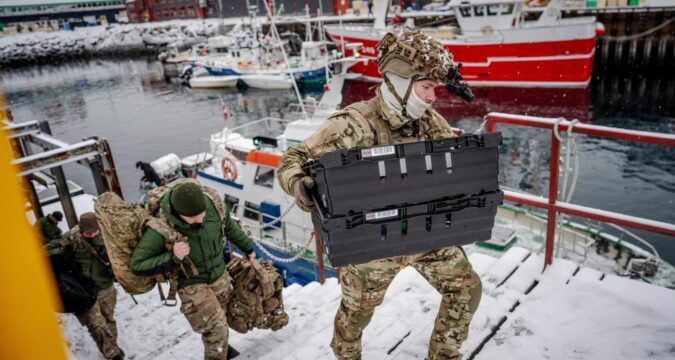
In his latest threat of tariffs, Trump indicated the import taxes would be retaliation for last week’s deployment of symbolic numbers of troops from the European countries to Greenland — though he also suggested that he was using the tariffs as leverage to negotiate with Denmark.
US futures sink after Donald Trump warns of higher tariffs for 8 countries over Greenland issue
European governments said that the troops traveled to the island to assess Arctic security, part of a response to Trump’s own concerns about interference from Russia and China.
The move by some European countries to deploy troops may have given the impression that an armada of ships was sailing to Greenland, when the reality was that European nations said they would send not more than a few dozen troops collectively, a senior European military official told The Associated Press speaking on condition of anonymity in order to talk publicly.
Trump threatened eight European countries with tariffs Sunday after they announced small numbers of troop deployments to the Arctic island – including Denmark, which Greenland is part of.
The European move was aimed at taking action on Trump’s concerns, the senior official told the AP.
In a statement on social media, NATO Secretary General Mark Rutte said he had discussed how important the region was for the “collective security” of the security alliance in a Monday meeting with the foreign ministers of Denmark and Greenland.
Six of the eight countries targeted are part of the 27-member European Union, which operates as a single economic zone in terms of trade. European Council President António Costa said Sunday that the bloc’s leaders expressed “readiness to defend ourselves against any form of coercion.” He announced a summit for Thursday evening.
Associated Press writers Josh Boak in West Palm Beach, Florida; Jill Lawless in London; Molly Quell in The Hague; Lorne Cook in Brussels and Bill Barrow in Atlanta contributed to this report.
https://www.chicagotribune.com/2026/01/20/trump-greenland-nobel-peace-prize/
Waubonsie Valley marching band recognized by Aurora City Council for performance in Rome parade
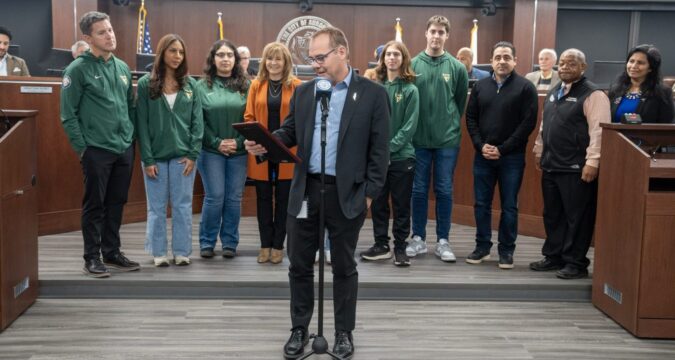
Waubonsie Valley High School’s marching band, the Marching Warriors, was recognized at an Aurora City Council meeting last week for its performance at a New Year’s Day parade. But not just any parade — the New Year’s Day parade in Rome, Italy.
According to the city of Aurora, 146 members of the band traveled to Rome from Dec. 28 to Jan. 4. The trip culminated in a live performance as part of Rome’s New Year’s Day Parade on Jan. 1.
The Marching Warriors is a precision marching band that combines wind, percussion and color guard, according to the Waubonsie Valley Music Department’s website. In addition to football games and competitions, it has also performed at national and international parades.
Waubonsie Valley High School Principal Jason Stipp said he was “amazed” at the students’ “effort and perseverance,” as they began marching and rehearsal preparation for the trip immediately after their holiday concert.
“They marched the streets of Frascati and Rome and played in landmark churches,” Stipp said in an email to The Beacon-News. “It was great to see so many of them come together and get the most of each day and themselves at this young age.”
At Aurora’s City Council meeting on Jan. 13, several of the marching band’s section leaders were recognized for their recent performance, as was Mark Duker, the chair of Waubonsie Valley’s Fine Arts Department.
“I think (this) is outstanding, a feather in our cap as a city,” Aurora Mayor John Laesch said at the meeting.
Duker said the band typically performs in parades in Aurora and Naperville, but that this performance was “a very unique experience,” and was “extremely well-attended.”
“We feel very fortunate to be in a community that has families and students who value that kind of an international experience,” Duker said at the City Council meeting. “And it’s also great to live in a community … where the city recognizes the importance of that as well.”
mmorrow@chicagotribune.com
Column: Chicago Bears enter offseason after ‘igniting the city’ and restoring faith — but challenges lie ahead
Long, blank stares across players’ faces Sunday night in the Chicago Bears locker room at Soldier Field reflected the abrupt ending of the season.
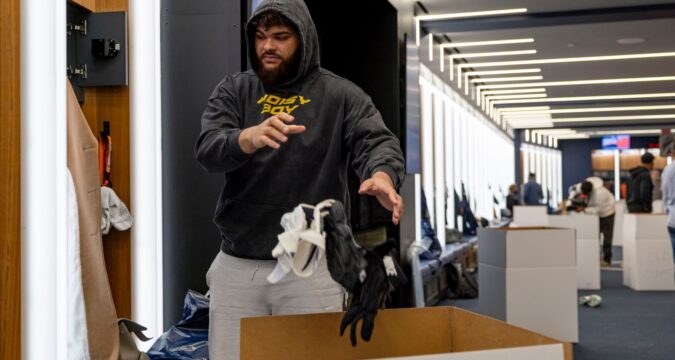
Harrison Mevis’ 42-yard field goal in overtime propelled the Los Angeles Rams to a 20-17 victory and the NFC championship game. Fourteen hours later, Bears players were filling oversized cardboard boxes with belongings Monday morning at Halas Hall.
“It hurts because everybody puts a lot into this,” said defensive end Daniel Hardy, speaking slowly as he parsed his thoughts. “We all sacrifice so much. And you hate it ending like that. Nobody picked us to be here. Nobody gave us a chance. We just believed. We did it as a group. We stuck together. When the pressure was on, it just made us closer.
“Just knowing it’s never going to be the same group of guys ever, that’s really the tough part. I would take this group of guys over anybody if we could run this back. That’s the business we’re in, and that’s why every year counts. Lot of love and appreciation for these guys and these coaches and the way we came in and turned the culture around, turned the team around and helped ignite the city.”
Photos: Chicago Bears clean out their lockers after playoff loss ends season
That’s the cold reality of the NFL. It won’t be the same in 2026, even if general manager Ryan Poles works to bring back a portion of the 24 free agents on the roster.
After an 0-2 start, the Bears emerged as one of the league’s better stories, winning nine of their next 10 games, many with stunning last-minute rallies. Eventually they did what Poles talked about when he was hired four years ago — they took the NFC North.
Quarterback Caleb Williams made dramatic improvement over the course of the season. Those curious about his ability to settle into Johnson’s offense at the start of the season had become believers well before Williams threw it into reverse on fourth-and-4 from the 14-yard line in the final minute of regulation Sunday, retreated more than 25 yards and launched a touchdown pass to tight end Cole Kmet to force overtime.
Williams’ ascent — paired with the emergence of an offensive line that paved the way for the league’s third-ranked rushing attack and a stable of skill-position talent, including blossoming rookie tight end Colston Loveland — leaves plenty to like, especially when considering what coach Ben Johnson and his staff can accomplish with natural growth in Year 2.
As demanding and exacting as Johnson was while installing the offense last spring, he’ll be the same in pushing players to reach the next level in 2026. There’s work to be done on defense, but wise coordinator Dennis Allen showed creative vision even in times when he appeared short-handed, including against the Rams. Holding Matthew Stafford, Puka Nacua and the league’s top-ranked offense to 17 points in regulation should have been good enough for a victory.
The Bears learned how to win in their first season above .500 since 2018 while also earning their first playoff victory in 15 years. That’s a valuable lesson for those who will return — and that those headed elsewhere can take with them.
From 2022 through 2024, the Bears had a combined 15 victories. They had 12 this season, including the wild-card triumph over the Green Bay Packers.
“It was amazing,” said defensive end Dominique Robinson, who will be a free agent after arriving in the 2022 draft class. “The culture here in the city. Just that pregame buzz. The national anthem. The experience was just a lot better this year. People were involved. It just felt better.
“It’s fun when you’re winning. Completely different. You’re not stressed out. You’re not worried about who’s getting released and all this other stuff. People are stressed out when you’re losing and the organization is trying to find a way to win.
“All my boys are here. We’re having a good time. It was like college again. I’m glad we were able to turn it around and go out a little bit on top. No moral victories. From the three years we had before to this, that’s going out on top.”
Bears defensive end Dominique Robinson moves his boxes out of the locker room Monday, Jan. 19, 2026, at Halas Hall. (Brian Cassella/Chicago Tribune)
The Bears and New England Patriots — who will play the Broncos in the AFC championship game Sunday in Denver — both went from worst to first this season. Since 2002, when the NFL went to eight four-team divisions, 27 teams have gone from worst to first. Of the previous 25, only eight repeated as a playoff team the following season.
That’s the challenge ahead of the Bears — avoiding the grip of regression — as Johnson enters an offseason with the focus squarely on decisions to ensure sustained success.
“This is my first playoff win since 2019 in Tennessee,” said free safety Kevin Byard III, an All-Pro this season who also is a pending free agent. “I have been back to the playoffs three other times, but I’ve been a (No.) 1 seed, got bounced out in the divisional round, then missed the playoffs the next year. Then went to Philly, got bounced out of a wild card.
“This is not something that’s very easy to do at all, but I have belief in this group, in this team, in this organization. We’re all having these talks like, ‘Hey, man, we’ve got to run this back.’ But there’s no guarantee that it’s going to happen again. It’s going to definitely be tough to do.”
Playoff photos: Los Angeles Rams 20, Chicago Bears 17 (OT)
The Bears did ignite the city, as Hardy said, and there’s restored faith in a franchise that hadn’t done a lot to earn it or certainly retain it in the last decade and a half. Poles and Johnson are expected to share their thoughts on the season later this week and perhaps offer hints to the offseason ahead.
As players filtered out with gear to stuff in their vehicles, their heads were high. Exit meetings offered words of encouragement with a few things to work on while they’re on their own.
In the hallway stood a small group of veteran scouts. Told they had made a good run, there were affirmative nods.
“Not far enough,” one said.
https://www.chicagotribune.com/2026/01/20/chicago-bears-offseason/
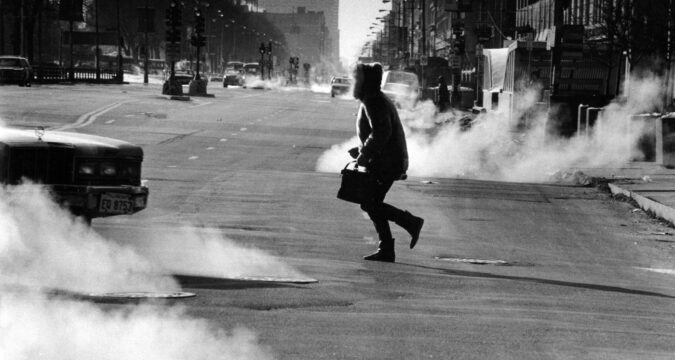
Today in Chicago History: 27 degrees — the city’s all-time low temperature
Here’s a look back at what happened in the Chicago area on Jan. 20, according to the Tribune’s archives.
Is an important event missing from this date? Email us.
Front page flashback: Jan. 21, 1983
Insurance magnate Allen Dorfman faced up to 55 years in prison after a 1982 conviction for trying to bribe former Nevada Sen. Howard Cannon and defrauding the Teamsters Union Central States Pension Fund. Dorfman was gunned down on Jan. 20, 1983, in the parking lot of the Hyatt Lincolnwood Hotel. (Chicago Tribune)
1983: Allen Dorfman, an insider in the Teamsters Union Central States Pension Fund, was facing a prison term for his part in a scheme to bribe a U.S. senator and sidetrack a trucking deregulation bill when he was gunned down gangland style outside the Hyatt Lincolnwood Hotel.
Weather records (from the National Weather Service, Chicago)
High temperature: 63 degrees (1906)
Low temperature: Minus 27 degrees (1985)
Precipitation: 1.13 inches (1898)
Snowfall: 8 inches (1886)
George Halas announces Mike Ditka as head coach of the Chicago Bears on Jan. 20, 1982. (Chicago Tribune historical photo)
1982: The Chicago Bears introduced Mike Ditka, who was hired by team owner George Halas, as head coach.
Mike Ditka, who played for the Chicago Bears for six years, returned to be the team’s 10th head coach on Jan. 20, 1982. (Chicago Tribune)
The Hall of Fame tight end became a Bears legend for guiding the team to its only Super Bowl victory. He was named NFL Coach of the Year in 1985 and for a second time in 1988.
Ditka’s 106 wins are the second-most in franchise history, and he led the team to seven postseason appearances in 11 seasons.
Chicago experienced its coldest temperature on record — minus 27 degrees — on Jan. 20, 1985. (Chicago Tribune)
1985: The temperature hit an all-time record low in Chicago — minus 27 degrees at O’Hare International Airport.
Vintage Chicago Tribune: Taxi drivers targeted in 1985 surprise immigration raids
Also in 1985: Corporation counsel James Montgomery recommended Chicago no longer assist the U.S. Immigration and Naturalization Service in arresting immigrants unless subpoenas were obtained.
The city at first cooperated with immigration officials in a crackdown on immigrants living in the United States without permanent legal status who had obtained licenses to drive taxis in Chicago. Federal authorities used taxi cab license applications to find these drivers.
The Rev. Daniel McCormack arrives at the Leighton Criminal Court Building on July 2, 2007. (Michael Tercha/Chicago Tribune)
2006: The Rev. Daniel McCormack, the pastor of St. Agatha Church on West Douglas Boulevard, was charged with sexually abusing three boys in his parish. McCormack pleaded guilty in 2007 to sexually abusing five children and was sentenced to five years in prison. He was released in 2021.
Want more vintage Chicago?
Subscribe to the free Vintage Chicago Tribune newsletter, join our Chicagoland history Facebook group, stay current with Today in Chicago History and follow us on Instagram for more from Chicago’s past.
Have an idea for Vintage Chicago Tribune? Share it with Kori Rumore and Marianne Mather at krumore@chicagotribune.com and mmather@chicagotribune.com
https://www.chicagotribune.com/2026/01/20/january-20-chicago-history/

Chicago basketball report: Bulls welcome back Yuki Kawamura, and DePaul gets good PR amid game-fixing scandal
The Chicago Bulls welcomed back a two-way guard, and DePaul coach Chris Holtmann gave the Blue Demons something good to talk about in this week’s Chicago basketball report.
Every Tuesday, Tribune writers will provide an update on what happened — and what’s ahead — for the Bulls, Sky and local college basketball teams. Want more? Sign up for our Tribune sports newsletter.
Yuki Kawamura makes a return to the court
Cleveland Cavaliers guard Tyrese Proctor tries to stop Chicago Bulls guard Yuki Kawamura during a preseason game at the United Center on Oct. 9, 2025. (Terrence Antonio James/Chicago Tribune)
After three months away from the game, two-way guard Yuki Kawamura made a full return Thursday with the Windy City Bulls in a dominant 131-104 win over the San Diego Clippers.
Kawamura was waived by the Bulls earlier this season while recovering from a blood clot, but remained in Chicago for the entirety of his treatment and earned another two-way contract immediately upon medical clearance to return to play. He came off the bench for Windy City in Thursday’s game, racking up seven assists.
The Bulls have worked through the majority of their guard deficiency after suffering a series of injuries at the position earlier this season. Starting point guard Josh Giddey practiced Sunday with Windy City and could return to practice with the Bulls later this week if he continues to experience limited discomfort after missing several weeks with a hamstring strain. This means that Kawamura likely won’t see minutes with the Bulls on his two-way contract; however, coach Billy Donovan has not ruled out the possibility if the team suffers backcourt injuries again in the future.
Chris Holtmann’s promise
DePaul head coach Chris Holtmann gestures during a game against UConn, Saturday, Jan. 10, 2026, in Hartford, Conn. (AP Photo/Jessica Hill)
Chris Holtmann and the DePaul men’s basketball team gave the Blue Demons some good PR in the same week the news broke of a game-fixing scandal involving a former team.
In an indictment that became public Thursday, four former DePaul men’s basketball players were alleged to have taken thousands of dollars in bribes to purposely underperform in the first halves of three Big East games during the 2023-24 season.
The game-fixing scandal, part of a scheme allegedly involving 39 players on 17 NCAA Division I teams, happened before DePaul hired Holtmann in March 2024.
Holtmann is trying to help turn around the program that lost 39-straight regular-season Big East games up until last January — including some that were alleged to have been fixed.
On Friday, one day after the news of the indictment broke, DePaul beat Marquette 80-75, its first win in the series since March 2022. That stretched the Blue Demons’ home winning streak at Wintrust Arena to three games, all in the Big East. It’s a small number but significant given the Blue Demons were just 4-16 in conference play last season, Holtmann’s first. They are now 11-7, 3-4, with two of the conference losses to No. 2 Connecticut.
After the game, Holtmann posted on social media: “Highest student attendance in the history of Wintrust and one of the largest crowds!!! Thank you!!! First round on me at Kelly’s Pub near campus. See you in 35 min!”
He kept his word. At 12:52 a.m., DePaul posted a video on social media of Holtmann sitting on a bar, announcing he would buy the first round for students and then passing around a bucket of beer.
On Monday, senior guard CJ Gunn was named Big East player of the week after he scored a career-high 31 points, including seven 3-pointers, against Marquette. Gunn is averaging 14.5 points per game on 45.3% shooting.
Number of the week: 14.6
Chicago Bulls forward Isaac Okoro tips the ball against the Charlotte Hornets on Saturday, Jan. 3, 2026, in Chicago. (AP Photo/Matt Marton)
The Bulls rank second-to-last in the NBA in deflections, managing only 14.6 per game. They outpace only the Charlotte Hornets, who tally 14.5 per game, and have regularly sat at the bottom of the league in this statistic throughout this season.
Hustle statistics don’t tell the entire story for a team’s defense — in fact, the Bulls are well-ranked in many key hustle statistics, including shot contests (45.1 per game, second in the league) and charges drawn (0.6 per game, third in the league). But a lack of deflections reflects Chicago’s inability to disrupt opposing offenses before they take a shot, which could be one explanation for why teams shoot the ball so well against the Bulls.
Week ahead: Bulls
Former Chicago Bulls player Derrick Rose speaks while being honored at halftime of a game between the Bulls and the New York Knicks at the United Center in Chicago on Jan. 4, 2025. (Chris Sweda/Chicago Tribune)
Tuesday: vs. Clippers, 7 p.m., CHSN
Thursday: @ Minnesota, 7 p.m., CHSN
Saturday: vs. Celtics, 7 p.m., CHSN
Monday: vs. Lakers, 7 p.m., CHSN
The Bulls will retire the jersey of former MVP and hometown hero Derrick Rose after Saturday’s game against the Boston Celtics. The ceremony will include speeches from Rose and former teammates. The game will also feature giveaways and a special exhibit in the United Center atrium.
Week ahead: Best college basketball games
Wednesday: Maryland men at No. 11 Illinois, 6 p.m., Big Ten Network
Wednesday: Northwestern men at USC, 10 p.m., Big Ten Network
Saturday: Illinois women at No. 24 Nebraska, 1 p.m., Big Ten Network
Saturday: No. 11 Illinois men at No. 4 Purdue, 2 p.m., FOX
Saturday: Seton Hall men at DePaul, 4 p.m., TruTV
Saturday: Northwestern men at UCLA, 5 p.m., FS1
Sunday: Clemson women at Notre Dame, 2 p.m., ACC Network Extra
Northwestern goes hunting for its first Big Ten win with a West Coast road trip to play USC and UCLA.
The UCLA game is part of a packed Saturday slate for local teams, including big road games for the Illinois men and women. Illinois’ game at No. 4 Purdue is the start of a seriously difficult stretch of road tests. After the Boilermakers, the Illini’s next two away games are at No. 7 Nebraska and at No. 10 Michigan State.
What we’re reading
Column: Bulls are trapped in a ‘Groundhog Day’ time loop of mediocrity. Is there any escape?
Chicago prepares for WNBA All-Star Weekend with a pitch to local investors and businesses: ‘Do a little more’
Zvonimir Ivišić and Keaton Wagler fuel No. 13 Illinois to 77-67 win over Minnesota for 7th straight victory
Northwestern no match for No. 8 Nebraska, which improves to 18-0 with 77-58 victory
3 takeaways as Bulls beat the Nets — but the biggest cheers weren’t for the basketball
Former DePaul players alleged to have fixed 3 Big East games in 20-person basketball gambling indictment
Column: Matas Buzelis was benched again. Are the Bulls placing enough priority on his development?
Berry Wallace scores a career-high 29 points as No. 25 Illinois beats Northwestern 74-71
Ayo Dosunmu has been a stabilizing force for the Bulls. Is he also one of their best trade assets?
Quote of the week
Nebraska forward Pryce Sandfort, center, shoots against Northwestern guard Angelo Ciaravino, left, and forward Nick Martinelli in Evanston on Saturday, Jan. 17, 2026. (AP Photo/Nam Y. Huh)
“It speaks to the unselfishness, the maturity of this team. It’s an old group, and they’ve really bought into the whole team concept on both ends of the floor. It makes our job as coaches a lot easier when you can hold them accountable. They don’t take it personal. There’s never been one time when they talked back or hung their heads, and we’re going to have to continue with that.” — Nebraska coach Fred Hoiberg after a 77-58 win over Northwestern to improve to 18-0. He was referencing his players’ ability to get the ball to leading scorers Pryce Sandfort and Braden Frager, who combined for 42 points Saturday against the Wildcats.
https://www.chicagotribune.com/2026/01/20/chicago-bulls-depaul-basketball/
Chicago Cubs: Pete Crow-Armstrong marvels at Bears’ Caleb Williams, and Justin Steele eyes his return
Pete Crow-Armstrong can’t help but marvel at Chicago Bears quarterback Caleb Williams’ athleticism.
The Cubs’ 23-year-old center fielder has spent a chunk of the offseason in the city, which included going to a few Bears games, notably their comeback win over the Green Bay Packers in the wild-card round and Sunday’s overtime loss to the Los Angeles Rams. Those experiences have given him an in-person look at Williams’ success — and left Crow-Armstrong wowed.
Williams’ ability to manipulate his arm slot and throwing position while delivering precision on the move captured Crow-Armstrong’s attention. He was stunned to learn Williams had not played baseball, given his adaptability on throws.
“His tool kit is massive, he’s the franchise quarterback,” Crow-Armstrong said Saturday. “I hope he’s here for a long time. Visually, the plays he’s making are what they are, but then as they go deeper in the year, we’re finally getting to see him lead a team. He’s built for it. He’s authentic and genuine with what he wants, so I’m a fan, for sure.”
Crow-Armstrong, Ian Happ, Nico Hoerner and Jameson Taillon were among the Cubs who attended Sunday’s game at Soldier Field.
“It’s buzzing here,” Crow-Armstrong said of Chicago. “I mean, I’m trying to act my age and live here and spend time here before it becomes about my job and my job that I love so much. But I’ve just really enjoyed kind of getting to do everything.”
Chicago Cubs outfielder Pete Crow-Armstrong, wearing a Chicago Bears Caleb Williams jersey, stays warm on the field before the Bears face the Los Angeles Rams on Jan. 18, 2026, in an NFC divisional playoff game at Soldier Field. (Brian Cassella/Chicago Tribune)
Over the last few months, Crow-Armstrong and Williams have developed a growing friendship. They crossed paths in a very Gen-Z way, Crow-Armstrong explained: through social media.
“I’d always see him come to some (Cubs) games the last couple summers, and he’d always just be very supportive from afar, and now that I have some time on my hands and wanting to be out here, it’s a pretty cool perk, being able to just go and show up and watch,” Crow-Armstrong said. “But then we just started to talk and dive deeper into some certain conversations and I really respect what he does.”
Related Articles
Chicago Cubs to unveil World Series archway monument at Gallagher Way — and Marquee reducing spring broadcasts
Chicago Cubs to induct Jon Lester, Jody Davis and Vince Lloyd into Hall of Fame: ‘It really hasn’t sunk in yet’
How star third baseman Alex Bregman landed in Chicago: ‘We knew the Cubs wanted our family to be here’
Edward Cabrera brings high upside to Chicago Cubs — with some risk: ‘He’s going to help us win ballgames’
Crow-Armstrong, a Southern California native, is in the process of living in Chicago full-time. The postseason exposure in October gave him a glimpse of what 2026 could hold if the Cubs can build on last year’s success. Like most people, Crow-Armstrong found out about the team’s big signing during the Bears’ game against the Packers, getting a text about the addition of third baseman Alex Bregman while stress-watching from the Soldier Field stands.
Crow-Armstrong is “freaking pumped” about what he’s already heard from Bregman and expects him to quickly become an influential figure on the Cubs. He spent 20-30 minutes chatting with Bregman at his locker when he came to the ballpark after signing. The conversation centered on the Cubs’ and Crow-Armstrong’s plan for him to take another step forward this year.
“I thought that was the coolest thing ever,” Crow-Armstrong said. “He’s already instilled some confidence in me that I need to hear sometimes. So I’m just glad I’ve got another person in my corner because it’s only ever been that here, but now he’s in that when it comes to the hitting side of baseball, and I love that.”
The Cubs will need another stellar all-around performance from Crow-Armstrong to accomplish their team aspirations. For as much attention he garnered last year, from getting voted into the All-Star Game as a starter to producing only the third season with 30 home runs and 30 steals in franchise history, Crow-Armstrong hasn’t shied away from the attention and pressure.
The way Chicago and its sports fans have embraced other young stars like Williams and Blackhawks forward Connor Bedard hasn’t gone unnoticed by Crow-Armstrong either.
“People have got something to root for and can, I think, plan on us being around for a long time,” Crow-Armstrong said. “But the way those dudes handle it, it’s really pro. I’m always willing to take some bit or piece from anybody, no matter the sport. If I feel like they carry themselves well, then they’ll always be somebody that I look to.”
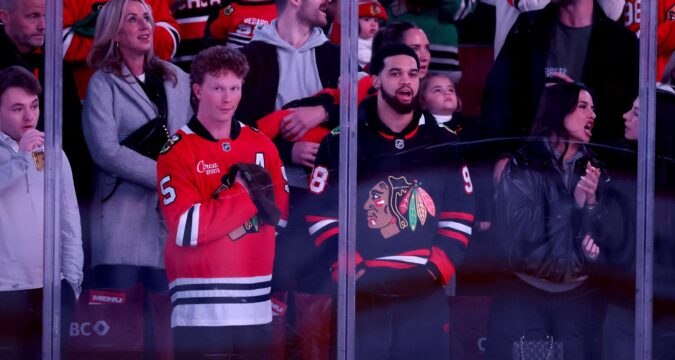
Crow-Armstrong and Williams got a close-up look at Bedard on Monday with their on-glass front-row seats at the United Center. They visited the Hawks locker room following the 2-0 win over Winnipeg. Before leaving, Williams shouted, “Where’s Bedsy?” and got his black Bedard jersey signed by the Hawks’ star.
“Really cool to talk to them and just kind of pick their brains, it’s cool to anytime you get to meet somebody that’s a professional athlete in another sport and then see the differences and the similarities,” Hawks defender Alex Vlasic said of Williams and Crow-Armstrong. “They’re really good people and great players for the city of Chicago.”
Justin Steele is staying patient, eyeing his return
Chicago Cubs pitcher Justin Steele is introduced during the first day of the Cubs Convention at the Sheraton Grand Chicago on Friday, Jan. 16, 2026. (Chris Sweda/Chicago Tribune)
Justin Steele and the Cubs aren’t ready to declare yet when the left-hander will be ready to rejoin the rotation this year.
However, Steele took a step forward in his rehab process Friday when he threw off a mound for the first time since he underwent season-ending elbow surgery in April. Steele said Saturday he is feeling really good and hasn’t suffered any setbacks.
“There hasn’t really been any hiccups at all through this process,” Steele said. “It’s felt good the entire time. If anything, we’re ahead of schedule. Kind of been pushing the envelope the entire time, wanting to get off the mound, push the footage back as far as the throwing progression goes. But, yeah, it’s full steam ahead.”
Steele expects his surgeon, Dr. Keith Meister, will want him to be on some level of an innings limit for 2026 and so he anticipates that will impact when he comes back, though the belief is it will be sometime early in the season. The Cubs envision playing in October and making a deeper run this year, lessening a rush to get Steele back as soon as possible, especially with the depth they have built for the rotation.
“It definitely eases your mind knowing that it’s not a race to get back for opening day or something for that reason,” Steele said of pitching in October. “There’s definitely some comfortability knowing that I don’t have to rush out, and of course it’s going to be hard during spring training when everybody’s preparing and getting ready, and I’m preparing and getting ready and I’m going to want to leave with the team. But there won’t be anything forced as far as getting me ready for the season or anything.”
Cubs’ ‘really high’ belief in Moisés Ballesteros
Chicago Cubs designated hitter Moisés Ballesteros takes batting practice ahead of Game 3 of the NL wild-card series against the San Diego Padres at Wrigley Field in Chicago on Oct. 2, 2025. (Chris Sweda/Chicago Tribune)
The Cubs don’t have a full picture yet of how they will allocate their designated hitter playing time.
But if Moisés Ballesteros is on the Cubs’ roster to open the season, there is a “really high” comfort level in the 22-year-old getting a lot of those DH at-bats, general manager Carter Hawkins said Saturday.
“He showed that he can make a professional at-bat, he can handle the environment, the ability to do that in big situations later in the year last year,” Hawkins said. “Whether he starts with the club or not, we feel like he’s a great option for us, and we feel like he’s going to be a great hitter in this league for a long time.
“In terms of his ability to help us out, we have a lot of confidence.”
The Cubs return Carson Kelly and Miguel Amaya behind the plate, which would leave limited opportunities for Ballesteros to continue to improve as a catcher at the big-league level. Amaya is fully recovered and healthy after a mid-August left ankle sprain ended his season.
Denver Broncos’ Jarrett Stidham will be 7th QB to make 1st start of season in playoffs. A look at the other 6.
Bo Nix’s broken ankle has placed Jarrett Stidham into most unusual territory.
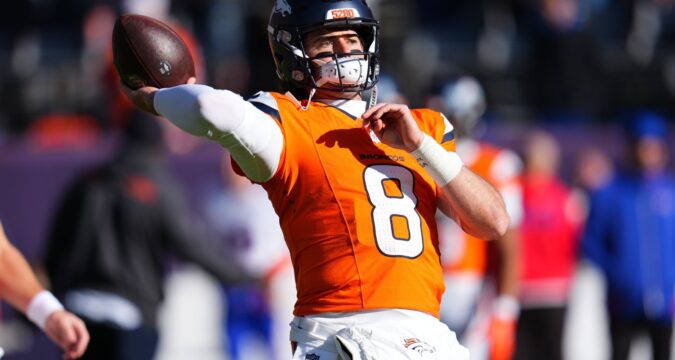
After throwing no passes and taking four offensive snaps all season, Stidham will take over as starting quarterback for the Denver Broncos in the AFC title game against the New England Patriots on Sunday.
Stidham hasn’t thrown a pass in a regular-season or playoff game since starting the final two games in 2023, getting his only action in practice and the preseason since then.
According to Sportradar, Stidham will be the seventh quarterback since starts began being tracked in 1950 to start a playoff game in a season in which he didn’t start in the regular season.
Frank Reich was the only one of the previous six to win as a fill-in when he won two starts for the Buffalo Bills in the 1992 playoffs in place of Jim Kelly.
Stidham will join Joe Webb as the only quarterbacks to start a playoff game after not throwing a pass in the regular season, and he’ll be the second to make his first start in the conference title game or Super Bowl. Roger Staubach made his first start in the 1972 season in the NFC title game for the Dallas Cowboys, the year after he was named Super Bowl MVP.
Here’s a look at the six quarterbacks who started a playoff game in a season in which they had no regular-season starts.
Taylor Heinicke, 2020 Washington Football Team
Washington quarterback Taylor Heinicke looks to pass against the Buccaneers during the second half of an NFC wild-card game Jan. 9, 2021, in Landover, Md. (AP Photo/Julio Cortez)
Heinicke had bounced around the NFL for more than five years when Washington signed him to its practice squad late in the 2020 season. He replaced Dwayne Haskins late in a Week 16 loss but reverted to a backup role the following week behind Alex Smith.
Smith won the finale to clinch a playoff berth with a 7-9 record but was unavailable for the wild-card round because of a calf injury. Heinicke stepped in and made his second career start, throwing for 306 yards and a touchdown in a loss to the eventual Super Bowl champion Tampa Bay Buccaneers.
Connor Cook, 2016 Oakland Raiders
Raiders quarterback Connor Cook is sacked by Texans outside linebacker Whitney Mercilus during the second half of an AFC wild-card game Jan. 7, 2017, in Houston. (AP Photo/Eric Gay)
A promising season for the Raiders ended in disappointment in 2016. Derek Carr led the team to its first playoff berth in 14 years but broke his leg in Week 16. Matt McGloin started the season finale but got hurt, setting the stage for rookie Cook to make his first career start in a wild-card game in Houston.
Cook was 18 of 45 for 161 yards with one touchdown and three interceptions in a 27-14 loss to the Texans and never appeared in an NFL game again.
Joe Webb, 2012 Minnesota Vikings
Vikings quarterback Joe Webb in the grasp of Packers outside linebacker Dezman Moses on Jan. 5, 2013, at Lambeau Field in Green Bay. (Chris Polydoroff/Pioneer Press)
Webb had played only three offensive snaps — one fewer than Stidham this season — when he was called on to start a wild-card game against the Green Bay Packers after Christian Ponder went down with an elbow injury.
Webb had started two games in 2010 but hadn’t thrown a single pass in 2012 before the game against the Packers. He was 11 of 30 for 180 yards with one touchdown and one interception in a 24-10 loss.
Frank Reich, 1992 Buffalo Bills
Quarterback Frank Reich passes against the Oilers during the Bills’ rally from a 32-point deficit to win an AFC playoff game Jan. 3, 1993, in Orchard Park, N.Y. (John Hickey/AP)
After Jim Kelly hurt his knee in the season finale, Reich got the nod for the wild-card game against the Houston Oilers and delivered a memorable performance.
Buffalo fell into a 35-3 hole early in the third quarter before Reich engineered the biggest comeback in playoff history. He threw four touchdown passes to lead the Bills to a 41-38 overtime win. Reich followed that up with a win the next week in Pittsburgh before Kelly returned for an AFC title game win against the Miami Dolphins.
Gary Danielson, 1983 Detroit Lions
After starting all 16 games in 1980 for the Lions, Danielson split time the next two seasons with Eric Hipple. Danielson got benched for Hipple for a playoff game in 1982 after leading the team to a win in the finale to clinch a postseason berth.
Hipple then started all 16 games in 1983, with Danielson coming off the bench 10 times to throw 113 passes and seven touchdown passes. But Hipple hurt his knee in the season finale, and Danielson made his first start of the 1983 season in the divisional round against the San Francisco 49ers.
The results were rough as Danielson threw five interceptions — four in the first half — but still almost came out with a win. Joe Montana threw a go-ahead touchdown pass to Freddie Solomon with 1:23 to play to make it 24-23. Danielson led Detroit into field-goal range, only for Eddie Murray to miss a 43-yarder in the closing seconds.
Roger Staubach, 1972 Dallas Cowboys
Cowboys quarterback Roger Staubach rears back to pass 22 yards to Ron Sellers on a third-down play late in the second quarter of the NFC championship game against Washington on Dec. 31, 1972. (AP)
Staubach had led the Cowboys to a Super Bowl title in the 1971 season but separated his shoulder in a preseason game. Craig Morton took over as the starter and kept the job even when Staubach was healthy again late in the season.
But coach Tom Landry went to Staubach in the divisional round with Dallas trailing the 49ers 28-13, and he engineered one of the biggest playoff comebacks ever. Staubach threw for two touchdowns in the final 90 seconds to help the Cowboys win 30-28 and advance to the NFC title game.
Staubach then got his first start since winning Super Bowl MVP the previous season, but he struggled in a 26-3 loss to Washington.
https://www.chicagotribune.com/2026/01/20/denver-broncos-jarrett-stidham-playoffs/

Bessent Says MSM Causing “Hysteria” Over Greenland, Downplays Treasury Dumping Threat
Bessent Says MSM Causing “Hysteria” Over Greenland, Downplays Treasury Dumping Threat
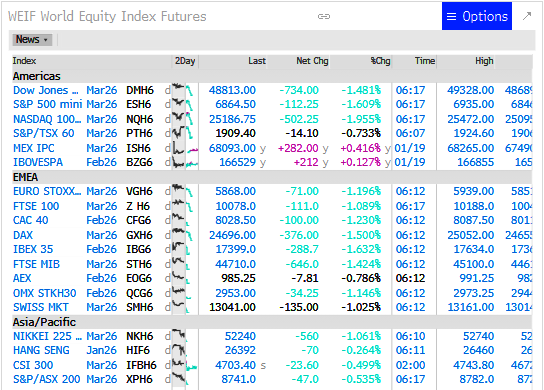
Asian and European stocks, along with US equity index futures, are deeply in the red this morning as tensions between President Trump and Europe intensify over Greenland.
At the annual World Economic Forum in Davos earlier, Treasury Secretary Scott Bessent urged calm on the Greenland issue. He also said the next Federal Reserve chair could be announced as early as next week.
“I am confident that the leaders will not escalate, and that this will work out in a manner that ends up in a very good place,” Bessent told reporters at a press conference.
Bessent called the uproar over Greenland “hysteria” that was very similar to the narrative chaos produced by corporate media headlines in April of last year, surrounding President Trump’s tit-for-tat trade war with top trading partners.
“This is the same kind of hysteria that we heard on April 2,” Bessent said. “There was a panic. And what I’m urging everyone here to do is sit back, take a deep breath, and let things play out.”
Asked about Europe dumping US treasuries, a potential economic weapon used by Brussels to combat Trump, Bessent dismissed that speculation as a “false narrative.”
“Sit back, take a deep breath, and let things play out.”
Treasury Secretary Scott Bessent urges countries to stick with their trade deals and not escalate against the United States https://t.co/ccfNCPbXBs pic.twitter.com/AK3XX9ai8d
— Bloomberg (@business) January 20, 2026
Bessent said the US Treasury market is “the best-performing market in the world” and the “most liquid” debt market in the world. He expected Europeans to hold their current exposure, not offload it.
“There’s a completely false narrative there,” he said. “I think everyone needs to take a deep breath. Do not listen to the media, who are hysterical,” adding, “It defies any logic, and I could not disagree more strongly on that.”
Over the weekend, President Trump said that Britain, Denmark, Finland, France, Germany, the Netherlands, Norway, and Sweden would be subject to a 10% tariff on all goods shipped to the US until Denmark agrees to cede Greenland.
Swissquote analyst Ipek Ozkardeskaya pointed out, “Europeans hold roughly $10 trillion in US assets: around $6 trillion in US equities and roughly $4 trillion in Treasuries and other bonds. Selling those assets would pull the rug from under US markets.”
In markets, UBS analyst Justinus Steinhorst said, “Sell America Trade is re-accelerating; week to date the dollar index is 85bp lower whilst Gold has added 2.7%. The US 10y has broken out above its 200DMA for the first time in months.”
Simon Penn from UBS also said, “Sell America is back on – all of US equities, Treasuries, and the dollar are under downward pressure.”
Penn noted:
Until last April’s initial tariff threats, that had never happened before. The S&P Emini is down 1.4% since Friday’s close, the US 10y yield has added 4bp, and the DXY down 0.4% from Friday’s close. Not only because of the latest tariff threats related to Greenland, but also because one of the pillars of this year’s US economic outlook – more cuts from the Fed, is now being questioned by the markets on chair uncertainty. Note that the 10y yield has added 13bp in the last three trading sessions – a greater range that it had experienced in the prior eight weeks. It’s back to where it was in the middle of last August.
“What President Trump is threatening on Greenland is very different than the other trade deals, so I would urge all countries to stick with their trade deals. We have agreed on them, and it does provide great certainty,” Bessent noted. He reaffirmed the US commitment to NATO, saying that US membership in the security bloc was “unquestioned.” “That does not mean we cannot have disagreements on the future of Greenland,” he concluded.
Tyler Durden
Tue, 01/20/2026 – 06:55
Germany’s Censorship Frontier And The Rise Of Digital Control
Germany’s Censorship Frontier And The Rise Of Digital Control
Submitted by Thomas Kolbe
Schleswig‑Holstein’s Minister‑President Daniel Günther has, in what felt like a genteel salon, pulled back the curtain on the true censorship ambitions of politics. In the safe biotope of public broadcasting, he simply babbled and hit the spotlight on the repressive tendencies within the party system. We now find ourselves in a critical defensive struggle against the enemies of liberty.
Some achieve notoriety and fame by chance. Fortune may fall into one person’s lap, another may experience his ten minutes of public shine through a fluke rhetorical spark. In the case of the Minister‑President of Schleswig‑Holstein in Germany, however, this is a dubious honor.
In his appearance on Markus Lanz’s show on Germany’s state TV “ZDF”, CDU politician Daniel Günther slid into that revealing tone of small talk to which people are prone precisely when they believe themselves in a supposedly safe social environment – a place where no criticism is expected, no matter what leaves their lips.
What emerged during his guest spot on Lanz was a condemnable attitude toward the principle of free speech and toward critical media: the threat of censorship up to and including the blocking of individual platforms, including the portal Nius, reveals a profound ethical collapse. A growing, subtly operating apparatus of repression is now reaching us – a warning we should take seriously.
It was almost comical how Lanz, styled by public‑broadcasting elites as a star moderator, in tandem with the state‑aligned media sector repeatedly sought in the aftermath to rhetorically downplay Günther’s clearly articulated desire for censorship. Decontextualize, diffuse, and smother the real scandal with new waves of outrage like the Greenland debate – that’s how the media repair operation works.
Imposing Order in the Digital Sphere
What is forming before our eyes is unmistakable. A surveillance apparatus coordinated by the EU Commission in Brussels is emerging, built on the Digital Services Act and extending like a kraken over national intelligence agencies such as the Federal Intelligence Service (BND).
In an echo chamber, Daniel Günther now operates in the mode of a censor‑in‑waiting, confident that he is secured by the party apparatus. As early as June of last year, the CDU of Schleswig‑Holstein unveiled a policy paper titled “Protecting Democracy – Effectively Combating Disinformation as Well as Hate and Incitement Online.” In fifteen pages, its authors sketched a concrete strategy to regulate content on platforms such as Telegram, Meta, and X. Totalitarian thinking and the prospect of fulfilling a secretly cherished control fetish seem to exert a peculiar fascination even on the second tier of party functionaries.
Followed over the past months — culminating in a real dispute with the U.S. government — one thing becomes clear: Europe’s political leadership seems to fear nothing more than losing its dominance over the public discourse.
Yet that is the very nature of social media: it allows individual opinions to float freely, to form clusters and to be cast loudly into the public sphere. That is their explosive power — and apparently the genuine problem from the perspective of those who would rather order, canalize, and control discourse. Günther is not alone in his crusade against a defiant opposition that raises its voice now against COVID lockdowns, now against overheated climate apocalypticism, and otherwise positions itself as broadly skeptical of the state.
German Roots
Strategically, the politics of initially gentle censorship followed a seemingly intelligent, media‑political path. Two strands define the rhetorical front:
On the one hand, so‑called youth protection is invoked whenever politicians attempt to justify instruments of surveillance into private communication. On the other, the fuzzy concept of combating “hate and incitement” online is used as a vector against our privacy. The state proclaims itself a moral warrior against evil, leaves definitions of what may be said in political discourse largely open, and operates alongside a network of so‑called Trusted Flaggers — digital informants who diligently report rhetorical borderline cases to public institutions. Then things can get tricky: house visits by the state or account suspensions have emerged as effective tools in the fight against dissent. State and banks — here, too, they pull in the same direction.
Such an apparatus creates a space of silent threat in which unspoken prejudgments loom. Participants in public debates — commentators, podcasters, and media makers — already apply the mental censorship scissors in advance, reducing the critical sound against government institutions, parties, and political personalities.
As the politics of gentle censorship increasingly proves ineffective, sharper swords are drawn. The atmosphere on digital platforms is growing harsher. Even memes, sharp comments, or legally unproblematic insults become casus belli for the surveillance apparatus — a fine but increasingly overt network that perceptibly constricts the free field of opinion.
History will not look kindly upon our country. Germany was, in a way, the starting point — the sick root — of this system. In 2017, with the Network Enforcement Act (NetzDG), the first institutionalized attack on freedom of speech occurred, and Germany was its impetus. This censorship contraption was championed by SPD politician and then‑Justice Minister Heiko Maas. He seized the opportunity to indulge his resentment toward the civic sphere of freedom. He was backed by his coalition partner, Interior Minister Thomas de Maizière of the CDU, who appears equally devoted to the spirit of unfreedom. A fateful duo, carrying this grim work forward in an ethically sclerotic coalition.
It is striking how this push, born of German intent, first took tangible form in the Digital Services Act in Brussels, how eagerly the Brussels apparatus adopted this initiative, and how it later took hold in the political programs of German parties. Everything now follows a hierarchical command cascade. The CDU Schleswig‑Holstein’s digital control guidelines fit seamlessly into the prescribed strategy.
There is unanimity within the party apparatus; dissent comes only from the much‑maligned AfD, which staunchly opposes citizen surveillance in the digital space. In front of the firewall, it is getting uncomfortable.
The progress achieved in building the EU’s censorship apparatus, and the frantic national efforts to bring it into practical operation, show unmistakably how poorly our freedom is faring. Just as grim is the future of civilizational fundamental values — personal liberty before the repressive apparatus as well as freedom of expression itself.
What we are witnessing now is an anti‑civilizational blow, a form of cultural degeneration presented in the guise of a climate‑socialist restructuring of our society. The rhetoric is morally charged, the scope sweeping, the consequences deeply authoritarian. Where are the voices of elite representatives in this land who would speak out against the growing apparatus of repression? They have fallen silent and thereby been discredited.
The Price of Crisis
It is foreseeable what we must expect. The more severe the economic crisis becomes, impacting the prosperity of the broad masses, the more relentlessly the constructed apparatus will hunt dissidents and free media. Repression follows crisis like a shadow follows the body, ever deeper into the desert of totalitarianism.
And who knows — perhaps one day we will thank Daniel Günther for his naive, short‑sighted honesty. Perhaps he was the one who inadvertently stimulated our society’s immune system, sharpening the awareness of many for the real underlying problem of our time.
If so, Günther would have succeeded — albeit as antagonist and accidentally, yet ultimately in the service of freedom, seizing his moment of fame. He would have done a good deed by helping to save our society from drifting into the swamp of socialist planned economy — a system that always produces a repressive, presumptuous, and stupefying control apparatus.
* * *
About the author: Thomas Kolbe is a German graduate economist. For over 25 years, he has worked as a journalist and media producer for clients from various industries and business associations. As a publicist, he focuses on economic processes and observes geopolitical events from the perspective of the capital markets. His publications follow a philosophy that focuses on the individual and their right to self-determination.
Tyler Durden
Tue, 01/20/2026 – 06:30
https://www.zerohedge.com/political/germanys-censorship-frontier-and-rise-digital-control

Review: We can map that: Newberry Library exhibits 500-plus years of borders, folds and graticules
Getting to the Newberry Library to visit “Mapping Outside the Lines,” an exhibition of maps old and new, scientific and artistic, was easy. I typed the address into my car’s GPS and followed its directions. I did not have to deal with the awkwardness of unfolding and refolding a large sheet of paper, nor sorting the myriad layers of information contained therein, nor ignoring the rest of the illustrated region, beyond my starting point and destination. I had no trouble figuring out where I was and I didn’t get lost, since GPS always knows my position and adjusts accordingly.
This looked and felt very different from how maps were used up until a mere two decades ago. Happily, the Newberry has a rack of Rand McNally road maps, just like at a gas station of yore, that anyone unfamiliar with such marvelous, unwieldy things can try out. They will no doubt baffle some visitors. Reading maps, not to mention tucking them back up neatly, takes skill. What do thin versus thick versus dotted lines mean? Or those hatch marks, that fuzz, those colors, the tiny numbers over there? Is that a crease or a geographic feature? Why does the territory stop here, what’s not being shown in that blank area, and how about the space that’s blocked by the legend?
Over the centuries, mapmakers have experimented, innovated, and eventually standardized the representation of both natural and man-made features, often in keeping with scientific discovery. Once the floor of the Atlantic Ocean or a Chilean mountain range had been surveyed, charts needed to be drawn up to communicate that information, and it was hardly obvious how. Long-ago cartographers simply drew pictures of waves or mountains in the appropriate areas, but beginning in the 18th century, different types of lines began to be used to show depth and altitude on a flat surface. A display of books for teaching mapmaking illustrates the possibilities — and provides a surprising boon for figurative and abstract artists alike. Joseph Enthoffer’s “Types of Orography,” published in 1870 and concerning the geography of mountains, could be a page of erotic ink drawings. British artist Ed Fairburn caught the drift, as can be seen in his 2017 remake of an old map of Cardiff, painted over with squiggles of green and brown to bring out the portrait hiding therein.
In this 1951 Rand McNally Road Atlas of the United States, Canada and Mexico, the Kentucky-Tennessee spread of red and blue-coded roads looks like the most complex set of varicose veins ever. But it could help you get where you were trying to go. (Provided by the Newberry Library)
Other maps beg misreading, too. The earliest manuscript on view at the Newberry, a portolan chart by the Majorcan cartographer Petrus Roselli from 1456, is criss-crossed with rhumb lines meant to help a sailor navigate in a constant cardinal direction across the Mediterranean and Black Seas. They could be rhumba steps, for all I understand. Half a millennium later, the experimental composer John Cage created an unexpected lookalike by drawing with colored markers on a map of Chicago. Each of his 128 lines connects two random addresses and is labelled for a different dance step. Cage, at least, probably wouldn’t have minded my getting lost while interpreting his score.
Graticules are another type of line that appears on maps, gridding longitude and latitude. They’re always there, even when not visible, like a geometric skeleton on which the body of the planet hangs. Surprisingly flexible, graticules allow mapmakers to spin the globe around and make just about anywhere the focal point of the universe, as in a 1739 hand-colored world map centered on Paris, complete with handy sidebars explaining how to measure the distance from the French capital to everywhere else. In 1979, the great Hungarian-American land artist Agnes Denes pushed the limits of graticules a million miles further, diagramming pyramidal, cubic, donut, and other-shaped Earths, a series of alternative realities still recognizably familiar.
Most Chicagoans possess an inborn understanding of graticules, the city being one big grid of north-south, east-west streets with a zero-zero point at the intersection of State and Madison. But just as graticules have a mathematical neutrality easily manipulated by real-world forces — Paris is only the center of the world for the French, after all — so too does the Chicago grid. All quadrants are not equal in this, one of America’s most segregated cities. Documenting corresponding North and South Side addresses, as Tonika Lewis Johnson does in her ongoing “Folded Map Project,” reveals much about systemic disinvestment. The 6900 block of North Ashland in Edgewater looks profoundly unlike the 6900 block of South Ashland in Englewood, despite both being residential neighborhoods of similar vintage. Frank conversation and new social bonds result when Johnson arranges for “map twins,” the residents of paired homes, to meet.
A bridge to segregation? Englewood photographer introduces neighbors on opposite sides of Chicago
“Mapping Outside the Lines” includes plenty of other examples of the social, economic, and political aspects of mapmaking. Boundaries merit an entire section and include a WWI-era chart of Europe divided according to major ethnicities, minor ones be damned; an 1858 map of Louisiana graphed into tidy rectangles to ease westward expansion; and a Spanish diagram of the Western Indies from the early 1600s that divvied it up between Spain and Portugal, despite the fact that the land was claimed by Indigenous people who already lived there, and that the Spanish hadn’t ever been. Legal fictions, all of them, that had enormous impacts on world history and individual lives, and continue to do so. Updates might include recent controversies about redistricting and gerrymandering across the U.S., as well as lethal border disputes in places as far-flung as Israel, Ukraine, Kashmir, and the Democratic Republic of Congo.
The real world, it turns out, is a whole lot messier than mapmakers, and their commissioners, would have us believe. That can make it hard to actually get places, hence the extreme simplicity of Massimo Vignelli’s famed 1978 New York City subway map and innovations like strip maps. First popularized in John Ogilby’s Britannia atlas of 1698, strip maps are oriented to a trip’s start and end points, and narrowly follow convenient highways, rail lines, or flight paths. They look uncannily like smart phone nav apps, and so the journey comes full circle.
Lori Waxman is a freelance critic.
“Mapping Outside the Lines” runs through February 14 at the Newberry Library, 60 W. Walton St., 312-943-9090 and www.newberry.org
https://www.chicagotribune.com/2026/01/20/mapping-outside-lines-newberry-library/