Category: News
Administración Trump insta a jueza a rechazar intento de Minnesota de frenar su ofensiva migratoria
Por STEVE KARNOWSKI
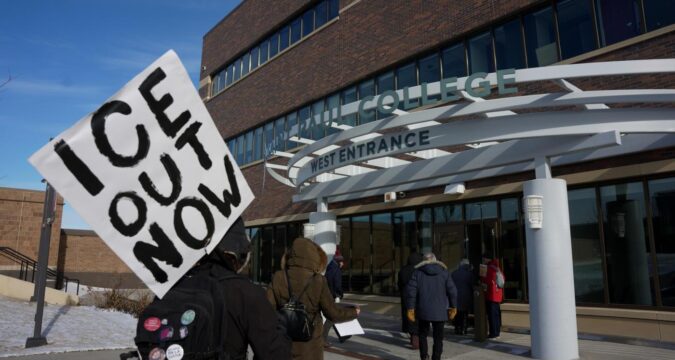
MINNEAPOLIS (AP) — La administración Trump está instando a un jueza a rechazar los esfuerzos de Minnesota y de las ciudades de Minneapolis y St. Paul para detener las redadas migratorias que han estremecido a esas comunidades.
El Departamento de Justicia calificó la demanda, presentada poco después del tiroteo fatal de Renee Good por un agente de inmigración, como “legalmente frívola”. Los abogados argumentaron que el Departamento de Seguridad Nacional está actuando dentro de sus poderes legales para hacer cumplir las leyes de inmigración.
Las redadas han hecho que el estado sea más seguro con la detención de más de 3.000 personas que estaban en el país ilegalmente, declaró el gobierno el lunes en un documento judicial.
“En pocas palabras, Minnesota quiere un veto sobre la aplicación de la ley federal”, escribieron los abogados del Departamento de Justicia.
El fiscal general de Minnesota, Keith Ellison, señaló que el gobierno está violando la libertad de expresión y otros derechos constitucionales con sus redadas. Describió a los agentes armados como mal entrenados y dijo que la “invasión” debe cesar.
La demanda presentada el 12 de enero busca una orden para detener o limitar las redadas. Se esperan más gestiones judiciales y no se sabe cuándo la jueza Katherine Menendez tomará una decisión.
Ilan Wurman, quien enseña derecho constitucional en la Facultad de Derecho de la Universidad de Minnesota, duda que los argumentos del estado tengan éxito.
“No hay duda de que la ley federal es suprema sobre la ley estatal, que la aplicación de la ley de inmigración está dentro del poder del gobierno federal, y que el presidente, dentro de los límites legales, puede asignar más recursos federales a los estados que han sido menos cooperativos en ese espacio de aplicación que otros estados”, dijo Wurman a The Associated Press.
Julia Decker, directora de políticas del Centro de Derecho de Inmigrantes de Minnesota, expresó su frustración porque los activistas no tienen forma de saber si las cifras de arrestos del gobierno y las descripciones de las personas bajo custodia son precisas. Ciudadanos estadounidenses han sido sacados de sus hogares y vehículos durante las redadas en Minnesota.
“Estamos hablando de personas reales, de las que potencialmente no tenemos idea de lo que les está sucediendo”, indicó Decker.
En una demanda separada, Menendez sostuvo el viernes que los policías no pueden detener ni usar gas lacrimógeno contra manifestantes pacíficos que no están obstruyendo a las autoridades.
Good, de 37 años, fue asesinada el 7 de enero mientras movía su vehículo, que había estado bloqueando una calle de Minneapolis donde operaban efectivos de Inmigración y Control de Aduanas. Funcionarios de la administración Trump dicen que el agente, Jonathan Ross, le disparó en defensa propia, aunque los videos del encuentro muestran que el Honda Pilot se alejaba lentamente de él.
Desde entonces, el público ha confrontado repetidamente a los agentes, soplando silbatos y gritándoles insultos. Ellos, a su vez, han utilizado gas lacrimógeno e irritantes químicos contra los manifestantes. Los transeúntes han grabado videos de efectivos usando un ariete para entrar en una casa, así como rompiendo ventanas de vehículos y sacando a personas de los autos.
El presidente Donald Trump amenazó la semana pasada con invocar una ley de 1807 y enviar tropas a Minnesota, aunque se ha retractado, al menos en sus declaraciones públicas.
___________________________________
Esta historia fue traducida del inglés por un editor de AP con ayuda de una herramienta de inteligencia artificial generativa.

Naperville News Digest: Downtown Naperville Music Box display to end Sunday; Citizen Police Academy applications being accepted
Downtown Naperville Music Box display to end Sunday
Naperville Music Box, an interactive art display, will be on view through Sunday, Jan. 25.
The temporary art piece has been open since early December in the alley between the Apple and Sephora stores in downtown Naperville. It combines music, lights and color to create an immersive sensory experience and fill an otherwise ordinary alley into a space with sound, light and discovery, organizers said.
“The installation has become a gathering point for families, passersby and curious explorers of all ages, encouraging spontaneous interaction and connection,” a news releasesaid.
The temporary art exhibit was designed by the creative production company Freightwood and artist Maddie Peterson, a Naperville native, and Tony Award-nominated designer Joshua Carr.
It also is part of ArtForum Naperville’s mission to create accessible, meaningful public art and to help establish a path for artists, organizations and property owners to collaborate on future projects in the city, the release said.
Citizen Police Academy applications being accepted
Applications for the 10-week Citizen Police Academy hosted by the Naperville Police Department are due Friday, Jan. 30.
The free program will be held from 6:30 to 9:30 p.m. Wednesdays from March 4 to May 6 at the police department, 1350 Aurora Ave.
Class size is limited, and applications will be considered in the order they are received, the department said. Participants must be at least 18 and live or work in Naperville. A criminal background check will be conducted on each applicant, the department said.
The academy will consist of classroom lectures, interactive discussions and hands-on demonstrations of various aspects of police work, including patrols, forensics and investigations.
The application and waiver can be found at www.naperville.il.us/cpa. They should be submitted to Jim Pacetti by email at PacettiJ@naperville.il.us, by fax at 630-305-7004 or through the mail or in person at the Naperville Police Department.
Proceeds from a celebration of singer Dolly Parton’s 80th birthday will support free, monthly books for Will County children through the Imagination Library of Will County, part of the nonprofit Dolly Parton’s Imagination Library organization. (AP)
Will County fundraiser to support free books for children
Proceeds from a celebration of singer Dolly Parton’s 80th birthday will support free, monthly books for Will County children.
The Imagination Library of Will County, part of the nonprofit Dolly Parton’s Imagination Library organization, will host the fundraiser at 6 p.m. Thursday, Jan. 22, at Hollywood Casino, 1401 Gateway Blvd., Joliet.
There will be a “Singo Bingo,” and a chance to compete for prizes donated by local businesses, a news release said.
Tickets are $20 and can be purchased at willcountyillinois.org/dolly-partons-80th-birthday-party.
Imagination Library mails free, high-quality and age-appropriate books to Will County children from birth to 5 years old.
Since launching last year, the program has signed up 5,500 Will County children and mailed more than 20,000 books. It is a partnership between the Will County Executive Office, Will County Economic Development Foundation and the Dollywood Foundation and is funded by local donors and partners, county officials said.
For more information, go to www.willcountyimaginationlibrary.org.
https://www.chicagotribune.com/2026/01/20/naperville-music-box-academy-police-parton/

‘Extreme cold temperatures’ hit Chicago area Tuesday
Wind chills of up to 15 degrees below zero hit the Chicago area Tuesday morning, with the National Weather Service warning of “extreme cold temperatures” throughout the day.
Wind chills of 10 degrees below to 15 degrees below zero will continue throughout the mid-morning in portions of north central and northeast Illinois as well as northwest Indiana, the weather service said.
Fluffy, accumulating snow is also expected to blanket the area late Tuesday evening through Wednesday morning, particularly near and north of Interstate 80. Roads may become slick during the morning commute.
A cold front will again move through Wednesday evening bringing snow showers and wind gusts up to 35 miles per hour, which may cause blowing and drifting snow. Dangerous cold weather will return later this week, the weather service warned.
https://www.chicagotribune.com/2026/01/20/extreme-cold-temperatures-hit-chicago-area-tuesday/
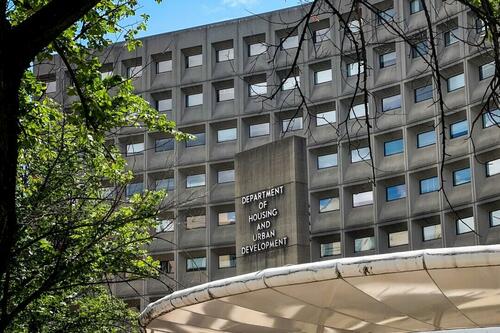
HUD Initiates Investigations Into Race-Based Housing Programs In Minneapolis
HUD Initiates Investigations Into Race-Based Housing Programs In Minneapolis
Authored by Naveen Athrappully via The Epoch Times,
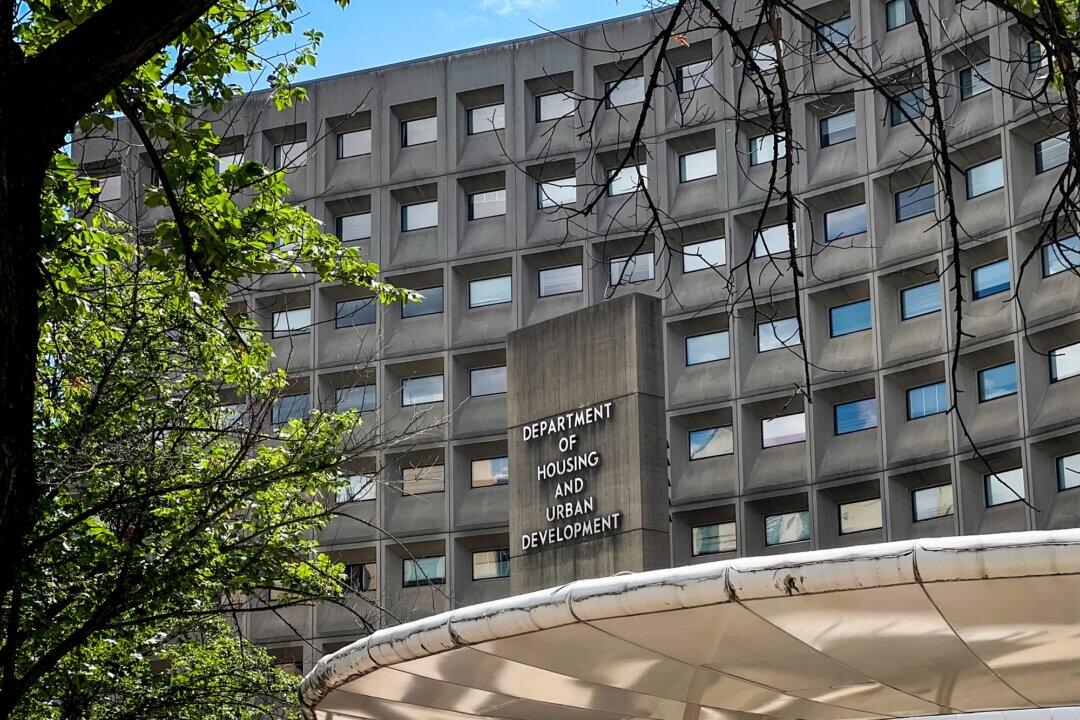
The Department of Housing and Urban Development (HUD) is investigating the city of Minneapolis’s “comprehensive racialized housing plans,” the department said in a statement on Jan. 16.
HUD’s Office for Fair Housing and Equal Opportunity (FHEO) notified the city of the investigation and stated its belief that the city’s race-based housing programs violate the Fair Housing Act and Title VI of the Civil Rights Act of 1964.
In a Jan. 15 letter to Minneapolis Mayor Jacob Frey, FHEO Assistant Secretary Craig W. Trainor said the Fair Housing Act makes it illegal to discriminate against any person on the basis of race or national origin in the sale or rental of a dwelling. Title VI bans racial or national origin discrimination in any program that receives federal funding.
The letter alleged an increase in racial and ethnic favoritism within the Minnesota government, calling it “alarming.”
Trainor cited fraud committed by Somali citizens in the state that he said cost U.S. taxpayers at least $9 billion. Trainor accused Gov. Tim Walz’s administration of allowing the fraud to flourish and of trying to politically align with the Somali community, primarily for election favoritism.
“This racial favoritism appears to extend to Minneapolis’s housing policy,“ the letter reads.
”Specifically, Minneapolis has committed to making available and allocating housing resources based on race and nationality.”
The letter cited the “Minneapolis 2040” plan issued by the city, which aims to prioritize housing resources to “cultural districts,” which are defined in the plan as areas rooted in “communities significantly populated by people of color, Indigenous people, and/or immigrants.”
The plan promises to expand programs that support existing homeowners in affording and maintaining their homes, with a “focus on people of color, indigenous people.” It vowed to use “racial equity goals” as one criterion when examining various state programs and services.
The city’s Community Planning and Economic Development department also intends to prioritize rental housing to black people, indigenous people, people of color, and immigrant groups by leveraging its rental licensing authority, the letter reads.
“As a result of Minneapolis’s racialized housing policy, I have directed the Office of Special Investigations to investigate Minneapolis,” Trainor wrote.
“If FHEO finds reasonable cause to believe Minneapolis has or intends to violate the civil rights of its citizens, we will file charges of discrimination or refer the matter to the United States Department of Justice for further enforcement.”
President-elect Donald Trump’s nominee for Secretary of the U.S. Department of Housing and Urban Development, Eric Scott Turner, testifies before the Senate Committee on Banking, Housing, and Urban Affairs on Capitol Hill in Washington on Jan. 16, 2025. Madalina Vasiliu/The Epoch Times
HUD Secretary Scott Turner called Minnesota ground zero for fraud and corruption, accusing the state of choosing to ignore the law and instead serving a “cynical political agenda.”
These alleged actions undermine American values and the commitment to equal treatment under the law for all citizens, he said.
“In Minnesota, @HUDgov has uncovered up to $84 million in ineligible assistance during Biden’s final year—including $496,000 in improper assistance to 509 dead tenants,” Turner said in a Jan. 13 post on X.
The Epoch Times reached out to Walz and Frey for comment and did not receive a response.
Minnesota Operations, Fraud
Both Walz and Frey have been highly critical of the Trump administration’s immigration enforcement actions in the state.
In a Jan. 15 statement, Walz accused Immigration and Customs Enforcement agents of “pulling over people indiscriminately, including U.S. citizens, and demanding to see their papers.”
On Jan. 17, Walz’s office dismissed reports that the governor was being investigated by the Department of Justice.
“Weaponizing the justice system and threatening political opponents is a dangerous, authoritarian tactic,” he said.
Meanwhile, in a Jan. 7 statement, Frey asked Immigration and Customs Enforcement to leave Minneapolis and the state “immediately.”
“We stand by our immigrant and refugee communities—know that you have our full support,” he said.
Multiple federal agencies are probing Minnesota for the fraudulent use of federal funds.
Last month, a federal prosecutor suggested that more than 50 percent of the approximately $18 billion in federal funds assigned to the state since 2018 may have been stolen.
The funds were channeled into 14 state programs, including housing, autism, and child nutrition services run by Somalis.
Since 2022, almost 100 people have been charged in various Minnesota fraud schemes, and most of them are of Somali descent.
Tyler Durden
Tue, 01/20/2026 – 12:00

Netflix intensifica oferta por Warner Bros con propuesta en efectivo de 72.000 millones
Por MICHELLE CHAPMAN y WYATTE GRANTHAM-PHILIPS
Netflix ofrece comprar el estudio y el negocio de streaming de Warner Bros. Discovery en efectivo, en un esfuerzo por ganar el favor de los accionistas del gigante de Hollywood para su fusión de 72.000 millones de dólares y potencialmente frustrar una oferta hostil de Paramount, propiedad de Skydance.
En diciembre, Netflix cerró un acuerdo en efectivo y acciones con Warner valorado en 27,75 dólares por acción, dándole un valor empresarial total de 82.700 millones de dólares, incluida la deuda. Sin embargo, el martes, las compañías anunciaron que revisarían la transacción para simplificar su estructura, proporcionar más certeza de valor para los accionistas de Warner y acelerar el camino hacia una votación de los accionistas, que dijeron podría llegar en abril.
La transacción en efectivo sigue valorada en 27,75 dólares por acción de Warner. Los accionistas de Warner también recibirán el valor adicional de las acciones de Discovery Global, que se convertiría en una empresa pública independiente tras una separación previamente anunciada de Warner Bros.
La dirección de Warner ha respaldado repetidamente una fusión con Netflix, y las juntas directivas de ambas compañías aprobaron el acuerdo en efectivo anunciado el martes. En un comunicado, el CEO de Warner, David Zaslav, dijo que el acuerdo revisado “nos acerca aún más a combinar dos de las mayores compañías de creación de contenido del mundo”.
Un portavoz de Paramount declinó comentar cuando fue contactado por The Associated Press el martes. A diferencia de Netflix, Paramount quiere adquirir toda la compañía de Warner, incluidos canales como CNN y Discovery, y se dirigió directamente a los accionistas con una oferta en efectivo de 77.900 millones de dólares el mes pasado.
Los accionistas de Warner tienen hasta las 5:00 p.m. del miércoles para ofrecer sus acciones en apoyo de la oferta de Paramount, que tiene un valor empresarial de 108.000 millones de dólares, incluida la deuda. Pero ese plazo podría extenderse aún más. Aunque Paramount se negó a compartir más detalles el martes, el Wall Street Journal informó la semana pasada que la compañía estaba planeando otra extensión.
Más allá de su oferta pública, Paramount ha prometido una lucha por poder. La semana pasada, la compañía dijo que nominaría su propia lista de directores antes de la próxima reunión de accionistas de Warner, cuya fecha aún no se ha fijado.
Paramount también presentó una demanda en el Tribunal de Cancillería de Delaware buscando obligar a Warner Bros. a revelar a los accionistas cómo valora su oferta y la oferta competidora de Netflix. Pero un juez negó el jueves la solicitud de Paramount de acelerar ese procedimiento.
En un comunicado en ese momento, Warner aplaudió la decisión del tribunal y calificó la demanda de Paramount como “otro intento poco serio por distraer”. Mientras tanto, Paramount sostuvo que el fallo no se refería a los méritos de sus acusaciones y dijo que los accionistas de Warner “deberían preguntarse por qué su Junta está trabajando tan arduamente para ocultar esta información”.
Independientemente de quién gane la ventaja, una venta de Warner Bros. Discovery podría ser un proceso largo y prolongado que casi con certeza atraerá un tremendo escrutinio antimonopolio. El martes, Netflix y Warner señalaron que esperan cerrar una fusión de 12 a 18 meses desde el acuerdo de diciembre.
Aun así, la oferta hostil de Paramount podría complicar ese cronograma. También se espera que la política entre en juego bajo el presidente Donald Trump, quien ha hecho sugerencias sin precedentes sobre su participación personal en un posible acuerdo.
Grupos comerciales de toda la industria de medios y entretenimiento han dado la voz de alarma sobre ambas ofertas, advirtiendo que una mayor consolidación en la industria podría resultar en pérdidas de empleo y menos diversidad en el contenido, con consecuencias particularmente negativas para la cinematografía.
Las compañías han hablado sobre esas preocupaciones. El martes, el codirector general de Netflix, Ted Sarandos, dijo que combinarse con Warner “ofrecerá una mayor elección y un mayor valor a las audiencias de todo el mundo” tanto en casa como en los cines, mientras “impulsa la creación de empleo y el crecimiento a largo plazo de la industria”.
Las acciones de Netflix subieron un poco menos del 1% el martes por la mañana, mientras que las acciones de Warner Bros. Discovery y Paramount-Skydance cayeron ligeramente.
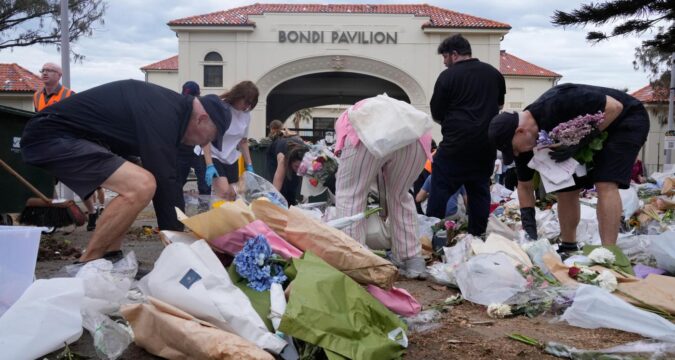
Australia aprueba leyes contra discurso de odio y armas tras ataque en Sydney
Por ROD McGUIRK
MELBOURNE, Australia (AP) — El Parlamento de Australia aprobó el martes leyes contra el discurso de odio y sobre armas propuestas después de que dos tiradores mataran a 15 personas en un festival judío en Sydney el mes pasado, en un ataque que las autoridades dicen fue inspirado por el grupo Estado Islámico.
Las leyes crean nuevas restricciones a la posesión de armas y establecen un programa de recompra financiado por el gobierno para compensar a las personas obligadas a entregar sus armas de fuego.
Las leyes contra el discurso de odio permiten prohibir grupos que no encajan en la definición oficial de organización terrorista como el grupo islamista Hizb ut-Tahrir. Hizb ut-Tahrir ya está prohibido en algunos países.
El gobierno había planeado inicialmente una sola ley, pero separó los temas en dos proyectos presentados a la Cámara de Representantes el martes.
Ambos planes pasaron inicialmente por la Cámara, donde el gobierno del Partido Laborista de centroizquierda tiene la mayoría de los escaños. La ley sobre armas de fuego fue la primera en ser aprobada por el Senado, donde ningún partido tiene mayoría, con una votación de 38 a 26. La ley contra el discurso de odio le siguió con una votación de 38 a 22 en la cámara alta de 76 escaños.
El ministro de Asuntos Internos, Tony Burke, dijo al Parlamento que los presuntos atacantes de Sydney — Sajid Akram, de 50 años y su hijo Naveed Akram, de 24 — no hubiesen podido tener armas si esas leyes hubiesen estado en vigencia en ese entonces.
El padre, quien fue abatido por la policía durante el ataque a los fieles judíos durante las celebraciones de Janucá en Bondi Beach el 14 de diciembre, poseía legalmente las armas utilizadas.
Su hijo, que resultó herido, ha sido acusado de docenas de delitos, incluidos 15 cargos de asesinato y uno de cometer un acto terrorista.
Burke afirmó que el padre, nacido en India, no hubiera podido tener armas bajo las leyes propuestas porque no era ciudadano australiano. El hijo, nacido en Australia, tampoco hubiera podido porque había estado bajo vigilancia de la Organización Australiana de Inteligencia de Seguridad, o ASIO, en 2019 por su asociación con presuntos extremistas.
“Al responder al ataque terrorista antisemita, necesitamos abordar la motivación y necesitamos abordar el método”, dijo Burke al Parlamento. “Estamos tratando con dos personas que tenían un horrible fanatismo antisemita en sus mentes y en sus corazones. Y tenían armas que no deberían haber tenido”.
Bajo las nuevas leyes, ASIO también podrá ayudar a decidir qué grupos de odio deben ser prohibidos. El grupo neonazi National Socialist Network ha anunciado planes para disolverse en lugar de aceptar que sus miembros estén bajo vigilancia.
El partido opositor Nationals se había opuesto a la legislación contra el discurso de odio, argumentando que podría afectar la libertad de expresión.
“La legislación necesita enmiendas para garantizar mayores protecciones contra consecuencias no deseadas que limiten los derechos y la libertad de expresión de los australianos comunes y de la comunidad judía”, declaró el líder de los Nationals, David Littleproud, en un comunicado el martes por la noche.
El Parlamento iba a reanudar sesiones en febrero, pero fue convocado antes para responder al peor tiroteo masivo de Australia desde 1996.
Un tirador solitario mató a 35 personas en el estado de Tasmania ese año, en una masacre que impulsó a la nación a introducir estrictas leyes antiviolencia que redujeron drásticamente el número de armas de fuego de disparo rápido en posesión pública. El gobierno entonces recompró casi 700.000 armas.
Pero los estados de Tasmania y Queensland y el Territorio del Norte están resistiendo el impulso federal para una nueva recompra de armas, para la cual los estados y territorios deben pagar la mitad del costo.
Burke indicó que su gobierno continuará negociando con los estados y territorios sobre la recompra.
___________________________________
Esta historia fue traducida del inglés por un editor de AP con ayuda de una herramienta de inteligencia artificial generativa.
US NatGas Spikes Most Since Ukraine Invasion On Arctic Blast, Major Winter Storm Threat
US NatGas Spikes Most Since Ukraine Invasion On Arctic Blast, Major Winter Storm Threat
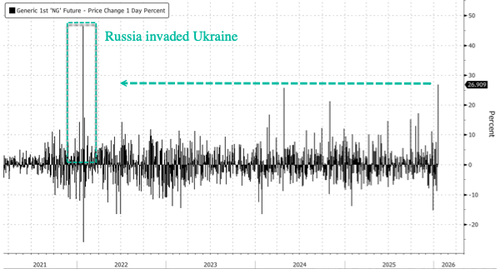
US natural gas futures surged for a second straight session as an Arctic cold blast and mounting winter storm threats forced traders to reassess energy demand, with heating demand across much of the eastern US now forecast to surge sharply.
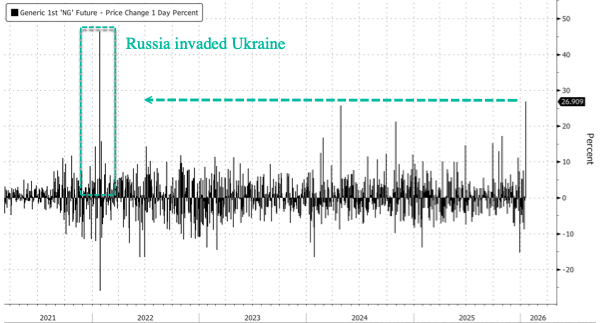
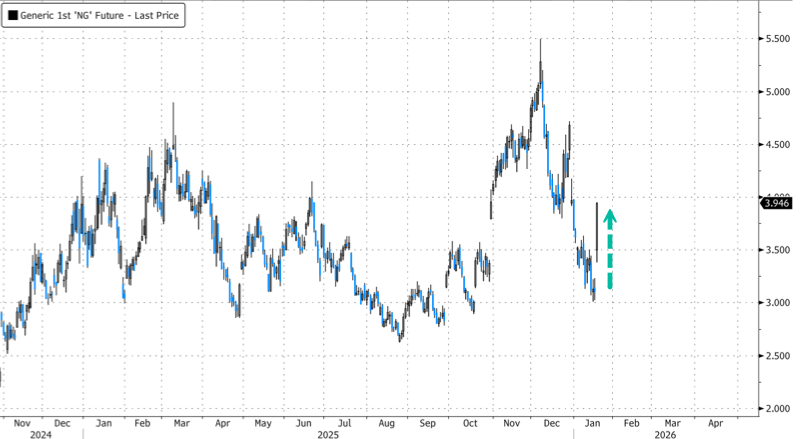
As of 09:00 ET, NatGas futures are up nearly 27%, marking the largest intraday jump since Russia’s invasion of Ukraine in late January 2022. The move comes as weather models flipped sharply colder, now forecasting a massive deep freeze across the eastern half of the country through the end of the month.
NatGas prices are set to reclaim the $4 per mmbtu level.
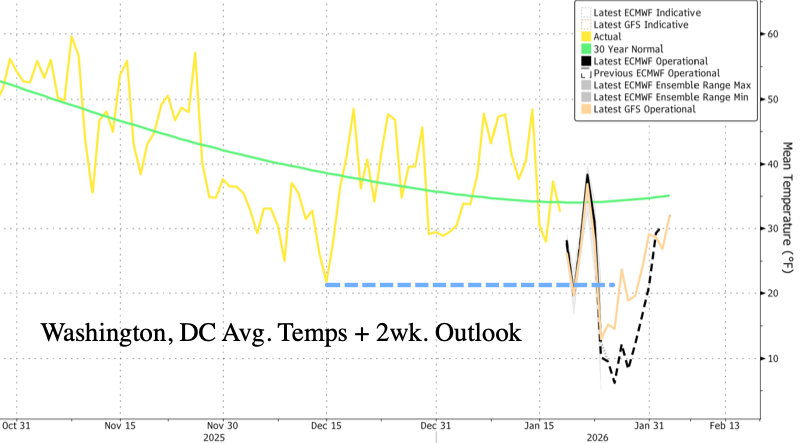
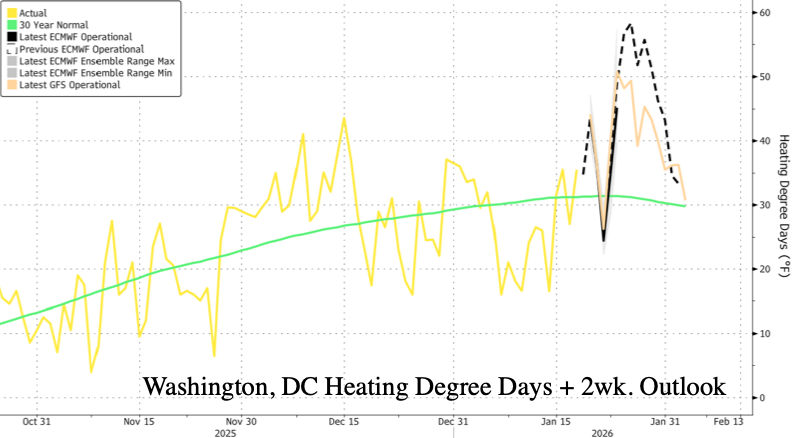
Average temperatures across Washington, DC, are plunging and could average around 10°F by the weekend. This cold blast is far more extreme than the one in the first half of December. Notably, this period typically coincides with the most intense part of winter.
The cold blast has sent the heating demand forecast for the next two weeks through the roof.
More details on the cold blast:
A colder outlook indicates a higher heating demand that would erase the modest storage surplus seen earlier this month.
Hedge funds had increased bearish bets last week, leaving the market vulnerable to a short-covering rally once forecasts changed.
Forecasters at Atmospheric G2 said earlier that weather models underestimated both the intensity and the geographic reach of the Arctic cold.
Commodity Weather Group expects average temperatures around 8°F below normal across much of the Midwest, Mid-Atlantic, and parts of southern New England through this weekend.
The US Weather Prediction Center warned two dozen weather stations could break or tie daily temperature records through Jan. 26.
Among meteorologists on X, discussion has abruptly shifted toward what could become a historic winter storm stretching from Texas to the Mid-Atlantic, beginning Friday. Weather observer Ryan Hall detailed this winter threat in a report Monday titled “This Could Be The Big One.”
Here’s what meteorologists are saying:
On Sunday morning, snow and ice is forecast to stretch 2,000 miles from the Southwest to the East Coast.
Around 160 million people are forecast to experience wintry precipitation simultaneously!
Here’s a sampling of possible precipitation types in some cities early Sunday:… pic.twitter.com/L0scgoZJv7
— Ben Noll (@BenNollWeather) January 20, 2026
Odds are increasing for a particularly memorable winter storm late this week into the weekend… pic.twitter.com/fopHLEj40G
— Ryan Hall, Y’all (@ryanhallyall) January 20, 2026
⚠️A potentially historic winter storm is gearing up for weekend impact across a large portion of the country.
I’ll be live with in-depth analysis to Clarity clients at 7am est.
To access our platform and our client lives you can by signing up now: https://t.co/5NjlJjOeSS pic.twitter.com/5xkF0JvQFf
— BAM Weather (@bam_weather) January 20, 2026
All eyes are on the Mid-Atlantic late this week as winter storm threats rise.
Tyler Durden
Tue, 01/20/2026 – 11:40

Chef sues Chesterton restaurant for allegedly failing to pay overtime wages
A chef employed at the Root & Bone restaurant in Chesterton is claiming in a federal lawsuit that the owners violated the law by failing to pay him overtime.
Cody Mitchell of Valparaiso filed the civil suit last year against Sauce Holdings, LLC, and Luke Oil, LLC, owners of the restaurant, in U.S. District Court in Hammond. A hearing is scheduled for Thursday.
The suit claims that Mitchell’s rights under the federal Fair Labor Standards Act and Indiana state wage laws were violated by the owners.
Initially hired as a sous chef in December 2023, Mitchell was paid $25.96 per hour for an annual wage of $54,000. He was promoted in February 2025 to the position of Chef de Cuisine, seeing his pay rate increase to $28.25 per hour and $60,000 a year.
The suit contends that the defendants misclassified Mitchell as an overtime-exempt employee.
As a result, Mitchell was not paid time-and-a-half for the many overtime hours he was entitled to, and it was “unreasonable, unjust, improper, not in good faith,” the suit says.
The suit asks for an unspecified amount of overtime wages and compensatory damages, along with attorney fees.
In response to the allegations, the defendant denied that Luke Oil, LLC, and its president, Thomas M. Collins, had anything to do with managing Sauce Holdings, LLC, although they acknowledged that the company was part of the Luke Family of Brands.
Mitchell did have some management responsibilities in determining special dishes and when Happy Hour would be held. It was also pointed out that Mitchell’s responsibilities as chef included managing food costs, managing people and employee training, the defendant’s answer said.
Sauce Holdings, LLC, also disputes that it was required to pay Mitchell overtime for his duties as a sous chef, or Chef de Cuisine, or that his employment was “misclassified.” The defendant’s attorney asks that Mitchell’s claim for back overtime wages and damages be dismissed.
The concept for Root & Bone restaurant was born in New York City in 2013, where the founders Janice Booth and Jeff McInnis opened their first outlet, which specializes in Southern-inspired dishes. The New York City restaurant received recognition from multiple publications for serving the “Best Fried Chicken” in New York City.
Booth and McInnis, who still control the restaurant’s menu offerings, have appeared on the Top Chef show on the Bravo network.
Root & Bone restaurants also operate in Henderson, North Carolina, and Indianapolis, though one in Miami closed in 2024. They moved into the space at 600 Gateway Boulevard in Chesterton, formerly occupied by an Italian restaurant, in late 2023.
Jim Woods is a freelance reporter for the Post-Tribune.

Grammy 2026: Kendrick Lamar, Bad Bunny y Lady Gaga compiten cara a cara
Por MARIA SHERMAN
NUEVA YORK (AP) — La 68ª edición anual de los Premios Grammy se llevará a cabo el 1 de febrero en la Arena Crypto.com en Los Ángeles. Este año marca un regreso a la normalidad después de que la ceremonia de 2025 se modificara para centrarse en apoyar los esfuerzos de ayuda tras los devastadores incendios en el área de Los Ángeles.
“Creo que veremos algunos momentos históricos”, dijo a The Associated Press Harvey Mason jr., director general y presidente de la Academia de la Grabación. “Con artistas nominados en categorías en las que no habían sido nominados anteriormente, y un nuevo grupo de talentos que surge en el sistema este año, creo que vamos a ver resultados realmente emocionantes”.
A continuación, lo que necesitas saber sobre los Grammy 2026, incluyendo cómo verlos en streaming y dónde puedes ver a las mayores estrellas de la música caminando por la alfombra roja.
¿Cuándo son los Grammy y cómo puedo ver la gala?
El espectáculo principal se transmitirá en vivo por CBS a partir de las 8:00 p.m. hora del Este el 1 de febrero.
Los Grammy también se pueden ver en servicios de streaming con CBS como Hulu+ Live TV, YouTube TV y FuboTV.
Los suscriptores del plan premium de Paramount+ podrán ver por streaming los Grammy en vivo; los suscriptores regulares de Paramount+ tendrán acceso on demand al día siguiente.
La Premiere de los Grammy, en la que se entregan la mayoría de los premios, tendrá lugar justo antes de la ceremonia televisada a las 3:30 de la tarde hora del Este, 12:30 de la tarde hora del Pacífico en el Teatro Peacock en Los Ángeles. Se puede ver por streaming en el canal de YouTube de la Academia de la Grabación y en live.GRAMMY.com.
¿Quién es el anfitrión de los Grammy?
El comediante Trevor Noah será el anfitrión de la ceremonia por sexta vez consecutiva, pero esta será su última ocasión.
“Estoy muy emocionado de dar la bienvenida a Trevor Noah de nuevo para presentar los Grammy por sexta y, lamentablemente, última vez”, dijo el productor ejecutivo de los Grammy, Ben Winston, dijo en un comunicado. “Ha sido el anfitrión más fenomenal del espectáculo. Es tan inteligente, tan divertido y un verdadero fan de los artistas y la música. Su impacto en la ceremonia ha sido realmente espectacular, y ansiamos colaborar una última vez”.
Muy pocas personas más han presentado seis o más ediciones de los Grammy, incluyendo los artistas musicales Andy Williams, quien presentó siete ceremonias, seguido por John Denver con seis. Noah empató previamente con LL Cool J, quien fue maestro de ceremonias en cinco ediciones.
Noah ha sido nominado al Grammy en cuatro ocasiones y este año compite en la categoría de audiolibro, narración y grabación de historias por “Into The Uncut Grass”, una historia para niños.
“Es un anfitrión especial. Realmente encuentra el equilibrio adecuado entre ser divertido, inteligente y conocedor, pero también ser un fan de la música. Y me encanta eso. Es tan difícil encontrar esa combinación”, dijo Mason jr.
¿Y sobre su partida?
“Cada persona en algún momento de su carrera decide que quiere hacer otra cosa”, señaló Mason jr. “Y estamos muy agradecidos por los años que tuvimos con Trevor. Realmente ha ayudado a definir la ceremonia y a convertirlo en lo que se ha convertido en los últimos seis años”.
¿Cómo puedo ver la alfombra roja?
The Associated Press transmitirá desde la alfombra roja de cuatro horas con entrevistas y material de moda. Se transmitirá en YouTube y APNews.com.
¿Quién está nominado para los Grammy?
Kendrick Lamar lidera las nominaciones con un total de nueve. Está nominado para grabación, canción y álbum del año, marcando la tercera vez que tiene nominaciones simultáneas en esas grandes categorías, así como interpretación de dúo/grupo pop, interpretación de rap melódico, canción de rap y álbum de rap. También está nominado dos veces en la categoría de actuación de rap.
Lady Gaga, Jack Antonoff y el productor/compositor canadiense Cirkut siguen a Lamar con siete nominaciones cada uno.
Sabrina Carpenter, Bad Bunny, Leon Thomas y Serban Ghenea cuentan con seis nominaciones cada uno. Andrew Watt, Clipse, Doechii, Sounwave, SZA, Turnstile y Tyler, the Creator tienen cinco cada uno.
Y en la categoría de mejor nuevo artista, Thomas, el grupo global de chicas Katseye, Olivia Dean, The Marías, Addison Rae, sombr, Alex Warren y Lola Young competirán entre sí.
También hay varios nominados por primera vez este año, incluyendo a Tate McRae, Zara Larsson, PinkPantheress, JID y… Timothée Chalamet. Lo leíste correctamente.
___
Para más cobertura de los Premios Grammy de este año, visita: www.apnews.com/hub/grammy-awards
30 Ways Trump Impacted The World In His First Year
30 Ways Trump Impacted The World In His First Year
Authored by Travis Gillmore and Cathy He via The Epoch Times,
President Donald Trump used his first year back in the White House to set the tone for his second presidency, changing the nation and the world in the process.
Through more than 225 executive orders, the president reorganized federal government policy and focus, while advancing his America First agenda.
On the world stage, Trump reset global trade policy, brokered peace deals, and used the U.S. military in several defining moments.
Here are 30 ways the Trump administration has transformed the country and beyond.
1. One Big Beautiful Bill Act
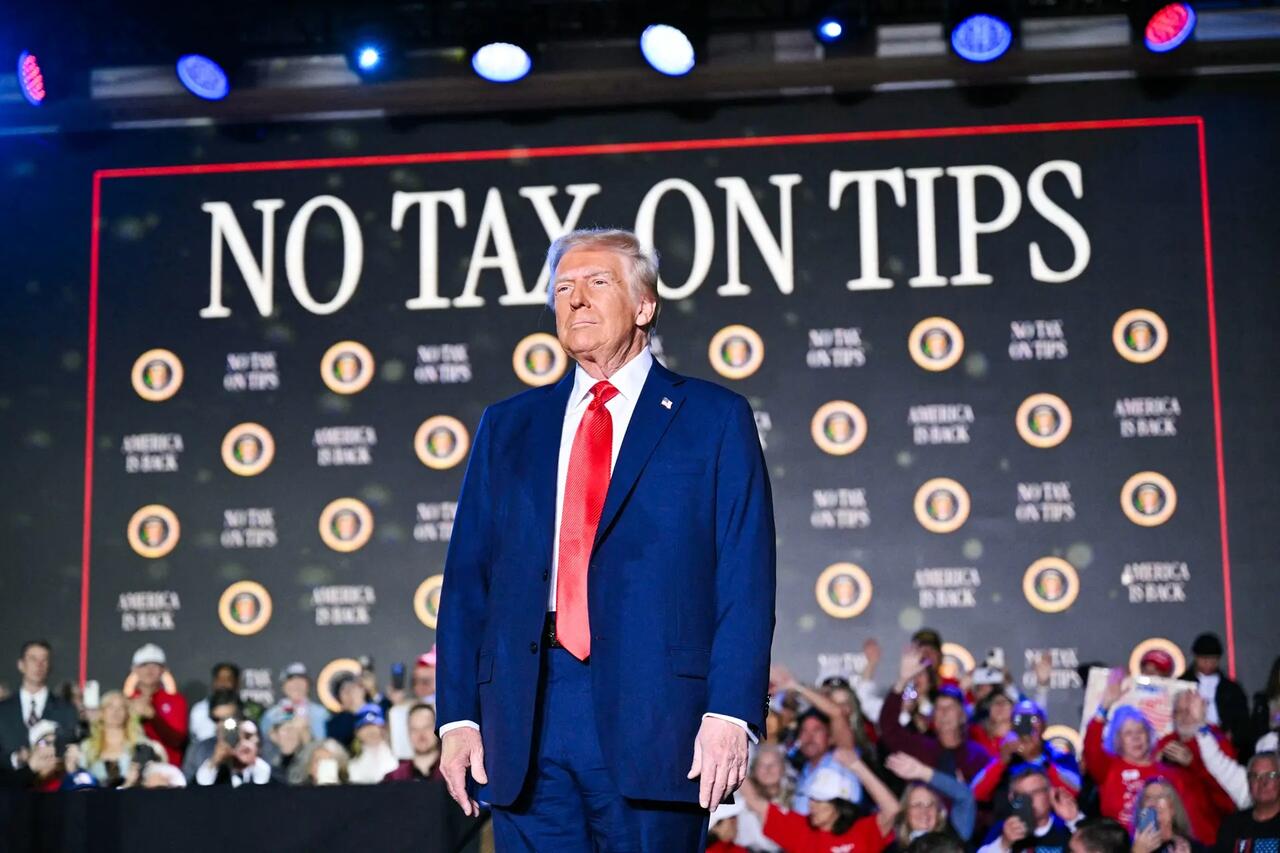
In July 2025, Congress passed Trump’s signature domestic policy legislation—the One Big Beautiful Bill Act—that implemented sweeping changes to tax and social policies over the next 10 years.
The legislation included making Trump’s 2017 tax cuts permanent; tax breaks on tips, overtime, and Social Security income; completing the border wall, adding $150 billion in defense spending, and imposing work requirements for Medicaid.
Other elements allow for accelerated depreciation deductions meant to incentivize business development and tax exemptions for interest paid on American-made vehicles.
President Donald Trump arrives to speak on his policy to end tax on tips in Las Vegas on Jan. 25, 2025. Mandel Ngan/AFP via Getty Images
2. Curbing Illegal Immigration
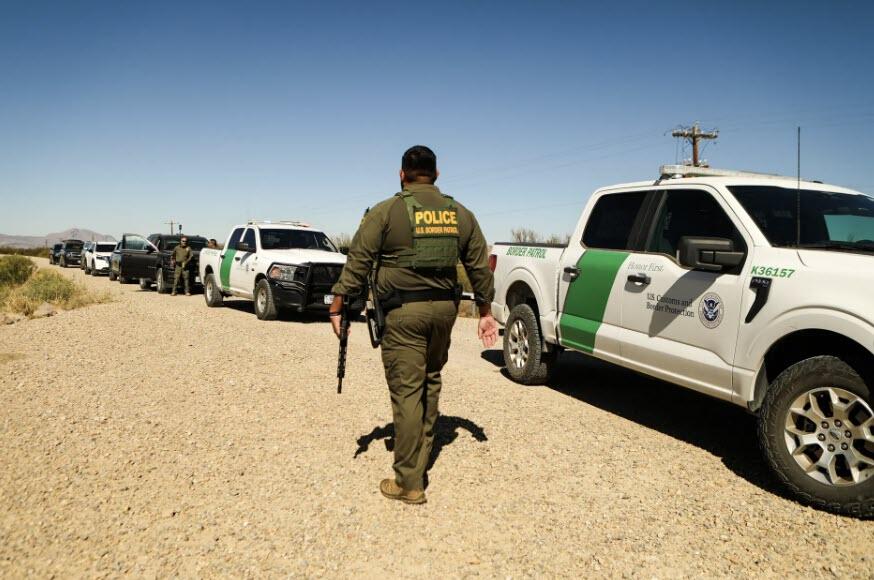
After the president enacted strict border security policies, including invoking the Illegal Alien Enemies Act of 1798, illegal immigration plummeted to the lowest numbers ever recorded.
Zero illegal immigrants were released by authorities for eight straight months, starting in May 2025, and more than 2.5 million illegal immigrants living in the United States were deported, according to the Department of Homeland Security.
Administration officials prioritized the removal of known gang members and violent criminals, while nearly 2 million illegal immigrants chose to self deport, some using Customs and Border Protection’s Home app.
Efforts to secure the border included hiring thousands of Immigration and Customs Enforcement and Border Patrol agents, ending catch and release policies, and expanding detention capacity.
Trump said deportations of illegal immigrants will benefit Americans by lowering crime and reducing competition for jobs and housing.
A U.S. Border Patrol agent from the Big Bend Sector takes part in a binational patrol called “Operation Mirror” with Mexican Army personnel to deter migrant crossings from Ojinaga, Mexico, to Presidio, Texas, on Nov. 4, 2025. Herika Martinez/AFP via Getty Images
3. Expanded Travel Bans
Trump cited national security concerns when he fully restricted travel from 12 countries last year—including Afghanistan, Iran, and Somalia—then expanded the directive in December 2025 to include five more nations. Nineteen countries are also subject to partial restrictions.
Beginning Jan. 21, the State Department will halt immigrant visa processing for nationals from 75 countries. The move stems from concerns that those nationals would require welfare or public benefits in the United States.
Soldiers of the Somalia National Army walk near the frontlines at Sabiid, one of the towns they have liberated from the Al-Qaeda-linked terrorists, Al-Shabaab, in Somalia’s lower-Shabelle region on Nov. 11, 2025. Tony Karumba/AFP via Getty Images
4. Birthright Citizenship
One of the first executive orders signed in Trump’s second term challenged traditional interpretations of the 14th Amendment by ending birthright citizenship for those born to illegal immigrants or individuals in the country on temporary visas.
States and groups filed lawsuits against the administration, and lower courts ruled to block the president’s order. A challenge to the blocks reached the Supreme Court, prompting a landmark decision restricting courts’ use of nationwide injunctions.
The high court has not yet ruled on the constitutionality of birthright citizenship.
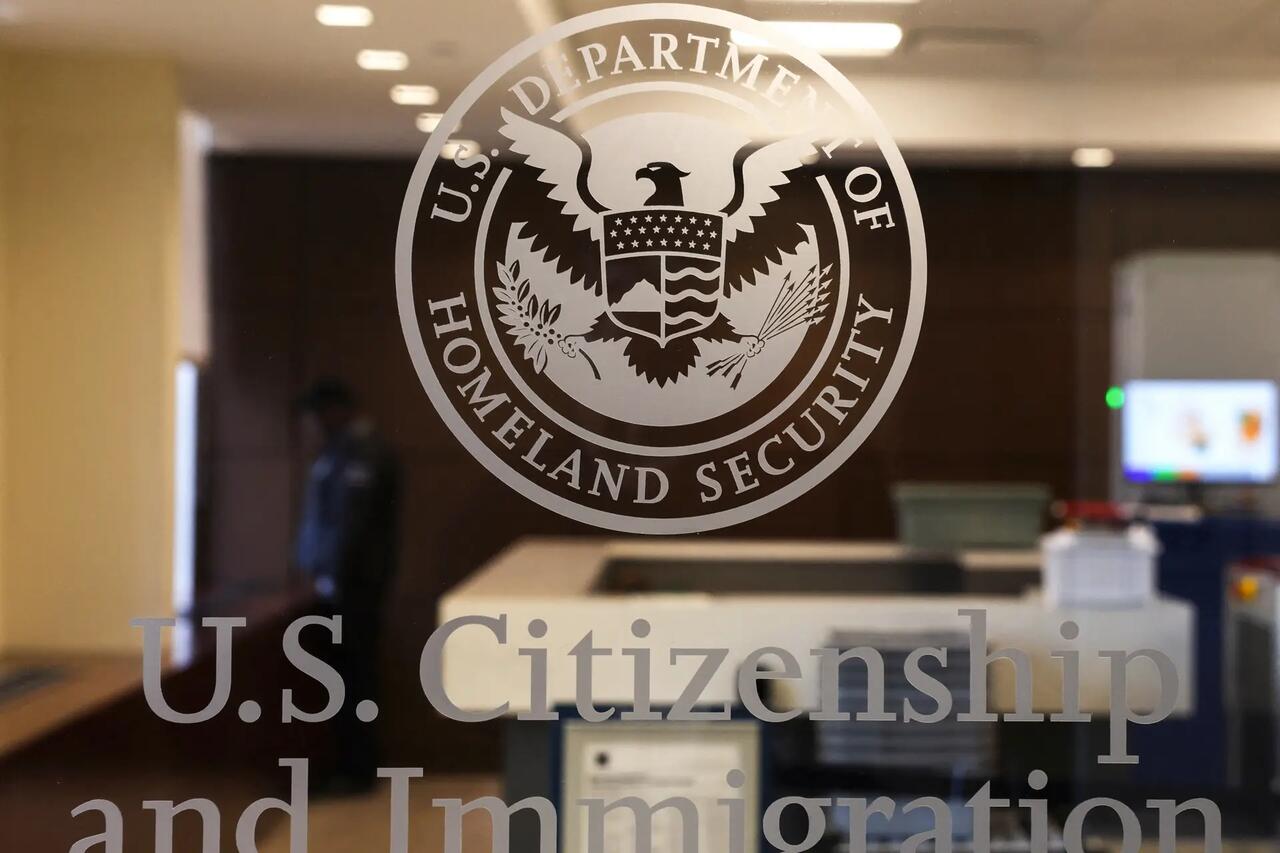
The entrance to the U.S. Citizen and Immigration Services location where a New York City Council data analyst of Venezuelan origin was detained by Immigration and Customs Enforcement while making an immigration appointment, in the Long Island town of Bethpage, N.Y., on Jan. 14, 2026. Shannon Stapleton/Reuters
5. Visa Changes
The administration increased fees for H-1B visas for skilled foreign workers to $100,000, expressing hope that this would incentivize businesses to hire American workers.
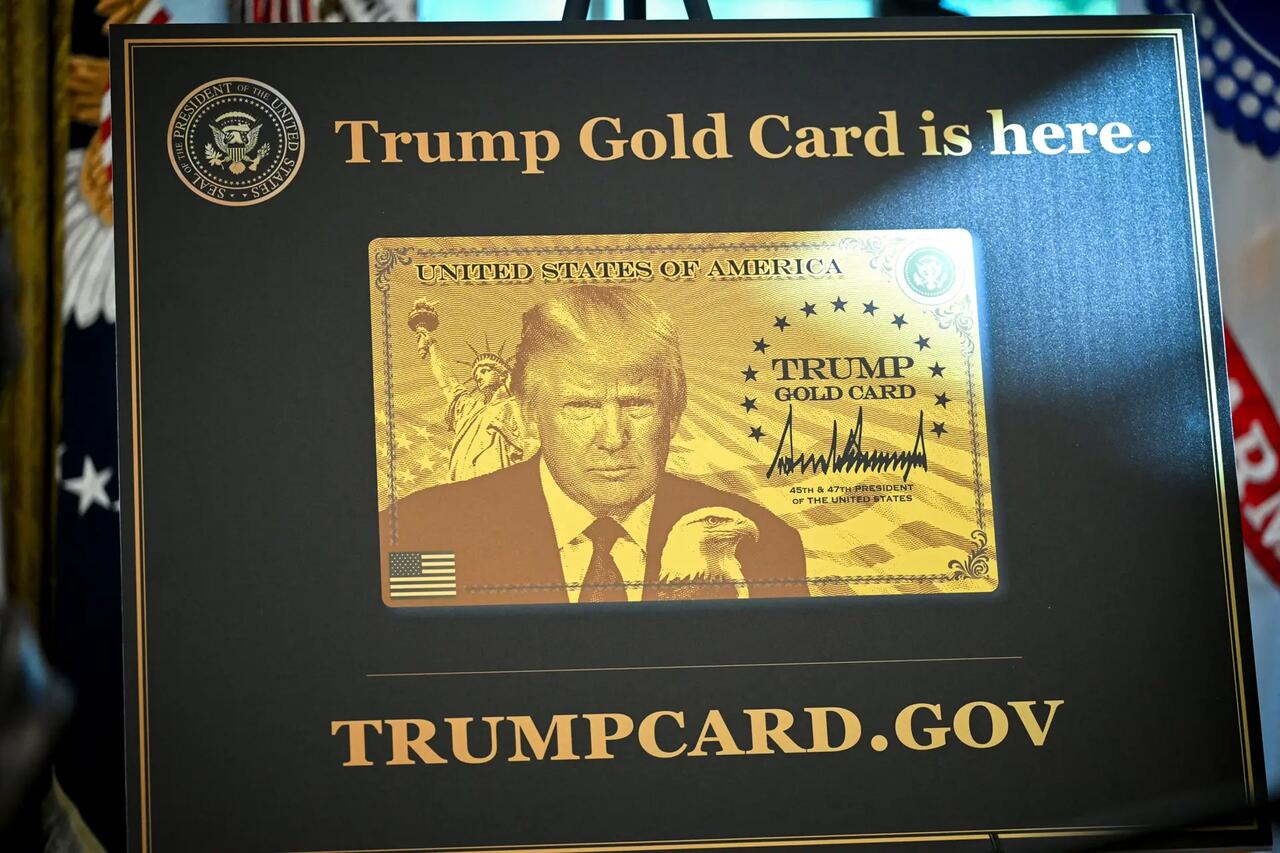
A newly introduced Trump Gold Card, available for purchase for $1 million for individuals and $2 million for businesses, will expedite residency processing for qualified applicants who pass background screenings.
The administration also suspended the green card lottery program in the wake of the Brown University shooting in December 2025. The diversity visa lottery awarded approximately 50,000 green cards each year to people from countries with limited representation in the United States.
A Trump Gold Card is displayed in the Oval Office as President Donald Trump speaks before signing executive orders on Sept. 19, 2025. Trump signed an order creating the Trump Gold Card expedited residency progam for a fee of $1 million for individuals and $2 million for sponsorships by corporations. Mandel Ngan/AFP via Getty Images
6. National Guard Deployments
The president first deployed the National Guard in Los Angeles to quell riots that erupted in June 2025 after protests targeted Immigration and Customs Enforcement agents.
Trump then sent troops to Washington to help combat high rates of violent crime in the capital. Subsequent deployments sent National Guard members to Portland, Chicago, and Memphis.
Democratic leaders challenged the deployments, and the Supreme Court in December 2025 ruled on a preliminary basis that the administration could not deploy National Guard troops to Chicago to protect federal immigration agents. Trump later withdrew guardsmen from Chicago, Portland, and Los Angeles.
National Guard members patrol the National Mall in Washington on Aug. 27, 2025. Madalina Kilroy/The Epoch Times
7. DOGE
On the first day of his second term, Trump established the Department of Government Efficiency (DOGE) to investigate and eliminate waste, fraud, and abuse in the federal government..
Initially led by Elon Musk, the department cites $215 billion in taxpayer savings on its website, derived from contract cancellations, lease terminations, the elimination of duplicate payments, and halting fraudulent activities.
Agencies most impacted by DOGE include the Department of Health and Human Services, the General Services Administration, and the Social Security Administration.
Efforts also included the large-scale layoff of federal workers, totaling about 317,000, of which approximately 92 percent left voluntarily after taking up buyout offers, according to the Office of Personnel Management.
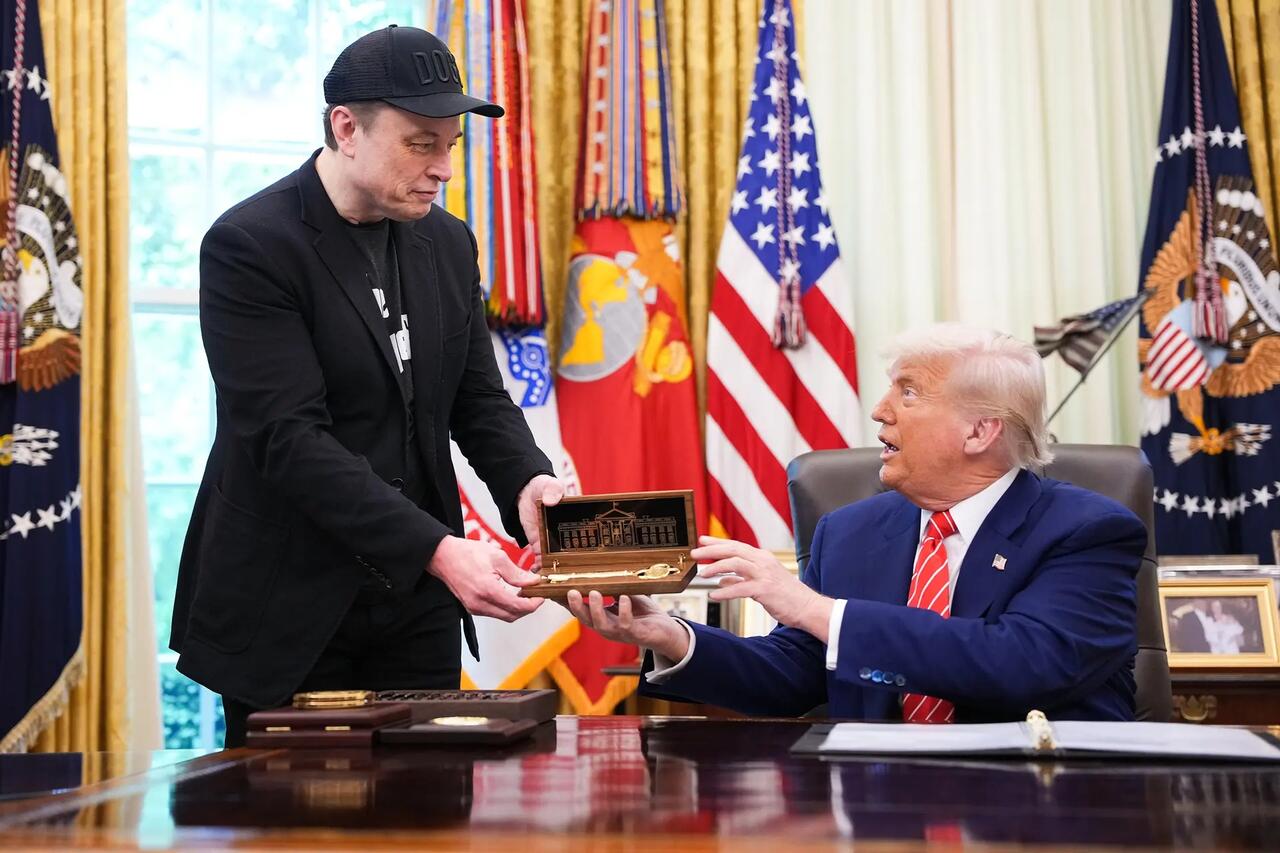
Tesla CEO Elon Musk receives a key from President Donald Trump in the Oval Office on May 30, 2025. Musk served as an adviser to Trump and led the Department of Government Efficiency. Kevin Dietsch/Getty Images
8. Jan. 6 Pardons
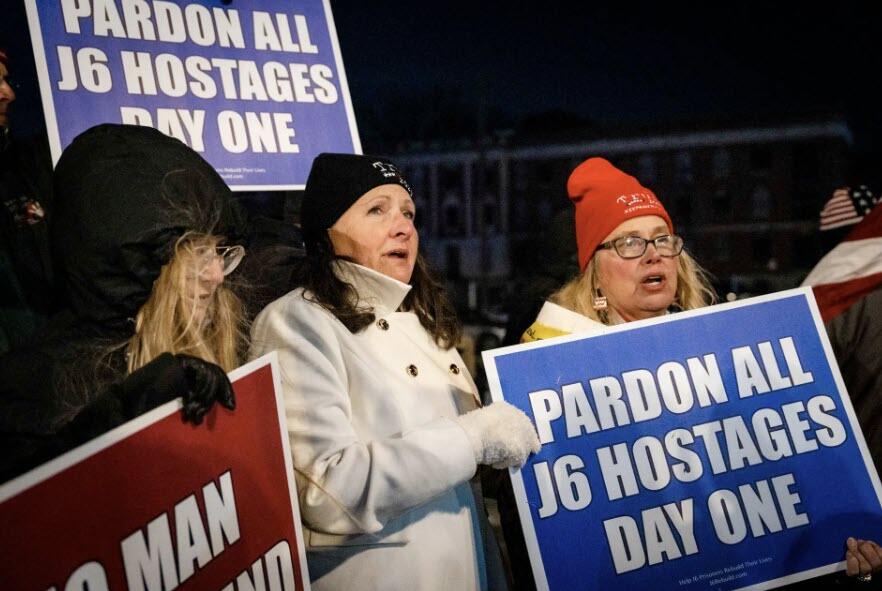
On Day One, Trump pardoned nearly 1,600 people charged with various crimes for participating in protests and riots at the U.S. Capitol on Jan. 6, 2021.
He also commuted the sentences of 14 incarcerated individuals rather than granting full, unconditional pardons, thus leaving criminal convictions in place for some charged with seditious conspiracy—including Oath Keepers founder Stewart Rhodes and Proud Boys members Ethan Nordean, Joseph Biggs, and others.
People gather outside the DC Central Detention Facility, after President Donald Trump pardoned nearly 1,600 Jan. 6 defendants, in Washington on Jan. 20, 2025. Samira Bouaou/The Epoch Times
9. Pulling US Out of Climate Pacts
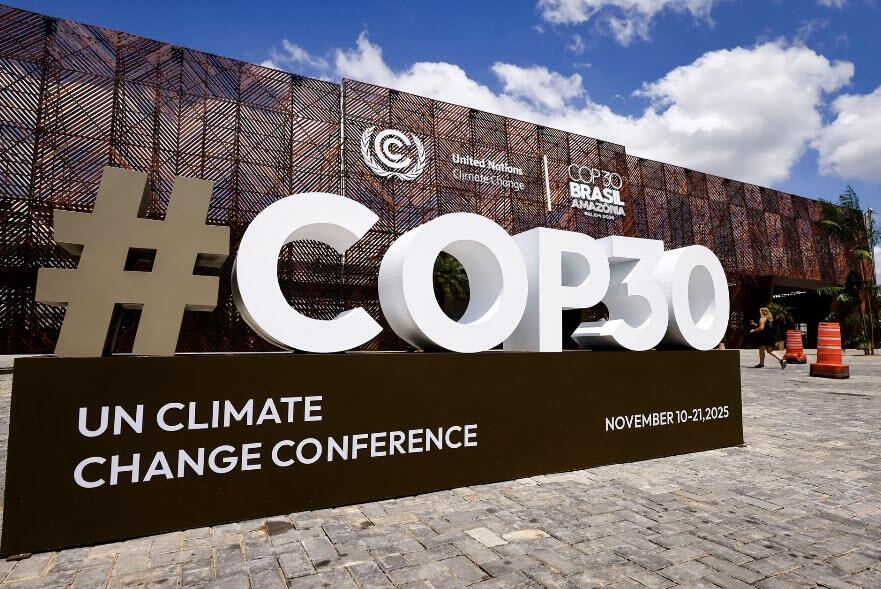
Trump initiated the United States’ withdrawal from the Paris Climate Accords for a second time on Jan. 20, 2025. In January 2026, the United States pulled out of the global benchmark climate treaty, the U.N. Framework Convention on Climate Change, and withdrew from the Green Climate Fund, which finances much of the U.N.’s climate initiatives.
Domestically, the administration has moved to overhaul climate-related regulations, including rescinding electric vehicle mandates, halting offshore wind projects, and revoking a climate finding that would pave the way for expansive deregulation.
The COP30 logo is seen in front of the central building ahead of the COP30 Brazil Amazonia 2025 in Belem, Brazil, on Nov. 3, 2025. The Conference of the Parties (COP) meets annually to discuss and negotiate on climate-related issues. Wagner Meier/Getty Images
10. Eliminating DEI
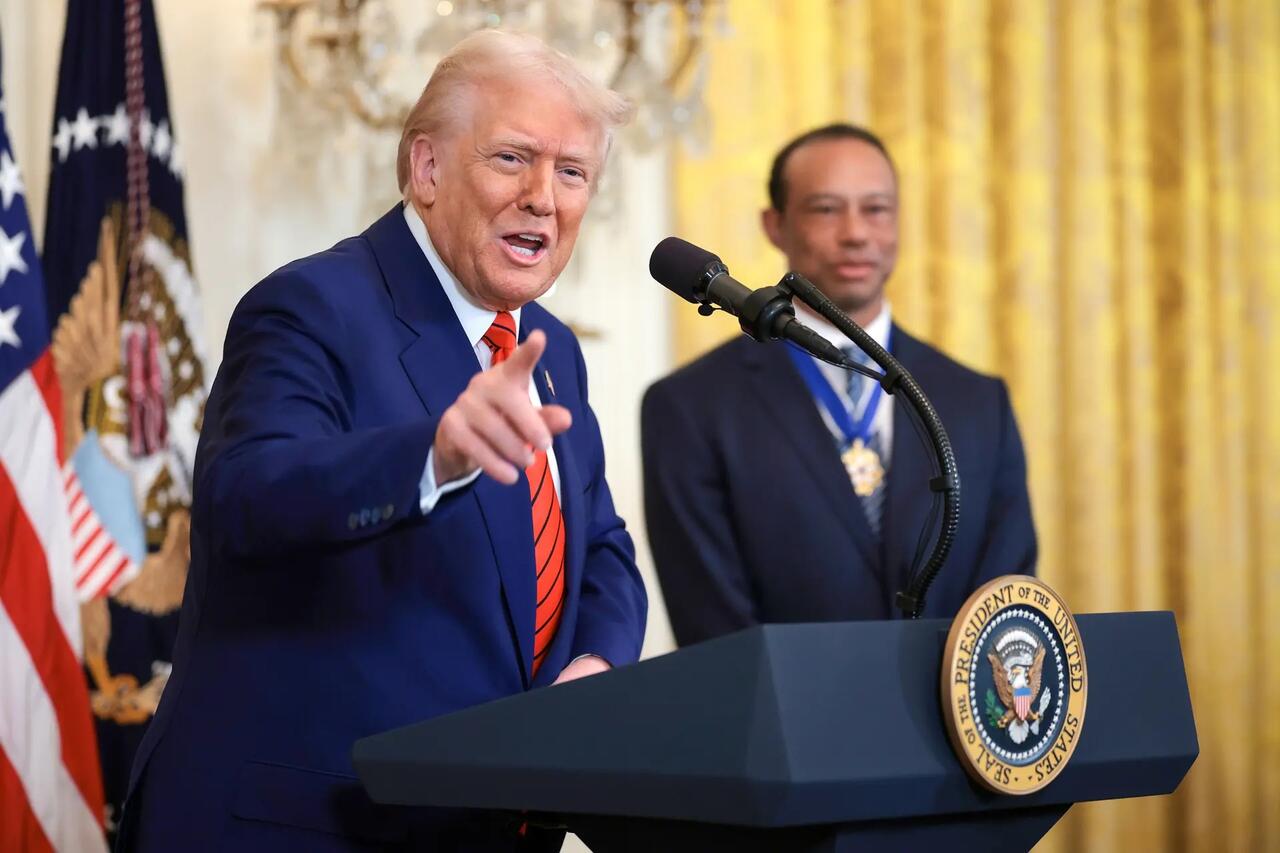
Federal guidelines pertaining to diversity, equity, and inclusion (DEI) were eliminated on Trump’s first day in office. The change terminated training programs and requirements, along with positions related to DEI, and reprioritized merit-based hiring practices.
The administration, citing civil rights law, has also sought to ban DEI in universities and public schools that receive federal funding.
The moves were made amid a broader backdrop of corporations—including Amazon, McDonald’s, and Meta—rolling back their DEI policies.
President Donald Trump, joined by golf legend Tiger Woods, speaks during a reception honoring Black History Month in the East Room of the White House on Feb. 20, 2025. The Black History Month celebration comes as Trump has signed a series of executive orders ending federal diversity, equity, and inclusion (DEI) programs and cutting funding to schools and universities that do not cut DEI programs. Win McNamee/Getty Images
11. Dismantling Education Department
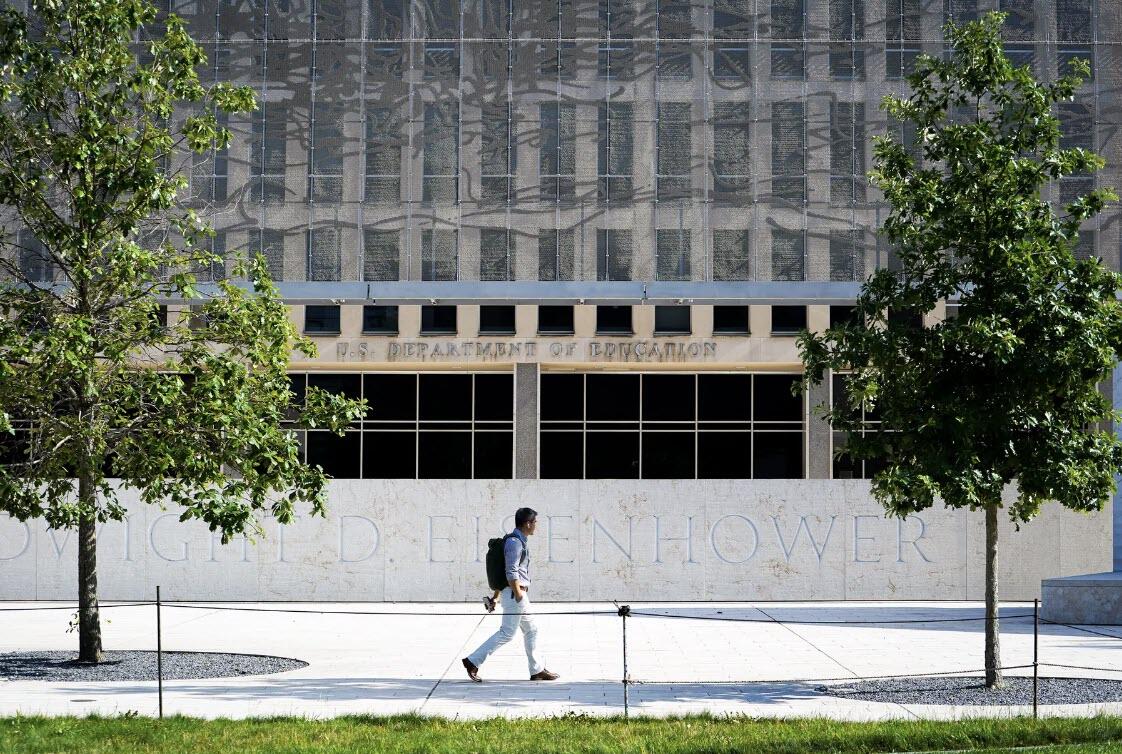
Trump is pushing Congress to eliminate the Education Department, with Secretary Linda McMahon leading the charge to phase it out. More than half of the department staff has been laid off, and many functions are being transferred to other departments.
The administration wants states to oversee administrative functions for their own education systems.
The Department of Education building in Washington on July 6, 2023. Madalina Vasiliu/The Epoch Times
12. Probing Universities
The federal government has withheld billions of dollars in funding from colleges and universities with recent histories of alleged civil rights violations and disruptive or violent pro-Palestinian protests, prompting legal challenges.
Settlements were reached with Brown, Columbia, Cornell, and others. Columbia agreed to pay a $200 million fine plus $21 million to Jewish employees harassed by co-workers and students.
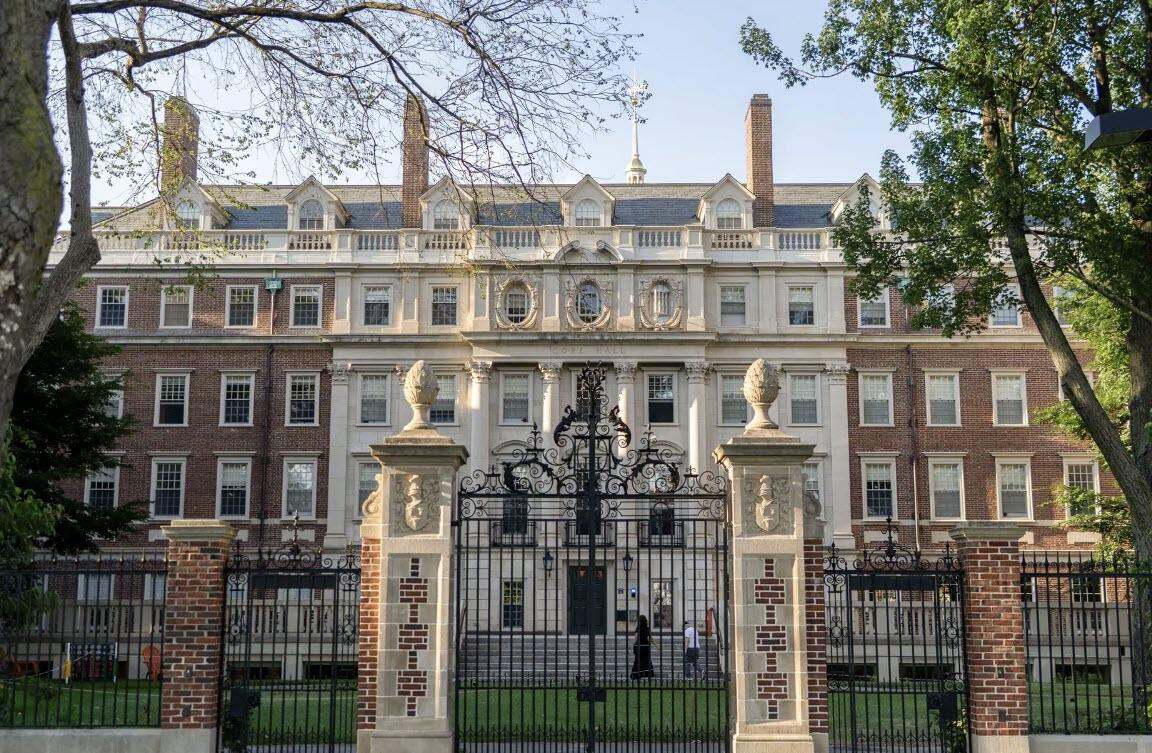
The administration is currently locked in a legal battle with Harvard, with billions in federal funds frozen.
Harvard University in Cambridge, Mass., on July 4, 2025. Learner Liu/The Epoch Times
13. MAHA Agenda
Robert F. Kennedy Jr.’s appointment as secretary of Health and Human Services prompted a reimagining of the federal government’s approach to managing food and medicine.
Under the Make America Healthy Again (MAHA) initiative, Kennedy called on states to remove junk food from food stamp programs. Eighteen states have moved to do so.
The U.S. Department of Agriculture recently released a new inverted food pyramid that prioritizes healthy fats, proteins, fruits, and vegetables.
“The new guidelines recognize that whole, nutrient-dense food is the most effective path to better health and lower health care costs,” Kennedy said while unveiling the new guidelines.
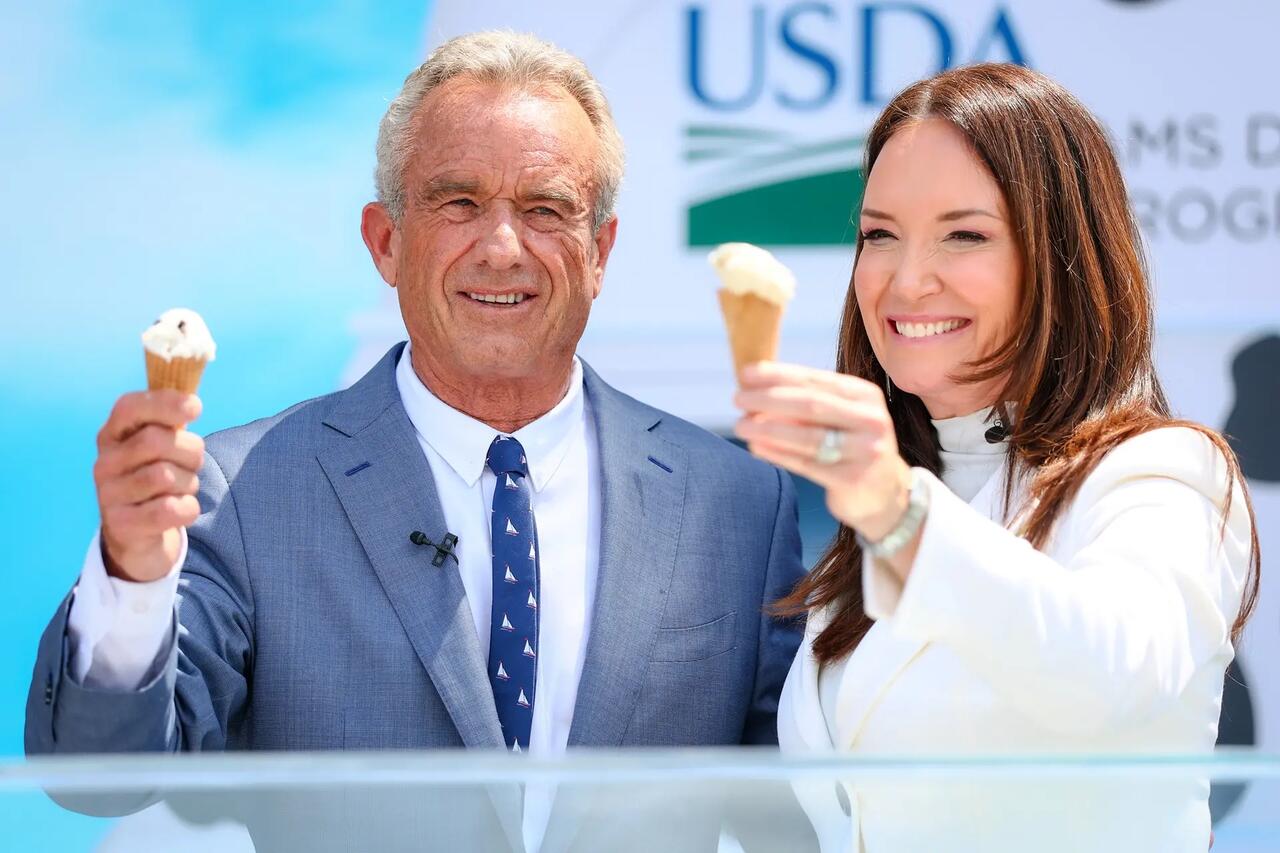
Health Secretary Robert F. Kennedy Jr. and Secretary of Agriculture Brooke L. Rollins hold up ice cream cones during a press conference on the steps of the U.S. Department of Agriculture in Washington on July 14, 2025. Kennedy held a press conference along with Rollins, and others, as they announced that ice cream makers who are responsible for 90 percent of the nation’s ice cream and frozen dairy desserts are pledging to eliminate many artificial food dyes by the end of 2027. Michael M. Santiago/Getty Images
14. Lowering Drug Prices
The administration balanced the threat of tariffs on imported medications and ingredients with financial incentives to change the longstanding practice of major pharmaceutical companies of charging U.S. customers 400 percent or more for brand-name medications than they charge overseas customers.
More than a dozen pharmaceutical companies have entered into Most Favored Nation agreements with the United States so far, and Trump has asked Congress to codify this pricing policy into law.
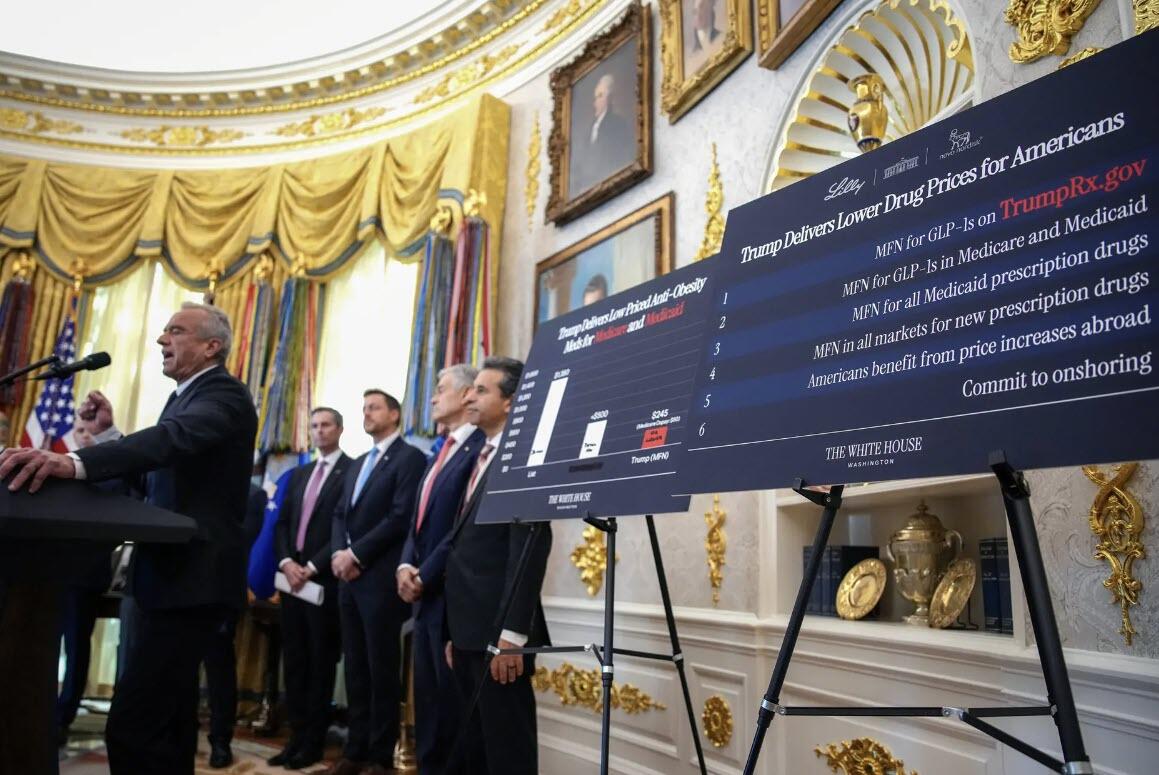
Among the price reductions included in these agreements are Amgen’s cholesterol lowering drug Repatha from $573 to $239; HIV medication Reyataz, by Bristol Myers Squibb, from $1,449 to $217; and Hepatitis C medication Epclusa, by Gilead Sciences, from $24,920 to $2,425.
Health Secretary Robert F. Kennedy Jr. speaks next to charts displaying drug prices at an event in which President Donald Trump delivered remarks on lowering drug prices in the Oval Office on Nov. 6, 2025. Trump announced that his administration has reached agreements with drugmakers Eli Lilly and Novo Nordisk that would lower the price of some GLP-1 weight loss medications. Andrew Harnik/Getty Images
15. Gender Clarification
On his first day in office, Trump defined the federal government’s position on gender with an executive order declaring that the United States recognizes “two sexes, male and female.”
“These sexes are not changeable and are grounded in fundamental and incontrovertible reality,” the order reads.
Trump later barred federal funding from schools and institutions that allow men to compete in women’s sports.
The University of Pennsylvania, which was sanctioned for allowing a male to compete on the women’s swim team, agreed to strip that athlete, Lia Thomas, of all awards, including his 2022 NCAA national championship, and send a letter of apology to all female swimmers who competed against him.
Health officials in December 2025 moved to cut federal funding for hospitals that perform transgender procedures for minors.
In the wake of Trump’s policies, more than 20 medical clinics that offered gender transition procedures have paused or halted the treatments.
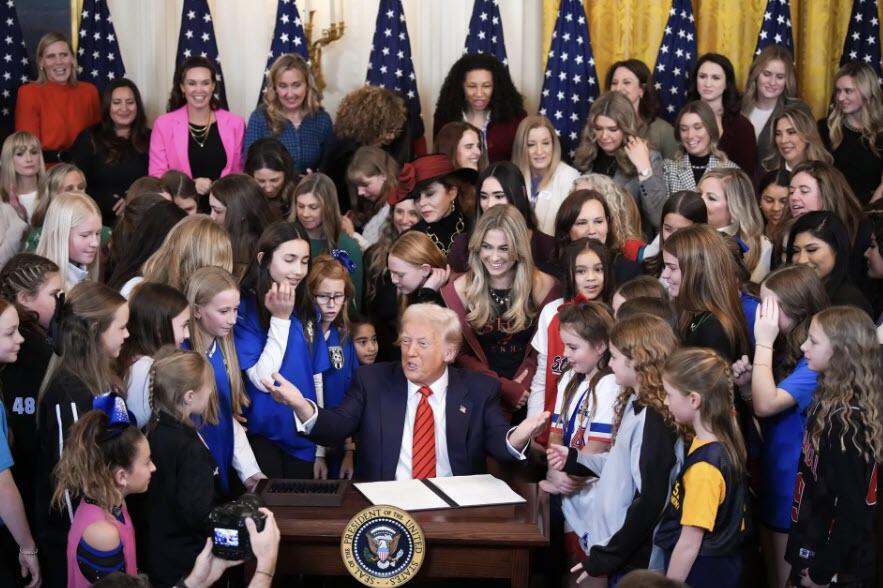
President Donald Trump joined by women athletes signs the “No Men in Women’s Sports” executive order in the East Room at the White House on Feb. 5, 2025. The executive order, which Trump signed on National Girls and Women in Sports Day, prohibits males who identify as transgender women from competing in women’s sports. Andrew Harnik/Getty Images
16. Redistricting Push
Trump’s push for Texas to redraw its congressional maps precipitated a nationwide effort to redistrict for partisan gain.
After Texas adopted new maps aimed at giving Republicans five extra House seats, California responded with a voter-approved ballot measure that redraws districts to favor Democrats in five seats.
Missouri, Ohio, and North Carolina redrew maps in favor of Republicans, while Utah helped Democrats. Other states, including Florida, are in the process of redistricting or are considering redistricting options.
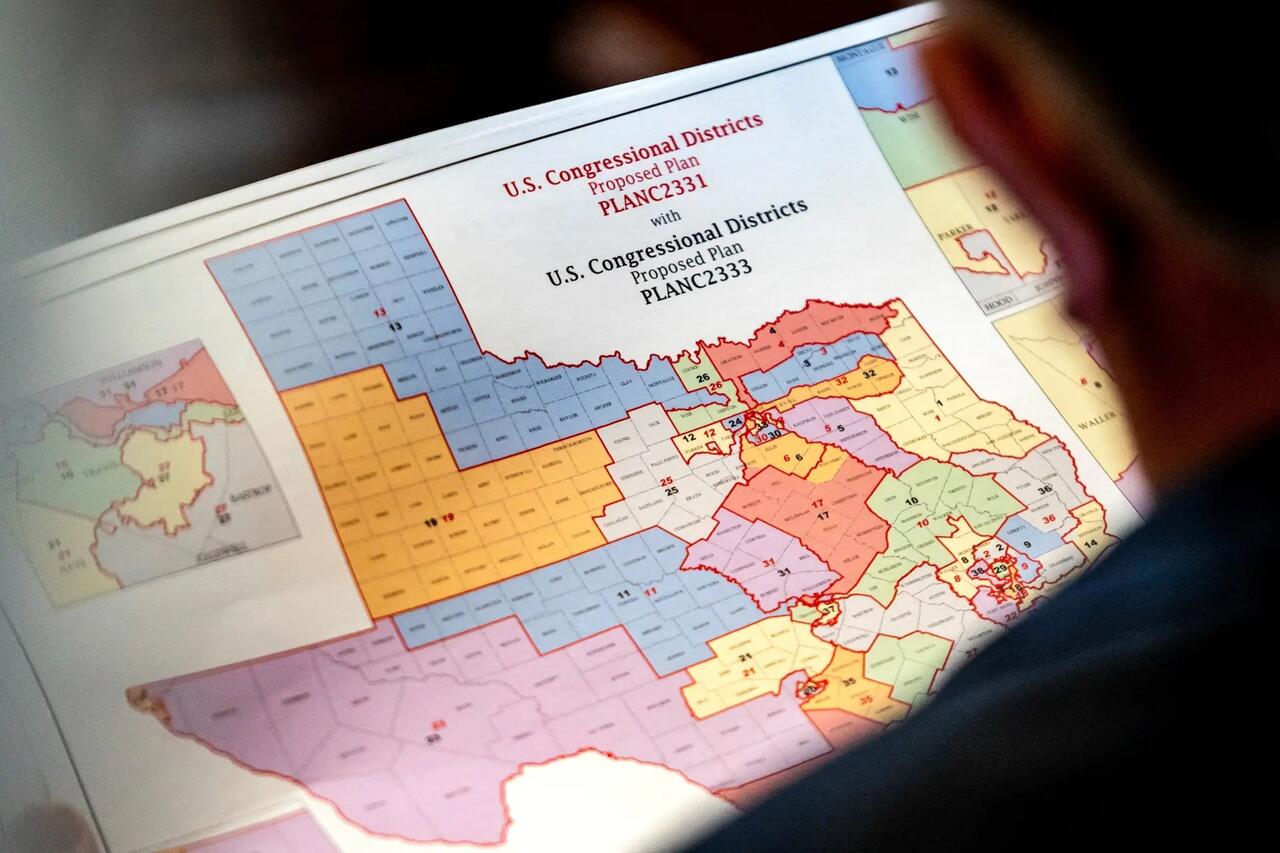
Texas state Rep. Matt Morgan holds a map of the new proposed congressional districts in Texas, during a legislative session as Democratic lawmakers, who left the state to deny Republicans the opportunity to redraw the state’s 38 congressional districts, begin returning to the Texas State Capitol in Austin on Aug. 20, 2025. Sergio Flores/Reuters
17. Eyeing Greenland
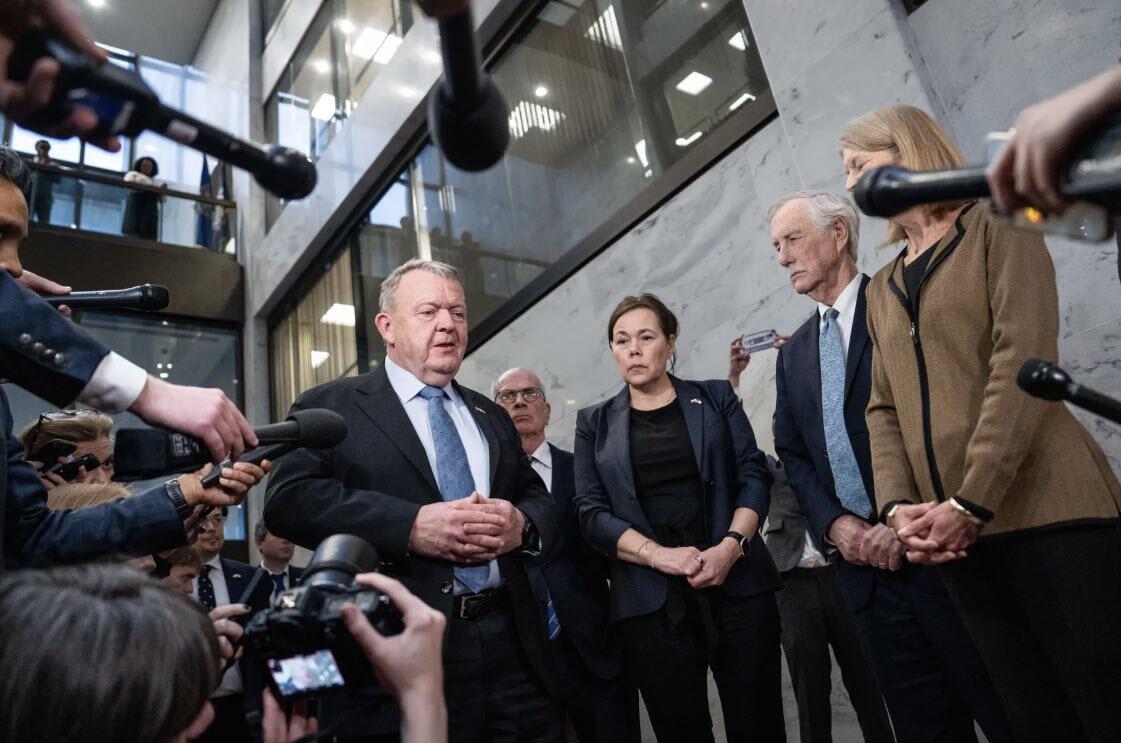
Trump upped the ante on his bid to acquire Greenland for national security purposes in January, prompting Danish and Greenlandic foreign ministers to meet with Vice President JD Vance and Secretary of State Marco Rubio at the White House on Jan. 14.
The White House has said purchasing the island is under consideration, along with other options, including military force.
Denmark, Greenland, and European leaders have pushed back on Trump’s comments. The president has reiterated that the island is critical for the United States’ security.
“There’s not a thing that Denmark can do about it if Russia or China wants to occupy Greenland, but there’s everything we can do,” Trump said on Jan. 14.
Danish Foreign Minister Lars Loekke Rasmussen and Greenlandic Foreign Minister Vivian Motzfeldt speak to the press after a meeting with lawmakers on Capitol Hill in Washington on Jan. 14, 2025. Madalina Kilroy/The Epoch Times
18. Resolved Global Conflicts
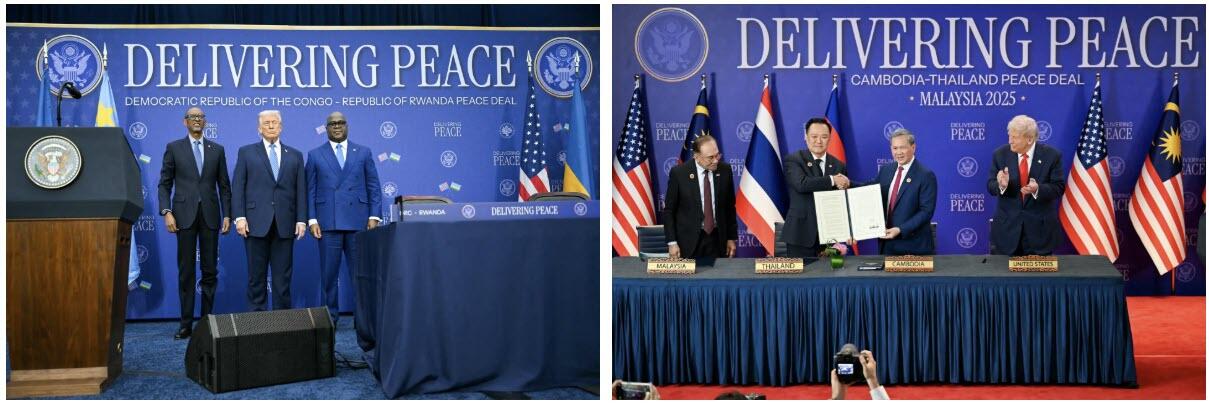
Trump threatened tariffs and applied economic pressure to help negotiate resolutions to eight conflicts around the world, some of which had been ongoing for decades.
Brokered cease-fires include those between the Democratic Republic of the Congo and Rwanda, as well as Thailand and Cambodia.
The president prioritized diplomatic solutions while wielding tariffs as a negotiating tool, emphasizing outcomes based on development and financial opportunities.
(Left) U.S. President Donald Trump (C) hosts the signing ceremony of a peace deal with the President of Rwanda Paul Kagame (L) and the President of the Democratic Republic of the Congo Felix Tshisekedi (R) at the United States Institute of Peace in Washington on Dec. 4, 2025. (Right) Malaysian Prime Minister Anwar Ibrahim (L) and U.S. President Donald Trump (R) watch as Thailand’s Prime Minister Anutin Charnvirakul (2nd L) and Cambodia’s Prime Minister Hun Manet (2nd R) hold up a document after the ceremonial signing of a cease-fire agreement between Thailand and Cambodia on the sidelines of the ASEAN Summit in Kuala Lumpur, Malaysia, on Oct. 26, 2025. Andrew Caballero-Reynolds/AFP via Getty Images, Mohd Rasfan/Pool/AFP via Getty Images
19. Ending Israel–Hamas Conflict
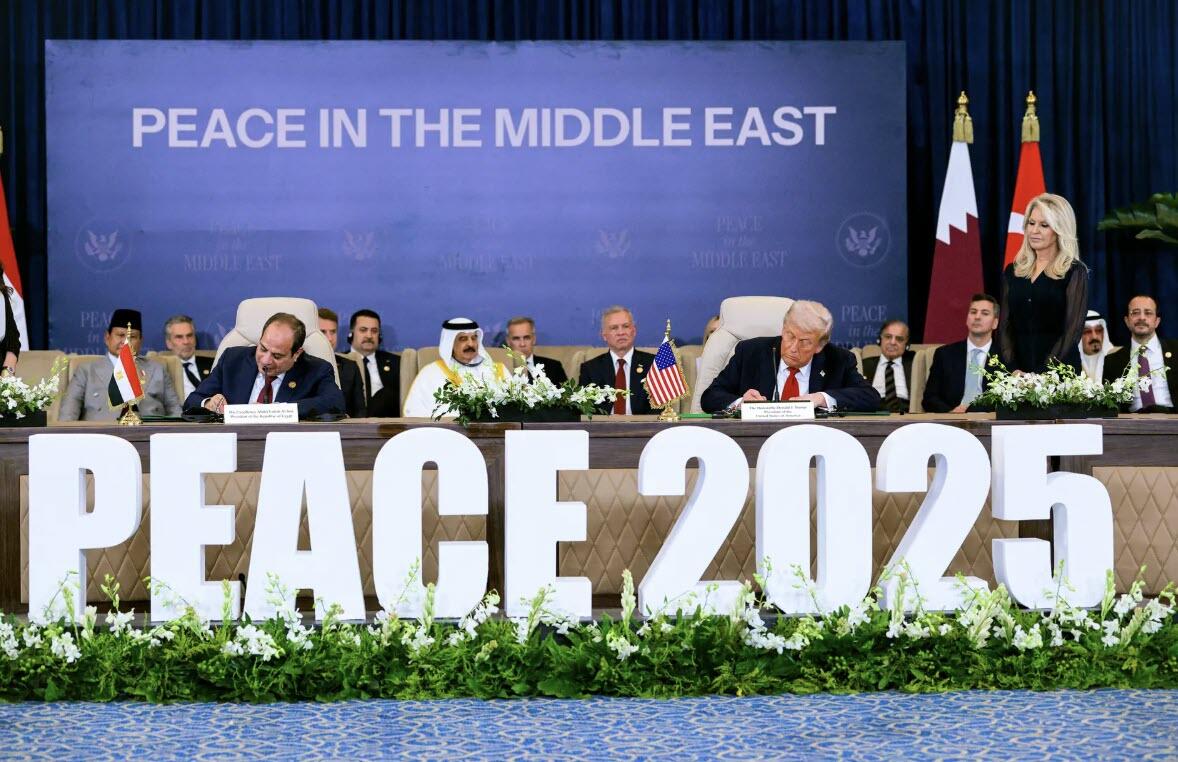
Trump oversaw a landmark peace treaty between Israel and Hamas, known as the 20-point Peace Plan, which resulted in the release of all Hamas-held hostages, living and deceased.
Trump called the moment the “historic dawn of a new Middle East,” celebrating an opportunity to pave a path toward peace in a region engulfed in struggles that date back millennia.
Egypt awarded Trump its highest honor, the “Order of the Nile,” and Israel made him the first non-citizen to ever receive its Israel Prize for his peacekeeping efforts.
Egyptian President Abdel Fattah El-Sisi and U.S. President Donald Trump sign a Gaza cease-fire agreement in Sharm El-Sheikh, Egypt, on Oct. 13, 2025. Trump is in Egypt to meet with European and Middle Eastern leaders in what’s being billed as an international peace summit, following the start of a US-brokered cease-fire deal to end the war in the Gaza Strip. Chip Somodevilla/Getty Images
20. Shifted Ukraine Policy
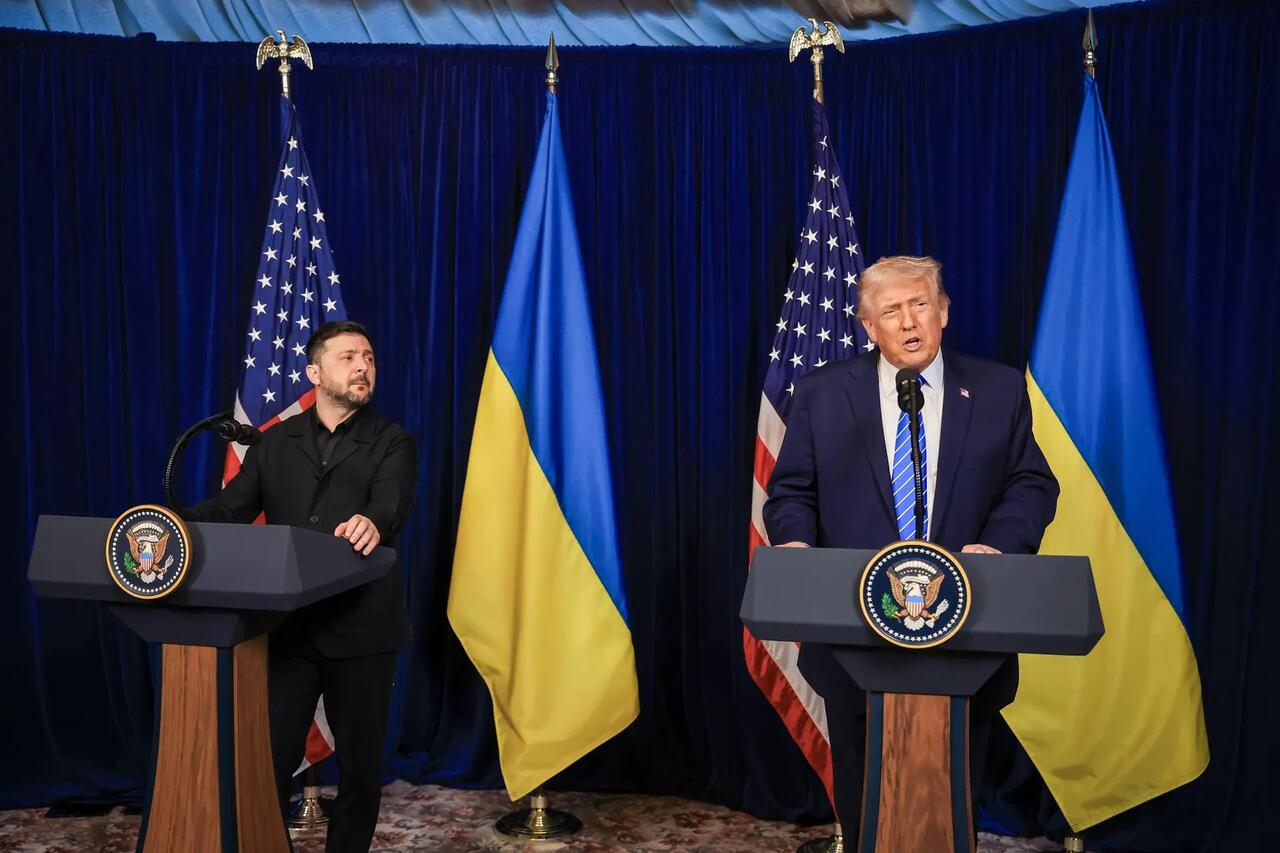
Trump ramped up pressure on Ukraine and Russia to bring the fighting to an end, suggesting Ukraine will have to cede territory it already lost in the war.
The Trump administration halted the Biden-era policy of free aid to Ukraine and negotiated arms sales instead.
Trump repeatedly expressed disappointment with Zelenskyy and Russian President Vladimir Putin for failing to work towards a peaceful resolution, though he said talks are ongoing and productive.
U.S. President Donald Trump speaks alongside Ukrainian President Volodymyr Zelenskyy during a press conference following their meeting at Mar-a-Lago in Palm Beach, Fla., on Dec. 28, 2025. Trump invited Zelenskyy to work on the U.S.-proposed peace plan to end the Russia–Ukraine war. Joe Raedle/Getty Images
21. Iran Strikes
Ten days into the Israel–Iran conflict in June 2025, Trump flexed America’s military might during a top-secret operation known as Midnight Hammer that destroyed Iran’s nuclear facilities.
The Fordow fuel enrichment plant—buried deep underground—was targeted along with two other plants by a fleet of B-2 bombers dropping 14 bunker buster bombs, and a barrage of Tomahawk missiles fired from submarines.
Two days later, the conflict ended in a cease-fire.
Chairman of the Joint Chiefs of Staff Air Force Gen. Dan Caine discusses the mission details of a targeted strike on Iran during a news conference at the Pentagon in Arlington, Va., on June 22, 2025. President Donald Trump addressed the nation last night after three Iranian nuclear facilities were struck by the U.S. military. Andrew Harnik/Getty Images
22. Backing Iranian Protesters
Iran’s violent clampdown on people protesting the Islamic regime drew criticism from the president.
Trump repeatedly voiced his support for the protesters, telling them to “take over the institutions” in a Truth Social post and promising them that “help is on the way.”
Human rights groups reported that more than 2,200 people were killed by Iranian officials since the protests began.
The president, on Jan. 16, said that the regime’s decision not to go ahead with scheduled executions of protesters impacted his decision not to strike Iran.
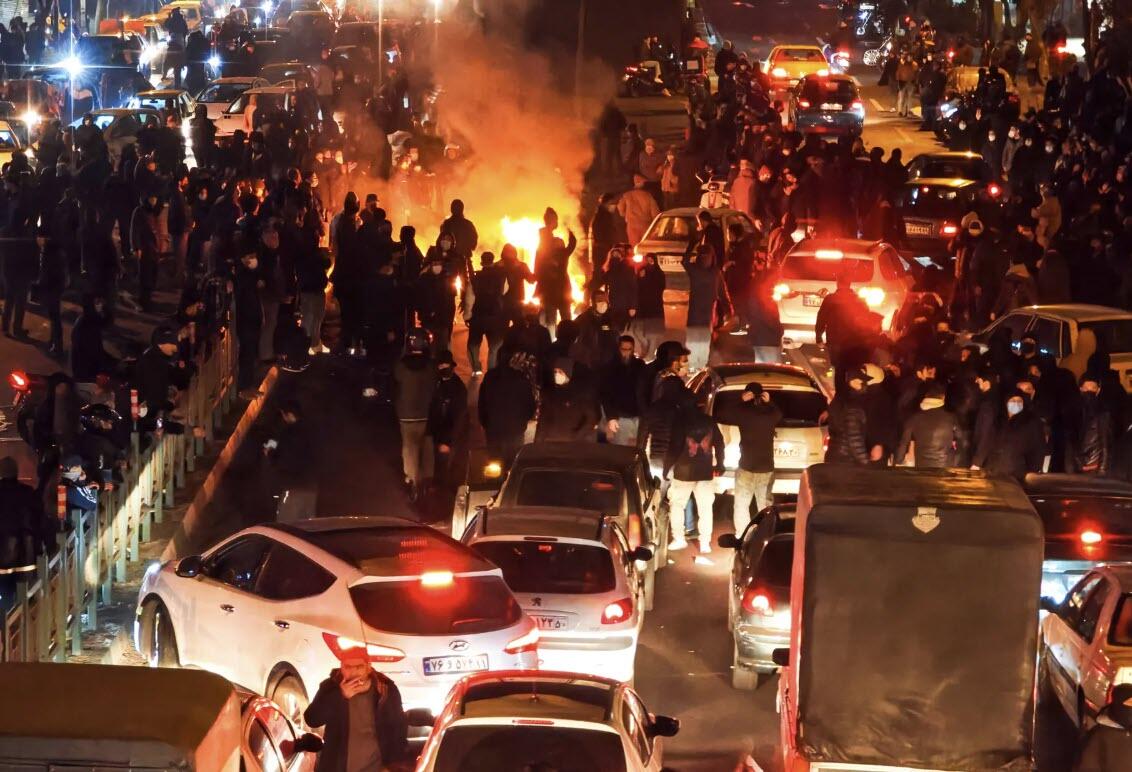
People gather during a protest in Tehran, Iran, on Jan. 8, 2026. Demonstrations have been ongoing since December 2025, triggered by soaring inflation and the collapse of the rial, and have expanded into broader demands for political change. Anonymous/Getty Images
23. Maduro Capture
In what may be a legacy-defining foreign policy action, Trump ordered the audacious military operation to capture Venezuelan leader Nicolás Maduro and his wife from their fortified compound in Caracas on Jan. 3.
The two were brought back to the United States and indicted in a New York federal court on several charges, including narco-terrorism conspiracy. Both pleaded not guilty
Secretary of State Marco Rubio said that prior to his capture, Maduro was given multiple opportunities to avoid the outcome.
In December 2025, the United States designated the Cartel de Los Soles as a foreign terrorist organization, with Maduro as its head. The Cartel de Los Soles is the umbrella term used to describe Venezuelan regime officials involved in drug trafficking.
Rubio said on Jan. 7 that the United States has a three-phase plan for Venezuela: stabilization, recovery, and transition.
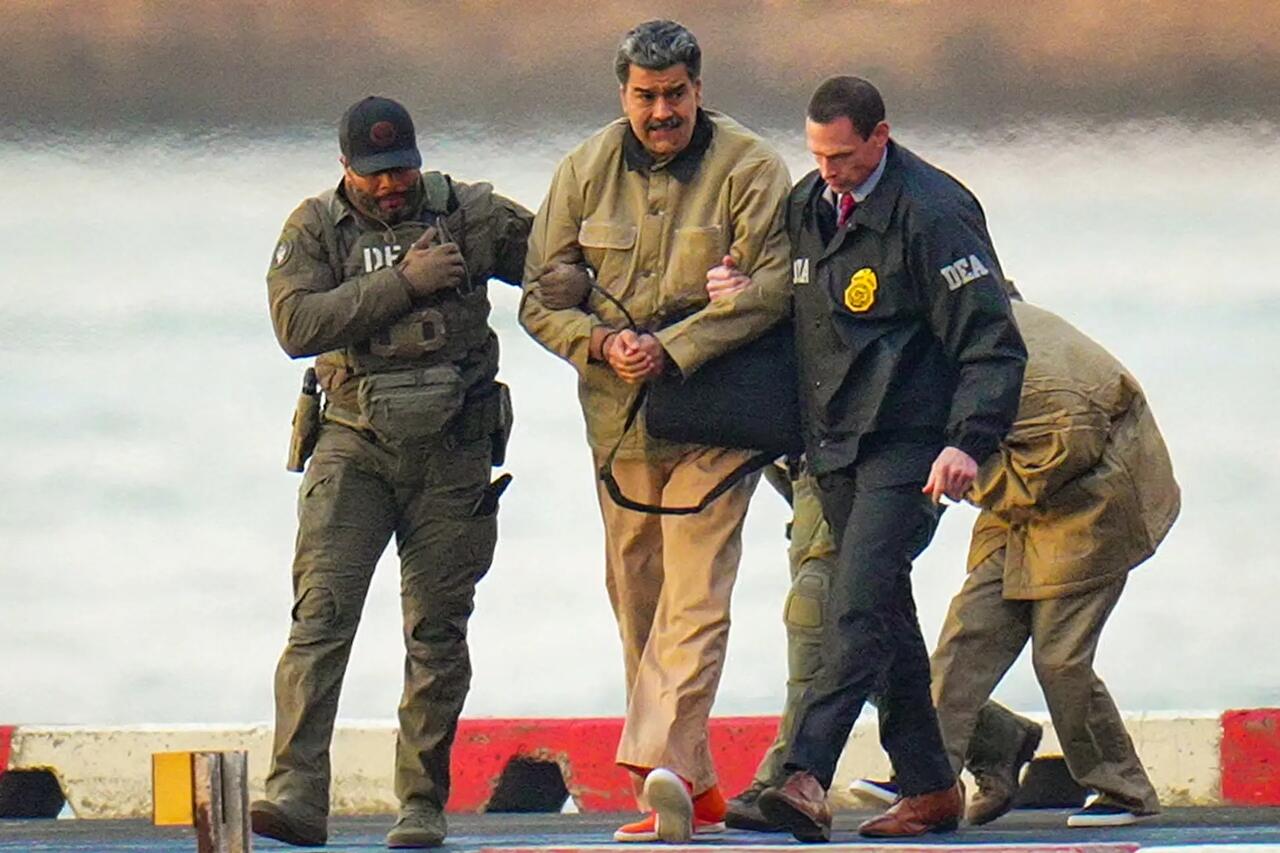
Nicolás Maduro and his wife, Cilia Flores (rear), are escorted by federal agents after landing at a Manhattan helipad, as they make their way into an armored car en route to a federal courthouse in New York City on Jan. 5, 2026. XNY/Star Max/GC Images
24. Drug Boat Strikes
Since September 2025, the U.S. military has targeted narcotics trafficking operations by striking boats smuggling drugs out of Venezuela. The United States has also amassed an unprecedented armada in the Caribbean Sea.
The first known land strike was conducted on a facility used to load illicit shipments in December last year.
Since December, U.S. forces have seized oil tankers attempting to evade sanctions by turning off their transponders and flying false flags to avoid detection.
(Left) A vessel used for drug smuggling burns after the U.S. military struck it in the Eastern Pacific, in this screengrab taken from a handout video released Dec. 18, 2025. (Center) A still taken from footage of a boat strike targeting drug trafficking in the Eastern Pacific on Dec. 4, 2025. (Right) A still taken from footage of a strike on a drug boat in the Caribbean on Nov. 6, 2025. U.S. Southern Command/Handout via Reuters, @Southcom/X, @SecWar/X
25. Focus on Latin America
Trump resurrected and redefined the 19th-century Monroe Doctrine as the “Donroe Doctrine,” establishing U.S. strategic dominance in the Western hemisphere. The strategy culminated in drug boat strikes and U.S. forces deposing Maduro in the latter half of Trump’s first year, but the region was a key focus of the administration early on.
In early 2025, the president launched a pressure campaign threatening to retake control of the Panama Canal if Chinese influence was not removed from the area.
Last February, Panama announced it would not renew its Belt and Road infrastructure investment agreement with Beijing, a win for the U.S. administration.
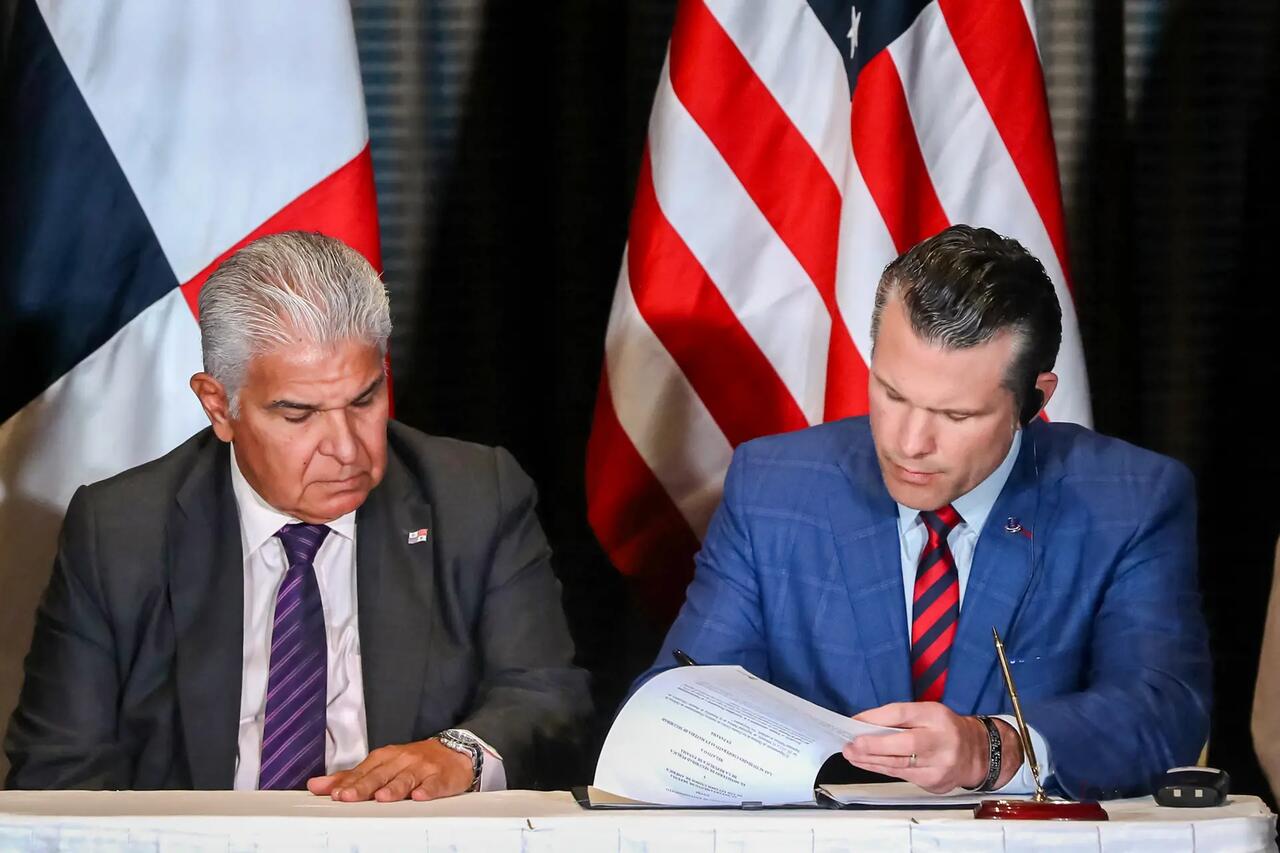
Panamanian President Jose Raul Mulino looks on as U.S. Secretary of Defense Pete Hegseth (R) signs a bilateral agreement, in Panama City on April 9, 2025. Franco Brana/AFP via Getty Images
26. Trade War, Truce With China
Trump imposed two sets of tariffs on China: fentanyl tariffs over the country’s role in sending chemical precursors to Mexican cartels that traffic the drug into the United States; and reciprocal tariffs over Beijing’s decades-long unfair trade practices harming the United States.
Tit-for-tat tariffs imposed after last April’s “Liberation Day” saw U.S. levies reach as high as 245 percent for some Chinese products. After several bouts of escalation and de-escalation, the two sides reached a 1-year trade truce during Trump’s meeting with Chinese Communist Party leader Xi Jinping in South Korea in October.
Under the deal, Beijing agreed to resume buying U.S. soybeans, allow for the export of rare earths, and take measures to mitigate the flow of fentanyl precursors to the United States.
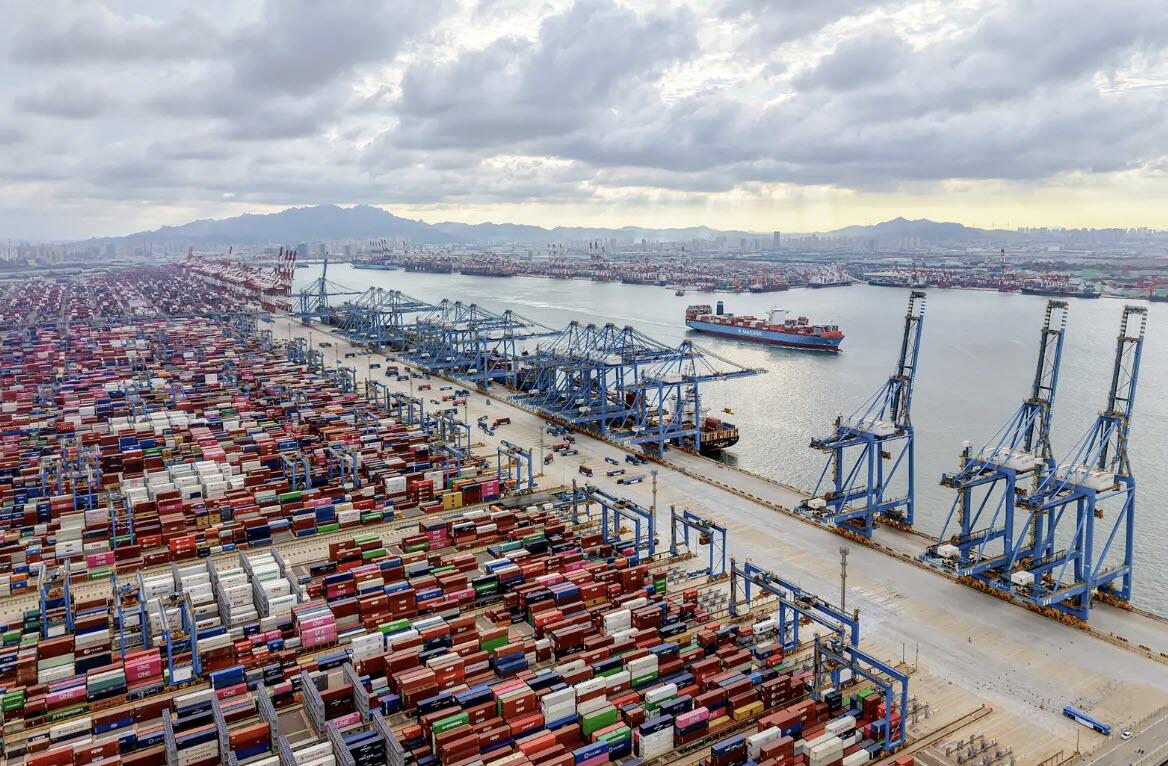
Shipping containers are seen at the port in Qingdao, in China’s eastern Shandong Province on Aug. 12, 2025. China and the United States delayed higher tariffs on each other’s imports for 90 days, hours before a trade truce between the world’s two largest economies was due to expire on Aug. 12. STR/AFP via Getty Images
27. Tariffs and Trade Deals
The president’s expansive tariff policy has sought to reset global trade and reshore manufacturing to undo what U.S. officials describe as decades of unfair trade practices against the United States.
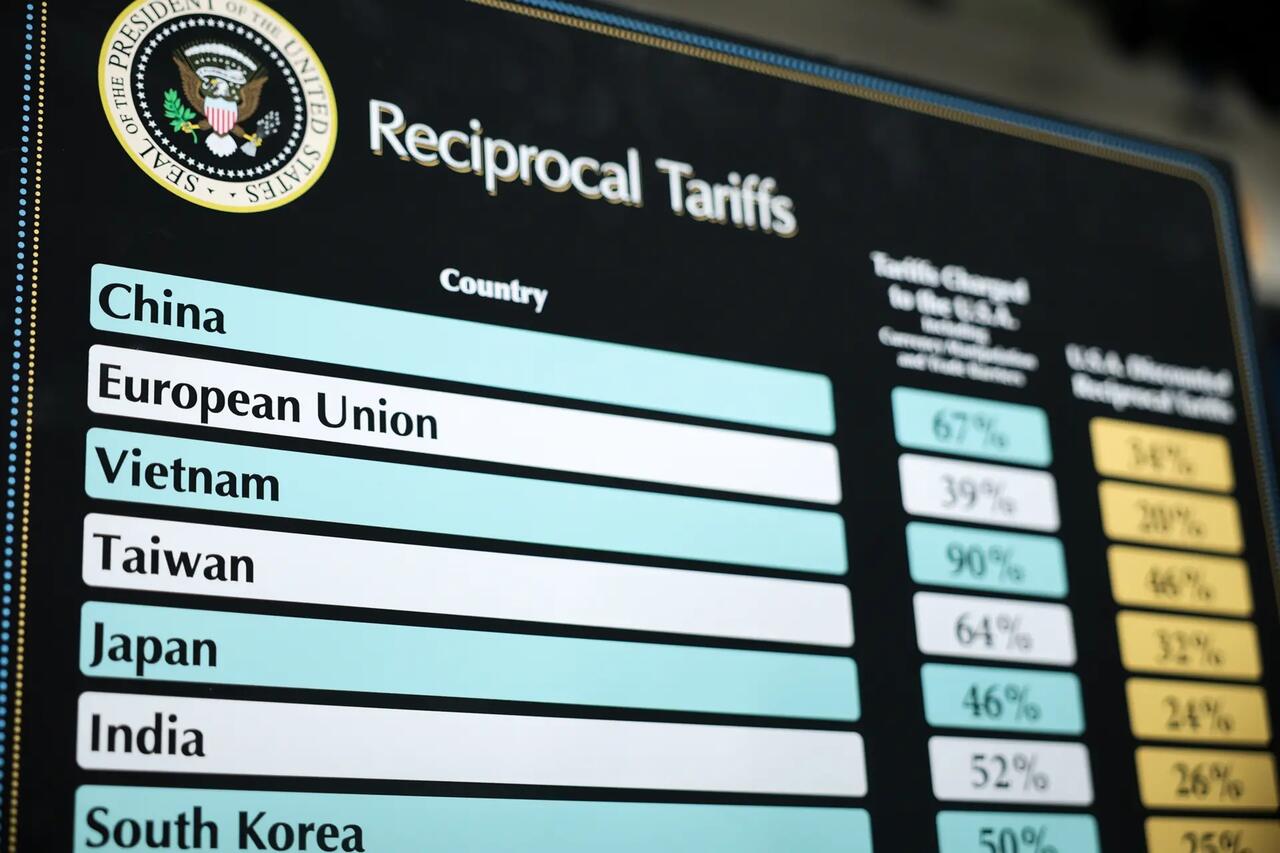
“Liberation Day” tariffs kicked off trade negotiations with dozens of countries. They’ve resulted in agreements with a host of nations, including the UK, the European Union, Japan, and South Korea.
Meanwhile, tariffs have raised record revenues—approximately $264 billion so far.
The trade deficit in October fell to the lowest level in 16 years. Tariff revenues have lowered the national debt, and the president has proposed $2,000 tariff rebate checks for citizens. Such a measure would require legislative approval.
The Supreme Court, however, is set to decide whether Trump’s global tariffs are legal. U.S. officials have said that even if they are overturned, the government has other authorities to use to continue levying tariffs.
A chart that shows the reciprocal tariffs the United States is charging other countries is on display at the James Brady Press Briefing Room of the White House on April 2, 2025. President Donald Trump announced new tariffs targeting goods imported to the United States from most trading partners, including China, Japan, and India. Alex Wong/Getty Images
28. Trillions in Investments
Trade negotiations led to a record level of investment in the development and expansion of manufacturing facilities nationwide.
Trump’s May 2025 visit to Gulf countries led to deals totaling more than $2 trillion with the United Arab Emirates, Qatar, and Saudi Arabia. Trade deals with the U.K., the European Union, Japan, and South Korea have led to more than $2 trillion in purchases and investment commitments in the United States.
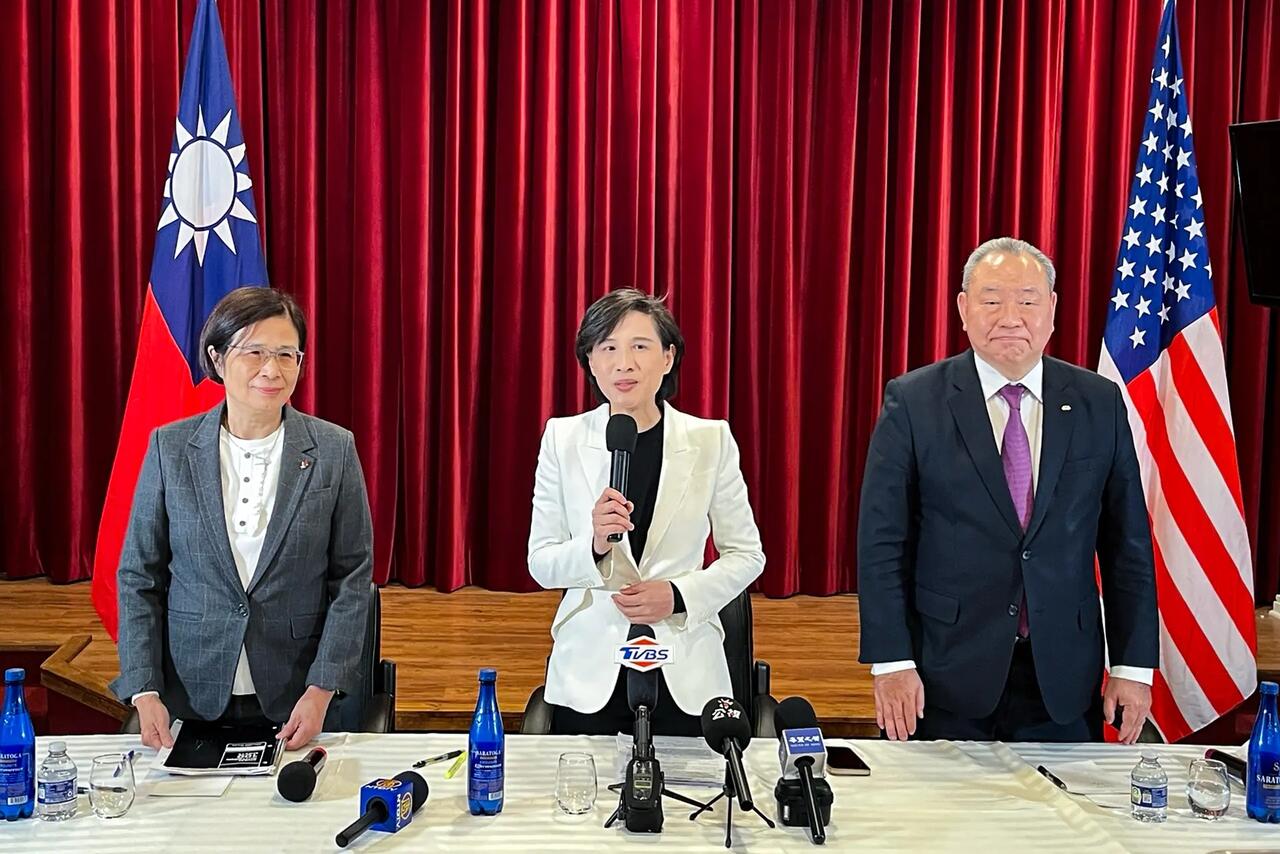
The United States and Taiwan in January announced a $500 billion deal aimed at reshoring American semiconductor manufacturing.
Trump recently said the “unbelievable success” of tariffs will drive an economic revival in the United States.
Taiwan’s chief trade negotiator, Yang Jen-ni (L), Taiwanese Vice Premier Cheng Li-chiun (C), and Taiwan’s top representative to the United States, Alexander Yui (R), speak at a press conference at the Taipei Economic and Cultural Representative Office in Washington on Jan. 16, 2026. Eva Fu/The Epoch Times
29. Shuttering USAID
The federal government reorganization included the dismantling of the U.S. Agency for International Development. The Trump administration eliminated approximately 94 percent of contracts, about $54 billion.
Rubio said the organization “strayed from its original mission of responsibly advancing American interests abroad.”
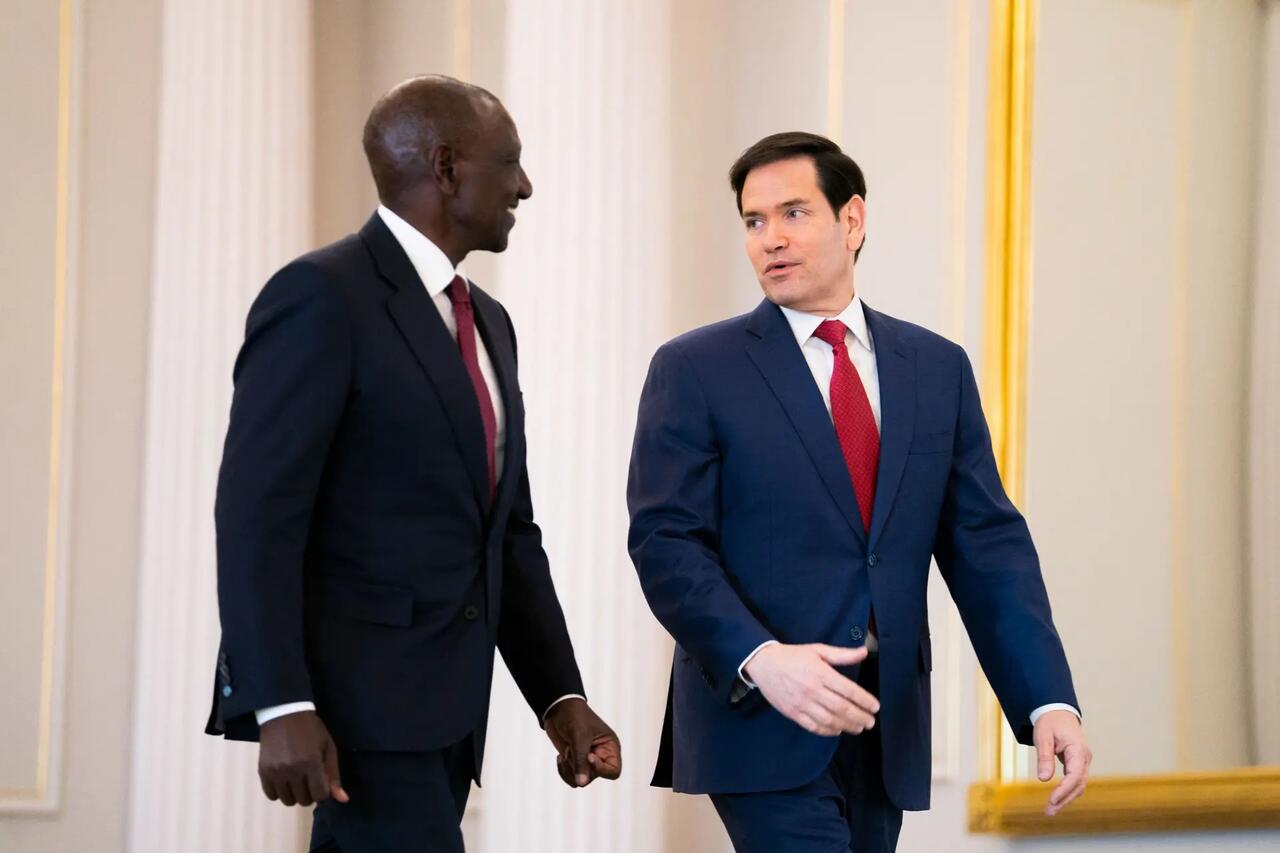
Since December, the United States has signed health deals with more than a dozen African countries under a new aid model, called the “America First Global Health Strategy.” The United States has pledged billions to improve the health systems of the countries, which have committed billions in matching funds.
U.S. Secretary of State Marco Rubio speaks with Kenyan President William Ruto (L) as they arrive for a Health Framework of Cooperation signing ceremony at the State Department in Washington on Dec. 4, 2025. Trump administration officials said the agreement would be the first in a series of agreements with developing countries, based on the “trade not aid” policy. Allison Robbert / AFP via Getty Images
30. Securing Rare Earth Supply Chain
The administration, recognizing the threat posed by China’s chokehold on rare-earth refining, has made a series of domestic and international investments to build an alternative supply chain for critical minerals. Rare earth elements are essential for modern manufacturing, including for cars, electronics, and weapons systems.
Ramaco Resources plans to extract more than 450 tons of rare earths from its 4,500-acre Brook Mine near Ranchester, Wyo., on July 11, 2025. John Haughey/The Epoch Times
In July 2025, the Pentagon entered into a landmark partnership with MP Materials, the country’s largest rare earth miner, committing billions of dollars to support the company and becoming its largest shareholder. MP Materials and the Pentagon also entered into a joint venture with a Saudi state-owned mining company to build a rare earths refinery in the Gulf country.
In October 2025, the United States and Australia agreed to invest $3 billion in rare earth projects.
Tyler Durden
Tue, 01/20/2026 – 11:20
https://www.zerohedge.com/geopolitical/30-ways-trump-impacted-world-his-first-year