Category: News
Olympic Snowboarder Turned “Cocaine Kingpin” Arrested In Mexico, Flown To US To Face Justice
Olympic Snowboarder Turned “Cocaine Kingpin” Arrested In Mexico, Flown To US To Face Justice
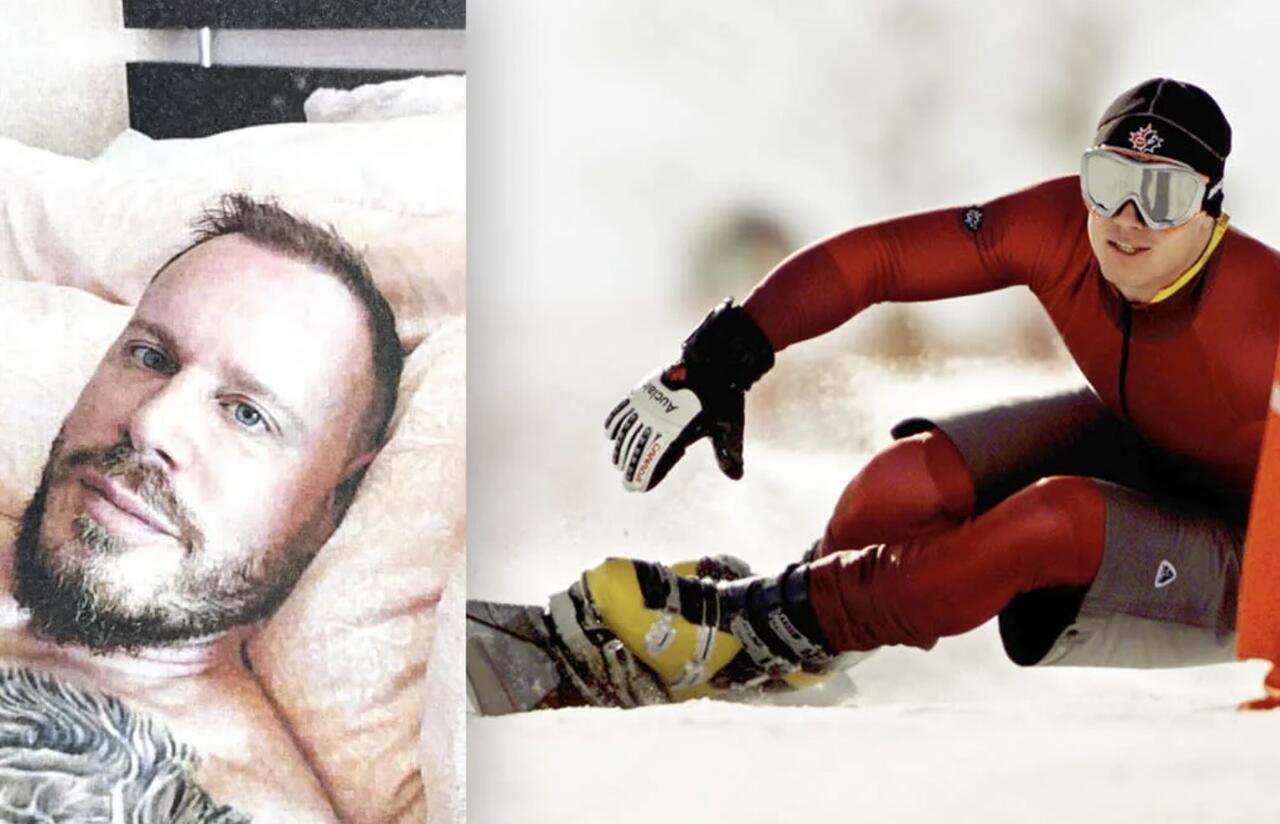
Former Olympic snowboarder Ryan Wedding, who was wanted by the FBI for allegedly leading a violent international drug trafficking operation, has been arrested, the Justice Department announced Friday.
Wedding, 44, had been added to the FBI’s 10 Most Wanted Fugitives list in March. He was taken into custody in Mexico on Thursday night and was being transported to the United States, FBI Director Kash Patel said in a post on X.
U.S. authorities believe he had lived in Mexico for more than a decade, according to Yahoo.
“This is a huge day for a safer North America, and the world,” Patel said.
Thanks to President Trump’s leadership and commitment to global law enforcement – as of this morning, the DOJ/FBI officially apprehended our SIXTH Top Ten Most Wanted Fugitive within the last year. Thank you to @AGPamBondi for her relentless pursuit of justice, the US Attorney’s… pic.twitter.com/fnSP4IXQRI
— FBI Director Kash Patel (@FBIDirectorKash) January 23, 2026
Attorney General Pam Bondi also confirmed the arrest, writing on X, “At my direction, @FBI agents have apprehended yet another member of the FBI’s Top Ten Most Wanted List: Ryan Wedding, the onetime Olympian snowboarder-turned alleged violent cocaine kingpin.”
U.S. officials had previously compared Wedding to notorious drug lords Pablo Escobar and Joaquín “El Chapo” Guzmán. More details about the arrest are expected at a news conference in California later Friday.
According to a federal indictment unsealed in November, Wedding faces nine charges, including conspiracy to distribute, possess, and export cocaine, conspiracy to commit murder linked to a criminal enterprise, witness tampering, and money laundering.
At my direction, Department of Justice agents @FBI have apprehended yet another member of the FBI’s Top Ten Most Wanted List: Ryan Wedding, the onetime Olympian snowboarder-turned alleged violent cocaine kingpin.
Wedding was flown to the United States where he will face justice.…
— Attorney General Pamela Bondi (@AGPamBondi) January 23, 2026
Prosecutors say his network moved hundreds of kilograms of cocaine from Colombia through Mexico and Southern California to Canada and other parts of the United States. He is also accused of ordering multiple killings connected to the drug operation.
The Bureau’s Sam Cooper reports that their American law-enforcement sources argue that Wedding’s success involved leveraging cross-border trucking enterprises captured by Indo-Canadian mafia networks, and that Canada’s police and judicial response failed to counter the threat.
“Over the last three or four years there’ve been Canadians killed in the Yucatán. And we all know they’re tied to drug trafficking — Greater Toronto and Montreal,” a senior U.S. investigator told The Bureau for an exclusive report last year, on the improbable rise of a Canadian to the heights of Mexico’s most powerful cartel.
“A fair number of Quebecers too — bikers. They all work in Mexico. But somehow Ryan Wedding got all these people to work together.”
The source described the Cancún area as a “haven for Canadian organized crime — mid- to high-level drug dealers coordinating with Mexican counterparts to bring stuff into Canada.”
Wedding, known by aliases such as “El Jefe,” “Giant,” and “Public Enemy,” represented Canada at the 2002 Winter Olympics in Salt Lake City, where he placed 24th in the parallel giant slalom.
Yahoo reported that when he was added to the most wanted list, Akil Davis, assistant director of the FBI’s Los Angeles field office, said, “Wedding went from shredding powder on the slopes at the Olympics to distributing powder cocaine on the streets of U.S. cities and in his native Canada. The alleged murders of his competitors make Wedding a very dangerous man.”
Authorities had said they believed Wedding was living in Mexico under the protection of the Sinaloa cartel.
The U.S. State Department initially offered a $10 million reward for information leading to his capture, later increasing it to $15 million. In November, the Justice Department also announced 10 related arrests under “Operation Giant Slalom.”
Tyler Durden
Fri, 01/23/2026 – 13:00
La nieve artificial de un experto italiano será clave en los Juegos Olímpicos de Milán-Cortina
Por JENNIFER McDERMOTT y PAT GRAHAM
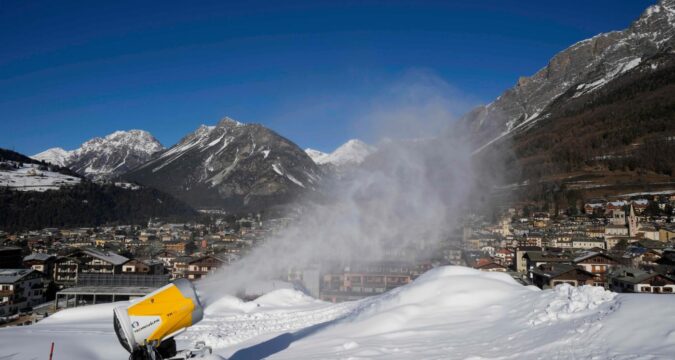
Davide Cerato desempeñará un papel importante en los eventos de esquí y snowboard en los próximos Juegos Olímpicos, pero no competirá.
El experto italiano en fabricación de nieve es responsable de perfeccionar varios de los circuitos que se presentarán en los Juegos de Invierno de Milán Cortina 2026, y se toma su trabajo en serio.
“Es la carrera más importante de su vida. Nuestro deber es darles lo mejor, ofrecer los mejores circuitos donde puedan rendir al máximo después de entrenar tan duro”, afirmó Cerato.
Cerato supervisa las operaciones en lugares donde se instalaron nuevos sistemas de fabricación de nieve, incluyendo Bormio para las pruebas de esquí alpino y el esquí de montaña, y Livigno para los eventos de esquí estilo libre y snowboard. Ha estado trabajando con la Federación Internacional de Esquí y Snowboard y el Comité Olímpico Internacional desde los Juegos Olímpicos de Sochi 2014.
Hoy en día, la nieve fabricada —“nieve técnica” como la llama Cerato— es una forma de vida en las carreras de esquí, tanto que los atletas olímpicos no piensan dos veces en competir sobre ella. Por encima de todo, quieren un circuito que se mantenga firme durante múltiples entrenamientos y las propias carreras sin volverse demasiado blando o lleno de surcos.
La Madre Naturaleza no siempre puede proporcionar eso, y con el cambio climático afectando especialmente a los deportes de invierno, la fabricación de nieve se ha vuelto esencial.
Nuevos embalses y cañones de nieve El comité organizador dijo el viernes que ha producido casi 1,6 millones de metros cúbicos de nieve técnica para todos los lugares, lo cual es menos de lo previsto. Cerato supervisó el trabajo para crear nuevos embalses de agua a gran altitud para almacenar agua para la fabricación de nieve.
En el Snow Park de Livigno, construyeron una cuenca capaz de contener unos 200 millones de litros de agua. Ahora es uno de los embalses más grandes del lado italiano de los Alpes, dijo Cerato. Añadieron más de 50 cañones de nieve allí para producir unos 800 millones de litros de nieve en aproximadamente 300 horas.
En Bormio, Cerato dijo que construyeron un lago a una altitud de 2.300 metros para contener 88 millones de litros (23 millones de galones) de agua. También añadieron 75 cañones de nieve para el esquí alpino y el esquí de montaña.
“Hemos llevado la pista de Bormio a un nuevo nivel”, expresó, comparándola con un “Ferrari con nuevas marchas”.
Asegurando circuitos justos y seguros Al fabricar nieve, los organizadores pueden controlar la calidad y dureza de una pista, preparándola según los requisitos de la FIS y asegurando condiciones consistentes, dijo Cerato.
Comentó que es más fácil trabajar con nieve técnica porque es compacta y es más segura porque no se deteriora tan rápidamente, mientras que la nieve natural requiere más trabajo. Pueden inyectar agua profundamente en el manto de nieve, que se congelará y creará una superficie de carrera más estable.
“Podemos ofrecer circuitos mejores, más seguros y justos”, manifestó. “Esa es la diferencia: un circuito justo desde el dorsal No. uno hasta el dorsal No. 50”.
Uso de tecnología de sensores para la fabricación de nieve Cerato y su equipo están utilizando sensores de última generación para monitorear la profundidad de la nieve. Si hay un hueco, los cañones de nieve entran en acción. Si hay demasiada, se apagan.
“Automáticamente ajusta todo, cada cañón de nieve, para que puedas controlar con solo una persona sentada en la oficina, toda la montaña”, dijo Cerato.
En Bormio, las máquinas pisanieves también están equipadas con sistemas GPS para ayudar a monitorear la calidad y los niveles de nieve, ahorrando tiempo, energía y agua.
La máquina pisanieves sabe exactamente dónde empujar la nieve y cuánta nieve se necesita. Y al mismo tiempo, “produces la cantidad mínima de nieve que necesitas”, expresó Cerato. “Esta es una herramienta poderosa”.
Preparar una pista para una competencia de élite no es lo mismo que hacerlo para uso comercial. Para este último, la nieve natural es preciosa, comentó. Personalmente, prefiere esquiar en nieve polvo.
“Nací en la montaña”, dijo. “Amo la nieve”.
___
La cobertura climática y ambiental de Associated Press recibe apoyo financiero de múltiples fundaciones privadas. AP es la única responsable de todo el contenido. Encuentra los estándares de AP para trabajar con filantropías, una lista de patrocinadores y áreas de cobertura financiadas en AP.org.
___
Deportes en español AP: https://apnews.com/hub/deportes
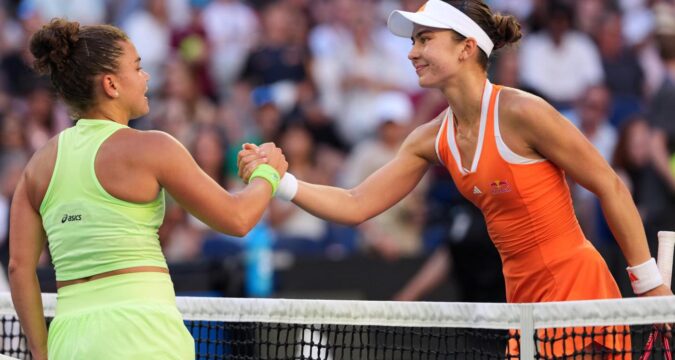
Iva Jovic usa consejos de Novak Djokovic para vencer a Jasmine Paolini en el Abierto de Australia
Por JOHN PYE
MELBOURNE, Australia (AP) — Iva Jovic recurrió a la mejor fuente posible para obtener consejos de tenis cuando habló con Novak Djokovic antes de su partido de tercera ronda en el Abierto de Australia contra Jasmine Paolini, la séptima cabeza de serie.
Cualquiera que haya sido su consejo, funcionó el viernes para la estadounidense de 18 años en su sorpresiva victoria sorpresiva por 6-2, 7-6 (3).
Se desquitó de la derrota en sets corridos ante Paolini —dos subcampeona en torneos del Grand Slam— en el Abierto de Estados Unidos del año pasado y catapultó a Jovic a la segunda semana de un grande por primera vez.
“De hecho, hablé un poco con Novak ayer. Así que fue bastante increíble”, dijo Jovic en su conferencia de prensa. “Me dio algunos consejos muy atentos para mi juego y algo que puedo intentar incorporar en este partido que acabo de jugar”.
La conexión se vio favorecida por el hecho de que su padre es serbio, y Djokovic, dueño de 24 títulos de Grand Slam, es un ícono nacional en su Serbia natal. Jovic ha visitado regularmente Belgrado y la ciudad sureña de Leskovac, donde residen familiares.
Su herencia también explica por qué Monica Seles y Djokovic fueron grandes inspiraciones para Jovic cuando creció en Estados Unidos e incursionó en el tenis.
Jovic sufrió dos quiebres al sacar para el partido, pero se mantuvo serena y confió en algunos de esos consejos de Djokovic antes de resolverlo en un desempate.
“Esa fue una de las cosas en la mente, porque creo que cuando Novak te da un consejo, lo sigues”, expresó, sonriendo.
Parte de ello estaba relacionado con la necesidad de Jovic de abrir más la cancha y no apresurarse en los tiros todo el tiempo.
“Así que intenté hacer eso, y terminó bien”, comentó. “Así que solo voy a intentar seguir escuchando a Novak”.
Djokovic ha ganado 10 campeonatos en el Melbourne Park y, a sus 38 años, está aquí tratando de añadir el trofeo número 25 a su colección, lo que lo convertiría en el tenista más condecorado de todos los tiempos.
Jovic fue una de las tres adolescentes que avanzaron el viernes, con la rusa Mirra Andreeva, la octava cabeza de serie, alcanzando la cuarta ronda en Australia por tercer año consecutivo y Victoria Mboko, una canadiense de 19 años, preparándose para un encuentro contra la número uno del mundo Aryna Sabalenka.
Jovic jugará a continuación contra Yulia Putintseva, quien desafió a una gran multitud que estaba en su contra en su victoria 6-3, 6-7 (3), 6-3 sobre la turca Zeynep Sonmez.
Putintseva, de 31 años, disputa su 14º Abierto de Australia consecutivo y su 44º evento de Grand Slam consecutivo. Ha sido dos veces cuartofinalista en el Abierto de Francia y en el Abierto de Estados Unidos de 2020.
Jovic es la jugadora más joven en el Top 100 femenino, y llega al partido de cuarta ronda —su primera vez tan lejos en un torneo importante— desde un ángulo completamente diferente. Es apenas su quinto grande.
Después de una victoria anterior en el torneo, Jovic habló en una entrevista televisiva en la cancha sobre cuánto admiraba a Seles y Djokovic, y cómo era “genial estar jugando un torneo en el que él también está jugando”.
“Siempre piensas en esos momentos en los que vas a conocer a tus ídolos un poco, y creo que a veces para ciertas personas puede ser un poco desalentador si tal vez no son tan amables o abiertos como esperabas”, dijo Jovic el viernes. “Creo que él es casi incluso más amable y más atento fuera de las cámaras de lo que se retrata.
“Quiero decir, es tan inteligente y realmente quiere ayudar a la generación más joven. Así que estoy realmente agradecida de tener ese consejo”.
___
Deportes AP: https://apnews.com/hub/deportes
The Rules‑Based Order That Once Constrained Great‑Power Ambition Has Proved Illusory
The Rules‑Based Order That Once Constrained Great‑Power Ambition Has Proved Illusory
By Stefan Koopman, senior macro strategist at Rabobank
If there is one lesson from this week, it is that the rules‑based order that once constrained great‑power ambition has proved illusory. In Davos, Canada’s Mark Carney captured this with clarity. The world, he argued, is experiencing a rupture rather than a transition. It has become a harsher place in which the strong test limits and the weak are expected to accommodate them. In such an environment, middle powers should stop “living within a lie” and make moves toward strategic autonomy and diversified dependencies.
The following 24 hours offered a textbook illustration of how this new world works, or fails to. President Donald Trump abruptly stepped back from his tariff barrage aimed at eight European allies. Talk of forcing the issue over Greenland was quickly shelved after a meeting with NATO secretary‑general Mark Rutte produced a “framework for a future deal”. Markets regained their footing on Thursday after losses earlier this week, following the familiar TACO pattern with a snapback in risk assets. US Treasuries just stabilized while the dollar weakened, leaving a residual Sell‑America tone.
Details remain scarce, but two strands are emerging:
First, a NATO mission under US command appears likely, involving the alliance’s Arctic members (incl. Sweden and Finland, who can bring their unique expertise) and possibly others, to strengthen regional defense. This outcome was already very much possible under the 1951 US‑Denmark defence agreement, which grants Washington broad scope to deploy military assets on Greenland, without the diplomatic damage caused by the earlier escalation.
Second, the understanding also appears to reflect Washington’s longer‑term concern about Greenland’s political future. A fully independent Greenland could, in theory, seek closer economic or security ties with Russia or China. A revised or reinterpreted framework would aim to ensure that any future change in Greenland’s status did not lead to the withdrawal of permission for US military activities on the island. This is particularly relevant to US missile‑defence ambitions, including the proposed “Golden Dome”.
Of course this would require sign-off from Denmark and Greenland – not NATO – and how any of this would be implemented remains unclear. As such, tariff threats may return if the eventual proposal falls short of US demands.
Seen in that light, reading the episode as détente would be an error. The US’ pressure on “irrelevant” Denmark’s sovereignty is an assertion of primacy framed as pragmatism, with tariffs as the go‑to tool. The subsequent Trump‑Rutte arrangement does not at all mark a return to rules or procedures.
By now, the White House bargaining style is well-established and likely to recur in the not too distant future. The belittlement draws the international attention and the projection of pain functions as its leverage.
The beatings will continue until morale improves, but this abusive dynamic is unproductive: the stated US strategy of wanting a ‘stronger Europe’ to balance China sits awkwardly with tactics that erode mutual trust, seek to split European unity, and invite defensive hedging with other – not necessarily like-minded – parties. Moreover, it may cause Europe’s learned helplessness, its perennial reflex of waiting for Washington to set the terms, to be unlearned in practice. The defense build‑up (possibly including nukes), the internal‑market push and the widening of trade options, Mercosur included, indicate a structural adjustment. If one of the US’s key strengths since the end of the Second World War is having had strong alliances and soft power, it may underestimate the long-term consequences. Trump said the US will remember if the Danes don’t play ball; but so will Europe.
Indeed, on Mercosur, after the European Parliament failed to ratify this agreement on Wednesday, the Commission is now signalling that provisional application is the likely way forward, which is just another indication of the growing role of geopolitics in Europe’s trade strategy.
Tyler Durden
Fri, 01/23/2026 – 12:40

Malaui inicia campaña de vacunación contra el cólera en condiciones que aumentan riesgo de brotes
Por GREGORY GONDWE
BLANTYRE, Malawi (AP) — Malaui, una nación situada en el sur de África, comenzó esta semana una campaña de vacunación contra el cólera en un intento por frenar la amenaza de la enfermedad que cada año mata a decenas de miles de personas en todo el mundo.
El cólera es evitable cuando se tiene acceso a agua limpia y puede tratarse con medicamentos de rehidratación; asimismo, existen vacunas efectivas.
Malaui es uno de los países africanos que enfrentan la amenaza perenne del cólera, y esto se ha exacerbado este año debido a las lluvias e inundaciones inusualmente intensas en el sur de África, el tipo de clima que suele provocar brotes de la enfermedad.
El cólera es una enfermedad diarreica aguda causada por una bacteria que se propaga típicamente a través de alimentos o agua contaminados.
El continente sufrió un gran revés en su lucha contra esta enfermedad el año pasado, cuando los casos superaron los 300.000, según los Centros para el Control de Enfermedades de África, el peor saldo en 25 años.
Una de las áreas objetivo de las autoridades de salud de Malaui para la campaña, que duró tres días y terminó el viernes, fue el densamente poblado municipio de Chilomoni en Blantyre, la capital comercial. En las últimas semanas, al menos 17 personas han sido diagnosticadas con cólera en la ciudad y se ha reportado al menos una muerte. Las autoridades advirtieron sobre “un aumento constante” en los casos a nivel nacional.
El doctor Gift Kawalazira, director de salud y servicios sociales de la Oficina de Salud del Distrito de Blantyre, dijo el jueves que los funcionarios identificaron fuentes de agua peligrosas como la probable razón de los casos de cólera que se reportaron en Chilomoni, subrayando cómo la enfermedad afecta especialmente a las comunidades empobrecidas con acceso restringido a agua limpia.
Los residentes suelen pagar alrededor de cinco centavos de dólar estadounidense por un balde de 20 litros (alrededor de cinco galones) de agua limpia de grifos privados en Chilomoni. Pero cuando no pueden pagar esa tarifa, algunos recurren al cercano arroyo Muluda, una vía fluvial contaminada con desechos humanos y animales, para beber, cocinar y lavar.
“Puedes ver cómo las personas llevan sus utensilios de cocina y los lavan aquí mismo, y también lavar su ropa”, dijo Kawalazira. “Esta es el agua que provoca el cólera”.
Malaui espera distribuir 24.000 de las vacunas orales como un comienzo, aunque las autoridades dicen que se necesitan muchas más para el país.
“Nos enfocamos en las poblaciones más vulnerables”, dijo Kawalazira, calificando la cantidad de vacunas como “un buen número para comenzar”. La cooperación entre los trabajadores sanitarios y las personas fue clave para contener el brote, afirmó.
El stock mundial de vacunas contra el cólera se agotó gravemente para 2022 debido a la demanda y a que hay pocos proveedores, lo que hizo que los países más pobres tuvieran problemas para contener los brotes. En Malaui, uno de los peores brotes mató a casi 2.000 personas ese año.
Entre los que buscaban protección en Chilomoni esta semana estaba Harriet George, de 24 años, quien llevó a sus dos hijos a un punto de vacunación el jueves.
“He visto que hay un brote de cólera en nuestra área, y decidí venir con mis hijos para vacunarnos”, dijo. “Nueve personas de esta área están en el hospital, y la noticia no fue bien recibida porque el resultado final es la muerte”.
África ha buscado invertir en su propia producción de vacunas dado que el cólera ha resurgido. En noviembre, una empresa farmacéutica sudafricana lanzó ensayos de lo que espera sea la primera vacuna contra el cólera producida en África.
El cólera suele convertirse en una amenaza durante las temporadas de lluvias, y las autoridades de salud de Malaui se han visto obligadas a actuar debido a las lluvias inusualmente intensas que han caído desde finales del año pasado en la región del sur de África y han causado inundaciones devastadoras en varias partes de Sudáfrica y Mozambique.
Las organizaciones humanitarias han advertido que existe un grave peligro de grandes brotes de cólera en Mozambique, donde más de 500.000 personas han sido afectadas por las inundaciones y podrían quedar sin acceso a agua potable y alimentos.
El portavoz de UNICEF, Guy Taylor, dijo en un comunicado que “las enfermedades transmitidas por el agua y la desnutrición son una combinación letal”.
Distintas partes de Malaui también han sido afectadas por inundaciones este mes, lo que ha generado preocupaciones de salud además del impacto inmediato de las condiciones climáticas extremas.
Otro residente de Chilomoni, Noel Kanjere, dijo que decidió vacunarse tras darse cuenta de lo rápido que puede propagarse la enfermedad, aunque fue el único miembro de su hogar de cinco personas que vino a recibir la vacuna, dijo.
“El departamento de salud no debería venir solo cuando hay un brote”, dijo Kanjere el jueves. “Necesitan dar mensajes de sensibilización continuamente a la comunidad”.
___
The Associated Press recibe apoyo financiero para la cobertura de salud global y desarrollo en África de la Fundación Gates. La AP es la única responsable de todo el contenido. Encuentra los estándares de la AP para trabajar con organizaciones filantrópicas, una lista de las fundaciones y las áreas de cobertura que financian en AP.org.
___
Esta historia fue traducida del inglés por un editor de AP con la ayuda de una herramienta de inteligencia artificial generativa.

Messiah Horton, transfer from state champ Phillips, looks to get Richards to promised land. ‘I want us to win.’
Messiah Horton came to Richards this fall with a mission to bring his new school a taste of the kind of success he was able to witness up close at his old school.
Horton, a junior guard, spent his first two years at Phillips in Chicago. As a freshman on the junior varsity in 2023-24, he watched the Wildcats’ varsity win the Class 2A state championship.
“I’ve been thinking about that for the longest time,” Horton said. “I definitely want to do that over here. That’s what I’m trying to do now. We’re trying to go as far as we can.”
A championship is a long way off, but Horton’s addition has Richards headed in the right direction.
He poured in 25 points Thursday night to lift the visiting Bulldogs to a 71-51 South Suburban Red win over district rival Eisenhower in Blue Island.
Travon Gourdine finished with 17 points and seven rebounds for Richards (11-8, 5-3). Jordan Shaw scored 13 points, while Sammy Childs chipped in with seven points and Reginald Johnson pulled down seven rebounds.
Richards’ Messiah Horton (10) goes in for a layup as Eisenhower’s Logan Costa (12) defends during a South Suburban Red game in Blue Island on Thursday, Jan. 22, 2026. (Troy Stolt / Daily Southtown)
Larnell Moore led Eisenhower (4-15, 1-7) with 18 points. Logan Costa scored nine points, while Luke Duzan contributed eight points and Logan Tasciotti tallied seven rebounds.
Horton, meanwhile, is fitting in just fine at Richards.
“It’s going good so far,” he said. “There are ups and downs, but that’s what comes with it. You lose some, win some. I’m happy that I’m here with this team.”
Horton was a key varsity contributor last season for Phillips, but he was surrounded by drama.
Richards’ Messiah Horton (10) shoots a free throw against Eisenhower during a South Suburban Red game in Blue Island on Thursday, Jan. 22, 2026. (Troy Stolt / Daily Southtown)
After the championship in 2023-24, the Wildcats were hurt by several transfers and the loss of coach Paris Martin, who sued Chicago Public Schools claiming he was never paid for coaching. That case finally wrapped up last July with a settlement.
Through it all, Horton just kept playing basketball. But he and his family decided it was time for a change before his junior year.
“It was hard,” Horton said. “I really didn’t want to leave, but I wanted to experience a new environment and meet new people.”
One of those new teammates is Gourdine, who was often a one-man show offensively last season for the Bulldogs.
Now he has help.
Richards’ Messiah Horton (10) fakes out Eisenhower’s Logan Tasciotti (14) on a layup during a South Suburban Red game in Blue Island on Thursday, Jan. 22, 2026. (Troy Stolt / Daily Southtown)
“I love this kid,” Gourdine said of Horton. “He brings the energy, the scoring, the facilitating. He brings everything I could ask for. He’s a three-level scorer. He takes a lot of weight off my shoulders.”
Richards has already nearly tripled its win total from last season, when the Bulldogs finished 4-27.
Richards coach Jamal Thompson knows Horton has been a big part of the turnaround.
“I feel like that boy can fit in anywhere,” Thompson said. “This group of guys accepted him. I knew he could be a player. He’s not selfish at all. He’s willing to pass the ball to open guys. That’s what we need.
“Travon and Messiah are a great one-two punch. A lot of people probably wouldn’t agree with this, but I feel like I can put that one-two punch up against anyone in the state.”
Richards’ Messiah Horton (10) dribbles past Eisenhower’s Logan Tasciotti (14) during a South Suburban Red game in Blue Island on Thursday, Jan. 22, 2026. (Troy Stolt / Daily Southtown)
Horton was on from the start Thursday night, scoring 14 points in the first quarter as Richards raced to a 25-9 lead and never looked back.
Horton has carried with him lessons from his freshman year at Phillips. The star of the varsity that season was EJ Horton, who is now playing at North Texas.
Messiah and EJ are not family by blood, but EJ was certainly someone to look up to.
“We just have the same last name, but we’re not related,” Messiah said. “I call him my brother, though. I learned a lot from him and that team. They played hard. They knew how to win.
“That’s what I’m trying to bring here. I want us to win.”

Two elderly siblings found dead in Oak Lawn home
Two residents were found dead Thursday in an Oak Lawn home on the 10000 block of South Maple Avenue, in what police are calling an isolated event.
Officers were sent to conduct a well-being check at the home just after noon on Thursday, after a health care worker attempted to contact the residents and requested police assistance after not being able to get inside, police said.
After police entered the residence, two elderly siblings were found dead with gunshot wounds, and officers recovered a firearm at the scene, police said.
The investigation is continuing but police said they are not looking for anybody else involved. The Cook County medical examiner’s office scheduled autopsies for Friday.
Cam’ron Hardy is a freelance reporter for the Daily Southtown.
https://www.chicagotribune.com/2026/01/23/two-elderly-siblings-found-dead-in-oak-lawn-home/

2028 Olympics could bring big wins for Los Angeles labor unions
LOS ANGELES — As Los Angeles ramps up for the 2028 Olympics, local unions are drawing inspiration from the Paris Games when hotel workers went on strike a day before opening ceremonies.
The French workers waved signs at the five-star hotel where members of the International Olympic Committee were staying, threatening “No Olympics!” if their demands were not met. A slew of labor union strikes surrounding those Games netted gains from higher salaries to better retirement benefits.
Los Angeles labor leaders representing tens of thousands of workers across Southern California hope to employ similar strategies as the city prepares to host the Summer Games in 2028.
Unite Here Local 11 co-President Kurt Petersen said his union has aligned more than 100 contracts that cover roughly 25,000 workers at hotels, airports, sports arenas and convention centers to expire in January 2028, mere months before the opening ceremony. The idea is to maximize bargaining power.
United Food and Commercial Workers Local 770, which represents workers in the health care, grocery and packing industries; and Service Employees International Union Local 721, which represents more than 100,000 county employees, also plan to leverage contracts that expire in the first half of 2028.
“We are going to have a force … of working people to do whatever it takes, including striking if we have to during the Olympics in 2028,” Petersen said. “The Olympics can’t happen without the workers.”
A coalition of labor groups, community organizations and religious institutions are pushing for the Los Angeles Olympics organizing committee — known as LA28 — and the city to pay for building 50,000 housing units, pass a moratorium on short-term rentals like Airbnb, and protect immigrant workers.
Jules Boykoff, a professor at Pacific University who has studied worker gains from past Olympics, called the Games a “once-in-a-generation opportunity” for organized labor.
“These sports mega events are yet another social moment that helps us see with greater clarity, people who’ve been there working all along, who actually are essential workers,” Boykoff said.
He pointed to wins by transportation workers and garbage collectors ahead of the Paris Games as examples.
Who benefits from the Olympics
Most of the economic benefits tied to the Olympics are short-lived, according to Robert Baumann, a professor at College of the Holy Cross who has examined data from several Games.
Tourism and hospitality industries see a boost during the time period, while all other industries tend to suffer due to the general disruption to the host cities, Baumann said.
But the Olympics still represent a powerful bargaining chip for workers.
Axel Persson, general secretary of the CGT Rail Workers Union in France, said on the Real News Network podcast that his organization won several concessions ahead of the 2024 Paris Olympics, such as an earlier retirement with full pension and doubled pay for transportation workers during the Games.
In Rio de Janeiro, more than 2,000 workers went on strike at venue construction sites two years ahead of 2016 Summer Olympics over benefits and working conditions. They parlayed the walkout into higher pay and an increase in workers’ lunch vouchers.
City approves $30 per hour minimum wage for hospitality workers
In Los Angeles, labor groups have been vocal about the Olympics benefitting workers critical to the Games’ success.
The city recently approved a minimum wage of $30 per hour by July 2028 for workers at hotels with 60 or more rooms, an increase that’s set to be phased in over the next few years. The employees’ current minimum wage is $22.50.
Business groups have said the increase will be a blow to the city’s tourism industry, which never quite recovered from the COVID-19 pandemic. Opponents are still trying to delay the wage hike until after the Summer Games.
On the other side, local unions are collecting signatures for several proposed ballot measures, including one that would penalize corporations with CEOs who earn more than 100 times the company’s median employee. Another proposal would require the public to vote on developing major event and hotel projects, and a third would expand the $30 minimum wage to all workers.
“We need to make the Olympics and the CEOs who are gonna make money off the Olympics pay for things that our city and citizens need,” Petersen said.
Business groups push back
Los Angeles-area chambers of commerce are also using the fight over the Olympics to target a source of long-standing frustration in the business community — the gross receipts tax. Business leaders proposed a ballot measure to repeal the tax shortly after city council passed the hospitality worker minimum wage.
The tax is levied on businesses’ total revenue before operating costs and accounts for more than $700 million in annual tax revenue, according to the city clerk’s office.
The money makes up a key part of LA’s general fund, which pays for police, firefighters, homeless assistance and other core services.
“Businesses continue to get hammered in this city,” said Stuart Waldman, president of the Valley Industry and Commerce Association, one of the groups gathering signatures to repeal the tax.
On the workers’ side of the ledger, employees like Thelma Cortez, a cook for the airline catering company Flying Food Group, say they are getting hammered by the cost of living. All of Cortez’s primary paycheck now goes toward rent for her and her three daughters. She works overtime or side jobs to make ends meet.
She was excited when she heard LA would be hosting the 2028 Olympics.
“I thought that, ‘Well there will be more work, and maybe all airport and hotel workers can earn a little more,’” she said.
https://www.chicagotribune.com/2026/01/23/2028-olympics-labor-unions/
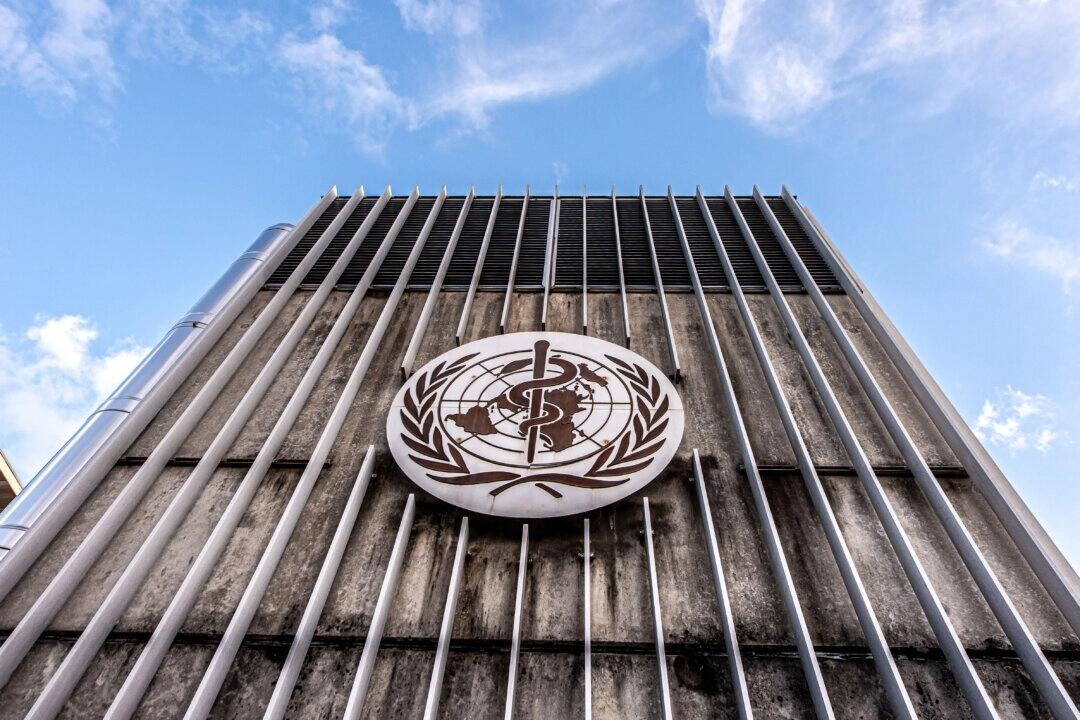
US Officially Exits World Health Organization
US Officially Exits World Health Organization
Authored by Kevin Stocklin via The Epoch Times,
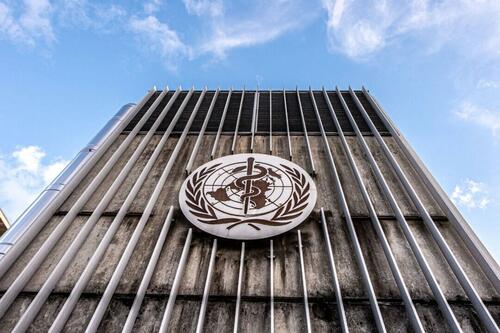
America is officially out of the World Health Organization (WHO).
“Today, the United States withdrew from the World Health Organization, freeing itself from its constraints, as President [Donald] Trump promised on his first day in office,” Secretary of State Marco Rubio and Health and Human Services Secretary Robert Kennedy, Jr., declared in a Jan. 22 joint statement.
“This action responds to the WHO’s failures during the COVID-19 pandemic and seeks to rectify the harm from those failures inflicted on the American people.”
This is the latest move by an administration that has been highly skeptical of membership in a number of global organizations that, in Trump’s view, and that of many conservatives, compromise the sovereignty of the United States and operate counter to America’s interests. In January 2025, Trump withdrew the United States from the Paris Accord, which aims to limit global warming, and on Jan. 7, he withdrew en masse from 66 U.N.-sponsored climate and social justice organizations, among them the U.N. Framework Convention on Climate Change.
Trump’s decision to quit the WHO is “due to the organization’s mishandling of the COVID-19 pandemic that arose out of Wuhan, China, and other global health crises, its failure to adopt urgently needed reforms, and its inability to demonstrate independence from the inappropriate political influence of WHO member states,” a White House statement declared.
In this week’s executive order, dated Jan. 20, Trump directed that all U.S. funding for the WHO cease and all official U.S. representatives to the U.N. health subsidiary be recalled.
Under the terms of the original agreement establishing U.S. membership, the United States must give the WHO one year’s notice in order to withdraw from the organization. Trump gave such notice to the WHO upon taking office in 2025.
At that time, the WHO responded that it “regrets the announcement that the United States of America intends to withdraw from the Organization.”
“WHO plays a crucial role in protecting the health and security of the world’s people, including Americans, by addressing the root causes of disease, building stronger health systems, and detecting, preventing and responding to health emergencies, including disease outbreaks, often in dangerous places where others cannot go,” the WHO stated.
Another condition for withdrawal under the original agreement is that the United States pay all unpaid dues it owes to the WHO, which is currently $278 million for the years 2024 and 2025. However, the Trump administration has stated that it will make no additional payments to the WHO.
“The American people have paid more than enough,” a State Department spokesperson stated on Thursday.
America’s withdrawal has not been officially accepted by the WHO.
“The WHO refuses to hand over the American flag that hung in front of it, arguing it has not approved our withdrawal and, in fact, claims that we owe it compensation,” Rubio and Kennedy stated. “From our days as its primary founder, primary financial backer, and primary champion until now, our final day, the insults to America continue.”
Trump first attempted to withdraw the United States from the WHO in 2020 at the end of his first term; however, President Joe Biden reversed that move upon taking office in 2021. The Biden administration was also active in pushing for the United States to sign on to the WHO’s Pandemic Agreement, which, together with its International Health Regulations, was intended to give the WHO sweeping new powers to set policy for all member nations during pandemics and other “health emergencies” that the WHO might declare at its discretion.
As part of America’s withdrawal from the WHO, Trump’s executive order stated that America will withdraw from negotiations of these agreements and that they “will have no binding force on the United States.”
Originally founded in 1948, the WHO included 194 nations among its members, prior to America’s withdrawal. The United States joined in 1948, following a joint resolution of Congress signed by President Harry Truman.
The United States was required to fund 22 percent of the WHO’s budget, and has given the organization an average of $237 million per year between 2012 and 2024.
Tyler Durden
Fri, 01/23/2026 – 12:00
https://www.zerohedge.com/geopolitical/us-officially-exits-world-health-organization
Fiscales franceses investigan operaciones de buque petrolero incautado procedente de Rusia
Associated Press
PARÍS (AP) — Los fiscales franceses abrieron una investigación sobre un buque petrolero interceptado el jueves por la Marina de Francia en el mar Mediterráneo y que al parecer transportaba petróleo ruso, en violación de las sanciones contra Moscú, informaron las autoridades el viernes.
El Grinch, un petrolero que provenía de Múrmansk en el noroeste de Rusia y se sospecha que forma parte de la flota fantasma rusa sancionada, fue redirigido a un fondeadero tras la operación de la Marina francesa.
Los fiscales de Marsella, ciudad del sur de Francia, indicaron el viernes que investigan el presunto incumplimiento del barco de confirmar su nacionalidad.
Un video proporcionado por el ejército francés muestra a miembros de la Marina abordando el buque desde un helicóptero.
Se cree que Rusia está utilizando lo que se ha descrito como una “flota fantasma” de más de 400 barcos para evadir las sanciones por su guerra en Ucrania. Francia y otros países han prometido tomar medidas enérgicas.
La flota es una compilación de buques y petroleros envejecidos, propiedad de entidades no transparentes con direcciones en países no sancionadores, y navegando bajo banderas de dichos países.
En septiembre del año pasado, las fuerzas navales francesas abordaron otro petrolero frente a la costa atlántica francesa al que Macron también vinculó a la flota fantasma. Putin denunció esa interceptación como un acto de piratería.
El capitán del petrolero será juzgado en febrero por la presunta negativa de la tripulación a cooperar, según las autoridades judiciales francesas.
___
Esta historia fue traducida del inglés por un editor de AP con la ayuda de una herramienta de inteligencia artificial generativa.