Category: News

VNA Health Care to expand Indian Avenue health center in Aurora
VNA Health Care is planning to expand one of its busiest health centers in Aurora with the help of a recently-announced $750,000 award from Endeavor Health.
The heath center on Indian Avenue will be able to see about 25% more patients per year after the expansion, so the organization will have three large clinics with good capacity that are well distributed throughout the city, according to Linnea Windel, president and CEO of VNA Health Care. The organization’s other two large clinics include the new location at Weston Avenue and the one on Highland Avenue.
“VNA Health Care has called Aurora home for more than a century, and this investment allows us to build on that commitment by expanding access to care for families who rely on us every day,” Windel said in a news release announcing the plans.
VNA is already serving thousands of patients in Aurora, including 30,000 city residents, Windel told The Beacon-News. But the organization knows there are others who may not be going to the doctor and getting regular care, she said, and VNA wants to make sure it is providing those people with access to the health care they need.
The expansion will add 12 exam rooms, bringing the total up to 48, Windel said. These additional rooms will help to meet demand at the site for primary care, including OB/GYN, pediatrics and family practice plus mental and behavioral health services, a fact sheet about the project showed.
A reading nook for kids and families, an expanded wellness kitchen classroom and enhancements are also planned to be part of the site’s renovations, according to Windel. Plus, VNA is planning to move its Women, Infants and Children nutrition program from the Highland Avenue center to the Indian Avenue site through the expansion.
Other additions to the health center will include a lab and 38 new parking spaces, according to a news release announcing the project.
Currently, the Indian Avenue location serves about 16,000 patients per year, but that number is expected to rise to about 20,000 through the expansion. The clinic will stay open through construction, although temporary adjustments to parking or entrances might be made, the project fact sheet said.
Construction on the project is expected to start this summer and finish up about nine months later, but an exact timeline is still being worked on with the architectural firm, Windel said.
In part, the expansion will be funded through a Capacity Builder Award that VNA Health Care recently received from Endeavor Health.
“Through our Community Investment Fund, we’re proud to partner with trusted organizations like VNA Health Care that are deeply rooted in their communities,” Kristen Murtos, Chief Innovation and Transformation Officer of Endeavor Health, said in VNA’s news release. “By investing in expanded capacity at VNA’s Indian Avenue health center, we’re helping remove barriers to care and supporting a model that brings comprehensive, family-centered services together under one roof.”
VNA was one of nine organizations to have received a 2026 Community Investment Fund Capacity Builder Award, which are one- to two-year awards, $100,000 to $500,000 per year, designed to build and strengthen skills, resources and infrastructure of community-based organizations, according to a news release from Endeavor Health.
Since its launch in 2022, Endeavor Health’s Community Investment Fund has awarded $38.5 million to 59 local partnerships, the Endeavor news release said.
“We are grateful to Endeavor Health for recognizing the critical role community health centers play in strengthening health outcomes,” Windel said in VNA’s own news release. “This partnership will help ensure that more parents, children and families can get the care they need in a welcoming, integrated setting, regardless of insurance status or ability to pay.”
Others financially contributing to the expansion include the Dunham Foundation, which is giving $1.5 million; the Illinois Department of Commerce and Economic Opportunity, which is giving $500,000 secured by state Rep. Barbara Hernandez, D-Aurora, and state Sen. Karina Villa, D-West Chicago; and the Community Foundation of the Fox River Valley, which is giving $100,000, according to the project’s fact sheet.
Windel said that VNA is “thrilled with all the community support” for the project.
rsmith@chicagotribune.com

The Case Against Declaring Artificial General Intelligence
The Case Against Declaring Artificial General Intelligence
Authored by Lewis Liu via CityAM.com,
Today’s AI systems fail badly in out-of-distribution scenarios, as shown by their inability to interpret real-world geopolitical crises.
Large language models reflect the ideological biases of their creators, undermining claims of neutral “general” intelligence.
The real economic opportunity lies in tightly governed artificial narrow intelligence, not in premature claims of AGI.
“AGI is here, now.”
That’s Sequoia Capital this week, one of Silicon Valley’s most legendary venture firms and a major OpenAI investor, declaring we’ve crossed the threshold into artificial general intelligence.
Their post also proclaims, in big bold letters, that they are “Blissfully Unencumbered by the Details”. When Sequoia speaks, the tech world listens. This post has dominated conversations across the AI builder community for days.
As a builder, venture investor, and AI scientist myself, I find their proclamation both deeply useful and profoundly dangerous.
Here’s what’s useful
Sequoia offers a functional definition of AGI: “the ability to figure things out. That’s it”. AI can now crawl through information, determine a path forward, and execute. The key shift, as they frame it, is AI moving from “talking” to “doing”. Harvey and Legora “function as associates,” Juicebox “functions as a recruiter,” OpenEvidence’s Deep Consult “functions as a specialist.” Those are their exact phrases, and I’m skeptical of the framing, but we’ll get to that.
They’re throwing down the gauntlet for builders, and this matters. AI systems can actually redline contracts now, genuinely reach out to prospects today. It’s a reminder to think bigger about what’s possible and that the horizon has expanded dramatically in just the last year.
I sent this post to my own co-founders, not to debate the philosophy, but I wanted to push us on Sequoia’s “doing” versus “talking” framework. We need to rise to this challenge ourselves.
However, calling these systems “AGI” is profoundly damaging, both to the credibility of the AI revolution and to its safe deployment. It obscures what AI agents can actually do today (hint: not general superintelligence) and offers zero guidance on how humans should interact with them (hint: don’t trust them blindly).
Let me give three examples that expose these systems’ real limitations.
1. AI systems cannot handle out-of-distribution situations
I wrote about this in my last column, but the Greenland crisis offers a live, unfolding example. I tested how GenAI tools, such as ChatGPT 5.2 with maximum “thinking and research” mode, would analyze the situation. Could these supposedly AGI systems help me understand a fast-moving geopolitical event?
They couldn’t even conceive of it happening.
I shared a screenshot of the Wikipedia page documenting the crisis. Every model told me it was fabricated, “bullshit”, impossible. When I pushed further, citing real news sources, ChatGPT kept telling me to “relax” – insisting “this is not a real crisis”. The models are so anchored in the traditional norms of the Western Alliance, the system simply cannot output context that contradicts its training data, even when confronted with primary sources.
AI “thinking” fails when the situation sits outside its training distribution: gaslighting users instead of escalating uncertainty, refuses humility and keeps “reasoning” even when it’s wrong. If policymakers or politicians are using these tools to understand Greenland right now, that’s genuinely dangerous.
2. AI systems reflect the beliefs of their builders
A Nature article published two weeks ago showed exactly this. Researchers found that LLMs reflected the ideology of their creators. Mainland Chinese models were extremely favorable toward the PRC; Western models were deeply unfavorable.
Even within Western LLMs, the bias is stark. Grok (Elon Musk’s XAI model) showed negative bias toward the EU and multiculturalism, reflecting a right-wing agenda. Google’s Gemini, perceived as more liberal, was more favorable toward both.
The AI community now accepts this as fact: LLMs mirror the ideology of their labs. So how can we trust an AI agent has a “blank slate” to “figure something out”? Especially when it must trawl through vast, nuanced data?
Claims of AGI assume neutrality; or at least it should. The evidence says otherwise.
3. Deterministic versus non-deterministic systems
GenAI is deeply non-deterministic. The same prompt can produce slightly different outputs or vastly different ones.
Humans intuitively understand what should be fixed versus creative. My shirt size when ordering online? Deterministic. The pattern I choose today? Creative preference. Even the latest, most powerful models blur this line constantly. You’ve seen it: GenAI treating deterministic facts as speculative, creative inputs.
This reveals a critical gap in meta-cognition – awareness of the thinking process itself. Without distinguishing what’s fixed from what’s generative, AI cannot reliably “figure things out”.
So what do we do?
We have tools at our disposal.
First, choose narrower use cases where bias and out-of-distribution events are less likely.
Second, ensure AI has full, personalised context anchored in reality – not agents running wild without grounding. As I’ve written before, context is king when it comes to AI agents. This also clarifies what should be deterministic versus generative.
Third, deploy rules-based filters and observer agents that trigger human review when needed.
Finally, accept a fundamental truth: LLMs will always reflect their training data and their creators’ ideology. LLMs (and their creators) are political actors, whether they want to be or not. As such, AI should be controlled by individual human users, not a system done to humans. Provenance matters – tracing every decision back to a human, no matter how many steps removed, is essential for governance and safety.
At the end of the day, I don’t care what we call it – just not AGI. What we have right now is generationally powerful: AI that can talk and act efficiently within narrow, well-defined frameworks. Guided by critical guardrails, deterministic filters, and human-in-the-loop processes, these systems will add trillions of dollars of value to our global economy.
Call it Artificial Narrow Intelligence. That’s the trillion-dollar opportunity available today.
Tyler Durden
Fri, 01/23/2026 – 17:40
https://www.zerohedge.com/ai/case-against-declaring-artificial-general-intelligence

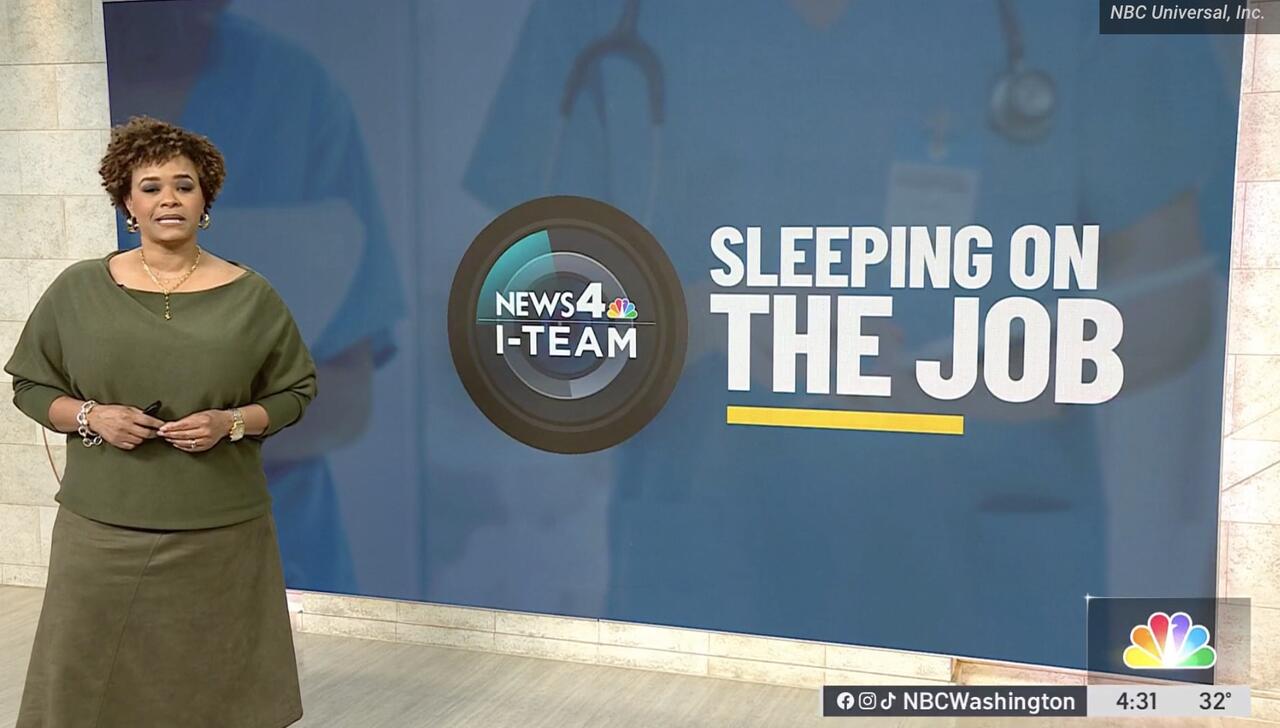
“Sleeping On The Job”: DC Opens Medicaid Investigation Following Nurse And Aide Neglect Claims
“Sleeping On The Job”: DC Opens Medicaid Investigation Following Nurse And Aide Neglect Claims
D.C.’s inspector general has opened an investigation after complaints surfaced about home health nurses and aides allegedly sleeping while on duty, following a News4 I-Team report that included hours of video showing caregivers appearing to sleep overnight, according to NBC.
The investigation stems from the account of Damon Brooks, a D.C. resident who shared his experience publicly in December. His story, viewed by more than half a million people online, described repeated instances where he said caregivers failed to respond when he needed assistance.
NBC writes that Brooks, a paraplegic sports journalist, relies on in-home care through the District’s Elderly and Persons with Physical Disabilities waiver program, which is funded by Medicaid. He said he struggled for years with aides who could not be awakened at night, even as he worried that speaking out could jeopardize his care. “Sadly, like, I’ve had large gaps in my schedule. Sometimes I get people, sometimes I don’t,” Brooks said.
After the story aired, Brooks said investigators from the Office of the Inspector General contacted him. “They explained to me that some of the things that I’ve been subjected to were not right. They were deemed fraudulent, and that they’re opening an investigation to see how they could possibly assist me with hopefully rectifying the issue,” he said. He added that since the report, he has not seen aides sleeping on the job.
“I don’t want anybody to be a casualty or anybody to lose the quality of life due to somebody’s negligence,” Brooks said.
The report also renewed scrutiny of broader staffing challenges in the program. D.C. Councilmember Christina Henderson, who chairs the health committee, said the issue extends beyond the District. “It’s a complicated issue, but it’s certainly not an issue that is unique to the District,” she said. Henderson noted that over four years, D.C. has lost about 13% of licensed health aides and 28% of certified nursing assistants.
Henderson said better pay is critical to retention, estimating it would take more than $89 million over four years to raise wages. “It’s hard to recruit someone who could be making more at Starbucks or another retail job and it be less labor-intensive work than what they’re currently providing,” she said. “I think it pushes us to think about priorities, right? To think about what is super, super important to us and to try to become creative with that.”
The Department of Health Care Finance, which oversees the waiver program, said in a statement it investigated the complaints and took corrective action but did not specify details. The Office of the Inspector General’s inquiry into Brooks’ case is ongoing, as the District pursues measures to expand and stabilize the caregiving workforce.
Tyler Durden
Fri, 01/23/2026 – 17:20
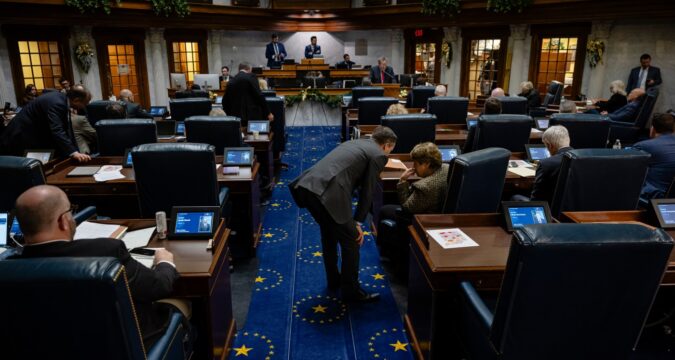
Indiana Senate passes bill aimed at tackling fraud
The Senate approved a social services bill, which is a Senate Republican priority and intended to address fraud, on Thursday.
Senate Bill 1, authored by State Sen. Chris Garten, R-Charlestown, was filed to prevent fraud and contain state spending on welfare programs because “Americans are outraged by the billions of dollars of welfare fraud in our nation — and the Minnesota scandal is Exhibit A,” according to a press release.
Minnesota has been under the spotlight for years for Medicaid fraud, including a massive $300 million pandemic fraud case involving the nonprofit Feeding Our Future. Prosecutors said it was the country’s largest COVID-19-related fraud scam and that defendants exploited a state-run, federally funded program intended to provide food for children.
In 2022, during President Joe Biden’s administration, 47 people were charged. The number of defendants has grown to 78 throughout the ongoing investigation. So far, 57 people have been convicted, either because they pleaded guilty or lost at trial.
In news interviews and press releases over the summer, then-federal prosecutor Joe Thompson estimated the total loss from all fraud cases could exceed $1 billion. Thompson left the U.S. Attorney’s Office in Minnesota last week over the way the investigation of the Jan. 7 shooting of Renee Good by ICE agent Jonathan Ross is being handled, according to the New York Times and Minnesota Star-Tribune.
Senate Bill 1 “is all about integrity,” Garten said, to ensure the state’s “safety net” remains sustainable “for those who truly need it.” Garten said the bill will align Indiana with H.R. 1, President Donald Trump’s federal budget bill, which cuts billions from Medicaid.
“Currently, loopholes and lax verification processes in federal programs like Medicaid and food stamps are allowing resources to leak out of the system. In recent months, we’ve witnessed the discovery of billions of dollars in welfare fraud across the country,” Garten said. “Every dollar that goes to a fraudster, or someone who is not legally eligible, is a dollar stolen from the truly vulnerable.”
The 24-page bill will end the state’s participation in the use of expanded categorical eligibility within the federal Supplemental Nutrition Assistance Program, set gross income standards and countable resources for SNAP eligibility, and establish immigration eligibility requirements for SNAP.
Undocumented immigrants are already ineligible for SNAP. The only non-citizens who may qualify are lawful permanent residents, or Green card holders; asylees; and other legal residents under temporary protected status, according to the Center for Budget and Policy Priorities.
Under the bill, if a SNAP applicant’s immigration status can’t be verified, the applicant’s information will be “immediately referred to the U.S. Department of Homeland Security for investigation and potential deportation proceedings,” Garten said in a release.
Senate Bill 1 also establishes the time frame for Medicaid eligibility re-determinations, and requires the Secretary of Family and Social Services to transmit certain information to the federal government to prevent multiple state Medicaid enrollments.
The bill further sets income requirements and modifies immigration status requirements for Medicaid, and requires FSSA to verify compliance to the requirements and report information to the federal government.
Under the Healthy Indiana Plan, the bill modifies work and exemption requirements and requires the conditions to be met in the three preceding months before an individual applies. The bill directs the FSSA Secretary to verify compliance with the work requirements on an ongoing basis and at least quarterly.
Senate Bill 1 removes the 12-month eligibility period for HIP and requires semiannual renewal, and it sets an additional copayment for the use of an emergency room for nonemergency services and other services under HIP.
The Senate Appropriations committee amended the bill to include that candy and soft drinks can’t be purchased with SNAP benefits. The amendment further establishes the Indiana Rural Health Transformation Fund.
State Sen. Fady Qaddoura, D-Indianapolis, said he disliked the way the bill was presented “in terms of the objects of the bill.”
While the bill has been pitched as a way to address fraud, Qaddoura said in the Senate Appropriations committee that he asked Family and Social Services Administration Secretary Mitch Roob if the office has seen fraud. Roob’s response was he didn’t know, Qaddoura said.
Qaddoura said he’s concerned about tainting Indiana’s reputation when a policy is pitched to stop fraud. That means, he said, either fraud existed and the state hadn’t done anything about it or the goal is to prevent fraud, which he would support.
“I support the policy concept of complying with federal law,” Qaddoura said. “Nowhere in this bill does it really address issues as was described as the policy objective, which is we’re combating fraud.”
State Sen. Shelli Yoder, D-Bloomington, said Indiana “does have work to do to respond to federal changes” under H.R. 1, which will cut billions of dollars from Medicaid over the next 10 years, among other benefit cuts.
Yoder said it was disappointing that the bill was first heard in the Senate Appropriations committee instead of the Health and Provider Services committee. Yoder said amendments to the bill were defeated on second reading, and a week after the bill was heard in committee it passed on third.
“I would like to get the language closer to what we can feel good about and that doesn’t potentially harm the sickest and those Hoosiers most in need of continuous care,” Yoder said. “The bill doesn’t just implement a federal framework. It hardcodes policy choices that increase the risk of coverage loss for people who are eligible.”
The bill passed 38-8, with State Sen. Rodney Pol Jr., D-Chesterton, and State Sen. David Niezgodski, D-South Bend, voting with all Republicans present in support of the bill.
Pol said he voted in favor of the bill because people who don’t qualify for benefits shouldn’t receive the benefits.
“I still have major concerns with the bill. I believe in the underlying intent of the bill,” Pol said. “We want to eliminate fraud and waste. I believe there’s a way this can be done without booting eligible people off benefits.”
As the bill moves forward to the House, Pol said he’d like to see it amended and he’s started sharing his thoughts with some House members.
For example, Pol said he’d like to ensure that medically frail people aren’t denied benefits preliminarily and to restore the SUN Bucks program, which was an amendment Qaddoura proposed for the bill on second reading but it failed.
Qaddoura’s amendment called for the state to establish its own SUN Bucks program, a federal program that ensures school-aged children receive food over the summer, for the summer of 2026 because the state didn’t apply to the program for this year. Then, the amendment would require the state to apply to the federal SUN Bucks program for 2027.
The SUN Bucks program was estimated to cost $4 million in administrative costs to distribute $80 million in federal funds to 669,000 hungry Hoosier children, Pol said.
“That is $76 million of partial Hoosier taxpayer dollars left in Washington D.C. to go to other states instead,” Pol said.
After the bill passed, Garten said in a statement that Indiana is “drawing a hard line in the sand: Indiana’s public safety net is for vulnerable legal residents.”
As Medicaid costs have increased to $5 billion over four years, Garten said Indiana has “a fiscal and moral duty to stop the bleeding.”
“We are restoring integrity to the system to ensure that these programs remain solvent and available for the Hoosiers who truly need them, while shutting the door on fraud and inefficiency,” Garten said.
https://www.chicagotribune.com/2026/01/23/indiana-senate-passes-bill-aimed-at-tackling-fraud/

DHS Says Mahmoud Khalil May Be Sent To Algeria
DHS Says Mahmoud Khalil May Be Sent To Algeria
Authored by Arjun Singh via The Epoch Times (emphasis ours),
A spokesperson for the Department of Homeland Security said on Jan. 21 that Mahmoud Khalil, a pro-Palestinian activist at the center of the Trump administration’s deportation battles, may be removed to Algeria.
Assistant Secretary Tricia McLaughlin, who leads the department’s Office of Public Affairs, made the announcement during an appearance on the NewsNation show “Katie Pavlich Tonight” in response to a question about Khalil.
“It looks like he’ll go to Algeria. That’s what the thought is right now,” McLaughlin said. “It’s a reminder for those who are in this country on a visa or on a green card. You are a guest in this country—act like it.”
Khalil, who is a green card holder and thus a permanent resident, has been the subject of a longstanding legal controversy ever since he was arrested by Immigration and Customs Enforcement (ICE) on March 8, 2025. He was involved in protests against Israel for actions during its war with Hamas in Gaza, which began after the terrorist group attacked the country on Oct. 7, 2023.
The Trump administration sought to remove Khalil from the country based on his activism at Columbia University, citing a section of the Immigration and Nationality Act that permits the removal of foreign nationals whose presence may have “serious adverse foreign policy consequences” for the United States.
The administration later added another charge of deportability, arguing in an immigration court that in his application to adjust status and become a lawful permanent resident, Khalil willfully misrepresented a material fact. Namely, he allegedly failed to disclose his affiliation with the U.N. Relief and Works Agency for Palestinian Refugees (UNRWA) and Columbia University Apartheid Divest (CUAD), an organization that opposes the Israeli government.
On these charges, Khalil was issued an order of removal on Sept. 12, 2025, by an immigration judge, sending him to Algeria, and in the alternative, to Syria. Khalil later filed a petition for release from ICE custody, seeking a writ of habeas corpus from federal district court, which was initially granted but later reversed by the U.S. Court of Appeals for the Third Circuit, allowing for his re-arrest.
The government successfully argued before the court of appeals that Khalil could not be granted relief from a federal district court until he had been issued a “final order of removal,” that is, at the conclusion of his deportation proceedings. Khalil’s attorneys, by contrast, argued that his continued detention was a violation of his constitutional rights.
Khalil has not exhausted all of his legal options to remain in the United States. He could petition for a rehearing of the case by the full appeals court. If a rehearing is denied, he could also petition for a writ of certiorari from the Supreme Court to hear the case.
Additionally, Khalil could appeal the immigration judge’s removal order to the Board of Immigration Appeals, which specifically hears appeals from immigration courts. Thereafter, if the board denies him relief, he could appeal to the U.S. Court of Appeals for the Fifth Circuit, as the judge’s decision was issued in La Salle, Louisiana, which lies within their jurisdiction.
Khalil is a citizen of Algeria and was born in Syria in 1995. His wife, Noor Abdalla, a dentist and pro-Palestinian activist, as well as his minor son, are both U.S. citizens. His detention and removal proceedings have been highly criticized by free speech activist groups and some Democratic officials, such as New York City Mayor Zohran Mamdani.
Khalil’s attorney from the American Civil Liberties Union did not respond to The Epoch Times’ repeated requests for comment.
Tyler Durden
Fri, 01/23/2026 – 17:00
https://www.zerohedge.com/political/dhs-says-mahmoud-khalil-may-be-sent-algeria

Watch: Convicted Minnesota Scammer Says Walz, Ellison Were Aware Of $250M Fraud
Watch: Convicted Minnesota Scammer Says Walz, Ellison Were Aware Of $250M Fraud
The media has been giving quite a lot of attention to Aimee Bock, the head of a Minnesota nonprofit at the center of the largest pandemic relief fraud in the nation’s history – which she now says Governor Tim Walz and AG Keith Ellison had to have known about.
To review; Bock’s organization, Feeding Our Future, fraudulently signed off on $250 million in federal funds meant to feed underprivileged children in Minnesota roughly 125 million nonexistent meals. According to prosecutors, as little as 3% of the funds were actually used to feed children. Bock, 45, was charged with signing off on reimbursement claims for the unserved meals, as well as collecting bribes. She maintains her innocence, while one Somali community leader told a local reporter that Bock was “a modern-day Robin Hood.”
Feeding Our Future was a “sponsoring organization,” meaning it approved meal sites, approved meal counts, and distributed the reimbursements to hundreds of sponsored food sites across the state which were mostly operated by Somalians that submitted fraudulent claims. However, in exchange for Bock’s sponsorship and approvals (she sued the state for discrimination in November 2020, claiming the Department of Education was unfairly targeting minority-led programs), the Somalians paid kickbacks to Bock and other Feeding Our Future employees, prosecutors said.
So far, 98 people have been charged in the fraud, 85 of whom are Somalians – unlike Bock, who is white. Hence the media focus on her. Over 64 of those charged have either pleaded guilty or been convicted at trial.
Karen Undone
Bock, who’s awaiting sentencing and faces up to 33 years in prison, is now giving jailhouse interviews to mainstream outlets – telling CBS News that she wishes she could “go back and do things differently, stop things, catch things.”
She claims she was doing everything in her power to root out fraud, and terminated agreements with dozens of entities she believed were cheating the system.
“I was the only one that stopped a claim and said, this is fraudulent,” she said. “There are tens of millions of dollars in claims that we did not pay, that we refused.”
Feeding Our Future notably submitted $3.4 million worth of meal claims in 2019 – a figure which exploded to nearly $200 million in 2021, which Bock attributed to looser guidelines during the pandemic that allowed parents to pick up meals and bring them home.
Walz Knew?
Bock blames Minnesota officials for not catching the fraud, telling CBS: “We relied on the state,” adding that local officials, including Rep. Ilhan Omar, would often visit the meal sites. “We told the state, this site is going to operate at this address, this time, and this number of children. The state would then tell us that’s approved.”
Now, Bock says there’s no way Gov. Tim Walz and Attorney General Keith Ellison weren’t aware of the fraud.
“I have to believe that the governor’s office and Keith Ellison’s office were aware of this. They’ve said they were involved in helping the FBI. They’ve said they were made aware, but apparently I’m scary, so they couldn’t do anything,” Bock told Fox News. “I honestly believe Keith Ellison and Gov. Walz need to be held accountable. There needs to be an investigation done. If they weren’t aware, that’s concerning.”
👂🏻👂🏻👂🏻👂🏻👂🏻👂🏻👂🏻👂🏻👂🏻👂🏻
WORTH A LISTEN
Aimee Bock from behind prison is naming names in the Minnesota fraud scandal… which she believes was no surprise to local Democratic leaders. pic.twitter.com/UfrKsvJNjV
— Andrew C ™️ (@Sheckyi) January 23, 2026
Ellison’s office told the outlet that Bock lacks credibility, pointing to her conviction.
“She is a liar, fraudster, and manipulator of the highest order who has never acknowledged or accepted her guilt. Now, she’s on a media tour to deflect her guilt onto others instead of finally taking responsibility for the fraud scheme she ran,” said a spokesperson.
“Federal and state investigators meticulously examined the crimes Bock and her accomplices committed,” the Ellison spokesperson continued. “Bock alone is responsible for her own actions, which was proven in court beyond a shadow of a doubt, and her claim about Attorney General Ellison is a lie without a shred of evidence behind it.”
According to the House Oversight Committee’s James Comer (R-KY), the DOJ has issued over 1,750 subpoenas, executed over 130 search warrants, and conducted over 1,000 witness interviews in a sweeping federal probe. Comer says federal prosecutors believe at least $9 billion has been stolen across multiple fraud schemes in Minnesota.
“The breadth and depth of this fraud is breathtaking. And I fear it is just the tip of the iceberg. Gov. Tim Walz, Attorney General Keith Ellison, and Minnesota’s Democratic leadership have either been asleep at the wheel or complicit in these crimes,” he said. “They failed Minnesotans and all Americans, handing millions of taxpayers’ money to fraudsters.”
Tyler Durden
Fri, 01/23/2026 – 16:40

After tough first half of season, Braydon Porter sees bigger, better future for Yorkville. ‘Get it together.’
Sophomore forward Braydon Porter has gotten the band back together with the start of the new year, and it couldn’t have come at a better time for Yorkville.
The athletic 6-foot-4 Porter shares frontcourt duties in the Foxes’ ensemble with 6-8 sophomore forward Joey Jakstys, both of whom are in their second years on the varsity.
“We haven’t been healthy on a consistent basis,” Porter said, trying to explain an inconsistent first half of the season. “We had some injuries, then a span where a lot of us were really sick and we had to come back from that.
“That’s what started our team going on a (five-game) losing streak. We’re just now starting to get it together to where we were at the beginning of the season.”
Porter made sure the turnaround took another step Thursday night, scoring eight of his game-high 12 points in the first quarter as Yorkville took a 12-2 lead on the way to a 54-30 Southwest Prairie West rout of visiting Minooka.
The decision avenged a three-point conference loss on Dec. 5 to the Indians on their court.
Yorkville’s Braydon Porter (22) goes up for a dunk against Minooka during a Southwest Prairie West game in Yorkville on Thursday, Jan. 22, 2026. (Sean King / The Beacon-News)
Senior guards Gabe Sanders and Frankie Pavlik added 10 and nine points, respectively, for the Foxes (10-9, 7-3). Jakstys and senior forward Nathan Kubin each scored eight points.
“A good thing this game shows — no one has to score 20 or 30 points for us to blow a team out,” Porter said of Yorkville’s balanced attack. “I was our leading scorer with only 12 points.
“I felt like it was good because everything was spread out.”
Sophomore guard Graham Lee scored eight points off the bench to lead Minooka (10-11, 5-5).
Yorkville’s Braydon Porter (22) dunks the ball off a fast break against Minooka during a Southwest Prairie West game in Yorkville on Thursday, Jan. 22, 2026. (Sean King / The Beacon-News)
Yorkville coach John Holakovsky momentarily feared the game, moved up from Friday to beat the weekend polar plunge, might be cut short.
Porter opened the second quarter with a steal, driving in for a thunderous dunk that rattled the rim and pushed the backboard past the end line before swinging back.
“I think I was just running too fast,” Porter said. “All my momentum took the rim back. It seemed like it was falling a little bit and I had to jump off real quick. I saw the backboard rock back.”
A year earlier, in a game against Plainfield East, a dunk by Jakstys broke the rim on the same basket, resulting in a 45-minute delay.
Yorkville’s Braydon Porter (22) puts up a jumper as Minooka’s Luke Page (10) defends during a Southwest Prairie West game in Yorkville on Thursday, Jan. 22, 2026. (Sean King / The Beacon-News)
“I remember when I pulled on it, a couple screws came out,” Jakstys said.
With his team holding a 14-2 lead, Holakovsky didn’t want any delay.
“I’m thinking this could be the game,” he said. “We might have to postpone and come back another day, ruining our momentum. That came in my head.”
It didn’t, although Porter picked up two fouls in a one-minute span and sat the rest of the half.
Jakstys, who finished with six rebounds, four assists and four steals to go with a blocked shot, made two 3-pointers and everyone else chipped in.
Jakstys has missed time with an Achilles tendon issue, strained calf and a finger injury before the flu bug roared through the roster.
“We had like no practices for nearly two weeks,” Holokovsky said. “We just tried to put everyone together for the (Christmas) tournament and didn’t play well.
“On defense, it just showed, with us not in position, just defaulting and standing by our guy and not getting into a gap or getting in help position.”
Yorkville’s Braydon Porter (22) shoots a free throw against Minooka during a Southwest Prairie West game in Yorkville on Thursday, Jan. 22, 2026. (Sean King / The Beacon-News)
Porter, though, has growing confidence in the Foxes’ defense, especially teaming up with Jakstys.
“I think everyone on our team can play man-to-man, on their own, like on an island,” Porter said.
Porter and Jakstys been on the court together for just 10 games, seven going down as wins.
“It’s huge,” Holakovsky said. “They’re our two best players, no doubt.
“When Braydon gets going up and down the court like (Thursday night), he’s a really fun player to watch. He’s also gotten better with his defensive positioning.”
https://www.chicagotribune.com/2026/01/23/braydon-porter-yorkville-minooka-ihsa-boys-basketball/

Davos Is Dead: Western Civ Has Suffered Enough…
Davos Is Dead: Western Civ Has Suffered Enough…
Authored by James Howard Kunstler,
Up In Smoke
“This is how tyranny looks in the modern world. It arrives dressed as dialogue, consensus, and expertise. It is imposed by people who sincerely believe they are doing nothing at all.”
– DataRepublican
Davos — The World Economic Forum (WEF)— is toast. Trump, Bessent, and Lutnick exposed the wretched org of overcompensated squishes to too much light and heat and it flared into such a pathetic little smoldering cinder that its spoxpersons said the meeting might get moved out of Davos altogether next year to Dublin or Detroit. Closer to the people, you understand (except there are hardly any people left in Detroit, thanks to the fifty years of WEF influence on manufacturing policy and the people of Dublin are now Nigerians, Somalis, and Congolese, thanks to the WEF’s retarded migration doctrine).
All of which means that its trademark, WEF Globalism, is dead, too. No more aspirations of One World Government (as if Earth was the Planet Krypton). . . no more You will have nothing, be happy, and eat bugs. . . no more green energy gaslight. . . no more all women are women, including men pretending to be women. . . no more wide-open borders. . . no more of their preposterous elitist armchair totalitarianism. In fact, if anything, the WEF had terminal boundary problems, much like the Cluster-B personalities that infest the upper echelons of the NGO alternative universe that carried out the WEF’s dastardly programming for them. They didn’t know when to stop.
Before he got washed-up in a slop of sexual accusation and embezzlement, WEF-Fuhrer Klaus Schwab used to brag about plugging his Young Global Leaders into top government jobs all over the place (e.g., the disastrous Justin Trudeau and Chrystia Freeland in Canada). That’s over. Western Civ has suffered enough. One by one, the Big Dawgs of the EU are quietly backing-off of their insane migrant importation policies.
Border control is nature’s way of fixing boundary problems of-the-mind.
No one personifies the problem more than Ursula Gertrud von der Leyen, the archetypal Cluster-B “devouring mother” costumed as a harmless finishing school headmistress. She is the unelected (appointed by committee) President of the European Commission who has been telling the elected squish leaders of France, Germany and elsewhere what to do — and, remarkably, they did exactly what they were told! Invite the Third World for an overnight and see what happens. . . ditch your nuclear power plants. . . ruin your farmers. . . laugh and clap when the Nord Stream pipeline blows up and your citizens must freeze in the dark.
“Europe stood firm and united in full solidarity with Greenland & the Kingdom of Denmark,” Ursula tweeted the other day.
Ursula von der Leyen, President of the European Commission
That’s rich. (And fake.)
What really happened at Davos this week is uproariously simple.
Mr. Trump just notified the parties involved that an agreement dating from 1951 gives the USA “unrestricted access” to Greenland, for the excellent reason that the US military prevented the Nazis from seizing it during World War Two, with all that implies. Fait accompli. The USA will now do what it requires in Greenland — with all that implies about updated geo-realpolitik of 2026.
The dirty secret about political reality in Europe now is that the masterplan to bankrupt, ruin, and break up Russia has completely backfired.
Europe is now ruined. Voila!
Ironically, it has been the UK (a.k.a. Great Britain) that led the way in this quixotic fiasco — you might recall that they actually voted to quit the EU in 2016. And yet, the UK has managed to engineer NATO’s idiotic program to keep the War in Ukraine going as long as possible. Recall, also, PM Boris Johnson’s 2022 mission to scuttle the Istanbul Communiqué involving Ukrainian neutrality that might have prevented the war from getting out-of-hand.
The payoff for Great Britain: Keir Starmer becomes the actual Big Brother depicted by George Orwell with all the trappings of despotism and economic decline that goes with that. Britain is left destitute, cultureless, and raped at will by its own houseguests. Meanwhile, France is dissolving in an acid bath of Islamic turbo-birthrates, and Germany under the feckless Olaf Scholz and now Friedrich Merz gets a one-way ticket to the Palookaville of neo-medievalism. Good show, boys!
And meanwhile, as I have informed you previously, Mr. Putin is methodically rolling up the unfortunate business in Ukraine as Mr. Zelenskyy’s long-running NATO-subsidized misadventure dwindles to its ignominious close. Yes, you are seeing boundaries reestablished. Mr. Putin is not one of your junior high school mean-girls or a deluded finishing school headmistress. He’s an able, masculine manager of his own sovereign polity and he is reestablishing Russia’s age-old sphere of influence in the ambiguous frontier region of Ukraine. The world will be better off when this is settled.
And Mr. Trump emerges from the Davos miasma with a geopolitical plan to defend Western Civ and to re-prioritize business in the USA so that Americans can once again make a living and lead purposeful lives. The Cluster-B mean-girls hate this. They want the men of America to fail better, as they had been failing until Mr. Trump came back on the scene.
Anyway, it was minus-20 degrees in Minneapolis this morning — not very good weather for blowing your whistle at US immigration agents — so don’t expect a whole lot of excitement out of that place for at least another week.
Do keep an eye on Virginia, where new Governor Abigail Spanberger, meanest of all mean-girls, is fixing to wreck the state.
Prediction: Harmeet Dhillon of the DOJ’s Civil Rights Division will shortly be all over that deranged bitch like white on rice. Wait for it.
Tyler Durden
Fri, 01/23/2026 – 16:20
https://www.zerohedge.com/geopolitical/davos-dead-western-civ-has-suffered-enough

What to know about the deal to keep TikTok in US
NEW YORK — TikTok has at last finalized a deal to keep the popular video sharing platform operating in the U.S. after years of uncertainty, but questions remain about whether users’ experience will change and whether the changes actually address security concerns around the app.
Here’s what to know about the deal, which created a new TikTok U.S. joint venture after social video platform company signed agreements with major investors including Oracle, Silver Lake and the Emirati investment firm MGX.
Why was the deal needed?
After wide bipartisan majorities in Congress passed — and President Joe Biden signed — a law that would ban TikTok in the U.S. if it did not find a new owner in the place of China’s ByteDance, the platform was set to go dark on the law’s January 2025 deadline. For several hours, it did. But on his first day in office, President Donald Trump signed an executive order to keep it running while his administration sought an agreement for the sale of the company. A string of orders continued to extend the deadline until this deal was reached.
We don’t know how the TikTok experience will change, but there’s no new app
American TikTok users can continue using the same app, according to TikTok. But exactly what American users will see on their TikTok feeds once the changeover happens remains unclear.
The algorithm — the secret sauce that powers its addictive video feed — powering the U.S. backend will be licensed from ByteDance and then retrained on U.S. user data and updated. The act of retraining the content recommendation formula is certain to at least have subtle changes to a user’s personalized feeds.
Any noticeable changes made to a social media platform’s service raises the risk of alienating its audience, said Jasmine Enberg, an analyst for the research firm eMarketer.
TikTok’s press release claims U.S. creators will still be discoverable in other regions worldwide, and businesses will be able to maintain global reach. But how interoperability between the U.S. and ByteDance to maintain a global TikTok experience is currently unknown.
The retrained algorithm means that the trends — “and what dominates feeds — will feel distinctly American,” said Forrester analyst Kelsey Chickering.
“Global content will still appear, but its ranking will change,” she said. “This matters because the algorithm is the heartbeat of the app’s addictive experience. The question becomes: Will a U.S.-centric feed supercharge engagement, or will it chip away at TikTok’s cultural cachet?”
What is known, however, is that there is an updated Terms of Service.
One of the updates notes that while users retain ownership of their content, TikTok is able to use that content to operate or improve the platform, subject to settings.
Americans under the age of 13 will be limited to an “Under 13 Experience.”
And users are also responsible for any posted AI-generated content and must label it as created by artificial intelligence.
TikTok’s new owners have ties to Trump
Although he no longer runs Oracle as its CEO, company co-founder Larry Ellison remains a top executive while also overseeing an estimated personal fortune of $390 billion. Ellison, 81, now could be in line to become a behind-the-scenes power player in the media, having already helped finance Skydance’s recently completed $8 billion merger with Paramount, a deal engineered by his son, David. Ellison’s relationship with the Trump administration dates back to the president’s first term, where he played a role in the administration’s efforts to get ByteDance to sell TikTok.
These ties have raised concerns among some users around content moderation and what videos American users will see on their feeds.
“If moderation happens to tilt toward one political viewpoint or fails to curb misinformation, TikTok risks a user exodus to rival platforms,” Chickering said. “We’ve seen this before when Twitter’s transformation into X triggered fallout from users and advertisers.”
The deal does not completely address security concerns in the law
Lawmakers previously expressed concern that the Chinese government could use TikTok’s algorithm to push propaganda or gather data on individual users, a key reason Congress passed legislation in 2024 requiring the company’s divestment from Beijing-based owner ByteDance.
The law prohibits “any cooperation with respect to the operation of a content recommendation algorithm” between ByteDance and a new potential American ownership group, so it is unclear how ByteDance’s continued involvement in this arrangement — especially since they will license the algorithm to the U.S. entity — will play out.
How are users and creators reacting?
Skip Chapman, co-owner of KAFX Body in Manasquan, New Jersey, which makes and sells natural deodorants, launched his business in April 2023 on TikTok when TikTok shop was still in beta testing. He said he’s mainly glad he can stop worrying about the potential of a TikTok ban, the threat of which has been looming over his business for over a year. He sells his products on his own website and Amazon, but 80% of sales still come from the TikTok shop and it is the primary way he reaches new customers.
He said he is cautiously optimistic the deal will be good for TikTok and his shop, but he is a little concerned that the new owners might de-prioritize the e-commerce aspect of TikTok.
“The past two years, TikTok has really leaned into this live social commerce and just the ability to sell on the platform and they’ve kind of prioritized it and I’m hoping that the new owners continue to prioritize it and even more so add more features, more benefits, more opportunities for my business,” he said. “Under new ownership, they could deprioritize it and focus more on creators doing other things or influencers that are doing maybe paid brand deals, and that would have less of a positive effect on us.”
Vanessa Barreat owns La Vecindad Mexican restaurant in Las Vegas, and she has TikTok page for the restaurant that has over 100,000 followers. Visibility on the site has helped her attract customers, particularly out-of-towners, and spend less on marketing.
She said she’s in a “wait-and-see mindset” about the deal.
“Anytime there’s a major shift or deal, there’s uncertainty, but I’m not operating from fear,” she said. “TikTok has empowered so many voices that historically didn’t have access to platforms like this, and that impact doesn’t disappear overnight.”
https://www.chicagotribune.com/2026/01/23/what-to-know-tiktok-deal-us/

Sofia Solomon, cheese advocate and Chicago food distributor who championed small producers, dies at 78
Sofia Solomon helped expand many Chicagoans’ gastronomic palates by bringing the wares of many high-quality American cheese producers to the city.
Through her luxury food import and distribution company, Tekla, Solomon was a pioneer in delivering Midwest farmstead cheeses, along with premium chevres and Manchegos to Chicago restaurants and stores.
Solomon also cultivated connections with women in the business as a member of Les Dames d’Escoffier, a society of professional women involved in the food, beverage and hospitality industries.
“Sofia loved to educate people and share her love of knowledge with people,” said Sena Rosenberg, a close friend. “And she loved to be with people, enjoying good food, good wine and good conversation.”
Solomon, 78, died of complications from pancreatic cancer on Jan. 13 at her home, said her niece, Denise Andras-Gross. She had been a longtime Old Town resident.
Born Sofia Melnyk in Germany to parents from Ukraine, Solomon took on the name Sofia Markowsky as a child. She moved with her family from Germany to Chicago’s Ukrainian Village neighborhood in the late 1950s, and attended the now-closed Holy Name Cathedral High School in the Gold Coast.
As a young woman, Solomon worked at Spencer’s Marina City Bowl, a bowling alley in the Marina City complex in River North. She then worked in her husband’s store, improbably at a makeup counter, Andras-Gross recalled with a laugh, noting that Solomon herself did not wear makeup.
She later worked as a bookkeeper at the now-shuttered boutique Ultimo before working for her husband’s wine and spirits business.
In 1977, from her home, Solomon formed her food import and distribution company. She named it Tekla after her mother’s first name, and she started it by importing caviar from Iran.
Amid the Iranian hostage crisis that started in 1979 — followed quickly by the Soviet invasion of Afghanistan — Solomon expanded her reach, creating a relationship with the French specialty food company Petrossian. As the exclusive Midwest distributor for Petrossian, Solomon imported smoked salmon, smoked eel, trout and foie gras. She insisted on sourcing and providing specialty items that otherwise were not available in the Chicago area.
In 1992, Solomon — nudged by Chicago chef Gabino Sotelino of Mon Ami Gabi, who at that time had just opened the restaurant Ambria — expanded her business further, into cheese, importing it from small Midwest producers, as well as from France, Italy and Spain. She drew attention from restaurateurs because she would compose cheese plates for chefs. She worked to champion small producers and shape how cheese was sourced, handled and understood in restaurants.
“Up until that time, (chefs) had to buy a case of this and a case of that,” Solomon told the Tribune in 2013, when the paper dubbed her a cheese advocate. “I said, ‘Let me just put a cheese plate together for you. That way you can buy one of each.’ The only things I cut were things I knew would be sold in a few days. Nobody was doing that. It helped because … they could use that one unit in an evening. You don’t want to bring small cheeses to room temperature, temper them and put (them) back in the cooler. That would destroy the cheese.”
Solomon’s family said she enjoyed teaching chefs and buyers how properly handling and aging cheese could transform flavor. That human interaction was good for Solomon’s business, but it also allowed her to build an appreciation for the products with clients.
Sofia Solomon, with some of the fine cheeses that she imports, at her company’s warehouse Tekla Inc., at 1456 N. Dayton St., in Chicago, Apr 10, 2013. (Nuccio DiNuzzo/Chicago Tribune)
“The kind of cheeses we carry have to be hand-sold,” Solomon told the Tribune in 2000. “It’s not the kind of thing you can just put on the shelf and walk away.”
Barbara Glunz-Donovan was a close friend of Solomon’s and the co-owner of Glunz Tavern in Old Town. “Sofia was indeed one of the hardest-working women I have known — selecting, selling, delivering and billing,” she said. “Whenever we had a wine dinner at the Glunz Tavern, I conferred with Sofia to purchase the perfect cheeses at perfect ripeness for the important cheese course.”
One special distinction for Solomon was having acclaimed cheesemaker Judy Schad of Greenville, Indiana-based Capriole name a soft-ripened, ash-marbled goat cheese Sofia, in her honor.
“It was very touching, very sweet,” Solomon told the Tribune in 2013, reflecting on the tribute.
Outside of work, Solomon enjoyed attending Joffrey Ballet performances and being one of the members of Les Dames d’Escoffier.
“Sofia’s generosity was legend — always willing to share her cheese knowledge and donating fabulous artisanal cheese boards that brought the highest bids at our food and wine auctions and dessert dashes,” said Toria Emas, a close friend and a fellow member of Les Dames d’Escoffier. “Not only did Sofia donate product, she gave her time to our community outreach projects such as the Flower Vocational High School Food Cart at the Garfield Park Conservatory. Sofia’s quiet elegance and discriminating taste will be missed.”
Glunz-Donovan said Solomon was always the most generous member the professional organization. “Not only (for) providing cheeses for every occasion, but in educating us in how each different shape should be properly cut, served and enjoyed,” she said. “Knowledge of every background detail on the producer, the place, the animal and the time of year the cheese was made was important. Her passion for quality, the importance of being selective, was infectious.”
Solomon bonded with four other entrepreneurs in the field of food and wine, meeting with them regularly for an intimate dinner group, Glunz-Donovan said.
Solomon also enjoyed traveling and celebrating milestones and holidays with others, including commemorating events with musical e-cards and gifting friends with boxes of smoked salmon and caviar from Petrossian, often paired with her favorite champagne, Pol Roger. She also was proud to have been inducted into France’s Guilde Internationale des Fromagers, a nonprofit group that promotes and connects the work of cheese professionals around the world while setting and maintaining standards of cheese knowledge.
Solomon retired in 2023.
Her husband of more than 35 years, Leonard, died in 2002. Solomon also is survived by two sisters, Mary Gnagni and Anna Pranno.
A celebration of life will take place from 1 to 4 p.m. on Feb. 22 at Venue West, 221 N. Paulina St.
Asked what she liked so much about cheese, Solomon told the Tribune in 2013 that she appreciated the visual aspect of cheese as well as “the entire cycle of it.”
“You see, it all begins with the earth, the soil in which the animals graze,” she said. “The animals, so you need to take care of that. And I think it’s just a perfect metaphor for life, that it really is that continuum, that cycle. I like cheese, I like dairy. I’m Ukrainian, so we’re brought up on sour cream. … There’s a romance to it, there’s a history to it.”
Goldsborough is a freelance reporter.
https://www.chicagotribune.com/2026/01/23/sofia-solomon-obituary-cheese-advocate/