Category: News

Chicago Cubs and veteran reliever Trent Thornton agree to a minor-league contract
Veteran reliever Trent Thornton and the Chicago Cubs have agreed to a minor-league contract that includes an invitation to major-league camp for spring training, the team announced Wednesday.
The 32-year-old right-hander is recovering from season-ending Achilles tendon surgery with the Seattle Mariners. He was 2-0 with a 4.68 ERA in 33 appearances before he was injured coming off the mound on a ground ball against the Texas Rangers on July 31. The recovery was expected to take six to eight months.
Thornton is 14-19 with a 4.38 ERA in 235 appearances over seven seasons with the Toronto Blue Jays and Mariners.
Meanwhile, veteran catcher Reese McGuire, who played for the Cubs last season, has signed a minor-league contract with the Milwaukee Brewers that includes an invitation to major-league camp.
McGuire, who turns 31 on March 2, batted .226 with a .245 on-base percentage, nine homers and 24 RBIs in 44 games for the Cubs in 2025.
He has a .248 average, .293 OBP, 25 homers and 106 RBIs in 399 career games with the Blue Jays (2018-21), Chicago White Sox (2022), Boston Red Sox (2022-24) and Cubs. The Pittsburgh Pirates selected McGuire with the 14th pick in the 2013 draft.
Two-time All-Star William Contreras and 23-year-old prospect Jeferson Quero are the only catchers on the Brewers’ 40-man roster. Danny Jansen, who had been Contreras’ main backup after arriving from the Tampa Bay Rays at last season’s trade deadline, signed a two-year, $14.5 million contract with the Rangers in the offseason.
https://www.chicagotribune.com/2026/01/28/chicago-cubs-trent-thornton-reese-mcguire/

Indiana Senate amends carbon sequestration bill
During Wednesday’s session, the Indiana Senate amended legislation that would allow for more local regulation on carbon sequestration projects.
State Sen. Rick Niemeyer, R-Lowell, authored Senate Bill 7, which would require a carbon storage operator to receive approval from a county legislative body or plan commission if the sequestration project would transport or store carbon dioxide outside the county where it’s generated.
The bill, which is likely to pass, will be heard one more time in the Senate before it can move to the House.
State Sen. Scott Baldwin, R-Noblesville, presented an amendment that passed in a voice vote Wednesday. Baldwin’s amendment was the only one heard and voted on, even though four amendments were originally listed on the Indiana General Assembly website.
Baldwin’s amendment would give county commissioners the right to vote against projects built after July 2026. Any carbon sequestration project that received a permit before July 2026 would be excluded from the bill.
Niemeyer told the Senate that he supported the amendment before Wednesday’s vote.
During the Senate Environmental Affairs Committee meeting Tuesday, Niemeyer said he created the bill because Benton County had an issue with a previously planned carbon sequestration project. Trucks were doing seismic testing on farmland with approval of the property owner, but the plan commission and county commissioners “had no idea” about the project.
“The bill says that when you’re bringing a carbon sequestration project from outside your county, and you’re taking it to another county and bringing carbon outside the jurisdiction, it has to be noticed by a plan commission or county executive,” Niemeyer previously said. “It’s a property rights issue, it’s about zoning, and it’s about local control.”
Commissioners from Benton, Newton, and Vermillion counties supported the bill, praising its ability to create more local control. Oil and gas advocates have expressed concerns, saying that local governments won’t have the necessary expertise of carbon sequestration to make these decisions.
According to the U.S. Geological Survey, carbon sequestration captures and stores atmospheric carbon dioxide. The method is used to reduce the atmosphere’s carbon dioxide “with the goal of reducing global climate change.”
Niemeyer said the bill does not apply to pipelines, which transports the carbon dioxide from capture site to its storage location, according to the Liquid Energy Pipeline Association.
In June 2025, BP indefinitely paused a previously announced carbon sequestration project, which would have required a pipeline to run through hundreds of miles in six Indiana counties to store carbon emissions underground, according to Post-Tribune archives.
“BP is committed to remaining a critical driver of this economic engine that powers Northwest Indiana and the Midwest,” a company spokesperson previously told the Post-Tribune. “While we are indefinitely pausing our low-carbon project in the region, our focus is on building a strong, economically competitive future for our Whiting Refinery.”
The Senate is expected to vote on Senate Bill 7 on Thursday.
https://www.chicagotribune.com/2026/01/28/indiana-senate-amends-carbon-sequestration-bill/

Primrose Candy, a century-old Chicago confectionery, files for bankruptcy protection
A century-old, family-owned Chicago candy manufacturer filed for Chapter 11 bankruptcy protection Tuesday, seeking to keep its Northwest Side factory churning out assorted fruit-flavored starlights, lemonade drops and buttery toffee.
Primrose Candy, which has been making such confections since 1928, needs to reorganize more than $12 million in debts and secure new financing to pay its 90 mostly contract employees and other business expenses, according to the bankruptcy petition.
The culprit? That piece of wrapped butterscotch candy that grandma pulls out of her purse has gotten a lot more expensive to make these days, according to David Welch, a Chicago attorney representing the company.
“The cost of making that same piece of candy is so much more than what it used to be, and you can’t keep up with your pricing to absorb all those costs when you have a lot of old debt that you also have to service,“ Welch told the Tribune Wednesday.
Company founders Frank and Mae Puch launched Primrose Candy with $500 and a few years of hands-on experience working at other Chicago candy companies. Their son joined the family business in 1945 and they bought a new factory, near to where the current red brick facility stands on Parker Avenue in the Belmont Gardens neighborhood.
Over the years, Primrose has expanded beyond hard candy into chewy varieties, popcorn and other treats, which are sold in bulk to retailers and marketed under other brand names as a contract manufacturer. The individually wrapped candies include everything from caramels and salt water taffy to colorful peppermints.
Primrose, which is transitioning into the hands of fourth-generation family ownership, generated $7.8 million in revenue last year, down from $11.8 million in 2024, according to the bankruptcy filing.
The largest unsecured creditor is Labor Solutions, a suburban Chicago staffing agency whose contract employees represent the majority of the 90-person workforce at Primrose. In September, Labor Solutions filed a breach of contract lawsuit against Primrose in Cook County Circuit Court. Primrose owes Labor Solutions $7.5 million, according to the bankruptcy filing.
In 2024, Primrose entered into a loan agreement with a $7.5 million line of credit that is now held by Pathward. As part of the Chapter 11 filing, Primrose is seeking to obtain secured financing from that existing line of credit and use cash that served as loan collateral for its ongoing operations.
Obtaining the financing and use of the cash collateral are “essential to maintaining the (candy) business as a going concern,” according to the bankruptcy filing.
Welch said both Pathward and Labor Solutions, which is still providing contract employees to Primrose despite the $7.5 million debt and breach of contract lawsuit, are both supportive of the reorganization case.
Reworking the balance sheet may be the only pathway into a second century for the family-owned candy business, he said.
“What we have is a lot of old, old debt that we just can’t afford to pay in its entirety,” Welch said. “Our hope is to confirm a plan of reorganization down the road, months down the road, that enables us to address that old debt, but not have the old debt be part of our cash flow requirements on a current basis.”
rchannick@chicagotribune.com
https://www.chicagotribune.com/2026/01/28/primrose-candy-chicago-confectionery-bankruptcy/

Amazon Exits Experimental Grocery Stores, Will Focus On Whole Foods, ‘Supercenters’
Amazon Exits Experimental Grocery Stores, Will Focus On Whole Foods, ‘Supercenters’
Amazon is shutting down its Amazon Go and Amazon Fresh grocery stores, marking a significant retrenchment from its most ambitious efforts to reinvent brick-and-mortar food retail. The move reflects the company’s conclusion that, despite years of experimentation, it has not yet found a physical grocery model that can scale profitably under the Amazon brand.
According to the company, Amazon Go and Amazon Fresh locations will all be shuttered by Feb. 1, with the exception of California locations which will remain open longer to comply with state requirements. Some of the shuttered locations will be converted into Whole Foods Market stores, underscoring where Amazon now sees durable value in physical grocery retail.
In short, Amazon is closing physical stores, but you can still order Amazon Fresh online for same-day delivery if they serve your address.
“While we’ve seen encouraging signals in our Amazon-branded physical grocery stores, we haven’t yet created a truly distinctive customer experience with the right economic model needed for large-scale expansion,” Amazon’s PR zoomers vomited forth in a blog post announcing the decision.
At the time of the announcement, Amazon operated 57 Amazon Fresh stores and 15 Amazon Go locations. The closures mark a sharp contrast with the performance of Whole Foods Market, which Amazon acquired in 2017. Since the acquisition, Whole Foods has delivered more than 40% sales growth and expanded to over 550 locations. Amazon said it plans to open more than 100 additional Whole Foods stores in the coming years.
The retreat does not signal an exit from groceries. Instead, Amazon is consolidating around areas where it believes it holds a structural advantage; online ordering, rapid delivery, and logistics at scale. The company said customers will continue to be able to shop Amazon Fresh online, with grocery delivery now available in roughly 5,000 U.S. cities and towns, including thousands with same-day delivery of produce and perishables alongside household staples. Amazon said it plans to expand same-day fresh grocery delivery further this year, citing strong customer feedback.
Amazon’s physical grocery experiments were closely watched as a test of whether technology could meaningfully reshape a notoriously low-margin business. Amazon Go stores, which debuted in Seattle in 2018, eliminated traditional checkout lines by using cameras and sensors to automatically charge customers as they left the store. Amazon Fresh stores, launched in 2020, combined national brands, fresh food and technology-enabled shopping features in a more conventional supermarket format.
While customers responded positively to some of these innovations, Amazon acknowledged that the stores did not yet deliver a compelling economic model. Grocery retail remains highly sensitive to real estate costs, labor, pricing pressure and operational complexity – factors that even Amazon’s technology could not easily overcome.
Importantly, Amazon is not abandoning the technology developed for these stores. The company said its Amazon Go locations served as “innovation hubs” for its “just walk out” checkout system, which is now deployed in more than 360 third-party locations across five countries. Amazon is also expanding the technology internally, with more than 40 North American fulfillment centers using it in employee breakrooms to speed food purchases, with additional locations planned.
At the same time, Amazon said it will continue to test new physical formats. The company revealed plans for a “new supercenter” concept that would allow customers to shop fresh groceries, household essentials and general merchandise in a single location, though it did not provide details on timing or scale. It is also piloting a new “Amazon Grocery” format embedded within select Whole Foods stores, allowing customers to shop for Amazon household essentials alongside traditional grocery items.
h/t Capital.news
Tyler Durden
Wed, 01/28/2026 – 15:45
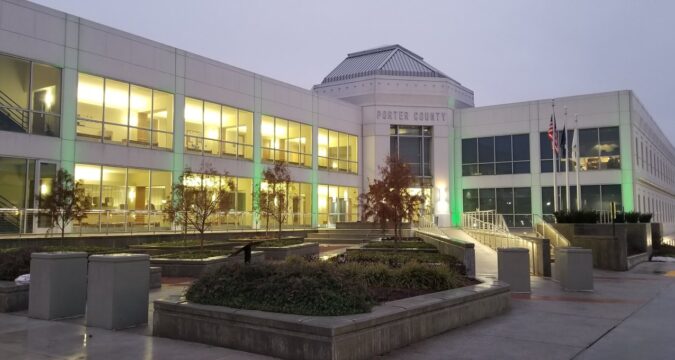
Porter County Council maintains leadership status quo, splits on raises
Having enjoyed a more sedate tone in the past calendar year than years past, the Porter County Council chose Tuesday evening to maintain the status quo and keep everyone in virtually the same positions of leadership and liaison.
Councilman Andy Vasquez, R-4th, maintained the presidency with a unanimous vote after he was nominated by Councilman Red Stone, R-1st, and seconded and trebled by Councilman Andy Bozak, R-At-Large, and Councilwoman Michelle Harris, R-At-Large.
Stone maintained the vice presidency following nomination by Councilman Mike Brickner, R-At-Large. Councilman Jeremy Rivas, D-2nd, nominated Councilman Greg Simms, D-3rd, for the position, but the nomination died for lack of a second and Stone was unanimously appointed.
After the meeting, Vasquez pointed out that 2026 will be Stone’s fourth year as vice president. “He could have easily said, ‘It’s my turn.’ But he did not. He supported me and I appreciate him for that,” Vasquez said, adding, “I think last year was the most calm a lot of people have seen this council. Whether I am reelected or not in ‘26, I will not be president again.”
The council approved an attorney contract drawn up for them by County Attorney Scott McClure, who serves the Porter County Board of Commissioners and sat in to assist the council while it searches for a new attorney. County Attorney Harold Harper stepped down from serving the council after a decade. Numerous members of the council thanked him for his dedication.
In other business, budget adjustment appropriations of $2,000 raises for all elected officials were approved. Rivas voted against each and was joined by Stone and Harris in voting against the raises in November.
Rivas, Simms and Harris also voted against the adjustment appropriation for Coroner Cyndi Dykes.
“There were some offices where I thought the staff should have gotten the raise,” said Harris, who noted that deputy coroners are part-time, don’t receive benefits, and are underpaid in her opinion for the time they put in at all hours to respond to calls.
Rivas, Harris and Stone voted against appropriating the $2,000 salary adjustment for council members, as they originally voted against the raise in November. Harris also abstained from the vote for the salary adjustment appropriation for Recorder Chuck Harris, her husband, who, along with the commissioners, was the only elected official not listed by name on the agenda.
The council approved an additional appropriation of $200,000 so the highway department may purchase the maximum amount of road salt allowed under the state bid.
The topic of road striping was also brought up and Stone said a constituent recently called to report he was nearly hit head-on in rainy weather on an unstriped county road. Highway Superintendent Jim Polarek explained that the state mandates striping on any road that sees 3,000 vehicles per day and more money is being spent on striping than in the past.
Shelley Jones is a freelance reporter for the Post-Tribune.

Aurora City Council OKs loan program for sustainable building upgrades
The Aurora City Council on Tuesday approved the creation of a lending program, to be run by a state agency, that is set to offer loans toward sustainability upgrades to commercial properties.
The city is now participating in the Illinois Finance Authority’s Commercial Property Assessed Clean Energy financing program, commonly called C-PACE. This type of lending has been available statewide since 2017, but individual local governments still need to approve its use within their boundaries.
Alison Lindburg, the city’s director of sustainability, has said the program will support both economic development and sustainability within Aurora.
Loans given through the program can fund certain upgrades to commercial, industrial, non-residential agricultural, nonprofit and multifamily properties, up to 100% of the project’s total cost, but with a maximum amount no more than 25% of the property’s total value.
Upgrades that could be funded through the program include energy efficiency improvements like lighting, HVAC or insulation upgrades; the installation of renewable energy sources like solar or geothermal; the addition of water conservation systems; upgrades to improve resiliency like flood mitigation or infrastructure improvements; and the installation of electric vehicle charging stations.
The funding can also be used as a “gap” financing tool to support larger projects, Lindburg has said, if they include energy efficiency or related improvements. Along with renovation projects, new construction is also eligible to receive this lending.
The loans will generally have a fixed, low interest rate and have terms as long as 40 years. Unlike traditional loans, it is backed by the property, not through a personal guarantee by the owner, so it can be transferred to new owners if the property is sold.
In particular, C-PACE loans are repaid through a special “assessment lien” on the property, which is sort of like an additional tax on the property. However, the lenders bill and collect the payment separately from the property’s tax bill.
After a property owner applies for C-PACE lending, the Illinois Finance Authority issues bonds or notes through private lenders. The Authority works with a variety of private lenders, so the process is competitive and property owners can get a very low interest rate, Lindburg has said.
“This is not a state funding program,” Brad Fletcher of the Illinois Finance Authority told the Aurora City Council’s Committee of the Whole on Jan. 20. “This is attracting private capital with the best mousetrap that we can design for the property owners in our communities.”
The city of Aurora wouldn’t be providing funding through the program and generally wouldn’t have much involvement in it, but Fletcher said his group will be providing regular updates to the city, which would still get final approval over the loans.
Lindburg previously said that the program will bring “another tool to our tool belt” for improving buildings within Aurora.
Plus, it will also help to increase property values, lower the operating costs of buildings, encourage the reuse of older buildings, create jobs for local contractors and trades, support sustainability goals, reduce greenhouse gas emissions and help with long-term economic development, according to her presentation from the Aurora City Council’s Rules, Administration and Procedure Committee meeting on Jan. 6. That committee voted unanimously to recommend the program for approval.
The City Council on Tuesday approved the program through the meeting’s consent agenda, which is typically reserved for routine or non-controversial items that are all approved with a single vote. So, aldermen did not discuss the program at the meeting.
According to the Illinois Finance Authority’s webpage on C-PACE, which can be found at www.il-fa.com/programs/c-pace, there are six counties and 16 other cities participating in its program.
Aurora staff in December presented early plans to bring funding programs like this one to the city. In addition to a C-PACE loan program, staff were also said to be working on a similar program for residential properties along with different financing options for small businesses and neighborhood improvements.
rsmith@chicagotribune.com
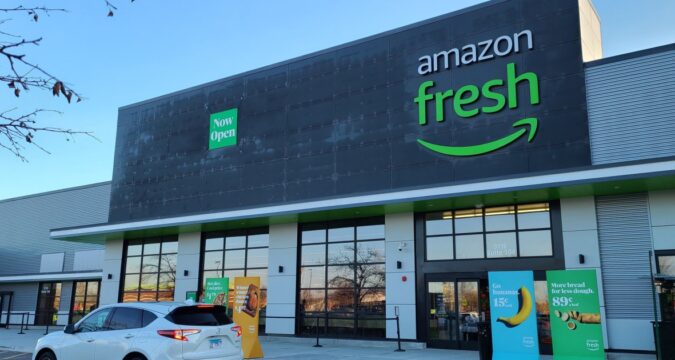
Orland Park Mayor Jim Dodge says Amazon ‘full steam ahead’ with planned development despite nearby retail closures
The mayor of Orland Park says he has faith in Amazon’s approved retail concept for the village, despite the company announcing Tuesday that it will shut down all of its Amazon Fresh and Amazon Go locations.
The shutdown will affect two Amazon Fresh stores, at 16017 S. Harlem Ave. in Tinley Park and 4031 95th St. in Oak Lawn.
There are 57 Fresh and 15 Go stores across the country, with 13 in Illinois. Stores in Arlington Heights, Schaumburg, North Riverside, Morton Grove, Bloomingdale, Naperville, Norridge and Chicago are also set to close Feb. 1.
While some locations may be converted into Whole Foods stores, another chain owned by Amazon, the company released no information on where that might happen. Orland Park has a Whole Foods at 15260 LaGrange Road.
Oak Lawn Mayor Terry Vorderer said Wednesday he heard about the planned retail closures through the news media and had no details about the future of the Oak Lawn storefront.
Amazon said in a news release that it has seen “encouraging signals” in its Amazon branded grocery stores, but the company hasn’t “created a truly distinctive customer experience with the right economic model needed for large-scale expansion.”
Just nine days before the announcement, the Orland Park Village Board approved plans for a nearly 230,000-square-foot building to include items from Amazon Fresh and Whole Foods and online goods. Katie Jahnke Dale, a Chicago attorney representing Amazon, said the concept “will likely be one of the first of its kind.”
Jahnke Dale said Amazon aims to create a more comprehensive shopping experience where visitors to the store in person can use their phone or an in-store kiosk to find items not on the sales floor.
The Orland Park Village Board approved plans for a 229,000-square-foot Amazon retail development Jan. 19, 2026. (Amazon)
Customers will also be able to order items to be brought to their vehicles, either at the front of the store or in a reserved parking spot.
“Nothing that we’re doing here, though, is different from what we are all experiencing in retail stores that exist today,” Jahnke Dale said. “It’s just done in a more purposeful, thoughtful manner.”
Orland Park Mayor Jim Dodge said Wednesday he remains “excited about the possibilities” of the planned retail development despite the company closing other stores.
“They’re still going to be investing millions of dollars into Orland Park on this concept, so I think they are full steam ahead with going in a direction where Orland’s the prototype,” Dodge said.
The mayor added that “there’s always a risk” when investing in retail development, but he is confident that Amazon “is going to do their best to make this be very successful.”
He said Orland Park is a retail friendly community, and he believes Amazon has “learned a lot” about marketing a variety of experiences since launching Amazon Fresh and Amazon Go.
ostevens@chicagotribune.com
https://www.chicagotribune.com/2026/01/28/orland-park-mayor-jim-dodge-amazon-retail/

Naperville Police Arrests for Jan. 23-25
The following items were taken from Naperville police reports and press releases. An arrest does not constitute a finding of guilt:
A 28-year-old woman from Posen was arrested on a warrant and on a charge of possession of a controlled substance at 12:53 p.m. Jan. 23 in the 1300 block of Modaff Road.
A 23-year-old woman from Aurora was arrested on a warrant and on charges of speeding and driving on a suspended license at 2:05 a.m. Jan. 24 at South Routh 59 and East New York Street.
A 25-year-old man from Aurora was arrested on charges of driving under the influence of alcohol, aggravated assault on an officer and driving on a suspended license at 2:24 a.m. Jan. 24 in the 1700 block of West Ogden Avenue.
A 19-year-old man from Woodridge was arrested on a charge of leaving the scene of an accident involving damage to an attended vehicle at 5:16 p.m. Jan. 24 at the police station, 1350 Aurora Ave.
A 43-year-old woman from Maywood was arrested on a warrant and on a charge of driving on a revoked license at 9:46 p.m. Jan. 24 at East New York Street and South rout 59.
A 27-year-old man from Naperville was arrested on a warrant and on charges of retail theft not exceeding $300 and possession of a controlled substance at 8:15 p.m. Jan. 25 in the 2500 block of West 75th Street.
https://www.chicagotribune.com/2026/01/28/naperville-police-arrests-blotter-january-9/
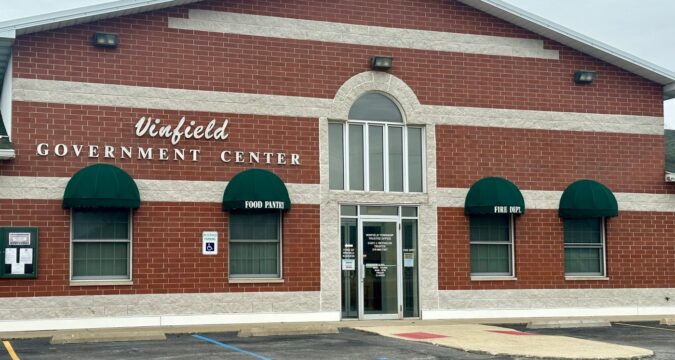
Winfield tackles snow storms, runs low on road salt
Winfield Public Works Director Tony Clark received warm praise for his department’s efforts at keeping the roadways clean during the recent winter storms.
Unfortunately, those efforts to keep the roads clean wiped out a great deal of the town’s salt supply and there may be a need to dip into the budget in the future for additional supplies, Clark told the Winfield Town Council on Tuesday.
“Winfield was a step above,” Winfield Town Manager Nick Bellar said, adding, “smart use of salt; they have the system down.”
Town Councilman Tim Clayton, R-at-large, echoed Bellar’s sentiments, stating that he had traveled roads from Winfield to Orland Park and found the best cleared roads were in his own hometown.
“These roads have been phenomenal,” Clayton said.
Clark and other department heads provided end of the year reports and updates at the first Winfield Town Council meeting of the year.
Clark, during his report, said the town’s street department has so far used some 600-650 tons of salt on roads of its total 900-ton winter supply.
That leaves the street department with only about 300 tons of salt to finish out the rest of the winter season.
“We’re getting low,” Clark said.
Clark said that town officials may need to increase that amount in future budgets because of the addition of new subdivisions, including Aylesworth and Latitude.
Other reports from town department heads included a related one, from Bellar, that 149 new homes had been built in Winfield in 2025.
In other business, the town council, under organizational matters, named Town Councilman Zach Beaver, R-At-large, as president and Clayton as vice president.
Most of the makeup of other commissions remained the same, as did legal, engineering and other town services.
Other action taken by the town council included approving a town and homeowner’s association partnership, which would help beautify a Winfield subdivision and park.
Under the agreement, the Providence at Stonegate subdivision will pay for the installation of a pond aeration fountain at the town-owned Randolph Street Park, off of Randolph.
Cost paid by the homeowner’s association would be approximately $24,116.66, according to a report made at a previous meeting by a representative of the association.
Under the agreement, the town of Winfield would pay for electrical costs only, Winfield officials said Tuesday.
Estimated electrical costs for the 16-hour-a-day operation would be $331.20 per month for six months, association representatives said at a former town council meeting.
Deborah Laverty is a freelance reporter for the Post-Tribune.
https://www.chicagotribune.com/2026/01/28/winfield-runs-low-on-road-salt/
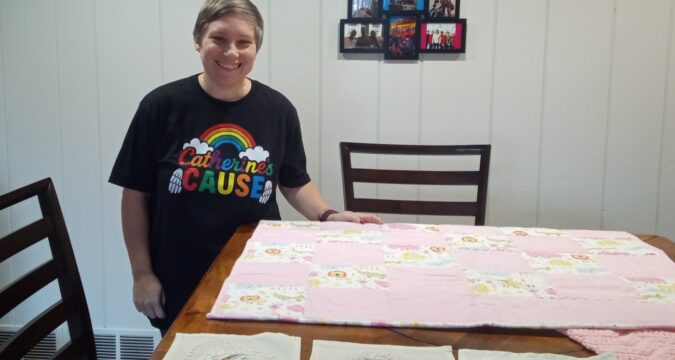
Tinley Park family channels grief into support for others suffering loss of stillbirth
Colleen Connelly still feels the pain of losing her child during pregnancy, but helping other families get through the same trauma is giving meaning to her loss.
She and her family have been donating baby blankets and other items to Advocate Christ Medical Center’s Labor & Delivery Unit since shortly after she delivered her stillborn baby at 24 weeks there in January 2021. They also give baby clothes and toys to the Courage Program for single mothers at Our Lady at Saint Germaine Catholic. Church in Oak Lawn.
The Connellys formed Catherine’s Cause, which makes and donates items to grieving parents, including blankets, cards, bracelets, keychains and other keepsakes. It is not affiliated with Catherine’s Caring Cause, a South Side nonprofit organization that provides support and resources to asylum seekers and refugees.
Connelly’s group usually meets at the home of her aunt, Karen Wronkiewicz in Orland Park. It will host a Craft Workshop from 9 a.m. to 1 p.m. Feb. 7 at Chicago Agricultural High School, 3857 W. 111th St., a free open house where people can stop by and create or drop off crafted items to donate to families.
“The power of just telling your story — that’s why we built this little community based support and creativity,” Connelly said. “It’s nice because you think about how maybe they haven’t healed. It’s a way to create a safe space for them.”
Terry Keating, Colleen Connelly’s mother, has an active role in Catherine’s Cause, along with her husband, Peter Connelly, and other family members. The Connelly’s live in Tinley Park and have a daughter Eleanor, born in October 2022 and Christopher, born in April 2025.
Colleen Connelly said everything went fine with her pregnancy in 2021 until she was at 24 weeks and her doctor told her there was no heartbeat and her baby had died. An underlying condition, undiagnosed lupus, ended up attacking her fetus, cutting off her oxygen.
The couple had planned to name the baby Eleanor but changed their minds after receiving the devastating news.
“Peter asked, do you mind if we preserve that for a future baby?” Connelly said. “So we found a special name that had some meaning behind it — Catherine, after the patron saint of miscarriages and healing mothers.”
She was in shock but still had to deliver the baby.
Colleen Connelly, left, and her mother, Terry Keating, both of Tinley Park, create blankets and other keepsakes to send to families experiencing the tragedy of stillbirth through Catherine’s Cause, a nonprofit started by Connelly after her daughter Catherine was stillborn in 2021. (Janice Neumann/Daily Southtown)
But what made it easier was the supportive medical staff and her family by her side, including her husband, mother and mother-in-law. She also was supported by Geanette McCarthy, Advocate Christ Medical Center’s perinatal bereavement coordinator.
McCarthy came into her room to offer her support, explain the loss would never be forgotten, and remove the items that would have been used to deliver a live baby.
When they received the news, the couple were stunned.
“We were just kind of sitting there in silence for a while,” Connelly said.
Dr. Whitney Sigala, her obstetrician, also came.
“She took my hand and said, this is how it’s going to play out from here,” she recalled, adding the doctor has been similarly supportive for her two live births. “She is an angel in disguise.”
McCarthy has been the perinatal bereavement coordinator at Christ for 10 years and has worked at the hospital for 24 years.
“What makes it so difficult to lose a baby for families like the Connellys is that it is so sudden, unexpected and soul-shattering,” McCarthy said. “When I meet these families in the hospital, I sit with them in their pain and offer a supportive presence so they can feel safe to express the raw emotions they are experiencing. I also empower them to make decisions that give them back a sense of control over what is happening to them.”
A letter written by Colleen Connelly, of Tinley Park, will be delivered along with crafted items and keepsakes through Catherine’s Cause, a nonprofit Connelly started to support families that have experienced stillbirth. (Janice Neumann/Daily Southtown)
Family togetherness has also played a big part in the healing in the time since.
Keating, Connelly’s mother, said the loss was hard on all of them.
“Like I always say, it’s hard for a parent to lose a child but twice as hard for a grandparent losing a grandchild and having to watch that child grieve for her,” she said. “But there’s nothing you can do apart from supporting them and loving them.”
Keating said it was a relief to be able to stay with the couple when they lost Catherine and then be with her daughter daily at home. She’s continued her supportive role, helping care for their children when the couple is working.
That family unity, and how the Connellys have turned their tragedy into something that helps people in similar situations has impacted McCarthy.
“What stands out for me about the Connellys is how they took their pain and grief and allowed it to transform itself into a love so beautiful and far-reaching,” she said. “They used the pain of their loss and the beauty and light of Catherine’s brief life as a way to help others going through the same type of loss.”
Janice Neumann is a freelance reporter for the Daily Southtown.
https://www.chicagotribune.com/2026/01/28/catherines-cause-stillborn-support-group/