Category: News

Federal troop deployments to US cities like Chicago cost taxpayers $496M and counting
WASHINGTON — The Trump administration’s high-profile deployment of federal troops to six U.S. cities has cost taxpayers roughly $496 million through the end of December, and continued deployment could cost over $1 billion for the rest of the year, according to new data from the nonpartisan Congressional Budget Office.
President Donald Trump has justified sending National Guard troops into U.S. cities as part of an effort to combat crime and support local law enforcement. Critics of the move argue the deployments undermine state and local authority and exceed the president’s authority under the Constitution.
The CBO published the new data estimating the costs associated with the federal deployments of National Guard and active-duty Marines after a request from Sen. Jeff Merkley, D-Ore., who is the ranking member on the Senate Budget Committee.
“The American people deserve to know how many hundreds of millions of their hard-earned dollars have been and are being wasted on Trump’s reckless and haphazard deployment of National Guard troops to Portland and cities across the country,” Merkley said in a statement about the CBO report.
Factored into the estimates are troop deployments to Chicago, Memphis, Portland, as well as Los Angeles in June, when protesters took to the streets in response to a blitz of immigration arrests. The CBO said continued deployments to those cities would cost about $93 million per month.
The estimate excludes the military’s December deployment to New Orleans.
For further possible deployments down the road, the CBO estimates deploying 1,000 National Guard personnel to a U.S. city in 2026 would cost $18 million to $21 million per month, depending on the local cost of living.
Supreme Court deals Trump a defeat on bid to deploy National Guard in Illinois
National Guard troops are expected to remain deployed in Washington throughout 2026, according to a memo reviewed by The Associated Press earlier this month.
The troop deployments have provoked legal challenges from local leaders, and some have been successful. A California federal judge in January ruled that the Trump administration “willfully” broke federal law by sending National Guard units to the Los Angeles area.
A White House representative did not provide an immediate comment on the estimates.
https://www.chicagotribune.com/2026/01/28/federal-troop-deployments-cost/
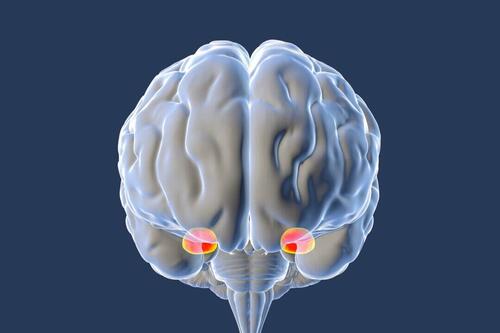
Why Your Brain Overreacts To Fear – And How To Fix It
Why Your Brain Overreacts To Fear – And How To Fix It
Authored by Debbie Cohen via The Epoch Times (emphasis ours),
We’ve all been there: that jolt of panic before a job interview, the knot in your stomach while public speaking, the dread during a difficult conversation. Your heart pounds, your breath turns shallow, and your palms sweat. Your body reacts as if physical danger is imminent, even when it’s not.
This surge of anxiety stems from your brain’s fight-or-flight response. It is designed to protect us from threats, but modern life sets it off every time we get stuck in traffic or think our coworker is upset with us. When activated repeatedly, it can fuel high blood pressure, weakened immunity, anxiety disorders, and burnout.
Getting the fight-or-flight response properly tuned requires a counterintuitive solution. Neuroscience suggests that we need to expose ourselves to what unsettles us.
Why Modern Stress Makes Fear Harder to Regulate
If our collective mental health is any indicator, people are struggling. According to research from Moodle, conducted by Censuswide, approximately 284 million people, or about 3.5 percent of the world’s total population, have an anxiety disorder, while 66 percent of American employees report experiencing burnout.
These aren’t separate problems; they’re symptoms of brains stuck in perpetual threat mode, unable to distinguish between psychological discomfort and physical danger.
The Epoch Times asked Supatra Tovar, a licensed clinical psychologist and wellness expert, how these findings reflect acute stress turning into chronic stress. Tovar noted that chronic tension is directly linked to the brain’s fear circuitry.
The amygdala becomes harder to regulate when a person is exposed to repeated uncertainty or alarm.
“Over time, the nervous system starts treating these inputs like real danger, making it difficult for the body to return to a calm baseline.”
Why Your Brain Overreacts
At the center of our fear response is the amygdala, an almond-sized structure deep in the brain responsible for detecting threats and triggering rapid emotional reactions. However, it can be trained to calm down.
How can something the size of an almond cause so much trouble? Because its job lies at the heart of human experience. The amygdala is the region of the brain associated with emotional processing, and it constantly scans for threats like a smoke detector ready to sound the alarm.
Under normal circumstances, the logical prefrontal cortex runs the show, handling executive function and rational decision-making. However, when the amygdala senses danger, it hijacks the system entirely.
“That irritation shows up in the autonomic nervous system. These changes happen automatically and instantly,” Dr. Allan Bernstein, a California-based neurologist who has spent decades bridging the gap between scientific investigation and clinical practice, told The Epoch Times.
When this protective system becomes hypersensitive, it can trick the brain into perceiving threats where none exist. The amygdala doesn’t distinguish between real-time danger and imagined scenarios. It can be activated by memories, sensory cues, or hypothetical fears, such as standing near the edge of a high balcony, even if you’ve never fallen.
However, said Bernstein, “Once you know how the amygdala works, you can stop being afraid of your own reactions. And once you’re not afraid of the reaction itself, you can learn how to slow it down.”
Steps for Retraining Your Fear Response
The brain is capable of change throughout life, a quality known as neuroplasticity. One study shows that an effective way to retrain fear circuits is through gradual, controlled exposure to anxiety-provoking situations. However, patience is key, as it’s a process that requires repetition and can take months to master.
Rewiring the brain is best approached in small, manageable steps, according to Pankhuri Aggarwal, who has a doctorate in clinical psychology. An assistant professor of psychology at the University of Cincinnati, she has studied how culture and context shape mental health.
The amygdala learns from direct experience, while the prefrontal cortex learns from interpretation, Aggarwal told The Epoch Times.
“When someone gradually engages with something that makes them anxious while still feeling safe, the amygdala begins to realize that the situation is not dangerous, and the prefrontal cortex becomes more efficient at down-regulating that fear response. We sometimes describe this as building the ‘fear-regulation muscle,’” she said.
3 Elements That Make Exposure Effective
Essentially, repeated, tolerable exposures help the brain form new associations, shifting from threat to safety. Over time, the prefrontal cortex becomes quicker and more automatic in calming the amygdala.
Aggarwal emphasized that fear responses shift most effectively when several conditions are present:
Predictability, so you know what to expect
A sense of control, meaning you choose to engage rather than being forced
Repeated practice, which allows the brain to learn through experience
“People gain confidence surprisingly quickly once they learn that the initial spike of fear does not last forever. That realization alone can dramatically shift how their brain responds in the future.”
For example, an actor suffering from stage fright is usually less nervous after opening night. With each subsequent performance, the brain learns: “I survived. Nothing bad happened. I can do this.”
Aggarwal cautioned against common mistakes people make when trying to face their fears, including going too big too fast, avoiding discomfort, and facing fear without support or structure. For people with severe anxiety or trauma histories, she noted that these steps are best taken with the support of a mental health professional.
Resilience, she stressed, is not the absence of fear. “Fear is an adaptive part of how we stay safe. Resilience comes from recalibrating the fear system so it responds proportionately. Small, consistent steps toward feared situations help people feel capable again, and that sense is often what truly changes lives.”
Habits That Reset Your Stress Response
To counter chronic stress, Aggarwal advised building simple, consistent habits that signal safety to the nervous system, including:
Slow, steady breathing
Brief grounding pauses
Mindful movement
Limits on news and social media consumption
Reconnection with others in real life
“Human connection is not just comforting; it is biologically stabilizing, helping the brain recalibrate away from chronic threat and back toward balance,” she said. She added that even small steps—a short walk outside, a phone call with a friend, or a few minutes of controlled breathing—help deactivate unnecessary fight-or-flight responses.
Reframing How We View Fear
Although most people want to avoid things that make them anxious, fear is not our enemy. Doing the thing that scares us can be an opportunity for growth.
Thomas Plante, who has a doctorate in clinical psychology and is a psychology professor at Santa Clara University in California, told The Epoch Times, “This might seem counterintuitive, but research over many years and with many different populations has clearly indicated that gradual exposure to fears helps us to overcome them.”
This approach, known clinically as exposure therapy with response prevention, is one of the most evidence-based treatments for anxiety disorders and fears. It is effective for anxious situations, such as public speaking, as well as specific phobias, including snakes, spiders, and airplanes.
The Takeaway
Fear isn’t the villain. It’s a signal that evolved to protect us, even if it sometimes misfires in modern life. However, it does not have to hijack the body.
With awareness and consistent practice, experts say that unnecessary fear can be reshaped into a source of resilience rather than a threat to our well-being.
Tyler Durden
Wed, 01/28/2026 – 19:20
https://www.zerohedge.com/medical/why-your-brain-overreacts-fear-and-how-fix-it

Inundaciones empujan a cocodrilos a pueblos de Mozambique; aumentan preocupaciones sanitarias
Por FARAI MUTSAKA
HARARE, Zimbabue (AP) — Las inundaciones que han devastado a Mozambique han provocado que los cocodrilos se dirijan hacia algunos poblados, donde se les atribuyen al menos tres muertes.
En la localidad de Xai-Xai, capital de la provincia de Gaza y una de las zonas más afectadas en el sur del país, las autoridades han advertido a los residentes sobre el aumento en la presencia de cocodrilos a medida que se extienden las inundaciones y continúan las evacuaciones hacia terrenos elevados.
Las lluvias torrenciales y las graves inundaciones en partes del sur de África durante el último mes han cobrado la vida de más de 100 personas en Mozambique, Sudáfrica y Zimbabue, donde han destruido miles de hogares y causado daños en caminos, puentes, escuelas e instalaciones de salud.
De los 13 decesos reportados por las inundaciones en Mozambique, tres de ellos fueron atribuidos a ataques de cocodrilo, indicaron las autoridades.
“Los niveles de los ríos van en aumento y están alcanzando áreas urbanas o zonas densamente pobladas”, señaló Paola Emerson, directora de la Oficina de Coordinación de Asuntos Humanitarios de Naciones Unidas en Mozambique, después de visitar el poblado.
“Así que los cocodrilos que, en este caso, viven en el río Limpopo, pueden llegar a zonas pobladas que ahora están sumergidas bajo el agua y esa es la preocupación”, añadió.
El río Limpopo fluye desde Sudáfrica a través de Mozambique en su camino hacia el océano Índico.
Dos personas murieron en un ataque que dejó a otros tres heridos en la región de Gaza a principios de este mes. Además, un cocodrilo se “tragó” a un hombre en Moamba, un pequeño pueblo en la provincia de Maputo, señaló esta semana a Henriques Bongece, secretario provincial, en declaraciones a la prensa local. Maputo es la capital del país.
Las autoridades en Maputo señalaron que las inundaciones pudieron haber arrastrado a los cocodrilos a la zona desde un parque en la vecina Sudáfrica.
“Queremos hacer un llamado a todos a no acercarse a aguas tranquilas porque en estas aguas hay cocodrilos. Los ríos se han conectado con todas las áreas donde hay agua”, declaró Bongece a la prensa local esta semana.
Más allá del peligro inmediato que representa la vida silvestre, las inundaciones han desencadenado una crisis humanitaria cada vez más grave.
Varias semanas de intensas lluvias, agravadas por la liberación de presas para prevenir fallas estructurales, han afectado a más de 700.000 personas, en su mayoría menores de edad, dejando un sendero de destrucción en vastas tierras de cultivo, según organismos humanitarios como el Programa Mundial de Alimentos y la UNICEF.
La Organización Mundial de la Salud advirtió el viernes de graves afectaciones en los servicios de salud en las provincias de Gaza y Maputo luego de que por lo menos 44 instalaciones quedaron destruidas, dejando a decenas de miles sin acceso.
La agencia aseguró que los daños a la infraestructura crítica han interrumpido la prestación de servicios, mientras que más de 50.000 personas que se han visto obligadas a trasladarse a refugios temporales cuentan apenas con servicios básicos de salud limitados o, en algunos casos, inexistentes.
Advirtió que las personas desplazadas que toman medicamentos a largo plazo enfrentan interrupciones que ponen en riesgo sus vidas, y añadió que se necesita de acciones urgentes para restaurar los servicios esenciales, desplegar unidades móviles de salud y garantizar la continuidad de la atención para las personas con padecimientos crónicos.
En los tres países, las agencias humanitarias aseguran que las condiciones de hambruna y los riesgos de brotes van en aumento, después de que las inundaciones arrasaron con con cultivos de los que dependen millones de pequeños agricultores para alimentarse, mientras se cierne la amenaza de enfermedades transmitidas por el agua, como el cólera.
___
The Associated Press recibe apoyo financiero para la cobertura de salud global y desarrollo en África de la Fundación Gates. La AP es la única responsable de todo el contenido. Encuentre los estándares de AP para trabajar con filantropías, una lista de patrocinadores y áreas de cobertura financiadas en AP.org.
___
Esta historia fue traducida del inglés por un editor de AP con la ayuda de una herramienta de inteligencia artificial generativa.

Daily Horoscope for January 29, 2026
General Daily Insight for January 29, 2026
Being thoughtful doesn’t have to cost a thing! Today, in particular, it’s easier than usual to reconnect, mend rifts, and generally be good to one another. That’s thanks to Mercury conjoining Venus at 5:17 am EST, coloring the whole day with generous affection. Later, the emotional Moon challenges elusive Neptune, signifying that mixed signals could blur plans or expectations. To avoid issues, we should stop and ask questions whenever confusion arises. We can be nice without letting ourselves get bowled over by more aggressive peers.
Aries
March 21 – April 19
You’re a key part of any team, Aries. Mercury pairs with romantic Venus in your 11th House of Social Networks, helping you rally allies in service of community goals. Your natural initiative shines in a group chat or large discussion — the sort of venues where you can propose plans that get everybody ready to jump into action. Even so, pay attention to any hesitation, because those voices could have valuable advice. Giving and taking instructions will probably be necessary today.
Taurus
April 20 – May 20
Long-term ideas could currently be at the top of your mind. As rational Mercury links with motivational Venus in your 10th House of Drive, you’re being energized to shape a message about your work or reputation. You may write a concise update for a supervisor — if you aren’t in the workplace, this might be a forum post online or on a local message board. Pay attention to your word choice and focus on statements that reflect your values. Honesty is the way to go.
Gemini
May 21 – June 20
Certain facets of your recent life may require extra delicacy. Mercury meets Venus in your 9th House of Exploration, inviting you to share an idea and translate complex thoughts so more people can connect. There is a risk of controversy when stating anything unfamiliar, so make a point of accepting genuine feedback from critics who actually mean well. Aim for clarity, listen charitably, and let candor shape your follow-up questions. As you open your mind, you give others space to do the same.
Cancer
June 21 – July 22
Private feelings can finally find safe opportunities to be expressed. Messenger Mercury blends with Venus in your 8th House of Intimacy, encouraging nonjudgmental talks about trust and the habits that help bonds feel more secure. If something small has been upsetting you, it’s a good time to bring it up — just be aware that they may have justifiable reasons behind their actions, even if you don’t like them. Your sensitivity becomes strength when you speak up for yourself in close connections.
Leo
July 23 – August 22
Your connections can blossom today — as long as you’re willing to give them a little attention. The 7th House of Partnership opens a channel as Mercury unites with attentive Venus, inviting dialogue with an important person in your life. Professionally, you may ned to discuss clearer expectations for an upcoming or ongoing project. Personally, you’re ready to affirm the needs of your loved ones without neglecting your own. When talking about such things, use warm language that keeps pride from causing drama.
Virgo
August 23 – September 22
Small tweaks make daily tasks run more smoothly. Improvements land easily when you speak kindly, particularly since information-gathering Mercury is uplifting compassionate Venus in your 6th House of Daily Routine. You might write a clear handoff note that reduces mistakes going forward, or perhaps you’ll solve a persistent computer glitch at home. Also, when you’re willing to receive critiques, others should respond much better to your suggestions. Using a kind tone also ensures your good-natured advice doesn’t get mistaken for aggression or complaints.
Libra
September 23 – October 22
Cosmic kindness blankets today with warmth — and a lot of that is thanks to you! Playful expression blooms as conversation softens, with mischievous Mercury blending with alluring Venus in your 5th House of Artistry. You might plan a simple game night that lets everyone laugh, or add a small, creative touch to your home decor. The only downside is that having people over could get a little overstimulating, but your friends should understand if you need to turn down the volume for a bit.
Scorpio
October 23 – November 21
Quiet rooms invite real, heartfelt talks. Your 4th House of Family is blessed by the joining of intellectual Mercury and loving Venus, encouraging conversations that ease pressure and rebuild a sense of safety. How can you best aid your household? That might look like doing a couple more chores — or delegating them to someone who isn’t currently carrying their weight. You’ve got the eloquence to ask for what you need while still protecting someone else’s feelings, which turns conflict into workable agreements.
Sagittarius
November 22 – December 21
When the universe opens a door, you may feel practically yanked through it by your own drive to learn and grow. Your 3rd House of Signals gleams under this Mercury-Venus trine, nudging you to reach out and transform introductions into friendships. You might start a casual conversation that leads to real community help — be sure to stay in touch after! Showing interest in what others have to say makes people eager to collaborate. Keep it light so learning stays fun and steady today.
Capricorn
December 22 – January 19
You’re worthy of respect! By extension, the things that you value are valuable — even if they aren’t technically worth a lot of money. Your confidence in your worth can grow as Mercury and Venus support your resourceful 2nd house. This is a great time to work on your finances, regardless of their state. Your steady patience shines when you name your needs and choose tools that support them. Self-respect makes every plan more practical and guides choices that bring better outcomes your way.
Aquarius
January 20 – February 18
Aquarius, your voice sets today’s tone. Your words shape how others see you as chatty Mercury fuses with harmonious Venus in your sign, encouraging a friendly tone that carries strength. People are more willing to meet you as you are, not as the version of you they imagine. You’re allowed to navigate the world on your own terms! Set the necessary boundaries without being gruff, then follow through on them. When you encounter friction, try letting your humor soften your words before arguing back.
Pisces
February 19 – March 20
Soft words melt walls and ease worries. Your 12th House of Shadows doesn’t have to be an intimidating mental place, especially not during this alignment of Mercury and Venus. They’re inviting reflection that untangles thoughts and soothes tired nerves. When you have a chance, take a few moments to ponder something that’s been bothering you lately. It’s possible you’ve been running yourself a little ragged caring for others — it might be wise to rest by limiting your activities for the time being.
https://www.chicagotribune.com/2026/01/28/daily-horoscope-for-january-29-2026/

2026 Brings Big Changes To Charitable-Deduction Rules
2026 Brings Big Changes To Charitable-Deduction Rules
Now that we’re into 2026, many provisions of last year’s One Big Beautiful Bill Act (OBBBA) are coming to life. One set of tweaks brings major changes to the tax treatment of charitable contributions, getting non-itemizers back into the tax-saving game but curtailing tax benefits for itemizers and higher-income filers.
Ever since standard deductions were nearly doubled in 2018, far fewer Americans have been itemizing their deductions — only about 9% in recent years. For the masses, that reduced the appeal of charitable donations, since the only way to benefit from contributions was via an itemized deduction. Losing a major selling point, the country’s charities pushed for the creation of an “above-the-line” deduction for non-itemizers. With the 2025 OBBBA, their ship came in.
Which organizations are on your 2026 donation list? Let us know in the comments
In 2026, single people who take the standard deduction can deduct up to $1,000 in cash gifts to qualified 501(c)(3) public charities. For married couples, it’s $2,000. You can’t take an above-the-line deduction for contributions to donor-advised funds or private foundations. As usual, the IRS requires that you have a written acknowledgement from a charity that you give $250 or more. Unlike itemized charitable contributions, there’s no carry-forward for contributions that exceed your cap on the deduction in a given year. This new deduction feature of the tax code has no expiration date, and it will be adjusted for inflation going forward.
Non-profit institutions are welcoming the change. “The new above-the-line deduction will make it easier for Americans to support causes they care about,” says Daniel McAdams, executive director of the Ron Paul Institute for Peace and Prosperity. “A healthy non-profit sector is critical to a free society.”
While the OBBBA is all good news for the standard-deduction crowd, the new law tightened charitable tax-deductions for those who itemize. Specifically, they can only deduct charitable gifts to the extent they exceed 0.5% of adjusted gross income. For example, if your 2026 AGI is $100,000, you can only deduct the amount of your total contributions that exceeds $500. So, if you made a total of $2,000 in donations to all your chosen charities, you could only take a $1,500 itemized deduction.
In light of that 0.5% AGI floor, one way for itemizers to optimize donations is by “bunching them” in a single tax year. With that strategy, someone who’d intended to donate money to charities at a pace of $2,000 per year might instead donate $4,000 in 2026 and then come back with another round of bunched contributions in 2028.
OBBBA also brought a new reduction in tax benefits enjoyed by high-income donors. Generally, taxpayers can calculate the benefit of a tax deduction by multiplying it by their marginal tax rate. For example, someone who’s in the 22% tax bracket gets $22 in tax benefits for a $100 donation. Now, however, those in the highest 37% tax bracket will see their tax benefit limited to 35%. In 2026, the 37% bracket applies to taxable income above $640,600 for singles and $768,700 for married couples filing jointly.
While US nonprofits are getting a boost in the form of the new above-the-line deduction, they also face economic headwinds thanks to the declining power of the US dollar, and increased prices thanks to tariffs. “47% of charitable donors have given less in the past 12 months due to inflation,” nonprofit fundraising and marketing firm RKD Group reported in September.
Tyler Durden
Wed, 01/28/2026 – 19:00
https://www.zerohedge.com/personal-finance/2026-brings-big-changes-charitable-deduction-rules

Woman found dead in Oswego Tuesday, suspect in custody, police say
A woman was found unresponsive at a home in Oswego Tuesday afternoon and pronounced dead shortly after, the Oswego Police Department said in a news release posted on its Facebook page.
At around 1:10 p.m., police were dispatched to a residence in the 400 block of Valentine Way after a caller had reported that he believed his wife was in danger after he said he observed, via home surveillance, a man run after his wife into their garage, according to police.
Upon entering the residence, officers found a woman unresponsive, police said. Oswego Fire Protection District paramedics responded and pronounced the woman dead at the scene.
A witness had reported seeing a man running south across Wolf’s Crossing Road, the police department said, and officers initiated a search of the area, which included drone surveillance and the Aurora Police Department’s canine search teams.
Dispatch also provided officers with a vehicle description and license plate number believed to be associated with the suspect, police said.
According to information provided by Oswego police on Wednesday, an officer shortly after observed a vehicle that matched the description given being driven south on Harvey Road near Hathaway Lane by an individual who also matched the suspect’s description. The driver was ultimately taken into custody and transported to the Oswego Police Department following a traffic stop.
The Kendall County Major Crimes Task Force and Forensics Team assisted with investigation and processing of the scene, per the news release, and the Kendall County Coroner’s Office also responded to the scene.
Preliminary investigation indicates that the suspect followed the woman into the garage and attacked her, Wednesday’s news release said. An autopsy is scheduled for Thursday to determine the official cause and manner of the woman’s death.
Detectives have obtained search warrants and have conducted a large area search with assistance from the Kendall County Sheriff’s Office, Yorkville Police Department, Montgomery Police Department, Plano Police Department and Oswego Fire Protection District in connection with the investigation, according to the information provided Wednesday.
The investigation remains ongoing, police officials said, and they continue to work with the Kendall County State’s Attorney’s Office. Police emphasized that the incident was isolated and that there is no danger to the public.

Mayor Brandon Johnson tells DC crowd he will ‘set up a pathway’ to prosecute Border Patrol Cmdr. Gregory Bovino
WASHINGTON — At a speech just blocks from the White House Wednesday, Chicago Mayor Brandon Johnson said he would prepare the city for the future prosecution of Border Patrol Cmdr. Gregory Bovino for creating “chaos” during the Trump administration’s surge of immigration agents in Chicago last year.
Bovino, who was the public face of Operation Midway Blitz, became a symbol of the incursion that led to the detention of 4,500 people in the Chicago area. As one of the few unmasked agents in the operation, Bovino chided area Democratic elected officials, angered a federal judge for his over-the-top tactics and threw tear gas canisters at protesters while cameras recorded him.
Bovino also became a fixture in the federal action in the Minneapolis-St. Paul area this month, before President Donald Trump sidelined him this week following the shooting deaths of two civilians at the hands of federal agents.
“It’s unfortunate,” Johnson said, “that it will take time for people to understand what a nasty individual he is.”
“Whether it’s litigation, whether it’s press conferences or whether it’s legislation, the next step that we’re going to have to try — and I’m committed to doing this — is how to set up a pathway for someone like Gregory Bovino to be prosecuted,” the Democratic mayor said at a National Press Club luncheon.
“Their behavior is hypocritical and contradictory to their rhetoric,” Johnson said. “How do you call for law and order while at the same time literally ignoring the rule of law, creating more chaos than this country has seen in a generation? And so yes, prosecution has to be the next step for full accountability.”
Johnson also rebutted Republican complaints, often heard on Capitol Hill, that Trump is sending Immigration and Customs Enforcement agents into U.S. cities to enforce immigration laws that the Biden administration did not enforce aggressively enough.
The mayor recounted the tactics of ICE and the Border Patrol in Chicago, including putting a man, who was a legal resident, in a chokehold on the West Side and storming a South Shore apartment building in the middle of the night with the aid of a Black Hawk helicopter.
“That’s not enforcement, that’s terror. Both parties know there is a broken immigration system. But there’s one party that doesn’t want to fix the broken immigration system,” Johnson said, implying that Republicans are blocking reforms.
He urged officials in other cities to take steps to limit federal overreach.
Johnson argued a Chicago policy barring ICE and Border Patrol agents from using city property for their deployments sent a message to residents that the city objected to the federal actions. It also inspired private businesses to adopt similar policies, he said.
And Johnson said other municipal leaders shouldn’t shy away from those measures because they worry about drawing attention from the Trump administration.
“I understand the anxiety, the trepidation,” he said. “The threat of evil is always lurking, and it is always better having fought and experiencing setbacks than having not fought at all and losing our ability to resist.”
“When it comes to securing justice, the last thing we should ever do is surrender,” he said. “If you don’t move, it is an act of surrender.”
Plus, he added, “they’re not alone. Just know that your big brother in Chicago will have your back, whoever you are — big city, small city — wherever you are, you have a partner in Chicago.”
Johnson is in Washington this week to participate in an annual meeting of the U.S. Conference of Mayors, a group of city executives from the largest cities in the country.
During a question-and-answer session at the Press Club, that backdrop led to inevitable comparisons between Johnson and New York’s new mayor, Zohran Mamdani, who was elected on a progressive platform like Johnson.
Since taking office at the beginning of the month, Mamdani turned heads by quickly ordering transportation improvements, calling for hearings on unsavory landlords, and tapping former Federal Trade Commission Chair Lina Khan to find ways to drive down prices on rent and utilities in the city.
Johnson said he was “grateful” for the traction that other progressive mayors have made throughout the country, but disputed the notion that his administration has been slow by comparison.
“Chicago and other American cities are unfamiliar with progressive leadership, and so what it takes is consistency,” he said.
As he often does when speaking to Chicago audiences, the mayor argued he has disproved critics by leading a steep reduction in crime, promoting affordable housing, expanding paid time off and overseeing an “economic resurgence,” pointing to O’Hare International Airport becoming the busiest in the country, tourism increasing and a quantum computing center being built on the Southeast Side.
“We’ve done everything that I promised that I would do to build the safest, most affordable big city in America,” Johnson said. “And of course, you’re going to have corporate interests that are spending millions of dollars to interrupt our progress.”
Those opponents, he said, “are more comfortable with the status quo of closing schools, closing mental health clinics — which I’ve reopened — and shutting down the Department of the Environment — which I reopened,” he said.
And he continued the fight over the 2026 budget, again saying the package the City Council recently passed over his objections was “98% of what I proposed.”
While he and a majority of the council had a handful of disagreements over the spending package, Johnson told the Press Club audience the main sticking point was his failed attempt to pass an employee head tax to be paid by large companies. The council version that passed instead will sell unpaid debt to the city to collection agencies.
“You know what the difference was?” he said. “I believe that we should place taxes on large corporations to balance the rest of that budget out. Thirty City Council members decided to sell the debts of working people and poor people over toward a private entity to raise the last bit of revenue to balance that budget.”
Daniel C. Vock is a freelance reporter based in Washington, D.C.
https://www.chicagotribune.com/2026/01/28/mayor-brandon-johnson-hold-bovino-accountable/

US Launches Revamp Of FAA To Improve Safety, Modernize Airspace Operations
US Launches Revamp Of FAA To Improve Safety, Modernize Airspace Operations
Authored by Aldgra Fredly via The Epoch Times,
The Trump administration on Jan. 26 unveiled what it described as the largest overhaul of the Federal Aviation Administration (FAA) in the agency’s history to enhance safety and support modernization efforts.
The overhaul includes launching an airspace modernization office to oversee the installation of a new air traffic control system and creation of an advanced aviation technologies office to oversee the integration of drones and other air mobility vehicles into U.S. airspace, the Department of Transportation (DOT) said in a statement.
The FAA will also move more key leadership posts to permanent roles and consolidate management of finance, information technology, and human resources under the administrator, according to the DOT.
The department said the restructuring of the aviation regulator will not result in workforce reductions.
“It’s important that we have the right people in the right places to do the best work possible,” FAA Administrator Bryan Bedford said in the statement.
“These actions will put permanent leaders in place who embrace innovation, share safety data and insights freely and are focused on deploying a brand-new air traffic control system all while integrating key innovation technologies into the new National Airspace System (NAS).”
DOT said the restructuring is intended to strengthen the FAA’s safety foundation and modernize the national airspace system.
The National Business Aviation Association (NBAA) expressed support for the FAA overhaul, saying it would help tackle current challenges facing the aviation industry.
“The FAA’s new structure makes the changes required to increase operational efficiency, foster innovation and empower the bold action needed to build an aviation system that in many ways will redefine air transportation,” NBAA CEO Ed Bolen said in a statement.
“More than just a ‘re-org,’ this plan re-envisions what America’s aviation system is, and how it can best serve all stakeholders, now and in the decades to come.”
The announcement came just weeks after the FAA awarded contracts to RTX and Indra to replace the nation’s aging radar system as part of efforts to enhance the agency’s safety oversight.
Transportation Secretary Sean Duffy (L) and FAA Administrator Bryan Bedford hold a press conference at the U.S. Department of Transportation Headquarters in Washington on Nov. 5, 2025. Tasos Katopodis/Getty Images
The DOT said on Jan. 5 that the two companies will replace up to 612 old radars across the United States with modern surveillance radars by June 2028. The replacement process will kick off this year and prioritize high-traffic areas, it added.
“While our air travel system is the safest in the world, most of our radars date back to the 1980s. It’s unacceptable,” Transportation Secretary Sean P. Duffy said at the time.
The One Big Beautiful Bill Act, signed by President Donald Trump in July 2025, allocated $12.5 billion to modernize the nation’s air traffic control system. The amount is appropriated to the FAA administrator and would remain available until Sept. 30, 2029.
Out of the total funds, $3 billion was set aside for radar systems replacement, $1.9 billion for building a new air route traffic control center, and $1 billion for terminal radar approach control facilities.
Tyler Durden
Wed, 01/28/2026 – 18:40

Actor Rose Byrne named Harvard’s Hasty Pudding Woman of the Year
CAMBRIDGE, Mass. — Rose Byrne, fresh off her Golden Globe Award win and Oscar nomination for the leading role in “If I Had Legs I’d Kick You,” was named as the 2026 Woman of the Year by Harvard University’s Hasty Pudding Theatricals on Wednesday.
Byrne, who also has starred in “Bridesmaids,” “Neighbors,” “Insidious,” and “Damages,” will be honored Feb. 13 with a parade through the streets of Cambridge, Massachusetts. After that, she will receive her pudding pot award at a celebratory roast. She will then attend a performance of Hasty Pudding Theatricals’ 177th production “Salooney Tunes.”
In her review of “If I Had Legs I’d Kick You,” The Associated Press’ Jocelyn Noveck wrote that the film gave Byrne “a chance to display versatility and grit in surely the toughest dramatic role of her career.”
Actor Michael Keaton is the 2026 Man of the Year. He will receive his pudding pot Feb. 6.
“We are thrilled to honor Rose Byrne as our Woman of the Year,” Hasty Pudding Theatricals President Daisy Nussbaum said in a statement. “Hot off a Golden Globe win and an Oscar nomination, it’s only right that she receives the most prestigious award of all: a pudding pot.”
The Pudding is the oldest theatrical organization in the nation and one of the oldest in the world. Since 1951, it has bestowed the award annually on women including actors Meryl Streep, Julia Roberts, Scarlett Johansson and Annette Bening. Last year, the winner was “Wicked” star Cynthia Erivo.
Byrne, who is Australian, also acted in “Juliet, Naked,” “Get Him to the Greek,” and “28 Weeks Later.” Her theater credits include “Medea, You Can’t Take it With You” at the Brooklyn Academy of Music and she will star opposite Kelli O’Hara in the revival of ”Fallen Angels” on Broadway starting in March.
https://www.chicagotribune.com/2026/01/28/rose-byrne-hasty-pudding-woman-of-year/

El pequeño Bodø/Glimt gana de nuevo en la Liga de Campeones y podría enfrentarse al Real Madrid
Por JAMES ROBSON
El pequeño Bodø/Glimt siguió causando revuelo en la Liga de Campeones y, tras dos sorpresas consecutivas sobre el Manchester City y el Atlético de Madrid, se perfilaría para enfrentar al Real Madrid.
Una victoria con remontada por 2-1 en casa del Atlético el miércoles permitió al club noruego colarse en los playoffs. Esto significa que jugará contra el Madrid, campeón europeo en 15 ocasiones, o el subcampeón del año pasado, Inter de Milán.
Y dado su hábito de lograr sorprendentes victorias en la competición de clubes de élite de Europa, ninguno de esos gigantes puede esperar un enfrentamiento tranquilo a dos partidos contra el equipo que se encuentra al norte del Círculo Polar Ártico, más septentrional que cualquier otro en la historia de la Liga de Campeones.
Fue la segunda vez en el mismo número de semanas que el Bodø/Glimt logró un resultado sorprendente, tras la victoria por 3-1 contra el Manchester City. Los jugadores de Pep Guardiola estaban tan apenados con sus seguidores que reembolsaron el costo de las entradas a quienes viajaron al partido.
A pesar de esa victoria, el Bodø/Glimt necesitaba repetirla para asegurar un lugar entre los 24 primeros de la clasificación en su primera temporada en la Liga de Campeones.
Y a pesar de verse abajo con el gol de Alexander Sørloth en el primer tiempo, se recuperó gracias a Fredrik Sjøvold y Kasper Høgh para amarrar el 23er sitio.
Su recompensa es la posibilidad de un enfrentamiento con el rey absoluto de Europa, el Real Madrid, que se resignó a la repesca tras caer 4-2 contra el Benfica del exentrenador madridista José Mourinho.
El Inter, finalista en dos de las últimas tres temporadas, también está en el repechaje.
Si el Bodø/Glimt logra otra victoria inesperada, enfrentaría la posibilidad de una revancha con el City o un duelo ante el Sporting de Lisboa en los octavos de final.
El debut en la competición ha resultado espectacular para los noruegos de la ciudad pesquera de Bodø, ubicada más de 1.000 kilómetros al norte de Oslo y con una población de alrededor de 55.000 habitantes.
Las duras condiciones invernales y su campo de juego artificial en su estadio Aspmyra, con capacidad para 8.000 personas, le han ayudado a lograr victorias sorprendentes contra oponentes famosos como Roma, Lazio y Porto antes de la mayor sorpresa de todas, contra el City la semana pasada.
___
Deportes en español AP: https://apnews.com/hub/deportes