Category: News

Slovak PM Fico Accuses Media Of Sabotaging Relations After Trump ‘Psychologically Dangerous’ Claim
Slovak PM Fico Accuses Media Of Sabotaging Relations After Trump ‘Psychologically Dangerous’ Claim
Slovak Prime Minister Robert Fico unloaded on Politico on Wednesday, accusing the outlet of peddling “lies” over its reporting on alleged private conversations he supposedly held with European leaders following his recent meeting with President Donald Trump at Mar-a-Lago estate in Florida on Jan. 17.
“I STRONGLY REJECT THE LIES OF THE HATEFUL, PRO-BRUSSELS LIBERAL PORTAL POLITICO,” Fico wrote on X in caps. “It is a sad look at the liberal and progressive political and media world.”
The whole episode is strange, with Politico standing by its report filled with bombshell claims and sourced to several unnamed diplomats. It is now boiling down to a ‘he said, she said’ scenario. The central claim to the report is that Fico came away from his face-to-face meeting shocked at Trump’s state of mind, which left the Slovak leader shaken.
Government of Slovakia handout
Below are the central assertions from the Politico article:
Slovakia’s prime minister told EU leaders at a summit last week that a meeting with Donald Trump left him shocked by the U.S. president’s state of mind, five European diplomats briefed on the conversation said.
Robert Fico, one of the few EU leaders to frequently support Trump’s stance on Europe’s weaknesses, was concerned about the U.S. president’s “psychological state,” two of the diplomats said. Fico used the word “dangerous” to describe how the U.S. president came across during their face-to-face meeting at Trump’s Mar-a-Lago estate in Florida on Jan. 17, according to two of the diplomats.
And this from another one of Politico’s unnamed sources:
Fico seemed to be “traumatized” by his encounter with Trump, one of the European diplomats said. Fico characterized Trump as being “out of his mind,” a diplomat said, using the words briefed to them by their leader, who was directly involved in the conversation.
The outlet further sets the scene for when Fico supposedly relayed his experience to European counterparts in the following: “The conversation between Fico and his European counterparts took place in Brussels on Jan. 22 on the sidelines of an emergency EU summit arranged to discuss transatlantic relations in the wake of Trump’s threats to seize Greenland.”
It continued: “Leaders used that gathering to try to calm tensions after the U.S. president walked back his threat to slap tariffs on some European countries over the issue a day earlier.”
But Fico in response further wrote on X that he never discussed his US visit informally with any prime minister or president, and accused the outlet of attempting “only to destroy the constructive relationships that Slovakia has with all four corners of the world.”
I STRONGLY REJECT THE LIES OF THE HATEFUL, PRO-BRUSSELS LIBERAL PORTAL POLITICO.
It is a sad look at the liberal and progressive political and media world. The abuse of criminal law to destroy opponents, the rejection of different opinions, boundless media lies, and attempts to…
— Robert Fico 🇸🇰 (@RobertFicoSVK) January 28, 2026
“No one heard anything, no one saw anything, there are no witnesses, but nothing prevented the POLITICO portal from coming up with lies,” Fico wrote.
The White House has also blasted the contents of the report as lies. Still, the headline has generated spin-off articles and a lot of commentary, given that Fico is seen as pro-Trump, and sympathetic to Russia, and has been an outlier in EU politics – and so the headline is very unexpected.
Tyler Durden
Thu, 01/29/2026 – 06:55

Review: Rachel McAdams, Dylan O’Brien shine in Sam Raimi’s gonzo blast ‘Send Help’
The poster for “Send Help” advertises the film as “from the director of ‘The Evil Dead’ and ‘Drag Me to Hell’” — notably not “Spider-Man” or its two sequels. No, the kind of Sam Raimi film you’re getting here is irreverent, silly and very bloody; a character study that also features incredibly goofy scares. Written by Damian Shannon and Mark Swift, “Send Help” is a gonzo survivalist riff that works as well as it does because it features two incredibly game actors that surf the wave of Raimi’s tonal madness with a blend of absolute glee and carefully honed skill.
If the poster were to present the star of “Send Help” in the same way as Raimi, the tagline would read, “from the star of ‘Red Eye’ and ‘Mean Girls,’” because Rachel McAdams is fully in her horror/comedy mode here, and it’s an excellent reminder of her range. Co-star Dylan O’Brien also proves himself once again to be one of the best actors of his generation: a teen heartthrob who now operates more like a chameleonic character actor. Both McAdams and O’Brien play with their movie star personae but move beyond those expectations to deliver highly expressive, almost clownish performances — in the best way.
McAdams is astonishingly dowdy as beleaguered corporate workhorse Linda Liddle, a “Survivor”-obsessed loser who is passed over for a promotion by her slick new nepo-baby boss, Bradley Preston (Dylan O’Brien). In an attempt to play the good ol’ boys game, she boards a private flight to Bangkok with the team, where she bangs out memos while they laugh at her “Survivor” audition tape. One plane crash and stranding on a tropical island later, the tables are turned, with the injured Bradley now at the mercy of Linda and her survival skills.
The swap in power dynamic thrills Linda, and the shift calls to mind Ruben Östlund’s “Triangle of Sadness,” specifically the relationship between Dolly de Leon and Harris Dickinson. But “Send Help” is more of a psychological exploration than overt class satire, though it incorporates all relevant social status markers and constructs as it explores the ridiculous notion of what it would be like to be stranded on an island with your boss.
McAdams and O’Brien deliver almost silent-film era acting with their faces (there’s one bravura long shot of O’Brien eating a bug that’s absolutely virtuosic), and Raimi’s camera playfully pushes the audience around, offering exaggerated tilts and close-ups on specific items, saying “look here, at that!” There’s no subtlety, but would you expect that from the director of “The Evil Dead” and “Drag Me to Hell”? You’re just waiting for the ghouls and blood geysers to pop out. That level of cheeky artifice extends to the aesthetic of their paradisiacal island adventure too, but we don’t come to a Raimi film for its natural realism.
If there’s any flaw to “Send Help,” it’s that it generates such nuance and empathy for both Linda and Bradley, even within such outlandish circumstances and style, that it feels impossible to root for just one of them to come out on top. The film paints itself into such a corner when it comes to their conflict that any ending would feel too clean, too pat. As it stands, the ending is just that. It’s to the script’s credit — as well as Raimi and the actors — that they manage to make such an odious character as Bradley actually sympathetic, and such a clear heroine as Linda so complex and thorny. Nothing’s perfect, but “Send Help” is a blast nevertheless.
Katie Walsh is a critic for Tribune News Service.
“Send Help” — 3 stars (out of 4)
MPA rating: R (for strong/bloody violence and language)
Running time: 1:53
How to watch: In theaters Jan. 30
https://www.chicagotribune.com/2026/01/29/rachel-mcadams-send-help/

Inside Syria’s Largest Oilfield After The Battle For Control
Inside Syria’s Largest Oilfield After The Battle For Control
Abu Aicha patrols the desert in northeastern Syria by car and on foot, an armed man permanently at his side. Around him stretches an apocalyptic landscape: rusted pipelines, shredded buildings, scorched earth and the traces of explosions.
“This is more important to protect than a bank. Oil is what brings money into a bank,” Abu Aicha tells Middle East Eye on 23 January. A former head of banking security in Deir Ezzor, Abu Aicha has been urgently reassigned to secure al-Omar, Syria’s largest oilfield – recently reclaimed by Syrian government forces after nearly a decade under Kurdish-led control.
Internal security forces stand guard at al-Omar oilfield, via MEE
His words reflect the strategic value long attached to al-Omar, a site that has repeatedly funded competing authorities throughout Syria’s war. For more than 10 years, al-Omar, located in the Deir Ezzor province east of the Euphrates River, formed a part of the economic backbone of northeastern Syria.
It was first seized by armed opposition groups, then transformed into a pillar of the Islamic State’s war economy, before falling under the control of the Syrian Democratic Forces (SDF) in 2017.
It even supplied oil back to Damascus across front lines. Today, it is once again under state control – a battlefield where oil has repeatedly reshaped Syria’s balance of power.
On 18 January, under pressure from advancing government troops, SDF commander Mazloum Abdi signed an agreement with Damascus that formally ended the Kurdish autonomous administration in the northeast and transferred control of oil and gas fields back to the Syrian state.
Fighting around al-Omar lasted nearly two hours the day before. Abu Taim, a soldier from the internal security forces who took part in the clashes, recalls the urgency of the operation.
“It was very important to take control of this place,” he says. “Before, we were forced to buy oil from them. These are resources that belong to the country. Now they benefit the whole country.”
Among the soldiers deployed that day, many were from the region itself – Syria’s Jazira. “I lived on the other side of the line,” says Omar, 23. “I felt my land had been colonised by the SDF. Everything was transported to Hasakah. Deir Ezzor suffered economically from losing access to its own resources.”
Another soldier, Mohamed Othman, 25, from Shahee in Deir Ezzor, sums up the moment: “It’s as if we were born again. It’s important because the resources belong to all of Syria, not just one group.” For some, the return carried a deeply personal meaning. “I hadn’t been here in 14 years,” says Abu Soeb Achjel quietly.
Oil transport resumed just five days after the site was retaken. Abdel-Karim Haluch, a truck driver wearing a red and white turban, prepares to head west. “I’m happy to help the country,” he says.
Dozens of trucks like his – each carrying up to 40,000 litres of crude oil – now travel daily from al-Omar toward refineries in Baniyas in the west and Homs in central Syria.
Yet securing the field remains a daily struggle. Al-Omar spans a vast expanse of desert, where opportunistic looters still attempt to siphon oil.
Abu Aicha gestures toward the sand, where motorcycle tracks cut across the site. “Each motorcycle can take up to 300 litres in five minutes,” he says, pointing to shallow pools of oil formed near damaged infrastructure. At night, patrols intensify. Vehicles suspected of theft are stopped, and sand barriers are erected around sensitive areas. “This is what preserves the future of the state,” Abu Aicha repeats.
Al-Omar today is a site held together by improvisation.Raed al-Sadoun, an engineer working on the field, describes the scale of destruction as overwhelming.
“The field requires complete rehabilitation – from the wells at the source to the destroyed secondary and main stations, all the way to the transfer points,” he explains. “Each well needs to be studied individually.”
The damage, he says, exceeds 90 percent. “We hope to reach more than 30,000 barrels per day from al-Omar alone,” he adds.
“But the timeline depends on who carries out the work. With foreign companies operating under international standards, it would take at least a year. “With local companies, everything depends on financing and equipment – and it could take even longer.” Artificial lifting systems remain largely inoperative, leaving only a handful of wells capable of natural production.
The last guy who was supposed to be on trial in Iraq became “President” of Syria.
We’ve seen this movie. https://t.co/fRbrVSt7qC
— Kevork Almassian (@KevorkAlmassian) January 24, 2026
Al-Omar’s importance goes far beyond symbolism. According to Benjamin Fève, an economist specializing in Syria at the consultancy Karam Shaar Advisory, oil revenues were decisive for the survival of Kurdish self-rule.
“In the first half of 2025, the Autonomous Administration of North and East Syria generated $542m in revenues,” Fève explains. Some $416m came from oil, accounting for nearly 77 percent of total revenues, he says. “These revenues financed military spending and public salaries, allowing the administration to function with around 220,000 employees and an armed force of roughly 85,000 fighters.”
Without oil rent, he adds, Kurdish autonomy would not have been financially viable – just as the Islamic State’s territorial project had once depended on oil revenues.
Today, Al-Omar remains a strategic asset for Damascus. “It is Syria’s largest oilfield, with recoverable reserves estimated at around 520 million barrels,” Fève says.
“Despite more than $1bn in damage, production was still around 14,000 barrels per day at the end of 2025. Its light crude is crucial because it is compatible with the Baniyas refinery.”
In the short term, Fève cautions, al-Omar will not dramatically boost Syria’s budget. “But in the medium term, it is the key asset to reduce imports and partially relaunch national production,” he says.
For Fève, the battle for northeastern Syria’s oilfields has been a structuring factor of the conflict. “Oil did not trigger the Syrian conflict, but it financed its prolongation,” he says. “Control over oilfields allowed armed actors to capture hundreds of millions of dollars annually and build rival systems of governance.”
That dynamic, he argues, made the recapture of al-Omar and other fields like Conoco, a major gas installation in Deir Ezzor province, economically decisive for Damascus in early 2026.
As dusk settles over the desert, trucks continue to roll westward, soldiers tighten their patrols, and engineers work amid ruins. Even in devastation, al-Omar remains a strategic prize.
Tyler Durden
Thu, 01/29/2026 – 06:30
https://www.zerohedge.com/energy/inside-syrias-largest-oilfield-after-battle-control
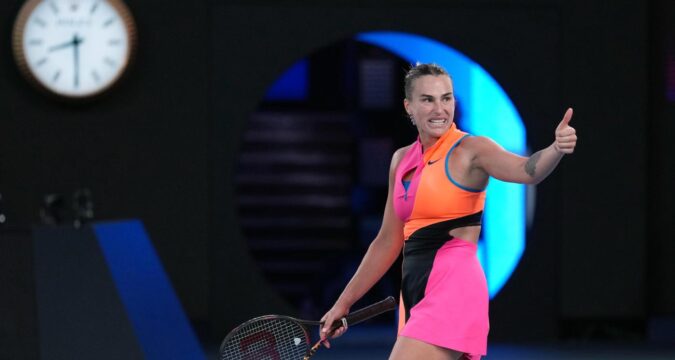
Sabalenka vence a Svitolina y avanza a su cuarta final consecutiva del Abierto de Australia
Por JOHN PYE
MELBOURNE, Australia (AP) — Ni siquiera una penalización por obstrucción pudo frenar la carrera de Aryna Sabalenka hacia su cuarta final consecutiva del Abierto de Australia.
La número uno del mundo superó el jueves a Elina Svitolina por 6-2, 6-3 para colocarse a una victoria de su tercera corona en el primer major de la temporada en cuatro años.
La bielorrusa se medirá a la ganadora de la segunda semifinal entre Jessica Pegula, sexta cabeza de serie, y Elena Rybakina, quinta preclasificada. Rybakina ganó Wimbledon en 2022 y fue subcampeona en Australia ante Sabalenka en 2023.
Las cuatro tenistas llegaron a semifinales sin ceder un set —la quinta vez que ocurre en Melbourne en 56 años— y tanto Sabalenka como Svitolina han arrancado el curso con una seguidilla personal de 10 victorias consecutivas tras ganar torneos de preparación.
Sabalenka prolongó ambas rachas. Logró 19 puntos ganadores y rompió el servicio de Svitolina dos veces en el primer set. Terminó con 29 golpes ganadores frente a los 12 de la ucraniana.
Como es habitual entre tenistas ucranianas cuando se enfrentan a rusas o bielorrusas, no se dieron la mano en la red. Tampoco hubo foto de grupal antes del choque.
Sabalenka es la tercera mujer en la era Open que se mete en cuatro finales individuales al hilo en el Abierto de Australian, luego de Evonne Goolagong y Martina Hingis.
“Es un logro increíble, pero aún no he terminado el trabajo”, señaló una emocionada Sabalenka en su entrevista televisiva en la pista. “He estado viendo su juego, (Svitolina) estaba jugando increíblemente bien. Sentí que tenía que intervenir y presionarla todo lo que pudiera. Me alegro de haber estado a la altura. Creo que he jugado un gran tenis”.
Su único contratiempo fue la penalización por obstrucción al comienzo del cuarto juego. Se considera obstrucción cualquier distracción que impida a un tenista realizar un golpe, lo que puede incluir los fuertes sonidos que lanza el rival.
La árbitro, Louise Azemar Engzell, consideró que Sabalenka había lanzado un gruñido prolongado después de fallar un golpe de derecha. El golpe parecía irse largo, pero cayó dentro de la línea de fondo, lo que dio a Svitolina la oportunidad de seguir jugando. Fue entonces cuando la árbitro intervino,
Sabalenka solicitó que se revisase el video, pero la penalización se mantuvo cuando Azemar Engzell confirmó su decisión de que el gruñido había sido más prolongado de lo habitual.
Eso no molestó a Sabalenka mucho tiempo: rompió el servicio de su rival en ese juego y controló la mayor parte del resto del partido.
La única ruptura de saque de la que disfrutó Svitolina, llegó al inicio del segundo set, pero Sabalenka reaccionó de inmediato y ganó los siguientes cinco juegos para llevarse la semifinal. Terminó con 29 tiros ganadores frente a los 19 de la ucraniana.
Tras alcanzar su primera semifinal en Australia y ganar un título en un torneo de preparación en Nueva Zelanda, Svitolina volverá a meterse entre las 10 primeras del ránking de la WTA por primera vez desde que su baja por maternidad en 2022.
La ucraniana disputó su cuarta semifinal en un Grand Slam —2019 y 2023 en Wimbledon y el Abierto de Estados Unidos de 2019—, pero, una vez más, no pudo llegar a la final.
“Hoy ha sido muy complicado para mí”, afirmó. “pero, sí, quiero quedarme con lo positivo de las últimas semanas, del comienzo del año, y llevarlo conmigo durante toda la temporada”.
___
Esta historia fue traducida del inglés por un editor de AP con la ayuda de una herramienta de inteligencia artificial generativa.

Review: Charli XCX brings a seriously bratty attitude to mockumentary film ‘The Moment’
Brat summer is dead. Long live brat summer. The lime-hued craze of summer 2024 that baffled and bewitched the culture becomes a channel for artistic introspection in the new Charli XCX vehicle “The Moment.” This concert mockumentary, directed by Aidan Zamiri, written by Zamiri and Bertie Brandes, is based on an original idea from pop superstar XCX, who stars as a version of herself, contemplating when and how she can and should let “brat” die, and if it’s even something that remains under her control.
“The Moment” is a cheeky send-up of concert movies that aligns with XCX’s naughty club-rat stage persona, which throws up a middle finger to the perfect pop star aesthetic. But in “The Moment,” XCX and Zamiri peel back the layers of tattered tanks and artfully blasé cool to reveal the woman behind the wraparound shades, and expose the work that goes into the “365 party girl.” Charli XCX allows us to see that she really cares, and that she tries — there’s a lot of effort and even awkwardness and embarrassment required to be so punk.
“The Moment” works in the lineage of films like “This Is Spinal Tap,” and The Beatles’ lightly fictionalized documentary “A Hard Day’s Night.” But often, “The Moment” feels most like “The Office,” as a very British, bone-dry, situational workplace comedy that just happens to be set in the world of pop superstardom.
The film opens the way you might expect, with a loud strobing sequence that intercuts Charli writhing on the floor with her signature text and font-heavy lists of references (a title motif that continues throughout). But the camera holds as the music cuts out, and Charli is left wet and panting on the floor, asking if she should go again, the first exposure of vulnerability behind the powerful, seemingly impenetrable image.
Charli, the artist, is singular in her vision and voice, but she still battles outside pressure, from random drivers to C-suite executives. The plot follows her journey as she gears up for a big brat send-off show with her creative director Celeste (Hailey Benton Gates), the two women pondering how to put a bullet in the head of brat, as a concept, knowing that its time will always expire. A wrinkle arrives in the form of a concert documentarian hired by her label, Atlantic Records.
Let’s just say Johannes (Alexander Skarsgård) is a little too Coldplay, while Celeste is more Berghain — and never the twain shall meet. Caught in a tug-of-war between her team and her creative partner, Charli succumbs, revealing her insecurity and susceptibility to external forces (embodied here by none other than Kylie Jenner). Can she maintain the ineffable brat je ne sais quoi? Or will she be swept away by the tidal wave of normie pop?
This is the conflict at the heart of the story, one that Charli beautifully expresses in a third-act monologue, but “The Moment” is also a hilarious music industry satire, bringing together celebrities playing some version of themselves (Rachel Sennott) and comedians playing members of Charli’s team (Jamie Demetriou as her ineffectual manager).
Casting director Jennifer Venditti has packed the cast with fresh new faces like Richard Perez, and talented up-and-coming stars such as Isaac Powell, as well as icons like Rosanna Arquette, who plays the head of Atlantic Records. Gates is a standout in the supporting cast, delivering a grounded performance as a creative woman who is consistently undermined by the men in the room.
But XCX holds the center as the funny and frazzled Charli, who ends up in a lime green two-piece, hoisted from a harness above a giant, pyrotechnic-enabled lighter as part of her woefully misbegotten stage show, hijacked by Johannes, who clearly has no idea what “brat” means.
“The Moment” works best when examining the creative tensions between people with different agendas, the small passive-aggressive tensions and second-guessing generating the ripples of conflict. But perhaps Zamiri felt those stakes were too small. There’s a strange and misguided third-act swing involving a bank crisis and a brat credit card (an admittedly funny bit) that just feels forced in the scope of this story.
It’s a wobble that could have upended this otherwise amusing and insightful satire of the concert film genre that has cropped up in the past few years. Charli gives us her version of that, but of course, she does it her way — with a healthy dose of irreverence and bratty attitude. But she shows the hard work and sweat that goes into it all, revealing that being “brat” isn’t easy in the least. It’s good to know she cares.
Katie Walsh is a critic for Tribune News Service.
“The Moment” — 3 stars (out of 4)
MPA rating: R (for language throughout and some drug material)
Running time: 1:43
How to watch: In theaters Jan. 30
https://www.chicagotribune.com/2026/01/29/review-charli-xcx-moment/

Around the Southland: Evergreen Park Book Buddies promote reading, more
Evergreen Park Book Buddies promote reading
The beloved tradition of Book Buddies continued in Evergreen Park Elementary School District 124 last month, with four Evergreen Park Community High School students visiting first graders in the district’s four schools: Southeast, Northeast, Southwest and Northwest elementary schools.
Seniors Chloe Thompson, Emma Neylon, Samantha Sense and Fionn Doherty are all part of the school’s education internship. They each read a holiday-themed story to the first graders and had a wrapped gift for each student of a book the children could read and take home.
“The Book Buddies program is my favorite initiative that the (Learning Resource Center) started years ago,” media specialist Tina Ward shared in a news release. She and library assistant Karen Hewitt began the program in 2018. “I love that we come together as a community to make sure that our future Mustangs know how much we value literacy.”
New lighting system puts Orland Park officers on display
Those who think police vehicles are more visible in Orland Park these days aren’t imagining things. The Orland Park Police Department has launched a pilot program meant to increase officer visibility through the expanded use of “cruise lights.”
The lights provide more visibility without showing an emergency response. The new system features steady, non-flashing red and blue lights used without sirens instead of traditional emergency flashing red and blue strobes.
Motorists do not need to pull over when they see the steady lights that indicate an officer on patrol but should pull over when flashing red and blue lights are on, usually with a siren, which indicate an emergency response, police said.
Vow renewal service, dinner planned at The Center
Couples can renew their vows after an anniversary dinner Feb. 15 at Wayside Chapel at The Center, 12700 Southwest Hwy. in Palos Park.
Those who got married in January or February can celebrate their anniversary beginning with fellowship in the Great Hall at 4:30 p.m., followed by a candlelight dinner and renewal of wedding vows ceremony in the chapel. Couples need not have been married in the chapel to participate.
The cost is $110 per couple. Reservations are due before Feb. 10 by calling 708-361-3650.
Orland Park library gets early holiday gift
Anthony Andros, assistant library director, right, thanks Friends of the Orland Park Public Library members for the organization’s check to support library programming. (Orland Park Public Library)
The Friends of the Orland Park Public Library presented a check for $8,000 to help pay for programming for people of all ages. Its Board of Directors are President Pattie Goble, Vice President Eileen Yates, Treasurer Melissa Panio-Petersen, Secretary Diane Gallagher and members Shirley Haiduk and Michael Bisberg.
The public is invited to join the nonprofit organization supporting the library; annual memberships range from $5 to $25 and above. Forms are available at the library and on the library’s website. The organization welcomes volunteers and gently used donations of books, DVDs and Blu-rays via the donations book drop at the library.
“We are deeply grateful for the Friends’ ongoing partnership and their incredible commitment to enriching what the library can provide,” Assistant Library Director Anthony Andros shared via a news release. “Their support allows us to continually expand programming that educates, inspires, and brings people together.”
Information is with Andros at aandros@orlandparklibrary.org.
Chocolate fans find plenty to like at Saturday event
Christ Lutheran Church is starting a new tradition: an indoor craft show and chocolate walk from 9 a.m. to 3 p.m. Jan. 31 at the church, 14700 S. 94th Ave. in Orland Park.
The event, designed with the entire family in mind, will feature crafters and vendors, cash-only raffle baskets, a chocolate-making video and a valentine photo spot. Free samples will be given out at chocolate and sweet tables, and items will be sold (cash only).
Admission is $3 per person, although children up to 13 are admitted free. Information is at 708-349-0431.
Homewood library hosts canned food drive
Through Feb. 8, patrons of the Homewood Public Library are invited to bring in canned goods for local food pantries during its Souper Bowl Drive.
For every three cans, donors will receive a buy one get one free coupon for the Friends of the Library book sale area on the second floor and its bigger sales, as well as a raffle ticket for a chance to win a $50 Amazon gift card. Donations should be brought to the Library Services desk at the library, 17917 Dixie Highway.
No expired food will be accepted. Details are at 708-798-0121.
Send news to communitynews@southtownstar.com.
Citizen pain: Northwestern’s Daisy Hernández and her new history of the (quickly) changing meaning of citizenship
It’s hard to say if Daisy Hernández has the best timing in the world or the worst.
She thought about the question one morning, in her office at Northwestern University, where she is an associate professor of creative writing. It was a few weeks before the publication of her fascinating, urgently-needed new book, “Citizenship: Notes on an American Myth,” which will be released Feb. 17. It’s partly a family memoir and partly a world history, an argument on the meaning of citizenship and a provocative case for why we don’t know what a citizen is anymore.
The frozen January campus brooded in the window behind her.
Bare branches shivered in the wind.
She laughed at first, then turned grim: “I don’t know if I have good timing. I was working on final edits after the 2024 election and the ending depended on the results. I had to take into consideration people might think differently about citizenship after this book came out. So yes, the conversation on citizenship will change again, as always, but the heart of this book will not — that what we think of as citizenship is a very American fiction, a story that itself has changed several times over the course of the country’s existence.”
A story that, as narratives go, is often hard to follow, contradictory and incoherent.
Consider: Her father was a political refugee from Cuba and her mother moved to New Jersey from Colombia on the promise of making more money (not because she feverishly wanted American citizenship). Yet before her father died last year, a few months before the election, he asked her mother to donate $1,000 to reelect Donald Trump. As Hernández once wrote in an essay: “People who think immigrants are necessarily pro-immigrant have not met my family.” The result of the election means “Citizenship,” coming 16 months after that election, delivers a wallop, and yet, events have been churning so quickly, “Citizenship” might need a revision 16 months from now.
Lately, a day doesn’t pass without a widely-circulating video of another American citizen getting wrestled out of a doorway or pushed into a SUV as they simultaneously scream, “I AM A CITIZEN! I AM A U.S. CITIZEN!” While Hernández was finishing “Citizenship,” she watched those same videos of people being stopped at ports of entry because a husband or wife held a green card: “I remember a woman in Texas, whose partner was European, being detained. She screams, ‘I AM A CITIZEN! IS THIS EVEN LEGAL?’ Our awareness of our citizenship, our basic understanding of it, was fixed for so long, and faulty, that the understanding is now at the front of a lot of minds.”
She spread her hands on her desk, smoothing out an invisible watermark.
The story we tell ourselves, she said, “is that we’re all on this same level, that all citizens were created equal. We insist on that — even though we’ve known it’s not true.”
Contemporary America, after all, didn’t invent hypocrisy, arbitrariness and cruelty.
Some of the more poignant passages of “Citizenship” deal in the history of how different societies, states and countries think about citizenship. Consider: After Paul, the apostle of Jesus and founder of Christianity, was captured by Romans, he appealed to a Roman soldier for less brutal treatment. The soldier — who admitted that he himself had purchased his Roman citizenship — knew if Paul was a Roman citizen, he would get a quick beheading, instead of the crucifixion that Rome typically reserved for non-citizens.
Consider: The Dominican Republic — which Hernández fears could be a model for the future of United States citizenship — eliminated birthright citizenship in 2010 and made the law retroactive to 1929, removing the citizenship of several generations of its residents. Consider: Stephen Miller, the 40-year old Homeland Security Advisor and main architect of the White House’s immigration policies, grew up in 1990s California, during the protracted fight over the Proposition 187 ballot initiative that sought to strip many social services from undocumented immigrants (but also resulted in 2 million newly registered voters in the state, 90% of them Latinx and Asian American). Consider: Aristotle, whose teachings on citizenship provided the U.S. Founding Fathers with their understanding of citizenship, held immigrant status himself in Athens.
She considers the ways gender and sexual identity play a role in citizenship status, and how even towns in Colonial America would deport their citizens to other Colonial towns — sometimes because a citizen was poor, sometimes because they were sick, sometimes because they were pregnant, usually if they were considered a drain on local resources.
Other parts of the book delve into provocative schools of thought occasionally floated about the meaning of citizenship: Being a citizen is often defined by legal status and geographic borders, but perhaps in the case of an empire like the U.S., it should encompass anyone impacted politically. (Think of the citizens of Venezuela right now, or the decades of refugees fleeing Central American wars that the U.S. government had a sizable hand in fueling.) What if the census of American citizens didn’t just ask you for your race, but what other Americans think your race is?
In fact, though politicians portray our understanding of citizenship as an evolution, as a steady fine-tuning of the mistakes and holes in the definition, the reality is more like a conspiracy-minded evidence board, a crisscrossing of overlapping strings and hunches.
“I mean, even these whole ideas of ‘get in line’ to be a citizen, and ‘doing everything right,’” Hernández said, “that’s a myth too — it always depended on the political context.”
That’s true, of course, for would-be citizens and citizens.
Hernández’s book, in many ways, plays like a refresher, laying out the citizenship we assumed self-evident: “It’s a story of writing and rewriting,” she said. “In 1790, Congress passes legislation deciding you can be naturalized if you’re a free white immigrant, then a century later creates the Chinese Exclusion Act, while in between we fight a war over the citizenship of Black Americans, except Black Americans have a different relationship to education, to the police, etcetera, than other American citizens. So citizenship is no guarantee of the rights of citizenship — nor has it ever been, right? It’s a fact and fiction.
“Still, I want to also remind people it’s also a story — think of the civil rights movement, the gay liberation movement, women’s rights — not entirely written by those in power.”
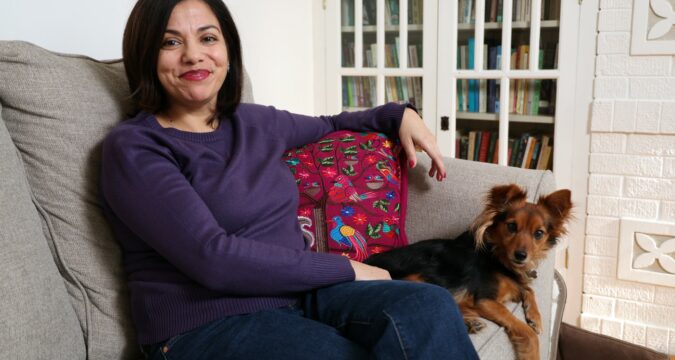
Daisy Hernández, an associate professor of creative writing at Northwestern University, at home in Chicago on Jan. 23, 2026. (Terrence Antonio James/Chicago Tribune)
Hernández, who is 50, came of age in New Jersey in the 1970s and 1980s, “silently recording my mother’s stories about citizenship,” she writes. She told me: “I grew up hyper aware of citizenship, always hearing whispers about documents, papeles. My friends and family were from Peru, Mexico, Argentina, Guatemala — basically, the United Nations of Latinos in Jersey — and the adults were afraid to talk openly about this.” As a child, she thought every American mother sat down their children and explained they were citizens. Her acclaimed 2014 memoir “A Cup of Water Under My Bed” is partly about recognizing she is bisexual, and partly about the hopes and fears of an immigrant family, serving as a “child translator” for her parents, eventually realizing: “Nothing is more vulnerable than the words in our mouths, because nothing has more power.”
Her parents were allowed into the country in the ‘60s and ‘70s, periods when doors to citizenship felt relatively wider. In “Citizenship,” she remembers turning 11 in 1986, the year President Ronald Regan signed the Immigration Reform and Control Act, giving legal status and new paths to citizenship to 3 million immigrants. Gracefully, without leaning into some flatfooted metaphor for the famous promise etched into the Statue of Liberty, Hernández writes of how her family spoke often of “invitations,” to visit a friend in New Jersey, to have a cup of coffee, to meet a man (which leads to her parents’ marriage). The rest of the book, in a sense, is an act of wondering 40 years later:
How did we get here?
“My parents were very much part of a generation that had a lot of faith in the country,” she said, “that once you were a citizen it was yours for life and that’s it. My cousins were very much ‘Get at the back of the line’ if you were a new immigrant. My father was very upset that I protested Trump. He always voted Republican. He was also profoundly mired in his own racism and made his attachment to white supremacy clear from when I was young. He spent the eight years of Obama listening intensely to radio shows in Spanish full of racial hatred. He was incredibly grateful for his citizenship, albeit aspiring to a whiteness that was always going to be elusive. He was very much like everyone in my family. It would have never, never, never occurred to them that none of this would matter — I think he would have been surprised, confused and disappointed now.”
“Citizenship: Notes on an American Myth” by Daisy Hernández, publishing Feb. 17. (Hogarth)
As for her mother, she never did donate that $1,000.
“I don’t think she was against sending money because it was Trump — she was against sending money to any politician. She voted for Trump last year. She has a lot of regrets. She would generally follow the political impulses of my father, so it’s been a process watching her come to her own conclusions. She asked me: ‘But why are they so cruel?’”
Last month, using her mother’s background, Hernández received dual citizenship with Colombia. “I went to the Chicago consulate. I’m not worried for myself. I spent years thinking about citizenship before this book and was fascinated with the experience of (dual citizenship). But I’m also a political writer and Latina. I believe in fighting the good fight. I want to stay. That said, I see the possibility of a fascist government here for more than four years and would like to choose between imprisonment and going elsewhere.
“The truth is, it’s a shock to my system, having grown up with immigrants who believed U.S. citizenship was the only citizenship you’d ever want. But it’s just not true anymore.”
cborrelli@chicagotribune.com
https://www.chicagotribune.com/2026/01/29/northwestern-daisy-hernandez-citizenship/
Two Republican candidates aim to unseat Democratic Rep. Mary Gill
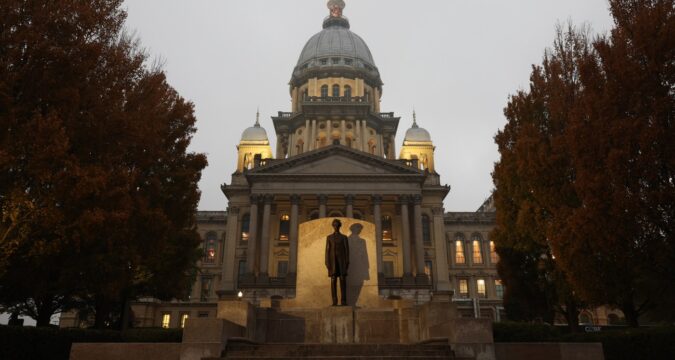
Two candidates are seeking the Republican nomination to challenge Democratic incumbent Mary Gill in the 35th Illinois House district.
David Dewar, a repeat candidate from Calumet Park who now lives in Mount Greenwood Heights, and Charles (Chuck) Lay, originally from Pennsylvania who moved to the South Side more than three decades ago, will face off in the Republican primary on March 17.
The district, which incumbent Gill said in 2024 is traditionally home to many Chicago police and firefighters, includes all or parts of Beverly, Mount Greenwood, Palos Heights, Palos Park, Orland Park, Worth and Alsip.
Gill described the district in 2024 as more conservative than central and north portions of Chicago. She was appointed in 2023 out of 15 other applicants, including Dewar, and elected in 2024.
Dewar, a financial adviser, filed to run as a Democrat in the 2022 and 2024 primaries. He was removed from the 2022 ballot when an Illinois election board upheld an objection to his campaign. He refiled as a write-in candidate and received six votes that year, according to the Illinois Board of Election results. Dewar also ran for 19th Ward alderman in 2019.
Dewar said he supports the Make America Great Again campaign, President Donald Trump and Charlie Kirk. He said he aims to prioritize policies over party politics and represent “we the people, not they the politicians.”
Dewar, who lives in Chicago’s Mount Greenwood Heights neighborhood, is the owner of Tax-Free Retirement Solutions, where he offers investment and tax preparation advice. He is also the president of Restore American Liberty, an organization that aims to educate American citizens on conservative, traditional Christian values, along with the First and Second Amendment.
David Dewar, Republican candidate in the 35th state House district, with family and friends at a fundraiser Jan. 16. (Candidate photo)
Charles Lay, a self-employed tech consultant, said he became interested in politics when he moved to Beverly and got involved with his children’s schools. He said he was frustrated with the public school system and area crime and started talking with South Side Republicans.
He said these politicians encouraged him to get involved with the Cook County Republicans, who asked him last year to run for the 35th district seat.
Lay, who now lives in Morgan Park, said he aims to address rising costs, unsafe streets and schools that “aren’t preparing kids to succeed.”
Charles Lay, a candidate in the Republican primary in state House district 35, on Lake Michigan in 2024. (Candidate photo)
Both Lay and Dewar advocate for several policy changes focused on taxes, crime and immigration.
Dewar said he is working with other Republican leaders to increase the number of elected Republican state lawmakers to allow Republicans to have a voice on committee and legislation.
Lay said Republican lawmakers need to have a louder “bull horn” and use social media to engage voters with what’s happening in the state legislature. He said he would like the party to more strongly align with President Donald Trump.
Property taxes
Both Dewar and Lay said want to address the rising property taxes in the south and southwest suburbs.
Property tax increases have spiked in the south suburbs in recent years, with median tax bills rising by 19.9% in 2024, the largest jump in 29 years.
Lay said he would like to place the tax burden for funding schools on the state. He noted legislation proposed in Michigan to cut property taxes for families without children in public schools. This bill is still in a committee.
“I think parents who send their kids to private education, that they need some type of tax relief,” Lay said.
But Dewar said, in talking about shifting school taxes to the state level, “the state is so broke, what do you do?”
Dewar said he would instead propose for the state “to go after the big ticket items,” such as addressing people who are undocumented and living in the area. He said the state is using tax dollars for services for undocumented people that could be better used to address lowering property taxes.
“What’s happening is the shift, is, they’re basically taxing legal people out of their neighborhoods, but they’re replacing them with our taxpayer dollars and funding illegals,” Dewar said, referring to state programs that support people who are undocumented.
Dewar also said he would like to see more educational opportunities to help people appeal their taxes.
Crime and SAFE-T Act
Both Lay and Dewar said they oppose the SAFE-T Act, a state bail reform measure that took effect in 2023. The measure eliminated money as a factor in whether a defendant is released from jail while awaiting trial and also brought broad changes in how pretrial justice is handled.
Lay and Dewar both said they would support amendments to the act, instead of fully repealing it. Dewar called the measure, the “unsafe act.”
Lay said his first legislative push would be to make it harder for defendants to receive cashless bail and harder for defendants to get out of jail with just an electronic ankle bracelet monitor.
“We’re using those two (measures) to replace crime punishment when they should be in jail,” Lay said. “We’re making excuses and right now, you don’t have anyone talking about this, saying we’re going in the wrong direction, and I think that’s a voice that needs to be heard.”
Dewar said he wants to address record examination in court.
He also said he would like people with ankle monitors to be monitored more often, and would like anonymous complaints against officers to be filed as notarized affidavits, both to protect the officer and so those who file complaints determined to be untrue can be prosecuted for perjury.
Campaign support
Dewar is endorsed by Chicago Flips Red, a grassroots movement dedicated to electing more Republican officials in the Chicago area, and Trump Illinois MAGA Official, according to his website.
Dewar reported in his campaign finance filings that he has not raised or spent any funds. He said he held a fundraiser Jan. 16, which would show up in the next quarterly filing due April 15.
Lay has not filed any campaign finance reports.
awright@chicagotribune.com
https://www.chicagotribune.com/2026/01/29/republican-candidates-primary-democratic-mary-gill/

What to do in Chicago: Atmosphere, Latin pop star Ricardo Arjona and the Chicago Boat Show
Our picks for events in and around Chicago this weekend, and the week ahead.
Patti LuPone
Celebrate Valentine’s Day early with Patti LuPone. The Tony Award-winner serves up more than two dozen love songs in her latest performance, titled “Matters of the Heart.” Expect both Broadway standards and contemporary hits.
7:30 p.m. Jan. 31 at Auditorium Theatre, 50 E. Ida B. Wells Drive; tickets from $59.81 at auditoriumtheatre.org
Atmosphere
Following on the fall release of “Jestures” — an album with a song for each letter of the alphabet — the Minneapolis hip hop duo Atmosphere plays Salt Shed. Sage Francis, R.A. The Rugged Man, Kool Keith and Mr. Dibbs join as guest artists as Atmosphere marks 30 years with its “Winter Carnival” tour.
7:30 p.m. Jan. 31 at the Salt Shed, 1357 N. Elston Ave.; tickets (ages 17+) from $49.95 at saltshedchicago.com
Ricardo Arjona
Even after 40 years as a Latin pop star, Ricardo Arjona is selling out dates on his “Lo Que El Seco No Dijo” tour. The tour is named for his latest album, “Seco,” which is Guatemalan slang for “skinny” — Arjona’s childhood nickname.
8 p.m. Jan. 30 at Allstate Arena, 6920 N. Mannheim Road, Rosemont; tickets from $179.20 at rosemont.com
Kathleen Madigan
Missouri native Kathleen Madigan brings her hard-working Midwestern comedy to the Chicago Theatre. If you’re not familiar, check out her 2025 Amazon Prime special, “The Family Thread.” Her work feels so honest, so relatable, so lived-in, it’s easy to overlook how deftly crafted it is.
7 p.m. Jan. 31 at the Chicago Theatre, 175 N. State St.; tickets at msg.com
Kevin Nealon
The former “Saturday Night Live” Weekend Update anchor will perform two sets of stand-up at The Den Theatre this weekend. Last summer in “Happy Gilmore 2,” the comedian reprised his role as a zen pro golfer to Adam Sandler’s powder keg.
7:15 and 9:30 p.m. Jan. 31 at The Den Theatre, 1331 N. Milwaukee Ave.; tickets (2-item minimum) from $30 at thedentheatre.com
“DRUMLine Live”
The music traditions of Black university marching bands are showcased in DRUMLine, a performance featuring original music and Top 40 hits. Expect classic soul (Tina Turner, Aretha Franklin, James Brown and more), a Beyonce tribute, a New Orleans Mardi Gras celebration, an homage to Africa, a pep-rally inspired performance and more.
3 p.m. Feb. 1 at Auditorium Theatre, 50 E. Ida B. Wells Drive; tickets from $73.20 at auditoriumtheatre.org
Cassidy Slaughter-Mason and John Judd in “Birds of North America” at A Red Orchid Theatre. (Evan Hanover)
“Birds of North America”
Get to A Red Orchid Theatre before “Birds of North America” sells out, though it just added two more weeks of performances. The play is “a beautifully acted and directed father-daughter play,” according to a four-star Tribune review, that explores ever-evolving parental relationships.
Through March 8 (extended) at A Red Orchid Theatre, 1531 N. Wells St.; tickets from $55 at aredorchidtheatre.org
Chicago Boat Show
Water temps at the Chicago lakefront may be hovering around the freezing mark, but that doesn’t mean you can’t dream about summer boat season. You just have to do it inside a convention center. And if you need to convince the kids, tout the bumper boats, a pool for paddle boards and kayaks and a Huck Finn Trout Pond. Go at 11 a.m. Jan. 31 for a panel discussion with former Chicago Bears and boating enthusiasts Charles “Peanut” Tillman, Israel “Izzy” Idonije and Jerry Azumah.
Through Feb. 1 at Donald E. Stephens Convention & Conference Center, 5555 N. River Road, Rosemont; tickets from $13 at chicagoboatshow.com
Brittney Denise Parks performs as Sudan Archives during Pitchfork Music Festival in Union Park on July 19, 2024, in Chicago. (John J. Kim/Chicago Tribune)
New Edition, Boyz II Men and Toni Braxton
Need to cool it now? All six members of New Edition — along with Boyz II Men and Toni Braxton — will fill the United Center with decades of R&B hits. Yes, that includes Bobby Brown, Ricky Bell, Michael Bivins, Ronnie DeVoe (Bell Biv DeVoe), Ralph Tresvant and Johnny Gill.
8 p.m. Feb. 4 at United Center, 1901 W. Madison St.; tickets from $99.15 at unitedcenter.com
Sudan Archives
Sudan Archives, aka violinist-singer Brittney Parks, appears at Thalia Hall on the heels of her fall release, “The BPM.” A Tribune roundup of anticipated concerts said, “‘The BPM’ pulses with dancefloor physicality, hip-hop assertiveness and kinetic personality. Intended by Parks to be disruptive, it’s that and more—analog folk and digital futurism bound to blow up on a widespread level.”
8 p.m. Feb. 5 at Thalia Hall, 1807 S. Allport St.; tickets (ages 17+) at ticketweb.com
Have something to do around Chicago? Email events to day.chitribevents@gmail.com.
https://www.chicagotribune.com/2026/01/29/what-to-do-chicago-jan-31/

West Loop 4-bedroom home with stone finishes: nearly $3.7M
Address: 900 W. Washington Blvd., Unit #802, Chicago
Price: $3,650,000
This four-bedroom, four-bathroom home in the West Loop is in a boutique building, has a private foyer and is filled with color and rich textures. It also includes radiant heated floors, 10-foot-high ceilings and views of the city through sound-resistant windows. A chef’s kitchen has stone surfaces, Scavolini cabinets, a 48-inch Wolf range and a Sub-Zero refrigerator. The living and dining room open to an outdoor space suitable for entertaining. The primary suite features dual custom closets, and an en-suite bathroom with an oversize shower, a soaking tub and stone finishes. Each additional bedroom has its own en-suite bathroom as well. Other design touches in the home include hand-painted ceilings, automated windows, Lutron lighting, plus a rear mudroom with elevator access. This home is completed by a two-car garage with a lift, and hospital-grade air filtration.
Listing agents: Ashley Bell, @properties Christies International Real Estate, 312-952-0958
This four-bedroom home in the West Loop recently went on the market for over $3.6 million. (Andrew Miller)
This four-bedroom home in the West Loop recently went on the market for over $3.6 million. (Andrew Miller)
This four-bedroom home in the West Loop recently went on the market for over $3.6 million. (Andrew Miller)
This four-bedroom home in the West Loop recently went on the market for over $3.6 million. (Andrew Miller)
This four-bedroom home in the West Loop recently went on the market for over $3.6 million. (Andrew Miller)
This four-bedroom home in the West Loop recently went on the market for over $3.6 million. (Andrew Miller)
This four-bedroom home in the West Loop recently went on the market for over $3.6 million. (Andrew Miller)
This four-bedroom home in the West Loop recently went on the market for over $3.6 million. (Andrew Miller)
This four-bedroom home in the West Loop recently went on the market for over $3.6 million. (Andrew Miller)
This four-bedroom home in the West Loop recently went on the market for over $3.6 million. (Andrew Miller)
This four-bedroom home in the West Loop recently went on the market for over $3.6 million. (Andrew Miller)
https://www.chicagotribune.com/2026/01/29/west-loop-4-bedroom-home-with-stone-finishes-nearly-3-7m/