
Category: News
Elena Rybakina conquista el Abierto de Australia tras derrotar a Aryna Sabalenka, número uno del mundo
MELBOURNE, Australia (AP) — Elena Rybakina conquista el Abierto de Australia tras derrotar a Aryna Sabalenka, número uno del mundo.
The Tribune’s Quotes of the Week quiz for Jan. 31
A winter storm system swept across much of the United States this week. Chicago saw more snow and frigid temperatures — all normal January fare — but the East Coast and the South were hit with ice, snowstorms and a prolonged freeze, leaving nearly 90 dead and thousands without power.
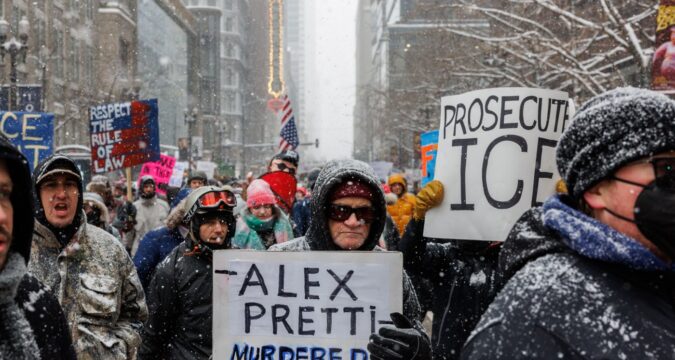
Yet, the bitter cold didn’t deter Minnesotans from taking to the streets after a second fatal shooting at the hands of federal immigration officers in their state. Alex Pretti, a 37-year-old intensive care nurse at the Minneapolis Veterans Affairs Medical Center, was shot and killed by Border Patrol agents on a commercial street in south Minneapolis on Saturday. The two officers who shot Pretti were placed on leave, and on Friday, federal officials announced that the Justice Department had opened a federal civil rights investigation into the shooting.
Pretti’s killing prompted outrage from celebrities, public officials and everyday Americans, as backlash grows against President Donald Trump’s immigration crackdown. In Chicago, thousands marched downtown Sunday in flurries and freezing temps to protest the ongoing violence in Minneapolis, a group of nurses held a candlelight vigil in Pretti’s memory outside the local VA center and Mayor Brandon Johnson joined the chorus of voices calling to abolish U.S. Immigration and Customs Enforcement.
Later in the week, Johnson traveled to Washington D.C., to participate in an annual gathering of U.S. mayors. While there, Chicago’s mayor said the city was moving to prosecute Border Patrol Cmdr. Gregory Bovino for his actions during Operation Midway Blitz. Following Saturday’s shooting, Bovino left Minnesota, and Trump’s border czar, Tom Homan, is now overseeing immigration enforcement efforts in the state.
With January winding down, Illinois’ March primary election is quickly approaching. In two debates this week, the Democratic hopefuls for U.S. Senate argued why they would be best equipped to take on the Trump administration if elected. While all denounced the president’s mass deportation campaign, Lt. Gov. Juliana Stratton separated herself from the rest of the field as the sole candidate to endorse abolishing ICE. Southwest Side Ald. Byron Sigcho-Lopez, meanwhile, threw his hat into the race to replace outgoing U.S. Rep. Jesús “Chuy” García, and two candidates running for U.S. House in Illinois’ 8th Congressional District duked it out in dueling ad campaigns.
In other news, a federal judge ruled that Cook County misspent upwards of $243 million in transportation tax revenues, new SNAP work requirements could leave hundreds of thousands of Illinois residents without benefits, and the former Sangamon County sheriff’s deputy convicted of killing Sonya Massey was sentenced to 20 years in prison.
Plus, the Super Bowl matchup is set. The New England Patriots and second-year quarterback Drake Maye will take on the Seattle Seahawks led by veteran Sam Darnold. The big game kicks off on Feb. 8 at Levi’s Stadium in Santa Clara, California. But before that, the Winter Olympics will commence on Feb. 6. The U.S. announced Tuesday it was going to send ICE officers as part of its security detail, which caused confusion and frustration in Italy.
At the end of the week, Catherine O’Hara, a gifted comedic actress known for her roles in “Home Alone,” “Schitt’s Creek” and more, died at 71 following a brief illness. And officials throughout Cook County remembered Harvey Mayor Christopher Clark after the news of his sudden passing. The details surrounding his death have not been released.
Without further ado, here’s the Tribune’s Quotes of the Week quiz, from Jan. 25 to 31. Missed last week? You can find it here or check out our past editions of Quotes of the Week.
https://www.chicagotribune.com/2026/01/31/quotes-quiz-january-31/

Letters: Chicago City Council’s hemp ban threatens small businesses and consumer choice
The sweeping ban on hemp products recently approved by the Chicago City Council threatens to destroy small local businesses, eliminate consumer choice and deliver a monopoly to dispensary insiders.
The Illinois Healthy Alternatives Association is committed to working alongside city leaders to protect our children while ensuring that adults have access to the healthy alternatives they deserve. We all share the goal of stopping bad actors in the hemp industry, but this ban is not the solution. Instead of outright prohibition, we should focus on regulation that ensures safety and accountability.
Hemp products are legal under federal law and are vital to thousands of Chicago families who rely on them for wellness. These products offer effective pain management without the harmful addictions we commonly associate with prescription pain medications. Moreover, they have been shown to assist individuals in overcoming alcohol addiction, providing a healthier alternative for those in need.
By enforcing this ban, we risk forcing hundreds of neighborhood retailers — whose proprietors are minorities who have been shut out of the dispensary licensing process — to close their doors, which ultimately would harm our local economy and limit consumer access. The ordinance mandates complete product removal by April 1.
If Mayor Brandon Johnson does not veto this ordinance by Feb. 13, it will jeopardize our small businesses and consumer rights.
This ban protects corporate dispensaries at the expense of everyday consumers. We can achieve a balance that safeguards minors while still allowing adults the freedom to make informed choices about their health. Regulation, not prohibition, is the path forward.
I urge Johnson to consider the impact this ordinance will have on our community and the families who depend on these products. Veto this ban and allow us to work together to create a reasonable regulatory framework that benefits everyone.
— Craig Katz, board president, Illinois Healthy Alternatives Association
Not balanced regulation
Mayor Brandon Johnson should veto the recently passed hemp ordinance because it creates significant public health and liability risks while failing to establish coherent regulation.
The ordinance is presented as a regulatory framework for intoxicating hemp products in Chicago. In practice, it bans the vast majority of hemp-derived products from retail sale, including many CBD items, while allowing 10 mg hemp THC beverages and “additives” to be sold at licensed alcohol-serving establishments. The policy would shut down the retailers that actually understand these products, while shifting the market to liquor stores, bars and restaurants that are not equipped to manage the unique safety risks of selling cannabinoid products alongside alcohol.
This is a major policy shift, yet it comes without corresponding changes in liquor control rules, staff training standards, licensing and operational structures or insurance requirements. A single 10 mg THC drink can be highly impairing for many people. The well-documented risks of combining THC and alcohol further increase impairment, yet the ordinance creates no clear system to keep those exposures separate.
Safe handling of THC beverages in environments where alcohol is served requires precise dosing controls, strict oversight and clear consumer education. Bartenders and servers are not trained in cannabinoid onset times, potency differences or the risks of mixing substances. Many establishments may also be unaware that their dram shop coverage does not cover on-premises THC consumption, creating significant liability exposure.
Meanwhile, responsible hemp retailers that already use age restrictions, third-party testing and labeling standards are pushed out of the market, even for many nonintoxicating products.
This is not balanced regulation. It expands risk in hospitality settings while restricting access to mainstream wellness products and harming compliant small businesses. The mayor should veto this ordinance and insist on expert-driven, evidence-based policy that addresses safety, training and liability before expanding THC service in bars and restaurants.
— Kylie Flick, Chicago
Refer madness redux?
I enjoyed reading the Wednesday editorial opposing the sale of THC-infused beverages at the United Center (“We’re not buzzing about THC beverages being sold at the United Center”). It was a real blast from the past, fearmongering and silly, biased talk on THC that would have made Ronald Reagan proud. Honestly, I expected to see such an editorial with the preface, “On this day 45 years ago …”
I thought we were past the harmful demonization of THC use, but apparently there are still some D.A.R.E. aficionados entrenched on the Tribune Editorial Board. So here is a balanced perspective.
As anyone knows who has attended music events, indoors or out, people already consume THC before and during those events. They can get all sorts of beverages or edibles at one of a dozen places close to the United Center. And yet, there haven’t been any reports of reefer madness outbreaks that the editorial seems to portend will result from beverages infused with a relatively small amount of THC being sold as an option at the United Center itself.
The editorial fails to mention the availability and widespread use of high-octane spirits at the United Center during shows. Instead, the board opts for the happy-go-lucky concert attendee kicking back a beer or two as its foil to scary THC use. Again, Reagan would have been proud.
The editorial board then throws in the new scare tactic for good measure at the end, claiming that there is some terrifying epidemic of puking, screaming and hospitalizations as the result of THC use (relying on spotty data, none of which has been linked to THC beverages). I must admit, this is a fair point. Concertgoers at the United Center should instead stick to sugary, spiked beverages loaded with hard liquor, because those are well known to settle the stomach, quiet the masses and minimize hospital visits.
Enough. Even Donald Trump was able to figure out that THC isn’t some hardcore, terrifying drug. Your turn, Tribune Editorial Board.
— Mike Belle, Cicero
Alcohol versus pot
I couldn’t believe it when I read that the United Center will start selling THC-infused drinks.
About 88,000 adults die annually in the U.S. from alcohol-related causes. How many died last year from pot?
— George Hovany, Gig Harbor, Washington
One big Pottersville
My favorite movie is “It’s a Wonderful Life.” Unfortunately, the recent articles about THC drinks being served at the United Center, and the pervasiveness of online and casino gambling, make me think that our society is turning into one big Pottersville. George Bailey is sorely missed.
— Phillip Seeberg, Naperville
Submit a letter, of no more than 400 words, to the editor here or email letters@chicagotribune.com.
https://www.chicagotribune.com/2026/01/31/letters-013126-hemp-chicago-thc-united-center/
Editorial: Brendan Reilly for Cook County Board president
We will stipulate this upfront. Toni Preckwinkle has had a storied career of political service in Chicago, first as 4th Ward alderman serving as one of Chicago’s few independent City Council voices during Richard M. Daley’s mayoralty and then as the four-term Cook County Board president.
Throughout, this formidable intellectual and leader has been a consistent voice of progressivism before that term was slung around as liberally as it is now. She has been an ardent advocate for policies to help our society’s have-nots with their most basic needs — health care, housing, income.
Some 16 years ago, Preckwinkle defeated Todd Stroger, tapped by the remnants of the Democratic machine to succeed his father, John Stroger, as Cook County Board president, in the name of reform. In many corners of that sprawling government apparatus, she cleaned things up and got government to do what it’s supposed to do — provide services to taxpayers and do so reasonably economically. She has support among some business leaders who view her as an effective partner; we heard from them on her behalf.
Had Preckwinkle opted to retire after her current term expires, we would be going on at greater length about her formidable record of accomplishment. Instead, she is vying for a fifth four-year term on March 17, which coincidentally will be the day she turns 79. She told us that she has been motivated and energized by a determination to withstand the attacks on her county by President Donald Trump. We don’t doubt her sincerity.
There is another side to her record as well. That part of the narrative involves her central role in propelling her proteges, Kim Foxx and Brandon Johnson, into positions of power in Cook County and Chicago.
Foxx, of course, served two terms as Cook County state’s attorney after a stint as Preckwinkle’s chief of staff. Foxx opted not to run for reelection in 2024, in our view because she most likely would have lost due to the unpopularity of her emphasis on helping those she believed wrongfully accused of crime over prosecuting offenders, even as violent crime rates were soaring in Chicago.
Johnson, we don’t need to remind Chicagoans, is the city’s mayor and has presided over a period of economic stasis and a series of yawning budget deficits that have fractured the City Council and led to an aldermanic majority that has seized control of the budget process from Johnson’s administration. Preckwinkle endorsed Johnson’s election to the County Board in 2018, in so doing helping to oust Commissioner Richard Boykin, one of the board’s leaders for the repeal of her widely hated soda tax. She endorsed Johnson’s mayoral campaign in 2023.
Today? While happy to defend Foxx’s tenure as state’s attorney, Preckwinkle declines to comment on what she thinks about Johnson’s performance in office. That silence speaks volumes.
The negative side of the ledger has entries that range beyond her promotion of politicians who’ve underperformed. Preckwinkle in her day job has helped give us a governmental failure of epic proportions. The board president’s decadelong project to overhaul the county’s antiquated information technology — something she envisioned as a legacy initiative when it began — has been so balky under Texas-based vendor Tyler Technologies that the resulting delay in distributing property tax revenues to local taxing bodies over the past several weeks is costing school districts throughout Cook County well over $100 million in interest on loans to maintain operations and other expenses.
The episode has punctured Preckwinkle’s reputation for managerial skill — a primary reason this page has endorsed her in previous elections despite some disagreements with other aspects of her record.
So we believe it’s time now for a change at the top of county government.
As we saw when Eileen O’Neill Burke defeated Preckwinkle-endorsed Clayton Harris III last year to become Cook County state’s attorney — a reaction in part to Preckwinkle’s heavy emphasis on criminal justice reform as reflected in Foxx’s tenure — we believe local voters will be better served by both a fresh eye and a more moderate Cook County Board president as this region attempts to emerge from a period of economic stagnation and recapture some of the dynamism we used to see in Chicago.
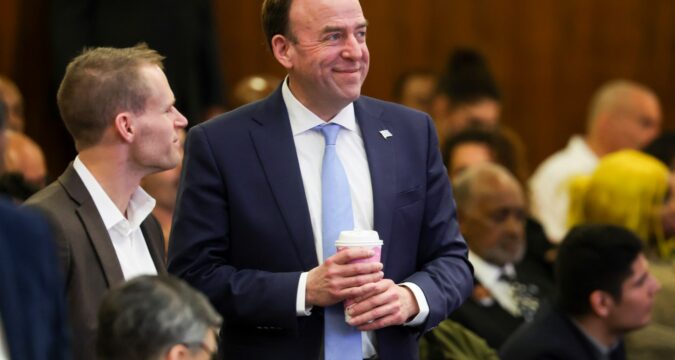
But, as they say in political circles, you need somebody to beat somebody. Preckwinkle’s opponent is Brendan Reilly, 54, who represents much of downtown Chicago as 42nd Ward alderman. Reilly is a City Hall veteran, first winning office in 2007, and has been a voice of reason on behalf of taxpayers and economic growth during the tumultuous period of Chicago politics following the retirement of Mayor Richard M. Daley in 2011.
Preckwinkle and Reilly met together with the editorial board last week and discussed the Tyler Technologies contract as well as other issues in the race. Preckwinkle acknowledged the fiscal pain the Tyler-related woes are causing taxing bodies but emphasized that other elected officials in Cook County had agreed to hire Tyler years before and had signed on at various stages when decisions had to be made on whether to stick with Tyler or find another vendor.
She pledged categorically that tax bills will be mailed in time for the first installment due April 1 of this year and that the Tyler problems were all solved. We will see.
Reilly said the original contract with Tyler was flawed and didn’t give the county enough opportunity to address the situation when things went awry or to penalize Tyler sufficiently when it didn’t meet deadlines. He pledged to amass a team of lawyers and technology experts to examine the system and Tyler’s abilities to continue maintaining it, which as of now is the plan despite the harsh criticism of the vendor by all the county’s elected officials.
That absolutely should happen regardless of who wins the primary in March.
Separately, Reilly has good ideas on how to reform Cook County’s land bank, which holds roughly 1,000 properties the county has accumulated via sales due to unpaid taxes. He wants to emulate what cities like Detroit have done by establishing an independent intergovernmental oversight agency that could think more strategically about how to turn those properties into economic development opportunities. That would require legislation in Springfield, for which he said he would lobby.
We agree with Reilly that the county could do far more to coordinate with state government and the city of Chicago, on the land bank and on other issues on which all those governmental bodies have an interest. Chicago is the economic engine of Chicago. A thriving Chicago means more tax revenue for the city, county and state. Elected officials should cooperate on ways to further that goal — without raising taxes.
On that score, Reilly promised not to raise the county’s base property tax levies, as Preckwinkle to her credit has done over her 15 years in the job. Should he win, we will hold him to that pledge.
Preckwinkle’s oversight of Cook County’s sprawling health system, by far the largest part of county government, has left the operation in good shape. We believe Reilly, the son of a former chief of medicine at Cook County Hospital, can continue with that good work.
Toni Preckwinkle has served the city of Chicago and Cook County ably throughout her long political career and done much to make life better for the unfortunate among us. She deserves great credit, and she has our gratitude.
But, as the Book of Ecclesiastes offered us, there’s a season for everything. The time has come at last for a new leader of the Cook County Board.
Brendan Reilly has our endorsement.
Submit a letter, of no more than 400 words, to the editor here or email letters@chicagotribune.com.

Gro-Low sumac a good choice for planting near sidewalk
A new sidewalk was installed in front of my house and there is a large, sloped area now that runs along the sidewalk. The installation of the sidewalk required some grading of the site. It is steeper than I care to mow, so I am considering a suggestion from a neighbor to plant Gro-Low sumac. What are your thoughts regarding this choice?
— Gary Jones, Grayslake
Your friend made a great suggestion for a low-maintenance shrub to use as a ground cover for your garden. It is a tough plant that I use for similar purposes. Gro-Low sumac (Rhus aromatica ‘Gro-Low’) is a selection of a fragrant sumac, made by Synnestvedt Nursery in Illinois. This plant reaches 2 to 3 feet tall and spreads to 8 feet wide. It can grow in poor, dry soil and tolerates road salt. Prune off any branches broken by snow piles and the plant will quickly fill back in. The spreading branches tend to root where they touch the soil and form a dense mat that will suppress weeds. This fast-growing, durable plant is a good choice to stabilize a bank and requires little maintenance. Gro-Low sumac struggles like most other plants if the planting bed consists of rock-hard subsoil. When grown in full sun, it has a good orange-red fall color. Fall color becomes more muted as shade levels increase. Though this plant is vigorous, it is not an invader. I have also had good luck planting container-grown Gro-Low sumac.
You did not describe your site, so I will provide some general recommendations. Gro-Low sumac performs best in full sun and tolerates partial shade, but will become less vigorous as the shade deepens. It responds well to pruning as needed to control its growth. It will likely creep onto your sidewalk in time and will need to be pruned. The shrub does not provide as much stability to a bank in deep shade. Mulch the new planting to help stabilize the soil and reduce watering as the plants become established. I like using shredded bark mulch. Rain and watering by sprinkler will cause some erosion unless there is a layer of mulch.
Creeping lilyturf (Liriope spicata) is another option to consider. This is an herbaceous ground cover with a grassy appearance that spreads and helps hold soil along a sidewalk. It is shorter than the Gro-Low sumac, but holds the soil and helps suppress weeds. Creeping lilyturf is also easy to grow and it grows well in sun and some shade. Simply mow it down in early spring before it starts to grow. Its lavender flowers in summer are a bonus.
For more plant advice, contact the Plant Information Service at the Chicago Botanic Garden at plantinfo@chicagobotanic.org. Tim Johnson is senior director of horticulture at the Chicago Botanic Garden.
https://www.chicagotribune.com/2026/01/31/grow-low-sumac-sidewalk-planting/

Home and studio of R. Harold Zook, ‘Hinsdale’s Frank Lloyd Wright,’ gets funding boost for preservation
As members of the Hinsdale Historical Society capped a year in which they celebrated the organization’s 50th anniversary, they received some good news in the form of a grant from Landmarks Illinois, which will help their efforts to preserve the R. Harold Zook Home and Studio.
“The society’s board of trustees is immensely grateful to Landmarks Illinois for its continued support of the society’s preservation work and for its countless preservation advocacy work not just here in Hinsdale but throughout Illinois,” said Alexis Braden, historical society president.
The grant, awarded in December, was for $2,500 from the Barbara C. and Thomas E. Donnelley II Preservation Fund for Illinois, which provides money “to preserve or protect significant structures and sites in Illinois that are under threat of demolition, in imminent deterioration, in need of stabilization, in need of structural or reuse evaluation or in need of evaluation for landmark eligibility,” according to Landmarks Illinois.
The money will be used to help the society’s efforts to get a National Register of Historic Places nomination and a building assessment of the home and studio of Zook, a renowned Chicago architect who lived in Hinsdale from 1889 to 1949 and was a force behind many notable structures there.
“R. Harold Zook is to Hinsdale what Frank Lloyd Wright is to Oak Park. Zook designed 80 homes and 12 municipal and commercial structures in Hinsdale alone during his time as an architect, and all are architecturally significant,” Braden said, calling him “one of the most prolific residential architects in the western suburbs.”
He also contributed to the village as a member of the Architectural Committee of the Hinsdale Plan Commission from 1932-49 and was “responsible for the village master plan in 1932 — adopting the Georgian style for our municipal and commercial buildings,” Braden said.
Zook also designed the Pickwick Theatre in Park Ridge and St. Charles City Hall, and in 1924 finished his home and studio on Oak Street in Hinsdale, she said.
The Pickwick Theatre, designed by renowned architect R. Harold Zook, on Dec. 6, 2022, in Park Ridge. Zook designed a number of structures in the western suburbs. (Armando L. Sanchez/Chicago Tribune)
That campus, now ensconced in Hinsdale’s Katherine Legge Memorial Park, consists of “a signature English Cotswold cottage-style residence, his architecture studio and a garden wall,” she said.
Suzanne Germann, director of reinvestment for Landmarks Illinois, said Zook had a very distinct style.
“It’s often called whimsical. It’s an English cottage style — textured masonry, roofs are very characteristic of him, bringing nature into his design,” she explained. “But he’s also influenced a lot of architects coming up after him, in Hinsdale specifically, and what’s been designed there as a nod to his work and the influence he’s had as a community. This was his home — he designed it for himself.”
Germann called the money a “seed grant” because of its small size. But it could lead to more resources down the road.
“Putting a building on the National Register puts them in a place to leverage other funding,” she said. “It also will help to spell out needs and wants, so when they go to other funders, they’ll have that in their pocket.”
A building assessment looks at overall condition and will help the historical society prioritize what needs to happen right away and in three years, she said, as the historical society wants to adapt the building so it can be turned into a community gathering house.
“I don’t know their plan specifically, but reusing the building and allowing them to reuse the interior, we always want to see that,” Germann said. “We want to see historic buildings in use and this is bringing the community in. It’s not for one owner. They are really trying to use it for community space. The best way to preserve (buildings) is to use them.”
The grant is just one way the historical society is raising money for the property. It’s already officially begun its Zook Legacy Campaign, a multimillion-dollar fundraising initiative hoped to enable them to transform the Zook Home and Studio into the “Zook Commons, a vibrant community gathering place with a museum, cafe and numerous multipurpose areas at Katherine Legge Memorial Park,” Braden said.
The exterior of architect R. Harold Zook’s studio on Jan. 28, 2026, at 5901 S. County Line Road in Hinsdale. A grant from Landmarks Illinois will help efforts to preserve the R. Harold Zook Home and Studio. (Josh Boland/Chicago Tribune)
“It will be a place where neighbors connect and groups can gather and learn. Zook Commons will serve Hinsdale neighbors and all patrons. We are fortunate to have nationally recognized and award-winning architect Michael Abraham as a society trustee. He is utilizing his immense talents to reimagine the interior spaces to transform the home for its many public uses.”
The society envisions public events featuring speakers and workshops that focus on wellness and community for people of all ages.
“Programming will cater to outdoor and recreation enthusiasts, writers, artists and even animal lovers — especially dog lovers,” Braden said. “Our patrons will also be able to gather in the cafe, where they can purchase premade pastries, sandwiches and coffee/teas while enjoying a warm atmosphere. The cafe will be dog-friendly with treats to welcome the park’s many four-legged friends.”
This isn’t the first time the historical society has earned a grant from the nonprofit organization. Back in 2005, the Zook Home and Studio was placed on Landmarks Illinois’ “Ten Most Endangered Historic Places List,” and after the structures were moved to the park, it received the Richard H. Driehaus Foundation Preservation Award for Advocacy, said Katie Crotty, historical society treasurer.
The 1924 R. Harold Zook house is moved in Hinsdale on May 24, 2005, from 327 S. Oak St. to 5901 S. County Line Road. (Antonio Perez/Chicago Tribune)
Moving the building to its home at Katherine Legge Memorial Park was a huge project. “During the move, the society was fortunate to see so many volunteers, architects and buildings come together to make this project a reality. We could not have done this without the significant donations from members of the community as well,” Crotty said.
“However, with 20 years down, the Zook Home and Studio is in dire need of updates or we fear they will be forever lost,” she added. “Over the past two decades, the society has worked tirelessly to maintain the buildings and to protect them from the elements. Even though the buildings have served as a mainstay and an exterior backdrop for countless photography shoots and picnics, the Hinsdale Historical Society’s goal is to open its doors and welcome people inside.”
Germann said Landmarks Illinois’ previous interaction with the historical society helped its grant application stand out.
“The Hinsdale Historical Society has been around for a long time and is a successful organization. I’ve been with Landmarks Illinois since 2004, so I remember Zook House and how much work the historical society did 20 years ago to save it,” she said. “They are still coming back to it 20 years later. As a historical society as a whole, they are very active in their community in telling their story, being involved and supporting historic buildings in their community, so overall it’s a successful organization.”
It’s the overall story of the group, which was founded in 1975 and now has nearly 200 members, along with their efforts 20 years ago that led to the grant.
A cedar shake roof on the home of renowned architect R. Harold Zook, at 5901 S. County Line Road in Hinsdale, on Jan. 28, 2026. (Josh Boland/Chicago Tribune)
“When a developer wanted to demolish it, the society and city stepped in to save it,” Germann said. “I called them the trifecta. They received a grant to film the move of the house and they won an award for advocacy, so they went through all our programs and achieved it all. They went through successfully and quickly, so that’s why I remember it. They were very involved.”
All Landmarks Illinois grants require a match and “buy-in” from the recipients. “Our grants are small — our heritage fund only gives up to $5,000 — so coming up with a $5 million project is hard for us” to help with, Germann said, so having an itemized budget is helpful.
As an example, she said Unity Temple in Oak Park underwent a $10 million or $15 million rehab, and her organization provided a grant to restore the sanctuary’s lighting — a $10,000 project. “Our board members were able to point to those light fixtures and say, ‘We did that.’”
The historical society’s multiyear Zook fundraising campaign is off to a good start, but they’re looking for more donors. “Every dollar counts,” Braden said.
But, she said, the society’s 50th anniversary boosted their confidence in the support of their neighbors. Braden called it “a testament that the community recognizes our work as a nonprofit to bring history to life.”
Melinda Moore is a freelance reporter for Pioneer Press.
https://www.chicagotribune.com/2026/01/31/hinsdale-zook-home-landmarks-grant/
Illinois’ Republican candidates for governor push crime as top issue despite data showing declines
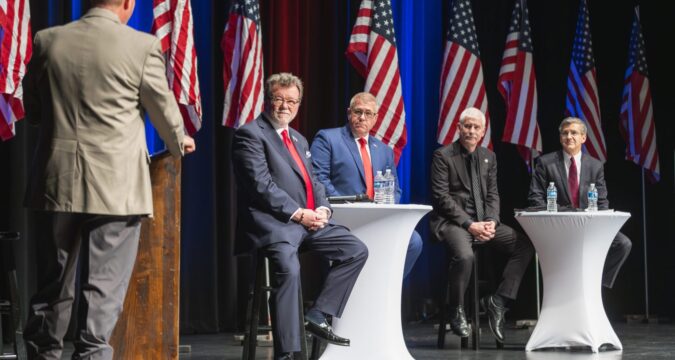
It was four years ago in May that Darren Bailey declared Chicago a “crime-ridden, corrupt, dysfunctional hellhole” as he and five rivals made crime the centerpiece issue in their race to be the Republican nominee for governor.
Based on statements from the four current GOP candidates for governor, including Bailey, who is seeking a second chance, not much has changed.
To be sure, Bailey, the unsuccessful 2022 GOP challenger to Democratic Gov. JB Pritzker, says he is moderating his tone about the city. But he and primary opponents Ted Dabrowski, Rick Heidner and James Mendrick still maintain crime is a top issue of their campaigns — and have recently added their support of Republican President Donald Trump’s aggressive immigration enforcement to the mix.
Yet statistics show that since that 2022 election, violent crime is down in Chicago and across the nation. That’s something even Trump, whom the GOP candidates pledge fealty to, has proclaimed. Just a little more than a week ago, the president declared, “America is safer than it has been in over a century,” as the White House cited data of declining murder rates in the nation’s biggest municipalities.
Trump has taken credit for the falling crime rates, attributing them to his deployment of federal agents to Democratic-run cities, even though Chicago Police Department data show the city ended 2025 with declines in most major crime categories — including murders and shootings — drops that began before Trump started his second term.
Regardless, the result has been a paradoxical narrative in the Republican primary in which candidates for Illinois governor loyal to Trump are campaigning against a crime wave he says no longer exists.
Chicago has been the biggest focus of attention for the GOP candidates.
In statistics Mayor Brandon Johnson has cited as evidence of progress, Chicago recorded 416 killings in 2025 — the city’s lowest homicide total in more than a decade — while shootings, defined as incidents in which at least one person was killed or wounded, fell by about one-third compared with 2019, according to department data.
Still, the GOP candidates don’t buy it.
“I don’t think crime has gone down,” said Heidner, a real estate and onetime-embattled video gambling operator from Barrington Hills. “People aren’t safe. They’re not safe. They’re getting killed. They’re getting robbed. They’re getting raped.”
“Liars use numbers. Crime has not come down,” said Mendrick, the DuPage County sheriff, who contends the method of calculating crime statistics has changed and that “gangbangers don’t call the police on each other, so none of those are being reported.” He adds that “medical technology” is saving the lives of drug victims, reducing drug-related crime statistics.
Dabrowski, a conservative activist from Wilmette who has made a career offering his opinions based on data, said that “after so many years of so much crime, a lot of people don’t report crimes anymore. … Massive numbers of crimes aren’t reported anymore because the police (don’t) come.”
SAFE-T Act echoes
Crime and the fear of violent crime have long been used by politicians as an issue to try to motivate the electorate. And a recent Emerson College poll conducted for WGN-TV may explain the GOP candidates’ primary messaging.
The survey of 1,000 likely voters, conducted Jan. 3-5, found crime ranked fifth behind the economy, health care, threats to democracy and immigration as the most important issue to voters.
But among likely GOP primary voters, it ranked third behind only the economy and immigration.
Rick Heidner, center, answers a question during a Republican Gubernatorial Candidate Forum hosted by the Tazewell County Republican Party in downstate Washington on Jan. 15, 2026. (Troy Stolt/for the Chicago Tribune)
In 2022, Republican governor candidates focused on the SAFE-T Act, the Safety, Accountability, Fairness and Equity-Today law, and its cashless bail provision known as the Pretrial Fairness Act — even before the law went into full effect on Sept. 18, 2023. Under the law, instead of holding people charged with crimes on cash bail amounts, judges weigh whether to detain someone pretrial based on whether they’re considered a flight risk or a danger to the public.
Bailey and other Republicans warned then that the law would end up exporting the violent crimes of Chicago to the suburbs and downstate.
During a 2022 speech in Peoria, Bailey contended “Chicago is living ‘The Purge,” a reference to a dystopian 2013 horror movie in which the government allows all crimes committed during a 12-hour period to be legal. Democratic leaders have turned “the West Loop into the Wild West” and “Chicago into the OK Corral,” the Republican said.
Now, with the SAFE-T Act in effect, the GOP candidates for governor are united in calling for its repeal, contending it has left citizens less safe and has decimated the morale of law enforcement.
“Crime is out of control. That’s because of the SAFE-T Act, which I vow to get rid of. Day one, SAFE-T Act is gone. Executive Order,” Mendrick told an audience at a Jan. 19 GOP candidate forum at an East Dundee gun shop — even though a governor has no power to overturn a state law with an executive order.
“I have a very simple answer for that,” Heidner said when asked by a reporter about the SAFE-T Act. “If you have money for bail or if you don’t have money for bail, I have a real easy way for you not to need bail. Don’t commit a crime.”
The GOP candidates point to high-profile individual cases where defendants have not been detained and go on to be accused of committing violent crimes, most notably a November incident aboard a Chicago Transit Authority Blue Line train in which a man with an extensive criminal background allegedly set a woman on fire in an apparently unprovoked attack while he was on electronic monitoring as a defendant in an aggravated battery case. The judge in the aggravated battery case had the option of holding the suspect, Lawrence Reed, in custody.
Ted Dabrowski answers a question during a candidate forum hosted by the Tazewell County Republican Party at Five Points in downstate Washington on Jan. 15, 2026. (Troy Stolt/for the Chicago Tribune)
Dabrowski, while supporting a repeal of the SAFE-T Act, acknowledged the Blue Line incident was an outlier. But he said there are still plenty of “very worrisome crimes” being committed in Illinois and that too many criminal suspects, like Reed, are not detained and instead are being released and able to commit more crimes.
“What I want to get to is not less crime. I want to get to safe city,” he said. “And I just think that more attention on prosecutors, more attention on the (sentences), making sure that they’re not letting repeated felons out all the time. That’s the big complaint.”
Potential changes unclear
Matthew McLoughlin, who has defended the elimination of cash bail as campaign coordinator for the Illinois Network for Pretrial Justice, said he believed the rhetoric of the GOP governor candidates seeking the law’s repeal “is being brought to the surface due to the Trump administration’s, you know, over the top, again, hyperbolic comments about what’s happening in Illinois that seem extremely detached from reality.”
In contrast to the governor candidates, he said, many Republicans more broadly are calling for changes to the Pretrial Fairness Act, giving judges more discretion to detain suspected criminals.
“There are many parts of the opposition that have recognized that they lost the debate about whether or not the money bond system was making our community safer,” McLoughlin said. “And they’re now talking about making changes because they know that they were wrong. And they know that they were making statements that were hyperbolic, meant to cause fear and were not based in fact.”
Despite favoring the SAFE-T Act when it was passed by the General Assembly, top Illinois Democrats, Pritzker and House Speaker Emanuel “Chris” Welch of Hillside, have expressed openness to proposed changes to the law. But as of now it’s unclear what those changes would entail.
Bailey, a wealthy downstate farmer, said that “it’s interesting” that Pritzker has suddenly become open to changing the law. But when asked why the GOP is zeroing in on the law when crime in places like Chicago has gone down, Bailey lamented how there are communities that are “struggling” to find people who want to become cops and for the “future for our children, our families and our businesses … it needs to stop dead in its tracks now.”
Darren Bailey, right, answers a question during a candidate forum hosted by the Tazewell County Republican Party at Five Points in downstate Washington on Jan. 15, 2026. (Troy Stolt/for the Chicago Tribune)
All four Republican candidates support ending Illinois’ “sanctuary state” status. And as all four seek a presidential endorsement, which helped Bailey win the 2022 primary, they also said they back Trump’s immigration enforcement efforts even as congressional Republicans express concerns over the actions of agents and the president himself has dialed back operations in Minneapolis after two U.S. citizens were shot and killed by federal agents in the last month.
Heidner, who backed Trump’s call to deploy the National Guard in Chicago over Pritzker’s objections — a move rejected by the U.S. Supreme Court — has gone so far as to say the president should invoke the Insurrection Act of 1807. The law would allow Trump to deploy the military and federalize the National Guard to suppress civil disorder.
Less than a week after the fatal shooting of Renee Good by a federal immigration agent in Minneapolis on Jan. 9, Heidner wrote on the social media platform “X,” “I support the First Amendment and the right to peacefully protest. However, the riots in Minnesota are unacceptable and this unlawful rebellion needs to end. I’m asking @realDonaldTrump to immediately invoke the INSURRECTION ACT and restore order in Minnesota!”
Despite explanations from the U.S. Department of Homeland Security that were widely at variance with video evidence of federal agents fatally shooting Alex Pretti on Jan. 24, and pending investigations into his death, Dabrowski quickly blamed Pretti, the “sanctuary” status of Minneapolis and comments by local and Illinois leaders critical of the enforcement actions as inciting violence.
“I find it interesting that the protesters on the streets of Chicago, along with Pritzker and Johnson, who otherwise oppose individual gun rights, have no problem with someone tracking federal officers in Minnesota for the purpose of impeding their enforcement operations while armed with a handgun,” Dabrowski said, though Pretti was legally carrying a firearm and there was no visual evidence of him brandishing it.
“The way to avert such tragedies with respect to federal law enforcement is to make your views known peacefully without crossing the line into illegally impeding their operations or resisting a lawful command when directed to stand down,” he said, though video and eyewitnesses have contradicted DHS’ contentions that Pretti was impeding agents’ operations.
James Mendrick answers a question during a candidate forum hosted by the Tazewell County Republican Party at Five Points in downstate Washington on Jan. 15, 2026. (Troy Stolt/for the Chicago Tribune)
Bailey said he believes issues such as federalizing military assets for immigration enforcement, as Trump attempted to do in Operation Midway Blitz in Chicago, were a result of actions by Pritzker and Johnson.
“It’s government’s role to protect the people. If a governor or a mayor refuse to protect the people, which JB Pritzker and Brandon Johnson are refusing to do, then it goes right up the line, so the president comes in and has the ability, I believe, to protect the people at whatever the cost is,” Bailey said.
Mendrick said he believed the state “is doxing” federal agents by following the TRUST Act, which prohibits state and local law enforcement from cooperating with federal authorities on civil immigration matters.
“It’s a flawed law. The only reason that law exists (is) so JB Pritzker can scream and yell about Donald Trump and say, ‘You’ve got to come through me. These are my people,’” Mendrick said.
In actuality, the TRUST Act was signed in August 2017 by Pritzker’s predecessor, one-term Republican Gov. Bruce Rauner.
https://www.chicagotribune.com/2026/01/31/illinois-republican-governor-primary-2026-crime/
Today in History: Doug Williams named Super Bowl MVP
Today is Saturday, Jan. 31, the 31st day of 2026. There are 334 days left in the year.
Today in history:
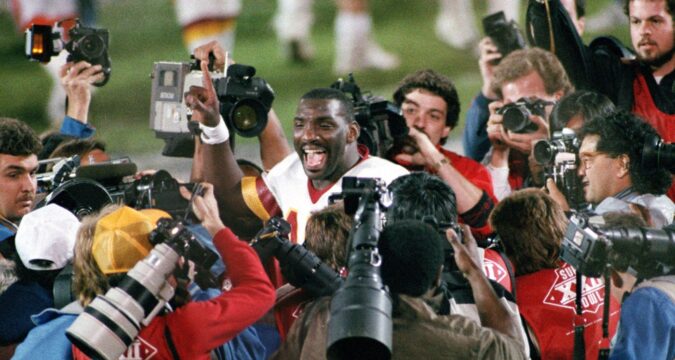
On Jan. 31, 1988, Doug Williams, the first Black quarterback to play in the Super Bowl, led the Washington Redskins (now Washington Commanders) to a 42-10 victory over the Denver Broncos and was named Super Bowl MVP.
Also on this date:
In 1863, during the Civil War, the First South Carolina Volunteers, an all-Black Union regiment composed of many who escaped from slavery, was mustered into federal service at Beaufort, South Carolina.
In 1945, Pvt. Eddie Slovik, 24, became the first U.S. soldier since the Civil War to be executed for desertion as he was shot by an American firing squad in France.
In 1958, the United States entered the Space Age with its first successful launch of a satellite, Explorer 1, from Cape Canaveral.
In 1971, astronauts Alan Shepard, Edgar Mitchell and Stuart Roosa blasted off aboard Apollo 14 on a mission to the moon.
In 2000, an Alaska Airlines MD-83 jet crashed into the Pacific Ocean off Port Hueneme, California, killing all 88 people aboard.
In 2001, a Scottish court sitting in the Netherlands convicted one Libyan and acquitted a second in the 1988 bombing of Pan Am Flight 103 over Lockerbie, Scotland. (Abdel Baset Ali al-Megrahi was given a life sentence but was released after eight years on compassionate grounds by Scotland’s government. He died in 2012.)
In 2020, the United States declared a public health emergency over the new coronavirus, and President Donald Trump signed an order to temporarily bar entry to foreign nationals, other than immediate family of U.S. citizens, who traveled in China in the preceding 14 days.
Related Articles
Today in Chicago History: Thousands — including Mayor Daley and Sammy Davis Jr. — say goodbye to Mahalia Jackson
Polly Cooper, an Oneida woman who helped save Washington’s army, is honored on $1 coin
Willie Round’s ‘Lawndale King’ recounts the history that MLK made in North Lawndale
Today in History: Sally Yates fired
Today in Chicago History: George Ryan leaves prison — 13 years after he declared a state moratorium on executions
In 2023, Boeing Co. delivered its last 747 wide-body jet to a customer, capping more than a half-century of production of the iconic jumbo jet.
Today’s birthdays: Composer Philip Glass is 89. Blues singer-musician Charlie Musselwhite is 82. Actor Glynn Turman is 79. Baseball Hall of Famer Nolan Ryan is 79. Actor Jonathan Banks is 79. Rock singer John Lydon is 70. Actor Anthony LaPaglia is 67. Actor Minnie Driver is 56. Actor Portia de Rossi is 53. Actor-comedian Bobby Moynihan is 49. Actor Kerry Washington is 49. Singer Justin Timberlake is 45. Country singer Tyler Hubbard (Florida Georgia Line) is 39. Musician Marcus Mumford (Mumford and Sons) is 39.
https://www.chicagotribune.com/2026/01/31/today-in-history-doug-williams-named-super-bowl-mvp/
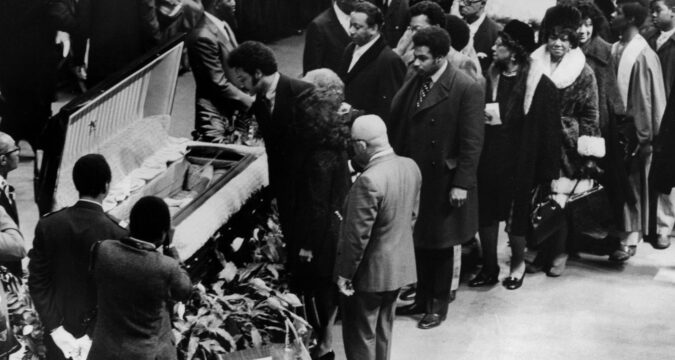
Today in Chicago History: Thousands — including Mayor Daley and Sammy Davis Jr. — say goodbye to Mahalia Jackson
Here’s a look back at what happened in the Chicago area on Jan. 31, according to the Tribune’s archives.
Is an important event missing from this date? Email us.
(Business) front page flashback: Feb. 1, 2023
A renovated Terminal 5 — that included 10 new gates and an additional 350,000 square feet — was unveiled at Chicago’s O’Hare International Airport in early 2023. (Chicago Tribune)
2023: O’Hare International Airport’s Terminal 5 reopened after a $1.3 billion renovation.
The terminal, which serves domestic and international flights, added 10 new gates, reconfigured customs facilities and a new baggage handling system.
The newly expanded Terminal 5 at O’Hare International Airport on Jan. 31, 2023, in Chicago. The expansion included 350,000 square feet of vaulted ceilings, natural light, and floor to ceiling high-performance glass offering an expansive view of the airfield. (Stacey Wescott/ChicagoTribune)
Weather records (from the National Weather Service, Chicago)
High temperature: 65 degrees (1989)
Low temperature: Minus 21 degrees (2019)
Precipitation: 1.52 inches (1914)
Snowfall: 9.5 inches (1914)
Mourners line up at Greater Salem Baptist Church in Chicago at 215 W. 71st St., for one of the three funeral services for Mahalia Jackson on Jan. 31, 1972. (William Kelly/Chicago Tribune)
1972: ‘Heaven came a little closer to Chicago.’ A visitation for gospel singer Mahalia Jackson, who died at Little Company of Mary Hospital in Evergreen Park on Jan. 27, 1972, was held at Greater Salem Baptist Church where she had been a parishioner for more than 40 years.
People lined up for blocks to see Jackson’s open casket, which was on-site from noon to midnight so “all the people who loved her (could) see her,” a church spokesman told the Tribune.
Among those attending funeral services at Arie Crown Theater for Mahalia Jackson are the Rev. Leon Jenkins, from left, pastor of Greater Salem Baptist Church; Joseph Jackson, who gave a eulogy; Mayor Richard J. Daley, entertainer Sammy Davis Jr. and Eleanor “Sis” Daley on Feb. 1, 1972. Editors note: this historic print shows some hand painting in the background. (Walter Kale/Chicago Tribune)
The next day, Daley, Sammy Davis Jr., Ella Fitzgerald, the Rev. Jesse Jackson and Coretta Scott King were joined by 6,000 mourners at the Arie Crown Theater inside McCormick Place for Jackson’s funeral. Aretha Franklin sang “Precious Lord, Take My Hand,” which was written by Chicagoan Thomas A. Dorsey, who was known as the father of gospel music.
Comiskey Park was shrouded in fog on Jan. 31, 2003. Chicago White Sox Chairman Jerry Reinsdorf and U.S. Cellular President and CEO John Rooney held a news conference that day to discuss an agreement that renamed the park U.S. Cellular Field. (José Moré/Chicago Tribune)
2003: Chicago White Sox executives announced the team sold the naming rights of Comiskey Park to a Chicago-based wireless company for $68 million over 20 years. The ballpark would become known as U.S. Cellular Field.
The stadium is known today as Rate Field.
A snowplow piles more snow on top of parked cars on Stockton Drive in Chicago on Feb. 1, 2015. (Nancy Stone/Chicago Tribune)
2015: Four years after the 2011 Groundhog Day snowstorm, Chicago experienced another blizzard — this one during Super Bowl weekend. Unlike in 2011, which forecasters predicted days in advance, this storm was harder to pinpoint. A total of 19.3 inches of snow fell, making it the fifth largest in Chicago history.
Chicago Public Schools had its third weather-related closing of the year. More than 2,000 flights at O’Hare International Airport were canceled with at least another 400 canceled at Midway Airport. At its peak, the storm caused about 51,000 ComEd customers to lose power due to a “pretty rough combination” of high winds and heavy snow, a ComEd spokeswoman told the Tribune.
About 1,200 customers of a local furniture store welcomed the snowfall because it meant their orders were free. Art Van Furniture’s weather-related promotion offered to refund buyers’ money if more than 3 inches of snow fell on Super Bowl Sunday. When more than 16 inches was recorded, Art Van returned $2.5 million to its shoppers.
2019: The lowest temperature ever recorded in Illinois was observed Jan. 31, 2019, when Mount Carroll (northwest of Chicago) checked in at minus 38 degrees.
Want more vintage Chicago?
Subscribe to the free Vintage Chicago Tribune newsletter, join our Chicagoland history Facebook group, stay current with Today in Chicago History and follow us on Instagram for more from Chicago’s past.
Have an idea for Vintage Chicago Tribune? Share it with Kori Rumore and Marianne Mather at krumore@chicagotribune.com and mmather@chicagotribune.com
https://www.chicagotribune.com/2026/01/31/january-31-chicago-history/
Cancelan evento de cartas Pokémon en controvertido santuario japonés tras protestas de China
Por MARI YAMAGUCHI
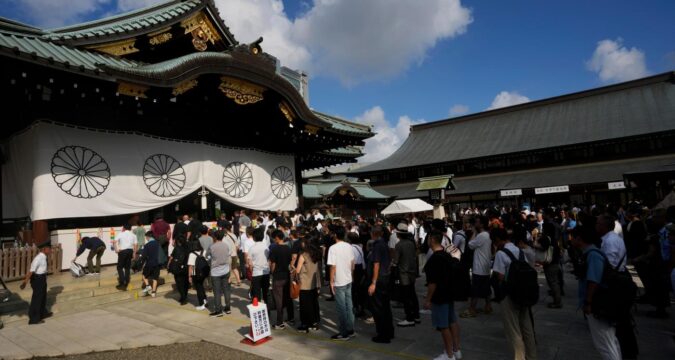
TOKIO (AP) — Un evento del juego de cartas de Pokémon previsto para el sábado en un polémico santuario dedicado a los caídos en combate en Japón fue cancelado y Pokémon Company se disculpó por publicar un anuncio de la convocatoria en su web tras la reacción negativa de China, a medida que se intensifican las tensiones entre los dos países.
El santuario Yasukuni honra a los 2,5 millones de caídos de Japón en la Segunda Guerra Mundial, incluyendo criminales de guerra condenados. Los países que fueron objeto de la agresión japonesa, especialmente China y las Coreas, ven las visitas al templo como una muestra de falta de arrepentimiento por el pasado bélico de Japón.
El evento provocó una fuerte reacción de la prensa estatal china, cuyos editoriales citaron comentarios enojados que eran tendencia en las redes sociales. En China, las redes sociales están muy controladas y el gobierno tiene mucho que ver en qué temas se hacen virales.
“Las marcas que ignoran la historia y hieren los sentimientos del pueblo chino acabarán siendo abandonadas por el mercado”, afirmó el Diario del Pueblo, el portavoz oficial del Partido Comunista, en su perfil en Weibo. “Las empresas relevantes deben asumir su responsabilidad social y no restar importancia al peso de la historia en nombre del entretenimiento”.
Pokémon Company, una filial del fabricante japonés de videojuegos Nintendo, emitió una disculpa tanto en japonés como en chino y afirmó que el evento había sido organizado de manera privada por un jugador certificado de cartas Pokémon, pero que la información se compartió en la web de la empresa.
“Era un evento que no debería haberse celebrado en primer lugar”, indicó la empresa, que añadió que compartió el anuncio “por error debido a nuestra falta de comprensión”. La cita se canceló y se eliminó la información al respecto de la web, agregó.
Citando su lema, “Conectar a través de Pokémon”, la compañía se comprometió a ser considerada con todo el mundo.
Japón se enfrenta a una escalada de las tensiones con China luego de los comentarios de su primera ministra, Sanae Takaichi, que en noviembre sugirió que Tokio podría intervenir si China emprende acciones militares contra Taiwán, una isla autónoma que Beijing reclama como suya. China ha respondido con represalias económicas y diplomáticas.
Takaichi solía visitar regularmente Yasukuni, aunque no ha vuelto a rezar al santuario desde que asumió el cargo en octubre.
___
El periodista de The Associated Press Huizhong Wu en Bangkok contribuyó a este despacho.
___
Esta historia fue traducida del inglés por un editor de AP con la ayuda de una herramienta de inteligencia artificial generativa.


