Category: News
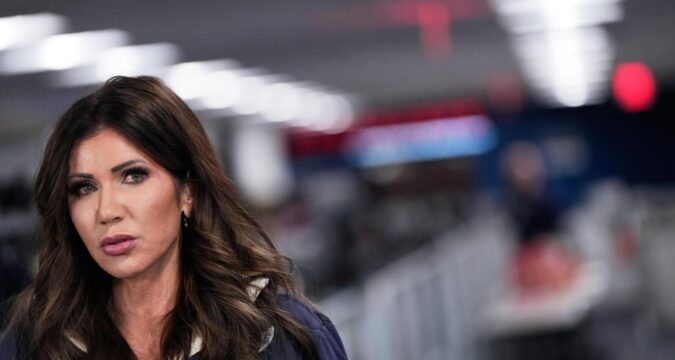
Every Homeland Security officer in Minneapolis is now being issued a body-worn camera, Kristi Noem says
WASHINGTON — Every Homeland Security officer on the ground, including Immigration and Customs Enforcement officers, will be immediately issued body-worn cameras, Secretary Kristi Noem said Monday.
Noem made the announcement on the social media platform X. She said the body-worn camera program is being expanded nationwide as funding becomes available.
“We will rapidly acquire and deploy body cameras to DHS law enforcement across the country,” Noem said in the social media post.
The news of the body cameras comes as Minneapolis has been the site of intense scrutiny over the conduct of immigration enforcement agents. There have been increased calls by critics of Homeland Security to require all of the department’s officers who are responsible for immigration enforcement to wear body cameras.
President Joe Biden ordered in 2022 that federal law enforcement officers wear body cameras as part of an executive order that included other policing reform measures. President Donald Trump had rescinded that directive after starting his second term.
https://www.chicagotribune.com/2026/02/02/homeland-security-officer-minneapolis-body-camera/

Bezos’ Blue Origin Pauses Space Tourism To Focus On The Moon
Bezos’ Blue Origin Pauses Space Tourism To Focus On The Moon
Authored by T.J.Muscaro via The Epoch Times,
Blue Origin decided to shift its focus from the edge of space to the Moon.
The company announced on Jan. 30 that it was pausing all of its suborbital commercial flights on its reusable New Shepard rocket for no less than two years in order to focus more resources on delivering a crewed lunar lander to NASA in time to meet Congress’s set deadline to establish a permanent human presence on or around the moon by 2030.
“The decision reflects Blue Origin’s commitment to the nation’s goal of returning to the Moon and establishing a permanent, sustained lunar presence,” the company said in a statement.
January saw Blue Origin achieve successes on both fronts. Its Blue Moon MK-1 lander Endurance was shipped from its assembly facility at Cape Canaveral to Johnson Space Center in Houston on Jan. 20 to undergo critical testing.
“Named for Ernest Shackleton’s legendary ship that journeyed to Earth’s South Pole, MK1 honors resilience under pressure,” Blue Origin said on X. ”That same spirit of perseverance guides our mission to the lunar South Pole.”
The MK-1 lander is the first phase of Blue Origin’s plan. Designed as an unmanned cargo transport, the company explained on its website that this first one will be used for what it called the “Pathfinder Mission.”
That will be a demonstration mission that proves out the critical systems of both the lander and the New Glenn rocket that will carry it. Along with propulsion, communications, and avionics, this mission must also demonstrate a precision landing within 100 meters of a chosen site. This was intended to occur before NASA’s uncrewed Human Landing System mission for the Artemis Program.
In its full form, the MK-1 will enter commercial service as a lunar cargo lander designed to remain on the lunar surface and provide affordable, safe, and reliable access to the Moon.
Rendering of Blue Origin’s Blue Moon MK-1 Lander on the lunar surface. Blue Origin
MK-2 will be a crewed landing craft built and operated in accordance with NASA standards.
NASA previously had an agreement with Elon Musk’s SpaceX to provide the lunar lander that would return humans to the surface for the first time since 1972 during the Artemis III mission. However, acting NASA administrator Sean Duffy reopened the mission to competition.
“We are in a race against China, so we need the best companies to operate at a speed that gets us to the Moon FIRST,” Duffy said on X.
“SpaceX has the contract to build the [Human Landing System], which will get U.S. astronauts there on Artemis III. But, competition and innovation are the keys to our dominance in space so @NASA is opening up HLS production to Blue Origin and other great American companies.”
NASA’s new full-time administrator, Jared Isaacman, agreed with his predecessor’s decision and visited Blue Origin’s facilities on Jan. 15.
Meanwhile, the 38th New Shepard mission was successfully completed on Jan. 22, carrying another six humans on an autonomous ride from a launch site in West Texas to above the Karman Line—the internationally-recognized boundary of outer space—and back.
The operation has carried more than 90 individuals and more than 200 scientific and research payloads over those commercial ventures, including the first all-female multi-person crew to fly to space.
The company noted in its press release that it has built a multi-year customer backlog, which it attributes to the rocket’s consistent, reliable performance and customer experience.
“We’re focused on continuing to deliver transformational experiences for our customers through the proven capability and reliability of New Shepard,” New Shepard senior vice president Phil Joyce said after the latest mission.
Tyler Durden
Mon, 02/02/2026 – 17:00
https://www.zerohedge.com/technology/bezos-blue-origin-pauses-space-tourism-focus-moon

Former Porter County Jail officer charged with battery involving inmate
A lieutenant at the Porter County Jail was terminated for violating the Porter County Sheriff’s Department’s use of force policy and has been charged with a misdemeanor battery count, officials said.
Cody Brzezinski, 33, of DeMotte, was charged with a Class A misdemeanor battery count, according to a release from Sgt. Ben McFalls, the department’s public information officer. Brzezinski had worked at the jail since 2019.
Porter County Sheriff Jeff Balon said in the release that his administration was made aware of a possible use of force violation in the jail by Bzezinski in January.
According to charging documents, a new arrestee was brought into the jail on Jan. 5 for processing and was “visibly impaired and had an odor of alcoholic beverages.” While attempting to follow an officer, the inmate, who was in wrist restraints, fell and hit his head against the jail administration door.
Brzezinski reported to intake to assist with the inmate, according to the charges, and told investigators he assisted the inmate, who appeared to be highly intoxicated and uncooperative, to his feet. The inmate, Brzezinski told investigators, moved toward him in a way Brzezinski perceived as threatening, so he took the inmate to the ground.
An investigator reviewing surveillance footage said the inmate “appeared to be unconscious” when he was placed in a restraint chair.
Former Porter County Jail Lt. Cody Brzezinski. (Porter County Sheriff’s Department/provided)
Brzezinski “openly admitted that he was never taught or had taught anyone to do a take down while someone was in police custody and handcuffs. And stated that there were no other factors or distractions that led up to the excessive force.”
Brzezinski was immediately placed on administrative leave and an internal affairs investigation began. Days later, Balon said in the release, the investigation concluded “and found Jail Lt. Bzezinski violated our Use of Force policy.”
Brzezinski was immediately terminated as a result of the investigation, Balon said, and all information was forwarded to the Porter County Prosecutor’s Office for review and possible charges.
“We have no further information to release regarding this incident,” McFalls said in the release.
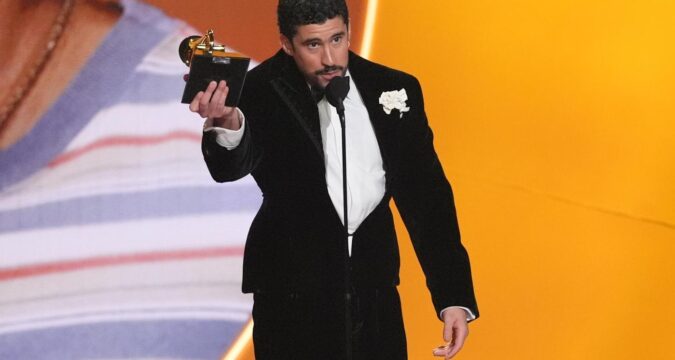
Bad Bunny triunfa en los Grammy 2026, un impulso en un momento difícil para los latinos en EEUU
Por MARIA SHERMAN
LOS ANGELES (AP) — El disco que ganó el álbum del año en los Premios Grammy 2026 la noche del domingo, “Debí tirar más fotos” de Bad Bunny, es el que muchos expertos de la industria etiquetaron como el más merecedor, y por lo tanto, parecía un candidato poco probable para la victoria.
Al mismo tiempo, los Grammy, un lugar que históricamente no se conoce por mensajes políticos fervientes, estuvieron llenos de celebridades que se pronunciaron contra el Servicio de Inmigración y Control de Aduanas (ICE por sus siglas en inglés). De los nueve premios televisados entregados a siete artistas diferentes, casi la mitad abordaron la inmigración en sus discursos de aceptación.
Ambos resultados parecen una sorpresa. Pero no es un accidente.
Unos Premios Grammy en evolución
Los Premios Grammy han sido criticados durante mucho tiempo por la falta de diversidad, con un historial de artistas de color, mujeres, raperos, latinos y de R&B ignorados en las categorías principales.
Sin embargo, en los últimos años, esa reputación ha comenzado a ser desafiada a medida que la Academia de la Grabación trabajó para agregar miles de nuevos votantes de diversos orígenes. Los resultados son notables: se añadieron 3.800 nuevos miembros a la Academia de la Grabación en 2025. De ellos, el 50% tiene 39 años o menos, el 58% son personas de color y el 35% se identifican como mujeres. El año pasado, todos los miembros votantes de los Latin Grammy fueron invitados a unirse a la Academia de la Grabación, aunque no está claro cuántos se convirtieron en votantes de los Grammy.
La ceremonia de los Grammy 2025 pareció reflejar estas dinámicas cambiantes también, ya que Beyoncé y Kendrick Lamar ganaron en categorías importantes. Y en 2026, esa tendencia parece haber continuado.
La vuelta de la victoria de Bad Bunny
Bad Bunny es uno de los pocos ganadores latinos del álbum del año, una lista corta que incluye a Santana en 2000 por “Supernatural” y a Stan Getz y João Gilberto por “Getz/Gilberto” en 1965.
“Hay tanta música latina increíble que ha sido pasada por alto y eso es parte de lo que hace tan hermoso este momento”, dice Vanessa Díaz, coautora de “P FKN R: How Bad Bunny Became the Global Voice of Puerto Rican Resistance” (P FKN R: Cómo Bad Bunny se convirtió en la voz global de la resistencia puertorriqueña). “Y por eso se siente como una victoria”.
De acuerdo con varios indicadores, “Debí tirar más fotos” fue el lanzamiento más reproducido de 2025 a nivel mundial. Pero no es solo una historia de éxito comercial, es una historia artística.
El álbum es una carta de amor a Puerto Rico que combina la tradición folclórica en géneros locales boricuas como la bomba, plena, salsa y música jíbara con estilos contemporáneos, reconocidos internacionalmente como el reggaetón, trap y pop electrónico. Esa combinación de lo nuevo y lo viejo es algo que la Academia de la Grabación ha celebrado históricamente, te estamos mirando, ganchos retro de Bruno Mars, pero ser reconocido por un lanzamiento completamente en español es un territorio inexplorado.
El álbum también es político, pero sus mensajes no son exclusivos de la identidad puertorriqueña o incluso latina, dice Albert Laguna, profesor asociado de etnicidad, raza y migración y estudios americanos en Yale. “Las letras de este álbum se alinean con luchas globales”, dice. Toma, por ejemplo, “Lo que le pasó a Hawaii”, un grito de guerra por la autonomía cultural en una era de neocolonialismo.
Bad Bunny ganó con un álbum que define su carrera en el año de su elegibilidad, a diferencia de la victoria de “Cowboy Carter” de Beyoncé en 2025, que algunos vieron como un intento de la Academia de la Grabación de corregir el rumbo después de no otorgarle el premio principal en años anteriores, como en 2017 cuando “Lemonade” fue nominado, o en 2023 cuando “Renaissance” fue elegible.
En el caso de Bad Bunny, la Academia de la Grabación está encontrando el momento de la cultura pop donde está, celebrando a un artista en el pico de su popularidad: la próxima semana Bad Bunny actuará en el espectáculo de medio tiempo del Super Bowl, un evento que se está preparando para ser un momento histórico para la cultura latina.
También es un poderoso reconocimiento de sus talentos en un momento en que algunas comunidades han expresado ansiedad por incluso hablar español en ciertos espacios públicos en Estados Unidos en medio de un creciente sentimiento antiinmigrante y redadas.
“Mucha gente siente que este es un momento tenso, es un momento difícil. Y aquí hay alguien que nos está dando un lenguaje sonoro para narrar este presente complejo”, dice Laguna. “Hay placer, en la crítica política, que la música hace posible de una manera hermosa. Y creo que eso es muy bienvenido”.
Sentimientos anti-ICE en el escenario
Las posturas anti-ICE permearon todos los rincones de los Grammy del domingo a medida que la aplicación de la ley de inmigración se vuelve más estricta en Estados Unidos.
Durante la transmisión de CBS, Bad Bunny, Billie Eilish y la ganadora del Grammy por primera vez Olivia Dean usaron su tiempo en pantalla para enviar un mensaje. “Nadie es ilegal en territorio robado”, dijo Eilish. “(Expletivo) ICE”.
“Estoy aquí como nieta de un inmigrante”, dijo Dean. “Soy un producto de valentía, y creo que esas personas merecen ser celebradas.”
Pero los comentarios en realidad comenzaron en la Ceremonia de Premiere no televisada, en la que se entregaron 86 Grammy.
Allí, Shaboozey aceptó su primer Grammy con lágrimas en los ojos. “Quiero agradecer a mi madre… una inmigrante en este país”, dijo.
“Los inmigrantes construyeron este país, literalmente, de hecho. Así que, esto es para ellos”, concluyó. “Gracias por traer su cultura, su música y sus historias”.
Kehlani hizo lo mismo: “Voy a dejar esto y decir, (expletivo) ICE”.
Tras bambalinas, SZA maldijo de manera similar a ICE y enfatizó la importancia de poder “difundir ayuda mutua”.
“Tengo miedo”, dijo Gloria Estefan tras bambalinas después de ganar un premio. “Hay cientos de niños en centros de detención. … No reconozco mi país en este momento”.
Un precedente histórico
De las celebridades que eligieron ser vocales con su mensaje pro-inmigración, las declaraciones de Bad Bunny se sintieron particularmente conmovedoras. Poco después de bromear con el anfitrión de los Grammy Trevor Noah sobre la complicada relación de Puerto Rico con Estados Unidos (usó comillas al explicar el estatus de la isla como parte de Estados Unidos, una relación descrita como un estado libre asociado, pero que muchos ven como la colonia más antigua del mundo) ganó el premio al álbum de música urbana y dedicó su discurso al momento político actual.
“Antes de dar gracias a Dios, voy a decir ICE fuera”, dijo Bad Bunny. “No somos salvajes, no somos animales, no somos extranjeros. Somos humanos y somos estadounidenses”.
Los términos “animales” y “extranjeros” reflejan directamente el lenguaje que el presidente Donald Trump ha usado para describir a los migrantes, ya que su administración expande dramáticamente los arrestos de inmigración a nivel nacional.
Bad Bunny ha sido vocal en su oposición a Trump y sus políticas.
También mencionó en una entrevista con i-D Magazine el año pasado que las preocupaciones en torno a las deportaciones masivas de latinos influyeron en su decisión de no hacer una gira en el territorio continental de Estados Unidos. Cientos de personas han sido detenidas en Puerto Rico mismo desde que comenzaron los arrestos a gran escala a finales de enero de 2025.
El uso de “salvaje” por parte de Bad Bunny en su discurso, también, tiene un precedente histórico: España cedió Puerto Rico a Estados Unidos después de la Guerra Hispanoamericana en 1898 y las caricaturas políticas de la época frecuentemente representaban a los puertorriqueños como racialmente inferiores, pobres y sin educación, necesitados del apoyo del Tío Sam.
En ese contexto, su victoria se siente particularmente significativa.
“Nuestras comunidades están siendo atacadas. Estos vientos ahora que se sienten como una celebración del idioma español, que está siendo literalmente criminalizado, estos vientos, ahora, para una comunidad que está siendo atacada a un nivel tan profundo — es un poco de luz”, dice Díaz. “Es un poco de fe que todavía podemos dejar huella de nuestro lugar aquí”.
___
Esta historia fue traducida del inglés por un editor de AP con la ayuda de una herramienta de inteligencia artificial generativa.
“F**k ICE!”: Awards Season Exposes ‘Spoiled, Entitled, Reality-Denying Tyrants’
“F**k ICE!”: Awards Season Exposes ‘Spoiled, Entitled, Reality-Denying Tyrants’
Authored by James Howard Kunstler,
The political grandstanding started way back in 1973 when the irascible Marlon Brando stayed home from the Academy Awards but sent an Apache princess, one Sacheen Littlefeather, to the podium to decline his award (Best Actor for The Godfather) on account of the 71-day standoff at the Pine Ridge Indian Reservation in South Dakota between federal agents and Oglala Lakota activists who had seized the little town of Wounded Knee.
After that, political “statements” at awards ceremonies of all kinds became modish, then obligatory, and now in the age of Lefty-left Woke Jacobin activism, all you get is one denunciation after another of the monster who lives in their heads: ChrumpChrumpChrump. Cue the audience of fellow “stars” for the also obligatory standing-O, which is really a test to see if any among them dare not join in the hosannahs — so they can be anathemized.
You are seeing sheer ritual performance by performers, the highest perq of stardom being the approbation of their peers, fellow performers — nevermind the lowly gorks out in Flyover Land who “consume” the products of pop culture. This is cliché narcissism-on-parade, of course, and is now so completely institutionalized in the pop culture industries that seemingly all actors, musicians, dancers, mimes, comics, and literary figures must act-out an activist fantasy or face the pretty extreme punishment of being run out of their business.
It’s all fake and pathetic, and the more they do it, the more their various culture industries suffer — to the point now that feature production in Hollywood was down over 16-percent in 2025. It’s dying in a self-reinforcing doom-loop. The reason is no secret, but it is dangerous to speak of it: the management of our “sense-making” institutions — movies being an important one — has been taken over by women (and womanish men) acting out Cluster-B psychodrama fantasies obsessively attacking “the patriarchy” — by which they mean (but cannot say) civilization itself, the thing sedulously built by men.
The latest wrinkle in this tragic saga is the psychodrama over ICE, the men tasked with finding and deporting people who came into the country illegally. The Cluster-B women mis-direct their nurturing instincts to rescue this politically-designated “oppressed minority,” overlooking the fact that not a few of these illegal aliens turn out to be murderous psychopaths. Conveniently, too, the illegal aliens also happen to be a very useful device for the Democratic Party to pad the census and provide illicit votes, all to keep the party in power and sustain its rackets.
President Trump completes the doom-loop circle because he is the mythic figure who prompts all the anxiety behind the “mass formation” phenomenon we are witnessing. Mr. Trump is patriarchy-in-action, so he must be destroyed by the goddess-heroines of show business. The goddess-heroines seem to believe they are ushering-in a Utopia of Nurture in which no oppressed minority will be left behind. That fantasy happens to intersect with the leveling fantasies of Karl Marx and his apostles, the mentors of the obscenely-rich denizens of Hollywood so eager to abolish obscene riches. So, you see how either stupid, or mentally-ill, or both, the people in show business can be.
Last night’s awards extravaganza was the Grammys, for music.
The anti-ICE ritual flared in full effulgence with Song of the Year winner Billie Eilish – costumed not to look as a woman but rather like a piece of luggage – bathed in applause for heroically muttering, “Fuck ICE,” after picking up her little golden gramophone statuette. Perfect.
Few musicians can make a dime anymore, and a very few of those few make billions while the rest starve. The record album was the supreme art-form of my generation, and it is long gone. Record labels don’t continue to exist when there are no records. Musical acts don’t get contracts and don’t get paid. Nobody listens to FM radio anymore and so nobody is introduced to new musical talent. Live music on the small club scale is dying because the drinks cost too much. Does anyone still have a quaint old home stereo, a gigantic wall-of-sound, with four-foot-high speakers? All I’ve got is a seven-inch Bluetooth speaker.
The lively arts are dying and the remaining lively artists are assisting with the suicide.
Not far in the future, the motion picture might be a dead letter. Technology marches on.
Immersion in human experience depicted on a silver screen, using the techniques of dramaturgy, will be supplanted, we’re told, by video games that put you immersively into “a world” where a story is spinning that you can now act-out a role in.
You might see how that would entice an awful lot of people to check-out of reality altogether — and if that happens, you might well ask: who is left to run civilization?
The answer you get will be: artificial intelligence, AI. Oh, great.
But then, is it running civilization for all those pathetic people losing themselves in immersive video games? Or just for AI itself? And where does that take the human race?
Personally, I don’t expect it to work out that way. If I were disposed to investing money in the entertainment business, I’d build a theater for puppet shows.
That’s the level our civilization-destroying antics are taking us to, with the Democratic Party leading the way.
Tyler Durden
Mon, 02/02/2026 – 16:20
https://www.zerohedge.com/markets/awards-season-exposes-spoiled-entitled-reality-denying-tyrants

Chicago’s Metropolitan Capital Bank becomes first U.S. bank failure of 2026
For the second year in a row, a Chicago bank became the first in the nation to fail.
Metropolitan Capital Bank & Trust, a so-called Universal Bank that focused on small- to medium-sized businesses, was closed Friday by the Illinois Department of Financial and Professional Regulation, citing “unsafe and unsound conditions and an impaired capital position.”
The Federal Deposit Insurance Corporation was appointed as receiver and entered into a purchase agreement with Detroit-based First Independence Bank, which reopened the failed bank under a new banner Monday, regulators said.
“We want to be clear that no depositor will lose any money as a result of this action,” Susana Soriano, acting director of IDFPR’s Division of Banking, said in a news release.
Metropolitan Capital Bank & Trust had $261 million in assets and total deposits of $212 million. First Independence Bank agreed to assume “substantially all deposits” and purchased $251 million of the failed bank’s assets, according to the FDIC, which will retain the remaining assets for later disposition.
The FDIC estimates the failure will cost its Deposit Insurance Fund about $19.7 million, but the actual cost will change as the retained assets are sold, the agency said.
Located at 9 E. Ontario St. in the River North neighborhood, Metropolitan Capital Bank & Trust opened in 2005. Founded as a Universal Bank, the mission was to provide a broad array of financial services, including commercial, private and investment banking, on a single platform. On its website, Metropolitan claimed to be the only boutique Universal Bank in North America focused on small- to medium-sized businesses and their founders.
First Independence Bank, a state-charted commercial bank, was founded in 1970 with the mission to be a “beacon for capital accumulation” by delivering financial services to underserved and minority communities in the Detroit area. It is the only African American bank headquartered in Michigan, according to the bank’s website.
“First Independence Bank is well-positioned to continue essential banking services for Metropolitan Capital Bank & Trust customers,” Soriano said in the release.
Reached by phone, a First Independence Bank spokesperson declined to comment Monday.
Chicago also had the dubious honor of having the first of only two bank failures nationwide last year. Pulaski Savings Bank was closed by the Illinois Department of Financial and Professional Regulation in January 2025, and its deposits and assets were assumed by Des Plaines-based Millennium Bank.
The Santa Anna National Bank in Texas failed in June 2025, according to the FDIC.
Before that, Chicago went nearly a decade without a bank failure. But in 2017, two Chicago banks failed, including one that imploded in politically connected scandal.
Seaway Bank and Trust, a former African American-owned Chicago bank, was closed by regulators and acquired by State Bank of Texas in January 2017.
In December 2017, Washington Federal Bank for Savings, a century-old Bridgeport-based savings association, collapsed amid a $31 million embezzlement scheme and was closed by federal regulators.
Royal Savings Bank of Chicago bought Washington Federal’s insured deposits and took over its two locations in the Bridgeport and Little Italy neighborhoods.
Washington Federal had at least $66 million in bad loans on its books when regulators took control of the bank. The embezzlement scheme led to criminal charges against 16 defendants, including high-ranking bank officers and former Chicago Ald. Patrick Daley Thompson, who was forced to resign from City Council after being convicted of lying to regulators about loans he received from the now-shuttered bank.
John Gembara, 56, CEO and president of Washington Federal, whose grandfather launched the bank in 1913, took his own life in the home of bank customer Marek Matczek, where he had been staying, less than two weeks before the bank’s closure, according to a medical examiner’s report.
https://www.chicagotribune.com/2026/02/02/chicago-metropolitan-bank-failure/
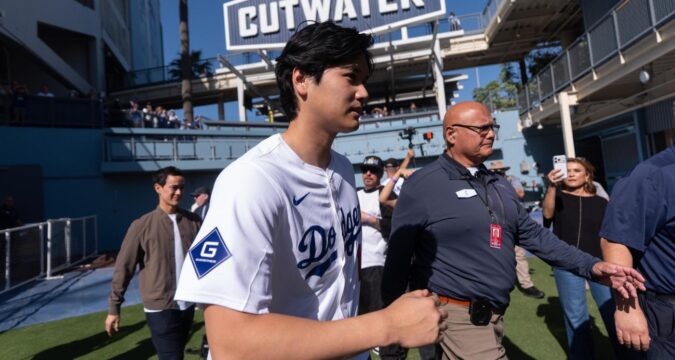
Aumento salarial en MLB se desacelera a 1,4% en 2025, pero alcanza récord de 4,7 millones de dólares
Por RONALD BLUM
NUEVA YORK (AP) — La tasa de crecimiento del salario promedio en las Grandes Ligas se desaceleró al 1,4% el año pasado al establecíe un récord promedio de 4.721.393 dólares, según las cifras finales de la asociación de jugadores.
El aumento fue el más pequeño desde que el promedio cayó en cuatro temporadas consecutivas antes de 2022. El promedio subió un 2,9% en 2024 a 4.655.366 dólares después de incrementos del 7,2% en 2023 y del 14,8% en 2022, tras un cierre patronal de 99 días que condujo a un acuerdo de negociación colectiva de cinco años.
Después de disminuir a 3,68 millones de dólates en 2021, un año después de la temporada acortada por la pandemia de coronavirus, el promedio de la MLB ha aumentado un 28,3% en las primeras cuatro temporadas del acuerdo laboral actual, un promedio anual del 7,1%. El acuerdo actual expira el 1 de diciembre y parece probable otro cierre patronal.
Las cifras del sindicato se basan en los salarios de 2025, bonos ganados y partes prorrateadas de bonos por firmar para 1.046 jugadores en las listas activas y listas de lesionados al 31 de agosto, antes de que las listas activas se ampliaran para el resto de la temporada.
MLB aún no ha finalizado su promedio de 2025. Sus cifras difieren ligeramente debido a la metodología.
El promedio cada año es más alto en el día de apertura, pero disminuye durante la temporada a medida que los veteranos con salarios más altos son liberados y reemplazados por aquellos con menos tiempo de servicio.
Los jugadores con menos de un año de servicio en las grandes ligas promediaron 822.589 dólares, según el sindicato, y aquellos con uno a dos años promediaron 1.179.192 dólares.
Entre los jugadores con dos a tres años que eran elegibles para el arbitraje salarial, el promedio fue de 1.833.386 dólates, mientras que aquellos en esa clase de servicio no elegibles promediaron 1.374.760 dólares. El 22% superior de la clase por tiempo de servicio es elegible para arbitraje.
Los promedios entre otros en los años elegibles para arbitraje fueron de 3.273.039 dólares para el grupo de más de tres años, 3.932.847 dólares en el grupo de más de cuatro años y 8.019.748 dólares en el grupo de más de cinco años, un año de tiempo de servicio antes de la elegibilidad para agente libre.
El promedio subió a 9.649.380 dólares para jugadores de seis a siete años y alcanzó su punto máximo en 22.034.231 dólares para jugadores de 11 a 12 años antes de disminuir a 13.703.052 dólares para los seis jugadores con 15 o más años de servicio en las mayores.
___
AP MLB: https://apnews.com/hub/mlb

2026 in Lincolnwood: Marriott dual-brand hotel coming former Purple Hotel site and part of Proesel Park to get $1.5M makeover.
The 2026 outlook for the village of Lincolnwood is expected to not only bode well for the town – with Proesel park renovations and addition of bike lanes on Pratt Avenue – but also the region, with construction of a new hotel and plans for Lincolnwood Town Center mall.
Hotel construction at District 1860
Lincolnwood Village Manager Anne Marie Gaura said a new, five-story, dual-brand Marriott hotel, featuring 152 rooms in SpringHill Suites and Residence Inn, is expected to open at the north end of District 1860. The up to $175 million mixed-used District 1860 development sits on 8.25 acres at the corner of Lincoln and Touhy avenues.
Developed by Chicago-based Tucker Development, District 1860 includes 299 luxury apartments and 85,000 square feet of commercial space which now includes Mia Francesca, Fatpour and Fat Rosie’s restaurants. An Amazon Fresh grocery store had also been planned at the site, but the fate of that is unclear amid news last month that Amazon was closing existing stores across the Chicago area – and nationwide – as of Feb. 1, including in Morton Grove and Norridge.
“We’re very excited to welcome a Marriott hotel to the village of Lincolnwood,” Gaura said, “which will serve a great need in the village.”
Dual-branded Springhill Suites and Residence Inn hotel, by Marriott, remains under construction Jan. 28, 2026 at Touhy and Lincoln avenues in Lincolnwood. The hotel is expected to open, at the site of the District 1860 development, between April and June. (Troy Stolt/for Pioneer Press)
The new hotel, managed by Lakhani Hospitality, will be the first in the village since the closing of the Purple Hotel, a Hyatt-brand hotel formerly on that site.
Lincolnwood Community Development Director Patrick Ainsworth told Pioneer Press that construction of the new dual-branded hotel began in 2023. It is expected to open sometime between April and June, though no date has been set for a grand opening, he said. Ainsworth said the hotel will bring 30 new permanent jobs to Lincolnwood, and net the village about $200,000 in new tax revenue this year.
“The Village also finds that there will be a positive impact to the local businesses with hotel guests visiting the restaurants and shops in the immediate area while staying within Lincolnwood,” he stated.
Henry A. Proesel Park renovation
The village is planning a major renovation to the southern portion of Proesel Park this year, Gaura said, at a price tag of $1.5 million. The village received a $600,000 Open Space Lands Acquisition and Development grant from the Illinois Department of Natural Resources for the project, which will include upgrading all of the amenities in the park.
The three tennis courts will be upgraded, with one court converted to two smaller pickleball courts requested by residents, Gaura said. The sand volleyball court, the two full basketball courts as well as the inline skate park will be refreshed, and the asphalt pedestrian pathways will be removed and rebuilt. Additionally, the playground will be updated to be universally accessible for children.
“This is very significant to continue the quality of the park,” Gaura said.
The park will close for construction in March, she said, with an anticipated reopening in late fall.
Lincolnwood Fest, planned for July 23-26, 2026, which is held at the park, will be moved to another area at Proesel Park to accommodate the carnival during construction.
“We will have a pause for one year for the car show,” Gaura said. “But, we’ll continue to hold the fest with a little different layout, working around the construction and keeping everyone on the north end of the park.”
She said the village has budgeted the remaining funds necessary for the park renovation in its capital spending plan for the Parks and Recreation Department. In addition, she said the village will be using some of the money donated by Barry and Jill “Taffy” Berger. In 2023, the former Lincolnwood residents committed $2 million in donations to the village over seven years.
Guara explained that summer camps will continue this year at Proesel Park in partnership with a local school district, and the park’s aquatic center is not expected to be impacted this summer by the construction.
Lincolnwood Town Center mall
In December, Prairie Ridge Development and Xroads Real Estate Advisors purchased the 35-year-old mall and surrounding property for an estimated $12.3 million. Village leaders say the 31-acre property, at the intersection of Touhy Avenue and McCormick Boulevard, is primed for redevelopment. https://www.chicagotribune.com/2026/01/15/lincolnwood-town-center-mall-in-lincolnwood-sold/
“The village is very excited to see an entity that is investing in the mall,” Gaura said. “There’s been a severe decline in the number of businesses operating in the mall so to have an established developer that is investing in the mall is great for the community.”
Lincolnwood Town Center mall, in Lincolnwood, was sold in 2025. The new owners are coming up with plans for redevelopment, which Lincolnwood leaders hope included retail/residential mixed use. (Pioneer Press file)
Business occupancy rates have fallen below 50% in the mall, the village manager said. Although no plans have been submitted by developers as of yet, village leaders proactively adopted a comprehensive plan in 2022 for the once-bustling shopping center. Gaura said village leaders will likely consider a tax increment financing agreement for the area to incentivize redevelopment.
Pratt Avenue bike lanes
The village plans to repave Pratt Avenue and add nearly two miles of bicycle lanes between Lincolnwood Drive and McCormick Boulevard.
“This is the village’s first uninterrupted east-west bikeway,” Gaura said, adding it will connect with the Valley Line Trail, and the Union Pacific Recreation Path and Centennial Park Trail.
“This is a significant way to protect the bicyclists,” she said.
The bike lanes will be delineated on the roadway with lines, not barriers, and construction will begin in early spring, Gaura explained.
Revitalization at Devon and Lincoln avenues
Gaura said the village is still working on revitalization of the Devon-Lincoln Tax Increment Financing plan.
“In 2026, we’re working with our economic development commission in creating programs that will incentivize business to invest in that area,” Gaura said.
The triangular-shaped TIF property is bordered by Proesel Avenue and Lincoln Avenue to Devon Avenue.
Lead service-line replacement
Like many other area towns, Lincolnwood is in the process of extensive lead service line replacements. Gaura said 13% of the total lead service lines — or 151 homes — were replaced in 2025.
“We have been very aggressive and we have a formalized program for replacement,” she said.
The village received a $6.2 million, zero-interest loan from the state to use over a five-year period to replace lead service lines to about 1,000 homes in the village.
According to the U.S. Environmental Protection Agency, homes built before 1986 may have lead pipes that connect the home to the water main and lead can enter drinking water when these pipes corrode over time.
Elizabeth Owens-Schiele is a freelancer.
https://www.chicagotribune.com/2026/02/02/marriott-hotel-coming-to-lincolnwood-and-proesel-upgrades/

Aurora to kick-off Black History Month with baseball legend meet-and-great
The city of Aurora will be hosting a meet-and-greet with former Negro League baseball player Dennis Biddle to kick-off Black History Month.
The event will showcase Biddle’s traveling Negro League Baseball Museum and offer memorabilia — such as autographed baseballs, posters, calendars and bats — to those who donate, according to a news release. Biddle will be presented with a proclamation by the city honoring his contributions to the game of baseball and his efforts to educate the country about the Negro Leagues.
The meet-and-greet is set to take place at 6 p.m. on Friday, Feb. 6, on the third floor of the David L. Pierce Art and History Center at 20 E. Downer Place in downtown Aurora, the news release said. City officials are inviting members of the public to come meet Biddle, take photos with him and learn about the history behind the Negro Leagues.
Biddle, who was born in 1935, graduated from high school at the age of 17 to pursue his dream of playing professional baseball, city officials said in the news release.
He joined the Chicago American Giants of the Negro Leagues as a pitcher and finished his rookie season with a record of 15-3, according to the news release. That year, Biddle earned the nickname of “The Man Who Beat The Man Who Beat The Man” for beating Gerald “Lefty” McKinnis, who in his career beat the legendary Satchel Paige, the news release said.
Biddle pitched one more year in the Negro Leagues before being asked by the Chicago Cubs to try out, but on the first day of spring training, he broke his leg while sliding into third base, ending his baseball career, city officials said in the news release.
Today, he lives in Milwaukee, Wisconsin, and travels the country speaking at schools, colleges and military bases about the history of the Negro Leagues, according to the news release.
The city of Aurora is hosting the meet-and-greet in partnership with Aurora Public Art; Ald. Will White, at-large; Ald. Edward J. Bugg, 9th Ward; and Community Advocacy Awareness Network Director Mary Fultz, according to the news release.

Burl brings ‘farmer-driven’ dining, Midwestern flair, to Evanston restaurant scene
Why name a fine-dining restaurant after the irregular wooded knots that jut out of a tree?
Walking into Burl, which opened Friday near Evanston’s Central Street corridor, you might pick up on an arboreal theme that manifests itself in the many wooden fixtures with curved edges. You would certainly notice Burl’s domed oven and the nearby open-flame grill.
“The obvious answer is that it’s a nod to our wood-fired concept,” said Rachel Canfora-Carlin, who founded Burl with her husband, Tom Carlin.
“But we have some analogies as well.”
One version uses Burl’s peculiar location on a side street off of Central Street, what Canfora-Carlin calls an “offshoot” from the north Evanston retail district.
Her other analogy views the restaurant as an Evanston branch of the chef-driven Chicago dining scene, in which the pair met.
Either way, the wooden metaphors hint at a deeper aim, what Carlin calls a sense of place. For Burl designs its menu based on the output of the Midwestern farmers whom Carlin has befriended over the years.
It’s “farmer-driven” cuisine, Canfora-Carlin insists, not farm-to-table. Many chefs will approach farmers with a list of ingredients they want for their menus. Not so for Burl.
“It’s a different kind of conversation, where Tom will go to the farmers and be like, ‘What do you need us to buy from you,’ so that your farm can eliminate more waste, become a little bit more sustainable and just have them make money, to be honest,” she said.
Tom Carlin and Rachel Canfora-Carlin pose for a portrait at Burl, their new restaurant in Evanston, on Thursday, Jan. 29, 2026. The pair, who now live in Evanston, met while working at Publican Quality Meats in Chicago. (Shun Graves/for Pioneer Press)
And thus the resulting menu has a distinct Midwestern flair.
Take the fish fry ($25), an allusion to the Friday tradition in Wisconsin that Canfora-Carlin said evokes a “supper club vibe.” Burl’s version uses walleye. Or for another freshwater fish, order the lake trout ($30), currently sourced fresh frozen from Lake Superior.
The header for the mains makes the regional theme abundantly clear: “water and land.” Some of the other dishes, though, might not seem so Midwestern on first glance.
The sirloin ($37), marinated in a mix of anise and chili, comes with a vegetable slaw. It’s cooked with fish sauce, often used in East Asian cuisines. But this sauce comes from Third Coast Superior, a Midwestern supplier.
You’ll also notice the menu’s sometimes terse but colorful notes. The mostly domestic wine menu features Day Wines’ “Vin de Days” Orange from Oregon: “orange wine doesn’t taste like oranges hold my beer & see.” Or check out the pappardelle bolognese ($37): “beef, pork, tomato and time.” (It takes 48 hours to prepare.)
Midwest-centric fine dining restaurant Burl opened on Prairie Avenue just south of Evanston’s Central Street retail district, as seen on Thursday, Jan. 29, 2026. (Shun Graves/for Pioneer Press)
Other offerings include a slate of vegetable-based dishes that, like the rest of the menu, will shift with the Midwest seasons. The current options lean toward root vegetables, such as beets with chocolate, quinoa, walnuts and apples ($12).
“The beets will probably always be on,” Carlin said. “I might change like — make it a little more vibrant for the springtime. There’s a version I try that has fermented aji dulce chiles in it that is really nice.”
Some of those changes, of course, stem from what Burl hears from farmers.
Carlin, from Kansas City, Missouri, moved to Chicago and worked at Publican Quality Meats, the West Loop cafe and butcher shop where he would meet Canfora-Carlin. The pair got married in 2019.
Publican Quality Meats was also where Carlin began to relish a “farmer-driven” cuisine.
“When I was at PQM, one of the things I loved was working the counter and getting to give people this food and say this is Trent’s pork or Louis’ lamb or whatever the case may be,” Carlin said. “Instead of saying it’s from this farm, saying it’s from this person, creating that connection.”
Canfora-Carlin went on to work at Hogsalt, whose restaurants include Au Cheval and Bavette’s Bar & Boeuf. She will continue to serve as the restaurant group’s recruiting, training and development director.
Meanwhile, Carlin moved on to Dove’s Luncheonette as chef de cuisine, and then on to Galit. He left the Middle Eastern restaurant in 2022, when it earned a Michelin star. For a while, he’s stayed at home in Evanston, where the couple live with their two daughters.
They’d thought about opening their own restaurant, but when the Prairie Avenue space — formerly Coast Sushi & Sashimi — opened up, Canfora-Carlin jumped on it.
“It was me being a pestering wife,” she said. “And being like, ‘You need to act on this and call the landlord.’”
Carlin tried to demur, at least for a bit, but Canfora-Carlin insisted that they try immediately. They ended up buying the building, not leasing, so they could embark on the massive task of renovating the building.
Burl had previously eyed an opening in fall 2025, but with the complications of tearing out the innards of an old building, that became January.
Ahead of its Friday public opening, Burl opened for friends and family on the preceding Wednesday and Thursday. Any new opening poses challenges aplenty for the staff, but all things considered, the first service went smoothly, Carlin said.
“The overwhelming feedback that I’ve received is that the food is great, the staff is kind, the space is welcoming,” he said. “Those are the things we were most — not concerned with, but that if we get that right, we can get the rest right quickly.”
If you go: 2545 Prairie Ave., Evanston, just south of Central Street. 847-425-0177, open Wednesdays through Sundays at 4 p.m., closed Mondays and Tuesdays. Accepts cards only. Near Metra’s Central Street station at Green Bay Road; street parking only, though valet could be available in the future.
https://www.chicagotribune.com/2026/02/02/burl-farmer-driven-dining-evanston-restaurant/