Category: News
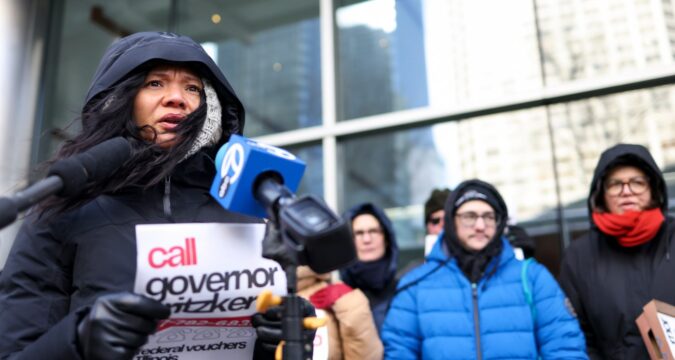
Froylan Jimenez: Illinois shouldn’t rush to judgment on federal school voucher program
School decisions and classroom lessons are rarely absolute. There is always room for academic improvement and no one way to teach or learn. Similarly, education policy is relative, subject to interpretation and what is “best practice” varies from region to region.
One of the few educational factors that stays consistent across our state is the dire need for more educational funding. Illinois should do its homework and consider all the benefits and opportunities available through the federal tax-credit scholarship program before deciding whether to bypass or opt into this initiative.
All too often education funding policy is a zero-sum situation where public schools get pitted against private and charter schools for funding in the political arena. This is bad policy and only hurts Illinois families and students on all sides. Recently, the Archdiocese of Chicago announced school closures citing finances and declining enrollment as the main reasons families in those schools will be forced to find other options. Similarly, many public schools in Chicago, and across Illinois, are facing low enrollment and financial strain forcing families to look elsewhere for their education. In all of these situations, additional school funding and a financial boost would help residents, particularly those with low-incomes, find solutions.
Enter the recently created federal tax credit scholarship program, which allows taxpayers to make donations to nonprofit organizations that then award K-12 students scholarships to cover a variety of educational expenses. The program would focus on helping low income students whose families make no more than 300% of an area’s median income. The new law would allow donors to make up to $1,700 contribution to nonprofit scholarship granting organizations and would act similarly to an educational grant so that parents could use the funding to best serve their child’s academic needs.
This spending flexibility would allow parents to cover a variety of expenses such as but not limited to school tuition, school supplies, student technology needs, summer or afterschool programs, academic tutoring, enrichment, college test prep classes, school transportation and other school or academic expenses. Taxpayers can begin to claim tax credits in 2027 but Illinois families, like others across the country, can only benefit and participate if Illinois’ governor agrees to opt in to the program. Critics of this new federal tax scholarship program such as the Chicago Teachers Union, the Illinois Federation of Teachers and other lobbying groups say that this funding program takes money away from public education and diminishes schooling opportunities in favor of private or religious schools. This claim is unconfirmed as key details of the program still need to be released.
I am a Chicago Public Schools’ high school teacher, a member of the CTU and a parent with kids that attended both public and private schools. These experiences have showed me that all schools need the proper materials and personnel to offer a quality education, and all parents should be awarded the opportunity to make the choice that is best for their children. Even though I am a CPS teacher who has seen the need for additional resources, I also empathize with those parents who choose to send their children to parochial schools, charter schools or home school. Education in our state should not be a battle where some students get more and some less, or where school funding is lopsided in favor of some schools and underfunding others. It is absolutely possible to invest in all our students. Consequently, before dismissing this federal tax credit scholarship careful consideration should be given to who can benefit from this additional funding and if this program allows a win-win situation for both public and private schools across Illinois.
There are 23 states that have already demonstrated interest or in the process of enrolling in this federal program, according to the U.S. Department of Education. Wisconsin, Hawaii, New Mexico and Oregon are the only states that have declared that they will not opt in. Colorado Gov. Jared Polis said of the decision to opt in that it would “be crazy not to.” Others, such as Pennsylvania Gov. Josh Shapiro, have indicated that it is too early to make a decision without first knowing more key regulations of the program. This cautious approach seems to be the most responsible. The more the leaders know about the funding parameters and eligibility requirements for donor and recipients, the better equipped they are to make a decision that will best benefit their constituents. For example, a big question that remains is: How much authority will individual states have in regulating program rules?
One thing is for certain, there’s no doubt that it would be an egregious mistake to opt out of this potential source of additional funding for so many Illinois families and students in need without first understanding exactly who will benefit and how. Illinois previously had a similar state scholarship program, the Invest in Kids scholarship, which at one point had the support of Gov. JB Pritzker. It is unfair to compare, contrast or criticize the state program in relation to the federal one as its regulations cannot be assumed to be of the same scope or reach.
The day will come when all the information needed to make a sound decision on this additional source of educational funding is released. When that day comes, we can only hope that the decision that Illinois makes is less political and more of a practical, equitable, good government choice that benefits Illinois families and students in both public and private realms.
Froylan Jimenez is a CPS civics teacher and Chicago Teachers Union member.
Submit a letter, of no more than 400 words, to the editor here or email letters@chicagotribune.com.
https://www.chicagotribune.com/2026/02/03/opinion-illinois-education-funding-federal-tax-credit/

Daniel DePetris: What kind of deal is the US looking for in Cuba?
The capture of Venezuelan strongman Nicolás Maduro in the heart of Caracas last month served multiple purposes for Donald Trump. First, the operation nabbed a man who was a long-time irritant to U.S. interests in Latin America. Second, it demonstrated to other regional leaders what could happen if they refused to meet President Trump’s policy demands. And third, taking Maduro off the board was a force-multiplier for the administration’s Cuba policy, which centers on increasing economic pressure on the island until its aging rulers either wither away or negotiate their own demise.
For some in the administration, the downfall of Cuba’s communist regime would be like a 5-year-old waking up to a mountain of presents on Christmas morning. Secretary of State Marco Rubio, whose parents left Cuba a few years before Fidel Castro took power, has eyed the regime in Havana as one of the world’s most pernicious, inhumane and troublesome. Trump couldn’t care less about human rights or transplanting democracy on the island, but he does care about wielding power and slaying enemies, real and perceived, to build up his legacy. Given its historical significance, overthrowing the Cuban regime would be at the very top of the list — a feat that all of his predecessors since Dwight D. Eisenhower failed to do.
On the other side of the ledger stands a small, weak country 90 miles off South Florida whose only redeeming quality is the enterprising spirit of its people. Miguel Díaz-Canel, who took over the Cuban presidency from Raúl Castro in 2018, is presiding over Cuba’s worst series of crises since the so-called “special period” of the early to mid-1990s, when the collapse of the Soviet Union, Cuba’s major benefactor, led to widespread rationing. The COVID-19 pandemic, coupled with the six-decade-long U.S. trade embargo and more U.S. sanctions on the island, has squeezed Cuba’s finances to the last handful of pennies.
Even the Cuban government, experts on propaganda, can’t hide it anymore. Last summer, the island’s economy minister said that the Cuban economy contracted by 10% since 2019. Tourism, one of Cuba’s major moneymakers, is down by 70% since 2018. Foreign visitors simply don’t want to travel to Cuba if it means their U.S. visas could get tied up in bureaucratic purgatory. The same goes for companies that would ordinarily view Cuba as a lucrative investment opportunity; why risk getting fined, prosecuted by the U.S. Justice Department or shut out of the much larger U.S. market when you could just play it safe?
The only thing worse than Cuba’s economy is its energy outlook. During the last quarter century of Chavismo in Venezuela, Cubans could depend on Caracas for a steady diet of crude oil at a highly subsidized rate. But with Maduro now sitting in a New York jailhouse and his former vice president, Delcy Rodríguez, trying to please the Trump administration with oil concessions, Venezuelan crude is no longer flowing to the island. Alternatives are few and far between. Russia’s crude exports to Cuba are sporadic, and Mexico, which has sent oil to Cuba on a humanitarian basis since the 1970s, is now getting pressured by the Trump administration to cut shipments. Cuba could run out of fuel in the next 15 to 20 days, which means that everything from garbage collection and hospital services to electricity generation could be disrupted.
To tighten the screws further, Trump signed an executive order last week instituting a tariff regime on any country that sells or supplies crude oil to Cuba. This presents another delicate balancing act for Mexican President Claudia Sheinbaum, who needs to remain in Trump’s good graces while at the same time shielding herself from being seen as throwing Cuba under the bus. Failing to do the former could upend U.S.-Mexico relations on any number of fronts; failing to do the latter will get her into trouble with her party’s vocal far-left faction, which sees support for Cuba as an extension of anti-imperialism.
Trump, meanwhile, hasn’t given us a clue about what he aims to accomplish in Cuba. “It doesn’t have to be a humanitarian crisis,” Trump said over the weekend. “I think they (Cuba) would come to us and want to make a deal.”
But what kind of deal is Trump looking for? According to U.S. law, Washington seeks to accomplish a long list of idealistic goals in Cuba: the release of all political prisoners; the legalization of political activity; free and fair elections under international supervision; an independent judiciary; guaranteeing personal freedoms and rights like free speech and a free press; and a new constitution. Needless to say, the Cuban authorities aren’t interested in doing any of this, particularly if it dilutes their political power or threatens the regime’s durability. And while Trump may not busy himself with democracy promotion, it’s hard to believe the Cubans will be as amenable to U.S. subjugation as their former Venezuelan allies have been so far.
As I wrote in a recent paper, normalizing the U.S.-Cuba relationship would be the most effective and least costly policy proposal on the table. Cuba isn’t a real national security threat to the United States anyway, can’t possibly compete with U.S. primacy in the Western Hemisphere and at times has been willing to cooperate with Washington on issues ranging from migration to counter-narcotics. Regime change on the island has also fallen woefully short since 1959, when Castro chased the U.S.-backed dictator off the island.
Yet to expect Trump to embrace this recommendation is borderline delusional. And the Cuban people, suffering under extreme deprivation, will pay the ultimate price.
Daniel DePetris is a fellow at Defense Priorities and a foreign affairs columnist for the Chicago Tribune.
Submit a letter, of no more than 400 words, to the editor here or email letters@chicagotribune.com.
https://www.chicagotribune.com/2026/02/03/column-cuba-us-donald-trump-depetris/

Letters: Greater transparency around the Chicago Police Department’s homicide clearance rate is essential
When we talk about making Chicago’s streets safer, clearance rates are often left out of the conversation. As my organization Live Free Illinois explored in 2023 and 2024 reports, improving clearance rates is one of the most tangible ways we can disrupt cycles of crime, build trust between Chicagoans and the people charged with keeping us safe, and deliver justice for crime victims and their families, especially in Black communities, which tend to see lower clearance rates. But that’s only possible if we have transparent data on what law enforcement is and is not accomplishing in our communities.
The Jan. 30 article about the city’s improved clearance rates (“Homicide clearance rate hits 71%”) brings up an important point, that the rates being touted by law enforcement aren’t necessarily just cases solved but also include cases closed due to “exceptional means” — meaning, no one is actually held accountable for the crime. These types of cases account for more than one third of “solved” cases in Chicago. And of the “exceptional means” cases, a significant number are decades-old.
What does that mean for Chicagoans? Ultimately, it’s unclear whether the increase in clearance rates actually means people in the city feel safer or if it’s just misleading math. That’s not justice for victims and their families; it’s public relations for the Chicago Police Department.
Greater data transparency around clearance rates isn’t only about justice, though that’s incredibly important. It’s also about public safety and disrupting cycles of violence. When people don’t believe cases will actually be solved in a timely manner, they’re more likely to disengage from law enforcement or seek their own forms of accountability, perpetuating a cycle of retributive violence.
Luckily, thanks to a recently passed transparency bill, clearance rate data moving forward will have to spell out exactly how many cases are being closed due to exceptional means. Once we have a better understanding of what’s really happening in our communities, we can institute policies that ensure crimes are actually being solved in a timely manner and that Chicagoans actually feel safe.
— Artiense Myrick, deputy director of Live Free Illinois, Chicago
Sonya Massey case matters
The sentencing of former Sangamon County sheriff’s Deputy Sean Grayson to 20 years in prison for the killing of Sonya Massey is a crucial moment for justice and community trust in law enforcement.
Massey, a 36-year-old Black woman, was shot and killed in her Springfield-area home after she called 911 to report a suspected prowler. A jury convicted Grayson of second-degree murder, and the judge imposed the maximum sentence allowed under that charge.
This case resonates far beyond Springfield. It speaks directly to questions about police training, use of force and how law enforcement responds when someone is in crisis or simply trying to get help. Body camera footage, which showed Massey unarmed and pleading, raised deep concern among civil rights advocates and families who have experienced similar losses. The fact that the jury did not convict on first-degree murder leaves many feeling that accountability was limited.
Law enforcement must be held to high standards of conduct and trained on de-escalation and clarity about when and how force is used. Communities deserve transparency and policies that protect everyone, especially those who call for help in a moment of fear or confusion. More consistent reforms at both local and state levels are needed to prevent tragedies like this and to build trust between officers and the people they serve.
— Arav Mestry, Fremont, California
Opt into federal tax credits
Regarding the article “Public school supporters urge Pritzker to opt out of vouchers” (Jan. 28): Despite the claims of opponents such as Illinois Families for Public Schools and the Illinois Federation of Teachers, the federal scholarship tax credit program is not intended to pull students into private schools.
Scholarship-granting organizations can exist to fund public or private schools. Public school districts’ educational foundations should jump at becoming scholarship organizations to take advantage of the funds and secure tax credits for their donors.
Those funds could then be used for tutoring, tuition, supplemental classes, books, online educational materials, standardized testing fees, dual enrollment courses, special-education services and more.
According to the Tribune, “critics argue that the program pulls money away from public schools, and undermines the tradition of American public education.” This is false. The scholarship program uses no state or federal funds. But Illinois taxpayers would be able to claim the federal tax credit under any scenario.
If Gov. JB Pritzker has the best interests of Illinois students and families at heart, he’ll opt into the program and ensure Illinoisans get their fair share of the federal program. By doing so, he’ll be giving Illinois’ students a much-needed boost.
— Mailee Smith, vice president of policy and litigation, Illinois Policy Institute
Age limits at federal level
Regarding the editorial “No need for a mandatory retirement age in Washington. The voters can do what’s needed” (Jan. 28): Rahm Emanuel has never been short of innovative ideas during his long career, so I read with interest his proposal for creating a mandatory retirement age for the president, federal lawmakers and judges. His proposal for lawmakers has merit if for no other reason than legislative races throughout the country have become dominated by a single party in many House and Senate races. Invariably, voters do not have choices when incumbents with significant financial resources face limited or no competition.
If voters had true choices, the Tribune Editorial Board’s stance would have more validity. But all too frequently, congressional elections are impacted by family succession, not true competition. So a mandatory retirement age at 75 or 80 would have legitimate basis for consideration.
The editorial board’s position on the presidency has merit.
As it relates to judges, I have been less concerned about the need for a mandatory retirement age because federal judges historically have demonstrated their wisdom in choosing to retire or go on senior status when declining health or faculties indicated this to be the right choice. Supreme Court Justice Ruth Bader Ginsburg may have had significant physical limitations in her final months, but her judgment, temperament and wit did not demonstrate the need for her to be constrained by a mandatory retirement age. So unless that changes, a mandatory judicial retirement age would have the impact of prematurely forcing out highly qualified members of the bench prematurely.
While I respect the editorial board’s conclusion, I think a more thoughtful reply might be more appropriate.
— Christopher Hartrich, Lake Bluff
Age limits are practical
Regarding Emmanuel’s proposal for age limits on federal elected officials, previously I took the position the Tribune Editorial Board does, to let the voters decide. I also felt there should be no term limits. I no longer see it this way.
Even though people are living longer and are healthier, life is changing at a rapid pace. Advances in technology and social changes move fast and are better understood by younger and middle-aged people, who will be living with the legislative consequences of decisions on these matters for decades to come.
Lifetime appointments for Supreme Court justices should end, also. This is not to make those who are older than 75 (I’m one) or those in office for a long time step aside just for younger people.
There are plenty of other ways to make further contributions without serving in office.
— Jim Tufano, Aurora
Submit a letter, of no more than 400 words, to the editor here or email letters@chicagotribune.com.
https://www.chicagotribune.com/2026/02/03/letters-020326-cpd-homicide-clearance-rate/

Column: Who’s that new anchorman? He’s no Walter Cronkite
Many of you, I have to assume, were watching TV in the late 1960s as images of blood and death in Vietnam and protests against that war were becoming more frequent features of the evening network news.
Viewership of those programs was still on the rise then, and would continue to grow, peaking in around 1980, when the three major networks of ABC, CBS and NBC averaged roughly 53 million nightly news viewers. That is, if you are counting, with nearly one in four Americans watching.
The person most viewed was Walter Cronkite of CBS, “the most trusted man in America,” or so it was determined in a national poll in 1972.
Cronkite’s final full year as anchor was 1980, and in retirement, he watched as the expansion of cable television and digital media began to fragment audiences. As the population grew, viewership diminished. (The same can be said about newspaper subscribers, as well.)
By 2000, network TV news shows attracted 32 million viewers; by 2006, there were 26 million. And now? About 20 million — still a lot of people, and so how many of you are watching Tony Dokoupil?
He is, if you haven’t heard, the new anchorman of “CBS Evening News,” having spent six years at “CBS Mornings” alongside Gayle King and Nate Burleson. He said in interviews that this new job was “a little bit terrifying,” adding that “people really care about this show, and justifiably.”
He got off to a rough start. Scheduled to begin on Jan. 5, he was called to duty two days before to sit at the anchor desk for the breaking story of the U.S. strike in Venezuela and the capture of that country’s President Nicolás Maduro and his wife Cilia Flores.
Once he started, he began by taking a gimmicky “Live from America” road tour across the country, a new city every night. There he was at the Golden Gate Bridge and at Denver’s Union Station. At a Ford plant outside Detroit, he chatted with President Trump. On Jan. 14, he took a Chicago “L” ride, visited West Garfield Park and stood with Mayor Brandon Johnson for a live interview during which the mayor discussed his administration’s focus on investing in disinvested neighborhoods.
Viewership did not get an anticipated kick up by attracting curiosity seekers during Dokoupil’s first month, but one person watching intensely was Bari Weiss. A political commentator and opinion journalist, once writing for the Wall Street Journal and The New York Times, she is the founder of media company The Free Press. Last October, billionaire David Ellison, boss of Paramount Skydance, bought The Free Press for $150 million and named Weiss the editor-in-chief of CBS News, another Paramount Skydance property.
At 41 years old and with no previous experience in broadcast journalism, Weiss became an object of head-scratching, criticism and anxiety. Would the network and its owners bow to the Trump administration?
She got off to a rocky start and seemed to confirm some fears when she pulled a segment from the CBS’ “60 Minutes” about Venezuelan men deported by the Trump administration to an El Salvador prison notorious for its conditions.
She said the story needed further reporting. Her critics got more ammunition when she then hosted a prime-time “town hall” with Erika Kirk, the widow of the assassinated right-wing activist Charlie Kirk.
The anointing of Dokoupil in mid-December may have surprised some viewers. It reminded me of Cronkite but for most people it was of modest interest.
For decades the three major networks had a monopoly on news. That has been broken for keeps and Weiss seems to understand that, having told her staff — in a speech later released to the media — that, “We can’t reverse time’s arrow. (Walter Cronkite) had two competitors. We have two billion, give or take.
“Our strategy until now has been to cling to the audience that remains on broadcast television. If we stick to that strategy, we’re toast.”
In 1980, his last full year on the air, Cronkite attracted 30 million pairs of eyes to his nightly news program. He was the preeminent television newsman of the 20th century. In fact, the word “anchorman” was first used to describe his role in covering the 1952 political conventions in Chicago for CBS.
Now, few care. Anybody remember when Tom Llamas replaced Lester Holt on the NBC evening news? That happened in June. Have any idea who Dokoupil has replaced? Well, that would be John Dickerson and Maurice DuBois.
It is, I suppose, only a matter of time until there does not exist any nightly network news shows. In thinking about Cronkite, I came across a few things he said.
He said, “As anchorman of the CBS Evening News, I signed off my nightly broadcasts for nearly two decades with a simple statement: ‘And that’s the way it is.’ To me, that encapsulates the newsman’s highest ideal: to report the facts as he sees them, without regard for the consequences or controversy that may ensue.”
He also said, “The profession of journalism ought to be about telling people what they need to know — not what they want to know.”
I don’t know if Dokoupil knows much about Cronkite. He didn’t seem to during a recent to-do on a CBS’ Instagram post.
A viewer wrote, “I grew up on Cronkite. Too bad CBS has lost its Tiffany shine. But good luck to you anyway.”
Dokoupil’s insulting reply — “I can promise you we’ll be more accountable and more transparent than Cronkite or anyone else of his era” — outraged others and made me wonder how long this anchorman might last.
rkogan@chicagotribune.com
https://www.chicagotribune.com/2026/02/03/column-dokoupil-walter-cronkite/
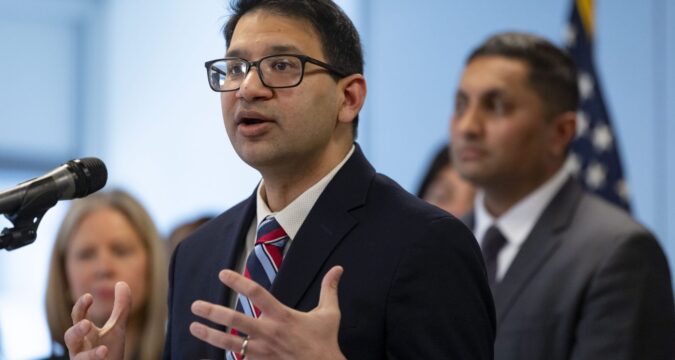
Illinois joins World Health Organization network, after Trump administration withdraws from group
Illinois is joining a network of the World Health Organization in hopes of better positioning the state to handle potential health threats, following the U.S. withdrawal from the group last month.
It’s the state’s latest move into an area that was previously the domain of the federal government, before the administration of President Donald Trump began remaking public health policies and guidance.
The Illinois Department of Public Health this week officially joined the World Health Organization’s Global Outbreak Alert and Response Network (GOARN), which provides resources and information intended to help control outbreaks and public health emergencies around the world. California announced that it was the first state to join the network late last month.
Illinois’ decision to join GOARN follows the U.S. resigning from the World Health Organization late last month, citing the organization’s “mishandling of the COVID-19 pandemic,” a “failure to adopt urgently needed reforms” and “unfairly onerous payments” from the U.S., among other things, in an order signed by Trump a year ago initiating the withdrawal.
Many public health leaders, however, have decried the departure of the U.S. from the World Health Organization, saying it could leave the U.S. without critical information about health threats in other parts of the world.
Illinois decided to join GOARN partly to keep information flowing to the state, said Dr. Sameer Vohra, director of the Illinois Department of Public Health.
“We knew this created serious concerns, really in our effort as a big state in the United States to keep our awareness and (stay) alert about potential global outbreaks and how they could impact the residents here in the state of Illinois,” Vohra said. “Part of that was the fear that we would lose access to the WHO’s global surveillance system, which would really let us know about early warnings of outbreaks.”
He noted that the information is especially important given that Illinois is home to O’Hare International Airport, one of the busiest airports in the country and a hub for international travel.
Vohra said it’s important for Illinois to have quick, up-to-date, accurate information about emerging health threats, such as a recent outbreak of the dangerous Marburg virus in Ethiopia — an outbreak that just ended last week.
“This provides the real time information to us,” Vohra said of GOARN. “Instead of waiting for the federal government to relay that, if and when that might happen, we’ll get direct access to that network of information.”
GOARN is a way for organizations and entities, such as the states of Illinois and California, to connect with the World Health Organization, which otherwise typically has nations as members.
It didn’t cost Illinois money to be part of GOARN, but Illinois had to submit a statement, as part of its application to join the network, detailing how Illinois could contribute to the group’s efforts, Vohra said. Illinois cited its access to experts and global health institutes, among other things, he said.
The White House, meanwhile, criticized Illinois’ efforts this week to join GOARN.
“The World Health Organization knowingly and deliberately lied about COVID-19 at the outset of the pandemic, and is a key reason why many countries were caught off guard,” said Kush Desai, a spokesperson for the White House, in a statement. “Illinois state officials’ insistence on maintaining access to WHO resources and information despite this gross travesty is more proof that Illinois suffers from incompetent leadership.”
President Donald Trump signs an executive order withdrawing the U.S. from the World Health Organization in the Oval Office of the White House on Jan. 20, 2025, in Washington, D.C. (Evan Vucci/AP)
The U.S. Department of Health and Human Services said in a statement, “States do not set U.S. foreign policy, and unilateral actions by individual governors that failed their own people during the pandemic do not alter this administration’s assessment of WHO’s failures or our commitment to putting the health of the American people first.”
Related Articles
Two dead in Chicago from meningococcal disease, with more cases than usual reported
Expanded work requirements for the biggest US food aid program are kicking in for more states
US life expectancy hit an all-time high in 2024, CDC says
IDEM releases updates on efforts to reduce lead, copper exposure in water
Nurses union stages candlelight vigil outside Chicago VA to honor Alex Pretti: ‘Our job is to protect other people’
Gov. JB Pritzker has called the U.S. exit from WHO “another reckless move by the Trump Administration that puts lives at risk” and said Illinois “will continue to work with trusted partners to protect lives and follow the science.”
The World Health Organization said in a statement last month that the U.S. withdrawal “makes both the United States and the world less safe.” The organization said it stands by its response to the COVID-19 pandemic, though “no organization or government got everything right.”
It’s likely that more states will follow the lead of Illinois and California and also join GOARN, said Dr. Tyler Evans, CEO and founder of the Wellness Equity Alliance, an organization that works to advance health equity.
“I think you’re going to increasingly see states fill in the gaps where the federal government is now lacking,” Evans said.
States are increasingly seeing that it’s necessary to join GOARN and other public health groups because without WHO, “We are now on an island of emerging communicable disease surveillance and response from the rest of the world,” Evans said.
Still, Vohra acknowledges that Illinois’ involvement in GOARN can’t make up for the country’s absence as a whole from the World Health Organization.
“We’re trying to help mitigate these harms and close gaps, but we know gaps will still remain because we don’t have that overarching federal presence,” Vohra said. “There’s only so much one state can do when the federal government makes these decisions to withdraw from the global health community.”
The U.S. withdrawal from the WHO is concerning on both local and global levels, said Dr. Mai Tuyet Pho, an infectious disease physician at UChicago Medicine.
As a doctor, Pho said she relies on information from the World Health Organization about emerging health threats when she assesses patients and decides how to care for them, such as by choosing tests and treatments.
On a global level, the resignation from the World Health Organization could create problems worldwide, given that the U.S. was a major funder of the organization, Pho said.
“While it’s great that we’ll be able to have that connection with the World Health Organization through the state, I think the departure of the U.S. from the WHO really weakens their effectiveness,” Pho said. “I can’t really understate how critical cooperative efforts and collaboration around things like pandemic and climate change are essential, and it requires funding and investment from the world.
“Our leaving as a country will really, really impact their ability to provide that essential work and coordinate that work,” Pho said. “I think it will be devastating.”
Illinois’ decision to join GOARN is the latest effort by the state to fill in gaps that state leaders say have been created by the Trump administration’s public health policies.
Pritzker signed a bill into law last year formally establishing a process for the state to issue its own vaccine guidelines, after Robert F. Kennedy Jr., head of the U.S. Department of Health and Human Services and a longtime vaccine skeptic, fired and replaced all the members of a federal vaccine advisory committee. So far, the state has broken with federal recommendations for COVID-19 and hepatitis B shots, issuing its own guidance.
Illinois also joined the Governors Public Health Alliance in October, to ensure collaboration between states on public health preparedness, and Illinois has convened its own Global Health Advisory Committee, made up of experts from the state’s leading universities who are working on strategies to respond to global health threats.
https://www.chicagotribune.com/2026/02/03/illinois-world-health-organization-trump/
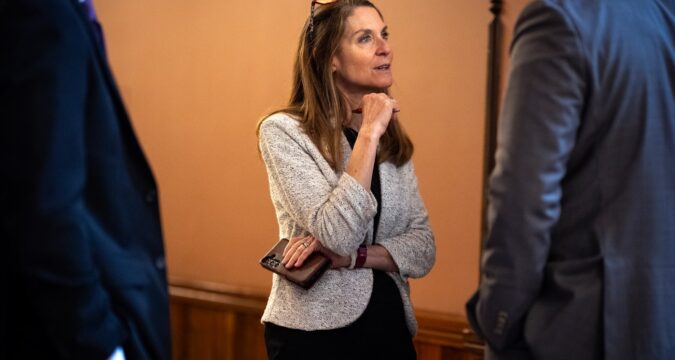
Editorial: Laura Fine for Democratic nomination in 9th Congressional District
When Jan Schakowsky announced she would not run for reelection, we expected to see a lot of interest in succeeding her.
But 15 Democrats? That’s some pent-up demand.
Schakowsky, 81, has represented the 9th Congressional District for 27 years. The district snakes its way from as far south as Lakeview through Chicago’s North Side to all or parts of suburbs including Evanston, Wilmette, Glencoe, Glenview, Skokie, Morton Grove, Niles, Northfield, Buffalo Grove, Prospect Heights, Hawthorn Woods and to points farther north and west all the way to Crystal Lake. It’s solidly blue, which explains the large number of Democrats vying for the seat. Four Republicans also are on the primary ballot.
Our choice among this crowded Democratic field, which includes many impressive people including political newcomers with diverse and fascinating resumes, is Laura Fine, 59, a state senator from Glenview. Fine has served in Springfield since 2013, first as a representative and then as a senator. She told us she got into politics after her husband lost his arm 15 years ago in a car accident, and the family’s health insurance provider canceled the policy, leaving them with $600,000 in medical debt.
“I’m the type of person that when I get angry, I have to do something,” she said.
Fine led the charge in Springfield to give the state Department of Insurance far more authority to regulate health insurers, a law enacted in 2024. She strikes us as a measured, reasonable and principled lawmaker who understands how to work with fellow legislators and should appeal to those in the district who admire Schakowsky for her record as a fighter for women’s rights and a powerful female member of Congress. Fine is extremely well regarded in Springfield, a major factor in our endorsement of her.
Our choice wasn’t easy. We think highly as well of Phil Andrew, 58 — a 21-year FBI agent, with experience as a hostage negotiator and public corruption investigator — who endured a traumatic experience of his own as a young man. In 1988, while home from college, his home was invaded by Laurie Dann, who’d shot young children at nearby Hubbard Woods Elementary School, killing one of them, before taking Andrew’s parents hostage. Andrew convinced Dann to release his parents before she shot him while he attempted to disarm her. He nearly died but recovered and then lobbied Congress to pass the Brady Bill, which mandated background checks for gun purchases.
Andrew, who has owned crisis and conflict consultancy PAX Group for eight years after leaving the FBI, is running on a platform of protecting American democracy from the excesses of the Trump administration, which he describes as a full-blown crisis. “Holding this administration accountable for the next two years is going to be critical,” he tells us.
If there’s a front-runner in the race, it’s Evanston Mayor Dan Biss, 48, who also has served in Springfield (Fine succeeded him in both the state House and state Senate) and ran unsuccessfully for governor in 2018, when JB Pritzker won his first term. Endorsed by Schakowsky, Biss is familiar to many in the district; we’ve admired him for taking some policy positions that put himself at some risk with his constituents, notably his support of the new Northwestern University football stadium, which this page backed but many Evanstonians abhorred.
Biss won a second term as Evanston mayor just last year amid warnings from his opponent that he likely would seek greener pastures before his term ended, so those familiar with his career may have rolled their eyes when he announced his bid for Schakowsky’s seat a little over a year later.
He says members of Congress in the current moment need to show an ability to work within the system to get things done and to galvanize the political energy arising from the protest movement against Trump’s heavy-handed immigration-enforcement actions.
We think Biss is doing well as Evanston’s mayor, a job for which he got our endorsement. We weren’t comfortable with Biss’ aggressive, on-the-street confrontations with federal immigration agents when they patrolled parts of Evanston last year. We’ve repeatedly condemned the excesses of Operation Midway Blitz, but we also believe that elected leaders ought to be doing as much de-escalating as possible when it comes to street clashes with law enforcement in order to keep people safe.
Additionally, opponents’ criticism that Biss is all too frequently seeking to move up the political ladder is justified in our view. We like him better as Evanston’s mayor.
Related Articles
Tribune Editorial Board endorsements for 2026 Illinois primary election
Editorial: Dr. Thomas Fisher for 7th Congressional District
Editorial: Brendan Reilly for Cook County Board president
That Biss confronted federal immigration agents in Evanston’s streets is owed — at least in part, we’re sure — to the presence in the race of activist Kat Abughazaleh, 26, who moved to Chicago in 2024. She has been a frequent presence at protests and in general has behaved more like a performance artist than a congressional candidate. As part of that effort, she made a show of declining (sending a spokesman, for goodness sake) to be part of the editorial board’s endorsement interviews after first informing us she would attend.
That’s her prerogative, of course, but we hope that even those philosophically aligned with her progressive views will agree that sort of behavior won’t produce much of anything positive in Congress. Other than TikTok videos. The good news for voters otherwise predisposed to Abughazaleh is that there’s a youthful progressive candidate in the race with similar views but who comes with a record of service and without the ego.
Bushra Amiwala, 28, has been a school board member in Skokie for seven years. A staunch progressive who supports Medicare for All and liberalization of immigration policies to make it easier for international students to stay here and work after they graduate, Amiwala impressed us with her knowledge, communication skills and enthusiasm. Her views are to the left of ours, but easily within the bounds of those who are interested in Abughazaleh’s candidacy. We wouldn’t be surprised to see Amiwala in Springfield soon.
We met, too, with non-politicians running to succeed Schakowsky, who made us feel more optimistic about our country’s future. Evanston residents Nick Pyati, who left his job in corporate strategy for Microsoft to run for office, and Jeff Cohen, who works for international economics consultancy Analysis Group, struck us as dedicated, intelligent individuals who simply care deeply for the future of our country and believe they have good ideas that go beyond Democratic Party platitudes.
Pyati struck a chord with us when he said that after Donald Trump’s 2024 victory, “I got terrified that if we are all focused on winning in these safe seats having platforms that win in a solid blue district but lose in the rest of the country, then we are on track to losing again in 2028.”
Cohen’s ideas to help more Americans who are struggling economically include making mortgage interest deductible even for those who take the standard deduction. Pyati, in his answers to our questionnaire, was a pragmatist, showing himself open, for example, to raising the eligibility age for Social Security for high earners.
We met as well with second-term state Rep. Hoan Hyunh, 35, who is giving up his seat in Springfield to run for Congress. Representing Chicago’s Uptown neighborhood in the state Capitol, Vietnam-born Hyunh’s immigrant story is as stirring as his intelligence and eloquence. However, his proposal in Springfield to tax trades at Chicago’s commodities exchanges is a non-starter for us given the likelihood it would cause our critical exchanges to move out of state.
We didn’t get a chance to meet with state Sen. Mike Simmons, who represents a North Side district in Springfield and is running for the 9th District. But his responses to our questionnaire revealed a politician well to the left of where we stand.
Also running as Democrats are Evanston homemaker Bethany Johnson; Skokie civil rights attorney Howard Rosenblum (who is deaf himself and has advocated for deaf people’s rights); Andersonville environmental engineer Justin Ford; Mark Arnold Fredrickson, who’s run for Congress before; longtime Evanston resident Patricia Brown; and former U.S. Army Capt. Sam Polan, who served multiple tours of duty in the Middle East.
On the Republican ballot, four are running: John Elleson, 63, pastor of Lakewood Chapel in Arlington Heights; Mark Su, a Rogers Park software engineer; Chicagoan Paul Friedman (who pleaded no contest to a misdemeanor charge of fourth-degree criminal sexual conduct in Michigan in 1998); and Rocío Cleveland, who bizarrely gave Abughazaleh a “care package” containing holy water, among other things, at a November campaign event.
John Elleson is a Republican candidate for Illinois’ 9th Congressional District. (John Elleson)
We think Elleson, who won the GOP nomination for the seat in 2018 and went on to lose convincingly to Schakowsky, is by far the best of these four choices for those selecting a Republican ballot.
Laura Fine is all-in on this race. Unlike Biss, she is giving up her state Senate seat to run, and given the likelihood that a Democratic primary win will mean a November victory in this solidly blue district, we believe she would be an effective lawmaker in what’s looking now like it will be a Democrat-run House of Representatives in 2027. She told us that she had left the progressive caucus in Springfield after she was made to feel uncomfortable for her belief in Israel’s right to defend itself or even to exist. A principled position for a principled Democrat, to our minds.
We endorse Laura Fine in the Democratic primary and John Elleson in the GOP primary.
Submit a letter, of no more than 400 words, to the editor here or email letters@chicagotribune.com.

Palos Park 6-bedroom with circular driveway and sunroom: $1.8M
Address: 26 Meadow Road, Palos Park
Listed: Jan. 20, 2026
Price: $1,795,000
Listing agents: Christine Wilczek and Jason Bacza, Realty Executives Elite, 708-420-2424 and 815-260-9548
This house with a brick and stone facade and a circular driveway is on a secluded lot and has six bedrooms, five full bathrooms and two half-baths. The formal living room includes a fireplace and a window bench seat. The dining room has tray ceilings, wall moldings, wall sconces and a swinging door that flows into the kitchen, which has two-toned cabinetry accented with seeded glass and granite countertops. A breakfast room has access to a deck. The great room has vaulted ceilings, a fireplace surrounded with granite and a nearby sunroom surrounded by windows. The main level has a bedroom with a full bathroom and a laundry room across the hall. The second level has a primary suite with a fireplace, crown molding and two walk-in closets. The primary bathroom has dual vanities, a whirlpool tub, a walk-in shower, a water closet and a tandem room. The second level has another laundry area. The finished walkout lower level has a bar with an ice maker, a gaming area, an office, a full bedroom, a full bathroom, a gym and a golf practice area. The house also has an attached 3½-car garage.
This house at 26 Meadow Road, Palos Park, has a finished walkout lower level that includes a bar with an ice maker, a gaming area, an office, a full bedroom, a full bathroom, a gym and a golf practice area. (Red Door Media)
This house at 26 Meadow Road, Palos Park, has a finished walkout lower level that includes a bar with an ice maker, a gaming area, an office, a full bedroom, a full bathroom, a gym and a golf practice area. (Red Door Media)
This house at 26 Meadow Road, Palos Park, has a finished walkout lower level that includes a bar with an ice maker, a gaming area, an office, a full bedroom, a full bathroom, a gym and a golf practice area. (Red Door Media)
This house at 26 Meadow Road, Palos Park, has a finished walkout lower level that includes a bar with an ice maker, a gaming area, an office, a full bedroom, a full bathroom, a gym and a golf practice area. (Red Door Media)
This house at 26 Meadow Road, Palos Park, has a finished walkout lower level that includes a bar with an ice maker, a gaming area, an office, a full bedroom, a full bathroom, a gym and a golf practice area. (Red Door Media)
This house at 26 Meadow Road, Palos Park, has a finished walkout lower level that includes a bar with an ice maker, a gaming area, an office, a full bedroom, a full bathroom, a gym and a golf practice area. (Red Door Media)
This house at 26 Meadow Road, Palos Park, has a finished walkout lower level that includes a bar with an ice maker, a gaming area, an office, a full bedroom, a full bathroom, a gym and a golf practice area. (Red Door Media)
This house at 26 Meadow Road, Palos Park, has a finished walkout lower level that includes a bar with an ice maker, a gaming area, an office, a full bedroom, a full bathroom, a gym and a golf practice area. (Red Door Media)
This house at 26 Meadow Road, Palos Park, has a finished walkout lower level that includes a bar with an ice maker, a gaming area, an office, a full bedroom, a full bathroom, a gym and a golf practice area. (Red Door Media)
This house at 26 Meadow Road, Palos Park, has a finished walkout lower level that includes a bar with an ice maker, a gaming area, an office, a full bedroom, a full bathroom, a gym and a golf practice area. (Red Door Media)
Some listing photos are “virtually staged,” meaning they have been digitally altered to represent different furnishing or decorating options.
To feature your luxury listing of $1,000,000 or more in Chicago Tribune’s Dream Homes, send listing information and high-res photos to ctc-realestate@chicagotribune.com.
https://www.chicagotribune.com/2026/02/03/26-meadow-road-palos-park/
Fiscales de París dicen estar registrando las oficinas de X en investigación sobre pornografía infantil y deepfakes
Associated Press
PARÍS (AP) — Fiscales de París dicen estar registrando las oficinas de X en investigación sobre pornografía infantil y deepfakes.

Cuban Missile Crisis 2.0? …May Involve Russian Drones With Crosshairs On US Homeland
Cuban Missile Crisis 2.0? …May Involve Russian Drones With Crosshairs On US Homeland
A Russian military-focused Telegram channel, Rybar, published an assessment that warned President Donald Trump’s gunboat diplomacy and the re-posturing of the U.S. Department of War toward the Western Hemisphere could generate drone threat risks to the US Homeland
“Given how the Americans are acting now, the main question is not whether the United States will strike Cuba, but when and how it will do so. Cuba, along with Venezuela and Nicaragua, has long stood as an anti-American stronghold in the Caribbean region, and after the takeover of Maduro, U.S. interest has increased,” Rybar wrote on its Telegram channel.
Rybar then laid out a scenario that, to us, suggests a Cuban Missile Crisis 2.0 in the making, in which it asked: “But what would the Cubans do in the event of a conflict? Let us hypothetically imagine that Havana decides to resist the Americans and chooses to fight. In that case, the already world-famous Geran strike drones could come to their aid.”
Russia may deploy Geranium strike drones in Cuba, a move that could reshape deterrence and force Trump to reconsider his options. pic.twitter.com/ujYKnqzcAf
— Rybar in English (@rybar_en) January 30, 2026
To bring readers up to speed, Russian-made Geranium drones are a family of long-range loitering munitions, most commonly referring to the Geran-2, which is a version of Iran’s Shahed-136. We have detailed how Russia has established domestic manufacturing plants to ramp up production, as well as the next iteration of these drones (read here).
The Geran-2 has a range of roughly 1,500 to 2,000 kilometers, carries a 30- to 50-kg high-explosive warhead, and is cheaper to produce than cruise missiles. One distinctive signature Ukrainians have learned to recognize is its sound: the drones are often described as lawn mowers in the sky.
Rybar noted the potential strike radius of the Geran-2 if such systems were positioned in Cuba, concluding that under this scenario that major oil and gas refineries, key military bases, data centers, and even Washington, DC would fall within the drone’s strike envelope, representing a highly destabilizing escalation risk.
Rybar’s Geran-2 threat map will likely cause major concern at State Department and DoW …
We warned in recent days that trillions in dollars in CapEx will be spent on data centers worldwide, as per Morgan Stanley analyst Vishwanath Tirupattur‘s forecast, but Wall Street analysts largely end their analysis at the financing and construction of next-generation data centers, with limited discussion about modern security architecture required once these facilities are built and become instant high-value targets for non-state actors or foreign adversaries (read here).
“Future wars will be wars of attrition, where autonomous systems fight one another, overwhelming technologically superior but low-inventory expensive systems. Protecting cities will require mass-produced, cost-comparable, networked solutions,” Cameron Rowe of counter-UAS interceptor startup Sentradel told us.
Tyler Durden
Tue, 02/03/2026 – 05:45

The best chlorella powder for natural energy support
Which chlorella powder is best?
There are many superfoods on the market today, but few are as nutritious as chlorella. Like spirulina, chlorella is a type of green alga that’s loaded with protein, antioxidants and essential vitamins and minerals. Chlorella capsules are available, but many health-conscious individuals prefer to take this supplement in powder form.
The powder can be stirred into a glass of water or blended into a delicious fruit smoothie. Micro Ingredients Raw Organic Chlorella Powder is the top pick because it dissolves fast and is certified organic.
What to know before you buy a chlorella powder
Reasons to try chlorella powder
As with other superfood powders, consuming a beverage that contains chlorella powder daily is a great way to get many of the important vitamins and minerals your body needs. Not only does chlorella contain generous amounts of iron, vitamin C and calcium, but the algae is also loaded with omega-3 fatty acids and vitamin B12, two important nutrients that vegans and vegetarians don’t often get in plant-based diets. There is also scientific research that suggests that ingesting chlorella may have other benefits as well.
Antibodies: Several studies reported by the National Institutes of Health have indicated that chlorella could help the body in producing antibodies, important for aiding the immune system.
Antioxidants: Chlorella contains loads of them, which the NIH says could help lower cholesterol in certain individuals.
Blood pressure: At least one study reported by the NIH has shown that taking chlorella could lower your it.
Detoxifying: Many people take chlorella because of its potential as a detoxifying substance. While human trials are limited, some NIH-reported studies on animals have had promising results in this regard.
Breathing: The NIH reports that the antioxidant and anti-inflammatory qualities of chlorella could help treat the symptoms of asthma and other respiratory issues in certain cases.
Side effects
Chlorella is thought to be a safe, nutritious supplement for most people to take on a regular basis, but there are a few potential side effects to think about. People sensitive to certain molds can have an allergic reaction to chlorella. It may also cause a stomachache and nausea in some individuals. People with a weakened immune system should also avoid it or talk with their doctor before trying the supplement.
What to look for in a quality chlorella powder
Quality
Look for an organic chlorella powder that contains no chemicals or additives. While many supplements are advertised as “all natural” or “raw,” the only way to know for sure that your chlorella is organically grown is to confirm that it has been certified organic by a legitimate third party, such as the U.S. Department of Agriculture. You can also find chlorella powder that has been certified vegan, kosher and free of genetically modified organisms.
Dosage
Most companies will recommend taking around 3-5 grams of chlorella every day. Many bags of chlorella powder come with their own plastic scoop so you know exactly how much of the supplement you’re taking. Always follow the directions on the packaging, and never take more than the recommended dose.
Broken cell wall
Natural chlorella has a tough cell wall that makes it difficult for the stomach to digest. To work around this issue, many supplement manufacturers sell broken cell wall chlorella. This form of the algae has a cell wall that has been slightly softened or pulverized during cultivation, resulting in a supplement much easier on the stomach.
How much you can expect to spend on chlorella powder
The cost of chlorella powder usually depends on the quality and how much you’re buying. In most cases, you can expect to spend around $2-$6 per ounce.
Chlorella powder FAQ
Is chlorella healthier than spirulina?
A. Both chlorella and spirulina are nutritious types of algae that can be taken in supplement form. Depending on the supplement, spirulina may have more protein, but chlorella has higher amounts of iron, zinc and vitamin A.
What does chlorella taste like?
A. Chlorella has a smooth, vegetal taste with slight hints of seaweed flavor because it grows in freshwater. Some people don’t mind the taste, while others call it fishy and unpleasant. If you don’t enjoy the flavor, consider blending it with fresh fruit or vegetables in a healthy superfood smoothie.
What are the best chlorella powders to buy?
Top chlorella powder
Micro Ingredients Raw Organic Chlorella Powder
What you need to know: This green chlorella powder is finely ground and loaded with nutrients.
What you’ll love: This broken cell wall chlorella powder is certified organic by the USDA, gluten-free and suitable for vegans. A measuring scoop is included with the bag, and the packaging is made from recycled materials.
What you should consider: Some people received a bag that wouldn’t seal properly.
Top chlorella powder for money
Earth Circle Organics Chlorella Powder
What you need to know: This healthy chlorella powder is nonirradiated and budget-friendly.
What you’ll love: This manufacturer uses sound waves to break down the cell wall without losing potency. The supplement is USDA-certified organic and cold-pressed without any chemicals or additives. Users say it tastes better than spirulina.
What you should consider: This supplement is manufactured in China, which some consumers didn’t like.
Worth checking out
Source Naturals Yaeyama Chlorella
What you need to know: This popular chlorella powder dissolves fast and is suitable for vegans and vegetarians.
What you’ll love: This nutritious chlorella supplement is grown in Ishigaki, Japan, an island famous for its high-quality chlorella algae. It has been validated as a non-GMO product, and users report a mild-tasting powder that mixes well with water and other beverages.
What you should consider: This supplement does not appear to be certified organic or vegan by any third-party organizations.
Prices listed reflect time and date of publication and are subject to change.
Check out our Daily Deals for the best products at the best prices and sign up here to receive the BestReviews weekly newsletter full of shopping inspo and sales.
BestReviews spends thousands of hours researching, analyzing and testing products to recommend the best picks for most consumers. BestReviews and its newspaper partners may earn a commission if you purchase a product through one of our links.
Distributed by Tribune Content Agency, LLC.
https://www.chicagotribune.com/2026/02/03/the-best-chlorella-powder-for-natural-energy-support/