Category: News

‘Today’ show host Savannah Guthrie asks for prayers to help bring her missing mom home
TUCSON, Ariz.— “Today” show host Savannah Guthrie is asking for prayers to help bring home her 84-year-old mother, whom authorities in Arizona believe was kidnapped, abducted or otherwise taken against her will.
“thank you for lifting your prayers with ours for our beloved mom, our dearest Nancy, a woman of deep conviction, a good and faithful servant. raise your prayers with us and believe with us that she will be lifted by them in this very moment,” Savannah Guthrie wrote in a social media post late Monday. “Bring her home.”
It’s imperative that Nancy Guthrie be found soon because she could die without her medication, Pima County Sheriff Chris Nanos said, urging whoever has her to free her.
“If she’s alive right now her meds are vital. I can’t stress that enough. It’s been better than 24 hours, and the family tells us if she doesn’t have those meds, it can become fatal,” Nanos said.
For a second day Tuesday, “Today” opened with Nancy Guthrie’s disappearance, but Savannah Guthrie was not at the anchor’s desk. Nanos said during a news conference Monday that Savannah Guthrie is in Arizona. Savannah Guthrie grew up in Tucson, graduated from the University of Arizona and previously worked as a reporter and anchor at KVOA-TV in Tucson.
Nancy Guthrie was last seen Saturday night at her home in the Tucson area, where she lived alone and was reported missing Sunday. Someone at church called a family member saying Guthrie wasn’t there, leading family to search her home and then call 911, Nanos said. The sheriff’s department is investigating the possibility she was taken overnight, spokesperson Angelica Carrillo said.
Nancy Guthrie has limited mobility and officials don’t believe she left on her own. Nanos said she is of sound mind.
Searchers used drones and search dogs and were supported by volunteers and Border Patrol. The homicide team was also involved, Nanos said Sunday. The FBI has offered to help, Carrillo said. On Monday morning, Nanos said search crews worked hard but have since been pulled back.
“We don’t see this as a search mission so much as it is a crime scene,” the sheriff said.
Even so, a sheriff’s helicopter flew over the desert Monday afternoon near Nancy Guthrie’s home in the affluent Catalina Foothills area on the northern edge of Tucson. Her brick home has a gravel driveway and a yard covered in Prickly Pear and Saguaro cactus.
https://www.chicagotribune.com/2026/02/03/today-show-host-savannah-guthrie-missing-mom/

16-year-old boy among 2 wounded in South Side shooting
A 16-year-old boy was among two teens critically wounded overnight on the South Side in the Jackson Park neighborhood, Chicago police said.
Officers responded to a call of a person shot around 2:45 a.m. in the 2200 block of East 67th Street and found a teenage boy unresponsive near an apartment building. The boy had suffered multiple gunshot wounds to the body, and was taken in critical condition to UChicago Medicine, police said.
After canvassing the area, officers found an 18-year-old victim inside of the apartment building shot multiple times to the body. He also was taken to the same hospital where he was listed in critical condition, police said.
Two firearms were recovered from the scene.
No one was in custody for the double shootings and detectives were investigating.
https://www.chicagotribune.com/2026/02/03/shooting-south-side/

Disney Names Parks Head Josh D’Amaro As Next CEO, Replacing Bob Iger
Disney Names Parks Head Josh D’Amaro As Next CEO, Replacing Bob Iger
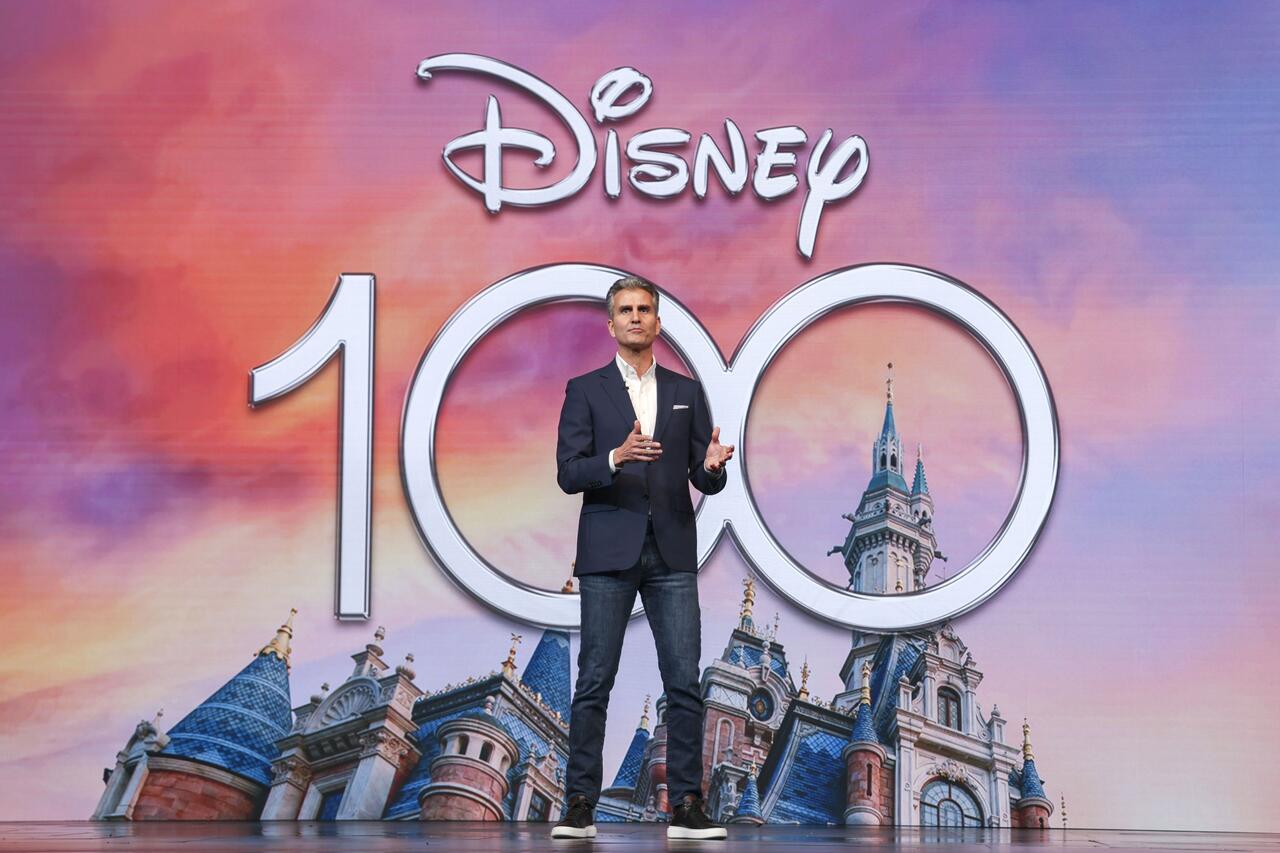
Walt Disney, after a more than two-year saga, has landed on its next CEO: Josh D’Amaro, head of the company’s theme parks and consumer products division.
D’Amaro, 54, will take over the top job at Disney from current CEO Bob Iger, who cumulatively has served in the post for nearly two decades, having been CEO from 2005 to 2020 when he we replaced by Bob Chapek, only to return in 2022). The Disney board on Tuesday announced the selection of D’Amaro, currently chairman of Disney Experiences, capping the media giant’s extended and closely watched succession drama
D’Amaro, a 28-year-veteran of the company, will succeed Iger effective March 18, the Burbank, California-based company said Tuesday in a statement. He has been with Disney since 1998, starting out at Disneyland. He has worked across a range of business, marketing and operations posts within Disney, from CFO of Disney Consumer Products Global Licensing to president of Disneyland Resort and president of Walt Disney World Resort. He was promoted to his current post as head of Disney parks and cruises, consumer products and Walt Disney Imagineering in May 2020.
D’Amaro is seen as CEO in the classic Disney mold with nearly 30 years of experience on the retail side of Disney, giving him an intimate understanding of how children and families interact with the Mouse House brand, according to Variety. D’Amaro at present steers a $60 billion investment in an expansion of Disney’s theme parks around the world, including a new destination coming to Abu Dhabi. Before joining Disney, D’Amaro worked in Gillette’s finance department. He holds a bachelor’s degree in business administration/marketing from Georgetown University.
According to Bloomberg, the head of Disney’s Experiences division, by far the company’s biggest source of profit, D’Amaro, 54, was chosen from among several internal candidates who were in line to succeed Iger. They included Dana Walden, co-chair of entertainment and head of TV; Alan Bergman, also co-chair of entertainment and head of film; and Jimmy Pitaro, ESPN’s chairman.
Iger has been personally mentoring potential replacements, according to the company, an attempt by the board to ensure succession goes smoothly after botched efforts in the past.
Disney’s board of directors, led by chairman James Gorman, was under pressure to execute a strong succession plan this time around — after the debacle that ensued when Iger previously handed the CEO baton to Bob Chapek, a Disney veteran who was promoted from the same perch that D’Amaro now holds. Chapek took over as CEO in February 2020, just weeks before the COVID pandemic turned global markets upside down and forced immediate and drastic changes in the way Disney operated. Iger stepped down as CEO but remained chairman overseeing creative matters for the company. That set the stage for an epic clash of strategic visions and executive egos that culminated in the Disney board ousting Chapek in November 2022 and Iger reclaiming the CEO role.
But Iger’s return had a time limit from the start. In October 2024, the Disney board committed to naming a CEO successor by early 2026. After the Chapek fiasco and increasing investor scrutiny on corporate governance issues (of which CEO succession planning is paramount), Disney’s board has little margin for error this time around.
In announcing Disney’s year-end 2025 quarterly results on Monday, Iger said there was “healthy competition” between D’Amaro’s parks division and entertainment business, led by Walden and co-chair Alan Bergman.
“We have a healthy competition now at our company in terms of which of those two businesses is going to essentially prevail as the No. 1 driver of profitability for the company,” Iger said. “But I’m confident that both have that ability, meaning both have the ability to grow nicely into the future, given all the investments that we’ve made and the trajectory that we’re on.”
Iger also offered his thoughts on the next Disney CEO’s agenda. “In the world that changes as much as it does… trying to preserve the status quo is a mistake, and I’m certain that my successor will not do that,” he said. “So [the new CEO will] be handed, I think, a good hand in terms of the strength of the company, a number of opportunities to grow and also the exhortation that in a world that changes, you also have to continue to change and evolve as well.”
Tyler Durden
Tue, 02/03/2026 – 08:43
https://www.zerohedge.com/markets/disney-names-parks-head-josh-damaro-next-ceo-replacing-bob-iger
PayPal Suffers Worst Drop In Four Years After Profit Miss, CEO Set To Exit
PayPal Suffers Worst Drop In Four Years After Profit Miss, CEO Set To Exit
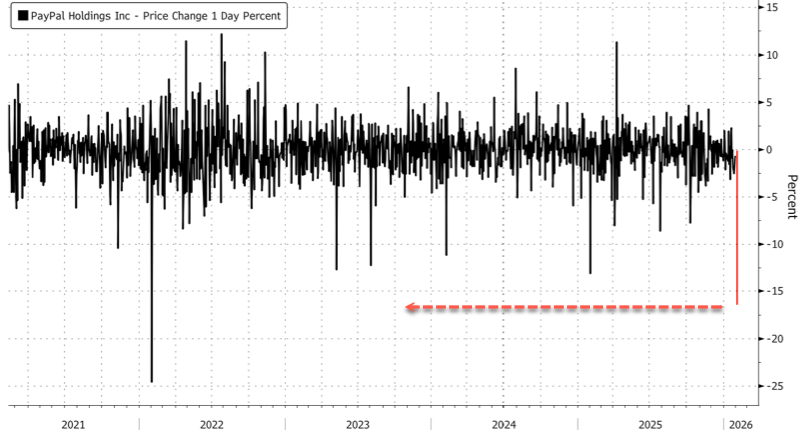
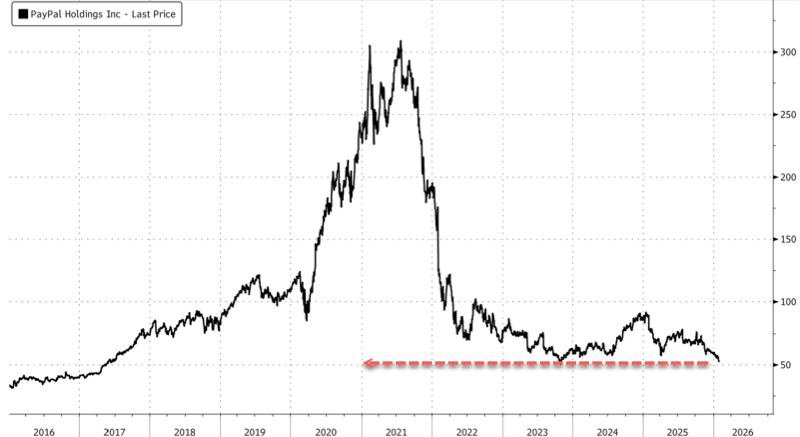
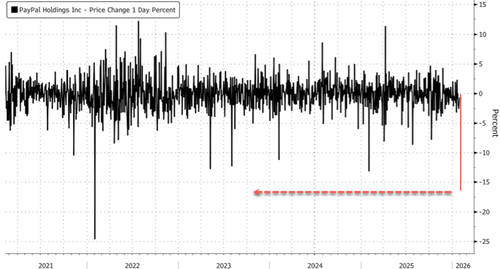
PayPal shares in New York premarket trading plunged 17%. If the losses hold through the cash session, this would mark the largest decline in four years. The selloff was sparked after the payments company reported adjusted profit and revenue that fell short of Bloomberg Consensus estimates, along with news that CEO Alex Chriss will be replaced.
CFO Jamie Miller will serve as interim CEO until HP CEO Enrique Lores replaces Chriss. Newly appointed board chair David Dorman said that execution under the current CEO has failed to meet board expectations (translation: share price is too low), despite some progress.
“While some progress has been made in a number of areas over the last two years, the pace of change and execution was not in line with the Board’s expectations,” Dorman told investors.
Fourth-quarter earnings missed the average analyst estimates tracked by Bloomberg, with the payments company highlighting weakness from US retail spending and headwinds abroad.
Important to note that fourth-quarter EPS of $1.23 and revenue of $8.68 billion both missed expectations, while full-year EPS of $5.31 fell below prior guidance of $5.35 to $5.39. Adding to investor concern, signs of softening consumer spending emerged as growth in PayPal-branded online checkouts slowed sharply to 1%, down from 6% a year earlier.
CFO Miller warned in October that worsening macroeconomic headwinds (a K-shaped economy) would affect the firm’s ability to achieve its longer-term targets. She and other executives have struggled to monetize the company’s payment services.
Here’s a snapshot of fourth quarter earnings (courtesy of Bloomberg):
Adjusted EPS $1.23 vs. $1.19 y/y, estimate $1.28 (Bloomberg Consensus)
Net revenue $8.68 billion, +3.7% y/y, estimate $8.79 billionTransaction revenue $7.82 billion, +3% y/y, estimate $7.95 billion
Other value added services revenue $857 million, +10% y/y, estimate $838.8 million
Transaction margin dollars $4.03 billion, +2.5% y/y, estimate $4.07 billion
Total payment volume $475.14 billion, +8.5% y/y, estimate $471.51 billion
Venmo total payment volume $85.79 billion, +13% y/y, estimate $84.05 billion
Payment transactions 6.75 billion, +2% y/y, estimate 6.72 billion
Active customer accounts 439 million, +1.2% y/y, estimate 439.04 million
Adjusted operating income $1.55 billion, +3.2% y/y, estimate $1.59 billion
Adjusted operating margin 17.9% vs. 18% y/y, estimate 18.1%
Adjusted free cash flow $2.10 billion, -0.1% y/y, estimate $2.03 billion
US revenue y/y growth 4%
International revenue y/y growth 1%
Total operating expenses $7.17 billion, +3.5% y/y, estimate $7.26 billion
As for the outlook, PayPal is guiding to muted growth and margin pressure in the near term
First Quarter Forecast
Sees mid-single digit decline in adjusted EPS growth y/y
Sees roughly flat transaction margin dollars
Year Forecast
Sees low-single digit decline to slightly positive in adjusted EPS growth y/y
Sees roughly flat transaction margin dollars
Sees adjusted free cash flow above $6 billion
Sees capital expenditure about $1 billion, estimate $997.8 million
The combination of the fourth quarter miss and the CEO being replaced sent shares tumbling in premarket trading, down about 17% around 0800 ET – the largest decline since the 25% crash on Feb. 2, 2022.
What is this stock pattern called?
What happens to PayPal shares when X Payments goes live?
Tyler Durden
Tue, 02/03/2026 – 08:40
Futures Rise As Tech Gains On Palantir’s “Cosmic Reward”
Futures Rise As Tech Gains On Palantir’s “Cosmic Reward”
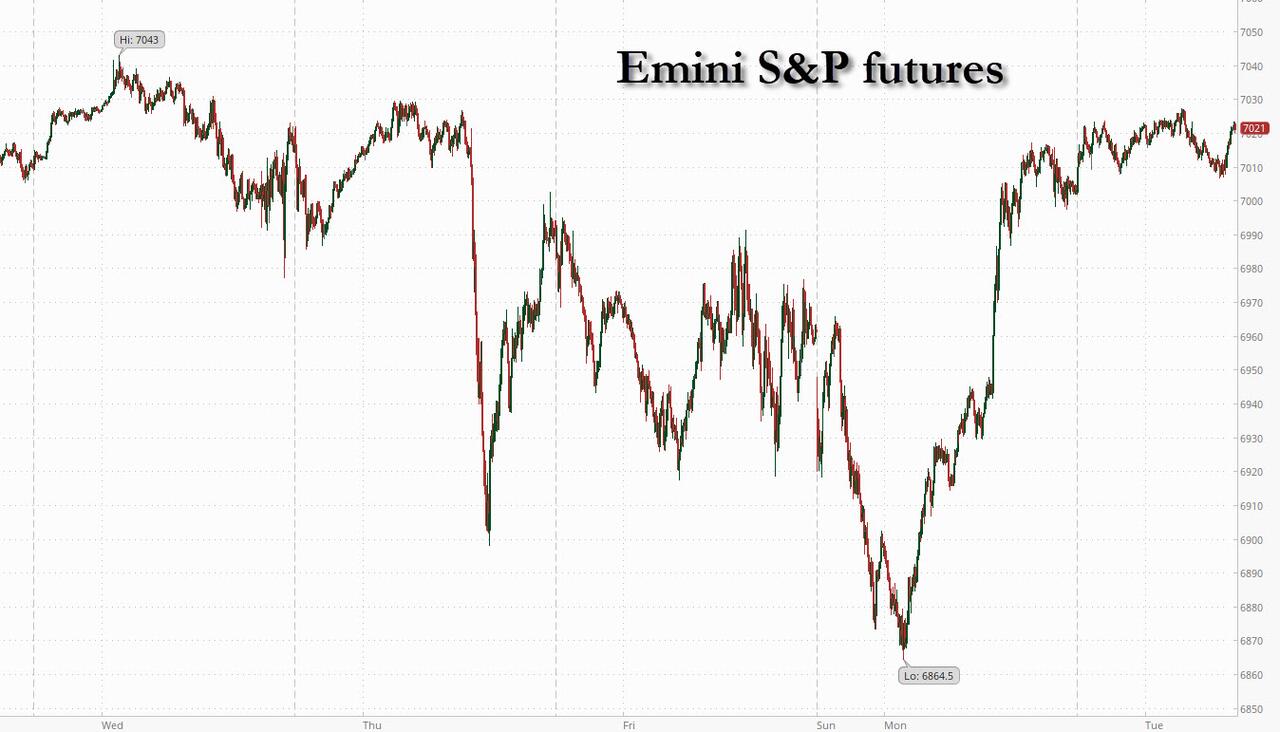
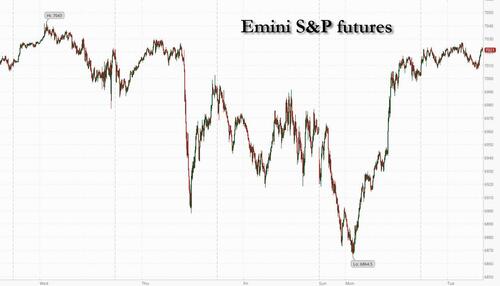
Stock futures are higher, led by tech, while metals rebound and global markets more than retrace Friday/Monday losses. Only bitcoin continues to slide on laughable fears that Kevin Warsh will somehow shrink the Fed’s balance sheet. As of 8:00am ET, S&P futures are up 0.3% and Nasdaq futures gain 0.5% after blockbuster results from Palantir renewed the AI trade. Pre-market, Mag7 names are all higher ex-AAPL with PLTR the standout which should aid the Software reboot. Palantir’s forecast for 61% sales growth this year is helping the AI narrative, with CEO Alexander Karp describing the company’s accelerating revenue as “a cosmic reward” for the data analytics firm’s shareholders. Energy, healthcare, and Staples are weaker pre-mkt as all other sectors are big higher. European stocks briefly traded into record territory, while technology stocks led gains in Asia as South Korea’s chipmakers are surging again. Elsewhere, dip-buyers are crowding into metals: gold is +5.5%, silver +9.4% with WTI flat and Ags bid. Bond yields are flat to +1bp with USD flat. Today’s macro focus is on the vote to reopen the government, where Trump told GOP not to block the deal; we also get the January vehicle sales update. NFP / JOLTS have been delayed with release dates to be updated after the gov’t reopens. Earnings remain front and center, with PepsiCo, Pfizer and AMD due today. . Bitcoin remained under pressure.
In premarket trading, Mag 7 stocks are all higher ex-Apple which is again depressed by soaring memory prices (Alphabet +1.2%, Tesla +1.1%, Amazon +0.7%, Microsoft +0.2%, Nvidia +0.7%, Meta +0.1%, Apple -0.7%)
Gold and silver miners including Newmont (NEM) gain as precious metal prices climb out of a three-day slide. Newmont rises 4%.
AES Corp. (AES) rises 8% after BlackRock Inc.’s Global Infrastructure Partners is said to team up with EQT AB in a bid to acquire the power company.
Eaton Corp. (ETN) falls 5% after the power equipment company forecast adjusted earnings per share for 2026 of $13.00 to $13.50, a range with a midpoint below analysts’ expectations.
Fabrinet (FN) falls 4% after the engineering and manufacturing services company’s results showed component constraints pressuring the datacom business. However, analysts are broadly positive on the prospects going forward.
HP Inc. (HPQ) slips 2% as CEO Enrique Lores stepped down to lead PayPal Holdings.
Palantir Technologies Inc. (PLTR) rises 11% after the company forecast revenue for fiscal 2026 that significantly exceeded Wall Street expectations, a boost for the data analytics company after its shares have gotten off to a lackluster start so far this year.
PayPal Holdings (PYPL) falls 15% after the fintech reported profit and revenue that fell short of expectations. The company also said Chief Executive Officer Alex Chriss will be replaced by HP Inc. CEO Enrique Lores.
Rambus (RMBS) slides 8% after analysts note that a supply chain hiccup weighed on the semiconductor device company’s first-quarter outlook. The stock has performed strongly of late, rising about 24% so far this year.
SoFi Technologies (SOFI) climbs 3% after JPMorgan upgraded to overweight. The bank is positive about the company’s execution and “more tenable valuation.”
Teradyne (TER) soars 20% after the semiconductor manufacturing company forecast revenue for the first quarter that exceeded the average analyst estimate.
In corporate news, Elon Musk confirmed the combination of SpaceX and xAI in a deal that values the enlarged entity at $1.25 trillion, with the company said to still be planning an IPO later this year. Musk’s rationale is that the least expensive way to do AI computations within two to three years will be in space. Bloomberg estimates that xAI is burning through ~$11 billion in cash in 2025, constraining its ability to seek outsized funding rounds similar to OpenAI. In other corporate news, Uber is rolling out its ride-hailing service in the Chinese gambling hub of Macau, expanding into a new Asian market for the first time in years. Watch shares of professional publishers after Anthropic released an AI-powered productivity tool for companies’ in-house legal teams.
Traders’ appetite for risk rebounded after a steep drop in precious metals triggered a pullback from stocks and crypto at the end of last week. Strong US manufacturing data added to optimism, showing that the economy is on a sound footing as the earnings season rolls on.
“There is a lot of liquidity out there and it’s remaining committed to financial assets,” said Guy Miller, chief strategist at Zurich Insurance. “It’s rotating within the markets, and the macro backdrop is supportive of that continuing.”
In politics, Republican opposition to Trump’s deal with Democrats to end the partial government shutdown began to crumble late Monday as two conservative holdouts agreed to end their threatened blockade. And an analysis of results from a state senate district vote in the Fort Worth area showed that a Texas Democrat’s shock win was powered by big shifts among Latino voters.
Looking at earnings season, out of the 178 S&P 500 companies that have reported so far, 79% have managed to beat analyst forecasts, while 16% have missed. PepsiCo reported better-than-expected fourth-quarter profit and announced a $10 billion share buyback. Merck’s forecast for 2026 sales and profit missed Wall Street’s expectations.
Investors will now turn their attention Tuesday to a slate of earnings, including Advanced Micro Devices Inc., after a favorable reception to Palantir’s report. Traders are watching for signs that AMD is challenging Nvidia Corp.’s dominance in the market for artificial-intelligence accelerators as they look more broadly than the Magnificent Seven for winners of the AI trade. AMD has rallied more than 50% since October, while Nvidia remained largely flat.
In Europe, the Stoxx 600 is up 0.2%, having surrendered most of an earlier advance that took the index to an all-time peak. Miners outperform, tracking a rebound in precious metals. Meanwhile, a drop in Publicis Groupe weighed on media shares. Here are the biggest movers Monday:
Amundi shares advanced as much as 6.4% to a fresh high after Europe’s largest asset manager reported what RBC says is a “solid” update and announced a €500m share buyback
The Stoxx 600 Basic Resources Index gained 2.4%, with gold and silver advancing as dip buyers crowded into precious metals following an abrupt unwinding of a record-breaking rally
Plus500 shares rise as much as 8.5%, climbing to a new all-time high, after the trading platform announced its entry into the US retail prediction markets through a deal struck with Kalshi Exchange
ING Groep shares gain as much as 3.1%, hitting a fresh 2007-high, after analysts at Deutsche Bank upgraded the bank and significantly increased their estimates
Swatch shares gain as much as 3.2% after Bank of America upgraded to neutral from underperform on optimism that the worst of the decline is over for watchmakers
R&S jumps as much as 24%, the most on record, after the Swiss transformers manufacturer posted order intakes for the full year that surpassed the consensus estimate
Demant shares plunge as much as 12% to the lowest in three years after the Danish hearing-aid maker provided guidance for 2026 that was below expectations
Publicis shares drop as much as 9%. Despite strong results for the fourth quarter and for the full year, analysts note the advertising agency’s conservative growth guidance for 2026 implies a slowdown
Zalando shares fall as much as 8.5% as Morgan Stanley warned the clothing retailer continued to face risks stemming from social commerce
Siltronic shares slide as much as 6.8% after the silicon wafer manufacturer warned the challenging market is expected to persist in 2026, which analysts at Jefferies believe will weigh on expectations
Schaeffler shares drop as much as 4.5% after UBS downgraded the stock to sell from neutral, warning its current market cap reflects far more ambitious adoption curves and economics for its humanoid robots than he sees likely
Sartorius shares drop as much as 3.6% in Frankfurt, reversing an earlier 4.6% gain. Barclays analysts said it expected “some slight share price weakness today on implied downside risk to consensus estimates”
De Nora drops as much as 10% as Kepler Cheuvreux trimmed its price target on the Italian water technologies specialist, noting 2026 will be a lackluster year,
Asian stocks extended a rally on Tuesday, more than erasing the previous session’s decline, on a rebound in precious metals and resurgent excitement around artificial intelligence. The MSCI Asia Pacific Index rose as much as 3.1%, and was on pace for the best day since April 10. Most regional markets were in the green, with South Korean’s Kospi surging 6.8% as Samsung Electronics and SK Hynix helped lead the broader Asian benchmark higher. Stocks also rose more than 3% in Japan, and closed higher in Taiwan and Australia as well. Hong Kong shares edged down. Indian equities also rallied after President Donald Trump announced tariff cuts on the country’s goods. Risk sentiment broadly recovered on Tuesday, with investors piling back into semiconductors and AI-related shares. Palantir Technologies forecast fiscal 2026 revenue that significantly beat expectations, while Elon Musk’s SpaceX confirmed a $1.25 trillion merger with xAI.
The rout in metals prices is disruptive for equities in the short term and has “created some spillover effects from a liquidity perspective,” Kinger Lau, chief China equity strategist at Goldman Sachs, said in a Bloomberg Television interview. Equities are expected to continue rising this year, driven by AI implementation and investment that will support earnings growth, he added
In FX, the dollar pared an earlier fall with the yen now the weakest of the G-10 currencies, down 0.2%. The Aussie is still leading after the RBA hiked interest rates.
In rates,treasuries posted a small retreat, with the 10-year yield up one basis point at 4.29%. European government bonds also dip.
In commodities, oil prices are steady with WTI crude futures near $62 a barrel. Spot silver is up 8% to about $86/oz while gold is near $4,900/oz.
Looking at today’s calendar, Wards total vehicle sales are expected during the day. JOLTS jobs data for December was on the schedule but has been delayed by the partial government shutdown. Fed speaker slate includes Barkin (8am) and Bowman (9:40am)
Market Snapshot
S&P 500 mini +0.1%
Nasdaq 100 mini +0.4%
Russell 2000 mini +0.1%
Stoxx Europe 600 +0.3%
DAX +0.4%, CAC 40 +0.1%
10-year Treasury yield +1 basis point at 4.29%
VIX -0.1 points at 16.24
Bloomberg Dollar Index little changed at 1190.87
euro little changed at $1.1789
WTI crude +0.1% at $62.22/barrel
Top Overnight News
Republican opposition to Trump’s deal with Democrats to end the partial US government shutdown began to crumble late Monday. The president told House holdouts via social media to pass the measure “IMMEDIATELY!” A chamber vote is expected today. BBG
Elon Musk is merging SpaceX and xAI in a deal valuing the new entity at $1.25 trillion, with SpaceX still planning an IPO later this year, according to people familiar. BBG
Reports out Monday afternoon said OpenAI is unsatisfied with some of Nvidia’s latest artificial intelligence chips, and it has sought alternatives since last year, eight sources familiar with the matter said, potentially complicating the relationship between the two highest-profile players in the AI boom. RTRS
US President Trump said announcing the creation of US strategic critical minerals reserve. We are launching Project Vault today. USD 2bln from the private sector. USD 10bln funding from US Exim Bank.
Australia’s central bank has lifted interest rates for the first time since 2023,one of the first big economies to tighten its monetary policy, in an effort to combat inflation. The Bank increased rates by 25bps to 3.85%. FT
China has let the interest rate on a one-year policy loan to banks drop to a record low, according to people familiar with the situation, lowering funding costs so as to revive economic growth. BBG
Demand softened at Japan’s 10-year bond auction as investors grew cautious ahead of a snap election, keeping yields elevated amid equity gains and ongoing fiscal concerns. BBG
Ukraine has agreed with western partners that persistent Russian violations of any future ceasefire agreement would be met by a coordinated military response from Europe and the US. FT
French inflation fell more sharply than expected last month to a 5 year low, raising further possibility that eurozone inflation could be below the European Central Bank’s target for longer this year. Consumer prices were 0.4% higher than in January 2025, down from a 0.7% increase in December. WSJ
Euro-zone banks unexpectedly tightened corporate credit standards at the end of 2025, the ECB said in its quarterly Bank Lending Survey. BBG
President Trump said he is seeking USD 1bln of damages from Harvard.
House Rules panel advances the Senate funding package.
Trade/Tariffs
Kremlin’s Spokesperson said Russia have not heard any statement from India about halting Russian oil purchases, adding that they intend to continue developing their relations with India.
Earnings
NXP Semiconductors NV (NXPI) Q4 2025 (USD): Adj. EPS 3.35 (exp. 3.31), Revenue 3.34bln (exp. 3.31bln). Q1 Guidance:. EPS 2.77-3.17 (exp. 2.99). Revenue 3.05-3.15bln (exp. 3.09bln).
OpenAI has determined it needs alternatives to NVIDIA’s (NVDA) latest AI chips in some cases, has sought alternatives since last year. OpenAI is unsatisfied with the speed at which NVIDIA’s hardware can spit out answers to ChatGPT users for complex problems.
Palantir Technologies Inc. (PLTR) Q4 2025 (USD): Adj. EPS 0.25 EPS (exp. 0.23), Revenue 1.41bln (exp. 1.34bln). Said sales to US businesses in 2026 are expected to grow at least 115% to more than USD 3.14bln.Outlook:. FY revenue 7.182-7.198bln (exp. 6.3bln). FY adj. operating income 4.126-4.142bln (exp. 3.14bln). Q1 adj. operating income 870-874mln (exp. 641mln). Q1 revenue 1.532-1.536bln (exp. 1.33bln).
A more detailed look at global markets courtesy of Newsquawk
APAC stocks were mostly higher with several bourses firmly recovering from the prior day’s sell-off, as the region took impetus from the positive handover from Wall Street, where markets rallied after a strong ISM Manufacturing report. ASX 200 climbed higher with tech and miners leading the advances, although further upside was capped as the focus turned to the RBA which hiked rates for the first time in over two years and sounded hawkish on inflation. Nikkei 225 surged following recent currency weakness and gained a firm footing above 54,000 to hit a record intraday high. KOSPI outperformed in a turnaround from the prior day’s bloodbath with the Korea Exchange activating a sidecar earlier in the session to briefly halt program trading after a sharp rise in the local benchmark. Hang Seng and Shanghai Comp initially lagged with early pressure seen across tech stocks, despite no immediate obvious catalysts, and with some attributing it to VAT hike concerns, while the Hang Seng TECH Index briefly re-entered bear market territory after dropping more than 20% from its October high. However, Chinese markets then pared their losses alongside the broad rally in Asia.
Top Asian News
China’s No1/central document includes plans to improve and consolidate soybean production. Intend to stabilise food and oil output. To diversify agricultural product imports.
Earthquake of magnitude 5.0 hits near the east coast of Honshu, Japan.
Japanese Finance Minister Katayama continues to refrain from commenting on intervention data and said PM Takaichi talked about FX benefits as a general fact, and didn’t specifically emphasise merits in a weak yen.
Nintendo (7974 JT) President said memory price rises not having a major impact on earnings.
Nintendo (7974 JT) – Q3 (JPY): Operating income 155.21bln (exp. 180.7bln), 9M switch sales -66% Y/Y; sees FY net sales 2.25tln (exp. 2.37tln).
European bourses (+0.4%) opened entirely in the green, but sentiment has since waned a touch off best levels, with a couple of indices now slightly in the red. European sectors opened with a positive bias but are now mixed. Basic Resources outperform, led higher by strength in underlying metals prices. Media lags, pressured by losses in Publicis (-7.4%) and ProSiebenSat.1 Media (-2.2%) post-earnings.
Top European News
French Finance Minister said the G7 needs to agree on a joint instrument to address global macroeconomic imbalances. Joint instruments can have a sectoral focus, such as rare earths.
French Finance Minister Lescure said that the 2026 budget will reduce the deficit to 5.0% from 5.4%, GDP growth of 1% so far in 2026 is a good start.
FX
DXY resumed trade overnight on a softer footing following yesterday’s post-ISM recovery (which printed its first expansion in 12 months and at the fastest pace since 2022). The index gradually pared those losses as the morning progressed, to now trade flat, and at the upper end of a 97.34-97.62 range. On the data front, it was also announced that the BLS has delayed the December JOLTS report due today and the January NFP report that was scheduled for Friday owing to the partial government shutdown. With a House vote expected as early as today, the data could be published next week if the vote passes, ING posits.
Antipodeans are firmer with outperformance in the AUD amid the rebound in risk appetite and metal prices, while further upside was seen after the RBA meeting, where the central bank hiked the Cash Rate by 25bps to 3.85%, as expected, and stated inflation is likely to remain above target for some time. Governor Bullock declined to provide any forward guidance on the future path of interest rates. AUD/USD has come off best levels amid the aforementioned recovery in the DXY but still holds onto most of its gains in a 0.6945-0.7050 current daily range.
Other G10s are flat/lower against the USD, with EUR & GBP flat whilst the JPY lags a touch. For the latter, there was some commentary via Japanese Finance Minister Katayama who reiterated that PM’s Takaichi latest commentary on a weak JPY was a general fact and didn’t specifically emphasise merits in a weak JPY. Focus now on the Japanese snap election, where discussions regarding an LDP “supermajority” is getting more attention. Elsewhere, EUR digested a cooler-than-expected prelim French HICP report which had little impact on the single currency.
Central Banks
RBA hikes the Cash Rate by 25bps to 3.85%, as expected, with the decision unanimous, while it stated that inflation is likely to remain above target for some time. A wide range of data confirms inflation has picked up materially. Broad measures of wage growth continue to be strong. Uncertainty in the global economy remains significant but has so far not affected Australia. Job market conditions are a little tight. Capacity pressures are greater than previously assessed. Private-sector demand is growing faster than expected. There are uncertainties about the outlook for domestic economic activity and inflation and the extent to which monetary policy is restrictive. Quarterly Statement on Monetary Policy:. Underlying inflation is higher than expected. Underlying inflation rose to 3.4% over the year to the December quarter, which was higher than expected three months ago and substantially higher than expected in the August Statement. GDP growth has continued to pick up, with private demand growth surprisingly strong. GDP grew by 2.1% over the year to the September quarter, which was around our estimate of the economy’s potential growth rate. Labour market conditions have been stable. The unemployment rate has been broadly stable at around 4.25% in recent quarters.
RBA Governor Bullock said does not know if this will be a tightening cycle and cannot rule anything out or in.
RBA Governor Bullock said pulse of inflation is too strong and that high inflation hurts all Australians. said:. Board thinks inflation will take longer to return to the target. We cannot allow inflation to get away from us. Will not give forward guidance and the board will remain focused on data. Did not discuss a 50bps rate increase.
US President Trump said Fed chair nominee will do good and that investigation into Fed Chair Powell should be taken to the end.
ECB Bank Lending Survey (Q4) : Overall credit terms and conditions tightened for loans to firms and consumer credit, while they eased for housing loans.
BOK Minutes suggests one board member said further rate cuts should only be considered after risks related to FX and housing markets ease.
ECB Bank Lending Survey (Jan): Banks tightened credit standards for firms, citing higher perceived risks amid lower risk tolerance; Credit standards eased slightly for housing loans, but tightened further for consumer credit.
Fixed Income
JGBs spent the overnight session under modest pressure, with losses of just under 15 ticks at most in a narrow 131.41-60 band. Specifics for Japan are a little light as markets count down to Sunday’s election, and the narrative is increasingly pointing to a convincing LDP victory, with a ‘super majority’ featuring more in discussions around the potential outcome.
USTs are under modest pressure after contained APAC trade. Pressure that is most pronounced at the short end, with yields bid across the curve and flattening as things stand, in a marginal extension on the post-ISM flattener. Today’s docket has been trimmed by the US shutdown, as the BLS will not be updating until there is a resolution and as such, JOLTS will not print. While a funding deal should pass very shortly, Friday’s NFP will also be pushed until at least next week. Currently, USTs trade at the low-end of 111-15 to 111-20+ parameters, at a WTD low, taking out last week’s trough by half a tick but clear of the 111-09 YTD base.
Bunds came under pressure early doors, directionally in-fitting with the above, but with magnitudes a little more pronounced in limited newsflow and light volumes. A move that was perhaps a function of the constructive European risk tone at the time. Bunds as low as 127.74 at the time and currently hold a handful of ticks above that trough with losses of c. 15 ticks on the session. Data-wise, French prelim. HICP came in cooler-than-expected across the board, lifting EGBs generally at the time. A series that works to offset some of the hawkish impulses from the prelim. Thereafter, a 2035 Green Bund auction had little impact on the benchmark.
Gilts gapped lower by 12 ticks, acknowledging the above. UK specifics are very light aside from a well received 2035 auction, which garnered a b/c above the 3x mark. Focus now turns to the BoE on Thursday, where rates are expected to be kept unchanged.
UK sold GBP 4.25bln 4.75% 2035 Gilt: b/c 3.63x (prev. 3.26x), average yield 4.585% (prev. 4.456%), tail 0.2bps (prev. 0.3bps).
Germany sells EUR 1.35bln vs exp. EUR 1.5bln 2.50% 2035 Green Bund: b/c 2.01x (prev. 2.2x), average yield 2.79% (prev. 2.52%), retention 10.0% (prev. 4.2%)
Ireland’s NTMA raises EUR 5bln from the sale of its new 10 year benchmark bond.
South Korea is to sell 3-year and 5-year USD-denominated bonds.
Italy’s Tesoro opens book to sell new 15-year BTP bond via syndication, with guidance seen +10bps to 2040 BTP.
Commodities
Crude benchmarks continued to extend on Monday’s losses, with WTI and Brent nearing USD 61/bbl and USD 65/bbl, respectively. Oil prices traded muted throughout the APAC session but were pressured following comments by Russia’s Deputy PM Novak, saying they have a surplus in fuel supplies. Since, benchmarks have edged a little higher to now trade flat on the session.
Nat Gas futures continue to fall, with Dutch TTF returning to EUR 32/MWh as concerns over the Arctic storm affecting gas production ease.
Precious metals have brushed off the recent tarnish following the aggressive selloff in recent sessions. Spot gold has regained the USD 4900/oz handle as being as low as USD 4400/oz in Monday’s session. Investors have been highlighting that the selloff is just a correction and that underlying drivers for gold, mainly central bank buying and ETF inflows, remain strong.
3M LME Copper continues to rebound, alongside precious metals, as the red metal extends to a session high of USD 13.48k/t. The bounce from the recent selloff comes amid a broader reversal of the risk tone and reports that China could expand its strategic copper reserves. China maintains stockpiles of major base metals such as copper and cobalt to stabilise commodity prices and ease raw material cost pressures. The expansion of the reserves comes amid the recent volatility of metals prices.
Russian Deputy PM Novak said oil demand and supply are in balance.
Kuwait Petroleum Corp. intends to invite global oil firms to assist Kuwait Oil in the development of offshore fields, Bloomberg reported.
China raises its gas and diesel prices by CNY 205 and 195 respectively, effective February 4th.
Russia’s Deputy PM Novak said they have a surplus in fuel supplies, adding that domestic diesel and gas supplies are sufficient.
Shanghai Gold Exchange to adjust margin rations to 17% (prev. 16%) for some gold and silver contracts, and widen the daily price limit to 16% (prev. 15%) as of the 4th February settlement.
China could expand its strategic copper reserves and explore a commercial reserve system with state-owned firms.
Geopolitics: Ukraine
Russian Deputy PM Novak said oil demand and supply are in balance.
Kremlin’s Spokesperson said Russia have not heard any statement from India about halting Russian oil purchases, adding that they intend to continue developing their relations with India.
Russia’s Deputy Foreign Minister Ryabkov said the modernisation of their nuclear triad is at a very advanced stage.
Russia’s Deputy PM Novak said they have a surplus in fuel supplies, adding that domestic diesel and gas supplies are sufficient.
Russia and China held new round of stability talks to support multilateralism.
Ukraine agrees multi-tier plan for enforcing any ceasefire with Russia, according to FT.
reported note that witnesses say loud explosions heard in Ukraine’s capital of Kyiv.
US President Trump said doing very well with Ukraine and Russia and think we’ll have some good news. said:. Putin agreed to no missiles going into Kyiv. We are talking with Iran and we’ll see how that goes.
Geopolitics: Middle East
Iran’s Vice President said a new chapter of Iran’s nuclear achievements will be unveiled.
Iranian official said that a US aircraft carrier has retreated and is now near Yemen.
Geopolitics: Other
Russia and China held new round of stability talks to support multilateralism.
Venezuela’s Interim President Rodriguez met with US Envoy Loro Dogu.
US Event Calendar
8:00 am: Fed’s Barkin Speaks on US Economy
9:40 am: Fed’s Bowman in Moderated Conversation
DB’s Jim Reid concludes the overnight wrap
Markets have seen a huge turnaround over the last 24 hours, with the S&P 500 (+0.54%) closing just shy of its record high, with another +0.25% gain in futures this morning after being over -2% lower than current levels this time yesterday. The recovery had several drivers, but the biggest was the ISM manufacturing index, which unexpectedly surged to its highest level since 2022. So that led to growing optimism on the 2026 outlook, along with a classic risk-on move. Meanwhile in Europe, it was a similar story as the STOXX 600 (+1.03%) hit another all-time high, whilst the sharp decline in oil prices helped to ease concern on the inflation side. So it was generally a strong day, with precious metals still the obvious exception, as gold prices (-4.76%) fell to $4,661/oz, whilst silver (-6.96%) saw a fresh plunge that left it down by nearly a third in the last two sessions. However, the yo-yo moves in precious metals have seen gold (+3.46%) and silver (+5.40%) erase most of yesterday’s losses overnight.
That ISM manufacturing print was critical, because it cemented the prevailing narrative of strong data resilience, which has supported markets despite the array of surprising headlines in recent weeks. Indeed, the headline print was back in expansionary territory at 52.6 in January (vs. 48.5 expected), placing it above every economist’s estimate on Bloomberg. And the details were also very strong, with the new orders component surging to 57.1, up +9.7pts on the December print, making it the sharpest monthly jump since June 2020 and the Covid recovery. Clearly it’s only one piece of data, but it’s one of the first we have covering 2026, and it confirmed the robust signals from other sources like the PMIs and the weekly jobless claims.
One of the clearest reactions to the ISM was in US Treasury markets, with yields moving higher as investors priced out the chance of Fed rate cuts. For instance, futures had been pricing in an 87% chance of another rate cut by the June FOMC (which would be Warsh’s first as Chair if confirmed), but that was down to 70% by the close. And in turn, the 2yr yield (+4.9bps) rose to 3.57%, whilst the 10yr yield (+4.2bps) rose to 4.28%. That was particularly noticeable among real yields too, as the 2yr real yield rose by +9.1bps. Higher yields supported the dollar index (+0.66%), which has had its best two-day run since last spring.
Yields were little changed after the latest quarterly borrowing estimates from the US Treasury, which came in at $574bn for Q1 and $109bn for Q2. The Q2 figure was a bit higher than expected, but this was mostly due to an increased end-of-June cash balance target of $900bn, which our strategists expect to be met with higher bill issuance.
While yesterday’s US data delivered positive news, we heard that the BLS will not be releasing the January jobs report on Friday as scheduled due to the partial government shutdown that started last Saturday. In the latest on the shutdown, Trump called on House Republicans to immediately pass the funding deal that was approved by the Senate late last week. Trump’s intervention came as House Speaker Johnson has sought to avoid a push for amendments by conservative Republicans, with a House vote on the package expected today.
Although precious metals are rallying back this morning it’s worth highlighting Friday and Monday’s losses in aggregate. Gold was down a further -4.76% yesterday, which left them down -13.28% in total over the last 2 sessions, making it the biggest 2-day plunge since 2013, and the second biggest since the 1980s. For silver there was an even bigger slide, with prices down -6.96% to $79.27/oz, which brought the 2-day slide to an historic -31.48%. Indeed, that 2-day move for silver is the biggest fall since Bloomberg’s daily data starts back in 1950, so this is genuinely unparalleled in any of our careers unless you’re reading this in your 90s. If you are, then a special hello this morning.
Meanwhile for oil, yesterday also brought some big declines as investor concern eased about geopolitical risk. In part, that followed Trump’s weekend comments that was hopeful about some sort of deal with Iran. And then yesterday, Axios reported that the US Special Envoy Steve Witkoff would meet Iranian foreign minister Abbas Araghchi in Istanbul on Friday. So that helped to take out some of the geopolitical risk premium, and it marked a sharp turnaround from January when Brent crude saw its biggest monthly jump in 4 years. So by the close, Brent crude fell -4.36% to $66.30/bbl, and WTI was down -4.71% to $62.14/bbl. Moreover, that eased investor concern on the inflation side too, with the US 2yr inflation swap down -4.7bps on the day to 2.55%, its biggest daily drop of 2026 so far.
Against that backdrop, it was a strong day for equities on both sides of the Atlantic. So the S&P 500 (+0.54%) recovered from a run of 3 consecutive declines last week, closing just -0.03% below its record high from last Tuesday. Admittedly, the Mag 7 (-0.10%) continued to struggle, posting a 3rd consecutive decline, but small-caps had a very strong performance, with the Russell 2000 up +1.02%, while consumer staples (+1.58%) and industrials (+1.26%) sectors led the gains for the S&P 500.
Meanwhile, we had news of fresh tariff relief, as Trump posted that the US would cut the main tariff on India from 25% to 18%, while also removing the additional 25% tariff the US imposed on India last August citing its purchases of Russian oil. Trump said India would stop purchases of Russian oil, buy “over $500 BILLION DOLLARS of U.S. Energy, Technology, Agricultural, Coal, and many other products” and remove tariff and non-tariff barriers against the US, though the official details of the pact are not yet clear.
Earlier in Europe, the STOXX 600 (+1.03%) and the FTSE 100 (+1.15%) both hit record highs, whilst Italy’s FTSE MIB (+1.05%) closed at its highest level since 2000. That came as the final PMI readings in Europe were revised in a positive direction, with the Euro Area manufacturing PMI up to 49.5 (vs. flash 49.4), alongside upward revisions in Germany, France and the UK.
Asian equity markets are experiencing a significant rebound this morning, with the KOSPI (+6.13%) seeing a stunning surge in AI-related shares, while the Nikkei (+3.89%) is also witnessing a notable increase, supported by a weaker yen. The S&P/ASX 200 (+0.90%) saw its gains trimmed after the RBA raised the key rate to address rising price pressures (details below). In other areas, Chinese stocks are underperforming compared to their regional counterparts, with the Hang Seng flat and the Shanghai Comp +0.64%. As well as S&P futures (+0.25%) being higher as discussed at the top, Nasdaq futures are half a percent higher as I type.
Returning to the RBA, they raised their benchmark cash target rate by 25 basis points to 3.85%, up from 3.65%, in a unanimous decision by the rate-setting board. The central bank anticipates further potential hikes to address what it perceives as persistently high inflation. This decision follows a resurgence in Australian inflation observed in late 2025, which has also seen core inflation rise above the RBA’s annual target of 2% to 3%. Furthermore, the RBA’s economic outlook, as outlined in its monetary policy statement, now projects headline inflation to reach 4.2% by mid-year, significantly higher than earlier expectations. Additionally, it anticipates that underlying inflation—a trimmed mean measure closely monitored by the RBA—will accelerate to 3.7% by June, up from the current rate of 3.4%. In the short term, the RBA has revised its forecast for economic growth to 2.1% by June this year, an increase from the previous estimate of 1.9%. Following this decision, the Australian dollar (+0.86%) is gaining strength after two consecutive sessions of declines, trading at 0.7008 against the US dollar, while yields on the policy-sensitive 3-year government bonds have risen by +6.9 basis points to 4.31%, marking the highest level since November 2023. Meanwhile, 10-year yields have increased by +3.7 basis points to reach 4.84% as we finalise this report.
Against this background, markets have raised their expectations for a rate increase in May to 79%, with the market anticipating a cumulative tightening of 36 basis points this year.
Looking at the day ahead, data releases include the January flash CPI print from France, along with the US JOLTS report of job openings for December. From central banks, we’ll hear from the Fed’s Barkin and Bowman, and also get the ECB’s Bank Lending Survey. Finally, today’s earnings include AMD and Pfizer.
Tyler Durden
Tue, 02/03/2026 – 08:32
https://www.zerohedge.com/markets/futures-rise-tech-gains-palantirs-cosmic-reward
A Month Of Shock And Awe: These Were The Best And Worst Performing Assets In January
A Month Of Shock And Awe: These Were The Best And Worst Performing Assets In January
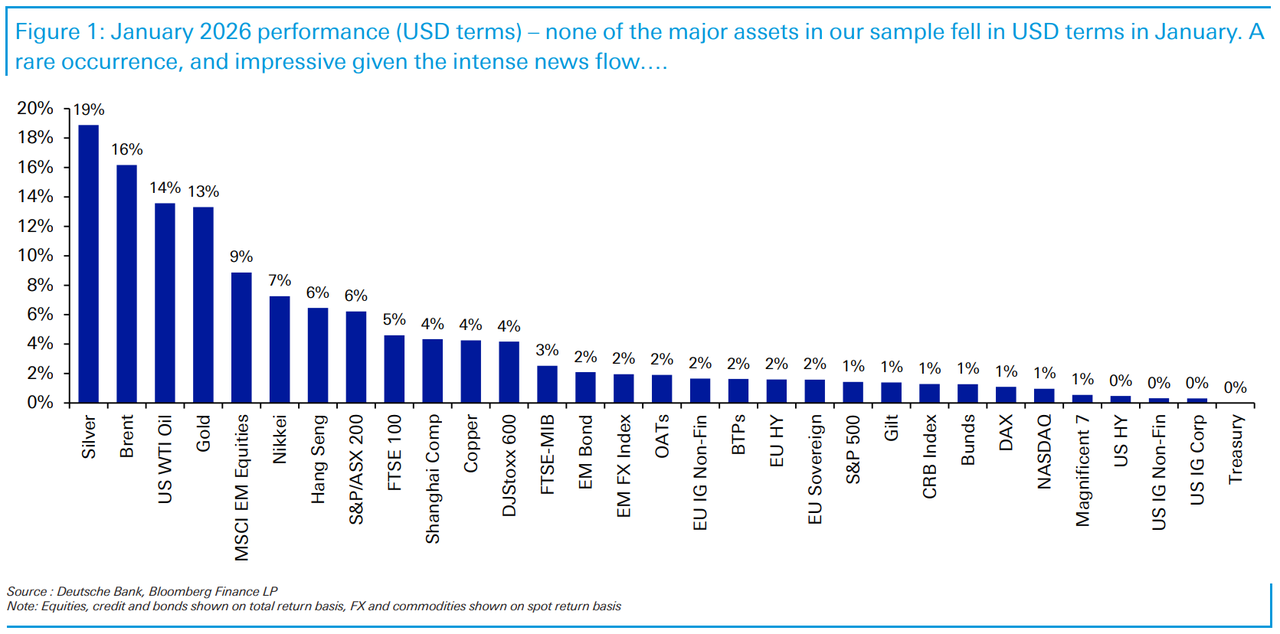
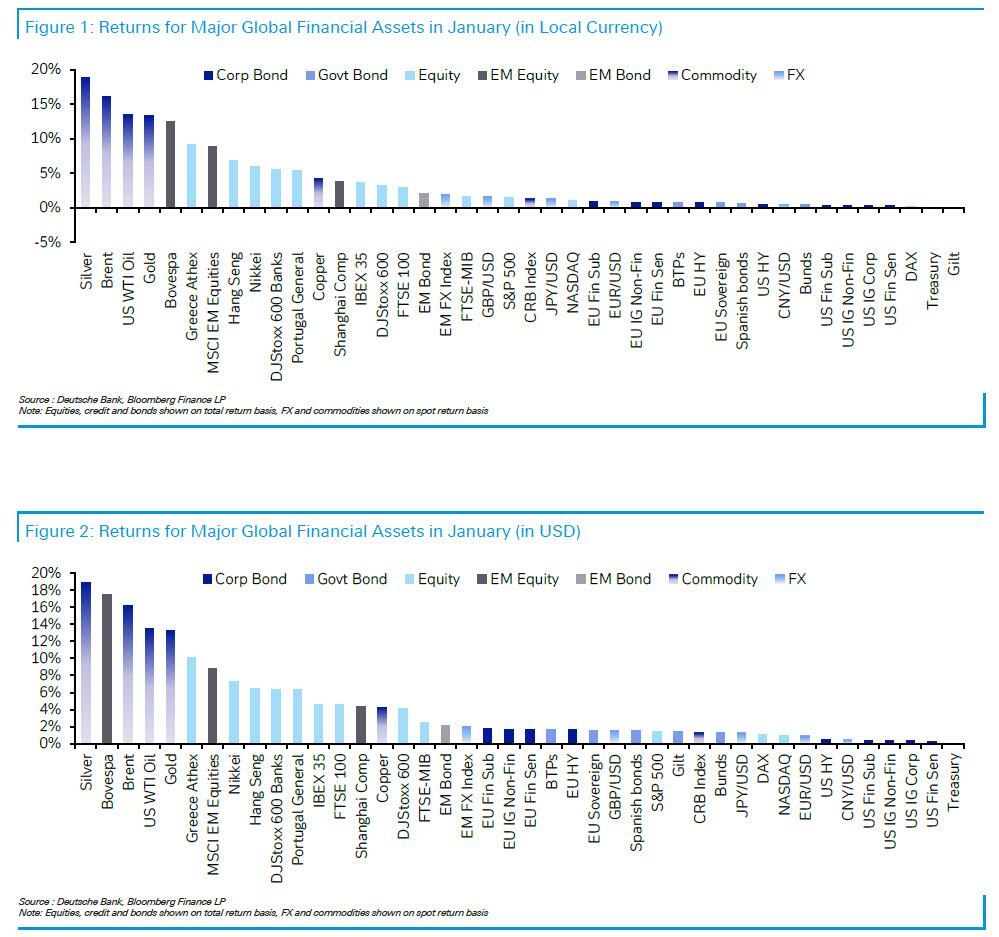
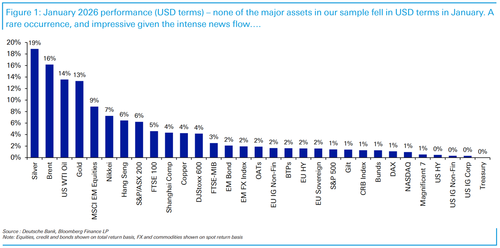
Earlier today, Deutsche Bank’s Henry Allen released his monthly performance review looking at how markets performed in January. As Jim Reid writes, “January managed to both shock and awe in various ways, yet still delivered broad based gains across all global assets in our monthly performance review when measured in USD terms—a genuinely rare occurrence. It was perhaps fitting then, that the month ended with extraordinary volatility: silver saw its largest daily fall since 1980 (36% at the intraday lows, 26.3% at the close), while Gold recorded its biggest one day decline since 2013 ( 8.95%).”
We’ll do a more detailed summary below, but here are the highlights:
The most striking feature in January was the breadth of the rally. Despite an array of risks around Venezuela, Iran, Greenland and Fed independence, nearly every major asset was still in positive territory.
Equities did well across the board, as positive data surprises continued to power risk assets. Indeed, the ISM services index hit a 14-month high, whilst the US jobs report showed unemployment ticking lower. In turn, the S&P 500 (+1.4% in total return terms) briefly poked above 7,000 for the first time, whilst the MSCI EM index (+8.9%) had its best monthly performance since November 2022.
Most notably, it was a historic and extraordinary month for precious metals, even with the late pullback. In fact, gold (+13.3%) saw its best monthly performance since September 1999, and silver (+18.9%) posted a 9th consecutive monthly gain.
Other commodities did very well, and the geopolitical risk pushed Brent crude oil (+16.2%) to $70.69/bbl, marking its biggest monthly jump in four years.
Bitcoin was one of the few major assets to end the month lower, down -10.8% to $78,197. That’s a 4th consecutive monthly decline for Bitcoin, which hasn’t happened since before the pandemic.
The US Dollar also struggled, particularly after Trump was asked about the decline, and he said “No, I think it’s great”. So the US Dollar weakened against every other G10 currency, and the dollar index also saw its worst 4-day slide since the Liberation Day turmoil last April.
Finally, there were some huge moves in Japan, where a snap election was announced for February 8. JGBs sold off amidst election pledges for more consumption tax cuts, with the 10yr yield up +18bps on the month, and the 30yr yield up another +24bps.
So January was an action-packed month. With all that’s going on, February is unlikely to be quiet.
With summary in mind, here are the details:
Markets put in a strong performance in January, as positive data surprises continued to power risk assets, with the S&P 500 briefly poking above 7,000 for the first time. But just as we saw in 2025, those headline gains masked significant volatility under the surface, as geopolitical risk rose significantly, including over Venezuela, Iran and Greenland. So that meant Brent crude oil (+16.2%) saw its biggest monthly jump in 4 years, particularly after Trump warned that a “massive Armada” was heading to Iran, which raised speculation about a US strike.
Moreover, precious metals had their biggest surge in decades, with gold prices (+13.3%) seeing their biggest monthly jump since September 1999, despite the sharp pullback at the end of the month. All that came amidst growing pressure on the US Dollar, which saw its biggest 4-day decline since the Liberation Day turmoil last year, weakening against every other G10 currency in January.
Month in Review – The high-level macro overview
Geopolitics dominated the headlines in January, with the year getting off to an eventful start. The first major event was on January 3, as Venezuelan President Nicolás Maduro was captured by US forces and taken to New York. There were immediately questions about what the market implications would be, as the US EIA have said that Venezuela has the largest proven crude oil reserves in the world, with 17% of the global total. So investors had to assess whether supply disruption in the short term might be outweighed by higher production in the long term. But outside of Venezuelan assets and some US oil companies, the wider market reaction was fairly limited.
However, events in Iran led to a much clearer oil price reaction, with Brent crude ending the month above $70/bbl again. That came as speculation mounted about some kind of US strike on Iran, and Trump himself posted on Jan 13 that he had cancelled all meetings with Iranian officials, whilst calling on protestors to take over the institutions. Then on Jan 14, Reuters reported that some personnel had been advised to leave the US military’s Al Udeid Air Base in Qatar. That was significant because the base previously saw an Iranian missile attack last June, so the story added to fears that some sort of escalation might take place imminently. However, Trump later downplayed the magnitude of tensions, saying “we’ve been told that the killing in Iran is stopping — it’s stopped… And there’s no plan for executions”. However, while this led to a brief pullback in oil prices, they then resumed their ascent as trump posted on Jan 28 that a “massive Armada is heading to Iran.” So by the end of January, Brent crude was up +16.2% to $70.69/bbl, having seen its biggest monthly jump since January 2022.
The other major geopolitical story surrounded Greenland, which escalated as the month went on. For instance on Jan 14, Trump posted that “The United States needs Greenland for the purpose of National Security.” Then on Jan 17, Trump threatened a 10% tariff on several European countries from Feb 1, which would rise to 25% in June, unless “a Deal is reached for the Complete and Total purchase of Greenland”. That led to a serious risk-off move, with the S&P 500 down -2.1% on the following session. There was even speculation about more serious European retaliation, with German finance minister Lars Klingbeil said that “We are constantly experiencing new provocations, we are constantly experiencing new antagonism, which President Trump is seeking, and here we Europeans must make it clear that the limit has been reached”. However, on Jan 21, Trump then posted that “we have formed the framework of a future deal with respect to Greenland and, in fact, the entire Arctic Region.” He also said that the Feb 1 tariffs wouldn’t proceed. So that led to a market recovery, with the S&P 500 hitting another all-time high again on Jan 27, and still ending the month +1.4% higher in total return terms
Otherwise, the Federal Reserve were in the spotlight in January, particularly after the Department of Justice began a criminal investigation that revived questions around central bank independence. That also added to the upward pressure on precious metals, with gold prices moving higher throughout the month, ultimately closing up +13.3% in its best monthly performance since September 1999. If anything, that underplays the volatility, as gold prices hit an all-time intraday record of $5,595/oz on Jan 29, before pulling back sharply to close the month at $4,894/oz, including its biggest daily decline on Jan 30 (-8.95%) since April 2013. That surge in gold prices also occurred alongside a fresh move lower for the US Dollar, with the dollar index down -1.4% in January, which included the biggest 4-day slide since the Liberation Day turmoil last April. That accelerated after Trump himself was asked about the decline, and he said “No, I think it’s great”. However, the moves stabilised after Treasury Secretary Bessent reiterated the “strong dollar policy” the next day in a CNBC appearance. Finally on Jan 30, it was also announced that Kevin Warsh had been nominated by Trump to become the next Chair of the Federal Reserve.
Despite the volatility of global events in January, risk assets still put in a strong performance overall. In part, that was thanks to upbeat global data, which was still broadly robust. For instance in the US, the ISM services index hit a 14-month high of 54.4 in December. Then the jobs report showed that the unemployment rate ticked down to 4.4% in December. Meanwhile in Europe, inflation was a bit weaker than expected, which meant expectations rose that the ECB might deliver another rate cut this year. And Euro Area growth for Q4 also surprised on the upside, at a +0.3% pace. So most of the major global equity indices still advanced in January.
Finally in Japan, there were further significant market moves. That came as a snap election was announced for February 8, with JGBs selling off amidst election pledges for more consumption tax cuts. That led to a surge in long-end yields, with the 30yr yield closing at 3.86% on Jan 20, its highest since that maturity was first launched, before coming down to end the month at 3.63%. The 10yr yield also reached its highest since 1999, closing at 2.35% on Jan 20 as well, before ending the month at 2.24%. But even with the pullback, the 10yr yield was still up +18bps on the month, and the 30yr yield was up +24bps. Meanwhile, the Bank of Japan delivered a somewhat hawkish-leaning decision, as they kept rates on hold, but they also raised their inflation outlook, whilst the outlook report reiterated their desire to keep hiking rates.
Which assets saw the biggest gains in January?
Precious metals: It was a historic month for precious metals, with gold (+13.3%) rising to $4,894/oz, in its strongest monthly performance since September 1999. Meanwhile, silver (+18.9%) rose to $85.20/oz.
Oil and gas: Geopolitical risks meant Brent crude oil moved up +16.2% in January, rising to $70.69/bbl. That reversed a run of 5 consecutive monthly declines, and was the biggest monthly jump since January 2022. Natural gas also rose, with US natural gas futures up +18.2%, whilst European natural gas futures were up +39.5%, their biggest monthly jump since June 2022.
Equities: It was another strong month for global equities, with the S&P 500 (+1.4%), the STOXX 600 (+3.2%), the Nikkei (+5.9%) and the MSCI EM index (+8.9%) all rising in total return terms. For the MSCI EM index, it was the best monthly performance since November 2022.
Euro sovereigns: With inflation surprising on the downside and markets pricing a growing likelihood of an ECB rate cut this year, Euro sovereigns were up +0.7% in total return terms.
Which assets saw the biggest losses in January?
US Dollar: The dollar index fell -1.4% in January, with the dollar itself weakening against every other G10 currency. At one point in January, the Euro moved above $1.20 for the first time since 2021, before ultimately closing at $1.185.
And visually (note bitcoin is not among the assets tracked by DB or it would have been ugly);
More in the full note available to pro subs.
Tyler Durden
Tue, 02/03/2026 – 08:20
Speedskater Erin Jackson and bobsledder Frank Del Duca picked as US flagbearers for Winter Olympics
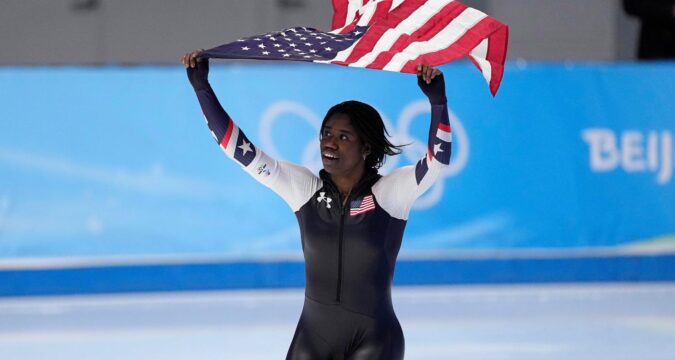
NEW YORK — Speedskater Erin Jackson and bobsledder Frank Del Duca have been chosen as the U.S. flagbearers for the Milan Cortina Winter Olympics opening ceremony on Friday.
Jackson, 33, is the first Black woman to win an individual gold medal at a Winter Games. Del Duca, a 34-year-old Army sergeant, is the first bobsledder in 70 years to carry the flag into an opening ceremony.
The U.S. Olympic and Paralympic Committee announced the names on Tuesday. It’s the third Olympics for Jackson, the second for Del Duca.
“Being chosen to represent the United States on the world stage is a tremendous honor,” Jackson said. “It’s a moment that reflects far more than one individual — it represents my family, my teammates, my hometown, and everyone across the country who believes in the power of sport. The Olympics remind us of the power of sport to connect and inspire, and I’m proud to carry that forward on the Olympic stage.”
Del Duca, with deep Italian roots, finds the opportunity especially meaningful as the games are in Italy. The opening ceremony will be unique, with events spread across several Italian cities.
U.S. bobsledder Elana Meyers Taylor was picked to carry the American flag into the opening ceremony at the 2022 Beijing Olympics but tested positive for COVID-19 — forcing the postponement of her flag-carrying chance until the closing ceremony of those Winter Games. She was replaced at the Beijing opening by speedskater Brittany Bowe, and this time, it’s Jackson’s turn to have that moment.
https://www.chicagotribune.com/2026/02/03/who-are-us-olympic-flagbearers/

Musk’s X Office In Paris Raided By Cybercrime Unit As Brussels Becomes More Unhinged
Musk’s X Office In Paris Raided By Cybercrime Unit As Brussels Becomes More Unhinged
One week after the European Commission opened a new formal investigation into Elon Musk’s X under the Digital Services Act (DSA) and expanded a separate probe launched in December 2023, X’s Paris office was raided by France’s cybercrime unit as part of an investigation into the distribution of sexual deepfakes and Holocaust denial content.
“A search is being carried out at the French premises of X by the cybercrime unit of the Paris public prosecutor’s office, together with @CyberGEND and @Europol , as part of the investigation opened in January 2025,” the Paris prosecutors’ office wrote on X early Tuesday.
The Paris public prosecutor’s office also said it is leaving the X platform and will post exclusively on Reid Hoffman’s LinkedIn and Meta-owned Instagram.
In a statement, the public prosecutor’s office said that both Elon Musk and Linda Yaccarino (former X CEO) had been summoned for voluntary questioning “in their capacity as de facto and de jure managers of the X platform at the time of the events.”
The prosecutor’s office set the date for April 20, a day frequently associated with Musk, suggesting the activists chose it as a pointed jab.
Back to the X message: “Find us on Lkd and Insta.” What a ridiculous statement from the prosecutor’s office. It only reinforces the idea that this is pure political theater, emblematic of Europe’s left-wing, unhinged censorship regime targeting a U.S. billionaire who has done more to uphold free speech than anyone else in the West.
X previously described the probe’s widening last year as “politically-motivated”… The prosecutor’s office said it was examining “alleged complicity” in offences related to the platform, including the spreading of child abuse images and sexually explicit deepfakes via the AI chatbot on X called “Grok.”
Yet, no investigation into other chatbots?
Musk has been outraged by the Brussels bureaucrats …
The tyrannical, unelected bureaucracy oppressing the people of Europe are in the second picture https://t.co/j6CFFbajJa
— Elon Musk (@elonmusk) December 7, 2025
It only appears that the censorship cartel in the EU has borrowed ideas from 20th-century Nazi dictator Adolf Hitler…
Pretty much https://t.co/0hspV4roFj
— Elon Musk (@elonmusk) December 7, 2025
Within the Trump administration, Secretary of State Marco Rubio and other officials have criticized EU internet policies.
“The EU should be supporting free speech, not attacking American companies over garbage,” Vice President JD Vance recently said.
Rubio has warned the left-wing Brussels bureaucrats that “days of censoring Americans online are over.”
With President Trump and Musk now buddies again, we suspect the president will fire off a Truth Social post about Brussels bureaucrats, and Musk will be commenting on X.
It’s clear what the Europeans are trying to do…
What’s happening in Europe is regulatory overreach that targets American free-speech innovation, and in the world of the Trump era, Brussels and its censorship cartel must be defeated.
Tyler Durden
Tue, 02/03/2026 – 08:05

Highland Park’s Reese Crosby learns ‘what it takes’ from the WNBA. Including her mom, a Chicago Sky exec.
Highland Park senior forward Reese Crosby has been around basketball all her life.
Crosby’s mother, Ann, is the vice president of basketball operations for the WNBA’s Chicago Sky.
“I was born into basketball,” Crosby said. “She started working for the Chicago Sky right before I was born, so I was into that world. It’s been a privilege going to games. I’ve probably gone to 500 games in person and gone on trips with her.”
So immersed in the sport, Crosby took it for granted until she suffered a season-ending knee injury during her sophomore season.
“I couldn’t run for five or six months and wasn’t cleared to play until nine months after my surgery,” she said. “I learned how much I loved the game of basketball, just having to sit there and not being able to help the team. It was torture. It taught me real perseverance. It was mentally hard and made me stronger and work harder.
“After that, I didn’t take another day for granted and improved drastically. College was always a goal of mine, but I was OK if it didn’t happen. After my injury, I had to play in college and didn’t want to give basketball up.”
Highland Park’s Reese Crosby, center, drives between Maine East’s Talia Rafidi, left, and Marie Matsumoto during a Central Suburban League North game in Park Ridge on Monday, Dec. 8, 2025. (John Konstantaras / News-Sun)
The 6-foot Crosby, who recently committed to play at Division II Regis University, bounced back last season to earn all-conference honors as she helped Highland Park win the Central Suburban League North title.
Shouldering more responsibilities this season, Crosby is averaging 16.7 points on 49.2% shooting, 8.0 rebounds, 2.4 assists, 1.4 steals and 1.6 blocks as a captain for the Giants (13-9, 6-3).
“We talked a lot last year, especially toward the end of the year, what her role would be in her senior year,” Highland Park coach Jolie Bechtel said. “She’s shown significant improvement, and it’s very obvious she worked very hard over the summer, attacking the basket and being an overall leader. She’s more vocal and the most experienced player on our team.”
Being around some of the best basketball players in the world made an impression on Crosby.
“It taught me what it takes to get to that point,” she said. “Most of them are athletic freaks, but they spend every waking hour working on their craft. That’s where I kind of got my work ethic, even watching my mom work so hard.”
Highland Park junior point guard Kourtnie Halperin said Crosby’s recovery from her knee injury made that clear.
“Reese worked hard to get back to the court after her injury and used her determination and dedication to basketball to get through it,” Halperin said.
Highland Park junior forward Lily Sever said Crosby, who has started since her freshman season, is a savvy player too.
“Reese always find the pockets to slide into for a layup or jumper,” Sever said. “She’s so intelligent when it comes to the sport and knows exactly where to be at all times.”
Highland Park’s Reese Crosby (22) and Kourtnie Halperin (5) celebrate during a Central Suburban League North game against Maine East in Park Ridge on Monday, Dec. 8, 2025. (John Konstantaras / News-Sun)
Highland Park sophomore guard Emily Calub agrees, noting Crosby is a playmaker.
“Reese does an amazing job at creating her own shot,” Calub said. “She has really developed her midrange game, and it’s become a strength for her.”
One of many.
“Reese is a very versatile player,” Calub said. “Not only can she take advantage of her height, but she can also handle the ball effectively under pressure.”
Bobby Narang is a freelance reporter.

Nintendo Profit Misses As Soaring Memory Prices Could Become Major Headache
Nintendo Profit Misses As Soaring Memory Prices Could Become Major Headache
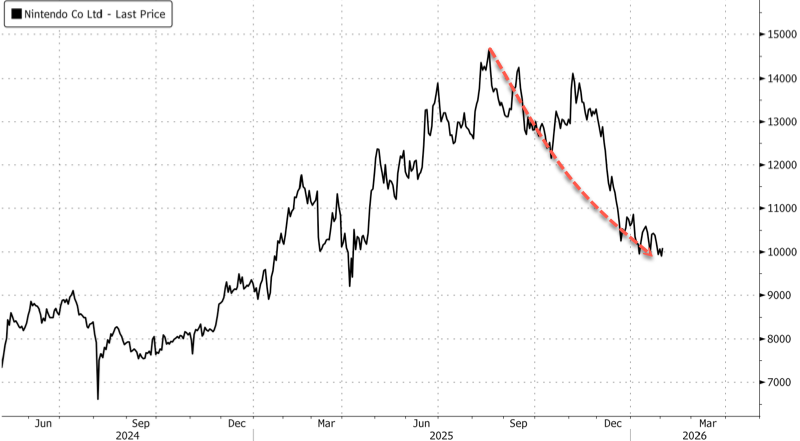
Dark storm clouds have gathered over Nintendo since the start of December, as investor concerns mount over tariffs, rising memory prices, and chatter about soft US holiday sales. The stock in Tokyo remains about one-third below its August peak.
Earnings on Tuesday reconfirmed the gloom after Nintendo reported third-quarter operating income that missed the average Wall Street estimate tracked by Bloomberg.
Switch 2 sold 7.01 million units in the December quarter, beating Bloomberg Consensus estimates, but the operating income of 155.21 billion yen, versus the 180.7 billion expected, raised investor concern.
Trade tariffs, combined with rising component costs, especially the explosion in the price of high-bandwidth memory (HBM), are pressuring thin hardware margins for the electronics company.
Goldman analyst Maho Kamiya warned clients in late Decemeber that concerns about rising memory prices and the absence of top-down tailwinds have sent Nintendo shares spiraling. The stock has yet to recover since the warning…
We have outlined a growing list of electronics companies pressured by soaring memory prices, even prompting industry insiders to tell consumers that front-running purchases of PCs, TVs, and other devices that use HBM should be “done now” because the memory shortage, caused by data center buildouts, will only get worse from here.
Snapshot of the third quarter (courtsey of Bloomberg):
Operating income 155.21 billion yen, +23% y/y, estimate 180.7 billion yen (Bloomberg Consensus)
Net income 159.93 billion yen, +24% y/y, estimate 147.5 billion yen
Net sales 806.32 billion yen, +86% y/y, estimate 815.7 billion yen
“Switch 2 sales figures can be seen as okay, but it would be hard to call them solid,” Toyo Securities analyst Hideki Yasuda wrote in a note.
Yasuda said, “Looking ahead, concerns such as rising component prices remain, and how the company will once again control costs will be the key point to watch.”
According to research firm TrendForce, HBM shortages are fueling major risks for Nintendo as chipmakers prioritize AI data-center memory, potentially limiting console production.
Hence, our most recent note:
Nintendo maintained full-year guidance:
Sees FX assumption 150 yen/USD, saw 140
Sees FX assumption 170 yen/EUR, saw 160
Still sees operating income 370.00 billion yen, estimate 419.16 billion yen
Still sees net income 350.00 billion yen, estimate 412.42 billion yen
Still sees net sales 2.25 trillion yen, estimate 2.37 trillion yen
Sees Switch 2 hardware sales 19.00 million units
Sees Switch 2 software sales 48.00 million units
Still sees original Switch hardware sales 4.00 million units
Still sees original Switch software sales 125.00 million units
Still sees dividend 181.00 yen, estimate 204.14 yen
While it may be a golden time for memory makers as prices skyrocket, it is only a matter of time before consumer electronics see price surges and even the risk of limited production. Welcome to the era of AI data centers: the HBM shortage is expected to persist into 2027.
Tyler Durden
Tue, 02/03/2026 – 07:45