Category: News
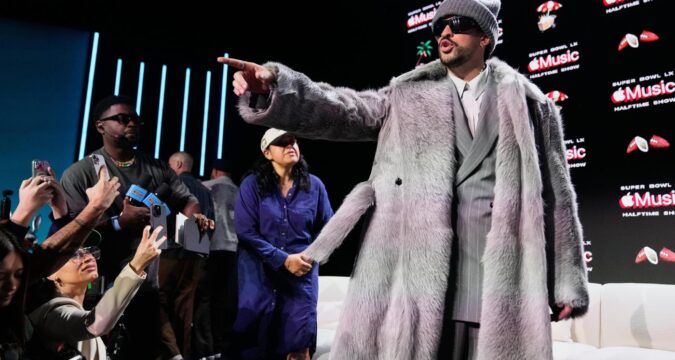
Bad Bunny’s Super Bowl halftime show: Here’s some things to expect and what they mean
NEW YORK — There are stages, and then there is the Super Bowl halftime show.
On Sunday, fresh off his historic win at the Grammys for his love letter to Puerto Rico, “Debí Tirar Más Fotos,” Bad Bunny will once again surprise audiences with a performance that is gearing up to be a landmark moment for Latino culture.
But what can you expect from his set?
What can viewers expect from Bad Bunny’s highly anticipated Super Bowl halftime performance?
What we know
Apple Music’s Zane Lowe mentioned that Bad Bunny’s Super Bowl halftime performance is 13 minutes long during an interview with the superstar on Thursday. Historically, they run 12 to 15 minutes.
In the same conversation, Bad Bunny offered few specifics about what viewers will see Sunday.
“It’s going to be a huge party,” he said, playfully dodging questions about surprise guests and other details. “What people can expect from me … I want to bring to the stage, of course, a lot of my culture. But I really don’t, I don’t want to give any spoilers. It’s going to be fun.”
Beyond that: A minute-and-a-half long trailer for the halftime show posted last month set a jovial tone for his performance. In it, Bad Bunny approaches a Flamboyan tree — more on that below — and presses play on his single “Baile Inolvidable” (“Unforgettable Dance”).
The song is modern salsa, performed with students from the Escuela Libre de Música San Juan. It is a featured single from “Debí Tirar Más Fotos,” an album that marries folkloric tradition in local Borinquen genres like bomba, plena, salsa and música jíbara with contemporary styles like reggaeton, trap and pop.
In the clip, Bad Bunny sways as he’s joined by different dancers across genders, races and ages: Those include a traditional salsa dancer in a red dress, a firefighter, a cowboy and a viejito wearing a pava (“viejito” is an affectionate term for an older man and a “pava” is a kind of straw hat). It’s representative of the superstar’s international appeal; he is currently the most-streamed artist globally on Spotify.
Will Bad Bunny perform entirely in Spanish?
All of Bad Bunny’s music is recorded in Spanish, so it seems like a safe bet. Were he to include English into his set, it would likely appear in a spoken interjection — or it would be featured in text.
In October, Bad Bunny hosted “Saturday Night Live” and said a few sentences in Spanish during his opening monologue. When he concluded, he joked in English, “If you didn’t understand what I just said, you have four months to learn,” a reference to the Super Bowl and his critics.
On Thursday, he joked that fans didn’t actually need to learn Spanish to enjoy his set — but they should be prepared to dance.
What symbols can we expect?
There’s no way to know for sure, but here are a few educated guesses.
Puerto Rican flags: In his song “La Mudanza,” Bad Bunny sings, “Aquí mataron gente por sacar la bandera / Por eso es que ahora yo la llevo donde quiera.” In English: “Here they killed people for showing the flag / That’s why I bring it everywhere I want now.” It appears to be a reference to Law 53 of 1948, better known as the Gag Law, a ruling by the Puerto Rican Legislative Assembly which attempted to suppress the independence movement on the island and criminalized displaying the Puerto Rican flag. It was repealed in 1952. It is also one of many reasons Puerto Ricans are known for waving their flag with pride for their island.
It is almost certain the flag of Puerto Rico will appear in some form on the Super Bowl stage. But its colors are worth noting. If it is shown in red, white and blue, that is the current flag of Puerto Rico and has been since 1952. If there are flags that feature light blue, that is reflective of the Puerto Rican independence movement. A black and white version of the flag has become synonymous with Puerto Rican struggle and resiliency. And if there is a flag that more closely resembles the Dominican Republic’s flag, that is the flag of the Puerto Rican mountain town Lares. It was used in the Grito de Lares, the first short revolt against Spanish rule in Puerto Rico in the 19th century.
Puerto Rican expressions: There may be a few Puerto Rican expressions uttered on stage, beyond just those found in Bad Bunny’s music. That could be anything from “Wepa!” which is used in moments of excitement, not unlike exclaiming “Wow!.” It grew in popularity after the release of Alfonso Vélez’s 1974 salsa song “El Jolgorio (Wepa Wepa Wepa).” Or “Acho, PR es otra cosa,” a phrase that became a fan chant during Bad Bunny’s performance of “Voy a llevarte pa’ PR” during his residency. It translates to “Damn, PR is something else.”
Casita: At Bad Bunny’s residency in Puerto Rico last summer, he performed across two stages. One was built to resemble a casita (“little house”), for the pari de marquesina, a house party. These structures are synonymous with Puerto Rico and the Caribbean at large.
Pavas: A symbol that is likely familiar to Bad Bunny fans everywhere, a pava is a straw hat traditionally worn by jíbaros, or Puerto Rican rural farmers. It has become a symbol of pride for the island. The singer even wore a leather version of the hat on the red carpet at the 2025 Met Gala.
Flamboyan tree: The second of the two stages at Bad Bunny’s residency focused on showcasing the island’s natural beauty with its flamboyan and plantain trees. The former are a common feature in Puerto Rican art for its flowers, most commonly seen in brilliant red, orange and yellow hues. The image of the tree evokes Puerto Rico almost as immediately as the sound of its national nocturnal residents, el coquí (a frog with a distinctive sing-song-y call heard only at night.)
El Sapo Concho: Not to be mistaken with el coquí, el sapo concho is the endangered Puerto Rican crested toad that Bad Bunny has used an animated version of in his visuals for “Debí Tirar Más Fotos.”
Traditional Puerto Rican instruments: Because much of Bad Bunny’s music pulls from bomba and plena, it is likely that a few of those traditional instruments will be on stage. Look out for a cuatro (a small, four-stringed guitar), güiro/güira (a percussive instrument made of a hollow gourd), palitos (also a percussive instrument resembling two long, wood sticks), cencerro (cow bell) and maracas. For the bomba songs, specifically, there may be a barriel (a barrel) and for plena, a pandereta (tambourine.)
Will there be special guests during the halftime show?
It is impossible to predict, but it would be surprising if Bad Bunny wasn’t joined by other performers — particularly other giants of Latin music, and probably, other Puerto Rican performers. The band Chuwi joined Benito for every night of his San Juan residency; it wouldn’t be out of the question to see them on stage for their collaboration, “Weltita.”
Other potential guests, if the residency is a framework to follow, could include Marc Anthony, Ricky Martin, Jennifer Lopez, Young Miko, Wisin y Yandel, Gilberto Santa Rosa and Alfonso Vélez. But the list goes on and on.
Will it be a political performance?
That is in the eye of the beholder. But there is historical precedent for it at the Super Bowl. In 2020, the NFL asked Jennifer Lopez to cut a segment featuring children in cages during her halftime performance, a critique of U.S. immigration policies. She refused. (Bad Bunny was actually a guest performer during that halftime show, which was headlined by Lopez and Shakira.)
Last year, Kendrick Lamar’s set was an artful confrontation of American history and racial dynamics through metaphor, as the actor Samuel L. Jackson, dressed as Uncle Sam, complained of a performance that was “too loud, too reckless, too ghetto” and reminded Lamar to “play the game.”
Bad Bunny has never steered clear of political messaging. He has criticized President Donald Trump on everything from his hurricane response in his native Puerto Rico to his treatment of immigrants. At the Grammys Sunday, he said “ICE out” while accepting his first televised award of the night. His latest tour skipped the continental U.S.; in an interview he said it was at least partially inspired by concerns that his fans could be targeted by immigration agents.
Trump, a Republican, has said he doesn’t plan to attend this year’s game, unlike last year, and he has derided Bad Bunny as a “terrible choice.”
https://www.chicagotribune.com/2026/02/06/bad-bunnys-super-bowl-halftime-show/
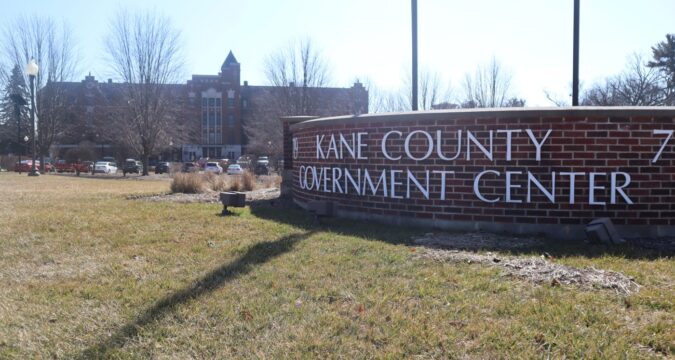
Kane County Board OKs Kimberley Young, Jennifer Abbatacola to fill vacant board seats
After being left vacant for months, the Kane County Board’s District 2 and 9 seats will officially be filled, after the board on Wednesday voted to approve two women to temporarily fill the seats.
At a special meeting on Wednesday, the board voted in support of selecting Kimberley M. Young to fill the District 2 seat and Jennifer Abbatacola to serve in the District 9 seat.
Young was one of the candidates originally floated for the District 2 seat, a recommendation that previously failed to secure board approval in November. Abbatacola was former District 9 board member Gary Daugherty’s stated pick to succeed him in the role.
These approvals come after months of deliberation among the Kane County Board, and just over a month before the March 17 primary election — during which voters will weigh in on who they want to serve in these board seats, among others.
Kane County’s District 2 board seat has been vacant since early October, when board member Dale Berman died at the age of 91. Berman was a longtime resident of North Aurora and a four-term village president, and had been serving on the Kane County Board since 2021.
The board sought applications for Berman’s seat and made several attempts to appoint someone to fill the seat until it’s up for election in the fall of 2026, but ultimately failed to vote in a candidate in November.
As for District 9, that seat opened after former board member Daugherty resigned in December, citing illness as the reason for his stepping down. The county began seeking candidates to fill Daugherty’s seat later that month, and officially declared the seat vacant in January.
For both seats, an appointment by the board is only set to last through November, per the county, when candidates for both will be voted on by residents of their respective districts in the fall general election.
The timing of the election initially prompted concern from Kane County Board Chair Corinne Pierog, who expressed the opinion that selecting a candidate to fill the seat now would enable that individual to claim to be the incumbent, thereby giving them an edge in the election.
Of the two candidates who were selected on Wednesday, Abbatacola, a Republican, is running in the March primary in advance of November’s election, while Young is not, records from the Kane County Clerk’s Office show. Another Republican candidate, Jeffrey R. Magnussen, is also running in the Republican primary for the District 9 seat, and Marc A. Guttke is running as a Democrat. Three Democrats are currently in the running for the District 2 seat: Ellen Nottke, Martha Davidson and Matthew Dingeldein.
As the selection process stretched on over the past few months, the vacant seats generated some criticism from board members, who took issue with the transparency of the process for appointing a candidate. This issue was also raised the last time the board had to fill a vacancy — the District 7 seat, which was filled in early 2025 by Alex Arroyo, who replaced former board member Monica Silva after she was elected Kane County coroner.
Another issue that arose revolved around state statute, which stipulates that a new county board member has to be approved within 60 days of a vacancy occurring. It has been fewer than 60 days since Daugherty’s resignation, but the seat formerly held by Berman has been vacant for about four months.
In November, when the board failed to approve a District 2 candidate, the Kane County State’s Attorney’s Office said it was unclear what would happen if the board passed 60 days without selecting a candidate, but said that the board could bring up a resolution to appoint someone any time before the 2026 general election and that such an appointment would be presumed valid unless challenged.
In January, following the failed recommendations for the District 2 seat, the board revisited the potential appointments, with plans to bring recommendations to the full board in February in advance of the primary election.
Over the past few weeks, ad hoc committees of several board members each meant to review interested candidates met and discussed both vacancies.
At an ad hoc committee meeting in January for the District 9 seat, Pierog addressed the transparency issues that had been raised, saying that she had devised a set of interview questions and a corresponding scoring sheet to standardize the candidate interview process.
At that meeting, board member Clifford Surges asked if the questions and scoring sheet had been used in filling the District 2 appointment, and Pierog said that they had not been made yet, as they were created “specifically because (she) wanted to make sure, per request, that (the board has) ultimate transparency in all matters with the District 9 search committee.”
Surges requested that the board begin using these questions as a “ground zero” or guideline for making appointments to the board that can be improved upon in the future, to which Pierog agreed.
The District 9 search committee, made up of board members Bill Roth, Bill Tarver and Surges, met again on Feb. 2 to interview the candidates under consideration in closed session, and came to unanimous agreement on a ranking of their picks.
As for the District 2 seat, that search committee — made up of board members Deborah Allan, Mohammad Iqbal and Myrna Molina — met in late January to put forward a candidate.
Again at that meeting, concerns about the appointment process arose.
“In trying to be fair to the people who’ve applied for this job and who truly want to serve, and trying to be fair to people who are already on the ballot and are already going door-to-door trying to convince their neighbors to vote for them, and in trying to be fair to the board as a whole so that we are not agonizing over how best to do this,” Allan said, “I’d just like to see if we could get a procedure in place.”
Allan suggested a set of rules within the county that if an election is going to be held within six months, then the board will wait to see who the voters choose, seat them and have them finish out the term. Or, the board could “treat this short-term as if it were a longer-term” when filling a seat, she said, and the Kane County Board chair could put together a committee of people from the board and community to pick a candidate to temporarily fill a seat.
Pierog said she would consider the recommendation, but reminded the committee that she, as the board chair, has “complete autonomy” over the appointment process per state statute. And she emphasized that the board chair’s seat, and all the board members’, will eventually turn over, so any procedures put in place for filling vacancies may change down the line.
“I think it has to be a full board discussion,” Roth said of the board making a set process, and suggesting that, given the time frame, a new board member would not be “up to the learning curve in five weeks.”
Then, on Wednesday, the full county board met to approve the candidates who’d been selected by the search committees.
The appointments of both candidates were ultimately approved on Wednesday, with no board members voting against the recommendations and board member Deborah Allan — who again at Wednesday’s meeting expressed concerns about the selection process and approaching primary — voting “present.”
In an email Friday, Young said that she was “honored” to receive the appointment, and that she plans to “work with the board to continue to make Kane County District 2 and the whole of Kane County … the best place in the world to live. ”
Abbatacola did not immediately return a request for comment.
Both Young and Abbatacola are set to be sworn in and seated at the board’s regular meeting on Tuesday, Pierog said.
mmorrow@chicagotribune.com
Troubled Long Grove bridge sustains first 2026 vehicle crash: ‘They try to sneak through and … they can’t’
It happened again.
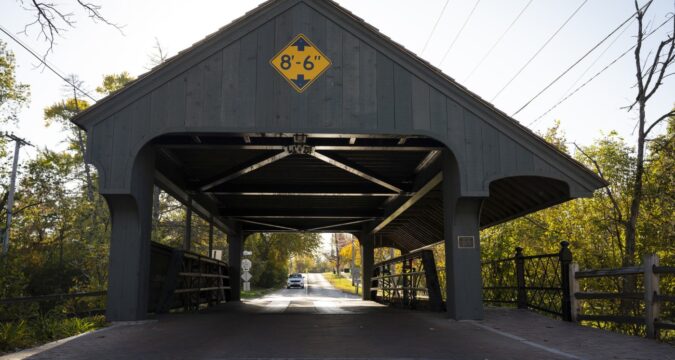
On Wednesday night, someone got their vehicle stuck in the Robert Parker Coffin Bridge, Long Grove’s iconic, historic and steel-reinforced covered bridge that has developed a reputation for catching distracted truck drivers.
According to an online tracker, the bridge has seen 71 accidents since 2018. The Lake County Sheriff’s Office said the bridge crashes have become so common that it no longer tracks them extensively, unless there are injuries or catastrophic damage to the span.
Photos online indicate the driver of a truck, owned by a solar energy company, attempted to drive through the bridge heading west when it became stuck. Both ends of the bridge have signs listing its height limit, and various other warning signs pepper the road leading up to the historic structure.
After a devastating collision in 2018, the bridge’s cover was renovated and now features a steel frame, meaning that although the crashes often cause a buzz online and around the village, damage is largely cosmetic at worst.
Long Grove Historical Society historian Aaron Underwood said last year during a lull in bridge crashes that such incidents often happen in bursts, usually after the bridge’s “local traffic” designation is lost during updates to navigation apps.
While such incidents keep the bridge in the news, Underwood said it is more than just the victim of unaware drivers, it is the symbol of Long Grove and the “town mascot.”
A miniature display at a Long Grove shop near the famous covered bridge. Incidents like the one depicted are a regular occurrence.
Local legacy
The bridge was originally built in 1906 across Buffalo Creek as a “less messy way” to get to the church, Underwood said, replacing an old wooden bridge that had required lots of upkeep.
It gained its now iconic cover in the 1970s, installed to protect the bridge both from weather and overly large vehicles, he said. Although built out of metal, the bridge was meant for horses and buggies, and underneath the wood cover, it’s largely unchanged from the 1900s.
The bridge eventually gained a reputation for being the victim of periodic vehicle strikes, frequent enough that a local merchant who owned a store nearby kept buckets of paint and some repair supplies handy at the back of his shop.
The 2018 crash saw a truck nearly take “the whole cover off,” Underwood said, but the accident proved to be a blessing in disguise, with the insurance settlement helping fund restoration work on the ageing bridge.
A school bus damages the Long Grove covered bridge in 2020.
The strikes returned soon after the bridge was reopened and continue today as motorists fail to heed the warnings on “plenty” of signs along the road, Village President Bill Jacob said in April.
“When you hear the stories, you just sit there, and you go, ‘Unbelievable,’” Jacob said. “You know: ‘I was in a hurry.’ ‘I was hungry.’ ‘I wanted to get to the other side.’ Whatever it is, and they try to sneak through and, of course, they can’t.”
Underwood said local officials are often asked why Long Grove doesn’t install a “headache bar” that trucks would strike before getting onto the bridge. He argued that there is no space to properly install it in a spot where a truck could then turn around.
That’s not to say there isn’t a steel bar causing headaches for truck drivers. The steel frame included in the renovation absorbs impacts, and the bridge cover has remained largely unharmed.
While he feels the focus on the crashes misses some of the depth to the bridge’s history, Underwood said he understands the curiosity, even if it was “unproductive.” For him, the bridge is something “magical,” leaving behind suburbia through “this little time portal.”
“If you’ve never driven across it, it’s one of those things that’s sometimes hard to put into words,” he said. “When your car goes across it, you get that kind of clackity rumble going across those wooden beams, and then you emerge (and) you’re looking at all of these buildings that are all styles from a hundred-plus years ago.”
Jacob said the bridge is part of the community’s history and is important to preserve, drawing in tourists and bringing a charm and uniqueness to the village.
https://www.chicagotribune.com/2026/02/06/long-grove-covered-bridge-2/

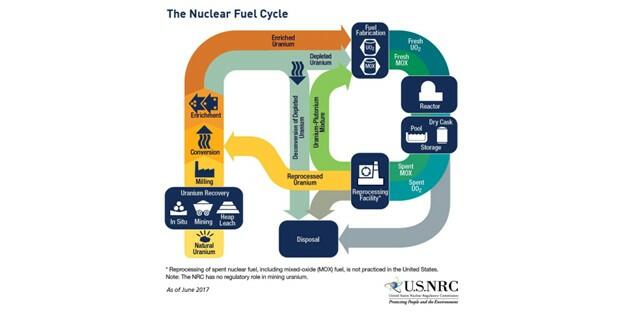
HGP Partners With Shaw To Deploy Navy’s Nuclear Reactors On Land
HGP Partners With Shaw To Deploy Navy’s Nuclear Reactors On Land
HGP Intelligent Energy is partnering with the Shaw Group to deploy U.S. Navy submarine and aircraft carrier nuclear reactors at the DOE’s Paducah, Kentucky facility.
Back in December, we covered their initial proposal to the U.S. government to utilize reactors from the Navy in an effort to find the quickest means of deploying new nuclear energy to support AI demand for government efforts like Project Genesis.
The U.S. Navy has operated the most successful nuclear program in history with over 7,500 reactor years of safe operation. It is abundantly clear that if there is a way to bring their technology and operational success to other efforts and venues, these possibilities should be pursued.
Shaw will be utilizing its previous experience with nuclear projects, including their involvement at Vogtle Units 3 and 4, to advance HGP’s CoreHeld Project through engineering, procurement, and fabrication services. Shaw’s potential scope of work includes “balance-of-plant module fabrication, piping systems, structural components, pressure vessels, and related nuclear-grade equipment.”
The Paducah, Kentucky, site has been a hotspot of nuclear fuel chain activity over the past couple years. Formerly the site of the Paducah Gaseous Diffusion Plant, the last commercial-scale, American uranium enrichment facility that closed in 2013, is being utilized by multiple companies.
General Matter, led by Founders Fund’s Scott Nolan, is developing one of the newest uranium enrichment facilities in Paducah after being awarded $900 million from the DOE in an effort to increase domestic production capacity. Global Laser Enrichment (GLE) is also working on uranium enrichment, but with a next-generation laser technology that hopes to provide lower-cost enrichment and a smaller footprint. GLE additionally looks to re-enrich some of the byproduct of previous enrichment processes with enough material stored on-site in Kentucky for GLE to become one of the largest uranium producers in the world.
With naval nuclear reactors now potentially being deployed at Paducah, it creates the perfect recipe for Kentucky to participate in the recently announced Nuclear Lifecycle Innovation Campuses program. This program aims to create mega-campuses and partnerships between state and federal governments to house the entire nuclear lifecycle within a single fence line. Considering the only uranium conversion facility in the United States is located just across the river from Paducah and owned by Solstice Materials, Kentucky appears to be taking shape as one of the leading candidates for the first campus.
Tyler Durden
Fri, 02/06/2026 – 14:20
https://www.zerohedge.com/markets/hgp-partners-shaw-deploy-navys-nuclear-reactors-land
The Way We Were: Twin sisters from Naperville captured in 1880s photo
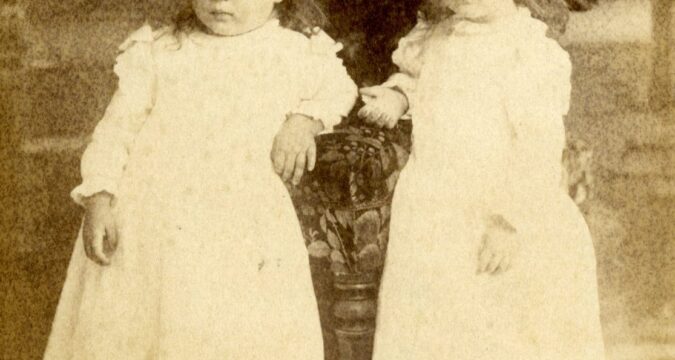
Twin sisters Ethel and Edith Rassweiler were photographed for a cabinet picture at the Kendig Studio in Naperville about 1888. You might remember Edith’s photo in the The Way We Were photo on Feb. 1, but as a grown woman jokingly dressed as a man. The girls’ father was C.F. Rassweiler, a math professor at North Central College in Naperville, according to a post on NCC’s Facebook page. The sisters also appeared in an account published in the 1913 Naperville Clarion for having traveled to Ogden, Utah, “where they spent a month camping in the mountains with their brother. They report it an ideal place for mountain climbing and an enjoyable vacation in general.”
https://www.chicagotribune.com/2026/02/06/twin-sisters-photo-naperville-rassweiler-kendig/
Orlando Edwards returns to the startling lineup as West Aurora holds off East Aurora. ‘Always a great game.’
Missing one rivalry game was more than enough, so junior guard Orlando Edwards wouldn’t deny that it was, hands down, good to be back on the court for West Aurora.
The 6-foot-3 Edwards missed nearly seven weeks with a broken bone in his dominant left hand.
“It happened at practice, doing a drill and I fell and landed on it,” Edwards said after Thursday night’s game at East Aurora. “Tonight felt great, playing with my guys again and sharing the court with all my family here.
“Playing our rivals, that team from the other side of the river, is always a great game.”
Edwards returned to the starting lineup Thursday and scored 15 points, matching junior point guard Travis Brown to share game-high scoring honors for the visiting Blackhawks in a 59-48 Upstate Eight West win at Ernie Kivisto Gymnasium.
Senior forward Lesroy Tittle, also returning to action from a high ankle sprain, came off the bench to score eight points for the Blackhawks (16-11, 9-1), who improved to 143-88 in a series that dates to 1913.
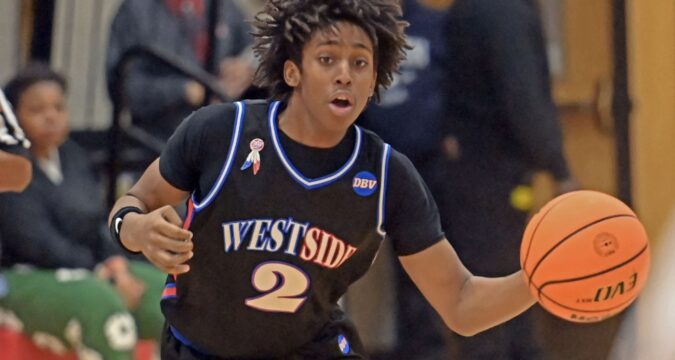
West Aurora’s Orlando Edwards (2) puts up a 3-pointer against East Aurora during an Upstate Eight West game at Ernie Kivisto Gymnasium in Aurora on Thursday, Feb. 5, 2026. (Jon Langham / The Beacon-News)
Junior guard Jaden Matthews-Thomas and junior forward Richard Bell Jr. added seven points apiece.
“It probably set him back a lot because he was playing heavy minutes early in the season,” West Aurora coach Mike Fowler said of Edwards. “The other night I put him in against Larkin and he played pretty well. Just with our matchups (Thursday), I thought it best that he stays in the lineup.
“We need someone outside of Travis to take care of the basketball at times. Hopefully, he can take on that role for our last little homestretch.”
West Aurora controls its own destiny in seeking to defend its Upstate Eight West title. The Blackhawks host Elgin on Wednesday and play Friday at South Elgin (9-17, 8-1), which trails by a half game in conference.
West Aurora’s Orlando Edwards (2) passes the ball up the court against East Aurora during an Upstate Eight West game at Ernie Kivisto Gymnasium in Aurora on Thursday, Feb. 5, 2026. (Jon Langham / The Beacon-News)
“That could be one game for the title with South Elgin,” Fowler said. “I’m confident we’ll be OK, but if we play like we did in the last quarter and a half (Thursday), South Elgin will be right there with us, too.
“We can’t play basketball like that.”
He was upset with the Blackhawks’ 22 turnovers against East Aurora, which had 19 turnovers. West Aurora seemed to be in complete control, leading 47-32 entering the fourth quarter.
Sophomore guard Jamir Malone then sparked a comeback, scoring 10 of his 11 points in a 14-2 spurt to lift the Tomcats within 52-46 with 3:00 remaining.
West Aurora’s Orlando Edwards (2) works against East Aurora’s Ryan Robinson during an Upstate Eight West game at Ernie Kivisto Gymnasium in Aurora on Thursday, Feb. 5, 2026. (Jon Langham / The Beacon-News)
“We took some ill-advised shots and let them go loose down the floor in transition,” Fowler said. “We know they play well in transition, and we’ve got guys jogging and just giving up layups.
“Somehow, we figured it out and got it done”
Baskets from Brown, Tittle and Bell, however, kept East Aurora at bay.
Junior forwards Casston Cross and Jason Moore each finished with 12 points for the Tomcats.
“We’ve got to be better with the turnovers,” Fowler said. “We had way too many down the stretch. We have to be strong with the ball.”
Edwards, meanwhile, has shown a penchant for stepping up in the rivalry game.
West Aurora’s Orlando Edwards (2) chases down a loose ball against East Aurora during an Upstate Eight West game at Ernie Kivisto Gymnasium in Aurora on Thursday, Feb. 5, 2026. (Jon Langham / The Beacon-News)
Last season, with three seniors for West Aurora sidelined by injury, Edwards teamed up with Brown in a tight game with the Tomcats.
Edwards scored two key baskets late in a 58-56 decision, including the layup that gave the Blackhawks the lead for good on a feed off a steal from Brown.
“Orlando was up and down, getting in with us here and there last year,” Fowler said. “He practiced with us and played in some games.”
Thanks to several more injuries this season, it has been a struggle for the Blackhawks to settle on regular rotations.
“Lesroy had been giving us some minutes before the injury,” Fowler said. “He’s just aggressive, physical and plays hard and can help us defending.
“Orlando is getting back into it. We’re trying to give him opportunities and get him back in the fold of playing.”
https://www.chicagotribune.com/2026/02/06/orlando-edwards-west-aurora-east-aurora/

Ronald Hicks, the next Catholic archbishop of New York, seeks ‘a church that builds bridges’
NEW YORK — Ronald Hicks is set to be installed Friday as the 11th archbishop of New York in a ceremony at the revered St. Patrick’s Cathedral in Manhattan where dignitaries and laypeople from all walks of life are expected to gather and celebrate.
Previewing the Mass to reporters on Thursday, Hicks said he will talk about his vision for one of the largest archdioceses in the nation that serves roughly 2.5 million Catholics in Manhattan, the Bronx and Staten Island in New York City, as well as seven counties to the north. He also plans to include plenty of references to Pope Leo XI, and promote themes of gratitude and the mission of the church.
“I’m going to talk just about being a church who’s made up of missionary disciples who want to go out and make disciples, and also to pass our faith on to the next generations,” he said. “I’m going to talk about a church that builds bridges, goes out to the peripheries, engages the world and lives her mission – a missionary church.”
Hicks, 58, who most recently was bishop of Joliet, Illinois, said attendees at the 2 p.m. ceremony will include Catholic Church leaders and laity, and representatives from other faiths, government, business, labor, education, the arts and first responders.
“In other words, who’s going to be there? Everyone. Everyone,” he said. “This is good because New York is a place where the whole world lives and calls home, and the Catholic Church is universal, gathering and engaging everyone. I’m excited and I’m humbled to be installed as the 11th archbishop of the archdiocese of New York.”
Hicks was chosen by Leo in December to replace the retiring Cardinal Timothy Dolan, a prominent conservative figure in the U.S. Catholic hierarchy. Dolan had submitted his resignation in February, as required when he turned 75.
The change in leadership represents a significant new chapter for the U.S. Catholic Church, which is forging a new era with the Chicago-born Leo as the first American pope. Leo and the U.S. hierarchy have already shown willingness to challenge the Trump administration on immigration and other issues, and Hicks is seen as very much a Leo-style bishop.
“What I’d like to do as archbishop is understand that in politics, in government, there are going to be things that we disagree on. But I’d also like to make sure we pay attention to what are those things we can work on together for the common good,” said Hicks, who also is from the Chicago area.
https://www.chicagotribune.com/2026/02/06/catholic-archbishop-new-york-ronald-hicks/
Illinois GOP urges early, mail voting despite Trump’s baseless fraud claims and calls to nationalize elections
The head of the Illinois Republican Party is urging GOP primary voters to cast ballots early and vote by mail despite President Donald Trump’s baseless claims that those methods lead to election fraud and spurred his recent calls for elections to be nationalized.
The dichotomy between the state GOP’s efforts and the Republican president’s comments reflects the difficulties the Illinois political party faces as it struggles for votes — and relevance — in a state where Democrats dominate state government.
In a newsletter sent to party faithful on Feb. 2, state GOP Chair Kathy Salvi noted, “Early voting will be well underway and I encourage every Republican to start preparing a clear plan to vote now.
“Early voting gives you flexibility, convenience, and certainty that your voice will be heard in this critical election,” Salvi wrote. “I encourage you to take the pledge to vote early or vote by mail — and then ask your friends, family, and fellow Republicans to do the same. When we commit early, we build momentum, strengthen our grassroots efforts, and ensure Republicans turn out strong across Illinois.”
But even as Salvi pushes early voting and vote-by-mail, she also has been encouraging “election integrity” efforts that involve supporters of Trump’s unfounded belief that the 2020 presidential election was fraudulent.
In a previous newsletter on Jan. 9, Salvi urged supporters to follow the actions of the Illinois Conservative Union and its chair, Carol Davis, a self-professed “election integrity” expert. Davis has contended “there is fraud in every election in this country,” questioned the integrity of election machinery and has said vote-by-mail ballots are susceptible to fraud and are part of a Democratic plot to do away with in-person voting.
Davis promotes her organization’s connection to Cleta Mitchell, one of Trump’s post-2020 election attorneys who unsuccessfully tried to overturn election results in several states.
Salvi also has promoted that poll watchers and others participate in “training” offered by the far-right Moline-based Illinois Freedom Alliance. The group wants bans on early voting, voting by mail and a ban on all electronic election equipment. It also promotes events by saying, “Our elections are corrupt and broken.”
Trump in recent days has called for Republicans to “nationalize the voting” in elections, contending the federal government has a role despite the Constitution’s clear language that the individual states determine how elections are to be held — a clause aimed at preventing federal government overreach.
“The federal government should get involved. These are agents of the federal government to count the votes. If they can’t count the votes legally and honestly, then somebody else should … administer the election, but they have to do it honestly,” Trump told reporters Tuesday in the Oval Office. He had cited 15 states, though not by name, as being rife with voter fraud.
Trump’s comments came just days after the FBI conducted a raid of ballots and election material used in the 2020 presidential election in Fulton County, Georgia.
Last August, on his Truth Social media platform, Trump vowed to begin an effort to “get rid of MAIL-IN BALLOTS” and voting machines.
“WE WILL BEGIN THIS EFFORT, WHICH WILL BE STRONGLY OPPOSED BY THE DEMOCRATS BECAUSE THEY CHEAT AT LEVELS NEVER SEEN BEFORE,” he wrote. “ELECTIONS CAN NEVER BE HONEST WITH MAIL IN BALLOTS/VOTING, and everybody, IN PARTICULAR THE DEMOCRATS, KNOWS THIS. I, AND THE REPUBLICAN PARTY, WILL FIGHT LIKE HELL TO BRING HONESTY AND INTEGRITY BACK TO OUR ELECTIONS.”
Trump followed that up in late October, writing on social media that the “2020 Presidential Election, being Rigged and Stolen, is a far bigger SCANDAL” than cheating in sports. Citing the 2026 midterm election, he wrote, “No mail-in or ‘Early’ Voting.”
Still, in May 2024 as a presidential candidate, Trump took a different view.
“ABSENTEE VOTING, EARLY VOTING, AND ELECTION DAY VOTING ARE ALL GOOD OPTIONS. REPUBLICANS MUST MAKE A PLAN, REGISTER, AND VOTE!” he wrote on social media.
Illinois Democrats have taken note of the Trump administration’s focus on elections, including the Department of Justice’s efforts to obtain sensitive voter information from the state — a move backed by Illinois’ three GOP members of Congress.
“Republicans are shameless in their attempts to bring America backwards,” said state Rep. Elizabeth “Lisa” Hernandez, who chairs the state Democratic Party. “We have to continue working to protect Illinoisans’ right to have their voices heard at the polls — without the risk of being targeted by their own government.”
Review: Conductor Salonen shows off his range with the Chicago Symphony
If someone has never attended a symphony orchestra concert before, this is the weekend to give it a try.
At a glance, the Chicago Symphony’s weekend program, led by Esa-Pekka Salonen, hardly seems representative of the art form. It juxtaposes the music of just two composers: one alive, the other a long-gone titan of the repertoire. But few programs have better embodied classical music’s questing spirit — that, despite the “classical” tag, this art form has always searched for new sounds and the means to realize them.
Representing the newer side of things was composer Gabriella Smith, still in her 30s but already championed by Salonen and prestigious groups like the Los Angeles Philharmonic and Kronos Quartet. Her “Lost Coast,” written for cellist (and North Shore native) Gabriel Cabezas, was inspired by a hike on the California trail of the same name, north of where she grew up in the San Francisco Bay Area. The work’s title has taken on a double meaning as Smith uses her musical pulpit to speak uncompromisingly about climate change, as she did during Thursday’s concert.
Like much of Smith’s work, “Lost Coast” is a dance between specificity and freedom. The score often instructs musicians to choose their own adventure within particular sections. One direction, at the top of the second movement: “Can use a pencil instead of a bow if preferred.” Another: “I like to hold the violin like a guitar here … but feel free to use whatever method you prefer.” Still another asks musicians to sound like Morse code, so long as their dispatch differs from their neighbor’s.
Smith’s directions might be genial, but on Thursday, “Lost Coast” was every bit as incisive as her pre-performance address. Cabezas is amplified throughout, as is a percussion station of household objects in the third movement, manned by the CSO’s Cynthia Yeh. The solo part is rarely conventionally virtuosic: Smith writes lots of fuzzed-out harmonics and slow, excruciating slides between notes, like the music is melting off the page. But the combination of the score’s emotional rawness, the CSO’s focus and Cabezas’s own deeply embodied advocacy gave the music an avant-rock thrill.
The music seemed to have lodged itself just as deeply in Salonen, who conducted with a balm-like sense of ease and authority. Salonen himself was recently tied to the Bay Area through his leadership of the San Francisco Symphony, a relationship that imploded last season.
Not only has the Finnish conductor and composer plainly taken some of the city with him on the road, via “Lost Coast” and other Bay Area-related works, but he’s more than landed on his feet. The past year has seen him accrue various curational roles at his former Los Angeles Philharmonic, the Philharmonie de Paris, and, as of last week, the Tanglewood Festival of Contemporary Music.
“Lost Coast” was placed in the middle of two pieces by the 20th century French modernist-slash-impressionist Claude Debussy: his piquant “Images” suite and tone poem “La mer.” Like Klaus Mäkelä’s smart Beethoven program in December, the arrangement and presentation of the works rejected lazy programming conventions placing the newest work at the front or rear of the concert. Instead, Salonen presented the three works as being in fluid conversation.
You could hear it, too. “Images” also has the violins and violas strum their instruments like a guitar, and a horn chorale near the end of “Lost Coast” sounds, for all the world, like it was plucked out of “La mer.”
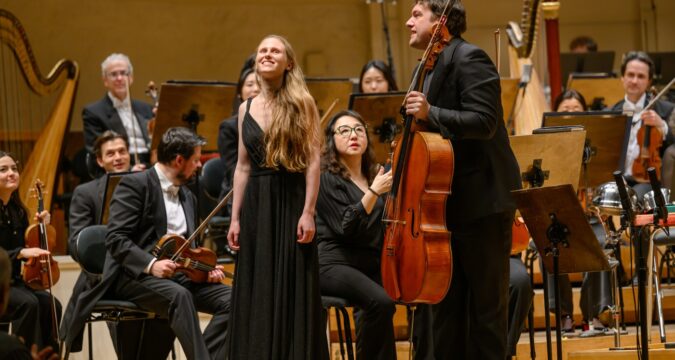
Conductor Esa-Pekka Salonen leads the Chicago Symphony Orchestra in its first performance of Smith’s “Lost Coast” with cellist Gabriel Cabezas. (Amy Aiello)
Salonen’s sleek “La mer” and “Images” sometimes called back to the prior week, when he led the music of a very different composer: Anton Bruckner. Itself not unlike a rugged coast, Bruckner’s Symphony No. 4 — here in an edition by Leopold Nowak — is often approached as something to be tamed, given its length and awkward transitions.
But even in vastly different repertoire, one could identify common denominators in Salonen’s approach. Perhaps both Debussys never dissolved into a full dream-state, floating outside of time as the composer’s music so readily can. But they did take on an uncommon lyricism and linearity, as though the string corps were made up of singers rather than instruments — singers who, of course, need to breathe.
That forward focus likewise gave the Bruckner shape, clarity and even elegance, even if the CSO’s playing could be somewhat rough around the edges at ground level. The symphony grows from its opening bars — a horn solo — but on Jan. 29 it mostly transcended that opening rather than emerged from it, with a staid opening line by principal horn Mark Almond.
Pianist Daniil Trifonov joined the CSO for that program, playing Beethoven’s Piano Concerto No. 2. After recent appearances in bigger-boned repertoire, Trifonov’s appearance was a musical and attitudinal pivot. This was not the brooding Trifonov but a boyishly delighted one, as though he was rediscovering Beethoven’s ingenuity in real time.
His left hand supplied much of the interpretation’s energy and emotion throughout—sometimes romping, sometimes tolling, something cushioning, as though wrapping the melody line in cotton padding. Later, in the cadenza — Beethoven’s own, clustering atop itself in a boisterous fugue — it quieted so much it sounded like a response from backstage.
Last week’s performance also called attention to Trifonov’s (seriously underrated) sense of humor, which is not at all at odds with his interpretive eloquence. In the first upper-register echo of the theme, his body curled inward as though entreating the sound to shrink along with him — and it did. The same thing happened in the rondo finale: After much earthy exuberance, Trifonov brought the whole thing to a cheeky, tiptoeing close.
Speaking of surprises, Trifonov offered up one with his encore: former CSO composer-in-residence Osvaldo Golijov’s “Levante,” a solo piano riff on a movement from the composer’s “Pasión según San Marcos.” In truth, “Levante” wasn’t all that left-field for Trifonov: The pianist announced over the holidays that his Christmas gift was a new piece by Golijov — likewise derived from the “St. Mark Passion” — which he will record shortly in São Paolo.
After that, in October, Deutsche Grammophon releases Trifonov’s album “My American Story: South,” focusing on Latin American music and inspired by travels with his wife, Dominican pianist Judith Ramirez.
Either way, it was a tantalizing glimpse of a new chapter for the pianist. At times, Trifonov seemed to test the outer limits of the work’s polyrhythms — more musical cheek, if sometimes muddling its tango groove. The grinning CSO corps behind him seemed just as bemused by the bonbon. This art form may be old, but newness is everywhere you look.
Hannah Edgar is a freelance critic.
“Salonen Conducts La mer” repeats 1:30 p.m. Friday and 7:30 p.m. Saturday at Symphony Center, 220 S. Michigan Ave.; tickets $39-$299 at 312-294-3000 and cso.org
https://www.chicagotribune.com/2026/02/06/review-cso-salonen/
Los nacimientos en EEUU cayeron el año pasado, sugiriendo que el repunte de 2024 fue breve
Por MIKE STOBBE
NUEVA YORK (AP) — Los nacimientos en Estados Unidos cayeron un poco en 2025, según datos provisionales recién publicados.
Se han reportado un poco más de 3,6 millones de nacimientos a través de certificados de nacimiento, es decir, unos 24.000 menos que en 2024. La disminución parece confirmar las predicciones de algunos expertos, que dudaban que un ligero aumento de nacimientos en 2024 marcara el inicio de una tendencia al alza.
Los Centros para el Control y la Prevención de Enfermedades (CDC) actualizaron sus datos provisionales de nacimientos a finales de la semana pasada, completando dos meses de datos faltantes y ofreciendo la primera buena visión del recuento del año pasado.
Los números publicados representan casi todos los bebés nacidos en 2025, según los CDC. Los datos aún se están recopilando y analizando, pero el recuento final podría añadir solo “unos pocos miles de nacimientos adicionales”, dijo Robert Anderson, quien supervisa el seguimiento de nacimientos y defunciones en el Centro Nacional de Estadísticas de Salud de los CDC.
Los expertos dicen que las personas se están casando más tarde y también se preocupan por su capacidad para tener el dinero, el seguro de salud y otros recursos necesarios para criar niños en un entorno estable.
El año pasado, la administración Trump tomó medidas para fomentar más nacimientos, como emitir una orden ejecutiva destinada a ampliar el acceso y reducir los costos de la fertilización in vitro y respaldar la idea de “bonos para bebés” que podrían alentar a más parejas a tener hijos.
Hasta ahora, solo está disponible el número de nacimientos, y no las tasas de natalidad y otra información que pueda ofrecer información sobre quiénes están teniendo bebés.
Por ejemplo, aunque los nacimientos aumentaron en 2024 respecto al año anterior, la tasa de fertilidad en realidad cayó, señaló Karen Guzzo, demógrafa familiar de la Universidad de Carolina del Norte.
La tasa de fertilidad es una estadística que describe si cada generación tiene suficientes hijos para reemplazarse a sí misma, aproximadamente dos,uno hijos por mujer. Ha estado disminuyendo en Estados Unidos durante casi dos décadas, ya que más mujeres esperan más tiempo para tener hijos o no tienen hijos en absoluto.
Para 2025, “no esperaría que las tasas de natalidad o fertilidad hayan aumentado; esperaría que cayeran porque la procreación está altamente relacionada con las condiciones económicas y la incertidumbre”, indicó Guzzo en un correo electrónico.
Además, la mayoría de los nacimientos en 2025 habrían sido de niños concebidos en 2024, cuando las personas estaban preocupadas por la economía y la polarización política, agregó.
Como tendencia general, los nacimientos y las tasas de natalidad en Estados Unidos han estado cayendo durante años. Cayeron en 2020, luego aumentaron durante dos años consecutivos después de eso, un aumento que los expertos atribuyeron en parte a los embarazos pospuestos en medio de la pandemia de COVID-19.
Una caída del 2% en 2023 situó los nacimientos en Estados Unidos en menos de 3,seis millones, el recuento más bajo en un año desde 1979.
___________________________________
The Associated Press recibe apoyo para sus coberturas de salud y ciencia de parte del Departamento de Educación Científica del Instituto Médico Howard Hughes y la Robert Wood Johnson Foundation. La AP es la única responsable del contenido.
___________________________________
Esta historia fue traducida del inglés por un editor de AP con ayuda de una herramienta de inteligencia artificial generativa.