Category: News
Bélgica convoca al embajador de EEUU por un tuit que acusa al país de antisemitismo
Associated Press
BRUSELAS (AP) — Bélgica citó el martes al embajador de Estados Unidos por una publicación en redes sociales en la que acusó al país de una persecución antisemita contra los judíos belgas, informó el ministro de Exteriores del reino.
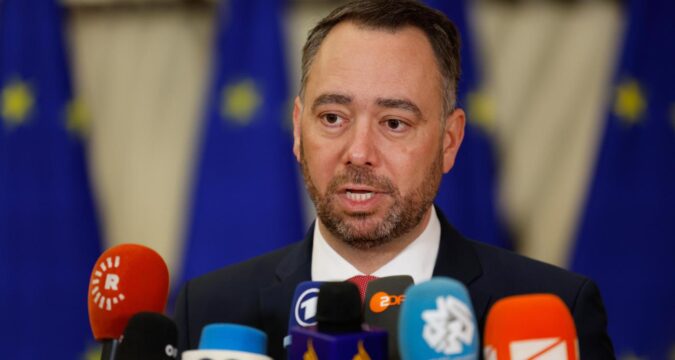
El ministro de Exteriores belga, Maxime Prévot, manifestó en una publicación en X el lunes: “Calificar a Bélgica de antisemita no solo es incorrecto, es desinformación peligrosa que socava la verdadera lucha contra el odio”. La convocatoria es una medida poco habitual entre aliados firmes.
“Un embajador acreditado ante Bélgica tiene la responsabilidad de respetar nuestras instituciones, a nuestros representantes electos y la independencia de nuestro sistema judicial”, señaló Prévot. “Los ataques personales contra un ministro belga y la injerencia en asuntos judiciales violan normas diplomáticas básicas”.
La radiodifusora nacional VRT indicó que las autoridades belgas investigan si tres hombres en Amberes estaban realizando circuncisiones sin formación médica certificada.
El embajador de Estados Unidos, Bill White, afirmó en una publicación en X que esta investigación era un “acoso inaceptable a la comunidad judía aquí en Amberes y en Bélgica”.
Añadió que visitaría a los tres hombres acusados en Amberes y pidió a la ministra de Salud de Bélgica que lo acompañara.
“Deben establecer una disposición legal para permitir que los MOHELS religiosos judíos desempeñen sus funciones aquí en Bélgica”, expresó, usando un término hebreo para un oficiante judío capacitado en la circuncisión, un principio central de la fe.
Sin ello, por lo general una persona judía no puede tener un bar mitzvá, una boda judía ni ser enterrada en un cementerio judío.
Prévot, el ministro de Exteriores, sostuvo que “la ley belga permite la circuncisión ritual cuando la realiza un médico cualificado bajo estrictas normas de salud y seguridad” y que no haría comentarios sobre una investigación en curso.
___
Esta historia fue traducida del inglés por un editor de AP con la ayuda de una herramienta de inteligencia artificial generativa.
Cinco muertos y cinco heridos en un incendio en un ático en el noreste de España
Associated Press
MADRID (AP) — Cinco personas han muerto y otras cinco sufrieron heridas leves en el noreste de España en un incendio declarado en un edificio de apartamentos, informaron los servicios regionales de emergencias a última hora del lunes.
El incendio se originó en el trastero en la parte superior de un bloque de apartamentos de cinco plantas en Manlleu, una localidad de 21.000 habitantes al norte de Barcelona, señalaron en un comunicado las autoridades regionales de Cataluña.
Por motivos que aún se desconocen, las víctimas no pudieron escapar del trastero en el ático, indicaron las autoridades. Todavía no se sabía qué causó el incendio. Las víctimas serán identificadas más tarde el martes, ya que algunos de los cuerpos estaban calcinados.
La policía catalana indicó que los cinco fallecidos eran jóvenes y no vivían en el edificio.
El líder regional de Cataluña, Salvador Illa, expresó sus condolencias por los fallecidos y sus familias en X, y manifestó que estaba “profundamente entristecido por la muerte de cinco personas”.
Entre los heridos, cuatro fueron dados de alta posteriormente de los hospitales, mientras que otro no requirió hospitalización, informaron los servicios de emergencias el martes.
La policía catalana ha abierto una investigación sobre la causa del incendio. No precisó si estaba examinando el caso como un posible homicidio.
___
Esta historia fue traducida del inglés por un editor de AP con la ayuda de una herramienta de inteligencia artificial generativa.
Visualizing The World’s Countries By Political System
Visualizing The World’s Countries By Political System
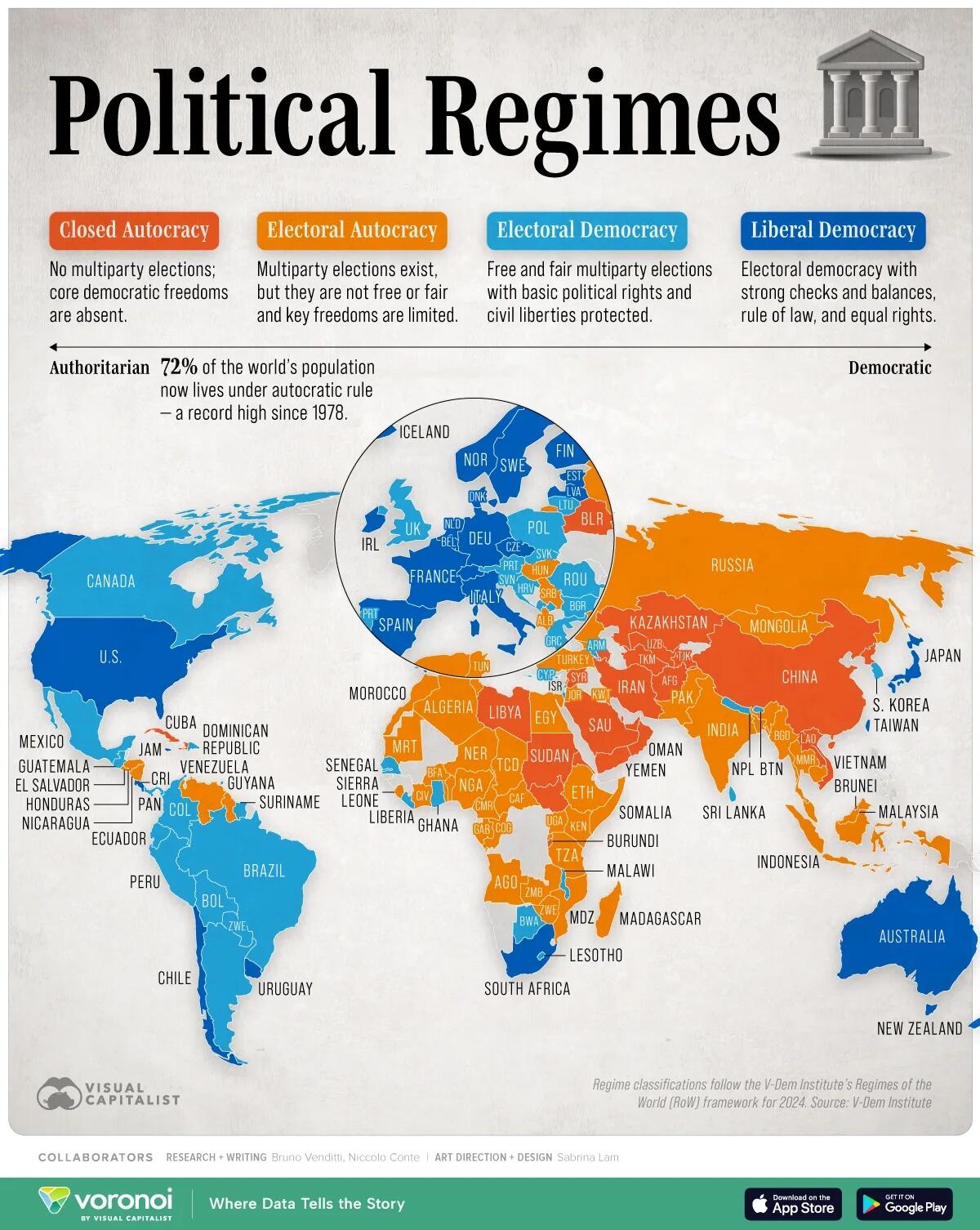
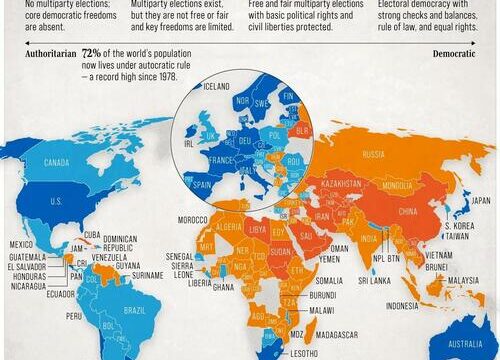
Nearly three-quarters of the world’s population now lives under autocratic rule, according to the V-Dem Institute’s 2024 Regimes of the World report. That’s the highest share since 1978.
The map below, via Visual Capitalist’s Bruno Venditti, classifies every country into one of four political systems: closed autocracy, electoral autocracy, electoral democracy, or liberal democracy.
The results point to a decades-long shift in global governance, with electoral autocracies now the most common regime type worldwide.
The Four Types of Political Regimes
-Dem classifies countries based on the competitiveness of elections, protection of civil liberties, and the strength of institutional checks and balances.
Here’s how the four categories differ:
Closed autocracies have no meaningful multiparty elections and suppress core democratic freedoms. Countries like China, Saudi Arabia, and North Korea fall into this group.
Electoral autocracies hold multiparty elections, but they are not free or fair. Media restrictions, weakened opposition, and limited civil liberties are common. This category includes countries such as Russia, India, and Turkey.
Electoral democracies conduct free and fair elections and protect basic rights, but may lack strong institutional constraints. Examples include Argentina, Poland, and the United Kingdom.
Liberal democracies go further, combining competitive elections with robust rule of law and checks and balances. Countries such as Germany, Japan, United States, and Uruguay are classified in this highest tier.
Scroll down to see how every country is classified.
Autocracy Is the Most Common Regime
Electoral autocracy is now the most common regime type in the world.
This category spans every continent, from Sub-Saharan Africa to South Asia and parts of Latin America. In many cases, democratic institutions still exist on paper, but their independence has eroded.
Large-population countries shifting toward electoral autocracy have an outsized effect on global trends. As a result, even if the number of democracies remains substantial, the share of people living under autocratic rule continues to grow.
CountryRegime
🇦🇫 AfghanistanClosed Autocracy
🇦🇱 AlbaniaElectoral Autocracy
🇩🇿 AlgeriaElectoral Autocracy
🇦🇴 AngolaElectoral Autocracy
🇦🇷 ArgentinaElectoral Democracy
🇦🇲 ArmeniaElectoral Democracy
🇦🇺 AustraliaLiberal Democracy
🇦🇹 AustriaElectoral Democracy
🇦🇿 AzerbaijanClosed Autocracy
🇧🇩 BangladeshElectoral Autocracy
🇧🇧 BarbadosLiberal Democracy
🇧🇾 BelarusClosed Autocracy
🇧🇪 BelgiumLiberal Democracy
🇧🇯 BeninElectoral Autocracy
🇧🇹 BhutanElectoral Democracy
🇧🇴 BoliviaElectoral Democracy
🇧🇼 BotswanaElectoral Democracy
🇧🇷 BrazilElectoral Democracy
🇧🇳 BruneiClosed Autocracy
🇧🇬 BulgariaElectoral Democracy
🇧🇫 Burkina FasoElectoral Autocracy
🇧🇮 BurundiClosed Autocracy
🇰🇭 CambodiaElectoral Autocracy
🇨🇲 CameroonElectoral Autocracy
🇨🇦 CanadaElectoral Democracy
🇨🇻 Cape VerdeElectoral Democracy
🇨🇫 Central African RepublicElectoral Autocracy
🇹🇩 ChadElectoral Autocracy
🇨🇱 ChileLiberal Democracy
🇨🇳 ChinaClosed Autocracy
🇨🇴 ColombiaElectoral Democracy
🇰🇲 ComorosElectoral Autocracy
🇨🇬 Congo (Brazzaville)Electoral Autocracy
🇨🇷 Costa RicaLiberal Democracy
🇨🇮 Côte d’IvoireElectoral Autocracy
🇭🇷 CroatiaElectoral Democracy
🇨🇺 CubaClosed Autocracy
🇨🇾 CyprusElectoral Democracy
🇨🇿 CzechiaLiberal Democracy
🇩🇰 DenmarkLiberal Democracy
🇩🇴 Dominican RepublicElectoral Democracy
🇪🇨 EcuadorElectoral Democracy
🇪🇬 EgyptElectoral Autocracy
🇸🇻 El SalvadorElectoral Autocracy
🇪🇷 EritreaClosed Autocracy
🇪🇪 EstoniaLiberal Democracy
🇸🇿 EswatiniElectoral Autocracy
🇪🇹 EthiopiaElectoral Autocracy
🇫🇮 FinlandLiberal Democracy
🇫🇷 FranceLiberal Democracy
🇬🇦 GabonElectoral Autocracy
🇬🇲 GambiaElectoral Democracy
🇬🇪 GeorgiaElectoral Autocracy
🇩🇪 GermanyLiberal Democracy
🇬🇭 GhanaElectoral Democracy
🇬🇷 GreeceElectoral Democracy
🇬🇹 GuatemalaElectoral Democracy
🇬🇾 GuyanaElectoral Autocracy
🇭🇹 HaitiClosed Autocracy
🇭🇳 HondurasElectoral Autocracy
🇭🇺 HungaryElectoral Autocracy
🇮🇸 IcelandLiberal Democracy
🇮🇳 IndiaElectoral Autocracy
🇮🇩 IndonesiaElectoral Autocracy
🇮🇷 IranClosed Autocracy
🇮🇪 IrelandLiberal Democracy
🇮🇱 IsraelElectoral Democracy
🇮🇹 ItalyLiberal Democracy
🇯🇲 JamaicaLiberal Democracy
🇯🇵 JapanLiberal Democracy
🇯🇴 JordanElectoral Autocracy
🇰🇿 KazakhstanClosed Autocracy
🇰🇪 KenyaElectoral Autocracy
🇽🇰 KosovoElectoral Democracy
🇰🇼 KuwaitElectoral Autocracy
🇱🇦 LaosClosed Autocracy
🇱🇻 LatviaLiberal Democracy
🇱🇧 LebanonElectoral Autocracy
🇱🇸 LesothoElectoral Democracy
🇱🇷 LiberiaElectoral Democracy
🇱🇾 LibyaClosed Autocracy
🇱🇹 LithuaniaElectoral Democracy
🇱🇺 LuxembourgLiberal Democracy
🇲🇬 MadagascarElectoral Autocracy
🇲🇼 MalawiElectoral Democracy
🇲🇾 MalaysiaElectoral Autocracy
🇲🇻 MaldivesElectoral Democracy
🇲🇹 MaltaElectoral Democracy
🇲🇷 MauritaniaElectoral Autocracy
🇲🇺 MauritiusElectoral Autocracy
🇲🇽 MexicoElectoral Autocracy
🇲🇳 MongoliaElectoral Autocracy
🇲🇪 MontenegroElectoral Democracy
🇲🇦 MoroccoElectoral Autocracy
🇲🇿 MozambiqueElectoral Autocracy
🇲🇲 MyanmarElectoral Autocracy
🇳🇵 NepalElectoral Democracy
🇳🇱 NetherlandsLiberal Democracy
🇳🇿 New ZealandLiberal Democracy
🇳🇮 NicaraguaElectoral Autocracy
🇳🇪 NigerElectoral Autocracy
🇳🇬 NigeriaElectoral Autocracy
🇰🇵 North KoreaClosed Autocracy
🇳🇴 NorwayLiberal Democracy
🇴🇲 OmanClosed Autocracy
🇵🇰 PakistanElectoral Autocracy
🇵🇦 PanamaElectoral Democracy
🇵🇾 ParaguayElectoral Democracy
🇵🇪 PeruElectoral Democracy
🇵🇱 PolandElectoral Democracy
🇵🇹 PortugalElectoral Democracy
🇶🇦 QatarClosed Autocracy
🇷🇴 RomaniaElectoral Democracy
🇷🇺 RussiaElectoral Autocracy
🇷🇼 RwandaElectoral Autocracy
🇸🇦 Saudi ArabiaClosed Autocracy
🇸🇳 SenegalElectoral Democracy
🇷🇸 SerbiaElectoral Autocracy
🇸🇨 SeychellesLiberal Democracy
🇸🇱 Sierra LeoneElectoral Autocracy
🇸🇬 SingaporeElectoral Autocracy
🇸🇰 SlovakiaElectoral Democracy
🇸🇮 SloveniaElectoral Democracy
🇸🇧 Solomon IslandsElectoral Democracy
🇸🇴 SomaliaElectoral Autocracy
🇿🇦 South AfricaLiberal Democracy
🇸🇸 South SudanClosed Autocracy
🇪🇸 SpainLiberal Democracy
🇱🇰 Sri LankaElectoral Democracy
🇸🇩 SudanClosed Autocracy
🇸🇷 SurinameElectoral Democracy
🇸🇪 SwedenLiberal Democracy
🇨🇭 SwitzerlandLiberal Democracy
🇸🇾 SyriaClosed Autocracy
🇹🇼 TaiwanLiberal Democracy
🇹🇯 TajikistanClosed Autocracy
🇹🇿 TanzaniaElectoral Autocracy
🇹🇭 ThailandElectoral Autocracy
🇹🇬 TogoElectoral Autocracy
🇹🇹 Trinidad and TobagoElectoral Democracy
🇹🇳 TunisiaElectoral Autocracy
🇹🇷 TurkeyElectoral Autocracy
🇹🇲 TurkmenistanClosed Autocracy
🇺🇬 UgandaElectoral Autocracy
🇦🇪 United Arab EmiratesClosed Autocracy
🇬🇧 United KingdomElectoral Democracy
🇺🇸 United StatesLiberal Democracy
🇺🇾 UruguayLiberal Democracy
🇺🇿 UzbekistanClosed Autocracy
🇻🇺 VanuatuElectoral Democracy
🇻🇪 VenezuelaElectoral Autocracy
🇻🇳 VietnamClosed Autocracy
🇾🇪 YemenClosed Autocracy
🇿🇲 ZambiaElectoral Autocracy
🇿🇼 ZimbabweElectoral Autocracy
Where Liberal Democracy Persists
Liberal democracies are concentrated in Western Europe, parts of East Asia, Oceania, and North America.
Nordic countries such as Sweden, Norway, and Finland remain among the strongest performers. So do nations like Australia, New Zealand, Japan, and Taiwan.
However, even among established democracies, concerns about polarization, declining trust in institutions, and pressure on judicial independence have intensified in recent years.
While democratic systems still govern many countries, the overall global trend shows autocratic systems expanding their reach in terms of population.
Methodology
The classifications are based on the V-Dem Institute’s 2024 Regimes of the World dataset, which evaluates countries across indicators including electoral integrity, civil liberties, judicial independence, and executive constraints.
Countries are then grouped into one of four regime types to provide a simplified view of the global political landscape.
If you enjoyed today’s post, check out The World’s 50 Largest Economies by GDP in 2026 on Voronoi, the new app from Visual Capitalist.
Tyler Durden
Tue, 02/17/2026 – 04:15
https://www.zerohedge.com/geopolitical/visualizing-worlds-countries-political-system
Impoverishment Of Spaniards Is The Result Of Years Of Interventionist Policies
Impoverishment Of Spaniards Is The Result Of Years Of Interventionist Policies
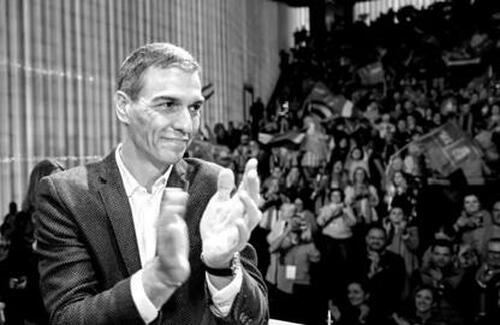
Inflation, bloating GDP with public spending and immigration and hidden unemployment are the ingredients of the so-called “economic miracle” of the Sánchez administration.
Spain closes 2025 with the consumer price index (CPI) rate above the euro area average and higher than all the large economies in Europe.
Cumulative inflation, measured by CPI, during Sánchez’s term reached 24.8%. Housing and food have risen by almost twice as much as the headline CPI.
The reality of Spain is that the loss of purchasing power and the impoverishment of Spaniards are the result of years of interventionist policies.
Home purchase prices have soared by more than 38%, housing-related expenses (rent, utilities, maintenance) have risen by more than 30%, and food prices are up around 38%.
The “real shopping basket” studies find increases of between 40% and 60% in basic products between 2019 and 2025, showing that inflation in essential goods has been far higher than the official average.
Between 2019 and 2025, real wages in Spain have fallen by 0.3%, according to CaixaBank, but the picture is much worse if we look at net real wages, which have fallen by more than double because the government refused to index taxes to inflation and has sharply increased the fiscal burden of families and businesses.
GDP growth, productivity, and the statistical mirage
Government propaganda claims that productivity and GDP per capita “grow” by using the pandemic collapse as the starting point of the series. In other words, because Spain fell more than anyone else, now it “grows.” The reality is very different.
Labour productivity per occupied person, compared with the EU average, has fallen from 99.8% in 2018 to 97%. Bouncing back is not growing, and even less so when the government is bloating GDP with government spending and immigration.
A quarter of Spain’s net real GDP gain over 2019‑2025 is directly explained by higher public consumption, and more if you include EU‑funded public investment and subsidies classified under other items, according to CaixaBank Research.
Furthermore, real GDP per capita is expected to grow by a mere 1.1% between 2017 and 2026, according to the IMF. The large increase in immigration disguises a weak productivity model inflated by debt and public spending.
Spain’s socialist “growth” model, doped by immigration and public spending, leaves weaker productivity growth and stagnant GDP per capita
This is where the statistical mirage of Spain’s alleged “superior” growth becomes evident: headline GDP is inflated by a strong increase in immigrant population, a ballooning public sector, and the injection of one-off EU funds, while GDP per capita and productivity stagnate or worsen.
Spain’s socialist “growth” model, doped by immigration and public spending, leaves weaker productivity growth and stagnant GDP per capita, dependent on an annual net debt issuance of more than 50 billion euros. It is a recipe for ruin.
In purchasing power standards, Spain’s GDP per capita was 91% of the EU‑27 average in 2019 and is now around 90%, thus still below its pre‑Covid relative position despite the “strong growth” propaganda.
That implies an average annual real GDP per capita growth of only about 1.1–1.4% over 2019–2025. In other words, by 2025 Spain had finally surpassed its 2019 real GDP per capita, but the net gain per person after six years is modest, disguised by a large increase in government spending and one-off EU funds, and much smaller than the headline cumulative GDP growth figures suggest.
Hidden unemployment – another hallmark of the Sanchez government
In 2021, with the labour market “reform,” it became mandatory to convert short-term and seasonal contracts into “discontinuous permanent” contracts.
With this statistical regulatory change, people on this type of contract are not counted as unemployed even when they are not working, and also if they are receiving unemployment benefits.
Thus, it is no surprise that in nine provinces there are more people receiving unemployment benefits than officially registered unemployed.
Official labour office (SEPE) statistics show that in Almería, Huelva, Jaén, the Balearic Islands, Huesca, Teruel, Soria, Castellón, and Cáceres, the unemployment coverage rate exceeds 100%, meaning there are more unemployment benefit recipients than officially unemployed.
In January 2019, the number of jobseekers “with an employment relationship” was 280,389. In December 2025, the figure was 892,933, more than three times higher.
This means that effective unemployment has hardly improved at all since 2019, and the real effective unemployment rate is around 13.6% compared with the 9.9% official figure.
The activity rate has been stagnant at 59% since 2019, which is another example of a weak labour market.
At the end of December 2025, the total number of people registered with SEPE seeking work stood at 3,854,911, which means there are 1,446,241 more people not working than the official “registered unemployment” figure.
Thus, registered unemployment has fallen by 152,048, while real unemployment (the number of people registered with SEPE who are not working) would have increased by 50,609.
The number of people not counted as unemployed in SEPE data in December reached 1,893,134 and represents 44% of the total number of registered job seekers. The number of inactive people receiving unemployment benefits increased in 2025 compared with 2024 by 64,175.
A model based on propaganda, not reality
Spain’s economic miracle is just a statistical mirage. Spain’s “superior” GDP growth is not due to each person producing more (down, -1.7% 4Q2019-4Q2025, as the working population grew by 12.5%, but GDP by only 10.6%), and the unemployment reduction is distorted by the record number of inactive workers not considered unemployed even if they get an unemployment subsidy. The number has tripled since 2019.
Sánchez has implemented a model based on propaganda, not reality, sweeping real unemployment under the rug, doping GDP with debt, immigration, and European funds, and leaving a reality of worse net real wages and atrocious productivity.
Spain may seem like an economic growth miracle in headlines, but details show a time bomb that will explode once the placebo effect of debt fades and immigration’s net negative impact on public accounts soars.
Tyler Durden
Tue, 02/17/2026 – 03:30
https://www.zerohedge.com/economics/impoverishment-spaniards-result-years-interventionist-policies
Russia Flexing Arctic Nuclear Muscle Along Finnish Border, Defense Minister Warns
Russia Flexing Arctic Nuclear Muscle Along Finnish Border, Defense Minister Warns
Arctic security is now central to Europe’s stability, Finland’s defense minister has said, warning that Russia is rebuilding Cold War–style military infrastructure along Finland’s border while fortifying its nuclear stronghold in the High North.
He also made clear his view that United States military might is very much needed, at least in the short term. Defense Minister Antti Häkkänen said Moscow is doubling down on its Arctic posture: “Russia has most of their biggest strategic capabilities in nuclear, submarines, long-range bombers in the Kola Peninsula area,” he stated in a fresh interview.
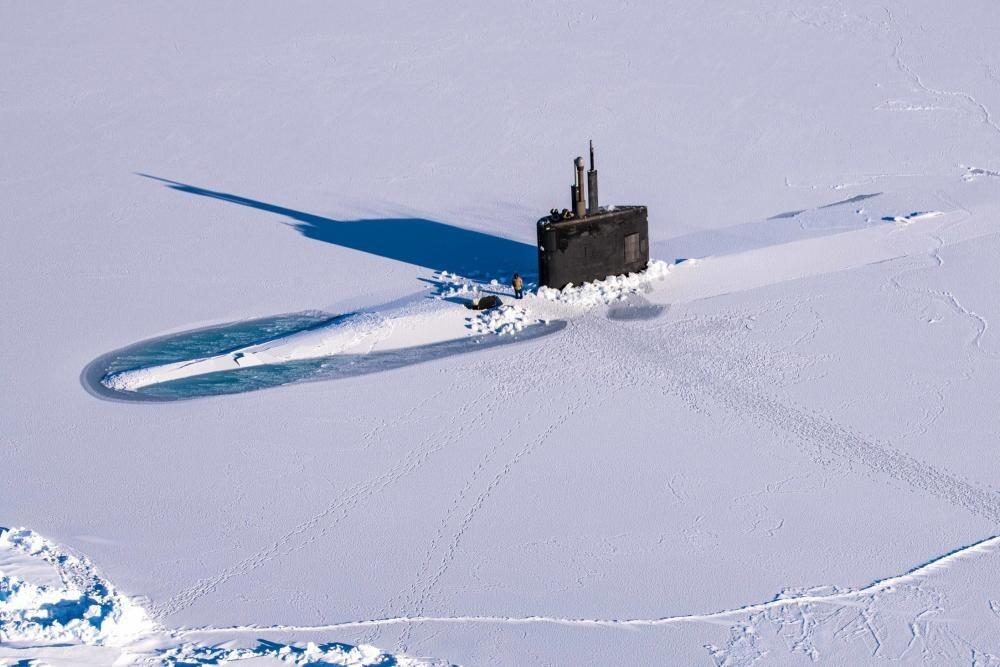
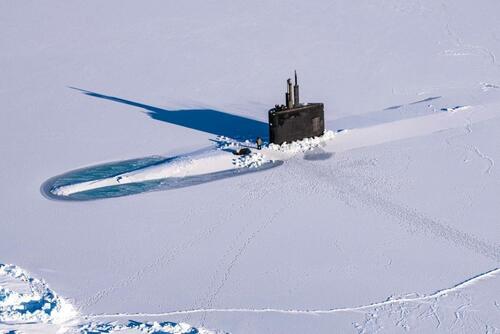
Arctic rivals Washington & Moscow: The Los Angeles-class fast-attack submarine USS Pasadena
“They are building new military facilities along our border, same as the Cold War. It would be wise to watch the Arctic and build Arctic capabilities” for deterrence, Häkkänen continued.
According to the publication he spoke to:
The Kola Peninsula – a 100,000 square kilometer region in far northwestern Russia – hosts the majority of the country’s sea-based strategic nuclear arsenal, such as submarines, as well as long-range aviation assets.
As for ongoing discussions within Europe to find an eventual alternative to the US nuclear umbrella, the Finnish defense chief explained his view that “In the longer term, it would be better that the Europeans have their strong capabilities.” He added: “But in the short, and even mid-term, we need the US. It’s crucial to European security.”
France and the UK offering to extend their nuclear deterrent across the continent is “good news” – Häkkänen conceded, but added that ultimately “That’s not the question now.”
Lately, Russia’s Foreign Ministry has sought to made clear that the Kremlin believes the Arctic should remain “a region of peace, dialogue and equal cooperation.”
The prior comment was issued related to the United States eyeing control over Greenland. A key part of the Trump administration’s argument is that Russia and China threaten waters off Greenland – a view firmly rejected by both Moscow and Beijing.
🇷🇺🇬🇱🇺🇸 Lavrov: If Greenland is militarized against Russia, we will respond with appropriate countermeasures, including military-technical ones. The Arctic must remain a zone of peace. pic.twitter.com/2JtnrGS3fS
— DD Geopolitics (@DD_Geopolitics) February 11, 2026
President Trump has also claimed on the subject of Greenland that the large island is “vital” to his proposed Golden Dome air and missile defense system. But again, Russia is vowing it would respond if such significant assets were placed on Greenland.
Tyler Durden
Tue, 02/17/2026 – 02:45
Malasia y Japón planean gran proyecto transfronterizo de captura de carbono pese a dudas climáticas
Por ANTON L. DELGADO
BANGKOK (AP) — Japón quiere enviar emisiones de dióxido de carbono a Malasia en un proyecto pionero en el sudeste asiático para la captura y almacenamiento de dióxido de carbono, un proceso muy debatido que, según críticos, es más simbólico que eficaz para frenar el cambio climático.
Pese a esas dudas, Malasia se está posicionando como el centro del sudeste asiático para esta tecnología alternativa, un proceso de tres pasos que captura, transporta y entierra dióxido de carbono, un gas que contribuye al cambio climático. Cerca del 81% de la electricidad de Malasia se genera a partir de combustibles fósiles, y los activistas climáticos sostienen que la captura de CO2 es una distracción costosa frente a acciones probadas para reducir emisiones, como la transición a energías renovables.
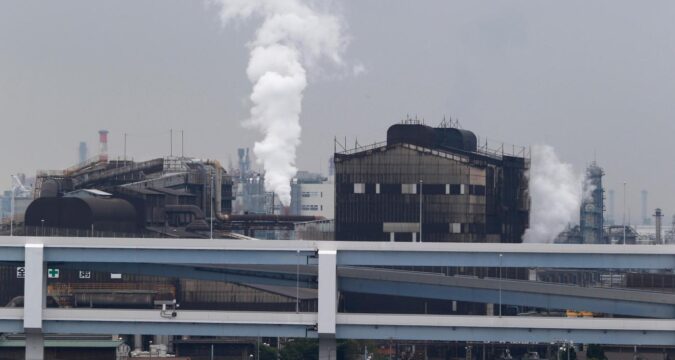
Japón, uno de los mayores emisores de dióxido de carbono del mundo, planea enviar emisiones de sus industrias altamente contaminantes —que abarcan generación eléctrica, refinación de petróleo, cemento, transporte marítimo y acero— a Malasia en los próximos años. Si el proyecto tiene éxito, los expertos señalan que podría abrir camino para otras naciones del sudeste asiático con potencial de almacenamiento de dióxido de carbono, como Indonesia y Tailandia.
Los detractores afirman que esto ralentizará el avance de unos esfuerzos globales para reducir emisiones, que ya llevan una trayectoria lejos de sus objetivos.
“El plan traslada peligrosamente la carga del cambio climático a Malasia en lugar de a Japón”, advirtió Rachel Kennerley, especialista en captura de dióxido de carbono del Center for International Environmental Law, con sede en Washington.
Dudas sobre la captura de dióxido carbono
El controversial proceso comienza con la captura de emisiones directamente desde una fuente contaminante, como una refinería o una central eléctrica. Esto puede hacerse de distintas maneras, por ejemplo, adaptando una instalación para que emita directamente hacia un lugar de almacenamiento o construyendo estructuras similares a aspiradoras para succionar las emisiones.
Aunque Japón y Malasia aún no han compartido planes detallados, es probable que luego sea necesario separar el dióxido de carbono de los otros gases capturados que se emiten durante los procesos industriales.
Después, el dióxido de carbono se licuará y más tarde se transportará en barcos diseñados especialmente hacia sitios de enterramiento, probablemente en yacimientos de gas agotados frente a la costa del estado malasio de Sarawak, en la isla de Borneo.
Tras inyectar el carbono licuado en el subsuelo, el sitio tendrá que ser monitoreado para detectar fugas.
Algunos gobiernos y gigantes de los combustibles fósiles como Exxon Mobil y Shell promueven la estrategia como una solución climática que da tiempo a países e industrias para transitar hacia energías más limpias.
La primera instalación europea de almacenamiento de dióxido de carbono en el mar, que tomará emisiones de Dinamarca y las inyectará en el lecho marino bajo el mar del Norte, tiene previsto comenzar a operar a mediados de 2026. Una instalación noruega inaugurada el año pasado está probando envíos transfronterizos.
Grant Hauber, del Institute for Energy Economics and Financial Analysis, con sede en Estados Unidos, comentó que hay “un aumento teórico casi fantasioso” del interés por la captura de dióxido de carbono. Añadió que “ofrece una promesa tentadora que simplemente no se cumplirá”.
Aunque la Agencia Internacional de la Energía considera la captura, utilización y almacenamiento de dióxido de carbono una herramienta para frenar el cambio climático, el más reciente escenario de Cero Emisiones Netas de la AIE pronostica que aportará menos del 5% de las reducciones de emisiones para 2050.
Malasia impulsa el proyecto de captura
Malasia aprobó el año pasado una ley para promover la industria de captura de dióxido de carbono. Sin aportar detalles, el Ministerio de Economía, que declinó hacer comentarios, proyectó que el sector incipiente podría sumar hasta 250.000 millones de dólares a la economía en 30 años.
La empresa estatal de petróleo y gas de Malasia, Petronas, encabeza la construcción de 1.100 millones de dólares de lo que será la mayor instalación de almacenamiento de dióxido de carbono en alta mar del mundo, cuya operación está prevista para comenzar hacia el final de la década. Petronas declinó hacer comentarios.
Eqram Mustaqeem, quien hizo campaña contra la captura de carbono en Malasia, afirmó que en lugar de invertir en acciones probadas de descarbonización, como el despliegue de energía solar o el desarrollo de la red eléctrica, “estamos gastando grandes cantidades de dinero en una tecnología que está rindiendo por debajo de lo esperado y no está probada”.
Japón prueba un modelo transfronterizo
Los combustibles fósiles generan la mayor parte de la energía en Japón, que está entre los cinco mayores emisores de dióxido de carbono del mundo.
Japón está invirtiendo en nueve instalaciones de almacenamiento, tres de ellas en Malasia, para intentar reducir sus emisiones netas. Calcula que para 2030 los recintos almacenarán 20 millones de toneladas de gas al año, aproximadamente el 2% de las emisiones anuales de Japón.
Es probable que Malasia reciba un pago, aún no determinado, por tonelada de emisiones almacenadas. Japón podría entonces restar esas emisiones de su producción total de dióxido de carbono.
Funcionarios de las agencias estatales japonesas que lideran el proyecto —el Ministerio de Economía, Comercio e Industria y la Japan Organization for Metals and Energy Security, o JOGMEC— no respondieron a solicitudes de comentarios.
Documentos gubernamentales muestran que una serie de empresas japonesas pretende enviar emisiones a Malasia.
Captura de dióxido de carbono o “colonialismo climático”
Ayumi Fukakusa, del grupo activista Friends of the Earth Japan, calificó la idea de exportar emisiones a otros países como “colonialismo del carbono”.
Además de las dudas sobre la eficacia de la captura de dióxido de carbono, los críticos también se oponen a la idea de gestionar las emisiones en lugar de reducirlas.
Kennerley, del Center for International Environmental Law, señaló: “Japón puede seguir contaminando y alimentando el cambio climático, mientras afirma ‘limpiar’ sus emisiones enviando el carbono a Malasia”. Agregó que eso convertirá a Malasia en “un vertedero de dióxido de carbono para la contaminación industrial” y restará impulso a la acción climática.
___
La cobertura climática y ambiental de The Associated Press recibe apoyo financiero de múltiples fundaciones privadas. AP es la única responsable de todo el contenido. Consulte las normas de AP para trabajar con filantropías, una lista de patrocinadores y las áreas de cobertura financiadas en AP.org.
EU Prepares €4 Trillion Eurobond Push As Russia Eyes Dollar Comeback
EU Prepares €4 Trillion Eurobond Push As Russia Eyes Dollar Comeback
Submitted by Thomas Kolbe
The European Union is steering purposefully toward the introduction of Eurobonds. At the preparatory EU summit at Alden Biesen Castle in Belgium, numerous signs suggest that the multi-billion-euro Draghi plan could soon be set in motion. At the same time, geopolitically, a possible Russian comeback is emerging as fresh trouble for Brussels.
The ability to analyze mistakes and rationally weigh realistic courses of action belongs, in evolutionary terms, to our conditio humana. Experience teaches us: those who repeatedly slam their heads against the same wall may not qualify as evolution’s preferred leadership model. Headaches should be understood as a warning sign — not as motivation for the next assault. This preliminary remark serves to highlight a fundamental problem in present-day Europe.
Our political elites are conducting a socialist field experiment: they repeatedly hurl themselves against the same wall — that of the European economy, its businesses, and some 450 million citizens — without allowing persistent failure or pounding headaches to deter them.
One might assume this is a highly complex structure. From the perspective of European policymakers, however, it appears primarily as a challenge to be met with the fatal toolkit of central planning and stubborn ignorance.
We were able to assess the condition of this collective “head” on Thursday in Belgium at the EU summit. Brussels’ inner leadership circle around Commission President Ursula von der Leyen, along with its two political standard-bearers Emmanuel Macron and Friedrich Merz, had correctly diagnosed the issue in advance: the EU economy lacks competitiveness. China and the United States have surged ahead technologically — and they have the audacity to position themselves diametrically opposed to Europe’s ideology of centralized control and transformation logic. The two superpowers flatly refuse to smash their heads against the wall of European delusions — CO₂ elsewhere helps plants grow and herds graze, while here “flutter power” is generated alongside deliberate landscape devastation.
Instead, they have moved to radically deregulate their markets. The Chinese did so earlier; the Americans are now following at full speed, embracing what appears evolutionarily sound: entrusting the social fabric of their societies once again to markets, individuals, and the principle of personal responsibility.
Meritocratic values, a revival of bourgeois culture, perhaps even religion — Europe wants none of it. Everything here remains woke, carefully curated by the supreme censor in Brussels. On the very day of the summit, the European Parliament declared that a trans woman is a woman — full stop.
So much for the “rules-based order” and European values. An order that could be grounded in many things — but apparently not in reason and biological reality. Europe postures as post-Enlightenment, beyond the bounds of common sense.
Back to the summit and the question of how to solve the Eurozone’s economic dilemma. An old acquaintance, former Italian prime minister and ex-ECB chief Mario Draghi, delivered the blueprint for a supposed European comeback two years ago — and may now define the EU’s framework for action.
To deflate the suspense: Europe’s debt club will likely choose the same old wall for its next act, once again demonstrating its skeptical stance toward cognitive progress. If Brussels resorts to the Draghi plan in its economic distress, a trillion-euro debt package would be activated — public credit designed to catapult the continent in green tech, artificial intelligence, digital infrastructure, and even military technology to the level of its geopolitical rivals by 2030. Hubris executed on the bond market.
The financial framework outlined by Draghi is enormous: over five years, €800 billion annually would flow into Eurobonds — unless a few reasonable politicians manage to halt this risky undertaking. €800 billion corresponds to roughly five percent of the EU’s GDP. This additional borrowing alone would, under current conditions, raise member states’ total debt by around 25 percent.
A fiscal gamble whose test phase already occurred during the issuance of NextGenerationEU bonds in the Covid era — at nearly identical volume. €750 billion was raised, and in the end the European Central Bank had to absorb much of it. Demand for European debt appears lukewarm; the money has since flowed into Southern European welfare budgets and selected green prestige projects.
Brussels must literally plant its political beacons across the landscape so that even the last EU citizen remembers who transformed cultural scenery into a kind of Hollywood dystopia filled with wind parks.
You will recall Mario Draghi: once Italy’s technocratic — that is, unelected — prime minister, and earlier the architect of the OMT program (Outright Monetary Transactions), the instrument that empowered the ECB during the 2012 debt crisis to purchase unlimited sovereign bonds of distressed euro states to regulate yields. “Whatever it takes,” declared Mr. Bombastic Draghi at the time — and now his heavy fiscal artillery may once again fire at problems whose causes lie less in the monetary sphere than in the microeconomic fabric and cultural climate of our societies.
These difficulties will not be solved through debt-financed state macro-management. What is missing is entrepreneurial spirit. The continent is overregulated, capital markets are impaired, and Europe’s ever-growing state apparatus consumes vast sums. The private sector struggles to develop viable business models while administrative burdens and fiscal appetites continue to expand.
The self-inflicted energy crisis born of the green transformation frenzy is only one of several nooses tightening around EU citizens’ necks. An even more bloated state apparatus would not loosen these nooses — it would tighten them. Of that there can be no doubt.
For Germany, the simultaneous introduction of Eurobonds alongside the Draghi maneuver would mark the end of any remaining hope for fiscal stability. The current government’s chosen path would drive public debt up by at least five percent annually. Adding Germany’s proportional share of newly issued euro debt, one can already foresee that by 2030 Germany could easily breach 110 percent debt-to-GDP.
In other words: the welfare state would henceforth be financed directly from the printing press.
Chancellor Friedrich Merz demonstratively enjoyed summit unity with French President Emmanuel Macron. As so often, they agreed on the decisive questions, Merz explained, sharing a sense of urgency: Europe must act now and become competitive again — especially in industry.
Precisely the sector most heavily damaged by the very policies now overseen by the chancellor: higher CO₂ levies, supply-chain legislation, and an energy policy that levels industrial ambition.
In the end, it was the usual summit folklore — nothing more.
A “Buy European” rule is meant to guide the way, with supply chains to be more firmly centered in Europe. One may wonder how this resource-poor continent intends to achieve such ambitions. Especially in international trade and in Russia policy — precisely where abundant and affordable resources would be available — Europe has largely abandoned sober assessment. Toward its declared arch-enemy Russia, one of the most resource-rich nations on earth, Europe remains locked in maximal defiance.
The pre-summit ahead of the March gathering offers initial hints that joint debt financing may indeed become serious. Italy’s Prime Minister Giorgia Meloni — facing debt around 130 percent of GDP in the homeland of joint borrowing — may find the idea of shared liability, particularly by the German taxpayer, not entirely unappealing.
While Brussels dances around the golden calf of the transformation agenda and attempts to buy time with massive debt programs and well-sounding pseudo-reforms, decisive developments may unfold behind the scenes.
According to an internal Kremlin memo seen by Bloomberg, Russia is reportedly considering a return to the US dollar payment system. After years of European sanctions, American embargoes, and exclusion from SWIFT, such a move would be a geopolitical shock of the first order — further isolating the European Union while potentially fueling secessionist tendencies, particularly in Eastern Europe.
The memo outlines several areas of overlapping Russian-American interests: energy and raw materials cooperation, as well as possible integration of dollar-based financial instruments into Russia’s banking system. Reuters has confirmed a corresponding contact channel between Washington and Moscow.
Against the backdrop of increasingly coordinated activity among the three major actors — the United States, China, and Russia — Brussels’ strategy appears in a different light. Perhaps this explains its efforts to seek strategic partnerships with classic geopolitical swing states such as India or the MERCOSUR bloc.
For one thing unites the three great powers: all stand in increasingly strained relations with Brussels and the leading capitals of the European Union.
* * *
About the author: Thomas Kolbe, a German graduate economist, has worked for over 25 years as a journalist and media producer for clients from various industries and business associations. As a publicist, he focuses on economic processes and observes geopolitical events from the perspective of the capital markets. His publications follow a philosophy that focuses on the individual and their right to self-determination.
Tyler Durden
Tue, 02/17/2026 – 02:00
https://www.zerohedge.com/markets/eu-prepares-eu4-trillion-eurobond-push-russia-eyes-dollar-comeback
Asking Eric: I’m reluctant to do any more entertaining
Dear Eric: My spouse and I are senior citizens, and we occasionally have small gatherings, or what I intended to be small gatherings. The last couple gatherings have turned into large gatherings due to other people being brought by the invited guests.
I know the uninvited people but as an acquaintance.
Neighbors that live on our block see the cars arriving at our house and just come on over. I’m very reluctant to do any more entertaining now. Any suggestions?
– Overfull House
Dear House: Being proactive about communicating what is and is not possible will be helpful. When next you send out invitations, for instance, you can include a friendly but clear caveat like, “we’re keeping this gathering small, so please, only invited guests this time.” Or you can be even lighter with it, “we know our parties are the events of the year, but please check with us before bringing anyone else.”
You can use the same tactic with your neighbors, perhaps by phone or in person. “We wanted to give you a heads-up that we’ll be having a couple of people over, so you may see the cars in the neighborhood. This is a small gathering so please don’t feel offended that we don’t have space for you. However, we’d love to get together another time.” (You can choose to exclude that last sentence if it doesn’t apply. You’re under no obligation to offer alternative plans.)
Some people may need a bit more firmness, however. A neighbor simply deciding that they’re invited to any gathering on the block suggests either presumptuousness or a level of neighborly familiarity on par with “Sesame Street” (not a bad thing, at all. But, as your letter reflects, sometimes an obstacle.) So, if a neighbor shows up, even after you’ve communicated your intentions for the event, you may have to turn them away, with a smile.
Dear Eric: My son-in-law is struggling with alcoholism, and it is very hard for me to watch my daughter struggle with some of the same problems my mother did. (My father was an alcoholic who for most of my young life was reformed, but also angry, critical and difficult to live with.) My daughter’s husband doesn’t have the temper my father did, so luckily, she does not fear that he will physically hurt her or their two daughters.
He misses family gatherings, especially at the holidays, he is often asleep all day after drinking most of the night. His 12-year-old daughter has given him grief about being in bed so much. He and my daughter have fought over this in the past, but I think she has given up and accepted that something terrible will have to happen for him to seek help.
He went to a rehab center for two weeks but left because the weekends were “boring.”
I don’t believe his drinking has affected his job. His time is very flexible, and he works from home for the most part.
I know I can’t fix him, but a part of me wants to try something. He probably thinks that since his daughters don’t see him drinking, he isn’t hurting them, I know firsthand that’s an illusion on his part. And I don’t think he realizes how much his drinking affects the whole, extended family.
Personally, I have lost a lot of sleep worrying about him, my daughter and granddaughters. An intervention is in my mind. Do you have an opinion on doing that sort of thing without professional help? A kind of tough love approach?
– Family in Crisis
Dear Family: You’re right that one person’s struggles with alcohol can and do affect the whole family. And your personal history with someone who abused alcohol and struggled with society makes your son-in-law’s behavior especially triggering. As you know, you can’t force someone to get and stay sober unless they, too, want to. So, while there are various interventions that might work temporarily – from a formal intervention to separation – at the moment you can have a greater impact by focusing on the health of the other members of the family, yourself included.
To that end, I’d suggest that you and your daughter visit a meeting of SMART Recovery Family or Al-Anon, groups for people whose friends or family members struggle with alcohol. They’re available online and in person. There you’ll meet other people who understand what you’re going through and can help you to create healthy boundaries for yourselves and your granddaughters. There’s also a group called Alateen, that can support your granddaughters as they process what’s happening.
Related Articles
Asking Eric: They asked for leftovers
Asking Eric: I get a flight-or-fight response when I see him
Asking Eric: I feel policed and judged
Asking Eric: Counseling is an option
Asking Eric: He says no automatically
Regardless of how your son-in-law chooses to address his unhealthy relationship with alcohol, it’s important to remember that the family needs the help of recovery, too. You don’t have to be held captive by his decisions; help is available now.
(Send questions to R. Eric Thomas at eric@askingeric.com or P.O. Box 22474, Philadelphia, PA 19110. Follow him on Instagram and sign up for his weekly newsletter at rericthomas.com.)
https://www.chicagotribune.com/2026/02/17/asking-eric-im-reluctant-to-do-any-more-entertaining/
EEUU e Irán celebrarán en Ginebra una segunda ronda de conversaciones nucleares
Por JAMEY KEATEN y STEPHANIE LIECHTENSTEIN
GINEBRA (AP) — Estados Unidos e Irán tenían previsto celebrar su segunda ronda de conversaciones sobre el programa nuclear iraní el martes en Ginebra, mientras Estados Unidos incrementa su presencia militar en Oriente Medio e Irán realiza grandes maniobras marítimas.
El presidente de Estados Unidos, Donald Trump, ha amenazado repetidamente con usar la fuerza para obligar a Irán a aceptar restricciones a su programa nuclear. Irán ha afirmado que respondería con un ataque propio. Trump también ha amenazado a Irán por su mortífera represión de las recientes protestas a nivel nacional.
La primera ronda de conversaciones, el 6 de febrero, se celebró en Omán, un sultanato en el extremo oriental de la península arábiga, y fue indirecta: camionetas deportivas con la bandera estadounidense entraron al recinto del palacio solo después de que los funcionarios iraníes parecieran haberse marchado. Los arreglos para la ronda de negociaciones del martes no estaban claros.
Los enviados de Trump, Steve Witkoff y Jared Kushner, viajaban para la nueva ronda de conversaciones. El secretario de Estado de Estados Unidos, Marco Rubio, de visita en Budapest, Hungría, manifestó el lunes que Estados Unidos espera alcanzar un acuerdo con Irán, pese a las dificultades. Rubio afirmó: “No voy a prejuzgar estas conversaciones”. Y añadió: “El presidente siempre prefiere resultados pacíficos y negociados a otras cosas”.
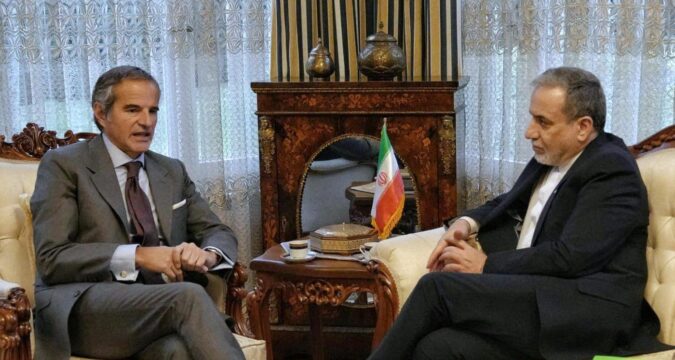
El ministro de Exteriores iraní, Abbas Araghchi, quien encabeza las conversaciones por parte de Irán, se reunió el lunes en Ginebra con el jefe de la agencia de la ONU de supervisión nuclear.
“Estoy en Ginebra con ideas reales para lograr un acuerdo justo y equitativo”, escribió Aragchi en X. Y agregó: “Lo que no está sobre la mesa: la sumisión ante las amenazas”.
Irán, en el pasado, ha comunicado por escrito sus posturas al tratar con los estadounidenses. En un incidente célebre, el entonces primer ministro de Japón, Shinzo Abe, intentó entregar en 2019 al líder supremo iraní, el ayatolá Ali Jamenei, una carta de Trump, que este se negó a recibir.
___
La periodista de The Associated Press Melanie Lidman contribuyó desde Tel Aviv, Israel.
___
Esta historia fue traducida del inglés por un editor de AP con la ayuda de una herramienta de inteligencia artificial generativa.
Oraciones, robots y festejos del Año Nuevo Lunar reciben al año del caballo
Por KEN MORITSUGU
BEIJING (AP) — La gente celebraba el Año Nuevo Lunar el martes con oraciones, fuegos artificiales y festividades.
Las actividades dieron la bienvenida al año del caballo, uno de los 12 animales del zodiaco chino, que sucede al año de la serpiente.
El Año Nuevo Lunar es la festividad anual más importante en China y en algunas otras naciones de Asia Oriental, y también se celebra fuera de la región.
Los robots participan en un programa anual de televisión en China
China celebró el Año Nuevo Lunar, como cada año, con un programa de televisión, y una vez más los robots humanoides fueron una parte central de la actuación la noche del lunes.
Uno de los momentos más destacados de la gala del Festival de Primavera de CCTV fue una exhibición de artes marciales ofrecida por niños y robots. Durante varios minutos, humanoides de Unitree Robotics mostraron distintas secuencias e incluso blandieron espadas.
La actuación muestra el impulso de China por desarrollar robots más avanzados, impulsados por capacidades mejoradas de IA.
Multitudes en templos a medianoche en Hong Kong
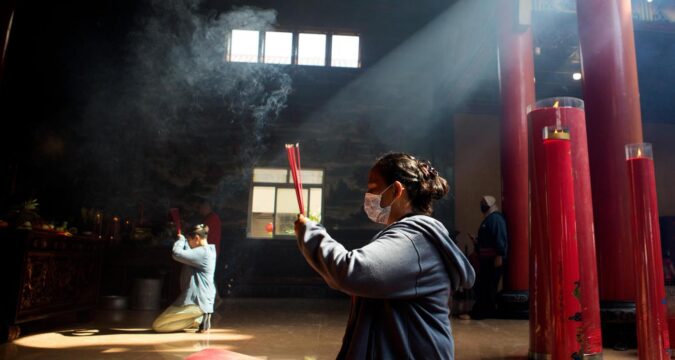
El humo del incienso se elevaba en el aire en un templo de Hong Kong, donde la gente hace fila cada año para pedir deseos para el nuevo año a medianoche.
Sosteniendo un manojo de varillas de incienso, muchos inclinaron la cabeza varias veces antes de clavar las varillas en recipientes colocados frente a un salón del templo.
Fuegos artificiales iluminan los cielos en Vietnam
Artistas en Vietnam cantaron en un evento al aire libre de cuenta atrás antes de múltiples espectáculos de fuegos artificiales en varias ciudades de la nación del sudeste asiático, donde el festival se llama Tet.
Espectáculos de luces iluminaron puentes y rascacielos mientras estallaban los fuegos artificiales, y la multitud aplaudía al ritmo de conciertos en vivo de música pop.
Ferias callejeras chinas en Moscú
La gente probaba comida china en puestos y paseó por calles nevadas decoradas con faroles rojos y dragones, al inicio de dos semanas de eventos en varios recintos de la capital rusa.
La tercera celebración anual del Año Nuevo Lunar llega en un momento de acercamiento en las relaciones entre China y Rusia, vínculos que han frustrado a muchos gobiernos europeos debido a la guerra en Ucrania.
Una campana de templo suena 108 veces en Taiwán
El solemne tañido de una campana de templo resonó 108 veces —un número auspicioso— mientras las personas acudían en masa al templo Baoan, en Taipéi, la mañana del martes.
Encendieron varillas de incienso, inclinaron la cabeza y dejaron ofrendas de coloridos ramos de flores sobre mesas al aire libre en el recinto del templo, en la capital de Taiwán.
Argentinos se suman a las celebraciones en Buenos Aires
Miles de argentinos se reunieron en el Barrio Chino de Buenos Aires para celebrar el Año Nuevo Lunar y disfrutaron de danzas del dragón y del león en el escenario principal, junto con demostraciones de artes marciales.
La comunidad de inmigrantes chinos está entre las más dinámicas de Argentina y suma a más de 180.000 personas en el país sudamericano.
___
Esta historia fue traducida del inglés por un editor de AP con la ayuda de una herramienta de inteligencia artificial generativa.