Category: News

Sports helped shape Rev. Jesse L. Jackson’s career and inspired the ex-quarterback to fight for equal rights
The Rev. Jesse L. Jackson stood mesmerized on the baseline, intently watching the Chicago Bulls warm up before an NBA playoff game against the Indiana Pacers.
He was comfortable and at ease in an atmosphere that clearly offered a familiar environment for the civil rights leader.
Jackson, who died on Tuesday at age 84, was an athlete from a young age, and throughout his life he immersed himself in the world of sports — as a player, as a fan and as an advocate. He accepted a football scholarship at Illinois, then transferred to historically Black North Carolina A&T after a year. He was a quarterback on the Aggies team that won a conference title in 1964 and was inducted into A&T’s athletic Hall of Fame 20 years later.
“What is not a well-known fact is that Rev. Jackson, first of all, he was a football player,” said CK Hoffler, Jackson’s attorney for 38 years. “He himself, as a former athlete, understood the plight of athletes.”
While Jackson was in his element at that Bulls-Pacers game back in 2011, he couldn’t just blend in. Standing near professional basketball players, he had a 6-foot-3 presence that loomed largest of all. He even cast a shadow over Bulls star Derrick Rose — the league MVP that season and fellow Chicago icon whom he made the trip to Indianapolis to support.
His sports experiences fueled a deep passion for ensuring that athletes like Rose were given equal opportunities and treatment, regardless of race, gender, sport or native country.
A titan of civil rights: Remembering Rev. Jesse L. Jackson
“He’s always been an advocate of greater inclusion, whether it was fair pay and other things for athletes throughout the country and throughout the world,” Hoffler said. “Athletes from overseas, ensuring that they got a fair shake as well. That was part of what (he) felt was fair. That was part of his social justice.”
Jackson’s advocacy knew no boundaries. At times that meant taking bold, public stands. At others, that meant enduring tough negotiations behind closed doors.
“The Harlem Globetrotters, they had their own cartoon,” Hoffler said. “They did a lot of community building, and they were just iconic in and of themselves. But they had no insurance. They had no benefits. And Rev. Jackson, upon hearing that, took it upon himself to negotiate their benefits.”
Len Elmore, who played 10 seasons in the NBA and is a senior lecturer at Columbia University, said there is a strong connective tissue between Jackson’s sports roots and how it threaded through his advocacy for equality and social justice in all areas of society.
Over the years, Elmore witnessed firsthand how Jackson didn’t shy away from pushing for change at all levels, including in Major League Baseball, the NFL and NBA.
“He certainly had a vision and in trying to achieve that vision he was very forward and aggressive in stating what the world should be like,” said Elmore, who lectures on athlete activism and social justice in sports. “He also was very critical of the timing of some of the actions that didn’t come fast enough or they weren’t capable enough.
“His understanding of the world and what it should be, what it should look like was amazing. And his leadership in trying to get there was something that inspired a lot of us.”
Elmore, who had a sports agency in the early to mid-1990s, said one of his most prized possessions is an award he received from the sports arm of Jackson’s Rainbow PUSH organization for its efforts to increase Black sports agent representation.
Jackson also championed minority coaches. Elmore remembers just how much Jackson pushed Pittsburgh Steelers owner Dan Rooney to adopt what became the NFL’s Rooney Rule in 2003. That rule, aimed at addressing the low number of minority head coaches, originally required every team with a head coaching vacancy to interview at least one or more diverse candidates before making a hire.
Jackson, Elmore said, “wanted folks to have a piece of the pie. He wanted that pie to have diverse overtones.”
But Jackson also didn’t shy away from being critical of the Rooney Rule’s lack of effectiveness. After Brian Flores sued the NFL for racial discrimination, Jackson called for tweaks in a 2022 USA Today editorial in which he called the rule a “toothless tiger.”
“You recognize change and the type of change that he envisioned. It wasn’t just a dream, it was active,” Elmore said. “Whether it was either influencing to some extent Harry Edwards in the ’60s, the Rooney Rule, the Nike boycott (demanding more Black employees) in 1990 — he wanted athletes to recognize their platform and the legacy they possess. Not just in the field, but in the boardroom. … That is what Jesse Jackson envisioned and what he was about.”
Hoffler said Jackson loved all sports and identified with the athletes who fought for equality. Though he was a football player, he had a special love for basketball. In recent years, he made appearances at NBA All-Star Weekend to specifically attend the HBCU Classic game showcasing underrepresented college players.
He could be seen on the sideline at basketball games well into his 70s and 80s.
“Even when he was physically not able to walk,” Hoffler said, “he was still at some of those games in a wheelchair. That’s how much he was committed to the plight of athletes.”
AP Sports Writers Maura Carey and Kyle Hightower contributed to this report.
https://www.chicagotribune.com/2026/02/18/jesse-jackson-sports-shaped-career/

Panics, Politics, & Power: America’s 3 Experiments With Central Banks
Panics, Politics, & Power: America’s 3 Experiments With Central Banks
Authored by Andrew Moran via The Epoch Times,
The Federal Reserve, established more than a century ago, is the United States’ third experiment with central banking.
For much of its existence, the institution maintained a low public profile.
Only after the 2008 global financial crisis did the Fed begin communicating more openly, introducing post-meeting press conferences and allowing monetary policymakers to engage more frequently with the media.
Greater transparency, however, has brought greater scrutiny.
Public sentiment toward the Fed and its leadership has fluctuated over the years. Today, YouGov polling suggests the central bank is viewed favorably by 44 percent of Americans and unfavorably by 18 percent.
If the Fed pursues a series of reforms, it will have “another great 100 years,” said Kevin Warsh, who was nominated by President Donald Trump to serve as the institution’s next chair.
Comparable to past central banks, Warsh said, the current Federal Reserve System is beginning to lose the consent of the governed.
“You can think about the Jacksonians of prior times say that the central bank seems like they’re trying to focus and they’re all preoccupied with those special interests on the East Coast, and they’ve lost track of what’s happening to us in the center of the country,” Warsh said in a July 2025 interview with the Hoover Institution’s Peter Robinson.
“It’s a version of what worries me today.”
What happened in the past, and why is it relevant to today’s central bank?
The First Bank of the United States
In the aftermath of the American Revolution, the United States faced a series of immense economic disruptions, forcing the nation’s architects to rebuild the economy.
The objective was to lower inflation, restore the value of the nation’s currency, repay war debt, and revive the economy.
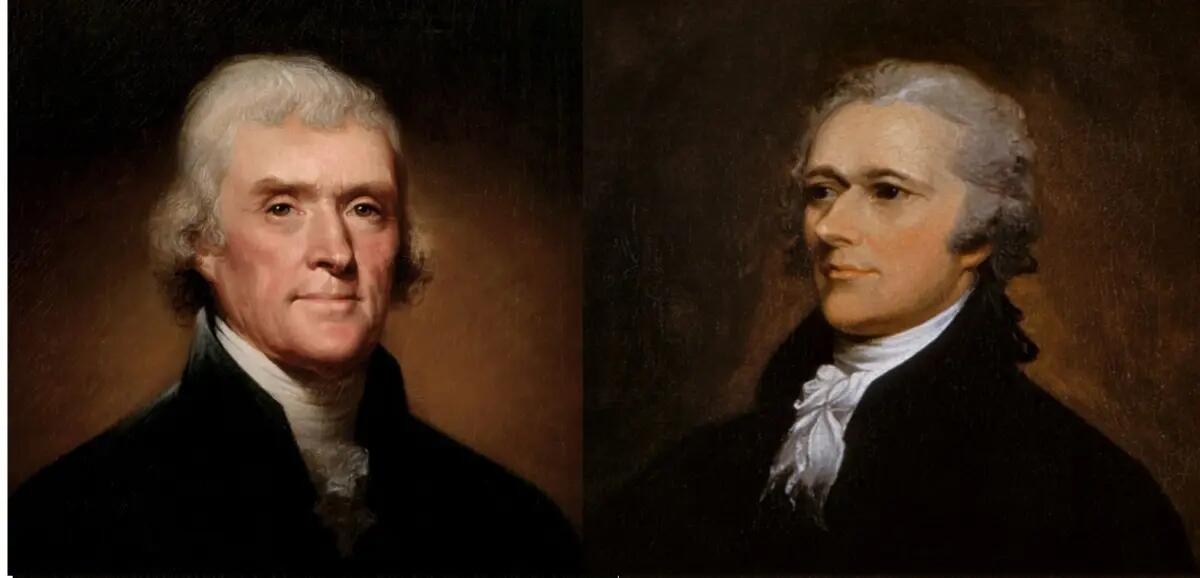
Alexander Hamilton, the first secretary of the Treasury under the new Constitution, proposed establishing a national bank modeled on the Bank of England. Hamilton stated that a U.S. version would perform various duties, including issuing paper money, serving as the government’s fiscal agent, and protecting public funds.
Not everyone shared Hamilton’s ebullience over a central bank.
Thomas Jefferson, for example, feared that such an institution would not serve the nation’s best interests. Additionally, Jefferson and other critics argued that the Constitution did not grant the government the authority to create these entities.
Nevertheless, Congress enacted legislation to establish the Bank of the United States. President George Washington then signed the bill in February 1791.
Two of America’s founding fathers: Thomas Jefferson (L) and Alexander Hamilton. The White House
While bank officials did not conduct monetary policy as modern central banks do, they did influence the supply of money and credit, as well as interest rates.
The entity managed the money supply by controlling when to redeem or retain state‑bank notes. If it sought to tighten credit, it would require payment in gold or silver, thereby draining state banks’ reserves and limiting their ability to issue new notes. If it wanted to expand credit, it simply held on to those notes, boosting state‑bank reserves and enabling them to lend more.
By 1811, the national bank’s charter expired.
While there had been discussions of allowing it to continue maintaining operations, Congress—both chambers—voted against renewing its mandate by a single vote.
Its closure came shortly before the War of 1812, which fueled inflation and weakened the currency.
Second Bank of the United States
Lawmakers believed another central bank was critical at a time of fiscal, inflationary, and trade pressures.
Congress used a similar 20-year model to produce the Second Bank of the United States, headed by Nicholas Biddle. The second incarnation had a federal charter, was privately owned, and was tasked with regulating state banks (with gold and silver for note redemption).
President James Madison, who opposed the first central bank on constitutional grounds, supported the new institution out of financial necessity.
Its creation stabilized credit and brought down inflation. However, by the 1830s, the bank faced strong opposition, particularly from President Andrew Jackson.
Labeled the Bank War, Jackson engaged in a years-long initiative to dissolve the central bank.
Jackson claimed the national bank was a tool for the wealthy eastern elite and a threat to self-government.
“The Jacksonians described themselves as conscious hard-money men who supported the rigid discipline of the gold standard, yet they opposed the newly powerful national Bank because it restrained the expansion of credit and, thus, thwarted robust economic expansion,” author William Greider wrote in “Secrets of the Temple.”
In 1832, Jackson vetoed legislation to recharter the bank four years early, delivering a fiery message that historians say was one of the most important vetoes in the nation’s history.
“It is to be regretted that the rich and powerful too often bend the acts of government to their selfish purposes. Distinctions in society will always exist under every just government,” Jackson wrote.
“There are no necessary evils in government. Its evils exist only in its abuses. If it would confine itself to equal protection, and, as Heaven does its rains, shower its favors alike on the high and the low, the rich and the poor, it would be an unqualified blessing. In the act before me, there seems to be a wide and unnecessary departure from these just principles.”
The charter expired in 1836, leading to the panic of 1837.
An economic crisis unfolded, leading to bank failures, business bankruptcies, rising unemployment, and contracting credit. While the collapse of the central bank is often considered a leading cause, the British also urged London banks to reduce credit to American merchants, causing a sharp drop in global trade.
As the smoke cleared and dust settled, it was not until the 1840s that the United States embarked on a historic economic recovery, now known as the Free Banking Era.
Banking was decentralized, and finance was largely unregulated. Despite an erratic financial system, the U.S. economy grew rapidly: agricultural production accelerated, railroads were built, and the country expanded westward. Additionally, deflation was paramount throughout most of the economic expansion.
The Federal Reserve System
The panic of 1907 led to the creation of the Federal Reserve System.
Following years of heavy borrowing, speculative commodities investments (mainly copper), and enormous stock market gains, a financial crisis was brewing. The event nearly brought down the U.S. banking system.
J.P. Morgan, a financier, intervened and emulated the actions of modern central banks. He met with the nation’s top bankers, facilitated emergency loans to financial institutions, and backed stockbrokers. The damage had been done as the United States fell into a year-long recession, marked by high unemployment and widespread bank failures.
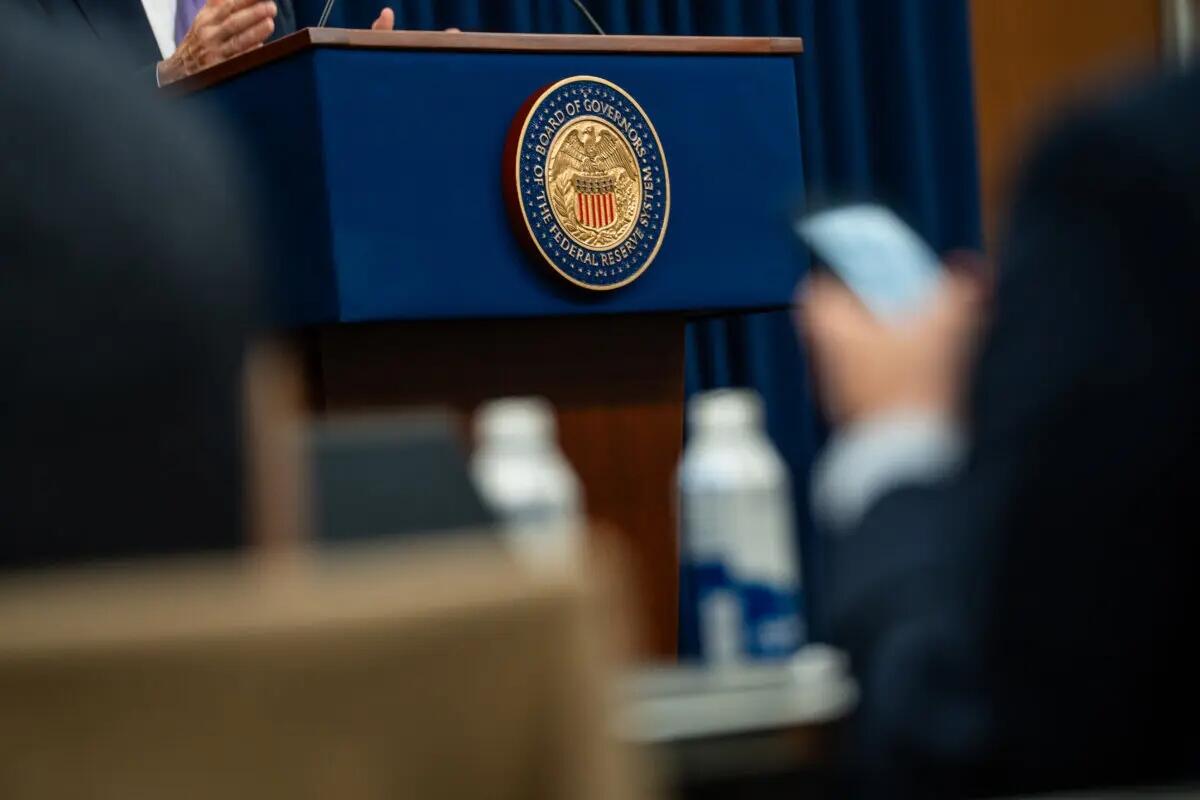
The Federal Reserve Board of Governors seal in Washington on Oct. 29, 2025. Madalina Kilroy/The Epoch Times
Washington realized that it could not rely on private bailouts to prevent sharp downturns.
Sen. Nelson Aldrich (R-R.I.) is widely regarded as one of the chief architects of the modern Federal Reserve System.
In 1910, Aldrich hosted the famous Jekyll Island meetings, a gathering of U.S. officials and bankers, to discuss the blueprint of a new central bank.
While the initial draft laid the foundation for the institution, the official Federal Reserve Act was drafted by President Woodrow Wilson, Rep. Carter Glass (D-Va.), and H. Parker Willis, an economist on the House Banking Committee.
The new system was a public-private hybrid, with the federal government firmly in charge, and bankers running the regional reserve banks.
“It was Wilson’s great compromise,” wrote Greider, “creating a hybrid institution that mixed private and public control, an approach without precedent at the time.”
The legislation triggered a contentious political debate over the extent of its independence from the Treasury and the degree of authority delegated to policymakers over currency issuance.
Days before Christmas, the bill cleared both chambers and was signed into law by Wilson on Dec. 23.
“Wilson’s conviction that he had struck the right moderate balance seemed confirmed, however, by the reactions to his legislation,” Greider noted.
“It was attacked by both extremes—the ‘radicals’ from the Populist states and the bankers in Wall Street and elsewhere.”
Since its inception in 1913, the modern Federal Reserve has undergone numerous changes and has gained greater power.
The New Deal, for instance, allowed the Fed to become the lender of last resort as Washington learned the central bank could not prevent bank failures.
In 1951, the Treasury-Fed Accord restored central bank independence after the Federal Reserve had been forced to keep interest rates artificially low throughout the Second World War.
Congress then enacted the Federal Reserve Reform Act in 1977, establishing the dual mandate of promoting maximum employment and maintaining price stability.
2026 and Beyond
Over the past 50 years, the Fed has undergone modest changes, including the issuance of forward guidance and the disclosure of emergency lending facilities.
But while each new regime has nibbled around the edges, Warsh has suggested he could effect substantial reforms at the central bank.
“Until there’s regime change at the Fed and new people running the Fed, a new operating framework, they’re stuck with their old mistakes,” Warsh told Fox Business Network in October 2025.
“Bygones aren’t just bygones.”
Tyler Durden
Wed, 02/18/2026 – 16:20
https://www.zerohedge.com/political/panics-politics-power-americas-3-experiments-central-banks

Gobierno de EEUU ordena el cierre de más de 550 escuelas de manejo comercial por fallas de seguridad
Por JOSH FUNK
Más de 550 escuelas comerciales de manejo en Estados Unidos que capacitan a camioneros y conductores de autobús deberán cerrar después de que investigadores llegaron a la conclusión de que empleaban instructores no calificados y no evaluaban adecuadamente a los estudiantes, entre otros problemas de seguridad, anunció el Departamento de Transporte el miércoles.
Se trata del más reciente esfuerzo del Departamento de Transporte por mejorar la seguridad en la industria del transporte de carga. Y, a diferencia de sus acciones de finales del año pasado para retirar la certificación de hasta 7.500 escuelas —entre las que había muchas operaciones ya inactivas—, esta medida gira en torno a lo que consideró escuelas en funcionamiento con importantes deficiencias que fueron identificadas por inspectores en su visita a 1.426 instalaciones.
La agencia ha estado actuando con firmeza contra los estados que entregaron licencias de conducir comerciales a inmigrantes que no debieron ser elegibles desde que ocurrió un choque con saldo letal en agosto pasado.
Un conductor de camión que, de acuerdo con el secretario de Transporte, Sean Duffy, no tenía permiso legal para trabajar en Estados Unidos, dio una vuelta ilegal y provocó un accidente en Florida que cobró la vida de tres personas. Las preocupaciones han ido en aumento desde entonces debido a incidentes similares, incluido uno en Indiana hace pocas semanas que dejó cuatro personas muertas.
Duffy indicó que 448 escuelas no cumplieron con normas básicas de seguridad. Los inspectores detectaron deficiencias como emplear instructores no calificados, no poner a prueba las habilidades de los estudiantes ni capacitarlos en el manejo de materiales peligrosos, además del uso de equipo equivocado para instruir a los conductores. Otras 109 escuelas se retiraron del registro cuando se enteraron de que los inspectores tenían visitas planeadas.
“Las familias estadounidenses deberían tener la confianza de que los conductores de nuestros autobuses escolares y camiones cumplen con cada letra de la ley, y eso empieza por recibir la capacitación adecuada antes de ponerse al volante”, subrayó Duffy.
La lista de escuelas a las que las autoridades quieren retirar la certificación incluye, por lo general, centros más pequeños, entre ellos varios programas administrados por distritos escolares. Buena parte de las escuelas más grandes y de mejor reputación no fueron incluidas en esta medida. Otras 97 escuelas están siendo investigadas actualmente por problemas de cumplimiento.
Parte del problema en la industria del transporte de carga es que las escuelas y las empresas de transporte pueden básicamente autocertificarse cuando presentan una solicitud para comenzar a operar, señalan los analistas. Y es posible que las operaciones cuestionables no sean detectadas sino hasta mucho después, cuando la Administración Federal de Seguridad de Autotransportes de Estados Unidos tenga la oportunidad de auditarlas.
De momento se desconoce cuántos estudiantes estaban inscritos en las escuelas afectadas. Pero en este momento existe cierto margen en la industria debido a que actualmente hay más conductores de los necesarios luego de una caída del 10% en los envíos desde 2022 debido a la incertidumbre económica. Sin embargo, muchas empresas de transporte aún tienen dificultades para encontrar suficientes conductores bien calificados y sin antecedentes.
Además de amenazar con retener fondos federales a los estados que no depuren sus programas de licencias comerciales de manejo, el gobierno federal se ha enfocado en garantizar que los camioneros cumplan con los estándares de dominio del inglés. California es el único estado que ha perdido fondos hasta ahora, pues el gobierno federal planea retener 160 millones de dólares de la entidad.
___
Esta historia fue traducida del inglés por un editor de AP con la ayuda de una herramienta de inteligencia artificial generativa.
Gobierno de EEUU ordena el cierre de más de 550 escuelas de manejo comercial por fallas de seguridad
Por JOSH FUNK
Más de 550 escuelas comerciales de manejo en Estados Unidos que capacitan a camioneros y conductores de autobús deberán cerrar después de que investigadores llegaron a la conclusión de que empleaban instructores no calificados y no evaluaban adecuadamente a los estudiantes, entre otros problemas de seguridad, anunció el Departamento de Transporte el miércoles.
Se trata del más reciente esfuerzo del Departamento de Transporte por mejorar la seguridad en la industria del transporte de carga. Y, a diferencia de sus acciones de finales del año pasado para retirar la certificación de hasta 7.500 escuelas —entre las que había muchas operaciones ya inactivas—, esta medida gira en torno a lo que consideró escuelas en funcionamiento con importantes deficiencias que fueron identificadas por inspectores en su visita a 1.426 instalaciones.
La agencia ha estado actuando con firmeza contra los estados que entregaron licencias de conducir comerciales a inmigrantes que no debieron ser elegibles desde que ocurrió un choque con saldo letal en agosto pasado.
Un conductor de camión que, de acuerdo con el secretario de Transporte, Sean Duffy, no tenía permiso legal para trabajar en Estados Unidos, dio una vuelta ilegal y provocó un accidente en Florida que cobró la vida de tres personas. Las preocupaciones han ido en aumento desde entonces debido a incidentes similares, incluido uno en Indiana hace pocas semanas que dejó cuatro personas muertas.
Duffy indicó que 448 escuelas no cumplieron con normas básicas de seguridad. Los inspectores detectaron deficiencias como emplear instructores no calificados, no poner a prueba las habilidades de los estudiantes ni capacitarlos en el manejo de materiales peligrosos, además del uso de equipo equivocado para instruir a los conductores. Otras 109 escuelas se retiraron del registro cuando se enteraron de que los inspectores tenían visitas planeadas.
“Las familias estadounidenses deberían tener la confianza de que los conductores de nuestros autobuses escolares y camiones cumplen con cada letra de la ley, y eso empieza por recibir la capacitación adecuada antes de ponerse al volante”, subrayó Duffy.
La lista de escuelas a las que las autoridades quieren retirar la certificación incluye, por lo general, centros más pequeños, entre ellos varios programas administrados por distritos escolares. Buena parte de las escuelas más grandes y de mejor reputación no fueron incluidas en esta medida. Otras 97 escuelas están siendo investigadas actualmente por problemas de cumplimiento.
Parte del problema en la industria del transporte de carga es que las escuelas y las empresas de transporte pueden básicamente autocertificarse cuando presentan una solicitud para comenzar a operar, señalan los analistas. Y es posible que las operaciones cuestionables no sean detectadas sino hasta mucho después, cuando la Administración Federal de Seguridad de Autotransportes de Estados Unidos tenga la oportunidad de auditarlas.
De momento se desconoce cuántos estudiantes estaban inscritos en las escuelas afectadas. Pero en este momento existe cierto margen en la industria debido a que actualmente hay más conductores de los necesarios luego de una caída del 10% en los envíos desde 2022 debido a la incertidumbre económica. Sin embargo, muchas empresas de transporte aún tienen dificultades para encontrar suficientes conductores bien calificados y sin antecedentes.
Además de amenazar con retener fondos federales a los estados que no depuren sus programas de licencias comerciales de manejo, el gobierno federal se ha enfocado en garantizar que los camioneros cumplan con los estándares de dominio del inglés. California es el único estado que ha perdido fondos hasta ahora, pues el gobierno federal planea retener 160 millones de dólares de la entidad.
___
Esta historia fue traducida del inglés por un editor de AP con la ayuda de una herramienta de inteligencia artificial generativa.
Gobierno de EEUU ordena el cierre de más de 550 escuelas de manejo comercial por fallas de seguridad
Por JOSH FUNK
Más de 550 escuelas comerciales de manejo en Estados Unidos que capacitan a camioneros y conductores de autobús deberán cerrar después de que investigadores llegaron a la conclusión de que empleaban instructores no calificados y no evaluaban adecuadamente a los estudiantes, entre otros problemas de seguridad, anunció el Departamento de Transporte el miércoles.
Se trata del más reciente esfuerzo del Departamento de Transporte por mejorar la seguridad en la industria del transporte de carga. Y, a diferencia de sus acciones de finales del año pasado para retirar la certificación de hasta 7.500 escuelas —entre las que había muchas operaciones ya inactivas—, esta medida gira en torno a lo que consideró escuelas en funcionamiento con importantes deficiencias que fueron identificadas por inspectores en su visita a 1.426 instalaciones.
La agencia ha estado actuando con firmeza contra los estados que entregaron licencias de conducir comerciales a inmigrantes que no debieron ser elegibles desde que ocurrió un choque con saldo letal en agosto pasado.
Un conductor de camión que, de acuerdo con el secretario de Transporte, Sean Duffy, no tenía permiso legal para trabajar en Estados Unidos, dio una vuelta ilegal y provocó un accidente en Florida que cobró la vida de tres personas. Las preocupaciones han ido en aumento desde entonces debido a incidentes similares, incluido uno en Indiana hace pocas semanas que dejó cuatro personas muertas.
Duffy indicó que 448 escuelas no cumplieron con normas básicas de seguridad. Los inspectores detectaron deficiencias como emplear instructores no calificados, no poner a prueba las habilidades de los estudiantes ni capacitarlos en el manejo de materiales peligrosos, además del uso de equipo equivocado para instruir a los conductores. Otras 109 escuelas se retiraron del registro cuando se enteraron de que los inspectores tenían visitas planeadas.
“Las familias estadounidenses deberían tener la confianza de que los conductores de nuestros autobuses escolares y camiones cumplen con cada letra de la ley, y eso empieza por recibir la capacitación adecuada antes de ponerse al volante”, subrayó Duffy.
La lista de escuelas a las que las autoridades quieren retirar la certificación incluye, por lo general, centros más pequeños, entre ellos varios programas administrados por distritos escolares. Buena parte de las escuelas más grandes y de mejor reputación no fueron incluidas en esta medida. Otras 97 escuelas están siendo investigadas actualmente por problemas de cumplimiento.
Parte del problema en la industria del transporte de carga es que las escuelas y las empresas de transporte pueden básicamente autocertificarse cuando presentan una solicitud para comenzar a operar, señalan los analistas. Y es posible que las operaciones cuestionables no sean detectadas sino hasta mucho después, cuando la Administración Federal de Seguridad de Autotransportes de Estados Unidos tenga la oportunidad de auditarlas.
De momento se desconoce cuántos estudiantes estaban inscritos en las escuelas afectadas. Pero en este momento existe cierto margen en la industria debido a que actualmente hay más conductores de los necesarios luego de una caída del 10% en los envíos desde 2022 debido a la incertidumbre económica. Sin embargo, muchas empresas de transporte aún tienen dificultades para encontrar suficientes conductores bien calificados y sin antecedentes.
Además de amenazar con retener fondos federales a los estados que no depuren sus programas de licencias comerciales de manejo, el gobierno federal se ha enfocado en garantizar que los camioneros cumplan con los estándares de dominio del inglés. California es el único estado que ha perdido fondos hasta ahora, pues el gobierno federal planea retener 160 millones de dólares de la entidad.
___
Esta historia fue traducida del inglés por un editor de AP con la ayuda de una herramienta de inteligencia artificial generativa.

Aurora to put new chemical in drinking water to reduce lead levels in certain homes
Aurora is set to introduce a new chemical into its drinking water to help control the lead levels in certain homes.
The chemical, called dipotassium orthophosphate, reacts with lead pipes to seal in the lead and prevent it from leaching into the water, according to Aurora Superintendent of Water Production Bob Leible. Plus, he said the orthophosphate is tasteless, odorless and safe for consumption.
“You would have to drink 40 liters of water in one sitting to get the amount of phosphorus that’s in a banana,” he said.
The new chemical is set to be added to Aurora’s drinking water system through the city water treatment plant starting in March, Leible told the Aurora City Council’s Committee of the Whole on Tuesday. Temporary feeds will introduce the chemical into the water at first, he said, as a permanent feed system is still several months away from being installed.
Tests done last year found high levels of lead in the drinking water of some Aurora homes.
Not all city drinking water contains lead, officials said at the time, and the water coming from the city’s treatment plant does not have lead in it. Some houses in Aurora just have elevated levels of lead in their water, as lead can enter drinking water from the pipes that connect houses to city water mains, which are called service lines.
The Illinois Environmental Protection Agency instituted new water testing standards in late 2024, changes which city officials said have contributed to certain homes in the city now exceeding the action level for lead. Under previous standards, only the first liter of water that came out of a faucet in a residential unit would be sampled to test for lead particles — but now, both the first and fifth liters of water must be sampled.
Higher rates of lead were found since the fifth liter of water spent more time in the service line, which in some houses is still made out of lead, so more of those particles dissolved in the water, city officials have said.
In addition to recent tests finding elevated levels of lead in some homes’ drinking water, the state EPA in 2022 told Aurora that it needed to do a corrosion control study to find a way to improve water quality, according to Leible. He said that study was recently completed with the help of national consultant CBM Smith.
To study how the orthophosphate would work in the distribution system, experiments were run using lead service lines that were actually removed from houses in Aurora, Leible said. Those experiments found that 2 milligrams of the chemical per liter of water was the most effective concentration, both from a water quality and cost standpoint, he said.
When the orthophosphate comes into contact with lead, it changes the chemistry of the water between the chemical and the lead, keeping the lead as part of the pipe instead of allowing it to leach into the water, said Leible.
Other cities throughout the United States and Canada have been using the chemical in their drinking water for decades, according to Leible. Chicago and Elgin are also starting to include orthophosphate in their water, he said.
Lead is toxic and can cause serious health problems, especially for children, according to the U.S. EPA.
Even at low levels, lead in a child’s bloodstream can cause developmental issues, the EPA’s website says. Lead is dangerous for adults, too, and is of particular concern for those who are pregnant because it can hurt the developing baby.
Water is not the only way people can be exposed to lead. Considering various risks of exposure, the state has identified many areas across the state, including in the Aurora area, where children are required to be tested for lead exposure.
These “Pediatric Lead Poisoning High-Risk ZIP Code Areas” can be found on the Illinois Department of Public Health’s website.
Aurora has been working to remove lead and galvanized water lines for years. Since 2018, the city has replaced 2,988 lead service lines, with more set to be replaced in the coming years, city officials said last month.
The state of Illinois is set to ramp up its lead water line replacement mandates starting in 2027, officials have said. Last year’s water rate increase should cover the cost of that state mandate, but a different federal mandate may raise that requirement even further and cost even more.
Aurora Mayor John Laesch said at Tuesday’s meeting that lead line replacements will have a “huge” impact on the city’s next budget cycle.
rsmith@chicagotribune.com

Two teens arrested by SWAT teams in Hammond slaying: police
Hammond Police said two teens were arrested Wednesday morning by SWAT teams in connection with a Jan. 14 slaying.
The suspects, aged 18 and 15, were wanted in the shooting death of Armando Velasquez, 19.
Hammond Police spokesman Captain Steve Kellogg said Velasquez was shot elsewhere around 5:50 p.m. Jan. 14 and drove himself to Briar East Liquors saying he was wounded.
The Post-Tribune is not identifying the suspects, because charges could not be found in public court filings for the elder teen, and the other is a minor.
The 18-year-old is expected to be charged with two counts of murder and one count of attempted robbery. Juvenile charges are pending for the 15-year-old, Kellogg said in a release.
They were arrested without incident on the 6500 block of McCook Avenue and 6600 block of Kansas Avenue in a joint operation between the Hammond Police SWAT team and Northwest Regional SWAT team.
“This arrest reflects a month of detailed investigative work and strong collaboration between our department, regional partners, and the Lake County Prosecutor’s Office,” Hammond Police Chief Jeffrey Long said. “While nothing can undo the loss suffered by the victim’s family, we remain committed to holding those responsible fully accountable and ensuring justice is pursued.”
Velasquez attended Morton High School and loved baseball, dirt bike riding, four-wheeling, fishing and cars, according to his obituary.
Anyone with more information can call Hammond Police at 219-853-6490.
Gary council unanimously passes sanitary district fee ordinances
After being tabled for months, the Gary Common Council, at its Tuesday meeting, approved two Gary Sanitary District-related ordinances that would change the city’s wastewater treatment and stormwater fees.
Both ordinances passed in a unanimous 8-0 vote. Councilwoman Mary Brown, D-3rd, was absent from Tuesday’s meeting.
Gary City Court Judge Deidre Monroe gave an overview of the wastewater treatment ordinance. Monroe told council members that she was giving an overview because GSD Executive Director Ragen Hatcher was in Indianapolis for her work as a state representative during the 2026 legislative session.
Rates have not increased since 2001, and Hatcher said “substantial upgrades” are needed for the GSD plant, which are expected to cost about $155 million, according to Post-Tribune archives.
According to ordinance documents, the wastewater fee increases are for “non-residential” users. Hatcher previously told council members that the increases would impact about 28 industrial users and 1,800 commercial users throughout the city.
The average commercial user in Gary uses between 2,000 and 3,000 gallons of water per month, and the rate increase would be about a $15 change in their bill, according to Post-Tribune archives.
Monroe continued to express Hatcher’s sentiment that the money is needed to expand GSD operations.
“Of course, that’s not going to be done without the increase in fees,” Monroe said. “That’s the first step, and the first step has been asked, pretty forcibly, from the (U.S.) Department of Justice as well as the (Environmental Protection Agency).”
Monroe reiterated that the changes will not affect residents.
“We have not had a rate increase in several years,” she added. “It’s not going to be tremendous, and it’ll be on par with our neighboring places, and it’s to benefit the city of Gary.”
According to council documents, stormwater fees have increased for infrastructure management projects, salaries, security and maintenance.
Stormwater fees for industrial buildings is $162 per month, according to Post-Tribune archives. All commercial plots, including buildings with more than 19 units, will be $90 per month, and those between four and 19 will be $62 per month.
Brenda Scott Henry, Gary’s office of sustainability and environmental affairs director, gave an overview of the stormwater ordinance in Hatcher’s absence.
Scott Henry said the change is a fee increase and unrelated to taxes. It will still show up on property tax bills because the property tax bureau charges the fees, she added.
In addition to the rate ordinances, Vice President Darren Washington, D-at large, had a sanitary district-related ordinance that was on third reading before it was sent back to the planning and development committee for additional discussion.
Washington’s ordinance seeks to amend sewer rate provisions that would place liens on rental properties in the city, according to council documents.
Hatcher previously said an Indiana State Board of Accounts audit found the department has a “number of outstanding bills.” Per state law, GSD has three years to either put liens on properties or make owners aware of the liens, according to Post-Tribune archives.
In April, the GSD sent property owners lien notices for 2022 and sent 2023 lien notices in May. At the time, Hatcher said 2024 notices would be sent at the end of June or beginning of July, according to Post-Tribune archives.
A property lien is a legal claim by a creditor to recover an unpaid debt or obligation, according to the National Association of Realtors.
Multiple landlords have spoken against the notices, saying that they’re worried the liens will be charged to property owners instead of renters who haven’t paid bills. In July, Griffith-based Cavender Properties filed a lawsuit against GSD, alleging that the department recorded or threatened to record a lien without complying with Indiana’s notice requirements.
According to online court documents, the lawsuit was dismissed on Jan. 13, with both parties agreeing that no lien should be recorded or enforced if a notice was received before July 9, and all future notices will comply with Indiana Code.
Washington’s ordinance aims to ensure that tenants will be responsible for lien payments if they can provide written notice or if the sanitary district account for the property is in the tenant’s name. The liens will only be paid by the property’s occupants and will not apply to non-rental properties, according to the ordinance.
The ordinance will be heard by the planning and development committee one more time before returning to the council for final approval.

Alcaraz somete a Royer en sets corridos y avanza a cuartos de final en Doha
DOHA, Qatar (AP) — Carlos Alcaraz apuró el paso en el último set y se apuntó el miércoles una victoria 6-2, 7-5 sobre el francés Valentin Royer para acceder a los cuartos de final del Abierto de Qatar.
El número uno del mundo perdía 2-5 en el segundo set, pero se llevó los últimos cinco juegos para repetir en la ronda de cuartos del ATP 500.
“Por momentos pensé en un tercer set, no voy a mentir, pero obviamente fue solo una pequeña parte de mi mente la que lo pensaba”, comentó el español. “El resto fue trabajar para encontrar soluciones, para encontrar el camino correcto de nuevo”.
“Se trata de luchar… y veces es muy difícil cerrar el set o el partido”, añadió. “Simplemente tenía que resistir y estoy contento por poder haberle dado la vuelta”.
Invicto en sus nueve partidos disputados este año, incluyendo la conquista de su primer título del Abierto de Australia, Alcaraz se las verá ahora contra el ruso Karen Khachanov (7mo cabeza de serie) por una plaza en las semifinales. Khachanov doblegó 6-2, 4-6, 6-4 al húngaro Marton Fucsovics.
También el miércoles, el número dos mundial Jannik Sinner despachó 6-3, 7-5 al australiano Alexei Popyrin.
Sinner disputa su primer torneo desde que sucumbió en cinco sets ante Novak Djokovic en las semifinales del Abierto de Australia. En busca de su tercer título seguido en un ATP 500, el italiano se las verá ahora contra el checo Jakub Mensik (6to preclasificado), victorioso 6-2, 6-2 sobre el chino Zhang Zhizhen.
En otros resultados, el griego Stefanos Tsitsipas sorprendió 6-3, 6-4 al ruso Daniil Medvedev (4).
___
Deportes AP: https://apnews.com/hub/deportes
Wexner Says He Was ‘Conned’ By Epstein, Did ‘Nothing Wrong’
Wexner Says He Was ‘Conned’ By Epstein, Did ‘Nothing Wrong’
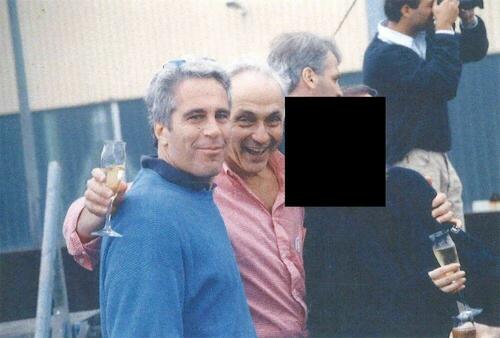
After what must have been quite the prep session with lawyers, billionaire Les Wexner – who gave Jeffrey Epstein “about a billion dollars” in cash and assets – testified to the House Oversight Committee on Wednesday that he was “conned” by Epstein, and denied any wrongdoing.
In a prepared statement, the 88-year-old former L Brands (which owned Victoria’s Secret) CEO said:
Let me state from the start: I was naïve, foolish, and gullible to put any trust in Jeffrey Epstein. He was a con man. And while I was conned, I have done nothing wrong and have nothing to hide. I completely and irrevocably cut ties with Epstein nearly twenty years ago when I learned that he was an abuser, a crook, and a liar.
…
And, let me be crystal clear: I never witnessed nor had any knowledge of Epstein’s criminal activity. I was never a participant nor coconspirator in any of Epstein’s illegal activities. To my enormous embarrassment and regret, like many others, I was duped by a world-class con man. I cannot undo that part of my personal history even as I regret ever having met him.
350 attorneys charging $2000/hour drafted this. https://t.co/eT6TSa4PID
— zerohedge (@zerohedge) February 18, 2026
Yet many aren’t buying it – including the FBI in 2019, which listed Wexner as a potential co-conspirator.
Meanwhile Epstein wrote to Wexner in a draft email: “You and I had ‘gang stuff’ for over 15 years,” adding “I owe a great debt to you, as frankly you owe to me” and that he had “no intention of divulging any confidence of ours.”
Also strange:
Epstein’s note: “never ever did anything without informing Les [Wexner]”, “would never give him up”. Dershowitz: “don’t take deal”. Made around the time of victims’ discovery requests. Recall that Wexner began funding Epstein in ‘91, same year he founded pro-Israel “Mega Group”. https://t.co/ESzEQbck81 pic.twitter.com/wDF1Eit3Cl
— Good Pyre (@GoodPyre) February 6, 2026
After launching a business relationship in the 1980s, Wexner and Epstein formed ‘a financial and personal bond that baffled longtime associates,’ according to the New York Times.
“I think we both possess the skill of seeing patterns,” Wexner told Vanity Fair in 2003. “But Jeffrey sees patterns in politics and financial markets, and I see patterns in lifestyle and fashion trends.”
Wexner would go on to open doors for Epstein – who managed “many aspects of his financial life.”
By 1995, Epstein was a director of the Wexner Foundation and Wexner Heritage Foundation and president of Wexner’s N.A. Property Inc., which developed the Ohio town of New Albany, where Wexner lives. Epstein also was involved in Wexner’s superyacht, “Limitless,” attending meetings at the London studios of the firm that designed the vessel. –Bloomberg
Meanwhile, Epstein allegedly ran a ‘casting couch’ operation for aspiring Victoria’s Secret models out of his Manhattan townhome whereby he would promise young girls jobs with the fashion company.
Epstein “relied on …[the] modeling business to source underage girls for sex,” according to investigative reporter Conchita Sarnoff’s new book “Trafficking.”
According to an account by Italian model Elisabetta Tai, Epstein tried to take advantage of the 21-year-old aspiring Victoria’s Secret model in 2004 after she was promised that a meeting with a ‘very important’ man could land her a gig with the apparel company.
Accuser Holds Wexner Responsible
In late 2019, a woman who says Jeffrey Epstein and his ‘madam’ Gislaine Maxwell sexually assaulted her holds Victoria’s Secret billionaire Leslie Wexner “responsible for what happened to me,” because she was staying on a property monitored by Wexner and his wife, and guarded by their security team, according to the Washington Post.
Maria Farmer, now in her mid-50s, spoke with the Post in a series of interviews, telling the paper that she never met Leslie, and only spoke with Abigail via phone while at the property in New Albany, Ohio.
In the summer of 1996, Farmer stayed at the country house that Wexner had deeded to Epstein four years earlier. While staying staying there, she was discouraged from going outside by Wexner’s security, and that she was forced to jog inside the 10,600 square-foot house.
“Where I stayed that summer, in that house and working in that garage, all of it was within view of the Wexner house,” said Farmer.
The house, although owned by Epstein at the time, was “effectively the guesthouse” for the main Wexner estate, and it was guarded only by Wexner personnel, according to a security officer involved with Wexner family security at the time, who spoke on the condition of anonymity because he did not want to discuss clients publicly. The two homes are a half-mile apart. The grounds were monitored closely by guard dogs and their armed minders, this officer said. It was surrounded by Wexner’s land, according to property records.
“Anybody that was going to be coming on property had to be announced and allowed in by the Wexners,” added the officer. “Nobody had carte blanche to go in and off the property.”
…
Farmer, then 26, had just been invited to create two large-scale paintings for the upcoming film “As Good As It Gets,” starring Jack Nicholson. Epstein offered Farmer an unexpected location to do the work in the summer of 1996: an expansive country home in New Albany, Ohio, located amid 336 acres of land owned by Wexner and guarded in part by sheriff’s deputies employed by the longtime chief executive of Victoria’s Secret and The Limited.
It was there, Farmer said in an affidavit she submitted as part of an Epstein-related lawsuit, that she was molested by Epstein and his associate Ghislaine Maxwell. –Washington Post
“They asked me to come into a bedroom with them and then proceeded to sexually assault me against my will,” said Farmer in her affidavit.
In the affidavit, she says she “pleaded with” the security staff but was held against her wishes for 12 hours while waiting for her father to arrive. In the interview, she elaborated.
The morning of the day after the alleged assault, she said, Farmer spoke with Maxwell and Epstein. She told them she wanted to leave and hung up. Soon after, a Wexner security guard appeared at the house. “He said, ‘You aren’t leaving,’ ” Farmer recalled, “ ‘You’re not going anywhere.’ ” –Washington Post
Farmer’s mother, father, sister and a friend have all separately stated that they recall a similar account from Maria in 1996.
As the Post notes, “While Farmer’s allegations against Epstein have been widely documented, her experience in New Albany and the questions it raises about the Wexner family’s relationship with Epstein have been little explored.”
Stay tuned for updates…
Tyler Durden
Wed, 02/18/2026 – 15:45
https://www.zerohedge.com/political/wexner-says-epstein-conned-him-did-nothing-wrong