Category: News

Bruce Froemming, record-setting umpire who worked more than 5,000 MLB games, dies at age 86
Bruce Froemming, a major-league umpire for 37 consecutive years who worked the third-most games in big-league history and a record 11 no-hitters, died Wednesday, his son said. He was 86.
Froemming fell just after midnight Tuesday and hit his head on the hardwood floor at his home in Mequon, Wis., and was taken to Ascension Columbia St. Mary’s Hospital in Milwaukee, according to Froemming’s son, Steven.
He had brain bleeding that medical personnel could not stop because Froemming was on blood thinners, leading to his death.
Froemming was a semipro baseball player and started his umpiring career in the minor leagues in 1958 at age 18. He worked his way up and joined the National League staff in 1971. He shifted to the unified major-league staff in 2000 and retired in 2007 having worked 5,163 games, second at the time to Bill Klem’s 5,373. They were both surpassed by Joe West, who worked 5,460 games before retiring in 2021.
Froemming started his umpiring career at a minor-league game in Waterloo, Iowa.
“I thought I was in heaven — on the ballfield, professional athletes, I was starting my professional career,” he told The Associated Press days before his retirement. “But never did you dream at the time, ever even think of going to a big league ballpark, because you had so far to go through the minor leagues to even get a chance.”
He concluded that being a good umpire required “probably being patient with yourself. … You’re going to make mistakes early on.”
Among the most famous of the no-hitters he worked was on Sept. 2, 1972. Milt Pappas of the Chicago Cubs retired his first 26 batters and went to a 1-2 count on pinch hitter Larry Stahl before walking him. Pappas then retired Garry Jestadt on a popup.
Froemming was behind the plate for three other no-hitters, by Ed Halicki (1975), Nolan Ryan (1981) and José Jiménez (1999). He worked five World Series.
When he retired, Froemming became a special assistant to MLB’s vice president on umpiring.
He is survived by his wife, the former Rosemarie Loch, whom he married in 1957; two sons, Steven and Kevin; sister Cathy Seizer; half-brother Johnny Froemming; and two grandchildren.
https://www.chicagotribune.com/2026/02/26/bruce-froemming-mlb-umpire-dies/
Localizan sin vida a estadounidense desaparecido en el noroeste de México
Associated Press
CIUDAD DE MÉXICO (AP) — El estadounidense Patrick Joseph Weber fue hallado sin vida en un muelle de la localidad de Guaymas, al noroeste de México, anunciaron el jueves autoridades locales.
El cuerpo de Weber, quien fue visto con vida por última vez el 22 de febrero, fue localizado en el embarcadero de San Carlos, municipio Guaymas, debajo de un velero contiguo al de su propiedad, indicó en un comunicado la Fiscalía del estado norteño de Sonora donde se encuentra esa localidad. La desaparición del estadounidense, de 71 años, fue reportada la víspera ante las autoridades locales.
Según las investigaciones preliminares, no se hallaron indicios de violencia o saqueo en su departamento ni en la embarcación y el vehículo de su propiedad que estaba en un estacionamiento del lugar. Al momento del hallazgo, el cuerpo traía sus prendas de vestir, su teléfono celular y cartera.
La fiscalía estatal informó que el cuerpo de Weber fue llevado a los servicios periciales para hacerle la autopsia y determinar con precisión la causa de la muerte.
The Associated Press solicitó a la embajada de Estados Unidos en México una reacción del caso, pero no hubo comentarios de momento.

Bohemian Grove Membership List Leaked
Bohemian Grove Membership List Leaked
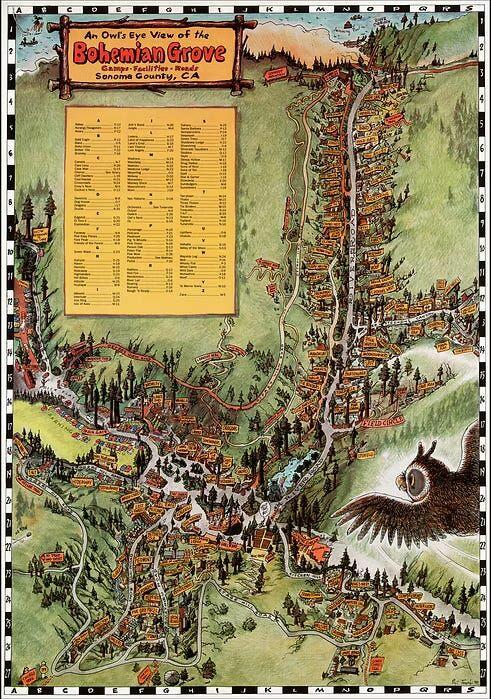
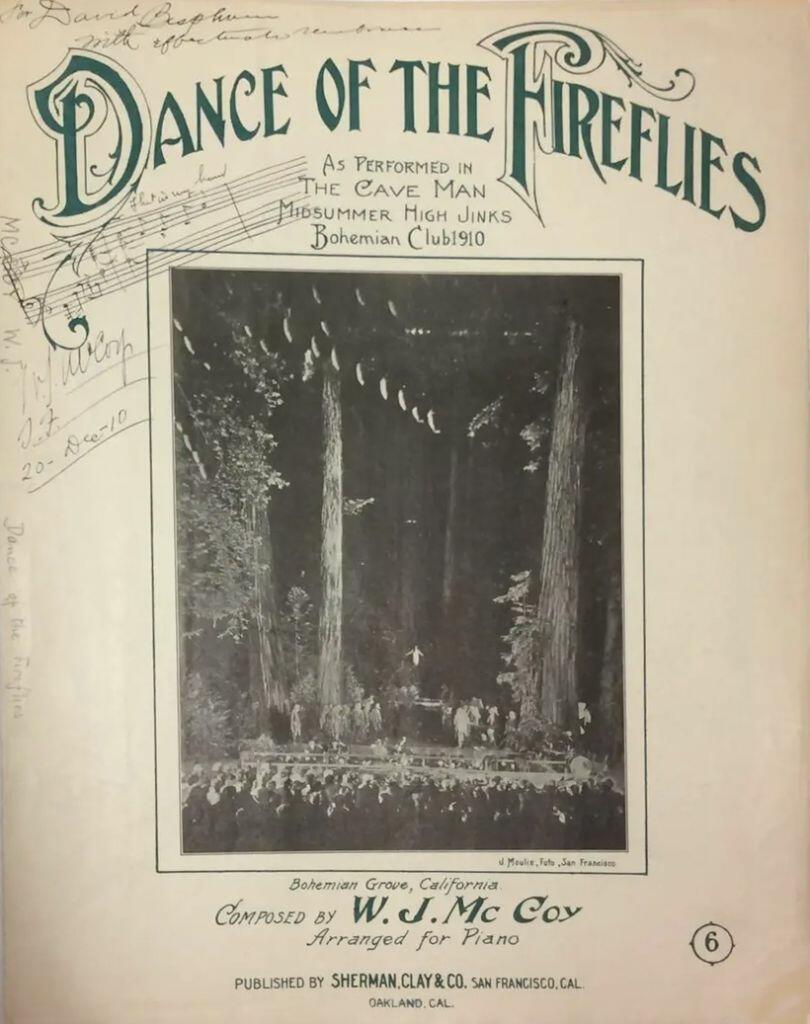
An independent journalist has obtained and published what appears to be the 2023 attendance list for ultra-secretive Bohemian Grove, the annual summer encampment of the all-male Bohemian Club in Sonoma County, California, providing a rare look at the roster of American elites who gathered at the shadowy retreat.
The list, first shared by Substack journalist Daniel Boguslaw and authenticated by at least one club member, lists more than 2,200 names, organized by the club’s distinctive “camps.”
The Bohemian Club, which also operates a private clubhouse in San Francisco, has long guarded the privacy of its activities, guided by the motto “Weaving Spiders Come Not Here,” the New York Post reports.
While the list reflects participation in the 2023 encampment rather than lifetime membership in the club, it includes a notable array of influential figures. Among them are:
Henry Kissinger – Former U.S. Secretary of State and National Security Advisor – one of the most influential diplomats of the 20th/21st century.
Michael Bloomberg – Billionaire founder of Bloomberg LP, former New York City mayor, and presidential candidate.
Charles G. Koch – Billionaire chairman of Koch Industries and major political donor/influencer through the Koch network.
James A. Baker III – Former U.S. Secretary of State (under Bush Sr.) and Treasury Secretary (under Reagan) — a towering figure in modern Republican foreign policy.
David Rockefeller Jr. – Prominent banker, philanthropist, and heir to the Rockefeller family fortune and legacy.
Paul F. Pelosi – Businessman and husband of former House Speaker Nancy Pelosi – highly recognizable due to his wife’s political role, getting hammered.
Edwin Meese III – Former U.S. Attorney General under President Reagan and key conservative legal figure.
David M. Rubenstein – Co-founder of The Carlyle Group (one of the world’s largest private-equity firms), billionaire philanthropist, and host of major economic forums.
Harlan Crow – Real-estate billionaire and major Republican donor (notably linked to Supreme Court Justice Clarence Thomas).
Gen. Richard B. Myers – Former Chairman of the Joint Chiefs of Staff (highest-ranking U.S. military officer) during the early post-9/11 era.
Entire list here:
Daniel Boguslaw Bohemain Grove List-1 by Zerohedge Janitor
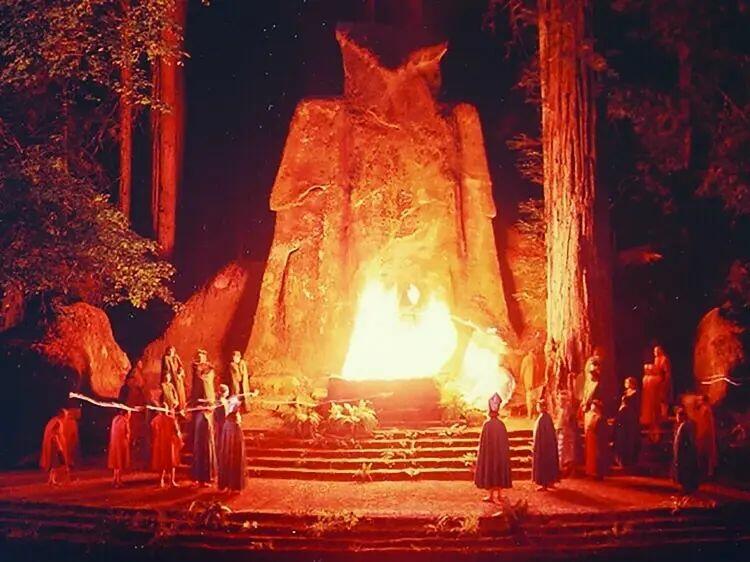
The Bohemian Grove drew wider public attention in 2000 when radio host Alex Jones infiltrated the grounds and secretly recorded the club’s signature ritual, the Cremation of Care. In the ceremony, robed participants gather before a 40-foot owl statue to symbolically burn an effigy representing “Care” in a theatrical performance featuring dramatic lighting, music, and pyrotechnics. Jones, accompanied by cameraman Mike Hanson, used the footage as the centerpiece of his documentary Dark Secrets: Inside Bohemian Grove.
In 1971, then-President Richard Nixon, an occasional attendee of Bohemian Club gatherings, once bluntly told aides H.R. Haldeman and John Ehrlichman that the retreat was “the most faggy goddamned thing you could ever imagine.”
What gave it away?
Tyler Durden
Thu, 02/26/2026 – 19:40
https://www.zerohedge.com/political/bohemian-grove-membership-list-leaked

EEUU impide que Venezuela pague la defensa de Maduro, denuncia abogado
Por JOSHUA GOODMAN
El gobierno del presidente estadounidense Donald Trump está impidiendo que Venezuela pague el costo de la defensa del exmandatario venezolano Nicolás Maduro frente a cargos de narcotráfico en Nueva York, una medida que potencialmente interfiere con su derecho constitucional a contar con un abogado, según alega su defensor.
La semana pasada, el abogado Barry Pollack le comunicó a un juez federal de Manhattan, en un correo electrónico, que el Departamento del Tesoro había bloqueado la autorización de honorarios jurídicos que el gobierno de Venezuela está obligado a pagar por Maduro y la primera dama Cilia Flores, de acuerdo con sus leyes y costumbres. El correo se incorporó al expediente público del tribunal el miércoles.
Maduro y su esposa han estado encarcelados en Nueva York, sin derecho a fianza, desde que fueron capturados en su vivienda en Venezuela el 3 de enero, en una operación nocturna encubierta realizada por fuerzas militares de Estados Unidos. Ambos se han declarado inocentes.
La impactante captura, tras una acumulación de fuerzas militares durante meses en el Caribe, ha allanado el camino para que el gobierno de Trump ejerza una enorme influencia sobre la sustituta de Maduro, su vicepresidenta y ahora presidenta encargada, Delcy Rodríguez. Bajo presión de Estados Unidos, Rodríguez se ha movido con rapidez para abrir la industria petrolera de Venezuela a la inversión estadounidense, liberar a presos políticos y restablecer comunicaciones directas con Washington, algo que no se veía desde que el primer gobierno de Trump cerró la embajada de Estados Unidos en Caracas en 2019.
En el correo electrónico, Pollack indicó que la Oficina de Control de Activos Extranjeros del Departamento del Tesoro, que administra las sanciones contra Venezuela, había concedido permiso el 9 de enero para aprobar el pago de honorarios jurídicos por parte del gobierno venezolano.
Sin embargo, menos de tres horas después, el gobierno de Trump retiró la autorización “sin dar explicación”, aunque mantuvo vigente una licencia que permite pagar a los abogados de la esposa de Maduro, señaló Pollack.
La disputa por los honorarios jurídicos de Maduro está estrechamente vinculada a la política exterior de Estados Unidos. El primer gobierno de Trump rompió relaciones con Maduro en 2019, al reconocer al entonces jefe opositor de la Asamblea Nacional como el líder legítimo de Venezuela. El gobierno del presidente Joe Biden se apegó de cerca a la misma política.
No obstante, permitir que el gobierno de Rodríguez pague el costo de la defensa de Maduro podría complicar los empeños de los fiscales en el tribunal para contrarrestar el argumento del líder depuesto de que su captura fue ilegal, y de que, como jefe de Estado extranjero, goza de inmunidad frente a un proceso penal, de acuerdo con la legislación de Estados Unidos y el derecho internacional.
Una acusación formal de 25 páginas contra Maduro lo señaló a él y a otros de trabajar con cárteles de la droga y miembros de las fuerzas armadas para facilitar el envío de miles de toneladas de cocaína a Estados Unidos. Si son declarados culpables, él y su esposa enfrentan la posibilidad de cadena perpetua.
Dentro de la supuesta conspiración, Maduro y su esposa habrían ordenado secuestros, golpizas y asesinatos de quienes les debían dinero de la droga, según la acusación formal. El documento indicó que eso incluyó la muerte de un jefe local del narcotráfico en Caracas.
Los mensajes en busca de comentarios dirigidos al Departamento del Tesoro, la Casa Blanca y el Departamento de Justicia no recibieron respuesta de momento.
Pollack indicó que el 11 de febrero le solicitó a la Oficina de Control de Activos Extranjeros que restableciera la licencia original y despejara el camino para que Venezuela cumpla su obligación de pagar los costos de la defensa de Maduro.
El abogado añadió que Maduro “no puede costear de otro modo un abogado”, y que pedirá ayuda al juez para pagar su defensa.
Pollack sostuvo que Estados Unidos estaba “interfiriendo con la capacidad del señor Maduro de contratar un abogado y, por lo tanto, con su derecho, conforme a la Sexta Enmienda (constitucional), a contar con un abogado de su elección”.
___
Goodman informó desde Miami. Los periodistas de The Associated Press Aamer Madhani y Fatima Hussein en Washington, y Larry Neumeister en Nueva York contribuyeron a este despacho.
___
Esta historia fue traducida del inglés por un editor de AP con la ayuda de una herramienta de inteligencia artificial generativa.

Panamá: realizan diligencia judicial en oficinas supuestamente de empresa portuaria
CIUDAD DE PANAMÁ (AP) — El Ministerio Público de Panamá realizó el jueves una diligencia judicial en tres oficinas presuntamente vinculadas a la empresa Panama Ports Company (PPC), filial del grupo hongkonés CK Hutchison, cuatro días después de que se ejecutara el fallo que dejó sin efecto la concesión de los dos puertos en las entradas del canal interoceánico y tras la toma de control por parte del Estado.
El fiscal Azael Samaniego, de la Sección de Atención Primaria de la Fiscalía Anticorrupción, confirmó a medios de comunicación locales las diligencias —en las que también participaba la Autoridad Marítima de Panamá— en tres oficinas ubicadas en la capital panameña y fuera de los recintos portuarios.
“Actualmente tenemos información por parte de los brazos auxiliares de la posibilidad de la comisión de un ilícito. Nosotros como Procuraduría General de la Nación estamos obligados, una vez tenemos conocimiento de la posible comisión de un hecho ilícito, a generar las pesquisas correspondientes, los primeros actos de investigación y en eso nos encontramos en este momento”, dijo Samaniego.
El fiscal no reveló los nombres de las empresas involucradas ni especificó el supuesto delito que se investiga. Indicó que se trata de una investigación de oficio.
Durante la diligencia se observó a los funcionarios saliendo con cajas con documentos de las oficinas intervenidas. “La documentación hay que estudiarla”, indicó el fiscal.
El lunes, la Autoridad Marítima de Panamá tomó posesión de los puertos de Balboa y Cristóbal —en las entradas Pacífico y Atlántico del canal— y asumió el control operativo de ambas terminales tras la ejecución del fallo que declaró inconstitucional la concesión que mantenía Panama Ports Company, la filial de la empresa hongkonesa.
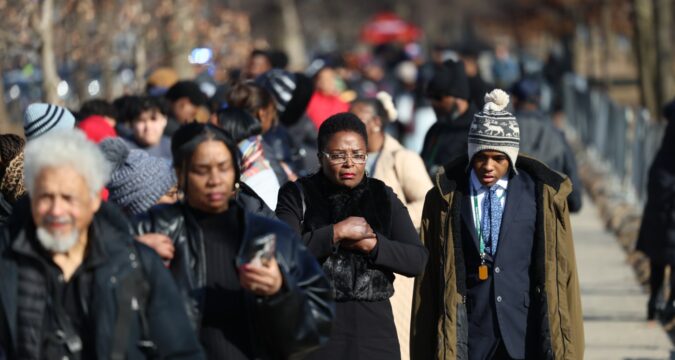
Rev. Jesse Jackson to lie in state at the South Carolina State House in Columbia
As many lined up to pay their respects for the late Rev. Jesse Jackson, Sr. on Thursday — his casket lying in repose at Rainbow PUSH’s South Side headquarters through Friday — funeral arrangements in the civil rights icon’s native state of South Carolina were announced.
The Jackson family and members of the South Carolina General Assembly requested Rev. Jackson lie in state at the South Carolina State House, 1100 Gervais Street, in Columbia on Monday, March 2, from 11 a.m. to 4:30 p.m. A memorial tribute will follow at Brookland Baptist Church, 1066 Sunset Boulevard, West Columbia, South Carolina at 4-6 p.m. Both events are open to the public.
The Statehouse in Columbia, S.C., Jan. 16, 2026. The Jackson family and members of the South Carolina General Assembly requested Rev. Jackson lie in state at the South Carolina State House. (Tierney L. Cross/The New York Times)
Born Jesse Louis Burns, Jackson was born in Greenville, South Carolina, in 1941. He would grow up in Greenville until he attended college on a football scholarship at the University of Illinois at Urbana-Champaign. But by 1961, Jackson transferred to North Carolina Agricultural & Technical College in Greensboro, where he graduated.
The founder of the Kenwood-based Rainbow/PUSH Coalition died Feb. 17 at 84, “peacefully” and “surrounded by his family,” according to a news release. His health has been in decline for years, and he recently spent weeks in the hospital for progressive supranuclear palsy, a rare neurological disorder.
Rev. Jackson was a protégé of the Rev. Martin Luther King Jr., who participated in the Selma to Montgomery, Alabama, marches. He continued the fight for social justice and civil rights through the coalition and campaigned twice unsuccessfully for president. He stepped down as the president of Rainbow PUSH in 2023.
South Carolina Gov. Henry McMaster has directed that the flags atop the State House be lowered to half-staff from sunrise to sunset on March 2nd in honor of Rev. Jackson’s legacy and memory.
Formal funeral services are scheduled for March 4 in Washington, D.C. The details are yet to be released.
Public visitation of Rev. Jackson continues at Rainbow PUSH through Friday at 930 E. 50th St., Chicago, from 10:00 a.m. to 10 p.m.
Friday, March 6
Public Homegoing Services
Location: House of Hope, 752 E. 114th St., Chicago
Time: Doors open at 9 a.m.
Saturday, March 7
Homegoing Celebration
Location: Rainbow PUSH HQ, 930 E. 50th St., Chicago
*A livestream will be shared with the public at https://www.jessejacksonlegacy.com/. You can register for the local public homegoing here.
https://www.chicagotribune.com/2026/02/26/rev-jesse-jackson-south-carolina/
The Talented Mr. Newsom
The Talented Mr. Newsom
Authored by Alex Berenson,
Gavin Newsom could be our next president. But does anyone – including him – know what he stands for? A detailed look at his life suggests the answer might be no.
California has every natural and economic advantage: a long, beautiful coast, great weather, a generations-long stranglehold on cultural production in Los Angeles and advanced technology in Silicon Valley.
Yet years of Democratic misrule have made the state so unlivable its taxpaying residents are fleeing en masse. Building houses, or high-speed rail, or anything else in California is nearly impossible. Meanwhile, the state has done all it can to make itself a home for unemployable illegal migrants, including offering them free medical care.
One might think this record would make Gavin Newsom, California’s Democratic governor, an unattractive presidential candidate.
One would be wrong.
The 2028 election is still almost three years out, but prediction markets have Newsom as the leading candidate to become the Democratic nominee in 2028 and trailing only JD Vance to take the White House in 2029.
Now Newsom, like many a would-be President before, is promoting a new autobiography, Young Man in a Hurry.
His book tour hit an air pocket over the weekend, when he made news for telling an audience in Atlanta about his barely mediocre SAT score — 960 — in a way that made him seem stupid, inauthentic, and possibly racist.
The incident got me thinking about Governor White Teeth, as I called Newsom during Covid. Like other big blue-state governors, Newsom loved lockdowns. He and California clung to them longer than almost anywhere else. Beyond that, though, I didn’t know much about him, aside from the fact he had once been married to Kimberly Guilfoyle.
* * *
Which is why I was so happy to have the chance to read this biography of Newsom from Brad Pearce, an independent journalist in Washington state who writes the Wayward Rabbler Substack. Pearce alerted me to it on X after I made a snarky joke about a wine store Newsom had once opened in San Francisco, writing:
Gavin Newsom’s father was a social climber who lived beyond his means and didn’t properly support his mother, so he did kind of grow up simultaneously rich and poor. I wrote a full profile of him 6 months ago. Horrible but fascinating man.
Naturally I clicked through to the profile, titled “Gavin Newsom Doesn’t Need a Narrative.” What I found was more interesting, and frightening, than I’d expected.
Pearce presents Newsom as not so much a chameleon as a man without any shape at all. Like Bill Clinton, his most obvious comparator as a modern politician, Newsom grew up without a strong father and used his charm and looks to get ahead — with women and politically.
But Newsom and Clinton differ in crucial ways.
Clinton is far smarter than Newsom. But Newsom grew up in an social and class environment more complex than the one Clinton faced. Newsom was close to the scions of San Francisco’s Nob Hill gentry, a group whose wealth long predates Silicon Valley and is possibly the snobbiest local elite anywhere outside Boston. Yet he didn’t actually have their money, giving him acute status anxiety.
At the same time, Pearce makes a persuasive case that Newsom’s learning disability and lack of genuine intelligence mean that he cannot understand the nuances of difficult policy choices — much less figure out which might be best substantively. He navigates on instinct and his desire for personal approval. Even more than most politicians, Newsom wants to be loved at any cost.
Yet Pearce warns against underestimating Newsom, or his ability to win the Democratic nomination or the Presidency. Newsom is a tall, handsome white man who is the governor of the nation’s largest state, and those facts all by themselves make him a serious candidate. And Newsom’s bullet points style of argument may make him the man for an increasingly post-literate age.
Horrible but fascinating indeed.
The piece is too interesting not to share, so I asked Pearce if I could excerpt it for Unreported Truths readers. He graciously agreed. It is long by Unreported Truths standards and has a lot of discussion of California’s House redistricting plans.
I have cut the redistricting discussion and the opening section of the piece to focus on Newsom’s history and made other cuts for length but have not otherwise edited it. (If you want to read the entire piece, you can find it here – it is not paywalled.)
Even if you skim it, I hope you’ll get to the end. Pearce’s conclusion may surprise you. Yet it’s hard to disagree with his final paragraph.
* * *
Without further ado, courtesy of Brad Pearce and The Wayward Rabbler, everything you need to know but were afraid to ask about the leading Democratic candidate to be our next president:
The basic facts of Gavin Newsom’s earliest years are that he was born in 1967 to William Newsom, a California Superior Court Judge, and Tessa Newsom [née Menzies.] A sixth generation Californian of Irish descent on his father’s side, his father had risen to prominence befriending Gordon Getty of the Getty oil family [also of Getty Images] and later managing his father’s estate.
Newsom’s parents divorced when he was very young and he lived in a small apartment with a struggling single mother. According to an extensive New Yorker profile from 2018, his father was something of a “Disneyland Dad,”
“Bill Newsom…occasionally swooped in to take Gavin on vacation with the Getty family: polar-bear watching in Hudson Bay, safaris in Africa. When he returned from these jaunts, his mother would say, “Hope you had fun! ” and storm off to bed. “The guilt,” he told me. “She made me feel horrible.”
One night, Newsom recalled hearing “my mother yelling and screaming at my dad because he wasn’t able to help us financially, because he was very close to bankruptcy.”
…[Newsom] has relied on his friendship with the Gettys his entire career while running away from the claim that he is privileged. But it seems to be the case that his father got used to a certain lifestyle while privately managing the Getty trust and then he couldn’t maintain it when he got the prestige of the Superior Court position, and helping his ex-wife support the children was never a priority.
Regardless, we’re told that Newsom is simultaneously like an extra son to the heir to one of the wealthiest old money families in California while also the product of an impoverished single mother and this seems to be broadly true.
Perhaps, though, the LA Times gives us the clearest picture of the man with this incredible quote from a 2021 profile, “California’s most powerful politician often begins his day around 6 a.m. alone in his office, struggling to read.”
Yes, Gavin Newsom is dyslexic.
I’m going to allow myself a digression here because, though it is hard to know to what extent this is a narrative his aides came up with so that the slicked back wonderboy with rich friends can claim to be disadvantaged, it seems as if, perhaps more than anything, not being able to read or understand long-form prose is what made Gavin Newsom who he is today.
It’s also notable he has been so willing to talk about this, when an unusually high amount of the articles I read for this piece, even from major papers such as LA Times or Business Insider, could not get a response for their stories, making it evident that this is a political machine comfortable ignoring the media but which wants to talk about dyslexia.
Newsom says, “I can read two chapters and literally be daydreaming, and I’ll have read every word and not remember one damn thing unless I’m underlining it.” What this means is that, with difficulty, he can gather what he needs to pass a test, but can’t actually understand written stories in the normal sense.
Instead of reading as you or I might, Newsom undergoes an intensive process of distilling information down to a few bullet points which don’t require a central narrative,
“I have files and files,” Newsom said. “Everything is underlined, circled, and I put it on 8-by-10 white papers, and then there’s like thousands of these stacks … every topic, subject matter. And then I take from that subject matter and break it down to two or three pages, and then I try to eventually get it on these yellow cards.”
This all seems to be key to his success as a politician, both his acceptance of having to work harder than everyone else due to his learning disability as well as his entire political thought process being centered on memorizing bullet points.
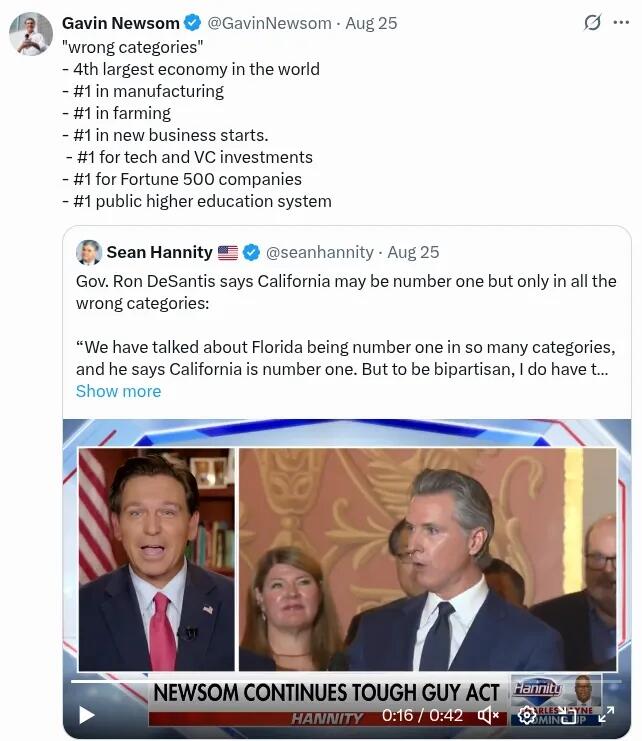
I think this helps in his shamelessness because he isn’t necessarily even aware of the narrative a normal person might put together based on the facts he presents, he simply answers objections with other facts he has memorized. Here is just one representative example:
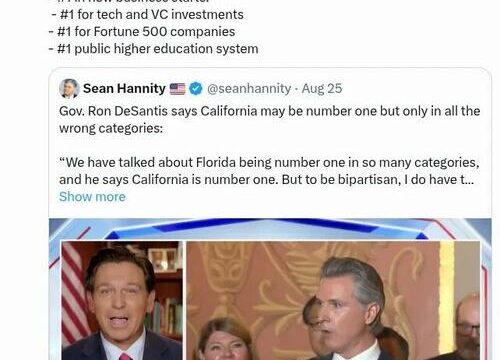
This is in response to Ron DeSantis pointing out that, among other things, California is #1 in homelessness and poverty. This is somewhat normal politician-speak, but none of his positive things have anything to do with Gavin Newsom and are primarily simply that California has about 1/3rd more population to the next closest state and is also the major gateway to the Pacific.
To Newsom, no narrative continuity is required… the entirety of his political rhetoric is having memorized endless little facts because as per his own description it is impossible for him to memorize or read a prepared speech.
* * *
I don’t mean to downplay the achievement of overcoming his dyslexia, but the point is it is hard to know how to respond to someone incapable of feeling shame or processing narrative in a normal fashion because it is outside of the experience of almost everyone.
Regardless, this dyslexia, according to Newsom, had a serious impact on him, making him initially a shy and often bullied child, which I do believe, if he was unable to read out loud. In middle school, Newsom decided to be the person everyone wanted him to be, apparently successfully.
As per the New Yorker profile,
“In middle school, Newsom, drawing inspiration from “Rocky,” took up boxing and drank raw eggs to toughen himself. Then he began applying hair gel and wearing blazers and business suits, a costume inspired by “Remington Steele,” the TV show that starred Pierce Brosnan as a con man who assumes the identity of a glamorous private detective. “The suit was literally a mask,” he said. “I am still that anxious kid with the bowl-cut hair, the dyslexic kid—the rest is a façade. The only thing that saved me was sports.””
Note that Newsom is comfortable saying he is a fake person based on a TV con artist—he just comes out and tells the public this!
At this same time, he started excelling in baseball and basketball, developing his underdog-becomes-overdog persona and his self-image as the powerful defender of the little guy. In many ways this makes him a perfect leader for the modern Marvel-brained American: he can’t understand complex concepts but instead has based his life off of a series of aesthetics and distilled story-line tropes from popular visual media.
This all worked fabulously. Susie Tompkins Buell, the co-founder of the Espirit and North Face clothing lines, and a Democrat megadonor, said the following of Newsom as a young man in a 2018 LA Times story about his support from San Francisco’s most important moneyed families,
“He was the boy about town. Everybody wanted to date him,” she said, recalling that one of her daughters was in a relationship with Newsom in the 1990s. “He was the smartest, the best-looking. He went through a cocky stage, and then an arrogant stage. Now he’s in a total serving stage. He paid his dues, I’ll tell you.”
That last part is obvious nonsense, but is also crucial to understanding the mindset of his long-time supporters, and I suppose it is easy enough to believe that a 17 year old Newsom was a much more extreme version of what he is now.
* * *
Much has been made of Newsom’s baseball background, and by all accounts he likes the game and was a good player in high school. However, the enormous fabrications about this part of his life seem representative and are worth going into. It has been widely reported across major publications that he played baseball at Santa Clara University and was “recruited” by the Texas Rangers.
A 2024 investigation from CalMatters found that Newsom practiced with the team but never played in a varsity game, and that since he became famous it’s actually been a joke among the teammates of those years that he was on their team. It seems that he was unable to balance college sports with schoolwork, which makes sense for a guy who describes himself as needing to spend “like six hours to give a five- or six-minute presentation…”
…according to the same CalMatters investigation, though there is evidence that Newsom received one $500 scholarship to play on the JV team his first quarter of college, how this came about was that Bill Connoly, a long time San Francisco investment banker, associate of Bill Newsom, and Santa Clara baseball alumni and donor to the program, put the younger Newsom “on their radar.” However, the former assistant coach interviewed says “the baseball program was not a backdoor into the university.”
For that, it seems his family relied on letters of recommendation they solicited from former California Governor Jerry Brown as well as from an attorney named John Mallen who was on the University’s Board of Regents at the time, and who later described Bill Newsom as his “best friend of 75 years” and said this may have been the only such letter he ever wrote in that position, “In fact, I may not have helped anybody else get in…I mean, I’d known him since birth…He was a good athlete. That I remember…I think it was a big help.”
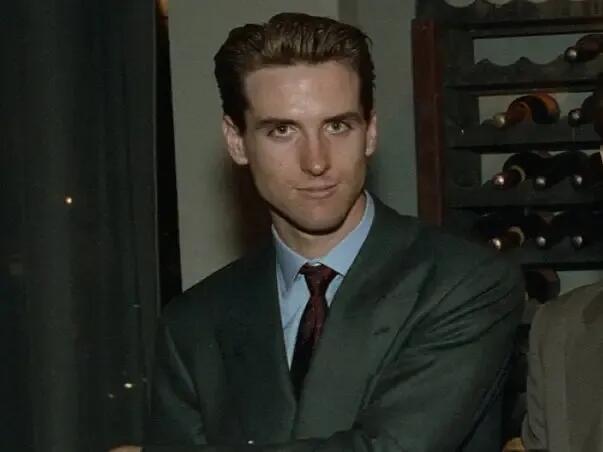
Newsom at the opening of his PlumpJack wine shop in 1992. Fellas, watch your wives and daughters around this guy.
…[Newsom] managed to graduate in 1989 with a degree in Political Science, and then went into business, starting the PlumpJack Wine & Spirits shop with the funding of Billy Getty. He then expanded to the Balboa Café, which became the haunt of all the scions of the local oligarchs, who would later be Newsom’s earliest political donors.
Much has been said about Newsom being “bought off” by this group of oligarchs, but it needs to be understood that he doesn’t believe in anything in the first place and is actually part of their social circle, so there is no reason he would want to do anything they don’t want; it is less a matter of being “bought off” and more a matter of them supporting someone who was already on their team.
It also seems to be the case that Newsom kept getting money from the Gettys to expand his businesses because they were successful under his leadership, as opposed to the Gettys just pouring money into some tangential dependent. It is not at all hard to see how this particular guy with his taste for fine living and self-described “facade” based on a con artist played by Pierce Brosnan would be successful in luxury hospitality businesses.
There have been several newspaper investigations into Newsom’s business empire -18 businesses and $1.5 million annual income for Newsom as of 2018– and I don’t find them that interesting, though I am amused and impressed that Newsom and his wife made perhaps around $500,000 per year trading silver bars during his time as Lieutenant Governor [assuming this wasn’t just a scheme to launder bribes, a big assumption, this would be about the most honest way a major politician could make money while in office.]
* * *
As a businessman, Newsom became a big supporter of Willie Brown’s campaign for mayor – this of course being the same Willie Brown currently most nationally famous for having been some sort of lover of Kamala Harris back in the day when she was fairly hot. This got him put on some boring traffic committee which our “Young Man in a Hurry” managed to leverage into getting onto the Board of Supervisors and then into running for, and winning, the mayoralty at age 36, the youngest mayor of San Francisco in a century.
After becoming mayor, Newsom, following such a law passing in Massachusetts, ordered the city to begin marrying gay couples, against both state and federal law. I remember this, and it was years after he became Governor of California that I discovered it was the same person; even as a lib teenager who hated traditional values, at the time I thought he was a maniac for doing this unilaterally.
It is unclear why Newsom took such a step, though I imagine he felt he would get enormous praise from San Franciscans [which he did] and be seen as a bold leader by his party nationally [which he was not.] The party bigwigs were uniformly furious, with Nancy Pelosi saying the issue was “moving too fast,” while Dianne Feinstein blamed him for John Kerry’s 2004 loss after Republicans seized on the issue; it’s said that Kerry still blames him.
After California passed Proposition 8, banning same-sex marriage in 2008, Newsom seemed defeated on this issue. But when the Supreme Court overturned Proposition 8 and restored California’s prior short-lived gay marriage law in 2013, finally settling all the lawsuits started after Newsom issued licenses in 2004, it seemed he was a man ahead of his time.
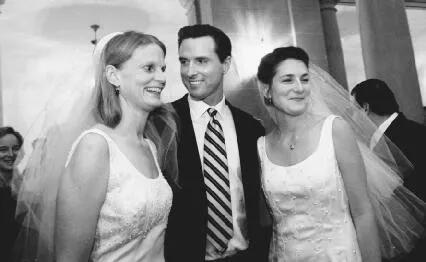
Newsom in 2004 with a lesbian couple he allowed to illegally marry. Dude looks like he has ideas.
This is an enormous political asset for Newsom now, having been ahead of all of the old class of politicians on the defining cultural issue of our era for the Democrats, who instantly adopted gay marriage as a key dogma after the Obergefell regardless of any prior views they held on the matter and demanded everyone else did the same. Newsom told the New Yorker that while he remains proud of the act of civil disobedience,
“So many of my political heroes read me the riot act. And, look, for a lot of years there was a lot of evidence that they were right…I don’t know if I’d have the guts to do it again. Because back then I didn’t know what I didn’t know—I had a beginner’s mind.”
As usual, he gets to be on every side of every issue, having taken the “right” stance at the time, but also saying he thinks he would be more “responsible” now.
* * *
During the time that Newsom was a reviled figure amongst his party as Mayor of San Francisco he went through a wayward period of drinking and slacking off that sounds really fun though speaks poorly of his character. Among other things, in 2005, while going through a divorce, Newsom began sleeping with his appointments chief, Ruby Rippey-Tourk, the wife of his Chief of Staff.
He acknowledged the affair two years later, and said he would seek treatment for alcohol abuse. Rippey-Tourk herself went on sick leave for alcohol abuse and managed to get paid $10,000 by the city, against procedure, under a catastrophic illness program. During this time he also brought a 19-year-old girlfriend to a public event, where she was photographed drinking wine. This quote from the New Yorker is particularly informative,
“But, even as he cast his tribulations as a part of the hero’s arc, he avoided detailing why they had happened. When I pushed, he obscured himself in a cloud of bullet points: “Personal journey, renewal, turning the page.””
Once again, he understands the “bullet point” aspects of narrative but is not capable of explaining them.
Anyway, he went to a counselor for alcohol abuse, providing another incredible passage from the same article:
“The first thing Silbert did was to tell him to stop drinking. (Two years later, having decided he wasn’t an alcoholic, she gave him permission to drink socially.) “I have two speeds, on and off,” Newsom told me he’d explained. “I said to Mimi, ‘When I have a drink, that’s my moment when I turn off. It’s my time.’ And she said, ‘You’re still the fucking mayor!’ I had never thought of that.”
Silbert told me, “I would be trying to get at the feelings, but emotions were not Gavin’s strong suit. He gets excited by ideas, by having achieved thirty-seven per cent of his goals. And in that period there was no policy pathway out. He was just sad and lonely and he drank too much.””
At the time, it was widely reported that Newsom had gone to rehab, something he left “uncorrected” for ten years, though he later acknowledged this counseling did not constitute an alcohol rehabilitation program. Here, again, Newsom gets all worlds: he has struggled with and overcame alcohol abuse but also can still drink and was never an alcoholic.
* * *
Newsom remarried in 2008 and had the first of four children in 2009. As his time as San Francisco mayor was drawing to a close – he had been re-elected with 71 percent during his wild years – Newsom briefly ran for governor of California, but saw the campaign was going nowhere.
He dropped out to run for lieutenant governor, which he won, serving under Jerry Brown who was making a return after almost 30 years away from the governor’s mansion. He then, of course, ran to replace Brown and became the governor of California in 2019.
I think, at this point, anyone sufficiently interested in American politics to have read this far knows enough about Gavin Newsom that I don’t need to extensively describe his tenure as governor. We all know it has been a disaster.
The brutal covid lockdowns and his own dinner at the French Laundry, California losing population for the first time while Texas and Florida made enormous gains, the 2021 failed recall, crime and shit in the streets, budget surplus turned into insane budget deficit, and the ridiculously incompetent response to devastating wildfires. All of these are things which have made people write Newsom off for dead, but, as is the theme here, his inability to feel shame or process narratives have made him immune to devastating coverage from national media and widespread fury from his constituents.
Even I thought he was probably done after this. As of now, it is forgotten.
This brings us to Newsom’s current moves as he prepares to run for President in 2028…
Newsom’s real strength is going to come from his skill at and love for campaigning. There is nothing better to Newsom than going from person to person selling them on himself. Basically his whole life has been spent trying to convince people he is two things he is not: intelligent and competent. It could be said this is his true passion, at least as near as I can tell.
According to the New Yorker profile, Newsom’s favorite way to campaign is town halls, an unpopular and grueling campaign technique which politicians commonly avoid and then are constantly criticized for avoiding. Many feel they are not that productive, bring out crackpots with an ax to grind, and then create opportunities for bad interactions.
Newsom, with his boxes of notecards, loves them. The New Yorker describes one instance in Fresno where it took him 40 minutes to win over the crowd until an 8 year old girl asked him about gun violence and his answer got loud applause. He can do this all day…
Newsom has been watching Bill Clinton videos for decades, so extensively that aides say this sixth generation Californian sometimes develops an Arkansas twang when he over-studies. One official who knows both men said the difference is this: “Bill Clinton peers deeply into your soul. Gavin peers deeply into the mirror at himself.”
That notwithstanding, technology is waiting for the Clintonian master of the town hall. Instead of the same rallies, it puts Newsom up there day after day talking to people with different problems, put in a line at the microphone, or a group sitting in chairs, or a conversation with a host as the public asks questions. It is constant new content that cannot be replicated by watching a video of a rally. If something goes wrong one day, he can fix it the next day’s cycle…
This is the campaign format made for modern technology. Most importantly, whereas a stump speech will leave positively inclined people thinking, “He understands what I’m going through,” this format accomplishes something even better, “if I spoke to him, he would understand what I am going through.”
He neither knows nor cares what you are going through, but is great at creating the impression that he does.
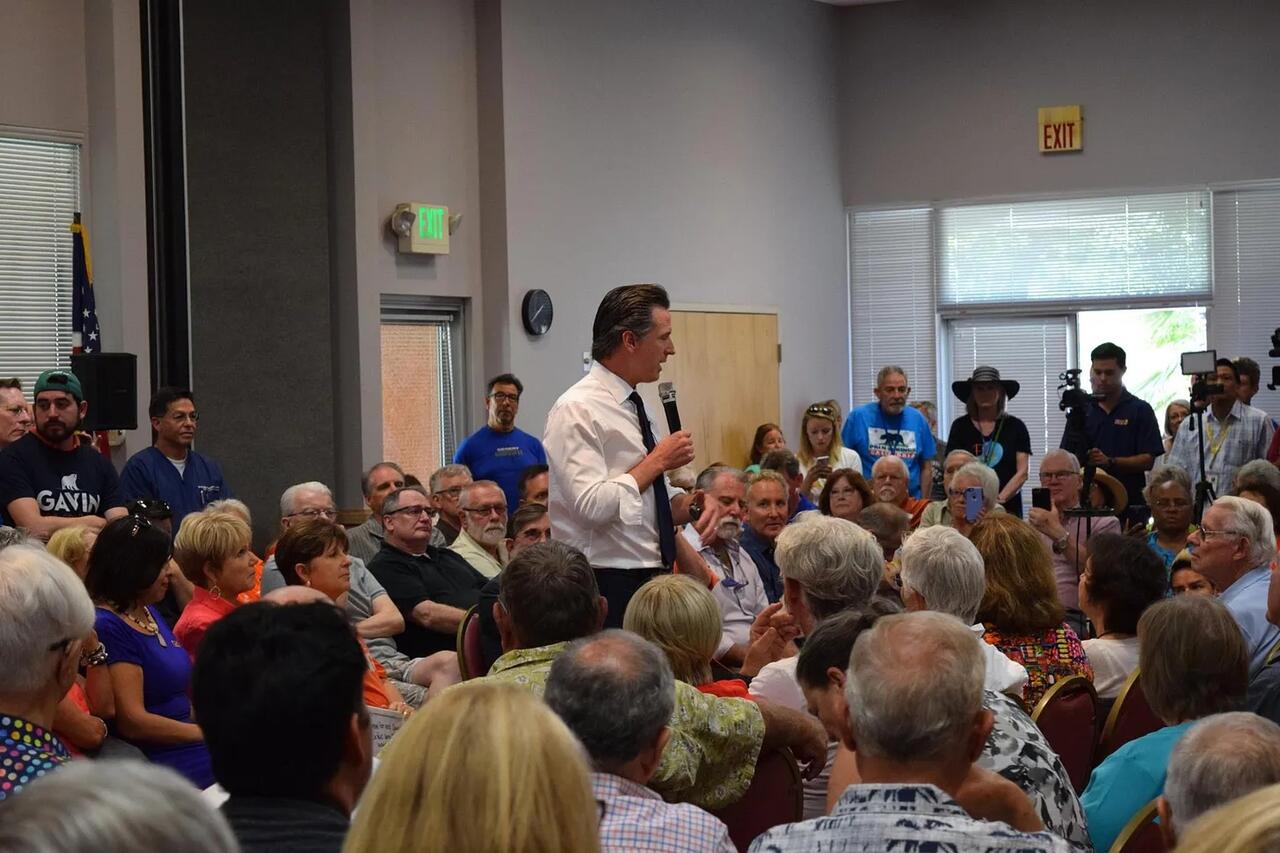
Gavin Newsom at a town hall in 2018.
I considered concluding here by restating my initial list of objections in the bullet point format which Governor Newsom prefers and going over why they aren’t a problem for him. But this article is long enough, and I don’t think any merit further explanation.
The point is this: Gavin Newsom cannot be caught with the self-doubt of a normal man or the real problems with his record because he doesn’t care and has a list of semi-relevant facts that will move the conversation forward.
He will not come in as the cursed early front-runner because he has a perpetual underdog complex due to his struggles with literacy and believes his way in life is working harder than everyone else. His campaign style is that when something doesn’t work he just talks to the next person and the next person until something does work.
All of this combined with his undeniable vibes and aura — serial killer vibes and aura, but vibes and aura nonetheless — make him an extraordinarily powerful politician. His authentic shamelessness is perhaps his greatest attribute, because it does not even occur to him that he is humiliating himself by changing positions or being exactly who the audience wants him to be…
He believes in nothing, but his favorite thing to do is ingratiate himself with different groups of people by being who they want him to be. He sells it so hard they don’t even feel like they’ve made him perform a humiliation ritual but that he has simply honored them.
Gavin Newsom is not a smart man, nor a wise man, nor a competent man, and he is certainly not a moral nor a compassionate man.
He is a demonstrably terrible political leader.
He is basically just an ambitious sociopath with a learning disability who managed to become immensely powerful due to his coping mechanisms combining with a variety of circumstances beyond his control.
I make no predictions about what will happen in 2028. But I can tell you that he is an extremely potent political force that anyone who wishes to counter underestimates or fails to understand at his own, and America’s, peril.
And yet, for all of that, I somehow like the guy more than I did when I started my research for this article — and enough American voters could learn to love him to put him in the White House
Tyler Durden
Thu, 02/26/2026 – 19:15

Daily Horoscope for February 27, 2026
General Daily Insight for February 27, 2026
Surprising events can be handled with skill today. Our moods swell with care, generosity, and affection when Luna initially conjoins expansive Jupiter. Then, at 11:20 am EST, ambitious Mars squares unpredictable Uranus, so our attempts to make bold moves could meet twists that push us to rethink plans and alter our pacing. We should honor our need for progress while leaving room for detours by building flexible timelines, reviewing pre-set expectations, and choosing wise priorities. Tonight, we can regroup and share what changed.
Aries
March 21 – April 19
Make your move! High-spirited Mars energizes your 11th House of Networking with its square to Uranus in your 2nd House of Resources. Last-minute events or unexpected additional costs for something may clash with your budget, so set limits and ask for transparent terms. Your leadership works best when you invite input but keep decisions clear. If a friend pushes for more than feels fair, don’t shut them out. Do your best to meet in the middle. Protecting your value lets real collaboration grow.
Taurus
April 20 – May 20
Steady choices protect what matters most. Changeable Uranus is in your typically steady sign, further destabilized by this square from Mars in your 10th House of Professionality. A supervisor might shift priorities, so respond levelly and revise what you can control. Present a grounded plan that protects your timeline and your well-being while leaving room for necessary pivots. Speak with composure so others trust your reliability and allow you space to adjust. Choose measured steps so your reputation grows alongside your skills.
Gemini
May 21 – June 20
What conversation would clear the air today? Mars is tumbling through your 9th House of Explorers and pushing unconventional Uranus in your 12th House of Shadows. A plan may wobble because a behind-the-scenes factor changes. Use your quick mind to rewrite details and check reservations on the fly, but stay aware of your stress levels as you do. You may need to step aside for a quick break if things get too tense! Keep your wits with you so stress stays low.
Cancer
June 21 – July 22
Fractured feelings could ripple through community spaces. Mars and Uranus are sparring across your wary 8th house and your networked 11th house, potentially inhibiting your efforts to connect with those around you. Don’t panic — you can get through this. You may need to have some urgent talks about boundaries with acquaintances and closer friends, though. If emotions surge, take a breath before replying, then propose pausing whatever’s going on until everyone agrees on fair terms. Speak honestly and carefully to nurture trust.
Leo
July 23 – August 22
This morning favors a graceful give and take. Your 7th House of Allies heats up as aggressive Mars squares innovative Uranus in your 10th House of Public Life. A collaborator may react badly to a schedule change or public commitment. Show your warmth by listening to their concerns, especially those regarding shared goals. That said, you don’t have to fold to anyone’s unreasonable demands. Whatever you’re doing, keep humor handy to lighten the mood as needed. You’re worthy of respect, but so is everyone else!
Virgo
August 23 – September 22
Clarity grows as you refine small steps. Your 6th House of Holistic Care and your curious 9th house are impacted by Mars squaring quirky Uranus. A shifting travel plan or unforeseen knowledge gaps could disrupt your careful schedule around appointments or deadlines. Break big tasks into blocks, then update your checklist and confirm what others truly need. You might need to handle some tense moments, but as long as you genuinely listen to all involved, handling them shouldn’t be too tough.
Libra
September 23 – October 22
Compromises can currently be double-edged swords. Mars in your expressive 5th house shouts to reactive Uranus in your 8th House of Inheritances. Be wary of over-investing in large creative undertakings — stick with a smaller scale for the time being. That way, if something goes wrong, withdrawing won’t be a big loss. If you co-parent or are collaborating on a long-term project, this is not the time to walk back your boundaries (not without excellent reasons). Balance pleasure and prudence as best you can.
Scorpio
October 23 – November 21
Scorpio, your focus cuts through distractions to guard your nest. With Mars in your home zone and Uranus in your pairings quadrant, your relationships with anyone who shares your residence are at the cosmic forefront. If you live alone, you may be thinking of moving or making another large change to your living space. Really ponder your ideas before doing anything irreversible! With roommates, protect your privacy by setting clear times for talks, and ask for commitments in writing to avoid mixed signals.
Sagittarius
November 22 – December 21
Fresh momentum could bubble up from unusual sources. Today is like a sparring session between Mars and Uranus in your chatty 3rd house and sensible 6th house, respectively. A surprise schedule shift or tech glitch could scramble morning messages, especially with co-workers or service providers. Keep your tone upbeat, ask precise questions, and include breaks in your schedule. If you drive or commute, build extra buffer time and choose the safer route rather than chasing speed. Stay nimble now, so small problems pass quickly.
Capricorn
December 22 – January 19
By afternoon, steadfastness becomes your edge. You’re not boring, you’re reliable! Your 2nd House of Money activates as passionate Mars squares sudden Uranus in your 5th House of Bliss. Watch out for tempting sales trying to distract you from your responsible budget. Pause before you pay and choose real value over flash to ensure you make satisfying purchases. If you plan a date night, set a spending cap and focus on experiences that spark genuine connection. Invest in memories that match your real priorities.
Aquarius
January 20 – February 18
Channeling your inner spark can fuel amazing acts right now. Warrior Mars in your sign is charging at Uranus, the Great Awakener, in your 4th House of Foundations. A sudden household need could collide with your personal plans. The surge of energy may not be stoppable, but it is shapable — its final form is up to you. Your independent streak solves problems fast, especially when you accept a creative workaround instead of tossing it aside in search of that mythical “perfect” solution.
Pisces
February 19 – March 20
Healthy changes still alter the landscape of your soul — that’s normal. Your 12th House of Healing stirs as combative Mars squares radical Uranus in your 3rd House of Noise. Plans for rest could be disrupted by noisy requests from nearby. Protect your peace by setting up some alone time, ensuring you won’t be disturbed outside of an emergency. When thoughts race, breathe slowly and trust your inner compass to organize your feelings before responding. Choose quiet first so serenity can find you.
https://www.chicagotribune.com/2026/02/26/daily-horoscope-for-february-27-2026/
Asamblea de Ecuador aprueba ley para inversión minera; opositores anuncian acciones para frenarla
Associated Press
QUITO (AP) — En medio del rechazo de organizaciones indígenas, ambientalistas y sectores de oposición, la Asamblea de Ecuador aprobó el jueves una ley impulsada desde el oficialismo que, asegura, fomentará la inversión en los sectores estratégicos de energía y minería.
La ley, que se aprobó con 77 votos, agiliza los procedimientos administrativos para entrega de permisos y reducción de costos, sustituye la licencia por la autorización ambiental, cuya diferencia radicaría en el tiempo de ejecución y celeridad para procesos de regulación de la actividad evitando “inactividad prolongada”, sin reducir “estándares de protección”.
Además, entrega autorizaciones por fases, otorga incentivos para las actividades asociadas a la inversión minera, establece procesos de formalización de la minería artesanal, y fortalece controles para la minería ilegal, entre otras.
“Camino a la formalidad, a la conservación y a potenciar oportunidades” en los sectores estratégicos, escribió en X la ministra de Ambiente, Inés Manzano, al celebrar la aprobación de la ley, mientras desde sectores de oposición se anunciaron medidas para impedir su aplicación.
El presidente de la Confederación de Nacionalidades Indígenas del Ecuador, Marlon Vargas, aseguró en declaraciones difundidas en X que la ley “reduce la consulta previa (a poblaciones indígenas), reemplaza licencias por simples autorizaciones y facilita concesiones de largo plazo” en beneficio de “grandes empresas”.
Reclamó que el “extractivismo” contamina las fuentes de agua, vulnerando derechos colectivos y de la naturaleza.
“Esto es firmar la partida de defunción a la mega biodiversidad que tenemos en el Ecuador: las fuentes de agua, los bosques”, declaró el dirigente indígena y excandidato presidencial de izquierda, Yaku Pérez, quien llamó a protestar en las calles y anunció acciones legales contra la normativa. “Esta minería es ecocida, es regresiva en derechos” señaló Pérez.
La organización ambientalista Yasunidos también informó en un comunicado que demandará esa norma por considerarla inconstitucional.
Durante el debate que antecedió a la votación, legisladores del partido gobiernista defendieron la iniciativa. Alejandro Lara señaló que de 2020 a 2024 el sector minero generó ingresos por 450 millones de dólares anuales, por lo que “es importante que se favorezca la inversión”.
Desde el principal partido de oposición, Revolución Ciudadana, Verónica Íñiguez, afirmó que “acaban de regalar nuestros recursos naturales”. La ley deberá ser enviada al Ejecutivo para su pronunciamiento.
La Suprema Corte de México sesiona por primera vez en pueblo indígena de las montañas de Chiapas
Por RAÚL VERA
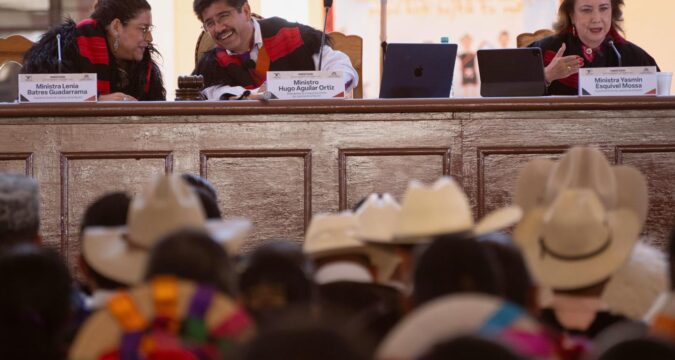
TENEJAPA, México (AP) — La Suprema Corte de Justicia de México dejó por primera vez su sede en un edificio neoclásico de Ciudad de México para sesionar en la plaza central en una localidad indígena de las montañas de Chiapas, estado fronterizo con Guatemala, con la intención de llevar el más alto tribunal del país a los rincones más remotos del territorio.
Se trata de la primera sesión extraordinaria en ese territorio que realiza el alto tribunal, el primero en ser elegido por voto popular tras una polémica reforma judicial, y que empezó su mandato hace seis meses bajo la presidencia de Hugo Aguilar, un abogado indígena del vecino estado de Oaxaca.
“Muchas veces en nuestras comunidades solo sentimos los efectos de alguna decisión” que se toma muy lejos, dijo Aguilar ante más de 2.000 personas congregadas bajo una carpa en la plaza de Tenejapa. Ahora, agregó, el objetivo es “que ustedes vean cómo deliberamos, que ustedes sepan qué decimos, cómo reflexionamos y cómo tomamos la decisión”.
Algunos de los presentes, autoridades y líderes indígenas, llevaban carteles con el lema “derecho a la libre determinación”. Otros simplemente acudieron a escuchar y ser parte de un momento que todos consideraban importante.
“Me da gusto que este nuevo ministro salga a los pueblos, a las ciudades a emprender lo que es el tema de justicia porque nos hace mucha falta escuchar al pueblo”, dijo María de la Cruz Velasco, presidenta de una fundación que ayuda a víctimas de feminicidio.
Parte de los presentes eran de la comunidad de La Candelaria, en el municipio de San Cristóbal de las Casas, donde llevan años exigiendo se les reconozca su derecho a la autonomía, algo que el congreso de Chiapas no hizo y por eso se ampararon. El caso llegó a la Corte y fue uno de los asuntos a tratar el jueves.
Las sesiones del alto tribunal suelen ser tediosas y difíciles de seguir para cualquier persona ajena al mundo judicial, pero los pueblos indígenas mexicanos y en general muchas víctimas de la violencia han tenido tradicionalmente un aliado en este tribunal que ha defendido con una visión generalmente progresista los derechos humanos reconocidos la Constitución y los convenios internacionales, aunque algunas de las sentencias no siempre se hayan cumplido.
Velasco recordó cuando su hija fue asesinada y los tribunales no quisieron calificar el delito como feminicidio y fue la Suprema Corte la que finalmente resolvió que no era un homicidio normal, sino que había una perspectiva de género. “Hoy el feminicida de mi hija cumple 55 años de prisión”, afirmó.
El alto tribunal surgió de unas inéditas elecciones judiciales que tuvieron una bajísima participación y fueron tremendamente criticadas dentro y fuera del país porque para muchos suponían el inicio de la politización de la justicia en México y por tanto de su imparcialidad. Tras los comicios, los candidatos apoyados por el oficialismo coparon no solo la Suprema Corte sino los tribunales de mayor rango.
Pero en Tenejapa, en las montañas de Chiapas, ese no era un tema de conversación. La mayoría se sentían halagados porque altos funcionarios se acercaran a ellos.