Category: News
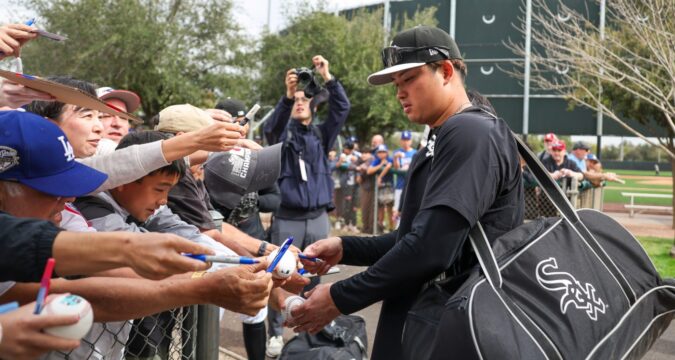
Munetaka Murakami makes strong early impression at Chicago White Sox camp before joining Team Japan for WBC
GLENDALE, Ariz. — Chicago White Sox first baseman Munetaka Murakami wanted to check off a number of boxes before joining Team Japan for the World Baseball Classic.
“I’m fully prepared with all the batting, fielding, throwing, everything, all the fundamentals that are needed for me to prepare and to go out to the WBC,” Murakami said through an interpreter Thursday afternoon at Camelback Ranch.
Photos: Chicago White Sox on photo day at spring training
The two-time Nippon Professional Baseball Japanese Central League Most Valuable Player, who signed a two-year deal with the Sox in the offseason, made a strong impression before temporarily leaving spring training.
“Just loved the person,” manager Will Venable said. “His ability to be part of the group, this young group, his personality has been amazing. What really stuck out is we asked him to do things in his training and preparation that are different than what he’s done in the past.
“For someone to be so convicted in his preparation and takes it so seriously, to be that adjustable has been cool to see. Excited about getting him back in the White Sox uniform again with the season starting and seeing him do his thing.”
Murakami heads to Tokyo after playing four Cactus League games. He went 5-for-13 (.385) with two doubles, two RBIs and five strikeouts. He also got plenty of defensive work in.
“He’s worked extremely hard at first base and been able to get comfortable over there and understand some of the nuances of that position,” Venable said. “At the same time maintaining his glove over at third base and his skills over there. Being able to engage in the program with the hitting guys has been great. He’s been awesome all the way around.”
That includes the connections he’s made with his new teammates.
“He’s been great,” Sox shortstop Colson Montgomery said. “I just like talking to him about random stuff, nothing baseball at all, that is most of our conversations. From the moment I met him here, I feel like his English has gotten a lot better. We’ve had good conversations without his translator and that shows a lot about him, that he’s willing to learn English a lot for the betterment of the team, for us being able to communicate with him too.
“He’s teaching us some words. He’s good. He’s a great addition.”
Column: New bidets might help the Chicago White Sox flush away the past
Murakami has enjoyed creating the bonds.
“I’m really glad to have a lot of teammates who have my back,” Murakami said.
Murakami was originally slated to play in Thursday’s Cactus League game against the Los Angeles Dodgers before his trip, but he was scratched with general fatigue. It was a precautionary move, the Sox said, in advance to the long flight to Tokyo.
“I was ramping up at a very high speed,” Murakami said. “I’m feeling very good at the plate. When I looked at the schedule with my long flight coming up (Friday), I thought this was a very good idea to take a rest day and prepared for the upcoming schedule.
“In the past two weeks, it was a very tight schedule with everyday practices. Every day I was not feeling that much pressure but when I did look at it with a holistic point of view, I thought that some fatigue was getting on to me, to be honest. This is where I kind of realized it.”
Related Articles
Bruce Froemming, record-setting umpire who worked more than 5,000 MLB games, dies at age 86
Chicago White Sox eyeing leadership role for Davis Martin, their longest-tenured player: ‘He commands respect’
How can Chicago White Sox best use Lenyn Sosa after 22-home run season? ‘You think of him as instant offense.’
Column: New bidets might help the Chicago White Sox flush away the past
Photos: Chicago White Sox on photo day at spring training
Murakami is one of five Sox players set to play in the event. Infielder Curtis Mead is playing for Team Australia, catcher Kyle Teel and infielder Sam Antonacci are on Team Italy and reliever Seranthony Domínguez is on Team Dominican Republic.
This will be Murakami’s second appearance in the WBC. He was a key contributor to Team Japan’s run to the championship in 2023.
“I’m going to go into every single game to win it and that’s my fullest goal,” Murakami said, “to think about that and go into the batter’s box with every intention of winning it, each and every single game.”
The first round of the WBC begins March 5, with the championship game set for March 17.
Venable wished Murakami luck and is excited to watch him play.
“Going to be rooting for him and his success,” Venable said. “Even when he’s playing Team USA we’ll be rooting for him, maybe not Team Japan as much. Just excited to see him go do his thing and be tuned in.”
https://www.chicagotribune.com/2026/02/27/chicago-white-sox-munetaka-murakami-wbc/
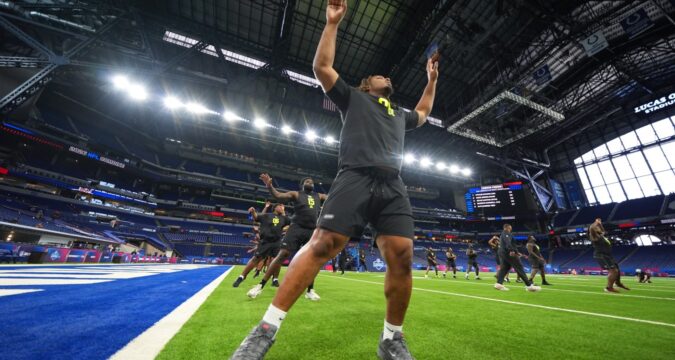
Chicago Bears are trying to thread a needle this offseason. Brad Biggs’ 10 thoughts from the NFL combine.
INDIANAPOLIS — Narratives can shift quickly in the NFL, and that certainly has been the case for the Chicago Bears over the last year.
When they arrived for the scouting combine in 2025, the franchise had a curious element of the unknown. New coach Ben Johnson had declared the organization a “sleeping giant.” General manager Ryan Poles, at least from an outside perspective, had managed to hang on to his job somehow and not be swept out in a complete regime overhaul. Folks with many questions about former No. 1 pick Caleb Williams far outnumbered those who were certain his career would take off after a rocky rookie season.
Now, after an 11-6 season, an NFC North title and a playoff victory, Johnson has respect from all corners of the league, Poles’ position is well-secured and Williams’ career arc is headed in the direction the Bears desire.
Unloading the notebook with 10 thoughts as we peek ahead to free agency, the draft and much more.
1. One way to gauge what free agency will look like in a few weeks is to talk to the agents.
Bears general manager Ryan Poles speaks during a news conference at the NFL scouting combine Tuesday, Feb. 24, 2026, in Indianapolis. (AP Photo/Michael Conroy)
It’s the hallway and lobby version of the question that seemingly every player is asked in the convention center: Did you meet with the Bears? Between scouts visiting campuses, various all-star games and, yes, the combine, every team meets with every player.
Not every agent meets with every team each year at the combine. I ran into more than a handful of veteran agents with many pending free agents who didn’t have a meeting with the Bears scheduled.
Yes, plenty of them indicated they planned to get together with the Bears front office over the course of the week. But when a team is positioned to be a big player in free agency — and the Bears have been in that position many times over the last decade — just about every agent has that team on their dance card. That’s simply not the case this year with the Bears.
Ryan Poles put down some bread crumbs at the end of the season when he referred to “constraints” the team would have this year with the salary cap. He elaborated on that this week with the Bears slightly over the projected cap with less than two weeks until the new league year starts March 11.
The idea was overplayed in some spaces that the Bears would push their chips all-in on the 2026 season with Caleb Williams still on his rookie contract. Roster construction becomes more challenging when a quarterback is on a huge deal, but as I pointed out in a mailbag earlier this month, since the rookie wage scale was implemented 15 years ago, only two quarterbacks have won the Super Bowl while on their original contract: Russell Wilson and Patrick Mahomes. Each accomplished the feat once.
The Bears’ cap situation is such that “2026 or broke” doesn’t make sense, and a clear picture of their goals is required to understand how they are planning at Halas Hall. Poles will make stuff happen in free agency. The Bears will be adding players, but they might start with some of their own. Often the best money teams spend in free agency is to prevent their own players from leaving.
“We have to clear some room there,” Poles said. “So we have to be strategic. We need to be really smart with the guardrails we put up.”
The Bears made it clear they were spending the week on fact-finding missions to determine how many options they have to create cap flexibility. Then they can huddle next week and start prioritizing how they want to act. Poles talked about being organized and having a series of reports from vice president of administration Matt Feinstein for every possible scenario. The goal is to be nimble so they can act quickly if there’s a move they want to execute.
There are a lot of questions to answer, especially on defense. We’ll wade through some of the potential answers in a little bit. It’s fair to wonder how they can challenge again in 2026 without being somewhat aggressive, considering needs at linebacker, safety, potentially cornerback and on the defensive line. That’s without even addressing left tackle or anything else on offense.
“It’s just the sustainability,” Poles said. “How can we stay flexible and how can we be successful, take advantage of this quarterback window but also set ourselves up to continue to win.
“I mentioned this earlier in one of the interviews. I’ve got a head coach that wants to sustain success and win for a long period of time. I have a quarterback who continues to progress and he wants to be one of the best to ever do it and win a lot of championships. With that model, we have to be very conscious of how we put this team together, but we want to win championships now. We want to be able to have that flexibility to continue to win down the road.”
That’s the needle the Bears are trying to thread. Poles is working to strengthen the roster for right now and into the future, and that’s best accomplished via the draft. We’ll see what other transactions happen to free the cap space the team needs.
Nearly all contracts for veteran players include what are called conversion rights, meaning the Bears, at their discretion, can restructure a contract to create cap savings by turning some of the base salary for the current season into a bonus payment. There could be a series of those this year. Go to that well too often, however, and future cap situations can get messy.
“There’s philosophical things that we believe in, in terms of not getting to this place where we’re kicking the can down the road on a bunch of guys and then at some point you’ve got to pay that bill,” Poles said. “And you don’t want that to be the reason why you’re not flexible and able to do unique things or take advantage of opportunities with your roster.”
2. The Las Vegas Raiders are doing everything they can to get maximum value for Maxx Crosby.
Raiders defensive end Maxx Crosby pursues Bears quarterback Caleb Williams on Sept. 28, 2025, in Las Vegas. (Chris Sweda/Chicago Tribune)
They’re saying all the right things about the five-time Pro Bowl defensive end being a special player and about the desire to keep him as new coach Klint Kubiak gets started. That has to be to drive up the price in a trade for Crosby, who turns 29 in August.
Raiders GM John Spytek said there are numerous examples of teams that have been rebuilt on the fly. The New England Patriots won four games in 2024 and just played in the Super Bowl. Spytek cited the Washington Commanders reaching the NFC championship game in the 2024 season after having the second pick in the draft that year.
Folks I’ve talked to don’t buy it.
“What’s the three-year plan?” a GM for another team asked. “The Raiders have the No. 1 pick and they have needs everywhere on that roster. They are so many players away from being there. How do you get that? When they turn it around, Crosby is either not going to be a part of it or he’s going to be on his last legs.”
Alas, I do not expect the Bears to be in the Crosby sweepstakes, assuming that happens before the draft. In a vacuum, it’s a great idea. In the first half of the Week 4 game in Las Vegas, Crosby displayed how much of a menace he is down in and down out. He was chasing Caleb Williams out of the pocket with regularity.
In the big picture, it hasn’t been a realistic idea from the jump, especially if the Raiders can get anything close to what the Dallas Cowboys got for a younger and (at the time) healthier Micah Parsons: two first-round picks and a very good though aging defensive tackle in Kenny Clark. Not with the salary-cap situation and not when you look at the roster and where the Bears want to get it.
Let’s do a little exercise and look at a potential 2028 depth chart. Yes, a LOT can happen in two years, but follow along. These are the players under contract:
Offense
QB: Caleb Williams (the Bears have a fifth-year option in his contract for 2028)
RB: Kyle Monangai
TE: Colston Loveland
WR: Rome Odunze (fifth-year option), Luther Burden III
Notes: Luke Newman has a chance to be an interior starter on the line by then, and he’s under contract. And if Ozzy Trapilo bounces back from his knee injury, there’s a chance he’s the left tackle then. You can add right tackle Darnell Wright to this depth chart too. He’s not under contract for 2028, but he’s a building block for the future. Wide receiver DJ Moore also is under contract that year, but he probably won’t be around then. All in all, there are parts to work with. If one of Newman or Trapilo pans out, that could be as many as seven starters in place for 2028. Maybe Monangai would be sharing the backfield, but you get the point.
Defense
CB: Kyler Gordon
Notes: Gordon is signed through 2028 and has to bounce back and prove he can stay healthy and maintain a high level of play to reach the end of the contract, which he signed last spring. That’s all I’m comfortable listing on a 2028 depth chart right now — and, again, he has a lot to prove between now and then. Defensive lineman Shemar Turner, linebacker Ruben Hyppolite II and cornerback Zah Frazier are signed through 2028. Where they factor by then, it’s impossible to say.
Let’s say a bold trade for Crosby costs two first-round picks: one in 2026 and one in 2027. That would make stocking the defense for the future even more challenging. For as many spots as the Bears have to fill on that side of the ball right now, there will be more vacancies a year from now.
The Bears need their 2026 draft to do for the defense what the 2025 class did for the offense. The sample size is small, but the synergy between the scouting and coaching staffs was apparent last year. That’s a credit to Ryan Poles and his staff and Ben Johnson and his assistants. Defensive coordinator Dennis Allen did well, especially with players he or his assistants had backgrounds with. The Bears need building blocks on that side of the ball if they’re going to create the sustainability they desire.
3. You can make a strong case that defensive tackle is the No. 1 need for 2026.
Clemson defensive lineman Peter Woods watches a drill at the NFL scouting combine Thursday, Feb. 26, 2026, in Indianapolis. (AP Photo/Julio Cortez)
That’s based on the current projected depth chart and without considering what will be available in free agency and the draft. Defensive end has gotten more attention because it’s clear to everyone the pass rush needs to be ramped up, and edge rusher is the first position you think about when talking about the pass rush.
But the Bears have Montez Sweat and Austin Booker at end with Dayo Odeyingbo and Shemar Turner returning from injuries. That’s assuming the Bears keep Turner, a second-round pick last year, at end. They experimented with him a little to see where he fit best, and it looked like end would be his home before he suffered a torn ACL.
On the interior, the Bears have Grady Jarrett and Gervon Dexter Sr. under contract. That’s it — and that’s just one reason you shouldn’t believe the Bears are considering trading Dexter. The front office surely is considering a lot, but even if Dexter isn’t a great long-term fit, the team isn’t in a position where it can subtract a durable and athletic performer.
There’s serious need at both positions, but if you’re ordering one over the other, tackle has to be on top. Considering it’s a deep draft for edge rushers — and not as deep at tackle — this is a good place to start when wondering about the No. 25 pick.
Some college evaluators I spoke with believe there could be a good clump of defensive linemen on the board when the Bears’ pick comes around. The best fit for Dennis Allen might be Clemson’s Peter Woods. Allen wants a disruptive guy in the middle. It’s why the team signed Jarrett a year ago and why it initially played Turner on the inside.
Woods can be that active guy in the middle, and that’s why I’d have him a peg above Ohio State’s Kayvon McDonald, Texas Tech’s Lee Hunter, Georgia’s Christen Miller, Florida’s Caleb Banks or anybody else. Woods had 14½ sacks in three seasons at Clemson with 8½ coming in 2024.
Whether Woods makes it to No. 25 is a good question. Draft boards are a long way from being set, but an informal poll of college scouts I chatted with seemed to indicate it might be unlikely.
Want to hold out some hope? In a bad draft for quarterbacks, the Bears need other positions to be pushed up the board. It would benefit them if there was a rush on left tackles in the first 24 picks and if some wide receivers leave the combine with some steam.
One scout said Georgia offensive tackle Monroe Freeling is the kind of player who will have more buzz after this week. Find a few more players like that, and it could create more defensive line choices for the Bears. I wouldn’t rule out an offensive tackle for them in Round 1, but I think that’s a little unlikely and my focus is on the defense.
McDonald is a very strong run defender, but there are doubts he will offer much in terms of a pass rush. Hunter “has some real juice to him,” per one college scouting director, but isn’t as twitched up as Woods, who measured 6-foot-2½, 298 pounds.
Woods’ arms are on the shorter side at 31¼ inches, but that’s the case with a lot of interior linemen — although not Banks, who came in at 6-6¼, 327 pounds with 35-inch arms. Banks missed most of last season with a broken foot. His ceiling is immense. His floor is what teams will work hard to determine.
Chicago Bears’ offseason priorities are open-ended: Brad Biggs’ 10 thoughts from the Senior Bowl
Woods was asked to name his top five NFL defensive tackles in no order.
“These are just guys that I kind of see,” he said. “Give me Quinnen Williams, Jeffery Simmons, Jalen Carter. I’ve got to go DeForest Buckner in there. I don’t know, Byron Murphy really impressed me in the playoffs. I’ve got to put him in there too.”
That’s interesting because one personnel man said Woods profiles somewhat similar to Murphy, a 2024 first-round pick by the Seattle Seahawks who had seven sacks in the regular season last year and two more during the Seahawks’ march to a Super Bowl title. Woods is a really good player to keep an eye on. Just be mindful he might not make it to No. 25.
4. The Bears have used a first-round pick in the 20s just twice since they selected tight end Greg Olsen 31st in 2007.
The Bears’ Kyle Long celebrates a 40-23 win over the Steelers on Sept. 22, 2013, in Pittsburgh. (Scott Strazzante/Chicago Tribune)
Olsen was a pretty good pick. The Bears chose offensive linemen Gabe Carimi at No. 29 in 2011 and Kyle Long at No. 20 in 2013. That’s it for lower selections in Round 1 since Olsen.
The Bears had the 20th pick in 2021 but traded up to choose quarterback Justin Fields. There have been five drafts since 2007 that they didn’t have a first-round pick while paying off trades for Jay Cutler, Khalil Mack and Fields. More on that Fields trade in a moment.
The question I had is whether or anything shifts when a team is picking near the end of the round instead of the top 10, where the Bears regularly have been? I got some interesting replies.
“Your process doesn’t change,” a national scout said. “You are still going to do your due diligence on everybody just to figure out who you think is going to be there in the 20s and then just in case someone were to slip through. Like Laremy Tunsil. I think he went like 13th (in 2016) but he was supposed to go top five. You need to be prepared for that.
“With the actual selection, you can be a little bit more risky in theory, but at the same time, if you’re in the 20s, you feel like you’re close so you don’t want to take too much risk because you want to get a player that is going to help you this year. Really, I think sometimes in the early to mid-20s is where you get your best value.
“Sometimes you feel like, ‘I can’t take this guard at eight or 10,’ but that guard might be a top-10 player. Or it could be a safety or a position like that. So sometimes you can take the best player at a position when you’re near the end of Round 1. There are obviously premium positions, but every position matters. You can get really good players at that level where you might be taking the fourth cornerback in the mid-teens or the fifth D-lineman or the third offensive tackle. You can get a really good player at that level.”
Said a college scouting director: “Instead of having to have seven guys on the board that you would take, now you have to have 15 or 25 that you’d like there. You get to a point where you’re like, ‘We don’t have 25 players we like in the first round.’ Then you start thinking about moving back, get some value.
“It depends where they think their team is. Are you close? Do you have flexibility in free agency? You can take more risks late in the first round, but it depends on your mindset. ‘We’re not going to take risks in the first round. We don’t have any cash. We have to hit on our first-round pick, so we don’t have the luxury of taking a really good athlete and hoping he hits and trying to develop him over time.’”
The first thing an assistant general manager mentioned was looking to trade down.
“We would try to go back,” he said, “just because if you’re at 25, yes, you like the fifth-year option if you’re staying in the first round, but if I can get an extra third- or fourth-round pick to go from 25 to 33, there’s a chance I get the same player, right? At that point (No. 25), it’s starting to get to where across the league, boards are looking different. I’ve got this guy a little bit higher and you had him a little lower.
“Then you’re getting to the point, too, where it’s about team needs or targeted players, maybe like the Bears picking Luther Burden last year. Whatever the case may be. The top 10? We’ve all got those same players. When it gets to the back of Round 1, you need to be a little open to navigation. ‘We like Player X and we’ll take him at No. 25, no problem.’ You have to look at it from a get-stuck standpoint. If we get stuck at 25 — no one is trading with us — who are we happy with? Ideally, though, we’d like to get to 29 or 30, pick up a little something and maybe get the same player.”
When looking at how often the Bears had picked in the 20s, I came across the 2022 draft, in which they didn’t have a first-round pick as part of the deal with the New York Giants to move up for Fields. It was the first time Giants GM Dave Gettleman had traded down in the first round, and the deal was too good to pass up.
The Bears struggled in Year 1 with Fields, giving the Giants the seventh pick the next year. They blew it, choosing Alabama offensive lineman Evan Neal. But check out the next seven picks — it’s a really good crop of players:
8. Falcons: WR Drake London
9. Seahawks: LT Charles Cross
10. Jets: WR Garrett Wilson
11. Saints: WR Chris Olave
12. Lions: WR Jameson Williams
13. Eagles: DT Jordan Davis
14. Ravens: S Kyle Hamilton
Ryan Poles said he wants to remain disciplined now that he’s outside the top 10 and near the bottom of the round.
“You can go get a flashy guy that may not (have) the wiring in terms of culture fit,” Poles said. “(That) isn’t the right thing to do. You take a chance there. Or he flashes or they are a young player and you’re going to project this crazy growth.
“I think taking good football players at 25. I think back to the Steelers, I think back to the Ravens and some of these teams that were able to put really good rosters together and draft well late. Those guys aren’t sexy. They’re just good, hearty football players. So that’s what we’re going to focus on. I think that will put our team in the best position to be successful.”
5. Here’s a name I wouldn’t have guessed would have a lot of steam at this time of year.
Buccaneers defensive end Logan Hall celebrates a fumble recovery against the Saints on Oct. 1, 2023, in New Orleans. (AP Photo/Gerald Herbert)
But according to a variety of folks across the league whom I chatted with this week, Tampa Bay Buccaneers defensive end Logan Hall is projected to have a robust market in free agency. It reminds me of conversations I had a year ago in which people gave a heads up that defensive end Dayo Odeyingbo would do very well for himself in free agency.
I don’t know if the Bears will be in on Hall. They would need to create some cap space, but a guy from another NFC team told me point blank: “Logan Hall is going to have a huge market.” He won’t be the hottest player when free agency opens and he’ll be far from getting the largest contract, but after some additional poking around, yes, there’s buzz about Hall.
A second-round pick out of Houston in 2022, Hall is 6-6, 283 pounds, so he can profile as a lot of different things for a lot of different schemes. Some teams will be looking at him as a tackle, and that’s where he had 5½ sacks in 2024. He’s best as a rusher when he’s on the inside. He’d probably be an end for Dennis Allen, but again, I don’t know how the Bears will stack up their wish list. If they have the cap space, Hall looks like the kind of guy they might take a run at.
Where will the market go for Hall, who has been durable, missing only two games over four seasons? Something approaching $10 million per season wouldn’t be a surprise. We’ll see how things shake out for him in less than two weeks.
6. Defensive line, secondary, linebacker and left tackle are all spots where the Bears need to improve if they want to build off their 2025 season.
Bears quarterback Caleb Williams stands with coach Ben Johnson before playing the Packers in an NFC wild-card game Jan. 10, 2026, at Soldier Field. (Armando L. Sanchez/Chicago Tribune)
But to get where they really want to go, they probably need the most improvement from quarterback Caleb Williams. That’s not a knock on him by any means. But if they want to crack open the kind of competitive window in which they’re in the mix of teams that can challenge on an annual basis for five seasons or more, Williams has to grow a ton.
Because there was immense growth in Year 1 with Ben Johnson and his staff, there’s reason to believe that will happen, and Johnson and Ryan Poles were strong in their statements this week.
“I hope eventually to have a quarterback situation, too, where we’ve got to pay a young quarterback,” Poles said. “I think we’re getting closer and closer to clarity on that side of things.”
Williams is signed through 2027, and the team holds a fifth-year option for 2028. The soonest he could sign an extension would be after the 2026 season. Speculating on that without knowing what half of his playing time under Johnson will look like is a waste of time. Understanding the timeline for everything isn’t.
Johnson talked about how he was struck by Williams’ ability to adapt to small coaching points in a short period of time last season.
“There is no question there will be some throws last year that he needs to complete or give a more catchable ball at a higher rate,” Johnson said. “He’ll be the first one to tell you that. We as a coaching staff take a lot of pride in trying to get the primary guy open, and if we are able to do that, he’s going to come through and make that throw. And then if we can’t do that for him from a coaching perspective or a play-calling perspective, then he makes us right. That’s where his magical talent can be the ultimate eraser for us and fixer.
“So it’s the balance between the two, and I’m looking forward to, mechanically, he was learning some different things with his footwork. It actually looked more comfortable than I would have thought (in) Year 1, and yet I really think a full offseason of really drawing that down home is going to help him become more accurate moving forward.”
If there is a Year 3 leap — and that’s when Josh Allen really took off in Buffalo — the Bears will be in a good position in which remaining questions about the position have been answered. They won a handful of games with incredible plays in the closing moments. If half of those wild events don’t go their way — like the blocked field goal in Las Vegas or the huge kickoff return at Minnesota — they’re not a playoff team in 2025.
It was an eye-opening first year together for Johnson and Williams, and there’s curiosity around the league as to what it will look like in September.
7. Ben Johnson has said repeatedly he would love to run it back with every player from 2025. He felt that strongly about the group.
Bears coach Ben Johnson celebrates with wide receiver DJ Moore after his game-winning catch in overtime to defeat the Packers on Dec. 20, 2025, at Soldier Field. (Brian Cassella/Chicago Tribune)
That’s not how it works — Johnson said as much — but the Bears will be trying to make things work with some players coming out of contract while, at the same time, considering a variety of options involving other players who are signed.
We’ll see how much cap space the Bears begin the new league year with. They’ll have to make some moves, and it’s possible they create space as needed once they’re rolling. In many of these cases, the Bears might encourage the players to see what their value is on the open market and then determine if a deal can be made.
Here’s intel I have gathered or hunches on players in this mix:
QB Tyson Bagent: The Bears let it be known they’ll take calls on Bagent, whom Johnson holds in high regard. It probably would take a second-round pick (or two picks equaling that value) to make it worthwhile for the Bears. The New York Jets are in the market for a starter and could be looking to go the budget route after sinking $30 million guaranteed into Justin Fields. I’m not sure a team would offer a Round 2 pick for Bagent. It’s worth noting the Bears have had meetings with agents representing some No. 2-type quarterbacks, so they’re putting contingency plans in place.
WR DJ Moore: The Bears can love the player and what he brings to the field and the locker room and also embrace the idea of being able to trade him to create cap space. Both can be true. Moore is well-regarded around the league for the reasons the Bears like him. He’s durable. He’s a solid locker-room presence. He’s tough on the field. Moore is owed $24.5 million this season, and on the third day of the league year, $15.5 million of his 2027 salary becomes fully guaranteed. That led some personnel men to conclude it will be challenging to trade him — if the Bears go in that direction. One source was relatively confident the Bears could find a taker for Moore and might be able to get a Day 2 pick in return. Perhaps some creativity would be required to swing a deal in which the Bears paid down some of the money. They would trade Moore only to try to improve in 2026. In my opinion, that doesn’t mean flipping him for a draft pick. That means trading him to create cap space with a clear plan for how to use the added space. The pick helps, but it would be about subtracting Moore to add a player the Bears believe can be of greater immediate help.
LB Tremaine Edumunds: The Bears granted him permission to seek a trade, but I doubt one materializes. He likely will be released before March 11, a move that would create $15 million in cap savings.
FS Kevin Byard III: I get the sense there’s optimism a deal can be struck after his All-Pro season. After he earned $15 million over the last two seasons, I’d expect Byard to get a raise, maybe close to $10 million annually. I don’t think he wants to start over with a rebuilding team, so if he’s taking offers from other teams, he will prioritize winners. Byard had a good relationship with Patriots coach Mike Vrabel when they were together in Tennessee. If the Bears can’t get something done with Byard, the best safety headed to market is the Indianapolis Colts’ Nick Cross, according to a sampling of pro scouts. A contract for Cross could approach $15 million per season.
LT Braxton Jones: The Bears are in a pinch because they need a left tackle, and while they hope Ozzy Trapilo will return from a torn patellar tendon in his left knee late in the season, there’s no guarantee he’ll see the field in 2026. Either way they need a starter for more than half the season, and if that player is not named Theo Benedet, he’s not currently under contract. That’s where Jones could come into play. He had a forgettable contract year returning from a fractured fibula. A one-year, prove-it deal for about $5 million would give him a chance to restore his market value.
LB D’Marco Jackson: We’ll see how much interest Jackson gets around the league. The Bears won’t sink as much money into this position as they have. If they can bring back Jackson on a modest deal ($3 million to $4 million per year), use a mid-round pick on a linebacker and then find the 2026 version of Jackson — a player they can sign to a minimum deal in April or later — they would have overhauled the position with cap savings from Edmunds’ exit to apply at other positions.
CB Nahshon Wright: The Bears probably would love to have him back, but they can’t afford everyone. His price tag could land in the range of about $7 million per year, maybe a touch higher. He’s scheme-specific, so he won’t be a candidate for everyone. The ball production jumps out. Without Wright, the Bears have a need unless they have more faith in Tyrique Stevenson than you’d think after last season. Other options for bigger cornerbacks who fit Dennis Allen’s profile include Jaylen Watson (Kansas City Chiefs), Cor’Dale Flott (Giants) and Jamel Dean (Buccaneers). Watson probably will get the most money out of that group and might be pricier than Wright.
QB Case Keenum: The Bears highly valued what he brought to the room. They probably would like him back. They have to create savings in some areas. As I pointed out above, they’re exploring QB options.
DE Daniel Hardy: I’ve thought for a while something like the two-year, $5 million contract Josh Blackwell got last season would make good sense for the rugged special teams performer. Gunners typically get a little more, so maybe the Bears would come in a little lower than $5 million for two years. The only issue is if the Bears re-sign Hardy, they might have a second defensive player who is almost strictly special teams. But keeping Hardy is a good move. I don’t anticipate he will be tendered as a restricted free agent, and he’s likely to have suitors.
TE Durham Smythe: He was a good fit and Johnson knew he would be after their time together in Miami. He’s a decent possibility to be back if the money is close to the $2.5 million he made last season. Keep tight end on the radar as a potential Day 3 draft pick too.
S Jaquan Brisker: I don’t believe the Bears will try to re-sign him. He should have a healthy market, but this is a position where there are always ample choices with experience.
Players who could return on one-year deals: Returner Devin Duvernay, long snapper Scott Daly, guard Jordan McFadden and maybe defensive end Dominique Robinson if he has a slow market.
That’s piecing together what I’ve been able to rustle up from the hallways and lobbies.
8. The Bears’ statement about Indiana on Feb. 19 really took off.
Bears President/CEO Kevin Warren, second from right, and Chairman George McCaskey, second from left, chat on the field before a game against the Vikings on Nov. 16, 2025, at U.S. Bank Stadium in Minneapolis. (Chris Sweda/Chicago Tribune)
Breathless accounting of the action by some provided the team with exactly what it hoped for: Folks were up in arms and stressing out over the possibility the team indeed will head to Hammond for the “world-class” stadium President/CEO Kevin Warren has been talking about since the day he was hired.
Indiana Gov. Mike Braun signed a bill into law Thursday to create the Northwest Indiana Stadium Authority. Meanwhile, the wheels are turning in Illinois again with some progress toward the one thing the Bears have demanded from the get-go: a megaprojects bill that would deliver them tax certainty.
I’m not here for the political back-and-forth. You get enough people trying to pull your leg and sell you a bunch of nonsense covering football as it is. I believe the Bears hoped the addition of Indiana as a legitimate option (however likely you believe it is) would create outrage in Illinois and lead to pressure on lawmakers to make something happen.
Here’s what I can tell you: The league believes that progress is very much headed in the right direction in Illinois and that Arlington Heights will emerge as the team’s future home. It’s not done yet, but there’s reason for optimism and the preference at that level is for the Bears to remain in Illinois if possible.
9. It wasn’t a surprise when Ryan Poles said the Bears had “communicated through the right channels” about compensatory picks for Ian Cunningham’s departure.
Falcons general manager Ian Cunningham speaks to the media during the NFL scouting combine Tuesday, Feb. 24, 2026, in Indianapolis. (Justin Casterline/Getty Images)
It makes sense. The Bears won’t find out if they don’t ask the NFL to reverse course and award them a third-round pick this year and another in 2027 as part of the Rooney Rule after the Atlanta Falcons hired the Bears assistant general manager as their GM.
“It will be up to the league and how they see it,” Poles said.
Poles believes the Bears deserve the extra picks. Cunningham said the same thing. As best I understand it, neither franchise believes there’s a great chance the league will shift its stance on the situation. The Bears can hold out hope though.
The NFL has deemed president of football Matt Ryan to be the Falcons’ “primary football executive.” All parties involved were aware. There’s not an apples-to-apples comparison between the two front offices because president of football is not a position the Bears — or most teams — have.
Cunningham interviewed for that job before Ryan was hired. Had Cunningham been hired as president of football in Atlanta, yes, the Bears would have been awarded the two comp picks.
The way the rule is written, there can’t be two front-office positions in one organization that qualify for compensatory picks. It’s the same way comp picks are awarded only to teams that develop minority assistant coaches who are hired away to become a head coach. Comp picks aren’t handed out for coordinator hires or assistant head coaches. The rule applies to the primary football executive and the head coach.
Will the league consider the intent of the rule and the spirit of why it was introduced in the first place? Maybe. But how would it explain to the other teams that the Falcons’ unique front-office arrangement created a situation in which two positions qualified for draft picks?
We ought to know before long. The last three years, the league has announced the complete draft order and distribution of compensatory picks between March 8 and March 11.
10. Ben Johnson was in the car for seven hours Tuesday for a round trip to Indianapolis.
Bears coach Ben Johnson speaks to the media during the NFL scouting combine Tuesday, Feb. 24, 2026, in Indianapolis. (Justin Casterline/Getty Images)
After a media whirlwind of group interviews and then select multimedia appearances beginning in the morning, he was back on the road by early afternoon. In fact, word is Johnson was back at Halas Hall that evening in time to join some of the team’s one-on-one interviews virtually.
That’s the way he wanted to attack things, and the team is fortunate Johnson agreed to do the media tour. He’s the best frontman the Bears have had in a long while.
Maybe this is something he and Green Bay Packers coach Matt LaFleur can bond over in the future. LaFleur is one of a small group of coaches who typically don’t attend the combine. On second thought, maybe they won’t bond over that. But Sean McVay, Kyle Shanahan and Liam Coen also haven’t been in Indianapolis.
Johnson believes he can be as or more effective from his office, and the Bears have had assistant coaches involved at the combine.
10a. It’s a foregone conclusion the Bears will exercise the fifth-year option in right tackle Darnell Wright’s contract. The 2023 first-round pick is set to earn a little more than $3.6 million this season. The fifth-year option for 2027 projects to be roughly $20.5 million.
The Bears probably could save a little money in the long run if they get a multiyear deal with Wright done this year. Pay for right tackles has taken off. Six are making $22 million or more annually, and a deal for Wright might have to approach $25 million per year, give or take a little.
10b. When it comes to free agency, at times there can be a loser tax. Trying to sign a good player to come to your bad team? You better add a little to the bottom line.
With the Bears finishing 11-6 and with a buzz about the coaching staff and quarterback, maybe they won’t have to pay that tax for a little bit. Don’t mistake this to mean players will flock to the Bears for less money. That’s not how it works. But they won’t have to sweeten offers to make up for a bad record the year before and questions about the coaching staff’s future.
10c. The Falcons announced Dec. 10 the NFL granted them an international home game in 2026. By process of elimination, it looks like that game will be in Madrid. The league already has announced the home team for eight other international games:
Jaguars: Tottenham and Wembley stadiums, London
Commanders: Tottenham Stadium
Cowboys: Rio de Janeiro
49ers: Mexico City
Rams: Melbourne, Australia
Saints: Paris
Lions: Munich
If the Falcons indeed land the Madrid game — and nothing is official until it’s official — the Bears might be the visitor for that game.
The Falcons’ nine home opponents this season are the Panthers, Saints, Buccaneers, Bears, Lions, 49ers, Ravens, Bengals and Chiefs. The league generally avoids scheduling divisional games overseas, although the Rams and 49ers will play in Australia. It won’t be the 49ers, who already have two international games, and it’s unlikely the Lions would have two.
In that case, the NFL could be choosing from among the Bears, Ravens, Bengals and Chiefs. The schedule usually is released in mid-May.
https://www.chicagotribune.com/2026/02/27/chicago-bears-brad-biggs-10-thoughts-nfl-combine/

Memory Crunch Will Spark “Tsunami-Like Shock” On Global Smartphone Shipments
Memory Crunch Will Spark “Tsunami-Like Shock” On Global Smartphone Shipments
Readers have been briefed on the emerging global high-bandwidth memory (HBM) supply crunch, driven by soaring data center demand. We have tracked the progression of this theme for months through what seem to be almost weekly developments, ranging from notable institutional research desks and industry insiders to more recent warnings from electronics device companies about looming shortages and price spikes.
Now, market research firm International Data Corporation (IDC), which tracks handset shipments, has issued an apocalyptic warning: the smartphone market is headed for a historic downturn due to a memory crunch.
IDC estimates that global smartphone shipments will plunge 12.9% in 2026 to 1.1 billion units, the lowest annual level in over a decade. This outlook is much gloomier than IDC’s November forecast.
“What we are witnessing is not a temporary squeeze, but a tsunami-like shock originating in the memory supply chain, with ripple effects spreading across the entire consumer electronics industry,” wrote IDC Vice President for Worldwide Client Devices, Francisco Jeronimo.
Jeronimo continued, “The global smartphone market, particularly Android manufacturers, faces a significant threat. Vendors whose business is mainly at the low end of the market are likely to suffer the most.”
“Rising component costs will hit their margins, and they will have no choice but to pass the costs on to end users. By contrast, Apple and Samsung are better positioned to navigate this crisis. As smaller and low-end-positioned Android vendors struggle with rising costs, Apple and Samsung could not only weather the storm but potentially expand market share as the competitive landscape tightens,” he explained.
IDC Senior Research Director Nabila Popal, who was quoted by Bloomberg, said, “The tariffs and pandemic crisis seem a joke compared to this.”
Popal warned, “The smartphone market will witness a seismic shift by the time this crisis is over — in size, average selling prices and competitive landscape. We don’t expect the situation to ease up until mid-2027, at least.”
Counterpoint, another research firm that tracks handset shipments, published a similarly dire forecast earlier today, warning of a 12.4% decline in global smartphone sales this year. The note also warned of a “full-scale supply shock” related to the HBM supply crunch.
“2026 is shaping up to be the worst year in smartphone history,” Counterpoint analyst Yang Wang said. “The industry has never seen a drop this steep.”
As the memory crunch storm approached, we told readers to prepare:
Goldman’s Meeting With Top Memory Supplier Points To Higher Prices As Crunch Worsens
That Escalated Quickly: Goldman Cuts PC Shipment Outlook As Memory Prices Go Parabolic
Professional subscribers have been provided with notes on the memory crunch storm and can read them on our new Marketdesk.ai portal.
Tyler Durden
Fri, 02/27/2026 – 06:55
https://www.zerohedge.com/markets/memory-crunch-will-spark-tsunami-shock-global-smartphone-shipments

Agentes iraníes obstaculizaron la atención en hospitales llenos de manifestantes heridos
Por SARAH EL DEEB
BEIRUT, Líbano (AP) — Mientras los manifestantes antigubernamentales heridos llegaban en masa a un hospital iraní durante la represión del mes pasado, un joven doctor corrió a la sala de emergencias para ayudar a atender a un hombre de unos 40 años que había recibido un disparo en la cabeza a quemarropa.
Cuando el médico y otros intentaron reanimarlo, un grupo de agentes de seguridad armados y sin uniforme les bloquearon el paso, empujando a algunos hacia atrás con sus fusiles, según relató el sanitario a The Associated Press.
“Lo rodearon y no nos permitieron avanzar más”, contó el doctor en Rasht, una ciudad del norte del país.
Minutos después, el hombre había fallecido. Los agentes metieron su cuerpo en un saco negro para cadáveres. Más tarde, apilaron ese y otros cuerpos en la parte trasera de una furgoneta y se marcharon.
Este no fue un incidente aislado.
Durante varios días a principios de enero, agentes vestidos de civil irrumpieron en hospitales de varias ciudades donde se atendía a los miles de heridos por las fuerzas de seguridad iraníes, que dispararon contra multitudes para sofocar las multitudinarias protestas contra la República Islámica, que surgió hace 47 años. Estos agentes vigilaron y, en ocasiones, obstaculizaron la atención a los manifestantes, intimidaron al personal, detuvieron a inconformes y se llevaron los cadáveres. Decenas de médicos fueron arrestados.
Este reportaje se basa en entrevistas de The Associated Press con tres médicos en Irán y seis profesionales sanitarios iraníes que viven en el extranjero y están en contacto con compañeros en el país; reportes de grupos de derechos humanos y la verificación por parte de la AP de más de una docena de videos publicados en redes sociales. Todos los doctores dentro de Irán hablaron bajo condición de anonimato por temor a represalias.
La AP colaboró con Mnemonic, una organización con sede en Berlín, para identificar videos en internet, publicaciones y otros materiales relacionados con la violencia en hospitales.
Los doctores en Irán y en el extranjero afirmaron que el nivel de brutalidad y militarización de los centros de salud no tenía precedentes en un país que durante décadas ha experimentado represiones contra la disidencia y la vigilancia de las instituciones públicas.
El Centro de Derechos Humanos de Irán, con sede en Oslo, ha documentado múltiples relatos desde hospitales que hablaban de agentes de seguridad que impedían la atención médica, retiraban la respiración asistida a pacientes, hostigaban a médicos y detenían a manifestantes.
El gobierno culpó de las protestas y la violencia posterior a los “terroristas” armados que cuentan con respaldo extranjero.
El vocero del Ministerio de Salud, Hossein Kermanpour, negó los reportes sobre la denegación de asistencia médica o de que se llevaran a manifestantes de los hospitales, y los calificó de “falsos, pero también fundamentalmente imposibles”. Según sus declaraciones publicadas por la prensa estatal, todos los heridos fueron atendidos “sin ninguna discriminación ni interferencia por sus opiniones políticas”. La misión iraní ante Naciones Unidas no respondió a una solicitud de comentarios sobre los relatos de los médicos.
Los doctores trataron de proteger a los heridos
La represión, que alcanzó su apogeo el 8 y 9 de enero, fue la más letal desde la implantación de la República Islámica en 1979. Los detalles han tardado en conocerse debido a las restricciones en el acceso a internet impuestas por las autoridades.
La Agencia de Noticias de Activistas de Derechos Humanos sostiene que confirmó más de 7.000 decesos y que está investigando miles más. El gobierno ha reconocido más de 3.000 fallecidos, aunque en disturbios anteriores ha subestimado o no ha informado de víctimas mortales.
Una vez que comenzó la represión, el médico de Rasht contó que trabajó durante 66 horas infernales, visitando cada día un centro distinto para ayudar con los heridos: primero a un centro de traumatología, luego a un hospital y finalmente a una clínica privada.
Agentes armados llevaban a manifestantes heridos y los vigilaban mientras el personal trabajaba, explicó el doctor. Cuando llegaba el momento de dar de alta a un paciente, apuntó, “se llevaban a cualquiera que se confirmara que era manifestante”.
El médico indicó que él y otros miembros del personal intentaron ocultar a manifestantes heridos registrando diagnósticos falsos en sus historiales.
“Sabíamos que, hiciéramos lo que hiciéramos por los pacientes, una vez que salieran del hospital no estarían a salvo”, expresó.
La AP no pudo confirmar de manera independiente el relato del doctor sobre lo ocurrido en el hospital de Rasht, pero su versión coincidía con reportes de la AP.
La cobertura de AP se centró en lo sucedido en cuatro hospitales, que ofrece un vistazo a la actividad de las fuerzas de seguridad iraníes. Mnemonic recopiló decenas de videos, publicaciones y otros testimonios que, según dice, mostraban la presencia de agentes dentro y en las inmediaciones de nueve hospitales, en algunos casos disparando armas y gases lacrimógenos. Mnemonic lleva desde 2022 conservando evidencia digital de violaciones de derechos humanos en Irán y ha elaborado, junto a sus socios, un archivo de más de dos millones de documentos.
Un video verificado por AP muestra a agentes de seguridad rompiendo las puertas de vidrio de la entrada del Hospital Imán Jomeini en la ciudad occidental de Ilam. Luego irrumpen en los pasillos con sus armas, gritando a la gente.
El Ministerio de Salud dijo a medios estatales que estaba investigando el incidente y afirmó su compromiso con la protección de los centros médicos, su personal y los pacientes.
Atender a los heridos en la clandestinidad
La noche del 8 de enero, un cirujano de 37 años cenaba en Teherán cuando recibió una llamada de una amiga en la profesión, una oftalmóloga. El miedo en su voz dejaba claro que necesitaba ayuda urgentemente. La mujer le dio una dirección.
Poco antes de la medianoche, condujo hasta el lugar, una clínica de estética. Dentro, encontró el vestíbulo transformado en una sala de traumatología, con más de 30 hombres, mujeres, niños y ancianos heridos en los sofás y en el suelo cubierto de sangre, gritando y llorando.
El cirujano pasó allí casi cuatro días en los que, según sus cálculos, atendió a más de 90 personas. Al principio, estaban él, la oftalmóloga, un dentista y dos enfermeras. Con el tiempo, el cirujano llamó a otros tres médicos para que echaran una mano.
Usó cajas de cartón y piezas de metal blando como férulas para los huesos rotos. Sin anestesia ni analgésicos fuertes a su disposición, recurrió a otros más débiles en supositorios. La clínica no tenía reservas de sangre ni capacidad para realizar transfusiones.
No podían derivar a los heridos a hospitales por temor a que los arrestaran.
Un joven de unos 20 años había recibido un disparo con munición real en el codo, que se lo destrozó. El cirujano suturó las heridas, pero sabía que habría que amputarle el brazo.
Una familia de cuatro miembros —madre, padre y dos hijos de ocho y 10 años— estaban acribillados a perdigones, contó el doctor.
El cirujano contactó con médicos de su confianza la mañana del 9 de enero para enviarles pacientes. Pero primero tenía que asegurarse de retirar todas las balas y perdigones de sus cuerpos para que no los detuvieran en el hospital. Escribió cartas de traslado en las que explicó que los enfermos habían sufrido accidentes de tráfico.
Ninguno de los heridos murió en la clínica, aseguró. La AP no pudo confirmar de manera independiente el relato del cirujano sobre lo ocurrido en el centro.
Doctores, en el punto de mira
Desde el 9 de enero, al menos 79 profesionales de la salud han sido arrestados, incluidos una docena de estudiantes de medicina, dijo Homa Fathi, una dentista iraní que cursa un doctorado en Canadá y es miembro de IIPHA, que ha estado monitoreando las acciones del gobierno de Teherán contra los trabajadores del sector sanitario desde 2022.
Unos 30 han quedado en libertad, la mayoría bajo fianza, pero muchos aún enfrentan cargos, incluyendo uno que está acusado de librar una “guerra contra Dios”, un cargo que podría suponer una sentencia de pena de muerte, señaló Fathi.
El cirujano que atendió a manifestantes en la clínica secreta dijo que le sorprendió que las fuerzas de seguridad nunca irrumpieran en ese lugar para practicar detenciones.
Pero sí ha habido arrestos: dos sanitarios que se ofrecieron como voluntarios en la clínica fueron sacados de sus casas, contó el cirujano.
“Yo también estoy esperando”, apuntó.
___
Esta historia fue traducida del inglés por un editor de AP con la ayuda de una herramienta de inteligencia artificial generativa.

Boy George is coming to Hard Rock Live: Decades after the ’80s, he’s learned life’s ‘magic elixir’
Wedged somewhere between Madonna, Michael Jackson and Prince on the Mount Rushmore of ‘80s pop icons is Boy George. The 64-year-old Englishman first earned fame as the frontman for the New Wave band Culture Club behind smash hits like “Do You Really Want to Hurt Me,” “Karma Chameleon” and “I’ll Tumble 4 Ya.”
But what helps make Boy George (born George Alan O’Dowd) worthy of mountainside preservation transcends the songs. In an era where music videos were every bit as important as the music, it was his gender-bending identity — considered sacrilege by some at the time — along with his tabloid exploits and caustic words for fellow celebrities that made him larger than life. (He once called Madonna a “vile, hideous human with no redeeming qualities” and Prince a “dwarf who’s been dipped in a bucket of pubic hair”).
Decades later, Boy George remains a creative force, having released many more albums and singles as a solo performer than as a member of Culture Club. But it’s his day job in Culture Club that still pays the bills. The band still tours regularly and — unlike many ‘80s acts — boasts most of its original members (minus drummer and former lover Jon Moss).
Now billed as Boy George & Culture Club because, as Boy George tells the Tribune, “I’m the face on the Corn Flake packet,” the band comes to Gary’s Hard Rock Casino North Indiana on March 7. We talked to Boy George about playing casino hotels and more, including his beef with Gary’s own Janet Jackson.
Q: What do you think your life would have been like in the ’80s had social media existed?
A: It would’ve been nonstop fights and endless drama. Just chaos. It would’ve been awful. I’m really glad we didn’t have that because I’m much better now about what I say about people. We’re all so exposed that you can’t afford to behave badly — news travels fast.
Q: In an era where everyone is constantly visible, how has that level of exposure changed the way you move through the world and relate to people?
A: I was on The Tube (in London) the other day with a friend, and this young kid said, “Are you Boy George?” I said, “I am.” He goes, “Oh my god, what are you doing on The Tube?” I said, “I’m going to Hampstead.” People have these funny ideas about where you’re supposed to be. What do you mean you’re on the bus? What do you mean you’re walking down the street?
The thing is, I have a kind of freedom that a lot of artists like me never get, because I have a disguise. When I’m dressed up, I’m Boy George. Of course, I still get recognized when I’m not, but it gives me this fantastic sense of freedom. And I don’t see people coming up to me as being a bother anymore. I did 20 years ago, but not now.
Q: What’s changed?
A: I think when you learn that being nice to people is like a sort of magic elixir. Of course, you’re always going to meet horrible people, but I think generally, if you’re nice to people and you don’t have that kind of antagonistic, leave-me-alone attitude, it’s amazing how it doesn’t happen.
When you see Madonna running around Paris with a bag in front of her face, I think, what she should be doing is giving everyone a kiss on the cheek and moving on.
Q: You’ve been critical of Madonna, as well as Prince, Janet Jackson and many others.
A: I’ve had interactions with Janet Junction twice, and she’s disappointed me (both times) I’ve met her. And I’m a massive fan.
Q: In what ways has she disappointed you?
A: The first time I met her—which I write about in my book (the 2024 memoir “Karma”) — she didn’t recognize me because I wasn’t wearing makeup. I was out of drag, and she was a bit unfriendly. I said, “I just bought your (single), “What Have You Done for Me Lately” — it’s incredible. I love it.” She brushed me off, clearly not realizing who I was.
About half an hour later, it clicked. She came back, apologized, and that’s when I told her off. I said, “It doesn’t matter who I am. I could be anyone who just walked up and told you they loved your record. Why should that change how you respond?”
The last time I saw her, I was performing at an event for Naomi Campbell. I was singing, looked over, and Janet Jackson had her back to me. I thought, I wouldn’t do that if she were the one singing.
Q: A lot of the shows on this tour are at casinos. Do you gamble?
A: I don’t, but to a certain extent, every time you step onstage it’s a gamble. You never quite know what you’re walking into. That’s why I actually love casino gigs. People are relaxed, they’re checked into a hotel for a few days, they’re in a good headspace.
Q: There was an interview that I read recently where you said that singing “Karma Chameleon” was “like diarrhea through a wet sock.” I don’t even know what that means.
A: Let me be really clear about what I meant. When I’m asked to do those songs in concert, they’re like secret weapons — all the hits are. They work brilliantly live because they belong to the audience. People know them, they’re invested, and in a live setting, it’s a completely different experience.
But when you’re asked to sing “Karma Chameleon” on television, that’s when it becomes, “Oh please, really?”
Q: If there were a Boy George of Generation Z, who do you think that would be?
A: I don’t really know, because Boy George was a mixture of everything I loved growing up — prog rock, glam rock, reggae, punk, jazz. That said, someone like Sam Smith feels like a mix of me and George Michael — that beautiful, almost perfect voice. It’s technically exquisite, but also deeply emotional. I can see a bit of myself there, but he’s very much his own person too.
Q: If you could erase one thing about yourself from Google so that nobody could ever find it again, what would it be?
A: I’m almost terrified to say. I always say to people, “Don’t Google me.”
If you go
Boy George & Culture Club at 7 p.m. March 7 at Hard Rock Live Northern Indiana, 5400 W. 29th Ave., Gary; tickets from $84.35 (ages 21+) at 219-228-2383 and www.hardrockcasinonorthernindiana.com
Blair Fisher is a freelance writer.
https://www.chicagotribune.com/2026/02/27/boy-george-culture-club/
Trump’s FTC Takes Up The Fight Against Big Tech Wokeness
Trump’s FTC Takes Up The Fight Against Big Tech Wokeness
Authored by Paul Bradford via American Greatness,
For years, some of the worst actors in the tech industry were able to do as they pleased without fear of consequence.
They could construct monopolies, censor conservatives, and promote wokeness as much as they wanted. But things are beginning to change with the Trump administration. Thanks to the efforts of the White House, the days of Big Tech wantonness are over. These companies now must follow the basic tenets of the free market and stop suppressing views they disagree with.
One of the leaders in this effort to correct Big Tech is FTC Chairman Andrew Ferguson.
His agency recently announced it would ramp up its scrutiny of Microsoft and its allegedly anti-competitive practices. The FTC accuses Microsoft of advancing monopolistic practices in making it very difficult for customers to use the company’s signature products—such as Windows and Office—on rival cloud services. The agency is requesting information from both the tech giant and the companies affected by these malicious policies.
Microsoft is one of the worst offenders in the category of Big Tech malpractice. From dubious business practices to close ties to the Chinese Communist Party, Bill Gates’s company sets the bar for how low these giants can go. The China connection is particularly disturbing, as American Greatness has previously covered. Microsoft has allegedly shared information from Windows and Office code with elements tied to Chinese intelligence, allowed its cloud infrastructure to be compromised by Chinese assets, and had several of its initiatives work closely with partners from the Chinese defense industry. Microsoft certainly doesn’t put America first.
It also doesn’t respect conservative opinions. The tech giant touts one of the most aggressive records of censorship against the Right. Microsoft was one of the major backers of NewsGuard, a service that promoted itself as a guide to media reliability. Instead, it acted as a liberal hall monitor that suppressed conservative news sources and insisted on liberal framing of events. Thanks to NewsGuard, it became harder for internet users to find alternative viewpoints to the partisan mainstream media.
Microsoft is deserving of greater scrutiny due to its practices.
But Ferguson isn’t just focused on this one egregious offender. He’s dedicated to taking on all bad actors in the industry.
The FTC recently sent a letter to Apple, warning the tech giant to stop suppressing right-leaning sources and elevating leftist ones.
Ferguson wrote in the letter:
Big Tech companies that suppress or promote news articles in their news aggregators or feeds based on the perceived ideological or political viewpoint of the article or publication may violate the FTC Act if that suppression or promotion (1) is inconsistent with the terms and conditions of service; (2) is contrary to consumers’ reasonable expectations such that failure to disclose the ideological favoritism is a material omission; or (3) when those practices cause substantial injury that is neither reasonably avoidable nor outweighed by countervailing benefits to consumers or competition.
One of his first moves as Trump’s FTC chairman was to announce an investigation into Big Tech censorship.
The agency declared in its announcement of the inquiry, “Censorship by technology platforms is not just un-American, it is potentially illegal.”
The investigation encouraged Americans who have suffered from tech censorship and deplatforming to share their stories with the agency.
Last year, Ferguson reached an agreement with Omnicom, the biggest ad agency, to end discrimination against online ads for political reasons.
Many right-leaning companies and candidates have been affected by such discrimination.
Ferguson ensured that one of the main bodies responsible for it would no longer do so.
Ferguson’s actions are a refreshing and stark contrast to those of Trump’s first-term FTC Chairman Joe Simons, who defied a modest Trump executive order to go after Big Tech companies that deceived consumers about their censorship practices.
With officials like Andrew Ferguson, the second Trump administration is doing its utmost to solve these issues. Continuing the antitrust investigation of Microsoft is an important component of this strategy.
Tyler Durden
Fri, 02/27/2026 – 06:30
https://www.zerohedge.com/political/trumps-ftc-takes-fight-against-big-tech-wokeness

La UE “aplicará provisionalmente” su acuerdo comercial con Mercosur
Por SAM McNEIL
BRUSELAS (AP) — La presidenta de la Comisión Europea, Ursula von der Leyen, dijo el viernes que comenzará a “implementar provisionalmente” un enorme acuerdo comercial con el bloque que agrupa a varias naciones sudamericanas, Mercosur, pese a no contar con la aprobación del Parlamento Europeo.
“Cuando ellos estén listos, nosotros estamos listos”, declaró Von der Leyen. Con el respaldo de los líderes europeos, la Comisión “aplicará provisionalmente el acuerdo” después de que Uruguay y Argentina ratificaron el jueves el pacto comercial entre los dos bloques, agregó.
El acuerdo se ha negociado durante un cuarto de siglo entre países que hoy cuentan con más de 700 millones de habitantes y representan una cuarta parte del producto interno bruto mundial, creando una de las mayores zonas de libre comercio del mundo.
Además, sigue a las perturbaciones causadas por los aranceles estadounidenses al comercio global y la restricción de suministros de minerales críticos para China, lo que empujó a la Unión Europea, formada por 27 naciones, a forjar una serie de acuerdos de libre comercio con otras naciones en todo el mundo.
Pero el pacto enfrenta la firme oposición del sector agrícola europeo y se espera que sea sometido a duras preguntas por parte de los diputados del Parlamento Europeo.
Von der Leyen está eludiendo por ahora a esos legisladores, una medida inusual para el poder ejecutivo europeo y que probablemente suscite críticas.
En una conferencia de prensa en la que no se admitieron preguntas, Von der Leyen señaló que “Mercosur encarna el espíritu con el que Europa está actuando en la escena global”.
“Nuestras empresas, nuestros trabajadores y nuestros ciudadanos cosecharán los beneficios, y deberían cosecharlos lo antes posible”, añadió. “Esto tiene que ver con la resiliencia, tiene que ver con el crecimiento y con que Europa dé forma a su propio futuro”.
La mandataria reconoció además que el “acuerdo solo puede concluirse plenamente una vez que el Parlamento Europeo haya dado su consentimiento”.
“Así que la Comisión seguirá trabajando con todas las instituciones de la Unión Europea, los Estados miembros y las partes interesadas para garantizar un proceso fluido y transparente”, indicó.
___
Esta historia fue traducida del inglés por un editor de AP con la ayuda de una herramienta de inteligencia artificial generativa.

Here’s why GE electric ranges lead in cooking innovation
Which GE electric range is best?
When investing in an electric range, it’s important to get one that performs well and lasts for years without major maintenance. GE is well-known for producing a variety of quality home appliances, and it’s been in the industry for decades. GE is often considered the top producer of electric ranges.
GE electric ranges
GE’s decades of experience shine in its extensive lineup of ranges. According to professional repair technicians, GE ranges have the smartest designs and fewest major problems of any major brand. There are plenty of features to choose from and, for the most part, GE’s appliances also look great.
GE electric range pros
Wide variety of models: With so many great options, it’s almost certain you’ll be able to find a GE electric range that’s right for you.
Extremely high reliability: Engineers and repairmen agree that GE ranges are among the most well-made and easiest ranges to maintain.
Large selection of features: GE outfits their best electric ranges with helpful features such as air frying, steam cleaning and even Wi-Fi connectivity.
Great low-cost options: If you’re looking to save money, it’s hard to go wrong with GE’s most affordable models.
GE electric range cons
They can get expensive: Premium features like wireless connectivity and dual ovens come at a high cost.
Best GE electric ranges
GE® 30″ Free-Standing Electric Convection Range with No Preheat Air Fry
This model has helpful features such as consistent convection cooking and powerful self-cleaning. Its premium finish and freestanding design make it a great upgrade for the majority of home kitchens.
Anyone doing a full kitchen remodel should consider this slide-in range from GE’s Profile lineup. It boasts advanced functionality, including Wi-Fi connectivity that lets you preheat and monitor your oven from anywhere.
GE® 30″ Free-Standing Self-Clean Electric Range
This one’s about as basic as they get, with traditional coil elements instead of a smooth glass cooktop. While it’s pretty simple, it also costs remarkably little considering how reliable it is.
Prices listed reflect time and date of publication and are subject to change.
Check out our Daily Deals for the best products at the best prices and sign up here to receive the BestReviews weekly newsletter full of shopping inspo and sales.
BestReviews spends thousands of hours researching, analyzing and testing products to recommend the best picks for most consumers. BestReviews and its newspaper partners may earn a commission if you purchase a product through one of our links.
Distributed by Tribune Content Agency, LLC.
https://www.chicagotribune.com/2026/02/27/heres-why-ge-electric-ranges-lead-in-cooking-innovation/

Ed Sokalski: Here’s why CVTs are the worst kind of car transmission
When consumers fork over a big pile of their hard-earned cash for a new car, it should be a given that the power train is robust, durable and reliable. Consumers should feel confident that this model year is at least as good as the previous model year.
But alas, this is not always the case. Around the year 2000, the continuously variable transmission, or CVT, was introduced into the marketplace and started to become common around 2010. The CVT uses two pulleys with adjustable diameters connected by a steel chain belt instead of gears. The halves of each pulley move to and away from each other, changing the effective diameter of the pulleys. The steel chain is multiple links wide similar to a watch band. There is no sprocket with teeth. There are electronic CVT systems in hybrid cars that do not use the pulley-belt system, which tend to operate just fine.
By varying the pulley diameters, the car speed is varied while allowing the engine to operate at a constant efficient speed. This is a wonderful idea in theory, but in reality, there is a lot of friction and slipping and sliding between the belt and the pulleys generating metal particles. A traditional automatic transmission uses gears that are positive engagement, which means no slipping).
Belts and pulleys are fine for use with auxiliary equipment such as water pumps, alternators, air conditioners and power steering, but are not great for high-power, high-torque automatic transmissions.
The pulley-belt system is fundamentally flawed — there is no way to prevent the sliding, slipping and particle generation. One manufacturer almost went bankrupt because of its use of CVTs, while another manufacturer has no CVT cars. Yes, over the years, they have been improved by using better materials and software, but like an athlete with a ball and chain around his ankle, he will never outrun the guy without those impediments, no matter how much he improves his physical condition. Essentially, the CVT is near the limit of its capability, and to squeeze more out is just diminishing returns. The CVT will still require more maintenance — more frequent fluid and filter changes, around $300 to $500 for each service. If servicing is neglected, then a new transmission is likely to cost upward of $5,000.
I will not mention any manufacturer names in order to protect the guilty, but they are easy to identify using Google.
One manufacturer even uses CVT on their expensive luxury car models and makes “step shift” programming available to simulate traditional gear changes.
Really? A side benefit of CVT is supposed to be smooth shifting. I wonder how these owners will feel when they realize that their expensive luxury car has a cheap transmission. Sometimes, beauty is only skin deep.
CVT will never be as good as a gear-type automatic transmission and is a major step backward for the car industry. CVTs are third-rate and do not belong in any vehicle ever.
Even the late Bob Weber, a writer known as Motormouth whose columns on cars appeared in the Tribune, said in a September column before his passing that “I am not yet sold on the reliability of continuously variable transmissions. They are getting better, and many carmakers claim that their cars will easily go over 100,000 miles with proper care. Conventional automatic transmissions have a proven track record with many going over 200,000 miles.” I think Weber was being too kind to the CVT. Maybe in the 1970s, 100,000 miles on a transmission was good, but today, it’s nothing to get excited about. Modern gear-type transmissions should be good for the 200,000 miles or more, even with minimal maintenance.
Personally, I would not own a CVT car. If you are car shopping, new or used, be careful what you are buying. If you buy a used CVT car, do not overpay, check out the maintenance history, and factor in regular fluid and filter replacement costs.
A few new cars have very attractive pricing. For example, one model has an suggested retail price of $19,200 for a CVT and $17,400 for a five-speed manual transmission. I would only consider the five-speed manual.
Why are manufacturers using CVTs? The main reason is federally mandated fuel mileage requirements. CVT will improve car mileage by about 5% due to efficient constant engine speed. The CVT also has less moving parts, making it cheaper to manufacture — a big benefit to the car companies — as long as there are not excessive failures during the warranty period.
Maintenance, repair or replacement expenses gets passed on to the consumer.
The fallout includes damaged reputations, irate customers and lost confidence and early final resting places at junk yards.
After 10 or 15 years, these CVT cars may become worthless boat anchors, while their gear transmission cousins are still in the prime of life. I predict CVT owners will be really irate. What goes around comes around.
Ed Sokalski lives in Allentown, Pennsylvania, and is a retired mechanical engineer.
Submit a letter, of no more than 400 words, to the editor here or email letters@chicagotribune.com.
https://www.chicagotribune.com/2026/02/27/opinion-car-transmission-manufacturing-chages/
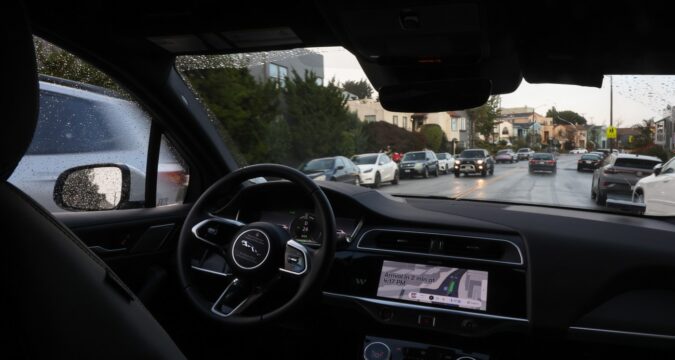
Letters: Regarding Waymo cars, innovation in Illinois should not mean abandoning workers
As a full-time Uber driver in Chicago for the past five years, I read the Tribune’s recent reporting about Waymo vehicles mapping our streets with a pit in my stomach (“Waymo sends vehicles to start mapping city’s streets,” Feb. 26). For some, I am sure autonomous vehicles are an exciting glimpse into the future, but for me and thousands of other drivers, they represent a very real and very immediate threat to my livelihood.
Driving isn’t a side hustle for me. It is how I pay my rent, how I buy food, how I afford my medication; it is how I survive. I drive 10-hour days through the unpredictable weather and Chicago traffic ensuring my neighbors in every corner of the city get to the hospital, to school, to appointments and home after late-night shifts. I have kept loved ones and our communities connected. Now, I am being told that robots may come to our city and take my job.
What are drivers like me supposed to do? If autonomous vehicles take over the streets, thousands of us will be left competing for fewer and fewer jobs with no transition plan and no safety net, not to mention that the people who will benefit most from Waymo in Illinois are millionaires in Silicon Valley. I can’t wrap my head around our elected officials supporting more millionaires out of state over their own constituents who are barely scraping by.
Innovation should not mean abandoning the working people of our city and state. I hope our legislators will do right by us and prioritize people over robots in a time when too many of us are struggling.
— Tracy Shaw, Chicago Uber driver
Rules for autonomous cars
It was only a matter of time before Chicago and Illinois would be talking about autonomous vehicles hitting our streets. Autonomous vehicles promise greater safety, freedom and independence for all kinds of people. As we welcome these vehicles to our state and craft appropriate legislation to regulate them, let’s make sure people who are blind aren’t left out.
While many of us who are blind or visually impaired live fulfilling, independent lives going to work, school and other activities, our biggest barrier to full participation in society is affordable, reliable transportation. Before ride-share services such as Uber and Lyft came along, we needed to rely on public transportation, paratransit, taxis or help from family and friends to get around. While these services worked well in many locations, they weren’t always available, particularly in smaller communities and far-flung suburbs.
Ride-sharing has opened up transportation opportunities for many of us, but it comes with its own set of issues. The biggest issues faced by our community are for those who use guide dogs regularly being denied rides by ride-share drivers. This has been an issue for longer than ride-share services have been around.
Autonomous vehicles can add to our transportation options just as they can for others. Waymo, for example, has proved in places such as Phoenix and San Francisco that it can provide service to people who are blind or visually impaired. This includes ordering a ride, identifying the correct vehicle and entering it, and getting taken to the destination requested.
I call on the legislature and others who will be involved in bringing autonomous vehicles to Illinois to make sure we who are blind can take advantage of the independence that they can offer, so that all can benefit.
— Ray Campbell, president, Illinois Council of the Blind, Springfield
Waymo self driving vehicles sit in the parking lot on North Wells Street in Chicago on Feb. 25, 2026. (Antonio Perez/Chicago Tribune)
Moratorium on Waymo
The city of Chicago is currently allowing itself to be automatically driven into a liability nightmare at the expense of its most vulnerable residents. By authorizing Waymo to test “robotaxis” throughout the most pedestrianized parts of the Windy City, leadership is effectively notifying blind and nonambulatory residents that Chicagoan sidewalks and crosswalks won’t be safe and accessible.
I am a property owner in Streeterville and a full-time power wheelchair user. I have officially filed a notice of statutory liability against the city and a formal safety defect report with the National Highway Traffic Safety Administration.
Why? Because the city has failed to conduct a disability perception audit on the self-driving Waymos. These are vehicles that struggle to identify “non-normative” human forms; the city already is under a federal court order to fix our broken pedestrian signals.
We are told these vehicles are safer, yet the city requires human guide drivers (an admission that the artificial intelligence isn’t ready). This isn’t just a tech glitch. It’s a violation of the Illinois Human Rights Act and the Americans with Disabilities Act.
It is time for a moratorium on this program before an avoidable tragedy becomes a permanent line item in the city’s budget for legal settlements.
— Kelsey Maurine Brickl, Chicago
What Springfield needs
For three decades in law enforcement, I have not simply talked about public safety — I have implemented it. As sheriff of DuPage County, I have managed an $80 million budget without deficit spending, overseen hundreds of employees and built one of the most effective correctional rehabilitation models in the state. Our jail’s recidivism rate is below 15%, demonstrating that accountability and intervention can coexist. That is not a campaign slogan; it is a measurable outcome.
Springfield too often debates theory while communities experience consequences. The SAFE-T Act is one example. While well intentioned in parts, it has created confusion for law enforcement, uncertainty for victims, and missed opportunities for meaningful intervention for offenders who need structured supervision and treatment. True reform should protect victims while ensuring individuals receive the accountability and services necessary to break cycles of crime.
Fiscal discipline must also move from rhetoric to reality. Illinois families live within their means; state government must do the same. I have balanced budgets and made difficult decisions locally. At the state level, that same discipline would mean zero-based budgeting, independent performance audits and prioritization of core services before expansion of programs.
On pensions, we must address the unsustainable growth honestly. That means protecting benefits already earned while negotiating responsible adjustments for future accruals, exploring constitutional pathways for reform and offering voluntary buyout incentives to reduce long-term liabilities. Ignoring the problem only deepens the burden on taxpayers and threatens retirees alike.
Opportunity remains central to public safety and fiscal health. My running mate in the governor’s race, Dr. Robert Renteria — a veteran and nationally recognized youth advocate — has spent decades mentoring young people and steering them away from gangs and violence. His life’s work reflects what prevention looks like in practice, not in theory.
Illinois can restore confidence in government through transparency, accountability and measurable results. We have demonstrated that disciplined leadership works. The question before voters is not who can deliver the most ambitious promises — but who has already delivered results.
Illinois deserves leadership grounded in experience, not aspiration.
— James Mendrick, sheriff, DuPage County
Chicago leaders’ ignorance
Colin Powell once said: “The day soldiers stop bringing you problems is the day you stop leading them. They have either lost confidence that you can help or concluded you do not care. Either case is a failure of leadership.” Unfortunately, Chicago politicians have taken silence from their constituents to mean that they are doing great and that no problems exist.
Asking the executive and legislative apparatus in Chicago to change direction on how it governs, instead of being forced to by the judicial, is a heavy lift because political power in this city is euphoric and not something that one gives up easily without a fight. We see it in how referendums are denied, perpetuity in office is prized, and longevity breeds nepotism, corruption and poorer services over time. We see it in how effectiveness is not the norm but the exception, and how stagnation in efficiency breeds voter apathy and, therefore, fewer complaints.
Ideally, it would be perfect if the men and women we elect in this metropolis cared enough to put the safety, security and well-being of our city ahead of their political aspirations, but that is asking a lot of those accustomed to being paid well for performing very little actual work. Imagine if we woke up one day and discovered that the members of our council had decided on their own to shrink their numbers down to 25, from their current bloated number of 50. Or if our mayor took the step of announcing that a referendum be placed on the ballot that asks voters to decide if future occupiers of his office be limited to only two terms.
Those would be real examples of the executive and legislative branches working for the good of the people
— Ephraim Lee, Chicago
Submit a letter, of no more than 400 words, to the editor here or email letters@chicagotribune.com.
https://www.chicagotribune.com/2026/02/27/letters-022726-waymo-chicago/