Category: News

World At War: Are There Drone Spillover Threats In Caribbean
World At War: Are There Drone Spillover Threats In Caribbean
An Iranian-made Shahed drone strike on the British Royal Air Force base at Akrotiri, Cyprus, is among the first signs that the U.S.-Iran conflict may no longer be contained to the Middle East. This development brings us to a note we published one month ago on Cuba.
On Feb. 3, we cited a report from the Russian military-focused Telegram channel Rybar that offered a very scary reality for the US southern front facing the Gulf of America and Caribbean that “Russia may deploy Geranium strike drones in Cuba, a move that could reshape deterrence and force Trump to reconsider his options.”
Rybar posted the combat radius of Russian Gernaium drones on U.S. high-value assets, from oil and gas infrastructure to military installations to data centers, airbases, and other critical infrastructure. To note, there are no indications that these drones have been deployed in Cuba or anywhere else in the Caribbean.
Russia may deploy Geranium strike drones in Cuba, a move that could reshape deterrence and force Trump to reconsider his options. pic.twitter.com/ujYKnqzcAf
— Rybar in English (@rybar_en) January 30, 2026
Russian-made Geranium drones are a family of long-range loitering munitions, most commonly referring to the Geran-2, which is a version of Iran’s Shahed-136. We have detailed how Russia has established domestic manufacturing plants to ramp up production, as well as the next iteration of these drones (read here).
The Geran-2 has a range of roughly 940 to 1,250 miles, carries up to 110 pound high-explosive warhead, and is cheaper to produce than cruise missiles. One distinctive signature that Ukrainians have learned to recognize is its sound: the drones sound like lawn mowers in the sky.
There is good news because the U.S. military had spent many months securing the Western Hemisphere well before Operation Epic Fury even began: first by staging warships and troops in the Caribbean region, then toppling the Maduro regime and pressuring Cuba into paralysis. One week before strikes began in Tehran, Mexican special forces, aided by the U.S. intelligence community, launched a successful decapitation strike against the top Mexican drug cartel.
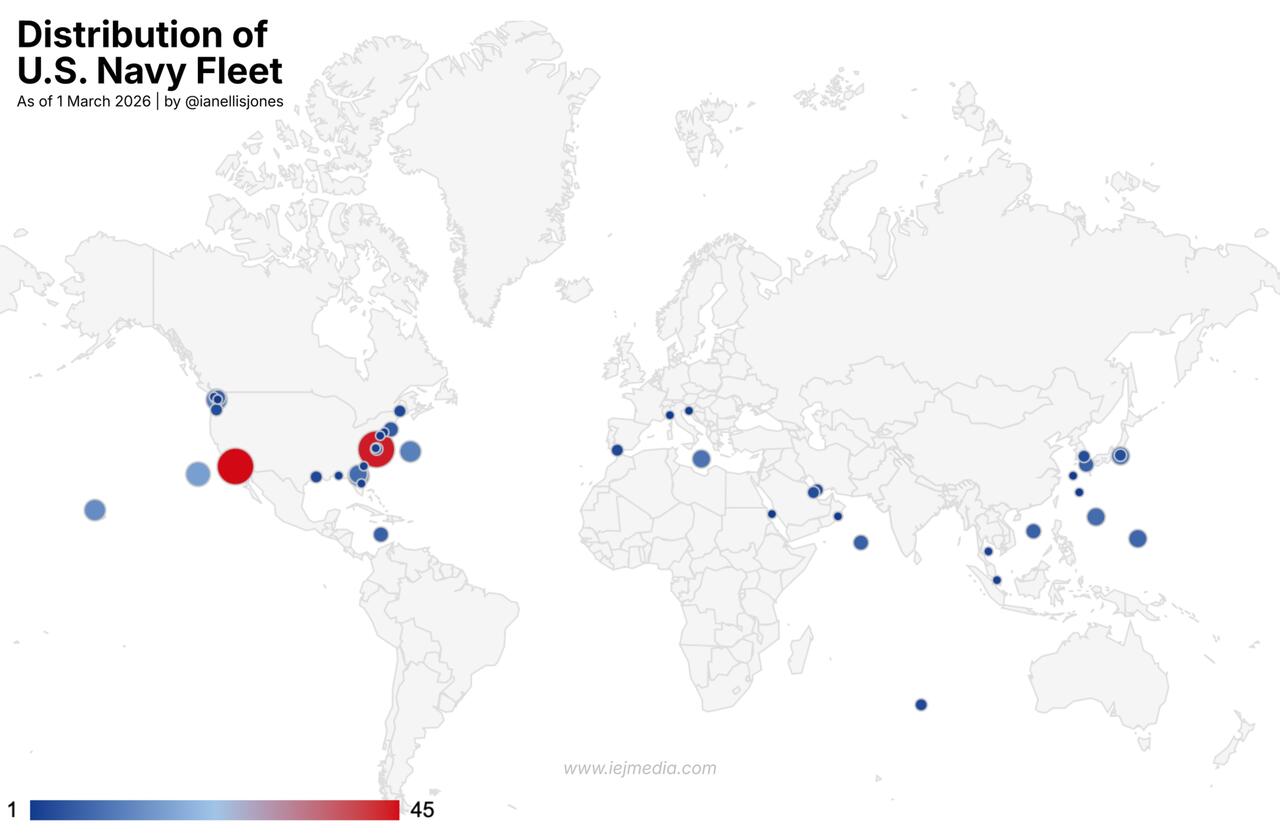
X user Ian Ellis posted the latest available snapshot, as of March 1, of the U.S. Navy’s global fleet distribution, showing notable U.S. warship activity in the Gulf of America, Caribbean, and U.S. East Coast.
It is increasingly evident, particularly after the Iranian drone strike on Cyprus and attacks on other Gulf states, that the conflict is at risk of broadening and raises the likelihood of flare-ups well beyond the Middle East.
Tyler Durden
Mon, 03/02/2026 – 18:50
https://www.zerohedge.com/military/world-war-are-there-drone-spillover-threats-caribbean
Sunset Foods no longer planning Northfield grocery store at old Mariano’s location
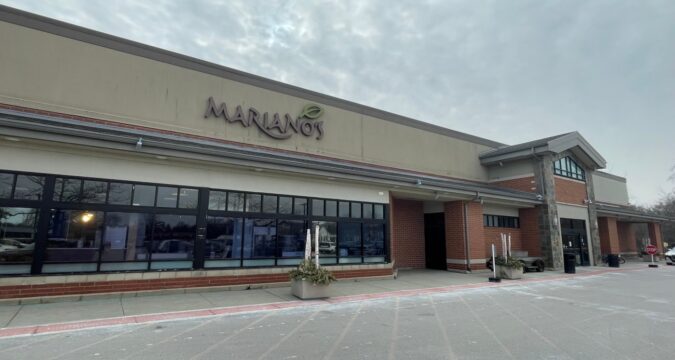
A proposal for Sunset Foods to fill the former Mariano’s location on Willow Road in Northfield has apparently collapsed, and the Northfield Village Board is now beginning a broader review of the surrounding business district.
Village President Tracey Mendrek announced at the Feb. 24 Village Board meeting that Sunset Foods and Swanson Development Group, owner of the former Mariano’s at 1822 Willow Road, were unable to reach an agreement after several months of negotiations.
“Like all of you, we are disappointed by this outcome, but after eight months of a vacant storefront this board must turn its attention to a new solution for the location,” Mendrek said.
Village Manager Patrick Brennan said after the meeting that the two sides could not come to terms on a lease for the approximately 47,000-square-foot store, which ceased retail operations last June when Mariano’s parent company, Kroger, closed several Chicago-area locations.
Brennan said the village has not “closed any doors” and would provide assistance if asked, but he believes both parties are moving on.
Steven Swanson, managing partner of Swanson Development Group, declined to comment.
Sarah Hanlon, director of marketing for Sunset Foods, said, “Sunset Foods is always interested in growing into new neighborhoods, but has no immediate plans. Regarding the Northfield site, Sunset Foods was unable to reach an agreement with the property group.”
Supermarkets have operated at the site since the 1970s, Brennan said.
Northfield village leaders are looking at their options after talks with Sunset Foods to fill a location vacated by Mariano’s in 2025 fell through. (Phil Rockrohr/for Pioneer Press)
Terry Dason, president and CEO of the Winnetka-Northfield-Glencoe Chamber of Commerce, said her organization was “heartbroken” by the turn of events.
“All I continue to hear is the residents want a grocery store there,” she said. “They are missing Mariano’s and they were hopeful Sunset would replace them.”
With a supermarket replacement seemingly off the table for now, the Village Board unanimously approved a temporary moratorium on new office-related uses in the village center business district and asked the village’s plan and zoning commission to review zoning in the area.
“We decided this would probably be a good time to take a pause and take a good look at our zoning codes in the central business district and allow our plan and zoning commission to make some recommendations back to us,” Mendrek said.
Mendrek anticipated the Board will review the situation at its April 6 meeting.
In addition, the village has retained a real estate consulting firm to perform an eligibility study to determine if there are sites in the business district that could qualify as a redevelopment area that would create the possibility of tax incremental financing.
“If eligible, this will provide the village a valuable tool to take a more assertive role in the land use of the village,” she said.
Mendrek said the two initiatives will give developers awareness of the village’s intent for the area.
“We have watched from the sidelines as many of our neighboring communities including Northbrook, Glenview, Deerfield and Highland Park have used similar redevelopment plans to enhance their downtowns,” she said. “I believe it is Northfield’s time to take decisive steps to strengthen our community.”
https://www.chicagotribune.com/2026/03/02/sunset-foods-no-northfield-grocery-marianos/
Max Scherzer no espera para lanzar sesión de bullpen en los entrenamientos de primavera de Azulejos
DUNEDIN, Florida, EE.UU. (AP) — Max Scherzer realizó una sesión de bullpen en los entrenamientos de primavera el lunes con los Azulejos de Toronto, incluso antes de que los vigentes campeones de la Liga Americana anunciaran formalmente su regreso.
El manager de los Azulejos, John Schneider, indicó que Scherzer volverá a lanzar el miércoles y señaló que el derecho de 41 años podría ir a la lomita en un juego de exhibición el próximo fin de semana. El piloto comentó que Scherzer había estado lanzando por su cuenta a bateadores agentes libres.
“Fue bueno ponernos al día con el abuelo. Es agradable tenerlo de vuelta”, comentó Schneider a los reporteros.
La hija de Scherzer, de ocho años, escribió una carta al equipo en diciembre con la esperanza de que él regresara a los Azulejos.
Acordó la semana pasada un contrato de tres millones de dólares para 2026 que incluye la posibilidad de ganar otros 10 millones en bonificaciones por rendimiento, dijo a The Associated Press el jueves una persona familiarizada con las negociaciones, que habló bajo condición de anonimato entonces porque el acuerdo estaba sujeto a que superara satisfactoriamente el examen físico.
Schneider observó la sesión de bullpen junto con el coach de pitcheo Pete Walker, y afirmó que el ganador en tres ocasiones del premio Cy Young se vio bien.
Scherzer tuvo marca de 5-5 con efectividad de 5,19 en 17 aperturas y 85 entradas con los Azulejos la temporada pasada, su 18va en las Grandes Ligas. Luego hizo tres aperturas en la postemporada, al vencer a Seattle 8-2 en el cuarto juego de la Serie de Campeonato de la Liga Americana antes de recibir la pelota dos veces en la Serie Mundial contra los Dodgers de Los Ángeles. Trabajó cuatro entradas y un tercio, en las que permitió una carrera en el séptimo juego antes de que Toronto perdiera 5-4 en 11 episodios.
Fue agente libre en esta temporada baja después de firmar el año pasado un contrato de un año por 15,5 millones de dólares con los Azulejos. Planea volver a una rotación que parece profunda y que se espera incluya alguna combinación de Dylan Cease, Kevin Gausman, Shane Bieber, Trey Yesavage, Cody Ponce, el boricua José Berríos y Eric Lauer.
Scherzer ha ganado dos títulos de Serie Mundial, con Washington en 2019 y Texas en 2023. El ocho veces All-Star tiene récord de 221-117 con efectividad de 3,22 con los Diamondbacks, Tigres, Nacionales, Dodgers, Mets, Rangers y Azulejos.
Ocupa el 11mo lugar en la lista histórica con 3.489 ponches — 20 menos que el miembro del Salón de la Fama Walter Johnson. El único lanzador activo con más es Justin Verlander, octavo con 3.553.
___
Deportes en español AP: https://apnews.com/hub/deportes

Chicago woman unsure of when she’ll return home from Dubai after US attacks on Iran
Last Friday, Shekinah Lee and eight of her friends rang in her boyfriend’s 27th birthday in Dubai, somewhere he’d always wanted to visit. Two days later, they watched as a missile shot across the sky, wondering when and how they’d get home.
What began as a “dream” five-day trip for the group of Chicagoans now has no end in sight, as air strikes from Iran led to canceled flights out of the United Arab Emirates over the weekend.
Lee, 26, said Emirates airline canceled the group’s return flight to O’Hare Airport on Sunday after airspace was closed when Iran launched retaliatory strikes in cities across the Middle East, including Dubai.
She said they’ve heard explosions and jets flying since Sunday at noon. Later in the day, the group was sightseeing in the city when they saw a missile passing overhead.
“It’s completely terrifying,” Lee said. “Most of the time, you’re just hearing what’s happening. You’re looking up at the sky, and the sky looks perfectly fine. So you don’t know if something is coming towards you. You don’t know where something has hit.”
Tensions between the U.S. and Iran have escalated under the Trump administration. In June, the U.S. bombed nuclear facilities in Iran, and President Donald Trump has remained vocal about oversight of Iran’s nuclear programs. He also threatened military action earlier this year over the Iranian government’s lethal protest crackdowns, which Supreme Leader Ayatollah Ali Khamenei warned would trigger a regional war, according to the Associated Press.
On Saturday, the U.S. and Israel bombed multiple cities across Iran, and Khamenei was killed in the strikes. A girls’ school was also hit in the bombings, and over 100 people were killed, reported Iranian state media. Iran launched retaliatory strikes, hitting places in the United Arab Emirates, among others.
The United Arab Emirates government said air defense systems had intercepted two cruise missiles, 165 ballistic missiles and more than 540 drones over two days of Iran’s retaliatory attacks, the Associated Press reported Sunday. Debris from the weapon interceptions started fires and damaged structures in Dubai. The falling pieces harmed the Dubai International Airport and started fires outside famous hotels and skyscrapers.
Emirates hasn’t rebooked the flight, Lee said, adding that she hasn’t heard from the airline because it doesn’t have the bandwidth to deal with the influx of calls. Several international airlines cautiously resumed a small number of flights from the United Arab Emirates on Monday. For days, there have been near-total shutdowns at some of the world’s busiest aviation hubs as disruptions ripple far beyond the conflict zone.
Emirates, alongside fellow long-haul carrier Etihad Airways and budget carrier FlyDubai, said they would operate select flights from the country. Still, more than 90% of the scheduled flights into and out of Dubai International remained canceled Monday, according to the flight-tracking site FlightAware.
Since Saturday, there’s been more than 32,000 flights scheduled to arrive or depart from across the Middle East — with 12,903, or just over 40%, of those canceled, according to Cirium, an aviation data firm.
Emirates said customers with earlier bookings would get priority for seats aboard the limited flights it planned to operate starting Monday evening.
Lee said she also reached out to the U.S. embassy, which referred her to a notice on its website telling those in the area to shelter in place.
After their flight was canceled, Lee and her friends strategized their next steps in the hotel’s lobby. It was then that everyone’s phones dinged with an emergency alert, Lee said, telling them to shelter indoors and stay away from windows and glass.
“At that point, I realized it was serious,” Lee said. “And better safe than sorry.”
Lee said she went to the reception desk to ask where would be safest to go, and hotel staff directed her to a parking garage. She, her boyfriend and almost everyone else at the hotel spent the night sleeping on chairs underground, Lee said.
Shekinah Lee and her boyfriend slept in a parking garage Sunday night along with other tourists after an emergency alert said to take shelter. (Shekinah Lee)
The group extended their hotel room reservations for another week, Lee said, as it’s still uncertain when they’ll be able to head home. Lee said the group is sheltering in their hotel and trying to create a routine to keep calm.
If she has to stay much longer than originally intended, Lee said she worries about finances. The city has increasingly been seen as a peaceful, luxury destination by U.S. travelers in recent years. Lee said she visited Dubai’s Miracle Garden, Global Village and red sand deserts, which draw tourism from across the globe. The Dubai International Airport saw a 5% increase in traffic last year and served a record-high 95.2 million passengers, according to the Associated Press.
Lee, a model and content creator from the South Side, has been documenting her experience over the last few days on TikTok. One of her videos has reached 2.8 million views.
Some comments online have been harsh, she said. She’s seen people saying they don’t feel sorry for the group and think the friends shouldn’t have gone there in the first place.
“We are all very smart, and we all keep up on current events and still couldn’t have anticipated that a war was coming when we would be in between those countries,” Lee said.
Since Sunday, conditions in Dubai have calmed, Lee said. She sees locals going to work and riding bikes. They tell her that although the situation is unusual, it isn’t a reason to fear for her safety, Lee said.
But Lee said she and her friends are still desperate to get home to Chicago.
“Some people consider Chicago a war zone, but it’s nothing compared to missiles and bombs flying out of the sky,” Lee said.
The Associated Press contributed reporting.
https://www.chicagotribune.com/2026/03/02/dubai-iran-attacks/

La Grange Park adds two new paid-on-call firefighters
La Grange Park added two new paid-on-call firefighters February 24.
La Grange resident Veronica Gussie and La Grange Park resident John “Jack” Powers had their badges pinned by relatives in a ceremony in the La Grange Park boardroom.
“Each of these people were hired in the last two years,” Fire Chief Dean Maggos told a room full of supporters. “Both attended the basic firefighters operations academy. They attended nights and weekends, most of the time two nights a week and the weekend for several hours.”
The firefighters talked about their new responsibilities.
“I‘m very honored and it’s a privilege to work for the department of La Grange Park,” Powers said after the ceremony. “I grew up in La Grange Park and my wife and I are fortunate to own a home in La Grange Park.”
Gussie said she was “honored to be here,” saying when La Grange Park opened its boundaries to allow firefighter candidates from nearby towns, she jumped at the chance to apply.
Maggos pointed out that both firefighters were required to become state-certified EMTs in addition to everything else that was going on in their lives.
“After that, they went through a rigorous training to make sure they could drive our vehicles and, once they were able to drive and were properly licensed, they then had to learn how to operate them at the scene of a fire,” he said.
“Both of them really, really worked extremely hard in getting to this point. … Both have contributed an enormous amount to our community and our fire department.”
Maggos said Gussie and Powers had performed excellently in their probationary period, saying “they are among the most solid firefighters we have at this early point in their careers.”
Maggos stressed the importance of La Grange Park’s existing firefighters in training the new hires.
Contacted later, Maggos noted that the department was in good shape in terms of firefighters available.
“We’re staffed really well right now,” he said. “We hired five additional personnel in January and they’re in the fire academy now. They are in the beginning of training.”
Maggos said the benefit of expanding the department’s boundaries, pointing out that there were already several paid-on-call firefighters working in La Grange Park from nearby municipalities.
In other business, the board unanimously voted to put off determining new lead service line replacement rates to fund the projected $23.5 million cost over the next 17 years.
The specific amount of funding available for the unfunded state mandate is unknown at this time and won’t be clear until the Illinois Environmental Protection Agency decides on which municipalities will get loans and how much those loans will be. That will be decided by June.
The next La Grange Park Village Board meeting will be 7:30 p.m., Tuesday, March 10th in the Village Board Room, 447 N. Catherine Ave.
Hank Beckman is a freelance reporter for Pioneer Press.
https://www.chicagotribune.com/2026/03/02/lagrange-park-adds-two-firefighters/
Photos: South Carolina honors the Rev. Jesse Jackson
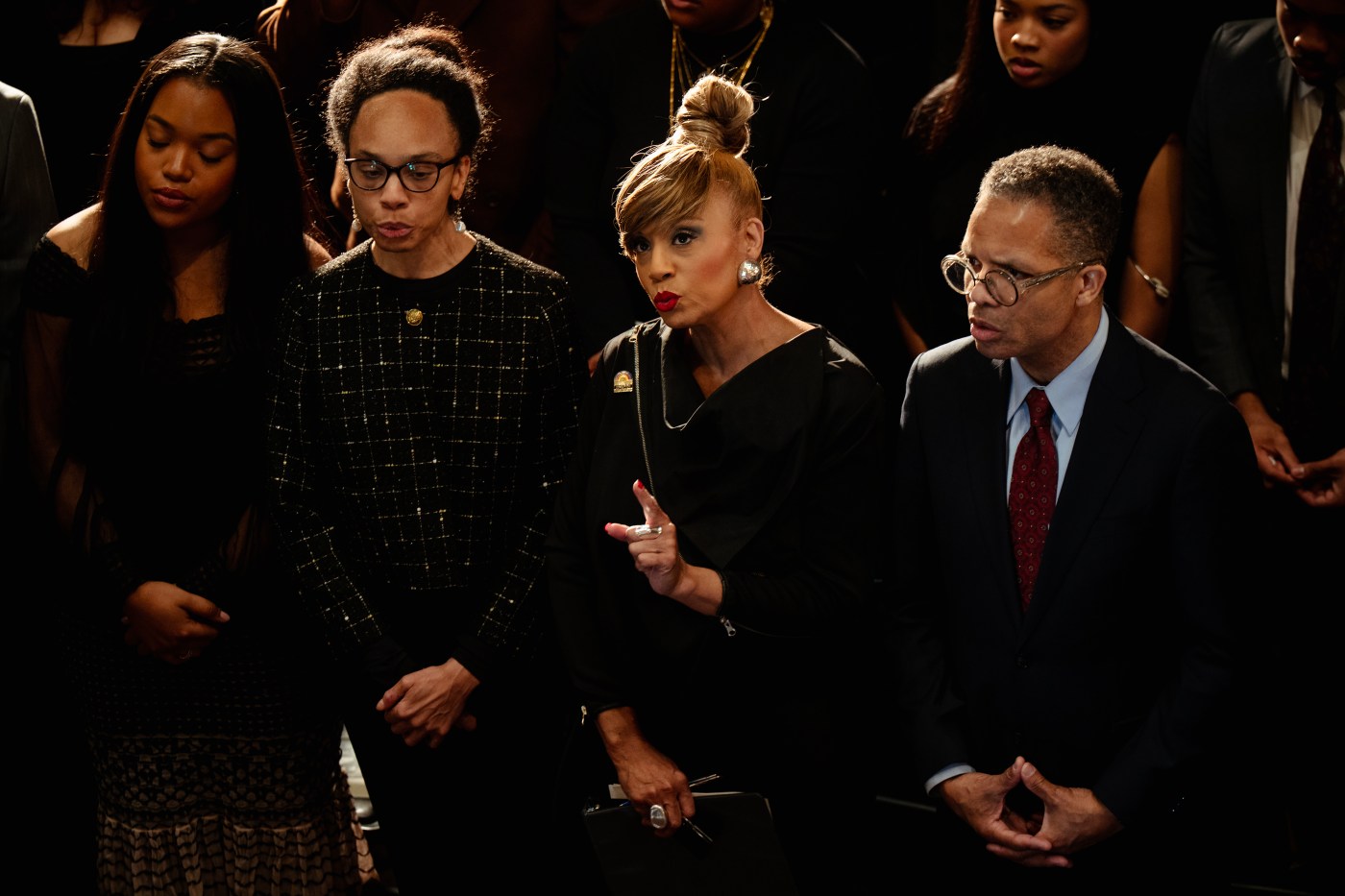
Flags were lowered to half-staff in South Carolina, where civil rights icon and native son Rev. Jesse Jackson became only the second Black man in history to lie in repose inside the state capitol building in Columbia, S.C. Jackson died Feb. 17 in Chicago at age 84.
The Rev. Jesse Jackson’s children, from left, Yusef Jackson, Jackie Jackson, Santita Jackson, Jesse Jackson Jr. and Ashley Jackson watch as the procession for their father arrives at the South Carolina State House, March 2, 2026. (E. Jason Wambsgans/Chicago Tribune)
The Rev. Jesse Jackson lies in repose at the South Carolina State House in Columbia, March 2, 2026. (E. Jason Wambsgans/Chicago Tribune)
The casket of the Rev. Jesse Jackson is carried by a caisson on the way to the South Carolina State House in Columbia, March 2, 2026. (E. Jason Wambsgans/Chicago Tribune)
An African American history monument by sculptor Ed Dwight in front of a long line of visitors waiting to pay their respects to to the Rev. Jesse Jackson wraps around the South Carolina State House in Columbia, March 2, 2026. (E. Jason Wambsgans/Chicago Tribune)
Santita Jackson thanks people gathered for the ceremony as her father the Rev. Jesse Jackson’s casket lies in repose in the South Carolina State House in Columbia, March 2, 2026. (E. Jason Wambsgans/Chicago Tribune)
The children of the Rev. Jesse Jackson stand as his casket is carried by South Carolina State Troopers outside the South Carolina State House in Columbia, March 2, 2026. (E. Jason Wambsgans/Chicago Tribune)
Choir members from Allen University, a historically Black university in Columbia, South Carolina, watch the caisson procession with the casket of the Rev. Jesse Jackson outside the South Carolina State House in Columbia, March 2, 2026. (E. Jason Wambsgans/Chicago Tribune)
Jesse Jackson Jr. stands during a ceremony as his father’s body lies in repose in the South Carolina State House in Columbia, March 2, 2026. (E. Jason Wambsgans/Chicago Tribune)
Yusef Jackson, left, and his family attend a ceremony for his father, the Rev. Jesse Jackson, in the South Carolina State House in Columbia, March 2, 2026. (E. Jason Wambsgans/Chicago Tribune)
U.S. Rep. James Clyburn of South Carolina speaks as the Rev. Jesse Jackson lies in repose at the South Carolina State House in Columbia, March 2, 2026. (E. Jason Wambsgans/Chicago Tribune)
The casket of the Rev. Jesse Jackson is carried by a caisson on the way to the South Carolina State House in Columbia, March 2, 2026. (E. Jason Wambsgans/Chicago Tribune)
Joe L. Reed, from Montgomery, Alabama, waits to pay his respects to the Rev. Jesse Jackson at the South Carolina State House in Columbia, March 2, 2026. (E. Jason Wambsgans/Chicago Tribune)
Marcono Hines Jr., of Durham, North Carolina, left, waits in a long line of visitors waiting to pay their respects to the Rev. Jesse Jackson at the South Carolina State House in Columbia, March 2, 2026. (E. Jason Wambsgans/Chicago Tribune)
A line of visitors to see the Rev. Jesse Jackson lying in repose wait to get into the Carolina State House in Columbia, March 2, 2026. (E. Jason Wambsgans/Chicago Tribune)
Civil rights activist and former U.S. Rep. and Andrew Young pays his respects as the Rev. Jesse Jackson lies in repose at the South Carolina State House in Columbia, March 2, 2026. (E. Jason Wambsgans/Chicago Tribune)
The flags fly at half-staff over the South Carolina State House in Columbia as a crowd wraps around the building to pay their respects to the Rev. Jesse Jackson lying in repose inside the capitol, March 2, 2026. (E. Jason Wambsgans/Chicago Tribune)
Yusef Jackson, from left, Jackie Jackson, Santita Jackson, Jesse Jackson Jr. and Ashley Jackson watch the casket of their father, the Rev. Jesse Jackson, as it’s carried by South Carolina state troopers outside the South Carolina State House in Columbia, March 2, 2026. (E. Jason Wambsgans/Chicago Tribune)
Judge Greg Mathis joins the Jackson family walking behind the caisson procession with the casket of the Rev. Jesse Jackson outside the South Carolina State House in Columbia, March 2, 2026. (E. Jason Wambsgans/Chicago Tribune)
https://www.chicagotribune.com/2026/03/02/photos-south-carolina-honors-the-rev-jesse-jackson/
Photos: South Carolina honors the Rev. Jesse Jackson
Flags were lowered to half-staff in South Carolina, where civil rights icon and native son Rev. Jesse Jackson became only the second Black man in history to lie in repose inside the state capitol building in Columbia, S.C. Jackson died Feb. 17 in Chicago at age 84.
The Rev. Jesse Jackson’s children, from left, Yusef Jackson, Jackie Jackson, Santita Jackson, Jesse Jackson Jr. and Ashley Jackson watch as the procession for their father arrives at the South Carolina State House, March 2, 2026. (E. Jason Wambsgans/Chicago Tribune)
The Rev. Jesse Jackson lies in repose at the South Carolina State House in Columbia, March 2, 2026. (E. Jason Wambsgans/Chicago Tribune)
The casket of the Rev. Jesse Jackson is carried by a caisson on the way to the South Carolina State House in Columbia, March 2, 2026. (E. Jason Wambsgans/Chicago Tribune)
An African American history monument by sculptor Ed Dwight in front of a long line of visitors waiting to pay their respects to to the Rev. Jesse Jackson wraps around the South Carolina State House in Columbia, March 2, 2026. (E. Jason Wambsgans/Chicago Tribune)
Santita Jackson thanks people gathered for the ceremony as her father the Rev. Jesse Jackson’s casket lies in repose in the South Carolina State House in Columbia, March 2, 2026. (E. Jason Wambsgans/Chicago Tribune)
The children of the Rev. Jesse Jackson stand as his casket is carried by South Carolina State Troopers outside the South Carolina State House in Columbia, March 2, 2026. (E. Jason Wambsgans/Chicago Tribune)
Choir members from Allen University, a historically Black university in Columbia, South Carolina, watch the caisson procession with the casket of the Rev. Jesse Jackson outside the South Carolina State House in Columbia, March 2, 2026. (E. Jason Wambsgans/Chicago Tribune)
Jesse Jackson Jr. stands during a ceremony as his father’s body lies in repose in the South Carolina State House in Columbia, March 2, 2026. (E. Jason Wambsgans/Chicago Tribune)
Yusef Jackson, left, and his family attend a ceremony for his father, the Rev. Jesse Jackson, in the South Carolina State House in Columbia, March 2, 2026. (E. Jason Wambsgans/Chicago Tribune)
U.S. Rep. James Clyburn of South Carolina speaks as the Rev. Jesse Jackson lies in repose at the South Carolina State House in Columbia, March 2, 2026. (E. Jason Wambsgans/Chicago Tribune)
The casket of the Rev. Jesse Jackson is carried by a caisson on the way to the South Carolina State House in Columbia, March 2, 2026. (E. Jason Wambsgans/Chicago Tribune)
Joe L. Reed, from Montgomery, Alabama, waits to pay his respects to the Rev. Jesse Jackson at the South Carolina State House in Columbia, March 2, 2026. (E. Jason Wambsgans/Chicago Tribune)
Marcono Hines Jr., of Durham, North Carolina, left, waits in a long line of visitors waiting to pay their respects to the Rev. Jesse Jackson at the South Carolina State House in Columbia, March 2, 2026. (E. Jason Wambsgans/Chicago Tribune)
A line of visitors to see the Rev. Jesse Jackson lying in repose wait to get into the Carolina State House in Columbia, March 2, 2026. (E. Jason Wambsgans/Chicago Tribune)
Civil rights activist and former U.S. Rep. and Andrew Young pays his respects as the Rev. Jesse Jackson lies in repose at the South Carolina State House in Columbia, March 2, 2026. (E. Jason Wambsgans/Chicago Tribune)
The flags fly at half-staff over the South Carolina State House in Columbia as a crowd wraps around the building to pay their respects to the Rev. Jesse Jackson lying in repose inside the capitol, March 2, 2026. (E. Jason Wambsgans/Chicago Tribune)
Yusef Jackson, from left, Jackie Jackson, Santita Jackson, Jesse Jackson Jr. and Ashley Jackson watch the casket of their father, the Rev. Jesse Jackson, as it’s carried by South Carolina state troopers outside the South Carolina State House in Columbia, March 2, 2026. (E. Jason Wambsgans/Chicago Tribune)
Judge Greg Mathis joins the Jackson family walking behind the caisson procession with the casket of the Rev. Jesse Jackson outside the South Carolina State House in Columbia, March 2, 2026. (E. Jason Wambsgans/Chicago Tribune)
https://www.chicagotribune.com/2026/03/02/photos-south-carolina-honors-the-rev-jesse-jackson/
Mapping China’s Influence in Latin America
Mapping China’s Influence in Latin America
Authored by Eva Fu via The Epoch Times (emphasis ours),
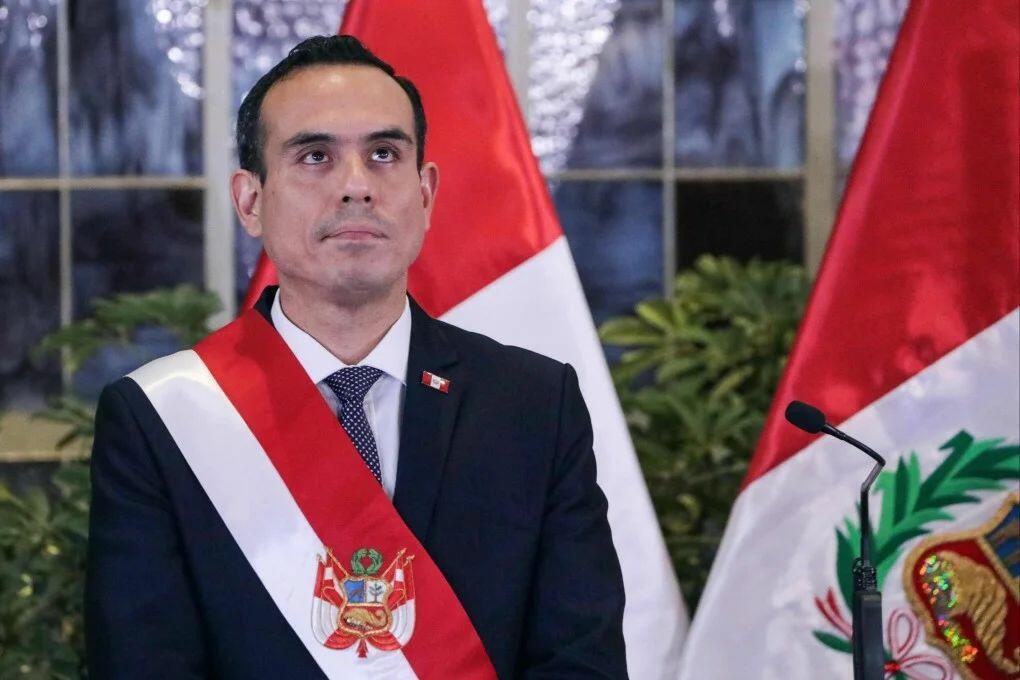
The ouster of Peru’s president began with a secret late-night dinner. A series of clandestine encounters followed—dark glasses at one meeting, a hood over his face at another.
Then videos leaked. Amid a nationwide uproar, three-quarters of Peru’s lawmakers voted to censure the initially popular José Jerí, just four months into his presidency. He was the country’s seventh leader in 10 years.
“We ask to end this agony so we can truly create the transition citizens are hoping for,” said Ruth Luque, one of 75 lawmakers who voted to oust Jerí. “Not a transition with hidden interests, influence-peddling, secret meetings, and hooded figures. We don’t want that sort of transition.”
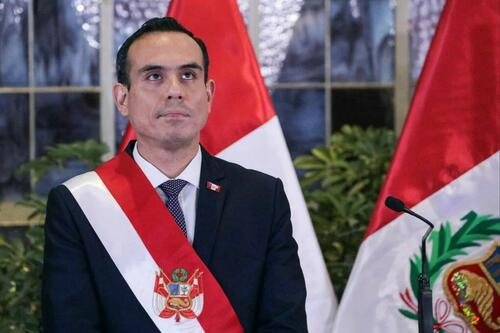
The man meeting with Jerí was Chinese restaurant and wholesale store owner Yang Zhihua, who is behind several major Chinese infrastructure deals in the country.
Dubbed “Chifagate,” a nod to fusion Peruvian-Chinese cuisine, the scandal has thrown another wrinkle into an already strained relationship between the two countries.
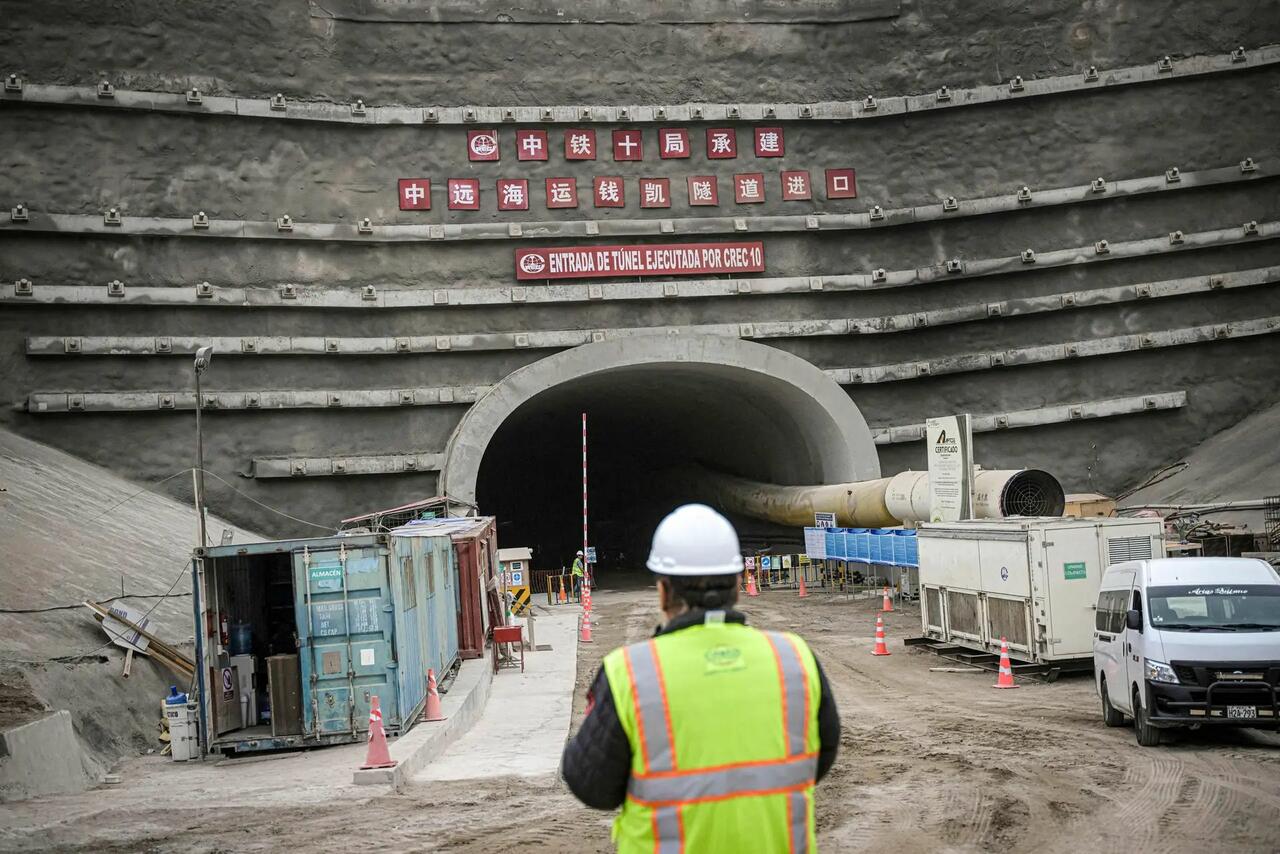
Currently, Lima is fighting to regain oversight over a major China-controlled port at Chancay, which has become a symbol of China’s footprint in Latin America.
Across the region, a deeply entrenched web of Chinese influence is enabling the communist regime to redefine dynamics in America’s backyard.
Starting with near-negligible investment levels in 2000, China has become a dominant force in Latin America and the Caribbean, with trade exceeding $500 billion in 2024. For many individual nations, such as Brazil and Peru, China has overtaken the United States as a key trading partner.
Along the way, Beijing has built enormous leverage, said Ding Hung-bin, associate dean at Loyola University Maryland’s Sellinger School of Business and Management.
“The Chinese Communist Party is playing the long game in Latin America,” he told The Epoch Times.
With the money pouring in, Ding said, Beijing reaps political influence, biding its time to challenge the U.S.-led world order. After two decades, he said, “the fire has reached the U.S. doorstep.”
Washington is now making clear that this can’t continue. In its national security strategy released in November, the Trump administration made the region its top priority, describing a “great American strategic mistake of recent decades” in allowing “non-Hemispheric competitors” to take hold in the Western Hemisphere.
The past inaction, the document reads, has cost the United States both “economically in the present” and “strategically in the future.”
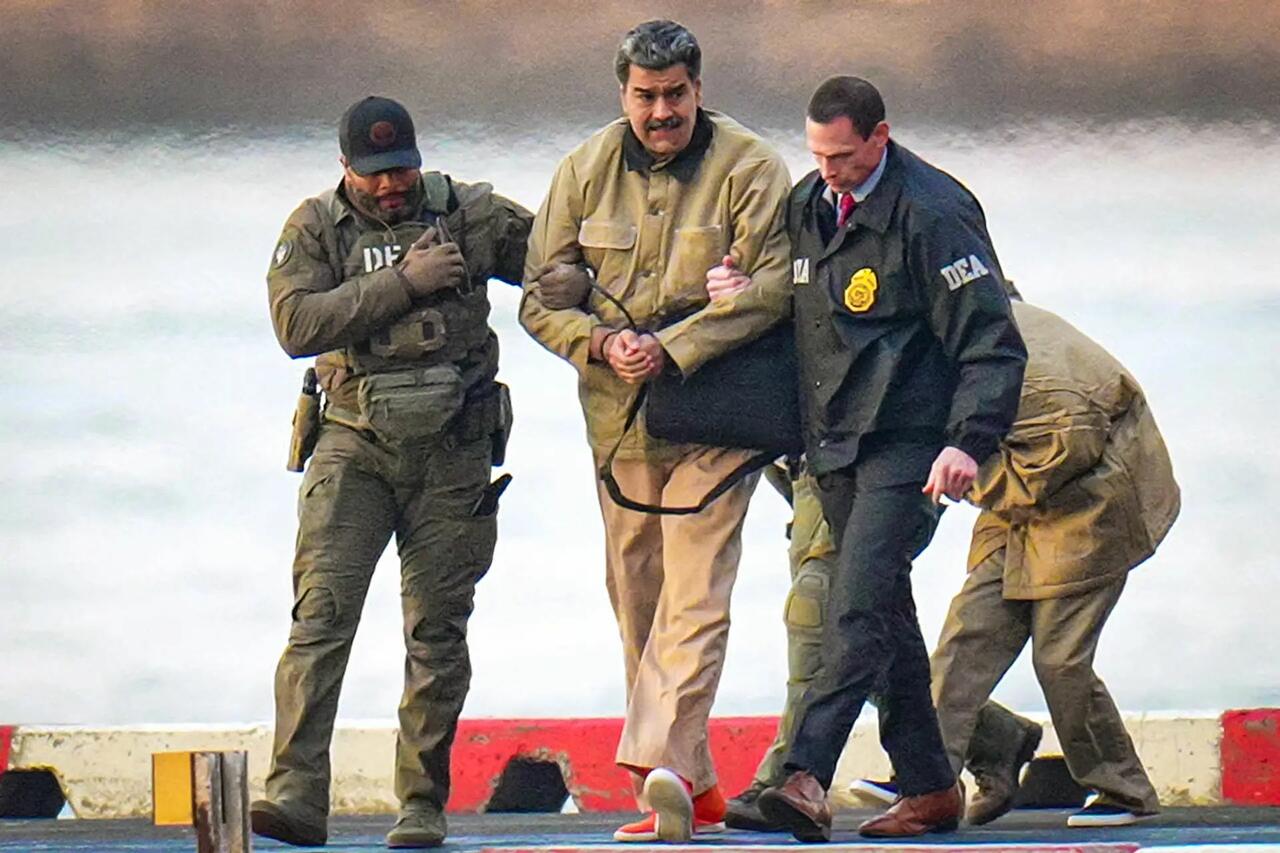
Within weeks of the strategy being released, U.S. forces captured Venezuelan leader Nicolás Maduro and brought that country’s courtship with China to a halt.
Just hours before his capture, Maduro hosted a Chinese envoy at the presidential palace. He accepted a porcelain vase and posed for photos with the Chinese delegates, then proclaimed on social media that the meeting reaffirmed the two countries’ “strong bonds of brotherhood” through “thick and thin.”
The Digital Silk Road
The “brotherhood” is Beijing’s lever.
In September, Maduro proudly showed off a foldable red-colored Huawei phone that he used daily—a gift from Chinese leader Xi Jinping.
Maduro hailed it as the “best phone in the world.”
“Americans can’t hack it,” he told reporters.
To China, it was a validating moment in the regime’s battle for technological supremacy, with Huawei leading the way.
Blacklisted in the United States, the Chinese telecom provider has been deepening its foothold in other parts of the Americas. It spearheads the Digital Silk Road, a core element of Beijing’s trillion-dollar Belt and Road Initiative aimed at stretching the regime’s power and influence around the globe.
Huawei’s data storage platform now covers every Latin American country, boasting the fastest business growth among telecoms. The significance of that sank in when Brazil sought to block Huawei from its 5G networks on national security grounds in 2020. Huawei’s technology was already embedded in the country’s telecom architecture; replacing it would have cost billions of dollars.
In 2022, Huawei signed a deal to turn Curitiba in southern Brazil into a 5G-powered smart city, integrating artificial intelligence and big data into urban life, from medical surgeries to public security. Its website now features an interview with the city’s mayor, who touted Curitiba as a “smart city that works for its citizens.”
And Huawei isn’t the only Chinese entity expanding in the region. Market research data from Canalys show that Chinese phone brands now command more than 60 percent of the Latin American market.
In Ecuador, the China-made ECU911 system powers up surveillance cameras nationwide that feed real-time footage to a thousands-strong police unit, which deals with everything from traffic to national security. Touting its scale of impact, Xi once called it a “calling card for China–Latin America’s high tech collaboration.”
By law, Chinese companies have no choice but to hand over whatever they have if the Chinese Communist Party asks. And that makes their ubiquitousness problematic, said Evan Ellis, Latin American studies research professor at the U.S. Army War College Strategic Studies Institute.
With all the data coming out of corporate boardrooms, factory floors, and people’s homes, the key question is where they get offloaded, he told The Epoch Times. Chinese technologies’ presence in federal agencies across the region, he said, “opens up government officials to blackmail.”
‘Predatory’ Investments
Beijing has a phrase for its vision: the “China–Latin America community with a shared future.”
Xi was the first to evoke the term. Addressing Brazil’s National Congress in 2014, he compared the China–Latin America relationship with wine—something that “grows better as it ages.”
The idea here is to “rebuild from the roots, pulling the 33 Latin America and Caribbean nations together with China while keeping America out,” Florencia Huang, a professor specializing in Latin American studies at Taiwan’s Tamkang University, told The Epoch Times.
Under that banner, China attracted more than 20 Latin American and Caribbean countries to join the Belt and Road partnerships. Hundreds of infrastructure projects followed.
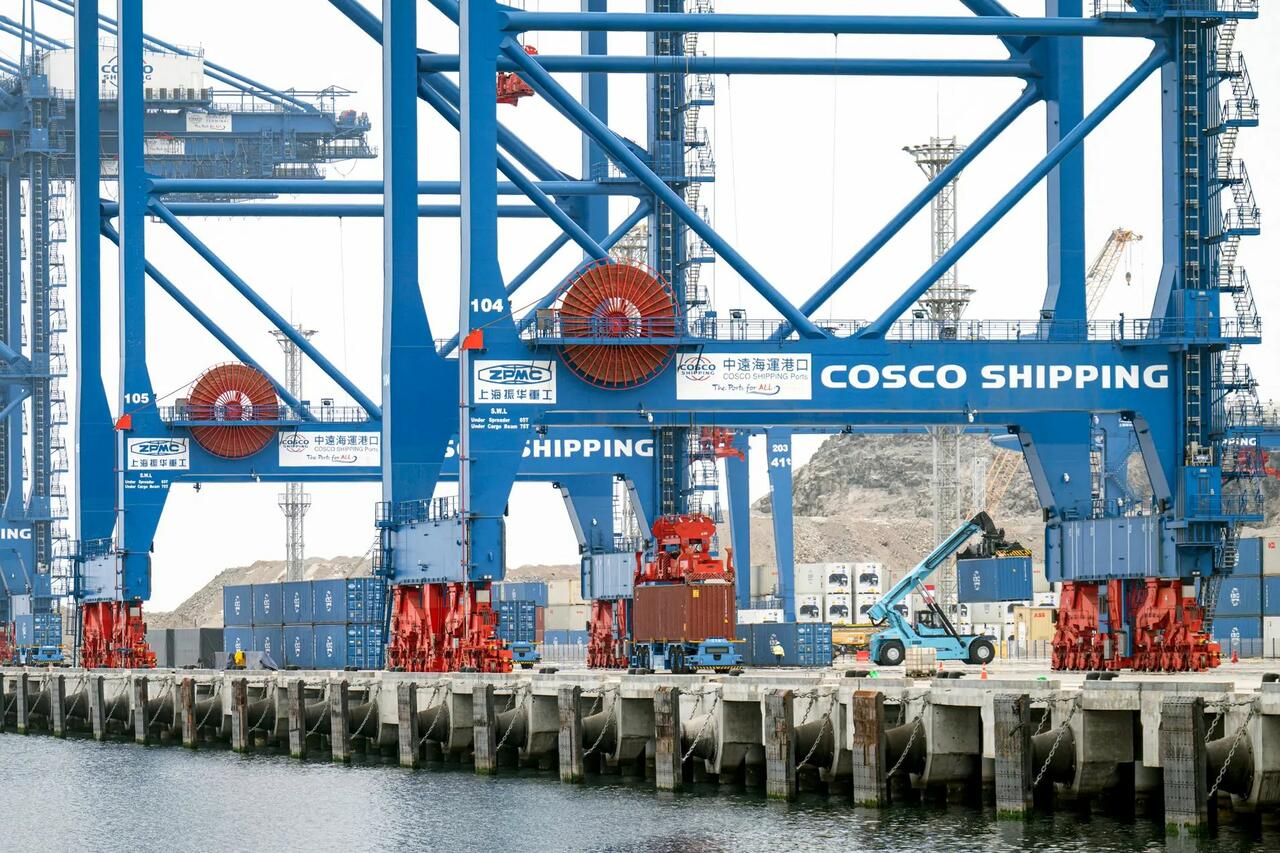
Chancay Port, a $1.3 billion project nearly 50 miles from Lima, is at the top of that list. The deepwater port, covering about 445 acres of Peruvian territory, is the primary Chinese logistics hub on the Pacific side of Latin America. Its strategic positioning directly links South America to China, cutting shipping time by nearly half while facilitating Beijing’s access to minerals critical to its industrial demand.
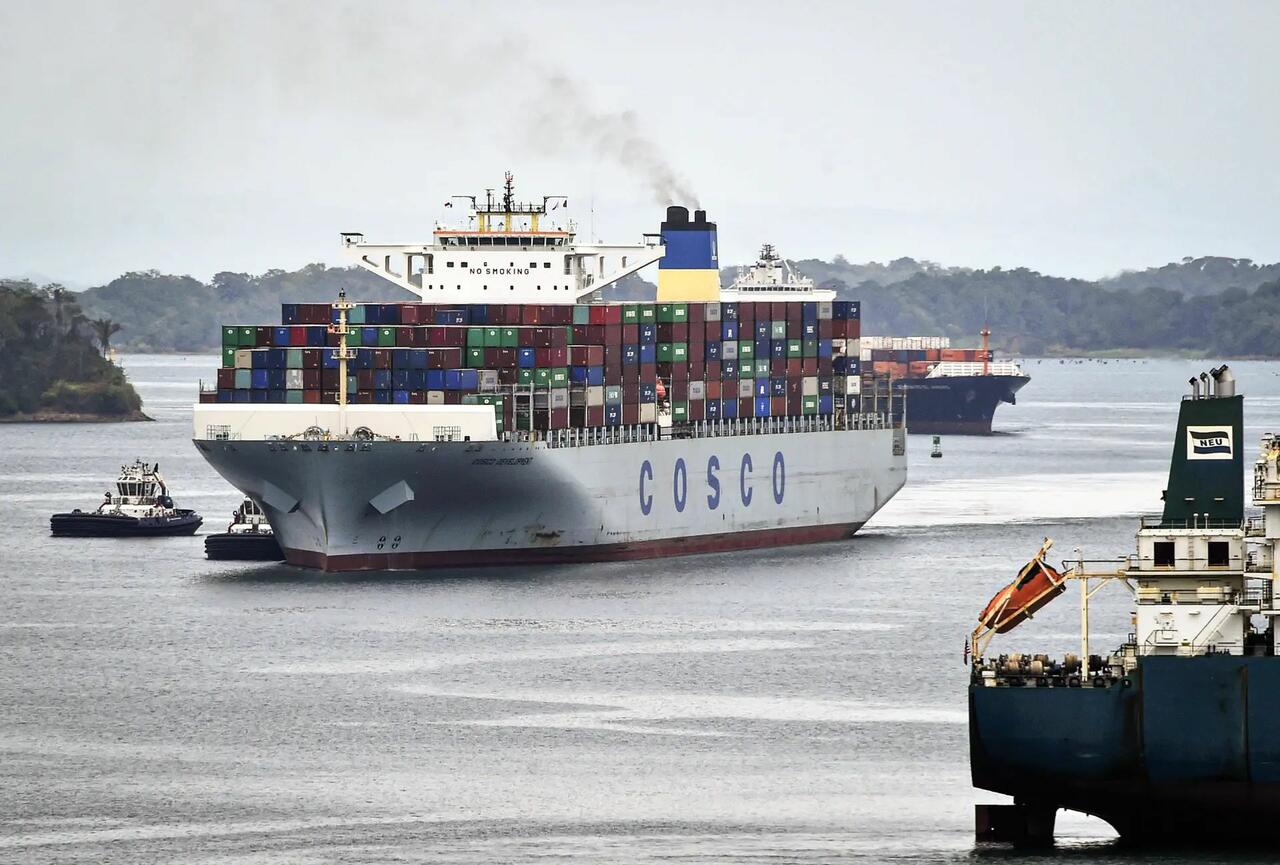
Chinese shipping giant COSCO has 30 years of exclusive operating rights to the port. The Peruvian port authority blamed this on an “administrative error” in 2024. But its bid to void the terms quickly fizzled out; the country’s congress approved changes that legalized the COSCO deal.
In a further win for COSCO, a Peruvian court on Jan. 29 restricted state oversight of the terminal’s operations. The United States warned that Peru could lose sovereignty of “critical infrastructure in its own territory” to “predatory Chinese owners.”
“Let this be a cautionary tale for the region and the world: cheap Chinese money costs sovereignty,” the State Department’s Bureau of Western Hemisphere Affairs wrote in a February statement.
“Predatory” is also what Ellis calls development projects such as Chancay, one of around 40 ports with Chinese investment in Latin America. Similar Chinese dominance repeats in sectors such as critical mineral extraction, logistics, and renewable energy.
A common pattern here, according to Ellis, is to first secure market access in strategic sectors, then control the supply chain.
“If you want access to the cheapest, fastest route, you need to cooperate with the Chinese,” Ellis said. “It gives them leverage.”
Then little by little, he said, they can push other shipping alliances out of business and capture the most important trans-Pacific routes for themselves.
As a state-owned enterprise, COSCO has worked closely with the People’s Liberation Army (PLA), providing logistical support in both Lebanon and Yemen in the 2010s.
In the event of a military crisis—say a conflict with the United States in the Indo-Pacific—COSCO’s officials would “use their exclusive control over that port in any way they could to resupply PLA warships,” said Ellis.
The Epoch Times has contacted COSCO for comment.
A Broad Fishing Net
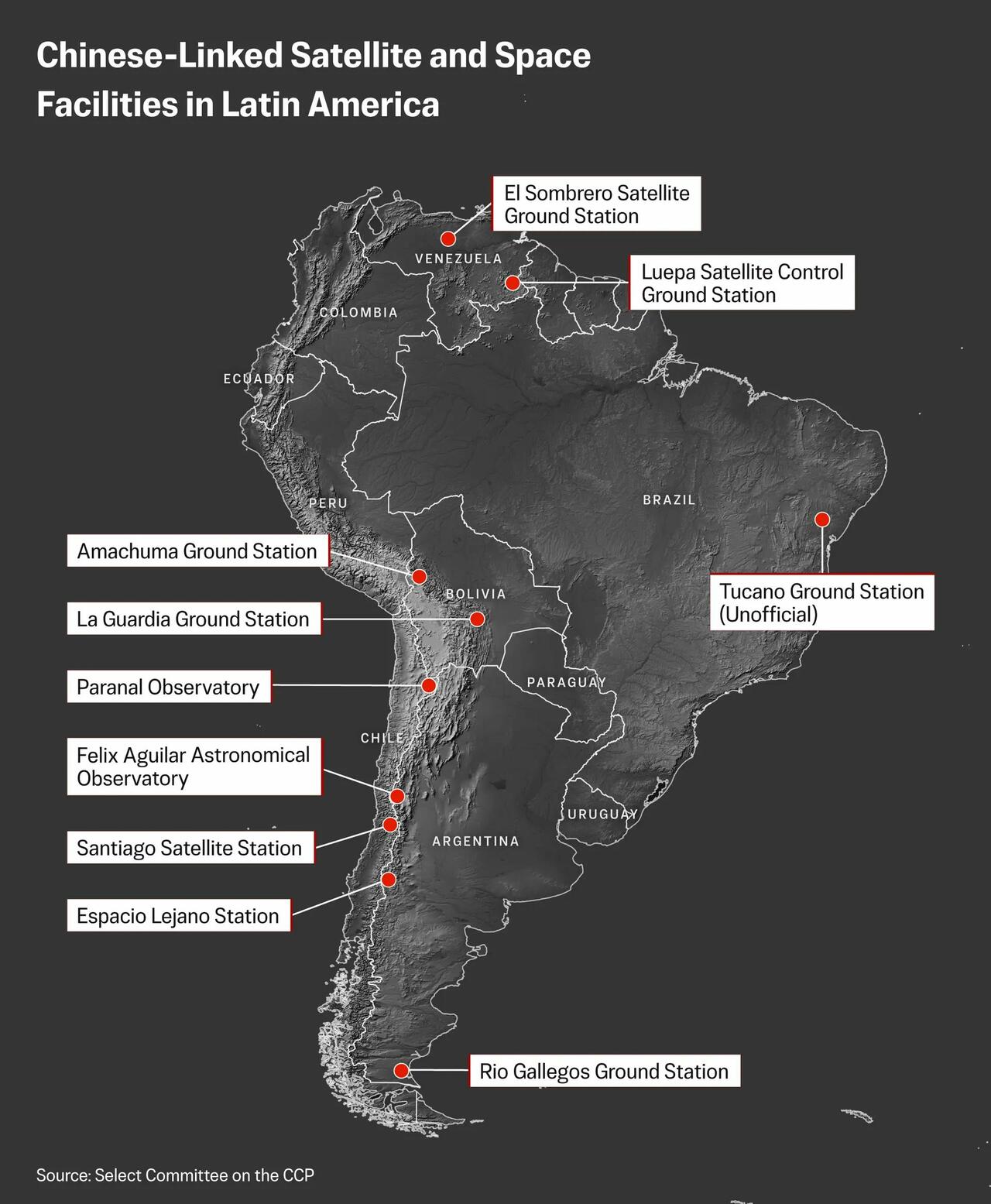
In the heart of Argentina’s Patagonian desert, behind an eight-foot barbed-wire fence, a Chinese entity subordinate to the PLA’s strategic support force runs a seclusive space station. Access to outsiders is by appointment only.
Within roughly 100 miles south of the Florida shore, four strategically located Cuban sites alleged to have ties with China hold antennas and other gear that can collect intelligence on the United States, according to satellite imagery analysis. Of them, at least one underwent new upgrades in 2025 that could significantly enhance its surveillance capabilities, the Center for Strategic and International Studies said.
Covert intelligence gathering and dual-use facilities are far from the sole avenues for China in building an edge. More prominent—and apparently successful—are the regime’s broad overtures to foster ties on a personal level.
China’s senior military leaders have visited the region hundreds of times in the past two decades, according to the U.S.-China Economic and Security Review Commission. Concurrent with these activities were a stream of military exchanges, joint drills, and arms sales.
Illustration by The Epoch Times
Beijing also heaped on incentives, offering Latin American military officers free training, business-class travel, and five-star hotel stays in China, the RAND think tank wrote in a 2022 Pentagon-sponsored research.
Through a state-directed program called “Bridge of the Future,” Beijing brought more than 1,000 Latin political dignitaries and “young leaders” on China trips, Chinese government records show.
Wang Yi, Chinese foreign minister, said in May 2025 that Beijing intended to invite 300 Latin American delegates in each of the following three years.
And such efforts have paid off.
A Honduran congressional staffer, during a 2023 trip to a Party “red tourism” village, gushed to Chinese state media about China’s poverty alleviation campaign, saying the regime had created a “miracle in human history.”
Other testimonials from Latin American officials abound, with an Argentinian colonel praising the Belt and Road Initiative and a major general crediting the regime’s COVID-19 control measures with “buying the West time.”
For a clue as to how much the regime values these programs, look no further than the Chinese white paper that dovetailed the U.S. National Security Strategy. Reading the document, Ellis said it amazed him “how many different programs there are for people at all levels.”
“The Chinese cast their fishing nets very broadly,” he said.
Read the rest here…
Tyler Durden
Mon, 03/02/2026 – 18:25
https://www.zerohedge.com/geopolitical/mapping-chinas-influence-latin-america

Chicago aiming for a repeat as its named a finalist to host the 2028 Democratic National Convention
The Democratic National Committee said Monday that Chicago, which played home to the party’s 2024 presidential nominating convention, is a finalist to host the Aug. 7-10, 2028, event along with Atlanta, Boston, Denver and Philadelphia.
Earlier this year, the Chicago Bid Committee submitted a response to the DNC’s request for proposals to host the 2028 event, and last month, the Chicago group met with a DNC team to answer questions. Chicago and the other finalist cities will now get a visit from the party’s national leadership this spring.
“With our extensive track-record of safely and successfully hosting large-scale events, our vibrant and diverse culture, and our status as a world-class destination — we’re confident that Chicago is best positioned to put on a convention that matches the enthusiasm, success, and energy of the 2024 DNC,” the city’s bid committee said in a statement.
“The team that brought Democrats the best political convention is ready to do it again,” the statement said.
DNC leadership and representatives of the party’s Technical Advisory Group will visit each of the finalists to assess the logistical and operational components of each city’s bid.
In addition, the party said the visits and issues in the site selection process include forging a strong partnership between the DNC and the host city, including its community, political and business leaders, a commitment to selecting a city that shares “Democratic values,” and the ability to utilize “new and innovative approaches” to meet the challenges and opportunities of hosting such an event.
“The DNC is proud to be moving forward with our 2028 Democratic National Convention plans, another critical step toward retaking the White House and finally putting an end to Republicans’ betrayal of working families,” DNC Chair Ken Martin said in a statement. “We look forward to celebrating our future nominees on the national stage and highlighting Democrats’ commitment to building a better, safer, and more affordable future for our country.”
With their announcement, Democrats ruled out the prospect of holding a midterm planning convention later this year, something Republican President Donald Trump has embraced in an effort to give the GOP attention as it seeks to maintain its majorities in the U.S. House and Senate.
In addition to submitting a bid for the 2028 Democratic convention, the city also submitted one for the 2032 event.
Chicago was chosen by the DNC over Atlanta and New York to host the 2024 event, providing a major post-pandemic boost to the city’s economy and prestige. With a Democratic surge in Georgia, Atlanta is once again viewed as a major contender to host the 2028 convention.
The city’s bid committee said returning a convention to Chicago would build on the 2024 event, which they called “the most successful political convention in history.”
The 2024 Democratic National Convention generated $371.4 million in economic impact — the most in convention history, the city’s bid committee said. The Chicago 2024 Host Committee said it invested more than $3 million back into the city, supporting more than 50 unique organizations and philanthropic causes aligned with its values and mission.
https://www.chicagotribune.com/2026/03/02/chicago-dnc-finalist-for-2028/
La Grange purchases parking lots in effort to boost village’s West End
La Grange officials took a step toward potentially easing the village’s parking crunch after purchasing several properties near FNCB Bank and Trust, 620 W. Burlington Ave.
The three properties, 710-712 Burlington, 20-22 S. Stone Ave, and 15 S. Brainard Ave., will cost the Village $915,160, be paid for from funds in the Parking Fund, and likely be used as public parking, officials said.
“Approval of the proposed purchase agreement will advance several village goals,” Trustee Lou Gale said in introducing the ordinance, “including increasing parking inventory in the West End, particularly for area employees.”
Last year, FNBC expanded its parking on the 600 block of Burlington, and decided the business no longer needed off-site parking in the 700 block of Burlington that was formerly used for bank customers and employees.
With the village already owning property adjacent to FNBC, bank representatives inquired if the village would be interested in buying the properties.
Closing on the deal is scheduled for this month. Regular users of the lots can continue using them until June 1.
“It seemed like a very good idea … to figure out how to make the best decisions regarding this very unusual piece of land,” Trustee Beth Augustine said before the vote.
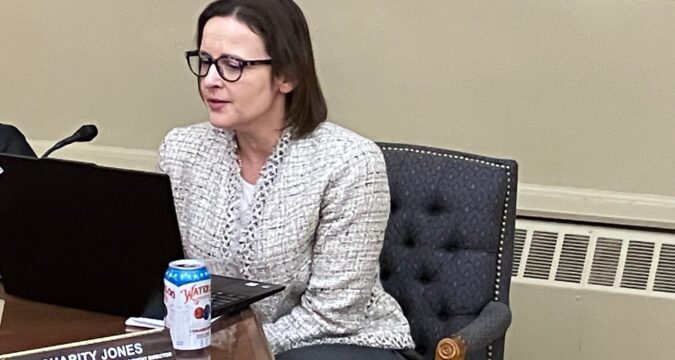
Charity Jones, La Grange’s deputy village manager and community development director, called the village’s existing property in the area a “flag lot.”
“It has a very narrow piece of access off Brainard Avenue and then extends to a larger area mid-block, so it’s very challenging from a site design standpoint to use it for anything.” she said. “In addition there are some other users on the block that are infringing on the village’s parcel that we currently own.”
The purchase of the adjacent lots offers an opportunity for the village to potentially “redesign and make better use of an asset that we’re not currently using.” Jones said.
After the vote, village President Kuchler said the purchase made sense.
“It’s adjacent to property that we already own and provides opportunity for future development,” he said.
The board also took an initial look at the village’s fiscal year 2026-2027 Capital Improvement Plan budget, which will be the subject of a public meeting at 8 a.m. March 7. The March 23 Village Board meeting will include a public hearing on the budget, which is scheduled for approval at the April 13 board meeting.
The next La Grange Village Board meeting will be 7:30 p.m., Monday, March 9, at the La Grange Village Hall, 53 S. La Grange Rd.
Hank Beckman is a freelance reporter for Pioneer Press.
https://www.chicagotribune.com/2026/03/02/lagrange-purchases-west-end-lots/