Category: News
‘Out of money in no time’
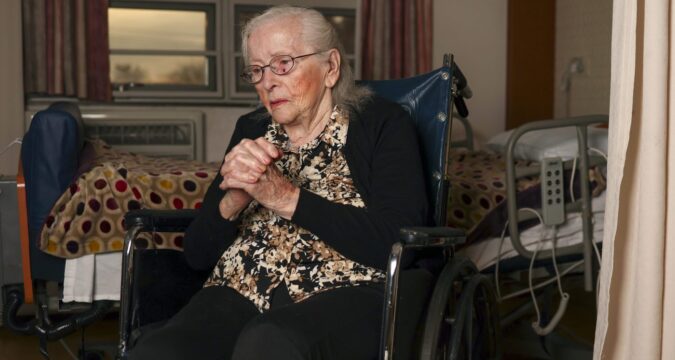
During a wellness check in February 2023, a Cook County sheriff’s deputy discovered 92-year-old Anna Vargas lying face down on the floor near the body of her son, who had diabetes and died of natural causes.
Vargas, still breathing, was rushed to nearby Advocate Lutheran General Hospital in suburban Park Ridge. A physician diagnosed Vargas with severe cognitive impairment due to dementia and concluded she was incapable of making her own decisions.
With no other family to help the nonagenarian navigate what would come next, the hospital filed a petition asking a judge to appoint a guardian to handle her affairs.
It was the start of a very expensive 18 months for Vargas.
The law firm the hospital hired to handle her case and the private care management organization the hospital nominated as her guardian eventually billed her estate for tens of thousands of dollars in fees, on top of the money paid out to her new nursing home. After Vargas’ money started to run out, court records show, they suggested to a judge that a taxpayer-funded public guardian take over her care.
Last Sunday a Tribune investigation revealed that Chicago-area hospitals initiated hundreds of guardianship petitions in an 18-month period, a step they say is intended to protect patients who have lost the ability to make decisions and who have no friends or family willing and able to take charge. But the Tribune found the arrangement sometimes stripped families of control over a loved one and, in many cases, facilitated the patient’s discharge to a subpar nursing home.
The vast majority of these petitions involved people with little money who were placed with the Office of State Guardian at the hospitals’ own expense. But in cases where the patient had assets, a pattern emerged: A law firm that hospitals commonly hire in such cases — Monahan Law Group — named a particular organization — Midwest Care Management — as the hospital’s preferred guardian. In many cases, both parties then benefited from providing months or years of services funded by the former patient.
In interviews with the Tribune, some friends of people under Midwest’s care said they were upset or concerned about what they viewed as over-the-top fees and other choices that quickly depleted the person’s precious life savings. Former patients who sought to fight their guardianship in court paid an extra-steep price, funding not only their own lawyer but also those representing the other side, their guardian.
Some probate attorneys also expressed unease with the arrangement to the Tribune, noting that the Chicago area already has a system in place for exactly this type of situation: the counties’ public guardians, who typically provide both care and legal services at lower rates than the private firms. (Adults with $25,000 or less in financial assets are commonly referred to the statewide Office of State Guardian.)
In its review of more than 360 hospital guardianship petitions filed in the six-county Chicago area in 2023 and the first half of 2024, the Tribune found Monahan Law Group had a near-monopoly, with hospitals hiring it to handle more than 80%. Of these, the Tribune was able to identify only one case where the hospital’s petition nominated a county public guardian at the outset.
In 45 other cases where court records indicated patients owned property or had other assets, the Tribune found that the hospitals and their lawyers handed nearly all of them to Midwest Care Management, either at the outset of the case or later.
In the 18-month period the Tribune reviewed, 29 Chicago-area hospitals represented by Monahan Law nominated Midwest to the court at the beginning of a guardianship case. No hospital originally chose any other private care organization during that time, court records show.
Cook County Public Guardian Charles Golbert, whose office currently oversees the cases of more than 600 adults under guardianship, said he has long been concerned about what he called the injection of a “profit motive” into guardianship services. As the number of such corporations has risen over the last 15 years, he said, his office has seen its referrals from hospitals dwindle.
“You don’t need a Ph.D. in causation to figure out what’s happening,” Golbert said. “All you have to do is follow the money.”
Cook County Public Guardian Charles Golbert, shown in his Loop office this month, said he is concerned about the injection of a “profit motive” into guardianship services. (Eileen T. Meslar/Chicago Tribune)
The heads of Monahan Law Group and Midwest Care Management, both of whom declined interview requests, said in separate written statements that their frequent work on these cases is a testament to the high quality of the services they provide on short notice. They did not provide comments about Vargas’ case or any other the Tribune described, though Midwest noted they involve time-consuming, complex tasks such as finding suitable housing and investigating the person’s assets. Both emphasized that a judge must approve each guardianship nomination as well as reviewing and approving their separate fee requests.
The statement from Joseph Monahan, founding partner of Monahan Law Group, described his team as “subject matter experts in guardianship matters. We have been doing the work for decades and are proud of the formidable reputation we have earned.”
Midwest Care Management’s owner and managing director, Ben Topp, wrote in his statement: “We have put in the work to become experts in the field, and often the preferred provider when the need for a private guardian is identified. We are incredibly proud of the work we do and the confidence that medical and legal professionals have in our team.” Topp’s organization is registered as a not-for-profit; he also operates a similarly named corporation.
Both statements said the two organizations do not have a financial relationship. Monahan’s statement also said it is the hospitals, not his law firm, that choose to nominate Midwest as guardian.
The Tribune asked several hospitals to describe why they nominated Midwest, a private guardianship organization, instead of the Chicago-area county guardians in cases where patients have financial assets.
The University of Chicago Medical Center, which the Tribune found to have filed the most guardianship petitions overall during the 18-month period, said in a written statement that it chooses private guardians in only a small number of cases, where “patients have particularly complex needs mandating the extra support a private guardian can provide.” A Northwestern Memorial Hospital spokesperson sent a statement saying the hospital system has worked with Monahan and Midwest for many years, values their work and has “found their bills to be fair and reasonable,” noting that Northwestern pays those bills in most cases because it is unusual for patients who need guardians to have assets.
Midwest Care Management has space in this building in Chicago’s Rogers Park neighborhood. (Eileen T. Meslar/Chicago Tribune)
Topp’s written responses also said hospitals often choose Midwest because they “need immediate engagement.” By contrast, Golbert told the Tribune his office requires a meeting with the patient before taking on a guardianship to ensure his staff agrees it is warranted, a step that may delay discharge from the hospital. He said little research exists comparing outcomes of private versus public guardianships and characterized assertions that private guardians are better suited to the emergency nature of such cases as “self-serving nonsense.”
Cook County Circuit Judge Daniel Malone, who presides over the probate division, said judges weigh a number of factors in determining whether to approve fee requests, including the size of the disabled adult’s estate and skill level needed for the work performed. Court records show judges do not always approve fee requests in full.
Last year, and again in January, a state representative concerned by the steep fees in a 2022 DuPage County private guardianship case introduced a bill requiring the appointment of a county public guardian or the Office of State Guardian in cases initiated by hospitals, nursing homes and similar institutions.
The bills failed amid strong opposition from Midwest Care Management, Monahan Law, hospitals and others.
Bills and more bills
When Midwest Care Management was appointed as Vargas’ temporary guardian in February 2023, she had about $122,000 in the bank, court records show.
Within a year, records show, the organization had sold her Nissan Altima and her home in unincorporated Des Plaines — netting about $145,000 — and threw away or auctioned off most of her other belongings.
Nursing homes are expensive, regardless of who is serving as guardian, and the Glenview facility where Vargas was discharged — which had an above average star rating from the Centers for Medicare and Medicaid Services — cost her nearly $9,000 a month in room and board.
Vargas was also responsible for paying the legal fees Monahan Law Group accrued while representing the hospital and Midwest Care Management, which as Vargas’ guardian billed $130 an hour for tasks ranging from communicating with nurses to collecting mail to ordering shoes on Amazon. By contrast, the Cook County public guardian bills at $95 an hour for similar services.
In May 2024, with Vargas’ savings rapidly vanishing, Midwest Care Management recommended to a judge that “given the value of the estate” the Cook County public guardian would be a better fit going forward, records show. Golbert’s office took over in early June of that year.
Anna Vargas paid Midwest Care Management and Monahan Law Group nearly $49,000 in total hourly fees and costs before being transferred to the care of the Cook County public guardian. (Eileen T. Meslar/Chicago Tribune)
Monahan Law Group then filed its own fee petition at an hourly rate up to $325, compared with $135 for the attorneys on staff with the public guardian. In total, Midwest and the law firm rang up nearly $49,000 in total hourly fees and costs over roughly 18 months. By August of this year, when the county guardian filed its first fee petition for Vargas, she had less than $14,000 left.
A spokesperson for Advocate Lutheran General, which initiated the guardianship petition for Vargas, did not answer the Tribune’s written questions but sent a statement saying: “We sincerely regret that situations like this may arise and will continue to review our internal processes to ensure guardianship cases are handled with the utmost care and diligence.”
To date, a Tribune analysis found Monahan Law Group and Midwest Care Management have asked the courts to approve a combined $1.2 million for hospital-initiated guardianship petitions launched in 2023 and early 2024, with much of the billing still ongoing. The fee requests varied from as little as about $5,000 for a disabled adult who ended up having limited financial assets to a combined more than $84,000 for about 18 months of services on a different case.
Candace Hilderbrand, a childhood friend of 70-year-old Lynn Newton, said Newton’s money would already be gone had she not stepped in to take over the private guardianship.
Newton, who had a decades-long career in the business sector, including a stint at the Tribune, wound up under guardianship thanks to a petition from Northwestern Medicine Lake Forest Hospital filed by Monahan Law Group. That petition nominated Midwest Care Management to become her guardian.
When Hilderbrand visited Newton at a nursing home following the hospitalization, she was worried, she told the Tribune. She said Newton had no possessions and was paying nearly $10,000 per month for a shared bedroom and bathroom. Because of her dementia, Newton likely didn’t understand her situation, Hilderbrand said.
Candace Hilderbrand, right, took over guardianship of her childhood friend Lynn Newton, 70, after becoming dissatisfied with how a private guardian and its lawyers were spending Newton’s money. (Candace Hilderbrand)
It took almost 10 months before Hilderbrand was able to obtain guardianship of both Newton’s person and estate. As the case was unfolding, she petitioned to move Newton to a more affordable nursing home closer to where she lives in Indiana.
Along the way, Hilderbrand filed an objection in probate court disputing some of the fees the lawyers and private guardian requested. For example, court records show Midwest continued to pay for a storage unit in Indiana for months after the organization’s employees had decided the unit held nothing of value. Records show Midwest also knowingly left Newton’s Subaru in an impound lot for two months, where it racked up nearly $4,500 in fees. Midwest reported to the court earlier that year it did not have the money needed to retrieve the car for those months. Eventually, the car was sold at a loss to Newton’s estate, records show.
After Hilderbrand filed an objection contesting Monahan Law Group’s request for nearly $39,000 for its work, the firm agreed to reduce its fees and costs to $25,000.
“I could see where a lot of people would say, ‘I can’t put any more time into this. You guys just do what you’re going to do with her and let me know where she is,’” Hilderbrand said. “And I think they bank on that.”
In his written statement, Midwest’s Topp noted the organization “reduced or deferred” its fees in several of the cases the Tribune described and estimated about 10% of its services are delivered pro bono.
“Everything we do is documented, itemized, and transparent,” Topp’s statement said. “We will always present the time and effort required to help the person, understanding that we may need to respectfully and collaboratively work to reduce fees in some situations.”
Monahan said in his written statement that any fee reduction “is not a function of the quality of the work, but rather the size of the estate and the ongoing needs of the individual.”
Standing up for a neighbor
Jack Oestreich couldn’t stand what was happening to his neighbor, Sylvia Del Vecchio.
Del Vecchio had lived in her ranch-style Oak Brook house for decades as she grew a successful business, cared for her elderly mother and raised generations of rescue dogs — all on her own. Del Vecchio, who never married and did not have local relatives, placed a high value on her independence and wrote in legal documents that she wanted to remain in her home as long as possible.
Now she had no control over her own life, having been placed under temporary private guardianship at 86 after a hospitalization at Endeavor Health Linden Oaks Hospital in Naperville. And to Oestreich, Midwest Care Management was “squandering” her life savings so fast, it wouldn’t be long before she would end up “penniless in a nursing home.”
Jack Oestreich, right, helps his neighbor Sylvia Del Vecchio stand up after dinner at her Oak Brook home in October. Oestreich is now her legal guardian. (Eileen T. Meslar/Chicago Tribune)
When Del Vecchio returned to her house in August 2023 after a short stint in an assisted living facility, Midwest hired a home health care company to staff workers for two 12-hour shifts, seven days a week. Oestreich, who held Del Vecchio’s power of attorney for health care, said he complained about the steep price tag to Midwest and was able to switch her to an option that reduced the cost substantially: a live-in health care worker.
In another example of what Oestreich described as wasteful spending, court records show Midwest charged Del Vecchio’s estate about $850 for pest control after a caregiver spotted mice. Oestreich told the Tribune setting traps would have handled the issue for far less.
He and another neighbor, Frank Spizzirri, a retired Illinois State Police commander, noted to the Tribune that Midwest charged for every small task — at a rate of $140 an hour — and yet failed to pay some bills. Court records show Del Vecchio’s caregivers arranged with Midwest to get her electricity bill paid after her power was shut off.
“It was really obvious to us right away that things could be done a lot more affordably and efficiently,” said Oestreich, a retired software consultant with a degree in accounting. “I knew we needed to fight to take over guardianship or Sylvia was going to be out of money in no time.”
In all, Midwest Care Management received more than $22,000 for about five months of work on Del Vecchio’s case, court records show. A fee petition from Monahan Law Group, which represented the hospital, sought about $11,000 from her estate for its services and costs over seven months. After Oestreich balked in court at some of the law firm’s fees, a judge ultimately awarded $10,000.
Frank Spizzirri smiles at Sylvia Del Vecchio and home caregiver Josefa “Josie” Chmura at a meal in October. Spizzirri, a neighbor, has helped look out for Del Vecchio as she grew older. (Eileen T. Meslar/Chicago Tribune)
Hospitals in the collar counties filed far fewer guardianship petitions than those in Cook County during the period the Tribune examined. In Del Vecchio’s case, the hospital nominated Midwest instead of DuPage County Public Guardian Matt McQuaid, whose fees are lower. “My experience is how do I stretch every dollar?” he said in an interview.
Oestreich acknowledged to the Tribune that he initially declined to step in as Del Vecchio’s guardian. But after growing incensed over the way her money was managed, he said he hired an attorney to intervene in the guardianship case and took over as her full guardian in October 2023.
To help reduce Del Vecchio’s expenses, Oestreich said in an interview that he stays with her on overnight weekend shifts. Spizzirri pitches in with tasks as well. Still, they said, Del Vecchio likely has about a half-year of savings left before she can no longer afford to stay in her home.
As her neighbors seek a solution, they said Del Vecchio, who turns 89 in March, seems content for now, watching “Lassie” reruns on television and soaking in the warmth of her sunroom, with her beloved dog Rumor nearby.
Golbert, the Cook County public guardian, told the Tribune his office’s goal is to keep people in their homes as long as possible. To that end, in addition to a “substantially lower” fee structure, he said they routinely delay collection of court-approved guardianship fees to postpone the day that poverty forces the person into an institution.
Sylvia Del Vecchio pets her dog, Rumor, in October at the Oak Brook home where she has lived for decades. (Eileen T. Meslar/Chicago Tribune)
“We want to keep all of our people in the least-restrictive setting possible and the setting that will maximize their independence, and their happiness, and their well-being,” Golbert said.
“These private guardianship corporations obviously are not in a position to defer collection of fees for years and years, or even waive fees, so that people can get the best care they need or to be able to stay in their homes and community.”
Monahan’s statement acknowledged its fees “can be higher than the publicly subsidized” Cook County public guardian. Both he and Topp, in statements, said they in some cases work to reduce fees, all of which are subject to a court’s approval.
A costly fight
Sometimes, the former hospital patient is aware enough to object to a guardianship or the actions of a private guardian. It is a costly battle, as the person must fund both sides of the argument. They pay for their own lawyer, and they pay for the lawyer representing the guardian.
A legal showdown over one former patient’s money began in 2024 when she objected to paying nearly $99,000 for about 12 months in the nursing home where she landed after being treated for coronary artery disease at Ascension St. Joseph in Chicago.
Her guardianship had started in 2023 after the hospital, through its Monahan Law Group attorneys, nominated Midwest Care Management to make the woman’s decisions and discharged her to the Warren Barr Lincoln Park nursing home in Chicago. There, her health improved over time.
Through an attorney she hired on her own, she argued in court records that the guardian’s request to pay the balance owed to the home “implicitly asks the court to ratify” Midwest’s decision to keep her at a nursing facility with a level of care she did not need or want and could not reasonably afford.
The woman also paid for an independent medical examination that concluded the facility was not the least restrictive environment possible for her. Yet the private guardian didn’t attempt to move her to a less expensive and more appropriate facility until she retained her own legal counsel, court records state.
In response to a motion the woman filed to terminate the temporary guardianship, Midwest Care Management, again represented by Monahan Law Group, contended they were caring advocates for the woman when no one else in her life was willing to accept the appointment and they had “listened to her concerns and wishes,” court records show.
In its filing, the care organization said the former patient was “inconsistent” regarding her desired living arrangements and whether she should remain under guardianship.
Ultimately, the parties reached a settlement where the woman agreed to appoint a person to hold her power of attorney and not to bring other claims against Ascension St. Joseph or Midwest in exchange for the hospital withdrawing the guardianship petition. Under the settlement, the law firm and Midwest both agreed to reduce their fees by about 40%, to a combined $22,000.
Through her attorney, the former patient declined to comment.
Wade Jarrell, a chemistry professor who was hospitalized at Northwestern Medicine Lake Forest Hospital in summer 2023, wound up on the hook for nearly $75,000 after losing his fight against guardianship.
A doctor at the hospital had diagnosed Jarrell, then 54, with significant memory and cognitive impairment likely caused by a chronic neurological disorder, court documents show.
Jarrell had a home in the Lake County village of Green Oaks and other financial resources, so the hospital through its attorneys from Monahan Law Group helped install Midwest Care Management as his temporary guardian.
Jarrell’s objection to the guardianship petition sent his costs soaring. After a Lake County court hearing a year later, in which a judge cited a doctor’s medical diagnosis in determining that he did need full guardianship, Monahan Law Group sought about $51,000 from Jarrell’s estate for about 14 months of work. The firm’s rate of $300 an hour in the case is similar to what the Lake County public guardian currently charges for legal work. Monahan’s payment was later reduced to less than $32,500. Midwest received a reduced amount of $15,000, according to the judge’s order.
The rest of the nearly $75,000 went to pay an attorney the court assigned to represent Jarrell’s wishes and the guardian ad litem who advised the judge.
“It’s sad because with all that money (in fees) he could have at least had better care for a few years,” a former neighbor of Jarrell’s, Timothy Mahoney, told the Tribune.
Jarrell has lived at a South Elgin nursing home since late 2023, when he was moved from a previous facility. His current nursing home has an average one-star rating from the Centers for Medicare and Medicaid Services, the lowest possible.
Midwest submitted a written plan to the court to continue caring for Jarrell as his full guardian, but the judge instead appointed another private firm, court records show. That firm managed the November 2024 sale of Jarrell’s home but has yet to bill his estate.
Mahoney, who testified during the full guardianship hearing, said in a Tribune interview that the outside of Jarrell’s home appeared unkempt — with mail piling up and an overgrown lawn — while Midwest was in charge of the property.
“We never saw them there,” said Mahoney, a retired firefighter.
Without commenting on a specific case, Topp praised his staff in his statement, saying: “Families, hospitals, and attorneys rely on us because we are accessible, experienced, and principled.”
Mahoney said he still checks in on Jarrell, who does not have local family.
“I think now he’s just a forgotten soul,” said Mahoney.
‘Pretty financially lucrative’
In 2022, UChicago Medicine AdventHealth GlenOaks Hospital asked a DuPage County judge to place a 75-year-old Bloomingdale woman with severe dementia under the care of a guardian. The hospital, through its Monahan Law Group attorneys, nominated Midwest Care Management.
Court records show that Midwest approved her discharge from the hospital to a nursing home in Chicago’s West Ridge neighborhood on the Far North Side — about 20 miles from her west suburban community. Midwest said in court records that because of her financial circumstances it was the only place that would accept her when the hospital noted she “was at risk of her insurance no longer providing coverage for her stay due to her approaching the 30 day mark.”
Then came the bills: $19,600 requested from Monahan Law Group for 12 months of work on the case and $27,000 from Midwest for about 10 months of work.
Terra Costa Howard, an attorney who was serving as guardian ad litem on the case — investigating and reporting to the judge what was in the woman’s best interest — raised concerns in a court filing. Both of these organizations knew the woman had limited funds, she wrote, and Costa Howard disagreed that their fees benefited her.
Monahan Law and Midwest Care ultimately withdrew their requests for fees. But Costa Howard, who was also a Democratic state representative, had apparently seen enough. In both 2024 and 2025, she proposed bills that would require the appointment of a state or county public guardian when hospitals, nursing homes or similar institutions file adult guardianship petitions.
As a state representative, Terra Costa Howard, left, unsuccessfully proposed legislation that would require the appointment of a state or county public guardian when hospitals and similar institutions file adult guardianship petitions. She is now a judge. (Brian Cassella/Chicago Tribune)
The Bloomingdale woman’s case, she told her fellow legislators at an April 2024 committee hearing, “demonstrated a systemic issue with a business model that preys on, I would argue, our most vulnerable.”
At the hearing, Midwest Care Management’s Topp came to the microphone to defend his organization, calling the legislation “an unnecessary, misguided change” that would delay medical interventions and stress the system.
In response to questions from another legislator, Topp said Midwest Care Management and Monahan Law Group had no financial relationship.
“OK, so there is no relation in any capacity between whatever you do for a living and they do for a living? No money is transacting at all?” state Rep. Curtis Tarver II, D-Chicago, asked during the hearing.
“Correct,” Topp said.
After further pressing, with Costa Howard pointing out the fees that had been requested in the Bloomingdale woman’s case, Tarver said: “OK, so there is some financial relationship.
“You all are not just holding hands singing in the rain; that’s not the relationship,” Tarver said, adding later: “I’m not trying to be funny, but it kind of is comical because we’re dancing around the fact that there is some kind of relationship here.”
Topp told legislators it would reduce “choice” if private guardianship organizations were cut out of hospital-initiated guardianships. Monahan told the Tribune that he opposed the legislation because it would result in “limiting choice based solely on the petitioner and removing judicial discretion.”
When the Tribune asked Topp to comment, noting that the patients involved do not have a choice in the selection, he wrote that he believes it is essential that the petitioner — namely, the hospital — be able to “assess all available options.”
A number of hospitals, as well as the Illinois Health and Hospital Association, also publicly expressed opposition to the bills.
Hospital association spokesperson Paris Ervin said in an email to the Tribune that the changes could cause “delays in patient access to care” and “would have led to stays in hospitals beyond medical necessity.” Ervin said hospitals need assurances that courts can quickly appoint guardians to make decisions that support patient care and appropriate discharge planning, partly to ensure “availability of care and space for other vulnerable patients.”
The Tribune found Midwest Care Management has accepted hospitals’ guardianship nominations without ever meeting the patient, which differs from the stated practices of both McQuaid and Golbert.
“Assessments, evaluations, diagnoses, reports and the like are important, but are not a substitute for in-person interaction with the individual,” Golbert told the Tribune.
Court records show that when Midwest Care Management accepted an 88-year-old retired teacher as a client in February 2023, they spent time reading her file, researching the properties she owned and building her estate profile. But a worker from Midwest didn’t visit the woman until the day the organization was appointed as her temporary guardian.
By then, the woman had already been discharged from the University of Chicago Medical Center to a “not very clean” room at a nursing home where the case worker “observed (a) mouse run across the floor,” records show.
For the next 18 months, Midwest Care billed $33,000 in costs and fees. Monahan Law Group separately requested $51,000 in hourly fees and costs from the woman’s estate but was awarded a reduced amount of $44,000.
At the 2024 hearing, the committee’s chair, state Rep. Jennifer Gong-Gershowitz, said she was concerned that much of the bill’s opposition seemed to stem from “a pretty financially lucrative arrangement.”
“I think that we’ve got to have some guardrails here around this process which seems to be, in certain instances that are observed by practitioners in this space, not to necessarily be in the best financial interests of the clients that are being served,” Gong-Gershowitz said.
Despite concern voiced by the legislators, that bill and a nearly identical one brought in January 2025 failed to pass through the House. Costa Howard, who was recently named a DuPage County judge, declined further comment this month.
For the hospitals, Monahan Law Group and Midwest Care Management, business has continued as usual.
Chicago Tribune’s Hope Moses contributed.
ehoerner@chicagotribune.com
cmgutowski@chicagotribune.com
lschencker@chicagotribune.com
https://www.chicagotribune.com/2025/11/30/hospital-guardianship-private-chicago-illinois/

Give thanks for all that trees give us
When we list the things we have to be thankful for — family, friends, home, traditions, community, hope, nature — let’s include trees.
“Trees give us so much,” said Spencer Campbell, Plant Clinic manager at The Morton Arboretum in Lisle.
Some of what they have to give is easy to see on a walk in the woods or through the neighborhood: The beauty of their blooms in spring, their serene green shade in summer, their lacy bare branches in winter.
Many of our holiday flavors are gifts of trees. Apples are obvious, but trees also give us cinnamon from tree bark; cloves from tree buds; nutmeg from tree fruits; and nuts, including walnuts, almonds and pecans.
And that’s only what we can see and taste. “Science has proven that there’s also a lot more value to trees that’s not so obvious,” Campbell said.
Trees and other plants provide the oxygen in the air we breathe. Trees capture fine particles of pollution in their leaves and bark. Their wood is a storehouse of carbon, keeping it out of the atmosphere.
Some of the value of trees can be measured in money. The presence of trees in a neighborhood and on a property increases home values. In the right place, a shade tree that blocks the sun or an evergreen that blocks the wind can save energy in heating and cooling the house, reducing utility bills. Shoppers spend more in retail areas with trees.
Trees make our lives better in many other ways that have been proven by research. Communities with trees, and a green landscape in general, are better places to live, with lower crimes rates, more children playing outside and better connections between neighbors.
Being around trees has been shown to lower blood pressure; increase physical activity; reduce depression, anxiety and stress; and help hospital patients heal faster. Mortality is lower among people who live near green spaces.
The presence of trees is especially powerful for children. Where there are trees, they play outside more and learn better in the classroom. Walking or playing in a tree-filled outdoor space has been shown to reduce children’s symptoms of attention deficit disorder.
“We have a deep, ancient response to trees because they’ve always been part of the human experience,” Campbell said. “They connect us to nature.”
At this busy time of year, give yourself some time with trees. Swish through some fallen leaves on a trail. Now that you can see the shapes of their branches, notice how varied the trees are on your block. Imagine what your life would be like without them, and maybe give a little thanks.
For tree and plant advice, contact the Plant Clinic at The Morton Arboretum (630-719-2424,
mortonarb.org/plant-clinic, or plantclinic@mortonarb.org). Beth Botts is a staff writer at the Arboretum.
https://www.chicagotribune.com/2025/11/30/thanksgiving-trees-fall/

Letters: I’m grateful for those who have stood up to defend our neighbors
In looking back on this year, I find that there’s a great deal to be thankful for.
I’m thankful for the journey of finding out where I truly belong in terms of my job and of serving a greater good. I’m thankful for those who have been a part of my life journey, sharing and just as importantly listening to where I have been and where the adventure has taken me. I’m thankful for my faith and my faith community: The serving and being a part of its life have brought so much.
One of the things that has been such a strong, inspiring and hopeful part of my thankfulness is seeing all of the people who have been a voice for those affected by Operation Midway Blitz. The people on the front lines who have recorded what has occurred. The people who have distributed and blown whistles to provide a warning to those in need. And the people who have protested in front of the Immigration and Customs Enforcement facility in Broadview, often at risk to their own safety.
They are an example of what each of us can do. I’m thankful for the “No Kings” rally, which was strongly run, in Evanston in October. The White House commented that we hate America. We love America — for what it can be. I am proud to be among those who have taken a stand for our people and community.
Thank you to the Tribune for showing who we are and still can be. The history that we are forming will be a very strong part of this year.
— Mandy May, Skokie
I’m not a target
This is my first time telling the Tribune what I’m thankful for. I’m thankful my general appearance hasn’t attracted the attention of the Immigration and Customs Enforcement agents who are detaining people in our area. I’m especially thankful the Border Patrol seems to have moved on.
I’m thankful that I have decent health insurance and don’t have to depend on a capricious and uncaring government that could strip Affordable Care Act benefits without warning. I’m thankful I earn enough not to depend on food assistance that so many are at risk of losing.
I’m thankful not to be a reporter who must stand and be insulted by a liar and convicted felon. I’m thankful the Tribune occasionally reminds people that the climate is being destroyed by us humans. I’m thankful that the midterms are less than a year away and that it’s still possible to wrest back control from this insanity.
— Len Woelfel, Oswego
His term will end
As an American citizen and fervent supporter of democracy, I am very thankful this year for the 22nd Amendment establishing term limits on the presidency, knowing that this nightmare will end in three long years.
— Richard Peters, Bannockburn
My list of ‘nots’
I am thankful for my “nots”: for not living in fear of being captured and treated inhumanely, because I’m not Latino; for not being a victim of gun or domestic violence; for not being hungry and having to stand in long lines for food; for not being cold, poor and homeless; for not being lonely; and for not being dependent on anyone for my daily living.
— Rhonda Campbell, Beecher, Illinois
A recalibration
I’m grateful for people who have exemplified the enduring American values of compromise, principled leadership and free speech. Widespread promotion of these ideals can help repair our communal bonds.
As a Riverwoods trustee, I met the former chair of Lake County’s Southlake Mosquito Abatement District, Kim Stone, who thoughtfully changed her mind about simply dissolving the district. Instead, she worked with the mayors of Riverwoods, Highland Park and other surrounding communities to rapidly annex the Southlake District into Cook County’s larger North Shore Mosquito Abatement District.
This allowed the Lake County Board chair to meet her objective of consolidating units of government, while ensuring efficient, improved and lower-cost services to area residents.
In my involvement in national politics, I’ve met young leaders such as Principles First’s Heath Mayo and elder statesmen such as Our Republican Legacy’s John Danforth, a former U.S. senator.
They are dedicated to reorienting our national political conversation, particularly on the right, around core shared principles (15 for Principles First and five for Our Republican Legacy) that won’t change based on charismatic leaders’ personal whims.
How inspiring it is to see Principles First hosting town halls, building coalitions and supporting candidates who put country over party, without asking anyone to abandon their core beliefs — but simply to prioritize the rule of law and the integrity of our institutions.
How refreshing it is to hear Republicans talk about promoting civic unity, the Constitution, fiscal responsibility, free enterprise and peace through strength.
In my multiyear effort to curb abuse in women’s soccer, I’ve met front office staff as far away as San Diego in professional sports and women who played locally as youths in the Chicago suburbs. They are courageously using their voices and the traditional and alternative justice systems to fight for transparency and accountability and to make soccer safer for all.
It is never easy to put others’ interests above your own. As a whistleblower, you may face an abusive defamation lawsuit from a powerful, self-styled “icon” of the sport or endure the lengthy and opaque process of pursuing justice through the U.S. Center for SafeSport, which must be further reformed by Congress.
These exemplars remind us to heed the wisdom of the late Russian opposition leader Alexei Navalny, who stated that “the only thing necessary for the triumph of evil is for good people to do nothing, so don’t be inactive.”
— Andrew Eastmond, Riverwoods
No nuclear war. Yet.
I’m thankful the world has not stumbled into nuclear war.
I don’t remember my first Thanksgiving in 1945, as I was only 8 months old. But on that day, Japanese civilians were still dying, suffering horribly amid their ruined cities from America’s unnecessary atomic bombings.
I learned about them in 1951 and have been haunted by their images ever since. We were warned by our government that nuclear war could break out any moment with new U.S. archenemy the Soviet Union. We practiced “duck and cover” in school, a well-intentioned exercise in futility.
I still remember the 13 days of the Cuban Missile Crisis as a high school senior. I pondered if I’d get through the school day without mushroom clouds appearing and whether I’d awake the next morning.
I welcomed President John F. Kennedy’s pivot to peace and disarmament. Some progress with nuclear treaties followed. The Soviet Union dissolved. There was less likelihood of nuclear Armageddon
But America squandered that momentum. Today, the risk of nuclear war may be greater than any time since that 1962 missile crisis. The U.S. has dumped nuclear treaties with Russia and will exit the last one, New Start, next February. We’ve been at war with Russia via Ukraine for nearly four years. Even though Ukraine is doing all the dying, our more than $180 billion in weapons and support keeps the specter of the war going nuclear every day it continues.
What’s changed since I listened to our government warn me about imminent nuclear war back in 1951? The saddest, most irresponsible thing of all: It’s no longer warned about. Indeed, it’s not even mentioned.
I give thanks we’ve dodge the nuclear bullet once again to enjoy another Thanksgiving.
— Walt Zlotow, West Suburban Peace Coalition, Glen Ellyn
The good inside us
Thanksgiving is always a blessing to help us remember why we are thankful. I am getting old (I turned 84 the day after Thanksgiving) and realize that many people are not fortunate enough to reach my age. So I look around me at all that I have, most importantly good friends who make my life so much fun and worth living.
And, as my needs increase, they are there for me. Their efforts on my behalf show the innate sense of humanity that exists on this planet. All of us have something good inside of us. Please share it with others.
— Richard Dreger, Batavia
Submit a letter, of no more than 400 words, to the editor here or email letters@chicagotribune.com.
https://www.chicagotribune.com/2025/11/30/letters-113025-operation-midway-blitz/
Kane County Board shoots down chair’s pick for District 2 seat, as some members criticize selection process
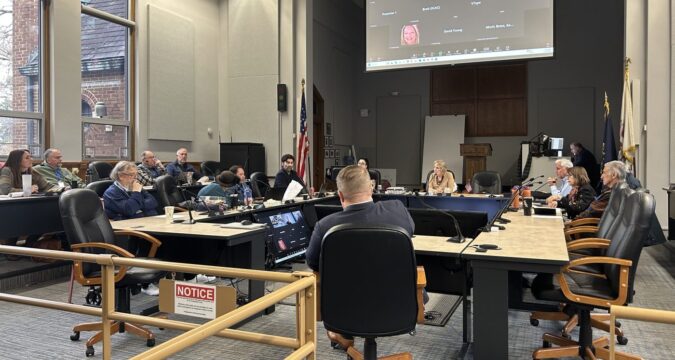
With some members criticizing the transparency of the selection process, the Kane County Board has again deferred making a selection for its vacant District 2 seat, shooting down board Chair Corinne Pierog’s latest pick for the position on Tuesday.
Kane County’s District 2 board seat has been vacant since early October, when board member Dale Berman died at the age of 91. Berman was a longtime resident of North Aurora and a four-term village president, and had been serving on the county board since 2021.
Since last month, Pierog and the board have been considering who will fill the vacancy, but some members on Tuesday expressed concern about how the process has been handled thus far.
In October, the county board declared the seat’s vacancy, and began seeking applications for the post.
A candidate for the seat has to be at least 18 years old, a registered voter, a member of the Democratic Party since Berman was a Democrat and a resident of Kane County for at least a year. Applications were due Oct. 27, and the new member had to be approved within 60 days of the vacancy, or Dec. 1, according to state statute.
The selected candidate would be serving in the role until next November, when the seat will be up for grabs. Four candidates — Matthew Dingeldein, Ellen Nottke, Kimberley M. Young and Martha Davidson — have already thrown their hats in the ring for the 2026 race, according to records from the Kane County Clerk’s Office. The winner of that election will serve out the remainder of Berman’s term, which extends through 2028.
At a Kane County Board Executive Committee meeting earlier this month, Pierog said that, of the interested candidates who applied to serve in the role until November, one was eliminated from the selection process because they had not voted as a Democrat and had previously run for the seat as a Republican.
Pierog then selected a small group of board members to interview the candidates under consideration. A committee made up of Pierog and board members Deborah Allan, Mohammad Iqbal and Myrna Molina met on Nov. 13 to consider the eligible candidates, but did not publicly make a recommendation at the time.
Then, on Nov. 17, the full board met, and Pierog recommended Berman’s widow, Mary Berman, for the seat.
At that meeting, Pierog said that other candidates under consideration were interested in running for the seat when it is up for election in 2026. She expressed concern that, with early voting beginning in just a few months for the primary election, selecting one of those candidates to fill the seat now would allow them to claim to be the incumbent.
“Essentially, the county board could possibly be perceived as endorsing that candidate,” Pierog said at the meeting. She said it raised “an ethical question” about if the appointment could “unfairly benefit one candidate over the others.”
The board moved to discuss that suggestion in closed session on Nov. 17, but ultimately tabled the matter.
Then, on Tuesday, the question of filling the vacancy again came to the board.
Pierog noted that Mary Berman had withdrawn from the process, and spoke of what qualities she hoped to see in the temporary candidate for the position.
She said the county should “bring in some new people who are in their 30s, their 40s, to give them an opportunity to get started.” She also pointed to a need for “business savvy and knowledge” on the board, and an interest in sustainability and environmental issues.
For those reasons, Pierog said, she was bringing forward a resolution to appoint Matthew Dingeldein to the seat. Dingeldein was one of the original candidates who applied for the seat — and has since filed with the Kane County Clerk’s Office to run in 2026.
That move received pushback from the board, several of whom expressed concerns with how the process had gone thus far.
“We’ve not handled the District 2 vacancy process as clearly or transparently as the public deserves,” board member Michelle Gumz said on Tuesday. She went on to say that the board’s “responsibility was to move forward with a process that residents could trust.”
Gumz also offered an apology to all of the individuals who applied for the seat, saying the county board “fell short.”
Board member Deborah Allan said she initially supported the appointment of Mary Berman, echoing Pierog’s original rationale that selecting any of the other candidates “is putting (their) thumb on the scale” in the upcoming election.
“I am not sure … how to solve this problem,” Allan said.
Board member Alex Arroyo, noting his own experience being appointed to his seat on the board less than a year ago, also criticized the board’s handling of the matter.
“I’m embarrassed for this board,” Arroyo said, indicating that he would be abstaining from the vote on Dingeldein’s appointment as a result. Arroyo’s appointment also generated some criticism from the board about its process for filling vacancies at the time.
Arroyo said the county needs to settle on a process for how vacancies are filled going forward.
“We (have) got to think of what’s going to happen here,” Arroyo said. “There will be other vacancies.”
At the meeting, board member Jon Gripe asked what would happen if the measure were to fail, given that the board was approaching the 60-day mark since the position was first vacant, which was their deadline to fill the position.
Assistant State’s Attorney John Frank said it’s “kind of up in the air” as to what the county does in that case.
The board ultimately went into closed session again to discuss the matter, and came out of it with a new candidate suggestion: Kim Young.
Board member Jarett Sanchez moved to amend its measure to have Young appointed to the seat, which Frank noted would not have legal authority if it passed unless Pierog agreed to the change, which she didn’t.
The suggestion to appoint Young failed, however, with only members Sanchez, Mohammad Iqbal, Chris Kious, Cherryl Strathmann, Vern Tepe and Mavis Bates voting for it, and several board members abstaining.
Then, Allan moved to table the measure, but that suggestion also failed in a split vote.
Finally, the board took a vote on whether to appoint Dingeldein, but that measure, too, failed in a split vote, with board members Allan, Bates, Kious, Sanchez, Strathmann, Tepe, Sonia Garcia, Clifford Surges, Bill Tarver and David Young voting against it, and Arroyo, Leslie Juby, Michael Linder and Bill Roth abstaining.
As for what’s next, Kane County State’s Attorney Jamie Mosser, in an emailed statement provided to The Beacon-News, said the board can bring up another resolution any time before the 2026 election, but it will be outside the 60-day timeline outlined in state statute.
The law “does not state what will happen” after that 60-day deadline passes, according to Mosser. If the board appoints someone after Dec. 1, Mosser said it will be “presumed valid unless it is challenged.” The board could also opt to not appoint someone at all, in which case the seat would remain vacant until it is filled via the 2026 election.
mmorrow@chicagotribune.com
https://www.chicagotribune.com/2025/11/30/kane-county-board-district-2-seat-vacancy/

Editorial: In praise of the handwritten Christmas card
We’ve all come to dread checking the mail. And not just when property taxes are due.
Most of the year, the only post we get is bills, which are depressing, or advertisements, headed straight for the trash. Our mailboxes, once filled with interest and promise, have become a breeding ground for junk.
Once a year, that changes. Yes, each day’s haul overflows with glossy printouts and holiday gift guides, but they’re also stuffed with photos and letters from friends and loved ones, a return to the joyful nostalgia of those days when the mail was our primary means of correspondence.
Cards with pictures of smiling faces show up in bright-colored envelopes, and lucky households gather a collection that can adorn entire doorframes — or refrigerators or fireplace mantels— with cheerful galleries, offering warmth every time you walk by.
Sure, there are the overlong letters that accompany some cards, replete with mass-produced rundowns — often highly embellished — of a child’s impressive achievements or that trip overseas that was absolutely to die for. The disappointments of life rarely make the cut. But even the eyerolling inspired by faux-humble brags comes with its own pleasures tradition, an inside joke shared with spouses and kids.
We’ve grown to love the fruits of those over-posed, high-priced family photos on custom cards, knowing full well the folks who send them spent a fortune on a professional photographer and coordinated outfits. So what? They look great and we love seeing them. They’re often our only glimpse of a nephew we haven’t seen in months or a friend’s new baby we haven’t met yet. Or a sneak peek of a new home or an old one we haven’t visited in ages. We also enjoy shots that include cats and dogs. We’re here for it all.
More than anything, we cherish a heartfelt message from someone who took the time to write something personal to us. It may seem simple, but it’s one of the best gifts any person can get.
If you’re thinking of skipping cards this holiday season for financial reasons, we understand. Custom cards — and the stamps to go with them — can run a few hundred bucks per season, and if you’re on a budget this is a logical place to cut. The good news? A stack of blank cards is a fraction of the cost, and trimming your list down to those you love and miss the most is a way to make the project more manageable.
Industry estimates still suggest Americans send more than a billion holiday cards each year, spending a small fortune for something that, on paper, should have gone extinct. But those envelopes in the mailbox remain a quiet civic glue, connecting families, neighbors and colleagues with a human touch no text message can match. A handwritten card isn’t just tradition; it’s one of the last rituals that asks us to slow down and mean what we say.
Submit a letter, of no more than 400 words, to the editor here or email letters@chicagotribune.com.

Edward Keegan: Frank Lloyd Wright’s chairs get a thoughtful presentation in Wisconsin
It’s unusual to step into a Frank Lloyd Wright building and not find at least a few examples of the architect’s furniture designs. That’s in part because the designer always wanted complete control over the environments he created, and in part because many of his designs look silly with more conventional furnishings. The Museum of Wisconsin Art, or MOWA, in West Bend, Wisconsin, is now hosting the exhibition “Frank Lloyd Wright: Modern Chair Design“ that looks at his career through the prism of his chair designs, including some that have been brought to life for the first time.
The exhibition was curated by Eric Vogel and Thomas Szolwinski with Jennifer Gray. Szolwinski, who is curator of architecture and design at MOWA, notes that while Wright has been the subject of dozens of exhibitions and more than a thousand books, this is the first exhibit exclusively devoted to his chairs and the first exhibit on the Wisconsin-born architect at the museum.
While not encyclopedic in scope, the exhibition is organized chronologically with work completed between 1903 and Wright’s death in 1959. Thirty of the 42 objects displayed are historic, with the remaining dozen fabricated specifically for this exhibit. The creation of these “new” pieces is significant as these chairs were previously known only through drawings or photographs. While none of these designs are earth-shattering, they do fill in missing information about Wright’s furniture studies with tangible objects for additional study.
There are two types of chairs: comfortable ones and the other kind. To their credit, the curators of the exhibit don’t try to save the famed architect from himself, including Wright’s frank admission: “Well, I don’t design chairs to be comfortable to people; I design chairs to dignify man.”
Wright designed some 800 individual pieces of furniture, including 200 chairs, during his long career, but it’s rare to come across his furniture outside the context of buildings he designed.
That’s not true of other architects such as Ludwig Mies van der Rohe, Marcel Breuer and Eero Saarinen. They didn’t just design furniture for their projects; they created enduring chairs that have been available for purchase (albeit often quite pricey) since the time of their creation. Wright’s furniture has never enjoyed mass production — not because they couldn’t be reproduced, but because there’s little demand for such forthrightly uncomfortable pieces, regardless of provenance. Philip Johnson, one of architecture’s primary arbiters of taste through much of the 20th century, posited that one’s aesthetic embrace of a chair influenced its perceived comfort. But many of Wright’s designs are attractive while being uncomfortable.
Related Articles
Edward Keegan: Architecture becomes real through construction at Revolution Workshop
Edward Keegan: Columbus, Indiana’s architecture festival embraces the spirit of Chicago improv with ‘Yes And’
Edward Keegan: The Obama Presidential Center promises to be a very un-Chicago building
Edward Keegan: It is unclear what the Chicago Architecture Biennial is shifting to
Edward Keegan: Chicago’s Missing Middle housing initiative aims too low
For Wright, the chairs he designed were principally cultural artifacts, conceived as extensions of his groundbreaking spatial creations. But just as his buildings can be challenging, some of his chairs can be literally backbreaking. They are high-level exercises in form, not function.
The curators use Wright’s Taliesin homes (in Wisconsin and Arizona) as the lens for presenting the pieces. “We’re looking at Taliesin as this experimental space for him to think about furniture,” Szolwinski said. “He’s living with furniture pieces from many different commissions, and he’s making furniture for himself in different iterations before he designs that kind of design for somebody else.”
The Dining Chair for Taliesin dated 1911-12 has been replicated for the first time in over a century based on a single photograph that depicts the piece in situ. Its austerity is dramatic and prescient; one can imagine the same design emerging from the Bauhaus a decade later. The Armchair for Taliesin is another reconstruction for this exhibit. The original design from 1914 sat at the head of Wright’s dining table for more than a decade until the house was destroyed by fire in 1925. Its wide board back suggests the importance of the chair’s occupant while emphatically demarking the space of the room.
The early designs were produced for homes during his Prairie period and stay true to the right angle, but by the 1930s, Wright begins to incorporate more varied angles in his chairs — as well as his buildings.
The Chair for the A.D. German Warehouse in Richland Center, Wisconsin, of 1935 reflects the more formal experimentation that occurs when Wright has access to a workforce of avid apprentices at Taliesin. The interlocking wood planes point to the sort of design that keeps Ikea a strong force in worldwide furnishings today. The “Origami” Armchair for Taliesin West of 1946 is probably better known than the other pieces in the exhibit. The splayed seat is more welcoming than most, and its angles reflect Wright’s interpretation of the southwestern desert landscape that was his winter home in the latter decades of his life.
Frank Lloyd Wright’s “Origami” Armchair for Taliesin West, Scottsdale, Arizona, was designed in 1946 and is made of oak, plywood and upholstered fabric. (Courtesy of the Frank Lloyd Wright Foundation)
Even in the last years of his long life, Wright was still producing interesting furniture designs. The whimsical design of a Child’s Chair and Stool prototypes for the Wyoming Valley School (1958) in Spring Green, Wisconsin, still seems eager to enchant children and adults alike. And the Café Table and Chairs for New York’s Guggenheim Museum beg to be produced and installed at the museum’s cafe. Rendered in spun aluminum, an unusual material choice that screams atomic age, the pieces share kinship with Saarinen’s Tulip table and chairs from the same period.
“Frank Lloyd Wright: Modern Chair Design” is a unique opportunity to see genuinely new Wright material, thoughtfully presented in the context of similar work from throughout his long and prolific career. That’s worth celebrating, even if his enduring disdain for comfort means his furniture will never become commonplace in our homes.
“Frank Lloyd Wright: Modern Chair Design” remains on view through Jan. 25 at the Museum of Wisconsin Art in West Bend, Wisconsin, about 125 miles north of Chicago.
Edward Keegan writes, broadcasts and teaches on architectural subjects. Keegan’s biweekly architecture column is supported by a grant from former Tribune critic Blair Kamin, as administered by the not-for-profit Journalism Funding Partners. The Tribune maintains editorial control over assignments and content.
Submit a letter, of no more than 400 words, to the editor here or email letters@chicagotribune.com.
Judge’s unusual criticism in dropped immigration case is latest strange twist for US attorney’s office
In the four months since U.S. Attorney Andrew Boutros was appointed to an open-ended term as Chicago’s top federal prosecutor, his office has seen a large turnover in leadership, been buffeted by the government shutdown and thrown headlong into the controversial Operation Midway Blitz immigration enforcement mission.
Unusual times to be sure. But then last week, things got even weirder.
After dismissing several criminal cases against protesters of the Trump administration’s aggressive immigration enforcement policies, the U.S. attorney’s office was called to the woodshed in an extraordinary opinion by a federal magistrate judge that lit up the water cooler talk in legal circles.
In granting the prosecution’s motion to dismiss assault charges against Dana Briggs, U.S. Magistrate Judge Gabriel Fuentes took the opportunity to opine more generally on the U.S. attorney’s office’s role in prosecuting a number of other immigration-related cases that have since fallen apart.
In his nine-page opinion, Fuentes wrote he could not “help but note just how unusual and possibly unprecedented it is” for Chicago’s venerable U.S. attorney’s office to bring charges “so hastily” that, once more facts came out, they were unable to obtain an indictment in the grand jury or were forced to dismiss the case as not provable.
“Being charged with a federal felony, even if it is later reduced to a misdemeanor, is no walk in the park,” Fuentes wrote. “…And any responsible federal prosecutor knows this. Any responsible federal prosecutor knows that federal charges, or any actions by the United States Attorney directed at the citizenry, must be undertaken with the utmost care.”
Fuentes, a former assistant U.S. attorney and journalist, closed by saying “doing the right thing has been a mantra of the Chicago U.S. Attorney’s Office for generations.”
“Let it remain so,” he said.
Fuentes’ opinion was cheered by some who saw the U.S. attorney’s office’s decision to bring serious felony charges against protesters — even in cases where the agents appeared to be the aggressors — as heavy-handed. Supporters also said Fuentes put into words what many have been worried about: that a traditionally apolitical and professional office was bringing cases without merit to satisfy some larger goal of the Trump administration.
Others, however, said Fuentes was way out over his skis, offering an op-ed style political commentary mostly on cases that he did not even preside over.
“Who does he think he is, grandstanding like that?” said Assistant U.S. Attorney William Hogan, a longtime veteran of the U.S. attorney’s office who has served under more bosses than anyone still there. “I have never in 45 years read an opinion remotely like that. It is shocking.”
Fuentes declined to comment further on the ruling Wednesday.
Hogan personally handled one of the cases that Fuentes criticized: Cole Sheridan, an Oak Park man accused of shoving Border Control Cmdr. Gregory Bovino in the back during a protest at the Broadview ICE facility on Oct. 3.
Sheridan became a mini-cause celebre in the west suburbs, where he was held up as an example of prosecutorial overreach in the Trump era.
But Hogan said that case actually showed the U.S. attorney’s office doing its job correctly. When agents make an arrest and refer the case for prosecution — with Bovino as the alleged victim and complaining witness in Sheridan’s case — prosecutors have to make a quick decision to file a charges or “cut them loose” pending further investigation, he said.
Hogan said prosecutors by and large chose the latter approach in the hundreds of cases referred to the office during Operation Midway Blitz. In Sheridan’s case, initial video footage from the scene did not capture the entire incident and a decision was made to file a criminal complaint based on sworn affidavits of the agents.
But as the case was prepared to go before the grand jury, Hogan said he asked for an extension to file an indictment so they could continue to investigate. During that time, they found someone had a camera “behind the lines who caught the entire incident on video and demonstrated to us the kid was innocent,” Hogan said.
Hogan filed a motion to drop the case Nov. 3 — exactly one month after the incident.
U.S. Magistrate Judge Heather McShain, unlike her colleague, granted the motion without fanfare, Hogan noted.
The U.S. attorney’s office declined to comment on whether cases like Sheridan’s damaged the credibility of Bovino going forward, saying in a written statement the office is “constantly evaluating new facts and information” in Midway Blitz investigation.
”This continuous review process applies to all matters—whether charged or under investigation,” the statement read. “It helps ensure that the interests of justice are served in each and every case, and that those cases that are charged are appropriately adjudicated through our federal court system.”
In an interview last week, Boutros said Operation Midway Blitz was unprecedented for the office and put a strain on staff that only got more intense after the government shut down in early October.
Boutros said the office processed more than 200 immigration-related cases in just 60 days, more than half what was typically done in a full year, even as many staff members, including the office’s civil attorneys, were working limited hours due to furlough or were going without pay.
A chart released as part of U.S. District Judge Sara Ellis’ recent preliminary injunction restricting the use of force by agents showed that out of nearly 100 protest-related arrests around the Chicago area between Sept. 2 and Oct. 29, only 15 were approved for charges by the U.S. attorney’s office.
Many of those arrested were issued citations, the chart shows, while about 20 others were listed as “declined,” meaning they did not face any legal action. Investigations were “continuing” for a handful of others.
Boutros decline to comment on Fuentes’s opinion.
Meanwhile, Fuentes’ negative remarks about are not the only reason the U.S. attorney’s office has been in recent headlines.
In August, several media outlets reported that Boutros had sent out an unorthodox email to former prosecutors who were now in private practice asking them to consider coming back to the office and to encourage friends who might be interested to do the same.
The Washington Post reported on the letter as an example of a wider problem of the Justice Department bleeding talent due to the Trump administration’s policies, which have led to unprecedented turmoil and embarrassing episodes such as the filing of charges — and their abrupt dismissal — against former FBI Director James Comey.
The U.S. attorney’s office in Chicago has indeed seen an exodus of veteran prosecutors and section leaders this year.
Soon after Boutros was appointed in March, longtime Assistant U.S. Attorney Amarjeet Bhachu, chief of the Public Corruption and Organized Crime section who’d headed investigations into Chicago mobsters and politicians such as Edward Burke and Michael Madigan, announced he was leaving.
Steven Dollear, the National Security and Cybercrime section chief, soon followed. Then, in August, Erika Csicsila abruptly quit after serving as the chief of the entire criminal division — a move that several sources said came after she had initially accepted reassignment to the public corruption squad.
In recent months, the office has also lost Barry Jonas, a top national security prosecutor, and other line prosecutors with years of experience.
And this month, Sarah Streicker, the veteran prosecutor who replaced Bhachu as head of public corruption just months ago, is also leaving the office.
While the number of departures in such a short period of time is unusual, it’s typical for there to be a shakeup whenever there is a change in administrations and a new U.S. attorney comes in, particularly with top deputies who report directly to the boss.
That reality can be significantly augmented In a solid-blue city such as Chicago, where ambitious attorneys looking to get ahead know that Democrats still hold most of the reins and having helped execute the justice policies of the Trump administration — such as the wildly unpopular Midway Blitz surge — is certainly no resume booster.
In his comments to the Tribune, Boutros acknowledged staffing levels in his office are down, though the reasons for it are complex. When he started earlier this year, there were 142 total attorneys in the office, including criminal prosecutors and attorneys on the civil litigation side.
U.S. Attorney Andrew Boutros announces federal domestic terrorism charges Nov. 19 2025, against Lawrence Reed, 50, for allegedly setting a 26-year-old woman on fire on a CTA Blue Line train. The CTA’s acting President Nora Leerhsen is at left. (E. Jason Wambsgans/Chicago Tribune)
As of Wednesday, those numbers had dropped to 127, with only 90 criminal prosecutors working in the Chicago office and another six in Rockford, according to figures provided to the Tribune.
Some current and former staffers who spoke to the Tribune on condition of anonymity said the office has changed over the years in ways that have little or nothing to do with Trump. People tend to stay for shorter periods, leaving a higher percentage of young attorneys and a dearth of veterans with more than six years under their belts. There’s also been less drive to bring difficult cases or take risks in big investigations, some sources said.
Boutros said he was in the process of a hiring surge that was bringing fresh talent into the office after years of sagging productivity that landed the office at or near the bottom when it comes to key metrics kept by the district courts, including indictments filed and criminal trials handled per year.
“We are building up the ranks again,” Boutros said, adding that he’s been green-lighted to hire 25 new prosecutors in the coming weeks, and that applications have come in from experienced attorneys all over the country. “I am excited to have the ability to restock our office with veteran federal criminal and civil prosecutors.”
Boutros said indictments are on their way up, particularly when it comes to gun crimes and violence, adding the office has achieved “impressive results” with far fewer prosecutors and resources.
Overall, there were 366 federal criminal indictments filed January through October, an increase of 45% over the same period last year, Boutros said.
Assistant U.S. Attorney William Hogan at the Dirksen U.S. Courthouse in Chicago, March 14, 2013 was the prosecutor in the case against former Chicago Bears defensive lineman Chris Zorich. (Nancy Stone/Chicago Tribune)
Hogan, who joined the U.S. attorney’s office in 1982 and has seen it cycle through eight presidential administrations, said the Chicago office has remained stable even as other districts have been mired in turmoil.
That includes Trump’s appointment of his former personal lawyer Alina Habba as U.S. attorney in New Jersey and the more recent fallout over Lindsey Halligan, another acolyte of the president’s whose selection to lead the U.S. attorney’s office in Eastern Virginia disintegrated when the judge presiding over the Comey case ruled she’d been illegally appointed.
Hogan said Boutros is no Habba or Halligan, but an experienced former federal prosecutor and white-collar attorney who’s spent countless hours interviewing each employee to find out where they think improvements can be made in the office.
Hogan has also helped out in the interviewing process and seen that there are many “extremely competent people waiting to take jobs” here, including experienced attorneys from other U.S. attorney’s offices around the country.
“They’re beating down the doors,” Hogan said.
jmeisner@chicagotribune.com
https://www.chicagotribune.com/2025/11/30/u-s-attorneys-office-immigration-challenges/

Faith leaders: Let all who are hungry come and eat
Thanksgiving this year is a tale told through two sets of pictures.
The first is what we see in memes: a cornucopia overflowing with food and blessings. Tables filled with turkeys, yams, greens and cornbread. The concerns of the day are whether to call it “stuffing” or “dressing” and whether to watch football instead of a classic film.
The other Thanksgiving is what we’ve been seeing at our food pantries and our houses of worship and on the pages of our newspapers: a flood of families plagued by need and desperation. Children and their parents filled with hunger and fear. The concerns of the day are not about entertainment or terminology, but on surviving the cold winter ahead.
Our faith traditions instruct about the primary moral imperative to feed those in need. In the Christian tradition, Matthew 25 advises that we must feed the hungry and do for those who have the least. In the Jewish world, our most celebrated feast, the Seder of Passover, opens with the injunction: Let all who are hungry come and eat! It is out of these commitments that we see the view on the ground from the hunger programs built out of our institutions.
St. Sabina Social Services has seen the numbers for its food pantry go through the roof. Over 300 people came through on three days last week alone, and it’s a struggle to keep the shelves packed. The pantry used to see around 155 people a day, and now the numbers are just about double. A few Saturdays ago, with 700 food boxes to give away, St. Sabina’s ran out and had to tell the remaining people in line there was nothing left.
The Sankofa Food Market at Trinity United Church of Christ is also witnessing a major increase: Demand has increased nearly threefold, from 150 to 200 families a week to 450 to 500. In further response to need, the market just adopted two elementary schools to provide meals for families that have been hit hard. Likewise, Live Free Illinois’ Community Health Resource Centers are also increasing their numbers and are now giving away over $10,000 in food each month.
There are four groups of people we are seeing coming for food. The first are those of low income who have always relied on food pantries. The second are immigrants who, especially in response to the cruel and lawbreaking Operation Midway Blitz, are afraid to go to work. The third is those who have lost jobs; this group is growing quickly. The last are first-time folks who have never visited a panty, but — with high prices in the supermarkets — feel they need to supplement what they are able to provide their families.
Of course, all of this is augmented by the devastating, intentional federal cuts to programs that fulfill the moral and religious injunction to provide food to the hungry.
From our perspectives in the pulpits and the pantries, Thanksgiving this year highlights the growing divide in America, the divide between those who have and those who have not. The One Big Beautiful Bill Act is increasing the already massive wealth gap in our nation, functioning as a reverse Robin Hood taking from the poor to redistribute to the rich, economists and academics say. Nowhere is this better seen than in cuts to the Supplemental Nutrition Assistance Program, which lead directly to the lines, the hunger, the deprivation that mar our season of gratitude.
Federal nutrition programs such as SNAP and the emergency food system work together to protect families from food insecurity. Around 1.8 million Illinoisans are fed through SNAP. In Illinois, you can have a full-time job and still be food-insecure; hundreds of thousands of Illinois workers rely on SNAP when minimum-wage income is not enough. However, with changes wrought by the wealth redistribution of President Donald Trump’s bill, 1 in 4 poor Illinoisans are in danger of losing SNAP benefits.
SNAP matters because, for every meal provided by a food pantry, SNAP provides nine! Our work in houses of worship to help feed our neighbors just can’t compete with federal efforts. Starting in October 2027, Illinois will have to fund a significant portion of SNAP benefits and could be required to pay over $700 million annually to maintain SNAP, or risk losing the program altogether. This doesn’t even capture the fact that SNAP’s exclusions of immigrants granted official humanitarian protections, along with intentionally draconian work requirements that will block access for others, will significantly reduce the number of people who can take advantage of the limited funding.
Hunger will be increasing in our communities at an unprecedented rate — due to human greed and indifference — between this Thanksgiving and the next.
If we are to live up to our calling, either as people compelled by our religious traditions or human beings moved by morality, then we each must do our part to feed the hungry and to remedy the problem of hunger in America.
Yes, this means volunteering at your local food pantry, be it at Sankofa, St. Sabina, the Greater Chicago Food Depository or any place that provides the food and dignity people deserve.
Yes, this means donating money to these food pantries.
And, yes, this means we must organize in our state and across America to elect out of office anyone who voted for the twisted One Big Beautiful Bill Act and usher back into Washington public servants who care less about their wealthy friends and donors and more about basic human needs and dignity.
When that day comes, it will truly be a day of Thanksgiving for all.
Chicago faith leaders Rabbi Seth Limmer, the Rev. Otis Moss III, the Rev. Ciera Bates-Chamberlain and the Rev. Michael Pfleger joined the Tribune’s opinion section in summer 2022 for a series of columns on potential solutions to Chicago’s chronic gun violence problem. The column continues on an occasional basis.
Submit a letter, of no more than 400 words, to the editor here or email letters@chicagotribune.com.
https://www.chicagotribune.com/2025/11/30/opinion-food-insecurity-chicago-st-sabina-sankofa-market/

Rubio y Witkoff se reunirán con negociadores de Ucrania en Florida mientras Trump busca un acuerdo
Por JOSH BOAK
WEST PALM BEACH, Florida, EE.UU. (AP) — Altos funcionarios del gobierno de Trump se reunirán el domingo con negociadores ucranianos en Florida este fin de semana, con el objetivo de mediar para poner fin a la guerra de Rusia en Ucrania y preparar el escenario para las conversaciones clave planeadas esta semana en Moscú con el líder ruso, Vladímir Putin.
Estaba previsto que el secretario de Estado, Marco Rubio; el enviado especial Steve Witkoff y Jared Kushner, yerno del presidente de Estados Unidos, Donald Trump, se reunieran con una delegación ucraniana para profundizar en los detalles de un marco de paz propuesto, conversaciones que llegan en un momento delicado para Ucrania mientras continúa resistiendo a las fuerzas rusas que invadieron el país en 2022.
El viernes, justo antes de la reunión en Florida, el presidente ucraniano, Volodymyr Zelenskyy, anunció la renuncia de su poderoso jefe de gabinete, Andrii Yermak, quien hasta ese momento había sido el principal negociador del país en las conversaciones con Estados Unidos.
El anuncio se produjo después de que la casa de Yermak fuera registrada por investigadores anticorrupción. El gobierno de Zelenskyy se ha visto sacudido por las repercusiones de un escándalo sobre el desvío de 100 millones de dólares del sector energético a través de sobornos pagados por contratistas, lo que ha generado nuevas presiones internas para Zelenskyy.
Hace apenas una semana, Rubio se había reunido con Yermak en Ginebra, y ambas partes dijeron que las conversaciones habían sido positivas para elaborar un plan de paz revisado.
La delegación ucraniana incluye ahora a Andrii Hnatov, jefe de las fuerzas armadas de Ucrania; Andrii Sybiha, ministro ucraniano de Exteriores; y Rustem Umerov, jefe del consejo de seguridad de Ucrania, ha dicho Zelenskyy.
Los diplomáticos se han centrado en las revisiones del plan de 28 puntos propuesto por Trump, desarrollado en negociaciones entre Washington y Moscú. Ese plan fue criticado por estar demasiado alineado con las demandas rusas. Inicialmente había previsto que Ucrania cediera toda la región oriental del Donbás a Rusia, un punto conflictivo para Kiev.
El plan, que Trump ha minimizado como un “concepto” o un “mapa” que debe ser “ajustado”, también impondría límites al tamaño del ejército de Ucrania, bloquearía al país de unirse a la OTAN y requeriría que Ucrania celebrara elecciones en 100 días. Los negociadores han indicado que el marco ha cambiado, pero no está claro cómo se han alterado sus disposiciones.
Trump dijo el martes que enviaría a Witkoff y quizás a Kushner a Moscú esta semana para reunirse con Putin sobre el plan. Tanto Witkoff como Kushner, al igual que Trump, provienen del sector inmobiliario, que valora la negociación por encima de las convenciones de la diplomacia. La pareja también estuvo detrás de una propuesta de 20 puntos que llevó a un alto el fuego en Gaza.
Zelenskyy escribió en X que la delegación ucraniana “trabajaría rápida y sustancialmente en los pasos necesarios para poner fin a la guerra”.
En su discurso nocturno del sábado, Zelenskyy dijo que la parte estadounidense estaba “demostrando un enfoque constructivo”.
“En los próximos días es factible concretar los pasos para determinar cómo llevar la guerra a un final digno”, dijo.
El sábado, ataques rusos con drones y misiles en y alrededor de la capital de Ucrania, Kiev, mataron al menos a tres personas e hirieron a decenas más, dijeron funcionarios. Nuevos ataques durante la noche del domingo mataron a una persona e hirieron a otras 19, incluidos cuatro niños, dijeron funcionarios locales, cuando un dron impactó en un bloque de apartamentos de nueve pisos en la ciudad de Vyshhorod en la región de Kiev.
En una publicación en Telegram el domingo, Zelenskyy dijo que Rusia había atacado Ucrania con 122 drones de ataque y misiles balísticos.
“Estos ataques ocurren a diario. Solo esta semana, los rusos han utilizado casi 1.400 drones de ataque, 1.100 bombas aéreas guiadas y 66 misiles contra nuestro pueblo. Por eso debemos fortalecer la resiliencia de Ucrania cada día. Se necesitan misiles y sistemas de defensa antiaérea, y también debemos trabajar activamente con nuestros socios por la paz”, dijo Zelenskyy.
“Necesitamos soluciones reales y confiables que ayuden a poner fin a la guerra”, agregó.
Después de que Ucrania se atribuyera el ataque que dañó una importante terminal petrolera el sábado cerca del puerto ruso de Novorossiysk, propiedad del Consorcio del Oleoducto del Caspio, Kazajistán dijo a Ucrania el domingo que dejara de atacar la terminal del mar Negro. El oleoducto CPC, que comienza en Kazajistán y termina en la terminal de Novorossiysk, maneja una gran proporción de las exportaciones de petróleo de Kazajistán.
“Consideramos lo ocurrido como una acción que perjudica las relaciones bilaterales de la República de Kazajistán y Ucrania, y esperamos que la parte ucraniana tome medidas efectivas para prevenir incidentes similares en el futuro”, dijo el Ministerio kazajo de Exteriores en un comunicado.
___
Esta historia fue traducida del inglés por un editor de AP con la ayuda de una herramienta de inteligencia artificial generativa.

Today in Chicago History: Floyd Patterson becomes youngest heavyweight champ with KO at Chicago Stadium
Here’s a look back at what happened in the Chicago area on Nov. 30, according to the Tribune’s archives.
Is an important event missing from this date? Email us.
Weather records (from the National Weather Service, Chicago)
High temperature: 66 degrees (1962)
Low temperature: Minus 1 degree (1947)
Precipitation: 0.84 inches (1881)
Snowfall: 3 inches (1907)
Walter Eckersall, one of the heroes of Chicago’s 2-0 victory over Michigan on Nov. 30, 1905, delivers one of the kicks that made him famous. He was a little fellow, physically, a giant in ability. (Chicago Tribune historical photo)
1905: Fielding H. “Hurry Up” Yost’s point-a-minute University of Michigan machine, unbeaten in 55 straight games and featuring halfback Willie Heston, was upset by Amos Alonzo Stagg’s University of Chicago Maroons and their resourceful 140-pound quarterback and future Tribune reporter Walter Eckersall.
Chicago Bears coach George Halas, left, and halfback Harold “Red” Grange officiate at the retirement of three jersey number on Nov. 30, 1949. Halas holds sweaters worn by the late end Bill Hewitt (56) and fullback Bronko Nagurski (3). Grange wears his number 77 for the last time at the ceremony. (AP)
1949: George Halas and the Chicago Bears retired three numbers: Red Grange’s 77, Bronko Nagurski’s 3 and Bill Hewitt’s 56.
At 14, the Bears and New York Giants have the most retired numbers among NFL franchises.
Archie Moore falls to the canvas after taking a left hook from Floyd Patterson in the fifth round of their 15-round heavyweight championship bout at Chicago Stadium in Chicago, on Nov. 30, 1956. Seconds later, at 2:27 of the round, Moore was counted out after being floored again and the 21-year-old Patterson became the youngest world heavyweight champion. (AP)
1956: “They sent a boy to do a man’s job last night in Chicago Stadium — and he did it!” Tribune reporter Maurice Shevlin wrote.
Floyd Patterson — at 21 years, 10 months, 3 weeks, and 5 days — became the world’s youngest heavyweight boxing champion by knocking out Archie Moore in the fifth round of a match. Patterson, who competed in the 1952 Summer Olympics became the first Olympic gold medalist to win a professional heavyweight title.
Patterson remained the youngest champ until he was unseated by Mike Tyson — at 20 years, 4 months, 23 days — 30 years later.
Chicago Cubs left fielder Billy Williams doffs his cap to the Wrigley Field fans after receiving a trophy marking his 896th consecutive game, a National league record, on June 29, 1969. (John Austad/Chicago Tribune)
1961: Billy Williams became the first Chicago Cub to be voted the National League’s Rookie of the Year. The Cubs have had six (Williams, 1961; Ken Hubbs, 1962; Jerome Walton; 1989; Kerry Wood, 1998; Geovany Soto, 2008; and Kris Bryant, 2015).
Gale Sayers, left, and Brian Piccolo formed a special friendship as Chicago Bears running backs in the late 1960s. (Phil Mascione/Chicago Tribune)
1971: “This is a story about two men, one named Gale Sayers, the other Brian Piccolo. They came from different parts of the country. They competed for the same job. One was white; the other Black. One liked to talk; the other was shy as a 3-year-old. Our story’s about how they came to know each other. Ernest Hemingway said that every true story ends in death., Well: this is a true story.”
“Brian’s Song,” starring Billy Dee Williams as Sayers and James Caan as Piccolo, debuted on ABC.
Commentary: Gale Sayers and ‘Brian’s Song’ changed sports movies, and male friendship, forever
Piccolo was diagnosed with an aggressive form of testicular cancer in 1969 and died in 1970 at the age of 26. A month before his teammate’s death, Sayers was given the George S. Halas Courage Award; accepting it, he said the judges had chosen the wrong man and gave an emotional speech about his love for and admiration of Piccolo.
Want more vintage Chicago?
Subscribe to the free Vintage Chicago Tribune newsletter, join our Chicagoland history Facebook group, stay current with Today in Chicago History and follow us on Instagram for more from Chicago’s past.
Have an idea for Vintage Chicago Tribune? Share it with Kori Rumore and Marianne Mather at krumore@chicagotribune.com and mmather@chicagotribune.com
https://www.chicagotribune.com/2025/11/30/chicago-history-november-30/


