Category: News
Fiscal general de Arizona demanda a la tienda china Temu por acusaciones de robo de datos
Por SEJAL GOVINDARAO
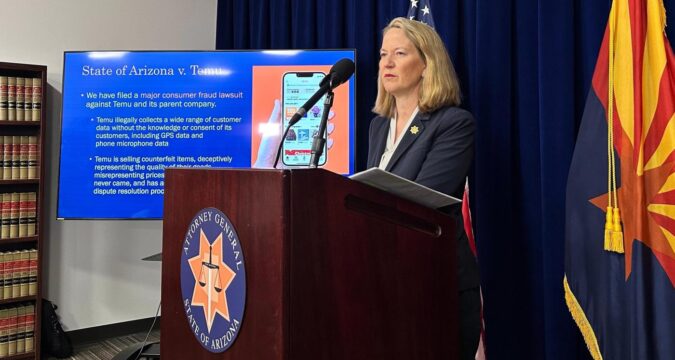
La fiscal general de Arizona, Kris Mayes, anunció que Arizona presentó la demanda más reciente por parte de un estado contra Temu y su empresa matriz, PDD Holdings Inc., por acusaciones de que el minorista en línea chino roba datos de los clientes.
Mayes afirmó que la aplicación engaña a los clientes sobre la calidad de sus productos de bajo costo y recopila lo que describió como una cantidad alarmante de datos sensibles sin el consentimiento de los usuarios, como ubicaciones GPS y una lista de aplicaciones instaladas en los teléfonos de los usuarios.
Según la demanda, a los fiscales les preocupa el hecho de que Temu esté sujeta a leyes chinas que exigen que las empresas de ese país entreguen datos solicitados por el gobierno, y que su código esté diseñado para evadir revisiones de seguridad.
“Puede detectar a dónde vas, a un consultorio médico, a una biblioteca pública, a un evento político, a las casas de tus amigos”, dijo Mayes en una conferencia de prensa. “Así que el alcance de esta invasión de la privacidad es enorme, y por eso considero que posiblemente sea la violación más grave de la Ley de Fraude al Consumidor de Arizona que hemos visto” en ese estado.
La principal fiscal de Arizona también dijo que el estado quiere proteger a las empresas contra “estafas” del minorista en línea, alegando que la compañía ha copiado la propiedad intelectual de marcas entre las que están los Arizona Cardinals y la Universidad Estatal de Arizona.
En un comunicado emitido la mañana del miércoles, Temu negó las acusaciones.
“Ayudamos a los consumidores y familias a acceder a productos de calidad a precios asequibles”, señaló la empresa. “Trabajamos para mantener los costos bajos y garantizar un suministro confiable para que las personas puedan satisfacer sus necesidades sin forzar sus presupuestos”.
Los fiscales generales de Kentucky, Nebraska y Arkansas han presentado demandas similares en los últimos años.
Se han realizado esfuerzos legislativos a nivel federal para contrarrestar la influencia de China, especialmente en lo que respecta a la tecnología y la propiedad intelectual. Pero Mayes sugirió que debería haber una mayor intervención por parte del gobierno federal para proteger a los consumidores.
La fiscal calificó las acusaciones contra Temu como más atroces que las que se han hecho contra TikTok.
A través de una revisión forense, investigadores en Arizona encontraron que el código de la aplicación tiene partes reconocidas por expertos como malware o spyware y permite la exfiltración de datos del dispositivo móvil del usuario mientras oculta que la aplicación lo está haciendo. En la revisión también se encontró que la aplicación contiene “grandes porciones” de código previamente prohibido de la versión precursora de la plataforma.
Mayes instó a los habitantes de Arizona a eliminar sus cuentas de Temu, desinstalar la aplicación y escanear sus dispositivos en busca de malware.
___
Esta historia fue traducida del inglés por un editor de AP con la ayuda de una herramienta de inteligencia artificial generativa.

Retiran queso rallado en EEUU por posible contaminación con fragmentos de metal
Por MICHELLE CHAPMAN
Una compañía retiró más de 260.000 envases de queso rallado en 31 estados y Puerto Rico debido a la posible contaminación con fragmentos de metal, informaron las autoridades sanitarias estadounidenses.
La Administración de Alimentos y Medicamentos de Estados Unidos (conocida como la FDA por sus siglas en inglés) indicó que la compañía, Great Lakes Cheese Co., retiró los productos de diversas cadenas incluidas Target, Walmart y Aldi.
El retiro incluye varios tipos de quesos como mozzarella, estilo italiano, estilo pizza, mozzarella y provolone, y mozzarella y parmesano.
El retiro tiene una clasificación de Clase II, porque el producto “puede causar consecuencias adversas para la salud temporales o médicamente reversibles o donde la probabilidad de consecuencias adversas graves para la salud es remota”, según el sitio web de la FDA.
Un representante de la FDA señala que ingerir fragmentos de metal puede causar lesiones como daño dental, laceración de la boca o garganta, o laceración o perforación del intestino.
___________________________________
Esta historia fue traducida del inglés por un editor de AP con ayuda de una herramienta de inteligencia artificial generativa.

Fed Regime-Change: Groupthink May Be Ending
Fed Regime-Change: Groupthink May Be Ending
Authored by Michael Lebowitz via RealInvestmentAdvice.com,
Starting in the aftermath of the 2008 financial crisis, a profound change to the Fed’s liquidity-providing role in the capital markets was underway. We can sum up the Fed regime change with a popular quip: The Fed has shifted from lender of last resort to the lender of only resort!
In our articles QE Is Coming and its follow-up, How The Fed Deals Liquidity, we discuss why the Fed has become the primary provider of liquidity since 2008 and the tools it uses to maintain ample liquidity in the markets. While that Fed regime change has been incredibly impactful on the financial markets, there is a growing possibility of another meaningful regime change that could prove equally impactful.
This article, like the two linked above, is dry. Still, investors today must understand that monetary policy has become a primary driver of liquidity, which in turn significantly influences asset prices. Without a clear understanding of what the Fed is doing and how it functions, your investment ideas, no matter how solid, can be flawed.
Groupthink Has Been The Fed Norm
The Fed’s monetary policy-setting group, the Federal Open Market Committee (FOMC), meets every six weeks to discuss the economy, financial markets, liquidity, and a host of other factors that help the Fed set monetary policy to meet its inflation and employment objectives.
After two days of data analysis, conversation, and debate, the FOMC’s voting members vote on whether to adjust monetary policy. Most often, the policy changes involve the Fed Funds Rate and or the monthly pace of QE or QT.
The committee is comprised as follows:
Seven members of the Board of Governors- including the Chairman
Four rotating regional Fed Presidents
The President of the New York Fed
While there are debates and many divergent views expressed at the FOMC meetings, the published results always give the impression of agreement. This is evident in the meeting statement, which lists the members who voted for the monetary policy actions and those who dissented. The example below from the October 29, 2025, meeting shows that two of the twelve members dissented or voted against the prescribed policy actions.
Voting for the monetary policy action were Jerome H. Powell, Chair; John C. Williams, Vice Chair; Michael S. Barr; Michelle W. Bowman; Susan M. Collins; Lisa D. Cook; Austan D. Goolsbee; Philip N. Jefferson; Alberto G. Musalem; and Christopher J. Waller. Voting against this action were Stephen I. Miran, who preferred to lower the target range for the federal funds rate by 1/2 percentage point at this meeting, and Jeffrey R. Schmid, who preferred no change to the target range for the federal funds rate at this meeting.
Historical Dissents
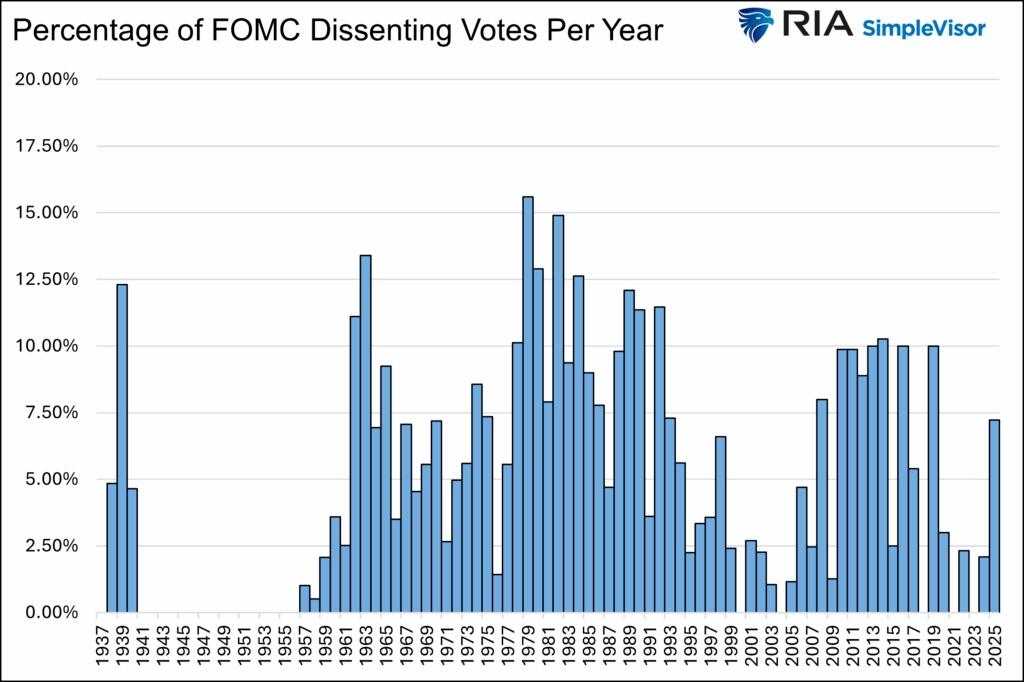
As we shared above, there were two dissenting votes at the last meeting. On average, since 1936, 5% of members have cast dissenting votes per meeting. Since 2000, the most dissenting votes at a single meeting were three. On average, over the last 25 years, the odds are 50/50 that one member will dissent at each meeting.
The bottom line is that dissents occur with some regularity, but the votes for or against policy action are always a strong consensus. More simply, the Fed has been in a groupthink regime fro the last 100 years!
Consensus At The Fed
In the FOMC minutes, released three weeks after the meeting, we gain a better understanding of the debates that took place. It’s clear from these minutes that there are many divergent opinions. This should not be surprising, as the members come from different regions across the country and have diverse economic views. This has been the case since 1936, when the Fed began sharing the minutes.
While there may be many views on the economy and the right course for monetary policy, the graph above clearly shows that almost all Fed members coalesce around a single policy action.
Quite often, the Fed Chair steers the FOMC toward presenting a consensus view.
Politics At The Fed
We argue that, despite its supposed independence from the executive branch, the Fed has always been political to some degree. Furthermore, we must assume that every Presidential nomination of a Fed member is primarily based on the nominee’s alignment with the President’s views.
Thus, it’s not shocking that Stephen Miran, Trump’s latest appointee, is arguing for aggressive rate cuts. Furthermore, Trump’s possible appointee to replace Lisa Cook and Chairman Powell when his term ends in May will most likely also hold dovish views.
While there is an infusion of dovish voters to join existing dovish members, there also remains a camp of hawkish voters. It appears that most of the dovish-hawkish standoff is a function of whether members are more concerned about keeping a lid on inflation (hawkish) or about preventing a worsening of the labor market (dovish).
However, we offer that the debate may be becoming political as well. Is the Fed morphing into entities like the Supreme Court or Congress that are politically motivated?
In other words, are some dovish members not as concerned about the labor markets as they appear, and instead pushing for a more accommodative policy to help Trump achieve his economic goals? Conversely, might some hold hawkish opinions, not because they fear inflation, but because they disagree with the President’s policies?
Is Consensus Dead?
If, as we postulate, the Fed is becoming more politically divided, might the Fed Chairman be losing the ability to present a group consensus? Interestingly, the odds of a rate cut at the next Fed meeting have been floating between 25% and 85%. Those odds have been shifting as various Fed members have weighed in on whether they may cut rates at the next meeting. Currently, there is a split between those wanting to cut rates and those dissenting from another cut in December. A few members also appear undecided. If the Chairman is unable to get the members to reach a consensus, it’s quite possible there could be four, five, or even six dissenters at the next meeting.
Our Take On Dissents
Historically, as we noted earlier, the Chairman gets the FOMC to form a strong publicly facing consensus. Doing so gives investors, consumers, and business leaders a false sense of confidence that the Fed is fully aware of what is happening in the economy and that it has the right policy prescription.
We welcome dissent at the Fed. We welcome change. Groupthink, as managed by one person, the Chair, has led to significant policy errors. While the Fed will still make errors in the future, investors, business leaders, and consumers will at least be better versed in other policy opinions. For instance, a vote with multiple dissenting votes signals that the Fed is not confident in its views or policies. While that may make some uneasy, it’s better to recognize their stance than to believe something that isn’t true. Conversely, in an era of multiple dissenting votes, a complete consensus should lead investors to think the Fed has strong confidence in its views and policies.
Summary
As we said earlier, we welcome a regime change at the Fed. We want 12 autonomous FOMC members deliberating and voting on Fed policy. We don’t like the opinion of one person, the Chairman, dictating the views and policies of the Fed.
A new Fed regime consisting of 12 voting Fed members, voicing their own opinions and casting votes on what they think, not what the Chairman wants, would be a welcome change, albeit it might introduce short-term volatility in the financial markets.
Tyler Durden
Wed, 12/03/2025 – 12:45
https://www.zerohedge.com/markets/fed-regime-change-groupthink-may-be-ending
CIDH recibe primera denuncia que alega ejecución extrajudicial de colombiano en bombardeo de EEUU
Por ASTRID SUÁREZ y REGINA GARCÍA CANO
BOGOTÁ (AP) — La familia de un colombiano que alega su desaparición en aguas del Caribe elevó la primera denuncia formal contra Estados Unidos por la presunta ejecución extrajudicial del hombre, que habría sido víctima de un ataque a un bote señalado por ese país de llevar drogas.
La denuncia por la presunta muerte de Alejandro Carranza Medina, de 42 años, fue presentada el martes ante la Comisión Interamericana de Derechos Humanos (CIDH), un órgano autónomo de la Organización de los Estados Americanos (OEA) cuyas decisiones derivan en recomendaciones, pero no en acciones vinculantes, dado que Estados Unidos no reconoce al tribunal asociado a la Comisión.
El abogado estadounidense Daniel Kovalik, quien actuó en representación de la familia, aseguró el miércoles a The Associated Press que no han descartado una demanda ante un tribunal estadounidense, pero significaría mayores obstáculos para obtener resultados, por lo que decidieron acudir a la CIDH, que creen que funciona en esos casos.
“Así que estamos utilizando las vías a nuestro alcance, y creemos que una decisión a nuestro favor, combinada con la presión pública, puede lograr esa compensación (para la familia) y también poner fin a las matanzas en el Caribe”, afirmó Kovalik en una entrevista virtual desde Pittsburgh, Pennsylvania.
Estados Unidos inició en septiembre los ataques letales contra las supuestas embarcaciones con drogas argumentando que está combatiendo contra organizaciones narcotraficantes en la región, luego de desplegar sus capacidades militares en aguas del Caribe. Desde entonces, más de 80 personas han muerto en los ataques.
Los ataques con misiles han recibido de parte de organizaciones de derechos humanos y de algunos congresistas estadounidenses serios cuestionamientos legales, pidiendo un mayor escrutinio. La CIDH manifestó el martes su preocupación por estas ofensivas e instó a Estados Unidos a garantizar el respeto a los derechos humanos.
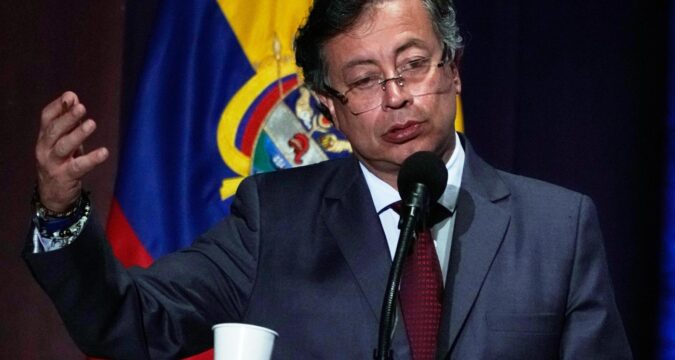
Desde Colombia, el presidente Gustavo Petro ha calificado los ataques de “asesinatos”, cuestionando un uso desproporcionado de la fuerza para hacer operativos de interdicción de drogas. Fue quien denunció que había colombianos entre los agredidos y luego secundó la denuncia sobre la muerte de Carranza, a quien describió como un pescador de la ciudad caribeña de Santa Marta.
“Salió a pescar”
La demanda ante la CIDH, que fue divulgada el martes por el medio The Guardian, detalla que el 15 de septiembre Estados Unidos “bombardeó la embarcación” de Carranza cuando navegaba en el Caribe frente a la costa colombiana.
“No era un barco cargado de droga. No, salió a pescar marlines y atunes”, insistió Kovalik. “Lo último que le oyeron decir fue: ‘Es un buen día para pescar’. Y eso fue lo que hizo”, agregó.
La solicitud cita como evidencias de la ejecución extrajudicial dos artículos periodísticos de New York Times y del Washington Post sobre las denuncias de la familia y declaraciones del secretario de Defensa estadounidense, Pete Hegseth, acerca de los bombardeos.
“Creemos que fue él quien murió. Obviamente, no hay testigos que sobrevivieran… pero el líder de la asociación de pescadores lo conocía muy bien y conocía muy bien su barco”, aseguró Kovalik, quien dijo que una asociación de pescadores de Santa Marta logró identificar la embarcación como la de Carranza.
La prensa colombiana ha dicho que una persona con su mismo nombre fue capturada en 2016, junto a varios policías, por el robo de más de 200 armas de la policía que luego habrían sido vendidas a un grupo ilegal.
Al ser preguntado por los antecedentes de Carranza, Kovalik dijo que cree que es la misma persona pero que su defendido no tiene antecedentes porque nunca fue acusado formalmente.
Amenazas a familiares
La familia de Carranza ha dicho ser de escasos recursos económicos en entrevistas a medios locales. Kovalik, abogado que representa en Estados Unidos al presidente Petro, aseguró que conoció a la familia con ayuda del gobierno colombiano y luego viajó hasta Santa Marta hace menos de un mes para informarse sobre el caso.
“Las víctimas no cuentan con recursos adecuados y efectivos en Colombia para obtener reparación… además, incluso si existieran dichos recursos, las víctimas no podrían ejercerlos de forma segura, dado que han sido amenazadas por paramilitares de derecha por el simple hecho de denunciar el asesinato del señor Carranza”, indica la petición a la CIDH.
Kovalik indicó que no ha sido contactado por familiares de otras presuntas víctimas de los ataques en el Caribe, pero animó a que denuncien.
“Lo que Estados Unidos está haciendo es asesinar a personas que no pueden defenderse, ni físicamente ni por la ley”, afirmó Kovalik, quien cree que si hubieran sobrevivido y las hubiesen acusado en tribunales de Estados Unidos, podrían haber evitado la cárcel.

Israel anuncia que reabrirá el cruce fronterizo de Rafah en los próximos días
Por FATMA KHALED y JULIA FRANKEL
EL CAIRO (AP) — Israel anunció la reapertura del cruce fronterizo de Rafah en los próximos días, lo que permitiría que los palestinos salgan de Gaza. Esto podría ser un avance importante para los residentes de la devastada Franja, para quienes ha sido extremadamente difícil —si no imposible— salir durante la mayor parte de la guerra.
El anuncio generó esperanzas de que miles de personas enfermas y heridas en la Franja finalmente puedan acceder a la atención que necesitan. El sistema de salud de Gaza fue diezmado por la guerra de dos años, haciendo que los procedimientos quirúrgicos avanzados sean inalcanzables.
Sin embargo, hay complicaciones. Por un lado, Israel dice que los palestinos que deseen salir de Gaza deberán obtener la aprobación de seguridad de Israel y Egipto. No se sabe qué criterios se seguirán para ello.
Otro punto clave de disputa: Israel dice que hasta que los combatientes en Gaza devuelvan a todos los rehenes que secuestraron en el ataque del 7 de octubre de 2023 que desencadenó la guerra, solo permitirá que los palestinos salgan de Gaza, no que entren.
Egipto, por su parte, dice que quiere que el cruce se abra inmediatamente en ambas direcciones, para que los palestinos que están en Egipto puedan entrar a Gaza. Esa es una posición arraigada en la vehemente oposición de Egipto a que los refugiados palestinos se reasienten permanentemente en el país.
Un salvavidas para Gaza
Antes de la guerra, en Rafah abundaban los bienes y personas que cruzaban de Egipto a Gaza y viceversa. Aunque la Franja tiene otros cuatro cruces fronterizos, estos son compartidos con Israel, y solo Rafah conecta el territorio con otro país.
Después de que combatientes liderados por Hamás invadieran el sur de Israel en 2023, matando a aproximadamente 1.200 personas y tomando a otras 251 como rehenes, Egipto endureció sus restricciones al tráfico a través del cruce. Después de que Israel tomara el control del lado de Gaza en mayo de 2024 como parte de su ofensiva, en la que han muerto más de 70.100 palestinos, según el Ministerio de Salud de Gaza, cerró el cruce excepto para evacuaciones médicas ocasionales.
El ministerio no distingue entre combatientes y civiles, aunque dice que aproximadamente la mitad de los muertos han sido mujeres y niños. El ministerio opera bajo el gobierno dirigido por Hamás. Está compuesto por profesionales médicos y mantiene registros detallados que son considerados generalmente confiables por la comunidad internacional.
La reapertura del cruce de Rafah facilitaría que los palestinos en Gaza busquen tratamiento médico, viajen internacionalmente o visiten a familiares en Egipto. La Organización Mundial de la Salud dice que hay más de 16.500 enfermos y heridos que necesitan salir del enclave para recibir atención médica.
También ayudaría a la diezmada economía de Gaza al permitir que los comerciantes palestinos distribuyan productos más allá de las fronteras del golpeado territorio.
Obstáculos de último minuto retrasan la reapertura
Israel dijo que el cruce se abriría en los próximos días. Un funcionario israelí, que habló bajo condición de anonimato para exponer planes operativos, dijo que la misión de la Unión Europea que supervisa el cruce necesitaba finalizar la logística antes de la reapertura.
El cruce, gravemente dañado durante la guerra, también podría requerir reparaciones. Una disputa entre Israel y Egipto sobre la entrada de palestinos a Gaza también puede retrasar la apertura.
Citando a un funcionario egipcio no identificado, el Servicio de Información del Estado de Egipto dijo el miércoles que, si se llega a un acuerdo, el cruce se utilizará para viajar en ambas direcciones, de acuerdo con un plan de alto el fuego impulsado por el presidente de Estados Unidos, Donald Trump.
Egipto se opone a aceptar refugiados de Gaza. Ya alberga a decenas de miles de palestinos y acoge a una población migrante de unos 9 millones de personas. El presidente egipcio Abdel Fattah el-Sissi ha advertido sobre las implicaciones de seguridad de transferir grandes cantidades de palestinos a la península del Sinaí de Egipto, que limita con Gaza.
Egipto apoya la creación de un estado palestino en Cisjordania ocupada, Gaza y Jerusalén este, y teme que un desplazamiento permanente pueda erosionar esa posibilidad.
Pero la portavoz del gobierno de Israel, Shosh Bedrosian, dijo que no se permitirá la entrada al enclave hasta que Israel reciba a todos los rehenes que permanecen en él. Antes del regreso más reciente de restos, se creía que había dos rehenes fallecidos en Gaza: un israelí y un tailandés. Los restos devueltos el miércoles aún no han sido identificados.
___
Frankel informó desde Jerusalén. Los periodistas de The Associated Press Melanie Lidman en Tel Aviv, Israel, y Sam McNeil en Bruselas contribuyeron a este despacho.
___
Esta historia fue traducida del inglés por un editor de AP con la ayuda de una herramienta de inteligencia artificial generativa.
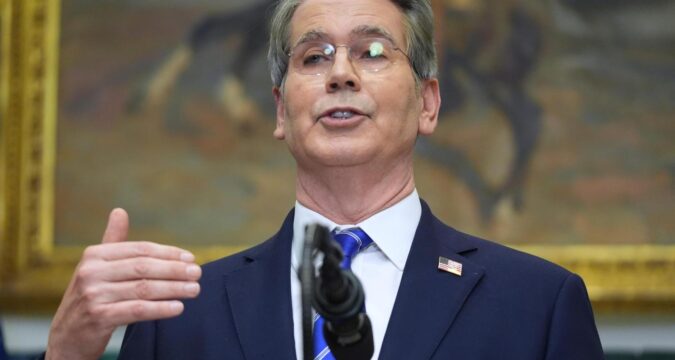
Bessent dice que Casa Blanca podría “vetar” a presidentes de la Reserva Federal
Por CHRISTOPHER RUGABER
WASHINGTON (AP) — El secretario del Tesoro estadounidense afirmó que impulsará un nuevo requisito para que los presidentes de los bancos regionales de la Reserva Federal vivan en sus distritos durante al menos tres años antes de asumir el cargo, una medida que podría otorgar a la Casa Blanca más poder sobre el banco central.
“Hay una desconexión con la estructura de la Reserva Federal”, declaró el funcionario, Scott Bessent.
“A menos que alguien haya vivido en su distrito durante tres años, vamos a vetarlos”, añadió Bessent en comentarios realizados en el DealBook Summit del New York Times.
Bessent ha intensificado sus críticas hacia los directivos de los bancos regionales que integran la Fed en las últimas semanas, después de que varios de ellos dejaran claro en una serie de discursos que se oponían a reducir las tasas de interés en la próxima reunión en diciembre. El presidente Donald Trump ha criticado duramente a la Fed por no bajar su tasa de interés a corto plazo más rápidamente. Cuando el banco central las tasas de interés, por lo general con el tiempo disminuyen los costos de los préstamos para hipotecas, préstamos para automóviles y tarjetas de crédito.
La posibilidad de que la administración vete a los presidentes de los bancos regionales representaría otro intento del gobierno de ejercer más control sobre la Fed, una institución que tradicionalmente ha sido independiente de la política diaria.
La Reserva Federal busca luchar contra la inflación y apuntalar el empleo estableciendo una tasa de interés a corto plazo que influye en los costos de los préstamos en toda la economía. Tiene una estructura complicada que incluye una junta de gobernadores de siete miembros con sede en Washington, así como 12 bancos regionales que cubren distritos específicos del país.
Los siete gobernadores y el presidente de la Fed de Nueva York votan en cada decisión sobre la tasa de interés, mientras que cuatro de los 11 presidentes restantes votan de manera rotativa. Pero todos los presidentes participan en las reuniones del comité de fijación de tasas de interés.
Bessent argumentó el mes pasado en una entrevista en CNBC que la razón de ser de los bancos regionales de la Fed era llevar la perspectiva de sus distritos a las decisiones sobre las tasas de interés de la Fed y “romper el dominio de Nueva York” en la fijación de las tasas de interés.
Sin embargo, el mes pasado afirmó que “tres, tal vez cuatro” de los presidentes de la Fed fueron nombrados desde fuera de sus distritos, con algunos viviendo en Nueva York.
“No estoy seguro de que esa sea la forma en que se diseñó la Reserva Federal”, manifestó en la entrevista.
___________________________________
Esta historia fue traducida del inglés por un editor de AP con ayuda de una herramienta de inteligencia artificial generativa.
Europe Accuses Putin Of Faking Peace Talks With Trump Envoys
Europe Accuses Putin Of Faking Peace Talks With Trump Envoys
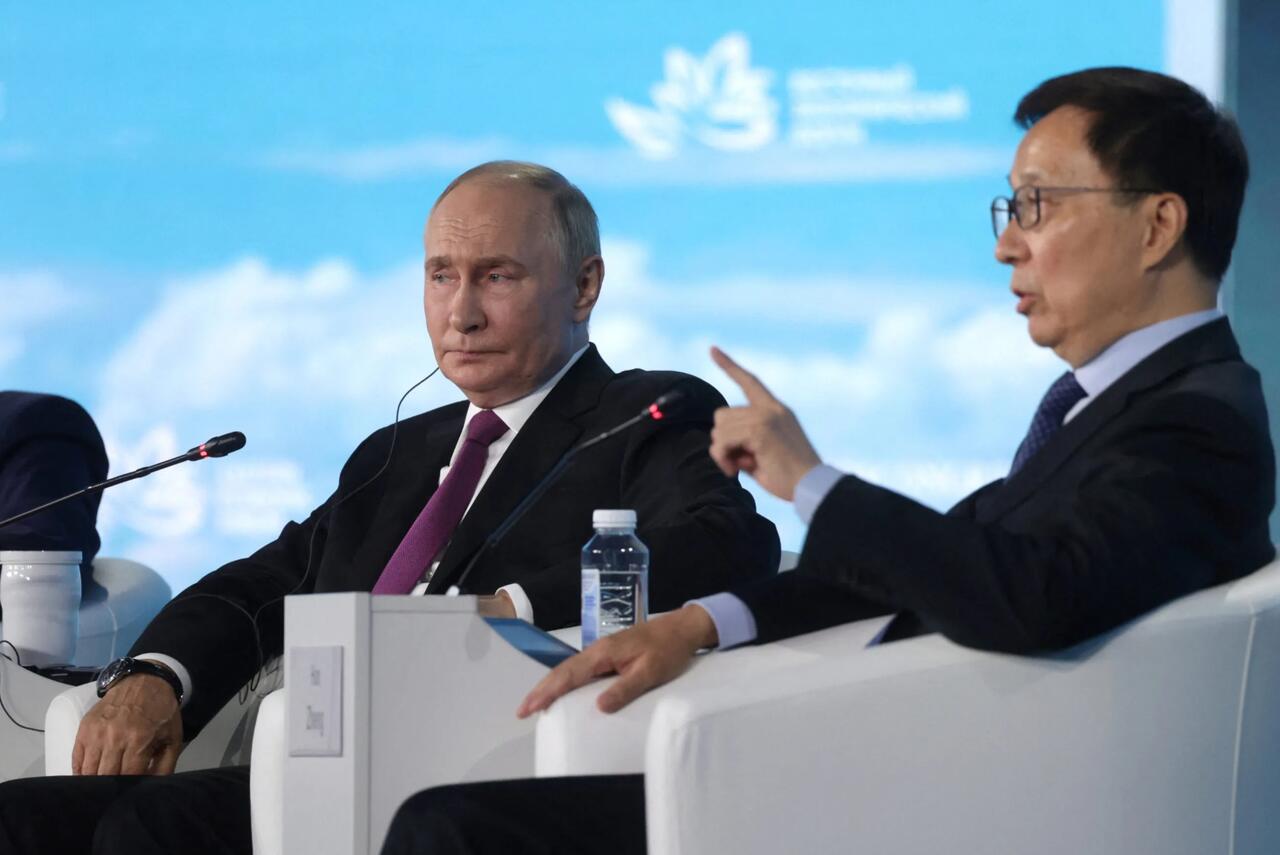
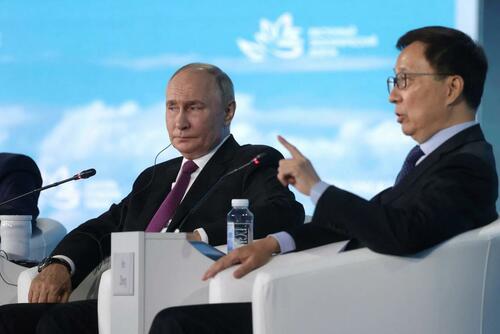
After the American delegation sent by President Trump met some 5 hours with President Putin and his team in Moscow Tuesday night, but with no significant progress made (and with some observers declaring it a ‘failure’), some European officials are trying to have an ‘I told you so’ moment.
Ukrainian and European officials on Wednesday have alleged Putin is faking a desire to achieve peace, and is intentionally wasting Washington’s time while prolonging the war and intensifying strikes on the battlefield.
For example, Ukraine’s Foreign Minister Andrii Sybiha declared immediately after the Moscow discussions that Putin should “stop wasting the world’s time.” The Zelensky government, it should be noted, has also been quietly frustrated with the White House for largely sidelining its long-running objection to territorial concessions. But the US plan is truly “new” in that it offers Russia de facto control of land in the Donbass and Crimea.
UK Foreign Secretary Yvette Cooper voiced similar criticism, saying Putin “should end the bluster and the bloodshed and be ready to come to the table and to support a just and lasting peace.”
Baltic and northern European states have continued in their rhetoric challenging the Kremlin, with Estonian Foreign Minister Margus Tsahkna responding, “What we see is that Putin has not changed any course. He’s pushing more aggressively on the battlefield.” The top diplomat said, “It’s pretty obvious that he doesn’t want to have any kind of peace.”
And Finland’s Foreign Minister Elina Valtonen said similarly, “So far we haven’t seen any concessions from the side of the aggressor, which is Russia, and I think the best confidence-building measure would be to start with a full ceasefire.”
While the Kremlin has called the Tuesday Moscow talks “constructive” – it conceded that little actual progress was made toward a deal, given Russia is demanding nothing less than full legal and international recognition of the territories under its control.
NATO Secretary-General Mark Rutte meanwhile is calling on allies to ensure Ukraine is in its strongest possible position as negotiations proceed. Of course this involves flooding Kiev with more money and weapons. “The peace talks are ongoing. That’s good,” Rutte said.
“But at the same time, we have to make sure that whilst they take place and we are not sure when they will end, that Ukraine is in the strongest possible position to keep the fight going, to fight back against the Russians. But also in the strongest possible position when peace talks really get to a point where they sit at the table,” he added.
More allegations of feigning interest in a peace process out of Western pundits:
Putin Meets With Witkoff and Kushner for Nearly Five Hours and the two sides did not reach any specific compromises, an aide to President Vladimir V. Putin said, as the United States pushes a plan to end the war in Ukraine.
Let me translate for you what this means. There was… https://t.co/0z7KAlRF5t
— Sir William Browder KCMG (@Billbrowder) December 3, 2025
Meanwhile mutual strikes on energy infrastructure continues to escalate. President Putin has also warned his military is readying to expand strikes on Ukrainian ports, in retaliation for a spate of drone attacks on tankers transporting Russian oil to global markets.
Tyler Durden
Wed, 12/03/2025 – 12:25
https://www.zerohedge.com/geopolitical/europe-accuses-putin-faking-peace-talks-trump-envoys

The Buycologist’s studies the science of why people buy
Content oversight provided by Studio 1847
Many brands spend heavily on marketing without stopping to ask the most important question: Why do people buy? For Dr. Chris Gray, known as The Buycologist, the answer lies in psychology. With decades of experience spanning retail, consumer packaged goods and global brand strategy, Gray helps leaders uncover the emotional drivers that shape buying decisions and reframe campaigns that fail to connect.
Starting with the right fit
Every engagement with Gray begins with a short introductory call. He uses that time to understand not just what a client wants, but whether the challenge belongs in his wheelhouse. “It has to be consumer psychology related,” he explains. “Sometimes I’ll tell people honestly, you don’t need someone at my level who’s as experienced as I am. But if you need deep expertise in psychology and want to apply it in a way that solves real problems, I’m your guy.”
That focus keeps his work tightly aligned with behavioral insight rather than generic marketing tactics. It is also why his partnerships often last years, growing deeper as he earns trust and demonstrates impact.
Reframing the challenge
Gray often encounters brands that shy away from aspects of their product or service that feel unconventional or uncomfortable to consumers. Rather than smoothing over those differences, he encourages teams to lean into them. “When something feels unfamiliar, it can also feel interesting or serve as a proof point for effectiveness,” he explains. “The goal isn’t to disguise what’s different but to help people understand why that difference matters.”
He often conducts qualitative research to explore how people interpret these differences and what emotional needs surface in their decision-making. For Gray, this process reinforces a guiding principle: psychology is not about hiding the truth but about helping people make sense of it from their own perspective.
The dish soap lesson
Gray’s career has produced insights that sound simple but are often overlooked by marketers. While working with a major CPG brand on dish soap, the brand manager dismissed the category as a “drive-by aisle” where shoppers mindlessly grabbed the cheapest or most familiar option and moved on. Chris disagreed.
He dug deeper and found that the real driver was not price but certainty. Busy parents, often juggling work, children and household demands, needed to know the soap would work the first time. “I can’t afford to have it not work and then redo it,” was a consistent refrain from research participants. That need for security explained why people stuck to the same brand even when new “better” products appeared. The insight reshaped the way the company marketed its products, focusing on proof of reliability instead of just promotions.
“Everything we buy satisfies an emotional need,” Gray explains. “If you dig, if you care and if you come at it with empathy, you will find the emotion behind even the most mundane purchase.”
Asking the questions others don’t
Part of Gray’s difference is the way he questions clients. He often asks leaders to first define their problem from the company’s perspective, then describe it as if they were the customer. The gap between those answers reveals empathy, or the lack of it. “I want to see how far along that journey they are,” he says. “Do they instantly get it? Do they think like their customers? Or is there a big disparity we need to bridge?”
Those questions become the starting point for strategy. By uncovering how executives view their market versus how consumers experience it, Gray aims to build campaigns that align messaging with lived reality.
Global insights, local needs
Gray’s perspective is also shaped by his international work. While leading research projects in Moscow for Coca-Cola, he was surprised when Russian consumers described Coke as a form of self-care. A local colleague explained that, unlike in the U.S., Coca-Cola was unavailable until the 1990s, so it retained the aura of a luxury treat. “That made complete sense once I heard it in their words,” Gray recalls. “To us, it was every day. To them, it still felt special.”
Examples like these illustrate a theme that runs through his work: behavior always makes sense to the person doing it. If brands can set aside assumptions and seek to understand that perspective, they can meet consumers where they are.
Ethics first
Throughout his career, Gray has resisted shortcuts. He is vocal about his philosophy that persuasion should avoid crossing into manipulation, and his keynote “Don’t Be Gross” sums up that belief in plain language. Strategies that exploit or trick may deliver short-term wins, but they erode trust. Long-term results, he argues, only come when brands build meaningful relationships with their customers by respecting their customers’ intelligence and emotional needs.
Why it matters now
For companies struggling with campaigns that fail to resonate, Gray’s work could offer a path forward. Whether reframing a challenge that feels counterintuitive, reshaping a commodity as an emotional choice or asking leaders to step into their customers’ shoes, his lens of consumer psychology is designed to reveal what traditional tactics miss.
“Any time a client tells me their category is commoditized, I know what they mean is they are not engaging people emotionally,” Gray says. “That’s where the work begins.”
Chris Gray is currently working with clients across consumer goods and global retail, but his principles apply to any industry. To explore how consumer psychology can reshape your strategy, visit TheBuycologist.com/Contact and schedule a free introductory call.
https://www.chicagotribune.com/2025/12/03/the-buycologists-studies-the-science-of-why-people-buy/

Waukegan may join ‘No Mow May’ movement: ‘Spring is a time of rebirth and renewal’
A move by some members of the Waukegan City Council’s Environment and Sustainability Committee to allow residents to forego cutting their lawns in May to benefit the environment is gaining support, and Mayor Sam Cunningham wants to see a contemplative approach.
Gaining popularity in parts of the U.S. as the “No Mow May” movement, Ald. Lynn Florian, 8th Ward, proposed the idea to her colleagues on the committee. She said it is a way to help the bee population and other pollinators make flowers grow.
Florian said participants who choose not to cut their grass in May — and place a sign in their yard letting city code enforcement inspectors know the high grass is both intentional and permissible — would not be cited for letting it grow tall.
“People believe it helps to provide an environment for the bees coming out in the spring,” she said. “I hope we’ll have an opportunity to pass this. There were already people doing this last year. There were signs in the community.”
Committee members formed a consensus of support for No Mow May during a meeting on Monday at City Hall in Waukegan, starting the process to enable residents to participate in No Mow May without fear of receiving a citation for letting their grass exceed city height limits.
Once the consensus was formed, Michael Castaldo, Jr., an attorney with Corporation Counsel Ottosen DiNolfo Hasenbalg & Castaldo, said he would prepare an ordinance for the committee to consider and recommend to the City Council.
Though there are nearly five months until May 1, Cunningham, who was not at the committee meeting, said between a variety of existing city regulations and assuring No Mow May will work in Waukegan, some caution is needed.
“There is some kind of process for things like this,” he said. “Something like this is positive, but it is not a likely rollout for (May of) 2026. We need to begin the process.”
During the meeting, Ald. Sylvia Sims Bolton, 1st Ward, wanted assurances that the program is not mandatory. Florian assured her it would be completely voluntary. Florian wants those who choose to let the grass grow for the month of May to be able to do so.
“All I want is for people to do it and not get code enforced (in) May for having taller grass,” Florian said. “If they want to participate, they can. They’ll get a sign that says this is on purpose. It is something people want to do, and we’re making it possible so they’re not having issues with code enforcement.”
Bolton also wanted to know more about potential environmental benefits. Noelle Kischer-Lepper, the city’s director of planning and economic development, said bees that nest in the ground start to emerge in May. They need to fly from plant to plant as they get out of the ground to pollinate.
“When people mow, it kills them,” Kischer-Lepper said. “Our country has had an issue with the bee population declining because of diseases and other things that affect the bee population. That makes it harder to pollinate flowers that are food sources for us.”
Ald. Keith Turner, 6th Ward, said No Mow May is a great idea the moment Florian finished introducing it. He believes it is a worldwide issue as bees are threatened in a lot of places.
“To me, this is a great idea,” Turner said. “Spring is a time of rebirth and renewal. There’s a global crisis with bees, in particular. There’s all kinds of insect life and animal life and plant life that is going. I’m all for it.”
Glenview and Northbrook are among other north suburban towns that allow No Mow May. It is also permitted in Oak Park, Lombard, Riverside, Westmont and LaGrange Park. It started in the U.S. in 2020 in Appleton, Wisconsin.
The Chicago Tribune contributed to this story.
https://www.chicagotribune.com/2025/12/03/waukegan-city-council-lawn-mowing/
El gobierno de Bulgaria retira proyecto de presupuesto tras protesta masiva
Por VESELIN TOSHKOV
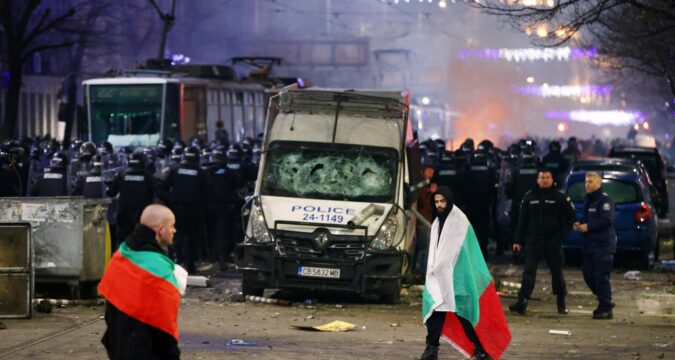
SOFÍA, Bulgaria (AP) — El gobierno de Bulgaria anunció el retiro de un controvertido proyecto presupuestario después de una manifestación pacífica que atrajo a miles, pero que se vio empañada por el enfrentamiento de un grupo de enmascarados con la policía.
Grupos de oposición y empresariales han advertido que los planes para aumentar los impuestos, las contribuciones a la seguridad social y el gasto podrían perjudicar la inversión y expandir la economía informal mientras el país se prepara para unirse a la eurozona a principios del próximo año.
El gobierno de centroderecha del primer ministro Rosen Zhelyazkov prometió inicialmente retirar el borrador para una revisión exhaustiva después de las protestas de la semana pasada, pero luego dio marcha atrás, lo que provocó protestas en la capital, Sofía, y otras ciudades importantes el lunes por la noche. Los organizadores dijeron que 50.000 se manifestaron en Sofía.
Los manifestantes, muchos de ellos jóvenes, pidieron al gobierno que revise el borrador del proyecto o dimita.
“No permitiremos que nos mientan; no permitiremos que nos roben”, coreaban las personas en la protesta en Sofía.
Las pancartas incluían lemas como: “Joven Bulgaria sin la Mafia”.
El presidente izquierdista Rumen Radev se pronunció a favor de los manifestantes en un discurso televisado a la nación el martes por la noche. Dijo que se necesitaban cambios que “llevarán al Estado de derecho y la restauración de la soberanía estatal”.
“El gobierno está desacreditado. La dimisión es urgente. Las elecciones anticipadas son el único camino a seguir”, afirmó Radev.
Instó a los búlgaros a “no perder la oportunidad de cambiar Bulgaria”, al tiempo que pidió “unidad, voluntad y sabiduría para preservar la paz de las provocaciones”.
Más temprano en el día, el primer ministro enumeró varios cambios que se realizarán, incluyendo una revisión del programa de inversiones, y no descartó la posibilidad de entrar en 2026 con un presupuesto extendido de este año.
“Haremos lo necesario para asegurar que el presupuesto sea consensuado”, dijo Zhelyazkov después de una reunión del gobierno.
Afirmó que el gobierno está listo para hacer compromisos, pero no cederá a las demandas de dimisión.
Mario Bikarski, analista senior de Europa del Este y Central en la empresa de inteligencia de riesgos Verisk Maplecroft, predijo que rehacer el presupuesto “será complicado con un mayor escrutinio de los sindicatos, grupos empresariales y el público”.
“Existe un amplio consenso sobre la necesidad de prudencia fiscal”, añadió en comentarios enviados por correo electrónico. “Sin embargo, los intentos repetidos de aumentar los impuestos probablemente inflamarán aún más las tensiones sociales”.
Convocan a manifestaciones pacíficas
Los organizadores habían instado a los manifestantes a mantener la protesta del lunes pacífica, advirtiendo que las provocaciones eran posibles y llamando a cualquiera que presenciara tales actos a grabarlos.
Las tensiones aumentaron cuando pequeños grupos de inconformes se dirigieron a las oficinas de los principales partidos gobernantes y comenzaron a lanzar botellas de plástico y vidrio, petardos y piedras a los edificios y a policías que los custodiaban.
Se produjeron enfrentamientos entre policías y jóvenes vestidos con sudaderas negras con capucha y máscaras, mientras quemaban contenedores de basura y vandalizaban vehículos policiales. Agentes antidisturbios rociaron gas pimienta a los manifestantes.
Los servicios de emergencia informaron que varias personas heridas fueron llevadas a hospitales, mientras que muchas fueron examinadas y asistidas en el lugar.
“La protesta transcurrió de manera pacífica, tranquila y calmada, y felicito a los ciudadanos por ello”, dijo el jefe de policía de Sofía, Lyubomir Nikolov, a los periodistas el martes. Explicó que la escalada fue causada por individuos que se organizaron de antemano y añadió que un total de 71 personas fueron detenidas.
El líder del partido opositor Continuamos el Cambio, Assen Vassilev, dijo a los periodistas el martes que planea presentar una moción de censura en el Parlamento “si el gobierno no dimite esta semana”.
“Este gobierno no tiene el derecho moral de gobernar el país por más tiempo”, añadió.
Incluso si se rehace el presupuesto, las preocupaciones públicas sobre la corrupción a gran escala mantendrán al gobierno impopular, particularmente entre el electorado urbano más joven.
Bikarski, el analista, argumenta que el aumento de la presión pública podría causar el colapso de la frágil coalición gobernante y llevar a otra elección anticipada, que sería la octava desde 2021. Y eso no sería buen augurio para los inversores.
“Tal escenario podría negar algunas de las ventajas operativas que las empresas esperaban disfrutar al unirse a la zona euro”, añadió.
______
Esta historia fue traducida del inglés por un editor de AP con la ayuda de una herramienta de inteligencia artificial generativa.