Category: News

What To Know About Trump’s New ‘Gold Card’ Visa Program
What To Know About Trump’s New ‘Gold Card’ Visa Program
Authored by Savannah Hulsey Pointer via The Epoch Times,
Applications opened on Dec. 10 for the Trump administration’s new Gold Card program that expedites visas for wealthy individuals.
The program, initiated by President Donald Trump, will fast-track those whom the administration believes will be an asset to the United States economy.
Here’s what to know about the program.
How the Program Works
The program, which will be administered by the U.S. Department of Commerce, will offer expedited permanent residency for noncitizens if they donate $1 million to the country, pass a background check, and pay a $15,000 processing fee to the Department of Homeland Security.
The program accepts individual applicants and includes a corporate component. Businesses that wish to participate in the program would be required to donate $2 million to the United States and pay the $15,000 processing fee.
“It’ll take in, we think, probably billions of dollars that will go to the Treasury of the United States, that will go to an account where we can do things [that are] positive for the country,” Trump said during a roundtable meeting with business leaders on Dec. 10.
After five years, a Gold Card holder is eligible to gain U.S. citizenship.
The Gold Card differs from the EB-5 Immigrant Investor Visa, in which foreign investors are asked to invest around $800,000–$1.05 million into a U.S.-based business to create at least 10 full-time jobs for American workers.
The EB-5 grants a pathway to a green card and, eventually, citizenship. However, it is tied more closely to job creation and investments, versus the Gold Card program, which is more straightforward about financial contributions.
How to Apply
In order to be considered for the Gold Card program, applicants must visit trumpcard.gov and submit an application with the nonrefundable processing fee.
After that, U.S. Citizenship and Immigration Services (USCIS) will undertake a background check to vet the applicant.
Successful applicants will receive lawful permanent resident status equal to an EB-1 or EB-2 visa.
Gold Card holders will be able to use the card throughout all 50 states and territories.
For the corporate version of the Gold Card, businesses will have to pay a 1 percent annual maintenance fee, or $20,000 per year. According to Commerce Secretary Howard Lutnick, tens of thousands had already signed up for the $5 million program by mid-June.
Regular visa terms apply, and a Gold Card can be revoked over national security or significant criminal activity issues.
According to the program website, a Platinum Card will be launched soon for individuals who want the ability to spend up to 270 days in the United States without being subject to U.S. taxes on non-U.S. income. That card will cost $5 million.
Similar Programs
Similar programs have been used in other countries in Europe, as well as the United Kingdom and some smaller nations such as St. Kitts & Nevis, Antigua & Barbuda, and Dominica.
In Portugal, investors can invest in real estate with funds amounting to roughly $580,000. Similarly, Greece offers residency for real estate investment starting around $300,000.
The Trump administration also announced the creation of a sovereign wealth fund soon after he was inaugurated in January. The fund will be a government-owned and operated investment fund.
In his Feb. 3 order to create a plan for the fund, Trump noted that other nations have used the tactic successfully and that the United States could top even Saudi Arabia’s fund, which totals $925 billion.
The president pointed out that the UK announced plans for a similar fund and said the United States would “lead the way in long-term wealth generation.”
“The United States can leverage such returns to promote fiscal sustainability, lessen the burden of taxes on American families and small businesses, establish long-term economic security, and promote U.S. economic and strategic leadership internationally,” Trump said in his order.
Other Visa Changes
Early in November of this year, the Trump administration revoked 80,000 visas for reasons including support for terrorism, “actual terrorism,” criminal activity, public safety threats, and overstays.
Secretary of State Marco Rubio, in a post on X, said the State Department “will always put the safety and interests of the American people first.”
Among the revocations, 16,000 were due to driving under the influence of alcohol, 12,000 revoked for assault, and 8,000 revoked for theft.
“The Trump Administration will not hesitate to revoke visas from foreigners who undermine our laws or threaten our national security,” Tommy Pigott, the State Department’s principal deputy spokesperson, said in a Nov. 5 post on X.
Additionally, the administration invalidated visas for several foreign nationals who celebrated the Sept. 10 assassination of conservative commentator Charlie Kirk.
“The United States has no obligation to host foreigners who wish death on Americans,” the State Department wrote on X.
In September, Trump also announced an additional $100,000 fee for new applicants to the high-skilled labor H-1B visa program.
Tyler Durden
Fri, 12/12/2025 – 12:05
https://www.zerohedge.com/geopolitical/what-know-about-trumps-new-gold-card-visa-program

Lake County expanding ‘central nervous system’ of traffic flow
The Lake County Board recently approved $1.2 million for Lake County PASSAGE, which will go toward expanding the 20-year-old network acting as the “central nervous system” of Lake County roadways.
At the county’s Libertyville campus, the Transportation Management Center is something of a miniature NASA control room: A few pairs of desks and computers face a wall of screens, displaying views of intersections across the county.
From there, Lake County Department of Transportation engineers and staffers track, analyze and manage drivers’ daily commute, all part of what’s known as Lake County PASSAGE.
PASSAGE’s work is largely invisible to everyday drivers, but behind the scenes, their engineers are always looking at how to improve traffic flow. That includes modifying signals for holidays, events and weekends, taking into account the different traffic patterns each can have.
Center manager Ryan Legare called PASSAGE an “intelligent transportation system,” which uses various technologies to improve traffic flow. Charles Askar, an engineer of traffic, called it the “central nervous system” of traffic management for Lake County.
It was started in 2006 using federal money, Legare said, and at the time, traffic signals were connected by phone lines throughout the county and fragmented. PASSAGE brought fiber optic cables and consolidation, allowing a central location to analyze and control a growing network of traffic signal infrastructure in real time.
Traffic Management Center Manager Ryan Legare shows off a detection camera, which watch for cars at intersections to inform the traffic signals. Legare said the center’s work is focused on improving traffic flow. (Joe States/Pioneer Press)
Today, there are roughly 300 miles of fiber optic cable in Lake County for the traffic systems. Of the 750 traffic systems in the county, the center is connected to about 680 in real time, meaning staffers get live feedback on equipment status.
That can be critical for managing traffic, Legare said, such as when a light malfunctions and goes into “four-way flash,” where it simply blinks red.
“In the old days, if a traffic signal went into flash, it may be in flash all weekend, and it may go into the morning rush hour on Monday,” he said. “Because we’re connected, we know about it right away.”
Traffic light control isn’t all they have, however. Since its start, Legare said PASSAGE has utilized traffic monitoring cameras, which provide live feeds for engineers that can be seen online on the PASSAGE website.
Legare emphasized that those cameras are not recording video, but instead taking regular snapshots for traffic analysis purposes. Those images are stored for 10 days before being automatically purged, he said.
For practical reasons, the county isn’t in the business of storing the vast amount of data recording the feeds would generate, he said.
If staffers spot an incident on their network’s cameras, PASSAGE can notify emergency responders and law enforcement, and Legare said they have agreements in place to allow them to utilize the video feeds. However, they are not allowed to record.
Beyond the snapshot cameras, some intersections also have cameras meant solely to detect vehicles, which then tell the traffic signal that there are cars waiting at the intersection.
It’s an advancement on the previous method, which was done through sensors built into the road that would detect the metal of the car. But those were “intrusive,” he said, requiring breaking up the road to replace.
Expansion and future
The $1.2 million will be used for further expansion of infrastructure connecting traffic signals, including the installation of a network switch that will allow more redundancy in the western part of the county, where there are more isolated areas of traffic signals, Legare said.
Looking ahead, he said there have been discussions about a variety of new technologies.
The word of the day is artificial intelligence, and Legare said they’re aware of new technologies emerging in their field, with various proposals about how AI could be utilized to move traffic faster.
At this point, “we’re not there yet,” but the network will be able to accommodate such technology, he said.
https://www.chicagotribune.com/2025/12/12/lake-county-traffic-management/

After transferring between Hillcrest and St. Laurence, Gabe Mobley anchors Bishop Noll. ‘We need him.’
Gabe Mobley has found his place at Bishop Noll.
The 6-foot-4 guard began his career at Hillcrest and then transferred to St. Laurence for his sophomore year. Mobley returned to Hillcrest for his junior year but remained there for just one semester. He joined the Warriors for the second semester.
“When he first got here, he was quiet,” Bishop Noll coach Ryan Schooler said. “He was a quiet kid, and I said, ‘We need to make you more vocal and bring you out of your shell.’ He was never really put in the position that he’s forced to be in this year because he is a senior, he is one of our offensive weapons. I said, ‘Gabe, you need to show more emotion on the court.’
“He’s stepping into that role of being a leader. But it’s also hard for him because he’s such a quiet kid. That’s a personality thing. He doesn’t want all the glamour and everything shining on him. But we need him. We need him, and he’s been stepping up for us.”
Indeed, Mobley has become an invaluable player for the Warriors (4-1), pacing them in scoring and typically guarding the opposing team’s top player. Mobley was averaging a team-high 17.0 points and 3.6 rebounds before a game against Kankakee Valley on Friday.
In Bishop Noll’s 69-68 win over Griffith on Wednesday, Mobley scored a career-high 30 points, making 7 of 13 shots from the field and 15 of 17 free throws.
“I had just talked to Gabe the day before because he was getting frustrated that his offensive production wasn’t what it normally was,” Schooler said. “I just said, ‘You need to be patient. You just need one game to get you back on track.’ I just told him, ‘Just make it simple. You’re usually stronger and faster. So just use your athleticism and strength to get to the basket. Make it easier.’
“He was trying to make it too hard. He’s an inside-outside guy, and I said, ‘Just keep it simple. You will get calls if you go to the basket. Use your shot fake. Once you start driving to the basket, you can start shooting from the outside.’ He saved our butts.”
Mobley, a captain with senior guard Maddux Laurincik and senior forward Jamaul Hall, has taken his success in stride.
“I feel a lot more settled down,” Mobley said. “My coaches have put so much trust into me, and it’s really starting to show. It’s been easier just because my teammates have put so much trust in me too. It just allows me to keep doing what I need to do to keep going forward.”
Mobley has helped drive the Warriors, who have won back-to-back Greater South Shore Conference titles and two sectional titles in the past four seasons.
“I like his mentality more than anything,” Laurincik said. “He comes to play every single game. He’s always trying to win. He never gives up on a game. He’s working hard in practice. I just love playing with him. He’s a great teammate.”
Mobley averaged 8.8 points last season. Since then, he grew an inch and gained about 15 pounds to get to 175. His target weight is 190 before he gears up to play in college.
Mobley wants to pursue a career as an anesthesiologist. His mother is a certified registered nurse anesthetist, and two of his aunts are nurses.
“For basketball, I would really like to go at least DII,” Mobley said. “That’s what I think my skill level is. But I’m going to be grateful for whatever comes my way.”
Bishop Noll’s Gabe Mobley, left, pressures Hanover Central’s Henry Maurer during a nonconference game in Hammond on Tuesday, Jan. 14, 2025. (Andy Lavalley / Post-Tribune)
Mobley has become increasingly accustomed to seeing defenses come his way.
“With everybody focusing on him on offense and trying to stop him, we’re trying to teach him how to distribute the ball,” Schooler said. “It’s all been a learning experience because now teams are keying on him. Well, that’s helping us because now we’re dragging the other team’s best defender out, and now he’s learning how to dish it off and create opportunities for other guys.
“He was really down on himself because he wasn’t scoring well. I told him, ‘It doesn’t matter. You’re bringing the other team’s best defender out, so you’re making it easier for the other guys to step up and score.’ He had a hard time understanding his value on the floor. Even if he’s not scoring, he’s doing something valuable.”
Mobley hopes that complementary approach can carry the Warriors on a deep postseason run.
“My goal is to make it to at least semistate,” he said. “At least semistate. We can do that.”
If so, Mobley probably will figure prominently.
“He sets the tone for us in practice and in the locker room before games,” Schooler said. “As far as me being a coach, having a kid like that makes my job much easier. He holds other people accountable. I’m in the locker room, I give my speech, then I can hear him getting the kids ready, getting the kids motivated. For a coach, that’s amazing. It’s like having a coach in the locker room and on the court.
“He’s doing a good job because it’s all brand new to him. He was never put in that position. … He’s a great kid, a great student, but he’s a shy kid, a shy student. It’s hard for him at times. But he’s doing a great job. He’s a great teammate, which makes it better too.”
https://www.chicagotribune.com/2025/12/12/basketball-bishop-noll-gabe-mobley/

Cómo la banda Mariachi Rams convirtió el día de juego de la NFL en la banda sonora de Los Ángeles
Por JONATHAN LANDRUM Jr.
Crystal Hernández prepara su violín y escanea a la multitud desde el sexto piso del SoFi Stadium mientras 70,000 fanáticos ingresan a un partido en casa de los Rams de Los Angeles. Debajo de ella, las camisetas azul y dorado se mezclan con trajes de charro y sombreros, y el bajo murmullo del ruido previo al juego se convierte en las notas iniciales de “Crazy Train” del fallecido Ozzy Osbourne, recreadas a través de trompetas, guitarrón y vihuela.
A la derecha de Hernández, la guitarrista de rock Nita Strauss se destaca con un solo eléctrico mientras el conjunto de mariachi de varias piezas se sincroniza en ritmo. En el vestíbulo, los fans se detienen a mitad de paso, teléfonos en alto, cautivados por la fusión improbable de rock, mariachi y fútbol americano.
En los juegos, no es inusual escuchar la música de Kendrick Lamar, Bad Bunny y Beyoncé resonando a través de los altavoces. Pero los Mariachi Rams están redefiniendo el sonido del día de juego de la NFL, al mezclar la música tradicional mexicana con las influencias de hip hop y rock de Los Ángeles de una manera que ningún otro equipo en la liga hace.
“Creo que eso es especial porque podemos mostrar cuán versátil es la música de mariachi al público de la NFL”, dice Hernández, quien es la única mujer en la primera banda oficial de mariachi de la NFL. Es hija de la leyenda del mariachi José Hernández, quien formó el conjunto cuando se asoció con los Rams en 2019.
En un momento, tocan estándares clásicos de mariachi. Al siguiente, están convirtiendo “California Love” de Tupac Shakur en un himno cargado de metales mientras un coche lowrider rebota cerca y los fanáticos rugen desde las gradas.
“Las cosas que salen de nuestras comunidades, todas nuestras comunidades, todos nos representamos mutuamente”, dice el rapero Xzibit, quien actuó con la Banda de Marcha de la USC en el medio tiempo durante el juego de los Rams contra los Tampa Bay Buccaneers. Él dice que ver a los Mariachi Rams en el escenario de la NFL habla de cómo la cultura se mueve por la ciudad sin fronteras.
“Ser parte de algo donde la cultura es abrazada a ese nivel”, dice Xzibit. “Es cuando sientes que eres parte de algo que importa”.
La novedad de los Mariachi Rams en la NFL
José Hernández no llegó a los Mariachi Rams por accidente.
Un miembro del personal de los Rams se le acercó hace varios años con un video de un grupo de mariachi actuando en un importante partido de fútbol y le hizo una pregunta simple: “¿Podría esto funcionar para el fútbol americano?”, recordó el músico nominado al Grammy y fundador de Mariachi Sol de México y Mariachi Reyna de Los Ángeles, un conjunto de mariachi femenino que incluye a Crystal Hernández.
José Hernández no dudó. Creía que podría funcionar con los músicos adecuados y un rango musical amplio. Lo que siguió fue la formación de un conjunto de diez miembros diseñado para unir la tradición y el sonido moderno de Los Ángeles, interpretando estándares clásicos de mariachi junto con himnos pop y hip hop reinventados desde “El Rey” hasta “California Love” de Tupac.
“Es orgullo y pasión”, dice Hernández.
Los Mariachi Rams están compuestos por:
Santiago Espinoza (vihuela), Mateo Real (guitarra), Joshua Gutiérrez (guitarrón), Kevin Ramírez (trompeta), Christopher Rubalcava (trompeta), Crystal Hernández (violín), Adrián Arias (violín), Ricardo Ríos (violín), Ricardo Cisneros (violín) y Joaquín Telles (violín).
Hernández dice que su visión desde el principio fue reflejar la ciudad que los rodea musical y culturalmente.
“Cuando ven a jóvenes músicos en esa pantalla gigante en SoFi tocando canciones con las que se conectan completamente, no puedes ni imaginar el orgullo que sienten”, dice.
Mientras que otros equipos de la NFL, incluidos los Houston Texans, ahora presentan bandas de mariachi como parte de su programación cultural, los Rams fueron los primeros en integrar un conjunto de mariachi como un elemento recurrente del día de juego cuando lanzaron los Mariachi Rams hace seis años. Desde entonces, un puñado de equipos ha seguido su ejemplo.
De las aulas a los trajes de charro: Las vidas entre semana de los Mariachi Rams
Detrás de las luces del estadio y los momentos virales del medio tiempo están los músicos que pasan la mayor parte de su semana lejos del campo enseñando a estudiantes, trabajando en oficinas, diseñando gráficos o actuando en orquestas clásicas en el sur de California.
Varios miembros de los Mariachi Rams enseñan a través de la academia de mariachi de José Hernández. Otros equilibran carreras en educación, banca, diseño gráfico o son miembros de orquestas antes de transformarse en animadores de estadio los domingos.
“Tienen carreras, sus trabajos regulares durante la semana”, dice José Hernández. “Para ellos ponerse ese traje e ir a SoFi y tocar… no puedes imaginar el orgullo que sienten”.
Santiago Espinoza, el vihuelista de la banda y educador musical, dice que la banda se ha convertido en “estrellas de rock de alguna manera”, especialmente dado lo a menudo que aparecen en las enormes pantallas de video del estadio SoFi.
“Otras personas que tal vez no conocen el mariachi, vienen a un juego y tal vez experimentan el mariachi por primera vez y simplemente les encanta”, dice. “La energía y la vibra que da es simplemente eléctrica”.
Esa energía viaja mucho más allá del vestíbulo.
“Incluso los jugadores en el campo lo notan… todo el estadio está interconectado”, dice Espinoza. “Es como una gran familia. Nos gusta llamarlo la Ramilia”.
La presencia de la banda se ha integrado tanto en el ritmo del día de juego de los Rams que los fanáticos inmediatamente perciben cuando algo cambia.
El grupo generalmente actúa tres veces en el día del juego: cuando se abren las puertas, durante un descanso del primer cuarto y nuevamente más tarde dependiendo del flujo del juego. Su papel se ha expandido a eventos comunitarios, fiestas de visualización y activaciones del equipo en todo Los Ángeles.
Esa evolución incluye una colaboración navideña con la banda War, que interpretará “Feliz Navidad” junto a los Mariachi Rams en SoFi el domingo.
“Hubo tal vez un juego donde tuvimos que cortar una de sus actuaciones, y la gente… lo escuchó en la voz del fanático”, dice Marissa Daly, vicepresidenta senior de estudio y marketing de los Rams. “Fue como, ‘¿Por qué solo tocaron dos veces?’”
Aunque los Mariachi Rams son una iniciativa impulsada por los Rams, no un programa oficial de la NFL, su ascenso encaja dentro de un impulso más amplio de la liga para expandir cómo el fútbol americano se conecta culturalmente.
Recientemente, la NFL ha destacado a artistas latinos en juegos internacionales y eventos importantes como parte de una estrategia para expandir su presencia global y multicultural.
La música de mariachi ha estado durante mucho tiempo entretejida en la vida pública de Los Ángeles. Es un elemento básico en varios vecindarios a través de quinceañeras, bodas, desfiles, festivales callejeros y celebraciones de campeonatos. Llevar ese sonido al SoFi Stadium, dice Daly, se trataba de introducir algo nuevo a la ciudad con la esperanza de reflejar lo que ya estaba allí.
“Nuestro logotipo principal son las dos letras ‘Los Ángeles’. Es LA, ¿verdad?” dice Daly. “No puedes no celebrar la cultura mexico-estadounidense si eres un angelino. Si no entiendes la cultura mexico-estadounidense, probablemente no vas a conquistar este mercado”.
Mariachi Rams rompe la tradición al tiempo que mantiene el legado
Para Crystal Hernández, el significado de los Mariachi Rams va más allá de la música y el día del juego. Se trata de visibilidad en un espacio que rara vez ha hecho lugar para las mujeres.
“Hace que la gente se sienta vista”, dice sobre la presencia de la banda en SoFi. “Les emociona ver que su equipo local, los Rams, reconoce eso y lo abraza”.
Como la única mujer en el grupo, Hernández dice que se encuentra en la intersección de la tradición y el cambio. Para su padre, el momento es profundamente personal, pues dice que rompió el molde de las siete generaciones de músicos masculinos de su familia.
José Hernández cree que la banda también puede romper barreras.
“Creo que es el comienzo de un movimiento en la NFL”, dice. “Si estos equipos saben que tienen fanáticos latinos apoyándolos, van a pensar en traer mariachi también”.
___
Esta historia fue traducida del inglés por un editor de AP con la ayuda de una herramienta de inteligencia artificial generativa.

Rusia demanda a institución financiera belga cuando UE evalúa usar activos congelados de Moscú
Por THE ASSOCIATED PRESS
El Banco Central de Rusia presentó una demanda contra la institución financiera belga Euroclear, la cámara de compensación con sede en Bruselas que posee la mayoría de los activos congelados de Moscú en Europa, informó el banco el viernes.
De momento no está claro qué podría lograr la demanda, ya que fue presentada en Moscú.
La Comisión Europea, el brazo ejecutivo de la UE, estima que en Europa se mantienen activos rusos congelados por un valor de 210.000 millones de euros (247.000 millones de dólares). A finales de septiembre, Euroclear tenía alrededor de 193.000 millones de euros (225.000 millones de dólares) de ese dinero.
El Banco Central de Rusia indicó que con la demanda, presentada en la Corte de Arbitraje de Moscú, busca recuperar los daños que sufrió cuando se le prohibió gestionar y disponer de sus fondos y valores en Euroclear.
Euroclear declinó comentar sobre el caso.
En un comunicado separado, el Banco Central de Rusia también condenó los planes más amplios de la UE de utilizar activos rusos para ayudar a Ucrania como “ilegales, contrarios al derecho internacional”, argumentando que violaban “los principios de inmunidad soberana de los activos”. Es la primera vez que el banco comenta públicamente sobre los planes.
La UE congeló los activos de Rusia basados en el bloque de 27 naciones poco después del inicio de la guerra a gran escala de Rusia en Ucrania el 24 de febrero de 2022. Estas sanciones deben renovarse cada seis meses, y todos los miembros de la UE deben aprobarlas para que eso suceda.
En una cumbre la próxima semana, los líderes de la UE decidirán si utilizar decenas de miles de millones de estos activos para financiar las necesidades militares y económicas de Ucrania, usándolos como garantía para un gran préstamo para Kiev.
Ucrania necesita financiamiento para apoyar su esfuerzo bélico. Pero tal medida nunca se ha realizado antes y conlleva riesgos.
El Banco Central Europeo ha advertido que si los europeos parecen dispuestos a apropiarse del dinero de otros países, podría socavar la confianza en la moneda euro.
Algunas naciones miembros también están preocupadas por invitar a represalias de Rusia. El primer ministro belga Bart De Wever se ha negado a aprobar el plan, citando temores de que Rusia actúe en contra de los intereses de Bélgica.
___
Esta historia fue traducida del inglés por un editor de AP con la ayuda de una herramienta de inteligencia artificial generativa.

Indiana Senate panel testimony favors total student phone ban
A tougher crackdown on student cell phones in schools is being considered by Hoosier lawmakers, just one year after they approved a bill outlawing phones during class time.
On Dec. 9, the Senate Education and Career Development committee heard testimony on Senate Bill 78 that proposes a “bell to bell” ban on student phone use during the school day.
Essentially, school districts would choose one of two options — store cell phones at school or mandate they be left at home.
The ban would also cover all student personal devices such as laptops and smartwatches.
The state Department of Education would establish a model policy for school districts to consider.
Testimony on Tuesday came from individuals and representatives from advocacy groups who all favored the bill. The committee won’t take a vote until January, said Sen. Jeff Raatz, R-Richmond, who authored the bill.
Under the bill, exceptions could be made for some special education students; students with a documented medical condition; critical incident emergencies in which a school leader allows access; and in cases of non-English speaking students who use language translation on their devices.
“Someone has to be an adult in the room to set up so kids can communicate with their parents, should there be an incident,” Raatz said.
Under the current law, River Forest Superintendent Kevin Trezak said students generally aren’t caught with phones during class time.
“It won’t be a huge change for us,” he said of the legislation. He said phones aren’t collected, but rather teachers monitor their classrooms for phone distractions.
Kristin Casper, of Stand for Children Indiana, shared results of a recent survey in Indianapolis that showed widespread support for a stricter policy.
“The further away from the phone, the higher the GPA,” she said of recent data.
She said Fort Wayne schools enacted a “bell to bell” ban last year and it cited fewer behavioral problems, and higher grades.
LaToya Hale-Tahirou, a mother of three, said her views have changed on cell phones in schools.
“As a helicopter parent, my opinion has evolved… I used to be a big believer in my children having their cell phones at all times, especially my daughter…”
She reversed her opinion though after seeing the impact cell phones have on her children.
“I fully support any attempt to address the negative implications and addictive behaviors driven by smartphone use.”
Such a ban would increase academic performance, she said.
“We need to take the phones out of the hands of young people, at least for the hours during school. And help them recapture their ability to be attentive and form more meaningful relationships.”
Carole Carlson is a freelance reporter for the Post-Tribune.
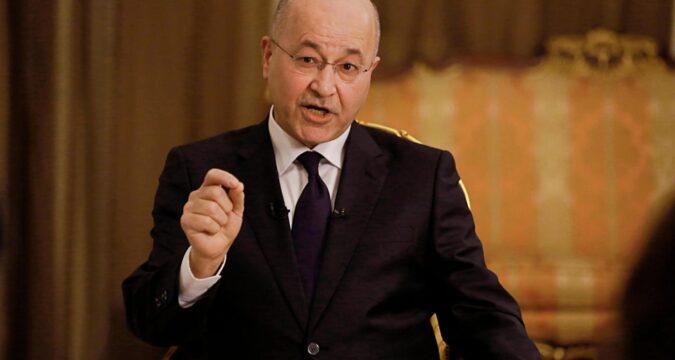
Expresidente iraquí podría convertirse en nuevo jefe de la agencia de refugiados de la ONU
Por JAMEY KEATEN
GINEBRA (AP) — El secretario general de la ONU, António Guterres, recomendó al expresidente iraquí Barham Salih como el próximo jefe de la agencia de refugiados de la ONU; de confirmarse, sería el primer funcionario de Oriente Medio en ocupar el cargo en medio siglo, según una carta enviada por el jefe de la ONU.
Se prevé que Salih, de 65 años, suceda al veterano de ACNUR Filippo Grandi como Alto Comisionado de las Naciones Unidas para los Refugiados. Grandi asumió el cargo el 1 de enero de 2016, y su segundo mandato de cinco años expira el 31 de diciembre. Fue sucesor de Guterres en el puesto.
Salih, originario de la región iraquí del Kurdistán, fue presidente de Irak de 2018 a 2022. Sería el primer director no occidental de la agencia de refugiados con sede en Ginebra desde el príncipe Sadruddin Aga Khan de Irán, que dirigió el organismo de 1966 a 1977.
Una carta sobre la selección, fechada el jueves y firmada por el secretario general de la ONU, fue dirigida al embajador Atsuyuki Oike, el principal diplomático de Japón en Ginebra y presidente del comité ejecutivo de ACNUR. La misiva fue difundida ampliamente en las redes sociales y The Associated Press recibió una copia el viernes.
Funcionarios diplomáticos en Ginebra, que hablaron bajo condición de anonimato porque el nombramiento aún no había finalizado, dijeron a la AP que la carta era auténtica.
Alessandra Vellucci, portavoz principal de la oficina de la ONU en Ginebra, dijo que el nombramiento debe pasar por “un proceso adecuado” que incluye consultas con el comité, y la Asamblea General de la ONU en Nueva York tomará la decisión final.
“El proceso está en curso. Y una vez que se termine, las Naciones Unidas harán un anuncio oficial”, dijo a los periodistas en una rueda de prensa regular de la ONU.
La esperada sucesión se produce al final de un año devastador para muchas organizaciones de la ONU, como la agencia de refugiados con sede en Ginebra. El organismo ha recortado miles de empleos y gastos a raíz de la drástica reducción de las contribuciones de ayuda extranjera por parte de Estados Unidos, que tradicionalmente había sido su principal donante, así como de otros países occidentales.
El mandato presidencial de Salih se produjo inmediatamente después de la ofensiva del grupo Estado Islámico en Irak y la batalla para recuperar el territorio tomado por el grupo extremista, incluida la importante ciudad norteña de Mosul.
Al menos 2,2 millones de iraquíes fueron desplazados al huir de la ofensiva del grupo radical. Muchos de ellos, particularmente miembros de la minoría yazidí del distrito norteño de Sinjar, permanecen hoy en campamentos de desplazados.
En su primer mandato, el presidente de Estados Unidos, Donald Trump, realizó una visita no anunciada a Irak cuando Salih era presidente.
Salih, originario de la ciudad de Sulaimaniyah en la región kurda semiautónoma del norte de Irak, vivió en el extranjero y estudió en Reino Unido durante años en el gobierno del líder autocrático de Irak, Saddam Hussein.
Regresó a Irak y ocupó varios cargos en el gobierno tras la invasión de 2003 que derrocó a Saddam, entre ellos, ministro de planificación y viceprimer ministro. De 2009 a 2011, se desempeñó como primer ministro de la región kurda.
___
Esta historia fue traducida del inglés por un editor de AP con la ayuda de una herramienta de inteligencia artificial generativa.
Belgium Gets Cold Shoulder Ahead Of Russian Asset Confiscation
Belgium Gets Cold Shoulder Ahead Of Russian Asset Confiscation
By Molly Schwartz, Cross-Asset Macro Strategist at Rabobank
The Cold Shoulder
Tensions remain high as Russia and Ukraine fail to reach a ceasefire agreement, even as U.S. pressure mounts. One key demand in Russia’s 20-point proposal is a full Ukrainian withdrawal from the Donbas region, a condition that runs counter to President Zelenskyy’s policy of refusing to cede any territory.
According to Bloomberg, Zelenskyy noted that the U.S. has floated the idea of designating the area a “free economic zone,” while Russia has called it a “demilitarized zone.” Zelenskyy would prefer that it remain a ‘Ukrainian zone,’ but has stated that the ultimate decision on Donbas will rest with the people, to be determined through a referendum or election.
Meanwhile, Russia is stirring concerns in Western Europe. NATO’s Mark Rutte warned EU member states yesterday that “[Europe] must be prepared for the scale of war our grandparents and great-grandparents endured.” Speaking in Berlin, he emphasized that broader Europe is “Russia’s next target” and that the continent is “already in harm’s way.”
So while Europe pontificates about how important it is to strengthen their defense, they have turned to leveraging their financial chops. Following Russia’s invasion of Ukraine, the EU froze Russian assets. Should a peace deal between Russia and Ukraine come to fruition, Russia would like its money back…but the EU has other plans.
At next week’s EU Summit, European leaders will consider using frozen Russian assets to fund Ursula von der Leyen’s plan to cover part of Ukraine’s requirements for 2026 and 2027. As of now, much of the funding comes from interest generated on said frozen Russian assets. Russia is not thrilled about having their assets used for other purposes, calling it theft. While the EU argues that there is no “theft” as “the right of the Russian Central Bank to make a claim on its money and Euroclear’s duty to repay will remain in tact,” one key EU player is taking Russia’s side.
Prime Minister of Belgium, Bart De Wever voiced the following: “The European states pushing for the confiscation of Russian assets in Belgium are mostly those bordering Russia, which have experienced Soviet tyranny and are psychologically at war. But we are not at war with Russia. And we do not wish to be at war with Russia. We must negotiate based on reality, not fantasy. In reality, you don’t steal money from a foreign central bank. Stealing from a central bank is like robbing an embassy.”
Confiscating Russian assets could also complicate peace negotiations. Reducing incentives for the aggressor to agree to a ceasefire may not be the most effective strategy. For now, Belgium appears outnumbered and the EU seems poised to approve the measure.
But such insolence does not come without consequence. Indeed, rather than military intervention or Statecraft, Belgium may have to face something far worse should De Wever fail to come around…the cold shoulder.
As Belgium risks the cold shoulder, Putin is cozying up to Maduro, stomping on the sanctity of the “Donroe Doctrine.” Putin and Maduro spoke over the phone, with Putin promising Moscow’s support for Venezuela and Maduro’s government. The two leaders spoke by phone, with Putin pledging Moscow’s support for Venezuela and Maduro’s government. Weeks earlier, Maduro reportedly told Trump he would leave Venezuela if granted full legal amnesty for himself and his family.
The U.S., meanwhile, is ratcheting up pressure on Maduro. While the EU debates financial measures, Washington is signaling readiness for escalation. The U.S. has increased its military presence off Venezuela’s coast and recently seized a Venezuelan oil tanker. U.S. Attorney General Pamela Bondi announced on X that the tanker was seized under a warrant for transporting sanctioned oil from Venezuela and Iran, sharing video footage of the operation.
Tyler Durden
Fri, 12/12/2025 – 11:15
https://www.zerohedge.com/markets/belgium-gets-cold-shoulder-ahead-russian-asset-confiscation

Letters to the Editor: Coyne perpetuates GOP lies about vote-by-mail integrity; ordinary people have the power to make change happen
Coyne perpetuates GOP lies about vote-by-mail integrity
I disagree with DuPage GOP Chairman Kevin Coyne’s assessment of the topic of election integrity in his letter to the editor published on Sunday, Nov. 30.
His statements that “voter confidence in the integrity of our elections is at an all-time low, and that DuPage voters don’t trust vote-by-mail” are not shared by the vast majority of all American voters. Mr. Coyne’s comment that “games are being played with mail-in-ballots” are not “abundantly clear,” as he claims. This belief or position is primarily held by members of the GOP.
The GOP sadly has become Donald Trump and he continues to maintain the lie, without evidence of course, that the 2020 election was stolen from him in large part because of mail-in-ballots, a position the GOP validates and promotes with ongoing false narratives on the process of handling, distribution, collection and counting of mail-in-ballots. Our elections have been and still are safe and secure.
Having said that, I would strongly advise the county clerk’s office, the League of Women Voters and the Democratic Party not to participate in or lend credit to any so called and completely unnecessary “public hearings” directed at mail-in-voting in particular. It is my fear that these hearings will be used to undermine and disrupt future elections. By implying there are irregularities that are being “investigated” to create doubt, the current administration will have an excuse to try to react with some type of intervention, possibly as extreme as voting machine impoundment, etc to take over ballot validation.
Mail-in-ballots are a critical and legitimate form of voting that enables many people who are unable to physically cast their ballot have their voices heard. This should not be surprising to anyone. Let’s protect the system.
Don Orchard, Naperville
Ordinary people have the power to make change happen
As politics becomes increasingly online, it’s easy to feel alone and powerless. But it was the power of ordinary citizens that facilitated Trump’s presidential run in 2016, and it’s the power of ordinary citizens that resist him in protests across the country today. Anyone can have power if they’re just willing to take it.
Power is formed by bringing people together for a common goal. If you’re an employee, connecting with your fellow workers on issues of workplace inequality or otherwise unfair work environments can lead to strikes that force positive change. If you’re unhappy with our current political climate, connect with other dissatisfied people to campaign for new policies or alternative political candidates.
Maybe you can’t reach ten thousand people, but what about 20? 10? Even finding one other person can snowball into a larger movement forming. Just starting with a few other people to solve small local issues can build power until you can make changes at a state or even national scale.
If building power through leadership isn’t for you, you can still contribute your power to a greater cause. Find organizations you agree with and support them. If you can’t afford to donate or volunteer for them, you can still share them with other people who may be interested. Social media and news sites are a solid place to find these groups, especially at a larger scale, but even local organizations have power that is worth investing in. Even if you aren’t comfortable starting a movement on your own, participating in an existing organization may give you the confidence, knowledge, and connections to start building something greater.
Lastly, there is power in being informed. If you want more information on power, Dennis Wrong has a book on its role in sociology and social theory, and Eric Liu has some great speeches on civic power that you can find on YouTube.
Also, pay attention to local and national news. You may find rallies or petitions by political organizations that are worth getting involved in, or social issues that are fighting for. Informing others about their power can also be powerful in its own right. Learning the language of power can help you recognize the influence of others while building your ability to bring about change.
Corey Budd, Plainfield
Naperville Central College student
Share your views
Submit letters to the editor via email to suburbanletters@tribpub.com. Please include your name, address and town of residence for publication. We also need your phone number and email address for confirmation. Letters should be no more than 400 words.
https://www.chicagotribune.com/2025/12/12/letters-naperville-coyne-voting-power-change/

Gov. JB Pritzker signs controversial Illinois medical aid-in-dying law amid strong debate and opposition
SPRINGFIELD — Gov. JB Pritzker on Friday signed into law a measure that would allow doctors to help terminally ill people end their lives after the controversial bill barely cleared the Senate during the fall legislative session, where one skeptic said it could bring “a culture of death” to Illinois.
Illinois now joins at least 10 other states, among them California, Hawaii, Colorado, Oregon, as well as Washington, D.C., in allowing medical aid in dying.
In a statement Friday morning, the governor said he was moved by supporters’ “dedication to standing up for freedom and choice at the end of life in the midst of personal heartbreak.”
“Today, Illinois honors their strength and courage by enacting legislation that enables patients faced with debilitating terminal illnesses to make a decision, in consultation with a doctor, that helps them avoid unnecessary pain and suffering at the end of their lives,” he said in a statement.
Pritzker’s signature ends the impassioned debate over a measure that took more than a year and multiple legislative sessions to pass through both chambers of the General Assembly amid high emotions for people on both sides of the issue — those who believe individuals on the verge of death should have the autonomy to choose whether they live or die and those who feel it’s immoral to give someone the option to take their own life.
Pritzker, who is starting to campaign for his third term and is mulling a 2028 presidential bid, even disclosed to reporters recently that he raised the issue during his November meeting with Pope Leo XIV, acknowledging there may be things the governor and Chicago-born pope “disagree about.”
The legislation passed the Senate on the last day of the spring session by a 30-27 margin — one vote shy of failing on the Senate floor — and five months after narrowly passing the House by a 63-42 vote.
Access Living employees Amber Smock, left, and Candace Coleman participate in a candlelight vigil outside of Gov. JB Pritzker’s office in downtown Chicago with the objective to urge Pritzker to veto SB 1950, the legislation that will legalize physician-assisted suicide in Illinois, on Dec. 11, 2025. (Chris Sweda/Chicago Tribune)
While it was opposed by groups like the Catholic Conference of Illinois and disability rights activists who have argued that allowing terminally ill people to end their lives could lead to coercion, discrimination and abuse, the measure had the backing of groups like the American Civil Liberties Union of Illinois and Compassion and Choices Action Network.
“This is a choice. If you are opposed to it, whether the reason is moral, religious, you just don’t like the idea, fine. I would never tell you you should choose this option,” state Sen. Linda Holmes, a Democrat from Aurora and the main Senate sponsor of the legislation, said during the floor debate. “What I’m saying is ‘why? Why?’ If I am facing an illness where I am going to die in pain, do you think you should tell me I don’t have the option to alleviate that pain?”
On the last day of fall session, state Sen. Chris Balkema, a Republican from Channahon who opposed the measure, detailed how both his parents died in hospice care. He said he felt the medical aid-in-dying legislation was meant to curtail suffering, though he was not confident there were strong enough guardrails regarding the use of the end-of-life medication.
“It’s not right to introduce a culture of death into Illinois,” said Balkema.
On Thursday, a couple of dozen people held a vigil outside the new state of Illinois building at Monroe and Clinton streets — the site of Pritzker’s Chicago office — and protested the bill, imploring the governor not to sign it into law. The group held up signs that read “VETO ASSISTED SUICIDE,” “IT’S STILL SUICIDE,” and one sign said “STATE SANCTIONED SUICIDE” with the words crossed out with an “x.”
Among the attendees was Balkema, who said the issue was more personal than political.
“Republicans, Democrats, independents, everybody wants to have compassion for people, and we don’t like to see people suffer,” he told the Tribune. “The approach of allowing drugs to be administered, given to a person, taken home unsupervised and then those drugs could get anywhere in the community is a real concern for me.”
One speaker expressed the harmful effects a medical aid-in-dying law could have on people who are sick. Opponents said they believe people in such situations would be better suited with encouragement and hope while being treated for a terminal illness. Others spoke about the adverse effects it could have on disabled people.
“It does support investment in equity of people with disabilities, especially those people of color,” said Candace Coleman, a community strategy specialist for the group Access Living. “We are at a time right now where every aspect of our lives is getting attacked, from the cuts to Medicaid, (the) higher costs, for us to live.”
According to the new law, an eligible patient “may orally request a prescription for medication” from their attending physician and it must be documented. The patient must also request the medication in writing to their physician after making the oral request. But the patient must also make a second oral request five days after the initial one.
The written request for the medication must also be witnessed by two people, “who attest that to the best of their knowledge” the patient is acting voluntarily and is mentally sound, according to the bill, which also lists various limitations as to who can act as witnesses.
“At the time the patient makes the second oral request, the attending physician shall offer the patient an opportunity to rescind the request,” the legislation states. “Oral and written requests for aid in dying may be made only by the patient and shall not be made by the patient’s surrogate decision-maker, health care proxy, health care agent, attorney-in-fact for health care, guardian, nor via advance health care directive.”
An attending physician must also “provide sufficient information to a patient regarding all appropriate end-of-life care options,” including comfort care, hospice care, palliative care and pain control, as well as the foreseeable risks and benefits of each.
https://www.chicagotribune.com/2025/12/12/pritzer-right-to-die-signed/