Category: News
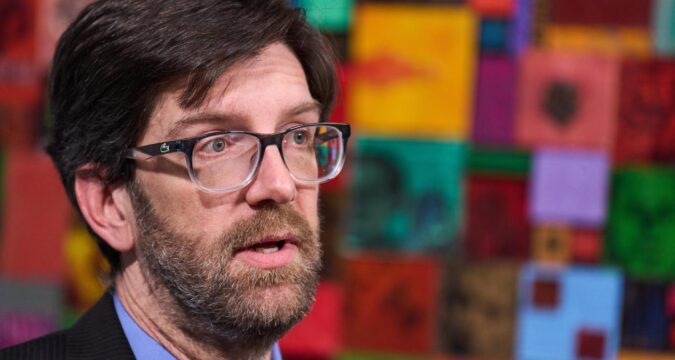
Kilmar Abrego Garcia is still hoping to find justice after his wrongful deportation, his lawyer says
FAIRFAX, Virginia — Kilmar Abrego Garcia wasn’t an activist and he didn’t choose to become locked in to what has become one of the most contentious immigration issues of the Trump administration, his lawyer told The Associated Press on Monday.
But as he experiences some of the few days he’s had with his family since being sent erroneously to an El Salvador prison in March, his lawyer said he’s still hoping for a just resolution to his case.
“He’s been through a lot, and he’s still fighting,” said his lawyer Simon Sandoval-Moshenberg during an interview with AP following Abrego Garcia’s court-ordered release from detention last week. “What it is he can fight for is circumscribed by the law and by the great power of the United States government, but he’s still fighting.”
Abrego Garcia’s mistaken deportation to El Salvador helped galvanize opposition to President Donald Trump’s immigration policies. He was held in a notoriously brutal prison there despite having no criminal record.
U.S. officials claimed Abrego Garcia was an MS-13 gang member, an allegation he denies and which he wasn’t charged for. He was later charged with human smuggling, accusations his lawyers have called preposterous and vindictive.
The Trump administration fought efforts to return him to the U.S. but eventually complied. Since then, his case has been a twisted turn of legal filings and wranglings that has seen Abrego Garcia, a Salvadoran national, released from detention once since March — and that time just for a weekend — while the government has pursued smuggling charges against him and announced plans to deport him to a series of African countries.
Then last week, a federal district court judge in Maryland ordered him to be released and barred the government for now from detaining him again until a hearing can be held in his case, possibly as early as this week, said Sandoval-Moshenberg.
The Department of Homeland Security criticized the judge’s decision to release him last week and vowed to appeal, calling the ruling “naked judicial activism” by a judge appointed during the Obama administration.
Asylum, green card or Costa Rica
Sandoval-Moshenberg said Abrego Garcia has a number of paths forward. He said he thought that his client had a strong case for asylum. His original asylum claim in 2019 was rejected because he applied after the one-year deadline. But Sandoval-Moshenberg argued the government essentially reset the clock by removing him to El Salvador and then bringing him back.
And after the alleged abuse Sandoval-Moshenberg said Abrego Garcia suffered in El Salvador this year, he thought he would have a “rock solid” asylum case. But, citing the twists and turns of his case and how he’s become a symbol for the administration’s pursuit of immigrants, he’s concerned about his chances of getting a fair trial in immigration court.
“I think they’ve already shown that they’re willing to stack the deck,” said Sandoval-Moshenberg.
Abrego Garcia could also apply for a green card since he’s married to an American citizen. But that would require getting a waiver from the government, said Sandoval-Moshenberg, and the lawyer is doubtful one would be granted.
Or he could continue to seek removal to Costa Rica, said Sandoval-Moshenberg, a country that has offered to allow him to enter as a refugee and live and work legally. And he wouldn’t be returned to El Salvador, the attorney said.
But he also believes the government would continue to fight that option.
“They’re focused on beating him. They’re focused on punishing him. They’re focusing on making him miserable. I guess Costa Rica isn’t miserable enough,” he said.
Figuring out what the government will do
Sandoval-Moshenberg said he spent some time with Abrego Garcia and his family over the weekend talking through the government’s next steps and what Abrego Garcia might want for his future.
“There’s so many different ways it could go. And so much of it depends on just how dirty the government’s willing to play,” he said.
Sandoval-Moshenberg said that he thought that if the government was willing to remove him to Costa Rica, his client would accept it although he stressed that the decision was up to him.
He said that Abrego Garcia and his legal team wouldn’t consider that justice — that to him would mean staying with his family in the U.S. But Sandoval-Moshenberg said that given everything he’s faced and the “fact that they’re apparently willing to use infinite prosecutorial resources against him, deportation to Costa Rica is an acceptable outcome for him.”
Sandoval-Moshenberg also stressed that there is one place that Abrego Garcia does not want to go.
“His number one priority is not to end up back in CECOT,” said Sandoval-Moshenberg, referring to the prison in El Salvador where his client was held. Sandoval-Moshenberg said Abrego Garcia had been tortured there, claims authorities in El Salvador have denied and that the AP could not independently verify.
“His number one priority is avoiding getting sent back to that prison.”
‘He’s a random guy’
Sandoval-Moshenberg said he has no idea why the government seems to have chosen Abrego Garcia’s case to fight tooth and nail.
“This isn’t a case where he’s an activist, like an immigrants rights activist, or he’s been, you know, persecuted by the government for his pro-Palestinian speech or something like that,” the attorney said. “He’s a random guy.”
The whole process of deportation, imprisonment and return has “just been this really sort of bizarre, out of world experience for him,” Sandoval-Moshenberg said.
The judge temporarily barred the Trump administration from detaining Abrego Garcia last Friday until the next court hearing.
While no date has been set for that, it could happen as early as later this week, Sandoval-Moshenberg said, noting the whiplash of the case has been a struggle for Abrego Garcia and his family.
“The ground underneath his feet, it’s just earthquake after earthquake,” he said.
https://www.chicagotribune.com/2025/12/15/abrego-garcia-wrongful-deportation/

Argentina da un giro a su régimen de flotación cambiaria que se ajustará por inflación
BUENOS AIRES (AP) — El Banco Central de Argentina anunció el lunes que las bandas entre las que flota el tipo de cambio se ajustarán a partir del 1 de enero por inflación, en un giro del régimen vigente desde abril pasado y que el gobierno del presidente ultraliberal Javier Milei aseguraba no se iba a modificar.
“A partir del 1 de enero de 2026, el techo y el piso de la banda de flotación cambiaria evolucionarán cada mes al ritmo correspondiente al último dato de inflación mensual”, indicó el presidente del Banco Central (BCRA), Santiago Bausili, en una conferencia de prensa. El valor que se tomará en cuenta será la inflación mensual del anteúltimo mes, precisó.
El régimen de libre flotación entre bandas se puso en marcha en abril para limitar el riesgo de movimientos extremos en el tipo de cambio y hasta ahora al 1% mensual.
El ritmo de la inflación viene en línea ascendente según la medición oficial, al ubicarse en septiembre en 2,1%, en octubre en 2,3% y en 2,5% en noviembre. Argentina acumuló en los 11 primeros meses de 2025 una inflación de 27,9% mientras que la internanual respecto de noviembre de 2024 alcanzó 31,4%.
El sistema de flotación cambiaria entre dos bandas se había puesto en marcha en abril pasado cuando, luego de años de restricciones cambiarias, se flexibilizó el acceso a las divisas en un país históricamente afectado por la alta volatibilidad cambiaria y la inflación.
Esta medida que buscaba evitar cambios bruscos en la cotización fue anunciada cuando Argentina recibió un préstamo de 20.000 millones de dólares otorgado por el Fondo Monetario Internacional, destinado a pagar deuda y a reforzar sus reservas internacionales.
El dólar, en el que los argentinos suelen ahorrar por la desconfianza en su moneda sujeta a periódicas devaluaciones, se mueve desde abril en una banda de flotación entre un piso y un techo con una actualización de 1% mensual.
El Banco Central anunció que pondrá en marcha en 2026 un programa de acumulación de reservas internacionales, de hasta 17.000 millones de dólares, en línea con una exigencia del FMI.
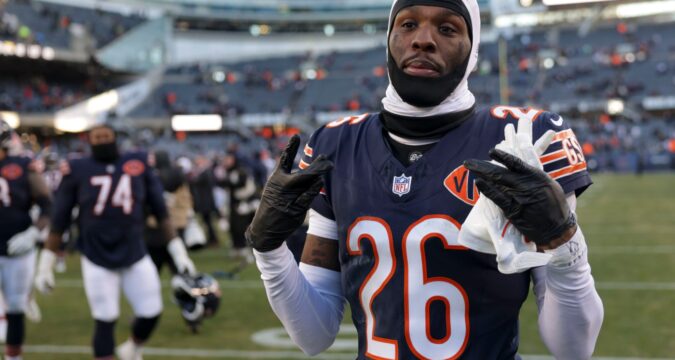
Chicago Bears offensive line and CB Nahshon Wright see strong support in Pro Bowl fan voting
Chicago Bears cornerback Nahshon Wright is tied for second in the NFL with five interceptions, but none of them ranks as his favorite play this season.
“Probably the Tush Push,” he told the Tribune last week. “Just being able to get in there and strip the ball out and get the ball back.”
Wright’s strip of Philadelphia Eagles quarterback Jalen Hurts and fumble recovery on a critical third-and-1 play in the third quarter swung momentum in the Bears’ eventual 24-15 win on Black Friday.
“The Tush Push was crazy,” he said. “I probably got the most love from that play.”
Wright appreciates the love he’s receiving from fans who have been selecting his name for the Pro Bowl. Fan voting ends Monday.
“I mean, it’s hard not to see,” he said. “And obviously you want those type of accolades. You want that recognition from your peers, the fans and coaches.”
As of Monday morning, Wright ranked second in voting among cornerbacks, trailing only the Carolina Panthers’ Jaycee Horn, according to preliminary results from NFL.com and team websites. His three fumble recoveries give him a league-leading eight takeaways.
Wright was one of 14 Bears, in fact, who ranked among the top 10 in fan votes at their positions. Players and coaches will cast votes before the final selections are revealed sometime in January.
Guard Joe Thuney and free safety Kevin Byard III ranked first at their positions Monday morning. Thuney was acquired in a March trade to beef up the offensive line, and Byard tops the interceptions leaderboard with six.
Here’s the full list of Bears vote-getters in the top 10 at their positions:
Kevin Byard III, first, free safety
Joe Thuney, first, guard
Drew Dalman, second, center
Nahshon Wright, second, cornerback
Devin Duvernay, third, return specialist
Darnell Wright, fourth, tackle
Josh Blackwell, fourth, special teams
Scott Daly, fifth, long snapper
Caleb Williams, seventh, quarterback
Jonah Jackson, seventh, guard
Montez Sweat, eighth, defensive end
D’Andre Swift, 10th, running back
Colston Loveland, 10th, tight end
Tory Taylor, 10th, punter
Coach Ben Johnson singled out the offensive line — which includes four Pro Bowl candidates in Thuney, Dalman, Darnell Wright and Jackson — after the Bears plowed through the Cleveland Browns 31-3 on Sunday.
Bears guard Jonah Jackson (73), center Drew Dalman (52), guard Joe Thuney (62) and tackle Ozzy Trapilo (75) head to the line of scrimmage ahead of quarterback Caleb Williams (18) in the third quarter against the Packers on Dec. 7, 2025, at Lambeau Field in Green Bay. (John J. Kim/Chicago Tribune)
“They’re playing at a super high level,” Johnson said Monday. “I went to sleep last night just thinking about that trap block that Jonah Jackson had with about two minutes left in the half. He absolutely annihilates the three-technique. Things like that just put a little smile on my face.
“Drew’s a huge part of what we’re doing, but I can’t say enough good things about that entire offensive line.”
Related Articles
Chicago Bears may need to give Rome Odunze more time to heal, while Tremaine Edmunds could return this week
Blowout win for Chicago Bears, who turn focus back to Green Bay Packers: Brad Biggs’ 10 thoughts on Week 15
MRI confirms Green Bay Packers’ Micah Parsons tore his ACL and is out for the season
NFC North roundup: Packers and Lions are losers in Week 15 — but Vikings win to ding Cowboys’ playoff hopes
DJ Moore comes alive for Chicago Bears with 2 TDs — including that ‘unbelievable’ Caleb Williams throw
Asked last week about his and his fellow linemen’s candidacy, Dalman said: “I don’t think it’s a priority for us. All of those guys — Joe, Jonah, Darnell, Ozzy (Trapilo), Theo (Benedet), Braxton (Jones) — everybody has done an excellent job of executing, playing hard. All the commendation in the world to those guys.
“As far as whether or not I think the Pro Bowl is important to worry about right now? I don’t. It’s not really on my mind.”
ESPN Analytics last week ranked the Bears offensive line second in both pass-block and run-block win rate.
The Pro Bowl will take place Feb. 3 in San Francisco, five days before Super Bowl LX at Levi’s Stadium in Santa Clara, Calif. The signature event, a flag football game between the AFC and NFC, will air live on ESPN at 7 p.m.
The Bears would welcome any selections when the 88-man roster is announced, but Nahshon Wright represents their best feel-good story. He entered training camp as a likely reserve and got his opportunity because of injuries, so even he couldn’t have envisioned his season would unfold this way.
“I don’t think that was really on my forethought,” he said. “But as the season progressed and the plays started to be made, you obviously thought about it, the possibility of it. And being able to see my name on the ballot was definitely cool.”
https://www.chicagotribune.com/2025/12/15/chicago-bears-pro-bowl-fan-voting/

Oak Brook Art League to thank hosting library by donating original works
The Oak Brook Art League found a very appropriate way to thank the Oak Brook Public Library for allowing the group to meet there.
In appreciation for using the Oak Brook Public Library for weekly painting sessions, the Art League offered to paint two paintings to hang inside the library, 600 Oak Brook Road.
The Art League will present the 3 x 4 foot paintings to the village at the Jan. 13 Village Board meeting.
“All members of the league contributed to painting different sections of the paintings so it is a true group project,” said Art League President Mark Moy, a former Village Board member. The new paintings will replace two old abstract paintings across from the librarian desk.”
Moy said the Art League, which currently has 34 members from Oak Brook and nearby communities, including Hinsdale and La Grange, first suggested paintings of Polo, like Moy’s paintings behind the receptionist desk at village hall.
“But the librarians preferred nice landscapes, so we picked landscapes that are particular to Oak Brook,” he said. “We started the paintings in September and final touches are being applied.”
The Oak Brook Art League was founded in September 1996 and meets from 1 to 3 p.m. on the first Tuesday of each month, September through April. The meetings generally include weekly painting sessions with instructors, monthly demonstrations by accomplished area artists, coordination of activities with all area art leagues, including the DuPage Art League, and Allegiance of Fine Arts, trips to area art festivals and galleries, and regular exhibits of member artwork at area locations. Refreshments are served, and guests are always welcome, Moy said.
“We encourage any adults interested in the fine arts to join us,” he said. “We share our knowledge with each other and have members from beginners to advanced.”
Additional information about the Oak Brook Art League is available by contacting program chair Lyn Tietz at lyntenis@aol.com.
Chuck Fieldman is a freelance reporter for Pioneer Press.
https://www.chicagotribune.com/2025/12/15/oak-brook-art-league-donation/

Supertankers Bound For Venezuela Make U-Turns, Fearing US Interdiction, As PDVSA Hit By Cyberattack
Supertankers Bound For Venezuela Make U-Turns, Fearing US Interdiction, As PDVSA Hit By Cyberattack
Fresh reporting in Reuters has tracked at least five supertankers which have changed course on Monday after initially heading to Venezuela to load crude oil, following this month’s US naval seizure of a Venezuelan tanker.
Among these was a Russian tanker transporting crude for Venezuela’s state-owned oil company PDVSA, along with at least four other supertankers en route to Venezuelan ports. They made u-turns on fears of facing US military interdiction.
This also comes after last Friday Bloomberg and others reported that Washington was preparing to carry out further seizures of sanction-linked oil tankers off Venezuela’s coast.
Venezuela’s Foreign Minister Yvan Gil condemned these moves and threats as piracy, calling it an “illegal and aggressive act of sabotage.”
Officially at least, the Trump-ordered military build-up in the southern Caribbean is all about disrupting and dismantling drug trafficking operations. But many analysts see the real motivator is ease of access to major underground oil reserves.
This has meant that Venezuela’s oil exports are effectively paralyzed, with the exception of Chevron’s shipments which are operating under US authorization.
Meanwhile, those earlier telegraphed Trump-authorized CIA covert ops appear to be well underway, given new reports of a major cyber attack on Venezuela’s national oil company.
“Venezuela’s state-run oil company PDVSA has been subject to a cyberattack, it said on Monday, adding its operations were unaffected, even though four sources said systems remained down and oil cargo deliveries were suspended,” according to Reuters.
PDVSA in a statement said that foreign interests were complicit with domestic entities in the cyberattack, as part of Washington’s broader efforts to control the nation’s sovereign resources oil by “force and piracy.” PDVSA further said it was recovering from the attack and trying to bring systems online.
Venezuela Oil Output Could Plunge 300-500k bpd from US Pressure
Dark fleet exports crashing
Naphtha imports (key diluent) at risk#IEA: Already down 150k bpd in Nov to 860k bpd.#Chevron ops may hold longer… but big drop coming.
Don’t miss my latest Article on #Venezuela… pic.twitter.com/xh1E7ovLMb
— Jack Prandelli (@jackprandelli) December 15, 2025
However, some sources have said that the effects from the cyberattack are still ongoing, with a company source stating: “There is no delivery of cargoes, all systems are down.”
In total the threat of seizures has left several tankers loaded with a combined 11 million barrels of oil and fuel basically stuck in Venezuelan and Caribbean waters.
Tyler Durden
Mon, 12/15/2025 – 18:50
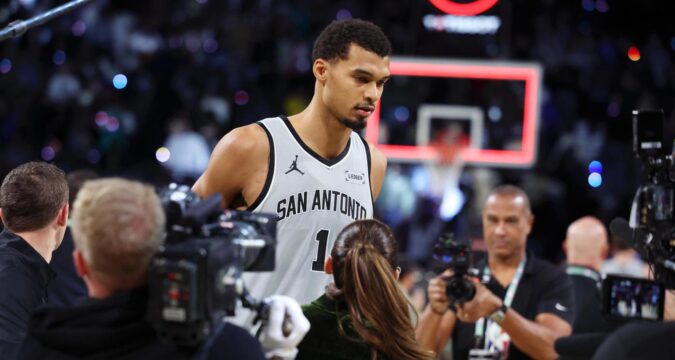
Knicks y Spurs se enfrentarán el martes en la final de la Copa NBA por trofeo, prestigio y dinero
Por TIM REYNOLDS
LAS VEGAS (AP) — La final de la Copa NBA no cuenta. Nueva York entrará con un récord de 18-7. San Antonio entrará con un récord de 18-7. Y cuando termine el partido del martes por la noche entre los Knicks y los Spurs, esos récords no se habrán modificado.
Pero el juego tendrá mucho significado. Los equipos están seguros de eso.
Un trofeo, algunos derechos que presumir y una gran cantidad de dinero estarán en juego cuando los Knicks y los Spurs jueguen en el partido por el título de la Copa NBA. Será la primera vez que esas franquicias se enfrenten con un trofeo en juego desde que San Antonio superó a Nueva York en las Finales de la NBA de 1999.
“Es un juego de alto riesgo en el que ambos equipos estarán muy interesados en ganar. Simplemente muestra que nos estamos preparando y daremos el siguiente paso para juegos más significativos en los playoffs. Esta es una explicación complicada, pero es tan simple como esto: como competidores, queremos ganar cada juego, y este trae algo nuevo a la mesa, así que queremos ganarlo aún más”, afirmó el astro de los Spurs, Victor Wembanyama.
Será el final del tercer torneo dentro de la temporada: los Lakers de Los Ángeles vencieron a Indiana en la primera edición, cuando era parte de lo que simplemente se llamaba el Torneo de Temporada, y Milwaukee venció a Oklahoma City el año pasado después del cambio de nombre a la Copa NBA.
En juego habrá un monto de 318.560 dólares por jugador con un contrato estándar en el equipo ganador; han asegurado 212.373 dólares cada uno del fondo de bonificación de la Copa al llegar a la final, y la parte de los ganadores salta a 530.933 dólares por cabeza.
“No estás ganando ni obteniendo nada en tu récord, pero sales ahí y compites. Estás jugando por más que solo por ti mismo. Estás jugando por tu equipo, tu organización y tu ciudad. Hay mucho en juego además del récord. Sales ahí y compites sin importar qué”, comentó el base de los Knicks, Jalen Brunson.
El guardia de los Spurs, De’Aaron Fox, añadió: “A la gente le gusta el dinero. Es lo que es. Así es la vida”.
La recompensa financiera es una cosa. Hay otra recompensa que podría llegar esta primavera para los Spurs y los Knicks.
Los cuatro finalistas anteriores de la Copa —los Lakers y los Pacers, luego el Thunder y los Bucks— todos llegaron a los playoffs después de jugar por este trofeo, con los Pacers llegando a las finales del Este en 2024 y el Thunder ganando el título la temporada pasada.
“No importa si es la Copa, las Finales de la NBA, ganar cualquier juego, cuando tienes esa sensación de ganar, es adictivo. Obviamente, quiero que tengamos esa mentalidad donde estemos adictos al próximo campeonato si podemos ganar este. Creo que este es un gran comienzo para que entendamos los estándares necesarios para ganar a un alto nivel, a nivel de campeonato”, expresó el alero de los Knicks, Karl-Anthony Towns.
Wembanyama probablemente seguirá con algún tipo de restricción de minutos; jugó 21 saliendo de la banca el sábado por la noche en la victoria de San Antonio por 111-109 sobre Oklahoma City, su primer juego de regreso después de perderse 12 por una distensión en la pantorrilla izquierda.
Los Spurs llegaron al lunes aún decidiendo si comenzar a Wembanyama contra los Knicks.
“Cuando se trata de un tipo como Wemby, porque con su tamaño y su conjunto de habilidades, nueve de cada diez veces va a fallar porque falla. Pero tenemos algunos defensores bastante buenos con longitud, y con suerte pueden, en el punto de ataque, tratar de hacerlo lo más difícil posible con él, sabiendo que tienen ayuda detrás de ellos”, señaló el entrenador de los Knicks, Mike Brown.
Los Knicks y los Spurs llegaron a la final de la Copa con récords de 5-1 en el torneo; ambos fueron 3-1 en la fase de grupos, luego fueron de visita para ganar en los cuartos de final (Nueva York sobre Toronto, San Antonio sobre los Lakers) antes de que Nueva York superara a Orlando y San Antonio venciera al Thunder en las semifinales del sábado en Las Vegas.
Y ahora, un juego que no significa nada. O todo, dependiendo de la perspectiva.
___
Deportes en español AP: https://apnews.com/hub/deportes
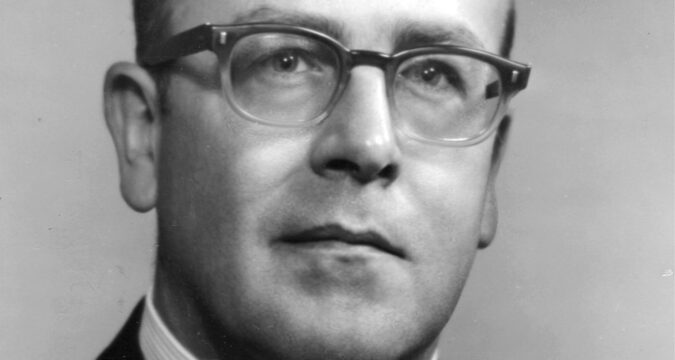
William J. Bauer, ‘sage’ Chicago-based 7th Circuit judge and US attorney, dies at 99
William J. Bauer was a DuPage County state’s attorney and federal prosecutor before serving on the federal bench in Chicago, and he developed a reputation for being a moderate, pragmatic voice on the Chicago-based 7th U.S. Circuit Court of Appeals.
Although Bauer’s tenure as the Chicago-based U.S. attorney for the Northern District of Illinois was brief — he was the city’s top federal prosecutor from 1970 until 1971 — colleagues recalled how Bauer transformed the U.S. attorney’s office in the city, working to minimize the impact of politics on hiring and prosecutions made by that office.
Later, as a federal judge, Bauer continued to build his reputation for integrity and fairness, colleagues said.
Judge William J. Bauer, circa 1964. (Chicago Tribune archive)
“He had every great job in the law worth having,” said Joel Bertocchi, a litigation partner at the Akerman law firm who was a staff attorney at the 7th Circuit from 1985 until 1987. “He had an unparalleled resume and excelled at every one of his jobs. It’s impossible to exaggerate his accomplishments in the Chicago legal community.”
Bauer, 99, died of natural causes Monday at Caledonia Senior Living’s Scottish Home assisted living facility in North Riverside, said his wife of 14 years, Cook County Circuit Judge Patricia Spratt. Bauer previously had been a Forest Park resident and a longtime resident of Elmhurst.
Born in Chicago in 1926, Bauer was the son of an oil salesman and grew up in the South Side Grand Crossing neighborhood and attended St. Rita High School for his first year. He moved in late 1941 with his family to Elmhurst, and attended Immaculate Conception High School, where he played football. After graduating from Immaculate Conception in 1944. Bauer attended St. Mary’s College in Minnesota and then Elmhurst College.
During college, Bauer drove a taxi to help make ends meet. Earlier, he had worked side-by-side with his best friend, future U.S. Rep. John Erlenborn, at the Ovaltine factory in Villa Park.
“We weren’t on the verge of poverty,” Bauer told the Tribune in 1988. “But the prevailing philosophy at that time was that everybody was supposed to hustle.”
After serving in the Army from 1945 until 1947, Bauer returned to Elmhurst College and received a bachelor’s degree with honors in 1949. He got a law degree from DePaul University’s College of Law in 1952.
Bauer told the Tribune in 1993 that he had wanted to be a lawyer since he was about 13.
“My mother says I must have gone to a movie and seen somebody wearing a suit and persuading somebody and thought that was a great occupation,” he said. “Remember now, I grew up in the Depression on the South Side of Chicago in a non-affluent neighborhood. I didn’t even know a lawyer. I knew a lot of railroad people, and cops and things like that. So she’s probably right.”
Exhibit honors ‘Sage of DuPage’
Bauer was an assistant state’s attorney in DuPage County from 1952 until 1958. Then in an upset, he was elected state’s attorney in DuPage County in a special election in April 1959, defeating a County Board-appointed incumbent in the GOP primary, Jack Bowers. He then beat future federal Judge Prentice Marshall, a Democrat, in the general election.
As DuPage state’s attorney, Bauer earned a reputation as a tough prosecutor who was as comfortable in the courtroom as he was chatting with cops. One unpopular campaign was his countywide assault on mob-controlled pinball gambling, which led to the county eventually outlawing such machines.
In 1964, Bauer was named a DuPage circuit judge.
“I enjoy politics,” Bauer told the Tribune’s David Young in 1971. “Anyone who tells you they don’t use politics to get to the bench is lying to you.”
While a DuPage judge, Bauer had been gearing up to run for the Illinois Supreme Court when his career took a pivot. In 1970, he was nominated by President Richard Nixon to be U.S. attorney for the Northern District of Illinois. He was confirmed by the U.S. Senate in July 1970, and immediately set about changing the tenor of Chicago’s U.S. attorney’s office.
“Prior to Bill, it had been a political office,” said former U.S. Attorney for the Northern District Anton Valukas, whom Bauer hired as an assistant U.S. attorney in 1970. “He changed that in a way that was transformational not only for this office but it was carried on across the country, which set a standard. He didn’t care about his assistant U.S. attorneys’ politics, and it became the norm that if someone mentioned politics in an interview to be an assistant U.S. attorney, that person was no longer going to be considered.”
While U.S. attorney, Bauer ordered several investigations into vote fraud. He also oversaw several assistant U.S. attorneys who went on to distinguished law careers, including Valukas, Illinois Attorney General Tyrone Fahner and U.S. Attorney for the Northern District Dan Webb. He also hired James R. Thompson, who went on to become U.S. attorney and then governor, as his first assistant.
“He was the North Star for those who came through,” Valukas said. “The Chicago federal prosecutor’s office was no longer a backwater by the time he was done. And he made clear that everything that his staff did in the office reflected on him. That meant that what was important was: Was this the right thing to do, and was this upholding the high standards of the office.”
Bauer’s time as U.S. attorney was short-lived, as he was nominated and confirmed to be a federal judge in the Northern District in October 1971, succeeding fellow DuPage resident Judge Joseph Sam Perry. His legacy as U.S. attorney lived on long after he ascended to the federal bench, with his staff obtaining convictions of some of Chicago’s top politicians.
Bauer had no regrets about leaving the U.S. attorney’s office, as Illinois’ U.S. senators had pledged to give him a shot at a federal judgeship even before he became U.S. attorney.
“I can’t think of anything I’d rather do than become a federal judge,” he told the Tribune in 1971. “The federal bench has become more and more important in our society in the last few years as we move toward a more federal system.”
Although Bauer was a skilled speaker and a savvy politician, the type of frank comments he made to the Tribune upon his confirmation to the federal bench in 1971 would be unheard of today for a federal judicial appointee. Among other things, Bauer forthrightly told the Tribune that he favored the death penalty.
“I have never been very impressed with political labels,” he told the Tribune in 1971. “Strict constructionism has an importance on the Supreme Court, where the Constitution is interpreted. The duty of a trial judge is to enforce the law as it is. Essentially, the trial courts apply the law to a specific situation.”
While a federal judge, Bauer presided over a trial for more than 20 Chicago police officers, which concluded that officers had shaken down dozens of tavern owners for bribes.
“A good trial judge goes out of his way to make life easier for the lawyers,” Bauer told the Tribune in 1988. “You can laugh at yourself, (but) you can’t laugh at any of the parties, or the jury, nor should you.”
In 1974, President Gerald Ford appointed Bauer to the 7th Circuit Court of Appeals, which hears cases from federal district courts in Illinois, Indiana and Wisconsin.
A noted — and humorous — opinion he authored in 1979 came when he ordered the government to return $275,000 in cash that had been seized from the River Forest home of reputed Chicago Outfit boss Anthony Accardo. The legal dispute arose after Accardo’s home was burglarized, but Accardo did not report the burglary to police. Soon afterward, some noted area burglars began turning up dead.
Bauer wrote that the record did not disclose whether Accardo’s failure to report the break-in “was based on a lack of faith in the powers of the police to solve the crime or a basic mistrust of dealing with law enforcement agencies that has roots in some earlier, and also unexplained, experience of Accardo. At any rate, some time after the burglary … various people described by the government as ‘known burglars’ began to show up dead, none from natural causes. … The sudden increase of homicides within a particular and, one might hope, limited professional group apparently fanned the normally suspicious attitudes of the various law enforcement agencies to a fever pitch.”
And in a 1984 opinion resolving a tax dispute between the Internal Revenue Service and Milwaukee Brewers owner Bud Selig, Bauer invoked baseball lore and lines from the famed poem “Casey at the Bat.”
Bauer told the Tribune in 1988 that being an appeals court judge “is not as close to the throbbing heart of the law as a trial judge is. But this is a chance to make a greater impact on the field of law.”
Bauer was elevated to chief judge of the 7th Circuit in 1986. He overcame cancer of the larynx, which was diagnosed in July 1987 and required two months of radiation treatments.
Upon stepping down as the 7th Circuit’s chief judge after the maximum seven-year term in 1993, Bauer told the Tribune that while “divorced from the political hurly-burly,” he still viewed himself as “a political animal” of sorts.
“Politics in its proper sense is the deep interest in good government and how it functions,” he said. “Anybody in government is almost by definition in politics.”
Bauer assumed senior status, or a form of semi-retirement, in 1994. He continued hearing cases on a reduced basis until becoming an inactive federal judge in 2022.
In late 2010, the DuPage County Judicial Office Facility Annex in Wheaton was renamed the William J. Bauer Judicial office Facility Annex at the request of then-DuPage County Board Chairman Robert Schillerstrom. The following year, Schillerstrom, along with retired DuPage County Circuit Judge Edward Duncan, retired state Supreme Court Justice S. Louis Rathje, former DuPage Water Commission Chairman Joel Herter and Mark Wight, chairman and CEO of Downers Grove architectural firm Wight & Company, raised about $50,000 to pay for a statue of Bauer, which stands outside the building. In 2015, an exhibit opened at the annex covering Bauer’s life and career.
Around 2010, College of DuPage in Glen Ellyn named the mock courtroom in the school’s Homeland Security Education Center after him.
For many years, Bauer delivered lectures on advanced criminal trial procedure at DePaul University’s College of Law.
Outside of work, Bauer enjoyed reading, said Spratt, his wife.
“He was a reader all day long — he could not get enough to read, whether fiction, nonfiction or history,” she said.
Bauer’s first wife of 56 years, Mary “Mike” Bauer, died in 2006. In addition to his second wife, Bauer is survived by two daughters, Pat Bauer and Lin Bauer; a granddaughter; and two great-grandchildren.
A service is planned for early 2026.
Bob Goldsborough is a freelance reporter.
https://www.chicagotribune.com/2025/12/15/judge-william-bauer-obituary/

US Jewish groups urge heightened security at public events after Hanukkah attack in Australia
NEW YORK — Leading Jewish groups in the United States are urging all Jewish organizations to ratchet up security measures at public events — including restrictions on access — following the deadly mass shooting that targeted a Hanukkah celebration on a popular Australian beach.
The groups — including three which specialize in security issues — said Jewish public events in the coming days should be open only to people who had been screened after preregistering.
“Provide details of location, time, and other information only upon confirmed registration,” the groups’ advisory said. “Have access control (locks and entrance procedures) to only allow known, confirmed registrants/attendees into the facility/event.”
Coinciding with this urgent appeal for increased precautions, some rabbis said their synagogues would proceed with large-scale celebrations, intended to demonstrate resilience. The mass shooting is the latest reminder of the Jewish community’s longstanding reality of having to factor security into religious practice.
“This week, let us choose Jewish joy, communal strength, and courageous hope,” said a message posted by Temple Beth Sholom, one of the largest synagogues in the Miami area. “We invite every member of our family … to join us this week as we celebrate Chanukah. Let us gather to share the warmth of the candles and reaffirm our unbreakable connection.”
Similar sentiments were expressed by Rabbi Jeffrey Myers of Pittsburgh’s Tree of Life Congregation, a survivor of the 2018 attack by an antisemitic gunman that killed 11 worshippers at the synagogue.
“Hanukkah is supposed to be a time of light, celebrating the resilience of our people,” Myers said. “In the face of antisemitism and violence, my prayer is that we don’t let the fear win but instead lean into our Jewishness and practice our tradition proudly.”
A rabbi’s appeal: ‘Be more Jewish’
At least 15 people died in Sunday’s attack, which fueled criticism that Australian authorities were not doing enough to combat a surge in antisemitic crimes. On Monday, Australia’s leaders promised to overhaul already-tough gun control laws after the targeted attack on Sydney’s Bondi Beach
Among those killed was Eli Schlanger, assistant rabbi at Chabad of Bondi and an organizer of the Hanukkah event, according to Chabad, an Orthodox Jewish movement that runs outreach worldwide and is known for its public menorah lightings.
Just a year earlier, according to Chabad, Schlanger had urged his fellow Jews to be uncowed in the face of rising antisemitism, voicing this message, “Be more Jewish, act more Jewish and appear more Jewish.”
Chabad.org said Chabad centers worldwide are going ahead with thousands of planned public menorah lightings and community Hanukkah celebrations “while taking greater security precautions — calling on the Jewish community to drown out hate with greater light and goodness while mourning those lost and wounded in Sydney.”
The Sydney shooting reinforced the importance of these public celebrations, said Rabbi Chaim Landa with Chabad of Greater St. Louis. The organization proceeded with its planned Sunday night menorah lighting near the Gateway Arch but with a greater police presence. He believes it is what Schlanger would have wanted.
“There’s a couple pieces to this. There’s making sure that it’s safe, and there’s also making sure that people feel safe. And we want both,” said Landa, who estimates close to 300 people attended the outdoor event in below-freezing temperatures.
“People wanted to come out, and they wanted to be together. So it’s very important that people feel that they can do that, and that’s what we want to ensure.”
At Colorado attack site, ‘We’re standing strong’
On Monday night, at the spot earlier this year where a man hurled fiery Molotov cocktails at people demonstrating in support of Israeli hostages in Gaza, members of the Jewish community in Boulder, Colorado, were set to light a dramatic new menorah.
The theme of the ceremony is “flames of love” — in response to the June 1 attack that killed an 82-year-old woman and injured 12 others.
Yitzchok Moully, a rabbi and artist, said he was inspired to create a 7-foot-tall (2-meter), stainless steel menorah for the community in Boulder following the firebombing.
“We are here and we’re standing strong and we’re not cowering in the darkness,” said Moully, who is originally from Melbourne, Australia.
In a speech delivered after the Australia attack, the president of the largest branch of Judaism in North America elaborated on the mix of dismay and determination being experienced through the Jewish community.
“We are thinking about security and how to live openly and safely as Jews — asking questions that are newer to us but would have been all too familiar to generations of our ancestors,” said Rabbi Rick Jacobs of the Union for Reform Judaism.
“We need to ask these hard questions. We need to be smart about security and protecting ourselves and our fellow Jews — whether within the synagogue walls, or when we walk down the street wearing a kippah,” he added. “But the spirit of the defiant Maccabees is also part of the Hanukkah story. Our Jewish community will not go into hiding. We are proud Jews and will remain so even as we make the security of our Jewish community a primary obligation.”
Jacobs referred to the Jewish tradition of placing the Hanukkah menorah in a window for others to see.
“But in the Babylonian Talmud we are taught that in a time of danger, we do not do that,” Jacobs said. “We have been living in a time of growing danger for several years now. And for too many Jews, putting a menorah in the window is too dangerous.”
Alon Shalev, a research fellow at the Shalom Hartman Institute in Jerusalem, argued that Jews — following th attack — should be bolder in boosting their public profile.
“When Jews are attacked for being visibly Jewish, the instinct to retreat is understandable — but it is precisely the wrong response,” he told The Associated Press via email.
“Jewish safety in democratic societies depends on open, shared civic affirmation, supported by political and community leaders and by fellow citizens, not on retreat behind closed doors,” he added. “Stepping into the public square and normalizing Jewish presence is how we defend ourselves.”
AP religion news editor Holly Meyer in Nashville, Tennessee and AP reporter Colleen Slevin in Denver contributed.
https://www.chicagotribune.com/2025/12/15/us-jewish-groups-heightened-security/

Owners Of Inherited IRAs Face Dec 31 Deadline To Start Taking Withdrawals
Owners Of Inherited IRAs Face Dec 31 Deadline To Start Taking Withdrawals
If you inherited an IRA in 2020 or later, you could be facing a Dec 31 deadline to start taking required minimum distributions from the account, under threat of IRS penalties.
The new rules spring from the December 2019 SECURE Act, which attacked long-beloved rules that previously allowed beneficiaries to stretch required distributions over their life expectancies, allowing them to enjoy tax-deferred growth along the way. The new rules apply to those who inherited either a traditional or Roth IRA from someone who died in 2020 or after. Those who inherited IRAs before 2020 still get to use the friendlier old rules.
The new rules apply when the deceased IRA owner was old enough to be taking RMDs of their own before they died. The new requirements do not apply to spouse beneficiaries, who will still be able to take over the inherited retirement plan assets and have them treated as if they had always been theirs. There’s also forgiving flexibility for so-called “eligible designated beneficiaries,” such as those who are disabled or chronically ill, minor children of the deceased owner, and others who are not more than 10 years younger than the deceased owner.
Between the SECURE Act’s passage and the IRS’s tardy 2024 announcement about the final rules, IRA beneficiaries were subjected to a multi-year, rolling bureaucratic fiasco, unsure what they were supposed to do. While the feds sorted things out, the IRS said it wouldn’t penalize anyone who didn’t take a required distribution in 2021, 2022, 2023 or 2024. However, those days of rare IRS leniency are over, with affected beneficiaries now required to calculate a 2025 RMD by applying a life expectancy factor to the balance of their inherited IRA as of Dec 31 of last year.
If you fail to take the RMD, the penalty is a hefty 25% of the amount you should have taken out but didn’t. That penalty is trimmed to 10% if you correct things within two years. Among other institutions, Vanguard offers an online, inherited IRA RMD calculator that anyone can use.
Inaction between now and Dec 31 could trigger a big tax penalty for owners of inherited IRAs
There’s no need to “make up” for the years when the IRS waived the penalty, and the 10-year clock is still based on the year of death. After taking RMDs driven by your life expectancy each year through Year 9, you’ll have to take out the entire remaining balance by Dec 31 of the year containing the 10th anniversary of the original IRA-owner’s death. For example, consider a situation where an IRA owner died in 2021 and left her IRA to her adult child. After taking RMD’s in 2025, 2026, 2027, 2028, 2029 and 2030, the beneficiary has to take out whatever’s left in 2031.
The RMD math drives distributions of relatively small proportions of the account before Year 10. Building on the previous example, a 58-year-old beneficiary of an inherited IRA that had a balance of $100,000 on Dec 31 2024 would have to take just $3,378 this year. All things equal, those RMD’s grow gradually larger each year. However, investment performance and withdrawals will affect the account balance used to determine subsequent RMDs.
It could be in your interest to take out more than the RMD. For example, if the account is big enough, a large, single withdrawal in Year 10 could push you into a higher tax bracket, or have a domino affect on other elements of your tax return driven by your adjusted gross income. Then there’s the question of what future tax rate you’ll be subjected to in a late-stage empire that’s $38 trillion in debt.
You may also want to factor in your future income needs. Someone who’s retiring a few years before that Year 10 lump-sum requirement may plan on taking big distributions over the last few years of the 10-year span, after his other income has dipped.
Tyler Durden
Mon, 12/15/2025 – 18:25

Four Corner Hustlers boss Labar Spann convicted — again — of racketeering and murder
Reputed Four Corner Hustlers boss Labar “Bro Man” Spann is once again facing life in prison after being convicted in a retrial of racketeering conspiracy involving four gangland murders, including the infamous contract killing of Latin Kings boss Rudy “Kato” Rangel.
After a six-week trial, the jury deliberated for only about four hours before convicting Spann, 47, on all counts, including the main conspiracy charge, murder in aid of racketeering, and extortion. In addition to Rangel’s 2003 slaying, Spann was found responsible for the murders of Willie Woods, Max McDaniel and George King.
Four Corner Hustlers boss Labar Spann (Obtained by the Tribune)
The conviction comes more than four years after a different jury had reached a similar conclusion. That November 2021 verdict was thrown out by U.S. District Judge Thomas Durkin, however, after a surprise disclosure showed a prosecutor had promised a star witness less time in prison than what was told to the jury.
The counts carry mandatory life in prison. Durkin set sentencing for April 20.
Prosecutors alleged Spann took over the reins of the West Side gang after he was shot and paralyzed in 1999, using murder to elevate the gang’s reputation for ruthlessness as well as his own street cred.
By far the most high-profile slaying was that of Rangel, an aspiring rapper and then-leader of the Latin Kings who was gunned down in a pop-up barber shop on the West Side in June 2003.
Key witnesses in the government’s case included several of Spann’s top henchmen who cooperated with prosecutors in hopes for leniency.
At Spann’s first trial, Sammie Booker, a Four Corner Hustlers hitman who began cooperating in 2012, testified about numerous crimes, including several of the murders at the center of the trial as well as attempted murders, extortion, robbery and drug dealing.
Booker told the jury his deal with the U.S. attorney’s office called for them to recommend a prison sentence of 25 to 35 years. After the trial was over, however, it was revealed that then-Assistant U.S. Attorney Peter Salib had assured Booker he’d recommend a sentence of just 25 years, without the potential higher range.
The alleged promise was revealed in post-trial filings in 2024, prompting Durkin to eventually rule that the conviction could not stand.
Booker did not testify in Spann’s retrial.
jmeisner@chicagotribune.com
https://www.chicagotribune.com/2025/12/15/gang-boss-labar-spann-convicted-retrial/