Category: News
México sustituye a Venezuela como sede de la próxima Serie del Caribe
GUADALAJARA, México (AP) — Tras varios días de incertidumbre sobre si la Serie del Caribe se realizaría en Venezuela como estaba previsto ante la tensión geopolítica en ese país, México ocupará su lugar como anfitrión del certamen de béisbl, informaron dirigentes el jueves.
El certamen, a realizarse del 1 al 7 de febrero, tendrá como sede la localidad de Zapopan, un suburbio de la ciudad de Guadalajara, luego que la Liga Mexicana del Pacífico había ofrecido que el país fuera anfitrión alterno.
Tres días antes, la Confederación de Béisbol Profesional del Caribe informó que Puerto Rico, República Dominicana y México habían decidido no asistir a Venezuela para disputar el torneo, debido a las tensiones entre esa nación y Estados Unidos.
Salvador Escobar, presidente de la Liga Mexicana del Pacífico, confirmó en conferencia de prensa que la Confederación de Béisbol Profesional del Caribe resolvió mudar la sede a México.
“Tenemos la calidad y la infraestructura para organizar el evento. Se determinó que la sede de la Serie del Caribe quedara en Guadalajara y estamos contentos de poder transmitir esta noticia. Ha sido una decisión sorpresiva y un tanto acelerada”, reconoció Escobar, durnate una conversación con los medios en esta ciudad. “Tenemos poco tiempo, pero una gran capacidad organizativa. Estamos muy satisfechos de que la Confederación y el resto de los países hayan aceptado esta propuesta”.
La Liga Mexicana del Pacífico organizará la Serie del Caribe por segundo año consecutivo, luego de que Mexicali fue sede de la edición de 2025. Además, será la 17ma ocasión en que México reciba el evento, una cifra récord dentro de la Confederación.
_____
Deportes AP: https://apnews.com/hub/deportes
Hysterical Debbie Wasserman-Schultz Declares Trump Larger Threat Than Islamic Terrorism
Hysterical Debbie Wasserman-Schultz Declares Trump Larger Threat Than Islamic Terrorism
The Democrat Party has taken a break from comparing President Donald Trump to Adof Hitler to warn that the president is a larger threat to the United States than Islamic jihad.
The hysterical remarks came during a Tuesday appearance on NewsNation’s “On Balance,” where host Leland Vittert asked Rep. Debbie Wasserman Schultz (D-FL) whether Islamophobia or jihad posed the larger threat to American life and values, following the recent terror attack targeting Jews at Bondi Beach that killed 15 people and wounded dozens more.
“I think we have to focus, quite frankly, on, if we’re worried about the threat to American values, on the person who’s in the White House. I mean, we have a president,” Schultz, who is Jewish, said. “Yeah, I’m going there because we have a president who has completely undermined our democracy.”
“So you don’t see jihad, you don’t see this as a problem?” a stunned Vittert asked.
Democrat Rep. Debbie Wasserman Schultz says Trump is a bigger threat to America than radical islamic jihadist t*rrorists
pic.twitter.com/R8cIjgVSbj
— Libs of TikTok (@libsoftiktok) December 17, 2025
“What I don’t see is it as a single lens problem. We have a president who has been determined to undermine our constitutional principles, to degrade our democracy, to divide instead of unite us,” the Florida Democrat replied.
Wasserman Schultz went on to accuse Trump – often described as one of the most pro-Israel U.S. presidents in recent decades – of permitting antisemitism to grow, citing his 2022 dinner with rapper Kanye West, where anti-MAGA podcaster Nick Fuentes tagged along.
“I want a president who actually walks the walk as much as he talks the talk,” Schultz said. “I want a president that makes sure that we restore the nonprofit security grant funding that protects Jewish institutions and other religious institutions from attacks like we’re talking about here. I want a president who isn’t closing down divisions that investigate discriminatory conduct and antisemitic attacks.”
A White House spokesperson pushed back strongly in a statement to Fox News, saying, “Only someone suffering from a severe case of Trump Derangement Syndrome would make such an outlandish comment.
“Following several recent high-profile cases of Jihadist attacks, no sane person should hesitate to condemn radical Islamic terrorism. Debbie Wasserman Schultz obviously does not fit in that category.”
Tyler Durden
Thu, 12/18/2025 – 20:30
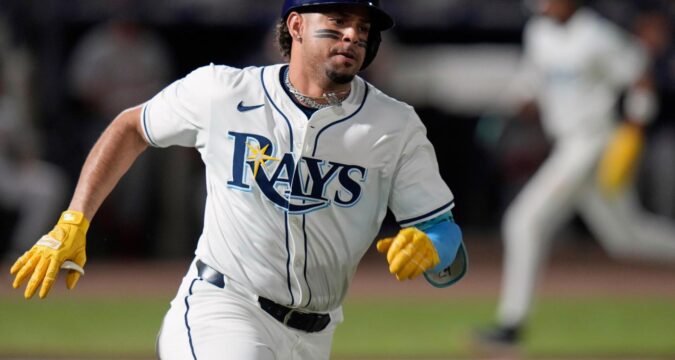
Christopher Morel y los Marlins de Miami acuerdan contrato por uno año
Associated Press
MIAMI (AP) — El jugador de cuadro dominicano Christopher Morel y los Marlins de Miami llegaron el jueves a un acuerdo de contrato de un año.
Morel, de 26 años, bateó para .219 con 37 carreras, 16 dobles, 11 jonrones y 33 carreras impulsadas en 105 juegos con los Rays de Tampa Bay la temporada pasada. Inició 57 juegos en el jardín izquierdo con un porcentaje de fildeo de .971, hizo una apertura en el jardín derecho y una aparición en la segunda base.
El nativo de Santiago, República Dominicana, fue firmado por los Cachorros de Chicago en agosto de 2015, alcanzando el puesto número ocho en la lista de prospectos de la organización según MLB Pipeline en 2021.
Jugó en 323 juegos con Chicago durante partes de tres temporadas desde 2022 hasta 2024 y bateó para .228 con 43 dobles, ocho triples, 60 jonrones y 168 carreras impulsadas.
El movimiento es la primera firma significativa de la temporada baja para los Marlins, que terminaron la temporada 2025 con un récord de 79-83 bajo el mando del mánager de primer año Clayton McCollough.
___
Deportes en español AP: https://apnews.com/hub/deportes
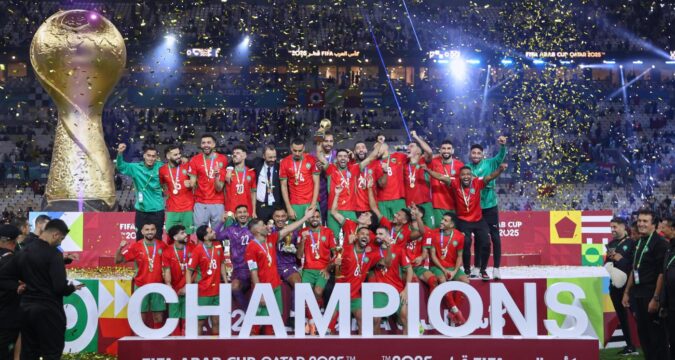
Marruecos vence a Jordania por 3-2 en tiempo extra y gana el título de la Copa Árabe
DOHA (AP) — Abderrazzaq Hamed Allah anotó dos veces para llevar a Marruecos al título de la Copa Árabe el jueves, al superar 3-2 a Jordania en tiempo extra.
Hamed Allah marcó el gol del empate a los 88 minutos del duelo en el Estadio Lusail y consiguió luego el tanto de la victoria a los 100 para darle a Marruecos un trofeo de cara a la Copa Africana de Naciones.
Oussama Tannane había puesto a Marruecos por delante con un notable disparo desde detrás de la línea central cuando habían transcurrido menos de cuatro minutos de la final.
El cabezazo de Ali Olwan a los 48 igualó el juego a 1-1, y su penal puso a Jordania arriba a los 68.
___
Fútbol de AP: https://apnews.com/hub/soccer

China Sues Sen. Schmitt And Others For Defamation Over COVID-19 Lawsuit
China Sues Sen. Schmitt And Others For Defamation Over COVID-19 Lawsuit
Years ago, I called the pandemic arguably the greatest case of negligence in the history of torts. However, with millions dead and hundreds of billions expended, it was unlikely that China would ever be truly held accountable for its actions. Those failures include not only the alleged release of the virus from the Wuhan lab but also China’s concealment of the release until it had spread globally. A $24 billion judgment was secured in Missouri earlier this year, but China defied the verdict.
Now, it has countersued, naming former Missouri Attorney General and now Sen. Eric Schmitt, R-Mo., among others as defendants. Even by the standards of the Chinese legal system, this action is legally absurd. However, in the CCP-controlled court system, the verdict is little in doubt.
China posted a notice of the lawsuit in Wuhan, naming the state of Missouri and Andrew T. Bailey, in addition to Schmitt. Bailey is listed in the notice as the current Missouri Attorney General, but he recently left that job to become the FBI’s co-deputy director.
After international service under the International Convention on the Service Abroad of Judicial and Extrajudicial Documents in Civil or Commercial Matters, the defendants are called to appear before the Intermediate People’s Court of Wuhan Municipality of Hubei Province, Jianghan District in Wuhan. They are being sued for $356.4 billion Chinese Yuan, or $50.5 billion — just over twice the amount awarded in Missouri.
The complaint demands “public apologies on New York Times, CNN, Wall Street Journal, Washington Post, YouTube and other American media or internet platforms, and People’s Daily, Xinhuanet and other Chinese media or internet platforms…”
The filing is premised on their bringing a successful action against China in United States courts and effectively defaming Wuhan, Chinese officials, and the government generally. I have taught torts for over 30 years and would be hard pressed to come up with a more meritless claim, but law means little in the Chinese court system.
The Missouri action named the Chinese government, various ministries, the Communist Party of China, the Wuhan Institute of Virology and the Chinese Academy of Sciences as defendants. They were found to have withheld information about the COVID-19 virus, failed to contain the outbreak, and actively hoarded high-quality personal protective equipment (PPE) while producing and selling lower-quality PPE to the rest of the world.
After securing the largest damage award in that state’s history, the current Attorney General filed with the U.S. State Department for diplomatic provided service to China in November 2025. Once service is confirmed, Missouri can return to the district court to obtain certification of compliance with service and seek to seize Chinese-owned assets, including real property, financial interests, and other holdings tied to the defendants.
That is what clearly prompted this tit-for-tat litigation in Wuhan.
The Chinese lawsuit names the defendants as an economic and reputational threat to the People’s Republic of China. It argues that their actions have had “negative effects on the soft power” of Wuhan and have “belittled the social evaluation” as well as adversely affected the “productivity and commercialization of scientific and technological achievements” of the Chinese Academy of Sciences and the Wuhan Institute of Virology.
It cites the defendants as having engaged in “vexatious litigation” that “defamed Plaintiffs’ reputation, resulting in huge economic losses of the Plaintiffs, and deeply endangering sovereignty, security and development interests of China.”
Obviously, this is not vexatious litigation in any actual legal sense. The Missouri litigation was based on long-established legal precedent, even if the judgment itself against a foreign nation was unprecedented in size.
The notion that these allegations constitute defamation is absurd. First, these allegations are well-established by various countries. China enlisted the World Health Organization (WHO) and others to echo its denials about the virus’s origin. Even after the Biden Administration sought to suppress evidence and views implicating China, federal agencies and experts ultimately refuted those denials.
Even under the more demanding standard that applies to public officials and public figures (known as the “actual malice” standard), China would fall short. There is ample and credible evidence to support these statements, including findings from other countries.
There is also a type of group libel element to the Chinese action.
Such lawsuits are very difficult to maintain. In Neiman-Marcus v. Lait (1952), a New York federal district court addressed a defamation claim arising from the publication of the book “U.S.A. Confidential.” The author wrote that “some” models and “all” saleswomen at the Neiman-Marcus department store in Dallas were “call girls.” It also claimed that “most” of the salesmen in the men’s store were “faggots.” The store had nine models, 382 saleswomen and 25 salesmen. The court found the size of the group of women was too big to satisfy a group libel standard. However, the size of the group of salesmen was viewed as sufficiently small to go to trial.
Here, China is suggesting that not only was the entire Wuhan staff but the entire nation was effectively defamed. That absurd claim was actually tried by a Chinese American group in the United States over Trump’s reference to COVID-19 as Kung Flu. The Chinese American Civil Rights Coalition brought that meritless case, which was quickly dismissed.
China is clearly hoping to engineer a verdict and then somehow use it to counterbalance or negate the Missouri judgment. It will still be tough for Missouri to ever collect on this judgment. However, the verdict was an important effort to secure a judgment on China’s conduct leading to a worldwide pandemic.
One has to assume that the Wuhan court will dutifully render a verdict to counter Missouri.
It will do little beyond confirming in the mind of many that China is as nimble at manipulating the legal system as it is at allegedly manipulating spike proteins.
Tyler Durden
Thu, 12/18/2025 – 20:05

CTA to add more police officers after Feds threaten funding
The Chicago Transit Authority will increase the number of police officers patrolling city’s public transit system Friday following a threat from President Donald Trump’s administration that the mass transit agency could lose federal funding if it did not take certain steps to address violent crime.
The Federal Transit Administration threatened last week to withhold federal funding from the CTA if it did not comply with the demands of a “special directive,” including by upping security on the city’s bus and rail systems. In unveiling the special directive, the Trump administration invoked the November attack on 26-year-old Bethany MaGee, who was doused with gasoline and lit on fire in an apparently random attack while riding on the CTA Blue Line.
President Donald Trump’s administration threatens CTA funding over safety issues
The FTA gave the CTA a tight timeline to comply with the demands of the Dec. 8 directive, saying it had to submit a “security enhancement plan” within a week and implement it by Dec. 19, which is Friday.
In a news release Thursday, the CTA and the Chicago Police Department said they would boost the number of police participating in the “Voluntary Special Employment Program” on the CTA from an average of 77 per day to 120 per day. Participants in that program are CPD officers who sign up to patrol the CTA on their days off, the agencies said. They supplement CPD’s public transportation section and district police officers.
K-9 security staffing, for which the CTA contracts privately, will also see an increase from an average of 172 canine security guards per day to 188 per day.
CTA and CPD will work together to “strategically deploy” the additional security “based on combined crime data and CTA system information,” the CTA said.
“We expect the additional police and K-9 presence on our system to further increase security visibility,” the transit agency’s acting president, Nora Leerhsen, said in a statement.
“CPD and CTA work closely together every day to keep CTA riders safe, and this surge is an extension of that effort,” police Superintendent Larry Snelling said, also in a statement.
CTA spokesperson Catherine Hosinski said the surge was anticipated to cost about $3.5 million over the year — money she said was covered by the agency’s 2026 budget.
The FTA did not immediately respond to a question about whether the security plan would satisfy officials and prevent the CTA from losing federal funding. Last week’s directive was not the first time the Trump administration, which has repeatedly used violence on public transit as a political cudgel against blue cities, had threatened to withhold funds from the CTA.
Trump Transportation Secretary Sean Duffy wrote a letter in September to the CTA asking it to lay out plans to reduce crime and fare evasion on the system or risk losing funding. The Trump administration has made similar threats to mass transit agencies in the Democratic-led cities of New York, Los Angeles, Boston and Washington, D.C.
Leerhsen defended the agency’s safety practices in a response to Duffy at the time.
The Trump administration has also frozen $2.1 billion for the CTA’s planned Red Line Extension and its Red and Purple modernization project, although it did so citing the agency’s diversity practices in contracting, not safety issues.
Titular de agencia de derechos laborales de EEUU insta a hombres blancos a denunciar discriminación
Por CLAIRE SAVAGE
La directora de la agencia federal encargada de hacer cumplir los derechos civiles en lugares trabajo publicó un llamado en redes sociales instando a los hombres blancos a levantar la voz si han sido objeto de discriminación laboral por su raza o sexo.
“¿Eres un hombre blanco que ha sufrido de discriminación en el trabajo por tu raza o sexo? Podrías tener un caso para recuperar dinero al amparo de las leyes federales de derechos civiles”, señaló Andrea Lucas, presidenta de la Comisión para la Igualdad de Oportunidades en el Empleo de Estados Unidos (EEOC por sus siglas en inglés), en una publicación en la red social X el miércoles por la noche.
El mensaje insta a los trabajadores elegibles a ponerse en contacto con la agencia “lo antes posible” y refería a los usuarios al apartado de “discriminación relacionada con DEI (iniciativas de Diversidad Equidad e Igualdad)”de la hoja informativa de la dependencia.
La publicación de Lucas, que fue vista millones de veces, fue compartida aproximadamente dos horas después de que el vicepresidente JD Vance publicó un artículo que, según él, “describe la maldad de DEI y sus consecuencias”, el cual también recibió millones de vistas.
Lucas respondió a la publicación de Vance diciendo: “Absolutamente correcto. Y precisamente porque esta discriminación generalizada, sistémica e ilegal perjudicó principalmente a los hombres blancos, las élites no sólo se hicieron de la vista gorda; lo celebraron. Absolutamente inaceptable; ilegal; inmoral.”
Agregó que la EEOC “no descansará hasta que esta discriminación sea eliminada”. Ni la agencia ni Vance respondieron de momento a solicitudes de comentarios.
Desde que su nombramiento como presidenta interina de la EEOC en enero, Lucas ha estado cambiando el enfoque de la agencia para dar prioridad a la “erradicación de la discriminación ilegal motivada por las iniciativas DEI”, alineándose con las propias órdenes ejecutivas del Presidente Donald Trump, quien nombró a Lucas como titular de la dependencia el mes pasado.
La EEOC, junto con el Departamento de Justicia, emitieron dos documentos de “asistencia técnica” a principios de este año, en un intento por aclarar qué podría constituir “Discriminación relacionada con las iniciativas DEI en el trabajo” y proporcionando orientación sobre cómo los trabajadores pueden presentar denuncias sobre estas preocupaciones.
Los documentos se centraron principalmente en prácticas como la capacitación, los grupos de recursos para empleados y los programas de becas, advirtiendo que este tipo de programas –dependiendo de cómo estén construidos– podrían violar el Título VII de la Ley de Derechos Civiles, el cual prohíbe la discriminación laboral basada en raza y género.
Esos documentos han sido objeto de críticas de excomisionados de la agencia por retratar las iniciativas DEI como legalmente problemáticas.
David Glasgow, director ejecutivo del Centro Meltzer para la Diversidad, Inclusión y Pertenencia en la Facultad de Derecho de NYU, dijo que las más recientes publicaciones de Lucas demuestran un “malentendido fundamental de lo que son las iniciativas DEI”.
“Realmente se trata mucho más de crear una cultura en la que obtienes lo mejor de todos los que estás incorporando, donde todos experimentan equidad e igualdad de oportunidades, incluidos los hombres blancos y miembros de otros grupos”, destacó Glasgow.
El Centro Meltzer rastrea demandas que probablemente afecten las prácticas DEI en lugares de trabajo, incluidos 57 casos de discriminación laboral. Si bien existen casos individuales, Glasgow dijo que no ha visto “ningún tipo de evidencia sistemática de que los hombres blancos estén siendo discriminados”.
Señaló que la inmensa mayoría de los CEOs de las empresas del Fortune 500 son hombres blancos y que, en relación con su proporción de la población, el grupo demográfico está sobrerrepresentado en las cúpulas corporativas, el Congreso y otros ámbitos.
“Si las iniciativas DEI han sido este motor de discriminación contra los hombres blancos, tengo que decir que no han estado haciendo un muy buen trabajo”, declaró Glasgow.
Jenny Yang, expresidenta de la EEOC y actual socia en el bufete de abogados Outten & Golden, dijo que es “inusual” y “problemático” que el titular de la agencia destaque a un grupo demográfico en particular para la aplicación de los derechos civiles.
“Deja entrever algún tipo de tratamiento prioritario”, dijo Yang. “Eso no es algo que me suene a igualdad de oportunidades para todos”.
Por otro lado, la agencia ha hecho lo contrario para los trabajadores transgénero, cuyas quejas de discriminación han perdido prioridad o han sido desestimadas por completo, puntualizó Yang. La EEOC cuenta con recursos limitados y debe, en consecuencia, priorizar qué casos perseguir. Pero tratar las acusaciones de manera distinta de acuerdo a la identidad de los trabajadores va en contra de la misión de la agencia, explicó.
“Me preocupa que se esté enviando un mensaje de que la EEOC sólo se preocupa por algunos trabajadores y no por otros”, dijo Yang.
________
La cobertura de mujeres en la fuerza laboral y el gobierno estatal de Associated Press recibe apoyo financiero de Pivotal Ventures. La AP es la única responsable de todo el contenido. Encuentra los estándares de AP para trabajar con filantropías, una lista de patrocinadores y áreas de cobertura financiadas en AP.org.
___
Esta historia fue traducida del inglés por un editor de AP con la ayuda de una herramienta de inteligencia artificial generativa.

Did Abu Dhabi Just Deliver A Santa Rally: OpenAI To Raise $100BN From Sovereign Wealth Funds
Did Abu Dhabi Just Deliver A Santa Rally: OpenAI To Raise $100BN From Sovereign Wealth Funds
While the broader stock market has meandered both higher and lower in the subsequent two months, the Mag 7 trade peaked on Oct 31 and has been drifting sideways – and lower – ever since.
What happened on that date? That was the day of the infamous All Things podcast, in which Brad Gerstner (an OpenAi investor) pointed out that the emperor is, indeed, naked and asked Sam Altman how a company with $13BN in revenue can afford $1.4 Trillion in commitments. Altman’s non-reply? “Happy to find a buyer for your shares.” Translation: No answer… and how could Sam possibly answer: after all there is no way on earth that OpenAI could ever grow into its future obligations absent a miracle, an act of God… or uncle Sam.
A few days later, Altman delivered a far more troubling answer, and one which connected the mathematical dots for everyone, when it was reported that OpenAI was seeking a government guarantee, which would help “attract the enormous investment needed for AI computing and infrastructure.” But far more concerning was the other implication of the report: without a government guarantee, there was no way that OpenAI could satisfy the $1.4 trillion in commitments, which also meant that the entire AI bubble, which was built on circular deals where rehypothecated promises for capex investments among the hyperscalers were contingent on some nebulous future revenue stream, was about to burst.
Also, with OpenAI tacitly conceding the need for a government guarantee, the entire AI sector came under immediate and immense scrutiny, and as a result of analysts finally doing elementary math (which we had done months earlier) and realizing that the AI cycle would need trillions in debt, suddenly the weakest credits in the space like CoreWeave and Oracle (see “Oracle Is First AI Domino To Fall After Barclays Downgrades Its Debt To Sell“) saw not only their bond (and stock) prices tumble, but their odds of bankruptcy in just 5 years soar, pushing their CDS to record wides.
AI CDS refresh pic.twitter.com/bmQCFga7G7
— zerohedge (@zerohedge) December 17, 2025
And yet maybe the market, in its passion to punish the weakest AI links, had gone too far: we suggested as much last night when we showed just how much ORCL CDS has underperformed the company’s stock. After all, was it truly realistic that Oracle, one of the biggest tech giants in the world, would go bankrupt in the next 5 years?
ORCL CDS may have gone a bit too far pic.twitter.com/Pt7I7XVMRI
— zerohedge (@zerohedge) December 17, 2025
Well, if the company continued to lever up massively and invest its cash into dead end capex projects, while OpenAi and its peers failed to provide Oracle with the much needed cash the company needed to keep growing its market share and fund its growth (via capex), the answer apparently was a resounding yes.
Unless… there was a miracle.
Well, late on Thursday a miracle may have finally arrived. Because in a time when it was increasingly unclear how OpenAI et al, would generate the required revenue to pay their hyperscaler partners for the data centers they needed to impress the world with their chatbot wares, while stable sources of private credit such as Blue Owl had suddenly closed shop when it comes to Oracle, a government guarantee appears to have finally emerged.
Only it wasn’t the US (at least not yet), but rather the emirate of Abu Dhabi that may have not only averted the bursting of the AI bubble, but also delivered the 2025 Christmas Rally in the last possible moment.
According to the WSJ, OpenAI – desperate to secure funding for its cash incinerating years which are expected to conclude around 2030 during which time more than $200 billion will be spent – is aiming to raise as much as $100 billion as it seeks to pay for ambitious growth plans in a market that has cooled recently on the artificial-intelligence boom.
The fundraising round could value the company at as much as $830 billion, if it raises the full amount it is targeting. Of course, the implied enterprise value is meaningless: it’s just a number; what is all too real, however, is the actual amount of cash Sam Altman would get (in exchange for a sizable chunk of equity, confirming just how problematic using far cheaper debt capital raising has become for OpenAI). And that’s a doozy: $100 billion should be more than enough to provide OpenAI with the cash it needs to bridge the period until it is profitable all the while rolling out increasingly more lifelike AI models (especially now that Google’s Gemini 3 has taken the lead from OpenAI). More importantly, the cash invested into OpenAI, and promptly spent on compute, will fund such clients as Oracle, Core Weave and others as it percolates across the entire budding AI industry.
Here, the WSJ adds the usual disclaimer, that the startup aims to complete the round by the end of the first quarter at the earliest, and that terms of the deal could still change; it is also unclear whether there will be sufficient investor demand to reach the goal.
The round will present one of the biggest tests the company has faced since the public market’s exuberance for AI spending waned. Chief Executive Sam Altman has already scoured the world to build the pool of OpenAI’s investors and the company is now weighing a potential initial public offering, The Wall Street Journal previously reported.
Of course, Sam Altman had already found some gullible investors to throw good money after bad, most notably Masa Son’s SoftBank, which agreed to invest $30 billion in OpenAI earlier this year and last month sold its Nvidia stake for $5.8 billion to fund the OpenAI bet. OpenAI is expected to secure the remaining $22.5 billion in planned financing from SoftBank by the end of the year.
But that’s not nearly enough: after all, recall that we are talking a whopping $1.4 trillion in commitments in the next five years.
So who is the next most gullible source of capital after SoftBank these days? Why Gulf cash of course.
Which brings us to the source of the government guarantee: as we said, it’s not the US (just yet); instead it is the United Arab Emirates.
As the WSJ reports, OpenAI is expected to recruit sovereign-wealth funds to invest in the financing, given the scale. The company has previously secured funding from United Arab Emirates-based MGX; it will likely get even more funding from the UAE because considering how much money has already been sunk into OpenAI, UAE companies don’t really have a choice to not keep investing – and risk the collapse of Altman’s venture. They have to keep throwing good money after bad; such is the curse of the Too Big To Fail, which was banks in 2008… and now it’s AI firms.
The company has faced skepticism over computing deals it has forged that are worth hundreds of billions of dollars and issued a “code red” to beat back a growing threat from Google. While OpenAI is set to burn more than $200 billion in cash through 2030, Google has low levels of debt and robust profits, which could make it easier to invest further in AI.
And since OpenAI is private, the market has instead turned its attention to such OpenAI partners as Oracle and CoreWeave, who have seen their market values plunge in recent months as shareholders soured on the possibility of capital shortfalls and bold plans for data-center build-outs that appear to face financing headwinds.
But now, the looming $100 billion equity investment from the likes of UAE sovereign wealth funds has changed all that, and with OpenAI set to prefund 2 years (or more) of growth (while materially diluting existing investors) not only are OpenAI’s chances to emerge as the ultimate AI victory suddenly much higher, but so are the odds of Oracle and CoreWeave to survive the next few years without filing for bankruptcy.
Which is why not only has ORCL stock soared after hours…
… but why we expect that tomorrow ORCL CDS will plunge from its 16 year high of ~156bps, since not only will OpenAI have billions in cash to spend around on the likes of Oracle, but the cost of holding on to the negative carrying ORCL CDS will suddenly seem excessive, and we expect a short covering frenzy across all AI-linked credit default swaps.
Over/Under on ORCL CDS tomorrow at -20 https://t.co/erupObw6Zz
— zerohedge (@zerohedge) December 18, 2025
And now that the biggest risk factor for AI is suddenly no longer a near-term concern – courtesy of all that Abu Dhabi housing bubble cash which just has to be reinvested somewhere – it is possible that the UAE may have just delivered a broad market rally just in time for Santa.
Tyler Durden
Thu, 12/18/2025 – 19:40

Illinois lawmakers skeptical about Chicago Bears possibly moving to Indiana, while Hoosier leaders tee up the football
Illinois lawmakers appeared unmoved Thursday by the Chicago Bears’ decision to consider building a new stadium in Indiana, expressing skepticism about the move and downplaying it as the organization’s latest attempt to gain leverage in tense negotiations.
Indiana officials, meanwhile, celebrated the idea of luring the Monsters of the Midway from their home state.
The Tribune first reported Wednesday that the team was looking at possible locations outside Cook County, including northwest Indiana, after Illinois lawmakers indicated a new Chicago-area football stadium wouldn’t be a legislative priority in 2026.
The Bears previously proposed spending $2 billion of their own money to build an enclosed stadium in Arlington Heights to replace Soldier Field. The team’s plan does not require state tax dollars to construct the facility, but the organization wants to negotiate their property tax costs and get state funding for infrastructure like roads and utilities.
State Rep. Kam Buckner, a Chicago Democrat whose district includes Soldier Field, said the Bears’ change of plans was baffling, but that interest in Indiana was “very predictable.”
“In negotiations, what you do is you create leverage by saying you have more options, and so I knew it was coming and I had actually forecasted this to folks months ago,” he said.
“What they should be focusing on right now is beating the Green Bay Packers,” Buckner said of the team’s upcoming game. “Instead of talking about a possible Super Bowl at a stadium that doesn’t exist, how about let’s play an actual playoff game in a stadium that does exist?”
State Rep. Mary Beth Canty, who sponsored legislation that would help the team build a new stadium in the northwest suburbs, said she remained committed to the Arlington Heights project. In voicing her continued support, however, she took a jab at the Bears for suggesting the franchise could leave the state.
Related Articles
Column: Can the Chicago Bears owners find true happiness in an enclosed stadium off the Skyway?
What to know about the Chicago Bears’ possible move from Soldier Field
Chicago Bears say they’re looking into building a new stadium in northwest Indiana
Column: To freeze or not to freeze? That’s the question facing Chicago Bears fans when pondering new stadium.
Most Chicagoans want the Bears to stay, poll finds, but don’t want to spend tax dollars for a new stadium
“I encourage the Bears to engage with the General Assembly in good faith, without threats, so we can find a path forward to keep the Bears at home in Illinois,” she said in a statement.
The village of Arlington Heights also issued a statement saying both village officials and the Chicago Bears remain confident that the former Arlington Park property where the team wants to build is the best option, but a so-called megaproject bill is necessary to make it possible.
“We encourage our Illinois State legislators to move forward with the Megaproject bill,” Arlington Heights Mayor Jim Tinaglia said. “This legislation will help to keep the Chicago Bears in Illinois, within the limits of Cook County, and ultimately in Arlington Heights.”
State Sen. Bill Cunningham, a Chicago Democrat, said the Bears’ push for a property tax break in Arlington Heights is “a good starting point” because it doesn’t entail any cost to the state. But right now, he said, lawmakers have more pressing matters.
“Building a stadium for the Bears is not now and never will be a priority for the legislature,” said Cunningham, who is the Senate Democrats’ point person on stadium projects. “It doesn’t mean we can’t pull together a stadium package at some point. It just means we have more important things to tackle first.”
Though lawmakers repeatedly have said they are too busy with other issues to address the Bears stadium, the real obstacle has been convincing Chicago lawmakers to help the team leave the city.
The Bears need to address what to do about the seven years left on their lease at Soldier Field, which still has a taxpayer debt of more than $500 million from its 2003 renovation, Cunningham said.
“At the end of the day, they have a legislative math problem and (it’s) very hard to solve with Chicago legislators,” Cunningham said.
At issue is a proposed Illinois law that would allow large sponsors of “megaprojects” like sports stadiums or large factories to negotiate future property taxes with local schools and other taxing bodies.
The Bears say they need the legislation to know what their tax costs would be for the next 30 years or so. They also say they are looking for the state help to pay for infrastructure costs, not unlike the support other large projects such as the proposed quantum computing campus in Chicago or the Rivian automotive plant in Normal receive.
That legislation still has the support of Canty and state Sen. Mark Walker, a Democrat who represents Arlington Heights. Both lawmakers encouraged their colleagues Thursday to give serious consideration to granting the team’s property tax plan, with negotiations over infrastructure costs.
“I don’t think we should treat the Bears worse than we would treat any other large corporation with a development project just because they’re the Bears,” Walker said.
One site where lawmakers have expressed support for a new stadium is the former Michael Reese Hospital property on the Near South Side. Bears executives met Friday with Cook County officials to discuss the property, but team officials said it is not feasible because of building constraints and high costs to make it work.
Developers showed that the new Las Vegas NFL stadium, for example, would fit comfortably on the southern end of the site, Cook County Board President Toni Preckwinkle said.
Preckwinkle doesn’t think the state legislation will fly, adding, “We have to have reasonable proposals from the team.”
It’s not responsible, she said, to spend hundreds of millions of tax dollars on a professional sports facility, she said.
“Investments in public infrastructure is another story,” Preckwinkle said.
Chicago Mayor Brandon Johnson suggested the Bears’ flirtation with Indiana wasn’t serious.
“The Bears belong in the city of Chicago,” he said. “And I still firmly believe that their best position is in Chicago.”
Asked if the team was trying to gain leverage in negotiations by throwing Indiana into the mix, Johnson said, “If they are, it’s not good leverage.”
The door is “always open” to a Chicago stadium, Johnson said.
The reaction was predictably very different in Indiana, where Republican House Speaker Todd Huston called the potential economic boost “transformative.”
“That is super exciting,” he said. “We will be part of that conversation and look forward to supporting our friends in northwest Indiana on what I think is a great opportunity for our state.”
Portage Mayor Austin Bonta speaks during his State of the City address at Woodland Park on Nov. 19, 2025. (Kyle Telechan/for the Post-Tribune)
Portage Mayor Austin Bonta said he was thrilled by the Bears’ interest. While the Bears haven’t named a site in Indiana, Bonta said Portage would be a prime potential spot because of its proximity to multiple highways, a train line and Lake Michigan.
The Hillcrest Site, for example, is on the north side of I-94 and south of the train station, Bonta said. The city owns the land, he said, and officials would like to see the property developed.
State Rep. Earl Harris Jr., a Democrat from East Chicago, said state leaders want to talk with the team about what they need and how northwest Indiana could provide solutions.
Harris, who authored a law creating the Northwest Indiana Professional Sports Development Commission, said the agency will discuss the Bears proposed stadium at its meeting Jan. 6.
The best locations, he said, would likely be closest to the Illinois-Indiana border, such as East Chicago, Gary and Hammond.
Tribune reporter A.D. Quig contributed to this story.
https://www.chicagotribune.com/2025/12/18/chicago-bears-stadium-indiana-lawmakers/

La cámara baja de Brasil destituye al hijo de Bolsonaro y a exjefe de inteligencia de sus cargos
Por MAURICIO SAVARESE
SAO PAULO (AP) — El presidente de la cámara baja de Brasil, Hugo Motta, decidió el jueves destituir de sus escaños a dos legisladores cercanos al ex presidente Jair Bolsonaro, el revés más reciente para el líder de extrema derecha condenado a 27 años de prisión por encabezar un intento de golpe de Estado.
Uno de los hijos de Bolsonaro, Eduardo Bolsonaro, y Alexandre Ramagem, ex jefe de la agencia de inteligencia del país, fueron retirados de sus escaños por diferentes razones. La decisión fue publicada en el diario de la Cámara de Diputados.
Desde que se mudó a Texas en febrero, Eduardo Bolsonaro ha faltado a más del 80% de las sesiones de la cámara baja de este año, lo que infringe sus reglas. El político de 41 años dice ser un perseguido político y ha presionado a miembros del gobierno del presidente estadounidense Donald Trump para que ayuden a su padre a anular su condena y presionar al mandatario brasileño Luiz Inácio Lula da Silva.
“Como todos saben, él vive en el extranjero por su propia decisión”, le dijo Motta a los periodistas tras anunciar la medida. “No ha asistido a las sesiones de nuestra cámara, y es imposible ejercer el mandato legislativo si esa persona no está en nuestro territorio”.
La remoción de Ramagem, quien recientemente huyó a Estados Unidos para evitar cumplir su condena de 16 años de prisión en el mismo caso que llevó a Jair Bolsonaro a la cárcel en noviembre, había sido ordenada por el Supremo Tribunal Federal de Brasil. Previamente este mes, Motta —quien a menudo ha respaldado a aliados de Bolsonaro— dijo que iba a someter a una votación en pleno la decisión de quitarle el escaño a Ramagem.
Si Eduardo Bolsonaro regresa a Brasil, enfrentará un juicio por cargos de obstrucción de la justicia en relación con el caso del intento de golpe de Estado por parte de su padre. El hijo del ex presidente fue acusado de usar violencia o amenazas graves para interferir en un procedimiento legal. Si es declarado culpable, podría enfrentar de uno a cuatro años de prisión y una multa.
Ni Eduardo Bolsonaro ni Ramagem hicieron comentarios sobre la pérdida de sus escaños.
Eduardo Bolsonaro ha dicho repetidamente que influyó en la decisión de Trump en julio de ordenar un aumento del 50% en los aranceles sobre los productos importados de Brasil. Trump ha dicho que la medida se debió al caso de Bolsonaro, de la que dijo es una “caza de brujas”.
Más tarde, cuando Trump y Lula comenzaron a hablar, la mayoría de esos aranceles más altos sobre Brasil fueron anulados.
___
Esta historia fue traducida del inglés por un editor de AP con la ayuda de una herramienta de inteligencia artificial generativa.