Category: News

Triple de Brunson en último minuto y robo de Anunoby ayudan a Knicks a vencer 114-113 a Pacers
Associated Press
INDIANAPOLIS (AP) — Jalen Brunson encestó un triple decisivo con 4.4 segundos por jugar y anotó 25 puntos, OG Anunoby robó el pase de saque siguiente y los Knicks de Nueva York se recuperaron el jueves por la noche para una victoria de 114-113 sobre los Pacers de Indiana.
Brunson también sumó siete rebotes y siete asistencias mientras los Knicks extendieron su racha ganadora a siete juegos. Mikal Bridges añadió 22 puntos y ocho rebotes, y Tyler Kolek tuvo 16 puntos y 11 asistencias, ambos máximos de su carrera, en una noche en la que los campeones de la Copa NBA estaban mermados y cayeron en un agujero temprano de 16 puntos.
Andrew Nembhard terminó con 31 puntos con un 12 de 19 en tiros. También acertó cuatro de cinco en triples. Pascal Siakam tuvo 26 puntos, seis rebotes y cinco asistencias, y Bennedict Mathurin finalizó con 16 puntos y ocho rebotes.
Los campeones defensores de la Conferencia Este perdieron su tercer partido consecutivo desde que el entrenador Rick Carlisle ganó su juego número 999. Necesita uno más para convertirse en el undécimo miembro del exclusivo club de las 1,000 victorias y el primero desde el entonces entrenador de Filadelfia, Doc Rivers, en noviembre de 2021.
___
Deportes en español AP: https://apnews.com/hub/deportes
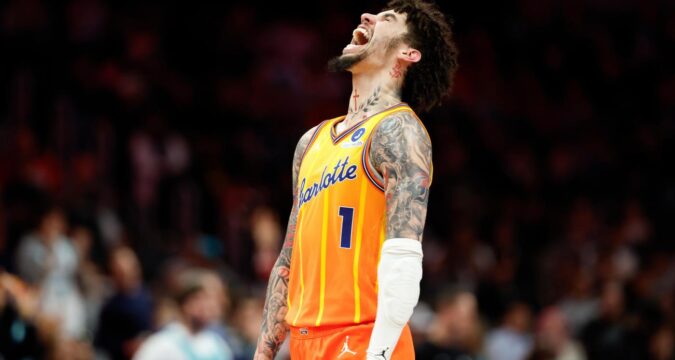
LaMelo Ball vuelve con 7 triples en la 1ra mitad y Hornets vencen a Hawks 133-126
CHARLOTTE, Carolina del Norte, EE.UU. (AP) — LaMelo Ball encestó siete triples en la primera mitad del partido que marcó su regreso tras una lesión en el tobillo derecho, Charlotte logró 18 encestes de tres puntos en los primeros 24 minutos para igualar los récords de la NBA y de la franquicia, y los Hornets vencieron el jueves 133-126 a los Hawks de Atlanta.
Después de perderse tres partidos, Ball acertó siete de nueve disparos desde la línea de tres puntos en la primera mitad. Terminó con ocho de 11 en triples y acumuló 28 puntos y 13 asistencias en poco más de 29 minutos. Charlotte también logró 18 triples en una mitad el 14 de marzo en San Antonio.
Seis equipos lo han hecho una vez.
Los Hornets arruinaron el regreso del astro de Atlanta, Trae Young, tras una lesión de rodilla. Young totalizó ocho puntos y diez asistencias en 20 minutos. Se torció el ligamento colateral medial de la rodilla derecha durante un encuentro en Brooklyn el 29 de octubre.
Jalen Johnson estuvo a punto de lograr un triple-doble para Atlanta, al terminar con 43 puntos, 11 rebotes y nueve asistencias.
Los Hornets mejoraron a 9-18. Ganaron encuentros consecutivos por segunda vez esta temporada. El domingo, triunfaron en Cleveland en tiempo extra.
Nickeil Alexander-Walker añadió 28 puntos por Atlanta, que cayó a 15-13.
_____
Deportes AP: https://apnews.com/hub/deportes
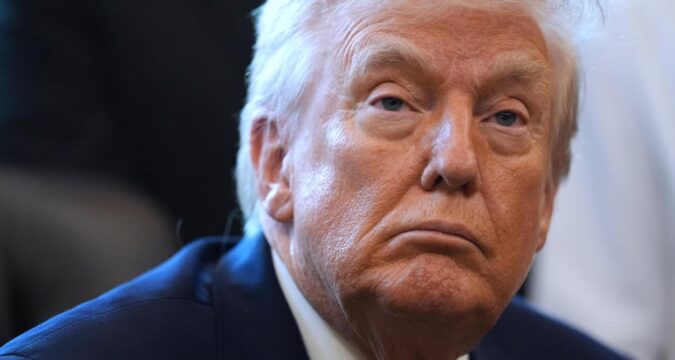
Bloqueo de Trump a petróleo venezolano sancionado plantea nuevas interrogantes sobre si es legal
Por BEN FINLEY, ERIC TUCKER, KEVIN FREKING y JOSHUA GOODMAN
WASHINGTON (AP) — El “bloqueo” del presidente Donald Trump en las costas de Venezuela a barcos petroleros sancionados genera nuevas interrogantes sobre la legalidad de su campaña militar en Latinoamérica, a la vez que azuza preocupaciones de que Estados Unidos pudiese estar más cerca de una guerra.
El gobierno de Trump dice que su bloqueo está diseñado estrictamente para el caso y no está dirigido a civiles, lo cual constituiría un acto ilegal de guerra. Sin embargo, algunos expertos advierten que el confiscar petróleo sancionado vinculado al presidente Nicolás Maduro podría provocar una respuesta militar de Venezuela, lo que involucraría a las fuerzas estadounidenses de una manera que va mucho más allá de sus ataques a embarcaciones que presuntamente transportan drogas.
“Mi mayor temor es que es exactamente así como comienzan las guerras y como los conflictos se salen de control”, dijo el representante demócrata Jason Crow, quien combatió en Irak y Afganistán. “Y en este gobierno la sensatez brilla por su ausencia, y tampoco se consulta al Congreso. Así que estoy muy preocupado”.
Claire Finkelstein, profesora de derecho de seguridad nacional en la Universidad de Pensilvania, explicó que el uso de una táctica tan agresiva sin la autorización del Congreso traspasa los límites del derecho internacional y parece cada vez más un intento velado de provocar una respuesta venezolana.
“La preocupación es que nos estamos metiendo en un conflicto armado”, agregó Finkelstein. “Estamos incrementando la apuesta para intentar que ellos cometan un acto de agresión que después justifique un acto de defensa legítima por nuestra parte”.
La gran mayoría de los republicanos están de acuerdo con la campaña
Trump ha utilizado la palabra “bloqueo” para describir su táctica más reciente en una creciente campaña de presión contra Maduro, quien ha sido imputado de narcoterrorismo en Estados Unidos y ahora es acusado de utilizar las ganancias del petróleo para financiar el narcotráfico. Si bien Trump dijo que sólo se aplica a las embarcaciones que enfrentan sanciones económicas estadounidenses, la medida ha provocado indignación entre los demócratas y, en su mayoría, encogimiento de hombros, si no es que vítores, entre los republicanos.
El representante republicano Michael McCaul opinó que el hecho de que Trump vaya contra petroleros sancionados vinculados a Venezuela no es distinto de intentar bloquear el flujo de crudo iraní.
“Al igual que con los petroleros iraníes que operan en secreto, no tengo ningún problema con eso”, manifestó McCaul. “Están eludiendo las sanciones”.
El presidente ha declarado que Estados Unidos está en “conflicto armado” con los cárteles de la droga en un intento por reducir el flujo de estupefacientes a las comunidades del país. Las fuerzas estadounidenses han atacado 26 presuntos barcos de narcotráfico y han matado al menos a 99 personas desde septiembre. Trump ha prometido repetidamente que los próximos ataques serán terrestres, a la vez que vincula a Maduro con los cárteles.
La campaña ha generado escrutinio en el Congreso, especialmente después de que se revelara que las fuerzas estadounidenses mataron a dos sobrevivientes de un ataque a un barco con un segundo ataque. No obstante, hasta ahora los republicanos se han negado repetidamente a exigir la autorización del Congreso para nuevas acciones militares en la región, y han bloqueado las resoluciones de los demócratas sobre poderes de guerra.
El senador Roger Wicker, presidente republicano de la Comisión de las Fuerzas Armadas del Senado, prácticamente ha dado por concluida la investigación de su panel sobre el ataque del 2 de septiembre, y el jueves dijo que toda la campaña se lleva a cabo “con asesoramiento jurídico sólido”.
Venezuela contraataca
Trump anunció el bloqueo el martes, aproximadamente una semana después de que las fuerzas estadounidenses incautaran un barco petrolero sancionado frente a las costas de Venezuela. El país sudamericano posee las mayores reservas probadas de petróleo del mundo, y depende en gran medida de esos ingresos para sostener su economía.
Estados Unidos ha impuesto sanciones a Venezuela desde 2005 debido a preocupaciones sobre corrupción, así como por actividades delictivas y antidemocráticas. Durante su primer mandato, Trump amplió las sanciones al petróleo, lo que llevó al gobierno de Maduro a recurrir a una flota fantasma de barcos petroleros con banderas falsas para contrabandear crudo en las cadenas de suministro globales.
La estatal Petróleos de Venezuela S.A., o PDVSA, se ha visto prácticamente excluida de los mercados petroleros mundiales debido a las sanciones estadounidenses. Vende la mayoría de sus exportaciones a precios con gran descuento en el mercado negro de China.
El legislador Nicolás Maduro Guerra, hijo de Maduro, condenó el jueves la táctica más reciente de Trump y se comprometió a trabajar con el sector privado para limitar cualquier impacto en la economía del país, la cual depende fuertemente del petróleo. Reconoció que no será una tarea fácil.
“A nosotros nos gusta mucho la paz y el dialogo, pero en este momento, la realidad es que nos está amenazando el ejército más poderoso del mundo, y no es para tomárselo a juego”, declaró Maduro Guerra.
El Pentágono prefiere el término “cuarentena”
No quedó claro de momento cómo planea Estados Unidos implementar la orden de Trump. Pero la Armada estadounidense cuenta con 11 buques en la región y una gran dotación de aeronaves que pueden monitorear el tráfico marítimo que entra y sale de Venezuela.
Trump utiliza el término “bloqueo”, pero el Pentágono dice que los funcionarios prefieren “cuarentena”.
Un funcionario de defensa, quien habló a condición de guardar el anonimato para explicar el razonamiento interno sobre la política, explicó que un bloqueo, según el derecho internacional, constituye un acto de guerra que requiere una declaración formal, y su aplicación se dirige a todo el tráfico entrante y saliente. En cambio, una cuarentena es una medida de seguridad selectiva y preventiva dirigida a actividades ilegales específicas.
El representante Adam Smith, el demócrata de mayor rango en el Comité de Servicios Armados de la Cámara de Representantes, expresó sus dudas sobre la legalidad del bloqueo de Trump.
“Aparentemente están bloqueando a la industria petrolera, no a todo el país”, señaló Smith, quien representa partes del oeste del estado de Washington. “¿Cómo cambia eso las cosas? Pude hablar con algunos abogados, pero en general un bloqueo es un acto de guerra”.
Estados Unidos tiene un largo historial de recurrir a bloqueos navales para ejercer presión sobre potencias menores, especialmente en la era de la llamada “diplomacia de cañoneras” del siglo XIX, cuando en ocasiones las provocaba a tomar medidas que desencadenaban una respuesta estadounidense aún mayor.
Sin embargo, en las últimas décadas, a medida que se ha desarrollado la arquitectura del derecho internacional, los gobiernos estadounidenses subsecuentes han sido cuidadosos de no utilizar tales demostraciones de fuerza marítima, pues se consideran un castigo a la población civil, un acto de agresión ilegal fuera de tiempos de guerra.
Durante la crisis de los misiles en Cuba en 1962, el presidente John F. Kennedy llamó “cuarentena”, no “bloqueo”, a su cordón naval para contrarrestar una amenaza real: los envíos de armas de la Unión Soviética.
Mark Nevitt, profesor de derecho de la Universidad Emory y ex juez abogado general de la Armada, señaló que existe un fundamento legal para que Estados Unidos aborde y confisque un buque ya sancionado que se considere apátrida o que alega pertenecer a dos Estados.
Pero un bloqueo, agregó, es una “operación y maniobra naval en tiempos de guerra” diseñada para impedir el acceso de buques y aeronaves de un Estado enemigo.
“Creo que el bloqueo se fundamenta en un supuesto jurídico falso de que estamos en guerra con narcoterroristas”, apuntó.
Nevitt añadió: “Esto parece casi como un bloqueo de equipo universitario, en el que intentan imponer una herramienta legal de guerra —un bloqueo—, pero sólo lo hacen de forma selectiva”.
Geoffrey Corn, profesor de derecho de la universidad Texas Tech, quien anteriormente fue alto asesor del Ejército en cuestiones de derecho de guerra y ha criticado los ataques navales del gobierno de Trump, expresó no estar convencido de que el objetivo del bloqueo sea intensificar el conflicto con Venezuela.
En cambio, planteó que podría tener el propósito de aumentar la presión sobre Maduro para que deje el poder, o alentar a sus simpatizantes a distanciarse de él.
“Se puede analizar desde la perspectiva de: ¿es este un gobierno que intenta crear un pretexto para un conflicto más amplio?”, observó Corn. “O uno puede considerarlo parte de una campaña general para presionar al régimen de Maduro con el fin de que se haga a un lado”.
___
Goodman informó desde Miami. Los periodistas de The Associated Press Stephen Groves y Konstantin Toropin en Washington, y Regina García Cano, en Caracas, contribuyeron a este despacho.

Frank Nazar ends goal drought, but Chicago Blackhawks fall to Montreal Canadiens 4-1 for 6th loss in 7 games
MONTREAL — Zachary Bolduc scored twice and Lane Hutson had three assists as the Montreal Canadiens beat the Chicago Blackhawks 4-1 on Thursday night.
Noah Dobson also scored for the Canadiens, Nick Suzuki had an empty-net goal and an assist and Jakub Dobes stopped 14 shots.
Frank Nazar scored for the Hawks in the team’s second game without injured star Connor Bedard. Spencer Knight made 32 saves as the Hawks lost their fourth straight and sixth in seven games.
Blackhawks forward Frank Nazar (91) scores against Canadiens goaltender Jakub Dobes, right, during the first period Thursday, Dec. 18, 2025, in Montreal. (Christopher Katsarov/The Canadian Press via AP)
Nazar opened the scoring on the Hawks’ first shot, redirecting a pass behind Dobes after a Canadiens defensive breakdown at 7:27 of the first period. It was Nazar’s sixth goal of the season and first since Oct. 28, ending a streak of 21 games without scoring.
Bolduc cranked a one-timer from the slot off a feed from Cole Caufield feed to tie it later in the period with his eighth of the season, and first at home, prompting a huge ovation from the Bell Centre crowd.
Bolduc, 22, added his second of the night with a deflection 20 seconds into the third period. Dobson made it 3-1 at the 10-minute mark after chasing down a rebound.
The Canadiens dominated in shots 35-15 in a game that wasn’t as tightly contested as the score indicated. Knight kept the Hawks alive for much of the game.
It was a successful night for coaches challenges. The Canadiens had two goals overturned for offside, and one Hawks goal was brought back for goalie interference.
Up next
Hawks: At the Ottawa Senators on Saturday.
Canadiens: Host the Pittsburgh Penguins on Saturday.
https://www.chicagotribune.com/2025/12/18/chicago-blackhawks-montreal-canadiens-frank-nazar/

“Largest Ever Retail Theft Ring” In Queens Busted After Stealing $2.2 Million From Home Depot
“Largest Ever Retail Theft Ring” In Queens Busted After Stealing $2.2 Million From Home Depot
Prosecutors in Queens say they have dismantled what they describe as the largest organized retail theft ring ever prosecuted in the borough, after a crew allegedly stole more than $2.2 million worth of merchandise from Home Depot stores across nine states, according to ABC.
Thirteen people were charged in a sweeping 780-count indictment that accuses the group of carrying out 319 thefts at 128 Home Depot locations in New York and eight other states. On some days, prosecutors say, the crew stole as little as $1,800 in goods and as much as nearly $35,000. Authorities said the volume of stolen tools and construction equipment was enough to “build an unknown number of houses.”
Investigators allege the defendants met in Queens to plan their thefts, then split into teams that scouted store inventories online the night before targeting specific locations. The stolen merchandise was transported back to Queens and resold, either through a Brooklyn storefront or on Facebook Marketplace. According to prosecutors, the group sometimes hit the same Home Depot up to four times in a single day, taking breaks for meals in between.
Governor Kathy Hochul and Queens District Attorney Melinda Katz announced the takedown Thursday. “Since taking office, my highest priority has been driving down crime and keeping New Yorkers safe,” Hochul said, crediting new funding for an organized retail theft task force and tougher laws for helping bring the case together. She said the effort has made New York safer for businesses, workers and shoppers.
Katz outlined the scope of the case, saying, “Thirteen defendants, over $2.2 million in merchandise, 319 incidents of theft, nine states and 128 separate Home Depot stores are the facts alleged, resulting in a 780-count indictment.” She added that her office worked closely with state police to stop the operation.
Hochul said changes to larceny laws allowed investigators to combine multiple thefts, elevating cases from misdemeanors to felonies. “Since we changed the laws and put money behind this effort, retail theft crimes are down 14% in the city and across the state of New York,” she said.
Eleven of the suspects appeared before a judge Wednesday. One defendant remains at large, and the others face up to 25 years in prison if convicted. Katz said the arrests send a clear warning: “The message today is organized retail crime will not go unanswered in this borough.”
Tyler Durden
Thu, 12/18/2025 – 22:10

Why Governments Prefer Cigarette Revenue Over Safer Alternatives
Why Governments Prefer Cigarette Revenue Over Safer Alternatives
Authored by Roger Bate via The Brownstone Institute,
In December 2024, Congress did something unusual: it introduced a bill that openly acknowledges tobacco harm reduction. The POUCH Act of 2024, sponsored by Rep. Jack Bergman (R-MI) and co-sponsored by Rep. Don Davis (D-NC), aims to prevent states and cities from banning or restricting FDA–authorized lower-risk products, including modern nicotine pouches and vaping products.
It is a modest bill, but one that finally moves federal policy in a sensible direction. The basic premise is straightforward: if the FDA has determined that a product is appropriate for the protection of public health, states should not be allowed to ban it for political, fiscal, or ideological reasons. This should not be a radical idea, but within the chaos of American nicotine regulation, it almost counts as revolutionary.
However, the bill also reveals a deeper truth about why the United States struggles so badly with harm reduction. It exposes the forces that keep smokers tied to cigarettes, protect government revenue streams, and effectively eliminate smaller innovators who cannot survive the regulatory gauntlet.
To understand why harm reduction keeps stalling, one must start with a simple reality: state governments make more money from cigarettes than anyone else.
The Real Beneficiary of Smoking: State Treasuries
Public-health activists often blame “Big Tobacco,” but the largest financial beneficiary of smoking in the US is the state itself. For every $100 spent on cigarettes, state coffers typically collect between $60 and $90 through excise taxes, sales taxes, and payments from the Master Settlement Agreement. States have built enormous, stable revenue streams on the backs of smokers.
When a smoker switches to nicotine pouches, the state does not merely lose some revenue—it loses most of it immediately. A switch from combustibles to pouches can cut state revenue from around $60–$90 per $100 spent to as little as five or ten dollars. No wonder state governments resist harm reduction. Pouches are good for public health but bad for the budget.
This is where Upton Sinclair’s observation becomes newly relevant: “It is difficult to get a man to understand something when his salary depends upon his not understanding it.” State treasuries do not want to internalize the logic of harm reduction because doing so would mean confronting the fiscal consequences of their dependence on cigarette revenue.
Why the POUCH Act Matters—And Why It Falls Short
The POUCH Act curbs state-level obstruction by instructing governments to respect the FDA’s scientific determinations. If the FDA authorizes a nicotine pouch or vape as appropriate for the protection of public health, it should not be banned by states that prefer the revenue from cigarettes. This restores a basic principle of regulatory coherence.
Yet the bill does not address the more fundamental failure at the federal level: the misclassification of nicotine pouches under the Center for Tobacco Products. Nicotine pouches contain no tobacco leaf, produce no smoke, involve no combustion, and have a toxicological profile closer to nicotine replacement therapies. Treating them like cigarettes is scientifically wrong and administratively harmful.
The FDA’s Pre-Market Tobacco Application process, designed for a different era, demands millions of dollars in data, toxicology, modeling, and population-level analysis. Large cigarette companies can afford these submissions. Smaller and mid-sized innovators cannot. Many have spent years in regulatory limbo, not because their products are unsafe, but because the agency reviewing them is structurally incapable of seeing the bigger picture. Regulators delay, request more studies, and fail to differentiate between high-risk and low-risk products.
In this environment, only the largest incumbents can survive long enough to receive FDA authorizations. Small companies fold. Their products vanish not due to safety failures but because the regulatory system is built in a way that privileges the deep-pocketed.
The irony is obvious: the more the FDA insists on treating safer products like cigarettes, the more it guarantees that cigarette companies will remain the dominant players in the nicotine market.
A Needed Next Step: Remove Nicotine Pouches from FDA-CTP Completely
If Congress wants to support adult switching, it must eventually reform the regulatory structure itself. Nicotine pouches should not be overseen by the Center for Tobacco Products. They should be subject to a proportionate regulatory framework—age restrictions, manufacturing standards, disclosures, contaminant testing—but not a system designed for combustibles.
Treating pouches like cigarettes guarantees two outcomes: slower harm-reduction adoption and consolidation of the market into a few multinational tobacco firms.
Treating pouches like modern consumer products supports innovation, competition, and switching.
The Bigger Picture: The POUCH Act Opens a Door Congress Must Walk Through
The POUCH Act is a step in the right direction. It attempts to return a measure of coherence to nicotine regulation by ensuring that states cannot override the FDA’s public-health judgments. It forces transparency around the FDA’s enormous backlog of applications. And it signals a small but important bipartisan recognition that harm reduction matters.
But if Congress wants to truly reduce smoking, it must address the system as a whole: the fiscal incentives that encourage states to keep smokers smoking, the misclassification that traps low-risk products in an inappropriate regulatory category, and the procedural delays that quietly eliminate small innovators while protecting only those companies wealthy enough to outlast the bureaucracy.
The POUCH Act is a beginning, not an endpoint. If lawmakers are serious about improving public health, they must resist the gravitational pull of the Sinclair Trap and design a nicotine policy that rewards switching rather than punishing it.
Tyler Durden
Thu, 12/18/2025 – 21:45
https://www.zerohedge.com/medical/why-governments-prefer-cigarette-revenue-over-safer-alternatives

Man suspected in shooting at Brown University has been found dead in New Hampshire
PROVIDENCE, R.I. — A man who is suspected of killing two and wounding several others at Brown University has been found dead in a New Hampshire storage facility, a law enforcement official and a person familiar with the matter told The Associated Press.
The man was found dead Thursday evening. He is believed to have died from a self-inflicted gunshot wound, the person familiar with the matter said.
Investigators believe the man is responsible for both the shooting at Brown and the killing of a Massachusetts Institute of Technology professor who was fatally shot in his Brookline home Monday, the official said. Authorities have not formally confirmed a connection between the two shootings.
The official and the person familiar with the matter could not publicly discuss details of the ongoing investigation and both spoke to AP on condition of anonymity.
Two people were killed and nine were wounded in the mass shooting Saturday at Brown University. The investigation had shifted Thursday when authorities said they were looking into a connection between the Brown mass shooting and an attack two days later near Boston that killed MIT professor Nuno F.G. Loureiro.
The FBI previously said it knew of no links between the cases.
How the Brown investigation has unfolded
It has been nearly a week since the shooting at Brown. There have been other high-profile attacks in which it took days or longer to make an arrest, including in the brazen New York City sidewalk killing of UnitedHealthcare’s CEO last year, which took five days.
But frustration mounted in Providence that the person behind the attack managed to get away and that a clear image of their face hadn’t emerged.
Although Brown officials say there are 1,200 cameras on campus, the attack happened in an older part of the engineering building that has few, if any, cameras. And investigators believe the shooter entered and left through a door that faces a residential street bordering campus, which might explain why the cameras Brown does have didn’t capture footage of the person.
What can be learned from past investigations?
In such targeted and highly public attacks, the shooters typically kill themselves or are killed or arrested by police, said Katherine Schweit, a retired FBI agent and expert on mass shootings. When they do get away, searches can take time.
In the 2013 Boston Marathon bombing, it took investigators four days to catch up to the two brothers who carried it out. In a 2023 case, Army reservist Robert Card was found dead of an apparent suicide two days after he killed 18 people and wounded 13 others in Lewiston, Maine.
The man accused of killing conservative political figure Charlie Kirk in September turned himself in about a day and a half after the attack on Utah Valley University’s campus. And Luigi Mangione, who has pleaded not guilty to murder charges in the killing of UnitedHealthcare CEO Brian Thompson in Manhattan last year, was arrested five days later at a McDonald’s in Pennsylvania.
MIT mourns the loss of an esteemed professor
Loureiro, who was married, joined MIT in 2016 and was named last year to lead the school’s Plasma Science and Fusion Center, where he worked to advance clean energy technology and other research. The center, one of MIT’s largest labs, had more than 250 people working across seven buildings when he took the helm. He was a professor of physics and nuclear science and engineering.
He grew up in Viseu, in central Portugal, and studied in Lisbon before earning a doctorate in London, according to MIT. He was a researcher at an institute for nuclear fusion in Lisbon before joining MIT, the university said.
Shooting of MIT professor Nuno Loureiro has police searching for a suspect
“He shone a bright light as a mentor, friend, teacher, colleague and leader, and was universally admired for his articulate, compassionate manner,” Dennis Whyte, an engineering professor who previously led MIT’s Plasma Science and Fusion Center, told a campus publication.
Loureiro had said he hoped his work would shape the future.
“It’s not hyperbole to say MIT is where you go to find solutions to humanity’s biggest problems,” Loureiro said when he was named to lead the plasma science lab last year. “Fusion energy will change the course of human history.”
Richer and Tucker reported from Washington. Associated Press reporters Mark Scolforo in Harrisburg, Pennsylvania, and Hallie Golden in Seattle contributed.
https://www.chicagotribune.com/2025/12/18/brown-university-shooting-suspect-found-dead/
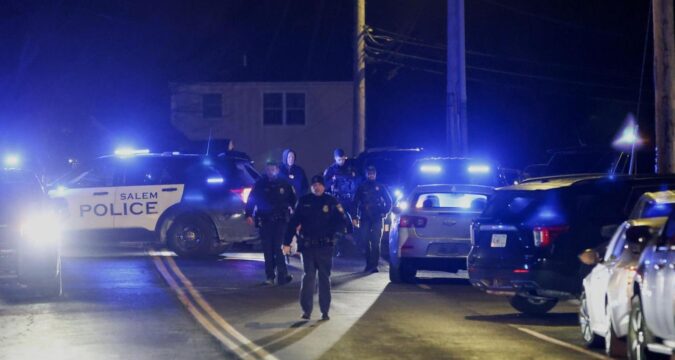
Sospechoso de tiroteo en Universidad Brown es hallado muerto en Nueva Hampshire, dice fuente AP
Por KIMBERLEE KRUESI, ALANNA DURKIN RICHER y ERIC TUCKER
PROVIDENCE, Rhode Island, EE.UU. (AP) — Un hombre sospechoso de matar a dos personas y de herir a varias más en la Universidad Brown fue encontrado muerto en un almacén de Nueva Hampshire, dijeron a The Associated Press un funcionario policial y una persona familiarizada con el asunto.
El hombre fue encontrado muerto el jueves por la noche. Se cree que murió tras dispararse a sí mismo, dijo la persona familiarizada con el asunto.
Los investigadores creen que el hombre es responsable tanto del tiroteo en Brown como del asesinato de un profesor del Instituto Tecnológico de Massachusetts que fue tiroteado en su casa de Brookline el lunes, dijo el funcionario. Las autoridades no han confirmado formalmente una conexión entre los dos tiroteos.
El funcionario y la persona familiarizada con el asunto no podían discutir públicamente los detalles de la investigación en curso y hablaron con la AP bajo condición de anonimato.
Dos personas murieron y nueve resultaron heridas en el tiroteo del sábado en la Universidad Brown. La investigación cambió de rumbo el jueves, cuando las autoridades dijeron que estaban investigando una conexión entre el tiroteo en Brown y un ataque dos días después cerca de Boston en el que murió el profesor del MIT Nuno F.G. Loureiro.
El FBI había dicho anteriormente que no conocía vínculos entre los casos.
___
Richer y Tucker informaron desde Washington. Los periodistas de The Associated Press Mark Scolforo en Harrisburg, Pensilvania, y Hallie Golden en Seattle contribuyeron a este despacho.

Tennessee Christmas Parade Blocks Participation Of Gay Pride Group
Tennessee Christmas Parade Blocks Participation Of Gay Pride Group
The culture war in the US is far from over, but it’s probably safe to say that most Americans are fed up with gay pride. Without the flood of billions of dollars in taxpayer subsidies to leftist NGOs from institutions like USAID, the prevalence of LGBT propaganda has gone into decline compared to the past five years.
In 2025 “Pride Month” was barely a blip on the gaydar and most corporations desperate to bring back consumers have abandoned their overt woke marketing. However, one odd tactic that leftist activists have been clinging to is the injection of pride ideology into Christian tradition. Many critics argue that it is a blatant attempt to co-opt western religion and destroy it from within.
Enfield United Church of Christ pastor Greg Gray says Jesus Christ was “pretty queer” because he hung out with 12 guys pic.twitter.com/4oRXScbAvw
— Daily Loud (@DailyLoud) August 15, 2025
The movement has not limited itself to fake churches with “gay pastors”, they have also been targeting Christmas events and symbolism. By saturating every aspect of American life LGBT groups hope to normalize their ideology, but they are really just pissing people off. The public, no longer fearing reprisals from the cancel culture mob, are finally saying no.
A Tennessee Christmas parade organization has recently denied the application of a group called “Upper Cumberland Pride” who planned on entering a gay-themed float entitled. Pride groups were allowed to participate in the parade in 2024.
The Cookeville Christmas Parade organization said in a statement that it rejected the application to avoid political distractions.
“Our goal from the beginning has been to point others to the reason for the holiday that we are celebrating. We wanted to make much of the person of Jesus born in Bethlehem. To do so and in efforts to minimize distraction from Him, we planned this event with stated prohibitions of special interest groups. Although we agree there is a time and an important role played by special interest groups such as Upper Cumberland Pride, we didn’t think this was it.”
The parade also rejected an application from a Young Republicans group, keeping politics out of the event on both sides of the aisle. The Cookeville Christmas Parade is scheduled for Friday and this year’s theme is “Remember the Reason.”
LGBT activists argue that the rejection of their float is contrary to the Christian doctrine of “love thy neighbor.” Others called for a more inclusive “holiday” parade next year that would “represent all faiths.” Imagine what would happen if activists living in an Islamic country demanded that Muslims be more accommodating to other religions and gay pride for Ramadan?
It should be noted that public sympathy for LGBT causes is plunging due to the extreme nature of trans ideology, including the targeting of children for indoctrination. According to the latest YouGov poll, support for gay marriage has dropped dramatically; over 70% of Americans supported legal gay marriage in 2021, but in 2025 that number has dropped to 54%.
Woke adherents use the claim that Christianity is required to be accepting as a means of manipulation, but the reality is that the Bible is rather specific on the exclusion of homosexuality. Furthermore, Christians believe in “loving the sinner, but rejecting the sin.” That is to say, they believe in repentance and redemption, not enabling behaviors they view as degenerate.
This concept is completely alien to progressives, who believe that all behaviors and morals are relative and that the only true sin is to disagree with them.
For most leftists the forced injection of gay pride in Christian spaces is about conquest, not inclusion. Like dogs marking their territory, they are letting conservatives know that no place is safe from their movement. There’s no other reason for them to attempt to participate in traditions they so vocally despise.
Tyler Durden
Thu, 12/18/2025 – 21:20
https://www.zerohedge.com/political/tennessee-christmas-parade-blocks-particiapation-gay-pride-group

US & China Are Headed For An AI Collision
US & China Are Headed For An AI Collision
Authored by Oren Etzioni via American Greatness,
President Trump spoke by phone to his Chinese counterpart, Xi Jinping, on Monday, November 24, and later posted on Truth Social, “Our relationship with China is extremely strong!”
The warm feelings from Washington came on the heels of the two leaders holding a productive meeting in Korea recently and scheduling several more get-confabs for the year ahead.
But bubbling beneath the surface is a rivalry between the two countries over the most vital technology of the 21st century: artificial intelligence.
To understand the rivalry, consider a recent announcement by the U.S. Justice Department: on November 20, it charged two Americans and two Chinese nationals with a conspiracy to illegally export about 400 high-performance graphics processing units (GPUs) to China.
Federal law requires that a license be secured for the export of these technologies, which can be used to develop and strengthen AI.
The co-conspirators didn’t have a license – and never even applied for one. In fact, they lied about the destination of the GPUs when shipping them. And for their services, they received a cool $3.89 million in wire transfers from China.
The backdrop to this smuggling scheme is Beijing having set a goal for China to be the world’s leader in AI by 2030. And it’s made considerable headway.
“China is the global leader in AI research publications and is neck and neck with the United States on generative AI,” points out the Information Technology and Innovation Foundation.
It adds that China is “advancing rapidly in AI research and application, challenging the United States’ dominance in this critical field.”
This progress stems from massive investments by the Chinese government in the 21st century. From 2000 to 2023, venture capital funds connected to the Chinese government made $184 billion in investments in China-based companies in the AI sector, according to a study published last year and conducted by professors at Harvard, MIT, and Oxford.
In an amusing coincidence of timing, one day after the smuggling indictment, Huawei – a leading Chinese technology company – announced a tool called Flex:ai that it said, “improves the utilization of artificial intelligence-based chipsets.”
The announcement also made the obligatory nod to corporate citizenship, saying that the technology will “speed up the democratization of AI.” But the company buried the lede, as they say in journalism, saving the most important detail – which is curiously attributed to “sources” – for the final sentence: “the new software tool will help China create an analogue AI chip 1000 times faster than Nvidia’s chips.”
Huawei is not just any company. It is the world’s largest manufacturer of telecommunications equipment. And it’s also been engaged in the kind of skullduggery that resulted in the recent indictment. In 2020, the U.S. Justice Department indicted the company and four of its subsidiaries. The charges mostly revolved around attempts to steal trade secrets from U.S. companies.
The company used an array of tactics, but perhaps most brazen of all, it paid its employees bonuses if they procured confidential information from rival companies.
And when U.S. law enforcement was investigating Huawei, the company told its employees not to comply.
Suffice to say, there’s good reason not to trust the Chinese government and its proxy companies like Huawei.
The Trump administration recognizes the threat.
In late June, it wisely approved a merger between two American companies that compete with Huawei: Hewlett-Packard Enterprises and Juniper Networks. A senior U.S. national security official told Axios:
“In light of significant national security concerns, a settlement . . . serves the interests of the United States by strengthening domestic capabilities and is critical to countering Huawei and China.”
The official said blocking the deal would have “hindered American companies and empowered” Chinese competitors.
Given the economic importance of AI to countries throughout the world, the competition between the United States and China is regrettable. But it’s probably also inevitable.
China is not abiding by the rules that are supposed to govern the global economy. And it’s using AI, says the Justice Department, to bolster its military, to test weapons of mass destruction, and to heighten surveillance.
Sometime next year, President Trump is scheduled to make a state visit to Beijing, and Xi is scheduled to come to Washington. They’re destined to focus on the cooperative parts of the relationship, but you don’t need to ask ChatGPT to see that the two countries are on a collision course over AI. Buckle up.
Tyler Durden
Thu, 12/18/2025 – 20:55
https://www.zerohedge.com/ai/us-china-are-headed-ai-collision