Category: News

Musk, US Gov’t In Talks Over Land Swap Deal To Expand SpaceX Launch Operations
Musk, US Gov’t In Talks Over Land Swap Deal To Expand SpaceX Launch Operations
The Trump administration is considering a proposed land swap that would transfer about 775 acres of federally protected land in the Lower Rio Grande Valley National Wildlife Refuge to SpaceX, allowing Elon Musk’s rocket company to expand launch operations in the newly incorporated town of Starbase, Texas, helping ensure America continues to lead the space race into the 2030s.
New documents obtained by The New York Times show that SpaceX would give the federal government approximately 692 acres of land it owns elsewhere in Cameron County in exchange for 775 acres.
Not surprisingly, the proposed land swap has caused an uproar among conservationists and archaeologists who say the 775 acres are home to endangered species and even part of the Palmito Ranch Battlefield.
However, Fish and Wildlife Service officials have taken a more optimistic view of the proposed land swap. In an October memorandum, Stewart Jacks, the agency’s acting regional director for the Southwest region, wrote that the swap deal would deliver a “net conservation benefit.”
The deal would “facilitate greater habitat protections for important fish and wildlife resources,” Jacks wrote in a letter to Brian Nesvik, the director of the Fish and Wildlife Service. He added that SpaceX would divest of lands that “include high-quality habitat for a myriad of species, including the endangered ocelot.”
But Sharon Wilcox, the senior Texas representative for Defenders of Wildlife, a conservation group, said she was skeptical of Jacks’ claims, noting that “With SpaceX present in this place, we have a very explosive force nestled in among all of these really fragile habitats.”
What’s clear is that any proposed land swap would have been rejected if Democrats were still in the White House. In fact, Musk blamed federal agencies, such as the Fish and Wildlife Service, for being weaponized against him during the Biden-Harris regime years that slowed rocket launches.
To expand Starbase City, it seems a lot more land will be needed. SpaceX says on its website that it plans “to build 1,000 Starships per year in order to send enough crew and cargo during Mars transfer windows to build a self-sustaining civilisation.”
Starbase City is incredibly special, with its cutting-edge industrial spaceflight infrastructure, including a purpose-built town that merges factories, launch pads, housing, and local services into a single live-work town built entirely around the Starship program.
The city is the first of its kind, well, at least in our generation, as building company towns in the 1800s and 1900s was popular nationwide when America was an industrial powerhouse. Those times are changing as the Trump administration seeks to revitalize the nation’s industrial core.
Thanks to Musk, America leads the space race and will likely continue to do so well into the 2030s.
Tyler Durden
Tue, 12/23/2025 – 12:40

Departamento de Justicia demanda al gobernador de Illinois por leyes que protegen a inmigrantes
Por CHRISTINE FERNANDO
CHICAGO (AP) — El Departamento de Justicia interpuso el lunes una demanda contra el gobernador de Illinois, JB Pritzker, en torno a una serie de nuevas leyes estatales que tienen como objetivo proteger a los inmigrantes dentro de juzgados, hospitales y guarderías.
Pritzker promulgó hace unas semanas un conjunto de leyes que prohíben los arrestos civiles dentro y en las inmediaciones de los juzgados en todo el estado y que requieren que hospitales, centros de cuidado infantil y universidades públicas cuenten con procedimientos para manejar operaciones civiles de inmigración y de protección de información personal.
Las leyes, que entraron en vigor de inmediato, también proporcionan pasos legales para las personas cuyos derechos constitucionales fueron violados durante las redadas federales de inmigración en el área de Chicago, los cuales incluyen pagos compensatorios de 10.000 dólares para quienes fueron arrestados ilegalmente mientras intentaban asistir a un procedimiento judicial.
Activistas migratorios y legales han aplaudido la iniciativa, diciendo que muchos inmigrantes evitaban presentarse en juzgados, hospitales y escuelas por temor a ser detenidos.
Lawrence Benito, director ejecutivo de Illinois Coalition for Immigrant and Refugee Rights, calificó las leyes como “una elección valiente”.
“Nuestra resistencia colectiva a los ataques violentos del ICE y la CBP en nuestras comunidades va más allá de una respuesta rápida liderada por la comunidad —también incluye soluciones legislativas”, afirmó en ese momento, refiriéndose por sus iniciales en inglés al Servicio de Inmigración y Control de Aduanas y a la Oficina de Aduanas y Protección Fronteriza, respectivamente.
El Departamento de Justicia argumenta que Pritzker y el fiscal general Kwame Raoul, los demócratas mencionados en la demanda, violaron la Constitución de Estados Unidos con estas leyes, las cuales, afirman, “amenazan la seguridad de agentes federales”, según un comunicado dado a conocer la noche del lunes. La demanda es parte de un esfuerzo de la secretaria de Justicia, Pam Bondi, por identificar leyes estatales y locales que, según la agencia, obstaculizan las operaciones federales de inmigración.
Pritzker y Raoul no respondieron de momento a solicitudes de comentarios.
Al promulgar estas medidas, Pritzker reconoció que podrían ser impugnadas en los tribunales.
“Sin duda, ellos tienen la capacidad de ir a la corte, pero creo que esta no es sólo una buena ley, sino una gran ley”, expresó Pritzker.
La “Operación Midway Blitz” del Servicio de Inmigración y Control de Aduanas de Estados Unidos, que parece haber disminuido en gran medida por ahora, resultó en el arresto de más de 4.000 personas. Los datos sobre las personas arrestadas desde principios de septiembre hasta mediados de octubre revelaron que sólo el 15% de ellas tenían antecedentes penales, en su gran mayoría por infracciones de tráfico, delitos menores o delitos no violentos.
___
Esta historia fue traducida del inglés por un editor de AP con la ayuda de una herramienta de inteligencia artificial generativa.
Medicaid paid more than $207 million for dead people. A new law could help fix that.
WASHINGTON — Medicaid programs made more than $200 million in improper payments to health care providers between 2021 and 2022 for people who had already died, according to a new report from the independent watchdog for the Department of Health and Human Services.
But the department’s Office of Inspector General said it expects a new provision in Republicans’ One Big Beautiful Bill requiring states to audit their Medicaid beneficiary lists may help reduce these improper payments in the future.
These kinds of improper payments are “not unique to one state, and the issue continues to be persistent,” Aner Sanchez, deputy regional inspector general in the Office of Audit Services told The Associated Press. Sanchez has been researching this issue for a decade.
The watchdog report released Tuesday said more than $207.5 million in managed care payments were made on behalf of deceased enrollees between July 2021 to July 2022. The office recommends that the federal government share more information with state governments to recover the incorrect payments — including a Social Security database known as the Full Death Master File, which contains more than 142 million records going back to 1899.
Sharing the Full Death Master File data has been tightly restricted due to privacy laws which protect against identity theft and fraud.
The massive tax and spending bill that was signed into law by President Donald Trump this summer expands how the Full Death Master File can be used by mandating Medicaid agencies to quarterly audit their provider and beneficiary lists against the file, beginning in 2027. The intent is to stop payments to dead people and improve accuracy.
Tuesday’s report is the first nationwide look at improper Medicaid payments. Since 2016, HHS’ inspector general has conducted 18 audits on a selection of state programs and had identified that Medicaid agencies had improperly made managed care payments on behalf of deceased enrollees totaling approximately $289 million.
The government had some success using the Full Death Master File to prevent improper payments earlier this year. In January, the Treasury Department reported that it had clawed back more than $31 million in federal payments that improperly went to dead people as part of a five-month pilot program after Congress gave Treasury temporary access to the file for three years as part of the 2021 appropriations bill.
Meanwhile, the SSA has been making unusual updates to the file itself, adding and removing records, and complicating its use. For instance, the Trump administration in April moved to classify thousands of living immigrants as dead and cancel their Social Security numbers to crack down on immigrants who had been temporarily allowed to live in the U.S. under programs started during the Biden administration.

Law & Order column: State’s attorney announces promotion
Karen Levi has been named as the new chief deputy for restorative justice and training at the Lake County State’s Attorney’s Office.
Levi, who has been the office’s chief of juvenile justice, was promoted earlier this month.
In her new job, Levi will supervise the new chief of juvenile justice, the chief of specialty court, the diversion coordinator and the deflection coordinator. According to the State’s Attorney’s Office, Levi will lead the office’s work with law enforcement and will be responsible for internal office training.
“Karen Levi has been recognized as an outstanding leader and prosecutor within the Lake County legal community and beyond,” State’s Attorney Eric Rinehart said. “Karen is precisely the leader and teacher that we need to make sure that we expand our Drug Court, Mental Health Court, Veterans Treatment Court, and other rehabilitation programs for years to come.”
Levi has been chief of juvenile justice since 2020 and has been named to several statewide groups in that specialty field. She has made numerous presentations to police, legal and community groups on making children safer in homes and the community.
“I am so incredibly proud to work for an office that recognizes the importance of rehabilitation in the criminal justice system,” Levi said. “I’m excited to now lead so many amazing prosecutors and staff in the critical work of safely and efficiently scaling up our local programs that have helped so many people.”
Levi’s job is part of the State’s Attorney’s Office’s mission to reduce crime through a holistic approach, Rinehart said.
“After we created the Violent Crimes Unit and upgraded our internal forensics lab, homicides, shootings, armed robberies, and many other violent crimes have decreased according to police and coroner data,” he said. “At the same time, our rehabilitation programs are helping nonviolent offenders receive the services they need so that they don’t escalate in their offenses and hurt people.
“Despite these past successes, challenges remain,” Rinehart said. “Our nonviolent cases are moving too slow, and not enough services are reaching non-violent offenders.”
New K-9 vest
K-9 Hemi of the Lake County Sheriff’s Office will be donning some new apparel this holiday season.
The police dog will be the recipient of a bullet- and stab-proof vest from the group Vested in K9s. The charitable organization provides vests and other gear to police dogs around the nation. Hemi’s vest was made possible through a donation.
“We are incredibly grateful for the support of Vested Interest in K9s, Inc. and our Lake County community for helping ensure our canine partners have the best safety equipment available,” Sheriff John Idleburg said. “Thanks to this generosity, all of our K9s are equipped with bullet and stab resistant vests, allowing them to safely and effectively serve the Lake County community.”
Happy New Year
As we near the end of the year and the 2025 holiday season, it’s fitting to thank the many police departments across Lake County who again acted as Santa’s helpers.
Officers across the region pitch in for Shop with a Cop, Stuff a Squad and Toys for Tots (a U.S. Marine Corps project), helping make the Christmas season merrier for families in need.
These programs would not be able to thrive without assistance from many businesses and individuals who donate generously. Best wishes to them, and all the best for 2026.
https://www.chicagotribune.com/2025/12/23/law-order-column-states-attorney-announces-promotion/
Trump dice que invitará a Kazajistán y Uzbekistán a la cumbre del G20 en Miami el próximo año
Por AAMER MADHANI
WEST PALM BEACH, Florida, EE.UU. (AP) — El presidente Donald Trump anunció que extenderá invitaciones a la cumbre del Grupo de los 20 del próximo año a Kazajistán y Uzbekistán en momentos en que la administración busca profundizar su relación con esas naciones centroasiáticas.
Trump anunció el plan el martes después de mantener llamadas telefónicas por separado con el presidente de Kazajistán, Kassym-Jomart Tokayev, y el presidente de Uzbekistán, Shavkat Mirziyoyev.
Ninguno de los dos países es miembro del G20, pero el país anfitrión suele invitar a no miembros a asistir a la cumbre. La reunión de 2026 tendrá lugar en el club de golf de Trump en Doral, Florida, cerca de Miami.
“La relación con ambos países es espectacular”, afirmó Trump en una publicación en redes sociales sobre las llamadas. Trump se encuentra actualmente de vacaciones en su resort Mar-a-Lago en Florida.
Los líderes kazajo y uzbeko visitaron Washington el mes pasado junto con los líderes de Kirguistán, Tayikistán y Turkmenistán para mantener conversaciones con Trump.
La administración está prestando mayor atención a Asia Central, que posee profundas reservas de minerales y produce aproximadamente la mitad del uranio del mundo, mientras intensifica la búsqueda de metales raros necesarios para dispositivos de alta tecnología, incluidos teléfonos inteligentes, vehículos eléctricos y aviones de combate.
Las exportaciones de minerales críticos de Asia Central han estado durante mucho tiempo inclinadas hacia China y Rusia.
Durante la visita del mes pasado, Tokayev anunció que su país, de mayoría musulmana, se unirá a los Acuerdos de Abraham, el esfuerzo de la administración Trump para fortalecer los lazos entre Israel y los países de mayoría árabe y musulmana.
El movimiento, en gran medida simbólico, se produjo mientras la administración intenta revivir una iniciativa que fue el logro emblemático de política exterior del primer mandato de Trump, cuando su administración forjó lazos diplomáticos y comerciales entre Israel y los Emiratos Árabes Unidos, Bahréin y Marruecos.
Trump anunció el mes pasado que prohibirá a Sudáfrica participar en la cumbre del próximo año en su club del área de Miami y detendrá todos los pagos y subsidios al país por su trato a un representante del gobierno de Estados Unidos en la reunión de este año.
Trump decidió no enviar una delegación del gobierno estadounidense a la cumbre de este año organizada por Sudáfrica por denuncias de que el gobierno sudafricano reprime a la minoría blanca. Es una afirmación que Sudáfrica, que durante décadas sufrió del régimen segregacionista apartheid, ha rechazado como infundada.
___________________________________
Esta historia fue traducida del inglés por un editor de AP con ayuda de una herramienta de inteligencia artificial generativa.

Johnson Whips Out Warning Over 3rd Trump Impeachment If Democrats Win Midterms
Johnson Whips Out Warning Over 3rd Trump Impeachment If Democrats Win Midterms
Authored by Jack Phillips via The Epoch Times (emphasis ours),
House Speaker Mike Johnson (R-La.) warned that President Donald Trump could face another House impeachment inquiry if Republicans don’t win the 2026 midterm elections.
“Everything is on the line in the midterms of 2026, and we have much more to do. But if we lose the House majority, the radical left, as you’ve already heard, is going to impeach President Trump. They’re going to create absolute chaos; we cannot let that happen, and I know you won’t,” Johnson told the audience at the AmericaFest event in Phoenix on Sunday.
The House speaker added that the audience should emulate Charlie Kirk, the conservative podcaster who was assassinated in September, saying that they should “fight like happy warriors, advance his principles, and adopt his approach.” AmericaFest is an annual event hosted by Turning Point USA, which Kirk had founded.
“We will win next year, and we will save the greatest nation in the history of the world,” Johnson said.
House Democrats impeached Trump twice during his first term. In late 2019, they charged him with abuse of power centered around a phone call that he had with Ukrainian President Volodymyr Zelenskyy over military aid. The second occurred in 2021 after the breach at the U.S. Capitol on Jan. 6 of that year. The Senate acquitted him both times.
Earlier this year, Johnson told the Shreveport Times, “Democrats would vote to impeach [Trump] on their first day” in office if they won in the 2026 midterm elections. In October, he offered a similar message to Fox News’ Laura Ingraham and predicted that the GOP would win those elections.
It takes a simple House majority to impeach a sitting president. However, the bar is set much higher in the Senate, where a two-thirds majority is needed to convict.
Several Democratic lawmakers, including Reps. Al Green (D-Texas) and Shri Thanedar (D-Mich.), have said they will try to impeach Trump.
The House in June voted overwhelmingly to set aside an effort to impeach Trump on a sole charge of abuse of power after he launched military strikes on Iran’s nuclear weapons facilities without first seeking authorization from Congress. The measure was sponsored by Green. Most Democrats joined the Republican majority to table it.
Earlier this month, the House voted 237–140 to shelve another Green impeachment resolution, with 47 Democratic lawmakers voting present. House Minority Leader Hakeem Jeffries (D-N.Y.) and his deputies said in a statement before the vote that impeachment “requires a comprehensive investigative process” that had not been undertaken by the Republican majority.
The Associated Press contributed to this report.
Tyler Durden
Tue, 12/23/2025 – 12:20
Mayor Brandon Johnson surrenders budget fight, will not veto opponents’ package
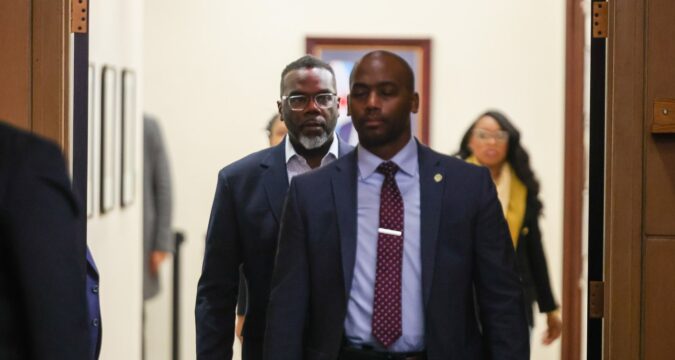
Mayor Brandon Johnson announced Tuesday he will not veto the 2026 budget passed by aldermen, conceding a historic struggle that reached the brink of a government shutdown and burned his goodwill with the City Council.
Speaking to TV cameras from his ceremonial office, Johnson confirmed he will not veto the $16.6 billion counterproposal to his spending plan for next year, despite his ongoing objections to his council rivals’ package. His decision comes days before the end-of-year deadline to either finalize a budget or imperil vital city services as well as tens of thousands of paychecks.
His communications director Erin Connelly confirmed to reporters, “The budget will go into effect without his signature. He will not be affirming the budget with his signature.”
But in an attempt to block his political foes from having the last word, Johnson also signed a series of executive orders, one aimed at upholding police overtime restrictions undone by aldermen, the other to ban the sale of medical debt, such as ambulance rides, to balance the city’s budget.
He framed the move as him standing up to his obstinate council counterparts, though implicit in his announcement was him permitting the rest of the alternate budget to go through.
Johnson’s surrender reflected not just concerns about the fallout from a shutdown, but also his diminished standing over the City Council, which passed a budget over the mayor’s objections for the first time in four decades.
The opposition bloc led by moderates, including his own Finance Committee chair, appeared far closer to a 34-vote veto-proof margin than he was to a 26-vote simple majority — or 25, for a tie-breaker — and members of that group expressed confidence that if Johnson did strike down their package they would override him.
Throughout hours of floor speeches on Saturday, aldermen across the city’s political spectrum blamed him for how the 2026 budget fight grew so unmanageable and caustic. Then they voted 30-18 on the remainder of the spending package, after a 29-19 vote on a revenue package that cuts out Johnson’s corporate head tax. That was the cornerstone of the mayor’s budget proposal unveiled mid-October, one that he sought to tie to his larger “tax the ultra-rich” agenda but which consistently failed to sway a majority of City Council.
The mayor has argued the alternative plan relies on faulty assumptions that ultimately make it unbalanced, including a “morally bankrupt” plan to sell to debt collectors $1 billion in long-outstanding money owed to the city for pennies on the dollar. During a lengthy floor speech before Saturday’s vote, he admonished his opponents for placing the responsibility of this budget fight “on one person” and implored them to “not pick and choose” who wears the jacket.
Still, Johnson ruling out a veto signaled he understood the political implications of crossing that line.
His closest ally, the Chicago Teachers Union, delivered an implicit message Saturday that he can, and should, claim victory.
“We fought for a budget that puts people first and we won,” the CTU wrote in a statement after the vote. “The Corporate Caucus tried to force cuts that would’ve hurt working families. But our organizing made them back down. … That’s more than we’ve won in a budget fight in years.”
So ends the mayor’s third budget process. Left in its wake are a City Council undergoing a generational political realignment, a mayor’s office increasingly isolated on the fifth floor of City Hall and a budget plan all sides admit is imperfect.
The next task at hand, Johnson’s budget chair Ald. Jason Ervin had said Saturday, is amending parts of the counterproposal that never got smoothed out during the hectic timeline of the last several weeks.
The budget that passed contains a mix of untouched Johnson proposals — which his allies have been celebrating as a victory — as well as slight tweaks to his original plan and wholesale revenue changes.
Much of Johnson’s original proposal is fully intact. That includes a $1 billion tax-increment financing surplus to yield $572 million for Chicago Public Schools and $233 million for the city; short-term borrowing to cover the cost of back pay for Chicago firefighters and legal settlements and borrowing plans for infrastructure improvements.
The city’s tax on personal property leases, which applies to everything from car rentals to cloud computing, goes up from 11% to 15%, while the congestion zone for ride-share trips on Uber and Lyft is expanding.
The head tax is gone. There is no major property tax hike either, save for a $9.1 million increase dedicated to averting cuts at the city’s libraries, nor a hike in garbage fees that the opposition bloc initially floated.
And the alternative budget restores the full advance pension payment, which Johnson’s original proposal had cut by roughly half. The revenue plan relies on a constellation of new taxes and raised fees that Johnson did not initially pitch, such as virtual and traditional advertising on city property, major changes to liquor taxes and legalizing video gambling across the city.
The mayor’s team has fixated on the counterproposal’s sale of $1 billion in debt for an estimated $90 million as an immoral plan that would “harass” poor Chicagoans with private debt collectors and not raise any dollars at all.
Avoiding a government shutdown diminishes the risk of a ratings downgrade, but experts have said based on recent trades, buyers of Chicago debt are already expressing their doubts. And all corners of City Hall agree: what transpired the last few months hardly solves the city’s intractable fiscal issues that could portend an even tougher budget fight for 2027 — when an election looms.
Still, whatever happens next for Johnson’s waning power over City Council, he appears resolute that his moral high ground has not diminished one bit.
Minutes before his Tuesday news conference began, the mayor’s X account shared a headline titled, “Is it ethical for the city to use private debt collectors?”
His one-word response? “No.”
https://www.chicagotribune.com/2025/12/23/mayor-brandon-johnson-budget-fight-not-veto/

DOJ Releases More Epstein Files After Blowing Deadline, Says Some Documents Contain False Claims
DOJ Releases More Epstein Files After Blowing Deadline, Says Some Documents Contain False Claims
After missing a Friday deadline to release ‘all’ of the ‘Epstein Files,’ nuking several files containing images of President Donald Trump (before restoring them!), and heavily redacting most of what came out (which can apparently be un-redacted to reveal salacious claims against Trump), the DOJ on Tuesday morning released nearly 30,000 additional pages according to a statement posted on X, which also warned that some of the claims made in the documents against Trump are ‘untrue and sensationalist.’
“Some of these documents contain untrue and sensationalist claims made against President Trump that were submitted to the FBI right before the 2020 election,” reads the post. “To be clear: the claims are unfounded and false, and if they had a shred of credibility, they certainly would have been weaponized against President Trump already.
“Nevertheless, out of our commitment to the law and transparency, the DOJ is releasing these documents with the legally required protections for Epstein’s victims.”
The Department of Justice has officially released nearly 30,000 more pages of documents related to Jeffrey Epstein.
Some of these documents contain untrue and sensationalist claims made against President Trump that were submitted to the FBI right before the 2020 election. To be…
— U.S. Department of Justice (@TheJusticeDept) December 23, 2025
For example:
“He raped me.”
“Donald J Trump had raped her along with Jeffrey Epstein.”
“She was found with her head ‘blown off’… there was no way it was a suicide.”
Now we’re starting to see why Trump was hiding the Epstein files, and it probably gets much worse. pic.twitter.com/QJ8T0FzjSn
— Melanie D’Arrigo (@DarrigoMelanie) December 23, 2025
The releases were mandated by the Epstein Files Transparency act, which was passed in Congress and signed into law by Trump. It requires the DOJ to produce all records related to Epstein, accomplice Ghislaine Maxwell, and any other possible co-conspirators by Dec. 19.
Over the weekend, Deputy AG Todd Blanche said that the DOJ is working to make redactions to files to protect possible Epstein victims, telling NBC‘s “Meet the Press” on Sunday “The reason why we are still reviewing documents and still continuing our process is simply that to protect victims,” adding that the DOJ is “going through a very methodical process with hundreds of lawyers looking at every single document and making sure that victims’ names and any of the information from victims is protected and redacted, which is exactly what the [Epstein Files] Transparency Act expects.”
Except, apparently it’s amateur hour at the DOJ…
many of the “redacted” PDFs from the epstein files aren’t actually redacted, they just have black boxes drawn over text. the underlying data is fully extractable.
this is an example. in this case it’s just photo processing paperwork from a palm beach camera shop pic.twitter.com/kjFVMHJuF9
— celeste (@vmfunc) December 23, 2025
In a Saturday evening statement, the DOJ wrote that it had re-released 119 pages of materials that had been entirely redacted.
“Documents and photos will continue to be reviewed consistent with the law and with an abundance of caution for victims and their families,” the department posted to X.
Maxwell is serving a 20-year federal prison sentence stemming from her 2021 conviction for sex trafficking crimes, while Epstein was found dead in a New York City jail cell in Aug. 2019 while awaiting trial on sex trafficking charges.
Tyler Durden
Tue, 12/23/2025 – 12:00

Will The CME Raid The Silver Party?
Will The CME Raid The Silver Party?
Authored by Lance Roberts via RealInvestmentAdvice.com,
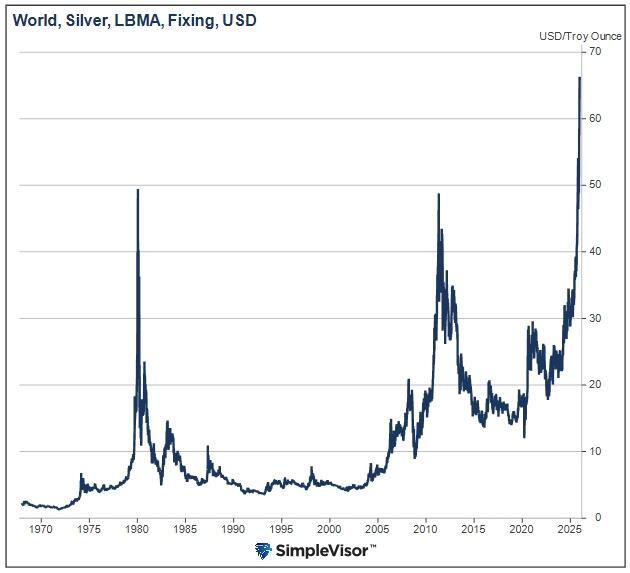
Silver’s parabolic rise has been remarkable. Its price has more than doubled this year and is nearly three times higher than in 2023. The current surge closely mirrors two previous price jumps shown below.
In this article, we examine the two similar price surges shown below to provide context for what may be occurring today and, importantly, for what might cause this bubble to pop tomorrow.
The Post Financial Crisis Silver Surge
As the turmoil of the Financial Crisis of 2008 began to ease in 2009, the price of silver embarked on a 500% rally, rising from $8.50 to $50.00 over two years. The Fed’s excessive monetary responses to the crisis, alongside heavy speculation, created a perfect storm for silver.
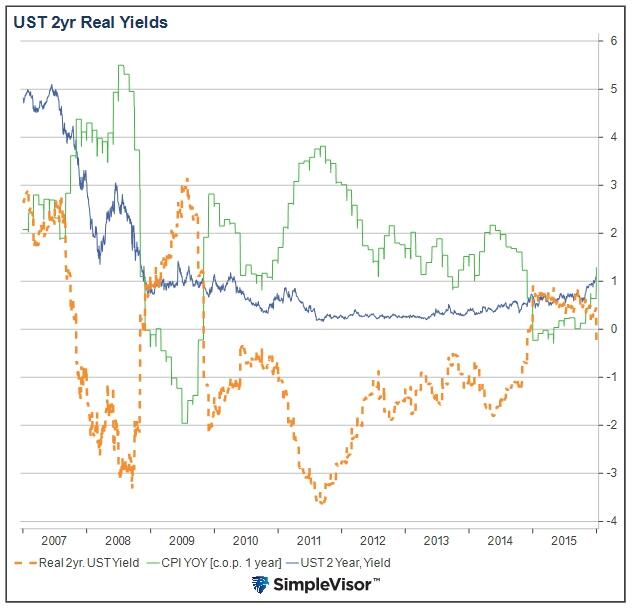
During the crisis, the Fed cut interest rates to zero, introduced QE, and implemented a host of monetary bailouts. As a result, real interest rates (adjusted for inflation) collapsed into negative territory. The graph below shows that 2-year UST real yields fell sharply in 2009 and continued lower until mid-2011. The increase in silver prices coincided with the decline in real yields. Such distortions in monetary policy, as evidenced by real yields, benefit silver as it is considered a high-beta monetary hedge against extreme monetary policy actions.
While the monetary environment was conducive to such a rally, there was also a supply-demand mismatch benefiting prices. The supply of silver is relatively inelastic, meaning that mining operations can’t promptly increase output to meet rapid changes in demand. The advent of ETFs makes the asset class far more accessible to a much larger class of investors, adding to the supply-demand imbalance. Maybe most impactful, speculative investors, using futures, options, and other forms of leverage, significantly boosted demand.
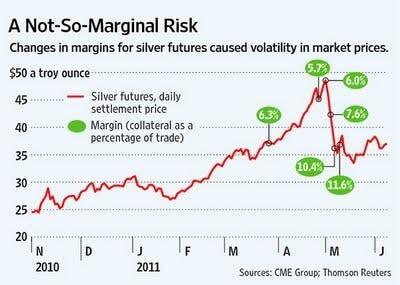
The boom ended in 2011 when the Chicago Mercantile Exchange (CME) raised margin requirements five separate times in nine days. The graph below, courtesy of Business Insider, shows the doubling of silver margin requirements and the destructive impact on prices. The CME’s action forced deleveraging in the futures markets, resulting in silver falling by nearly 30% over a few weeks. Demand for physical silver didn’t necessarily vanish, but leverage and the extra buying power it created did. Additionally, QE2 ended in June 2011; real interest rates began to rise, and the U.S. dollar appreciated.
The Fed’s unprecedented monetary policy actions and speculative leverage drove up silver prices. As those factors reversed, and the CME made leverage costlier, silver prices crashed.
The 1970s Hunt Brothers Squeeze
The Hunt brothers, Nelson, Lamar, and William, had extensive holdings in oil, real estate, cattle, and sugar. Concerned about the effects of what they believed were careless monetary and fiscal policies, as well as the risks posed by the newly formed oil cartel (OPEC), they sought to hedge their businesses and assets. Since it was still illegal for individual investors to own gold, they chose physical silver.
The Hunts began buying silver in 1973, when the price per ounce was $1.50. Over the next six years, the Hunts increased their holdings to more than 200 million ounces, valued at more than $4.5 billion.
Silver Rule 7
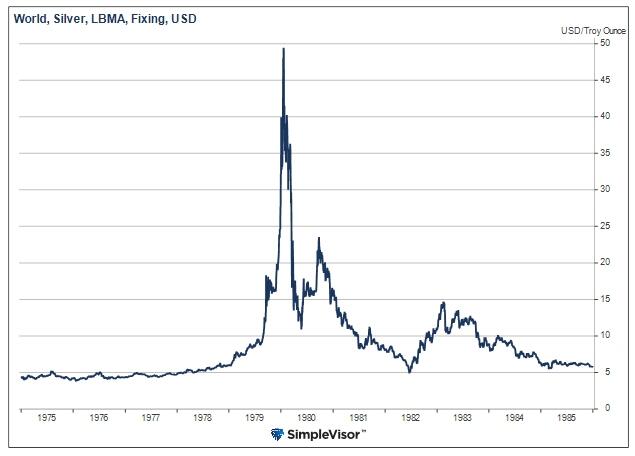
In late 1979, their massive holdings and the impact they were having on silver prices prompted action by the Commodities Futures Trading Commission (CFTC) and the CME. Both entities sought to restrict their purchases and compel the liquidation of the brothers’ silver assets. In January 1980, the CME enacted Silver Rule 7, which imposed stringent restrictions on the purchase of silver futures on margin. This rule significantly increased the amount of collateral required of traders, thereby curbing leveraged speculative buying. It also included restrictions on the number of contracts one could hold and effectively halted new margin buying.
These changes meant that if a trader wanted to continue buying, they would have needed to put up nearly 100% cash for their positions instead of borrowing on margin — effectively eliminating leverage.
Silver nearly hit $50 per ounce in mid-January 1980 and then, due to the abrupt changes in margin requirements, fell to $10 per ounce by the end of March. At that point, margin calls on futures contracts and borrowings against existing silver holdings depleted the Hunts’ cash, forcing them to liquidate their holding to cover margin debts.
Leverage Builds and Leverage Kills
The Hunts initially took physical delivery of silver and did not use leverage. Over time, though, they understood the power of using their silver as collateral to buy more. Buying silver futures on margin enabled them to positively influence the price at a fraction of the cost. Such leverage allowed them to multiply their purchasing power and drive silver prices higher. The only requirement for the Hunts scheme was to maintain sufficient cash to adequately fund their futures margin account.
In addition to the CFTC and CME efforts, the Federal Reserve also played a role in breaking the Hunt brothers. Fed Chairman Paul Volcker sharply raised interest rates in January 1980, from 11.75% to 20.0%, making margin borrowing for the Hunts and other speculators much more expensive. One week after the Hunts ceased market activity, Volcker began lowering interest rates.
Leverage allowed the Hunts to distort the price of silver, but it also killed their legendary squeeze. They incurred over $1.1 billion in losses on the trade. They also lost civil lawsuit claims, which, in part, led them to declare bankruptcy.
The Tiffany advertisement below describes the economic effect the Hunts had on various industries.
Current Silver Situation
Today, there are many sound, fundamental reasons for the recent rise in silver prices, as there were in the 1970s and in the post-financial-crisis years. For example:
Monetary & Fiscal Tailwinds: Like in the post-Financial Crisis era, the post-pandemic environment has certainly provided those with a reason to hedge against monetary tomfoolery with precious metals. The monetary debasement narrative certainly adds to the conversation. Moreover, with QE resuming and a few signs that DOGE hasn’t reduced fiscal spending, there does not appear to be an end in sight to the monetary and fiscal problems we face.
Supply Deficit: Silver has been in a multi-year supply deficit, with demand exceeding newly mined supply and silver from recycling.
Surging Industrial Demand: Silver is essential for solar panels, electric vehicles, power electronics, semiconductors, and data-center infrastructure. Given the rapid growth in these sectors globally, silver demand is increasing.
Limited Supply: Roughly 70% of silver production is a by-product of mining for other metals. This means that higher silver prices alone do not incentivize new supply, thereby slowing the market’s ability to rebalance. Moreover, reserve depletion, declining ore grades, mine closures, and underinvestment in exploration and development constrain supply.
Valuations
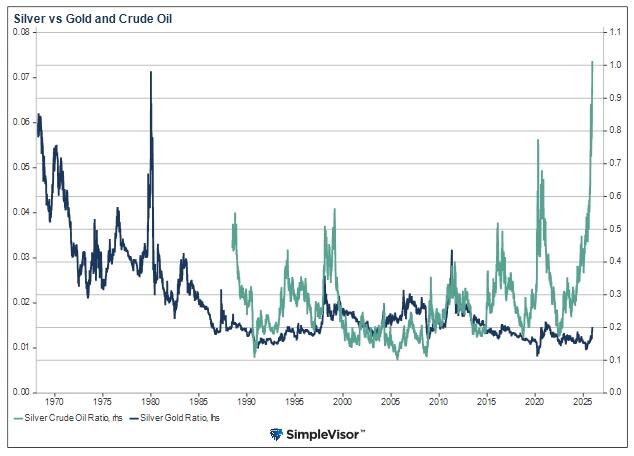
Silver investors often use ratios to assess silver value. Among the most widely used are the silver-to-gold and silver-to-oil ratios. The chart below shows both ratios. The silver-to-oil ratio (green) is at record highs going back to at least 1990. As the graph shows, there have been numerous spikes in the past. Assuming this too is a spike, either oil prices are ready to ramp higher, or silver is due for a mighty correction.
The silver-to-gold ratio remains cheap despite silver’s recent outperformance versus gold. If the ratio were to return to its late-2011 highs, silver prices would have to rise significantly more than gold prices. While a continued increase in the ratio is undoubtedly possible, note that the trend has been downward for most of the 55 years shown.
When Will The CME Raid The Party?
The problem with traditional valuation and fundamental analysis, as discussed above, is the precedent the CME has set when the price of silver goes parabolic. Accordingly, we think it’s only a matter of price before the CME and/or governmental action pulls the rug out from silver speculators.
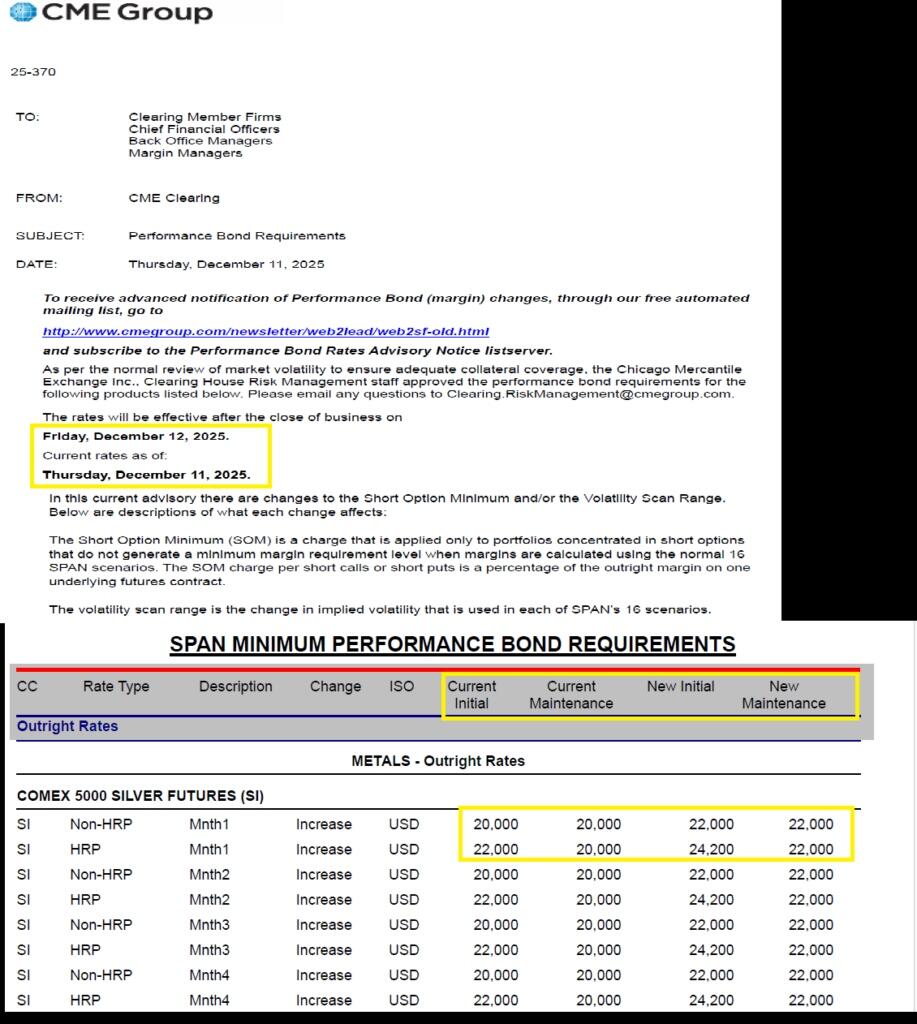
If you disagree, consider that on December 12th, the CME raised silver margins by 10%, as shown below. In 2011, the first margin increase also had no impact. It was the subsequent actions that were the problem.
Silver investors should carefully read the sections above detailing the post-financial-crisis period and the Hunt Brothers boom-bust cycles. Changes in margin requirements and rules triggered mass liquidations of silver, resulting in an abrupt reversal of fortunes. Such actions are unpredictable and happen extremely fast.
Summary
At its core, this article provides yet another lesson on the high price that leverage can inflict on investors. When the market for an asset becomes highly leveraged, the risks increase markedly. We are reasonably confident that this bullish charge in silver will end poorly, as it has in the other two instances. What we don’t know is when the shift will occur. Complicating the timing is that the CME could, on any day, terminate the leverage.
Fool me once, shame on you. Twice, then shame on me. But fool me three times….
Tyler Durden
Tue, 12/23/2025 – 11:40
https://www.zerohedge.com/precious-metals/will-cme-raid-silver-party

Ravens, Broncos, 49ers y Seahawks lideran con seis jugadores seleccionados al Pro Bowl
Por ROB MAADDI
Seis jugadores de los Ravens de Baltimore, Broncos de Denver, 49ers de San Francisco y Seahawks de Seattle fueron seleccionados para los Juegos del Pro Bowl.
El campeón defensor del Super Bowl, los Eagles de Filadelfia, junto con los Cowboys de Dallas, los Lions de Detroit y los Chargers de Los Ángeles , tendrán a cinco jugadores.
El actual MVP de la NFL, Josh Allen, Drake Maye y Justin Herbert son los quarterbacks de la AFC. Sam Darnold, Dak Prescott y Matthew Stafford son los QBs para la NFC.
Travis Kelce de Kansas City fue seleccionado para su 11º Pro Bowl, empatando con Jason Witten en el segundo lugar entre los alas cerradas, solo detrás del miembro del Salón de la Fama del Fútbol Americano Profesional Tony Gonzalez (14).
Diecinueve jugadores fueron elegidos por primera vez, incluidos los esquineros de los Eagles Quinyon Mitchell y Cooper DeJean, el corredor de los Dolphins De’Von Achane y el receptor abierto de los Cowboys George Pickens.
El tackle de los Chargers Joe Alt fue seleccionado a pesar de haber jugado solo seis partidos antes de sufrir una lesión de tobillo que puso fin a su temporada.
Los Jaguars de Jacksonville, líderes de la AFC Sur (11-4), solo tuvieron un jugador seleccionado: el centro largo Ross Matiscik.
Los Jets, Saints y Vikings fueron los únicos equipos sin un representante.
Kyle Juszczyk de San Francisco se dirige a su 10º Pro Bowl, el mayor número para un fullback. El tackle izquierdo de los Niners, Trent Williams, es el cuarto liniero ofensivo seleccionado para 12 Pro Bowls desde 1970, uniéndose a los miembros del Salón de la Fama del Fútbol Americano Profesional Bruce Matthews (14), Randall McDaniel (12) y Will Shields (12).
El guardia de los Colts, Quenton Nelson, es el segundo liniero ofensivo en ser seleccionado para el Pro Bowl en cada una de sus primeras ocho temporadas desde 1970, uniéndose al miembro del Salón de la Fama del Fútbol Americano Profesional Joe Thomas (10).
Ja’Marr Chase de Cincinnati es el tercer receptor abierto en ser seleccionado para el Pro Bowl en cada una de sus primeras cinco temporadas desde 1970, uniéndose a Tyreek Hill (8) y A.J. Green (7).
El cazador de los Packers, Micah Parsons, es el primer jugador defensivo en ser nombrado para el Pro Bowl en cada una de sus primeras cinco temporadas desde Aaron Donald (10).
Jalen Ramsey, un esquinero seleccionado siete veces para el Pro Bowl, lo logró como free safety en su primera temporada con los Steelers.
Las selecciones de jugadores fueron determinadas por los votos consensuados de los aficionados, jugadores y entrenadores, con el voto de cada grupo contando como un tercio del total.
Este es el cuarto año de los Juegos del Pro Bowl después de que la NFL eliminara su juego de estrellas de contacto completo y lo reemplazara con competencias de habilidades durante una semana y un juego de fútbol bandera.
Los eventos se jugarán en San Francisco antes del Super Bowl. Los miembros del Salón de la Fama del Fútbol Americano Profesional Jerry Rice (NFC) y Steve Young (AFC) entrenarán a los equipos en el enfrentamiento de fútbol bandera el tres de febrero.
___
AP NFL: https://apnews.com/hub/NFL