Category: News

Editorial: The bookstore comeback is good news for readers
As winter settles in and daylight fades early, Americans long have turned to books for comfort, curiosity and company. The good news this holiday season is that the bookstores which make that habit possible are rebounding, too.
In the late 1990s, many book lovers often looked with scorn upon the likes of Barnes & Noble and the now-defunct Borders, favoring the dusty shelves of their preferred independent book haunt. Fast-forward to now and bookstores of any kind have been harder to come by in many communities. The old bookstore wars are over. In an age of Amazon dominance, readers have learned to root for anyone selling physical books, and that enthusiasm appears to be paying off.
Barnes & Noble is leading the charge, opening nearly 70 new stores this year with plans to add another 60 in the new year.
“2025 has been a fantastic year for us,” Barnes & Noble CEO James Daunt told CNBC on Dec. 15. To be sure, not all Barnes & Noble locations are built alike, with some maintaining a smaller footprint wedged into strip malls while others maintain the standalone, bulky presence many identify with the brand. Examples of both versions can be found peppered through Chicago and its suburbs.
Discussing what may be behind this positive news, Daunt said the naysayers might tell you books do really well during a recession. He had a more hopeful perspective, crediting strong releases from the publishing world and a growing thirst for book supply among the public. While COVID was awful in so many ways, it appears pandemic lockdowns had the effect of igniting a love of reading in lots more folks — making it possible for the bookstore ecosystem to grow.
“Once you get into the habit of reading books — and that clearly happened during the pandemic — you retain that habit,” Daunt said. He also noted that tariffs, which have hindered so many other industries, have had “virtually no impact” on books.
Janice Fleming, center, comments on a book at Beyond the Book bookstore during the Homewood store’s first book club meeting, on Nov. 19, 2025. (James C. Svehla/for the Chicago Tribune)
These good habits aren’t just bolstering big brands like Barnes & Noble, they’re leading to a resurgence of independent booksellers, too. The American Booksellers Association reported that more than 420 new bookstores opened this year, part of a rebirth of bookshops after the initial Amazon/big-box shock that caused so many to go under. We found it interesting to follow the timeline of this evolution by tracking ABA’s membership, which peaked in 1995 with 5,500 members across 7,000 stores before dropping as of 2009 to 1,401 members across 1,641 locations. The group’s most recent numbers from 2022 — 2,178 members at 2,593 locations — reflect an ecosystem that is rebounding modestly postpandemic.
We couldn’t be happier. To read is to learn, to feel, to expand your horizons beyond the tiny corner of the world you occupy. To come to the realization that you are but one small part of a much bigger world without ever leaving your sofa.
And if more people are coming to this realization, all the better for us all.
Submit a letter, of no more than 400 words, to the editor here or email letters@chicagotribune.com.
https://www.chicagotribune.com/2025/12/24/barnes-noble-books-bookstores-james-daunt-reading/
Ready, set, soon? Trump admin’s funding freeze threatens Red Line Extension
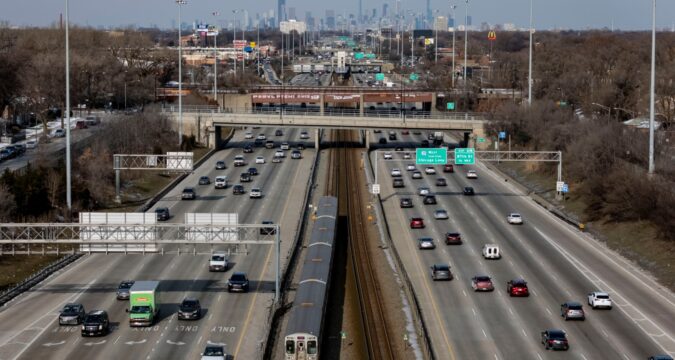
Banners posted at the Chicago Transit Authority’s 95th Street station promise: “Ready, set, soon! The Red Line Extension is coming.”
Anticipation for the rail project has been building since January when, just 10 days before President Donald Trump took office, the CTA locked down almost $2 billion in federal grant dollars to help extend the Red Line from 95th Street to 130th Street. The CTA’s president at the time, Dorval Carter, said the long-promised undertaking to bring CTA rail access to the Far South Side would “undo nearly 60 years of racial inequity in transit.”
But in October, the Trump administration froze the Red Line grant dollars, citing the transit agency’s diversity requirements for contractors.
Since then, the CTA has not been able to receive federal reimbursements for work on the project, which has also been criticized for its hefty $5.75 billion price tag.
The agency says it’s still on track to officially break ground next year and open the extension — and four brand-new train stations — in 2030. And over the last few months, workers have continued early site preparation on the Far South Side, testing soil and demolishing properties to make way for new train stations and track.
The CTA has also continued to pay for that work: As recently as Dec. 5, records show, it sent contractor Walsh-VINCI $23.5 million in one of more than a dozen payments it’s made since fall 2024. So far, the CTA has paid Walsh-VINCI — which directed all questions to the CTA — about $415 million out of a $2.9 billion contract.
But experts say the longer the freeze goes on, the more challenging it will be to keep the Red Line project chugging along.
The CTA can continue making payments on the project during the funding pause, but it can’t get reimbursed by the federal government for the money it spends.
According to staffers for a member of Illinois’ congressional delegation — who spoke with the Tribune on the condition of anonymity — the rubber could hit the road as soon as January if the feds don’t unfreeze the funds.
That’s when the CTA could reach a point where it is no longer able to make payments for the project — or would have to take extraordinary measures to do so, according to the source.
The CTA didn’t specifically address the suggestion that it could hit a wall on the project as soon as next month.
CTA spokesperson Tammy Chase said the project “remains on track” and that the agency was continuing to pay contractors “without interruption” during the funding freeze.
“The project is currently using a line of credit until CTA receives the next issuance of state project funds and issues CTA bonds, as planned,” she said.
Price tag could rise
Red Line service stops at 95th Street, but Chicago extends for dozens of city blocks.
At the 95th/Dan Ryan Red Line station in Roseland, passengers traveling farther south wait for bus connections to complete their trips home.
For many, the fact that North Siders can take the CTA’s rail system all the way to Evanston and Skokie but Far South Siders get left at the bus stop represents a historic injustice, one that transit officials, community leaders and politicians have vowed for decades to remedy.
Mariah Williams enters the CTA 95th Street station on Dec. 15, 2025, after commuting by bus to reach the Red Line terminus and head north to her job. (Brian Cassella/Chicago Tribune)
“We’re all trying to get to work,” said Mariah Williams, a CTA rider who spoke with the Tribune at the 95th Street station this month.
But the project has also been criticized for its cost of about $1 billion per mile. Its total price tag has ballooned in recent years; as recently as 2024, the CTA was citing a cost of $3.6 billion, which later in the year jumped to $4.8 billion.
The funding freeze risks making the project even more expensive, experts said.
“The longer this goes on,” said Justin Marlowe, director of the Center for Municipal Finance at the University of Chicago, “the more costly it becomes.”
Some of that has to do with inflation, Marlowe said. But delays can be costly for other reasons, he added: For instance, if the CTA gets to a point where it can’t meet project timelines, it could have to rebid contracts — potentially at even greater cost than before.
Chase, the CTA spokesperson, attributed the project’s price tag increase to a “seismic economic change” in the construction industry since 2020.
“Costs have increased at an unprecedented rate (more than 50 percent according to federal industry data 2020-2023) for everything from construction materials, labor costs and general construction management costs,” she wrote in an email to the Tribune.
“We remain committed to moving ahead with RLE because of the enormous transit and economic development benefits it will provide to a severely disinvested part of our city,” Chase wrote. “But we also made sure to control costs and negotiate with our contractor to be as cost-efficient as possible.”
Whether or not the project is worth it at this point is “at least a master’s degree-level question,” said Joseph Schofer, a professor emeritus at Northwestern’s school of engineering who studies transportation infrastructure.
From a purely economic development perspective, “I think the answer is no,” said Marlowe, of the U. of C.
But, he said, “the Red Line extension has been about more than economic development in the strict sense of the word.” The project is also about community development, and about restoring a sense of fairness on the South Side, he said.
Schofer concurred. There’s an “equity increment,” he said. “That’s what we’re paying for.”
“An authoritarian move”
The Trump administration has repeatedly used the threat to withhold federal funding as a political weapon against blue cities and states. When it comes to funding for public transit, Trump’s Transportation Department has used crime specifically as a cudgel, most recently threatening to withhold up to $50 million in federal dollars from the CTA unless it beefs up a plan to add more police to its transit system.
Experts noted that the Red Line funding freeze appears to have absolutely nothing to do with an honest assessment of the project’s value.
“This is an authoritarian move to punish the city of Chicago” that has nothing to do with the costs and benefits of the project itself, Schofer said.
Elected officials across Illinois have similarly slammed the funding freeze, accusing the Trump administration of playing around with critical infrastructure dollars to score political points.
In October, Democratic Sen. Tammy Duckworth called the freeze “an illegal, anti-democratic attack on our state for daring not to vote for Donald Trump.”
“The South Side has fought for this for 50 years, and we have finally delivered it, and after 50 years of struggle to make sure that the South Side is prioritized, this president is now going to try to disrupt that? Not under my watch,” Chicago Mayor Brandon Johnson said in early October, while calling Trump “deranged.”
At the time, the mayor said the city was considering taking legal action in response to the funding freeze.
More recently, the mayor’s spokesperson, Cassio Mendoza, said it would be the CTA that would file such a lawsuit.
Chase, of the CTA, said the agency could not comment on any potential legal action.
Shortly before freezing the CTA’s Red Line funding, the feds issued an “interim final rule” barring race- and sex-based contracting requirements from federal grants.
“The American people don’t care what race or gender construction workers, pipefitters, or electricians are,” the Transportation Department said at the time. “They just want these massive projects finally built quickly and efficiently.”
The department said it was undertaking a review of the Red Line project, as well as the CTA’s Red and Purple Modernization project, from which it also froze federal dollars, “to ensure no additional federal dollars go towards discriminatory, illegal, and wasteful contracting practices.”
In response to questions about the status of the review and its timeline, the Transportation Department said it notified the CTA on Dec. 1 that it “had contracting practices that are inconsistent with Equal Protection principles of the U.S. Constitution.”
The CTA was “notified of steps” it would need to take to “eradicate these discriminatory practices, which will allow for Federal funds to resume for these important infrastructure projects,” the federal agency said.
The DOT did not answer a question about what “steps” it wanted the CTA to take. It also didn’t offer a response to criticism that the funding freeze was politically motivated.
Chase said only that the agency was “cooperating with USDOT and (the Federal Transit Administration) to ensure the review is completed as quickly as practicable.”
Marlowe said he believed the CTA would eventually get its grant money.
But the feds, he said, “want to extract some pound of flesh.”
Meanwhile, South Side riders are waiting for the train.
At the 95th Street Red Line station on a recent Monday, CTA rider Tae Williams — who was about to get on a bus to take her home from work — said she wished Trump would “stop freezing every damn thing.”
“You freeze funding, you freeze this, you freeze that,” Williams said. “Now the only people that’s freezing is us!”
https://www.chicagotribune.com/2025/12/24/red-line-extension-trump/

South African Men ‘Scammed’ Into Fighting For Russia Become Trench Diggers
South African Men ‘Scammed’ Into Fighting For Russia Become Trench Diggers
European security authorities have recently been loudly warning of Russian military or intelligence recruitment scams targeting unsuspecting citizens of the EU, by offering promises of jobs or money transfers, during which time the individuals are said to be ‘recruited’ by Moscow. This is apparently happening on the African continent as well, with a new Reuters investigation documenting that South Africans are being lured into the Russian armed forces under false pretenses.
People are allegedly promised high-level jobs and elite training in Russia, only to find out they’ve unwittingly joined the Russian military, and eventually find themselves fighting in Ukraine soon after documents are hastily signed. In these cases the implication is that these South African individuals are in desperate financial straits.
Reuters details the story of South African father-of-three Dubandlela, who was initially thrilled when his 20-year-old son signed up last summer to receive specialized training as a VIP bodyguard in Russia.
The family had struggled financially, couldn’t provide university tuition for their son, and when an opportunity for a fast-tracked and solid job in Russia presented itself, the young man jumped at it as a path to a lucrative career.
And then, “Five months later, Dubandlela is in despair. His son had fallen for an alleged recruitment scam in which he and at least 16 other SA men say they were conscripted by an unspecified mercenary group and sent to join Russian forces in Ukraine.”
While the South African government’s relations with Russia has remained generally warm and positive even throughout nearly four years of the Ukraine war, the scandal has created strain at the highest levels.
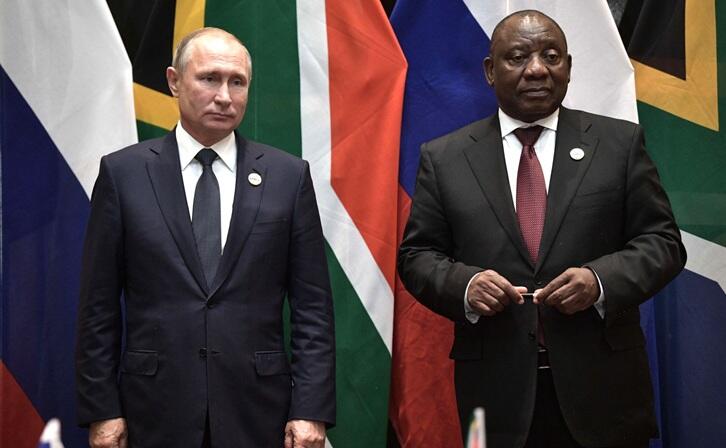
South African President Cyril Ramaphosa’s office has recently stepped in – given that several young men – possibly dozens, have been ‘scammed’ into joining the Russian military. Presidential spokesman Vincent Magwenya issued a statement saying the Dubandlela case is “receiving the highest possible attention.”
In some cases the fate of the South African citizens is unknown given the fluid and dangerous nature of a battlefield environment. “The process to retrieve those young men remains a very sensitive process,” he said. “They are facing grave, grave danger to their lives and we are still in discussions with various authorities, both in Russia as well as in Ukraine, to see how we can free them from the situation they are in.”
The spokesman further sought to address the reality that many South Africans have also traveled to fight for Ukrainian forces. He suggested that this is less of an issue because it was more transparent they were either volunteering or getting paid specifically to fight on behalf of Ukraine.
“In fact, the emphasis is more with the authorities in Russia and less so with the authorities in the Ukraine, because the information that we have is that they were bungled into the Russian military forces,” Magwenya told a press briefing.
While it would be hard to verify, the South African recruits are reportedly thrust into extreme conditions with lacking supplies and necessities given by the Russian military command:
On Dubandlela’s phone are photos that he said his son had sent earlier this month from what he said was a location near the front line in the eastern Ukrainian region of Donbas.
One shows his son in combat fatigues, awkwardly holding an AK-47 assault rifle. Another shows his son trying to sleep in his underwear on the concrete floor of a cupboard-sized basement after taking cover from Ukrainian drones. He looks so thin that his ribs are visible.
They reportedly are also given low-level positions like trench-diggers or tasked with hauling ammo or high risk logistical endeavors – all while “dodging bullets” according to the report.
“They are afraid that Russian military or Russian soldiers might kill them.”
Thulani Mahlangu, a representative of parents of South African mercenaries fighting for Russia, tells @SkyYaldaHakim they have no way home if they decide to leave.https://t.co/YXMcOOyMkZ pic.twitter.com/zXlvbHFbre
— Sky News (@SkyNews) December 17, 2025
Western officials have warned that social media platforms are rife with these types of deceptive recruitment campaigns. For example, Telegram is one specific platform named by European authorities as being used by Russian intelligence to recruit unwitting actors.
In the case of the South African recruits, to many it might seem more obvious or common sense that any program advertising itself as a ‘private security training course’ inside Russia during an active war on its border would very likely signal that it is tied to the military and the need for extra manpower in Ukraine.
Tyler Durden
Wed, 12/24/2025 – 05:45

Today in History: Library of Congress devastated by fire
Today is Wednesday, Dec. 24, the 358th day of 2025. There are seven days left in the year. This is Christmas Eve.
Today in history:
On Dec. 24, 1851, fire devastated the Library of Congress in Washington, D.C., destroying about 35,000 volumes (about two-thirds of the library’s collection).
Also on this date:
In 1814, the United States and Britain signed the Treaty of Ghent, which would end the War of 1812 following ratification by both the British Parliament and the U.S. Senate.
In 1865, several veterans of the Confederate Army formed a private social club in Pulaski, Tennessee, that was the original version of the Ku Klux Klan.
In 1913, 73 people, most of them children, died in a crush of panic after a false cry of “Fire!” during a Christmas party for striking miners and their families at the Italian Hall in Calumet, Michigan.
In 1914, during World War I, impromptu Christmas truces began to take hold along parts of the Western Front, principally between British and German soldiers but also involving French troops.
In 1943, President Franklin D. Roosevelt appointed Gen. Dwight D. Eisenhower supreme commander of Allied forces in Europe.
In 1992, President George H.W. Bush pardoned former Defense Secretary Caspar Weinberger and five others in the Iran-Contra scandal.
In 2013, Britain’s Queen Elizabeth II granted a posthumous pardon to code-breaker Alan Turing, who was criminally convicted of homosexual behavior in the 1950s.
In 2018, a series of explosions ripped through fireworks workshops in Tultepec, a town just north of Mexico City, leaving at least 24 people dead and dozens injured.
Related Articles
Today in Chicago History: Bulls coach Phil Jackson gets his 500th career win faster than any coach in NBA history
Today in History: The Immaculate Reception
Chicago weather: How our 2025-26 seasonal snowfall compares with previous years
Today in Chicago History: Bears beat Packers in OT during their coldest game ever at Soldier Field
Today in History: ‘Subway Vigilante’ arrested
In 2024, NASA’s Parker Solar Probe survived its record-breaking closest approach to the sun, hurtling 3.8 million miles above its fiery surface. Since its 2018 launch, the probe has completed numerous other close fly-bys to observe solar wind and other events.
Today’s Birthdays: Immunologist Dr. Anthony Fauci is 85. Filmmaker Lee Daniels is 66. Basketball Hall of Fame coach Jay Wright is 64. Singer Ricky Martin is 54. Novelist and film producer Stephenie Meyer is 52. TV host Ryan Seacrest is 51. Rock singer Louis Tomlinson (One Direction) is 34. NFL wide receiver Davante Adams is 33.
https://www.chicagotribune.com/2025/12/24/today-in-history-library-of-congress-devastated-by-fire/

Today in Chicago History: Kicker Kevin Butler becomes the first Bear to score 1,000 points
Here’s a look back at what happened in the Chicago area on Dec. 24, according to the Tribune’s archives.
Is an important event missing from this date? Email us.
Weather records (from the National Weather Service, Chicago)
High temperature: 64 degrees (1889)
Low temperature: Minus 25 degrees (1983)
Precipitation: 2.61 inches (1965)
Snowfall: 7.1 inches (1918)
1913: More than 100,000 people gathered in Grant Park to see the unveiling of Chicago’s first municipal Christmas tree.
Thomas Henry, the general contractor, from left, Cardinal Cody, C.F. Murphy Jr., architect, and the Rev. Timothy J. Lyne, rector, view the blueprints for the $2 million dollar reconstruction project in Holy Name Cathedral on Nov. 26, 1968. The work was expected to be finished the following year. (William Yates/Chicago Tribune)
1969: Holy Name Cathedral welcomed 1,500 parishioners back for midnight Mass on Christmas Eve after an extensive renovation.
Vintage Chicago Tribune: Holy Name Cathedral’s 150th anniversary
In early 1967, Cardinal John Cody had unveiled a $250 million, 10-year plan called “Project: Renewal.” In addition to installing new heating and air conditioning systems, weakened wooden beams would be replaced with steel ones to firm up the building’s infrastructure. In response to Second Vatican Council updates, the altar’s placement was also adjusted so clergy would face the congregation while celebrating Mass. The cathedral closed the Monday after Easter in 1968 so work could begin.
Shortly after a Northwest Orient Airlines plane took off from Minneapolis on Dec. 24, 1971, it was hijacked by Everett Leary Holt, 25, who demanded $300,000, two parachutes and a landing at Chicago’s O’Hare International Airport for refueling. Holt surrendered and all 33 people passengers and crew survived. (Chicago Tribune)
1971: Armed with a handgun and seven sticks of dynamite, Everett Leary Holt hijacked Northwest Orient Airlines Flight 734 from Minneapolis to Chicago. After a five-hour standoff at O’Hare International Airport, Holt surrendered.
1989: Chicago Bears defensive end and future Hall of Famer Richard Dent sacked San Francisco 49ers quarterback Joe Montana to become the franchise’s all-time sacks leader in a game the Bears lost 26-0. Dent’s 124.5 sacks remains a team record.
Chicago Bears rookie Kevin Butler (6) is congratulated by tackle Keith Van Horne after kicking a field goal against Tampa Bay, on Oct. 6, 1985. (Charles Cherney/Chicago Tribune)
1994: Bears kicker Kevin Butler became the first Bear and only the 22nd NFL player to score 1,000 points, with his 44-yard field goal during the first quarter of a 13-3 loss to the New England Patriots. Two other tries, however, failed. A 38-yard attempt was blocked in the third quarter and a 36-yard try later sailed wide left.
2001: Tim Floyd resigned as Chicago Bulls coach.
Floyd, the 13th coach of the Bulls franchise, was an abysmal 49-190 in Chicago, including a 15-67 showing in the 2000-01 season.
But rather than make a decision on Floyd during the offseason when transactions are often expected, the Bulls brought Floyd back. He resigned on Christmas Eve. At the time, Floyd said the decision to resign was his own, yet general manager Jerry Krause’s name was left off the list when he thanked members of the franchise.
Chicago Bulls coach Scott Skiles in the first half against the Atlanta Hawks at the United Center on Nov. 27, 2007. (Nuccio DiNuzzo/Chicago Tribune)
2007: Bulls coach Scott Skiles was fired.
Unlike Floyd and Bill Cartwright, Skilles experienced success and reached the playoffs in each of his three full seasons. Skiles’ team registered the first playoff win since the Jordan dynasty ended in 1998, reinvigorating a franchise and fan base that had lay dormant for years.
Led by a young Ben Gordon and Luol Deng, the Bulls became a franchise on the rise with Skiles at the helm. None of that mattered when they started the 2007-08 season with a 9-16 record. Skiles was summoned to Paxson’s office and relieved of his duties just before his team was set to start a Christmas Eve practice.
Want more vintage Chicago?
Subscribe to the free Vintage Chicago Tribune newsletter, join our Chicagoland history Facebook group, stay current with Today in Chicago History and follow us on Instagram for more from Chicago’s past.
Have an idea for Vintage Chicago Tribune? Share it with Kori Rumore and Marianne Mather at krumore@chicagotribune.com and mmather@chicagotribune.com
https://www.chicagotribune.com/2025/12/24/chicago-history-december-24/

Vance Warns European Nukes Could Fall Into Hands Of Islamist Extremists Within 15 Years
Vance Warns European Nukes Could Fall Into Hands Of Islamist Extremists Within 15 Years
Authored by Steve Watson via Modernity.news,
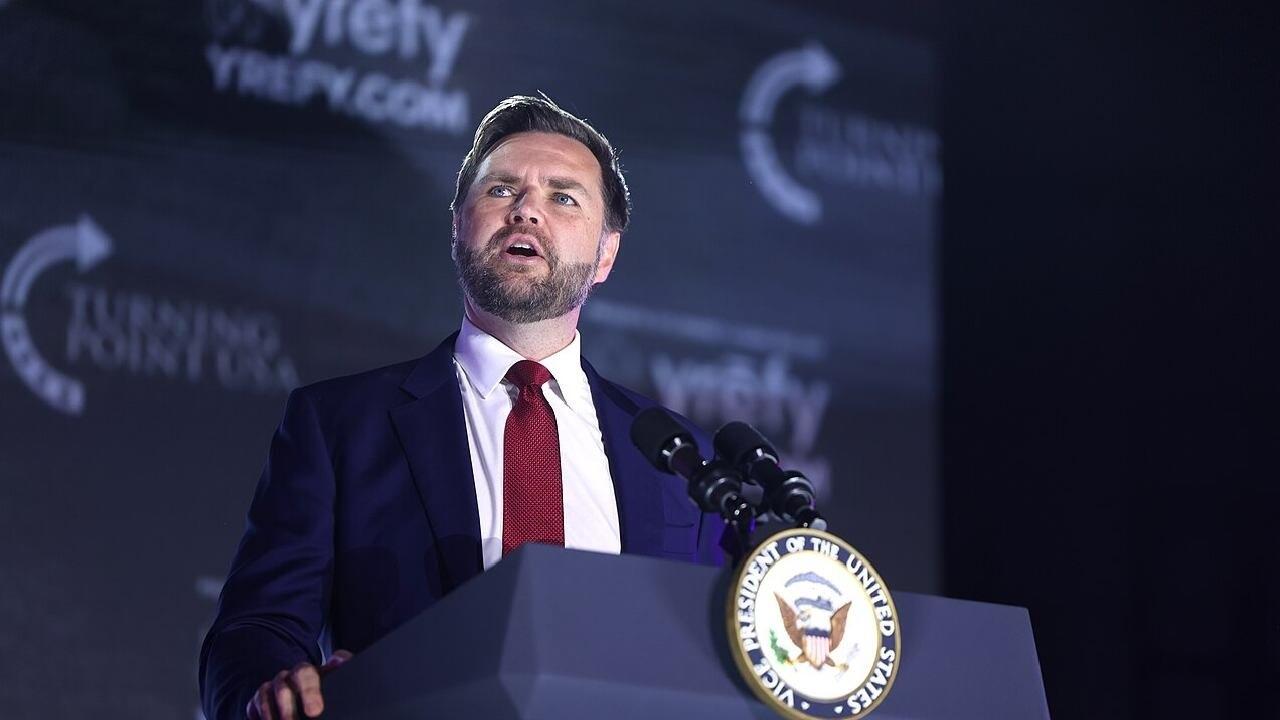
Vice President JD Vance has issued a stark warning that unchecked mass migration from Muslim-majority countries into Europe risks placing nuclear arsenals under the influence of Islamist politicians, posing a severe danger to American interests.
In an interview with Unherd, Vance urged that open borders policies are eroding Europe’s cultural foundations, potentially leading to catastrophic national security fallout for the U.S. and its allies.
Vance emphasized America’s deep-rooted connections to Europe, stating, “We have much greater cultural, religious, and economic ties with Europe than we do with anywhere else in the world. That is just the nature of things.”
“France and Britain have nuclear weapons. If they allow themselves to be overwhelmed with destructive moral ideas, then you allow nuclear weapons to fall in the hands of people who can actually cause very, very serious harm to the US.”
JD Vance to me.https://t.co/4Jz5HXLh4G
— Sohrab Ahmari (@SohrabAhmari) December 22, 2025
He directly tied moral and cultural decay to security risks, noting, “I think there are ways in which the moral conversation does absolutely bleed into America’s national-security interests.”
Highlighting the nuclear dimension, Vance pointed out, “France and the United Kingdom have nuclear weapons. If they allow themselves to be overwhelmed with very destructive moral ideas, then you allow nuclear weapons to fall in the hands of people who can actually cause very, very serious harm to the United States.”
He spotlighted existing gains by radical elements, saying, “I think there are, for example, Islamists-aligned or Islamist-adjacent people who hold office in European countries right now. Right now, maybe at an extremely low level, right? They’re winning mayoral elections, or they’re winning municipal elections.”
Vance projected a grim timeline, warning, “It’s not inconceivable to imagine a scenario where a person with Islamist-adjacent views could have very significant influence in a European nuclear power. In the next five years? No. But 15 years from now? Absolutely. And that is very much a very direct threat to the United States of America.”
Criticizing Europe’s current trajectory, he slammed their policies: “Their immigration policies have caused a significant backlash from the native population. I think that Europe doesn’t have a very good sense of itself right now, and you see that reflected in various measures of economic and cultural stagnation.”
Vance called for a revitalized Europe, declaring, “We’re not trying to destroy the European Alliance, we’re not trying to divide Europeans against one another. What we’re actually trying to do vis-à-vis Europe is to encourage them to be a little bit more self-sustaining. I think their economic policies have produced very broad-based continental stagnation.”
He added, “America sprang out of European civilization. We are fundamentally descended from a lot of European ideas. . . . That’s why we want a stronger Europe. We don’t want a weaker Europe.”
Envisioning a shared future, Vance said, “I just think that we want Europe to be strong and vibrant. I want Europe to be a place where Americans can go and visit, where there’s cultural sharing; Europeans are coming to American universities; Americans are going to European universities; where our militaries are fighting together, training together. That is impossible without some sense of a cultural foundation. The United States and Europe have that, but there’s a risk of losing it over the long term.”
This comes amid Vance’s broader push against globalist agendas undermining Western values. In the Trump administration’s National Security Strategy, Europe was flagged for facing “civilizational erasure” through censorship and mass migration.
Vance has been vocal on these fronts since taking office, including a February speech at the Munich Security Conference where he blasted internal threats like free speech crackdowns in Britain and Germany.
His comments build on recent domestic wins, like dismantling DEI programs. As detailed in our previous coverage, Vance declared at Turning Point USA’s AmericaFest, “We have finally made it clear that in the United States, we believe in hard work and merit. Unlike the left… we don’t treat anybody different because of their race or their sex.”
He continued, “So we have relegated [DEI] to the dustbin of history, which is exactly where it belongs. In the United States of America, you don’t have to apologize for being white anymore.”
Vance added, “And if you’re an Asian, you don’t have to talk around your skin color when you’re applying for college, because we judge people based on who they are, not on ethnicity and things they can’t control.”
He stressed unity: “We don’t persecute you for being male, for being straight, for being gay, for being anything. The only thing that we demand is that you be a great American patriot. And if you’re that you’re very much on our team.”
On immigration at home, Vance echoed similar concerns in the Unherd interview, stating, “The problem with American immigration . . . over the four years of the Biden administration, [was] that we let in too many people, too quickly. And if the numbers were much smaller, and we had tried to select for people who were much better at assimilating into American culture, I don’t think that everybody would be looking around and saying, ‘What the hell is going on?’”
He warned of consequences: “If you overwhelm the country with too many new entrants, even if they believe the right things, even if they’re fundamentally good people, you do change the country in some profound way. And so, so much of the immigration debate, I think we try to create these very firm categories. And the reality is that America does pretty well assimilating people, so long as it’s a small number of people, and they’re given an amount of time to assimilate.”
Vance highlighted risks of division: “Ethnic rivalry and balkanisation is the inevitable consequence of these things. You don’t have to think it’s a good thing. I certainly don’t, but it’s a predictable consequence of what the Left has pushed for years.”
He tied it to protecting Americans: “I’m also trying to protect the wages of workers. I’m trying to protect the social cohesion of the United States of America. I’m trying to ensure that we don’t have the rise of balkanisation and ethnic hatred, which can happen when you have too much immigration too quickly.”
Vance’s warnings expose the folly of globalist open borders that prioritize ideology over security. As Europe grapples with rising Islamist influence in local politics, the Trump administration’s America First stance serves as a blueprint to safeguard civilization from self-inflicted collapse.
Your support is crucial in helping us defeat mass censorship. Please consider donating via Locals or check out our unique merch. Follow us on X @ModernityNews.
Tyler Durden
Wed, 12/24/2025 – 05:00

The best universal remote
Which universal remotes are best?
It can be incredibly frustrating to have to constantly swap between a handful of remotes to control your TV, Blu-ray player, soundbar, cable box and everything else you need a remote for in your home. A universal remote can eliminate all of that frustration and confusion. With the right universal remote you’ll be able to control all of your current devices, as well as the devices you’ve yet to buy.
The best universal remote for today and whatever comes tomorrow is the Logitech Harmony 650 Infrared All in One Remote Control. This universal remote supports tons of brands, models and devices, plus the color screen makes it even easier to control.
What to know before you buy a universal remote
There are many things to consider as you look for a universal remote. For more information, visit the universal remote buying guide from BestReviews.
Types of universal remotes
There are two types of universal remotes: learning and preprogrammable.
Learning: A learning universal remote will copy the signals from the remote that came with your device. It is easy to train this kind of remote: Do the action you want it to copy on the original remote, then set the button(s) on the universal remote that you want to use for that action.
Preprogrammable: This is the most well-known and common type of universal remote. These remotes come with guides that teach you how to program a specific remote to your device. Often this will entail finding your device in the guide and inputting a corresponding code on your universal remote.
Benefits of a universal remote
If you aren’t convinced that you even need a universal remote, consider the following benefits to owning and using one:
You’ll save money by only replacing batteries in one remote.
You’ll save space by only needing to store one remote.
You won’t have to remember the different layouts or functions of your old remotes.
You won’t have to learn any new technology to use a universal remote. They work just like other remotes.
You can control some universal remotes with your voice.
You can use a universal remote with streaming devices and game consoles, unlike standard remotes.
Universal remote features
Universal remote connectivity
Some universal remotes can connect over WiFi and control other electronics on the same network. This makes it possible to control devices like security cameras and thermostats.
Universal remote controls
Some universal remotes can control more than just TVs and DVD players, so you can set them up to control nearly any electronic. The model you choose may have automatic controls that can be used without any programming, too.
Universal remote child protection
You can select a universal remote that is programmable to deny access to certain channels without blocking any other channels, which is a pro for anyone with small children in the home.
Universal remote cost
The most basic universal remotes are $25 or less. Remotes with more features may cost $125.
Universal remote FAQ
How many devices can I control with one universal remote?
A. That depends on your universal remote. Some universal remotes only control up to four devices, while others can handle up to 12. Double-check the product listing before you purchase to make sure the universal remote can control the number of devices you intend to connect.
What devices can I control with a universal remote?
A. You can control a variety of items from TVs and media players to stereo systems and tape decks. Game consoles, streaming sticks, cable and satellite boxes and even lights are other systems you can connect to a universal remote. If you have a specific device you want to control, make sure it is compatible with the universal remote you purchase.
What’s the best universal remote to buy?
Top universal remote
Logitech Harmony 650 Infrared All in One Remote Control
What you need to know: User-friendly controls and brilliant performance make this the undisputed top choice for a universal remote.
What you’ll love: The bright color screen features tons of icons specific to your programming.
What you should consider: More features means more to learn. It may take you a while to program all of your devices.
Top universal remote for the money
Inteset 4-in-1 Universal Remote for Apple TV, Xbox One, Roku & Media Center
What you need to know: You can program this inexpensive universal remote to a range of devices.
What you’ll love: This remote is preprogrammed to multiple devices out of the box so you don’t have to program it yourself.
What you should consider: Some buttons light up, but they only stay lit for five seconds. This may make it more difficult to use the device in the dark.
Worth checking out
Philips Universal Remote Control
What you need to know: This universal remote is very user-friendly and available in five colors.
What you’ll love: A quick-start setup makes this universal remote one of the easiest to program out of the box.
What you should consider: This remote isn’t compatible with streaming devices like Roku and Google Chromecast.
Prices listed reflect time and date of publication and are subject to change.
Check out our Daily Deals for the best products at the best prices and sign up here to receive the BestReviews weekly newsletter full of shopping inspo and sales.
BestReviews spends thousands of hours researching, analyzing and testing products to recommend the best picks for most consumers. BestReviews and its newspaper partners may earn a commission if you purchase a product through one of our links.
Distributed by Tribune Content Agency, LLC.
https://www.chicagotribune.com/2025/12/24/the-best-universal-remote/
Hackers prorrusos se atribuyen un ciberataque al servicio postal francés
Associated Press
PARÍS (AP) — Un grupo de hackers prorrusos se atribuyó la responsabilidad de un importante ciberataque que detuvo las entregas de paquetes por parte del servicio postal nacional de Francia pocos días antes de Navidad, dijo la fiscalía el miércoles.
Después de la reivindicación del grupo de ciberdelincuentes conocido como Noname057, la agencia de inteligencia francesa DGSI asumió la investigación del ataque cibernético, informó la fiscalía de París en un comunicado a The Associated Press.
El grupo ha sido acusado de otros ciberataques en Europa, incluyendo uno en las fechas de una cumbre de la OTAN en Holanda y sitios del gobierno francés. Fue el objetivo de una gran operación policial europea a principios de este año.
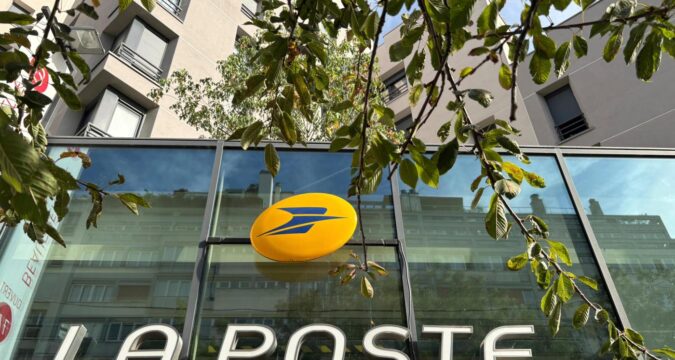
Los sistemas informáticos centrales del servicio postal nacional francés La Poste fueron desconectados el lunes en un ciberataque de denegación de servicio distribuido, o DDoS, que aún no se había resuelto completamente para la mañana del miércoles, dijo la empresa.
Los trabajadores postales no pudieron rastrear las entregas de paquetes, y los pagos en línea en la rama bancaria de la empresa también se vieron interrumpidos. Fue un duro golpe para La Poste, que entregó 2.600 millones de paquetes el año pasado y emplea a más de 200.000 personas, durante la temporada más ocupada del año.
Francia y otros aliados europeos de Ucrania alegan que Rusia está llevando a cabo una campaña de “guerra híbrida” para sembrar división en las sociedades occidentales y socavar su apoyo a Ucrania. La AP ha rastreado más de 145 incidentes, incluyendo sabotajes, asesinatos, ciberataques, desinformación y otros actos hostiles que agotan cada vez más los recursos policiales.
___
Esta historia fue traducida del inglés por un editor de AP con la ayuda de una herramienta de inteligencia artificial generativa.
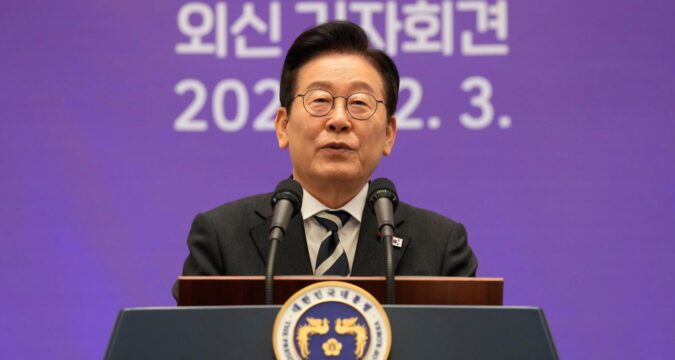
Legisladores de Corea del Sur aprueban ley contra información falsa pese a advertencias de censura
Por KIM TONG-HYUNG
SEÚL, Corea del Sur (AP) — La legislatura liderada por progresistas en Corea del Sur aprobó el miércoles un proyecto de ley que permite fuertes sanciones contra los medios de comunicación tradicionales e internet por publicar “información falsa o fabricada”, desestimando las preocupaciones de que la legislación podría llevar a una mayor censura.
Grupos de periodistas y defensores de las libertades civiles instaron al presidente, Lee Jae Myung, a vetar el proyecto de ley impulsado por su Partido Demócrata. Afirman que la redacción es vaga sobre qué información sería prohibida y carece de protecciones suficientes para la prensa, lo que podría desalentar la cobertura crítica sobre funcionarios públicos, políticos y grandes empresas.
Los demócratas, que no han logrado aprobar una legislación similar bajo gobiernos anteriores, dicen que la ley es necesaria para contrarrestar una creciente amenaza de noticias falsas y desinformación que, argumentan, socavan la democracia al alimentar divisiones y discursos de odio.
El proyecto de ley permitiría a los tribunales otorgar daños punitivos de hasta cinco veces las pérdidas probadas contra organizaciones de noticias y grandes canales de YouTube que difundan “información ilegal o falsa, información fabricada” para causar daño o buscar lucro.
El proyecto de ley también permitiría indemnizaciones de hasta 50 millones de wones (34.200 dólares) por pérdidas que son difíciles de cuantificar en los tribunales. El regulador de medios del país podría multar a los medios con hasta 1.000 millones de wones (684.000 dólares) por distribuir información que un tribunal confirme como falsa o manipulada más de dos veces.
El texto de ley fue aprobado por la Asamblea Nacional con una votación de 170-3 con cuatro abstenciones después de que muchos legisladores del principal partido opositor conservador, el Partido del Poder Popular, boicotearan la votación. La votación se retrasó después de un filibusterismo de 24 horas por parte del PPP, durante el cual los legisladores de ambos partidos debatieron el proyecto de ley.
La legisladora del PPP, Choi Soo-jin, dijo durante el filibusterismo que el proyecto de ley no define el grado de inexactitud para que la información sea prohibida, advirtiendo que podría aplicarse ampliamente a contenido que contenga errores menores o afirmaciones generales y usarse como una herramienta para silenciar a los críticos con la amenaza de demandas.
Los demócratas argumentan que los daños punitivos se aplicarían sólo cuando haya claridad de que la información falsa ha sido deliberadamente difundida con fines dañinos o de lucro y cause daño real, mientras que las acusaciones o afirmaciones rutinarias no serían penalizadas.
Señalan que la ley prohíbe presentar reclamaciones de daños con el propósito de “obstruir la crítica justa o la supervisión realizada en interés público”, aunque expertos legales y grupos de periodistas han criticado la disposición por ser vaga e irrealista.
“A lo que apunta la ley no es a la crítica (legítima) sino a la difusión maliciosa y deliberada de información falsa”, afirmó el portavoz del Partido Demócrata, Park Soo-hyun. “(El proyecto de ley) se basa en el requisito de intención y también exime la sátira y la parodia, distinguiendo claramente (lo que debe respetarse como) libertad de expresión”.
El Sindicato Nacional de Trabajadores de los Medios instó al gobierno de Lee y a los demócratas a abordar las preocupaciones de que regular la información falsa o manipulada por ley podría infringir la libertad de expresión y exponer a las empresas de medios a demandas abusivas, enfriando el escrutinio de quienes están en el poder.
“Instamos (a ellos) a reafirmar claramente que la ley apuntaría solo a una pequeña porción (de contenido) que es ‘información falsa o fabricada’ y a revisar cuidadosamente el proyecto de ley para eliminar cualquier posible infracción a la libertad de prensa y de expresión”, dijo el grupo en un comunicado. “Les pedimos que definan cuidadosamente el alcance de la ley al redactar la ordenanza de aplicación (de la ley)”.
___
Esta historia fue traducida del inglés por un editor de AP con la ayuda de una herramienta de inteligencia artificial generativa.
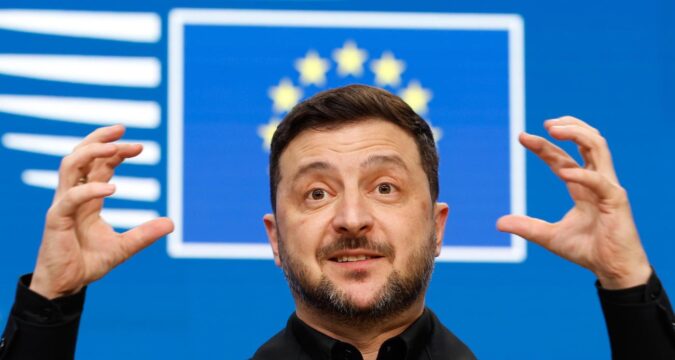
EEUU y Ucrania acuerdan temas clave para poner fin a la guerra, pero no en disputas territoriales
Por SAMYA KULLAB
KIEV, Ucrania (AP) — Estados Unidos y Ucrania han alcanzado un consenso sobre varios temas críticos con el objetivo de poner fin a casi cuatro años de guerra, pero cuestiones sensibles relacionadas con el control territorial en el corazón industrial del este de Ucrania, junto con la gestión de la central nuclear de Zaporiyia, siguen sin resolverse, afirmó el presidente de Ucrania.
Volodymyr Zelenskyy habló mientras Estados Unidos presentaba el plan de 20 puntos, elaborado tras maratónicas conversaciones en Florida en los últimos días, a los negociadores rusos. Se espera una respuesta de Moscú el miércoles, señaló Zelenskyy.
El presidente ucraniano informó a los periodistas sobre cada punto del plan el martes. Sus comentarios estaban embargados hasta la mañana del miércoles. La propuesta preliminar, que refleja los deseos de Ucrania, entrelaza intereses políticos y comerciales para salvaguardar la seguridad mientras se potencia el potencial económico.
En el centro de las negociaciones se encuentra la disputa territorial contenciosa concerniente a las regiones de Donetsk y Luhansk, conocidas como el Donbás. Este es “el punto más difícil”, dijo Zelenskyy. Afirmó que estos asuntos se discutirán a nivel de líderes.
Rusia mantiene demandas maximalistas, insistiendo en que Ucrania renuncie al territorio restante en el Donbás que no ha capturado, un ultimátum que Ucrania ha rechazado. Rusia ha capturado la mayor parte de Luhansk y alrededor del 70% de Donetsk.
En un intento por facilitar el compromiso, Estados Unidos ha propuesto transformar estas áreas en zonas económicas libres. Ucrania insiste en que cualquier arreglo debe estar supeditado a un referéndum, permitiendo al pueblo ucraniano determinar su propio destino. Ucrania exige la desmilitarización del área y la presencia de una fuerza internacional para garantizar la estabilidad, dijo Zelenskyy.
Cómo se gestionará la central nuclear de Zaporiyia, la planta más grande de Europa y que está bajo ocupación rusa, es otro tema espinoso. Estados Unidos propone un consorcio con Ucrania y Rusia, con cada parte teniendo una participación igual en la empresa.
Pero Zelenskyy contrarrestó con una propuesta de empresa conjunta entre Estados Unidos y Ucrania, en la que los estadounidenses puedan decidir cómo distribuir su parte, presumiendo que iría a Rusia.
“No alcanzamos un consenso con la parte estadounidense sobre el territorio de la región de Donetsk y sobre la ZNPP”, dijo Zelenskyy, refiriéndose a la planta de energía en Zaporiyia. “Pero hemos acercado significativamente la mayoría de las posiciones. En principio, todos los demás consensos en este acuerdo se han encontrado entre nosotros y ellos”.
Un compromiso de zona económica libre
El Punto 14, que cubre territorios que atraviesan la línea del frente oriental, y el Punto 12, que discute la gestión de la planta de Zaporiyia, probablemente serán puntos importantes de fricción en las conversaciones.
“Estamos en una situación en la que los rusos quieren que dejemos la región de Donetsk, y los estadounidenses están tratando de encontrar una manera para que no sea ‘una salida’ — porque estamos en contra de irnos — quieren encontrar una zona desmilitarizada o una zona económica libre en esto, es decir, un formato que pueda contemplar las opiniones de ambas partes”, explicó Zelenskyy.
El borrador establece que la línea de contacto, que atraviesa cinco regiones ucranianas, se congele una vez que se firme el acuerdo.
La postura de Ucrania es que cualquier intento de crear una zona económica libre debe ser ratificado por un referéndum, afirmando que el pueblo ucraniano en última instancia tiene el poder de decisión, dijo Zelenskyy. Este proceso requerirá 60 días, agregó, durante los cuales las hostilidades deberían detenerse para permitir que el proceso ocurra.
Discusiones más difíciles requerirían definir hasta qué punto las tropas deberían retroceder, según la propuesta de Ucrania, y dónde se ubicarían las fuerzas internacionales. Zelenskyy dijo que, en última instancia, “la gente puede elegir: este final nos conviene o no”, dijo.
El borrador también propone que las fuerzas rusas se retiren de las regiones de Dnipropetrovsk, Mykolaiv, Sumy, Járkov, y que las fuerzas internacionales se ubiquen a lo largo de la línea de contacto para monitorear la implementación del acuerdo.
“Dado que no hay fe en los rusos, y han roto repetidamente sus promesas, la línea de contacto de hoy se está convirtiendo en una línea de una zona económica libre de facto, y las fuerzas internacionales deberían estar allí para garantizar que nadie entre allí bajo ningún disfraz — ni ‘hombrecitos verdes’ ni militares rusos disfrazados de civiles”, dijo Zelenskyy.
Gestión de la planta de energía de Zaporiyia
Ucrania también propone que la ciudad ocupada de Enerhodar, que está conectada a la planta de Zaporiyia, sea una zona económica libre desmilitarizada, dijo Zelenskyy. Este punto requirió 15 horas de discusiones con Estados Unidos, dijo.
Por ahora, Estados Unidos propone que la planta sea operada conjuntamente por Ucrania, Estados Unidos y Rusia, con cada lado recibiendo dividendos de la empresa.
“Estados Unidos está ofreciendo 33%, por 33%, por 33%, y los estadounidenses son los principales gestores de esta empresa conjunta”, dijo. “Está claro que para Ucrania esto suena muy poco exitoso y no del todo realista. ¿Cómo puedes tener comercio conjunto con los rusos después de todo?”.
Ucrania ofreció una propuesta alternativa, que la planta sea operada por una empresa conjunta con Estados Unidos en la que los estadounidenses puedan determinar independientemente cómo distribuir su participación del 50 por ciento.
Zelenskyy dijo que se necesitan miles de millones en inversiones para hacer que la planta vuelva a funcionar, incluyendo la restauración de la presa adyacente.
“Hubo alrededor de 15 horas de conversaciones sobre la planta. Estas son todas cosas muy complejas”.
Un anexo separado para garantías de seguridad
El documento asegura que a Ucrania se le proporcionarán garantías de seguridad “fuertes” que reflejen el Artículo 5 de la OTAN, que obligaría a los socios de Ucrania a actuar en caso de una nueva agresión rusa.
Zelenskyy dijo que un documento bilateral separado con Estados Unidos delineará estas garantías. Este acuerdo detallará las condiciones bajo las cuales se proporcionará seguridad, particularmente en caso de un nuevo asalto ruso, y establecerá un mecanismo para monitorear el alto el fuego.
Este mecanismo utilizará tecnología satelital y sistemas de alerta temprana para asegurar una supervisión efectiva y capacidades de respuesta rápida.
“El ánimo de los Estados Unidos de América es que este es un paso sin precedentes hacia Ucrania de su parte. Creen que están dando fuertes garantías de seguridad”, dijo.
El borrador contiene otros elementos, incluyendo mantener el ejército de Ucrania en 800.000 eefectivos durante tiempos de paz, y fijar una fecha específica para el ingreso en la Unión Europea.
Elecciones y potenciación de la economía
El documento propone acelerar un acuerdo de libre comercio entre Ucrania y Estados Unidos una vez que se firme el acuerdo. Estados Unidos quiere el mismo acuerdo con Rusia, dijo Zelenskyy.
A Ucrania le gustaría recibir acceso privilegiado a corto plazo al mercado europeo y un paquete de desarrollo global robusto, que cubrirá una amplia gama de intereses económicos, incluyendo un fondo de desarrollo para invertir en industrias como tecnología, centros de datos e inteligencia artificial, así como gas.
También se incluyen fondos para la reconstrucción de territorios destruidos en la guerra.
“Ucrania tendrá la oportunidad de determinar las prioridades para distribuir su parte de los fondos en los territorios bajo el control de Ucrania. Y este es un punto muy importante, en el que pasamos mucho tiempo”, dijo Zelenskyy.
El objetivo será atraer 800.000 millones de dólares a través de capital, subvenciones, préstamos y contribuciones del sector privado.
La propuesta preliminar también requiere que Ucrania celebre elecciones después de la firma del acuerdo. “Esta es la visión de los socios”, dijo Zelenskyy.
Ucrania también está pidiendo que todos los prisioneros desde 2014 sean liberados de una vez, y que los detenidos civiles, prisioneros políticos y niños sean devueltos a Ucrania.
___
Esta historia fue traducida del inglés por un editor de AP con la ayuda de una herramienta de inteligencia artificial generativa.