Category: News
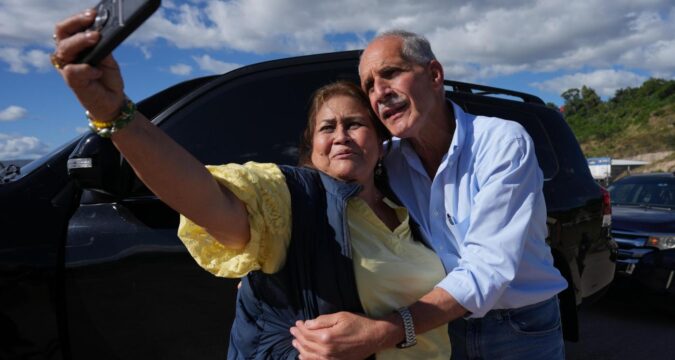
Conservador Nasry Asfura, respaldado por Trump, es declarado ganador de elecciones en Honduras
Por MARLON GONZÁLEZ
TEGUCIGALPA (AP) — El Consejo Nacional Electoral anunció el miércoles que el conservador Nasry Asfura, respaldado por el mandatario estadounidense Donald Trump, ganó las elecciones presidenciales del 30 de noviembre en Honduras al derrotar con 40,27% de los votos a Salvador Nasralla, después de un demorado escrutinio que generó tensiones en el país centroamericano.
El máximo organismo electoral hizo el anuncio luego de haber finalizado el lento escrutinio especial de 2.792 actas que se había iniciado la semana pasada por supuestas inconsistencias y errores. “Tito” Asfura, candidato del Partido Nacional, se impuso en su segundo intento por la presidencia a Nasralla, del también conservador Partido Liberal, quien sacó 39,53% de los votos.
Los resultados son un duro revés para el gobernante partido de izquierda Libertad y Refundación (Libre), cuya candidata Rixi Moncada obtuvo 19,19% de respaldo, y suponen el regreso de la derecha al poder, que gobernó por última vez de la mano del presidente Juan Orlando Hernández (2014-2022).
Asfura, de 67 años, hizo mención a su triunfo en su cuenta de X. “Honduras, ya tenemos la declaratoria oficial del CNE…Reconozco la gran labor realizada por las consejeras y todo el equipo que llevó a cabo el desarrollo de las elecciones. Honduras: Estoy preparado para gobernar. No te voy a fallar. ¡Dios Bendiga Honduras!”, dijo el conservador.
Tras el anuncio, los líderes del Partido Nacional celebraron en su búnker ondeando la bandera de esa fuerza, al tiempo que gritaban al unísono: “papi, papi, papi…”, que es como denominan a su candidato.
Marco Rubio, secretario de Estado de Estados Unidos, destacó en X el triunfo señalando que “el pueblo de Honduras ha hablado: Nasry Asfura es el próximo presidente de Honduras”. El funcionario señaló que su país “espera con interés trabajar con su administración para promover la prosperidad y la seguridad en nuestro hemisferio”.
Por su parte, el presidente argentino, Javier Milei, también celebró la victoria del conservador político hondureño. “La victoria de Tito Asfura es una derrota contundente del narcosocialismo y una señal clara de que la libertad vuelve a imponerse en Honduras. El pueblo hondureño se expresó con valentía en las urnas y eligió terminar con años de autoritarismo y decadencia”.
Asimismo, la Secretaría General de la OEA manifestó su “disposición a colaborar con el Estado de Honduras para apoyar una transferencia de poder pacífica y conforme a la ley”.
El organismo dijo estar consciente de las dificultades que atravesó el proceso, pero reconoció el trabajo de las instituciones hondureñas.
De igual forma, lamentó que aún no se haya completado el recuento total de los votos emitidos por la ciudadanía.
“La OEA está siguiendo de cerca los acontecimientos en Honduras, en particular a través de su Misión de Observación Electoral desplegada en el país. En este contexto, toma nota de la declaración de resultados del Consejo Nacional Electoral”, declaró en X.
Antes de que se pusiera en marcha el escrutinio especial el jueves pasado en medio de denuncias sobre supuesto fraude y presiones del gobierno de Trump, la distancia entre Asfura y Nasralla era de menos de un 1%.
El desenlace de las complicadas elecciones presidenciales hondureñas forman parte de un giro más amplio hacia la derecha que se está produciendo en América Latina, y tiene lugar algo más de una semana después de que Chile eligiera como presidente al ultraderechista José Antonio Kast.
Nasralla denunció supuestas irregularidades en el proceso, mientras que Moncada se negó a reconocer los resultados. La presidenta saliente del país centroamericano, Xiomara Castro, reprochó inicialmente la injerencia del gobierno de Estados Unidos en la elección, pero luego prometió que su gobierno respetaría la declaración oficial del ganador por parte del máximo organismo electoral.
Trump respaldó al conservador pocos días antes de las elecciones, afirmando que era el único candidato hondureño con el que el gobierno estadounidense estaría dispuesto a trabajar.
Estados Unidos decidió el viernes restringir las visas a dos funcionarios hondureños por lo que consideró una interferencia en el recuento de votos de las elecciones.
En un comunicado, el Departamento de Estado estadounidense informó que revocó la visa de Mario Morazán, magistrado del Tribunal de Justicia Electoral, y rechazó la solicitud de visa de Marlon Ochoa, consejero del Consejo Nacional Electoral. Ambos pertenecen al partido Libre.
Asfura, quien fungió como alcalde de Tegucigalpa durante dos periodos consecutivos (2014-2018 y 2018-2022), había sido derrotado en las anteriores elecciones del 2021 por Castro, la esposa del derrocado presidente izquierdista Manuel Zelaya (2006-2009).
Si bien no aterrizó en propuestas concretas —algo que se criticó también a los demás contendientes en la campaña— Asfura se presentó como un exitoso empresario de la industria de la construcción y con recorrido en la gestión pública tras su paso por la alcaldía capitalina.
“Soy un hombre de trabajo, no de promesas, y sé lo que tengo que hacer”, dijo el candidato, casado y padre de tres hijas.
En sus discursos habló de construir un país próspero a través de la inversión y la generación de empleo.
Al mismo tiempo planteó someramente la necesidad de recuperar la seguridad con un modelo de prevención, justicia y orden. “Tendremos policías comunitarios, fortaleceremos la investigación criminal y utilizaremos tecnología para combatir la extorsión y el crimen organizado”.
Asfura trabajaría con Trump en asuntos de migración, seguridad y comercio. De hecho el mandatario estadounidense anticipó que con Asfura podría colaborar para combatir lo que llamó los “narcocomunistas” en la región y ayudar a Honduras, el país más pobre de Centroamérica.
Trump anunció dos días antes de la votación el indulto al expresidente Hernández, de la misma afiliación política de Asfura, y quien había sido extraditado y condenado en Estados Unidos a 45 años de prisión por tráfico de drogas en 2024. Hernández recobró la libertad el 1 de diciembre.
Conservador Nasry Asfura, respaldado por Trump, es elegido presidente de Honduras, declaran autoridades electorales
TEGUCIGALPA (AP) — Conservador Nasry Asfura, respaldado por Trump, es elegido presidente de Honduras, declaran autoridades electorales.
Faith leaders denied access to pray in Broadview ICE facility on Christmas Eve
Chicago faith leaders were once again denied entry to pray inside the U.S. Immigration and Customs Enforcement facility in suburban Broadview. This time, on Christmas Eve.
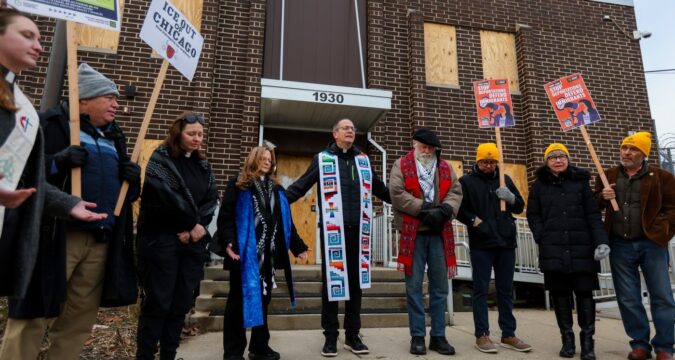
A handful of faith leaders and other community members walked up to the facility doors at 1930 Beach St. on Wednesday morning to pray with detainees inside the facility in celebration of the birth of Christ.
But they were denied.
Instead, the faith leaders led a prayer and sang hymns near the facility’s doorstep, and vowed to try again.
“We’re here today because we want to make the statement, everybody deserves prayer and pastoral care, especially on Christmas Eve,” said the Rev. Marshall Hatch from New Mount Pilgrim Missionary Baptist Church.
The leaders said they sent requests to immigration authorities to enter the facility and lead a prayer on Christmas Eve but received no response. They were also on the phone with officials to try to negotiate access, they said. But as they walked up to the doors of the Broadview site at about 10 a.m., they were refused.
“This is not normal to deny people pastoral care, it’s just that simple,” said Hatch, who has been a pastor for over 40 years and prayed with detainees on death row.
The Rev. Brendan Curran said faith leaders had been granted access to the Broadview detention center for years until recently.
“We’d board the bus, we would pray with the detainees. This was a normal protocol,” said Curran, who is a member of the Resurrection Project and International Dominican Commission for Justice and Peace. “Then the federal government saw, for some reason, that these things needed to be stopped.”
Prayer and communion in detention centers offer dignity, Curran said.
More than 4,300 people have been arrested during the federal government’s immigration crackdown dubbed Operation Midway Blitz, which began in September, according to the Department of Homeland Security. Yet most detainees appear to have no significant criminal record, data gathered by the Tribune and a federal lawsuit show.
Conditions inside the processing facility have reportedly been poor. A federal judge in November ordered government officials to provide immigration detainees enough food, water and bed space, among other remedies, finding that conditions in Broadview do not “pass constitutional muster.”
“It has really become a prison,” U.S. District Judge Robert Gettleman said, according to Tribune reporting. “The conditions would be found unconstitutional even in the context of prisons holding convicted felons, but these are not convicted felons. These are civil detainees.”
Earlier this month a Chicago business owner from Bulgaria, Nenko Gantchev, 56, died in ICE custody at a separate correctional facility in North Lake, Michigan, ABC-7 reported. At least 30 people have died in ICE custody this year, the highest in two decades, according to Reuters.
In October, more than four dozen ministers gathered to pray for detainees outside the Broadview facility, and more than 250 local Christian clergy across denominations signed an open letter condemning aggressive ICE tactics.
Cassandra Echeverria, of Aurora, sheds a tear while praying for detainees and staff at the U.S. Immigration and Customs Enforcement holding facility in Broadview on Dec. 24, 2025. (Dominic Di Palermo/Chicago Tribune)
Outside the Broadview facility, a chalk-written message on the ground read “The whole world is watching” while religious leaders, alongside U.S. Rep. Jonathan Jackson, shivered in the cold and prayed. Some wore keffiyehs, Palestinian scarves, around their necks while others wore colorful stoles.
The Rev. Paco Amador at New Life Community Church in Little Village said he prayed for a change to the national narrative that frames immigrants as criminals.
“We are not people who have come to take; we are people who have come to give,” Amador said.
He also prayed for the reunification of families separated by immigration enforcement, fathers separated from their children and wives torn away from their husbands, on this holiday season.
Minister Kristina Sinks, 28, with United Methodist Church, said she has been trying to enter the facility since September. She has tried to go in to pray and give communion and essential items, such as water bottles and towels. She has been rejected every time, she said.
On Wednesday, she and other faith leaders “prayed over the facility that any who passed through here will be blessed,” she said.
Sinks said she is open to trying to enter the facility again to lead prayer.
https://www.chicagotribune.com/2025/12/24/faith-leaders-denied-broadview-facility/
Canada Is Building The Wrong Army For The War That Is Coming
Canada Is Building The Wrong Army For The War That Is Coming
Authored by Andrew Latham via RealClearDefense,
The next major land war will not reward elegance, boutique modernization, or the comforting belief that advanced technology can replace mass and endurance. It will expose armies built on fragile assumptions. Concealment has largely disappeared. Attrition has returned as a central fact of combat. Sustainment shapes outcomes as decisively as firepower. Yet the Canadian Army remains organized, equipped, and intellectually anchored to a vision of warfare that belonged to yesterday’s world. The problem is not a simple modernization lag or a lack of new kit. It is a deeper conceptual failure—a refusal to absorb how radically and irreversibly the character of land warfare has changed.
That is the larger point. The key change is not this or that technology. The battlespace itself has changed. Artificial intelligence, proliferated drones, commercial satellites, autonomous strike systems, and persistent ISR have combined into a transparent, data-rich battlespace where everyone is on the move, movement is tracked instantly, concentrations are targeted rapidly, and supply lines are targeted as soon as they begin to form—an environment already documented in assessments of modern conflict. An army that cannot scatter, regenerate while under fire, and sustain itself while under persistent observation is not going to muddle through. It is going to break.
Transparency and the End of Concealment
Western armies have operated on the assumptions of concealment and intermittent detection for a generation. Those assumptions are no longer valid. The contemporary battlespace is full of aerial surveillance, open-source commercial satellite imagery, digital emissions that reveal every vehicle and headquarters location, and loitering munitions that make ground above those locations perpetually contested—patterns captured in recent operational analyses.
The issue is time: the time between being discovered and being targeted. The time between when a headquarters can command and when it becomes a targeting point. The time between declaring a movement and becoming a target.
Survival requires dispersion, deception, mobility, and an entire operating paradigm built on the idea that you are observed all the time. The Canadian Army knows about the emergence of drones, ISR, and digital exposure, but it has not yet internalized the ways that they change land warfare’s fundamentals.
Attrition Has Returned—and Canada Is Not Ready
Precision fires promised surgical, inexpensive war. In reality, they have intensified attrition: the ability to strike targets more often, more reliably, and more predictably. Ukraine has demonstrated the scale of this shift: modern war is industrial, not surgical. It consumes people, equipment, ammunition, drones, and spare parts at rates far beyond what most Western forces planned for in peacetime, as shown by studies of wartime industrial demand.
The Canadian Army is not designed for this reality. It is small and brittle. It is optimized for controlled, expeditionary contributions, not for open-ended, high-intensity conflict. Ammunition stocks are low. Maintenance capacity is thin. Replacement cycles are slow. Mobilization—across industry, reserve forces, and training pipelines—is largely theoretical, even as official modernization documents highlight the fragility of the current model.
You can have a small and lethal army if it is small and lethal through design and deliberate choice. You cannot have a small, hollow, and unprepared army if it has to fight for extended periods. In an attritional war, those features are decisive.
Sustainment as a Front-Line Fight
The rise of long-range strike, drones, and cyber means that the old rear area is no more. Supply lines are now a front-line fight from start to finish. Supply depots, railheads, ports, repair facilities, and fuel infrastructure are all high-priority targets. If an enemy cannot stop forward brigades, it will attempt to starve them. Analyses of modern logistics under fire emphasize that industrial capacity and resilient supply networks—not efficiency—determine strategic endurance.
An army for the future must be able to fight under conditions of intermittent resupply, contested and damaged infrastructure, disrupted and overloaded communications, and near-constant threats to supply lines. Planning and organization must prioritize resilience, redundancy, and regeneration rather than peacetime efficiency and timeliness.
The Canadian Army still plans as if reliable resupply were a given and rear areas could stay intact. The moment a capable adversary enters the fight, those assumptions are shattered.
Dispersion, Autonomy, and Command Under Fire
Land warfare favors armies that can fight dispersed but connected, decentralized but coordinated. Small units must be able to operate at will even when isolated or cut off. Junior leaders must be able to act without micromanagement. Commanders must know their communications will be lost and they must be able to exercise control while that loss is happening. Contemporary doctrinal analysis underscores exactly this requirement for decentralized command in contested environments.
This is a question of more than new radios or drones. It is also a cultural issue. The instinct for centralization, risk aversion, and procedural control stems from the experience of peacekeeping and counterinsurgency missions, not from the needs of a high-tech, fully contested battlespace.
The institutional habits and instincts of the Canadian Army are still oriented to a previous world. It is those habits that will be unprepared when the next world comes.
The Arctic and Continental Reality
Canada’s geography adds to the problem. The Arctic is no longer a distant, largely theoretical frontier. It is now a theatre of competition defined by opposing surveillance architectures, long-range strike systems, and critical infrastructure vulnerabilities—conditions mapped in recent assessments of Arctic security. Continental defense is no longer just about aerospace warning. It is also about protecting energy networks, ports, radar sites, satellite uplinks, and the digital infrastructure that underpins modern life, as reflected in NATO’s forward defense posture.
A land force built for small contributions overseas cannot do all that. Canada needs an army that is also oriented toward persistent continental defense, NATO high-intensity operations, and hybrid resiliency. Canada does not have that. Instead, it has something far smaller and far less capable—an assessment echoed in recent readiness evaluations.
Radical Redesign, Not Cautious Incrementalism
Add drones, experiment with AI tools, rewrite doctrine. It is the typical Ottawa response to a problem of this nature. It is also not remotely enough. This is a structural problem, not a superficial one. Canada faces a conceptual failure, not a cosmetic one. A conceptual failure cannot be solved by bolt-on solutions.
What is needed is redesign. Force structure, reserves, sustainment, mobilization, training, and even strategic purpose must be rethought. This means jettisoning some assumptions that have been bedrock in Canadian defence since the Kosovo and Afghanistan era. It also means facing political realities about cost, scale, and what it is to be a responsible nation in this new moment. Emerging analysis of “hiding vs. finding,” sensor-shooter compression, and mass-versus-quality dynamics illustrates how unforgiving the next battlespace will be.
Optimism that everything is fine is a costly illusion. The faster you are wrong, the greater the cost.
The Cost of Illusion
The transformation of land warfare is happening before our eyes, under real fire. Armies that adapt late lose deterrence, relevancy, and influence. Canada does not need the biggest army in NATO. It needs an army designed for the realities of transparent, attritional, technologically saturated land warfare where endurance—not elegance—is the definition of combat power, themes reinforced in the latest assessments of the future competitive security environment.
Steel will matter. Silicon will matter. But none of it will matter until Canada has rethought how it prepares for land war – and makes the necessary changes. Waiting until events force that remaking is asking for a much harder reckoning in far worse circumstances down the road.
Andrew Latham, Ph.D., a tenured professor at Macalester College in Saint Paul, Minnesota. He is also a Senior Washington Fellow with the Institute for Peace and Diplomacy in Ottawa and a non-resident fellow with Defense Priorities, a think tank in Washington, D.C.
Tyler Durden
Wed, 12/24/2025 – 16:05
https://www.zerohedge.com/military/canada-building-wrong-army-war-coming

Can the Chicago Bulls keep outscoring their opponents — or is their defense on the hot seat again?
Winning is a contradictory thing for the Chicago Bulls.
The Bulls allowed opponents to score at least 120 points in four of their last six games. They also won all four of those games. This dichotomy is powering a four-game winning streak for the Bulls, who at 14-15 after winning five of six — including two straight over the Hawks in Atlanta — have nearly pulled themselves back to .500.
This might seem antithetical, but it has been the reality since the start of the season — when the Bulls are at their best, their defense seems to fall by the wayside.
“Listen, we’re not a great defensive team,” coach Billy Donovan said. “But we can be better and we can improve. We can take a little bit more control over the things that we can.”
The Bulls were never going to be a defensive juggernaut. Donovan entered the season warning about this roster’s defensive deficiencies. Even during the opening 6-1 stretch that fostered so much hope, the Bulls gave up at least 120 points in two of those wins. In fact, they have won only five games in which their opponent scored fewer than 120 points.
This Bulls team was always destined to win in spite of its defense, not because of it. But that’s not an excuse — or a fact that should let the Bulls off the hook.
“We’re going to have to figure it out,” guard Coby White said. “We don’t want to be one of these teams that’s just trying to outscore teams. We know what reality is. We’ve got to do the little things more in terms of taking away a couple baskets here and there.”
The Bulls play fast. As the rest of the league picks up its pace, the Bulls are still the second-fastest team in the NBA. That speed is almost entirely concentrated on the offense. Playing that fast invites the game to open up, which requires both defenses to communicate effectively, switch rapidly and react sharply if they want to keep up.
This is a boon for the Bulls offense, which picks apart opposing defenses in sped-up situations to force points in transition and sling 3-pointers while the defense is still getting set. But it only makes life harder for the defense, which is forced to compete at the pace the Bulls already set — and often falls apart as a result.
It’s easy to blame this on effort. The Bulls often look disjointed and discombobulated on defense, which means they don’t contest consistently enough at the rim (where they allow 21.6 baskets per game) and allow open shots at the perimeter.
Bulls forward Patrick Williams, right, strips the ball from the Hawks’ Asa Newell during the first quarter Tuesday, Dec. 23, 2025, in Atlanta. (Kevin C. Cox/Getty Images)
In particular, the defense struggles with switches. The Bulls lineup includes several visible weaknesses — notably, both center Nikola Vučević and guard Josh Giddey offer poor options to switch on screens due to their lack of maneuverability from the perimeter to the rim. The Bulls often choose simply to force both players to switch regardless — relying on help defense from the weak side to bolster both players — but poor communication is a primary disruptor in these situations.
Related Articles
Josh Giddey and Coby White help the Chicago Bulls rally from a late 10-point deficit to beat the Atlanta Hawks
Recapping an eventful 2025 for Chicago sports on — and off — the field
Chicago basketball report: WNBA players authorize a strike — and ‘Ain’t no Christmas’ for Notre Dame men
Today in Chicago History: Bulls coach Phil Jackson gets his 500th career win faster than any coach in NBA history
Is Patrick Williams on his way to becoming the 11th man for the Chicago Bulls?
When Donovan talks about defense with the Bulls, he still is focusing on fundamentals: boxing out, communicating, staying aware of gaps and lanes.
“I’m not saying we’ve got to be perfect, but the total intention to focus has got to be on those things,” Donovan said.
A simple fact of basketball is that poor defensive teams simply have to work harder on that end of the court. Donovan has been tempted at times to use more gimmicky defensive tactics — like shifting into a matchup-specific zone — to combat his team’s lack of natural defensive discipline. Those fixes can help in the short term, particularly when the Bulls are facing a particular sharpshooter or need to accommodate a lack of length at the rim.
But in the long term, the Bulls are focused on the margins. This team isn’t going to hold opponents under 105 points per game, but it can reduce scoring through improved intention in those same fundamental areas.
“We’re going to have to help a little bit more,” Donovan said. “We’re just going to have to be a team that’s going to have to help each other more. It’s going to be hard to win giving up that many points and expecting to score as many as we did.”
https://www.chicagotribune.com/2025/12/24/chicago-bulls-defense-winning-streak/
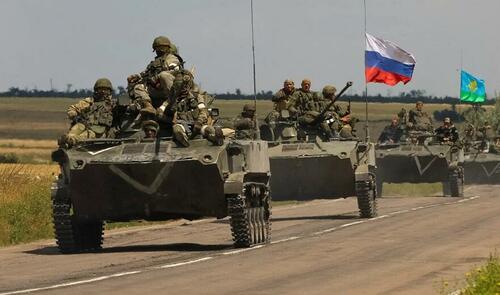
Russia Captures Another Ukrainian Town While Zelensky Still Insists On Altering Trump Peace Plan
Russia Captures Another Ukrainian Town While Zelensky Still Insists On Altering Trump Peace Plan
Russian forces continue their steady battlefield gains this week, but Kiev is still seeking to grasp at establishing some sort of leverage at the negotiating table, as the Trump peace plan is still being pushed in back-and-forth US dialogue with Moscow representatives.
Over the past some 24 hours, Russian troops have captured the settlement of Zarechnoye in the southeast Zaporozhye Region, according to the defense ministry (MoD). “Battlegroup East units kept advancing deep into the enemy’s defenses and liberated the settlement of Zarechnoye in the Zaporozhye Region,” the MoD said Wednesday according to TASS.
The military further issued a grim figure, claiming that the Ukrainian army lost over 1,400 troops in a single day across all front line areas. Additional armor and combat vehicles were also reportedly destroyed.
After weeks ago Ukraine finally lost the strategic logistics hub of Pokrovsk, it’s been setback after setback for Kiev from there. The pace of Russia’s advance has only steadily increased. Reuters conveys Ukraine’s response, which seeks to frame it as a strategic retreat:
Ukrainian forces have pulled out of the embattled eastern town of Siversk, Kyiv’s military said on Tuesday, as Russian troops wage a battlefield offensive aimed at threatening key cities critical to Ukraine’s defences in the east. Sloviansk is a northern anchor of the so-called “fortress belt” of cities in Ukraine’s heavily industrialised Donbas region, which Russia has demanded Kyiv cede before it ends its war.
“The invaders were able to advance due to a significant numerical advantage and constant pressure from small assault groups in difficult weather conditions,” Ukraine’s General Staff said in a statement.
It said it had withdrawn soldiers to preserve lives and resources, adding that they had, however, inflicted heavy losses on the enemy.
And yet, President Volodymyr Zelensky is still pressing for a fresh meeting with President Donald Trump to discuss “sensitive issues” – given Washington and Moscow seem closer than ever to reaching common understanding on the peace deal, after the Miami meetings.
Zelensky has laid out that territorial control of Ukraine’s eastern industrial heartland remains unresolved. The US plan hinges on Ukraine giving up territory, specifically in the east where its forces are clearly on the backfoot.
“We are ready for a meeting with the United States at the leaders’ level to address sensitive issues. Matters such as territorial questions must be discussed at the leaders’ level,” said Zelensky in comments released by his office on Wednesday.
Russia is currently reviewing the latest draft from the US side, after marathon talks in Florida, and a response is soon expected from President Putin.
Below is how Russian media presents Ukraine’s current attempts to modify the Trump plan, providing insights into the main disagreements:
Zelensky disclosed the details during a briefing with journalists on Wednesday, claiming the draft largely reflects a joint Ukrainian-American position, while several key issues remain unresolved.
Among the most contentious provisions is the proposal regarding the Zaporozhye Nuclear Power Plant (ZNPP), which is currently fully controlled by Russian forces. Kiev wants the plant to be jointly operated by Ukraine and the US on a 50-50 basis instead of Washington’s proposed trilateral management involving Russia.
The territorial issue, described as the most difficult, would also place the burden of concessions on Russia despite its vast military gains. One option outlined in the plan would require Russian forces to withdraw from Ukraine’s Kharkov, Dnepropetrovsk, Sumy, and Nikolayev regions, while freezing the conflict along current front lines in Russia’s Donetsk, Lugansk, Zaporozhye, and Kherson regions.
And there’s also this point of contention, per the same report: “Provisions previously linked to Russian language rights and the Ukrainian Orthodox Church have been replaced with broadly worded commitments to educational programs promoting tolerance and anti-racism.”
Kiev still insists on a mere freezing of the front lines, and not a permanent political settlement of the eastern territories’ status. Zelensky has proposed that troops “remain where we are”.
The Kremlin’s demands for territory actually includes areas where some Ukrainian forces are still present. Putin has warned that this either gets settled at the negotiating table or on the battlefield, and has rejected any short-term ‘freeze’ which won’t ultimately solve the crisis.
Tyler Durden
Wed, 12/24/2025 – 15:30

Batavia man charged with first-degree murder, police say
A Batavia man has been charged with first-degree murder in connection with the death of a woman in what police are calling a domestic-related incident, officials said.
At approximately 4:37 a.m. on Tuesday, the Batavia Police Department was dispatched to an apartment building in the 100 block of Church Street for a man who was reporting to dispatchers that he had just killed his wife, according to a press release from Batavia police.
Responding officers found the man just outside of the apartment, the release said. The man, Hector Luvianos-Barrera, 37, of Batavia, was taken into custody without incident, according to police.
When officers entered the apartment, they found a woman with significant, life-threatening injuries, according to the release. First responders attempted to render aid to the woman, but she was ultimately pronounced dead at the scene, police said.
With the help of the Kane County Major Crimes Task Force, the Batavia Police Department initiated an
investigation, the release said. The investigation indicates that this was a domestic-related incident involving two people and that there is no indication of an ongoing threat to the community, police said.
The Kane County Coroner’s Office will conduct an autopsy to determine the exact cause and manner of the woman’s death, police said.
According to the release, Luvianos-Barrera has been charged with first-degree murder, intention to kill or do great bodily harm; and first-degree murder, strong probability of death or great bodily harm.
Luvianos-Barrera was transported to the Kane County Jail for a detention hearing, the release on Tuesday said.
Identification of the woman who died will be made by the Kane County Coroner’s Office following notification of next of kin, the release said.
The Batavia Police Department is encouraging anyone who might have information regarding the incident to contact the department’s Investigations Division at 630-454-2500.
https://www.chicagotribune.com/2025/12/24/batavia-man-charged-with-first-degree-murder-police-say/

Thousands flock to Bethlehem to revive the Christmas spirit after 2 years of war in Gaza
BETHLEHEM, West Bank — Thousands of people flocked to Bethlehem’s Manger Square on Christmas Eve as families there and at other sites across the Holy Land heralded a much-needed boost of holiday spirit, after two years of subdued celebrations because of the war in Gaza.
The city where Christians believe Jesus was born had canceled Christmas celebrations but on Wednesday, the giant Christmas tree returned to Manger Square, temporarily replacing the wartime nativity scene of baby Jesus surrounded by rubble and barbed wire in a homage to Gaza’s suffering.
Cardinal Pierbattista Pizzaballa, the top Catholic leader in the Holy Land, kicked off this year’s celebrations during the traditional procession from Jerusalem to Bethlehem, calling for “a Christmas full of light.”
Pizzaballa said he came bearing greetings from Gaza’s tiny Christian community, where he held a pre-Christmas Mass on Sunday. In the devastation, he saw a desire to rebuild.
“We, all together, we decide to be the light, and the light of Bethlehem is the light of the world,” he told thousands of people, Christian and Muslim.
Despite the holiday cheer, the impact of the war in the Israeli-occupied West Bank is acute, especially in Bethlehem, where around 80% of the Muslim-majority city’s residents depend upon tourism-related businesses, according to the local government.
The vast majority of people celebrating were residents, with a handful of foreigners. But some residents said they are starting to see signs of change as tourism slowly returns.
‘Hope in very dark situations’
“Today is a day of joy, a day of hope, the beginning of the return of normal life here,” said Bethlehem resident Georgette Jackaman, a tour guide. She and her husband, Michael Jackaman, another guide, are from Christian Bethlehem families that stretch back generations.
This is the first real Christmas celebration for their two children, aged 2 1/2 and 10 months.
During the war, the Jackamans pivoted to create a website selling Palestinian handicrafts to support others who lost their livelihoods. The unemployment rate in the city jumped from 14% to 65%, Bethlehem Mayor Maher Nicola Canawati said earlier this month.
A visitor from France, Mona Riewer, said she came to “better understand what people in Palestine are going through” even though friends and family cautioned her against coming due to the volatile situation.
Riewer said being in Bethlehem helped her appreciate the meaning of the holiday.
“Christmas is like hope in very dark situations,” she said.
Despite the Gaza ceasefire that began in October, tensions remain high across much of the West Bank.
Israel’s military continues to carry out raids in what it calls a crackdown on fighters. Attacks by Israeli settlers against Palestinians have reached their highest level since the United Nations humanitarian office started collecting data in 2006. Israel captured the West Bank in the 1967 Mideast war. The internationally recognized Palestinian Authority has limited autonomy in parts of the territory, including Bethlehem.
As poverty and unemployment have soared, about 4,000 people have left Bethlehem in search of work, the mayor said,— part of a worrying trend for Christians, who are leaving the region in droves. Christians account for less than 2% of the West Bank’s roughly 3 million residents.
The beginning of a return to normal life
Fadi Zoughbi, who previously worked overseeing logistics for tour groups, said his children were ecstatic to see marching bands streaming through Bethlehem’s streets.
The scouts represent cities and towns across the West Bank, with Palestinian flags and tartan draped on their bagpipes. For the past two years, the scouts marched silently as a protest against the war.
Irene Kirmiz, who grew up in Bethlehem and lives in Ramallah, said the scout parade is among her favorite Christmas traditions. Her 15-year-old daughter plays the tenor drum with the Ramallah scouts.
But her family had to wake up at 5 a.m. to arrive for the parade and waited upwards of three hours at Israeli checkpoints. The drive previously took 40 minutes without the checkpoints that have increasingly made travel difficult for Palestinians, she said.
“It’s very emotional seeing people trying to bounce back, trying to celebrate peace and love,” Kirmiz said.
During the previous two years, the heads of churches in Jerusalem urged congregations to forgo “any unnecessarily festive activities.” They encouraged priests and the faithful to focus on Christmas’ spiritual meaning and called for “fervent prayers for a just and lasting peace for our beloved Holy Land.”
Other Middle East events mark the faithful’s resilience
Santas were everywhere as the traditional parade returned to Nazareth in northern Israel, revered by Christians as the place where the archangel Gabriel announced to Mary she would give birth to Jesus.
The hilltop town filled with children. Some starred in live Nativity scenes, and others lined the route waiting for floats and candy under a bright, warm sun.
Incense wafted over pews packed for Christmas Eve Mass at Gaza’s only Catholic church, where festive children’s programs had also taken place. The Holy Family compound was hit by fragments from an Israeli shell in July, killing three people in what Israel then called an accident and expressed regret over.
On the outskirts of Damascus, Syria, hundreds of congregants planned to return for Christmas Masses at a Greek Orthodox church where, in June, 25 people were killed in a suicide attack blamed on Islamic State fighters. On Tuesday, they gathered to light a neon image of a Christmas tree in its courtyard.
Festivities around the world
Along Florida’s Space Coast, Santas hopped on surfboards, not sleighs. Hundreds of surfers dressed as Santa took to the waves off Cocoa Beach in what has become an annual tradition for the past 17 years.
The Santa-surfing brought to the beach thousands of spectators dressed in Christmas costumes who danced to live music and took part in a holiday costume contest.
The event raises money for the Florida Surf Museum and a nonprofit that helps people with cancer.
Associated Press journalists Abby Sewell in Beirut, Ariel Schalit in Nazareth, Israel, and Michael Schneider in Orlando, Florida, contributed to this report.
https://www.chicagotribune.com/2025/12/24/bethlehem-christmas-gaza-war/

How The Soviets Replaced Christmas With A Socialist Winter Holiday
How The Soviets Replaced Christmas With A Socialist Winter Holiday
Authored by Ryan McMaken via The Mises Institute,
Leftist revolutionaries have long been in the habit of reworking the calendar so as to make it easier to force the population into new habits and new ways of life better suited to the revolutionaries themselves.
The French revolutionaries famously abolished the usual calendar, replacing it with a ten-day week system with three weeks in each month. The months were all renamed. Christian feast days and holidays were replaced with commemorations of plants like turnips and cauliflower.
The Soviet communists attempted major reforms to the calendar themselves. Among these was the abolition of the traditional week with its Sundays off and predictable seven-day cycles.
That experiment ultimately failed, but the Soviets did succeed in eradicating many Christian traditional holidays in a country that had been for centuries influenced by popular adherence to the Eastern Orthodox Christian religion.
Once the communists took control of the Russian state, the usual calendar of religious holidays was naturally abolished. Easter was outlawed, and during the years when weekends were removed, Easter was especially difficult to celebrate, even privately.
But perhaps the most difficult religious holiday to suppress was Christmas, and much of this is evidenced in the fact that Christmas wasn’t so much abolished as replaced by a secular version with similar rituals.
Emily Tamkin writes at Foreign Policy:
Initially, the Soviets tried to replace Christmas with a more appropriate komsomol (youth communist league) related holiday, but, shockingly, this did not take. And by 1928 they had banned Christmas entirely, and Dec. 25 was a normal working day.
Then, in 1935, Josef Stalin decided, between the great famine and the Great Terror, to return a celebratory tree to Soviet children. But Soviet leaders linked the tree not to religious Christmas celebrations, but to a secular new year, which, future-oriented as it was, matched up nicely with Soviet ideology.
Ded Moroz [a Santa Claus-like figure] was brought back. He found a snow maid from folktales to provide his lovely assistant, Snegurochka. The blue, seven-pointed star that sat atop the imperial trees was replaced with a red, five-pointed star, like the one on Soviet insignia. It became a civic, celebratory holiday, one that was ritually emphasized by the ticking of the clock, champagne, the hymn of the Soviet Union, the exchange of gifts, and big parties.
In the context of these celebrations, the word “Christmas” was replaced by “winter.” According to a Congressional report from 1965,
The fight against the Christian religion, which is regarded as a remnant of the bourgeois past, is one of the main aspects of the struggle to mold the new “Communist man.” … the Christmas Tree has been officially abolished, Father Christmas has become Father Frost, the Christmas Tree has become the Winter Tree, the Christmas Holiday the Winter Holiday. Civil-naming ceremonies are substituted for christening and confirmation, so far without much success.
It is perhaps significant that Stalin found the Santa Claus aspect of Christmas worth preserving, and Stalin apparently calculated that a father figure bearing gifts might be useful after all.
According to a 1949 article in The Virginia Advocate,
at children’s gatherings in the holiday season … grandfather frost lectures on good Communist behavior. He customarily ends his talk with the question “to whom do we owe all the good things in our socialist society?” To which, it is said, the children chorus the reply, ‘Stalin.’
Tyler Durden
Wed, 12/24/2025 – 15:05
https://www.zerohedge.com/geopolitical/how-soviets-replaced-christmas-socialist-winter-holiday-0

Afternoon Briefing: Illinois joins lawsuit over access to youth gender-affirming care
Good afternoon, Chicago.
A coalition of 19 states and the District of Columbia yesterday sued the U.S. Department of Health and Human Services, its secretary, Robert F. Kennedy Jr., and its inspector general over a declaration that could complicate access to gender-affirming care for young people.
The declaration issued last Thursday called treatments like puberty blockers, hormone therapy and surgeries unsafe and ineffective for children and adolescents experiencing gender dysphoria, or the distress when someone’s gender expression doesn’t match their sex assigned at birth. It also warned doctors that they could be excluded from federal health programs like Medicare and Medicaid if they provide those types of care.
Here’s what else is happening today. And remember, for the latest breaking news in Chicago, visit chicagotribune.com/latest-headlines and sign up to get our alerts on all your devices.
Subscribe to more newsletters | Asking Eric | Horoscopes | Puzzles & Games | Today in History
A CTA Red Line train travels through the median of the Dan Ryan Expressway south of the Chicago skyline on Dec. 15, 2025. (Brian Cassella/Chicago Tribune)
Ready, set, soon? Trump admin’s funding freeze threatens Red Line Extension.
In October, the Trump administration froze the Red Line grant dollars, citing the transit agency’s diversity requirements for contractors. Since then, the CTA has not been able to receive federal reimbursements for work on the project. Read more here.
More top news stories:
Man critically wounded in shooting outside Brighton Park bank
1 dead, 3 wounded in Englewood shooting
Chicago Bears tight end Colston Loveland (84) makes a reception during the first quarter on Dec. 14, 2025, at Soldier Field. (Brian Cassella/Chicago Tribune)
Chicago Bears player Colston Loveland paid $1.3M for a Long Grove home over the summer
Built in 1984, Colston Loveland’s new contemporary-style house has 5½ bathrooms, a floating staircase, wood and metal finishes and a living room with a two-story cathedral ceiling and exposed beams. Read more here.
More top business stories:
US stocks drift to more records on a holiday-shortened day of trading
NIPSCO bill credits from data center could begin in 2027
Chicago Blackhawks and Philadelphia Flyers players argue during the third period at the United Center on Dec. 23, 2025, in Chicago. (Armando L. Sanchez/Chicago Tribune)
Chicago Blackhawks handed a 6th consecutive loss by the Philadelphia Flyers heading into Christmas break
The Hawks wanted a win for Christmas. They got more coal instead, with a sixth-straight loss in regulation, this time a 3-1 contest to the Flyers. Read more here.
More top sports stories:
Vintage Chicago Tribune: Bears playoff appearances — including the ‘Sneakers Game,’ the ‘Fog Bowl’ and ‘Double Doink’
Josh Giddey and Coby White help the Chicago Bulls rally from a late 10-point deficit to beat the Atlanta Hawks
Prosecco at Osteria Via Stato. (Anjali M. Pinto/Lettuce Entertain You)
Chicago-area restaurant specials and drink packages to ring in the New Year
Restaurants throughout Chicago are celebrating New Year’s Eve by hosting dinners filled with luxurious items like seafood, steak and caviar. Read more here.
More top Eat. Watch. Do. stories:
Ancient Egyptian pharaoh’s boat is being reassembled in public at the Grand Egyptian Museum
Pat Finn, Evanston-born actor from ‘The Middle’ and ‘Seinfeld,’ dies
A makeshift memorial of flags, flowers and other items is seen Nov. 30, 2025, outside of Farragut West Station, near the site where two National Guard members were shot in Washington, D.C.. (Jose Luis Magana/AP)
Suspect in National Guard shooting faces new federal charges that allow death penalty discussions
A man accused of shooting two National Guard troops near the White House has been charged in a complaint with federal firearms charges in connection with the ambush on Nov. 26 that fatally wounded one of the West Virginia National Guard members and seriously injured the second. Read more here.
More top stories from around the world:
Trump administration moves to overhaul how H-1B visas are granted, ending lottery system
’60 Minutes’ segment on Trump immigration policy accidentally airs online