Category: News
The New Battle For The Americas: Why The Western Hemisphere Is Becoming A Global Flashpoint
The New Battle For The Americas: Why The Western Hemisphere Is Becoming A Global Flashpoint
Authored by Nick Giambruno via InternationalMan.com,
Below is a geopolitical map of the Western Hemisphere as I see it today.
The principal geopolitical foes of the US in the Western Hemisphere—Cuba, Venezuela, and Nicaragua—are firmly in the China and Russia camp.
Other countries can shift depending on the outcome of recent elections.
Here’s an overview of some of the most geopolitically important countries in the Western Hemisphere to help frame the broader picture.
Venezuela
A military confrontation over Venezuela appears increasingly likely.
Since Hugo Chávez’s rise to power in 1999, Caracas has aligned itself with Russia and China. Venezuela’s vast oil and gold reserves make it a geopolitical prize. The country holds the world’s largest proven oil reserves—over 303 billion barrels, around 17 % of the global total—concentrated in the Orinoco Belt. That’s more oil than Saudi Arabia’s reported reserves.
For China and Russia, Venezuela represents a geopolitical foothold in America’s backyard—much like how the US uses Taiwan and Ukraine to do the same to Beijing and Moscow.
Trump’s renewed “war on drugs” is a thinly veiled pretext for the US to advance its geopolitical interests in the Americas.
Further, earlier this year, Washington labeled Venezuela’s Tren de Aragua and the Cartel de los Soles as “foreign terrorist organizations,” a dramatic escalation without precedent. The designations paved the way for military and covert actions under counterterrorism authorities.
The US has amassed an impressive naval force off Venezuela’s coast in what Trump described as a campaign against “narco-terrorism.”
In reality, this looks more like classic gunboat diplomacy—the drugs-and-terrorism narrative is merely a thin patina of propaganda used to justify the policy. Venezuela is not a major cocaine producer, nor does it play any significant role in fentanyl trafficking.
Venezuela now stands at the crossroads of a changing world order. It’s difficult to imagine the US securing its sphere of influence in the Western Hemisphere while Venezuela remains in its current geopolitical orientation—promoting an ideology that Latin America should be independent of the US.
Guyana
Guyana has quietly become one of the most geopolitically significant states in the Western Hemisphere. Its oil boom, its vulnerability to a long-running territorial dispute with Venezuela, and its growing alignment with the US situate it at the forefront of the conflict over control of the Western Hemisphere.
Washington’s recent deepening of economic and security ties signals recognition of that shift. Meanwhile, Caracas’s legislative and military moves to assert control over Guyana’s Essequibo region reflect a bold challenge—not just to Guyana, but to the US’s hemispheric influence.
Cuba
Cuba may look small on a map, but its position—just 90 miles from Florida—makes it one of the most strategically important pieces on the hemispheric chessboard.
In a world where geography still defines power, Cuba’s proximity to the US and its historic defiance of Washington give it an outsized geopolitical weight.
As the US refocuses on consolidating influence in the Western Hemisphere, Cuba is a challenge.
For Washington, the island’s alignment with China and Russia complicates efforts to assert control over the region.
For Beijing and Moscow, Cuba offers a rare foothold in America’s own backyard—a place to project soft power, intelligence, and potentially even military influence, without crossing direct red lines.
Economically, Cuba’s partnerships with China and Russia help it survive under US sanctions. Beijing has become Cuba’s largest trading partner and a major investor in telecommunications, ports, and infrastructure. Moscow, meanwhile, has pledged more than $1 billion in economic cooperation and continues to strengthen energy and defense ties. These relationships allow Havana to maintain political autonomy and serve as a symbolic anchor for anti-US sentiment across Latin America.
In short, Cuba is more than a relic of Cold War geopolitics—it’s a live variable in today’s multipolar order.
Cuba is also a stark reminder of the limits of the US government’s power. Since 1959, Washington has unleashed covert operations, economic embargoes, and numerous attempts to topple the Cuban regime—and yet it remains.
What new move could the US now deploy that it hasn’t already tried?
Short of a full-scale military invasion—which would itself offer no guarantee of success—I don’t see any viable alternative.
That means the Cuban government is likely to maintain its current geopolitical orientation and continue serving as a thorn in the side of US ambitions in the Western Hemisphere.
Colombia
Colombia has long been one of Washington’s most reliable allies in Latin America. Hugo Chávez famously—and derisively—referred to it as “the Israel of South America.”
That pattern has shifted under the country’s current left-wing president, Gustavo Petro. Earlier this year, he traveled to China and signed a cooperation plan marking Colombia’s formal accession to the Belt and Road Initiative—a move that rattled Washington. In response, Trump announced the suspension of US aid and threatened tariffs against Colombia, accusing Petro’s government of failing to curb narcotics.
The key question now is whether Colombia’s pivot toward Beijing marks a lasting strategic realignment or simply a temporary detour under Petro’s leadership. The direction Colombia ultimately takes will carry major geopolitical implications for the Americas—especially given its position bordering both Venezuela and Panama.
Nicaragua
Nicaragua has firmly aligned itself with China and Russia, positioning the Ortega government as one of Washington’s most outspoken adversaries in the Western Hemisphere.
Economically, Nicaragua has embraced China as a partner in infrastructure and investment, offering Beijing a strategic toehold in Central America. The Ortega administration has actively courted Chinese financing for energy, telecommunications, and port projects—moves that fit neatly into Beijing’s broader Belt and Road ambitions. Relations with the US, by contrast, have deteriorated sharply amid sanctions, trade restrictions, and public criticism of Ortega.
Brazil
Brazil, Latin America’s largest country by size and population, finds itself at a pivotal juncture in the hemisphere’s evolving geopolitical map.
Under former president Jair Bolsonaro, Brazil aligned closely with the US—sharing trade policies and strategic cooperation. That posture shifted with the return of Lula da Silva, who has pushed Brazil toward stronger ties with China.
Tensions with the US erupted recently when Trump imposed a sweeping 50% tariff on Brazilian exports, citing Brazil’s prosecution of Bolsonaro and what Washington called unfair trade practices. Brazil responded by filing a complaint at the World Trade Organization, invoking its new Reciprocity Law and hinting at retaliatory tariffs of its own. The result: a major rift with the US and a clear signal that Brazil is recalibrating its strategic orientation.
Brazil’s direction matters enormously. A lasting US-Brazil split could realign trade flows, shift regional power dynamics, and boost China’s influence in Latin America. Conversely, if Brazil ultimately steers back toward Washington, it would reaffirm the US’s dominant position in the hemisphere.
Panama
Panama has emerged as a crucial flashpoint in the contest for influence across the Western Hemisphere.
With the Panama Canal at the center of global trade and US naval strategy, the Trump administration views any Chinese foothold near the waterway as intolerable.
Earlier this year, Secretary of State Marco Rubio visited Panama and delivered a blunt message: reduce Chinese influence around the canal or face consequences. Within days, Panama announced it would not renew its memorandum with China’s Belt and Road Initiative—a move widely seen as a victory for US pressure.
The backdrop is unmistakable: Trump himself has publicly questioned the sovereignty of the canal, suggesting the US might ”take it back.”
The strategic intent is clear—Panama must align with the United States rather than Beijing. The canal is too vital for Washington to treat as neutral.
Washington’s recent hard line evokes echoes of 1989, when US military forces invaded Panama to remove Manuel Noriega and install a friendly regime.
Mexico
Mexico sits squarely at the heart of the Americas both geographically and economically. As the US’s largest trading partner, Mexico has deep economic, manufacturing, and logistical links with Washington—from cross-border supply chains to shared infrastructure.
At the same time, Mexico engages with China economically. Chinese goods and investment are flowing into Mexico at a growing pace, sometimes causing friction with the US, which worries that Mexico could become a backdoor for Chinese influence or trade. Mexico’s leadership also shows signs of asserting greater independence, pursuing its own path on global diplomacy and trade policy rather than fully falling in line with Washington.
Further, Mexico faces new pressure from Washington to treat its drug cartels as terrorist threats. The Trump administration has declared major Mexican criminal groups as foreign terrorist organizations and is laying plans for military operations inside Mexico’s borders.
For Mexico’s leadership, this presents a serious challenge. Mexico firmly asserts that no foreign military operations may take place on its soil without authorization, and sees unilateral US action as a breach of national sovereignty.
Mexico could become a pivot point where US geopolitical strategy collides with Latin American autonomy.
El Salvador
El Salvador is an interesting example of the geopolitical tug-of-war between China and the US in Latin America.
A defining moment came when Washington paid roughly $6 million to El Salvador to detain hundreds of deportees—mainly Venezuelans—in the country’s maximum-security prison. Shortly after, the US hosted President Bukele at the White House, praising his government’s hard-line approach to gangs, migration control, and internal security.
At the same time, Bukele has deepened ties with China. Beijing has financed major Salvadoran infrastructure projects, including the new national library, a modern stadium, and an expansive waterfront tourism corridor.
So far, Bukele has managed to balance relationships with both Washington and Beijing. Whether that balance can hold remains to be seen, but for now, El Salvador stands as one of the few countries effectively navigating both sides of the great-power rivalry.
Argentina
Under Javier Milei, Argentina has become a key partner for the US in South America.
That’s why the US has made an unusually large and openly political bet on Argentina. Treasury Secretary Scott Bessent and President Trump previously announced a $20 billion currency swap that allows the US Treasury to buy Argentine pesos and deliver dollars to help stabilize Argentina’s financial system. They also outlined plans to assemble another $20 billion from US banks and private funds, bringing total potential support to around $40 billion.
Trump described the deal as an “economic Monroe Doctrine,” making clear that this is not simply an economic program but a geopolitical play. He tied the continuation of US support directly to President Javier Milei’s political success.
The US interest in Argentina is not hard to understand. Argentina is the third-largest economy in Latin America, with a GDP of about $600 billion. It is a major exporter of agricultural products and holds some of the world’s largest shale gas reserves. It also possesses huge lithium deposits. These resources are strategically valuable in a world where supply chains for food, energy, and critical minerals are becoming more important amid rising tensions with Russia and China.
What makes Argentina stand out is its political direction. While many large Latin American economies maintain closer ties to China or are leaning toward the BRICS bloc, Argentina under Milei has taken the opposite path. Milei withdrew from the BRICS expansion plan, canceled or froze Chinese infrastructure agreements, scaled back the use of China’s currency swap lines, opened the strategic Paraná River region to US military cooperation, and began signing new mineral agreements with US partners. For Washington, reducing Chinese influence in Argentina and securing access to critical resources are major incentives behind the financial support.
For Argentina, the US swap line is meant to stabilize the peso and support Milei’s market-friendly reforms. But the political conditionality creates risk. If reforms stall or if Milei loses legislative momentum, the US may pull back, which could quickly destabilize the currency again.
In the most recent national elections, Milei’s party made significant gains, winning roughly 41% of the vote and increasing its congressional representation enough to strengthen its ability to block opposition measures. Markets interpreted this as a sign that US backing will continue for now and that reform efforts will remain in place.
The bigger picture is that Washington is using financial leverage to secure influence in a strategically important, resource-rich country.
When Geopolitics Shifts, Financial Reality Follows
The great-power struggle unfolding across the Western Hemisphere isn’t just a regional contest—it’s a sign of the deeper economic fractures now spreading through the global system.
As the US, China, and Russia compete for influence in Latin America, the financial foundations that once underpinned American global dominance are weakening under the weight of inflation, debt, and an overstretched monetary order.
Geopolitical realignment is accelerating a financial reckoning that will affect every saver and investor long before it reshapes national borders.
To understand how this hemispheric tug-of-war connects directly to what may be the most dangerous economic crisis in a century—and to learn the three essential strategies you need right now to protect yourself—I strongly recommend reading my free PDF special report, The Most Dangerous Economic Crisis in 100 Years: The Top 3 Strategies You Need Right Now. Click here to access it now.
Tyler Durden
Fri, 12/26/2025 – 18:30

Elgin News Digest: South Elgin HS student wins ECC math contest; School District U-46 promotes three administrators
South Elgin HS student wins ECC math contest
South Elgin High School student Ethan Horton took first place Dec. 5 in Elgin Community College’s 22nd math integration contest.
ECC students Kyle Gilligan and Fnu Sweekar finished second and third respectively, according to a news release. Horton was presented with a $450 Amazon gift card, Gilligan a $150 Amazon gift card and Sweekar a $50 Amazon gift card.
This was the first time dual-credit students from local high schools joined ECC students in the competition.
A total of 61 students participated, the largest number to date. The contest has been held once a semester for the past 11 years and is open to students enrolled in calculus two or higher. It was judged by ECC math faculty and local high school math teachers.
“There are timed rounds for each round,” said Kenneth Beynon, event organizer, emcee and assistant professor of mathematics. ”Each participant works on the same problem. We put the big problem up on a big overhead so everyone could see it.
“They had certain amount of time to solve the problem. If they got it right, they proceeded to the next round. If they had it wrong, they got a strike. If they had three strikes, they were eliminated.”
Former Elgin city manager resigns town manager job
Under a cloud of controversy, former Elgin City Manager Sean Stegall resigned Saturday, Dec. 13, from his job as town manager in Cary, North Carolina.
According to reports from the Raleigh News & Observer and other media outlets, Stegall was put on paid leave in late November after a performance review in which he faced questions about “over-the-top spending and inadequate financial reporting … lack of transparency with the full council, staff and citizens and an unhealthy work environment,” town Mayor Harold Weinbrecht was reported as saying.
Among the allegations was Stegall’s discretionary spending fund had ballooned to $1 million dollars in his decade as town manager and Stegall reportedly signed off on a land purchase without the town council’s approval.
Stegall took the Cary town manager job in 2016. He was named Stegall served as Elgin’s city manager from 2009 to 2016, when he took the job in Cary. He previosly served as Elgin assistant city manager from 2000 to 2009 and assistant city manager in Batavia, New York.
Nicholas Baird, currently principal at Ellis Middle School in Elgin, will be the first principal of Legacy Middle School, which is currently under construction in Elgin. (School District U-46)
School District U-46 promotes three administrators
The District U-46 School Board has appointed three internal candidates to new leadership roles in the 2026-27 school year.
William J. Johnson, currently executive director of high schools, will become assistant superintendent of teaching and learning, according to a news release. He will replace Brian Tennison, who is retiring.
Nicholas Baird, currently principal at Ellis Middle School in Elgin, will be the first principal of Legacy Middle School, which is currently under construction in Elgin. Baird has been with U-46 his entire educational career and is a U-46 graduate.
Cody Papp, currently assistant principal at Sunnydale Elementary School in Streamwood, will be the principal of Illinois Park Elementary School in Elgin in the 2026-27 academic year. (School District U-46)
Cody Papp, currently assistant principal at Sunnydale Elementary School in Streamwood, has been chosen principal of Illinois Park Elementary School in Elgin, where she once was an early childhood special education teacher. Papp will assume leadership of the school for the 2026-27 school year when it transitions from an early childhood center into an elementary school.
https://www.chicagotribune.com/2025/12/26/elgin-u46-principals-ecc-math-stegall/
Nigerian villagers are rattled by US airstrikes that made their homes shake and the sky glow red
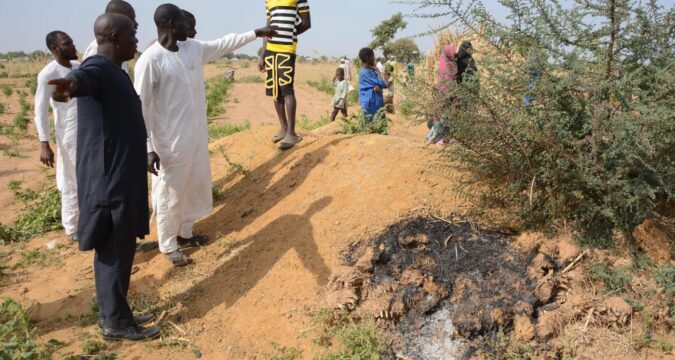
JABO, Nigeria — Sanusi Madabo, a 40-year-old farmer in the Nigerian village of Jabo, was preparing for bed on Thursday night when he heard a loud noise that sounded like a plane crashing. He rushed outside his mud house with his wife to see the sky glowing a bright red.
The light burned bright for hours, Madabo said: “It was almost like daytime.”
He did not learn until later that he had witnessed a U.S attack on an alleged camp of the militant Islamic State group.
U.S. President Donald Trump announced late Thursday that the United States had launched a “powerful and deadly strike” against IS militants in Nigeria. The Nigerian government has since confirmed that it cooperated with the U.S government in its strike.
A panicked village
Nigerian government spokesperson Mohammed Idris said Friday that the strikes were launched from the Gulf of Guinea in the Atlantic Ocean shortly after midnight and involved “16 GPS-guided precision” missiles and also MQ-9 Reaper drones.
Idris said the strikes targeted areas used as “staging grounds by foreign” IS fighters who had sneaked into Nigeria from the Sahel, the southern fringe of Africa’s vast Sahara Desert. The government did not release any casualty figures among the militants.
Residents of Jabo, a village in the northwestern Nigerian state of Sokoto, spoke to The Associated Press on Friday about panic and confusion among the villagers following the strikes, which they said hit not far from Jabo’s outskirts. There were no casualties among the villagers.
They said that Jabo has never been attacked as part of the violence the U.S. says is widespread — though such attacks regularly occur in neighboring villages.
Abubakar Sani, who lives on the edge of the village, recalled the “intense heat” as the strikes hit.
“Our rooms began to shake, and then fire broke out,” he told the AP.
“The Nigerian government should take appropriate measures to protect us as citizens,” he added. “We have never experienced anything like this before.”
It’s a ‘new phase of an old conflict’
The strikes are the outcome of a monthslong tense diplomatic clash between the West African nation and the U.S.
The Trump administration has said Nigeria is experiencing a genocide of Christians, a claim the Nigerian government has rejected.
However, Nigeria’s Ministry of Foreign Affairs now said the strikes resulted from intelligence sharing and strategic coordination between the two governments.
Yusuf Tuggar, Nigeria’s foreign minister, called the airstrikes a “new phase of an old conflict” and said he expected more strikes to follow.
“For us, it is something that has been ongoing,” Tuggar added, referring to attacks that have targeted Christians and Muslims in Nigeria for years.
Bulama Bukarti, a security analyst on sub-Saharan Africa at the Tony Blair Institute, said the residents’ fear is compounded by a lack of information.
Nigerian security forces have since cordoned off the area of the strikes and access was not allowed.
Bukarti said transparency would go a long way to calm the local residents. “The more opaque the governments are, the more panic there will be on the ground, and that is what will escalate tensions.”
Foreign fighters operate in Nigeria
Analysts say the strikes might have been intended for the Lakurawa group, a relatively new entrant to Nigeria’s complex security crisis.
The group’s first attack was recorded around 2018 in the northwestern region before the Nigerian government officially announced its presence last year. The composition of the group has been documented by security researchers as primarily consisting of foreigners from the Sahel.
However, experts say ties between the Lakurawa group and the IS are unproven. The Islamic State West African Province — an IS affiliate in Nigeria — has its strongholds in the northeastern part of the country, where it is currently involved in a power struggle with its parent organization, Boko Haram.
“What might have happened is that, working with the American government, Nigeria identified Lakurawa as a threat and identified camps that belong to the group,” Bukarti said.
Still, some local people feel vulnerable.
Aliyu Garba, a Jabo village leader, told the AP that debris left after the strikes was scattered, and that residents had rushed to the scene. Some picked up pieces of the debris, hoping for valuable metal to trade, and Garba said he fears they could get hurt.
The strikes rattled 17-year-old Balira Sa’idu, who has been preparing for her upcoming marriage.
“I am supposed to be thinking about my wedding, but right now I am panicking,” she said. “The strike has changed everything. My family is afraid, and I don’t even know if it is safe to continue with the wedding plan in Jabo.”
Adetayo reported from Lagos, Nigeria.
https://www.chicagotribune.com/2025/12/26/nigerian-villagers-react-us-airstrikes/
Ultraprocessed Food Makers Respond To MAHA Amid Record Lobbying Effort
Ultraprocessed Food Makers Respond To MAHA Amid Record Lobbying Effort
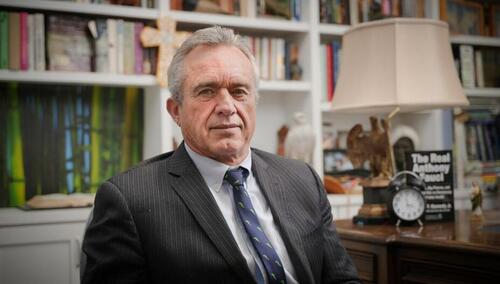
For much of the past year, America’s largest food manufacturers haven’t been able to rebut Robert F. Kennedy Jr.’s repeated claims that ultraprocessed foods are making Americans sick – something most Americans believe.
So instead of even trying to pretend their products are even the slightest bit healthy, the industry appears to have settled on a narrower counterargument; Yes, the food may be bad for you, but it’s CHEAP! And in an era when grocery bills have become a political liability (and who cares about the long-term drag on the healthcare system), that may be defense enough.
Food companies are making the case as they seek to blunt a growing wave of state-level efforts to regulate ingredients commonly found in ultraprocessed products. Those efforts, encouraged by Kennedy’s “Make America Healthy Again” (MAHA) movement, range from restrictions on synthetic dyes to warning labels for chemical additives. Industry executives and lobbyists argue that such measures, taken state by state, will drive up costs for consumers already struggling with inflation.
“The dynamic here is affordability,” Sam Geduldig, a managing partner at the Republican lobbying firm CGCN, which represents Kraft Heinz, told Politico. “You have a MAHA movement that would like to accomplish one goal, and then you have an inflation, economic affordability issue on the other side that runs counter.”
The argument has been sharpened for political effect. In late October, major food companies and trade groups – including Kraft Heinz, Nestlé and PepsiCo – launched a coalition called Americans for Ingredient Transparency. The group has begun a six-figure advertising campaign warning that a patchwork of state regulations would raise grocery prices and urging Congress to establish a single federal standard that would override state rules.
Businesses have long preferred federal preemption when faced with divergent state requirements, and the food industry is no exception. What is new is the framing. The coalition’s message is calibrated to appeal to Republican lawmakers uneasy about rising costs and skeptical of regulations that might be blamed for them.
“President Trump is cutting costs and delivering real relief for working families,” Andy Koenig, a senior adviser to the coalition and a former Trump administration official, said in a statement, “but these well-intentioned state bills are creating a patchwork of labeling regulations that could undermine his goal to lower costs for Americans.”
The industry’s push comes amid record lobbying spending in Washington. Trade groups and major manufacturers have poured millions into K Street as the Trump administration – more insular and more openly skeptical of corporate influence than in its first term – has proved harder to access. Polling commissioned by the industry underscores why affordability has become its chosen refrain: A recent POLITICO survey found that nearly half of Americans now consider grocery prices the “most challenging” household expense, outranking housing and health care.
Yet the industry’s economic argument runs alongside another political reality. Polls also show broad agreement with Mr. Kennedy’s view that ultraprocessed foods are damaging public health, particularly for children. In October, a survey by KFF and The Washington Post found that large majorities of Americans see highly processed foods as a major health threat.
Kennedy has leaned into that sentiment, often naming familiar brands. At his confirmation hearing, he contrasted the ingredient lists of American products with their counterparts abroad. “If you buy McDonald’s french fries in our country, there’s 11 ingredients,” he said. “If you buy Froot Loops in our country, they’re loaded with food dyes—yellow dye, red dye, blue dye.”
At the federal level, Kennedy is pursuing a rule change that would require additional scrutiny when food companies alter recipes or introduce new ingredients. At the same time, he has encouraged states, including Texas, Louisiana and Oklahoma, to move ahead on their own. Legislatures across the country have responded. More than a hundred bills targeting sugar, synthetic dyes and chemical additives have been introduced this year, nearly five times as many as last year, according to a POLITICO analysis.
Some measures have already passed. California enacted the nation’s first ban on ultraprocessed foods in public schools. Texas approved a law requiring warning labels on products containing any of 44 additives—a statute the food industry is now challenging in court.
“These state laws are ultimately going to lead to increased cost,” said Charles Leftwich, vice president for food safety and quality assurance at Sysco, the country’s largest food distributor. “Those costs are ultimately going to get passed down to consumers.” (or not?)
Consumer advocates and MAHA supporters dispute that framing. They argue that federal preemption would weaken standards rather than harmonize them, particularly given the industry’s influence in Washington.
“A federal standard favors large multinational companies with a lot of money to lobby for less restrictive standards,” said Jennifer Galardi, a senior policy analyst at the Heritage Foundation who focuses on MAHA-aligned issues. “We see a state-by-state approach as emulating the checks and balances that our federalist system was designed to produce.”
The tension is already visible inside the administration. The final version of a Kennedy-backed report on childhood chronic disease released in September softened language from an earlier draft that had described ultraprocessed foods as “detrimental” to children’s health. The revised document instead called for a federal definition of ultraprocessed foods—a shift some advocates attribute to industry pressure.
Earlier this year, companies including Kraft Heinz and Nestlé pledged to voluntarily phase out artificial dyes. But those gestures have not slowed a lobbying counteroffensive aimed at stopping state laws before they spread.
“It is one of the top things we are planning around,” said one lobbyist for a beverage company, speaking on condition of anonymity.
The strategy mirrors tactics used by other industries navigating the Trump administration. In November, a coalition backed by artificial intelligence companies launched a $10 million advertising campaign urging federal standards for AI regulation. The president signed an executive order weeks later. Health insurers and hospital groups have deployed similar campaigns to preserve Obamacare subsidies.
For MAHA advocates, the pattern is familiar – and troubling. States, they note, have often led the federal government on public health, from trans fat bans to chemical warning labels.
“This isn’t about affordability,” said Melanie Benesh of the Environmental Working Group. “This is about maintaining the status quo.”
Whether Congress embraces a federal food standard will test an open question in Republican politics: whether the party remains reflexively aligned with business interests, or whether Mr. Kennedy’s populist critique of corporate power has lasting influence.
For now, the industry’s most persuasive response to being accused of poisoning Americans is not a denial. It is a reminder that the poison, at least, is cheap.
Tyler Durden
Fri, 12/26/2025 – 18:00

Chicago watchdog asks the public what city programs, offices to scrutinize in 2026
The Chicago Office of the Inspector General is asking the public to chime in on which city operations it should dig into in the new year. It’s a turning-point year for the office, as current IG Deborah Witzburg plans to leave her post in April and as scrutiny of Mayor Brandon Johnson and the City Council amps up even further ahead of the 2027 municipal elections.
The OIG publishes draft auditing plans each fall and asks for public input. The final annual plan helps guide the office over the course of the year. This year’s draft annual plan includes 60 potential projects “designed to help the City maximize the effectiveness and efficiency of programs and processes” for the public to comment on at igchicago.org/survey.
They range from how the city manages its cash and street sweeping schedule to whether the city’s blue cart recycling program has improved and how water officials handle stormwater.
But the plan also includes several potentially politically thorny areas for audit.
Among this year’s potential list is a follow-up to efforts to curb aldermanic prerogative — or say-so — in housing decisions by examining how aldermen run their local zoning advisory councils. The office could also look into whether city departments changed operations to address the city’s “deference to” aldermen when making zoning decisions, which “raised serious concerns” with federal authorities about the city’s compliance with civil rights laws.
The mayor’s lobbying operations are also on the project list. There is “little information about the day-to-day operations” of the Office of Intergovernmental Affairs, whose employees work to push the mayor’s agenda forward with local, state and federal officials, the draft plan noted. The project would dig into its function and authority.
A similar project would look into the more than 100 boards and commissions the mayor appoints members to. “Limited transparency creates concerns around conflicts of interest,” the draft said. “This project would provide transparency into the functions … qualify their use of taxpayer dollars and city resources, and evaluate their compliance with relevant regulations.”
The OIG could also look into whether the Chicago Fire Department has enough ambulances and emergency medical personnel to meet the city’s needs.
A separate public safety section within the OIG audits the city’s Police Department. There are 30 potential projects on its 2026 outlook, ranging from CPD’s handling of hit-and-run crashes and sexual assault investigations to officer wellness and substance abuse.
For the last two budgets, city officials said they would work to tackle how much it costs taxpayers when Chicago hosts special events, such as street closures, barricades, garbage cans, parking signs, electrical services or police protection. Even though it is required in the municipal code, officials have not fully calculated and tracked that cost, let alone gotten reimbursed for city expenses. For 10 events included in a July 2025 check-in from the city’s budget office, for example, officials said they only recovered $3.8 million of the $14.8 million they spent to help host events.
Other possible audits involve building or development: the city’s failure to maintain a comprehensive inventory of the land it owns, how and when the Department of Buildings demolishes dangerous buildings and how the Department of Environment enforces new rules about how much energy large buildings report using.
The OIG could look into problems renovating city buildings to become compliant with the Americans with Disabilities Act. Until 2021, the Mayor’s Office of People with Disabilities had a long-standing contract with an outside vendor to develop a plan to fix issues, but abruptly cut it, leaving “important questions” about the value of that contract and whether the city has major liability risks, according to the draft annual plan.
Also on the list: whether the city’s Department of Family and Support Services offers accessible transportation for people with disabilities who are being moved to shelters, whether shelter requests are tracked, and whether the contractor who gives rides responds on time.
The city’s official chief risk officer position has also been vacant “for several years,” raising questions about how the city would address future emergencies akin to the COVID-19 pandemic or the influx of new arrivals.
The surveys are open through Dec. 31.
https://www.chicagotribune.com/2025/12/26/chicago-inspector-general-2026/

Clarendon Hills students turn a testing day into public service
Clarendon Hills Middle School eighth graders took advantage of a day before winter break when their schoolmates in sixth and seventh grades were busy testing.
But instead of taking the day off, they used the time to help others.
While the school’s two younger grade levels spent a half day on Measure of Academic testing in December, the eighth graders spent their time on efforts to help both animal welfare and public safety in the area.
One project had students creating “no sew” blankets for dogs and cats waiting to be adopted at local animal shelters, a project aimed at providing comfortable bedding to help keep the animals warm and secure while in the shelters.
For the other project, the eighth graders focused on advocacy by writing letters to support the installation of Automated External Defibrillator systems at Prospect Park in Clarendon Hills. This effort was done in partnership with the Just One Mike’s charity, which works to raise awareness and funds for AED placement. By advocating for these life-saving devices, the students helped to increase public safety and preparedness within the community.
The motivation to begin using the available half day came relatively easy when the service projects started a year ago.
“When we realized each year we would have this half a day to fill, we wanted to use the time to complete something meaningful,” said Meghan Carey, a CHMS eighth grade Social Studies teacher who is one of the CHMS building team leaders, along with Lisa Albano and Ryan Cantrell.
“The completion of these two service initiatives highlights the eighth grade class’s dedication to making a positive impact, turning a regular school day into an opportunity for meaningful community involvement,” Carey said.
This year’s project to support the installation of Automated External Defibrillator systems at Prospect Park, was prompted by a charity that was formed after former CHMS student, Michael Brindley, died from cardiac arrest in 2016. His family created a charity that helps students get access to free EKG testing. They also work with parks and other public places to install Automated External Defibrillators.
“The parks in Clarendon Hills currently do not have any AEDs, so the students wrote letters advocating for the village to partner with JustOneMike to have them installed,” Carey said. “We wanted to do this project in honor of Michael.”
Clarendon Hills Middle School eighth graders work on writing letters to the village supporting a project to add Automated External Defibrillator systems at Prospect Park in Clarendon Hills. (Meghan Carey)
Making blankets for animal shelters was a perfect fit for the CHMS eighth graders, Carey said.
“Many of our students have pets of their own, and they all seem to care deeply for animals,” she said. “Donated blankets allows the shelters to send the blankets home with pets when they get adopted. Their scent on the blanket helps them transition to their new homes.”
The goal of having students participate in the service projects is simple, Carey said.
“We wanted the students to realize the value of giving back,” she said. “The theme of our social-emotional learning standards in November was Giving to Others. These projects were a perfect way for the students to put the lesson they learned into action.”
Eighth grader Radha Kaushal-Goel liked working with others to make blankets for dogs and cats, calling it a “very rewarding and collaborative activity.”
“I thought this was one of the best stations, as it left all of us feeling better, as we felt as if we had changed an animal’s life,” Radha said. “ I think everyone who participated got something out of it, whether it was a fun experience or the joy of creating something to help others.”
Another eighth grader, Olivia Shum, enjoyed writing letters to Village Hall in hopes of getting support for the AED system at Prospect Park.
“It made us feel like we could make decisions in the community and be heard,” Olivia said. “It also was rewarding to help the future community members and protect the future generation by advocating for the AED. I felt like I could make a change in the world.”
Carey said she and other CHMS teachers were very proud of the students’ efforts.
“They worked hard, and it showed in the quality of their letters and the blankets,” she said.
Chuck Fieldman is a freelance reporter for Pioneer Press.
https://www.chicagotribune.com/2025/12/26/clarendon-hills-students-public-service/

“This Is The Finale Of The Great Financial Reset”; ‘Dr.Gold’ Warns They’re Gobbling Up All The Physical Supply
“This Is The Finale Of The Great Financial Reset”; ‘Dr.Gold’ Warns They’re Gobbling Up All The Physical Supply
Via Greg Hunter’s USAWatchdog.com,
Financial writer and precious metals expert Bill Holter (aka Mr. Gold) has been sounding the alarm of the profound risk in the financial system.
At the beginning of December, Mr. Gold warned about the record setting silver prices and said, “It’s pretty clear and pretty obvious that something behind the scenes is breaking.”
What is “breaking” is the extremely leveraged futures markets with not enough physical silver to deliver.
Fast forward to the end of the month, and new record highs in gold and silver are happening every day. Mr. Gold says,
“They are gobbling up all the supply available because they understand this is the end of the fiat currency experiment that started August 15 of 1971. Fiats are collapsing.
This is the Hunt brothers on steroids because you have the entire world buying physical. The Hunt brothers got into trouble because they were buying paper contracts, and COMEX changed the rules. COMEX can change any rules they want . . . it won’t matter because the rest of the world is buying cash and carry . . . they will not accept paper contracts. They want real physical metal.”
Here is where it gets both interesting and dangerous. What happens if the short sellers cannot deliver the silver promised? Mr. Gold says,
“People say if they can’t deliver, and I am going to tell you at some point they will not be able to deliver, when that moment happens, it’s game over for the entire financial system. Silver, and I believe it will be silver that fails to deliver, silver is the blasting cap to the gold nuclear bomb. When silver fails to deliver, then immediately there will be a pile into COMEX gold, and they will not be able to deliver the gold. Once that happens, you have failures of contracts that are proven fraudulent. They are zeroed out and cannot perform. Then it spreads to cattle, pork bellies, grains and you name it. This is not to mention the financials of stocks and bonds. Once you prove fraud in silver, that’s going to spread to all the derivatives, and we will have a derivative meltdown. . .. The world wants gold and silver because those are the only two monies that cannot default.”
What you are seeing in the gold and silver markets now is far from a top. This is just getting started. Mr. Gold says,
“These contracts are a zero-sum game. There is a winner and a loser. If the loser loses so big that they go belly up, then the winner becomes a loser because they can’t get paid. That is the problem. . .. When this actually hits and there is a failure to deliver, gold and silver will be wiped off the shelves, and there will be none to be bought. . .. This will be a run for safety, and fear is the greatest emotion there is. Fear is a far greater emotion than greed. . .. This is going to turn into a reverse bank run into gold and into silver because they cannot default in a world that is defaulting. . .. What you are witnessing is the end of trust. When you have the end of trust, the confidence breaks and credit is forthcoming only when there is trust. Once confidence breaks, the credit markets will begin to seize up. . .. When credit stops, it’s game over. You will see markets, institutions and stores shutter.”
Holter says you should be able to be self-sufficient for a while when the system shuts down. Storing up food and water is a good place to start.
In closing, Holter says, “This is the finale of the great financial reset. Make no mistake, what you are watching is the world resetting before your very eyes.”
There is much more in the 43-minute interview.
Join Greg Hunter of USAWatchdog as he goes One-on-One with financial writer and precious metals expert Bill Holter/Mr. Gold as the financial system begins its reset for 12.23.25.
Tyler Durden
Fri, 12/26/2025 – 17:30

Crown Point Schools land swap to expansive NWI landowner sparks discussion
A recent land swap between a prominent landowner and the Crown Point Community School Corporation stirred discussion between residents and board members at the latest public hearing.
Residents approached the Crown Point Schools’ Board of School Trustees on Dec. 15 to voice their concerns, raising questions about the circumstances surrounding the deal.
In November, the school corporation traded its previously owned 53 acres at 3615 E. 129th Ave. for an 80-acre property at 12501 Iowa St. belonging to Edward J. Hein. Both pieces of land are undeveloped and lie about a mile apart. The property on 129th Avenue is surrounded on the north, west and east sides by more property purchased by Hein, who is the owner of a large trucking and dairy business.
Superintendent Todd Terrill defended the land trade at the meeting, stating the school corporation followed the correct procedures.
“We followed every transparent process that we’re required to do by law to make sure that this was listed appropriately,” Terrill said at the meeting. “We went through all the proper places.”
According to information on the school corporation website, the district purchased the 129th Avenue property nearly 20 years ago as part of a long-term plan to acquire multiple pieces of land in the Winfield area in anticipation of growth.
In May, the board released a newspaper advertisement seeking trade or sale of the 3615 E. 129th Ave. property. Terrill said the decision was a result of traffic safety concerns, because the property on 129th Avenue faces U.S. 231.
“There are some real challenges that go with that land that were not necessarily a concern in 2006, one being school safety,” Terrill said. “ As you guys know, if you’ve driven on 231 headed to Hebron, that is a racetrack at times, people are flying on that road, and we would, at best, get two entrances onto that road. We had an opportunity to pursue some different land that would give us access north, south, very quickly to the east or to the west, and would allow us to have additional space.”
Terril said school officials hoped to find a parcel of land that was 70 acres or more when they listed the property for trade or sale.
“ As far as who bid and what that looked like, we followed the legal processes and that’s where we ended up with the board resolution that was passed, allowing us to pursue that,” Terrell said in the meeting. “We feel really good about the property that we’re getting and the possibilities in the future. If we need to add another school or schools or other different possible facilities, we’ve got the land now out there in a spot where we can do that.”
But some residents still feel there is something else to the story, such as Susan McKendry, of Crown Point, who gave public comment at the meeting.
“I still feel that we do not have the whole story about how the land swap occurred,” said Susan McKendry. “After the meeting, Mr. Terrell told us that he directed the school corporation attorney to start looking for a piece of property to trade for, and that’s how this all came about. But I have questions about all of that, given the history of some other dealings with (Hein) and the city of Crown Point. Property was given to the city from that same buyer (Hein), to build a new wastewater treatment plant less than a mile from that new property the school just bought from him. That gentleman has some kind of business relationship that I still don’t understand with John Lotton, which is LBL development.”
According to official documents, Hein is linked to major local developer John Lotton, in which the two men are referred to collectively as LBL Development in an Indiana Utility Regulatory Commission petition filed in April 2024.
The petition references a donation of a 44-acre land plot from LBL Development to Crown Point to construct new wastewater treatment plants. The site of the proposed wastewater treatment plant lies at 121st and Iowa Street, just north of the 12501 Iowa Street property. The documents state that a donation agreement was made to ensure the wastewater treatment plant would serve LBL Development’s surrounding properties.
A dispute began when the town of Winfield petitioned to make the area a territory within Winfield’s Municipal Sewer system. However, LBL Development filed a petition to stop this from happening, citing the donation agreement between LBL Development and the city of Crown Point. The dispute is ongoing.
“And I don’t understand how the school corporation got caught up in whatever is going on with all of that dealing. The timing is very suspect,” Susan McKendry said. “Why now? Why, if they don’t have plans to build a school on that property, right now? Why did they feel they needed to trade the property right now?”
An assessment on both properties found that the 54-acre site was valued at just over $1 million and the 88-acre site was valued at about $1.4 million, which means the school corporation gained $400,000 for its real estate portfolio, Terrell said at the meeting.
However, Sam Kozaitis, of Crown Point, said he doesn’t believe the schools benefited the way they think they did. Kozaitis also raised questions at the public hearing portion of the Dec. 15th meeting.
“I think the biggest issue that I feel is deceptive is the land value between those two properties,” Kozaitis said. “I think the school got the short end of the stick on that deal because again, you’re talking about 54 acres of a prime location on 231 that could be easily developed into commercial property. Are there plans around there for development? Yes, some of which Lotton has already submitted. Lotton already submitted plans to Crown Point, 4,000 homes and 256 commercial properties, all thrown in that area because he and Hein own all that property. There’s over 1,000 acres they own between the two of them. So I think the school board took a major loss on that property exchange. I think that property, the 54 acres, was easily worth twice as much as Hein’s property, even though they keep saying, ‘Well, we got, we got 30 extra acres in a better developed area, for the school would fit better.’ But value-wise on the land, I think they lost half of their value and they only received one bid. And that was the bid Hein made.”
Dan McKendry, of Crown Point, said in light of the land swap optics, he wants to see more transparency from the school administration and city officials.
“This has been my thing: Ethics, integrity, and transparency, that’s the bottom line,” Dan McKendry said. “I don’t know if (Hein) and Lotton got together and they approached the school system and they said, ‘Hey, we want this.’ And they made a deal ahead of time, but to make it look legit and official, then they put together this bid package and, you know, quote, ‘pretend’ to take a bid. That is all just speculation, though.”
The Crown Point School Corporation said there are no current plans to build on its newly acquired property, but officials stated “the land exchange supports the district’s long-term planning and future growth needs.”
Anna Ortiz is a freelance reporter for the Post-Tribune.

Green Bay Packers QB Jordan Love will not play in Saturday’s game against Baltimore Ravens
GREEN BAY — Green Bay Packers quarterback Jordan Love won’t play Saturday night against the Baltimore Ravens a week after leaving a game against the Chicago Bears with a concussion.
The Packers announced Friday that Love had been ruled out for Saturday’s game. Love had been listed as questionable Thursday on an injury report that referenced his concussion as well as an issue with his left shoulder.
This will be the first full game that Love has missed this season.
Love’s situation means both starting quarterbacks may miss the game Saturday night. The Ravens have listed two-time MVP quarterback Lamar Jackson as doubtful because of the back injury that knocked him out of a 28-24 loss to the New England Patriots last week.
Tyler Huntley, who took over for Jackson in the Patriots game, likely would start in Jackson’s place if needed. The Packers backup quarterback is Malik Willis, who is questionable for Saturday’s game.
Love suffered the concussion when he absorbed a helmet-to-helmet hit from Bears defensive end Austin Booker in the second quarter a 22-16 overtime loss Saturday night at Soldier Field. Willis took over from there and hurt his right (throwing) shoulder while being sacked on the final play of the fourth quarter, though he remained in the game for overtime.
Love had been a limited practice participant this week. Willis also practiced on a limited basis Tuesday and Thursday, though he didn’t practice Wednesday because of an illness. Willis started two games in place of an injured Love last season, and the Packers won both of them.
The Packers’ only other quarterback is Clayton Tune, who was signed to the practice squad in late August. Tune has appeared in 13 games but has made just one career start, with the Arizona Cardinals in 2023.
The Packers (9-5-1) clinched a playoff spot Thursday when the Detroit Lions lost 23-10 to the Minnesota Vikings, but they still have incentive to keep winning to try to improve their seeding. They can win the NFC North if they win their last two games and the Bears drop their final two games.
The Ravens (7-8) can make the playoffs only if they win Saturday, the Pittsburgh Steelers lose at Cleveland on Sunday and the Ravens win at Pittsburgh in Week 18.
https://www.chicagotribune.com/2025/12/26/jordan-love-out-green-bay-packers/
The Apocalyptic Shortage That Never Happened: Democrats’ Tariff Doomsday Narrative Imploded
The Apocalyptic Shortage That Never Happened: Democrats’ Tariff Doomsday Narrative Imploded
Remember earlier this year when President Trump was locked in a tit-for-tat trade war with China? Then, a broad coalition of Democrats, corporate media outlets, mainstream economists, and left-leaning think tanks warned that higher tariffs would spark pandemic-era supply-chain chaos and trigger price spikes for consumers. Two quarters later, those dire predictions have yet to materialize.
MSM propagandists sounded the apocalypse alarm:
March: KOMO News: ‘It’s worse than COVID’: Point Roberts seeks state aid amid US-Canada tariff crisis
April: NBC News: Product shortages and empty store shelves loom with falling shipments from China
April: Fortune: Tariffs threaten a pharmaceuticals shortage, as 95% of ibuprofen comes from China
April: CNBC: The trade war’s wave of retail shortages will hit U.S. consumers in stages.
April: Axios: How Trump tariffs could cause a global recession
April: Vox: America may be headed for this rare type of economic crisis
April: CNN: Trump took the US economy to the brink of a crisis in just 100 days
May: The Guardian: Trump’s tariffs: ‘It feels like Covid 2.0. So many things are getting disrupted’
May: Business Insider: The worst is yet to come: Trump’s tariffs could mean even higher prices and empty shelves within weeks
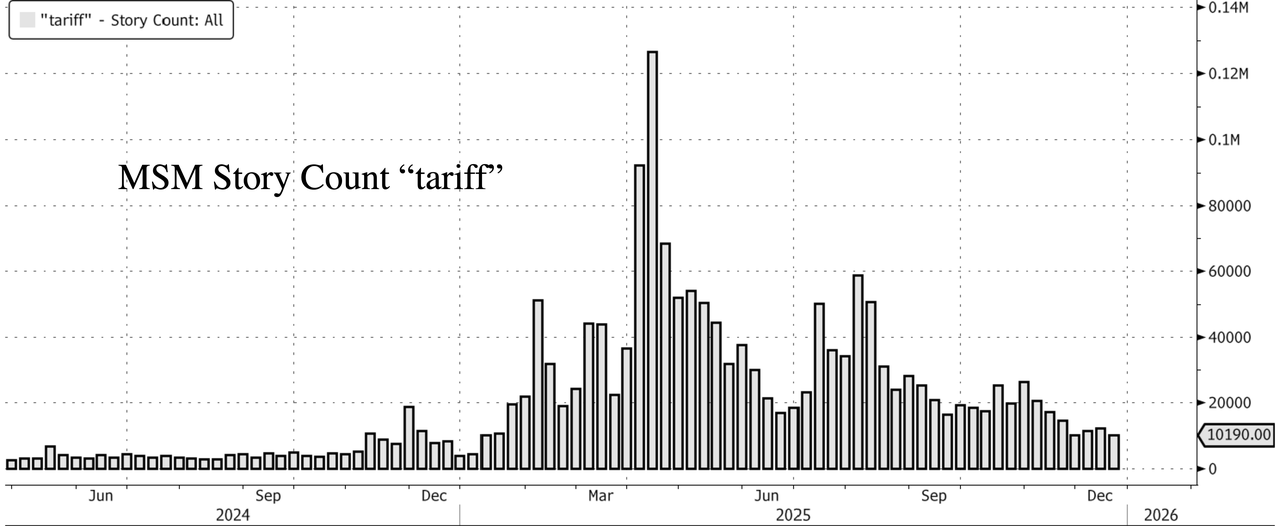
Democratic Party and MSM’s supply-chain apocalypse alarm peaked in mid-April, then resurfaced in a smaller echo wave by August, according to Bloomberg data tracking mainstream media headline counts for the term “tariff.”
However, there is only so much economic doom the MSM can push in a propaganda campaign built on a shaky foundation, because none of the predictions above have come remotely true eight months later.
In fact, quite the opposite. The latest PCE data (September) shows no signs at all of the runaway tariff-driven costs that so many establishment economists proclaimed were imminent…
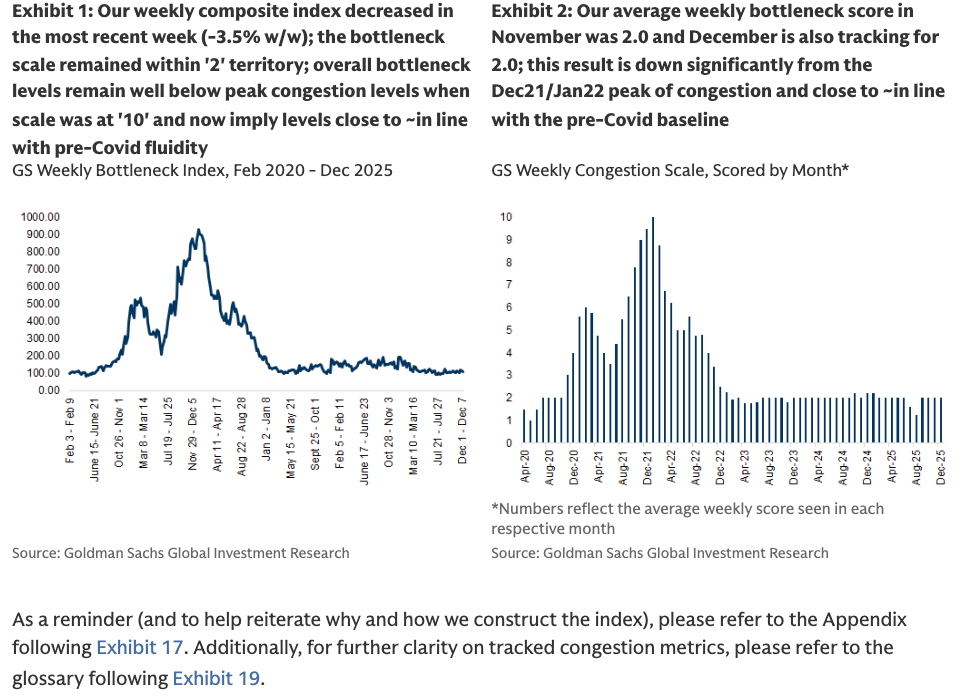
On the supply-chain front, Goldman analysts led by Jordan Alliger published the latest Supply Chain Congestion Index, showing that no bottlenecks have materialized since Trump decided on trade war 2.0 with China. The surge in congestion seen in 2021 and 2022 was driven by Covid-era disruptions, when governments shut down large parts of their economies.
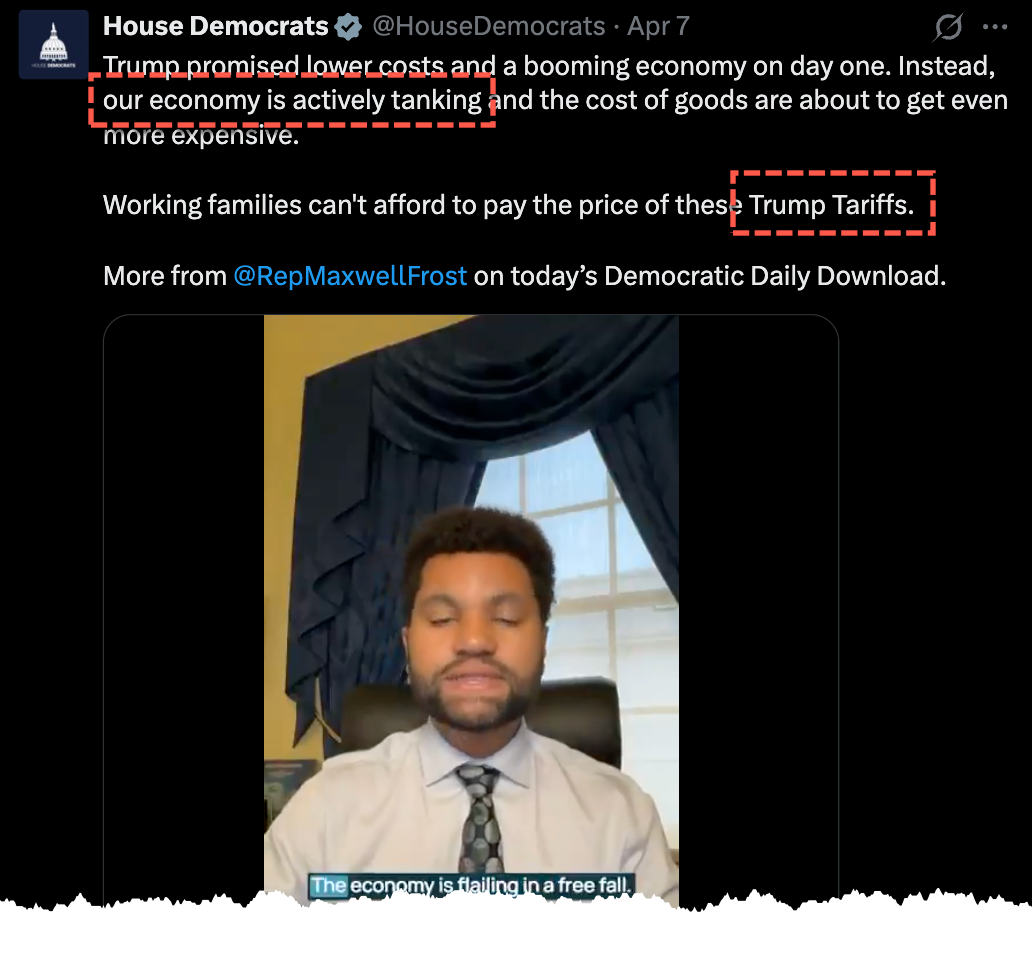
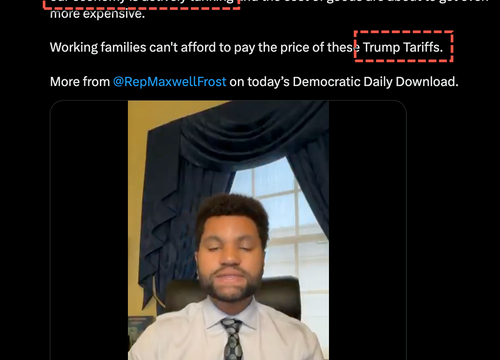
As for the Democratic Party’s dire prediction of an “actively tanking economy” – have you seen the third-quarter print?
Q3 GDP Unexpectedly Surges To 2 Year High On Soaring Health Insurance Spending
And it is no surprise that trust in the mainstream media has collapsed to record lows. For 16 years, ZeroHedge readers have understood that the MSM is little more than a propagandist and PR arm for whoever happens to be the highest bidder.
Tyler Durden
Fri, 12/26/2025 – 17:00