Category: News

Afternoon Briefing: Harvey Park Board member alleges political motivation in arrest
Good afternoon, Chicago.
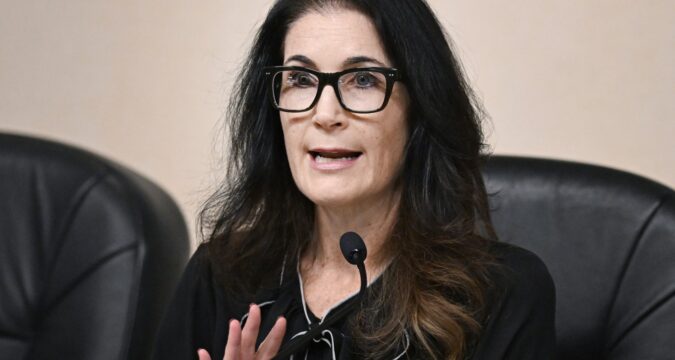
Harvey Park Board member Lakeisha Brown-Oneal was arrested last week following an allegation of domestic violence, though she said she suspected a political motivation behind her arrest.
Brown-Oneal said she was not the aggressor in the altercation, and said she was the person who called 911.
“I am confident that the facts, including the 911 call I made, the evidence of the assault we sustained and the truth about who initiated this violence will be revealed through the legal process,” Brown-Oneal said.
Here’s what else is happening today. And remember, for the latest breaking news in Chicago, visit chicagotribune.com/latest-headlines and sign up to get our alerts on all your devices.
Subscribe to more newsletters | Asking Eric | Horoscopes | Puzzles & Games | Today in History
8th Congressional District Democratic candidate Melissa Bean responds to a question during a candidate forum at Elgin Community College in Elgin on Nov. 13, 2025. (H. Rick Bamman/for the Chicago Tribune)
Former US Rep. Melissa Bean launches streaming ad buy in race for 8th Congressional District
Now that the holiday season is over, congressional candidates in Illinois are trying to turn voters’ attention to the March 17 primary election — and one candidate is debuting online ads to kick her campaign into high gear. Read more here.
More top news stories:
Two people stabbed during fight on CTA platform in Grand Crossing
1 displaced in fire in Roseland neighborhood
The condo building, center, at 9 W. Walton St. in Chicago’s Near North Side neighborhood, on Nov. 25, 2024. Gov. JB Pritzker paid $19 million for the top two floors, which were previously owned by billionaire Ken Griffin. (Antonio Perez/Chicago Tribune)
Meet the buyer who paid $7.4M for one of Ken Griffin’s Gold Coast condos
Ken Griffin famously paid $58.75 million in 2017 for the top four floors in the building at 9 W. Walton St., but he never built them out and left them as raw space. Read more here.
More top business stories:
Peoples Gas seeks $202 million rate increase for accelerated pipeline replacement
Evanston 5-bedroom century-old bungalow: $1.7M
Bears safety Kevin Byard III (31) celebrates the win over the Browns on Dec. 14, 2025, at Soldier Field. (Brian Cassella/Chicago Tribune)
How far will the Chicago Bears go in the playoffs? 5 pressing questions ahead of wild-card weekend.
Tribune Bears reporters Brad Biggs, Sean Hammond and Phil Thompson tackle this week’s pressing questions ahead of the playoffs. Read more here.
More top sports stories:
Illinois State takes Montana State to 1st FCS championship OT but ‘couldn’t find one more play’ in loss
Chicago basketball report: Bulls bemoan Bears playoff timing — and Illini women get an upset (and a loss)
Conductor Christopher Bell takes the stage dressed in patriotic attire to lead the Grant Park Orchestra in a performance at Jay Pritzker Pavilion on July 5, 2023, in Chicago. (John J. Kim/Chicago Tribune)
In 2026, Grant Park Music Festival commemorates the United States’ founding and bids adieu to its leader
The Grant Park Music Festival has announced its summer schedule, running from June 10 to August 15. Read more here.
More top Eat. Watch. Do. stories:
Film chronicling blind athlete from Evanston earns Beverly Hills film fest award
Lizzadro Museum’s Community Music Programs curates auditory art
Danish military forces participate in an exercise with hundreds of troops from several European NATO members in the Arctic Ocean in Nuuk, Greenland, Sept. 15, 2025. (Ebrahim Noroozi/AP)
President Donald Trump says the US ‘needs’ Greenland for Arctic security. Here’s why.
Increasing international tensions, global warming and the changing world economy have put Greenland at the heart of the debate over global trade and security, and President Donald Trump wants to make sure his country controls this mineral-rich country that guards the Arctic and North Atlantic approaches to North America. Read more here.
More top stories from around the world:
Danish prime minister says a US takeover of Greenland would mark the end of NATO
US expands list of countries whose citizens must pay up to $15,000 bonds to apply for visas

Morton Grove youngsters ring in 2026 with daytime New Year’s Eve celebration at Prairie View center
Dozens of Morton Grove kiddos helped to ring in the New Year about 12 hours before the calendar change, blowing noisemakers and squealing with excitement as balloons were released to celebrate the move into 2026.
The annual “Noon Year” New Year’s Eve event at the Prairie View Community Center is so popular, according to organizers, it is restricted to residents only. Children as young as 2 years old joined in the festivities, which included music, entertainment, refreshments, party hats, noise makers and the balloon drop.
Families filled the Prairie View Community Center in Morton Grove on New Year’s Eve for a noon-time celebration to ring in 2026. (Talia Sprague/for Pioneer Press)
Morton Grove Park District Superintendent of Recreation Sue Braubach told Pioneer Press the daytime celebration is intended to allow families with young children ring in the new year together, especially since the youngsters would likely be asleep at the stroke of midnight. Also, she said, most adults are off from work that day, making the event’s timing even more optimal.
This past Dec. 31 was the Park District’s third year offering the two-hour celebration.
“It’s so popular right now that we sell out every year,” Braubach said.
She said the event is a hit among young kids and their families.
“Families enjoy coming to an earlier version of celebrating the New Year,” said Braubach.
https://www.chicagotribune.com/2026/01/06/morton-grove-youth-new-years-eve-event/

Kane County Forest Preserve District moving forward with plans for nature center in Aurora
The Kane County Forest Preserve District is continuing to move forward with its plans to create a nature center focused on educational programming at Arlene Shoemaker Forest Preserve in Aurora.
In November, a contract was approved by the Forest Preserve Commission for design services, and the Forest Preserve District is currently in the process of applying for a state grant to cover some of the costs of the project.
The idea for an “urban ecology field station” in Aurora was one of the projects set to benefit from a proposed tax hike the Kane County Forest Preserve District put to voters in 2024, which was ultimately approved. The property tax increase has been estimated as amounting to around $10 per $100,000 of home value, and was projected to bring in around $6.9 million to the district in the first year.
An expansion to a program reintroducing bison to the Burlington Prairie Forest Preserve, for example, has also been touted by the district as an initiative that would be supported by the referendum dollars, along with things like land acquisition and forest preserve maintenance.
Now, a little over a year after the tax referendum question’s passage, the Aurora nature center project is beginning to progress.
But it’s been a long time coming, said Jennifer Rooks-Lopez, the Kane County Forest Preserve District’s director of Planning and Land Protection, at the November Forest Preserve Commission meeting. The site was initially selected in 2003 for a nature center.
Currently, the county’s only nature center is at the LeRoy Oakes Forest Preserve in St. Charles, Rooks-Lopez said at the meeting.
The idea is for the proposed nature center in Aurora to expand the district’s educational offerings, particularly in response to patron data suggesting that school groups, community groups and the general public in urban centers in the county — especially Aurora — need a nature center with educational programming and outdoor infrastructure that is “relevant to their unique urban ecology,” according to a memo from Rooks-Lopez.
Arlene Shoemaker Forest Preserve, at 1400 Felten Road, is connected to surrounding neighborhoods and to walking trails to a nearby elementary school, Rooks-Lopez’s memo notes, and the Illinois Prairie Path’s Aurora branch runs up along the preserve’s northern boundary.
Putting an urban nature center in this location is intended to help the district better reach underserved communities, at-risk youth and low-income families in the area with educational programs, the memo says.
To pay for it, the Forest Preserve District is planning to apply for a grant from the Illinois Department of Natural Resources.
At the Forest Preserve Commission’s November meeting, Commission President and Kane County Board member Bill Lenert said that, if the district is selected, the state grant could provide 75% of the costs to build the nature center, or up to $2.8 million in funding.
To apply, the district needs a site plan, as well as preliminary facility design and costs for the project, according to Rooks-Lopez’s memo.
So, the district sought firms to help with design, permitting and grant preparation for the project, landing on Darien-based Wight & Company.
According to a memo from Wight & Company included in the November meeting agenda, the site would have both indoor and outdoor facilities. The indoor facility would have things like a multi-purpose classroom and science lab, a demonstration kitchen, interactive stations and exhibits and a wildlife viewing area. The outdoor portion could include, for example, water access, an amphitheater and a fireplace or fire pit.
The contract with Wight & Company — which comes to $50,000 for the design and grant preparation services, along with a $5,000 contingency — was approved by the Forest Preserve Commission in November. The memo from Wight & Company indicates that it expects to complete these design services by June, based on the grant application schedule.
mmorrow@chicagotribune.com

Elgin town hall meeting Wednesday to give residents a forum on ICE/police issues
An Elgin woman pepper-sprayed by ICE agents during a Dec. 6 incident isn’t optimistic she’ll get the answers she’s seeking, but she will be attending the city of Elgin’s town hall meeting Wednesday on immigration enforcement issues.
Set for 6 to 8 p.m. at the Edward Schock Centre of Elgin, the forum is “intended to create space for community members to share their concerns and ask questions,” according to Elgin Assistant City Manager Karina Nava.
“The objective of the meeting is to listen and provide residents with accurate information,” Nava said in an email.
City council members and staff will be present as will Kane County State’s Attorney Jamie Mosser and representatives from the offices of U.S. Reps. Raja Krishnamoorthi, D-Schaumburg, and Delia Ramirez, D-Chicago, both of whom represent the Elgin area. Spanish interpretation will be available, Nava said.
Mari Elena, who declined to disclose her last name due to her anti-ICE advocacy work in Elgin, said she was among the first to show up Dec. 6 when immigration officers tried to detain a man on Maple Avenue. A car crash involving the man’s vehicle and one driven by an ICE agent led to stand-off situation at an apartment.
“I was on the sidewalk, and they (ICE agents) pushed me out of the way even though I was more than 10 feet (from the scene),” Mari Elena said. “I was telling people to call the police to show up so we could have them document and record what was happening for our safety.”
Elgin police said they received more than 50 calls about the incident that day.
Officers arrived, she said, but “when I asked them to stay, they said they can’t get involved. I said, ‘I’m not asking you to get involved. I’m asking you to document. … I think having the (police) presence there would have helped. I don’t think they (ICE) would have reacted as aggressively.”
Elgin police did return a short time later to help firefighters assist people who had been pepper-sprayed, Mari Elena said.
She was frustrated that police refused to document and video record what was happening that day, and it’s among the things she hopes is discussed at the Wednesday meeting.
She was not alone in her criticism. The incident spurred immigration advocates to call out the police at the Dec. 17 Elgin City Council meeting and prompted the city to hold the forum.
Mari Elena said she is not optimistic it will accomplish anything, especially given the dozens of families who have had members deported or have been traumatized by ICE actions.
“I think this is the city council just trying to appease the community because we made our thoughts known,” she said. “I don’t think anything will come of it. They will just make promises.”
The council has passed resolutions declaring city-owned property as ICE-free zones, prohibiting federal agents from conducting or staging detentions in places like parks or on city hall property, and urging state and federal legislators to prohibit ICE agents from using masks. Members are considering the creation of a “Welcoming City” ordinance.
Police invervention in ICE cases is limited by the Illinois Trust Act, which says local law enforcement cannot work with federal immigration agents or intervene in detention efforts unless the agents have a judicial warrant.
But questions have arisen about police observing ICE agents violating state laws and if they can or should intervene, a subject being reviewed by the state’s attorney’s office as potential charges are considered.
Mari Elena believes that’s exactly what police should be doing.
“This is what (they) are supposed to do, serve and protect us, and (they) are not doing your job,” she said. “The community is the one that’s having to come out and do something.”
While volunteers have been patroling, things have been quiet over the holidays, Mari Elena said. But there has been a recent increase in drone reports, which typically come in advance of ICE actions, she said, so “we are bracing for something to come.”
Gloria Casas is a freelance reporter for The Courier-News.
https://www.chicagotribune.com/2026/01/06/elgin-immigration-ice-meeting-agents/

AI Expansion Highlights Dangers Of America’s Aging Power Grid
AI Expansion Highlights Dangers Of America’s Aging Power Grid
Authored by Autumn Spredemann via The Epoch Times (emphasis ours),
America’s artificial intelligence (AI) boom is colliding with an older, slower-moving entity: the nation’s aging electrical grid.
From Virginia’s data-center corridor to multi-state electricity markets, analysts, government agencies, and AI insiders say the scramble to handle technology’s expanding power demands will be an uphill battle.
At the same time, big tech companies and data centers are working to reduce the impact of AI’s expansion on the United States’ grid infrastructure. Some experts believe changes and significant investment are needed to reduce grid stress and possible energy shortages.
A primary driver of this concern is the explosion in data centers being built across the United States to support rapid AI buildout. In 2024, energy consumption reached an all-time high, according to the U.S. Energy Information Administration. The agency expects 2025 and 2026 consumption to be even higher.
Presently, energy demands from data centers account for about 4 percent of electricity use in the United States and 1.5 percent of the world’s electricity use, EIA data show.
Although AI’s current computing needs represent just a fraction of total energy consumption, the rate of growth has raised the question of whether the United States’ energy infrastructure can keep up.
A significant portion of America’s power grid network dates back to the 1960s and 1970s, according to the Department of Energy. As of 2023, the agency observed that 70 percent of transmission lines were more than 25 years old and nearing the end of their lifecycles.
“This has major consequences on our communities: power outages, susceptibility to cyberattacks, or community emergencies caused by faulty grid infrastructure,” the agency stated.
And that’s without any added energy demands.
The Energy Department’s Grid Deployment Office has awarded $14.5 billion in grants to improve electrical infrastructure, according to Bank of America research, which also indicates that an additional $36.9 billion in private sector investments to U.S. grid upgrades have been made over the past couple of years.
The Bank of America analysis noted the United States is going through a period of power “load growth” primarily driven by building electrification, data centers, industrial demand, and the rise of electric vehicles (EVs).
“If load growth forecasts continue to rise, utilities will need to invest to meet required reserve margins and increase spending on both power generation and transmission and distribution capacity,” the July report said.
Perfect Storm
Even after two years of modernization efforts, the U.S. power grid network remains in a race to continue upgrading while consumption demand surges. Due to data center growth, researchers at S&P Global expect power grid requirements to increase 22 percent by the end of this year and nearly three times by 2030.
“People keep saying the lack of chips is the problem, and it’s not. It’s a lack of power,” Tyler Saltsman, CEO of Seattle-based EdgeRunner AI, told The Epoch Times.
Part of the conversation surrounding unsustainable AI growth in recent months homes in on structural shifts in support sectors.
A Rand Technology analysis called graphics processing units, high-performance memory, and networking integrated circuits the “bedrock of AI infrastructure.” The demand for these components is rising faster than suppliers can deliver.
However, Saltsman believes a shortage of microchips is moot if the power grid can’t support AI’s rapid buildout.
Working at the intersection of AI and energy, Saltsman’s company has three active research and development contracts with the U.S. military. From his perspective, alarm over AI and U.S. energy infrastructure isn’t overstated.
“If anything, it’s downplayed. Our grid is pretty fried … nationwide, you see a lot of lazy [maintenance] practices,” Saltsman said.
While he hasn’t encountered any power-related issues while working on the front lines of AI, Saltsman said he expects to if data center growth continues at the current rate.
“We can make chips much faster than we can make power,” he added.
When asked what could be done to safeguard U.S. power grids, Saltsman said, “We need to commit to building nuclear reactors, and we need to do it now, but that isn’t a quick fix.”
On average, a nuclear power plant takes more than five years to build, according to the World Nuclear Association.
Meanwhile, some energy experts believe concerns over AI and power demands are legitimate, but aren’t being framed correctly.
“The risk isn’t that AI will ‘break’ the U.S. grid, rather the risk is that outdated planning, cost-allocation rules, and inflexible load assumptions will force inefficient solutions like emergency peakers or deferred retirements despite smarter and cleaner alternatives that exist,” Gaurav Shah, managing partner at Trident Renewables, told The Epoch Times.
Emergency peakers are peak demand power plants that act as quick-start power generators that supply electricity to a grid during times of unexpectedly high demand. Incidents such as extreme weather events or power failures from other sources are often the impetus for their use.
Despite the relatively small portion of America’s total electricity consumption for which AI is responsible, energy demand growth has been enough to require the use of peaker plants.
Peaker plants contribute about 3 percent to the country’s electricity use, but have the capacity to produce 19 percent, according to a 2024 report by the Government Accountability Office.
“There are a ton of peaker plants that could operate more,” Energy Secretary Chris Wright told Reuters in an interview in September.
Shah has spent nearly 20 years working with U.S. energy infrastructure, including renewable energy, grid-connected assets, fuel transition projects, and, most recently, AI-linked energy strategy.
“This is a governance and market-design challenge more than a physics problem,” he said.
“The grid struggles with concentrated AI clusters in places like Northern Virginia, Texas, and parts of the Southeast,not because power doesn’t exist but because deliverability, redundancy, and timing don’t align,” Shah explained.
“Reforms like faster permitting for transmission upgrades and incentives for siting data centers near retiring industrial sites with existing grid headroom are much needed,” he said. “Without reforms, we are likely to see higher costs, delayed retirements of older plants, and localized reliability stress.”
“With the increase in EVs, it’s a perfect storm of factors,” Saltsman said.
He believes AI has the potential to be dangerous for U.S. electrical infrastructure. With the power grids already stressed and in need of upgrades, sudden surges in power loads—or even a rogue AI agent—could tip the scales for the worse.
“If you were to attack our power grid, you could potentially bring this country to its knees,” Saltsman said.
Regional Challenges
Shah said AI’s energy footprint is “hyperlocal,” and power grids will likely fail locally, not nationally.
He said a 100 megawatt data center in a congested area can cause more stress than 1 gigawatt of overall national growth in power demand.
Energy grids in the United States are broken down into different sections instead of a seamless power supply. Most of these subgrids are part of the Eastern Interconnection, the Electric Reliability Council of Texas (ERCOT), or the Western Interconnection.
The Pennsylvania-New Jersey-Maryland (PJM) Interconnection serves what’s known as “data center alley” in Virginia, which is currently experiencing unprecedented data center growth alongside soaring energy demands, according to PJM Inside Lines.
Officials for the PJM Interconnection warned that an energy capacity shortage could affect its systems as early as June 2026.
“The demand for electricity is growing at the fastest pace in years, primarily from the proliferation of data centers, electrification of buildings and vehicles, and manufacturing,” the agency stated.
“Regions like ERCOT and PJM face different challenges. Texas has generation but not transmission constraints. The Northeast has aging infrastructure and limited siting options. AI load growth is geographically concentrated, capital-intensive, and fast,” Shah explained.
“National averages hide the fact that a single county can suddenly need the equivalent of a mid-sized city’s power demand. Planning frameworks were not built for this,” he said.
Big tech companies are well aware they’re in the hot seat when it comes to data center energy consumption, which is why many are rapidly adopting more energy-efficient practices to reduce their load demands. Companies such as Amazon, Google, Meta, and Microsoft are among the top purchasers of renewable energy, which amounted to nearly as much as the entire state of Florida last year, according to an annual report by the American Clean Power Association.
Major players in tech are investing in multiple strategies to blunt the impact of data center-related power demand spikes, including energy-efficient hardware, advanced cooling systems, and power management systems, according to NZero and Flexential.
Saltsman said with the current rate of AI expansion, it’s “not going to be a pretty sight … unless you also plan to build a power plant in that same area.”
“We need a unified plan on modernizing the grid,” he said.
Tyler Durden
Tue, 01/06/2026 – 15:05
https://www.zerohedge.com/political/ai-expansion-highlights-dangers-americas-aging-power-grid

Lyons Township students bring home a national Emmy Award for sports coverage
The game was intense — the Lyons Township High School Lions were up against their arch rivals, the Hinsdale Central Bulldogs.
The Bulldogs were, on paper, the better team. It was late February this year and the Bulldogs were on a 25-game winning streak, all ready for another one. But there it was, seconds to go in the fourth quarter, the Lions up by three.
With 30 seconds on the clock, Hinsdale gets a three-pointer, and LTHS takes control. There’s 16 seconds left and a player shoots — misses — the Bulldogs get the ball, shoot — another miss. With two seconds left, Lyons Township’s Owen Carroll grabs the ball and launches it from half court. The ball flies through the air, the buzzer sounds and the ball sinks through the net.
Hinsdale’s winning streak is over. The Lions win the game. From the booth, Lyons Township announcer Aidan Brandstedt howls, overcome with excitement. Fans flood the court. And LTTV cameras capture every last bit of it.
The half court shot made sports broadcasts in Chicago and NBC5 used LTTV footage, giving a nod to Brandstedt’s announcing, too. Well, his screaming anyway.
“I don’t think I even sat down at that game,” he said.
That footage would go on to win a Crystal Pillar Award, or a regional student Emmy. In November, it won national recognition from the National Academy of Television Arts & Sciences in the Live Sporting Event or Game category.
This is the first time these students have won a national student Emmy Award.
“When we won the Chicago Midwest chapter (of the National Academy of Television Arts and Sciences), I had a feeling that this entry could go the distance, but I didn’t want to jinx it,” explained Bill Allen, the LTTV advisor. “We didn’t find out for months we were finalists for the national award and then we were top three.”
The parallels between the halfcourt shot and the TV team’s win aren’t lost.
“To say you won an Emmy in high school is crazy,” said Brandstedt. “It’s kind of surreal. It just feels kind of nice to see our hard work pay off.”
Brandstedt, a senior, has been announcing games since his freshman year.
Besides Brandstedt, Lyons Township winners included Fendrick Markus, Emily Schuler and Filip Sokolowski . Schuler directed the event coverage and she’d only been in the program a matter of months. She said it helped that all the camera operators caught all the action — they didn’t miss anything. Consequently, watching the footage, the audience immediately grasps the whole event — the tension in the crowd, the buildup on the court, the desperate last-chance shot and, finally, the massive explosive release from the bleachers as they empty onto the court.
“Every single camera had amazing shots,” she said. “We were able to get amazing replays right off the bat. … It was so high energy and the people were screaming through our headsets, everybody was in the fieldhouse. It was a little chaotic but every single camera got it.”
From that high to the big broadcasting award this fall, it’s been a year for Schuler.
“It’s a national award. It’s a student Emmy Award. It took a while to think about how big that is,” she said.
Both students would like to continue their TV and media work into college and beyond.
“I want to be a sports broadcaster,” Brandstedt said. Throughout high school — and during summers — he’s announced games and next fall he plans to study communications at University of Missouri.
Schuler said she’d like to do something in media, but isn’t quite sure yet, and she’ll be going to the University of Wisconsin—Milwaukee.
“I am thinking film and television, directing and writing,” she said. “I would be happy doing broadcasting.”
Jesse Wright is a freelance reporter for Pioneer Press.

Chicago Bears open practice windows for Kyler Gordon and Braxton Jones, while Rome Odunze nears a return
The Chicago Bears designated nickel cornerback Kyler Gordon and left tackle Braxton Jones to return from injured reserve and opened their 21-day practice windows Tuesday.
Meanwhile, it appears wide receiver Rome Odunze is closing in on a return from a foot injury in time for Saturday’s wild-card game against the Green Bay Packers at Soldier Field.
“It’s going to be great,” quarterback Caleb Williams said. “I’m excited to have him back.
“We were talking a few weeks ago when he went down before pregame (against the Cleveland Browns), texted him after the game and said, ‘I got you and we’ll get to the playoffs and we’ll handle business when you come back. But I need you back healthy and ready to go.’”
Odunze has had a lingering issue with his left foot and sat out the Bears’ first game against the Packers on Dec. 7 at Lambeau Field. He participated in warmups before the Dec. 14 game against the Browns but aggravated the injury and didn’t play. He also missed the next three games.
Odunze caught 44 passes over the first 12 games for 661 yards and six touchdowns, which ties Colston Loveland and DJ Moore for the team lead.
Gordon’s potential return from a groin injury would come at a critical time for a secondary that’s down C.J. Gardner-Johnson because of a concussion.
Gordon has played only three games this season. He missed much of training camp and the first four games because of a hamstring injury.
On Oct. 25, the Bears placed both Gordon and Jones on IR, and Gordon missed the next five games with calf and groin injuries. The Bears activated him Nov. 27, and he played 36 snaps against the Philadelphia Eagles in Week 13.
But they placed him back on IR on Dec. 13 and he missed the final five regular-season games.
Adding Jones, who had a knee injury, would provide insurance and experience for the offensive line.
He emerged from a training camp battle with Theo Benedet and rookie Ozzy Trapilo as the starter at left tackle. Jones started the first four games, but Benedet replaced him during the Week 4 game against the Raiders in Las Vegas.
Benedet started at left tackle the next six games before giving way to Trapilo, a second-round draft pick this year. Trapilo then started the next six games, beginning Nov. 23 against the Pittsburgh Steelers, but was inactive for the regular-season finale against the Detroit Lions because of knee and quadriceps injuries.
https://www.chicagotribune.com/2026/01/06/chicago-bears-kyler-gordon-braxton-jones-return/
Morton Grove makes hand-shake plan to address federal immigration enforcement efforts in town
Mayor Janine Witko laid out a plan at a recent Village Board meeting to address the impact of U.S. Immigration and Customs Enforcement immigration activities on the village.
The plan consists of five policy actions, some of which have already been rolled out, that do not require the board to adopt a formal ordinance or resolution.
It calls for posting signs that restrict federal immigration agents from parking on village property, providing the village social worker as a confidential resource to residents affected by enforcement efforts, setting up a village website and providing flyers to give information and resources and requiring all village staff to abide by the Illinois TRUST Act.
Witko said she is most proud of the confidential resource line with the village social worker. She said that people impacted by the presence of ICE agents who, for example, have been too afraid to leave their homes may call the social worker to get help accessing village resources.
“Police won’t be involved,” the mayor said, explaining that the hotline number rings straight to the social worker.
Police Chief Mike Weitzel provided an overview of the police department’s policies regarding federal immigration enforcement, pointing out that the department had a rule against enforcing civil immigration law since before the state enacted the TRUST Act in 2017.
“Public safety depends on people feeling safe, calling the police, reporting crimes, cooperating with investigations and seeking help when they need it,” Weitzel said. “This has been our position for many, many years and it remains our position today.”
The village also mandates that all village employees must now abide by the TRUST Act, not only police officers — as the state law requires.
Witko said flyers have been designed to include resource information and were to be distributed to places of worship and other public locations people frequent in an effort to try and get the word out to people who may not regularly interact with village government.
Several residents and other stakeholders turned out to a Nov. 25 board meeting to show their appreciation for the steps the village is taking, though many of them still hope to press for more.
Jenny Marin said she was encouraged by the steps the village was taking, but wanted to see more done. She also emphasized that as many people had come to the meeting, many more had stayed away for fear of their safety.
“It is heartbreaking to hear and know that our neighbors do not feel safe coming to their own Village Board to request help or share their ideas,” she said.
Another resident, Jeremy Pastin, said he was encouraged by the actions being taken by the village, but that he was disappointed they would not be codified in the form of an ordinance or resolution. He said establishing law would help rebuild the public’s waning trust in government institutions and reassure people that their safety and security is a top priority.
“This community is our home and we should treat and care for every member of it as if they were our family,“ Pastin said.
The webpage advising residents on their rights and the resources available to them is available at mortongroveil.org/rights-resources.
Alan Kozeluh is a freelancer.
https://www.chicagotribune.com/2026/01/06/morton-grove-addressing-immigration-enforcement-fears/

Senate committee discusses firing squad bill for Indiana death row inmates
The Senate Corrections and Criminal Law committee discussed a bill Tuesday that would allow firing squad executions for death penalty inmates, including testimony from four people opposed to the bill.
Senate Bill 11, filed by State Sen. Michael Young, would allow firing squad executions if medications for lethal injection can’t be obtained or the inmate chooses death by firing squad at least 30 days before the scheduled execution date.
The firing squad would be made up of five Department of Correction officers selected by the warden. The firing squad members’ identity would be kept confidential and not subject to discovery in civil or criminal lawsuits, according to the bill.
At the time of execution, four members will have guns with live ammunition and one member will have a gun with blank ammunition. The guns would be loaded without the members knowing who has what kind of ammunition, according to the bill.
Young, R-Indianapolis, testified before the committee Tuesday that it could cost up to $300,000 per dose of pentobarbital, which is used to conduct a lethal injection, and it often expires before use.
The federal government conducts death penalty executions at the Terre Haute prison, Young said, and it is constrained by the execution laws in Indiana, Young said.
“The federal government has to be able to have a way to carry out a lawful order from the courts and if they can’t get the chemical or it’s not there, they can’t do it, and they have to have another method,” Young said.
Young said he’s open to amendments to the bill, including an “up to” clause for how many officers should be on the firing squad and allowing officers to choose whether or not to be on a firing squad.
“If I was the warden, I’d probably take volunteers. I wouldn’t force somebody to take somebody else’s life,” Young said.
In 2024, Indiana resumed executions after a nearly 15-year pause because pharmaceutical companies were hesitant to sell the drugs for executions amid growing public scrutiny, said Indiana University Maurer School of Law professor Jody Madeira.
Three Indiana death row inmates – Joseph Corcoran, Benjamin Ritchie and Roy Lee Ward – have been executed in the last year.
Gov. Mike Braun disclosed in June that Indiana officials spent $1.175 million on lethal injection doses over the past year, $600,000 of which was spent on drugs that expired before use. The cost has been between $275,000 and $300,000 per dose, according to the Indiana Capital Chronicle.
The firing squad death penalty method is constitutional, but it’s likely to remain controversial, Madeira said.
Currently, five states allow for firing squad executions: Utah, Mississippi, Oklahoma, Idaho and South Carolina, Madeira said. Idaho’s firing squad law goes into effect in 2026, Madeira said.
States approach the firing squad execution in two ways: Listing a preference in order of execution method, like lethal injection first and firing squad method last, like in Oklahoma, or allowing inmates to choose an execution method, which includes firing squad, like in South Carolina, Madeira said.
In March, Brad Sigmon, a South Carolina man who killed his ex-girlfriend’s parents with a baseball bat, was executed by firing squad. He was the first U.S. prisoner in 15 years to die by firing squad, which Sigmon chose over lethal injection.
Since then, South Carolina executed two more inmates – Mikal Mahdi and Stephen Bryant – by firing squad. In all three executions, the men had bullseye targets placed over their hearts, and three jail employees fired the shots.
In Indiana, State Sen. Liz Brown, R-Fort Wayne, said she was concerned that execution by firing squad will become the default because of the high cost of lethal injection drugs. Brown further argued for studying why lethal injection drugs cost so much.
Young said the bill outlines that if the lethal injection drug isn’t available, then the firing squad can be used, or an inmate could choose execution by firing squad.
State Sen. Rodney Pol Jr., D-Chesterton, asked Young if he was concerned about shooting someone not dying immediately after being shot, “and you’re laying witness to what could potentially be cruel and unusual punishment,” which could open the state to lawsuits.
The U.S. Supreme Court has ruled execution by firing squad isn’t inhumane, Young said.
Four people testified against the bill before the committee Tuesday.
Zack Stock, legislative counsel for the Indiana Public Defender Council, said the organization opposes Senate Bill 11 because it is “a solution in search of a problem.”
While those who support death by firing squad argue about the cost of lethal injection medication, difficulty in obtaining the drug, and the need by the federal government, “they don’t hold water,” Stock said.
In 2025, 47 death row inmates were executed in the U.S., Stock said, with more than 80% of the deaths carried out by lethal injection. In Indiana, there are five death row inmates, with one of the inmates being deemed incompetent to stand trial.
“We don’t need large quantities of drugs now, and we’re unlikely to need them in the future,” Stock said.
At the federal level, there are three death row inmates in Indiana, Stock said, and the federal government could build a firing squad chamber in a state that allows for it and move the Indiana inmates there. The bill seems to address a request from the White House, he said.
“Indiana doesn’t need to permanently alter its execution laws to accommodate a federal request that may change with the next administration,” Stock said.
Samantha Bresnahan, with the ACLU Indiana, said the organization opposes the bill because it further promotes the secrecy around how death penalty executions are carried out.
With broad language about protecting members of the firing squad, Bresnahan said the state could argue for not disclosing training methods, qualifications and any safeguards.
“Precisely the information the public needs to evaluate whether the process is lawful, competent, and free from misconduct,” Bresnahan said. “This bill asks this legislature to do something extreme: expand the machinery of capital punishment and then hide how it works.”
Robert Dunham, former executive director of the Death Penalty Information Center, said he opposes the bill because it will allow for more secrecy around death penalty executions.
In Mikal Mahdi’s death in South Carolina, an autopsy report found Mahdi was shot in the pancreas, liver and lower lung, Dunham said. Mahdi was cremated before an independent autopsy could be conducted, he said.
Further, Dunham said there “is no urgent federal need” for execution of death row inmates, unless someone believes the conspiracy that former President Joe Biden used an autopen to commute the sentence of death row inmates.
“This is a solution in search of a problem,” Dunham said.
Roarke LaCoursiere, with the Indiana Catholic Conference, said the organization opposes the bill because while its members stand with the victims and their families, the death penalty doesn’t bring about justice.
“We believe reverting to something as gruesome as a firing squad only underscores the brutality and savagery that the death penalty itself is, and legalizing a firing squad method would be a step in the wrong direction in Indiana’s efforts to build a culture of life,” LaCoursiere said.
As he closed, Young said it’s important for the firing squad members’ information to be private to avoid public harassment. Ultimately, Young said those who oppose the bill want to take away choice from an inmate.
“I just say, let the prisoner decide which way he prefers to have the execution carried out. If he’s okay with it, so am I,” Young said.
The committee will file amendments to the bill by the end of the week and discuss the bill further next week.
akukulka@post-trib.com

Inspired by success of his first youth-led concert, Naperville student plans a second for spring
Alex Amato fell in love with music the first time he heard rock pioneer Jerry Lee Lewis play the piano.
“I was absolutely inspired by the way that his hands were moving all around the keyboard. And I was like, ‘Man, that’s so cool. Like, I want to do that,’” Amato said. “My grandparents had a piano at their house, and they live really close by, about 10 minutes down the road, and I just started to play around on it.”
Since then, music has been a major part of the 17-year-old’s life. He has played piano for 12 years and sung with the Young Naperville Singers for the past 10. Now a senior at Naperville North High School, he has found himself organizing his own concerts.
Amato held his first youth-led concert at Naperville Covenant Church, an event last month that drew about 70 people and brought together high school-aged musicians from Naperville, Aurora, Wheaton, Rolling Meadows and Chicago.
The concert, “Amid the Winter’s Snow,” was so successful that Amato is organizing a second concert for April called “Amid the Harbor Lights.”
“I don’t really hear a lot of concerts that are entirely kind of conceived by youth so I thought that was a really unique idea to bring to the vibrant kind of arts community in DuPage County,” Amato said.
Youth musicians perform at the “Amid the Winter’s Snow” concert at Naperville Covenant Church on Dec. 7, 2025. From left to right: Liam Woletz, Luke Akers, Alex Amato, Siddharth Krishnan, Charlotte Chen, Zoe Jones and Wren Page. (Ron Hume)
He involved students he knew through his connections to the local music scene. He started with a few friends at Naperville North and then reached out to Young Naperville Singers and other musical organizations in the Chicago area.
He also picked out all of the music the students would present.
“We had about 28 songs that were performed in the concert with an intermission, and those songs featured many, many different instruments. The repertoire actually spanned over three centuries of festive works,” Amato said.
Among them was a mix of solo piano and group performances by percussionists, vocalists, brass instruments, string players and even electric instruments.
“(It) was all about collaboration,” Amato said. “Many of the selections featured four-handed piano, so piano duets, many of them that were very technically challenging and very, very rich in their texture, and we had so many different such a variety of different combinations of instruments.”
While he loved all of the pieces that were performed, his favorite was the group rendition of “See Amid the Winter’s Snow,” which Amato described as the piece that inspired the concert’s name.
The Christmas hymn was originally intended for a choir with a string quartet, percussion and piano, but Amato picked out a solo piano version of the piece written by musician Dan Forrest.
“’See Amid the Winter’s Snow’ has a cinematic style to it that Dan Forrest writes with and he invites the listeners into this emotional journey that beautifully charts the arc of the nativity story,” Amato said. “I reached out to Mr. Forrest and I asked him if the string quartet and percussion parts were aligned with the solo piano version. And he returned my message and he said yes.”
That was when Amato knew the piece would be the centerpiece of the concert. It’s a composition, he said, he has played many times, but adding the string and percussion instruments brought a whole new level of depth to the piece.
Audience members watch the “Amid the Winter’s Snow” concert at the Naperville Covenant Church on Dec. 7, 2025. (Ron Hume)
“When you add the string quartet and the percussion to it, it just swells with emotion. And it was breathtaking. It never gets old,” Amato said. “I just remember being in the concert and just feeling chills as I played the piece because it was just so, so gorgeous.”
But planning the concert was much more than just picking out the music and performers, he said.
“It took months of hard work to pull off and to coordinate,” Amato said. “I think a lot of people would really be surprised to hear just how much logistical thought and creative direction that goes into this type of a major event because, although I did choose all the music and coordinate the music part of it, there was so much more beyond that that I had to do.”
Among the tasks were coordinating with a four-person stage crew to ensure all of the stage transitions went smoothly and, perhaps the biggest challenge of all, designing a “technical comprehensive plot” for the performance, which included stage set design, audio and visual elements, and a custom, automated lighting map for more than 20 live transitions.
While Amato had some prior experience with stage design and lighting for smaller, more intimate events, he had never done anything on this scale.
“I definitely found it overwhelming at times,” he said. “I think it got more overwhelming as we got closer to the day of the concert, especially that week before the Sunday performance. That was a really busy week. And also it was at the peak season of the end of the semester for school as well.”
But it was well worth it in the end.
“It was even commented on by multiple audience members, just the sheer impressiveness that they felt with our variety and how we kept the audience engaged in the program through the entire concert, which I thought was wonderful,” Amato said.
Following the success of the first concert, Amato will host a second youth-led concert at the Naperville Covenant Church at 4 p.m. April 12. “Amid the Harbor Lights” will focus on yacht rock, a genre of softer rock music that includes artists like Toto and Christopher Cross.
Amato is still compiling the roster of performers, but at least five musicians from the winter concert have expressed interest in returning.
“With this yacht rock concert, ‘Amid the Harbor Lights,’ I again want to create this sense of uniting the community together to share the gift of music,” he said.
cstein@chicagotribune.com
https://www.chicagotribune.com/2026/01/06/naperville-student-amato-youth-concert/