Category: News

Editorial: Real food belongs at the base of the food pyramid
Those battling chronic illness know what a long, difficult battle it is to get well again, understanding all too well that old sentiment, You don’t realize how important your health is until you lose it.
Today, too many Americans live sick. They’re fighting rheumatoid arthritis, lupus, multiple sclerosis, diabetes. Many are battling cancer and heart disease. Their days are filled with doctor’s visits and pill bottles, aches and pains.
Chronic illness has become the norm rather than the exception in American life. Roughly 194 million adults report living with at least one chronic condition, including 6 in 10 young adults, 8 in 10 middle-aged adults and 9 in 10 older Americans, according to a Centers for Disease Control and Prevention analysis published in 2025. The share of young adults with chronic conditions rose significantly over the past decade, a sign that poor health is no longer confined to old age.
Patients need to receive clear guidance on how diet and lifestyle changes can help.
The U.S. Department of Health and Human Services Wednesday released a new food pyramid that flips the original on its head — quite literally. Gone is the grain-heavy emphasis that defined earlier guidance, and in its place is guidance to prioritize “whole, nutrient-dense foods.”
Specifically, new recommendations elevate the role of protein from both animal and plant sources, while scaling back the centrality of grains and advising against consumption of refined carbohydrates such as white bread. Plenty of people are grumbling about the advice on alcohol, which can be summarized as: Limit it.
The USDA Food Guide Pyramid debuted in 1992, and for years was the gold standard on how Americans viewed diet, pushing an anti-fat, pro-carb worldview. For example, guidance included six to 11 servings per day of grains such as bread, cereal, rice and pasta versus just two to three servings of protein, such as meat. “Moderation” was the key word on booze.
Federal dietary guidance has steadily retreated from the grain-heavy 1990s food pyramid, first shifting toward individualized recommendations in 2005 and then, in 2011, embracing a simpler, whole-food-focused approach.
These latest recommendations are refreshingly straightforward, and they mirror much of what plenty of physicians and health professionals have long recommended for patients dealing with chronic illness or who want to get in better shape. Of course, we all enjoy a bit of fried food and some pastry, but we know we feel better when we opt for fruits, vegetables and healthy proteins. More than that, things like inflammation, blood pressure and blood sugar can respond positively when you eat right, leading to improvement in autoimmune, heart and diabetic symptoms. That’s precisely why clear, credible dietary guidance matters.
Secretary of Health and Human Services Robert F. Kennedy Jr. speaks about new dietary guidelines during a briefing for reporters at the White House in Washington, D.C., Jan. 7, 2026. In a striking reversal of past nutrition guidance, the Trump administration released new dietary guidelines that flip the food pyramid on its head, putting steak, cheese and whole milk near the top. (Eric Lee/The New York Times)
The food pyramid is important because it sets the standard for the American diet, serving as official guidance. Of course, the rest is left to individuals, who are free to decide what to eat. Now, they’re at least getting better advice.
Predictably, the updated guidance will be greeted with skepticism by some and embraced too rigidly by others. That misses the point. Federal dietary guidelines are not mandates or moral judgments, they are guardrails meant to steer people toward better health while leaving room for personal choice. No one is being ordered to give up bread, meat or the occasional indulgence, just as no one should treat a diagram as a rigid prescription. The message is simpler than the debate around it: Most people feel better when they eat mostly whole foods, and that principle allows for wide variation based on culture, preference and individual needs.
Before we turn dietary guidance into another all-or-nothing debate, it’s worth remembering that food is only one piece of a much larger health puzzle.
Dr. Ezekiel Emanuel, brother of former Chicago Mayor Rahm Emanuel, points out in his new book “Eat Your Ice Cream” that overall health isn’t best attained through complicated regimens and optimization, it’s found through things like strong relationships, healthy habits, physical exercise, mental engagement and joy.
The new dietary guidance won’t cure America’s chronic disease crisis on its own, but it does something essential: It offers clearer, more realistic advice rooted in whole foods rather than slogans or food-group dogma.
“Wellness behaviors — eating well, sleeping enough, exercising — are fundamentally about prevention,” Emanuel said during a recent conversation with Arianna Huffington. “Waiting until people are sick is the wrong approach.”
Well said. Being healthy is just as much about mental well-being as it is physical. We need both to function properly.
Submit a letter, of no more than 400 words, to the editor here or email letters@chicagotribune.com.
https://www.chicagotribune.com/2026/01/09/food-pyramid-health-and-human-services-food-diet-rfk-jr/

Parin Moradiya: Chicago’s Jewelers Row is at a crossroads
Most mornings on Jewelers Row begin the same way. Metal shutters rattle upward. The hum of polishing wheels bleeds through half-open doors. Somewhere down Wabash Avenue, a jeweler taps a ring against glass to test its weight. Footsteps echo in narrow corridors between buildings that haven’t changed much since the 1980s. Some storefronts still display the same yellowed signage and velvet trays they did decades ago. Others remain dark, quietly closed.
And then there are the customers who often linger outside longer than they need to. They peer in, hesitate, check their phones and sometimes walk on. The block looks old. The product is expensive. The distance between those two realities is felt before a word is spoken.
Jewelers Row has never been just another shopping street. It is not Michigan Avenue, and it was never meant to be. For over a century, it has functioned as a dense, relationship-based trade district where jewelers sell to jewelers, manufacturers work floors above retailers, and deals are built on trust and long memory rather than price tags. Knowledge here is passed informally, not written down. Pricing is fluid. Reputation travels faster than advertising.
For those inside the ecosystem, this culture is efficient and deeply rooted. For many outsiders, it can feel intimidating or opaque. Customers aren’t always sure what questions to ask or what’s negotiable, what’s standard or what’s tradition. That ambiguity isn’t malicious; it’s inherited. But it shapes how people experience the block.
Today, that inherited structure is under pressure.
The challenge facing Jewelers Row is often framed as disruption and blamed on e-commerce, social media or lab-grown diamonds. That framing misses the point. The real shift is cultural. A generational handoff is underway, and buyer expectations have changed faster than the systems built to serve them.
Customers today research extensively before stepping inside. They expect transparency, not mystique. They care about craftsmanship but also about process: where things come from, how they’re made and whether the experience aligns with their values. They still want expertise, but they don’t want to feel tested by it.
Jewelers Row hasn’t fully decided how to respond. Some shops have adapted quietly. Others remain anchored to a model that assumes familiarity, patience and a willingness to decode the process. The danger isn’t that the block will be disrupted. It’s that it will hesitate too long in defining its future.
I arrived on Jewelers Row younger than most people expect someone to be when unlocking a storefront here. I opened Diamond Soirée on the block with deep respect for the craft and a belief that this district still matters. What I encountered was more complex than I imagined. I learned unwritten rules quickly: I learned which questions were welcome and which weren’t, how much history lives in these walls and how much resistance does too.
Being underestimated became part of the education. So did watching master jewelers execute extraordinary work behind closed doors while struggling to communicate its value to a new generation of buyers. The jewelry itself has evolved in techniques, sourcing and design. The way it’s sold often hasn’t.
That disconnect isn’t a failure of skill. It’s a failure of translation.
Chicago has seen this story before. Specialized districts, from meatpacking to printing, didn’t disappear because demand vanished. They faded when their systems stopped aligning with how people engaged with them. Jewelers Row is one of the last dense, craft-driven trade corridors in the country. That’s not something cities get to rebuild once it’s gone.
This matters because Chicago has always been a city that makes things — not just designs them but manufactures them with hands, with tools, with precision. Jewelers Row still does that, quietly, above street level. It holds the infrastructure of an industry that could thrive for decades more if it modernizes intentionally rather than defensively.
Cities don’t lose heritage overnight. They lose it by freezing it in place.
Some afternoons, as the day winds down, Jewelers Row feels suspended between eras. A young couple walk in holding screenshots from their phones. An older jeweler leans back in his chair, arms crossed, deciding how much to explain. The street remains exactly where it’s always been — waiting.
In 10 years, Jewelers Row could still be a living trade district, humming with relevance, trust and transparency. Or it could become something quieter, remembered more than experienced. The difference won’t come down to diamonds or technology. It will come down to whether the block chooses to meet the city where it is, rather than asking it to step back in time.
When I lock up at night and the lights dim along Wabash, I wonder which version will greet the next generation when they pull those shutters open.
Parin Moradiya is founder and CEO of Diamond Soirée, a jewelry boutique on Chicago’s Jewelers Row.
Submit a letter, of no more than 400 words, to the editor here or email letters@chicagotribune.com.
https://www.chicagotribune.com/2026/01/09/opinion-chicago-jewelers-row/

Susan Koch: The revelations I see in animal prints left in the snow
Starting with impressive early-season snow, our Midwest climate this winter has been memorable for sure. Whether a lake-effect blast on the Lake Michigan shore or a whiteout along Interstate 80, our tolerance has already been tested.
I’ve done my share of shivering and shoveling, but the cold and snow also bring one of my favorite pastimes. For that, I owe thanks to the many creatures that populate Midwestern landscapes — specifically the 100 acres of timber on our farm not far from the Mississippi River.
While a few animals such as woodchucks and bats are true hibernators, many others remain active in both rural and urban areas throughout the winter. So there’s nothing I’d rather do on a bright winter day than climb into my Carhartts and head out through the snow.
What makes this winter wandering so fascinating is not necessarily the wildlife you see. Rather it’s the evidence of their presence left behind — footprints, droppings, scrapes, beds and myriad other indicators of the daily activities that sustain these winter residents from one day to the next.
I have no idea what I’m going to discover on any given day, but since white-tailed deer are the most abundant large animal in the Midwest, it would be unusual not to see evidence of their presence.
Deer have well-established runs especially obvious in the winter landscape. One morning after several inches of fresh snow, I followed a trail of cloven-hoofed prints that ran along the edge of a wood to where a small herd had bedded down some hours earlier. Each animal left a distinct bean-shaped imprint — their heavy winter coats insulating them from the cold.
The tracks of Eastern cottontail are also a common sight — especially near thickets of chokecherry, elderberry and other bushes that provide safe shelter. Though the cottontail’s feet are completely covered with fur, the four toes visible on each foot and the bounding pattern of their gait are easily recognizable.
Cottontails are strict vegetarians, but unfortunately for them, that’s not the case for the coyotes, bobcats, foxes and raptors that share their surroundings. Rabbits are most certainly on the menu every day for these hungry hunters.
One morning, I came upon a scene that looked to be an encounter between a cottontail and a coyote — the coyote’s tracks with four large toes and sharp claws obvious in the snow. All that was left was a scattering of blood and a few tufts of fur. It was not a pretty sight.
Unlike coyotes, which often range even in daytime as pairs or small family groups, bobcats and foxes spend the winter roaming their territory in solitude. They stalk their prey — rabbits, mice and voles as well as pheasants and turkeys — mostly in the elusive hours before sunrise or the soft light of dusk.
Though I have yet to identify bobcat tracks this winter, a strategically placed trail camera recently recorded a photo of a beautiful male prowling across a stubble field, its tawny spotted coat and tufted ears standing out clearly against the snow. With more precipitation in the forecast, I’m looking forward to finding clues to his activities, including tracks and scratching posts, in the coming weeks.
Since I’m the stranger in their midst, I don’t often find tracks with the animal still in them. But once as I walked across a pasture covered with a dusting of snow, I came face to face with a beautiful red fox. It promptly dashed away into the woods — leaving behind elegant straight-line footprints and a smile on my face.
Fortunately for anyone interested in exploring in the winter landscape, the backyard or a neighborhood playground is a good place to start. There are also numerous parks and preserves in the Chicago area including the Morton Arboretum and the Heller Nature Center — ideal habitat for many species.
The Animal Tracker app enables your phone to help identify tracks on the spot. “Animals Don’t Cover Their Tracks” is a Facebook group that shares photos of tracks and other signs and offers advice on how to identify them. And for the armchair explorer, numerous online groups share wildlife trail camera photos — some of which are quite spectacular.
In his winter monologue “Snow,” Robert Frost wrote: “You can’t get too much winter in the winter.” Given the snowy tracks and trails yet to be explored in our 100-acre wood and elsewhere, I enthusiastically embrace that point of view.
But I reserve the right to change my mind — maybe around the first of April.
Susan Koch is a retired chancellor of the University of Illinois Springfield. She lives in Iowa City, where she and her husband farm and raise purebred Angus cattle.
Submit a letter, of no more than 400 words, to the editor here or email letters@chicagotribune.com.
https://www.chicagotribune.com/2026/01/09/opinion-animal-prints-nature-observation/

Fan fever builds as Chicago Bears prepare for Saturday’s playoff game against Green Bay Packers
Jenna Blazevich can’t claim to be a die-hard Chicago Bears fan. She’s never been to a game. But when she’s working in her embroidery shop next to a bar called Christina’s Place in Albany Park, the roar from fans through the walls alert her to big plays.
Blazevich does have a claim to fame related to the Bears, though. She was once invited by the Bears to embroider fans’ merchandise at the team’s draft party. Bears tight end Cole Kmet’s wife asked her to stitch his name and number into his jacket.
And her shop’s motto seems appropriate for Bears fans: “You can be thunderous.”
Blazevich does a unique form of chain stitching, similar to sewing, on an antique machine. She can write out any text requested, on the spot, on team hats, shirts and other paraphernalia. She also does work for the Cubs and other businesses.
“I’m always excited to see Chicago teams do well,” she said.
She’s not the only one. The whole city seems to be amping up for Saturday night’s playoff game against the archrival Green Bay Packers. The game will be only the third time in NFL history that the two teams have met during the playoffs, according to the Bears.
The team’s mascot, Staley Da Bear, the Monster Squad hype crew, and the team drumline plan to greet fans Friday morning at various commuter stations downtown.
Fans are showing off their Bears merchandise online, including the new NFC North champions shirt. Tailgating at Soldier Field will begin roughly four hours before the 7 p.m. kickoff.
And bars across the city are ready to get overrun with fans.
At Tommy’s on Higgins in Norwood Park, owner Tom Migon said the team’s success has helped his bar have a successful reopening after being closed for more than two years because of an electrical fire.
“With the Bears playing well, it’s reenergized the bar,” Migon said. “Last time they played the Packers, the bar went upside down when they won.”
The mood was less raucous at Advocate Children’s Hospital on Thursday, but young patients were excited to get a visit from Staley the mascot and former Bear Anthony “Spice” Adams. Some of the children wrote letters of encouragement to the players.
“The Bears are unique in the sense that they unite the city,” said Sarah Smith, team vice president of fan development and brand marketing. “You can feel that energy in the city, especially on a game day. Driving you can hear people celebrating the game. To watch the way we bring the city together has been a blast.”
For fans hoping to experience the game in person Saturday, the cost is high.
Fans watch the Bears-Packers game on Dec. 7, 2025, at Murphy’s Bleachers in Chicago’s Lakeview neighborhood. (Dominic Di Palermo/Chicago Tribune)
On StubHub, the cheaper tickets for the game were going for around $370 as of Thursday morning. A fan with more cash on hand could choose to devote more than $3,600 to a ticket in Section 136.
But most fans won’t be watching from Soldier Field.
Sam Toia, president of the Illinois Restaurant Association, said that local resto-bars were looking forward to game day being “as busy as a Super Bowl” because of the rarity of the Bears-Packers playoff matchup.
Food deliveries are expected to be “off the charts” as well, Toia said.
Vienna Beef is sending more than 26,000 hot dogs and Polish sausages to Soldier Field this weekend, said Tom McGlade, the company’s senior vice president of marketing.
Grocery stores have also bumped up their orders in advance of Saturday’s tailgates and home watch parties, he said.
The Tribune asked McGlade if Vienna Beef had an official position as to how its hot dogs should be served for the game.
“Chicago style,” he said. “Drag it through the garden.”
On the merchandise side of things, Manuel Rojas of Houston-based Foam Party Hats said the company has sold 7,000 foam hats in the shape of cheese graters since just after Christmas.
Chicago Bears and Green Bay Packers fans prepare for the game on Dec. 20, 2025, at Soldier Field. (Brian Cassella/Chicago Tribune)
Kitara Bradley, left, and her brother Pascal Bradley shop for Chicago Bears merchandise at Clark Street Sports on Jan. 8, 2026, in advance of the Bears playoff game against Green Bay on Saturday. (Terrence Antonio James/Chicago Tribune)
Shortly before the holiday, DJ Moore of the Bears wore a cheese grater hat during a postgame celebration of the team’s overtime victory against the Packers.
The hats, which go for $39.99 online, are a rebuttal to Packers fans’ “cheesehead” hats. Rojas said his company sold a version of those hats until the Green Bay team sent him a cease-and-desist letter.
Fans looking to buy a cheese grater hat online may have to wait. Foam Party Hats is working through a “huge backlog” and orders placed now won’t be delivered for more than a month, Rojas said.
But Bears fans may be able to cop one of the in-demand hats on the North Side.
Jason Caref, co-owner of Clark Street Sports, said the company’s Lawrence Avenue location was expecting an order of 320 cheese grater hats to arrive Friday. Caref predicted the hats, which will be sold in-store only, will be popular.
Clark Street Sports mostly carries merchandise for Chicago-based sports teams, but Packers fans can find some wares there for the Green Bay team and are “totally welcome” in the store, Caref said, though he’d be rooting against them Saturday.
“We don’t hate on the green,” he said. “Meaning, the money.”
https://www.chicagotribune.com/2026/01/09/chicago-bears-fans-playoff-game/

John Schmidt: Put Chicago police where they can do the most to stop crime
Getting our police officers into the right jobs at the places where they can do most to stop crime is the next big step in bringing Chicago violence down to the level we see today in cities such as New York.
The Chicago Police Department will soon announce a new policy on resource allocation designed to do that. The policy was developed in conjunction with Matrix Consulting Group under the federal court police reform decree, so it has court enforcement power behind its implementation. But Chicago doesn’t need a federal judge to tell us we should station our police officers to best prevent violence and to investigate offenders when it happens.
Chicago Police Department Superintendent Larry Snelling has already demonstrated the leadership capacity, and he has the public and police confidence needed to implement the new policy. Unfortunately, Chicago has a long tradition of political actors — mayors and aldermen — interfering with law enforcement decisions on resource allocation. That political interference should end now. If there are signs of it coming back to prevent Snelling from implementing the new policy, the Illinois attorney general’s lawyers responsible for enforcement of the decree and Judge Rebecca Pallmeyer should act quickly to stop it.
Even with Snelling’s leadership strength, and no political interference, implementation of the new policy will be a challenge internally and externally. The full extent of the challenge won’t be known until the specifics of the new policy are announced, but some issues are clear in advance.
Inside the Police Department, many officers will have to accept new jobs and new locations, and some won’t like it. Some officers will move out of headquarters jobs into districts. That will happen because civilian personnel can take over headquarters jobs where sworn police officers are not required and because headquarters staffing now is simply excessive. Charlie Beck, the outstanding former Los Angeles police chief who served here as interim superintendent for five months after then-Mayor Lori Lightfoot fired Eddie Johnson, began to transfer officers from headquarters out to police districts. But after Beck left, and in the face of internal resistance, his successor David Brown stopped the transfers.
Chicago has historically underallocated police resources to our highest crime neighborhoods, and some officers now serving in low-crime areas will have to move to high-crime districts. Forces within the department opposed to that shift have historically allied with aldermen who have bargained over police officers as though they were perks or prizes to be awarded to those with the greatest political strength. Everyone must now accept that these are law enforcement decisions to be made by Snelling and other top commanders in the interests of citywide safety. Some of these transfers may run into conflicts with the existing police union contract; if that happens, Pallmeyer should not hesitate to use her power to subordinate those contractual provisions to the requirements of constitutional policing under the court decree.
For all Chicago police officers, the pain of complying with the new policy will have an enormous positive tradeoff in advancing the objective that is the central reason they accept the day-in-and-day-out risks and burdens of their job: increased effectiveness in preventing and prosecuting crime.
For Chicagoans outside the Police Department, the changes will also present challenges. Residents of very low-crime communities may have fewer officers in their police districts, even after some headquarters staffers are shifted and distributed around the city. The new policy is being designed to assure the security of every community, and citizens must now look to Snelling and the police leadership, not to aldermen or other politicians, for assurance that they will continue to be safe in their neighborhoods. Residents of every neighborhood will be safer as these officers move around the city since most criminal activity has its sources in the high-crime areas where more focus from an increase in officers can reduce that crime.
High-crime neighborhoods will see more officers in their districts — something overwhelmingly supported by every survey of residents in those communities. There is one qualification: Residents want police officers they trust. District commanders will have the job of making certain, through the workplace values they cultivate and reward and through active engagement with community leaders, that the deployment of new officers advances Snelling’s announced initiative to make community-oriented policing a department-wide culture in Chicago.
The police reform decree has been in effect for more than six years, and there has been criticism and concern about the pace of implementation. There is no excuse for delay now in beginning the implementation of the new resource allocation policy that will inevitably take some months to complete. Unlike many other elements of the decree, the new policy will be specific. Snelling will know what he must do, and the court should make sure he has the authority to do it.
Delay would also threaten Chicago’s current positive track of violence reduction. Homicides in the city have come down from over 800 in 2021 to just over 400 in the year just ended. But New York City, which as about three times our population, had roughly 300 homicides last year, and many other cities have a comparable violence level. Those violence rates often came down remarkably fast once the improvement began, and more effective policing was the common element in that progress.
A full and speedy effort to put our police officers where they can best do their jobs should now be our highest priority.
John Schmidt is senior counsel at Mayer Brown LLP and served from 1994 to 1997 as associate attorney general at the Justice Department, where his responsibilities included oversight of the community policing program and of civil rights actions against police departments and other public agencies under the 1994 Federal Crime Act.
Submit a letter, of no more than 400 words, to the editor here or email letters@chicagotribune.com.
https://www.chicagotribune.com/2026/01/09/opinion-chicago-police-community-policing-staffing-change/

Elizabeth Shackelford: The United States is better off as a global power than a global bully
The United States has abandoned respect for state sovereignty — the bedrock principle of international politics. The events of this week and brazen statements of President Donald Trump’s administration have made clear that the attack on Venezuela was not an isolated event justified on a specific set of facts, but rather an abrupt introduction to a world in which Venezuela, Mexico, Denmark and others can’t assume the United States will abide by even the most basic international rules or expectations.
This sea change to U.S. foreign policy is dangerous because respect for state sovereignty was the foundation for the world order created after World War II explicitly to bring greater peace and stability to a world that had, until then, seen almost constant cycles of war and violence. The United States isn’t immune from the hazards of a world in which sovereignty is based on strength alone. We are safer, more prosperous and more powerful as a leader of this world order than we are as a global bully demolishing it.
Why should we care whether the Trump administration spurns state sovereignty? After all, the past 80 years offer plenty of examples of violations of this principle, particularly by those with the power to avoid accountability (such as the United States). But the systems in place to protect state sovereignty, such as NATO and the United Nations Security Council, have successfully deterred and reined in wider conflict, to the benefit of U.S. interests around the world.
The Trump administration wants us to return to a more dangerous era. As Stephen Miller put it in an interview with CNN’s Jake Tapper: “We live in a world … that is governed by strength, that is governed by force, that is governed by power.”
That statement does describe the world as it was until the end of World War II. Since then, the United States has led an international effort to build a world of shared interests so that more people and nations could live in greater prosperity and peace instead of just accepting a “Lord of the Flies” existence, and the U.S. has benefited from leading it.
The Trump administration has consistently denounced this international order and undermined the institutions that shaped it. Miller complained about the West “groveling” and “begging” during the post-World War II period, but this was the world in which the United States became a superpower, thanks to global trade, trusted allies and other cooperative aspects of that system.
Related Articles
Elizabeth Shackelford: No peace for Palestinians in the land of Bethlehem
Elizabeth Shackelford: Normalizing Russia normalizes the mass abduction of Ukrainian children
Elizabeth Shackelford: Donald Trump’s Black Friday approach to foreign policy
We are not going to like what replaces it. The politics of pure power that he describes will function as international relations did throughout most of human history. It will profit a few who wield that power, until they don’t, and it will cost the rest of us dearly. If you think that the citizens of the United States will benefit by virtue of being subjects of a superpower, ask yourself why the logic Miller applies to the world won’t also apply here at home. A foreign policy of bullying and taking what you can will translate to a domestic policy of the same.
No one is mourning the loss of Nicolás Maduro, the cruel Venezuelan dictator who ran his country into the ground, but U.S. foreign policy shouldn’t be driven by questionable short-term cost-benefit calculations. This aggressive subjugation of a country that was not, in fact, a threat to the United States doesn’t make America safer or more prosperous and likely makes the whole region less stable. The apparent goal is to turn Venezuela into a de facto colony for the financial benefit of a few.
As Miller explained, after a “raging gunfire battle” in which Venezuela “has been so thoroughly defeated,” the United States is “in charge” of the country “because we have the United States military stationed outside the country. We set the terms and conditions. … For them to be able to run an economy, they need our permission.” The administration seems to think that an extortionate foreign policy won’t be met with meaningful resistance since the United States is such a great power, but we’ve lost many wars to smaller foes over less.
The Trump administration has no intention of stopping at Venezuela either. It has already suggested future operations in Cuba, Colombia and Mexico, and we can’t forget earlier threats to Panama and Canada. The threats against Greenland, a territory of our close NATO ally Denmark, are very real too. Most of those countries are close U.S. allies and trading partners, and our allies and trading partners are how we secure our prosperity and strength.
“By what right does Denmark assert control over Greenland?” Miller asked during that same interview. Well, it comes from state sovereignty. If the United States asserts that that no longer has meaning, we return to a world where might makes right. If we want to live in a more thuggish global community, this is the way to invite it.
Elizabeth Shackelford is a senior adviser with the Institute for Global Affairs at Eurasia Group and a foreign affairs columnist for the Chicago Tribune. She is also a distinguished lecturer with the Dickey Center at Dartmouth College. She was previously a U.S. diplomat and is the author of “The Dissent Channel: American Diplomacy in a Dishonest Age.” Jason Brozek, Stephen E. Scarff professor of international affairs at Lawrence University, contributed to this column.
Submit a letter, of no more than 400 words, to the editor here or email letters@chicagotribune.com.

Letters: Article on 9th Congressional District candidate is dangerous to the Chicagoland Jewish community
On the last day of 2025, the Tribune’s front page featured the headline “Leon to drop out of Dem primary.”
With three months before the March 17 primary, Bruce Leon’s exit from the race to replace retiring U.S. Rep. Jan Schakowsky must be quite the big deal, right? The article doesn’t mention it, but in this race, it appears Leon has not gotten significant traction. He was polling at less than 5% in November, putting him behind at least seven other candidates in the primary.
It doesn’t appear Leon dropping out will influence the race in any significant way, including moving the candidate he says the American Israel Public Affairs Committee (AIPAC) supports, Laura Fine (polling at 10%), up in the polls into competition with the race’s leaders, Evanston Mayor Daniel Biss (18%) and Kat Abughazaleh (18%).
Instead of a short blurb in the back of the paper, this front-page piece tells a story of Jewish infighting and claims of backchanneling via Orthodox rabbis, and it positions Israel at the center of a congressional race that is taking place more than 6,000 miles from that country’s borders.
Neither the exit nor Leon’s explanation is newsworthy.
The Tribune repeats his charge that AIPAC influenced local Orthodox rabbis to pressure Leon to drop out of the race. “AIPAC has been breathing down the rabbis’ necks,” he is quoted as saying. Maybe AIPAC did. It is a political action committee after all. That’s akin to reporting that a traffic light worked today and putting it on the front page.
Although I don’t think it was the writer’s intention, this article chums the water for conspiracy theorists to circle, tapping into common antisemitic tropes about power, money and control. I have no connection to AIPAC, but it is important to remind readers that it is an American organization, funded by American citizens. This article, assuming Leon’s suggestion is accurate, would be an example of the organization functioning more or less how it’s designed to function. Nothing nefarious.
But my guess is that the truth will be lost on the average reader. For most casual eyes, the takeaway of this front-page, nearly 1,000-word story is clear, even if it is not true, that Israel is meddling in American politics, yet again.
Antisemitic incidents are at the highest they’ve ever been in America. While the story may be factually accurate, the takeaway is misleading and dangerous to the Chicagoland Jewish community.
— Drew Grossman, Chicago
Race as religious battle?
As a 35-year subscriber of the Tribune, I was appalled to read the article on Dec. 31 by Olivia Olander about the 9th Congressional District. The article purports that Bruce Leon was forced out of the race by the American Israel Public Affairs Committee (AIPAC) and a rabbinical “edict.”
The acronym “AIPAC” appears 20 times in the 25-paragraph story. The article is biased and misleading. First, AIPAC is an organization of Americans who support Israel. It does not support any political party and makes no direct donations to political candidates. Second, rabbis are teachers who can only give advice if asked. They cannot give orders.
The article neglects to mention that Leon polled at less than 5% and that he is not among the candidates who have received political endorsements in a financially expensive race. There is no mention of the religion of any of the other candidates. The article does not mention the aggressive anti-AIPAC organizations that advise their donors to favor anti-Israel candidates.
The article does not even state the names of all the candidates in the race, an insult to those who polled higher than Leon. The article also fails to mention that Kat Abughazaleh filed for her candidacy six weeks before U.S. Rep. Jan Schakowsky announced her retirement as district representative.
The article turns this race into a religious battle. The Tribune owes 9th District readers a much better, unbiased article on their candidates for the upcoming primary and a much better discussion of the power of the anti-Israel organizations and other funding organizations relevant to this race.
—BettyAnn Brody Bucksbaum, 9th District resident, Glenview
Violence in West Bank
Thank you for publishing Elizabeth Shackelford’s Dec. 28 column “No peace for Palestinians in the land of Bethlehem.” It is so important to have the reality of the present Israeli military occupation of the West Bank set forth with such clarity.
Even when I was part of a Seraj Library Project delegation in October 2022, I could see the growing settler violence, a violence that has intensified since Oct. 7, 2023.
— Newland F. Smith III, Evanston
Our property tax system
Modernizing Cook County’s property tax system was always going to be a heavy lift. As the Tribune has reported, the decade-long effort to replace a 1970s-era mainframe with a modern digital platform has been marked by delays, cost overruns and technical challenges. But while debate downtown has focused on contracts and project management, the human cost of this transition is being felt across the county — most sharply in neighborhoods on the South and West sides.
In an equitable system, technology should reduce risk for homeowners, not shift it onto them. Yet the current phase of “modernization” has exposed a data-integrity gap that places the burden of accuracy on those residents least able to absorb sudden errors.
Recent reassessments in parts of West Garfield Park, North Lawndale and Englewood illustrate a broader problem, with increases that go far beyond routine market movement. These are warning signs of a system struggling to reconcile legacy data with automated valuation at scale.
The response has been a record surge in appeals, with the Cook County Board of Review receiving an unprecedented number of filings in the most recent cycle. That volume should not be dismissed as routine pushback. It signals that the system is producing results that are not fair or credible. Together, these outcomes suggest that maintaining the flow of property tax revenue took precedence over ensuring the system was fully accurate and durable — leaving homeowners to absorb the consequences of unresolved errors.
Modernization should not require a record-breaking fight to correct obvious outliers. If it is to mean fairness — not just efficiency — it must include three commitments:
Proactive relief: Expanded use of existing correction tools, including certificates of error, to address the most extreme and implausible outcomes at scale.
Data integrity: Independent verification of the property data feeding valuation models so legacy errors do not persist.
Human-centered accountability: Homeowners should not serve as the primary quality-control mechanism for a system that has cost hundreds of millions of dollars to implement.
Efficiency without equity is not modernization. Until Cook County closes the gap between correcting a bill and correcting the data itself, the promise of reform will remain out of reach for the residents who need it most.
— Tony Bonvolanta, Chicago
Safety for Chicagoans
For years, many of us transit riders have been asking for more safety and security on the CTA, but it took (what I believe is) feigned concern from the Washington Republican cabal to get anything done. Unfortunately, Chicago was given a 90-day extension to comply. Maybe now, New York’s commonsense tool of having officers/security move from train car to train car will be adopted.
Hey, Washington! Please take an even deeper look at Chicago citizens’ safety and force City Hall to bring back ShotSpotter.
— Michael Pearson, Chicago
Submit a letter, of no more than 400 words, to the editor here or email letters@chicagotribune.com.
https://www.chicagotribune.com/2026/01/09/letters-010926-9th-congressional-district/

Best turtle tank setup for happy aquatic turtles
Which turtle tank setup is best?
Turtles are active, interesting reptiles that require unique care to ensure that they remain healthy. While adult turtles need large tanks, hatchling turtles can be temporarily kept in turtle tank setups designed specifically to hold them in so you can observe them.
The Tetra Aquatic Turtle Deluxe Kit 20 Gallons is the best choice for new turtle owners who want to ensure that their pet is kept in a suitable enclosure. Thanks to its generous size and included accessories, this setup will provide your turtle with room to grow.
What to know before you buy a turtle tank setup
Most prefabricated turtle tank setups are not suitable for permanent housing
While many prefabricated turtle tank kits are available, these inexpensive, plastic setups should only be used as temporary enclosures for turtle hatchlings. They do not provide the optimum environmental conditions for the animals to thrive in, and therefore will quickly be outgrown. Any turtle enclosure that is not a large, fully-equipped aquarium with plenty of room for the animal to swim and explore should not be considered a permanent solution.
Extra accessories
Turtle tank setups are often sold without the specially designed lamps and heaters that reptiles need for their survival in captivity. Most turtle tank setups will require the additional purchase of UVB ultraviolet bulbs and fixtures, as well as a water heater. Turtles also require water filtration. Select a turtle tank setup that includes as many of these accessories as possible.
Size
Generally, a pet turtle should be given 10 gallons of tank space for each inch of the length of its shell. Because of this, most turtle tank setups on the market are only suitable for baby turtles.
Cleanliness
Turtles are messy animals and require consistent attention to the cleanliness of their enclosures. Make sure that there’s a good place to feed the turtles quality food.
What to look for in a quality turtle tank setup
Access to water and dry land
Aquatic turtles will spend the vast majority of their lives in water. However, they also need an area of dry land that they will use to bask. Be sure to select a tank setup that either comes with a basking platform or allows you to provide your own.
Construction and durability
Turtles can be destructive, so select an enclosure that can withstand abuse. Turtle tanks designed for baby turtles do not need to be as durable as those meant to house adult animals.
How much you can expect to spend on turtle tank setup
Small, prefabricated turtle tank setups can cost as little as $50 but require additional expenses when it comes to the necessary lighting and other equipment. Large aquariums, able to permanently house adult turtles, are rarely sold as kits and can cost upward of $200 when all necessary accessories are accounted for.
Turtle tank setup FAQ
Why does a turtle need special lighting?
A. In the wild, turtles spend a great deal of time basking in direct sunlight and absorbing its UVB rays. Turtles, like all reptiles, require these rays to produce vitamin D and promote skeletal health. These rays are not present indoors and therefore must be provided via specialized reptile bulbs. Turtles that are deprived of UVB radiation will lose interest in eating, suffer from malnutrition and develop fatal metabolic bone disease.
How warm does the turtle tank need to be kept?
A. Turtles are cold-blooded, which means they need to move between warm and cool areas to regulate their internal body temperature. While it varies from one species to the next, most turtles are comfortable in water kept at 75 degrees Fahrenheit. A basking “hot spot” should be provided via a heat lamp that will allow your pet the opportunity to further warm its body when it feels the need to do so.
How often should you change the water in your turtle tank?
A. Aquatic turtles do all of their eating in the water. As a result, they very quickly soil their environment, necessitating weekly water changes. If your turtle’s water becomes cloudy or especially dirty, more frequent changes may be required. Turtles also need constant water filtration to control messes and odor.
What’s the best turtle tank setup to buy?
Top turtle tank setup
Tetra Aquatic Turtle Deluxe Kit 20 Gallons
What you need to know: This aquarium setup includes useful accessories and enough room to comfortably house a small or young turtle.
What you’ll love: With its included UVB light fixture, heat lamp, filter, screen top and more, this setup from Tetra is the best value for turtle owners who are serious about providing their pet with what it needs to thrive.
What you should consider: This tank is still a bit small for most adult turtles and still requires the purchase of a heater to keep its water warm enough.
Top turtle tank setup for the money
What you need to know: This tank is a good temporary option if you need to move a turtle safely and comfortably.
What you’ll love: It’s affordable, durable and well-ventilated. The door on the lid is easy to access. It’s available in mini, small, medium and large sizes.
What you should consider: It’s not intended to be a turtle’s permanent home.
Worth checking out
Tetra Complete LED Aquarium Kit
What you need to know: This 55-gallon aquarium kit will provide plenty of space for a young, growing turtle.
What you’ll love: At 55 gallons, it provides a lot of space. It includes a heater, water filter, thermometer, net, LED lighting and artificial plants. The lid is conveniently hinged for easy access.
What you should consider: The stand is sold separately.
Prices listed reflect time and date of publication and are subject to change.
Check out our Daily Deals for the best products at the best prices and sign up here to receive the BestReviews weekly newsletter full of shopping inspo and sales.
BestReviews spends thousands of hours researching, analyzing and testing products to recommend the best picks for most consumers. BestReviews and its newspaper partners may earn a commission if you purchase a product through one of our links.
Distributed by Tribune Content Agency, LLC.
https://www.chicagotribune.com/2026/01/09/best-turtle-tank-setup-for-happy-aquatic-turtles/
White House Mulls Payments Up To $100,000 Per Greenlander To Join US
White House Mulls Payments Up To $100,000 Per Greenlander To Join US
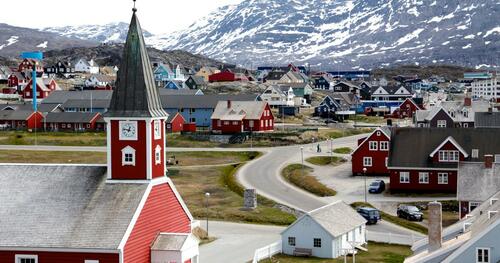
The Trump administration has mulled sending lump sum payments to Greenlanders of up to $100,000 in exchange for their vote to secede from Denmark and join the United States, Reuters reports, citing four sources familiar with the matter.
The exact dollar figure and logistics of any payments are unclear, however US officials, including White House aides, have floated payments ranging from $10,000 to $100,000 per person to residents of the overseas territory of Denmark with a population of 57,000 people – despite Copenhagen’s insistence that Greenland is not for sale. The move would cost at most $5.7 billion – about what the US sends Israel and Egypt on an annual basis.
One of the sources familiar with White House deliberations said the internal discussions regarding lump sum payments were not necessarily new. However, that person said, they had gotten more serious in recent days, and aides were entertaining higher values, with a $100,000-per-person payment – which would result in a total payment of almost $6 billion – a real possibility.
Many details of any potential payments were unclear, such as when and how they would be doled out if the Trump administration pursued that route or what exactly would be expected of the Greenlanders in exchange. The White House has said military intervention is possible, though officials have also said the U.S. prefers buying the island or otherwise acquiring it through diplomatic means. -Reuters
The proposed payments are one of several plans under discussion by the White House for acquiring Greenland – including the use of the US military – to take control of the island whose own population has repeatedly debated its own independence and economic dependence on Denmark.
“Enough is enough … No more fantasies about annexation,” said Greenland’s PM Jens-Frederik Neilsen in a Sunday Facebook post after US President Donald Trump repeated his intention to acquire the island during interviews with reporters.
European leaders have responded to Trump’s comments with disdain. On Tuesday, France, Germany, Italy, Poland, Spain, Britain and Denmark issued a joint statement declaring that only Greenland and Denmark can decide what happens.
Trump has given several reasons for the need to acquire Greenland – including that it is rich in minerals needed for military applications, and that the Western Hemisphere needs to be under the geopolitical influence of Washington.
“We need Greenland from the standpoint of national security, and Denmark isn’t going to be able to do it,” Trump told reporters on Air Force One on Sunday, adding “It’s so strategic.”
One Reuters source said that White House aides were eager to carry over the momentum from the Maduro operation – in which US forces captured the Venezuelan leader and his wife over the weekend.
Another option under discussion is trying to enter into a type of agreement with the island called a Compact of Free Association (COFA) – which have only ever been extended to small island nations including Micronesia, the Marshall Islands and Palau – in which the US government will provide many essential services such as mail delivery and military protection in exchange for the ability to operate freely in COFA countries and trade with the US largely duty free.
To do this, Greenland would likely need to separate from Denmark.
Tyler Durden
Fri, 01/09/2026 – 05:45
https://www.zerohedge.com/geopolitical/white-house-mulls-payments-100000-greenlander-join-us
Today in Chicago History: ‘McCaskey, you’re a bum!’ The coin flip that cost the Bears Terry Bradshaw.
Here’s a look back at what happened in the Chicago area on Jan. 9, according to the Tribune’s archives.
Is an important event missing from this date? Email us.
Front page flashback: Jan. 10, 2009
The Illinois House voted 114-1 to impeach Gov. Rod Blagojevich on Jan. 9, 2009. (Chicago Tribune)
In a historic display of anger and frustration, the Illinois House voted 114-1 to impeach Gov. Rod Blagojevich and send him to trial in the Senate with the aim of removing the state’s 40th chief executive from public office forever.
Weather records (from the National Weather Service, Chicago)
High temperature: 60 degrees (1880)
Low temperature: Minus 20 degrees (1875)
Precipitation: 0.93 inches (2024)
Snowfall: 6.8 inches (1977)
The Chicago Bears lost a coin flip on Jan. 9, 1970, to the Pittsburgh Steelers for the No. 1 pick in the 1970 NFL draft. (Chicago Tribune)
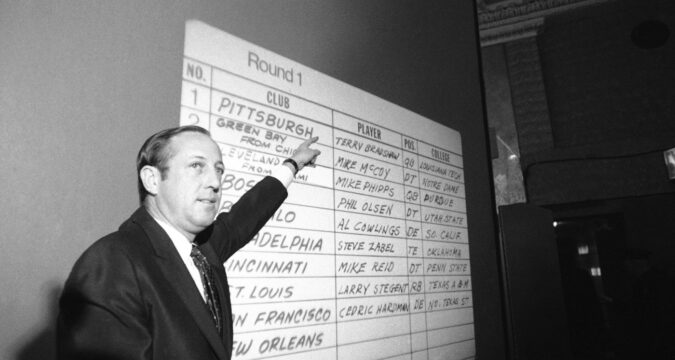
1970: After a 1-13 season in 1969, the Chicago Bears tied the Pittsburgh Steelers for the worst record in the NFL. To settle who would get first pick in the next draft, NFL Commissioner Pete Rozelle conducted a coin toss ceremony in a posh New Orleans hotel ballroom before Super Bowl IV.
“Heads,” Bears representative Ed McCaskey said as Rozelle’s shiny 1921 silver dollar bounced on a cloth-covered table and came up tails. (George Halas was hospitalized following gallbladder removal surgery.)
“McCaskey, you’re a bum!” former Chicago sportswriter Jack Griffin hollered from the back of the room to Bears owner George Halas’ son-in-law. “You couldn’t even win a coin flip!”
Pittsburgh Steelers’ No. 1 draft choice Terry Bradshaw, right, poses with Steelers coach Chuck Noll, center, and his father, William M. Bradshaw, left, in Pittsburgh on Feb. 13, 1970. (Harry Cabluck/AP)
The Steelers used the No. 1 pick to draft quarterback Terry Bradshaw, who led owner Art Rooney’s team to eight American Football Conference Central Division titles and four Super Bowl titles in 14 years.
The Bears traded away their first-round pick to the Green Bay Packers in exchange for three players and the first pick in the second round to the Dallas Cowboys for two players.
Police suspected ‘Bearded bandit’ Jeffrey Erickson robbed a Wilmette bank on Jan. 9, 1990. (Chicago Tribune)
1990: First Nationwide Bank in Wilmette was robbed by a gunman wearing a fake beard. Months later, authorities said they believed the bandit was Jeffrey Erickson, a 33-year-old former police trainee. The robbery was believed to be one of eight Chicago-area bank heists pulled by Erickson in a 23-month crime spree that netted nearly $180,000.
In 1991, federal authorities arrested him in Schaumburg. Erickson’s wife and suspected accomplice fled and after a dramatic 11-mile car chase and shootout with police, was found fatally shot inside a van.
Erickson died in 1992 while trying to escape from the Dirksen Federal Building.
Nickel, a green sea turtle rescued near Goodland, Florida, swims the waters of the Shedd Aquarium’s Caribbean Reef exhibit in 2003. (Chris Walker/Chicago Tribune)
2003: Hogfish, clown tang and emperor angelfish were among 300 new residents that made their debut inside the Shedd Aquarium’s $47 million Wild Reef exhibit. Thirty sharks were added, too, before the exhibit opened to the public in April 2003.
Want more vintage Chicago?
Subscribe to the free Vintage Chicago Tribune newsletter, join our Chicagoland history Facebook group, stay current with Today in Chicago History and follow us on Instagram for more from Chicago’s past.
Have an idea for Vintage Chicago Tribune? Share it with Kori Rumore and Marianne Mather at krumore@chicagotribune.com and mmather@chicagotribune.com
https://www.chicagotribune.com/2026/01/09/january-9-chicago-history/