
Category: News
Kenosha, hit hard by factory shutdowns, is reinventing itself. But questions of affordability loom large.
If an ambitious redevelopment plan takes hold, investment totaling hundreds of millions of dollars could soon pour into Kenosha, potentially transforming its economy and skyline five years after the police shooting of Jacob Blake attracted worldwide attention to the small lakefront city in Wisconsin.
The city replaced a damaged strip mall with an affordably priced apartment complex soon after the 2020 civil unrest that followed the Blake shooting. But that was just one step in a decadeslong effort to revitalize what had been a Rust Belt city hit by factory shutdowns.
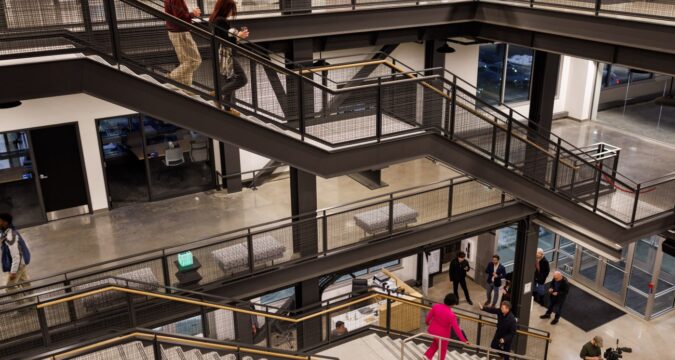
Kenosha breathed new life into once-empty manufacturing sites, recently breaking ground on high-end residential developments near the city’s harbor, part of a new, walkable downtown meant to attract thousands of residents. A high-tech hub for small manufacturers, other local businesses and entrepreneurs has also begun rising just west of downtown.
“We’ve reinvented ourselves a number of times,” said John Antaramian, who recently retired after serving as mayor for nearly 25 years. “We need more density downtown if Kenosha is to grow and thrive.”
Residents of this diverse, multiracial city of 100,000 about 65 miles north of Chicago said Kenosha should be known for much more than the events of 2020. It was one of the Midwest’s leading centers for automobile manufacturing until Chrysler abandoned its massive downtown plants starting in the 1980s, and today its picturesque harbor, beaches and many mom-and-pop stores draw thousands of summertime visitors.
Most residents also said they hope Antaramian’s vision comes true, with sparkling new apartments and public plazas filling a new downtown while high-paying jobs return in big numbers.
“I have voted for these projects because we have an opportunity to do development in the city’s center,” said Ald. Anthony Kennedy, 10th, one of three Black City Council members. “They are the best options we have.”
But the city’s latest reinvention still worries Kennedy and other residents. It’s tough now to afford housing and food, they said. And although the development blueprints look great, hundreds of new, expensive apartments and amenities could remake downtown into a place for the tourists and the affluent, pricing out struggling Kenoshans and leaving behind those who suffered most from the civil unrest.
“I already can’t afford Kenosha, I live paycheck to paycheck like many Americans,” said Jami Jastrom, a 41-year-old hair stylist at Kenosha’s Regimen Barber Collective who lives in an apartment in the Uptown neighborhood, near where the worst violence happened in 2020. “I feel like they came through and cleaned up, but affordable housing is still a crisis, there’s no grocery, you have to go Walmart or Target and they are so far away. You can have big dreams and plans, but how do you achieve all that? We all still have to pay our bills.”
Hair stylist Jami Jastrom cuts Naoa Dogo’s hair at the Regimen Barber Collective in Kenosha, Wisconsin, on Jan. 8, 2026. Jastrom lives downtown where a majority of the civil unrest in 2020 took place and has considered leaving for a larger city where rent is easier to afford. (Armando L. Sanchez/Chicago Tribune)
Antaramian said it’s essential to transform downtown into a walkable community, and include many high-end apartments. A walkable downtown will be a mecca for young people sought after by employers, create more jobs and attract retailers, potentially including grocery stores. What he called “workforce housing,” meaning units affordable to those making 60% of area median income, will continue to be developed as the city economy grows.
“I think it’s important that when we do development that there’s a balance, but we do need high-end (apartments) because that’s going to help us with our tax base.”
Wake-up call
Concern about inequities in Kenosha became especially pronounced after the city had its brief time in the spotlight during the summer of George Floyd protests, and a wave of community activism followed, said Alvin Owens, owner of Regimen, who opened his barbershop on 52nd Street the day Blake was shot in August 2020.
Several days of civil disorder followed as protesters surged into Uptown and toward the lakefront, and on one of those nights, Kyle Rittenhouse, a then-17-year-old Illinois resident, shot and killed two protesters and seriously wounded another.
There wasn’t much permanent property damage, but a commercial strip and other businesses near the intersection of 60th Street and 22nd Avenue in Uptown were set on fire and boarded up. Owens turned his shop into a community gathering space, a mini-townhall for everyone.
“It was a real wake-up call, and many discussions happened at the barbershop,” Owens said. “All eyes were on Uptown, and the community jumped in to support us.”
Kenosha is now quiet, but the shop still plays that role, its walls usually covered with flyers announcing meetings, training opportunities or resources for young people considering college.
Owens said he wants downtown and the harbor district redeveloped. And he appreciates that the city completed in late 2023 Uptown Lofts, a 71-unit workforce housing development with a children’s library on the ground floor, on the site of the damaged commercial strip, before launching the market-rate units now under construction near the harbor. But it may not be enough, he said.
“The children’s library is great, and our downtown is deserving of its accolades, but the numbers don’t lie, rent keeps going up, and a lot of our local businesses are gone and never reopened,” Owens said. “My vision for Kenosha is similar to everybody else, it has to grow, but it has to grow for everybody.”
Alvin Owens at Regimen Barber Collective on Dec. 10, 2025 in Kenosha. The barber collective functions as both a business and a community support center where Owens has tried to help much of the Uptown community have a voice in the redevelopment of the area. (Armando L. Sanchez/Chicago Tribune)
In the neighborhood around Uptown Lofts, 43% of the population is Hispanic or Latino, 35% are white and 16% are Black, according to city planning documents. The median household income is about $27,000, far below the $64,000 for Kenosha as a whole.
Kenosha’s plan to develop a walkable community isn’t unusual, said Reagan Pratt, director of The Real Estate Center at DePaul University.
“Kenosha is one of about 50 places in the Midwest trying to do something like this,” he said. “It’s not all that different from what the Bears say they want to do in Arlington Heights, or (developer) Sterling Bay planned to do with Lincoln Yards. It’s wickedly difficult to pull off and people are always trying to figure out what’s the secret sauce and how do we make this successful? Kenosha is an interesting case, and I hope it works.”
The exterior of the Kenosha Uptown Lofts at 6204 22nd Avenue in Kenosha. Kenosha Uptown Lofts is a 71-unit workforce housing development that was completed in late 2023. (Armando L. Sanchez/Chicago Tribune)
The damage from the 2020 events wasn’t even Kenosha’s biggest challenge.
The city was for generations a huge automobile manufacturing center, but in 1988 Chrysler shuttered its plant, formerly run by American Motors Corp., that sat on the harbor in the heart of downtown, killing off thousands of jobs, Antaramian said. It shut down the Kenosha Engine Plant just west of downtown in 2010. Other large manufacturers, including American Brass, also shut their doors.
“When I first became mayor in the 1990s there were only three stores left downtown,” he said. “That’s when the harbor was a barren field all fenced off.”
Antaramian, who was mayor from 1992 to 2008 before retiring and then winning reelection in 2016, began transforming the harbor in the 1990s. Once lined with smokestacks and filled with cargo ships, it became a residential and tourist hub. The city planted new lakefront museums, including a Civil War museum, and launched the construction of hundreds of market-rate townhomes on the former Chrysler site. Several affordable properties were also created, including the 60-unit 5th Avenue Lofts and Residences at Library Park, which provides affordable and market-rate units in a reconstructed historic YMCA building.
“Everything we have done in the past has had a mixed-income component,” Antaramian said.
The city also annexed thousands of acres of farmland to the west, now home to many small manufacturers, distribution warehouses and suburban-style homes. When Antaramian returned to office in 2016, he was ready to help launch the next phase in Kenosha’s transformation.
Kenosha’s City Council approved in 2023 a far-reaching plan to fill in the rest of the former Chrysler land near the harbor with about 1,000 apartments, some condos, a new Veterans Memorial Park, a market hall, public plazas, a new city hall and potentially an office tower.
The Kenosha Innovation Neighborhood aims to serve as a hub for entrepreneurs and startups, sits on the former grounds of Chrysler factories, shuttered in 1988. (Armando L. Sanchez/Chicago Tribune)
Former Kenosha Mayor John Antaramian stands inside the Kenosha Innovation Neighborhood’s center on Dec. 10, 2025. The concept for Kenosha of combining downtown development, affordable housing and KIN, which aims to serve as a hub for entrepreneurs and startups, was Antaramian’s vision. (Armando L. Sanchez/Chicago Tribune)
Another potential crown jewel for Kenosha is the plan to replace the 107-acre Chrysler plot west of downtown with the Kenosha Innovation Neighborhood, including a business incubator for local entrepreneurs. Plans for the so-called KIN neighborhood, approved in 2022, included bike paths, parks, community gathering spaces, restaurants, residences, retail and a new home for LakeView Technology Academy, a public STEM high school.
“The two things we need to keep young people in Kenosha are new employers and a great quality of life,” and the new harbor district and the KIN neighborhood will provide both, Antaramian said. “Wisconsin hasn’t been as strong on entrepreneurship as it should be, and with a facility like KIN we’re trying to create a community where young people are interacting.”
The high school opened early this year, and in October, the next KIN building, a 64,000-square-foot, $25 million business incubator opened its doors. It’s about 25% occupied, and hosts several venture capital firms and startups, a biotech firm and several universities including the University of Wisconsin-Parkside and Carthage College, said KIN President Kelly Armstrong.
The state kicked in $14 million to support the center, said Sam Rikkers, chief operating officer of the Wisconsin Economic Development Corp.
“It makes (Kenosha) a more attractive place for large employers to take root,” he said. “It’s super exciting to see old manufacturing supplanted by new manufacturers.”
Anthony Davis, president of the Kenosha NAACP and a retired autoworker who spent 37 years with the city’s main plant, said the next generation will need KIN and its educational institutions to get essential training.
“You need an education; you can’t find jobs in this economy straight out of high school,” he said. “It’s going to make things better, but it will be different, and I still don’t think we will have the high-paying jobs like we had at Chrysler and American Brass.”
The Karrick, a luxury apartment building developed by Milwaukee-based Cobalt Partners, is under construction on Dec. 10, 2025, in Kenosha. (Armando L. Sanchez/Chicago Tribune)
The city first chose a developer for the harborside mixed-use district soon after the 2020 civil unrest. That developer’s funding plan fell through, but Milwaukee-based developer Cobalt Partners was eager to step in and take over, said Scott Yauck, the company’s president. He’s confident Kenosha’s new harbor district will attract thousands of new residents who want to live near the lake, and best of all, his company has a huge expanse of land available.
“You’ve got this void of nine blocks right in the center of downtown, and I can’t think of another city like that,” he said. “So our vision is if you bring in a critical mass of residents and stitch together the two halves of downtown, that will create a lot of vibrancy.”
Cobalt will complete in January the first building, a 158-unit apartment tower called The Karrick. All units are market-rate and listed for between $1,500 and $2,729 a month. The company will likely launch the second building, with about 210 units, by the second quarter of 2026. Yauck said the full harbor build-out could take 10 years, cost more than $600 million and create around 1,100 units.
Jolt of energy
Michael Kopper, CEO of Centrisys, a Kenosha-based manufacturer of high-speed centrifuges, said the city’s new downtown could eventually help recruit new workers. Kopper started his company in the 1980s out of a garage in Libertyville, Illinois, and moved to Kenosha in 1999 when it had 15 employees. It now employs 170 and occupies four buildings out west near the I-94 expressway.
“Some of our employees have little farms way out in the countryside, but a new downtown will get different kinds of people to move to Kenosha,” Kopper said. “We need young people to move here and most prefer living in apartments. We’re only 3 or 4 miles from downtown, so they could even ride their bikes here.”
Kevin Ervin, co-owner of the nearly century-old Frank’s Diner in downtown Kenosha, said the downtown area has improved a great deal since he and his wife, Julie Rittmiller, bought Frank’s 15 years ago. Big department store brands had left, but over time locally owned shops occupied most retail spaces, he said, and a built-out harbor district should bring an additional jolt of energy.
“Everything kind of flipped when the department stores moved to (suburban) malls, and overall there are not a lot of vacancies downtown,” Ervin said. “What we really need now is a grocery, but you can’t get a great store until you have the heads, and new downtown development will help with that.”
A customer named Lai, left, talks with Julie Rittmiller while ordering his food at Franks Diner on Jan. 8, 2026, in Kenosha. The restaurant originally opened in 1926 and is now owned by Kevin Ervin and Rittmiller. (Armando L. Sanchez/Chicago Tribune)
The exterior of Franks Diner in Kenosha. The restaurant, which first opened in 1926, is owned by Kevin Ervin and Julie Rittmiller. Ervin said the downtown area has improved a great deal since he and his wife, Rittmiller, bought Frank’s 15 years ago.(Armando L. Sanchez/Chicago Tribune)
Ervin also said one of his employees lives downtown in 5th Avenue Lofts.
“Contrary to a lot of naysayers, it’s been a well-run property, and I’m hopeful the Uptown Lofts will serve the same purpose,” he said.
Jastrom said even the available affordable housing like Uptown Lofts, where two-bedroom apartments were advertised for about $1,200 per month, may not be enough to keep her in Kenosha.
“I can’t afford it,” she said. “When I lived in bigger cities, there were simply many more opportunities and money.”
Ald. Kennedy, who works as a driver and receives a small stipend as a City Council member, said he’s also feeling a cost-of-living squeeze.
“I’m getting priced out,” he said. “I’ve always said we’re a blue-collar, shot-and-beer kind of town, but we’re becoming more of a white wine and spritzer town.”
Two-bedroom apartments in Kenosha typically rent for between $1,500 and $1,900, and that can be very difficult for schoolteachers to afford, he added. And people with lower incomes may feel an even greater pinch if new neighborhoods like the KIN further raise housing prices.
“That’s something I don’t want to see in Kenosha, but it’s hard to prevent the market from doing what it wants to do,” he said. “That’s why we as municipal leaders need to step in and do more. Overall, I like where Kenosha is going, but there are things we need to be concerned about.”
Kenosha Mayor David Bogdala, elected in 2024 to succeed Antaramian, said he’s committed to carrying forward his predecessor’s plans for both the harbor district and KIN, including the creation of more workforce housing, and the Uptown neighborhood should get its long-awaited grocery store in coming months when a local business owner opens a grocery in Uptown Lofts.
“We should be looking at higher-end (housing) and affordable and everything in between,” he said.
Owens said with so much development going forward, Kenosha may be getting too comfortable. He doesn’t want the city to forget about poverty or affordability. And since much of the organizing energy that surged through Uptown following 2020 has died down a bit, it might be time to bring it back.
“Uptown has gotten quiet,” he said. “I would be interested in gathering together some Uptown citizens to see what they have to say.”
https://www.chicagotribune.com/2026/01/12/kenosha-redevelopment/
Letters: A federal agent killed a woman in Minnesota. The reign of terror on America is a disgrace.
For months, I have warned my Senate colleagues that the outrages of President Donald Trump’s Operation Midway Blitz in Chicago were a precursor of what their states would experience when his mass deportation raids by federal immigration agents spread across the nation.
Last week, we saw this in Minneapolis.
The video of the shooting of Renee Nicole Good is horrific and contradicts the self-defense narrative that the U.S. Department of Homeland Security has attempted to spin. We need a full investigation into the shootings by federal immigration agents and officers in Minneapolis, Illinois and elsewhere. And the federal government must cooperate with state and local officials on these investigations to ensure there is transparency, accountability and justice.
But we must prepare for more. DHS Secretary Kristi Noem is dramatically increasing U.S. Immigration and Customs Enforcement forces with insufficiently trained, masked officers who are heavily subsidized (a maximum $50,000 sign-on bonus) and have virtually no regard for due process.
And incidentally: What of Trump’s promise to use ICE to rid America of “the worst of the worst” — the rapists, murderers and terrorists?
In one instance, from a list of 614 immigrants arrested in the Chicago area that was submitted to a federal court, the administration identified significant criminal histories for just 16 of the detainees. So after record-breaking spending and assaults on our Constitution, that official report could claim fewer than 3% of those immigrants detained had any criminal record.
This reign of terror on America is disgraceful. Noem has avoided testifying under oath before the Senate Judiciary Committee for months. What happened in Minneapolis last week was an unacceptable tragedy. She must immediately testify before the Judiciary Committee and be held accountable.
— U.S. Sen. Dick Durbin, D-Illinois
We deserve answers
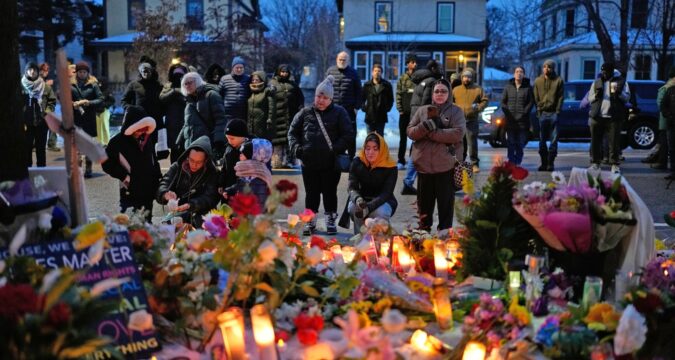
The killing of Renee Nicole Good, an unarmed 37-year-old U.S. citizen and mother fatally shot by an Immigration and Customs Enforcement agent on Jan. 7 in Minneapolis, is a clarion call for transparency and accountability. While local leaders, eyewitnesses and video evidence sharply contradict the Department of Homeland Security’s claim of self-defense, one sobering truth remains: An American is dead at the hands of her own government, and the public deserves answers.
This is not an isolated incident. In September, Silverio Villegas-González, a 38-year-old father, was killed by an ICE officer during a vehicle stop in the Chicago area. According to The Marshall Project, federal officers fired on at least nine people in their vehicles over a four-month period, evidence of a disturbing pattern.
Across the country, communities are experiencing an escalation of militarized immigration enforcement that spreads fear, separates families and violates basic constitutional norms. Armed, masked officials are making arrests without clear identification or due process, often near schools, churches and community spaces. The indiscriminate use of force, including tear gas, has become dangerously normalized by our government.
We are living through a profound rupture in the American experience — one in which democratic norms erode, accountability weakens and immigrants are subjected to unprecedented violence. This moment is no longer about debating border security or the lawful detention of individuals who pose genuine danger, regardless of immigration status. It is about the unnecessary deployment of federally militarized personnel into civilian neighborhoods.
The courts have warned against treating dissent as disloyalty. The 7th U.S. Circuit Court of Appeals put it plainly: “Political opposition is not rebellion.” Americans must remain free to show up for one another and protest peacefully without being branded “terrorists” for exercising First Amendment rights.
We, the people, know from direct experience that immigrants, documented and undocumented, strengthen our communities. They are caregivers, educators, entrepreneurs and essential workers who weave our social fabric and drive the economic vitality of our nation.
We call on this administration to immediately end overly aggressive deportation practices and restore constitutional guardrails in immigration enforcement, including clear identification and accountability for agents, strict limits on the use of force with independent review of all deaths and serious injuries, protection for sensitive community spaces and transparent public reporting with meaningful due process.
We are falling short of the promise of America: All people are created equal.
Enough is enough.
— Raul I. Raymundo, CEO and Co-founder, The Resurrection Project
ICE’s failed mission
In Minneapolis, as an American citizen was attempting to leave the site of an Immigration and Customs Enforcement operation, a masked ICE agent shot her three times and killed this mother of three. She was leaving the area, not attempting to harm the agents.
Should she have stopped? Likely yes, but with the chaos ICE sows, leaving seemed to her to be a better idea. In any case, she was not violent and certainly did not deserve to be fatally shot at close range.
ICE has not improved our safety, has had minimal success at arresting and deporting actual murderers and rapists (which, as I recall, was the stated priority), has sown chaos and distrust, and has failed in its stated mission of improving public safety.
And now, the FBI refuses to cooperate with the Minnesota Bureau of Criminal Apprehension on the grounds that the federal government is the supreme agency. That may be, but federal officers are not exempt from our laws and must be held accountable.
My understanding is that cold-blooded murder is illegal for agents and citizens alike, regardless of their employer. I encourage the Minnesota state government to pursue this case and prosecute.
I am a Republican who believes in the Constitution.
— Robert B. Hamilton, Wauconda
Risk to the innocent
As a mother of three and not a professional safety officer, Renee Nicole Good suddenly found herself in a chaotic situation. Untrained people can react impulsively. Armed officers such as Immigration and Customs Enforcement agents have a different perspective, knowing they can be targeted. Alertness can mean the difference between harm and safe conduct. Officers cannot be expected to be mind readers.
Politicians such as Gov. JB Pritzker who advocate for confrontations bear the responsibility for what happened in Minneapolis.
The message here is not a condemnation of either Good or the officer. But rather that politicians cannot proselytize for the confrontations. The risk to the innocent is too great.
— Jim Halas, Norridge
‘Absolute immunity’
Thank you very much for the ongoing and deep reporting about the federal immigration operations in Chicago. A Jan. 9 editorial (“A needless death in Minneapolis”) makes the important point that agents need to de-escalate confrontations wherever possible. That does not seem to be happening.
On Thursday, Vice President JD Vance claimed that the officer who killed Renee Nicole Good in Minneapolis is “protected by absolute immunity.” This is false. More important, it is very dangerous. The vice president of the United States is telling all federal law enforcement officers that there are no boundaries to their conduct while on duty.
If these officers think anything goes, we will see more violence from them.
— Barbara Hill, Palatine
Trump’s narrative
So according to our president, Renee Nicole Good, who was killed protesting the heavy-handed tactics of Immigration and Customs Enforcement agents, was a professional agitator. She was a radical leftist zealot who committed domestic terrorism. On the other hand, Donald Trump says that Ashli Babbitt, who was protesting in support of Trump’s false claims about the election of 2020, who battled U.S. Capitol police and climbed through a shattered window to get into the Capitol to prevent Congress from fulfilling its democratic duty, is a hero. Not only a hero, but her family is entitled to compensation from the government for her death.
Do we need any more proof that Trump is either a would-be dictator who wants to stifle any actions he disagrees with and rewrite history or a person who is so divorced from reality that he lives in his own fantasy view of the world?
— Peter Felitti, Chicago
Repetition of lies
Once again, we are being confronted on a daily basis with the challenge of having to determine what is true, what is real and what is an illusion of truth. The misrepresentation of the acts of Jan 6, 2021, and the recent death of Renee Nicole Goode in Minneapolis highlight the illusion of truth and its perils to society.
An illusion of truth is built by repeating a lie often enough that the lie takes on the patina of truth. Many politicians seem to grasp this principle quickly. It was used with extreme effectiveness by Adolf Hitler during the 1930s and continued until his death by suicide in 1945. Anyone who has read about Hitler and the effect of his lies has an idea of how the politics of lying can lead to horrific outcomes.
Today, we are again confronted with lies that are repeated frequently by members of President Donald Trump’s administration and Trump himself.
Was the Jan. 6, 2021, insurrection, riot and attack on U.S. democracy and the electoral process a peaceful walk in the park? Or did it actually lead to the deaths of U.S. Capitol Police who were defending the Constitution and duly elected members of Congress? It is a grave mistake to confuse the illusion of truth with court-recorded testimony from experts and firsthand witnesses.
Have Immigration and Customs Enforcement and Border Patrol agents engaged in activities that have resulted in the injury, attack, arrest, harassment and fatalities of U.S. citizens and legal immigrants in Illinois, Minnesota and Oregon? The answer lies in the facts of firsthand witnesses, video evidence, gathered documentation from experts and legal court proceedings.
Inflammatory statements made by Trump administration officials regarding recent acts involving ICE and Border Patrol agents before evidence has been gathered and fully evaluated have resulted in misinformation and the defamation of U.S. citizens who have suffered at the hands of federal agents.
Belief in a frequently repeated lie is risky business. The illusion of truth may sound good. It might make a great sound bite. It might be easy to share online. But it presents a risk and a danger to our Constitution and our democratic republic.
Truth matters. Now more than ever.
— Patricia Kluzik Stauch, Elgin
Madness must end
Last week’s senseless shooting death in Minneapolis is the latest, but sadly, probably not the last, that will be perpetrated by the tin soldier brigades deployed across the county by Donald Trump.
At least 30 incidents in which federal agents shot someone or held them at gunpoint since Trump launched his immigration crackdown have been documented by The Trace, an organization that tracks gun violence in America. Four people have been killed, and another seven have been injured.
The dead include last week’s victim, Renee Nicole Good, a law-abiding U.S. citizen. She was shot and killed soon after dropping off her 6-year-old son at school. These circumstances mirror the death of Silverio Villegas González, fatally shot by federal immigration agents during a traffic stop in Franklin Park on Sept. 12 after he dropped his daughter off at school.
Within hours of Good’s death, Trump, Homeland Secretary Kristi Noem and others concluded the shooting was justified because federal agents were in fear of their lives. The victim was labeled a domestic terrorist, a radical and violent left-wing ideologue. Never mind her social media accounts, where she described herself as a “poet and writer and wife and mom.”
The day after the shooting, Minnesota state law enforcement learned they would not have access to evidence from the shooting. The FBI alone will conduct an investigation.
In 1970, following the murders of four students on the Kent State University campus, Neil Young asked: “What if you knew her and found her dead on the ground? How can you run when you know?” In 2026, how can we run, look away and ignore the reality that the Trump administration has brought violence, lawlessness and killings to American communities?
This madness must end.
— Steven M. Ostrowski, Lombard
Submit a letter, of no more than 400 words, to the editor here or email letters@chicagotribune.com.
https://www.chicagotribune.com/2026/01/12/letters-011226-renee-good-ice-shooting/
Documenting the immigration crackdown, from Chicago to Minneapolis
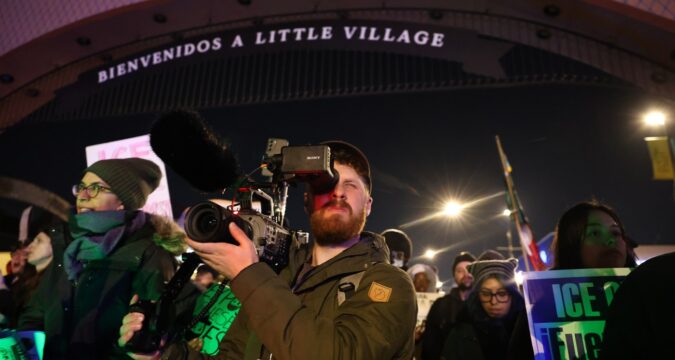
Hours after a woman was shot and killed by a federal immigration agent in Minnesota, 400 miles away in Chicago’s Little Village, Andrew Freer moved through a crowd of community members huddled quietly around a mural of the Virgin Mary, a small video camera in hand.
Through the stillness, he weaved in and around the group. He didn’t ask questions, didn’t pause anywhere too long, just swept the scene, capturing footage for a story he’d help tell in due time.
Freer is part of a small band of filmmakers from across the Chicago area on a mission to protect constitutional rights through on-the-ground, documentary-style videos as President Donald Trump’s aggressive immigration crackdown pushes on — with its propensity, in experts’ estimation, for needless safety risks and often an approach of acting first and justifying later.
“We are trying to be truth-tellers,” Freer said.
The filmmakers, who call themselves Go Fourth Media, will be spending the better part of this week in Minneapolis, a trip they had already planned before Wednesday’s shooting.
With their footage, they hope to confront misinformation and give viewers a personal sense of enforcement activity’s impact, a goal only exacerbated by raids’ continued escalation.
Freer, speaking with the Tribune before leaving, said he doesn’t yet know what kind of stories they’ll find but that they’ll be capturing everything they can — as they’ve been doing since the immigration crackdown hit home — to ensure there’s a tangible record of the status quo changing around them.
“They’re just going to keep normalizing it, keep pushing until we just all accept that these rights are being taken from us,” Freer said. “Until we can barely recognize the Constitution anymore.”
A day after the Minneapolis shooting, federal immigration officers shot and wounded two people outside a hospital in Portland, Oregon. The violence, bringing echoes of the two federal agent shootings in Chicago during Operation Midway Blitz, has spurred vigils, protests and calls to keep resisting across the city and its suburbs.
As the Department of Homeland Security announced it was sending more than 2,000 federal agents and officers to Minnesota in what the agency has touted will be its “largest operation ever,” Chicago responded. Like Go Fourth Media, other advocates are traveling north to survey immigration agents, including a pair of West Chicago brothers turned seasoned patrollers and a small group of suburban volunteers who, after hearing of the newly launched operation’s intensity, flocked to provide reinforcements.
Spurred to act
Freer, a longtime Chicago-area resident, has been in filmmaking for nearly two decades since taking an interest in the field while studying international politics at west suburban Wheaton College. The 42-year-old has spent most of his career doing commercial projects but has also done sporadic documentary work.
When the raids started in early September, Freer was concerned, he recalled. But it wasn’t until his Oak Park neighbor Scott Sakiyama was detained at gunpoint outside of his child’s elementary school a month and a half into the blitz that Freer was driven to act. Sakiyama, who was arrested by federal immigration officers after allegedly cutting off and impeding an agent, told the Tribune at the time that two agents had drawn guns on him during the confrontation, a moment he could only describe as an out-of-body experience.
That night, Freer was so disturbed he couldn’t sleep as he lay awake wondering, “What can I do?” By 5 a.m. the next morning, he had a plan.
“I thought, with my background in filmmaking, it’d be a good idea to start documenting what is happening,” he said.
Andrew Freer of Go Fourth Media uses a small video camera to document a protest against ICE on 26th Street in Chicago’s Little Village neighborhood in response to the shooting death of motorist Renee Nicole Good by a federal immigration agent in Minneapolis on Jan. 7, 2026. (Chris Sweda/Chicago Tribune)
But he knew he couldn’t do it alone. Through connections built from years in the industry, Freer soon created a network of camera operators, editors, sound designers and even animators from across the Chicago area to bring the venture to fruition.
Since October, Freer and his team have fanned out to capture the consequences of the blitz. With the footage, they’ve been crafting documentary shorts, each focused on a different through line of the crackdown. So far, three videos have been released on YouTube, with more on the way in weeks to come. Of those posted online, one short focuses on Sakiyama’s arrest while another follows Freer as he tracked immigration officers on Halloween, a day that saw two U.S. citizens arrested and an agent repeatedly point a handgun at protesters.
While each video stands alone, the overarching aim is to draw attention to examples, the filmmakers reckon, of how the deportation campaign is violating constitutional rights. They’re especially interested in examining the Fourth Amendment, which protects against unreasonable search and seizure.
“People do not feel secure in their persons right now,” Freer said.
As for their audience, Go Fourth hopes to fill a space between traditional media and citizen journalists, and reach those who “aren’t traditionally our allies,” Freer said.
“I know we’re not going to change everybody’s mind,” Freer said. “But I do think there’s a segment of America who can be changed if they are educated as to what’s happening.”
Their strategy: connection. While capturing flashpoints in real time, they’re also seeking out and sitting down with those affected by operations firsthand.
For their interviews, they use a device called the Interrotron, a mirrored system that gives subjects the illusion of speaking directly to filmmakers while maintaining eye contact with the camera. The idea is to remove as many barriers between people telling their stories, and the audience listening, as possible.
“There’s something more meaningful … and more immediate about it,” Go Fourth filmmaker Geno DiMaria said.
DiMaria recalled interviewing Eva Gurtovaia, a woman whose husband was detained by immigration agents a day before she became a U.S. citizen, at her Uptown home. He remembered the pictures of Gurtovaia and her husband on the fridge and the cats they owned together roving their apartment.
“It’s now just her,” he said.
When it’s direct, DiMaria says, it’s harder to dismiss.
That’s why Go Fourth is going to Minneapolis, to come face-to-face with activity there. Once they do, the footage isn’t something they’ll put out immediately, instead planning to take their time contextualizing firsthand accounts with b-roll of the new operation — and scenes from home.
In Little Village last Wednesday night, more than 100 people gathered to decry an ICE agent’s fatal shooting of 37-year-old Renee Good in Minneapolis. They carried signs that read “ICE kills” and “Observation is not a crime,” listening to speakers before marching more than a mile to the sound of whistles and chants.
Tracey Zupke walked at the back of the crowd. The 54-year-old Ukrainian Village resident said she needed to do something after a day spent feeling “absolutely sick” about the shooting. She wanted to connect with her community, she said, and hoped their solidarity sent a message to anyone watching.
“It’s important,” she said, “that people that all around the country and all around the world see the frustration that we’re suffering with here.”
To her left, DiMaria followed the crowd with his camera.
“Every part of it,” Freer said, “we’re trying to really craft in a thoughtful way.”
After news of the Minneapolis shooting broke, Freer said his daughter heard what had happened and that when he told her he’d soon be going to the city for work, she replied, “Don’t go, I’m scared for you.”
“But I told her, ‘We’re doing this to protect our community … to protect our country. I’m doing this to protect you,’” he said.
Across state lines
West Chicago teenage brothers Ben and Sam Luhmann spent much of the fall and winter on the front lines of the blitz, chasing federal immigration officers. They left for Minneapolis on Thursday night to help bolster local rapid response.
“There’s so many agents going right now that I just can’t imagine it not being overrun,” Ben, 17, told the Tribune over the phone as he drove he and his 16-year-old brother the six hours to Minnesota.
Brothers Sam and Ben Luhmann stand outside of the trailer of four landscapers were detained on Nov. 7, 2025, in St. Charles. (Stacey Wescott/Chicago Tribune)
They plan to patrol and pass on what they’ve learned about how to document legally and safely, Ben said. They also hope to keep matters de-escalated, especially after the killing of Good, which served as a reminder to the brothers that they’ve had their own confrontations with agents.
“If it would have gone the wrong way … (that) very much so could have been us,” Ben said. “That kind of left me feeling empty.”
They were out patrolling for ICE activity in Minneapolis on Friday morning.
At home in West Chicago, Ben and Sam’s mom, Audrey Luhmann, said she was nervous, but knowing that patrollers were “stretched to absolute capacity” through the blitz — and that was with a fraction of the agents DHS plan to send to Minnesota — they had to help.
Still, she wishes she was there. By Friday afternoon, she’d heard from Ben and Sam a few times. Hours into their patrols, they already couldn’t believe the sheer number of agents they saw, Audrey said.
“And that’s coming from people who are pretty seasoned,” she said. “They’ve never seen anything like this.”
To her, it feels like “this administration is testing what we will withstand, what we will tolerate, what we will submit to and frankly, that’s terrifying.”
Maria Elena, a volunteer with Wheaton’s Casa DuPage Workers Center who is on the patrol team Resistencia Comunitaria, was close behind Ben and Sam. She and about five other patrollers planned to go to Minnesota starting Friday, she said.
“We’re not letting them intimidate us,” she said.
There’s an element of attrition to the operations, DiMaria says. That’s why it’s important, he continued, to keep their cameras trained on the raids, wherever they go.
Go Fourth hopes to eventually track and document immigration enforcement across the country, if the group can build up the infrastructure to keep the effort going. To date, Freer and his team have been running the venture for free but are now actively fundraising so they can continue and expand their reach.
In the long term, though, they want to put themselves out of business.
“(I hope) this turns into ICE going away,” Freer said, “and people’s minds being changed.”
After protesters’ moment of silence in Little Village on Wednesday came a brief, final rally before demonstrators dispersed for the night. Go Fourth lingered to catch any last footage. Above the crowd, posters still bobbed.
“From Chicago to Minneapolis,” one read in black and white. “Stop ICE terror.”
DiMaria shared a look with Freer, then aimed his lens at the sign.
Editorial: Harvard’s president reminds academia it’s ‘not about the activism.’ Good for him.
Harvard University is home to The Harvard Crimson, the nation’s oldest continuously published daily college newspaper, and the fine student journalists there offer excellent coverage on a wide array of topics, beginning with their own campus leaders. That storied student paper published something last week that caught our eye, amplifying the university president’s comments on free speech on campus during a podcast interview.
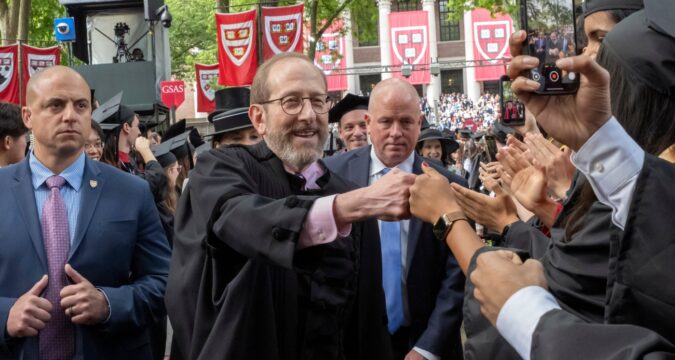
President Alan Garber appeared in December on the “Identity/Institute” podcast and made candid comments about Harvard’s drift away from objectivity and how to fix it.
“What we need to arm our students with is a set of facts and a set of analytic tools and cultivation of rigor in analyzing these issues. It is not about how to sling slogans or how to advance a particular political perspective,” he said, adding: “We’re not about the activism.”
This should be uncontroversial in academia.
We’ve admired for a while Garber’s commitment to promoting these principles in classroom debate, and pushing out bad practices that would stifle engagement in the kinds of lively conversations that foster true learning and offer young minds the opportunity to sharpen their arguments, see an issue from a different point of view and, in many circumstances, change their opinion. We feel the same way about our own University of Chicago, which has several thought leaders on this issue.
Harvard, of course, has had this reckoning forced upon itself, in many ways, which we’ve written about before. Deep divisions over the conflict in the Middle East threatened to tear the campus in two. Garber described the 2023-24 academic year as “disappointing and painful.”
Then, in 2025, the university faced intense external pressure as President Donald Trump’s administration froze billions in federal funding — an action a judge later ruled unconstitutional.
These are the fires that refined and defined Garber’s early tenure. We’d say he knows a thing or two about the struggle to protect free speech. That’s why his words are important — and welcome.
Of course, his critique also applies to campuses beyond his own. As many students at any number of universities across the U.S. know, there’s a real risk to speaking your mind, particularly if it doesn’t align with the accepted norms on hot-button issues. Especially in the classroom
Students reasonably fear that revealing an unpopular view could come at a cost, including, fairly or not, their grades. The result is an environment in which students are either silenced, indoctrinated or have their existing worldview reinforced, unchallenged.
“Think about it, if a professor in a classroom says, ‘This is what I believe about this issue’ … how many students would actually be willing to go toe to toe against a professor who’s expressed a firm view about a controversial issue?” Garber said.
As a result, students often actively reject contrary points of view. Stories of conservative speakers being shouted down or banned from campus altogether have become so commonplace they no longer make headlines.
That’s not the way we’re meant to learn. It’s also not the way institutions dedicated to education are meant to function.
During his 2025 commencement address, author and physician Abraham Verghese noted it was “a reflex of so-called strongmen to attack the places where truth and reason prevail.”
Harvard, an epitome of excellence in American higher education, has proved it can weather attacks from without. Now, it is weeding out pernicious problems within. We hope Garber’s message and commitment to truth and reason takes root far and wide.
Submit a letter, of no more than 400 words, to the editor here or email letters@chicagotribune.com.
https://www.chicagotribune.com/2026/01/12/garber-academia-free-speech-harvard-university/

Doctors: The Illinois windfall from legal marijuana has come at a price
In 2019, Illinois became the first state in the nation to legalize the commercial sale of recreational cannabis. Gov. JB Pritzker and lawmakers decided by themselves, promising that legalization would eliminate the black market, pose minimal public health risk and generate tax revenue.
Today, the only promise fulfilled is money, as Pritzker and the Democratic legislature exchanged public health for profits. Since recreational cannabis became legal, the state has realized hundreds of millions of dollars from taxes. This windfall and the attendant political benefits for the governor have come at public expense, as the dangers of marijuana become tragically apparent.
The money has rolled in — more than $2 billion in cannabis sales in 2024, a 2.5% increase from 2023, and $490 million in tax revenue in 2024. Meanwhile, an ominous trend has developed: 7.7% of Illinoisans ages 16 to 64 now have a likely cannabis use disorder, up from 6.5% in 2022, Illinois’ fifth “Annual Cannabis Report” said. An additional 11.9% meet the criteria for hazardous cannabis use. Before the adult use cannabis law took effect in 2020, fewer than 2% of adult Illinois residents met the same criteria, and cannabis use is now especially common in those with severe mental illness.
The profits also come from beyond Illinois borders. In Iowa, Wisconsin and Indiana, cannabis use is illegal, but out-of-state customers currently account for more than one-fifth of Illinois sales. This is also true of illicit cannabis; legalization has not eliminated that market as promised. Chicago is a hub and distribution point for Midwestern drug trafficking, with Chicago-based gangs dominating the regional retail market. In 2021, estimated illegal cannabis sales in Illinois reached $2.23 billion, far surpassing the $1.37 billion in legal sales. Illinois essentially realizes huge profits from both legal and illegal cannabis, while neighboring states must deal with the adverse health consequences.
Specifically, what are those adverse consequences the public was assured were minimal?
Approximately 10% of Illinois adults surveyed in 2024 reported cannabis-related problems requiring medical attention from medical providers or emergency rooms. A little more than 30% of cannabis users surveyed reported experiencing an adverse event. The most dramatic emergency room diagnosis was cannabinoid hyperemesis syndrome: severe, uncontrollable vomiting after chronic cannabis use. The incidence of this formerly rare syndrome has skyrocketed over the last five years with about 7% of past-year cannabis users reporting symptoms consistent with cannabinoid hyperemesis — more than 6,000 emergency room encounters. Cannabis-positive toxicology findings in fatal vehicle crashes continue to rise. In Illinois, 30.3% of tested drivers in fatal crashes tested positive for cannabis in 2023, the highest level among the numbers reported for neighboring Midwest states.
The marijuana movement is a national bipartisan debacle. President Donald Trump recently signed an order requiring the Drug Enforcement Administration to recategorize cannabis from Schedule I, the strictest enforcement category under the Controlled Substances Act, to Schedule III, reserved for substances with moderate to low potential for physical or psychological dependence. On a federal basis, cannabis still will be illegal for recreational use but approved for use in regulated medical settings. The banking and tax implications may make it easier for cannabis companies to sell their wares. The lobbying efforts and campaign contributions from the cannabis industry have finally paid off.
With the reclassification, more cannabis research will go forward, although a recent review in the Journal of the American Medical Association (JAMA) of 15 years of research concluded: “Evidence is insufficient for the use of cannabis or cannabinoids for most medical indications.” Even if future research identifies conditions in which cannabis is effective treatment, the medical benefits of marijuana have clearly been oversold and overpromoted in Illinois — to progressively fewer patients. In 2024, there were 56.3 million individual sales for cannabis in Illinois; 87% represented adult recreational use and only 13% medical use, even though Illinois has over 50 qualifying health conditions for medical cannabis. Compare that with 16 in Utah and 11 in California. In retrospect, medical marijuana was basically a camel’s nose in the tent to legalize recreational use.
The long march to marijuana legalization has been supported by a cynical propaganda campaign, designed to convince the public that marijuana is benign. Adam Goers, chair of the Coalition for Cannabis Scheduling Reform, recently said, “Cannabis has low abuse potential and proven medical use.” The DEA’s chief administrative law judge in the 1980s called marijuana “one of the safest therapeutically active substances known to man.” Both claims, like others by cannabis supporters, are being debunked.
But those claims ultimately succeeded — legalized marijuana has broad public support, and any serious attempt to roll back legalization will certainly fail, reminiscent of Prohibition. However, rather than blithely dismiss the consequences of legalization with eye-rolling contempt for the puritans, supporters should confront the adverse societal effects of cannabis — the pervasive urban stench, the traffic deaths and the pernicious effects on youth.
If Pritzker makes a presidential run, some reporter on the campaign trail should remind him of his promises for cannabis legalization and ask him what does it benefit a man if he gains the whole world and loses his soul.
Dr. Cory Franklin is a retired intensive care physician and the author of “The COVID Diaries 2020-2024: Anatomy of a Contagion as It Happened.” Dr. Jerrold B. Leikin is a medical toxicologist and adjunct clinical professor in the Division of Environmental and Occupational Health at the University of Illinois at Chicago. He formerly served on the Illinois Board of Health from 2016 to 2019.
Submit a letter, of no more than 400 words, to the editor here or email letters@chicagotribune.com.
https://www.chicagotribune.com/2026/01/12/opinion-illinois-legal-marijuana-health-dangers/

Editorial: The 2026 economy has promise, but here’s why you should not relax
After a year of whiplash, Americans enter 2026 with cautious optimism as professional forecasters expect the economy to grow by about 2% or more — not a boom, or a bust — and they predict relatively modest changes for inflation, unemployment and interest rates. Most Wall Street analysts say stocks will continue to rally, and many consumers are likely to receive substantial tax refunds, bolstering spending and investment.
Forecasting is never foolproof, but since the pandemic, professional forecasters have been mostly on target, if a little pessimistic. A Federal Reserve review deemed late 2024’s forecasts “quite accurate” for 2025.
Two cautions: Downturns after long expansions are rarely predicted, and even a steady 2026 is likely to produce sharp winners and losers. This is no time to relax. For investors and policymakers, now’s the time to prepare for disappointments as well as thrills.
The biggest thrill ride will be artificial intelligence. Corporations are investing massively in AI products and services. The buildout of AI infrastructure like data centers has propelled economic growth. AI stocks such as Nvidia have led the market to three straight years of double-digit gains.
Is it a bubble? Plenty of experts consider the tech sector overvalued, but expectations for future earnings remain sky-high. While no boom lasts forever, optimism continues into 2026.
The same goes for financial innovations like cryptocurrencies and prediction markets. Favorable government policy has prompted heavyweights like Chicago’s CME Group and Cboe Global Markets to join the bandwagon. While the economic outlook for 2026 remains a gamble, there definitely will be new ways to bet on it.
On the flip side, pessimism is widespread in the media industry. Books, broadcast media, magazines and newspapers face continued headwinds, notwithstanding some pockets of unexpected growth. And the Hollywood power structure was roiled by new habits and technologies in 2025.
Traditional manufacturing for everything from engines to furniture is under pressure, too. This could be a rough year for mining coal, drilling for oil, making candy or selling fertilizer to a weakened farm sector, according to various forecasts. And the outlook for automakers is increasingly cautious as consumers push back against high prices and U.S. government policy turns against electric vehicles.
More broadly, watch for small businesses to struggle. While tax cuts in last year’s “One Big Beautiful Bill” will cushion the blow, many smaller operators enter 2026 badly bruised from the prior year.
As bigger companies worked overtime to obtain exemptions, revamp supply chains and otherwise sidestep the trade wars, many small companies that relied on imported goods lacked the clout and resources to avoid getting tariffed. Further, heightened immigration enforcement has created fear among immigrant workers and customers, disrupting small-scale construction, food and service operations, from landscaping to day care.
Traffic in restaurants faltered, as budget-conscious customers ate out less often and spent less. Soaring costs for health insurance hammered many small-business owners and their employees.
Among consumers, 2026 is shaping up to be a good year for wealthier U.S. households, who continue to spend and invest. The booming stock market has produced eye-popping gains, and the 2025 tax-and-spending bill will lead to fatter federal refunds.
As disposable income surges at the top, companies are offering “premium experiences.” Disney, for instance, has shifted theme-park pricing to segregate guests by spending level, offering paid line-skipping and exclusive perks to those who can afford them. The top 20% of households will account for an increasingly large share of consumer spending in the year ahead.
The other 80% are feeling disproportionate pressure from higher costs. Affordability has become a potent political issue, especially with the job market weakening. Reduced federal spending on health care and feeding programs for the needy stand to increase the pressure. Tax cuts will flow overwhelmingly to high earners, who also are expected to take advantage of reduced tax enforcement after staff cuts at the Internal Revenue Service last year.
With the Big Beautiful Bill, the federal government is on track to spend far more than it takes in, a problem that has plagued Washington for far too many years. Political leaders continue to ignore the threat posed by soaring federal debt. The dollar fell about 10% against a basket of major currencies last year, and its purchasing power is likely to decline again in 2026 as the U.S. borrows more trillions.
This will be a difficult year for the U.S. Federal Reserve, which is expected to cut interest rates further to support the job market. Policy choices like deficit spending and higher tariffs threaten to boost inflation, putting the Fed in a bind. With the midterm elections looming, the pressure is on for the Fed to temporarily goose the economy by slashing interest rates. That raises the risk of overshooting, which would amount to pouring gasoline on the fire of inflation.
As economic challenges grow, America needs the Fed to act in the country’s long-term interests, not in the interest of any single political party or politician. Here’s hoping for a 2026 that leaves the U.S. economy better off than it was last year.
Submit a letter, of no more than 400 words, to the editor here or email letters@chicagotribune.com.
https://www.chicagotribune.com/2026/01/12/editorial-economy-2026-forecast-resilient-crypto-tax-cuts/
Irán moviliza a decenas de miles de manifestantes progobierno en una demostración de poder tras las protestas
DUBÁI, Emiratos Árabes Unidos (AP) — Irán moviliza a decenas de miles de manifestantes progobierno en una demostración de poder tras las protestas.

China afirma que EEUU no debe usar a otros países como “pretexto” para sus intereses en Groenlandia
Associated Press
NUUK, Groenlandia (AP) — China afirmó el lunes que Estados Unidos no debería usar a otros países como un “pretexto” para perseguir sus intereses en Groenlandia y señaló que sus actividades en el Ártico cumplen con el derecho internacional.
El presidente de Estados Unidos, Donald Trump, ha manifestado que le gustaría llegar a un acuerdo para adquirir Groenlandia, una región semiautónoma del aliado de la OTAN, Dinamarca, para evitar que Rusia o China la tomen. Las tensiones han aumentado entre Washington, Dinamarca y Groenlandia este mes, mientras Trump y su gobierno insisten en el tema y la Casa Blanca considera una serie de opciones, incluida la fuerza militar, para adquirir la vasta isla ártica.
La primera ministra danesa, Mette Frederiksen, ha advertido que una toma de control estadounidense de Groenlandia supondría el fin de la OTAN. El primer ministro de Groenlandia, Jens-Frederik Nielsen, y los líderes de los otros cuatro partidos en el parlamento del territorio emitieron el viernes una declaración conjunta reiterando que el futuro de Groenlandia debe ser decidido por su pueblo y enfatizando su “deseo de que el desprecio de Estados Unidos por nuestro país termine”.
Trump reiteró su argumento de que Estados Unidos debe “tomar Groenlandia”, de lo contrario Rusia o China lo harían, en comentarios a bordo del Air Force One el domingo. Dijo que preferiría “hacer un trato” por el territorio, “pero de una forma u otra, vamos a tener Groenlandia”.
En 2018, China se declaró a sí misma como un “estado cercano al Ártico” en un esfuerzo por ganar más influencia en la región. Beijing también ha anunciado planes para construir una “Ruta de la Seda Polar” como parte de su Iniciativa de la Franja y la Ruta global, que ha creado vínculos económicos con países de todo el mundo.
Cuando se le preguntó en Beijing el lunes sobre las declaraciones de Estados Unidos de que es necesario que Washington tome el control de Groenlandia para evitar que China y Rusia lo hagan, la vocera del Ministerio chino de Exteriores Mao Ning respondió que “las actividades de China en el Ártico están dirigidas a promover la paz, la estabilidad y el desarrollo sostenible en la región y están de acuerdo con el derecho internacional”. No detalló esas actividades.
“Los derechos y libertades de todos los países para llevar a cabo actividades en el Ártico de acuerdo con la ley deben ser plenamente respetados”, dijo Mao, sin mencionar directamente a Groenlandia. “Estados Unidos no debería perseguir sus propios intereses utilizando a otros países como pretexto”.
“El Ártico concierne a los intereses generales de la comunidad internacional”, afirmó.
Se espera que enviados daneses y groenlandeses visiten Washington esta semana para conversaciones, y también se están organizando planes para que senadores estadounidenses visiten Dinamarca.
___
Esta historia fue traducida del inglés por un editor de AP con la ayuda de una herramienta de inteligencia artificial generativa.
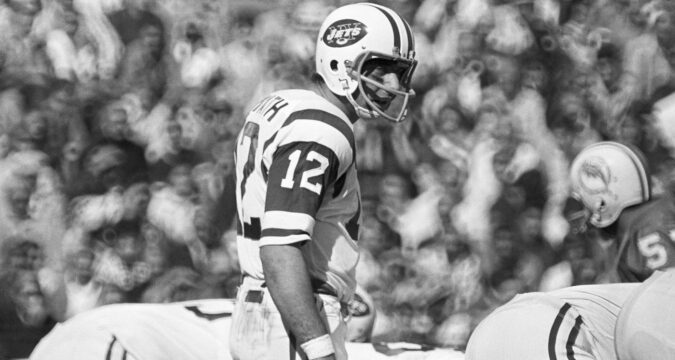
Today in History: New York Jets win Super Bowl III
Today is Monday, Jan. 12, the 12th day of 2026. There are 353 days left in the year.
Today in history:
On Jan. 12, 1969, the biggest upset in Super Bowl history occurred as the New York Jets of the American Football League defeated the Baltimore Colts of the National Football League 16-7 in Super Bowl III, played at the Orange Bowl in Miami.
Also on this date:
In 1915, the U.S. House of Representatives rejected a proposed constitutional amendment to give women nationwide the right to vote.
In 1932, Hattie W. Caraway of Arkansas became the first woman to win election to the U.S. Senate after initially being appointed to serve out the remainder of the term of her late husband, Thaddeus.
In 1948, the U.S. Supreme Court, in Sipuel v. Board of Regents of University of Oklahoma, unanimously ruled that state law schools could not discriminate against applicants on the basis of race.
In 1959, Berry Gordy Jr. founded Motown Records (originally Tamla Records) in Detroit.
In 1966, “Batman” premiered on ABC, starring Adam West and Burt Ward.
Related Articles
Chicago Bears and Green Bay Packers have played 213 times in the past 100 years: How the rivalry has unfolded
Today in History: Mark McGwire admits that he used steroids
Today in Chicago History: Columnist Mike Royko moves to the Tribune
Vintage Chicago Tribune: Bears playoff appearances — including the ‘Sneakers Game,’ ‘Fog Bowl’ and ‘Double Doink’
Treasures preserved from historic Crown Point church after demolition
In 2010, Haiti was struck by a magnitude 7.0 earthquake that the Haitian government estimated killed some 300,000 people.
Today’s birthdays: Author Haruki Murakami is 77. Filmmaker Wayne Wang is 77. Football Hall of Famer Drew Pearson is 75. Writer Walter Mosley is 74. Media personality Howard Stern is 72. Filmmaker John Lasseter is 69. Broadcast journalist Christiane Amanpour is 68. Actor Oliver Platt is 66. Basketball Hall of Famer Dominique Wilkins is 66. Entrepreneur Jeff Bezos is 62. Musician-filmmaker Rob Zombie is 61. Rock singer Zack de la Rocha (Rage Against the Machine) is 56. Rapper Raekwon (Wu Tang Clan) is 56. Singer Melanie Chisholm (Spice Girls) is 52. Hockey Hall of Famer Marián Hossa is 47. Actor Issa Rae is 41. Singer Zayn Malik is 33. Actor Nathan Gamble is 27.
https://www.chicagotribune.com/2026/01/12/today-in-history-new-york-jets-win-super-bowl-iii/
Today in Chicago History: BLIZZARD …
Here’s a look back at what happened in the Chicago area on Jan. 12, according to the Tribune’s archives.
Is an important event missing from this date? Email us.
Front page flashback: Jan. 13, 1928
Ruth Snyder and Henry Judd Gray were electrocuted within a few minutes of each other at 11 p.m. on Jan. 12, 1928, at Sing Sing prison in New York. They were found guilty of killing Snyder’s husband 10 months prior. (Chicago Tribune)
Tribune photographer Tom Howard — on loan to the New York Daily News — captured a photo of Ruth Snyder at New York’s Sing Sing Prison as she was electrocuted. The photo, however, was not published in the Tribune.
Weather records (from the National Weather Service, Chicago)
High temperature: 62 degrees (2005)
Low temperature: Minus 14 degrees (1918)
Precipitation: 2.76 inches (1960)
Snowfall: 7.4 inches (1908)
Chicago Cubs owner Philip K. Wrigley claimed on Jan. 12, 1961, that the term “manager” was antiquated. That’s why he instituted the “college of coaches,” eight men rotating in positions of leadership, for the 1961 season . The idea was abandoned by the 1963 season. (Chicago Tribune)
1961: “Now, about the word ‘manager,’” Chicago Cubs owner Philip K. Wrigley said as he addressed the team’s annual press luncheon. “I looked it up and the pure definition is ‘dictator.’” (Tribune editors balked at this explanation.)
With that, Wrigley announced a plan to have the team run by a revolving college of coaches. He produced a sign for the meeting that said, “Anyone who remains calm in the midst of all this confusion simply does not understand the situation.”
The team finished next-to-last in the standings in 1961 and 1962 before the experiment was abandoned.
1978: Mayor Michael Bilandic announced a special committee to study the feasibility of a new stadium complex that would be the new home for the Chicago Bears and also include horse racing and jai alai, a game that attracted large crowds and high-stakes gamblers in Florida. The complex never materialized.
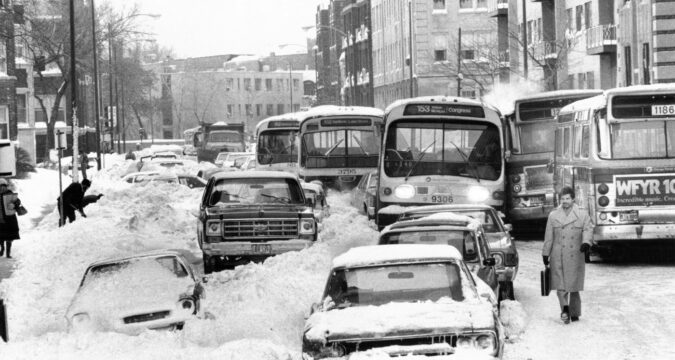
The storm of Jan. 12-14, 1979, dropped more than 20 inches of snow on the city. This was the worst storm of a winter in which almost 90 inches of snow, the all-time season record, fell on the city and was also remembered as the second-coldest in Chicago’s recorded history. (Chicago Tribune)
1979: The city was walloped by a massive blizzard that dumped 20.3 inches of snow. At the time it was the second-largest snowfall in city history. Today, it’s the fourth-largest. It was not only the worst storm of that winter, the snowfall was also be a major factor in the city’s next mayoral election.
Vintage Chicago Tribune: Do you remember when 90 inches of snow fell almost 50 years ago?
After observing the city by helicopter, Chicago Mayor Michael Bilandic ordered city snowplows to clear 250 school and Park District parking lots so residents could move their cars off the roads, but that effort was a failure. Many motorists couldn’t make it past double- and triple-parked cars on the still unplowed side streets. Garbage couldn’t be collected for at least 10 days. Mail was delivered late.
Chicago’s 10 largest snowfalls since 1886 — and how the Tribune covered them
Instead of taking responsibility for the mishandling of the snow removal, Bilandic lashed out, saying police would be ticketing vehicles and ordering them towed if not removed from Chicago’s streets. He also said there would be “no exceptions” for sick, elderly or poor people who couldn’t move their cars. “If there are hardship cases, they can tell that to a judge. That’s what a judge is for,” he told reporters. Bilandic later apologized for his mishandling of the snow removal, but Chicago residents — and voters — weren’t satisfied.
2000: The U.S. Supreme Court decision in Illinois v. Wardlow gave police broad authority to stop and question people who run at the sight of an officer.
The 5-4 ruling reversed an Illinois Supreme Court decision that held two Chicago officers were wrong to chase and stop William Wardlow when he ran away after seeing them cruising a street on the West Side.
Want more vintage Chicago?
Subscribe to the free Vintage Chicago Tribune newsletter, join our Chicagoland history Facebook group, stay current with Today in Chicago History and follow us on Instagram for more from Chicago’s past.
Have an idea for Vintage Chicago Tribune? Share it with Kori Rumore and Marianne Mather at krumore@chicagotribune.com and mmather@chicagotribune.com
https://www.chicagotribune.com/2026/01/12/january-12-chicago-history/


