Category: News
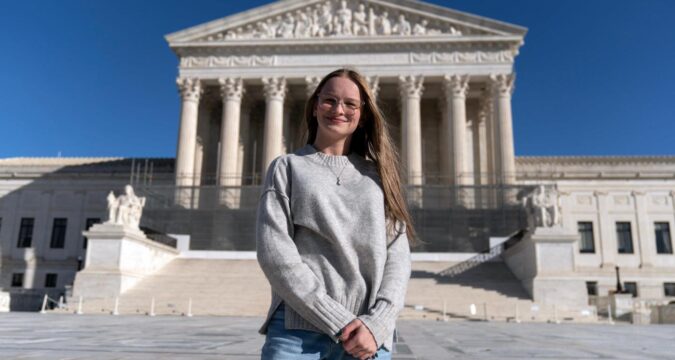
Supreme Court seems likely to uphold state bans on transgender athletes in girls and women’s sports
WASHINGTON — The Supreme Court on Tuesday appeared ready to deal another setback to transgender people and uphold state laws barring transgender girls and women from playing on school athletic teams.
The court’s conservative majority, which has repeatedly ruled against transgender Americans in the past year, signaled during more than three hours of arguments it would rule the state bans don’t violate either the Constitution or the federal law known as Title IX, which prohibits sex discrimination in education.
More than two dozen Republican-led states have adopted bans on female transgender athletes. Lower courts had ruled for the transgender athletes who challenged laws in Idaho and West Virginia.
The legal fight is playing out against the backdrop of a broad effort by President Donald Trump to target transgender Americans, beginning on the first day of his second term and including the ouster of transgender people from the military and declaring that gender is immutable and determined at birth.
The justices are evaluating claims of sex discrimination lodged by transgender people versus the need for fair competition for women and girls, the main argument made by the states.
Justice Brett Kavanaugh, who coached his daughters in girls basketball, seemed concerned about a ruling that might undo the effects of Title IX, which has produced dramatic growth in girls and women’s sports. Kavanaugh called Title IX an “amazing” and “inspiring” success.
Some girls and women might lose a medal in a competition with transgender athletes, which Kavanaugh called a harm “we can’t sweep aside.”
The three liberal justices seemed focused on trying to marshal a court majority in support of a narrow ruling that would allow the individual transgender athletes involved in the cases to prevail.
A ruling for West Virginia and Idaho would effectively apply to the other two dozen Republican-led states with similar laws.
But the justices soon might be asked to decide about the laws in an additional roughly two dozen states, led by Democrats, that allow transgender athletes to compete on the teams that match their gender identity.
The outcome also could influence separate legal efforts by the Trump administration and others seeking to bar transgender athletes in states that have continued to allow them to compete.
The transgender athletes’ cases
In the Idaho case, Lindsay Hecox, 25, sued over the state’s first-in-the-nation ban for the chance to try out for the women’s track and cross-country teams at Boise State University in Idaho. She didn’t make either squad because “she was too slow,” her lawyer, Kathleen Hartnett, told the court Tuesday, but she competed in club-level soccer and running.
Becky Pepper-Jackson, a 15-year-old high school sophomore, was in the courtroom Tuesday. She has been taking puberty-blocking medication, has publicly identified as a girl since age 8 and has been issued a West Virginia birth certificate recognizing her as female. She is the only transgender person who has sought to compete in girls sports in West Virginia.
Pepper-Jackson has progressed from a back-of-the-pack cross-country runner in middle school to a statewide third-place finish in the discus in just her first year of high school.
Prominent women in sports have weighed in on both sides. Tennis champion Martina Navratilova, swimmers Summer Sanders and Donna de Varona and beach volleyball player Kerri Walsh-Jennings are supporting the state bans. Soccer stars Megan Rapinoe and Becky Sauerbrunn and basketball players Sue Bird and Breanna Stewart back the transgender athletes.
In 2020, the Supreme Court ruled LGBTQ people are protected by a landmark federal civil rights law that prohibits sex discrimination in the workplace, finding that “sex plays an unmistakable role” in employers’ decisions to punish transgender people for traits and behavior they otherwise tolerate.
But last year, the six conservative justices declined to apply the same sort of analysis when they upheld state bans on gender-affirming care for transgender minors.
Chief Justice John Roberts signaled Tuesday he sees differences between the 2020 case, in which he supported the claims of discrimination, and the current dispute.
The states supporting the prohibitions on transgender athletes argue there is no reason to extend the ruling barring workplace discrimination to Title IX.
Idaho’s law, state Solicitor General Alan Hurst, said, is “necessary for fair competition because, where sports are concerned, men and women are obviously not the same.”
Lawyers for Pepper-Jackson argue that such distinctions generally make sense, but that their client has none of those advantages because of the unique circumstances of her early transition. In Hecox’s case, her lawyers want the court to dismiss the case because she has forsworn trying to play on women’s teams.
NCAA president Charlie Baker told Congress in 2024 that he was aware of only 10 transgender athletes out of more than a half-million students on college teams. But despite the small numbers, the issue has taken on outsize importance.
Baker’s NCAA and the U.S. Olympic and Paralympic Committees banned transgender women from women’s sports after Trump, a Republican, signed an executive order aimed at barring their participation.
The public generally is supportive of the limits. An Associated Press-NORC Center for Public Affairs Research poll conducted in October 2025 found that about 6 in 10 U.S. adults “strongly” or “somewhat” favored requiring transgender children and teenagers to only compete on sports teams that match the sex they were assigned at birth, not the gender they identify with, while about 2 in 10 were “strongly” or “somewhat” opposed and about one-quarter did not have an opinion.
About 2.1 million adults, or 0.8%, and 724,000 people age 13 to 17, or 3.3%, identify as transgender in the U.S., according to the Williams Institute at the UCLA School of Law.
A decision is expected by early summer.
https://www.chicagotribune.com/2026/01/13/supreme-court-transgender-athletes/
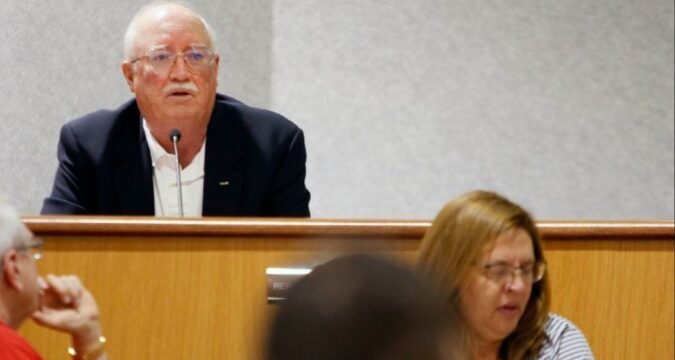
Judge residency ballot question bill passes Indiana House
A bill allowing for a ballot question to amend the state constitution to change residency requirements for city and town court judges passed out of the House Tuesday.
House Bill 1019, authored by State Rep. Michael Aylesworth, R-Hebron, proposes a constitutional amendment ballot question regarding the residency of a city of town court judge.
According to the bill, the ballot question will state: “Shall the Constitution of the state of Indiana be amended to permit the judge of a city or town court to reside in: (1) the county in which the court is located; or (2) the bordering county closest to the city or town in which the court is located? (This question concerns Article 6, Section 6 of the Constitution of the state of Indiana.)”
“This is an effort to expand the pool of qualified candidates for city and town court judges because in rural America, in our small communities, there are less and less qualified people willing to serve as judges,” Aylesworth said.
When the bill was heard on second reading Monday, State Rep. Carey Hamilton, D-Indianapolis, proposed an amendment to place a question on the November ballot asking voters if the Indiana Department of Transportation should spend money on the multi-billion dollar Mid-States Corridor Project.
The Mid-States Corridor Project has been proposed to improve roads in the southwest portion of Indiana, but the Indiana Department of Transportation has either canceled or postponed 340 road projects, Hamilton said.
“I believe we need to make investments that will lead to strong, economic growth for our state,” Hamilton said. “In light of the news that this project is imminent, let’s pause and ask the taxpayers directly. Let’s give them a voice with this investment.”
State Rep. Ben Smaltz, R-Auburn, made a point of order that the amendment violated the House germaneness rule. After deliberation during a brief recess in proceedings, House Speaker Todd Huston, R-Fishers, said the point was “valid.”
The ruling was appealed by Democratic members, but it was upheld in a vote by the chamber.
The bill was heard on third and final reading by the House Tuesday, and it passed 92-1. State Rep. Ryan Dvorak, D-South Bend, voted against the bill.
State Rep. Mike Aylesworth, R-Hebron, said the impetus for the ballot question occurred about 7 years ago when he met with then-Lowell Town Judge Christopher Buckley.
During that discussion, Aylesworth said Buckley mentioned that he and his wife lived in Valparaiso, but he had been renting an apartment in Lowell to establish residency there because of a state statute that requires city and town officers to live in their jurisdiction.
“I thought, this is sort of silly. I didn’t pay much more attention to it, but then the more I got into it, the more I found out,” Aylesworth said.
Article 6, Section 6 of the Indiana constitution states that “all county, township, and town officers, shall reside within their respective counties, townships and towns and shall keep their respective offices at such places therein, and perform such duties, as may be directed by law.”
In Indiana, there are around 50 city and town court judges, said Kathryn Dolan, Indiana Supreme Court Chief Public Information Officer. The state has more than 700 judicial officers, including superior court judges, senior judges and magistrates, she said.
Aylesworth later met with Indiana Supreme Court Chief Justice Loretta Rush, who told him that a constitutional amendment would be needed to change the state statute about where city and town judges have to live.
To amend the state constitution, the two separately elected state legislatures have to approve a joint resolution. Then, the state legislature has to pass a piece of legislation with the constitutional amendment ballot question, Aylesworth said.
In the 2023 session, Aylesworth filed House Joint Resolution 6, which stated that the judge of a city or town shall reside in the county in which the city or town court is located or the bordering Indiana county that is the closest Indiana county to the city or town in which the court is located.
The resolution passed both chambers of the statehouse and was signed into law.
Two years later, during the 2025 session, Ayleworth filed House Joint Resolution 1, which had the same language as the 2023 House Joint Resolution 6. The resolution passed the state legislature and was signed into law.
For the 2026 session, Aylesworth has filed House Bill 1019, which proposes a constitutional amendment ballot question regarding the residency of a city or town court judge.
House Bill 1019 passed out of the House Court and Criminal Code Committee in a 12-0 vote last week. The committee members didn’t ask any questions or discuss the bill, and no one from the public testified ahead of the vote.
“It’s a fairly simple concept, expanding the area in which an attorney may live, because they have to be an attorney to be a city or town court judge. It expands that area so it can encourage more people to be eligible to sit as a judge,” Aylesworth said.
The bill moves forward for consideration by the Senate.
https://www.chicagotribune.com/2026/01/13/judge-residency-ballot-question-bill-passes-indiana-house/

Clintons refuse to testify in House Epstein probe as Republicans threaten contempt proceedings
WASHINGTON — Former President Bill Clinton and former Secretary of State Hillary Clinton said Tuesday that they will refuse to comply with a congressional subpoena to testify in a House committee’s investigation of Jeffrey Epstein even as Republican lawmakers prepare contempt of Congress proceedings against them.
The Clintons, in a letter released on social media, slammed the House Oversight probe as “legally invalid” and wrote that the chair of the House Oversight Committee, Republican Rep. James Comer, is on the cusp of a process “literally designed to result in our imprisonment.”
“We will forcefully defend ourselves,” wrote the Clintons, who are Democrats. They accused Comer of allowing other former officials to provide written statements about Epstein to the committee, while selectively enforcing subpoenas against them.
The intensifying clash adds another dimension to the fight over Epstein, raising new questions about the limits of congressional power to compel testimony. It also comes when Republicans are grappling with the Justice Department’s delayed release of the Epstein files after a bipartisan push for their release.
Possible contempt of Congress proceedings
Comer said he’ll begin contempt of Congress proceedings next week. It potentially starts a complicated and politically messy process that Congress has rarely reached for and could result in prosecution from the Justice Department.
“No one’s accusing the Clintons of any wrongdoing. We just have questions,” Comer told reporters after Bill Clinton, a onetime Epstein friend, did not show up for a scheduled deposition at House offices Tuesday.
He added, “Anyone would admit they spent a lot of time together.”
Clinton has never been accused of wrongdoing in connection with Epstein but had a well-documented friendship with the wealthy financier throughout the 1990s and early 2000s. Republicans have zeroed in on that relationship as they wrestle with demands for a full accounting of Epstein’s wrongdoing.
“We have tried to give you the little information we have. We’ve done so because Mr. Epstein’s crimes were horrific,” the Clintons wrote in the letter.
Epstein was arrested in 2019 on federal sex trafficking and conspiracy charges. He killed himself in a New York jail cell while awaiting trial.
Subpoenas for former presidents
Multiple former presidents have voluntarily testified before Congress, but none has been compelled to do so. That history was invoked by President Donald Trump in 2022, between his first and second terms, when he faced a subpoena by the House committee investigating the deadly Jan. 6, 2021, riot by a mob of his supporters at the U.S. Capitol.
Trump’s lawyers cited decades of legal precedent they said shielded an ex-president from being ordered to appear before Congress. The committee ultimately withdrew its subpoena.
Comer also indicated that the Oversight committee would not attempt to compel testimony from Trump about Epstein, saying that it could not force a sitting president to testify.
Trump, a Republican, was also friends with Epstein. He has said he cut off that relationship before Epstein was accused of sexual abuse.
Comer cast the subpoena for the Clintons as a bipartisan effort. But when a subcommittee of the Oversight panel initiated its overall investigation into Epstein in August, it adopted the subpoenas for the Clintons without allowing Democrats to cast individual votes.
The Justice Department also has not completely fulfilled the committee’s subpoena for its files on Epstein.
Lawmakers want the Epstein files
Meanwhile, the congressional co-sponsors of legislation that forced the public release of investigative documents in the sex trafficking probe of Epstein and British socialite Ghislaine Maxwell asked a New York judge in a letter to appoint a neutral expert to oversee release of the materials. The letter, dated Jan. 8, was delivered to the judge Monday night.
U.S. Rep. Ro Khanna, a California Democrat, and Rep. Thomas Massie, a Kentucky Republican, told U.S. District Judge Paul A. Engelmayer they had “urgent and grave concerns” that the Justice Department has failed to comply with the Epstein Files Transparency Act, which required the files to be released last month. They said they believed “criminal violations have taken place” in the release process.
Engelmayer presides over the Maxwell case. Maxwell, a former Epstein girlfriend, is serving a 20-year prison sentence after her 2021 sex trafficking conviction for recruiting girls and women to be abused by Epstein and for sometimes joining in the abuse. Last month, Maxwell sought to set aside her conviction, saying new evidence had emerged proving constitutional violations spoiled her trial.
Justice Department officials, who did not immediately respond to a request for comment Tuesday, have said the files’ release was slowed by redactions required to protect the identities of abuse victims.
In their letter, Khanna and Massie wrote that the Department of Justice’s release of 12,000 documents out of more than 2 million documents being reviewed was a “flagrant violation” of the law’s release requirements and had caused “serious trauma to survivors.”
“Put simply, the DOJ cannot be trusted with making mandatory disclosures under the Act,” the congressmen said as they asked for the appointment of an independent monitor to ensure all documents and electronically stored information are immediately made public.
They also recommended that a court-appointed monitor be given authority to notify and prepare reports about the true nature and extent of the document production and whether improper redactions or conduct have taken place.
Engelmayer directed the Justice Department and Maxwell, if she wishes, to respond to the allegations from the congressmen by Friday.
Associated Press writers Michael R. Sisak and Larry Neumeister in New York contributed to this report.
https://www.chicagotribune.com/2026/01/13/clintons-house-epstein-probe/
Merrillville man gets 2.5 years for pocketing $840K in COVID-19 loans
A Merrillville man was sentenced to 2.5 years Tuesday for embezzling $840,000 in COVID-19 relief funds.
Armon A. Hill, 46, pleaded guilty in June to wire fraud. He will also serve two years on supervised release after prison.
“This is a serious offense,” U.S. District Judge Gretchen Lund said.
Federal prosecutors alleged Hill set up Paycheck Protection Program (PPP) and Economic Injury and Disaster Loan (EIDL) applications to receive $840,000 using a legitimate, but inactive, limited liability corporation – “Lakelees General Services.”
He claimed it was a “mail center” with multiple workers. He also submitted a fake IRS form on his PPP application claiming the business had paid wages and taxes in 2019.
Assistant U.S. Attorney Zachary Heater said in court that Hill partly used the money for extravagant purchases including trips to Dubai and Las Vegas, and shopping trips to Gucci, Neiman Marcus and Bloomingdale’s.
Authorities allege Hill went beyond basic application fraud to make it look like the business was legitimate.
Hill contracted with ADP a month after he got PPP money in August 2020 to do its payroll and generate tax forms, court records state. He had the company pay $32,500 to six “employees” – who in reality were “himself, his son, a longtime girlfriend, a cousin and a childhood friend,” records state.
The friends and family kept a little of the money, but sent most of it back to Hill, documents show.
The government rejected his May 2022 application to have the $325,000 PPP loan forgiven.
Defense lawyer Jack Friedlander argued that his client has stayed out of trouble since his release from federal prison in 2009 in a drug case. He asked for probation, saying Hill was struggling to survive when the pandemic hit and he defrauded the government. Since then, he became an HVAC tech with steady work.
“It was easy,” Hill said in court about getting the loans. “I took advantage of it.”
Lawyers said Hill has repaid $56,000 in loans.
He will have to repay $883,000 total in restitution.
mcolias@post-trib.com
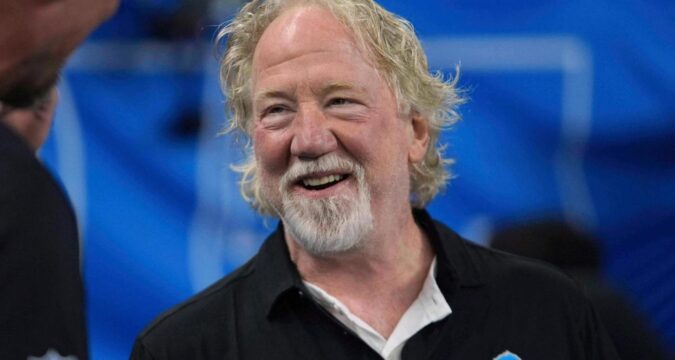
Director, ‘Thirtysomething’ actor Timothy Busfield turns himself in to face child sex abuse charges in New Mexico
ALBUQUERQUE, N.M. — Director and Emmy Award-winning actor Timothy Busfield turned himself to authorities on Tuesday to face child sex abuse charges in New Mexico.
His apprehension comes after authorities in Albuquerque issued a warrant for his arrest on Friday on two counts of criminal sexual contact of a minor and one count of child abuse. The charges stem from allegations that Busfield inappropriately touched a young boy on the set of the TV series “The Cleaning Lady” that he was directing.
Busfield, who is married to actor Melissa Gilbert, is known for appearances in “The West Wing,” “Field of Dreams” and “Thirtysomething,” the latter of which won him an Emmy for outstanding supporting actor in a drama series in 1991.
Busfield was being booked by Albuquerque police on the charges, said Gilbert Gallegos, spokesperson for the city police department.
A criminal complaint filed by an investigator with the Albuquerque Police Department says the boy reported that he was 7 years old when Busfield touched him three or four times on private areas over his clothing. Busfield allegedly touched him five or six times on another occasion when he was 8, the complaint said.
The child was reportedly afraid to tell anyone because Busfield was the director and he feared he would get mad at him, the complaint said.
The boy’s twin brother told authorities he was touched by Busfield but did not specify where. He said he didn’t say anything because he didn’t want to get in trouble.
Busfield denied the allegations last fall when interviewed by authorities as part of the investigation, the complaint said. He suggested that the boys’ mother was seeking revenge for her children being replaced on the series. He also said he likely would have picked up and tickled the boys, saying the set was a playful environment.
Busfield’s attorney did not immediately return a message seeking comment Tuesday. A video obtained by TMZ showed Busfield in front of a window with the Albuquerque skyline in the backdrop. He said he arrived in the city after driving 2,000 miles.
“I’m going to confront these lies. They’re horrible. They’re all lies,” Busfield said.
The mother of the twins — who are identified only by their initials in court records — reported to Child Protective Services that the abuse occurred between November 2022 and spring 2024, the complaint said.
The investigation began in November 2024, when the investigator responded to a call from a doctor at the University of New Mexico Hospital in Albuquerque. The boys’ parents had gone there at the recommendation of a law firm, the complaint said.
According to the complaint, one of the boys has been diagnosed with post-traumatic stress disorder and anxiety. A social worker documented him saying he has had nightmares about Busfield touching him.
“The Cleaning Lady” aired for four seasons on Fox, ending in 2025. The show was produced by Warner Bros., which according to the complaint conducted its own investigation into the abuse allegations but was unable to corroborate them.
https://www.chicagotribune.com/2026/01/13/timothy-busfield-child-sex-abuse-charges/
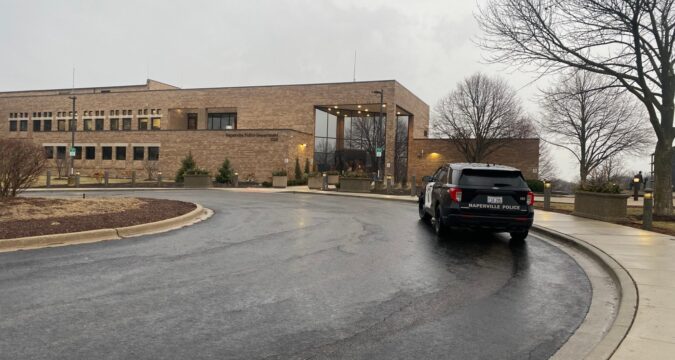
Naperville police trying to deal with big increase in body cam footage requests
Naperville police say they are grappling with a big jump in Freedom of Information Act requests for body cam footage, prompting them to seek state legislation to address the issue.
“We started with body cameras in 2022,” Naperville Police Chief Jason Arres said. “Obviously the first year wasn’t a lot, but every year since it’s picked up and now, in the last year, it’s been the highest it’s ever been. Our FOIA (requests) are increasing exponentially (as a result).”
FOIA requests are being made for nearly every single arrest made by the Naperville Police Department, Arres said. The issue, however, is not just with the high number of FOIA requests being made but with the intent behind those requests, he said.
“What I’m assuming they’re doing is finding stuff that becomes click-worthy or shocking to see or funny to see, and then they’re posting it on social media to get the clicks and then to monetize it … and then they publish the videos and they’ll put misleading or even at times dehumanizing commentary in there to get more clicks, which means more revenue,” Arres said.
It’s a situation that has put a strain on the police department’s staff, he said. As of Oct. 31, 2025, FOIA requests were 19% higher than in 2024. Those that needed redactions were up 18% and body worn camera requests were up 44%. For the first 10 months of 2025, the amount of time police records personnel spent redacting body cam footage was up 240%, he said.
“On average, it takes us at least six minutes to redact one minute of body worn camera video,” Arres said. “Now imagine if I have three officers on a 60-minute call each. Think about how much time that is to redact all three of those videos, 180 minutes times six. … That’s 18 hours for one FOIA request that I have to have an employee spend to redact that situation I just gave you.”
And for people who have their body cam footage posted online without their knowledge, the fallout can be traumatic.
One person affected by it was Christopher, whose last name is being withheld. He had an interaction with Naperville police in August 2022 while experiencing a mental health episode.
“At the time, I was very shameful for the whole event that happened, and when it came out on social media, it was a big shock,” he said. “I started receiving hateful calls and everything as a result of that.”
The footage was posted without his knowledge about seven months after the incident. For the next three months, he said he received harassing phone calls from unknown people who hurled insults and racial slurs.
“It was every day. Constant. People were calling my phone. Sometimes they wouldn’t even say anything. They’ll just have police sirens in the background,” he said.
He was arrested on felony charges of aggravated unlawful use of a weapon and aggravated battery of a police officer, which were later reduced to misdemeanors, according to DuPage County court records. He was sentenced to jail and completed a term of probation.
But the video of his interaction with Naperville police remains online, something he’s come to terms with but also still haunts him, he said.
“People can just put in my name and that video pops up and it’s not a good representation of who I am,” he said.
Naperville police are not alone in dealing with the body carm footage issue, according to Kenny Winslow, executive director of the Illinois Association of Chiefs of Police.
“We had some legislation we were trying to move last year and we’re going to try to move some this year too because the problem’s not going away,” Winslow said. “It only seems to be spreading from jurisdiction to jurisdiction. It was one of the number one complaints we heard from chiefs last year.”
Arres said that since 2022, they’ve hired four more records employees to address the high volume of FOIA requests for police body cam footage, increasing the department’s FOIA staff count to seven.
Media lawyers and policy experts warn that any new legislation meant to address the situation could have unintended consequences.
“Access to body cam is incredibly important to police accountability,” said Matt Topic, an attorney for Loevy and Loevy who has litigated hundreds of state and federal FOIA cases.
“That’s how we know what the police are up to,” he said. “That’s how we know if they’re doing their jobs properly. That’s why there’s a requirement for body cam in the first place. And keeping on top of all that it is a bigger job than the news media alone could possibly do, especially in areas of the state that lack a local newspaper. There is just too much of it.”
One option legislators have considered is narrowing the scope of who qualifies as news media, but defining news media is a tall order given the increase in nontraditional media outlets and freelance reporters, FOIA experts say.
“The more barriers that go up, the more roadblocks there are in the requesting process, the harder it is for the public to get the records,” said Sophia Van Pelt, senior policy analyst for the Better Government Association. “Especially given that the reason for body cams, right? A big part of what they are for is an accountability tool. When you throw up roadblocks for people to access the footage, you are throwing up roadblocks for accountability.”
Arres said he does not want to diminish police accountability and acknowledged the changing landscape of news media. The differentiator for him, he said, is how a person plans to use the footage.
“Is your intent to monetize it? I think that’s the separator,” he said. “Are you FOIA-ing this video simply for the purpose of making money? Are you doing it to report the news? That, to me, is the separator.”
It’s a hard line to draw, some media experts said.
“It’s very difficult. You’re trying to maintain a system where there is meaningful disclosure while trying to avoid all of those other unintended consequences of folks charging to take them down or charging based on the number of views,” said Don Craven, former president and CEO of the Illinois Press Association.
cstein@chicagotribune.com
https://www.chicagotribune.com/2026/01/13/naperville-police-body-cam-footage-requests/
‘He was watching them:’ Murder trial opens in case of slain Cook County judge
Before presiding over his courtroom at the Leighton Criminal Court Building each morning, Cook County Judge Raymond Myles was known to often rise early and go to the gym.
But unbeknownst to him, prosecutors said, someone was watching him, studying his movements over the course of several days as he and his girlfriend left to work out in the morning before work.
Then, on April 10, 2017, the longtime jurist was shot and killed in an act of violence that stunned his colleagues at the county’s main Southwest Side courthouse where he for years had presided over cases — many involving acts of violence similar to his own slaying.
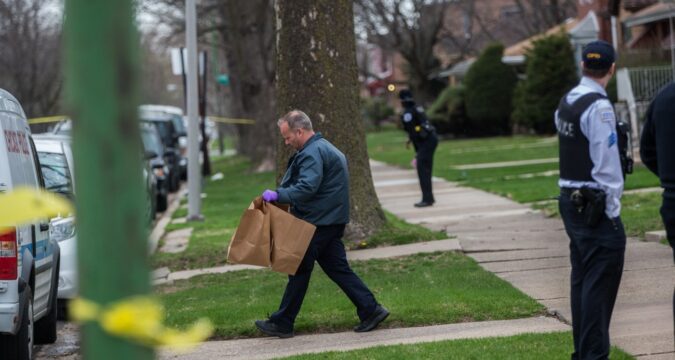
Surveillance video obtained by Chicago Tribune shows the apparent gunman arrive in an alley and exit the passenger seat of a Pontiac Sunfire near the home of Cook County Associate Judge Raymond Myles in Chicago’s West Chesterfield neighborhood on April 10, 2017, the day that Myles was fatally shot.
Myles, 66, was the first Chicago-area judge to be shot and killed in more than three decades in a case that generated national news and a massive police investigation. In 1983, a former Chicago police officer shot and killed Judge Henry A. Gentile, 63, and attorney James Piszczor, 34, in Gentile’s Daley Center courtroom in downtown Chicago.
During a trial that opened Tuesday morning at a branch courthouse in south suburban Bridgeview, Cook County prosecutors alleged that Earl Wilson, 54, and another man killed Myles and injured his girlfriend, in an attempted robbery, believing that the girlfriend had money in her gym bag. Wilson’s co-defendant, Joshua Smith, pleaded guilty in 2024 to armed robbery and was sentenced to 35 years in prison.
The trial is overseen by DuPage County Judge Jeffrey McKay to avoid the perception of bias by Myles’ fellow Cook County judges. It began before a full courtroom of family members and supporters, and is expected to last around two weeks.
Wilson is charged with murder, armed robbery and other felonies.
“He was watching them and he was waiting and he was seeing what time they came and went,” Assistant State’s Attorney Jennifer Keating said during her opening statement.
During the course of the trial, the attorneys are precluded from mentioning that Myles was a judge.
Wilson’s public defenders, though, argued to the jury that Wilson’s involvement is a lie concocted by Smith to minimize his own role in the slaying.
“Nothing about this case is what it seems,” said Assistant Public Defender Takenya Nixon.
In fact, she said, the slaying is not a clear-cut robbery case. Smith’s father was previously married to Myles’ girlfriend, and was not happy about the divorce or her new boyfriend, Nixon said.
After his killing, court employees remembered Myles as a hard-working and friendly judge. He was a Cubs fan and wore a team jacket to work during the team’s 2016 World Series run.
“Everyone here is devastated,” then-presiding judge of the Criminal Division LeRoy K. Martin Jr. said at the time. “People know when a judge is fair.”
Myles earned his law degree from the University of Illinois and worked as a prosecutor and a private-practice defense attorney before taking the bench in 1999.
Cook County Associate Judge Raymond Myles was killed in a shooting outside his South Side home on April 10, 2017. (Circuit Court of Cook County)
For years, Myles presided over what was then known as bond court, the notoriously chaotic place for first appearances for new arrestees.
Among high profile cases he oversaw in that role, Myles ordered William Balfour to be held without bail in the 2008 killings of three relatives of singer Jennifer Hudson and refused to grant a controversial gag order in the infamous murder of seven people at a Brown’s Chicken in Palatine.
In a twist of fate, Myles was the victim in another act of violence a couple of years before his death, when he was beaten in a road rage incident after a minor traffic collision in 2015.
On the morning of his death, he woke up around 4 a.m. at his home in the 9400 block of South Forest Avenue on the city’s Far South Side.
But as his girlfriend left the residence, she was confronted by a gunman who took her gym bag and shot her in the leg in an apparent robbery attempt, according to prosecutors.
Myles rushed outside and exchanged words with the attacker before he was shot and killed.
“You don’t have to do this,” Myles begged to Wilson, Keating alleged. “What did the defendant do in response to Raymond’s pleadings? He shot him.”
His girlfriend survived, but required a blood transfusion.
Using surveillance video, detectives tracked a distinctive bright orange car to a relative of Smith’s, who was later arrested, prosecutors said.
Wilson’s attorneys, though, said detectives showed the girlfriend a photograph of Wilson, and she did not identify him as her shooter.
“There have been lies told over and over and over about what happened on April 10, 2017,” Nixon said.

SEC Chair: “Remains To Be Seen” Whether US Will Seize Venezuela’s Reported Bitcoin
SEC Chair: “Remains To Be Seen” Whether US Will Seize Venezuela’s Reported Bitcoin
Authored by Turner Wright via CoinTelegraph.com,
Paul Atkins, chair of the US Securities and Exchange Commission (SEC), said it “remains to be seen” what actions the US government might take regarding Venezuela’s reported Bitcoin holdings, while stressing that such decisions would fall outside his remit.
In a Monday interview with Fox Business’ Stuart Varney, Atkins responded to reports claiming that Venezuela holds up to $60 billion worth of Bitcoin, though several analysts said they were unable to verify these claims. The SEC chair said it “remains to be seen” what action, if any, the US would take if it had the opportunity to seize the reported 600,000 BTC.
“I leave that to others in the administration to deal with — I’m not involved in that,” said Atkins in response to a question on whether the US would “take those Bitcoin off ‘em.”
Reports of Venezuela’s Bitcoin holdings surfaced after US forces, at the direction of President Donald Trump, captured then-President Nicolás Maduro last week and removed him to the United States to face criminal charges in New York.
As of the time of publication, blockchain analysts and intelligence platforms had not confirmed the reported $60 billion in crypto, but the Maduro regime had previously been involved with aspects of the industry.
For example, the country launched an oil-backed digital currency in 2018.
Senate to hold market structure markup on Thursday
Atkins’ remarks came a few days before the US Senate Banking Committee is scheduled to hold a markup on the Digital Asset Market Clarity Act, or CLARITY.
House of Representatives lawmakers passed the bill in July, and it has been under review in the Senate for months, likely slowed by a 43-day government shutdown in October and November.
Banks and some crypto companies have also expressed concerns about provisions dealing with stablecoin rewards within the draft bill, and many Democrats are reportedly calling for stronger ethics guardrails and clarification on decentralized finance.
The bill could be delayed amid campaigning for the 2026 midterm elections and another potential government shutdown at the end of January. However, early drafts of the legislation showed lawmakers were attempting to give the Commodity Futures Trading Commission more authority to regulate digital assets.
Tyler Durden
Tue, 01/13/2026 – 15:45
Tours of police station part of Geneva’s pitch to voters to OK $59.4 million bond measure for new facility
Geneva residents who want to know what their police station looks like from the inside can now sign up for a tour to see it, as the city looks to educate voters on the facility’s operational issues in advance of a March bond referendum that would help pay for a new police building.
In the March 17 primary election, Geneva voters will be asked whether the city should issue $59.4 million in bonds to pay for a new police station. So, in the lead-up to the election, the city is offering residents tours of the current facility.
The idea for a bond referendum question that would help pay for public safety facilities in Geneva is not new. The city had been planning to put the question to voters in last April’s election, but the measure was ultimately pulled from the ballot after the city discovered a calculation error that would have doubled the projected property tax payment.
But the Geneva City Council has since revisited the idea, and is now moving forward with putting the matter to residents in March.
Geneva’s current police station is located just off the Fox River at 20 Police Plaza, and is a conglomeration of three buildings built in 1915, 1953 and 1987, according to the city. The building previously housed the police department, fire department and Tri-Com Central Dispatch, but the latter two entities have since gotten their own facilities. It currently houses the city’s finance department as well as the police department.
Earlier this year, the city adopted a facilities master plan, which identified a new police station as a top priority. City staff previously pointed to issues like a lack of office space, flooding, sewer back-ups and a partial roof collapse at the current police station.
If the March referendum question is approved, the city would build a new station on city-owned property on South Street, adjacent to the city’s Public Works facility, replacing two city-owned and maintained baseball fields. According to a preliminary schedule, the new facility — should the referendum question be approved — could be completed in 2028. The city intends to sell the existing police station property if the bond measure is approved.
On a tour of the facility on Monday, Geneva Police Chief Eric Passarelli and Deputy Chief Matt Dean showed how the department currently operates in the space.
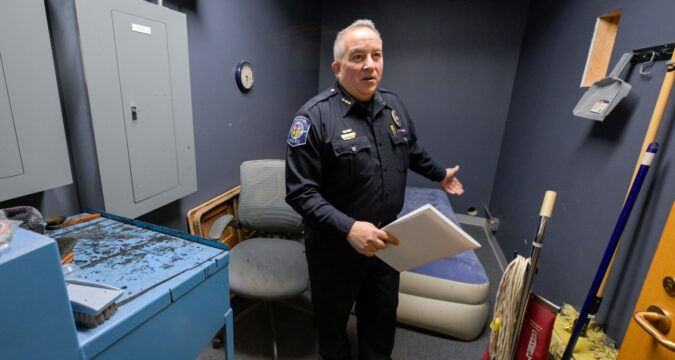
Some of the issues they pointed to concern space constraints — like how a lack of sufficient space in the investigations room leads to them sometimes using the squad room, which is used for roll call, for larger meetings, Dean explained. The squad room also holds officers’ equipment, Passarelli explained, which can create difficulty during shift changes as officers are coming and leaving.
Geneva Police Chief Eric Passarelli, left, and Deputy Police Chief Matt Dean talk about the limited size and functionality of the current squad room during a tour of Geneva’s current police headquarters on Monday, Jan. 12, 2026. (Mark Black/For The Beacon-News)
And the top floor — which was used by the fire department until the 2000s and now houses the police department’s evidence areas — lacks sufficient spaces for processing electronic devices, Passarelli explained. Space constraints also means staff working in evidence have to work among the materials, the police staff explained, rather than having a dedicated office.
The layout of the current police facility also means individuals who are brought into the department to be booked either have to be walked through portions of the building or taken outside and then back through the lobby to get to certain areas like the primary interview room, Dean noted on Monday.
It’s a similar problem with the building’s sallyport, which is where individuals who are brought into the police department typically enter the building. In instances where an individual needs medical attention, the space doesn’t allow a fire truck or ambulance to enter completely, Passarelli explained, meaning the individual has to be walked out to the emergency vehicle.
“It certainly creates some security concerns for us,” Passarelli explained about the current set-up.
It’s also an issue for the individuals themselves, he explained, as this layout creates a lack of privacy.
“While the inmates made poor choices, they still deserve dignity,” Passarelli said. “And you have a hotel, you have all these businesses, you know people walking by looking at what’s going on out there, it’s not a great situation.”
As for the building itself, it’s prone to leaks and flooding, the police staff explained.
“It’s just not what you want to do, have your officers … mopping up water while it’s pouring outside and you know that they have calls for service,” Passarelli said on the tour on Monday.
Parking is another issue: currently, the department doesn’t have enough indoor parking for all of its squad cars, and the existing building’s garage makes it so that a squad car can get blocked in by another one.
Some of the equipment in the squad cars — like radios and defibrillators — are weather-sensitive, Passarelli noted. There’s also the challenge of on-duty officers having to scrape off their cars in inclement weather if the cars are left outside, the police leaders explained. Among the changes the new facility is set to have is indoor parking for squad cars.
An improved facility would improve how officers serve the community, Passarelli said, especially as the profession changes in terms of things like the technology used in law enforcement. He also pointed to an updated facility as a potential draw for recruiting officers, particularly during a time when recruiting and retaining officers is difficult.
Police officials don’t see the proposed new location — which would be west of the downtown area — as a problem for response times, Passarelli said. He pointed to traffic around the existing location right off the Fox River as currently delaying responses at times.
With regards to the referendum question itself, Passarelli noted that, since Geneva is not currently a home rule municipality, the city’s options for funding the new station are limited.
“I think it’s one of the only options that’s available to the city right now,” Passarelli said Monday of the bond referendum.
The current Geneva Police Department headquarters is at 20 Police Plaza near the Fox River. Residents in March will vote on a referendum question to let the city issue $59.4 million in bonds to help fund a new police station. (Mark Black/For The Beacon-News)
Being a home rule municipality allows local governments more flexibility in lawmaking, as the Illinois constitution allows them to essentially exercise any power not specifically limited by the state.
An Illinois municipality with a population of more than 25,000 automatically receives home rule status, according to the state constitution. Geneva’s population currently stands at a little over 21,000, per the most recent available U.S. Census Bureau figures.
Beyond March, the city is also considering putting the question of changing its status to home rule to voters in a future election. Doing so would create other funding options for the city, city staff has previously explained: allowing the city to issue bonds for facility improvement projects separately and over time, rather than through a single referendum, as well as allowing it to access new sources of revenue, like business licenses and impact fees on new development.
But, in the meantime, the city is proceeding with the bond referendum to fund the new police station project.
As for the tours, they’ll be happening on Tuesdays, Wednesdays and Fridays during the daytime, Wednesday evenings and on select Saturdays this winter, according to the city. Residents can register on the city’s website.
They’ll be led by Passarelli, with help from other police staff members, according to a news release from the city. Participants will meet in the lobby of the current facility at 20 Police Plaza in Geneva for the tours, which will last for 45 minutes.
The city is also preparing a sort of virtual tour, Passarelli said, and will be holding town hall meetings to inform community members and allow them to ask questions about the referendum question in advance of the election, which will take place on March 17, with early voting starting at some sites in February.
According to the city, the property tax impact the approval of the referendum question would have on an average Geneva household would be about $272 annually. The city created an online calculator on its website at www.geneva.il.us for residents to determine the estimated property tax impact they would see if the referendum question is approved, based on the value of their homes.
mmorrow@chicagotribune.com
https://www.chicagotribune.com/2026/01/13/geneva-police-station-tours-bond-referendum-march/
El camino de Mario Cristóbal de regreso a Miami fue impulsado por su familia
Por TIM REYNOLDS
CORAL GABLES, Florida, EE.UU. (AP) — Luis Cristóbal padre siempre estaba manejando al menos dos trabajos. Clara Cristóbal trabajó en un concesionario de autos hasta bien entrada en sus 70 años. Eran cubano-americanos, no sabían inglés cuando llegaron a Estados Unidos, estaban extremadamente orgullosos de sus raíces, el tipo de personas que apreciaban el trabajo duro, guardaban su mayor respeto para gente similar y trataban de dar el ejemplo correcto como padres.
No fue fácil para sus hijos. Mario Cristóbal no lo oculta.
“Las calificaciones tenían que ser de cierta manera y no había desviaciones de hacer lo correcto”, expresó Cristóbal. “Y no éramos perfectos, pero teníamos padres increíblemente estrictos, duros y exigentes que tal vez no entendíamos en ese momento, pero hoy estamos extremadamente agradecidos por ellos”.
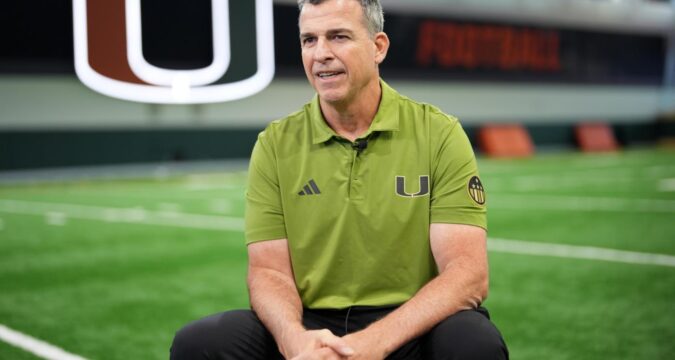
Cristóbal es el entrenador en la Universidad de Miami y dirige a su equipo de la misma manera que sus padres dirigían a su familia. Estricto. Duro. Exigente. Luis y Clara tenían planes y esperanzas, tratando de construir una vida. Lo lograron. Mario Cristóbal regresó a Miami hace cuatro años con un plan y con esperanza, buscando construir un campeón. Podría lograrlo el lunes por la noche cuando sus Hurricanes jueguen contra Indiana en el partido de campeonato nacional en el Hard Rock Stadium, el feudo de Miami.
“Recuerdo cuando el entrenador y yo hablamos por teléfono por primera vez”, dijo el quarterback de Miami, Carson Beck, recordando cómo se comprometió con los Hurricanes hace 12 meses para su última temporada universitaria y disputar este juego como único objetivo. “Estaba sentado en Jacksonville en mi casa, en mi habitación, y tenía una gran sonrisa en mi rostro y él tenía una gran sonrisa en su rostro. Dijo: ‘Vamos a trabajar’. Creí en su visión”.
Miami (13-2, décimo en el ranking de AP) busca su sexto campeonato nacional. Sería el tercero de Cristóbal con los Hurricanes, junto con dos ganados como jugador. Indiana (15-0, primero en el ranking de AP) busca el primero.
El camino de Cristóbal es una historia lógica y obvia: un chico local regresa a casa, a su alma mater, y la devuelve a la gloria después de aproximadamente un cuarto de siglo de altibajos.
Es también una historia de la que Cristóbal no quiere absolutamente ninguna parte.
“Paso más tiempo apreciando a las personas a mi alrededor y la oportunidad que viene con ello y vertiendo cualquier sentimiento que pueda surgir de esa manera”, manifestó Cristóbal. “Ese tipo de proceso de pensamiento… no se trata de mí. Puedo asegurarles que cada onza en mí está dedicada a los que me rodean”.
Eso es básicamente lo que dijo cuando asumió en FIU antes de la temporada 2007, lo que en ese momento posiblemente era el peor programa universitario importante en Estados Unidos, muy cerca de Miami. Y eso es también lo que dijo cuando asumió en Oregon hace ocho años, y lo que dijo nuevamente cuando regresó a Miami. Predica la familia, predica el trabajo duro, predica la unidad. No se desvía.
“Ama la adversidad”, señaló Mark Fletcher Jr, corredor de Miami.
Fletcher conoce bien la famosa intensidad de Cristóbal, pero también ha visto el lado más suave. El padre de Fletcher murió la temporada pasada, la misma semana en que Miami se preparaba para jugar contra su rival Florida State. Todos los jugadores de Miami asistieron al funeral; Cristóbal organizó una flota de autobuses y ajustó el horario de la semana de juego para que sucediera.
“Ese es quien es”, dijo Fletcher. “Hará cualquier cosa por nosotros”.
La primera temporada de Cristóbal en Miami fue en 2022, cuando los Hurricanes perdieron en casa contra Middle Tennessee State y luego fueron absolutamente humillados en casa 45-3 por los Seminoles. Mostró lo lejos que Miami tenía que llegar.
Acabaron 5-7 esa temporada, 7-6 la siguiente. Luego su suerte comenzó a cambiar. Los Hurricanes alcanzaron el número cuatro en el Top 25 de AP la temporada pasada liderados por Cam Ward, primero del draft, antes de un desvanecimiento tardío.
“Nos estamos acercando”, dijo Cristóbal cuando terminó la temporada. “Sigan trabajando”.
Eso es lo que hicieron. Los Hurricanes consiguieron a Beck y otros contribuyentes clave en el portal de transferencias. Hicieron una declaración al vencer a Notre Dame, entonces número seis, para comenzar la temporada. Esa victoria por tres puntos fue en última instancia el margen que llevó a Miami a los playoffs y dejó fuera a los Fighting Irish.
Alcanzaron el segundo lugar en la encuesta de AP antes de un tropiezo a mitad de temporada que los vio caer a 6-2 y al borde de perder toda oportunidad de llegar a los playoffs. Se llevó a cabo una reunión de equipo. La resolución de repente se fortaleció. El mantra principal de Cristóbal — ir 1-0 esta semana — se afianzó. Todo comenzó a encajar para los Hurricanes. No han perdido desde entonces, logrando un perfecto 7-0.
Cuando sus días de juego en Miami terminaron, Cristobal consideró una carrera profesional y luego se inclinó hacia unirse al Servicio Secreto de Estados Unidos. Tuvo la oportunidad de hacerlo antes de decidir que su mejor camino era el entrenamiento.
Miami lo trajo de vuelta a casa en 2021. Cristóbal agonizó durante días sobre qué hacer. Oregon era un trabajo que amaba. Sentía que tenía el programa en una posición perfecta. Pero Miami era su hogar. Su madre estaba enferma. Todo tenía sentido para que un Hurricane se convirtiera nuevamente en un Hurricane.
“Era el momento para que todos nos uniéramos y retribuirle a Miami”, dijo Cristóbal.
Clara Cristóbal murió en la primavera de 2022 después de estar enferma durante varios meses, incapaz de comunicarse realmente en ocasiones en sus últimas semanas. Su funeral fue el día de la primera práctica de primavera de la era Cristóbal en Miami. Él dirigió la práctica, luego fue a despedirse. Cree que eso es lo que ella hubiera querido.
“Si pudiera hablar cuando la vi, diría: ‘Vuelve a trabajar. ¿Qué haces aquí? Se supone que debes estar trabajando y haciendo tu trabajo porque la gente depende de ti’”, dijo Cristobal. “Y por lo tanto, esa siempre es mi comprensión de cómo se supone que debe ser”.
___
Deportes AP: https://apnews.com/hub/deportes