Category: News

Daily Horoscope for January 15, 2026
General Daily Insight for January 15, 2026
Easy connections open unexpected doors for us. Before dawn, Venus sextiles disciplined Saturn, coordinating our efforts to structure our environments. At 10:22 AM EST, Venus trines unpredictable Uranus, so we ought to be prepared for some surprises! Fortunately, they should be the fun kind. Think spontaneous ideas, out-of-the-blue messages, or exciting redesigns of everyday spaces. Once the Moon and Chiron meet up, we can celebrate progress before chasing unattainable perfection. Staying flexible will ensure we can leap through any unexpected open doors.
Aries
March 21 – April 19
You’ve been particularly visible as of late, Aries! A lot of planets have been impacting your publicized 10th house, and today is no different. Venus is reaching from there to coordinate with innovative Uranus in your 2nd House of Manifestation, opening space for you to pitch your loftiest ideas. While some budgeting may be necessary before you can make your dreams come true, you’re capable of finding a way to make them work. Start by sharing your goals, then make a plan to conquer them!
Taurus
April 20 – May 20
Your dreams may be transforming into specific goals. The first part of that process is gaining clear direction, which shouldn’t be too tough during Venus and Saturn’s cooperation today. Today may still be a part of the “blue sky” phase, where you throw out ideas without considering budgetary or social constraints. Conversations with supportive friends are a great way to work through this transit. You can dig into the details later. For now, keep things light by stretching your imagination and watching your confidence grow.
Gemini
May 21 – June 20
Shared matters feel easier to discuss at the moment. Your 8th House of Cautious Sharing warms as Venus harmonizes with unconventional Uranus, making a sensitive money talk or trust conversation feel surprisingly constructive. You might renegotiate a shared subscription by explaining the facts clearly and listening to what others involved truly need. Also, spending a few moments alone to indulge your 12th House of Solitude can help you improve your wording and tone. Make an effort to name your own needs without blaming companions.
Cancer
June 21 – July 22
Cancer, your connections ask for gentle clarity. Romantic Venus in your connective 7th house collaborates with responsible Saturn in your big-picture quadrant, inviting clear promises that honor both sides of a social bond. You may reset expectations about weekend plans or a shared project. All the while, your tone stays caring, because you know you’re supporting yourself and your friend. You may also enjoy chatting about personal philosophies, even if yours differ from those of your loved ones. In all conversations, speak with respect.
Leo
July 23 – August 22
This morning favors smart tweaks to established routines. Change might feel easier to handle than usual, thanks to Venus and Uranus dancing along your productive 6th house and professional 10th house. You could try a new app for scheduling or ask to shift a standing meeting to a better hour. At home, look for unique ways to use things you already have to support your goals. Instead of buying another journal, you could bind scrap paper into a recycled book for personal organization.
Virgo
August 23 – September 22
Home conversations lead to real healing. Your authentic 4th house and vulnerable 8th house both soften as the emotional Moon trines tender Chiron, helping you repair a touchy moment without losing your careful standards. You may cook a comforting meal before clearing the air with someone, because good food can soften the impact of honest words. Sharing with family (by blood or by choice) is particularly encouraged as well. If you’re leading the conversation, do so with care, and trust that steadiness heals.
Libra
September 23 – October 22
Comfort at home is vital — today and always. Your home-based 4th house is uplifted by this trine between Venus and Uranus, so a simple rearrangement could beautifully refresh your space. You may move a chair for better light, then end up sitting there all afternoon! Personal chats can also be unusually beneficial, especially with relatives or other loved ones. They could have amazing support (literal or emotional) to offer. When you tend your space properly, connecting to others there will be easier.
Scorpio
October 23 – November 21
When support meets focus, messages land. Clear words work even better than usual, because partnership-focused Venus is emboldening structured Saturn. They’re turning scattered thoughts into comprehensible messages with valuable purposes. It’s a great day to send important emails, make vital calls, or post essential letters. Remember, make sure you’ve got your facts in order. Of course, that doesn’t mean you can’t be creative at all — some fun phrasing can help you frame your points in a memorable, heartfelt way. Just prioritize honesty!
Sagittarius
November 22 – December 21
Fierce courage can blossom from fragile roots. With the Moon in your thoughtful sign, the alignment between Luna and Chiron has extra influence over your emotions. Don’t worry, it’s a positive influence! They’re strengthening your confidence and presence in all the best ways. You might speak up in public, wear a bolder color, or rework an online profile to be more honest. Playful support from Chiron in your light-hearted 5th house reminds you to enjoy experimentation for its own sake. Let your soul sing!
Capricorn
December 22 – January 19
As change harmonizes with desire, confidence rises. The Love Goddess Venus encourages the Great Awakener Uranus, and their powers are boosted by Venus directly in your grounded sign. You might share a personal win with your professional team, or announce a professional win to your wider friend group. Wherever your successes are found, be honest about them! Others notice your best traits when you lead with them, after all. You’re a star, so stand tall and welcome feedback that nourishes future growth.
Aquarius
January 20 – February 18
Quiet ideas may spark bright insights. You may have felt less energetic lately, due to the amount of astrology impacting your subtler 12th house, but that doesn’t mean nothing is happening in your life. Far from it! Have patience with yourself as you work through any inner tangles — it’s normal for these internal processes to take time. Look for mindless tasks to do while you ponder, like washing dishes or tidying your desk. Guarding your peace gives insight room to blossom.
Pisces
February 19 – March 20
Who belongs in your circle of hope? Your groups can expand as connection-focused Venus moves in your hopeful 11th house, in tandem with breakthrough Uranus in your vocal 3rd house, making it easier to communicate with allies who share your caring vision. Say yes to a collaborative project or send a thoughtful note in a group feed, and watch conversations blossom into practical plans. When inviting others to participate in community projects, use warm, simple words that can travel far. Kindness attracts kind people.
https://www.chicagotribune.com/2026/01/14/daily-horoscope-for-january-15-2026/
Survey of Chicagoans: 65% say President Donald Trump’s immigration crackdown has ‘gone too far’
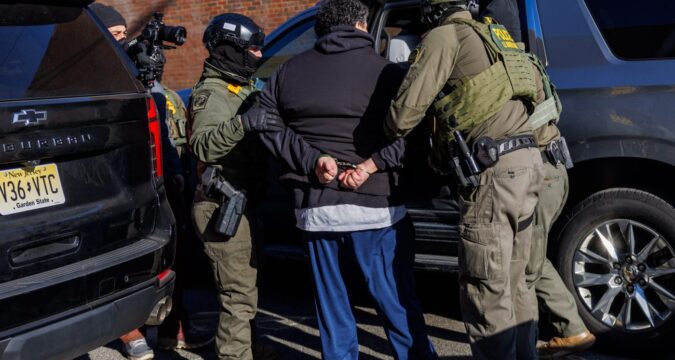
Sixty-five percent of Chicagoans think the Trump administration’s recent federal immigration enforcement activities have “gone too far,” according to results from a survey commissioned by the Mansueto Institute for Urban Innovation and conducted by NORC as part of the University of Chicago’s ChicagoSpeaks panel.
But Chicagoans were sharply divided on enforcement — and the city’s sanctuary status — by race, income and age.
The strongest opposition to federal enforcement and support for the city’s sanctuary policy was among people who were white, wealthier and living on the city’s North Side, the survey found.
The survey of 1,230 Chicagoans, provided exclusively to the Tribune by the Mansueto Institute, was conducted between Nov. 24 and Dec. 8, just after federal deportation efforts in the Chicago region, called Operation Midway Blitz, concluded. The poll’s margin of error was 3.9%.
Asked to complete the sentence “when it comes to deporting individuals who are in the country without legal documentation, would you say recent federal immigration enforcement activities in Chicago have …” 64.9% responded “gone too far,” 12.8% responded “been about right,” 8.4% said had “not gone far enough,” and a little less than 14% said they were unsure.
The figures are slightly higher than a national poll conducted by the Pew Research Center in mid-October. That poll found 53% of respondents said President Donald Trump’s administration was doing “too much” when it comes to deporting immigrants who are living in the U.S. illegally, and 36% said it was “about the right amount.”
A recent national CNN poll conducted by SSRS reported that 51% of respondents thought ICE enforcement actions were making cities less safe, whereas 31% thought those actions were making cities safer. That poll also reported that more people thought Trump’s deportation efforts had gone too far, up from 45% last February to 52% now.
At the same time the Chicago survey kicked off, a federal judge had issued a scathing opinion criticizing immigration agents’ use-of-force tactics against arrestees, protesters and bystanders during Midway Blitz — from pointing guns to releasing tear gas and flash-bang grenades — and accused Border Patrol Cmdr. Gregory Bovino and agents of lying about Chicagoans’ actions.
In the poll, 74.3% of people living in the north-central part of the city said they thought recent immigration enforcement activities had gone too far, while 79.3% of people with incomes above $100,000 reported the same. The feds conducted raids in Lakeview and Lincoln Park in late October, deploying tear gas on a residential street. Meanwhile, only 53.4% of respondents who reported earning $30,000 or less annually — a segment of society the Trump administration has long argued has seen their job prospects hurt by immigration — said they believed the Trump administration had gone too far in immigration enforcement.
For people over the age of 75, a generation that grew up in the wake of World War II and during the Civil Rights movement, 76.4% similarly believed enforcement went “too far.” That was the highest opposition among any age group over 18.
The topline results were unsurprising to Chris Berry, the faculty director at Mansueto, who also teaches at the University of Chicago’s Harris School of Public Policy.
“We know Chicago is a liberal city and Midway Blitz didn’t make a positive impression on Chicagoans for many reasons,” he said. But the gaps between white, Black and Hispanic respondents were “massive,” Berry said.
There was a 20-point gap between white and Black respondents who thought enforcement had “gone too far” — 75.5% versus 55.6%. For Hispanic respondents, that figure was 62.5%.
Asked how strongly they supported the city’s ordinance “that limits city agencies and employees from cooperating with federal civil immigration enforcement,” 75.5% of white respondents said they strongly or somewhat supported it, while 44.7% of Black and 52.1% of Hispanic respondents said the same.
Black and Hispanic respondents were also more ambivalent about the city’s ordinance barring cooperation with federal immigration enforcement actions. A total of 40.5% of Black respondents and 33.7% of Hispanic respondents reported being unsure whether they supported the sanctuary policy, or that they neither supported nor opposed it.
The Trump administration’s deployment of ICE and border patrol to Chicago as part of his sweeping program to remove immigrants from the U.S. comes a year after Mayor Brandon Johnson declared an end to a migrant crisis that saw Texas’ Republican governor send busloads of largely Venezuelan migrants to Chicago and other major cities run by Democratic leaders.
The migrant crisis was one of the more racially divisive in recent Chicago history. Several members of the City Council’s Black Caucus, echoing constituents, resented the resources and attention devoted to the crisis that had not been marshaled for their neighborhoods in recent years. Similar intra-racial tensions also arose between new arrivals and longtime immigrants about the disparity in government support they received.
The survey also asked how satisfied respondents were with the local response. Across the board, a majority were either satisfied or strongly satisfied with the city, state and Chicago Public Schools’ response to the federal campaign. A greater share of respondents — 24% — had no opinion about CPS’ response.
Dissatisfaction with the local response ranged from approximately 30% to 35%. Berry acknowledged that it could encompass both progressive frustrations that either the city or state was not doing enough to resist ICE, including by allowing local law enforcement to respond to protests.
Despite overall satisfaction with the city’s response to Midway Blitz and support for its sanctuary status, Johnson’s approval numbers have not budged much compared with the two previous quarters of the survey. Johnson’s approval remains at about 25%, Berry said.
https://www.chicagotribune.com/2026/01/14/survey-chicagoans-federal-immigration-too-far/
Argentina designa como organización terrorista a tres capítulos de la Hermandad Musulmana
Associated Press
SANTIAGO (AP) — El gobierno del presidente argentino Javier Milei declaró el miércoles como organización terrorista a tres ramas de la Hermandad Musulmana del Oriente Medio, afincadas en Líbano, Jordania y Egipto, un día después de que Estados Unidos anunciara la misma medida.
La decisión obedece a los “compromisos internacionales asumidos” por Argentina para intensificar la “lucha contra el terrorismo y su financiamiento”, informó la Oficina del Presidente en un comunicado.
Un día antes la administración de Donald Trump, que tiene en Milei a su mayor aliado en la región, anunció que había designado a los mismos tres capítulos de la Hermandad Musulmana como organizaciones terroristas, por lo que impuso sanciones sobre ellas y sus miembros.
La medida “se fundamenta en informes oficiales que acreditan actividades ilícitas de carácter transnacional”, indicó la nota del gobierno argentino.
Dichas actividades, agregó, incluyen “actos de terrorismo, llamados públicos al extremismo violento, así como vínculos con otras organizaciones terroristas y su potencial impacto en la República Argentina”.
Las tres ramas de la Hermandad Musulmana fueron incorporadas a una base de datos vinculada con el Ministerio de Justicia y que permite al país fortalecer los mecanismos de prevención, detección y sanción del terrorismo y sus financiadores.
La medida también “permite reforzar la cooperación internacional con otros países que designaron a esta agrupación como organización terrorista”, como Estados Unidos, Israel, Paraguay, Emiratos Árabes y Egipto.
“El presidente de la nación mantiene el compromiso inquebrantable de reconocer a los terroristas por lo que son, como ya lo hizo con Hamás”, recalcó el comunicado.
La designación del grupo como entidad terrorista se enmarca en la estrategia de Milei de reposicionar a Argentina entre los países “alineados a la civilización occidental, respetuosa de los derechos individuales y sus instituciones”, finalizó la Oficina del Presidente.
Fundada en Egipto en 1928, la Hermandad Musulmana ha generado controversias a nivel internacional debido a su estructura transnacional y vínculos con otros movimientos islámicos. En 2013 la organización fue prohibida en su país de fundación, mientras que Jordania la declaró un grupo ilegal en abril del año pasado.
Illinois groups scrambling after termination of federal grants for mental health, substance use disorders
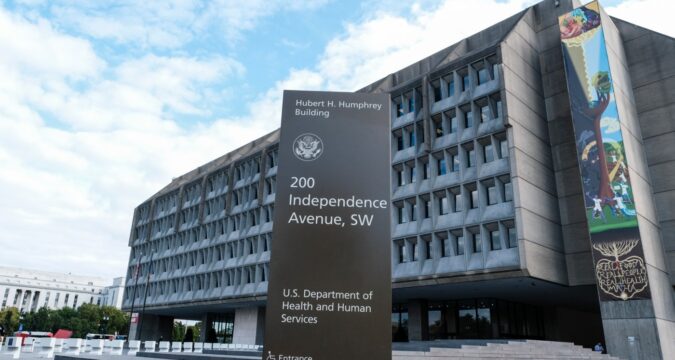
Providers of mental health and substance use disorder services in Illinois and across the country were scrambling Wednesday, after learning that the federal government was terminating their grants, effective immediately.
Illinois nonprofit organizations reported receiving letters Tuesday night and Wednesday morning from the federal Substance Abuse and Mental Health Services Administration saying their funding was terminated as of Jan. 13
Letters reviewed by the Chicago Tribune said that the administration was “terminating some of its awards, in order to better prioritize agency resources” toward promotion of “innovative programs and interventions that address the rising rates of mental illness and substance abuse conditions, overdose, and suicide and their connections to chronic diseases, homelessness and other challenges our Nation’s communities face.”
Neither the administration nor the U.S. Department of Health and Human Services responded to requests for comment Wednesday afternoon.
It wasn’t immediately clear Wednesday how much money was being lost in Illinois — but nonprofits and the state say it’s at least in the millions of dollars. They say the cuts could mean fewer services in Illinois for people struggling with homelessness, substance use disorders and fewer prevention and training programs related to mental health.
The Illinois Department of Human Services’ Division of Behavioral Health & Recovery said in an email to providers Wednesday — that was obtained by the Tribune — that the termination of two of its grants “could result in a loss of up to $2.5 million in federal dollars each year supporting substance use and overdose prevention efforts in Illinois.”
Nationally, nearly $2 billion in grants across the country could be affected, estimated Jonah Cunningham, president and CEO of the National Association of County Behavioral Health and Developmental Disability Directors.
The canceled grants seem to be for a variety of programs, including workforce development, homeless diversion, jail diversion, substance use disorder treatment and youth suicide prevention initiatives, Cunningham said.
“It pulls the rug out from a field that, after so many years, has started making (headway),” Cunningham said, pointing to lower rates of opioid overdose deaths, among other successes. The move “undercuts investments that have been made by both Democratic and Republican administrations,” he said.
Leaders of organizations in Illinois that run programs with the grant money expressed shock Wednesday at the cuts.
Haymarket Center, which serves people with substance use disorders in Illinois, received letters Wednesday morning saying that all three of its federal grants, worth about $1.8 million a year, were being terminated immediately, said CEO and President Dr. Dan Lustig.
One of those grants went toward a program that helped people who are homeless receive substance abuse treatment, job training and employment. A second grant was for treatment and housing for people who are homeless with mental health and substance use disorders. A third grant focused on people who are homeless with substance use disorders and conditions such as hepatitis B and hepatitis C, he said.
“In the substance use disorder field, grants are what we live by … so when you look at a grant that’s cut, you’re looking at services that are being cut,” Lustig said. “People will die because of these cuts.”
Other Illinois providers said their grants for training and prevention programs were being axed.
Josselyn, a nonprofit community mental health center with locations in the north suburbs, learned Wednesday morning that it was losing its annual $125,000 grant, said Susan Resko, CEO and president.
Josselyn used that grant to go into schools to train teachers, staff and teens on how to recognize signs of a mental health crisis and how to respond, Resko said. The organization has offered the program in dozens of Illinois schools, at no cost to the schools, Resko said.
“When you consider that 1 in 5 teens have a diagnosed mental health condition, how this doesn’t align with the MAHA (Make American Healthy Again) priorities is a head scratcher, because the first thing that the MAHA movement says is they want to address chronic conditions in children,” Resko said.
Similarly, Trilogy, which supports people with mental illnesses, found out that it was losing a grant worth about $120,000 a year that now goes toward training groups of people in Illinois on how to recognize when a person needs mental health care and what to do about it, said Susan Doig, CEO at Trilogy. The training is for groups such as grocery store workers, library staff and city employees, among others.
“Something like this hurts, and it hurts the community and the public,” Doig said. “People are really interested in knowing how do they help people who are in crisis. … When we wait too long to intervene or to do something, people suffer, they often get worse. … It’s prevention.”
Leaders of the organizations said they’re now trying to figure out how to make do without the funding and what might need to change about their programs. In the Illinois Department of Human Services letter to providers Wednesday, Division of Behavioral Health & Recovery Director David Albert wrote that the division was working to mitigate the effects of the cuts.
“We are also exploring all other appropriate action, including legal action,” Albert wrote.
https://www.chicagotribune.com/2026/01/14/mental-health-substance-use-grants/
Donna Vickroy: Don’t let those ‘Cardiac’ Bears give you a heart attack
Don’t let those Bears break your heart, Chicago.
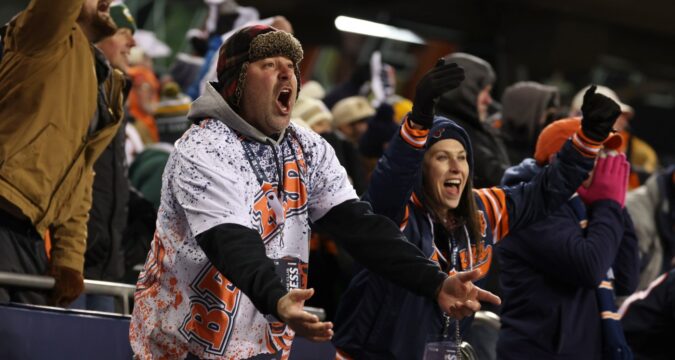
Just because Chicago’s “Cardiac” Bears seem to thrive on nail-biting finishes doesn’t mean the rest of us can handle it.
Ryan Lahey, cardiologist at the Bluhm Cardiovascular Institute at Northwestern Medicine Palos Hospital, reminds football fans to go easy on themselves during Sunday’s NFL playoff game, even if their beloved team doesn’t.
Fans may joke about experiencing “the grabber” during a fourth-quarter turnover but the reality is, ongoing, terrifying adrenaline rushes can land you in the hospital, particularly if you already have cardiac issues.
Playoff games can provide the “perfect storm” of conditions leading to a health event, Lahey said.
The stakes are high, the nachos are piled high and, for those inclined to wager on the outcome, the potential payoff can be personal.
“I hope (Coach) Ben Johnson can give us a little bit more consistency,” Lahey said. “Cardiologists in Chicago don’t need any more business.”
What can you do to ensure a last-second Hail Mary doesn’t land you on the sidelines?
Be mindful — of your diet, your alcohol consumption and your need to pause.
Lahey said the typical Super Bowl or playoff watch party buffet has wings, nachos, Chicago-style hot dogs and pizza, all of which are loaded with saturated fat and tons of added salt and can spike your blood pressure even before kickoff.
And, contrary to what TV commercials promote, alcohol does not make for a good mixer.
If you scored tickets, add bitter cold to the list of risk factors.
“There is some data and research to suggest that after major sporting events there is an increase in cardiovascular events,” Lahey said. “We certainly see that following the holidays, when people have been eating and drinking a bunch of things that aren’t really good for the heart. By the time they’re sobering up or coming down, they’re in an abnormal heart rhythm or heart failure and coming into the emergency room to seek medical attention.”
Piling on Chicago fans is the fact that we have a team that is inclined to fall behind early and save the fourth quarter for terrifying — albeit often astoundingly successful — turn-around wins.
Add hope, bragging rights and a long look back on the Bears’ last Super Bowl win and you have a veritable cardiac cocktail.
Lahey said normal response to intense emotional stress typically subsides quickly.
“Your face might feel flushed and your breathing will quicken,” he said. “For most people, these sensations will resolve within a few minutes.”
The warning signs of a serious heart event include chest pain that persists or radiates to the jaw or arm, nausea, vomiting or sweating that doesn’t go away, he said.
“If these feelings do not resolve within a few minutes, call 911 or go the nearest emergency department,” he said.
For people with underlying heart disease, high stress events bring increased risk for arrhythmias, chest pain and heart attacks.
“Many people are unaware they have cardiac disease until a stressful event triggers symptoms that reveal a more serious problem,” Lahey said. “It’s not uncommon for someone to have high blood pressure or other cardiac conditions and not know it.”
A lifelong Bears fan, Lahey commiserates with fans feeling the stress from the team’s tendency to come-from-behind while the clock is running down.
“I watched (last) Saturday’s game ‘behind enemy lines’ in Wisconsin,” he said. Being encircled by fans who might not be so happy about your team’s reversal of fortune can add to the anxiety.
A good offense means a better defense, Lahey said.
Consume in moderation. Use deep, slow breathing techniques to calm yourself down. If things get too intense, walk away or pause the TV. And be your own fan by keeping yourself in good shape year-round, he said.
Exercising two to three hours a week is great for your physical and mental health, he said. Twenty- to 30-minute workouts that raise your heart rate five days a week, while still enabling you to carry on a conversation, should meet that recommendation, he said.
“Certainly, as the Bears push farther and farther into the playoffs, the stakes are higher and higher,” he said.
OK, fans, now get out there and bring yourselves a personal win.
As for the team, well, is it asking too much for them to go up by four touchdowns in the first quarter so that the rest of us don’t have to brush up on CPR?
Donna Vickroy is an award-winning reporter, editor and columnist who worked for the Daily Southtown for 38 years. She can be reached at donnavickroy4@gmail.com.
https://www.chicagotribune.com/2026/01/14/vickroy-column-bears-football-heart-attack/
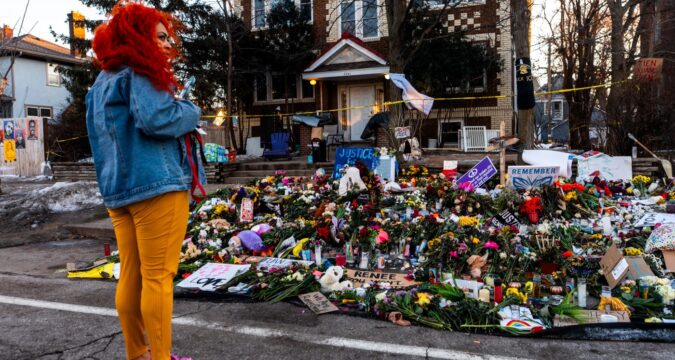
Family of Minnesota ICE shooting victim hires Chicago law firm to investigate killing
A week after a federal immigration agent shot and killed 37-year-old Renee Good in Minneapolis, her family has hired a Chicago-based law firm to investigate the shooting.
Romanucci & Blandin in a news release Wednesday said it’s been retained by Good’s family — including her partner, parents and four siblings — to secure accountability for her death and “honor her life with progress toward a kinder and more civil America.”
The prominent civil rights firm, which will be co-representing Good’s family alongside a Minneapolis attorney, will be launching a “civil investigation” into the Jan. 7 shooting, it stated, noting “transparency is essential in this case of national importance.”
No stranger to national cases, the firm co-represented the family of George Floyd after he was killed by Minneapolis police officer Derek Chauvin in 2020. The firm ultimately helped secure a $27 million settlement for Floyd’s family.
Renee Good. (Family photo)
Last week, Good, a U.S. citizen and mother of three, was shot in the head by an Immigration and Customs Enforcement officer on a residential road in Minneapolis. The Department of Homeland Security was quick to say the agent who killed Good was acting in self-defense, recalling claims from the agency in the aftermath of the two federal shootings in Chicago during Operation Midway Blitz. The shooting has prompted protests across the country, including Chicago and its suburbs, and calls for justice as tensions flare in Minneapolis.
After 64 days spent sweeping the Chicago area, Minnesota has become the latest target of President Donald Trump’s mass deportation campaign, with DHS pledging to send more than 2,000 immigration officers to the state in what the agency has touted will be its “largest operation ever.”
Romanucci & Blandin’s investigation comes in the wake of the state of Minnesota, joined by Minneapolis and St. Paul, filing suit against the Trump administration on Monday to halt or limit the surge. The state of Illinois and the city of Chicago are likewise suing the Trump administration in federal court over its “militarized” immigration enforcement tactics.
With their investigation, the attorneys representing Good’s family say they intend to share information learned on a rolling basis, maintaining “the community is not receiving transparency about this case elsewhere.”
Before Good was shot, she and her wife, Becca Good, were on their way to drop off their 6-year-old child at school when they saw federal enforcement activity in their Minneapolis neighborhood, Romanucci & Blandin said in their release Wednesday. Bystander videos and a video taken by the officer who fired at Good posted online show what happened next from several different angles, from officers approaching Good’s car to the moment she was shot. DHS has said the officer had been “fearing for his life, the lives of his fellow law enforcement officers and the safety of the public” when he opened fire. Local and state officials immediately cast doubt on the federal narrative.
Romanucci & Blandin, pointing to video footage of the shooting, said Good appeared to reverse her car and turn away from the agent who shot at her.
A top Justice Department official on Tuesday said the department currently sees no basis to open a criminal civil rights investigation into the killing of Good. An FBI probe is ongoing but without the involvement of the Minnesota Bureau of Criminal Apprehension, after the federal government blocked state investigators’ access to evidence and other information it would need to review the shooting.
Meanwhile, this week six federal prosecutors in Minnesota resigned over a push by the Justice Department to investigate Good’s widow and the department’s reluctance to investigate the agent who fired the shots, The New York Times reported, citing people with knowledge of the decision.
“People in Minneapolis and across this country truly, truly care about what happened to Renee Good,” Romanucci & Blandin founding partner Antonio Romanucci said in a statement, adding that the firm hopes its investigation yields better policing. “We will be that voice.”
The firm has been actively involved in immigration cases in the wake of Midway Blitz. After a 15-year-old U.S. citizen was detained by Border Patrol agents during a clash between agents and residents in a residential neighborhood in the city’s East Side neighborhood last October, the firm intervened to secure the teen’s release.
And the firm is currently representing more than a dozen U.S. citizens detained in Chicago through the course of the blitz.
The civil litigation team representing Good’s family will follow a “somewhat different process” from filing a lawsuit, for instance, against state or local law enforcement officers, which the attorneys say is already a challenging feat but stands to be even more complex against the federal government.
Still, this process “will not deter us in any way from fervently pursuing justice,” Romanucci said.
A person holds a sign reading “Good Rest in Power” during a vigil on Jan. 14, 2026, at a memorial near the site where Renee Good was killed a week earlier in Minneapolis, Minnesota. (Stephen Maturen/Getty)
Good’s family, in a statement provided by their attorneys, said Good was “the beautiful light of our family and brought joy to anyone we met.”
“She was our protector,” they remembered, “our shoulder to cry on, and our scintillating source of joy.”
They said they miss Good more than words can express.
The Associated Press contributed.

Ohio authorities say Lincoln Park resident Michael McKee, ex-husband of Monique Tepe, is responsible for killings
COLUMBUS, Ohio — Police in Ohio’s capital city said Wednesday that they have gathered enough evidence to link a man charged in the double homicide of his ex-wife and her husband in their Columbus home last month to the killings.
Columbus Police Chief Elaine Bryant said in an Associated Press interview that authorities now believe Michael David McKee, 39, a vascular surgeon who was living in Chicago, was the person seen walking down a dark alley near Monique and Spencer Tepe’s home in video footage from the night of the murders. His vehicle has also been identified traveling near the house, and a firearm found in his Illinois residence also traced to evidence at the scene, she said.
Lincoln Park man charged in murders of ex-wife and her dentist husband to be extradited to Ohio
An attorney representing McKee could not be identified through court listings.
His arrest Saturday capped off nearly two weeks of speculation surrounding the mysterious killings that attracted national attention. No obvious signs of forced entry were found at the Tepes’ home. Police also said no weapon was found there, and murder-suicide was not suspected. Further, nothing was stolen, and the couple’s two young children and their dog were left unharmed in the home.
“What we can tell you is that we have evidence linking the vehicle that he was driving to the crime scene. We also have evidence of him coming and going in that particular vehicle,” Bryant told the AP. “What I can also share with you is that there were multiple firearms taken from the property of McKee, and one of those firearms did match preliminarily from a NIBIN (ballistic) hit back to this actual homicide.”
Bryant said that the department wants the public to keep the tips coming. Investigators were able to follow up on every phone call, email and private tip shared from the community to the department and some of that information allowed them to gather enough evidence to make an arrest, she said.
That work culminated in the apprehension of McKee in Rockford, Illinois, where the hospital where he worked — OSF Saint Anthony Medical Center — has said it is cooperating with the investigation. He has been charged with premeditated aggravated murder in the shooting deaths. Monique Tepe, who divorced McKee in 2017, was 39. Her husband, a dentist whose absence from work that morning prompted the first call to police, was 37.
McKee waived his right to an extradition hearing on Monday during an appearance in the 17th Judicial Circuit Court in Winnebago County, Illinois, where he remains in jail. Bryant said officials are working out details of his return to Ohio, with no exact arrival date set. His next hearing in Winnebago County is scheduled for Jan. 23.
Columbus Mayor Andrew Ginther said Wednesday that the city doesn’t prioritize high-profile cases any more than others, noting that the city’s closure rate on criminal cases exceeds the national average. The city also celebrated in 2025 its lowest level of homicides and violent crime since 2007, Ginther said.
“Every case matters. Ones that receive national attention, and those that don’t,” he told the AP. “Every family deserves closure and for folks to be held accountable, and the rest of the community deserves to be safe when dangerous people are taken off the street.”
Chicago man charged in Ohio killing of his ex-wife and her husband, a dentist
Ginther said it is vital for central Ohioans to continue to grieve with the Tepes’ family, which includes two young children, and loved ones, as they cope with “such an unimaginable loss.”
“I want our community to wrap our arms around this family and these children for years to come,” he said.
Patrick Aftoora-Orsagos contributed to this report.
https://www.chicagotribune.com/2026/01/14/ohio-michael-mckee-killings/
Analysis: Havana’s Playbook Or Conspiracy Theory? Testing Washington’s Claim That Cuban Intel Fueled US Protests
Analysis: Havana’s Playbook Or Conspiracy Theory? Testing Washington’s Claim That Cuban Intel Fueled US Protests
Submitted by The Bureau’s Sam Cooper,
In the aftershock of the Trump administration’s special-forces extraction of Venezuelan President Nicolás Maduro, a new report from the Heritage Foundation advances a sweeping, Cold War–inflected thesis: that the real command post for much of Latin America’s authoritarian drift — and a significant driver of American street unrest since 2020 — is Havana.
Its most incendiary claim is also, arguably, the one most relevant to a Trump administration now tightening its focus on leftist heads of state from Mexico City to Bogotá: that Cuba’s communist regime, working through Venezuela and allied networks across Latin America, has sought to weaponize narcotics trafficking while also stoking social unrest inside the United States.
“Venezuela is rightly getting all the attention after the arrest of dictator Nicolas Maduro, but it is important to bear in mind that Cuba’s communist regime is the mastermind of Caracas’s plan to destabilize U.S. streets through narco-trafficking and political unrest,” Heritage senior fellow Mike Gonzalez writes, citing letters from two senior Venezuelan figures now imprisoned in the United States for their roles in “a narco-terrorism conspiracy,” who both portrayed the enterprise as part of a Cuban effort “to dismantle the moral fiber of America from within.”
In Gonzalez’s telling, the allegation is substantiated — though he is drawing heavily on witnesses whose motives, perhaps including bids for clemency, critics could question.
Hugo “El Pollo” Carvajal, a former Venezuelan intelligence chief, and Cliver Alcalá Cordones, a former senior Venezuelan military officer, both separately wrote to President Donald Trump, according to the Heritage report, accusing Cuba’s regime of masterminding narco and political conspiracies emanating from Venezuela.
The conspiracy, wrote Carvajal, “was suggested by the Cuban regime to Chávez in the mid-2000s,” and was “successfully executed with help from FARC, ELN [both Colombian guerilla groups cited in the DOJ’s indictment of Maduro), Cuban operatives, and Hezbollah.”
Gonzalez casts Cuba’s intelligence services as the hemisphere’s enduring “revolutionary operator”: training guerrillas, embedding security cadres inside allied states, and building political infrastructure designed to outlive the era of jungle insurgencies.
Venezuela under Hugo Chávez and Maduro, he argues, became Cuba’s richest proxy — financing Havana with oil, exporting the revolution’s methods, and, serving as a staging ground for narcotics and leftist terror networks that United States officials have cast as direct threats.
Moving to an element that many readers may find as implausible as any narco-conspiracy claim — and backing his argument with intelligence records and open-source material — Gonzalez writes that, “From training Marxist terrorists in the 1960s, to the pro-Hamas mayhem at U.S. universities in 2024 and 2025, to the spread of transnational crime syndicates in U.S. cities, Cuba’s rulers have long plotted America’s demise.”
Heritage can be viewed as an ideologically driven, controversial, strongly conservative-leaning institution, but its work can also carry added signaling value in a Trump-era Washington because it often functions as a personnel and policy pipeline.
CIA Director John Ratcliffe has had ties to Heritage and helped shape Project 2025-era thinking on intelligence reform—linking the report’s framing to currents inside the administration itself.
Heritage’s new Cuban influence report is framed as a 60-year flow chart, structured around a turning point in Havana’s own revolutionary mythology: the Tricontinental Conference.
In 1966, Fidel Castro convened revolutionary movements, party cadres, and aligned delegations from Africa, Asia, and Latin America in Cuba to coordinate what the regime cast as a global campaign against “Yanki imperialism” — and what Gonzalez depicts as a blueprint for exporting upheaval through training, financing, propaganda, and the patient building of transnational networks.
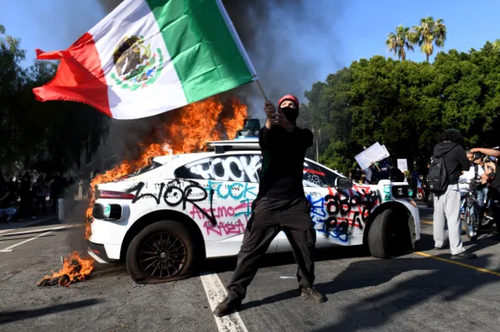
Most readers will seize on the report’s most recent — and most incendiary — contention: that Black Lives Matter and other leftist social-justice groups did not merely ride the wave of outrage after George Floyd died in May 2020, during a police arrest in Minneapolis, but helped accelerate and channel it in ways that, in Heritage’s telling, served a longer-running Cuban strategy of political destabilization.
To support that framing, the report points to what it describes as coordination across the Western Hemisphere — Chile, the United States, and Colombia — from 2019 to 2021.
It contends there is “much evidence of Cuba and Venezuela attempting to destabilize the United States and its allies in the Americas,” and coordinating those efforts through the Foro de São Paulo (the São Paulo Forum), which Heritage depicts as a Marxist convening infrastructure that reactivated in 2019, including a New York gathering attended by aligned activists and representatives of leftist political parties across Latin America.
“From that point on,” Gonzalez writes, countries in the Western Hemisphere “suddenly started experiencing street riots that led to political change.”
Chile and Colombia saw major protests in 2019; protests in Colombia were “repeated and magnified” in 2021. Both, the report says, contributed to electoral outcomes — with the election of Gabriel Boric in Chile and Gustavo Petro in Colombia.
In the United States, Gonzalez writes, the George Floyd riots in 2020 “almost came close to leading to societal overhaul.” He adds that, aside from what he describes as the long-standing relationship between BLM and Maduro — and between BLM and Bolivia’s Evo Morales — Black Lives Matter has “taken parts in Foro conferences,” including one in the Washington, D.C., area on July 17, 2017, where one of the stated goals was to create “strategic links” with groups inside the United States.
To ground that claim, Gonzalez leans heavily on a prior Heritage special report from 2024 that examined what it called an interlocking “ecosystem” of organizations behind pro-Palestinian protests and parts of the Black Lives Matter movement.
In that earlier report, Heritage highlighted the People’s Forum in New York, led by Manolo De Los Santos, portraying him as a Cuba-aligned organizer who helped build movement infrastructure and, according to Heritage, mobilized activists ahead of the April 2024 takeover of Hamilton Hall at Columbia University.
Separately from the new Heritage report, open-source monitoring of the online narrative in the hours following Maduro’s extraction pointed to the same organizing source driving a storyline of “kidnapping,” illegality, and U.S. imperial overreach — including messaging from the People’s Forum and its director, self-acknowledged Marxist Manolo De Los Santos.
Within hours, similar language appeared in statements from prominent U.S. left figures — among them New York City Mayor Zohran Mamdani, who publicly condemned the operation and characterized it as unlawful.
The new Heritage report expands the frame: it argues that the São Paulo Forum has extended its outreach to U.S. groups invited to conferences over the years — naming, among others, Black Lives Matter, Democratic Socialists of America, Code Pink, and the ANSWER Coalition — and portrays these connections as part of a deliberate strategy to create “strategic links” inside the United States.
Some of the report’s most serious allegations rest on contested or difficult-to-verify claims drawn from opinion journalism rather than court records.
One example is a 2025 Washington Examiner column by Heritage report author Gonzalez that cites an unnamed former Venezuelan official claiming that Hugo Chávez personally provided suitcases of cash — the source estimates “at least $20 million” — to a U.S. activist before she went on to co-found Black Lives Matter, describing it as funding meant to export street protests into the United States.
“Chávez ordered his people to hand the suitcases to them — suitcases filled with dollars, at least $20 million,” the defector told him, Gonzalez’s column says, adding that the purported defector “is cooperating with and providing evidence to the U.S. government on other subjects, particularly the close connection between the Cartel de los Soles narco group and the Venezuelan state.”
According to Gonzalez’s column, the defector claimed, “The meeting took place at the Miraflores presidential palace, in a huge suite called the Japanese Suite, where private meetings are held.”
Gonzalez presents that alleged episode as emblematic: the revolution as a transnational political-financial project with paid beneficiaries and operatives in the United States, not merely an ideologically motivated movement.
But the Heritage thesis is not primarily about money.
It is about intelligence tradecraft — and the report’s central claim is that Cuban operatives embed themselves within allied regimes to “coup-proof” leaders by monitoring militaries and securing palaces, often maintaining loyalty to Havana rather than the host nation.
Gonzalez cites a 2024 essay by former Mexican foreign minister Jorge G. Castañeda arguing that thousands of Cubans have been stationed in Venezuela over the years — including security advisers and intelligence agents — to help keep Maduro in power, and that this Cuban presence may have constrained Maduro’s room to maneuver as U.S. pressure intensified.
The report’s historical flow chart then moves into Central America, leaning on Washington’s own record as evidentiary scaffolding.
Gonzalez highlights a 1978 U.S. State Department analysis written a year before the Sandinistas toppled Nicaragua’s dictator Anastasio Somoza. The document, as quoted in the Heritage report, said that “since the FSLN (Sandinista National Liberation Front) was formed in the early 1960s,” the Sandinistas “have looked to Cuba for ideological inspiration, strategic guidance, tactical training, material support, and sanctuary,” and that “throughout the FSLN’s existence, Cuba has been a training site.”
The report argues that Havana’s method then evolved — not away from revolutionary ends, but away from overt insurgency as the primary tactic.
Gonzalez leans on what he presents as the São Paulo Forum’s blueprint “formula” for leftist politicians in the Western Hemisphere: de-emphasize Marxism, run as reformers, win elections — and then, once in office, rewrite the rules. He points to Colombia’s current president, Gustavo Petro, as both a contemporary example and, in the report’s telling, an unusually candid witness to earlier Cuban involvement.
Petro, a former member of the leftist insurgent group M-19, is quoted as saying: “Fidel Castro helped M-19 in many of its Colombian actions and, we should admit it, M-19 troops trained in Cuba.”
Petro — who, in recent weeks, has also shown signs of seeking a détente with Washington, softening some of his fiercest rhetoric — had previously, in what Gonzalez calls a “loose-lipped” moment, “also revealed that Mexico’s new President Claudia Sheinbaum was also a secret M-19 asset,” quoting Petro calling her “a collaborator and militant of M-19 in Mexico.”
From there, Gonzalez lists what he presents as the cascading regional success of Castro’s influence model: “This formula worked in 1998 in Venezuela with the election of Hugo Chavez, the (São Paulo Forum’s) first triumph and a dictator who went on to use his country’s oil wealth to keep Castro’s Cuba afloat.” Lula was elected in Brazil in 2003; Evo Morales in Bolivia in 2005; Rafael Correa in Ecuador and Manuel Zelaya in Honduras in 2006; and Ollanta Humala in Peru in 2011 — “all Marxists,” the report says, who “obscured their ideology and ran as reformists,” and all São Paulo Forum participants.
Taken together, the report advances a unifying thesis: social unrest, street violence, and narco-terror cannot be understood as separate problems. They are instruments — in this view — of an intelligence-led revolutionary strategy refined over six decades, updated for the age of social media and protest politics, and funded for years by Venezuela’s oil.
That thesis also reads as a political finger to the wind — one that seems to match the rhetoric coming from the White House now: that the Trump administration’s Venezuela operation is not the end of a campaign, but the opening move in a broader rollback of Marxist-aligned regimes.
What the report does not do — and cannot do, on its own — is prove a single controlling hand behind every riot, protest, or crime wave in the United States since 2020. It assembles a narrative from history, open sources, and United States government statements, then asks readers to see continuity.
Tyler Durden
Wed, 01/14/2026 – 18:30
Around the Southland: Palos students assemble treat bags for McDonald House, and more
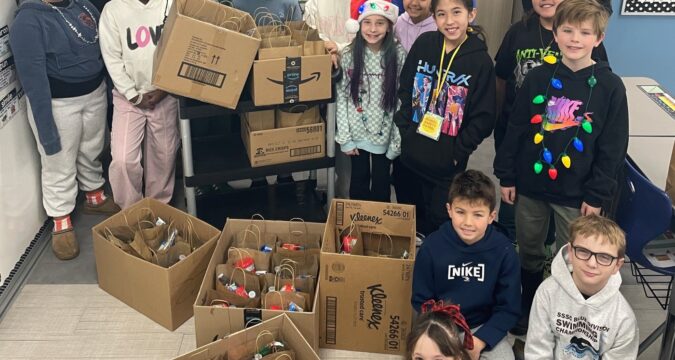
Palos students assemble treat bags for McDonald House
The Palos East Elementary School Student Council assembled treat bags for Ronald McDonald House in Oak Lawn, which provides meals and accommodations for relatives of patients at the nearby Advocate Children’s Hospital.
Assembling the treat bags was part of the students’ pre-holiday community service project. For the project, students volunteered to come in before school started to assemble the bags, which filled seven boxes.
Student council advisor Cathy Casey noted that the bags would be brought to the nonprofit organization before the holiday.
Brush control volunteers needed at Will County preserves
The Forest Preserve District of Will County has planned a series of volunteer mornings for area residents to give back to nature.
Volunteers are needed Jan. 19 at Rock Run Preserve – Black Road Access in Joliet, Jan. 22 at Hickory Creek Preserve – Hickory Creek Junction in Frankfort Township, Feb. 7 at Sugar Creek Preserve in Joliet, Feb. 12 at Rock Run Preserve, Feb. 22 at Hickory Creek Preserve – LaPorte Road Access in Mokena, March 1 at Monee Reservoir in Monee Township, March 5 at Riverview Farmstead Preserve in Naperville and March 14 at Hickory Creek Preserve – Hickory Creek Junction.
The sessions take place 9 a.m. to noon and are designed for those 10 and older. This season features brush control.
Volunteers should dress for the weather, getting dirty and being near a fire. Long pants, sturdy shoes and socks covering the ankles are recommended. They also should bring snacks and water.
Space is limited and registration is required. Waivers also must be signed. Check listings at ReconnectWithNature.org or call 815-722-7364.
Moraine Valley faculty show their work
The Moraine Valley Community College Robert F. DeCaprio Art Gallery presents its annual display of work by faculty at the Art and Design Faculty Exhibition through Feb. 1 in the Fine and Performing Arts Center, 9000 W. College Parkway in Palos Hills.
An opening reception is planned for 11 a.m. to 1 p.m. Jan. 29. The gallery is open 9 a.m. to 5 p.m. Monday through Friday.
The exhibit, which is free, shows off the proficiency and expertise of more than 10 of the community college’s faculty in various themes, medias and styles. The artists include Rebecca Crivellone, Chris Matusek, Hannah Mobley, Ken Beckwith, Kirin Kane, Erik La Gattuta, Tyler Hewitt, Kevin Daly and others.
Information is at morainevalley.edu/fpac.
Orland Park engineering student joins revitalization project
Taha Ramahi, left, of Orland Park, a senior civil engineering major, was among five students at Slippery Rock University in Pennsylvania on the NOVA engineering team working on a capstone project with a local client. (Slippery Rock University)
Five senior civil engineering students at Slippery Rock University in Pennsylvania have been working on a plan to revitalize and improve the accessibility of Misty Hollow Residency, a place that allows scientists and eco-centric artists to show the public their projects.
Among them is Orland Park native Taha Ramahi. He is on the NOVA engineering team working on a capstone project with Misty Hollow’s founder, Asia Ward, such as improvements to the facility’s driveway and plans for a cabin for maple syrup extraction.
The team created a new driveway and recommended putting solar panels near the building in an open meadow to provide environmentally friendly power.
Ramahi noted that his surveying class was helpful but shared via a news release that “we also used things that we learned in transportation engineering, geotechnical engineering, water resource engineering, and structural engineering courses.”
Frankfort Chamber seeks outstanding women nominees
Jan. 23 is the nomination deadline for the Frankfort Chamber of Commer’s upcoming Women in Business Awards Night, which takes place during National Women’s History Month in March.
The event recognizes women “who lead, innovate, and make a meaningful impact through their businesses, careers, and community involvement,” a news release notes. Awards will be presented in categories such as community supporter, mentor, superwoman, sustainable change maker, family business, future star and behind the scenes.
Nominees must be current Frankfort chamber members, and nomination forms are available online.
The recognition night is from 5 to 9 p.m. March 19 at CD&Me in Frankfort.
Businesses who would like to become sponsors have until Feb. 20 to sign up. Raffle basket donations to benefit a nonprofit member of the chamber also are welcome before March 6.
Details are at www.frankfortchamber.com or by calling 815-469-3356.
Unwanted gifts find new home with low-income seniors
Leave It for Love is accepting donations of items through Jan. 31 that will be given to low-income seniors in the Chicago area.
Flossmoor resident Jennifer Molski founded the organization more than 20 years ago as a way to find homes for new and unused items that can bring joy to others.
Acceptable donations include hostess gifts, teacher gifts, personal care items, accessories, warm weather gear, holiday and household decor, nonperishable food and collectibles. Items not accepted include books, furniture and used clothing.
Collection begins each year the day after Thanksgiving and continues through the end of January. This year’s drop-off locations include Beyond Borders Cafe, 1036 Sterling Ave. in Flossmoor; Hammar’s Mercantile, 4 W. Nebraska St. in Frankfort; Loulou Belle, 2049 Ridge Road in Homewood; and Little Brothers, 355 N. Ashland Ave. in Chicago.
Information, including frequently asked questions, is at www.leaveitforlove.com.
Quilting guild returns to former projects
Heritage Quilters Guild of South Suburbia meets at 5:30 p.m. Jan. 20 at Redeemer Lutheran Church 651 E. 166th St. in South Holland.
This meeting is the annual service night. Attendees are asked to bring in unfinished items from past projects and will create kits, such as quilt of valor blocks, walker bags and remaining 3 ½-inch strip kits.
Soup and chili will be available. Information is at www.heritagequilts.org or by emailing heritagequilters@gmail.com.
Support group explores Alzheimer’s warning signs
The monthly Caregiver Support Group at Smith Village will meet at 6:30 p.m. Jan. 20 at the facility, 2320 W. 113th Place in Chicago.
Attendees can learn about the 10 warning signs of Alzheimer’s disease, such as changes in behavior and getting lost in familiar territory. Participants also can share their own experiences in identifying dementia in loved ones. Register for a spot by calling 773-474-7302.
Send news to communitynews@southtownstar.com.
Marcus Freeman says Notre Dame must ‘leave no doubt’ in future CFP discussions — and addresses NFL rumors
Notre Dame coach Marcus Freeman spoke with reporters Wednesday for the first time since the Irish were left out of the College Football Playoff.
He touched on multiple topics, including addressing some big additions through the transfer portal. Here are six things Freeman said.
1. Freeman is preaching to his players that they need to “leave no doubt” when it comes to the College Football Playoff.
The “Here Come the Irish” docuseries on Peacock recently showed the moment the Irish coaches and players found out that Alabama and Miami made the CFP over them.
Freeman stared at the video screen with his mouth open. Players put their faces in their hands.
Freeman said Wednesday that he thought the series properly captured the disappointment and confusion they felt. A month later, he said there’s still disappointment for the Irish, who had been ranked No. 9 or 10 up until the selection show. Miami, which will play Indiana in the national championship Monday, received the last spot in the 12-team CFP.
“But you have to move forward, and that’s what we’ve done as a program,” Freeman said. “That’s what I’ve done as a leader. As I reminded the group in our team meeting on Sunday, it’s our responsibility to make sure we leave no doubt. We can’t blame it on somebody else. Although I may be confused about some of the criteria and the committee’s rankings and all those different things, it’s our job as we move forward to make sure we leave no doubt.”
Freeman said he hasn’t second-guessed his team’s decision to skip a bowl game after being left out of the CFP. He said he was proud of how the captains made the decision and didn’t believe it was an emotional one.
He asked them again and again if they were sure about the decision.
“Because I didn’t want them to regret it,” Freeman said. “And they were convicted in their decision, and I fully support them.”
2. Freeman said his immediate future is to be the head coach at Notre Dame.
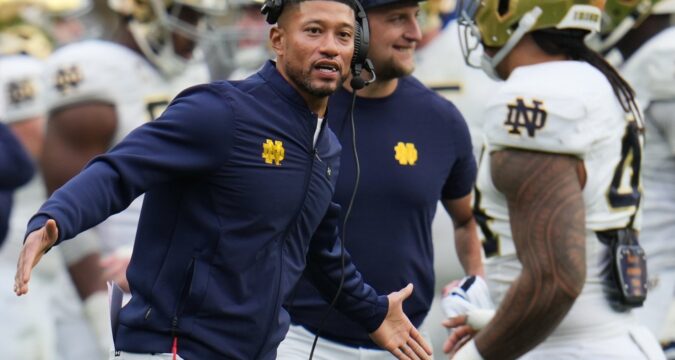
Notre Dame coach Marcus Freeman shakes hands with players as they warm up before a game against Stanford on Nov. 29, 2025, in Stanford, Calif. (Godofredo A. Vásquez/AP)
Freeman’s name has popped up a few times in this NFL hiring cycle. But he announced he was staying at Notre Dame on Dec. 29, when he posted on social media: “2026…run it back”
Freeman noted that he always tells his players that the future is uncertain.
“But everything I want and everything that I need personally can be achieved right here as a head coach of this program,” he said. “And so I hope this is something we have to address every year. I really do because it means we’re having a lot of success right here at Notre Dame.”
Freeman said he has used discussions with NFL teams to gather information and learn how he can be a better coach. He said he didn’t know if an NFL job would interest him at some point in the future.
“I don’t know enough about it,” he said.” Maybe sometime in the future, if it’s the right time and it’s what I think is right for me, then maybe I’ll pursue it. But I don’t love wasting time thinking about things that aren’t right in front of me, and so I don’t know what I will want in however much length of time from now. I know right now that I am as convicted and motivated to be the best head coach of the Notre Dame football program as I can be.”
3. Freeman believes the Notre Dame-USC rivalry will be revived in the future.
Last month, Notre Dame and USC put their 96-game rivalry series on pause because they couldn’t agree to the timing of the 2026 game. The Irish then scheduled BYU for a home-and-home series instead.
Freeman said he believes the rivalry is “important for college football” and the athletic department leaders will work to get it back at some point. But he said the proposed timing wasn’t best for Notre Dame and its 2026 CFP pursuit.
“I’m a competitive individual, right?” Freeman said. “And I want to go play anytime, anywhere, but at the same token, it’s important that I make decisions too that are best for the program. And to move a game that we were pretty sure was going to be Week 12 to Week 0 isn’t what’s best for our program. And they had to make decisions that were best for their program. I don’t blame them. They had to make decisions. We had to make decisions.”
4. Freeman said he “behaved in a respectful and professional manner while protecting my family” during a recent incident at his son’s wrestling event.
Freeman believes his family’s name was “dragged through the mud unnecessarily” over a recent interaction at a high school wrestling tournament.
An assistant high school wrestling coach, identified by the South Bend Tribune as Chris Fleeger, accused Freeman of battery at the event, saying Freeman pushed him with two hands. But the St. Joseph County prosecutor’s office said it determined through video evidence and interviews that no criminal battery occurred, and Freeman won’t be charged.
“I was confident in this outcome because I know I did not intentionally touch anyone in a rude, angry or disrespectful way,” Freeman said. “I’m glad this matter has been thoroughly reviewed and resolved.”
Freeman took issue of the initial reporting of the incident by the South Bend Tribune before all of the evidence was released.
Notre Dame said in a statement Sunday that the wrestling coach verbally accosted Freeman’s son, Vinny, a senior who signed to wrestle at Cornell, and Freeman and his wife tried to remove their son from the situation.
“I know I’m a public figure, and I understand the scrutiny that comes with that,” Freeman said. “That scrutiny should not extend to my children or any other child of a public figure.”
5. Freeman was happy to get a pair of wide receivers on Notre Dame’s second try.
The Irish recently announced the additions of former Ohio State wide receivers Quincy Porter and Mylan Graham.
Porter was the nation’s fifth-ranked wide receiver and the No. 1 player from New Jersey in the 2025 class. He had four catches for 59 yards in four games as an Ohio State freshman after missing some time with an injury.
Related Articles
Northern Illinois’ Jordan Lynch, ex-Chicago Bears Olin Kreutz and Jerry Azumah in College Football HOF class
QB Dante Moore will return to Oregon next season rather than declare for the NFL draft
Snoop Dogg’s NBA analyst role underscores why his on-air presence and global appeal keeps growing
Chicago Stars soccer asking Evanston for OK to play at Ryan Field
College football transfer portal tracker: Former Northwestern TE Hunter Welcing signs with Ohio State
Graham, who was a five-star prospect and the nation’s fifth-ranked receiver in 2024, had six catches for 93 yards in 2025.
“We knew a lot about them in the high school recruiting process, who they were, the type of players they are,” Freeman said. “And I’m glad we were able to get them.”
Notre Dame also landed in the portal former Alabama edge rusher Keon Keeley, who was a five-star recruit ranked No. 2 in the 247Sports composite rankings in 2023. Keeley originally had committed to Notre Dame out of high school before flipping to Alabama.
Freeman called it “a little delayed gratification.”
“I’ve always believed Keon was a Notre Dame kid coming from his high school,” he said. “He’s such a unique individual. He’s a very talented football player. … When he came on his visit, I’m like, ‘Yep, it’s the same Keon we recruited a couple years ago.’ And he fits here, and I’m excited for his future.”
6. Freeman gave injury updates on two of his linebackers.
Freeman said linebacker Drayk Bowen had surgery on the labrum in his hip, but he expects him to return in some capacity this spring.
The Irish expect linebacker Kyngstonn Viliamu-Asa to be back to full-go around the start of the 2026 season. He is recovering from an ACL injury.
https://www.chicagotribune.com/2026/01/14/notre-dame-marcus-freeman-cfp-nfl/