Category: News
Leones blanquean a Cangrejeros y extienden la Serie Final en Puerto Rico
Por The Associated Press
Los Leones de Ponce combinaron un dominio casi total desde el montículo y una ofensiva oportuna para imponerse este domingo por 7-0 a los Cangrejeros de Santurce y extender la Serie Final de la Liga de Béisbol Profesional Roberto Clemente.
Bryant Salgado encabezó la joya de pitcheo al lanzar siete entradas sin permitir hits, con siete ponches, antes de ceder el relevo a Jalen Miller y Andrew Marrero. El intento de juego sin hits ni carreras se rompió con dos outs en la novena, cuando Johneshwy Fargas conectó un sencillo ante Marrero, el único imparable de Santurce en el partido.
A la ofensiva, Gabriel Cancel abrió la pizarra con un jonrón en la primera entrada y fue pieza clave en un racimo de cinco carreras en el quinto episodio, que incluyó un grand slam de Will Simoneit para ampliar la ventaja de Ponce. Matt Bottcher impulsó la séptima carrera con un sencillo en la octava.
La derrota fue para Eduardo Rivera (1-1), quien permitió dos carreras en cuatro entradas. Con el resultado, los Leones evitaron la eliminación y forzaron un sexto juego de la serie, que dominan los Cangrejeros 4-1, y que se disputará el martes en el Estadio Hiram Bithorn.
Águilas Cibaeñas triunfan y se mantienen con vida
Leody Taveras conectó un sencillo productor con dos outs en la novena entrada para romper el empate y guiar a las Águilas Cibaeñas a una victoria por 4-1 sobre los Leones del Escogido, el domingo, en la jornada 18 del Round Robin 2025-26 de la Liga Dominicana de Béisbol Profesional.
El encuentro se mantuvo igualado 1-1 hasta el noveno episodio, cuando Taveras disparó una línea al jardín central que impulsó a Fernando Peguero. Acto seguido, un rodado productor de Geraldo Perdomo y un error defensivo permitieron dos carreras más para asegurar el triunfo de las Águilas.
Richard Rodríguez (1-1) se acreditó la victoria tras lanzar la octava entrada, mientras que Matt Foster consiguió su segundo salvamento. La derrota fue para Roel Ramírez (0-1), quien permitió tres carreras en el noveno inning.
A la ofensiva, Taveras bateó de 3-2, con una anotada y una empujada, y Perdomo impulsó una carrera. Por los Leones, Sócrates Brito conectó un doble remolcador.
Con el primer lugar ya asegurado por los Leones del Escogido, la definición del segundo boleto a la Serie Final se resolverá entre los Toros del Este y las Águilas Cibaeñas.
Los Toros (11-6) terminaron el Round Robin con medio juego de ventaja sobre las Águilas (10-7), pero ambos equipos deberán disputar el partido pendiente del pasado viernes, suspendido por lluvia y reprogramado para este lunes en La Romana.
Si las Águilas ganan ese encuentro, forzarán un empate en el segundo lugar y será necesario un juego extra para definir al finalista, ya que los Toros ganaron la serie particular 4-1 en el Todos contra Todos. En caso de triunfo de los Toros, avanzarán directamente a la Serie Final.
Caribes vencen a Bravos y toman el liderato
Los Caribes de Anzoátegui derrotaron este domingo por 8-4 a los Bravos de Margarita y aprovecharon la derrota de los Cardenales de Lara para asumir el liderato del round robin semifinal de la Liga Venezolana de Béisbol.
Diego Infante bateó de 5-3, con una carrera anotada y dos producidas; Herlis Rodríguez se fue de 5-3, con un doble y una remolcada; y Aldrem Corredor conectó de 3-2, con un jonrón solitario y tres carreras anotadas, para encabezar la ofensiva de los ganadores.
En Barquisimeto, Andrés Chaparro conectó un jonrón de tres carreras en la sexta entrada para empatar el encuentro, y Arturo Nieto impulsó la carrera de la diferencia con un sencillo en la novena, en la victoria de las Águilas del Zulia por 4-3 sobre los Cardenales de Lara, que cedieron momentáneamente el liderato.
Tras 16 jornadas del Todos contra Todos, Caribes lideran con marca de 7-4, seguidos por Cardenales de Lara (6-4), Águilas del Zulia (6-5), Navegantes del Magallanes (4-6) y Bravos de Margarita (3-7).
“60 Minutes” difunde informe sobre deportaciones de Trump que fue retirado abruptamente hace un mes
Por DAVID BAUDER
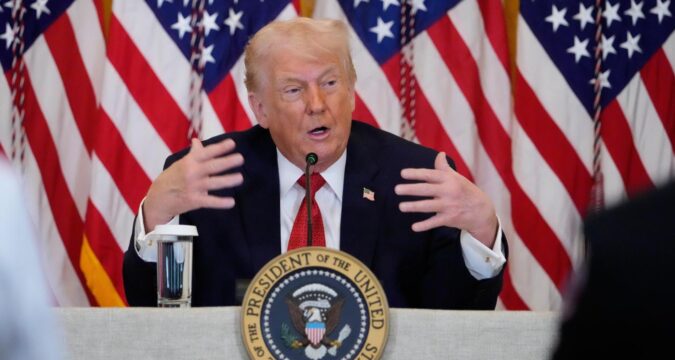
El semanario “60 Minutes” emitió el domingo su reportaje sobre las deportaciones ordenadas por el gobierno del presidente Donald Trump que fue retirado abruptamente de su programación hace un mes, lo que desencadenó una batalla interna sobre la presión política que a la larga salió a la luz.
La corresponsal Sharyn Alfonsi no hizo referencia a su disputa con la editora en jefe de CBS News, Bari Weiss, en el reportaje sobre los deportados que habían sido enviados al Centro de Confinamiento del Terrorismo (CECOT), una prisión de máxima seguridad en El Salvador. Cuando el segmento fue eliminado del episodio del 21 de diciembre por orden de Weiss, Alfonsi dijo a sus colegas de “60 Minutes” que “no fue una decisión editorial, sino política”.
Weiss había argumentado que la historia no reflejaba suficientemente el punto de vista del gobierno ni decía nada nuevo de la información que ya había sido reportada por otros medios de comunicación anteriormente.
La historia difundida el domingo no incluyó entrevistas en cámara con funcionarios del gobierno de Trump. Sin embargo, sí incluyó declaraciones de la Casa Blanca y del Departamento de Seguridad Nacional que no formaban parte de lo que Alfonsi había utilizado antes de que su historia fuera retirada. Algunas de las declaraciones, que se publicaron en su totalidad en el sitio web de “60 Minutes”, estaban fechadas antes del 21 de diciembre.
“Desde noviembre, ’60 Minutes’ ha efectuado varios intentos para entrevistar en cámara a funcionarios clave del gobierno de Trump sobre nuestra historia”, señaló Alfonsi. “Rechazaron nuestras solicitudes”.
Alfonsi no respondió de momento a un mensaje que le dejó The Associated Press el domingo. Ella dijo en su correo electrónico que la negativa del gobierno a consentir entrevistas frente a la cámara fue una maniobra táctica pensada para matar la historia.
CBS dice que sí iba a emitir el reportaje
En un comunicado, CBS News indicó que su “liderazgo siempre ha estado comprometido a transmitir el artículo de ’60 Minutes’ sobre el CECOT en cuanto estuviera listo. Esta noche, los espectadores podrán verlo, junto con otras historias importantes, todas las cuales hablan de la independencia de CBS News y el poder de nuestra narrativa”.
El reportaje de Alfonsi fue el segundo de tres en el programa del domingo, siendo la historia principal el informe de Cecilia Vega desde Minneapolis sobre las labores del ICE para controlar la inmigración y las protestas contra sus tácticas.
La decisión inicial de dejar de lado la historia de Alfonsi sobre el CECOT se convirtió en un punto de fricción para algunos críticos, quienes dijeron que el nombramiento de Weiss —fundadora del sitio web Free Press y sin experiencia previa en noticias televisivas— representaba un intento del nuevo liderazgo corporativo de la cadena de congraciarse con Trump.
Aunque fue retirada de la emisión en diciembre, por error la historia original de Alfonsi quedó disponible en línea. CBS News había enviado una versión del semanario a Global Television, una cadena que emite “60 Minutes” en Canadá, que la publicó en su sitio web antes del cambio de última hora para retirar el artículo.
Eso les permitió a los espectadores atentos ver lo que Weiss había rechazado, lo cual les dio la oportunidad de compararlo con lo que “60 Minutes” finalmente emitió.
El cuerpo de la historia no cambió. Incluía un breve clip del presidente Donald Trump diciendo que los operadores de la prisión “no se andan con rodeos”, y otro de la secretaria de prensa de la Casa Blanca, Karoline Leavitt, diciendo que “monstruos atroces, violadores, asesinos, agresores sexuales, depredadores que no tienen derecho a estar en este país” fueron enviados allí.
La introducción de Alfonsi fue actualizada para comenzar con el operativo estadounidense del 3 de enero en el que fue capturado el presidente venezolano Nicolás Maduro, actualmente bajo custodia de Estados Unidos. Ella cambió el final de la historia para incluir el comentario del gobierno, incluida su explicación de por qué no había proporcionado registros detallados sobre los migrantes enviados a El Salvador.
El gobierno también proporcionó fotos de tatuajes que llevaban los dos migrantes entrevistados por Alfonsi, incluida una esvástica que el entrevistado dijo haberse hecho cuando era adolescente sin saber lo que significaba.
La relación entre CBS y el gobierno ha evolucionado
Desde el nombramiento de Weiss, los funcionarios del gobierno de Trump han sido más visibles en CBS News, en entrevistas que ella a veces ayudó a organizar. El propio presidente fue entrevistado por Norah O’Donnell en “60 Minutes” el 2 de noviembre.
The New York Times informó el sábado que, después de que Trump fuera entrevistado la semana pasada por el nuevo presentador de “CBS Evening News”, Tony Dokoupil, Leavitt dijo a la cadena que “los demandaremos hasta dejarlos sin dinero” si la entrevista no se difundía completa.
La entrevista completa de 13 minutos fue transmitida el martes, un paso inusual para uno de los noticieros vespertinos de las cadenas de televisión, un resumen de media hora de las historias más importantes del día. CBS dijo a The Times que había decidido emitir la entrevista sin editar en el momento en que fue programada.
En el pasado, Trump ha objetado cómo se han editado sus entrevistas, incluida la publicación de una transcripción sin editar de una entrevista realizada por Lesley Stahl de “60 Minutes” en 2020.
___
Esta historia fue traducida del inglés por un editor de AP con la ayuda de una herramienta de inteligencia artificial generativa.
Venezuela, Silver And Greenland: How The U.S.-China Power Split Is Reshaping the World
Venezuela, Silver And Greenland: How The U.S.-China Power Split Is Reshaping the World
Submitted by Thomas Kolbe
America’s intervention in Venezuela is just days old, and the world seems unable to settle. The heated debate over Greenland’s future overshadows the main thread of a new world order emerging—one that is being decided between the U.S. and China. Europe, for now, is relegated to the role of a progressively anxious bystander.
In recent weeks, much speculation has surrounded the background and consequences of the U.S. intervention in Venezuela on January 3. On the surface, political commentators and mainstream media focus largely on Venezuelan heavy oil’s role and future. And they are right: if the U.S. manages to revive the mostly idle capacities via its domestic production industry—especially through firms like Chevron, ConocoPhillips, and Exxon—a significant geopolitical lever emerges.
This lever primarily reshapes the negotiation matrix and dynamics between Washington and Beijing. China requires this oil for its maritime expansion; the U.S., in turn, for refining capacity in the southern states, particularly Texas. Controlling exports to China could strengthen America’s negotiating position on rare earths—a pressure point China has repeatedly wielded, even against European companies. Potentially, the U.S. could also pressure Beijing and curb the subsidized Chinese export machine. These are substantial arguments on the path to U.S. reindustrialization.
Simultaneously, discussions suggest the U.S. government’s core aim is to push back Chinese influence in South American key resource markets—echoing the Monroe Doctrine. China’s response to Nicolás Maduro’s detention was surprisingly restrained. Beyond the expected diplomatic protest, Canadian Prime Minister Mark Carney’s visit to Beijing drew attention. Canada, as a resource giant, increasingly plays the counterweight to Donald Trump’s administration.
Alberta, Greenland, and the Subtle Shifts
Carney spoke over the weekend of discussions with China’s leadership on a new world order—a multipolar global order no longer centered on the United States. For China, the point was clear: Canada is effectively being pushed out of the U.S. refining business due to the planned reopening of Venezuelan oil fields. Canadian heavy oil is of high interest to China, which must now find alternative markets to counter growing U.S. pressure.
A minor footnote deserves attention: alongside the media frenzy over Greenland—a debate in Europe elevated to a NATO survival question due to the island’s resource wealth and strategic waterways—another discussion is emerging in the U.S. and Canada: the future of Alberta. President Trump has repeatedly referenced this, opening the door to secession speculation. Could a referendum—still speculative—result in Canada losing access to a significant portion of its resources if Albertans vote for independence? This debate merits close monitoring, as it could offer deep insights into future resource markets and geopolitical control.
Strategic Metal: Silver
Maduro’s detention opens the U.S. potential insight into South American trade relations with China, particularly in resources. Key questions remain: which quantities were transferred outside official trade balances, which resources specifically, and to what extent were U.S. sanctions circumvented? These factors will likely play a decisive role in the coming years as the global economy decouples.
If it turns out that Venezuela exported strategically important resources like silver to China in significant amounts, the U.S. could now fundamentally alter the dynamics of the global resource order. The core question arises: was the American intervention really only about Venezuelan heavy oil?
Last summer, the U.S. officially declared silver a strategic metal. Since then, silver prices have surged, confirming suspicions that both China and the U.S. are stockpiling heavily. Silver is indispensable for building AI data center infrastructure and electric motors.
There is also a monetary dimension: growing U.S. and Chinese concentration of strategic metals increases pressure on Europe’s currency system. The world increasingly moves toward metal-backed monetary systems, with central banks hoarding for balance-sheet stability. Metals are gaining global weight as a stabilizing economic and financial foundation.
China now enforces a comparatively strict silver export regime. Industrial demand is expected to rise sharply in coming years, making questions about Venezuela’s actual resource flows crucial—far beyond oil.
Control of key sea routes, systematic displacement of Chinese presence in the Panama Canal and U.S. West Coast ports, and securing access to strategic resources—including Greenland—regardless of Europe’s stance, are elements of a broader strategy. The U.S. is forcing a bifurcation: a geopolitical division into two spheres of influence—U.S. and Chinese.
This split has been decades in the making, accelerated by China’s rise. Historically, it is hard to halt without risking major military conflict. Coordination between the U.S. and China in this economic decoupling is key to minimizing conflict.
Bifurcation of World Order
The U.S. is determined to consolidate its role in the Western Hemisphere and—likely in coordination with Beijing and Moscow—gradually retreat into its self-defined power zone. This is not weakness but strategic calculation in a fragmented world order.
Regarding the so-called Greenland crisis: the EU plays no real role in the global resource scramble. European states import roughly 60% of their energy. The failed attempt to secure resources from Russia via regime change and a defeat in Ukraine highlights the EU’s geopolitical impotence.
Deploying a small European force to Greenland to limit U.S. influence underscores Europe-U.S. tensions. Trump responded by raising tariffs by 10%, threatening 25% if Europe’s stance did not change—revealing the stark asymmetry of power. Brussels appears as a paper giant.
Given this imbalance, Europe’s failure to forge a political alliance to adopt a cooperative U.S. approach is puzzling. Brussels and London opt for confrontation, a path likely leading to further economic losses. Europe’s strength lies in aligning with U.S. market regimes, abandoning hidden climate protectionism, and activating its robust domestic market. Geopolitically, the fight is lost, only recoverable via sensible economic policy.
Attempts via Mercosur to secure trade leeway in South America have been underwhelming. The agreement largely enforces Brussels’ climate regulations, already straining European business, leaving true free trade as distant as ever.
Tyler Durden
Sun, 01/18/2026 – 22:10
Los Rams avanzan al juego de campeonato de la Conferencia Nacional al vencer 20-17 a los Bears
CHICAGO (AP) — Los Rams avanzan al juego de campeonato de la Conferencia Nacional al vencer 20-17 a los Bears.
Coco Gauff avanza a la segunda ronda del Abierto de Australia pese a problemas con su saque
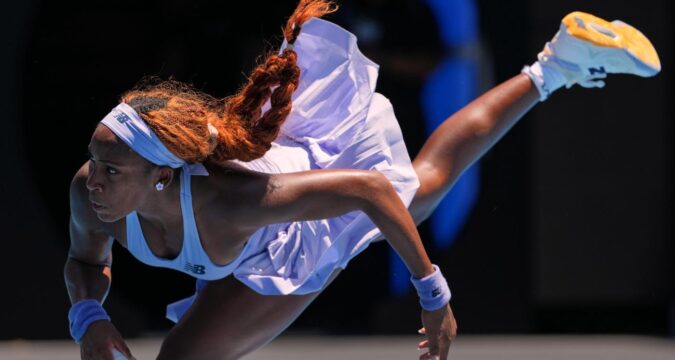
MELBOURNE, Australia (AP) — La tercera favorita, Coco Gauff, tuvo algunas dificultades familiares con su servicio, pero aún así tuvo la clase y el poder suficientes para derrotar a Kamilla Rakhimova 6-2, 6-3 el lunes en un partido de primera ronda en el Abierto de Australia.
Gauff ha ganado dos títulos de Grand Slam, pero nunca ha pasado de las semifinales en Melbourne Park. Fue eliminada en los cuartos de final el año pasado.
La estadounidense ha tenido problemas con las dobles faltas y acumuló 431 en 2025 en el Tour de la WTA, con diferencia la mayor cantidad de cualquier jugadora. Nadie más tuvo más de 300. Gauff tuvo seis en el primer set en la victoria sobre Rakhimova, y solo una en el segundo.
La joven de 21 años ha estado trabajando en su servicio durante los últimos meses y practicó un poco más durante una pausa de confort en el partido en la Rod Laver Arena con Rakhimova.
Gauff se enfrentará a la zurda Olga Danilovic en la segunda ronda. Danilovic derrotó a Venus Williams, de 45 años, el domingo en un partido de primera ronda, lo que eliminó la posibilidad de que las dos estadounidenses se enfrentaran.
“No hay muchas (jugadoras zurdas) en el Tour, pero Olga es una gran jugadora, ha vencido a algunas de las mejores, así que va a ser un partido difícil”, comentó Gauff.
Aryna Sabalenka es la cabeza de serie número uno en Australia, seguida por Iga Swiatek.

A taller Kyler Payne keeps growing his inside-outside game for Waubonsie Valley. ‘Do some of those things.’
Sophomore power forward Kyler Payne isn’t exactly an old school high school big man, and Waubonsie Valley coach Andrew Schweitzer is just fine with that.
Sure, the 6-foot-7 Payne can catch the ball down low, post up a defender and use his size and strength to score inside as well as battle in traffic in the lane for rebounds.
But he has additional shooting and ball-handling skills, and the Warriors are more than happy about that.
“The game’s changing,” said Payne, who’s two inches taller than when he walked into Waubonsie. “I have to learn how to do some of those things because I don’t think I’m gonna grow much more.
“I’ve always been the tallest in my class, but if I want to play at the next level, I have to learn how to do some of those things.”
Demonstrating those growing skills as the season progress, Payne caught fire in the second half Saturday afternoon as Waubonsie rallied from a 14-point deficit in the third quarter for a 57-50 win over Oak Park-River Forest at the Wheaton Warrenville South MLK Showcase.
Waubonsie Valley’s Kyler Payne (33) splits the defense against Oak Park-River Forest during a game in the Wheaton Warrenville South MLK Showcase on Saturday, Jan. 17, 2026. (Jon Cunningham / The Beacon-News)
Payne scored 12 of his 18 points in the second half and added nine rebounds and two blocked shots for Waubonsie (12-6). He led the comeback with juniors Kris Mporokoso and Evan Malushi.
Mporokoso, a 6-5 guard/forward, finished with a game-high 23 points and six rebounds. Malushi, a 5-9 guard, came off the bench to contribute 10 points, six rebounds and five assists.
Malushi also drew a timely charge in the second half.
“I told Evan he’s our Energizer Bunny,” Schweitzer said. “That’s what he does. He’s the smallest guy on the court, but he gets offensive rebounds, gets in the paint, creates for others.
Waubonsie Valley’s Kyler Payne (33) goes up for a shot against Oak Park-River Forest during a game in the Wheaton Warrenville South MLK Showcase on Saturday, Jan. 17, 2026. (Jon Cunningham / The Beacon-News)
“He’s a tough kid, man, and I can work with tough kids all day.”
Cameron Woods, a 6-foot senior guard, shot 6 of 8 from beyond the 3-point line and scored 22 points to lead Oak Park-River Forest (5-11), which played the night before.
Waubonsie hadn’t played in a week and then struggled early before rolling to a 54-39 victory over Rockford Jefferson in its second game of the day.
“We were a little rusty after a week off,” Payne said. “Before the (first) game, coach was telling us their record does not define who they are and how they play and that’s what we soon realized.
Waubonsie Valley’s Kyler Payne (33) protects the ball from Oak Park-River Forest’s Jerome Delaney during a game in the Wheaton Warrenville South MLK Showcase on Saturday, Jan. 17, 2026. (Jon Cunningham / The Beacon-News)
“At the first-quarter break, we’re like, ‘Oh wow, it’s going to be a game.’”
The comeback coincided with Schweitzer switching Waubonsie’s defense from its usual 1-2-2 zone to man-to-man.
“We had a great week of practice,” Schweitzer said. “But you can only do so much to simulate the game and they were more ready than us. They played with more energy.
“What’s the definition of insanity? Doing the same thing over and over again.”
It’s a bit of transitional year for the Warriors, who lost six of their top seven players to graduation.
“We don’t have the same length so we need more activity level,” Schweitzer said. “We need some anticipation and (Saturday) it was slow. I’m not gonna sit there and watch that keep happening.”
Waubonsie Valley’s Kyler Payne gets fouled as he shoots by Oak Park-River Forest’s Darren Law during a game in the Wheaton Warrenville South MLK Showcase on Saturday, Jan. 17, 2026. (Jon Cunningham / The Beacon-News)
That’s where Payne comes in. He showed some quick feet playing man-to-man and then again with 3:27 left in regulation. He made a spin move, scored in the lane and drew a foul.
Payne made the free throw to force a 48-48 tie. Mporokoso’s two free throws with 2:28 remaining gave Waubonsie the lead for good.
“He can shoot the 3-pointer — made four last week against Joliet Catholic,” Schweitzer said of Payne. “He can hit the midrange shot and finish most of the time.
“Sometimes, he even runs the point if we’re facing a team that runs a lot of pressure. That spin move? He has that in him. We’re excited about him and Kris. Our two best players are a junior and a sophomore.”
Bulls vencen 124-102 a Nets y dividen serie de ida y vuelta
Associated Press
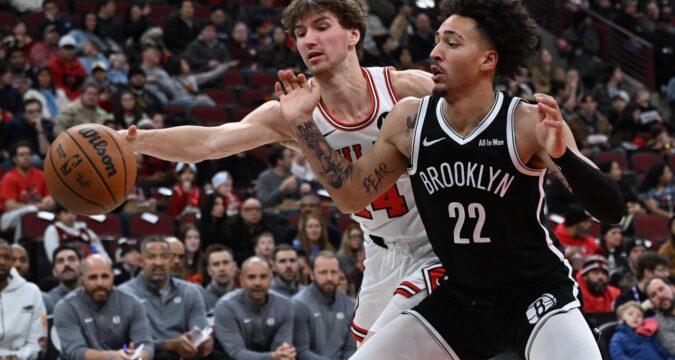
CHICAGO (AP) — Coby White anotó 24 puntos, Ayo Dosunmu consiguió 19 y los Bulls de Chicago vencieron el domingo por la noche 124-102 a los Nets de Brooklyn para dividir una serie de ida y vuelta en casa.
Los Nets ganaron el primer partido 112-109 el viernes por la noche en Brooklyn.
Nikola Vucevic añadió 17 puntos, 11 rebotes y seis asistencias para Chicago. Matas Buzelis también anotó 17 puntos.
Nolan Traore anotó 16 puntos para Brooklyn. Danny Wolf y Jalen Wilson encestaron 14 cada uno. Los Nets han perdido nueve de 11.
Dosunmu encestó triples al principio y al final de una racha de 10-0 al final del primer cuarto para ayudar a los Bulls a tomar una ventaja de 39-22 en el segundo. Chicago lideraba 70-51 al medio tiempo y la ventaja se mantuvo por encima de los 20 puntos durante la mayor parte de la segunda mitad.
Los Bulls promedian más de 20.000 aficionados en el United Center, pero había muchos asientos vacíos al inicio del partido, que comenzó 30 minutos después de que los Rams de Los Ángeles y los Bears iniciaran su juego de la ronda divisional de la NFC a unas pocas millas de distancia en Soldier Field.
___
Deportes en español AP: https://apnews.com/hub/deportes

One Chart Says Time To Reload On This Commodity
One Chart Says Time To Reload On This Commodity
The precious metals landscape in recent times has been nothing short of record-breaking. New highs in gold and silver, but some of that momentum has been blown off on Thursday after a softer tone from President Trump on Iran eased safe-haven demand. Platinum, palladium, and other metals, such as copper, also cooled today, but one strategic commodity has yet to move higher in the metals bull run.
That one strategic commodity that has yet to break out from multi-year lows is ammunition.
It’s a consumable input to military power, law enforcement capability, and civilian deterrence, and remains deeply depressed relative to the broader hard-asset complex.
The ammunition industry remains stuck in a multi-year glut because of overproduction runs from the Covid period, when firearm and ammo demand went through the roof because the Democratic Party’s dark-money NGOs unleashed protest and riots nationwide, and in some cases, burned entire city blocks down.
Los Angeles Riots 2025, Marxists Burn Waymos
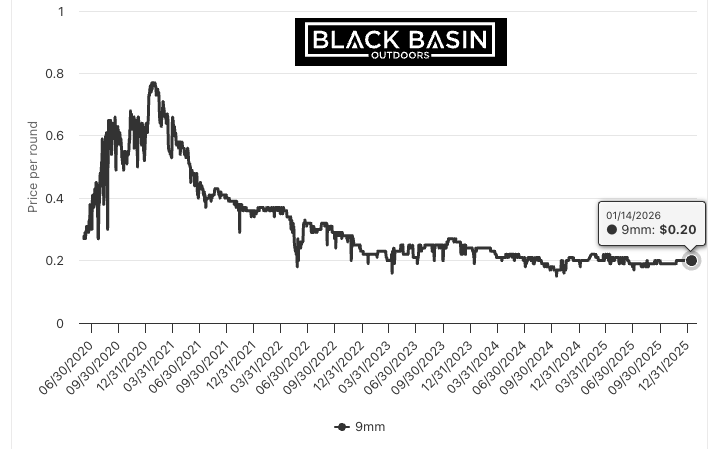
Now, with renewed left-wing chaos emerging in Minneapolis and a clearer understanding of how violence is used as a political pressure against the Trump administration by unhinged left-wing activists, the setup becomes even clearer. Elevated social unrest risk is returning – all other metals are much higher, but ammunition prices for the most common round in America, 9mm, remain depressed around 20 cents per round.
Ammunition checks every box for why it’s a strategic commodity: it only becomes valuable when chaos erupts or supplies are threatened.
It’s probably time to reload.
Tyler Durden
Sun, 01/18/2026 – 21:35
https://www.zerohedge.com/markets/one-chart-says-time-reload-commodity
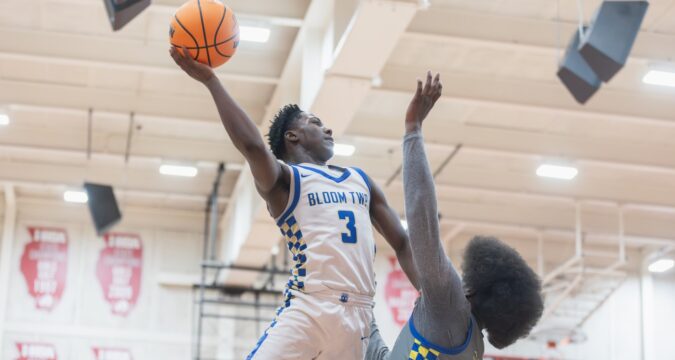
Before fouling out, freshman Keiwon Gulley comes up with the goods in OT for Bloom. ‘Do whatever else I could.’
Bloom’s Keiwon Gulley is too irrepressible and in the moment to ever feel sorry for himself.
In the final seconds Sunday afternoon, the 6-foot freshman point guard missed a free throw that would allow De La Salle to force overtime with a buzzer-beating 3-pointer.
“The rest of the players on the team look at me as a contributor and a leader,” Gulley said. “I felt like I let them down. I knew that I had to not worry about it and make up for it in other ways.
“Do whatever else I could out there.”
Gulley went out in the extra session and got things done, scoring the first four points of OT to spark the Blazing Trojans to a 67-56 win in the MLK Dream Shootout at Homewood-Flossmoor.
Gulley finished with a team-high 18 points for Bloom (11-8). Senior forward Troy Garner followed with 17 points to go along with seven rebounds and two blocked shots.
Bloom’s Keiwon Gulley (3) drives to the basket against De La Salle during the MLK Dream Shootout hosted by Homewood-Flossmoor in Flossmoor on Sunday, Jan. 18, 2026. (Troy Stolt / Daily Southtown)
Sophomore guard Stephen Dixon delivered a game-high 19 points for De La Salle (7-13). Junior forward Chaden Harvey, who hit the 3-pointer to create OT, had 13 points and seven rebounds.
After Gulley fouled out early in OT, sophomore guard Jaqun Harris scored seven of his 12 points for the Blazing Trojans. Harris marveled at Gulley’s ball pressure and the six steals he generated.
“He’s one of the best on the ball defenders in the state, regardless off class,” Harris said of Gulley. “I’ve seen it with my own eyes, and he has the motor that goes with it.
“He never lets up and always plays hard.”
Bloom’s Keiwon Gulley (3) shoots a free throw against De La Salle during the MLK Dream Shootout hosted by Homewood-Flossmoor in Flossmoor on Sunday, Jan. 18, 2026. (Troy Stolt / Daily Southtown)
Garner has watched that young talent blossom in his first year.
“Being around the south suburbs for so long, you see certain types of guys,” Garner said. “The moment I saw him come into the Bloom gym, I immediately looked upon Keiwon as a little brother.
“The way he impacts the game, I see him as a younger version of myself.”
Gulley, who is averaging nearly 14 points a game as a 15 year old, showed electric bounce off the dribble and ability to get to the basket Sunday. Defensive prowess has been his early calling card.
Bloom’s Keiwon Gulley (3) steals the ball from De La Salle’s Stephen Dixon (5) during the MLK Dream Shootout hosted by Homewood-Flossmoor in Flossmoor on Sunday, Jan. 18, 2026. (Troy Stolt / Daily Southtown)
“I’ve always had that dog in me,” Gulley said. “I love to go out there and disrupt passing lanes and be physical and play really hard defense.
“The coaches have put a lot of faith in me, and that’s really boosted my confidence. That’s helped me be a leader, and the best version of myself.”
Gulley’s play, composure and manner belie his youth, but he’s linked to Chicago basketball royalty. His older cousin is Cappie Pondexter, the legendary high school player at Marshall.
Pondexter, a WNBA standout, won an Olympic gold medal in 2008 with the U.S. national team.
“It meant so much to me growing up and watching her play because I got to see her play,” Gulley said. ”She really inspired me to want to become a player, and get involved in the game.”
Bloom’s Keiwon Gulley (3) takes a shot as De La Salle’s Caleb Henry (22) defends during the MLK Dream Shootout hosted by Homewood-Flossmoor in Flossmoor on Sunday, Jan. 18, 2026. (Troy Stolt / Daily Southtown)
Gulley’s quickness and speed in the open floor unlock Bloom’s attack. He assisted on three of Garner’s five baskets. He ended up with a team-best six assists.
“You see somebody like that, his competitive spirit and how he carries himself — that’s so big for me,” Garner said. “I always look out for him when I’m out there. I know he’ll make the play.”
Like most young players, decision-making is still a work in progress. He had two late offensive infractions that led to him fouling out.
Still, every game is an opportunity to show off his talents.
”My personality is outgoing and I like talking with people,” Gulley said. “I’m young. There are going to be mistakes. The rest of the team expects me to get it out of my head and play through it.”
Patrick Z. McGavin is a freelance reporter for the Daily Southtown.
https://www.chicagotribune.com/2026/01/18/keiwon-gulley-bloom-de-la-salle-ihsa-boys-basketball/

Ravens entrevistan a Robert Saleh de 49ers y Joe Brady de Bills para puesto de entrenador
Associated Press
OWINGS MILLS, Maryland, EE.UU. (AP) — Los Ravens de Baltimore han entrevistado al coordinador defensivo de los San Francisco 49ers, Robert Saleh, y al coordinador ofensivo de los Bills de Buffalo, Joe Brady, para su vacante de entrenador en jefe.
Los 49ers y los Bills fueron eliminados de los playoffs el sábado.
Saleh, en su segunda etapa dirigiendo la defensa de los 49ers, pasó más de tres años como entrenador de los Jets de Nueva York antes de ser despedido la temporada pasada.
Brady no ha sido entrenador en jefe, pero ha sido coordinador para los Bills y los Panthers de Carolina.
Los Ravens también han entrevistado a Mike McDaniel, Anthony Weaver, Jesse Minter, Jim Schwartz, Brian Flores, Kliff Kingsbury, Matt Nagy, Vance Joseph, Davis Webb, Klint Kubiak, Chris Shula y Nathan Scheelhaase. Kevin Stefanski fue entrevistado, pero posteriormente fuw contratado por los Falcons de Atlanta .
Los Ravens despidieron al entrenador John Harbaugh a principios de este mes después de 18 temporadas a cargo. Harbaugh y los Giants acordaron términos el sábado para que él se convierta en el entrenador de Nueva York después de que la franquicia rápidamente lo convirtiera en su principal candidato.
___
Deportes en español AP: https://apnews.com/hub/deportes