
Category: News

Funcionario UE dice que las amenazas de Trump desafían la seguridad y prosperidad de Europa
Por LORNE COOK
BRUSELAS (AP) — Las amenazas del presidente de Estados Unidos, Donald Trump, de anexionar Groenlandia e imponer aranceles a los partidarios del territorio ártico representan un desafío para la seguridad, los principios y la prosperidad de Europa, dijo el miércoles un alto funcionario de la UE.
“Todas estas tres dimensiones están siendo puestas a prueba en el momento actual de las relaciones transatlánticas”, afirmó el presidente del Consejo Europeo, António Costa. Ha convocado una cumbre de emergencia de los 27 líderes nacionales de la UE en Bruselas el jueves.
La determinación de Trump de “adquirir” la isla rica en minerales en la región ártica, por lo que él alega son razones de seguridad, ha socavado la confianza en Estados Unidos entre los aliados en Europa y Canadá.
Dinamarca enfureció a Trump después de enviar una fuerza militar de “reconocimiento” a Groenlandia, un territorio semiautónomo danés. Un pequeño número de tropas de varias naciones europeas se sumó, y Dinamarca está considerando una presencia militar a largo plazo allí.
Costa dijo que los líderes de la UE están unidos en “los principios del derecho internacional, la integridad territorial y la soberanía nacional”, algo que el bloque ha subrayado al defender a Ucrania contra la invasión de Rusia, y que ahora se ve amenazado en Groenlandia.
En un discurso ante los legisladores de la UE en Estrasburgo, Francia, también enfatizó que sólo “Dinamarca y Groenlandia pueden decidir su futuro”.
Insistió en que “más aranceles socavarían las relaciones transatlánticas y son incompatibles con el acuerdo comercial entre la UE y Estados Unidos”. Los legisladores deben respaldar ese acuerdo hecho en julio pasado, pero han amenazado con no hacerlo debido a las amenazas de aranceles de Trump.
Costa afirmó que “estamos listos para defendernos, a nuestros estados miembros, a nuestros ciudadanos, a nuestras empresas, contra cualquier forma de coerción. Y la Unión Europea tiene el poder y las herramientas para hacerlo”.
Las amenazas de Trump sobre Groenlandia han llevado a la acción a los líderes de la UE, que están replanteándose sus relaciones con Estados Unidos, su aliado de larga data y el miembro más poderoso de la OTAN.
“La apaciguamiento siempre es un signo de debilidad. Europa no puede permitirse ser débil, ni contra sus enemigos, ni contra su aliado”, publicó el martes en las redes sociales el primer ministro polaco Donald Tusk, durante mucho tiempo un firme defensor de los fuertes lazos transatlánticos.
“El apaciguamiento no significa resultados, solo humillación. La asertividad y la autoconfianza europeas se han convertido en la necesidad del momento”, escribió Tusk.
La presidenta de la Comisión Europea, Ursula von der Leyen, quien gestiona el comercio en nombre de los países de la UE, advirtió que el bloque está “en una encrucijada”. Si llegan los aranceles, dijo, “estamos completamente preparados para actuar, si es necesario, con unidad, urgencia y determinación”.
En Estrasburgo, dijo a los legisladores que la comisión está trabajando en “un aumento masivo de la inversión europea en Groenlandia” para fortalecer su economía e infraestructura, así como en una nueva estrategia de seguridad europea.
La seguridad alrededor de la isla misma debería ser reforzada con socios como el Reino Unido, Canadá, Noruega e Islandia, entre otros, dijo Von der Leyen.
___
Esta historia fue traducida del inglés por un editor de AP con la ayuda de una herramienta de inteligencia artificial generativa.
Western Springs students get a chin up on fitness thanks to $33K grant
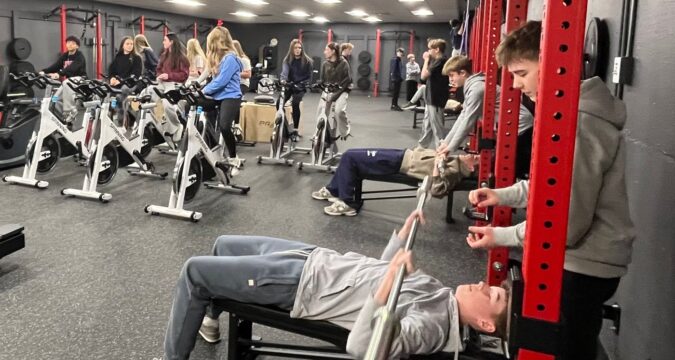
Students at McClure Junior High in Western Springs have been enjoying a renovated fitness room that was funded by a grant from the Western Springs Foundation of Educational Excellence.
The $33,700 grant was used to make renovations that provide improved access to strength training, movement education and lifelong fitness skills aligned with physical education curriculum goals, school officials said. The updated space features enhanced equipment, improved layout, and a welcoming environment designed to support students of all abilities, said Dina Castillo, a McClure physical education teacher.
Renovation work began in June and was completed two months later on the fitness room that’s used by nearly 500 McClure students. The grant process started in the Fall of 2024, Castillo said. She and Western Springs Elementary District 101 instructional coach Tori Fankhauser collaborated monthly on the proposal and writing the grant request. Guidance and support came from McClure Principal Laura Broadnax, Assistant Principal Tom Sturm, and District 101 Superintendent Sarah Coffey, Castillo said.
“The upgrades made possible by the grant are important because they transformed the fitness room from a limited, outdated space into a modern, functional space that can be used for strength training, plyometric training, body weight training, cardiovascular fitness and yoga,” she said.
Castillo said with the new equipment and layout, students can now learn proper strength training technique, movement mechanics and injury-prevention strategies in a structured and supervised setting.
“The space allows us to teach foundational skills of lifting, pushing, pulling, hinging and squatting — skills that support lifelong fitness and athletic development, and something that wasn’t fully possible before,” she said. “Most importantly, the renovation gives all students, not just athletes, access to strength training education that builds confidence, promotes physical literacy and encourages long-term health.”
McClure Junior High students use the newly renovated fitness room at the school in Western Springs. The new facility allows the teaching of “skills that support lifelong fitness and athletic development,” a teacher said. (Dina Castillo)
While developing the grant, Castillo made a point to include student opinions, through conversations and surveys. And the finished product is going over well with students.
“What I love about the new fitness room is how much it has really challenged me and made me stronger, and I feel I have really improved, thanks to the fitness room,” said student Finnegan Andrew Loughry.
Fellow student James Rydberg said he likes the variety of weights and being able to choose the weight that can be placed on the bar.
“This equipment allows us to workout with a friend because there is a lifter and spotter, and I like knowing how much I can lift,” added student Matty Hurliman.
Another student, Gavin Brown, said he really likes the new floor and colors that fit with the school’s colors of red and white.
“It feels safer, and I love the pull up bar,” he added.
While McClure students are enjoying the renovated fitness center, others in the community also are benefitting. Castillo said the fitness room is used by several local organizations, including Celtics Soccer Club, West Suburban Harriers Running Club and On Another Level Training, which offers sports performance and weightlifting programs specifically designed for middle school and high school girls.
The Western Springs Foundation of Educational Excellence, which operates independently from the District 101 School Board and its normal budgetary process, is an all-volunteer, nonprofit organization seeking to enhance the education of District 101 students. The group’s board members are District 101 parents who raise funds through special events and solicitations in the community and allocate those funds to support grants submitted by teachers, administrators, parents and students.
The Foundation’s stated mission is to acquire and distribute financial and other resources for the benefit of District 101’s educational programs, projects and products that will extend and enhance the quality and depth of education, and provide students with unique learning opportunities.
Chuck Fieldman is a freelance reporter for Pioneer Press.
https://www.chicagotribune.com/2026/01/21/western-springs-mcclure-fitness-room/
The Chicago Sake Crawl: A neighborhood guide to the city’s most compelling pours
For all its culinary breadth, Chicago is rarely framed as a sake destination. Yet over the past decade, it’s developed a close-knit but serious sake scene — shaped by Chicago’s walkable neighborhoods and an openness that has allowed sake to be explored across cuisines and cultures.
Sake, the Japanese alcoholic beverage made from rice, may still feel unfamiliar to many. Production-wise, it’s brewed like beer rather than distilled like a spirit. And despite a reputation for being high in alcohol, most sake sits around 15% ABV, in line with many modern Napa cabernets. With a freshness and delicacy closer to white wine, sake is often unexpectedly approachable, even for first-time drinkers.
Sake’s foothold in Chicago remains anchored in Japanese restaurants. But more telling, perhaps, is how sake has integrated into the broader fabric of the city’s food and beverage culture, embraced by an increasingly diverse group of beverage professionals and consumers alike.
“If anyone is the queen of sake in Chicago, it’s Dila,” says Jelena Prodan, partner and beverage director of SMG Restaurants, which operates S.K.Y., Apolonia and Valhalla.
Dila Lee, a director of national accounts for sake importer Komé Collective, is a Turkish American educated in Japanese schools in Turkey whose influence runs deep through most of Chicago’s best sake lists.
“Chicago hasn’t always had the landscape for sake that you’d see in San Francisco or New York, but now is definitely the moment,” Lee says. “There’s far more demand today and with new products and importers arriving, the growth we’re seeing is just crazy.”
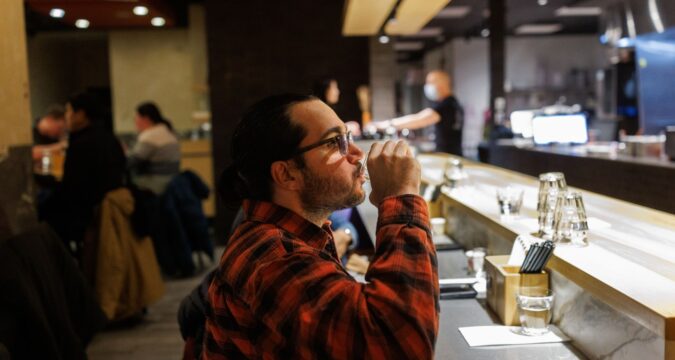
Sake expert Dila Lee pours sake for Alexis Lesieur during a food and sake event at Akahoshi Ramen in the Logan Square neighborhood, Dec. 11, 2025. (Armando L. Sanchez/Chicago Tribune)
For much of the past two decades, Lee has worked to cultivate a sake community in Chicago, but one that’s grounded in education, collaboration and inclusion.
“I’m deeply protective of Japan, of its food and sake and culture,” she says, describing herself as “a soldier on the streets,” focused on creating ambassadors for the category by demystifying bottles and making sake more approachable to both buyers and drinkers.
It’s this openness that defines Chicago’s sake culture, says Daniel Bennett, manager and sake sommelier at Sushi-san in the River North neighborhood.
“I love wine,” he says, “but there are facets of wine culture that can feel like gatekeeping … You don’t see that with sake, it’s very welcoming.”
The increasing density and walkability of serious sake destinations make Chicago unusually well-suited to the sake crawl — an afternoon or evening spent moving between sake establishments, sampling sake of different styles, origin and philosophy.
River North concentrates some of the city’s most stylish, high-profile sake programs. The West Loop, by contrast, skews more casual, with neighborhood izakaya where sake is poured seamlessly alongside burgers or yakitori. Beyond downtown, singular outposts in Logan Square, Lakeview, Wrigleyville or Lincoln Park function as sake destinations in their own right.
River North
Sushi-san
With a frequently changing list of sake — 16 available by the glass — Sushi-san is a foundational stop in Chicago’s sake landscape. Led by Bennett, it’s designed to introduce guests to small-production, handcrafted sake across a broad range of styles, including their own private label bottling, Sake-san, produced in collaboration with Daimon Brewery in Osaka, Japan. 63 W. Grand Ave., 312-828-0575, sushisanrestaurant.com
Jōtō
There’s no sake destination more uniquely intertwined with Chicago’s history than Jōtō, the sushi spot inside the CH Distillery, makers of Jeppson’s Malört. While best known for its omakase offerings, the restaurant’s industrial setting and late-night pulse give it an izakaya-like ease, making it a natural stop. 564 W. Randolph St., 312-707-8780, jotochicago.com
Sunda New Asian
Sake’s versatility lies in how it highlights rather than clashes with elements like sweetness, acidity, umami and spice. That dexterity is on full display at Sunda New Asian where pan-Asian influences from the Philippines, Vietnam, Japan and beyond give sake plenty to play with. Make Sunda an early stop for their happy hour special including $6 bar bites and $8 glasses of sake. 110 W. Illinois St., 312-644-0500, sundachicago.com
Akiro Hand Roll Bar
Akiro offers a relaxed counterpoint to Chicago’s increasingly elevated omakase scene, pairing imaginative yet precise Nikkei, or Japanese-Peruvian sushi and handrolls, with a flexibility and affordability that make it an easy stop. It’s a polished, design-forward space where you can still drop in for a few handrolls and a glass of sake without spending a fortune. 546 N. Wells St., 312-754-0076, akironikkei.com
Roka Akor
Despite Roka Akor’s sleek, corporate feel, it’s a lively, spacious spot to settle in at the bar and explore sake’s bolder side — richer, more structured styles with weight and umami to stand up to the fat and smoke of chargrilled wagyu or American ribeye. Their happy hour is particularly suited for a sake crawl with $25 carafes of sake and a solid menu of bar bites at $10 and below. 456 N. Clark St., 312-477-7652, rokaakor.com/chicago
West Loop
Momotaro and Izakaya at Momotaro
Whether upstairs at Momotaro, with its elevated mix of sushi and robata-yaki, or downstairs at its subterranean sibling Izakaya at Momotaro, sake is central to the experience here. The Izakaya, particularly, makes an ideal stop with a dark, moody interior that channels the feel of a Japanese alleyway bar. Sample flights of sake to pair with their Momo Royale, a double-patty burger on a steamed bao bun, or their confit-duck ramen in a rich miso broth. Momotaro, 820 W. Lake St., 312-733-4818, momotarochicago.com, and Izakaya at Momotaro, momotarochicago.com/izakaya
Sushi Dokku and Yokocho Handrolls & Omakase Bar
Sushi Dokku is a West Loop staple for affordable modern Japanese food, from tempura and okonomiyaki to soba and sushi rolls, making it an easy, low-commitment stop. Just steps away, its sibling restaurant Yokocho offers a more focused omakase experience but its reasonably priced happy hour keeps it crawl-friendly too. The restaurants share a small but thoughtful sake list. Sushi Dokku, 823 W. Randolph St., 312-455-8238, sushidokku.com, and Yokocho Handrolls & Omakase Bar, 167 N. Green St., 312-890-1119, yokochochicago.com
TenGoku Aburiya
A casual izakaya concept from the team behind Omakase Yume and Bonyeon, TenGoku Aburiya specializes in kushiyaki, binchotan-grilled skewers of meats and vegetables, along with a robust sake list that spans a wide range of regions and styles. Their happy hour, featuring $5 handrolls and $9 small plates, makes it another affordable destination. 651 W. Washington Blvd., 312-846-6633, tengokuaburiya.com
Outliers & Destination Stops
Konbini & Kanpai
Konbini & Kanpai operates what’s likely Chicago’s most expansive sake program, with more than 180 selections at its Lakeview location. Founded by husband-and-wife team Jun-Jun Vichaikul and Naomi Hattori, it functions as part bottle shop, part sipping lounge and part Japanese convenience store — an ideal place in the middle of a sake crawl to stock up on Japanese snacks or to enjoy an egg-salad sando. The sake list is organized by taste profile rather than technical classification, reinforcing its mission to make sake approachable for both newcomers and longtime drinkers. Lakeview (1433 W. Belmont Ave., 312-884-9780) and Wrigleyville (3443 N. Sheffield Ave., 312-884-1106), konbiniandkanpai.com
S.K.Y.
The wine program is vast and full of treasures at S.K.Y Restaurant, the contemporary American restaurant influenced by chef Stephen Gillanders’ travels around the world, but the menu kicks off with a thoughtfully chosen selection of sake. “Sake is a beverage that’s so deeply rooted in the idea of umami in food,” says Jelena Prodan, “Our food is often quite complex and often hard to pair with wines, you find that sake just makes so much sense, it just plays so beautifully with food.” 2300 N. Lincoln Park W, 312-846-1077, skyrestaurantchicago.com
Akahoshi Ramen
Three temperatures — room, from left, warm and chilled — of Kanbara Bride of the Fox Japanese sake rests on a counter during a food and sake event at Akahoshi Ramen in the Logan Square neighborhood, Dec. 11, 2025. (Armando L. Sanchez/Chicago Tribune)
In the U.S., where ramen mania has largely centered on the richer, fattier tonkotsu style, Akahoshi Ramen distinguishes itself with a broader spectrum of styles from shoyu and miso to soupless bowls like tantanmen and aburasoba, all made in house. The sake list is compact but fun, and it’s a tough reservation to score, but many of the tables are held for walk-in guests making Akahoshi an excellent stop, offering a casual, noodle-driven contrast to Chicago’s more sushi-centric sake programs. 2340 N. California Ave. Ste. B, akahoshiramen.com
Anna Lee Iijima is a freelance writer.
Big screen or home stream, takeout or dine-in, Tribune writers are here to steer you toward your next great experience. Sign up for your free weekly Eat. Watch. Do. newsletter here.
https://www.chicagotribune.com/2026/01/21/chicago-sake-crawl-guide/
Editorial: Like day care centers, churches should be removed from our current immigration crisis
We’ve reached the point in America’s polarization story where not even churches are sacred spaces.
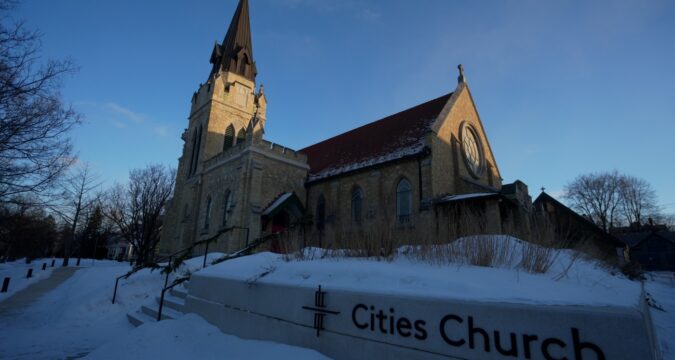
Protesters angry about the fatal shooting of Renee Good and the increased presence of federal agents in the Minneapolis area crossed a line when they entered Cities Church in St. Paul and disrupted Sunday worship.
Videos posted online show scenes of a mob of people marching into the church, angrily expressing their frustration over the Trump administration’s immigration enforcement activity. Children are present who look visibly afraid, and of course they do — a group of adult strangers has entered their place of sanctuary, yelling and screaming at them and their parents, as well as confronting the pastor, Jonathan Parnell, who appears to do his best to remain calm and ensure the safety of his parishioners. Churchgoers can be seen either fleeing the sanctuary, sitting frozen in their seats or trying to reason with the intruders.
Protesters alleged one of the church’s pastors — not Parnell — has ties to immigration enforcement. Regardless, that doesn’t give anyone the right to invade a worship service. It’s up to the church to decide who leads them.
If the protesters who showed up at Cities Church had set up outside, fine, so long as they weren’t preventing people from getting to church. If they had posted up around the corner, all good. But to enter the church, berate peaceful worshipers and scare children crosses a line.
The First Amendment robustly protects protests and political speech, but it does not grant the right to commandeer private property or disrupt lawful assemblies. Courts have long recognized that religious worship is entitled to protection, and both state and federal law prohibit intentional interference with a congregation’s ability to practice its faith.
If you’re tempted to reflexively respond “yes, but one of the pastors works for ICE in some capacity,” you may also be surprised to learn that you also can’t break into his house because you dislike his actions.
The Department of Justice is investigating the incident, and a St. Paul Police spokesperson said in a statement that they are “actively investigating this incident as a disorderly conduct investigation,” according to ABC News.
We’ve written before that some places should be off limits. We were outraged that federal authorities chased one of their quarry inside a day care center in Chicago, alarming kids. Churches are in the same category. That’s why we were appalled when the Trump administration rolled back long-standing guidance discouraging immigration arrests in sensitive locations such as churches. And it’s why we’re alarmed now.
We don’t pretend to know how higher powers feel about immigration enforcement. But we do know this: If you find yourself storming a church filled with people who are peacefully practicing their religion, you are not in the right.
Submit a letter, of no more than 400 words, to the editor here or email letters@chicagotribune.com.
https://www.chicagotribune.com/2026/01/21/minnesota-st-paul-cities-church-renee-good-protesters/

Ryan Gable: Colleges aren’t liberal-making factories. At least not where I taught.
Open a newspaper or scan an opinion section, and you’ll likely encounter a familiar storyline: American universities have become ideological factories, churning out graduates stamped with a single political worldview. Students are portrayed as disengaged, fragile, glued to screens and uninterested in real work or real relationships.
That narrative may fit some campuses. It does not describe my experience teaching a speech course this year at Roosevelt University in Chicago — the first college class I’ve ever taught. I’m an adjunct instructor, and my primary career is running a small business outside of academia.
Roosevelt is labeled a “university,” but that label deserves scrutiny. It conjures images of leafy quads, students with trust funds and ideological monoculture. Roosevelt is something else entirely: a city college. Many of my students are commuters, more than half of them work part-time jobs and some work full time. They juggle school, family obligations and rent. Politics, for most of them, barely register.
Over an entire semester, I did not encounter political messaging in the classroom, in faculty meetings or in administrative directives. No one told me what to believe. No one told me what to teach politically. I wasn’t nudged, pressured or “educated” toward a particular ideology. I taught public speaking — how to organize thoughts, tell stories, persuade and listen.
That matters, because the depiction of universities, bordering on caricature, as indoctrination hubs assumes students are passive recipients of ideology. My students are not passive about much of anything. They’re pragmatic. They’re busy. And they’re far more concerned with paying bills and figuring out their future than debating national politics.
Which brings me to the second misconception — about Gen Z students.
We’re told they can’t communicate, can’t focus, can’t hold conversations and prefer video games and social media to human interaction. What I saw was something more nuanced — and more hopeful.
Yes, this is a COVID-19-era cohort. Some need help understanding that conversations with professors, supervisors or older adults aren’t confrontational by default. There’s a hesitancy there. But it’s not apathy. It’s uncertainty. And it’s fixable.
What struck me most is that these students want relationships. Real ones. Not through Instagram. Not through group chats. They want mentorship, guidance and connection. They just don’t always know how to initiate it yet.
During one session as Thanksgiving approached, we turned the room into a potluck — pizza and sushi. Each student gave a short speech about what they were grateful for in 2025. It became one of those rare afternoons you don’t forget. Laughter. Some tears. Stories that made the setting feel more like a family dinner than a lecture hall.
Several students tried sushi for the first time. Two had never experienced a Thanksgiving at all, so this was their introduction.
Earlier in the semester, my students spoke about what they’re passionate about: travel, barbering, architecture, cooking, cheerleading, culture, entrepreneurship, music, art, creativity — and yes, the musical artist Drake. None of it had much to do with social media or screens.
These students aren’t obsessed with the political circus. They’re focused on becoming competent adults.
I didn’t just teach speechmaking. We talked about interviewing skills, LinkedIn profiles, and how to shake a hand and write a handwritten note. We talked about Roth IRAs and compounding interest. We talked about reading real publications, such as The Economist, not TikTok summaries. And occasionally, we talked about Led Zeppelin.
If universities truly were ideological factories, this kind of practical, human, apolitical education would be impossible. It wasn’t just possible — it was welcomed.
None of this is to deny that ideological excess exists in higher education. It does. But sweeping generalizations flatten reality and do a disservice to institutions such as Roosevelt — and students such as mine.
The real story isn’t that many colleges are radicalizing students. It’s that many students are quietly working, learning and trying to build lives in a noisy world that keeps misunderstanding them.
And if that story doesn’t fit the headline, maybe the headline needs updating.
Ryan Gable is founder and CEO StartingPoint Realty Inc. and an adjunct instructor at Roosevelt University in Chicago.
Submit a letter, of no more than 400 words, to the editor here or email letters@chicagotribune.com.
https://www.chicagotribune.com/2026/01/21/opinion-college-liberal-higher-education-free-speech/

Gov. JB Pritzker’s office inks new deal with outside lawyer to advise in Chicago Bears stadium talks
Gov. JB Pritzker’s office signed a new $25,000 contract late last month with an outside attorney to continue advising the administration in negotiations with the Chicago Bears through the end of June as the NFL franchise seeks to pressure Springfield to act this spring on a proposal that would aid plans for a new stadium in Arlington Heights.
The Pritzker administration’s top lawyer signed the agreement with Steve Argeris, a partner with New York-based law firm Weil, Gotshal & Manges, on Dec. 22, five days after the Tribune first reported Bears executives were widening the scope of their stadium-site search to include northwest Indiana. The team’s announcement in a letter to season ticket holders came a few weeks after Bears brass met with Pritzker and top aides in the governor’s Chicago office.
Under the agreement, the state will pay Argeris an hourly rate of $1,455 to represent the governor’s office “in connection with evaluating potential stadium projects with one or more professional sports teams,” according to documents the Tribune obtained through an open records request. That’s a discount of more than 40% from the firm’s typical rate of $2,575 per hour for its most experienced partners, records show.
Pritzker spokesperson Matt Hill said Tuesday that there was no connection between the timing of the agreement and the latest twist in the long-running stadium saga.
“Outside counsel is provided on an ongoing basis and does not correlate to specific developments or public announcements,” Hill said in a statement.
Indeed, the Tribune reported in May that the Pritzker administration had been working with Argeris — a New York- and Washington, D.C.-based sports, media and entertainment lawyer who formerly worked for the owners of the NFL’s Carolina Panthers — for a year and had paid him $100,000 in taxpayer funds. The governor’s office began working with Argeris in June 2024, shortly after the Bears launched, with great fanfare, a push for public funding for a new domed stadium on Chicago’s lakefront.
Fans find their seats before the Chicago Bears face the Los Angeles Rams on Jan. 18, 2026, in an NFC divisional playoff game at Soldier Field. (Brian Cassella/Chicago Tribune)
Hill on Tuesday reiterated the Pritzker administration’s position that it needed outside expertise “to conduct due diligence and fully understand all the facts that could impact state taxpayers.”
Argeris’ role has involved meeting with Bears representatives, analyzing the team’s proposals and breaking down how they would affect Illinois taxpayers, the governor’s office told the Tribune last year. He also has advised the governor’s office on how the state could potentially generate revenue from a stadium project.
Argeris has continued working with the state since a contract with his previous firm expired last summer, and he will be able to bill the state retroactively for that work, which has included occasional meetings and correspondence with members of Pritzker’s staff, records show.
On the day of the Bears’ season opener in September, for example, Deputy Gov. Andy Manar included Argeris when forwarding to Pritzker’s chief of staff and general counsel a letter to fans from Bears President and CEO Kevin Warren in which he underscored the team’s intention to build in Arlington Heights and declared: “This is the year to finalize our stadium plans so we can officially bid to host a Super Bowl as soon as 2031.”
Since then, the team has made public overtures about a possible move across state lines to Indiana, where Republican Gov. Mike Braun and the GOP-led state legislature appear, at least initially, more willing to cut a deal than Pritzker and other Democratic leaders in Springfield.
To facilitate a move from publicly owned Soldier Field to a privately funded stadium in Arlington Heights, the Bears have been seeking a change in Illinois law that would allow the team to negotiate its annual property tax payments with the village of Arlington Heights, local school districts and other jurisdictions. Supporters argue that the so-called megaprojects proposal could be used as an economic development tool for large projects across the state, a point Arlington Heights officials reiterated Friday in calling for action during the spring legislative session that is getting underway this month in Springfield.
But approving any such proposal would require the votes of Chicago lawmakers, many of whom oppose helping the Bears leave the team’s namesake city with taxpayers still on the hook for more than $500 million in debt from the Soldier Field renovation completed two decades ago.
The team also must contend with the election-year political optics for Democrats who want to make the case that their party is focused on affordability for everyday residents, an argument that could be undermined by approving a measure to help a privately owned professional sports team recently valued at nearly $9 billion.
While the Bears have said the “property tax certainty” envisioned in the megaprojects proposal is essential to plans for a new domed stadium and mixed-use development in Arlington Heights, the team isn’t asking for any taxpayer money for the stadium itself. Public dollars would be needed to fund an estimated $855 million in infrastructure improvements around the site of the former Arlington International Racecourse, but Pritzker and legislative leaders have expressed an openness to discussing that spending.
“We’ve been really clear about what we’ve been willing to do as a state, and there have been lots of discussions, over time and recently, with the Bears to make sure that they know what those options are,” Pritzker said Friday in response to a question about whether moves from Indiana officials or renewed calls for action from Arlington Heights have altered the political dynamics.
Sheldon H. Jacobson: Eligibility changes, NIL contracts and the transfer portal have brought chaos to college sports
The current trajectory for college sports is unsustainable. Big-revenue sports such as football and basketball have undergone massive transformations over the past decade, facilitated by a number of policy changes. Yet the changes they’ve undergone provide a clue as to how to salvage them.
The transfer portal was created in 2018 to facilitate athletes moving between schools. Then the COVID-19 pandemic in 2020 gave every athlete at that time an additional season of eligibility. Discussions are underway to give all athletes five years of eligibility. To further muddy eligibility requirements, new legal rulings under consideration may exclude years played in junior college or even professional leagues. Lastly, beginning in 2021, name, image and likeness (NIL) contracts have permitted athletes to monetize their visibility by engaging with nonuniversity entities and signing contracts that pay them directly.
Debate over these changes happened in a siloed manner. The discussions have not included the impact of these changes on each other and how the combined effect would transform college sports in unexpected ways.
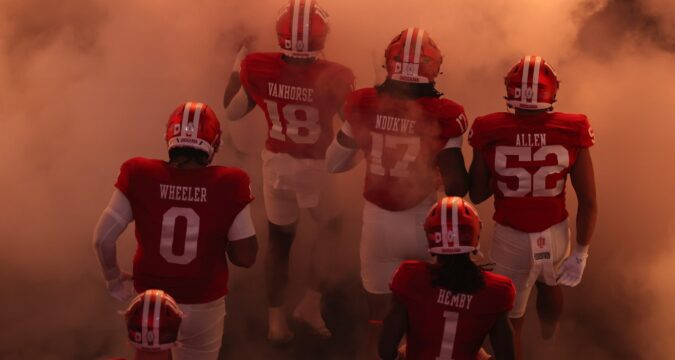
NIL contracts draw the most headlines. Though the value of NIL contracts is rarely disclosed, estimates suggest that some of the highest-profile athletes earn millions of dollars each season. This has encouraged wealthy boosters to make sizable donations to facilitate such funding. Mark Cuban, now a minority owner of the Dallas Mavericks and a graduate of Indiana University, did not shy away from announcing his donations to his alma mater and how he hopes such funds will keep the success of the Indiana football team rolling.
Yet money by itself cannot do much on its own. That is where the eligibility relaxation comes in.
Players who develop their skills in junior college or overseas can join a college team at 20 or 21 years old, with four or five years of remaining eligibility. By the time such players are in their final year of eligibility, they will be several years older than freshmen coming directly out of high school. The physical dominance of these older players gives them a decided advantage. NIL contracts also incentivize them to stay in college for their entire eligibility period.
Yet NIL contracts and eligibility relaxation cannot win championships without the third component: the transfer portal.
The transfer portal permits every athlete to move between schools without the penalty of sitting out one season. Given that every school can provide their own collection of NIL opportunities, athletes can choose where to play based on how much they will be paid.
In the past, an athlete chose to transfer to another school because of a coaching change or perhaps in search of more playing time. With NIL contracts available, financial opportunities are now the driving factor behind many of these transfers. With no penalty for transferring, the benefits resulted last spring in over one-third of college basketball players entering the transfer portal.
The absurd negative synergy created by these three policy changes was on full display when Cincinnati Bearcats football quarterback Brendan Sorsby recently decided to transfer to Texas Tech. His NIL contract at Cincinnati was structured so that he would owe them a $1 million buyout if he did not stay at Cincinnati. At Texas Tech, Sorsby is expected to receive around $5 million thanks to his NIL agreement, possibly placing him among the highest-paid college football players next season.
All these changes have tarnished college sports. Yet if any one of these changes was reeled in, the negative effects on college sports would be significantly dampened.
If NIL contracts did not exist, the athletes would have less motivation to transfer every academic year. If the transfer portal did not exist, and athletes could not freely move between schools without sitting out one year, team rosters would stabilize. If eligibility was limited to four years and affected by time playing in junior colleges and overseas, athletes would have a more restricted window of eligibility, giving them less time to move between schools, which would create more homogeneity in age and maturity and a more level playing field.
The likelihood that any one of these will be tightened anytime soon is remote. The NCAA recently reduced the time window in the transfer portal, hoping to tame the transfer portal wildfire. Yet this is nothing more than a cosmetic change, simply forcing the athletes to work more quickly to achieve the same objective.
NIL is not going away, nor is the transfer portal. This leaves the eligibility policy lever as the remaining tool to rein in the problems we now see in college sports.
No one considered the synergy that the three changes would fuel and their negative consequences on college sports. Each was instituted in response to circumstance or legal rulings — but collectively, they have spawned chaos.
It is nearly impossible to put the genie back in the bottle, but colleges and universities can and should determine the core societal value college sports offer and build everything around that.
Sheldon H. Jacobson, Ph.D., is a computer science professor in the Grainger College of Engineering at the University of Illinois Urbana-Champaign. As a data scientist, he uses his expertise in risk-based analytics to address problems in public policy, public health, security, air travel and sports.
Submit a letter, of no more than 400 words, to the editor here or email letters@chicagotribune.com.
https://www.chicagotribune.com/2026/01/21/opinion-college-sports-eligibility-nil-transfer-portal/

Editorial: Trump’s use of tariffs to bully the world should be brought to heel
Given how this president is now wielding tariffs, it’s time to take away President Donald Trump’s BB guns.
We’ve been consistent in our view that the substantial increases to date under Trump in duties paid by importers are economically counterproductive and ultimately raise costs for American consumers. But the president’s tariff saber-rattling of late has gone well past the rationales that animated most of his trade warfare of last year and shifted into the utterly indefensible realm of settling personal scores and attempting to gain leverage in his obsession with making Greenland part of the U.S.
Trump’s dealings with the rest of the world as president are no different than his past actions as a businessman. He doesn’t believe in deals that can be defined as win-wins. He is ever in search of points of leverage he can use to compel other nations (and states and cities for that matter) — whether ostensibly friendly or not — to agree to things against their will.
Chief among those levers is the power he’s asserted to impose tariffs of any amount, for any reason and for any duration, on goods made outside the U.S. and sold to American consumers. Trump typically makes such threats via social media, which is ridiculous in and of itself. The most recent example was his post threatening tariffs on a group of European nations he perceived as standing in the way of his demand that the U.S. assume ownership of Greenland from Denmark and then offering to lift those tariffs if they accede.
In the face of adamant European opposition, Trump since has reiterated his demand, making his trip today to the annual economic confab taking place in Davos, Switzerland, particularly fraught.
The mild-mannered Danes are atypically furious. Protesters in Copenhagen are using Trump’s MAGA slogans against him, wearing red hats that say, “Make America Go Away.” Belgian Prime Minister Bart De Wever likened Trump to the “Very Hungry Caterpillar” of children’s book fame. French President Emmanuel Macron decried the “new colonial approach” vis-a-vis Trump and Europe and argued forcefully against “passively accept(ing) the law of the strongest.” Other leaders, including Canadian Prime Minister Mark Carney, openly stated their belief that Trump had brought about an end to the international order as we’ve known it for decades.
Trump supporters often make the case that his stances should not be taken at face value and are mere bluffs designed for negotiation. We suggest those supporters, growing fewer in number, open their minds and listen to what these European leaders said Tuesday and try to appreciate how much things have changed as Trump’s shtick has turned darker and yet more personal.
Meanwhile, Russia President Vladimir Putin relishes the discord Trump is sowing in Europe as he continues to press his war in Ukraine. Trump’s fixation on adding Greenland to the U.S. map is making the world a more dangerous place and undermining our own interests. History has taught us the perilous threat an unstable Europe poses to the rest of the world.
We’ve learned now that Trump childishly linked his failure to win the Nobel Peace Prize to his Greenland demands in a text to Norway’s prime minister. “Considering your country decided not to give me the Nobel Peace Prize,” Trump wrote, he saw no reason to “think purely of peace.”
Norway, of course, has no say in who wins the prize; that’s up to a committee. It stuns us that so many Americans are willing, still, to sanction a president openly using his office to avenge his personal pique. Tariffs, conquests; all are subverted to this man’s ego.
Someone needs to curb the madness. If only there were an institution that could do so.
As it so happens, the Constitution of the United States of America gives us two such institutions. The executive is but one of three co-equal branches of government. The Constitution explicitly gives Congress the power to levy tariffs, not the president. Yes, Congress has granted some of its tariff authority to the executive branch over the years. But not all, not by a long shot. And not as a tool of personal revenge.
Many of the Republicans who run both chambers on Capitol Hill would have called themselves free traders before Trump retook the White House. If they had the will, they could end this tariff craziness any time they wanted. Democrats surely would join in a veto-proof reassertion of congressional prerogative.
Alas, Trump’s continued hold over his party makes such an outcome but a fantasy.
That leaves the matter to the Supreme Court, which leads the other co-equal branch. The high court has a pair of cases before it that would invalidate the willy-nilly approach Trump has taken to tariffs as an unconstitutional overreach of executive power. During oral arguments late last year, a majority of justices appeared to side with the arguments made by plaintiffs in the case, which include Learning Resources, a Chicagoland-based maker of educational toys imported from China.
The court moves at its own speed, which can be frustrating, particularly to those with vested interests in the outcomes, which to our minds is every American in this matter. But few cases before the justices are as time-sensitive as this one. So the longer the court waits to issue its verdict, the longer Trump can use power he arguably doesn’t legitimately wield to destabilize the globe.
The high court’s next scheduled date for issuing opinions isn’t until Feb. 20, a month from now. We’d advise moving up that timetable.
Submit a letter, of no more than 400 words, to the editor here or email letters@chicagotribune.com.
Talla Mountjoy: My family in Iran is cut off from the rest of us. It is taking its toll.
Iran has experienced many communications blackouts in the immediate aftermath of uprisings but never anything like the current one.
In one recent call, with family members all outside of Iran, we swapped stories of how we’ve gotten through previous blackouts. “The 2019 blackout occurred the same weekend I emigrated from Iran,” one family member shared. “I left my country of Iran, a place I never thought I would have to leave, and as soon as I landed, I couldn’t call family in Iran to let them know I had arrived.”
Though most of my family members have left Iran, I have many still in Iran, including my grandma.
For decades, Iranians in the diaspora have been limited to a two-dimensional relationship with their loved ones still in Iran. Many outside of Iran are unable to go back with this regime still in power, for fear of imprisonment or worse. Just having U.S. citizenship could be grounds for detention.
At the same time, many of those in Iran are unable to leave, due to severe worldwide immigration restrictions on residents of Iran. Even tourist visas, for short stays in Western countries, are now nearly impossible for residents of Iran to get. Video chats, phone calls and texts are the only ways we can stay connected to our families.
I used to give one family member a call in the middle of cooking Iranian cuisine to get their guidance. They would ask me to show them my progress, then would direct me based on what they saw. I used to kiss my grandma through the phone, making a loud kissing sound because I thought the loudness of it would make it feel more real. But all that has halted, with reports that the regime plans to keep the internet shut off through at least the Iranian New Year of Nowruz on March 20.
A country of 92 million people, larger than Germany and almost four times the size of California, continues to operate under a complete internet blackout.
The only way we can reach my family today is through international calls, though only the relatives in Iran can call out; we can’t call in. The calls cost $3 per minute, and the caller in Iran bears the full burden. With deep economic instability and a crashing local currency the primary drivers of the uprisings, few Iranians can afford doing that for long.
Those of us abroad get a call from Iran once a day from our family members telling us they’re OK, and then they end the call. OK means they’re alive. OK means they have food. OK means they have water and electricity, for now. In our one-minute calls, we talk of nothing else, for fear of who may be listening. OK does not mean they’re OK.
In more normal times, our family would get together for video calls to wish each other happy birthday. Because our family outside of Iran spans the globe, there are very few times that work for all: 3 p.m. Central, which is 4 p.m. Eastern, 10 p.m. in Germany, after midnight in Iran and 7 a.m. in Australia, is our usual time to ensure all are represented.
Our family members in Iran get so much joy from these calls that they each call from their own phone, even though they’re all nearby. They feel more connected to all of us if they’re holding the phone themselves, controlling their own two-dimensional experience. This time, I can only ask my cousin to wish our family member a happy birthday the next time they speak, briefly, to any family in Iran. There will be no birthday video call this January.
Iranian culture centers on what we can do for others, with at least 10 phrases to convey that — including chakeretam (“at your service”), doret begardam (“let me circle around you”), ghorbonet beram (“may I be sacrificed for you”), fadat besham (“let me be your sacrifice”) and mimiram barat (“I will die for you”). Addressing someone by name is almost always followed by jaan or joon, which translates to “my soul” or “my life.” Azizam can be used instead of a person’s name, which means “my dear one.”
And these aren’t reserved for a select few. Iranians use these phrases in everyday conversation. After a meal is served, we often say, “Dastet dard nakoneh,” to the cook, meaning “I hope your hands did not hurt in preparing this meal.” To which the cook responds, “Nushe jaan” (“May your spirit be nourished”).
Making deep connections with each other that tie back to our soul is what makes Iranians Iranian. “Talla, jaan, add more tomato paste,” my family member would say, guiding my cooking.
“Ghorbonet beram, Talla, joon, when will you return to Iran so I can kiss you for real?” I never know how to answer that question from my grandma.
“Maman Bozorg jaan.” (“Grandmother, my life.”) “Azizam. Fadat besham.” I don’t know when I’ll see you next on a video call. But I have hope, in all my heart, that I’m getting closer to seeing you in person soon.
Talla Mountjoy is senior director of programs for the Forum for Free Inquiry and Expression at the University of Chicago.
Submit a letter, of no more than 400 words, to the editor here or email letters@chicagotribune.com.
https://www.chicagotribune.com/2026/01/21/opinion-iran-protests-blackout-family-diaspora/

Letters: The Bears lost their playoff game. But we saw a legend in the making in Caleb Williams.
To borrow a phrase from poet T.S. Eliot, football is the cruelest team sport. And Steve McMichael warned us: “Every play out on that football field is like being in a car crash.”
Yet there are moments of athletic artistry when the quarterback throws a perfect spiral to a sprinting receiver for a touchdown. That’s what we saw in the fourth quarter of the NFC divisional playoff game when Bears quarterback Caleb Williams connected with tight end Cole Kmet to send the game into overtime.
Michael Jordan had his signature fadeaway jump shot. Williams has perfected a fadeaway pass that had the jaded TV color commentator Cris Collinsworth gush: “In all my days, I have never seen anything like that.”
We lost the game but saw a legend in the making. Something to keep Bears fans warm this cruel winter.
— Jerry Levy, Deerfield
Ecstasy and agony
To my fellow Chicago Bears fans: Let’s hold our heads up high. It was a great season. What exciting games!
Yes, we’ve gone from ecstasy to agony, but let’s not fall into a deep depression. Take a page from Cubs fans and “Wait ’til next year!”
— Sheryl Tarkoff, Chicago
Lasting memories
It’s easy now to think of Bears quarterback Caleb Williams as a mere mortal and not the god of mythological comebacks after Sunday’s defeat on the frozen tundra of Soldier Field. It was, after all, both the best of times and the worst, considering that heart-stopping finale in regulation was soon followed by the agony of defeat in overtime. So much was expected of the Bears’ self-assured QB, and he surely did not disappoint.
Congrats are in order for a season that proved to be more miraculous than disappointing, and we have Williams to thank for so many lasting memories as well as so many future hopes.
— Bob Ory, Elgin
Field goal in OT?
I’m just a lukewarm football fan, but I feel for the Bears after their loss to the Los Angeles Rams following that sensational last-minute comeback. I think the rules should require a touchdown to win in overtime play. A field goal seems like a cheap trick.
— Dan McGuire, Bensenville
Bears did us proud
We are all are a bit sad that our Chicago Bears finally ran out of miracles, but boy, did they give us four months of nail-biting thrills, infused with the promise that our Bears are the real deal. All it took was the installation of a great new head coach in Ben Johnson who groomed a talented quarterback in Caleb Williams to get the ball sailing. The Bears coaching staff made some smart draft picks, and the front office cobbled together some trades that paid off.
Kudos to our Chicago Bears! They did us proud.
— Michael Oakes, Chicago
Enough is enough
Am I the only person wanting the Chicago Bears to remain in Chicago? It is anathema to think of the Bears anywhere but Chicago. The Bears are Chicago!
I understand that another stadium, somewhere else, will mean more seats, more tickets, more revenue and a dome to keep out inclement weather. But at what point do we ask Bears owners and all of corporate America: How much more money do you need, and at what cost are you willing to go to get it?
It is time we speak up — enough is enough. We want our Bears in Chicago.
— Anne Janet “AJ” Crane, Riverwoods
One true candidate
Let’s get serious about the Bears stadium negotiations.
The Bears signaled their intent for a new stadium site by purchasing property in Arlington Heights. It is an ideal location for access to nearly all of the metropolitan area, with access to multiple highways and to rapid transit. The property is very large and offers huge future development opportunities in addition to a site for the stadium.
All of the other sites that have been announced as “of interest” have little merit beyond their value as negotiating chips in the Bears’ efforts to shake down local and state government. Each successive location they have suggested has less credibility, and Northwest Indiana has almost none, which is far from much of the metro area and a miserable drive for those who live in suburbs to the west, northwest and north. As it exists, there is no “there” there, so huge and speculative investments in hotels, restaurants and other services would be required.
If the Bears did move there, it is likely another NFL franchise in a small market would be happy to come to the third largest market in the country and take up residence at Soldier Field.
Arlington Heights is the only real candidate for the new facility.
— William McGrath, Evanston
The Bears won’t stay
Northwest Indiana has presented some wonderful options to the Bears. So the politicians who passionately felt that in no way, shape or form should public coffers be used to help the Bears — who actually are prepared to pay the full cost of a new stadium — are now in hummina-hummina mode.
Consider Gov. JB Pritzker’s response, “I believe it’s best for the Bears to stay in the state of Illinois.” Tacitly, he’s saying he never wanted to help them in any way and still doesn’t and certainly won’t encourage the legislature to do so. And the mayor of Arlington Heights is saying that the state must not allow the Bears to leave. Chicago Mayor Brandon Johnson is silent at this point on the matter.
My guess is the Bears will be gone, along with Halas Hall and all the training facilities.
When the team is offered a generous welcoming offer that appreciates how much it can add to Indiana, why relentlessly fight a more or less begrudging welcoming battle in Illinois?
— Neil Gaffney, Chicago
There’s plenty of irony
It’s ironic that the Bears want a stadium where “Bears weather” will mean short sleeves instead of wind chill.
It’s ironic that one of the sponsors of the Indiana Senate bill that would create a northwest Indiana stadium authority also sponsored legislation for “right-sizing,” as in reducing, state Medicaid rolls.
It’s ironic Bears Chairman George McCaskey, whose mother, Virginia, mixed philanthropy with humility, would consider an Indiana stadium built with money that could have gone to health care for the needy instead.
It’s ironic Bears President and CEO Kevin Warren, who has encouraged minority youths to seek out leadership roles, should set an example of pitting community against community and state against state.
It’s ironic Chicago legislators are expected to play ball and vote for legislation that would facilitate the Bears building a stadium in Arlington Heights, with the bonds outstanding on the Soldier Field renovation not the team’s problem.
Ironic, indeed.
— Douglas Bukowski, Berwyn
Submit a letter, of no more than 400 words, to the editor here or email letters@chicagotribune.com.
https://www.chicagotribune.com/2026/01/21/letters-012126-chicago-bears/


