Category: News

Somalia And The High Cost Of Low Trust
Somalia And The High Cost Of Low Trust
Authored by Mitzi Perdue via RealClearPolitics,
When news broke of the massive child nutrition fraud in Minnesota, many Americans reacted with disbelief. During the pandemic, roughly $250 million intended to feed hungry children was siphoned off, prosecutors say, and spent on luxury cars, real estate, and other indulgences. To most people, it appeared to be a shocking betrayal of public trust.
To me, it felt unsettlingly familiar.
Decades ago, long before Minnesota became synonymous with one of the largest fraud cases in U.S. history, I had an experience in Somalia that permanently altered my perspective on aid, trust, and good intentions. It is why I read the indictments differently, not with surprise so much as recognition.
What struck me most about the Minnesota case was not only the scale of the theft but the silence surrounding it. The fraud appears to have operated in plain sight within tightly knit circles, yet few people spoke out.
More than 40 years ago, when I was a rice farmer in California, American rice growers learned of famine conditions in Somalia. Competitors set aside their rivalry and donated an entire shipload of rice for humanitarian relief. I later traveled to Somalia, expecting to see that food had reached people on the brink of starvation.
It had not.
A powerful clan had taken control of the shipment. Once its own members’ needs were met, the remaining rice did not go to feed other Somalis. Instead, it was used to feed animals, while those outside the clan continued to go hungry.
At the time, I tried to explain what I had seen by blaming corruption, weak oversight, or a few bad actors. None of those explanations captured the deeper pattern. The behavior made sense only when I began to understand how differently trust and obligation were organized.
That realization came rushing back as I read about the Minnesota fraud.
According to federal indictments, the stolen money flowed through networks bound by kinship and loyalty. The theft was large, coordinated, and sustained. What stood out was not only who took the money, but who stayed silent. In societies with strong civic norms, whistleblowing is often praised, or at least protected. In tightly bound clan systems, speaking out can mean punishment.
Over time, I found language for what I had observed: the Prisoner’s Dilemma, a concept from game theory that explains how cooperation and trust either compound or collapse. When two parties cooperate, both benefit and trust grows. When one cheats while the other cooperates, the cheater prospers and the cooperator becomes the loser. When both are defective, everyone loses.
High-trust societies solve this dilemma by extending cooperation beyond family and tribe. Laws, institutions, and norms reinforce the idea that cheating ultimately harms everyone, including oneself. Low-trust societies work differently. Trust is reserved for kin. Outsiders are assumed to cheat. In that environment, cheating is not necessarily immoral. It is often rational, expected, and even applauded.
Seen through this lens, both my experience in Somalia and the Minnesota scandal follow the same pattern. Institutions cooperated in good faith. Clan-based networks exploited that trust. Children and taxpayers paid the price.
Somalia represents the most destructive version of this equilibrium. When trust does not extend beyond blood ties, cooperation cannot scale. Investment dries up. Contracts mean little without enforcement beyond kinship. When everyone expects everyone else to cheat, no one can afford to cooperate.
In that context, Somalia’s ranking of 213th out of 215 countries in per-capita income is not shocking. It is almost inevitable. This is not an indictment of individual Somalis. We know that many, many Somalis live honest, productive lives, raise families, and contribute positively wherever they reside. Individuals can transcend the cultures they are born into. Social systems, however, change slowly and are likely to shape behavior.
Somalia sits at the end of a continuum, but the underlying dynamic is not unique to it. Whenever loyalty to the group eclipses loyalty to shared rules, corruption flourishes. The Minnesota scandal was not an aberration so much as a warning: When institutions assume trust without enforcing it, low-trust behavior fills the vacuum. Somalia shows what happens when that low-trust approach is entrenched.
Mitzi Perdue is a fellow at the Institute of World Politics and the co-founder of Mental Help Global, a philanthropy that uses AI to support mental health.
Tyler Durden
Wed, 01/21/2026 – 21:45
https://www.zerohedge.com/political/somalia-and-high-cost-low-trust

Brian Flores returning as Minnesota Vikings defensive coordinator — if he’s not hired elsewhere as head coach
EAGAN, Minn. — The Minnesota Vikings have signed Brian Flores to a new contract that ensures the defensive coordinator will return for the 2026 season if he is not hired as a head coach, the team announced Wednesday.
The Vikings have allowed an average of 19.2 points in Flores’ first three seasons as defensive coordinator, the second-fewest in the NFL. The Vikings allowed an average of only 105.4 rushing yards per game from 2023-25 under Flores, the fifth-fewest in the league, including a league-low 3.9 yards per rush.
Meanwhile, Flores’ defenses have avoided giving up big plays. The Vikings’ 147 plays allowed of 20 yards or more the last three years are the fewest in the league.
“Brian has a unique ability to connect with players, understand their skill sets, and put them in positions to maximize their impact on the field,” Vikings coach Kevin O’Connell said in a statement released by the team.
“The identity of our defense is a reflection of his leadership and preparation. On a personal level, I’ve really valued the relationship we’ve built over the last three years, and that shared trust, alignment and high standard will continue to be critical to our success.”
Flores, 44, signed a three-year contract when the Vikings hired him before the 2023 season. That deal expired last week. The Vikings finished 9-8, tied for third in the NFC North this season, and missed the playoffs.
Before Flores took over the unit, the Vikings ranked 31st in total defense in 2022. The defense ranked 16th in 2023 and 2024, and third while allowing 282.6 yards per game in 2025, trailing only the Houston Texans and Denver Broncos.
The Vikings ranked second in pass defense in 2025, allowing 158.5 yards per game.
Three Vikings defenders were selected to the Pro Bowl this season: outside linebackers Jonathan Greenard and Andrew Van Ginkel and cornerback Byron Murphy Jr. Each earned his first Pro Bowl honor.
Tribune news services contributed.
https://www.chicagotribune.com/2026/01/21/brian-flores-minnesota-vikings-new-contract/

Alberta Sees Large Turnout For Petition To Separate From Canada
Alberta Sees Large Turnout For Petition To Separate From Canada
Crowds of Canadian citizens stood in long lines across Alberta for hours this week to sign a petition for a referendum on leaving Canada – officially titled “A Referendum Relating to Alberta Independence.” The petition requires at least 177,000 signatures in order to trigger the referendum, which would ultimately decide if the province will separate.
Petitions have 120 days to collect the signatures needed. Pro-separation groups say they could get as many as 1 million signatures, which would be a clear indication that Alberta will leave Canada. Alberta’s population is currently 5 million people.
Some petition locations reported as many as 10,000 signatures in a day and the public response is described as “concerning” by critics who want to remain part of Canada’s “constitutional monarchy.” Alberta is widely considered the most conservative province in the country and has been at odds with the far-left Canadian government (ruled by Ontario progressives).
The referendum would mean a simply Yes/No question for voters on separation. A majority (51% or more) would then lead to a legal process overseen by the Canadian federal government. Come polls indicate that 60% of Albertan citizens are still opposed to the measure, however, the recent turnout for the petition suggests the tide is turning. Recent conflicts with progressive elites in the Canadian government have driven Albertans to question their relationship.
Alberta fought against the leftist government’s pandemic lockdowns, church and business closures and draconian vaccination requirements. They remain in opposition to Canada’s new gun laws which are incrementally removing all firearms from private hands. They have also been at odds with the federal government over resource development, energy policy, carbon taxation and economic marginalization.
Essentially, Alberta is a different nation when compared to the Canadian norm. It is also a commodity treasure trove that Canada exploits to feed its coffers while rarely giving anything back to provincial citizens.
Wow, an absolute insane lineup of people – that goes entire city blocks – of people in Calgary waiting to sign a petition to make Alberta an independent sovereign nation. pic.twitter.com/HqB1xaJRs8
— Keean Bexte (@TheRealKeean) January 11, 2026
Canadian courts initially blocked a referendum question on separation, asserting that the implications of the question were too vague and did not align with constitutional requirements. Instead of appealing the decision, Alberta turned to the legislature. Within days, the legislature passed Bill 14, amending the Referendum Act to remove the requirement that referendum questions align with the Constitution. Separatists quickly got a revised referendum question approved, and the petition process resumed
Another obstacle to the separation is a lawsuit brought by the Sturgeon Lake Cree Nation goes far beyond provincial politics. The First Nation is seeking an urgent injunction to stop Alberta’s petition process. They say a separation would be in violation of their original treaty with the Crown. The claim sets up a possible loophole allowing the federal government to deny separation, but the notion that a Native treaty supersedes provincial law is rather thin. Alberta’s separation would simply mean that the Cree would have to negotiate a new treaty.
Arguments against the referendum say that Alberta is “landlocked”, which would make its separation economically disastrous. This is not entirely true. Their shared border with the US and newfound sovereignty would allow the province to establish more significant oil pipelines (pipelines which the Canadian government has consistently blocked in the past). This development along with greater resource exploration and an alliance with American interests would make Alberta one of the wealthiest regions in the western hemisphere.
Furthermore, Alberta stretches within 700 miles of the arctic, an area of the world which is quickly becoming central to geopolitics. Early warning systems and NORAD bases in Alberta are integral to US security. These bases could be shut down in the event that conflicts between Canada and the US escalate. A free Alberta could become vital to US defense.
The debate over US ownership of Greenland is only one element of a larger global shift to the North. Alberta’s exit from Canada and potential alliance with the US could have vast implications for international relations.
Tyler Durden
Wed, 01/21/2026 – 21:20
https://www.zerohedge.com/political/alberta-sees-large-turnout-petition-separate-canada
Alberta Sees Large Turnout For Petition To Separate From Canada
Alberta Sees Large Turnout For Petition To Separate From Canada
Crowds of Canadian citizens stood in long lines across Alberta for hours this week to sign a petition for a referendum on leaving Canada – officially titled “A Referendum Relating to Alberta Independence.” The petition requires at least 177,000 signatures in order to trigger the referendum, which would ultimately decide if the province will separate.
Petitions have 120 days to collect the signatures needed. Pro-separation groups say they could get as many as 1 million signatures, which would be a clear indication that Alberta will leave Canada. Alberta’s population is currently 5 million people.
Some petition locations reported as many as 10,000 signatures in a day and the public response is described as “concerning” by critics who want to remain part of Canada’s “constitutional monarchy.” Alberta is widely considered the most conservative province in the country and has been at odds with the far-left Canadian government (ruled by Ontario progressives).
The referendum would mean a simply Yes/No question for voters on separation. A majority (51% or more) would then lead to a legal process overseen by the Canadian federal government. Come polls indicate that 60% of Albertan citizens are still opposed to the measure, however, the recent turnout for the petition suggests the tide is turning. Recent conflicts with progressive elites in the Canadian government have driven Albertans to question their relationship.
Alberta fought against the leftist government’s pandemic lockdowns, church and business closures and draconian vaccination requirements. They remain in opposition to Canada’s new gun laws which are incrementally removing all firearms from private hands. They have also been at odds with the federal government over resource development, energy policy, carbon taxation and economic marginalization.
Essentially, Alberta is a different nation when compared to the Canadian norm. It is also a commodity treasure trove that Canada exploits to feed its coffers while rarely giving anything back to provincial citizens.
Wow, an absolute insane lineup of people – that goes entire city blocks – of people in Calgary waiting to sign a petition to make Alberta an independent sovereign nation. pic.twitter.com/HqB1xaJRs8
— Keean Bexte (@TheRealKeean) January 11, 2026
Canadian courts initially blocked a referendum question on separation, asserting that the implications of the question were too vague and did not align with constitutional requirements. Instead of appealing the decision, Alberta turned to the legislature. Within days, the legislature passed Bill 14, amending the Referendum Act to remove the requirement that referendum questions align with the Constitution. Separatists quickly got a revised referendum question approved, and the petition process resumed
Another obstacle to the separation is a lawsuit brought by the Sturgeon Lake Cree Nation goes far beyond provincial politics. The First Nation is seeking an urgent injunction to stop Alberta’s petition process. They say a separation would be in violation of their original treaty with the Crown. The claim sets up a possible loophole allowing the federal government to deny separation, but the notion that a Native treaty supersedes provincial law is rather thin. Alberta’s separation would simply mean that the Cree would have to negotiate a new treaty.
Arguments against the referendum say that Alberta is “landlocked”, which would make its separation economically disastrous. This is not entirely true. Their shared border with the US and newfound sovereignty would allow the province to establish more significant oil pipelines (pipelines which the Canadian government has consistently blocked in the past). This development along with greater resource exploration and an alliance with American interests would make Alberta one of the wealthiest regions in the western hemisphere.
Furthermore, Alberta stretches within 700 miles of the arctic, an area of the world which is quickly becoming central to geopolitics. Early warning systems and NORAD bases in Alberta are integral to US security. These bases could be shut down in the event that conflicts between Canada and the US escalate. A free Alberta could become vital to US defense.
The debate over US ownership of Greenland is only one element of a larger global shift to the North. Alberta’s exit from Canada and potential alliance with the US could have vast implications for international relations.
Tyler Durden
Wed, 01/21/2026 – 21:20
https://www.zerohedge.com/political/alberta-sees-large-turnout-petition-separate-canada

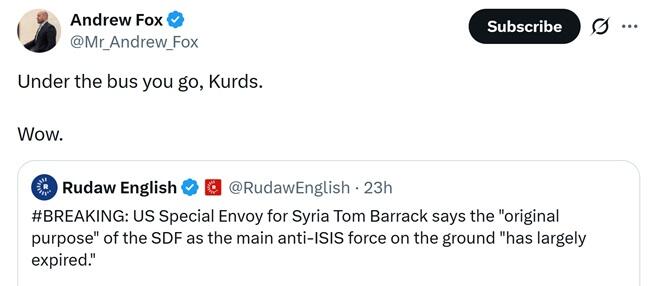
Under The Bus You Go, Kurds
Under The Bus You Go, Kurds
Authored by Jason Ditz via AntiWar.com,
With the fighting continue to rage and north and northeast Syria between central government forces and the nation’s Kurdish minority, the US government appears to have decided that they are backing the former, and that US military support for the Syrian Kurds is over.
US envoy Tom Barrack declared the Kurds to have a “great opportunity” to be taken over by the Islamist central government of Syria, led by the Hayat Tahrir al-Sham (HTS). He assured that the Kurds would definitely be offered “equal rights” under the law in this scenario.
In many ways, Barrack’s comments were less about why they are no longer backing the Kurds than why they did in the past, saying at one point in the fight against ISIS, the US didn’t consider the Assad government a “viable partner” so they backed the Kurds instead. Now, with the US seeing the HTS as aligned with their interest, that’s no longer the case, so they’ll be backing the HTS instead.
Syrian Kurdish officials and locals have expressed disappointment with this turn of events, saying that after more than a decade of being aligned with the US they are being effectively “abandoned” at the exact moment the HTS has begun launching military offensives against Kurdish-controlled territory that the US helped the Kurds gain in the first place.
Though the US has broadly supported the Kurds through the Syrian proxy war and after, it has not been uniform. In 2019, Turkey launched an offensive against the Syrian Kurds and the Trump Administration at the time similarly (and controversially) withdrew backing for the Kurds, with President Trump famously claiming it was because he had just learned that the Kurds were not present at the Normandy Invasion during WW2.
This move may similarly be controversial, even if Normandy isn’t invoked as a justification this time. Sen. Lindsey Graham (R – SC) had warned the HTS against continuing attacks on the Kurds and had warned that the US might reimpose sanctions against Syria if the attacks continued.
That position may have some support in the Senate, though it plainly does not within the White House, as President Trump has been loudly enamored with HTS leader and former al-Qaeda in Iraq figure Ahmed al-Sharaa, praising him as “young, attractive tough guy.” When push came to shove, it was perhaps unsurprising that the administration chose Sharaa over the Kurds when the two sides were at odds.
The US has been expressing annoyance with the Kurds for not quietly submitting to Sharaa’s rule for months now, with Barrack, as the representative of the US Federal Government, declaring that they had learned “federalism doesn’t work” and that the Kurds should abandon any hope of autonomy within Syria.
Sharaa, for his part, has given the Kurds a four-day ultimatum to accept his terms for integration into the Syrian state. Since Sharaa had previously denied the Kurds a single spot in his cabinet and postponed parliamentary elections in Kurdish parts of the country, what if any representation that will actually entail remains unclear.
I am sorry to say I can confirm this https://t.co/1dP0yp2C1O
— Ryan Grim (@ryangrim) January 20, 2026
Whatever it is, however, the US clearly views it as sufficient.
Tyler Durden
Wed, 01/21/2026 – 20:55
https://www.zerohedge.com/geopolitical/under-bus-you-go-kurds

Under The Bus You Go, Kurds
Under The Bus You Go, Kurds
Authored by Jason Ditz via AntiWar.com,
With the fighting continue to rage and north and northeast Syria between central government forces and the nation’s Kurdish minority, the US government appears to have decided that they are backing the former, and that US military support for the Syrian Kurds is over.
US envoy Tom Barrack declared the Kurds to have a “great opportunity” to be taken over by the Islamist central government of Syria, led by the Hayat Tahrir al-Sham (HTS). He assured that the Kurds would definitely be offered “equal rights” under the law in this scenario.
In many ways, Barrack’s comments were less about why they are no longer backing the Kurds than why they did in the past, saying at one point in the fight against ISIS, the US didn’t consider the Assad government a “viable partner” so they backed the Kurds instead. Now, with the US seeing the HTS as aligned with their interest, that’s no longer the case, so they’ll be backing the HTS instead.
Syrian Kurdish officials and locals have expressed disappointment with this turn of events, saying that after more than a decade of being aligned with the US they are being effectively “abandoned” at the exact moment the HTS has begun launching military offensives against Kurdish-controlled territory that the US helped the Kurds gain in the first place.
Though the US has broadly supported the Kurds through the Syrian proxy war and after, it has not been uniform. In 2019, Turkey launched an offensive against the Syrian Kurds and the Trump Administration at the time similarly (and controversially) withdrew backing for the Kurds, with President Trump famously claiming it was because he had just learned that the Kurds were not present at the Normandy Invasion during WW2.
This move may similarly be controversial, even if Normandy isn’t invoked as a justification this time. Sen. Lindsey Graham (R – SC) had warned the HTS against continuing attacks on the Kurds and had warned that the US might reimpose sanctions against Syria if the attacks continued.
That position may have some support in the Senate, though it plainly does not within the White House, as President Trump has been loudly enamored with HTS leader and former al-Qaeda in Iraq figure Ahmed al-Sharaa, praising him as “young, attractive tough guy.” When push came to shove, it was perhaps unsurprising that the administration chose Sharaa over the Kurds when the two sides were at odds.
The US has been expressing annoyance with the Kurds for not quietly submitting to Sharaa’s rule for months now, with Barrack, as the representative of the US Federal Government, declaring that they had learned “federalism doesn’t work” and that the Kurds should abandon any hope of autonomy within Syria.
Sharaa, for his part, has given the Kurds a four-day ultimatum to accept his terms for integration into the Syrian state. Since Sharaa had previously denied the Kurds a single spot in his cabinet and postponed parliamentary elections in Kurdish parts of the country, what if any representation that will actually entail remains unclear.
I am sorry to say I can confirm this https://t.co/1dP0yp2C1O
— Ryan Grim (@ryangrim) January 20, 2026
Whatever it is, however, the US clearly views it as sufficient.
Tyler Durden
Wed, 01/21/2026 – 20:55
https://www.zerohedge.com/geopolitical/under-bus-you-go-kurds
Former officer acquitted at trial over police response to Uvalde, Texas, school shooting
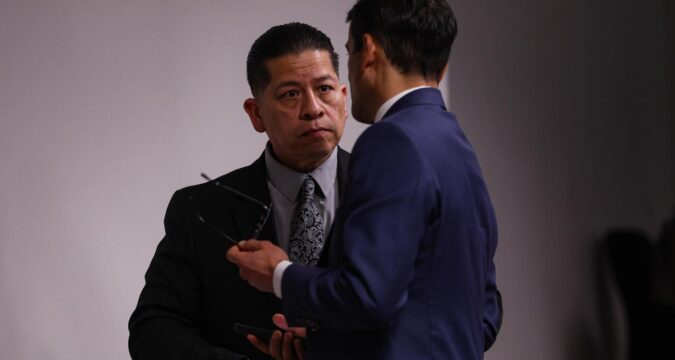
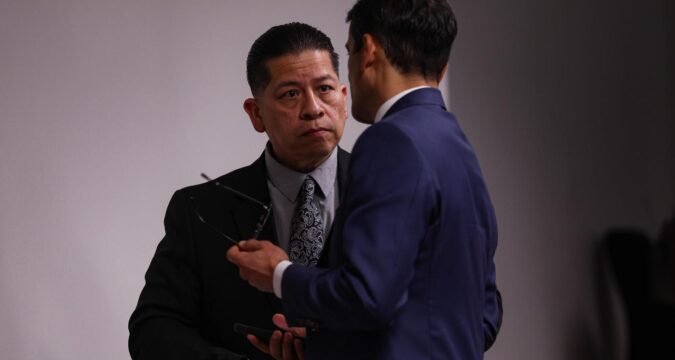
CORPUS CHRISTI, Texas — A former police officer was acquitted Wednesday evening of charges he failed in his duties to confront the gunman at an Uvalde, Texas, elementary school during the critical opening minutes of what would become one of the deadliest school shootings in U.S. history.
Jurors deliberated for more than seven hours before finding former Uvalde schools police officer Adrian Gonzalez, 52, not guilty in the first trial over the hesitant law enforcement response to the attack that killed 19 children and two teachers at Robb Elementary School on May 24, 2022.
Flanked by his lawyers, Gonzales appeared to be fighting back tears after the verdict was read out in court.
The trial was a rare case in the U.S. of an officer facing criminal charges on accusations of failing to stop a crime and protect lives. Gonzales had faced up to two years in prison if he had been convicted.
The nearly three-week trial included emotional testimony from teachers who were shot and survived. Prosecutors had argued in laying out their case that Gonzales abandoned his training and did nothing to stop or interrupt the teenage gunman before he entered the school.
At least 370 law enforcement officers ultimately rushed to the school, where 77 minutes passed before a tactical team finally entered the classroom to confront and kill the gunman. Gonzales was one of just two officers indicted, angering some victim’s families who had said they wanted more officers held accountable for the law enforcement response.
Gonzales had been charged with 29 counts of child abandonment and endangerment — each count representing the 19 students who were killed and 10 others who were injured.
During the trial, jurors heard a medical examiner describe the fatal wounds to the children, some of whom were shot more than a dozen times. Several parents of victims described sending their children to school for an awards ceremony and the panic that ensued as the attack unfolded.
Gonzales’ lawyers argued he arrived upon a chaotic scene of rifle shots echoing on school grounds and never saw the gunman before the attacker went inside the school. They also insisted that three other officers who arrived seconds later had a better chance to stop the gunman.
They argued to jurors that Gonzales risked his life when he joined a group of five officers who tried to reach the classroom before they were driven back by rifle fire. Defense attorneys also said Gonzales helped evacuate children from other classrooms before the gunman was killed.
Gonzales and former Uvalde schools Police Chief Pete Arredondo are the only two responding officers that day to face charges. Arredondo’s trial has not yet been set.
Gonzales’ trial was tightly focused on his actions in the early moments of the attack, but prosecutors also presented the graphic and emotional testimony as the result of police failures.
State and federal reviews of the shooting cited cascading problems in law enforcement training, communication, leadership and technology, and questioned why officers waited so long.
Prosecutors faced a high bar to win a conviction. Juries are often reluctant to convict law enforcement officers for inaction, as seen after the Parkland, Florida, school massacre in 2018. A sheriff’s deputy was acquitted by a jury after being charged with failing to confront the shooter in that attack — the first such prosecution in the U.S. for an on-campus shooting.
Vertuno reported from Austin, Texas.
https://www.chicagotribune.com/2026/01/21/uvalde-officer-acquitted/
Former officer acquitted at trial over police response to Uvalde, Texas, school shooting
CORPUS CHRISTI, Texas — A former police officer was acquitted Wednesday evening of charges he failed in his duties to confront the gunman at an Uvalde, Texas, elementary school during the critical opening minutes of what would become one of the deadliest school shootings in U.S. history.
Jurors deliberated for more than seven hours before finding former Uvalde schools police officer Adrian Gonzalez, 52, not guilty in the first trial over the hesitant law enforcement response to the attack that killed 19 children and two teachers at Robb Elementary School on May 24, 2022.
Flanked by his lawyers, Gonzales appeared to be fighting back tears after the verdict was read out in court.
The trial was a rare case in the U.S. of an officer facing criminal charges on accusations of failing to stop a crime and protect lives. Gonzales had faced up to two years in prison if he had been convicted.
The nearly three-week trial included emotional testimony from teachers who were shot and survived. Prosecutors had argued in laying out their case that Gonzales abandoned his training and did nothing to stop or interrupt the teenage gunman before he entered the school.
At least 370 law enforcement officers ultimately rushed to the school, where 77 minutes passed before a tactical team finally entered the classroom to confront and kill the gunman. Gonzales was one of just two officers indicted, angering some victim’s families who had said they wanted more officers held accountable for the law enforcement response.
Gonzales had been charged with 29 counts of child abandonment and endangerment — each count representing the 19 students who were killed and 10 others who were injured.
During the trial, jurors heard a medical examiner describe the fatal wounds to the children, some of whom were shot more than a dozen times. Several parents of victims described sending their children to school for an awards ceremony and the panic that ensued as the attack unfolded.
Gonzales’ lawyers argued he arrived upon a chaotic scene of rifle shots echoing on school grounds and never saw the gunman before the attacker went inside the school. They also insisted that three other officers who arrived seconds later had a better chance to stop the gunman.
They argued to jurors that Gonzales risked his life when he joined a group of five officers who tried to reach the classroom before they were driven back by rifle fire. Defense attorneys also said Gonzales helped evacuate children from other classrooms before the gunman was killed.
Gonzales and former Uvalde schools Police Chief Pete Arredondo are the only two responding officers that day to face charges. Arredondo’s trial has not yet been set.
Gonzales’ trial was tightly focused on his actions in the early moments of the attack, but prosecutors also presented the graphic and emotional testimony as the result of police failures.
State and federal reviews of the shooting cited cascading problems in law enforcement training, communication, leadership and technology, and questioned why officers waited so long.
Prosecutors faced a high bar to win a conviction. Juries are often reluctant to convict law enforcement officers for inaction, as seen after the Parkland, Florida, school massacre in 2018. A sheriff’s deputy was acquitted by a jury after being charged with failing to confront the shooter in that attack — the first such prosecution in the U.S. for an on-campus shooting.
Vertuno reported from Austin, Texas.
https://www.chicagotribune.com/2026/01/21/uvalde-officer-acquitted/
En las cenizas de Lirquén: cómo un pueblo se reconstruye ante los mortales incendios de Chile
Por NAYARA BATSCHKE
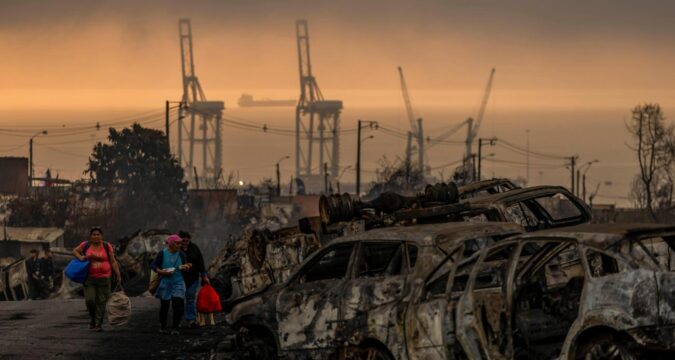
LIRQUÉN, Chile (AP) — El espeso humo que encubre la ciudad denuncia que las llamas siguen cerca. Los devastadores incendios que azotan el centro y el sur de Chile no dan tregua: ya han devorado más de 40.000 hectáreas y dejado un saldo de al menos 20 muertos, unos 300 heridos, decenas de miles de evacuados y un rastro incalculable de destrucción.
Algunas localidades, como el pequeño pueblo pesquero de Lirquén, apenas empiezan a contabilizar los impactos, mientras otras, a pocos kilómetros de distancia, han visto impotentes cómo los fuegos avanzan y desafían a autoridades, residentes y brigadistas.
“Esto era un infierno”, resume a The Associated Press Pamela Crisostomo, quien logró escapar del incendio solo con la ropa del cuerpo y vio toda una vida de trabajo destruida en pocos segundos.
Zona cero de la tragedia, Lirquén vio un 80% de su terreno ser tragado por el fuego y fue el más impactado, contabilizando 17 de las 20 víctimas fatales registradas hasta el momento.
En los secos cerros que la rodean, pequeños focos siguen activos, aunque las llamas están controladas. Con unos 20.000 habitantes, la localidad ahora comienza a reconstruirse, aupada por la solidaridad de un pueblo que ha vivido algunas de las peores catástrofes mundiales.
“Viene la etapa más difícil… cómo vamos a empezar a reconstruir nuestras casas”, agregó Crisostomo, quien preside además la Asociación de Vecinos de un barrio de Lirquén.
Gracias a las donaciones provenientes de todo Chile, así como equipos las labores de ONGs y otras entidades, la vida vuelve a pulsar lentamente en las polvorientas calles de Lirquén.
VOLUNTARIOS EN ACCIÓN
Centenares de voluntarios se han desplazado para ayudar, ya sea cocinando, distribuyendo alimentos y agua o auxiliando en la retirada de escombros bajo las extenuantes temperaturas.
“Siempre se organiza la gente para traer comida cuando hay catástrofes”, dijo Manuel Vázquez Romero, quien se desplazó desde la capital Santiago para ayudar en la remoción de los escombros. “Por último, de todo lo malo, comerse un platito con algo rico”.
“A pesar de todo las dificultades que tú puedes ver, se organiza la gente, se ayuda… uno puede ir a la calle y ayudar al al vecino que ni siquiera lo conoce y esa es la idea”, agregó Miska Bastias, otra de las afectadas por los fuegos.
Al recorrer las calles destruidas de Lirquén y cruzar sus semáforos apagados, poco a poco en el trayecto van surgiendo carpas, unidades médicas improvisadas o vehículos que se han convertido en verdaderas cocinas.
“Hoy día nuestro menú es arroz con croquetas de pescado. Aquí nosotros estamos preparando todo lo que es caliente, arroz, pescado y luego esto se va a distribuir”, contó la voluntaria Paulina Bermúdez, de la organización humanitaria global ADRA, que prepara cerca de 300 raciones diarias.
Otras organizaciones igualmente han respondido a la emergencia chilena y enviado equipos de diversos países.
“Ya estamos entregando más de 6.000 comidas diarias y vamos a aumentar hasta donde sea necesario”, explicó a la AP Juan Camilo Jiménez, director de respuesta de la ONG World Central Kitchen que, además, colabora con los restaurantes y sectores locales a fin de impulsar también la economía de los sitios afectados. “Los chilenos tienen una energía y una resiliencia increíble”.
Es precisamente la resiliencia que impulsa la reconstrucción, sostienen los lugareños, al denunciar la lentitud del poder público en ofrecer apoyo.
“No hemos tenido mucha presencia del municipio acá”, sostuvo Crisostomo. “Solamente han llegado seis colchones y seis fresadas”.
En la zona cero de la catástrofe, hay voluntarios, como el enfermero Mauricio Morales, que ofrecen servicios básicos de salud para tratar a los que resultan heridos en los trabajos de remoción de materiales o que aún se recuperan del trauma vivido hace tan solo tres días.
“Solo hoy hemos atendido cerca de 30 personas ya con lesiones cortantes, lesiones oculares y también descompensaciones”, relató.
Otros han montado unidades móviles de atención veterinaria para ofrecer asistencia a las mascotas y animales heridos por los fuegos.
Mientras tanto, las condiciones más favorables del terreno han permitido a la policía desplegar operativos en búsqueda de más víctimas que potencialmente quedaron atrapadas bajo los escombros. Entre el martes y miércoles ha encontrado “restos óseos” en diferentes partes de Lirquén, aunque todavía no se sabe si son restos humanos.
EL SUR SIGUE QUEMANDO
Aunque en ciertas localidades los incendios están más controlados, las llamas siguen ardiendo y devorando con rapidez gran parte del centro y sur de Chile.
Según las últimas cifras actualizadas, una veintena de incendios de gran magnitud permanecen activos y ya han arrasado con más de 45.000 hectáreas, una de las peores tragedias de la historia reciente del país.
Muchos de ellos han sido reactivados debido a las condiciones climáticas que combinan fuertes vientos y altas temperaturas, dificultando el trabajo de brigadistas y amenazando decenas de pueblos como Lirquén.
En Florida, situada a unos 50 minutos de Lirquén, las llamas del mortal incendio Trinitarias han obligado nuevas evacuaciones a lo largo del día. No tardó para que largas colas se formaran en las carreteras, mientras que un estricto control policial restringía el acceso a las zonas más afectadas.
Los brigadistas alertan de que la situación podría arrastrarse durante varios días.
Desde el domingo más 750 viviendas han sido completamente destruidas y medio centenar de personas permanecían alojadas en albergues, entre ellas la estudiante María Paz.
“Yo y mi familia pudimos escapar entre las llamas, se quemó nuestro vehículo”, aseguró a la AP. “Lo perdimos todo”.

Justice Jackson Cites Racist ‘Black Codes’ As Precedent To Justify Gun Control In Hawaii
Justice Jackson Cites Racist ‘Black Codes’ As Precedent To Justify Gun Control In Hawaii
During oral arguments in Wolford v. Lopez, Supreme Court Justice Ketanji Brown Jackson suggested that the post-Civil War “Black Codes” – a set of openly racist laws enacted in the Democrat-controlled South to strip newly freed Black Americans of basic rights, including the right to possess firearms – could serve as legitimate historical precedent under the Supreme Court’s Bruen test. That test evaluates modern gun laws by asking whether similar restrictions were accepted in the nation’s historical tradition. The case concerns a Hawaii law that bars licensed gun owners from carrying firearms onto privately owned property open to the public. Jackson relying on the Black Codes for constitutional guidance is hilarious, as those laws were explicitly designed to deny civil rights to Black Americans in defiance of emancipation.
The exchange unfolded as Justice Jackson pressed U.S. Principal Deputy Solicitor General Sarah Harris on why post–Civil War Black Codes should be excluded from consideration when courts examine modern-day gun control laws. Hawaii relied on a 1865 Louisiana statute as historical support for its law, a statute even Neal Katyal, the lawyer representing Hawaii, admitted was “undoubtedly a relic of a shameful portion of American history.”
“So, I guess I really don’t understand your response to Justice Gorsuch on the Black Codes,” Jackson began. She explained that, under Bruen, courts are required to look to history and tradition to assess constitutionality. “The fact that the Black Codes were, at some later point, determined themselves to be unconstitutional doesn’t seem to me to be relevant to the assessment that Bruen is asking us to make.”
Harris responded by emphasizing the fundamentally racist purpose of those laws. “Black Codes were unconstitutional from the moment of their inception because they are pretextual laws that are designed to ensure that newly freed slaves are returned to a condition of sharecropping.”
Justice Jackson, a black woman, immediately pushed back. “Okay, let me stop you there. They were not deemed unconstitutional at the time that they were enacted,” she said. “They were part of the history and tradition of the country, and when we have a test now that’s asking us to look at what people were doing back then, I don’t understand why they should be excluded.”
Harris reiterated that point. “Because they are outliers. They are, by definition, unconstitutional. They have always been unconstitutional.”
Jackson bizarrely remained unconvinced. “Found later, afterwards, not at the time,” she said, returning to the Bruen framework. “And if the test says what’s happening at the time tells us what’s constitutional for this purpose, why aren’t they in?”
Harris responded by insisting the laws should be disregarded because they were aberrations and unconstitutional from their inception.
But Jackson rejected that framing. She argued that their unconstitutionality was determined later, not contemporaneously, making it a legitimate precedent. And, according to Jackson, if the test looks to historical practice at the time of enactment, she asked, why should those laws be left out?
Harris attempted to explain how a law could be unconstitutional from inception, while still accounting for historical analysis. Jackson claimed that Harris’s position effectively dismissed history altogether. When Harris denied that implication, Jackson underscored the contradiction by noting that history either matters under Bruen or it does not.
Harris then stressed that historical inquiry remains essential, though not indiscriminate. “We should deeply care about the history,” she said, adding that Bruen requires courts to identify a genuine national tradition by excluding aberrations. She described the Black Codes as precisely that — laws enacted “for the purpose of trying to reduce newly freed slaves back to conditions of servitude,” including measures that criminalized carrying arms on private property. “Those are obvious outliers which should not count under the whole point of Bruen.”
Things I didn’t have on my bingo card today: Justice Jackson defending the racist Black Codes as precedent for what we should consider constitutional. pic.twitter.com/I9yxcMsDrf
— Carrie Severino (@JCNSeverino) January 20, 2026
Justice Jackson has never distinguished herself on the bench for her bright legal mind, but it was frankly remarkable to see her treating some of the most overtly racist laws in American history as potentially valid reference points for modern gun control.
Tyler Durden
Wed, 01/21/2026 – 20:30