U.S. Wheat Crop Forecast To Hit Half-Century Low As Drought Hits Breadbasket
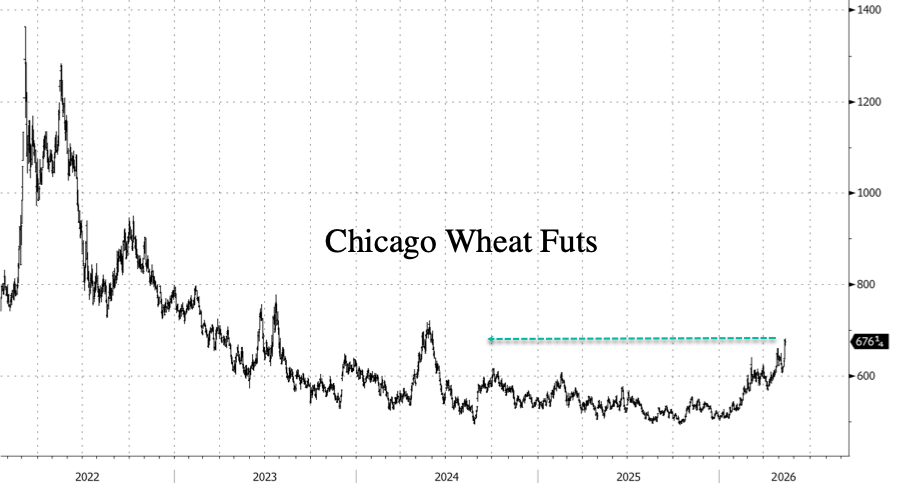
Chicago wheat futures surged on Tuesday, hitting two-year highs after the USDA’s latest WASDE report signaled a much tighter U.S. supply outlook than traders had anticipated.
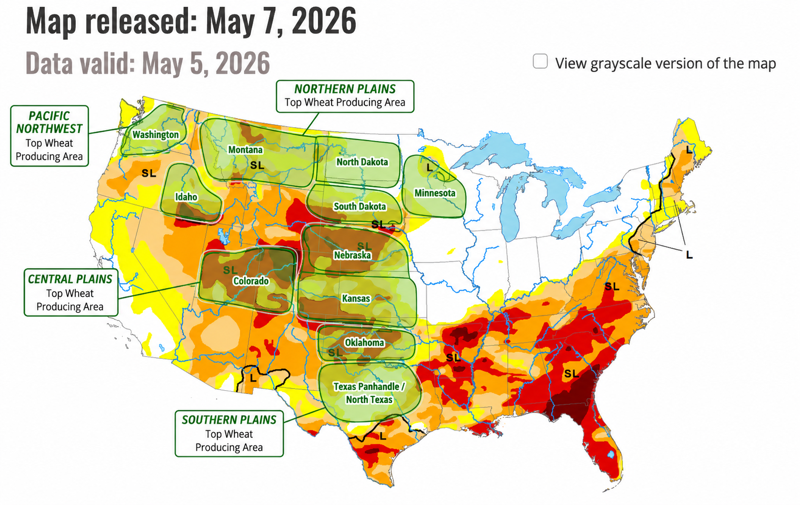
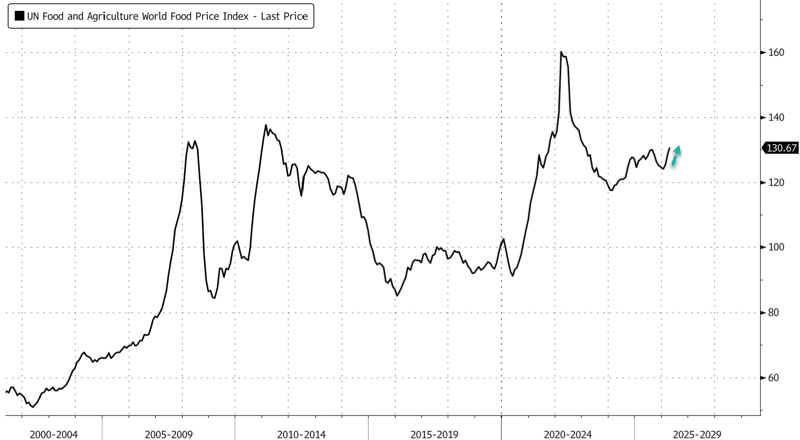
Production stress across America’s breadbasket is now converging with a megadrought and mounting fertilizer constraints, adding upward pressure on prices at a time when global food prices are rising.
🌾Due to poor crop health and a record-low planted area, the United States will produce the smallest wheat volume since 1972.
2026 winter wheat output (67% of total output) by class is seen at the lowest levels since:
All winter: 1965
Hard red winter: 1957
Soft red winter: 2020 pic.twitter.com/OcIP3DA0VS
— Karen Braun (@kannbwx) May 12, 2026
The USDA forecast 2026/27 U.S. all-wheat production at 1.56 billion bushels, sharply below Wall Street expectations of around 1.74 billion, marking the smallest harvest since 1972.
🇺🇸The U.S. in 2026 is set to harvest the smallest wheat crop in 54 years.
Weather has challenged winter wheat this year and condition ratings have plunged. Pairing low yield with low planted area, USDA projects the smallest U.S. winter wheat harvest since 1965. pic.twitter.com/xe2alJOPyr
— Karen Braun (@kannbwx) May 12, 2026
After the report on Tuesday, Chicago wheat futures jumped to their highest level since May 2024.
The latest WASDE report should come as no surprise to readers, as we have been closely tracking the intensifying drought stress plaguing the U.S. agricultural market:
Drought Engulfs 60% Of U.S. As Farmers Begin Spring Planting
UBS Warns Drought Shock Unfolding Across Breadbasket Of America
Wheat Spread Blows Out As Drought Chaos Plagues America’s Breadbasket
Saxo commodities head Ole Hansen penned a note on Wednesday, highlighting just how dire the report is for wheat production:
USDA projected the smallest U.S. wheat harvest since 1972, triggering sharp gains in both Chicago and Kansas wheat futures.
Hard red winter wheat production was estimated at the lowest level since 1957 following drought damage across the southern Plains.
The Bloomberg Grains Index has gained 17% YTD, supported by strong advances in soybean oil, wheat, and related biofuel-linked markets.
Managed money traders have returned aggressively to agriculture, although wheat positioning remains mixed due to continued contango focus.
Let’s not forget America’s breadbasket, plagued by drought, as the Middle East energy shock has disrupted the fertilizer trade and may impact harvests later this year. Global food prices are rising.
Related:
Seven Reasons Why The Hormuz Crisis Has Yet To Cause The Global Economy
Our debate at the start of May featured former Bridgewater head of commodities Alex Campbell and Brent Johnson of Santiago Capital. It was hosted by Tony Greer and Jared Dillian, who discussed the potential food crisis that appears to be festering.
— ZeroHedge Debates (@zerohedgeDebate) May 2, 2026
Tyler Durden
Wed, 05/13/2026 – 11:15