Core Durables Goods Surge For 12th Straight Month, Push Bond Yield Higher
After a recent string of ‘soft’ survey data, this morning we get some ‘hard’ data and it was far stronger than expected.
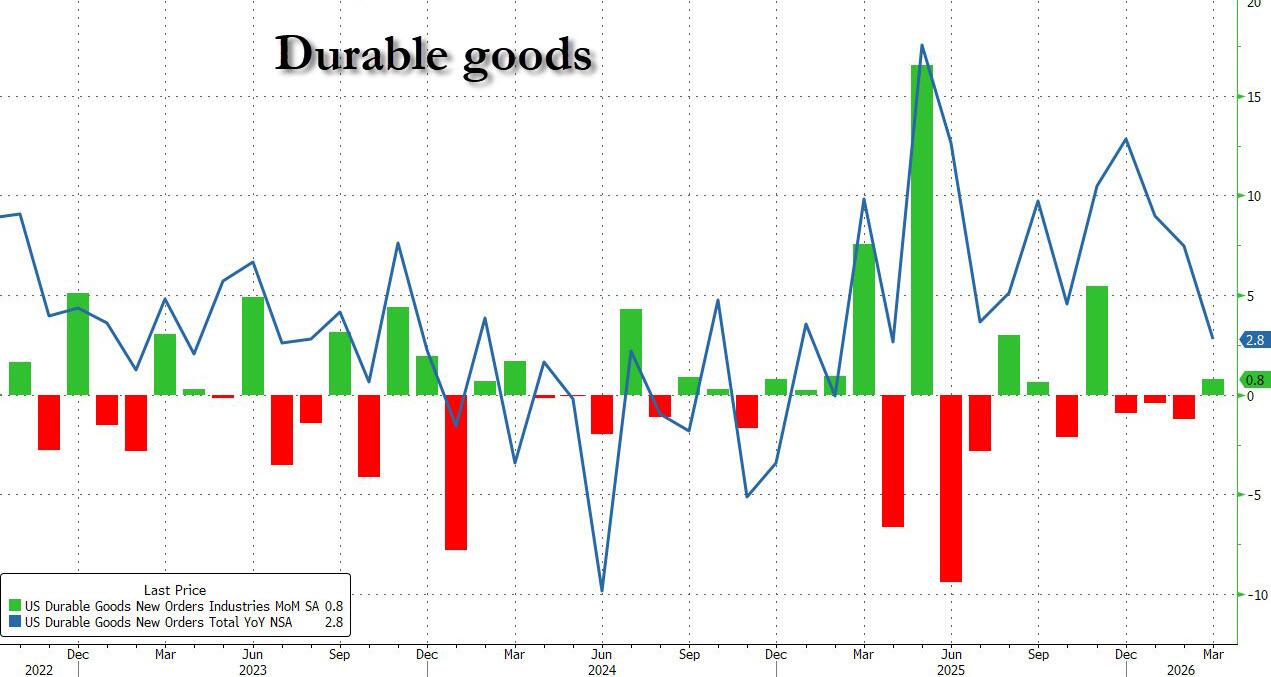
Preliminary headline durable goods orders for March rose 0.8% MoM (better than the 0.5% MoM exp), and the first increase after a three month decline to start the year (which was the first 3-month decline since Nov 2019).
The increase took place despite continued weakness in aircraft orders manifesting as a 21.1% drop in nondefense aircraft and parts in March.
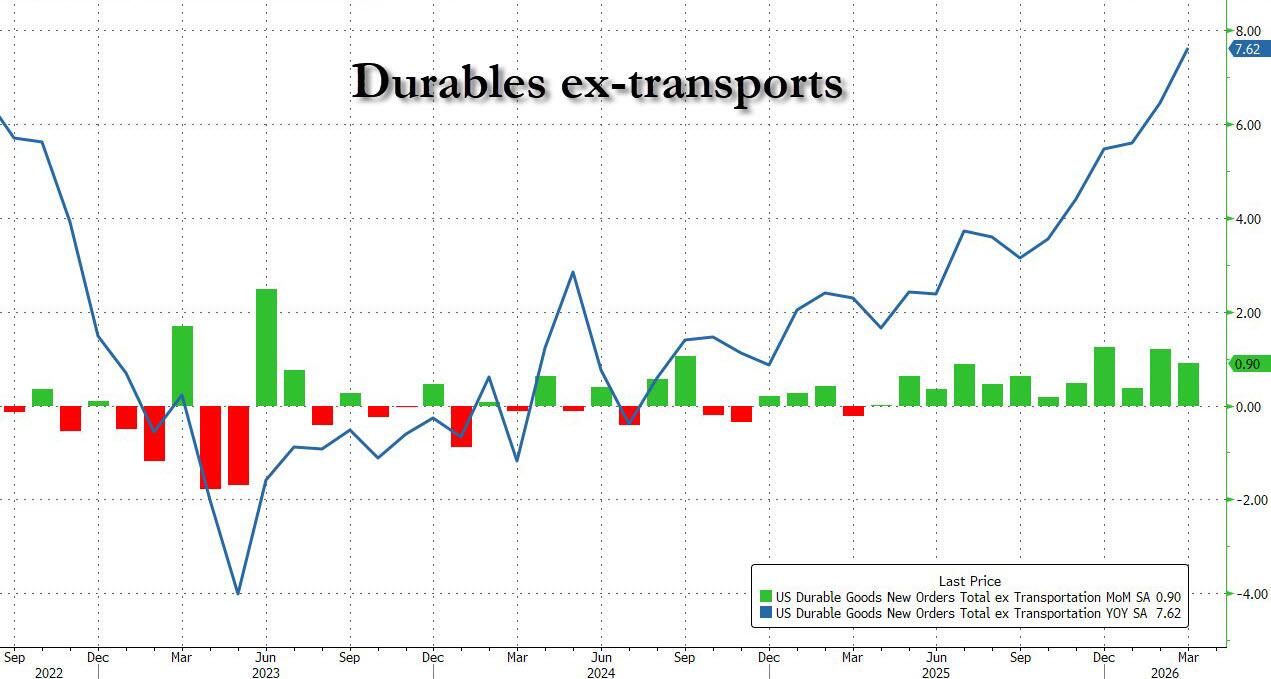
Meanwhile, core durable goods orders (prelim for March ) rose even more, up by 0.9% MoM (and stronger than the 0.4% expected.
That was 12 straight months of gains, pulling core orders up 7.62% YoY – the most since July 2022.
Bookings for non-defense capital goods orders excluding aircraft, a proxy for investment in equipment, surged by 3.3% MoM after an upward revised 1.6% increase a month earlier.
Finally, shipments figures (which plug into GDP) were also comfortably stronger than expected (+1.2% in March versus +0.6% forecast), which suggests upside risks to Q1 forecasts.
It remains to be seen, however, how the war impacted demand for capital goods.
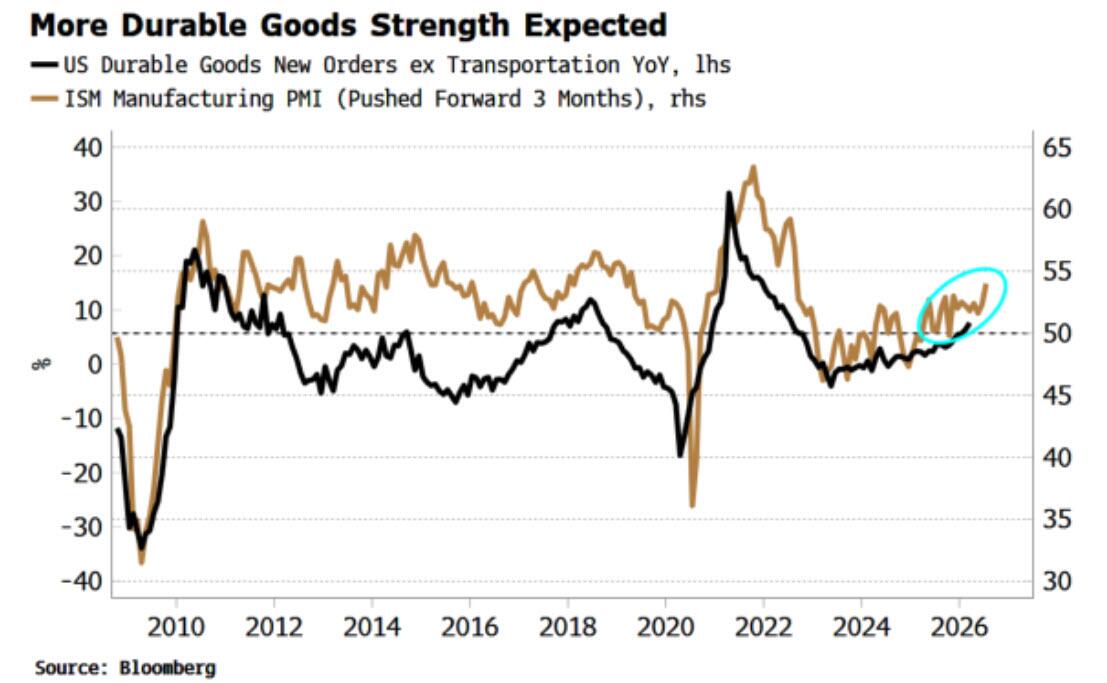
Bond yields rose after the better-than-expected housing and capital goods data. The war is an ongoing risk that can belatedly sour hard economic data, but soft data is more up to date. On that front, we have yet to see the manufacturing ISM turn down. As Bloomberg’s Simon White notes (in the chart below) the ISM leads durable goods new orders by about three months.
Meanwhile, as reported earlier, housing data for March also held up well, largely thanks to housing starts, driven by one-unit structures, even as multi-unit ones fall. Building permits, on the other hand, were ugly, but that is a very forward looking leading indicator, and was likely driven by the spike in rates.
The US economy is overall in remarkably good shape given the age of the cycle. That should keep yields supported. However, the longer energy prices remain elevated, that will become more in question.
Tyler Durden
Wed, 04/29/2026 – 09:43