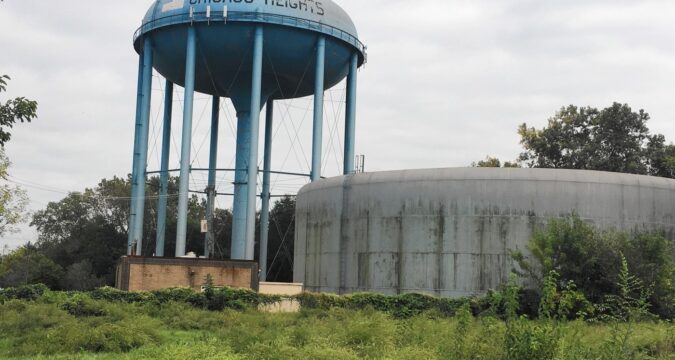
Legislation signed into law last month could help solve long-standing debt issues between the Chicago Heights and Ford Heights, lawmakers say.
Signed by Illinois Gov. JB Pritzker Dec. 12, the legislation allows the state comptroller to collect debts between local governments if the entities reached an agreement or filed a court order. It takes effect June 1, according to the governor’s office.
Ford Heights owes Chicago Heights, its water supplier, nearly $2 million in unpaid water bills. Chicago Heights has attempted to collect the money for about a decade, including suing Ford Heights.
State Reps. Thaddeus Jones and Anthony DeLuca came together to revive the bill after it was pulled from the statehouse floor in April. Jones expressed concern state intervention could further hike water bills for Ford Heights, which already has some of the highest water bills in the south suburbs, after Chicago Heights threatened to turn off the water in 2018.
The legislation allows the state to deduct the debt from state payments to Ford Heights and forward the deducted funds to Chicago Heights, provided the municipalities came to an agreement or if Chicago Heights won a court order.
Jones told the Daily Southtown in April that he worried the court order measure would give Chicago Heights too much leverage over Ford Heights when the village already struggles with costly water bills.
DeLuca said despite the conflict, the two representatives were able to come together over the summer in favor of the bill and encourage Ford Heights and Chicago Heights to develop an outside agreement where Ford Heights slowly pays back the debt. If the terms of that agreement are violated, the state comptroller will be able to intervene.
“The hope is that it’s to the benefit of both communities to continue good communication and try and get this resolved,” DeLuca said.
Jones, who is also mayor of Calumet City, said he is grateful to DeLuca for helping resolve the issue, but maintains concerned about future state comptroller involvement in the village dispute. He said Chicago Heights has continued threatening to turn off Ford Heights’ water, which he hoped passing the legislation would prevent.
If Ford Heights is unable to keep up its commitment to Chicago Heights, Jones said, the state comptroller could “come in and seize the money” until the balance is paid off.
“It would devastate them,” Jones said.
Jones said the impoverished village of about 1,800 people continues to struggle financially and politically, to the point where the village is without any legal representation. The village’s former mayor, Charles Griffin, was forced to resign after being convicted of embezzling funds from the village, and Freddie Wilson was appointed interim mayor in October after serving less than a full term as village trustee.
“They’re fighting in Ford Heights for control of the village,” Jones said. “The mayor is under attack for some of the things that happened in the last administration, but he’s been fighting against a board that doesn’t want to move things forward.”
Wilson on Thursday directed all questions about the water issue to Jones. Chicago Heights Mayor David Gonzalez did not respond to requests for comment.
ostevens@chicagotribune.com
https://www.chicagotribune.com/2026/01/08/ford-heights-debt-chicago-heights-legislation/


