
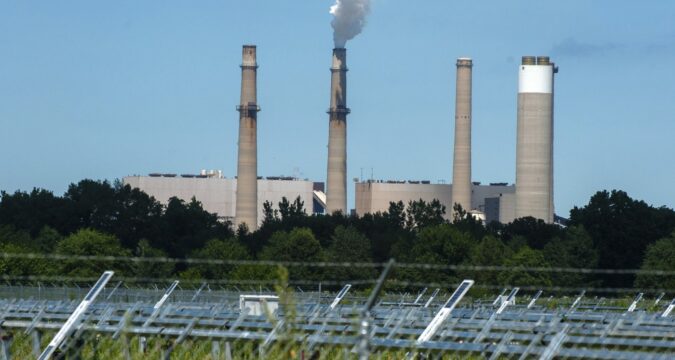
The U.S. Department of Energy issued an order that would prevent the Northern Indiana Public Service Company’s R. M. Schahfer generating station from retiring on Dec. 31 — the date the utility had previously planned.
According to the federal department, U.S. Secretary of Energy Chris Wright, on Dec. 23, issued an emergency order that would require NIPSCO to keep the Wheatfield plant operating. The order went into effect on Dec. 23 and ends on March 23, 2026.
“The Trump administration remains committed to swiftly deploying all available tools and authorities to safeguard the reliability, affordability and security of the nation’s energy system,” Wright said in a statement. “Keeping these coal plants online has the potential to save lives and is just common sense. Americans deserve reliable power regardless of whether the wind is blowing or the sun is shining during extreme winter conditions.”
According to the DOE, the emergency order was made to ensure Midwesterners “have access to affordable, reliable, and secure electricity heading into the winter months.”
In addition to NIPSCO, the Midcontinent Independent System Operator was told to continue operations at its F.B. Culley generating station in Newburgh, Indiana, near Evansville.
“The reliable supply of power from these coal plants is essential for keeping the region’s electric grid stable,” according to the Department of Energy. “The orders prioritize minimizing electricity costs for the American people and minimizing the risk and costs of blackouts.”
In a statement, NIPSCO said the utility has received the order and is assessing its impact to customers and the overall company. The utility will comply with the order and any following orders, according to the statement.
The order alters the timeline for Schahfer’s decommission, according to the statement, but NIPSCO’s “long-term plan to transition to a more sustainable energy future remains unchanged.”
“Guided by our Integrated Resource Plan, NIPSCO and NiSource recognize the importance of reliable and affordable energy as we manage costs and adapt to changing regulatory requirements,” the statement said. “Our commitment to providing safe and dependable energy remains steadfast both now and in the future.”
According to Post-Tribune archives, NIPSCO is in the middle of a multiyear initiative to close its coal-fired generating stations, and the utility plans to replace the sites with more cost-effective, efficient and sustainable sources, including wind, solar and battery storage.
According to the DOE’s Resource Adequacy Report, power outages could increase by 100 times in 2030 if reliable power — including coal plants — is taken offline. The report was criticized upon its release in July by Advanced Energy United, a renewable energy industry group, as “a tool explicitly tasked with preventing power plant retirements.”
EarthJustice, a San Francisco-based environmental nonprofit, said in a news release that the move by the DOE is “an unprecedented power grab” to override decisions made in the interest of customers. Coal is the most polluting and carbon-intensive electricity source, according to the organization, and they believe operating the plants will drive up electricity bills.
EarthJustice Senior Attorney Sameer Doshi said in a news release that the DOE is overriding decisions already made by power companies, grid operators and utility regulators.
“The plants at issue here were marked for retirement because coal is expensive and unreliable,” Doshi said. “These aging power plants emit deadly air pollution, contaminate water with toxic metals, harm our climate, and increasingly break down when we need them most — and the Trump administration is now asking ratepayers to pay more to keep burning coal. Congress gave DOE a narrow, limited role to address actual, imminent emergencies. An event carefully planned for years is not an ‘emergency.’”
According to EarthJustice, the remaining coal-fired generators “have been plagued with mechanical issues, and one unit cannot operate without major repairs.” The generating station’s groundwater is also contaminated from leaking coal ash ponds.
“The federal government’s order to force extremely expensive and unreliable coal units to stay open will result in higher bills for Hoosiers who are already reeling from record-high rate increases in 2025,” said Ben Inskeep, program director for Citizens Action Coalition. “We can’t afford this costly and unfounded federal overreach.”
Earlier this year, the Citizens Action Coalition found that statewide electric utility bills have increased more than $28 per month, or 17.5%, according to the organization’s July report. NIPSCO residential customers were hit hardest, with about a $50 per month, or 26.7% increase, in one year.
According to Post-Tribune archives, NIPSCO plans to convert the Schahfer station into a natural gas plant as part of the plan to provide energy for data centers. Hobart is finalizing a development agreement for a site at 61st and Colorado Street is about 500 acres, nearly half of the 1,100 acres that would be needed to fulfill Amazon Web Services’ plans for a $15 billion investment in Northwest Indiana.
Ashley Williams, executive director of Just Transition Northwest Indiana, said in a statement that the organization condemns the DOE’s order, calling the Schahfer generating station “one of the most notorious polluters in the country.”
“On-site coal ash contamination of groundwater, along with a proposed massive gas plant and (artificial intelligence) data center, compounds an extremely dire situation and creates an unconscionable environmental burden,” Williams said. “The Trump administration is trying to steal away our futures by keeping us tethered to the dirty coal energy of the past. We will not be silent in the face of this injustice.”


