In January 1986, as the Bears were shuffling off to the Super Bowl, I started at Marshall Field’s on State Street. I had worked for several years at suburban stores. But being hired by the flagship store was like being called up to the major leagues.
The first two years, I managed customer service: complaints, returns, package tracking and the information desks. My next five years were spent as the manager of the cash and credit office: credit card payments, gift certificate sales, all the cash for the store registers and restaurants, payroll distribution, refunds and travel expenses for the executives.
Before online shopping, people flocked to the Loop at the holidays, and Marshall Field’s was the jewel of State Street. To pull off the holidays, the store started long before the first snowfall. We began staffing up in August. In the cash office, I usually had a staff of 28; by late fall, 65. Each year before the rush, I would give my crew a pep talk:
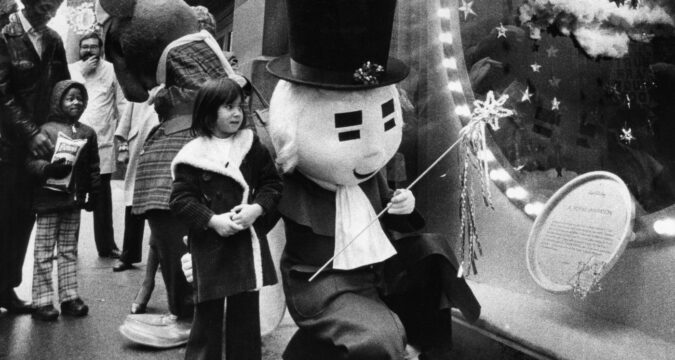
“You are all part of a Chicago and retail tradition. Pageantry, theater, ritual, the Walnut Room tree, decorated windows and Uncle Mistletoe. Crowds like you have never seen. More money going through your hands than you could have imagined. Working here will be both exciting and exhausting, magical, mystical and magnificent. You will never work so hard, be energized and depleted at the same time. Enjoy it all. You will never be part of something like this again.”
While my staff worked hard, being part of management was nothing short of brutal. From the day the tree went up, we worked six days a week until inventory in January. If I had a good night’s sleep and clean clothes, that was a success.
In customer service, we were drilled on the phrase: “Give the lady what she wants.” One day, an older woman called and wanted to know what time the Christmas parade was being broadcast. We told her we didn’t sponsor the parade. She said, “Young lady, I bought the TV there; you should be able to tell me.” We looked it up.
Cozy Cloud Cottage was right outside of customer service. One Saturday, an elf came in to tell me that one of the Santas was drunk. While my assistant and I were plying him with coffee, human resources was on the phone trying to get a sub. He lost the job.
The Frango mints started to arrive in September. We stored cases of them in the cash office to include in gift certificate sales. They sat in my office for four months, and to this day, I cannot stand that mint smell.
The furs department would encourage customers to pick up their furs in storage early in the season. They needed the space to store Frango mints in the cold fur vaults. That’s where we also stored the Champagne we drank at closing on Christmas Eve.
Storage space was in high demand. Holiday decorations were brought down to the floors all September and October and stored in any available spaces — stockrooms, offices, unused dressing rooms and closets — until they could be put up on the floors. Behind the scenes, you couldn’t turn a corner without bumping into a tree or a life-size nutcracker.
Then there was Mistletoe Bear, a signature toy bear with a new one produced every year. They became a collector’s item. People went for them like they were Cabbage Patch dolls, or toilet paper during the pandemic. One evening, I was the acting operations manager and was paged up to toys. There was a long line of angry people waiting to get their bears. The toy manager let me know that there were only a few boxes of bears left. We called up as many security guards as possible to help.
Once she got to the last case, a little old man stepped up. He got the last bear. As the toy manager made the announcement that there were no more bears, the crowd went wild. A security guard and I shoved the poor man into a freight elevator: “It’s for your own safety, sir.” I think he’s still riding that elevator.
When the store was super crowded, management was sent to the floor for crowd control. We were stationed at the escalators. People would get to the top of an escalator and stop in awe of the decorations. Our job was to keep them moving to avoid pile-ups. “Please keep moving along so the people behind you can also enjoy the decorations,” we would say.
Although we had cash office seasonal employees take polygraphs, we still managed to hire two thieves every year. A mentor of mine told me, “They may think they are an honest person, but they have never been presented with so much temptation.” You see, it was the second-largest department store cash office in the country, volume equal to a large suburban bank. The last few days leading up to Christmas, there would be a half million dollars of cash in the office. Marshall Field’s did a third of its business in the last eight weeks of the year. And $2 million in gift certificate sales in December.
There is an atrium in the State Street store. As many of the staff members as possible moved close to the atrium at 5 p.m. on Christmas Eve. When the closing bell rang, everyone would yell up the atrium. The sound was deafening. The pre-holiday rush was over.
After the most intense management experience one could have, I left in April 1993. Having gone back to college while working, I changed careers. I never worked in retail again. But 30 years later, the memories are vivid like yesterday. I relish the times, the seven holiday seasons. Back then, I had no idea there would be an expiration date on the Marshall Field’s experience.
Donna Del Giudice is a lifelong Chicagoan and as a baby boomer remembers fondly visiting Marshall Field’s during the holidays.
Submit a letter, of no more than 400 words, to the editor here or email letters@chicagotribune.com.
https://www.chicagotribune.com/2025/12/24/opinion-marshall-fields-history-macys-chicago-christmas/


