
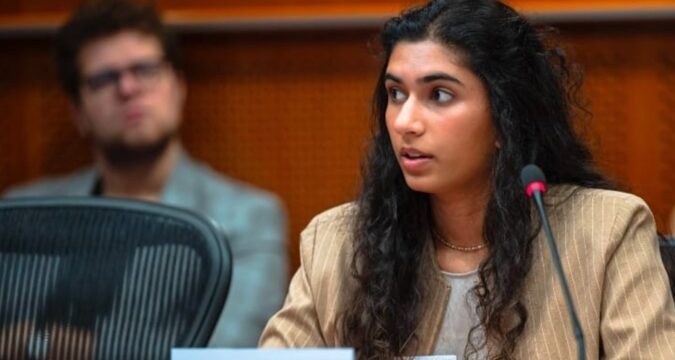
Sophia Ibrahim decided she wanted to help others when she realized as a 14-year-old Hinsdale Central freshman that it wasn’t only herself who found music to be very therapeutic.
The Oak Brook resident founded Harmony Healers, which now in its third year has more than 100 active members, plus others who participate when they can, making music for people who often might miss out on live performances otherwise.
“Music had always been my personal form of therapy, like an escape that helped me navigate stress,” Ibrahim said. “But when I began performing in public, especially in nursing homes, I realized that music didn’t just help me. It deeply affected the people listening.
“Seeing how a short song could bring comfort to residents who often feel isolated, especially after the pandemic, made me want to create more opportunities for other students to experience that impact.”
Her goal when she started Harmony Healers was to give students a way to use their talent for something meaningful, to see that the instrument they’ve spent years practicing can become a form of service, kindness and connection, she said.
And, Ibrahim said, those in Harmony Healers always make time to talk with residents before and after playing.
“Hearing their stories has been just as eye-opening for us as the music is for them,” she said.
In the beginning, Harmony Healers felt like a huge idea with no clear roadmap, Ibrahim said. “But people in my community really believed in it,” she added “Teachers, administrators, and students encouraged the mission and helped it grow.”
Ibrahim said that partnering with Tri-M Music Honor Society brought in passionate musicians, but the biggest shift happened with a partnership with the Future Health Professionals club.
“We realized that service through Harmony Healers didn’t have to be limited to those who play instruments,” she said. “Some students come simply to talk with residents, hold conversations, and learn what compassionate patient interaction looks like.”
That’s when Harmony Healers transformed from a music program into something broader, exploring healing through both music and human connection.
“Moments like residents crying from a song or thanking students for spending time with them still surprise me,” Ibrahim said. “It’s powerful to see teenagers realize that they can make a difference, without needing medical training or professional performance skills … just empathy.”
Ibrahim said Harmony Healers keeps everything very open and flexible in an effort to make service feel accessible and not intimidating. Most members are in high school or college — ages 14 to 25 — but anyone who wants to offer music or companionship is welcome.
The core group of Harmony Healers is based in Illinois, but group members have performed across multiple states and even internationally at humanitarian events.
Ibrahim said the reactions from participants have been incredibly positive.
“Students often start off shy or unsure, convinced they’re not good enough to perform,” she said. “But after seeing how grateful residents are, even for a short piece, their confidence grows dramatically.”
The response from those who have benefited from Harmony Healers visits has been especially moving, she said.
“Some sing along, some dance, and some cry because a song reminded them of a memory or loved one,” Ibrahim said. “They often tell us how much it means to have young people visit them. And those moments show our students that connection doesn’t have to be complicated.”
Oak Brook resident Sophia Ibrahim, who founded Harmony Healers three years ago as a freshman at Hinsdale Central High School, pursued her interest in music as a healing tool during a trip to Bosnia. (Sophia Ibrahim)
Ibrahim took the message of Harmony Healers out of the country this fall when she attended the European Parliament in Brussels. That followed a trip to Srebrenica, Bosnia, where she studied how organizations such as the House of Good Tones have used choirs and orchestras to bridge ethnic divides in the wake of wars. That experience inspired her to advocate for music not just as art, but as a tool of reconciliation in post-conflict societies.
On Sept. 30, Ibrahim was invited by the European Conservatives and Reformists to present at the “Rebuilding Ukrainian Society” roundtable in Brussels. Speaking alongside senior members of the European Parliament, Ukrainian civil society leaders, and international experts, she urged policymakers to look beyond infrastructure and embrace cultural healing as part of Ukraine’s recovery.
“The trip grew out of research I’ve been doing on music as a tool for peace-building,” Ibrahim said. “Harmony Healers made me curious about how music helps people heal emotionally, not just individually, but as communities, especially communities affected by conflict.”
In Bosnia, Ibrahim visited the House of Good Tones in Srebrenica, a city that was the site of a terrible genocide.
“Now, children from Serb, Croat and Bosniak families play music together,” she said. “In a country with a history of ethnic division, watching parents from all sides sit in the same room and cheer for each other’s kids was unforgettable. It made me see that rebuilding after conflict isn’t only about infrastructure. It’s also about rebuilding trust and human connection.”
Ibrahim presented her findings at the European Parliament, discussing how lessons from Bosnia could be applied to healing in places such as Ukraine, using arts and music.
“That was one of the most meaningful experiences of my life,” she said.
Ibrahim said she hopes Harmony Healers continues blending music, medicine, and service in a way that reaches more communities.
“I’d love to open more chapters, create stronger partnerships with nursing homes and hospitals, and give more young people the chance to experience the healing power of connection,” she said. “I hope it becomes a model students can replicate anywhere. A reminder that compassion doesn’t require age or professional training. It can start with something as simple as a song.
“I also hope to continue my research into using music as a healing tool to bring fractured societies together and translate this into actual policy for government and civil societies to use.”
Chuck Fieldman is a freelance reporter for Pioneer Press.
https://www.chicagotribune.com/2025/12/19/hinsdale-harmony-healers/


