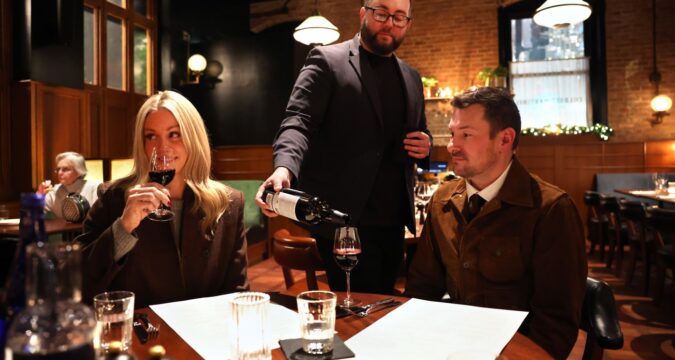
There was a time when sweet wines were embedded in the fabric of everyday American life. Madeira, a fortified wine that developed a tawny, caramelized character over the long, hot sea voyage from the Portuguese island of the same name, was the unofficial wine of Colonial America. By the 19th century, port and sherry had become fixtures of middle- and upper-class dining rituals.
Over the past century, however, sweet wines have quietly slipped to the margins of American culture. I adore them still — their hedonism, their winding backstories and the easy, lingering pace they encourage. In my home, no dinner party or holiday gathering feels complete without a slightly sweet aperitif to start — the lemonade kiss of a German Spätlese, or late-harvest riesling, or a vibrant, fizzy Lambrusco. Later, I turn to headier, richer sips of port, Hungarian Tokaji or French Sauternes with cheese, fruit or chocolate for a stylish, no-fuss finale.
Especially amid the rush of holiday gatherings, sweet wines are an everyday luxury worth rediscovering. Not out of nostalgia, but because they offer the kind of modern ritual many of us crave — a sweet, simple pause to slow down, linger and reconnect.
Forgotten pleasures
You might blame Prohibition, or the rise of dry wines and cocktail culture for the decline of sweet wines in America. But the rapid pace of modern life combined with a surplus of rich, sugary desserts left little room for the slower pleasures sweet wines offer.
There’s a stigma, too, around sweet wines in America, explains André Hueston Mack, the sommelier and founder of the Oregon wine brand Maison Noir. Americans love sweetness, but “sweet wines became something you weren’t supposed to like,” he says.
Still, sweet wine traditions have endured quietly in America. Steakhouses, alongside classic fine-dining and special-occasion restaurants, offer a glimpse of how festive and connective they can be.
Királyudvar Tokaji Cuvée Ilona is paired with lemon pavlova dessert at Hawksmoor in Chicago, Dec. 9, 2025. (Chris Sweda/Chicago Tribune)
“It’s just part of the culture of what a steakhouse is,” explains Dylan Estey, head sommelier at Hawksmoor in the River North neighborhood. “Guests come for a long, luxurious evening, the kind of night you want to stretch out as much as possible.”
And while sweet wines may seem like overkill after a decadent meal, many offer unexpected freshness and lift.
“A lemony dessert, like our lemon pavlova, and a glass of Tokaji finishes the evening on a high,” says Estey, referring to the iconic sweet wines of Hungary known for their honeyed richness and electric acidity.
Port at the heart of holiday traditions
Perhaps no sweet wine is more tied to the holidays than port, the fortified wines of Portugal’s Douro Valley, popularized by generations of British merchant families. The intensely concentrated, warming wines are an especially cozy companion to cold, wintry months.
For Natasha Bridge, whose family established Taylor Fladgate, the port house founded in 1692, the holidays bring a flurry of family and friends to her homes in Porto and the Douro. Today, Taylor Fladgate operates in partnership with fellow founding houses, Fonseca and Croft.
In true British fashion, Bridge says, “all December, we serve mince pies — little pastries filled with dried fruits and nuts — with a ruby-style port.” On special occasions she suggests splurging on a vintage port, special bottlings made only in the best years and labeled with that vintage. More accessible options include late-bottled vintage or reserve rubies like Fonseca’s Bin 27, styles with big, concentered berry flavors that stand up to the spice and richness of a mince pie, she says.
Sweet wines at Hawksmoor, including from left, Bugey-Cerdon La Cueille sparkling wine, Alvear Solera 1927, Taylor Fladgate’s 2019 late-bottled vintage port, Boston Bual Madeira and Királyudvar Tokaji Cuvée. (Chris Sweda/Chicago Tribune)
Port, however, isn’t just a dessert wine. In Portugal, it’s also a popular pre-dinner aperitif. White port, like Fonseca’s Siroco or Croft Pink, the first rosé port on the market, can be served chilled in a white wine glass with a twist of orange, she says, or mixed with ice and tonic water as a “portonic,” a playful riff on a gin and tonic.
Adapting old traditions for modern life
Sweet wines like port might strike some as a bit retro, but “there’s something special about resurrecting older traditions to fit our own lifestyle and the time and place we’re in,” says Mack. This year, he’s been collecting vintage ports tied to special birth years and anniversaries to share with his family over the holidays.
But there’s no reason to reserve sweet wines for special occasions, he insists. In recent years, sweet desserts have largely given way to post-dinner servings of cheese in his household.
“Even the kids love cheese,” he says, and for adults, it’s often accompanied by small pours of sweet wine.
Indeed, even after the holidays, sweet wines offer simple rituals easily integrated into the most ordinary moments of our lives. In colder months, “one of my favorite pastimes is an aperitif of port while watching football,” says Estey. “After all, I’d much rather have a little port or Tokaji than a Miller Lite.”
Sweet-wine tips for the holidays and beyond
Rainwater Madeira is an ideal introduction for anyone skeptical about sweet wines, says Estey. Reminiscent of hazelnuts, caramel and toffee, he says, “it’s almost like liquid Nutella.”
Alvear Solera 1927 is poured at Hawksmoor in Chicago on Dec. 9, 2025. (Chris Sweda/Chicago Tribune)
For a sparkling wine that’s subtly sweet, consider a Clairette de Die “Tradition” from the Rhône Valley, a floral, muscat sparkler that’s an elevated alternative to the more commercially popular Moscato d’Asti. Estey loves Bugey-Cerdon, a lightly sparkling gamay from the foothills of the French Alps. “It drinks like an adult version of Martinelli’s sparkling grape juice,” he says, zippy, fruity and a favorite pairing with hamburgers.
For sheer decadence, Estey pairs Hawksmoor’s sticky toffee pudding with Pedro Ximénez sherry. Made from grapes raisinated in the sun to intensify their sweetness, it’s an unapologetically rich, syrupy sip — “really jumping off the deep end,” he says, but the fig and date flavors are a match made in heaven.
Blue cheese is a classic accompaniment to ruby port. “The acidity of a ruby and its brambly black-fruit flavors just make the pairing sing,” says Estey. At Hawksmoor, he pours Taylor Fladgate’s 2019 late-bottled vintage port, aged in oak casks for four to six years to gain depth while retaining its fruit-forward intensity.
Tawny ports aged 10, 20 or even 40 years in oak lighten in hue and adopt complexities of dried fruits and nuts, caramel and spice. They’re the ideal pairing with chocolate, says Bridge, “whether a really good piece of dark chocolate, or a brownie or chocolate mousse.” She also recommends aged tawnies with apple or nut desserts like an apple tart or pecan pie.
Anna Lee Iijima is a freelance writer.


