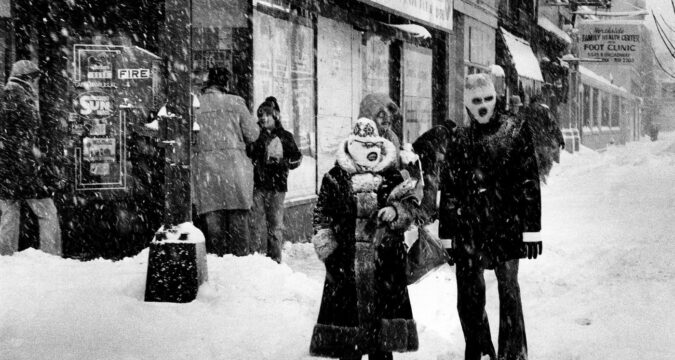
For those who love winter, Chicago’s snowfalls have been disappointing in recent years. The fluffy white stuff showed up late in the season and barely enough of it fell to give sledders and snowman-builders time to enjoy it.
This one, however, is shaping up differently. Though the winter solstice is still 10 days away, the official accumulation in Chicago has already reached 17.3 inches (through Dec. 10). To put that into perspective, the city received a total of 17.6 inches last season.
The early snowfall shoveling might remind some of a relentless winter from almost 50 years ago when the city experienced its most snow ever — almost 90 inches (or 7½ feet) of it. There was no relief from the snow during the winter of 1978-79. It was also the second-coldest winter on record in Chicago with an average temperature of 18.4 degrees. (The worst was 1903-04, one-tenth of a degree colder.)
The winters of 1976-77, 1977-78 and 1978-79 were three of the area’s six coldest ever, according to the National Weather Service. Three consecutive severe winters hadn’t happened since modern weather recording began, according to a 1980 report by the Illinois State Water Survey.
“In Chicago, the winters of the 1970s were collectively our coldest and snowiest on record — and we have records that go back to 1871 and the Great Chicago Fire,” former WGN-TV chief meteorologist Tom Skilling told the Tribune in 2023.
Here’s a look back at what effect all that snow and cold had on Chicago and the suburbs during the most wintry season ever.
Nov. 20-21, 1978
The first snowfall of the 1978-79 season was below half an inch in total, but looked festive when highlighted by holiday lights along Michigan Avenue in Chicago on Nov. 20, 1978. (Chicago Tribune)
Snowfall total: 0.6 inches
Chicago’s first snowfall of the season dropped just 3/10 of an inch at Midway Airport (the city’s official recording site until Jan. 17, 1980). But it arrived just in time for the festive switching on of lights on Michigan Avenue to usher in the holiday season. An additional 0.3 fell the next day.
Yet the occasion wasn’t front-page news. The deaths of 900 people at Jonestown in Guyana was.
Nov. 26-27, 1978
“If only I didn’t have to go to work,” might be the thought of some of the commuters who had to wait for buses at Archer Avenue and Pulaski Road in Chicago on Nov. 27, 1978. (Frank Hanes/Chicago Tribune)
Almost 6 inches (6.6 inches for the season)
The first “big, wind-whipped snowstorm” of the season arrived just after Thanksgiving, the Tribune reported, creating slick driving conditions and flight delays at O’Hare International Airport on what was supposed to be the busiest day in the facility’s history.
Eight people were killed on Chicago-area roads and 23 died on roads throughout the state.
Dec. 1, 1978
The snow swept in on Chicago on Dec. 1, 1978, taking the city and many weather forecasters by surprise. “It’s just lasting longer than we expected,” one weatherman said. Thomas Hartje helped keep the feet of his wife, Hazel, dry by a gallant gesture at Michigan and Chicago avenues. (Earl Gustie/Chicago Tribune)
7.8 inches (Almost 15 inches for the season)
A surprise band of heavy snow dumped as much as 13 inches on some parts of the city and suburbs.
“It was the heavy, wet, sometimes slushy snow — the worst kind for getting your car stuck, and the hardest to shovel away,” Tribune reporter Joseph Sjostrom wrote.
Jack Villmow, professor of meteorology at Northern Illinois, said the storm was caused by a collision of a warm front and a cold front that brought heavy snow to Waukegan from northern Will County and extended from Cedar Rapids, Iowa, to southern Michigan.
An unexpected snowfall of up to 13 inches in some areas surprised the Chicago area on Dec. 1, 1978. (Chicago Tribune)
Flights were again grounded at O’Hare, with one Trans World Airlines employee announcing, “If you live in Chicago, please go home.” But a group of 40-some 4-H club members from North Carolina, who were in town for the club’s annual convention, didn’t have that luxury.
“I spent four hours standing in line just to get plane reservations for 8 a.m. Saturday,” said chaperone William Clayton, as the kids sang “Nothing Could Be Finer Than To Be in Carolina in the Morning.”
Dec. 7, 1978
Chicagoans pitched in to help push cars from slick parking places on Dec. 7, 1978, after more snowfall in Chicago. (Frank Hanes/Chicago Tribune)
6.9 inches (24.1 inches for the season)
The morning snowfall brought a “commuter’s catastrophe” that caused traffic to crawl, but was mostly cleaned up by the evening rush hour.
More than 2 feet of snow had already fallen during the season, compared with about a foot by the same time in 1977. The Tribune’s Robert Davis wrote that despite 82.3 inches of snow during the 1977-78 season, “this could be the one for the record book.”
With school canceled, children were free to “expend their energy by pelting passing cars with snowballs,” Tribune reporters Edward Baumann and Sjostrom wrote.
After enduring yet another snowstorm in early December 1978, Chicagoans were weary but relieved when National Weather Service forecasters announced another expected blizzard shifted eastward to Ohio and Kentucky. (Chicago Tribune)
“Boy, are there a lot of people mad at us today,” an airline spokesperson said. “And it’s not over yet. No, we’ve got all kinds of airplanes in places where they’re not supposed to be.”
There was, however, some good news. Another storm veered away from the area, which gave Chicago a small reprieve and time to dig out.
Dec. 31, 1978-Jan. 1, 1979
Mayor Michael Bilandic, right, watches snow removal on LaSalle Street on Dec. 31, 1978, in Chicago. (Chicago Tribune historical photo)
8.5 inches (39.4 inches for the season)
1978 ended much as it had begun — under a blanket of white snow. A New Year’s Eve snowstorm dumped 8-11 inches around the area, “giving New Year’s holiday travelers hangover-like headaches,” the Tribune reported.
As bodies were discovered inside the unincorporated Norwood Park Township home of John Wayne Gacy, Chicagoans endured bitter cold temperatures, which had hovered over the area since Christmas.
Chicago Mayor Michael Bilandic said 410 pieces of snow removal equipment, including 13 new snowblowers, were working to clear the streets. Winter officially began just 10 days prior, but crews had been busy with limited rest since freezing rain made roads slick on Dec. 30.
More than 3 feet total of snow — or the amount the city expected to receive during a normal season — had fallen in November and December combined at Midway Airport. Nerves were frayed.
“I can take one — either snow or cold — but not both,” National Weather Service meteorologist Greg Dickey said.
Jan. 12-15, 1979
22.7 inches (62.4 inches for the season)
The attempt to dig out began at 2 a.m. on Jan. 14, 1979, when the main storm concluded. Another 2 inches of snow fell on Jan. 15. The snow depth at Midway Airport reached 29 inches — a new record.
“The aftermath was a nearly paralyzed city,” the Tribune reported. “And the snow was followed by a plunge in temperature well below zero.”
O’Hare and Midway airports remained closed and public transportation service was spotty. Most commuter railroads operated with significant delays.
Those at home couldn’t get to work — unless they hitched a ride with a Sun-Times circulation truck like one Tribune reporter. And those at work couldn’t get home, said one meteorologist at the National Weather Service who was contacted by the Tribune during his 16-hour shift.
“My mind is going crazy here. I don’t know how much longer I can handle this,” Richard Ryrholm said. “I’m the only meteorologist on duty now, and I have no idea when my relief will arrive so I can go home.”
The storm of Jan. 12-14, 1979, dropped more than 20 inches of snow on the city. This was the worst storm of a winter in which almost 90 inches of snow, the all-time season record, fell on the city and was also remembered as the second-coldest in Chicago’s recorded history. (Chicago Tribune)
Four fishermen whose boat was stuck in ice a mile off Oak Street Beach had to be rescued by U.S. Coast Guard helicopters when their boat began taking on water. Loren Drain was born in her family’s home on the North Side, thanks to help from a passerby who was a doctor.
Bilandic attended Mass and called on all Chicagoans to follow his example: “Pray for no more snow.”
Jan. 23-24, 1979
As a blanket of snow swelled ever deeper, Snow Command trucks got rid of a little of it in the Chicago River on Jan. 24, 1979. (Charles Osgood/Chicago Tribune)
8.3 inches (73.6 inches for the season)
Yes, it was still bitterly cold, but public and Catholic elementary schools had a new concern — the possibility of roof collapse. High winds combined with the weight of almost a new foot of snow in some places prompted the urgency of snow removal and inspection of those structures.
After months of snow and bitterly cold temperatures, the threat of roofs collapsing in late January 1979 caused some schools to close. (Chicago Tribune)
Part of the roof at Arlington Park racetrack collapsed, as did that of a Carson Pirie Scott & Co. store at Randhurst Shopping Center in Mount Prospect. No one was injured in either incident, the Tribune reported.
The snow caused one beloved Chicago institution to be postponed for just the third time in 17 years: “Bozo’s Circus.” Although the show’s wait list for tickets stretched into 1985, a WGN-TV spokesperson said the audience for the canceled show would be invited back in the spring.
Feb. 11-12, 1979
Chicago used the parking area at Montrose Avenue and the lakefront to dump snow during the January blizzard and cars that were parked there on Feb. 6, 1979, were nearly completely buried. According to the 46th Ward Superintendent Thomas Frole, the truckers who haul the snow are not supposed to dump their cargos on cars. “If cars happen to be there, I would expect them (truckers) to dump the snow away from the cars,” he said. A few days later, more snow would fall. (William Yates/Chicago Tribune)
4.7 inches (84 inches for the season)
It was official: The most snow ever had fallen on the city as the previous year’s record was shattered. It was the distinction no one really wanted.
By mid-February 1979, 7 feet of snow had fallen on the Chicago area. Not only were people fatigued, but so were the city’s garbage removers and public transportation infrastructure. (Chicago Tribune)
Despite assurances from city officials that the city’s six-week backlog of garbage pickup would be remedied, Tribune reporters George de Lama and Frederick Lowe still spotted trash stacked garage-roof high in many parts of Chicago.
The unusual amount of snow and ice also caused a record number of accidents and derailments (five) on CTA rapid transit lines. Thankfully, no serious injuries had resulted from these events.
Feb. 18, 1979
Another day of above-freezing temperatures turned snow to water, which sometimes turned back to ice on Feb. 21, 1979, creating tough going for pedestrian and motorist alike. This man regained his balance at St. Clair and Erie, but that’s no sign things were going to get better. For one thing, maintenance crews were running out of salt. (Carl Hugare/Chicago Tribune)
3.4 inches (87.4 inches for the season)
With just one month left on the calendar before the season’s conclusion, Chicagoans began to fear winter might never end.
A weather service forecaster said Midway’s 23-inch snow cover limited any potential thaw and kept temperatures down.
The city’s Streets and Sanitation workers continued to tow cars that hampered snow removal efforts. That January, Bilandic lashed out by saying police would be ticketing vehicles and ordering them towed if not removed from Chicago’s streets — instead of taking responsibility for the mishandling of the snow removal.
Discovering a buried car that seems to have been parked on Stockton Drive in Lincoln Park for a long time, a policeman writes out a parking ticket on Jan. 23, 1979. The officer had to clear the snow away from the license plate to read the number. (Ernie Cox Jr./Chicago Tribune)
Bilandic also said there would be “no exceptions” for sick, elderly or poor people who couldn’t move their cars. “If there are hardship cases, they can tell that to a judge. That’s what a judge is for,” he told reporters. Bilandic later apologized for his mishandling of the snow removal, but Chicago residents — voters — weren’t satisfied.
March 9, 1979
Kevin Higgins, 8, of Alcott Elementary School on the North Side opens wide for the on-again, off-again light powdery snowfall on March 9, 1979. Luckily the flakes melted as quickly on the street as they did on Kevin’s tongue. (Sally Good/Chicago Tribune)
1 inch (89.4 inches for the season)
The city had a new Democratic candidate for mayor — Jane Byrne — and a new emergency developing near Kankakee.
Paralyzing blizzards set up Chicago Mayor Michael Bilandic for defeat, but it was bright sunshine on Feb. 27, 1979, that did him in. The fair weather on the day of the mayoral primary election brought out the voters in the second-biggest turnout for a primary election in 40 years and the memory of the city’s inept handling of record January storms drove them to overturn the Democratic machine. Maverick candidate Jane Byrne won the Democratic nomination. (Chicago Tribune)
Melting snow triggered a dramatic rise in the Kankakee River, which struck some homeowners’ property with up to 4 feet of water. Illinois Gov. Jim Thompson declared the entire state a disaster area, paving the way for federal assistance for flood victims.
March 25, 1979
The camera catches two frozen forms in Lincoln Park — a thinly clad jogger in mid-stride and an icy monument to the past winter, which dumped nearly 90 inches of snow on the Windy City. Despite spring temperatures on April 20, 1979, densely packed snow remained in some areas. (Carl Hugare/Chicago Tribune)
0.2 inches (89.7 inches for the season)
The final snow of the season capped the official seasonal snowfall at 7½ feet — a new record.
A Tribune investigation found that 13 firms — many with political connections — were paid $6.4 million (or about $29 million in today’s dollars) to clear snow at Chicago’s airports during the season.
Want more vintage Chicago?
Become a Tribune subscriber: It’s just $1 for a 1-year digital subscription.
Thanks for reading!
Subscribe to the free Vintage Chicago Tribune newsletter, join our Chicagoland history Facebook group, stay current with Today in Chicago History and follow us on Instagram for more from Chicago’s past.
Have an idea for Vintage Chicago Tribune? Share it with Kori Rumore at krumore@chicagotribune.com.


