The death of Ron Bean, the first Black village president of Park Forest, closed a significant chapter in the town’s history and elicited tributes from those who knew him.
Janet Muchnik, who was a trustee and later village manager, praised Bean for his ability to see light when others feared darkness.
“He was always a gentleman,” Muchnik said. “He was kind and thoughtful and ready to sit down and talk about ways to make life better.”
Ron Bean
From the time in 1969, when he moved to the village, Bean became a hardworking and conscientious supporter for the community.
In an era where the highest elected officials were called “president” instead of “mayor,” Bean was first elected as village trustee in 1974 and became village president in 1981, succeeding Mayer Singerman.
It was a historic moment as he became the first Black person in Illinois elected to office by a predominantly white population.
Former village Mayor John Ostenburg recalls that when he first became a board member in 1985 “there was a rather vocal group of citizens (who) regularly came to meetings to complain about one thing or another. What most impressed me about Ron was how he managed the tense situations. He never let them get under his skin in the least. It was a great lesson for me.”
It was Bean’s calm leadership that steered the village through hard, often confrontational issues including major infrastructure challenges of aging water, sewer and utility systems which required costly overhauls and upgrades.
Bean also faced the challenge of maintaining the plaza shopping center in the heart of town, which was being threatened and soon surpassed by the then newly built Lincoln Mall in nearby Matteson. Today, some faded signs are all that is left of that enterprise.
A believer in the worth of both the village and the south suburbs, Bean served on numerous regional boards including the Illinois Philharmonic Orchestra, the building of Garden House a senior living facility in the village, as well as Pizzazz, a food and music festival.
Ron Bean wanted to improve everything he touched, and his accomplishments helped anchor the community to its base, to its people.
Services for Bean will be held at 2 p.m. this Sunday, Dec. 7, at Southland College Prep Charter High School,4601 Sauk Trail, Richton Park.
Closing of a church
Members of Park Forest’s Trinity Lutheran Church closed the books on the church’s history this past Sunday with one last celebration in Scrementi’s Restaurant, ending its 76-year history.
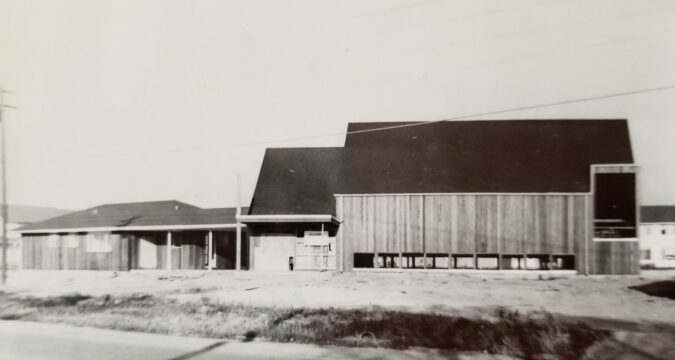
Beginning with worship services in 1949 in an apartment on Western Avenue, the gathering quickly became a church with 43 charter members by December of that year. One year later, the first service was held in its newly built church building at 2901 Western Ave.
Throughout the years, Trinity had a flourishing congregation and became a vital part of the spiritual life of the community. It grew with the community; a new church building was dedicated in 1960. The nursery school started the following year. Stained glass windows were installed in 1972, and through the years, from then until now, 24 pastors served its dedicated community.
In the church’s first 50 years, 343 weddings were celebrated, 1,363 baptisms performed and its congregation numbered some 250 families, giving it a sense of permanence.
It was not to be.
A gradual erosion of community set in. Families moved away. Other churches opened doors and by 2019, after 70 years of celebrations and sadness, of Easter, of Christmas and of everything in between, the church building closed its doors. The Rev. Christopher Wogaman took the church’s cross and along with some 60 church members walked slightly more than a mile to a new sanctuary inside Church of the Holy Family on Orchard Drive.
Members continued to attend, continued to trickle away. After four years, the Trinity community moved again, this time to St. John the Evangelist Church in Flossmoor.
The numbers never increased and recently, the church board voted to become members of Our Saviour’s Lutheran Church in Lansing.
Trinity Lutheran ceased to exist.
Two numbers underlined the plight of the church. In his seven years as pastor, Wogaman presided at 35 funerals and at the end of its religious life, the church was reduced to a mere 48 members.
The church had nearly $228,000 in its coffers and in two meetings in October, the church council voted to donate the money to 17 different organizations. Our Saviour Church received $120,000 with the rest divided up among arts groups, social organizations and shelters of one kind or another.
The name is gone, but the spirit remains.
Jerry Shnay is a freelance columnist for the Daily Southtown.
https://www.chicagotribune.com/2025/12/01/column-former-park-forest-president-ron-bean/


