A friend of mine who is a gardening fanatic has just moved nearby and I want to give a unique plant as a housewarming gift. Do you have suggestions?
— Angel Montoya, Highwood
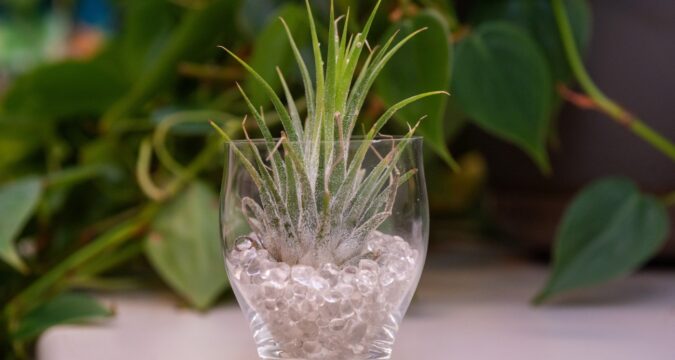
Consider a plant from the Tillandsia genus as a unique gift for your friend. I find this group of plants to be very interesting. Gardeners should appreciate this plant along with its ease of care. They are commonly known as air plants and can be found in the jungle, rain forest and arid desert environments from sea level to high mountain regions. Most species of Tillandsia use their root systems to attach to trees or rocks and absorb moisture and nutrients through their leaves. This classifies them as epiphytes. The plants absorb water through small scales on their leaves, which give many air plants their silvery or gray appearance. There is a large variety of sizes, shapes, textures, blooms and colors, so you should be able to find something that you will enjoy gifting. Many of these plants undergo a dramatic color change as they flower. Tillandsia are relatively inexpensive, adaptable plants that tolerate a wide range of environmental conditions and require minimal care.
Tillandsia grow differently from most other houseplants, so they can be a bit confusing at first to new gardeners. Don’t pot them up into a container with growing medium. Instead, use glue, wire, fishing line, twisty ties, nails and staples to attach them to a support such as driftwood pieces and metal frames or put them into a container filled with glass spheres or pea gravel without any growing medium. The plant will eventually attach roots that anchor it to the mount. If the plant has a large enough root system, a heavy staple gun can be used to staple the roots directly to the mount. Nails and staples can only be used on plants with a good root system or woody stolon. Use waterproof glue and let the glue cool briefly before attaching plants if you are using a hot glue gun. Don’t use super glue or copper wire to avoid damaging or killing the plants. Air plants should not be put in containers that hold water (since they need to dry out). If you do place your plant in something that holds water, empty out the excess water after watering your plant. The same thing applies when mounting your plant. Do not surround the plant with moss that holds water and can eventually cause the plant to rot. Spanish moss works well, however, to camouflage the roots and plant attachments since it is open and airy and does not hold water.
Position Tillandsia so that they receive bright, filtered light while avoiding direct sun. In general, the higher the humidity in your space, the more light the plants can tolerate. The silvery-leafed varieties can usually be grown in full sun outdoors during the summer. If the air in your home is dry, submerge the plant in water for two to three hours every two weeks or so. If this is not feasible, use a soaking mist two to three times a week — more often in a hot, dry situation and less often in a cool, humid one. Do not use distilled or softened water on the plants. Filtered water, tap water that has sat long enough for chlorine to dissipate, bottled water or reverse osmosis water is best. Many people do not water these plants enough. The leaves will develop an exaggerated curl or roll if they are kept too dry. Ideally, your plants will be given enough air circulation and light to dry in less than three hours after watering. Spray misting can be beneficial between regular watering. In a very sunny spot indoors, they may need daily misting or weekly soaking, depending on which method you prefer. Provided the atmosphere is not too dry (as in an air-conditioned home), they can survive with water misting and the occasional soaking. It is better to water in the morning than at night, since air plants absorb carbon dioxide from the air at night rather than during the day. This process is impeded when the plant foliage is wet. You can purchase fertilizer that is formulated for air plants, as they absorb nutrients through their leaves. Fertilizers for orchids or bromeliads will also work well, but remember to apply these at one-quarter to one-half strength.
For more plant advice, contact the Plant Information Service at the Chicago Botanic Garden at plantinfo@chicagobotanic.org. Tim Johnson is senior director of horticulture at the Chicago Botanic Garden.
https://www.chicagotribune.com/2025/11/29/tillandsia-plant-gift-easy/


