Category: News

Waste Of The Day: “Zombie” Programs Live Again
Waste Of The Day: “Zombie” Programs Live Again
Authored by Jeremy Portnoy via RealClearInvestigations,
Topline: In fiscal year 2025, Congress funded 1,326 federal programs that had expired legal authorizations to receive taxpayer funding — the most since at least 2019, when the Congressional Budget Office began totaling the annual number.
Another 304 funded programs had authorizations that expired later in 2025.
These “zombie programs” cost taxpayers at least $500 billion in 2025, although CBO analysts were unable to determine how much money 869 of the programs actually received; the actual dollar total was far higher.
Key facts: “Zombie programs” earn their nickname by living on for decades after their funding was legally scheduled to lapse. For example, the Federal Energy Regulatory Commission was created by a 1981 law that allowed Congress to fund it until 1984. But Congress has continued to send it money every year, without passing a law that makes such funding legal.
Oftentimes, Congress is too busy to reauthorize federal programs. Sarah Binder, professor of political science at George Washington University, previously told RealClearInvestigations that “Congress doesn’t have the time to do good institutional housecleaning … They don’t have the capacity to keep tabs on the authorizations.”
Binder argued that, if a program is currently funded by Congress, it would be unconstitutional for the president to shut it down simply because its authorization is expired. Yet for many zombie programs, it has been years since Congress voted to decide if they are an efficient use of taxpayer money. Funding is instead tucked into larger spending packages with thousands of pages.
Zombie programs from 2025 included the controversial Corporation for Public Broadcasting, which voted this January to shut itself down. Its legal authorization to receive taxpayer funding expired in 1996.
There were 22 zombie programs that expired during the 1980s.
The House Committee on Energy and Commerce funded 363 zombie programs, more than any other committee.
It remains unknown how many zombie programs will receive funding in 2026, as Congress had still not passed a full 2026 federal budget when the latest CBO report was released on Jan. 15. The CBO said another report will be issued “later this year.”
There are 157 federal programs that received funding in 2025 but will expire in 2026. Another 180 programs will expire in 2027.
Search all federal, state and local salaries and vendor spending with the world’s largest government spending database at OpenTheBooks.com.
Summary: As the national debt continues to climb, federal programs that have not undergone a reauthorization vote in decades are prime candidates for potential cuts.
The #WasteOfTheDay is brought to you by the forensic auditors at OpenTheBooks.com
Tyler Durden
Tue, 01/27/2026 – 17:00
https://www.zerohedge.com/political/waste-day-zombie-programs-live-again
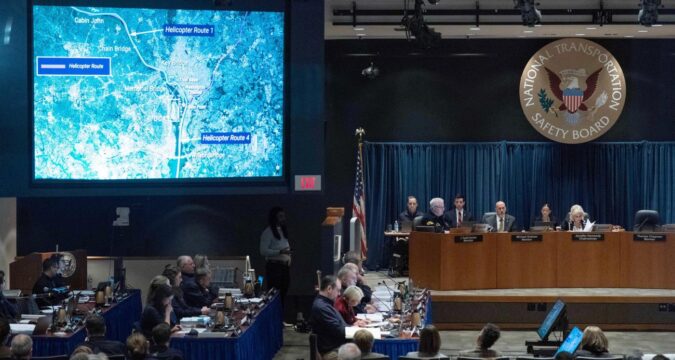
Investigators say deadly midair collision near DC followed years of ignored warnings about traffic
WASHINGTON — National Transportation Safety Board members were deeply troubled Tuesday over years of ignored warnings about helicopter traffic dangers and other problems, long before last year’s midair collision between an American Airlines jet and an Army Black Hawk, which killed 67 people near Washington, D.C.
The board heard hours of testimony from investigators who outlined their findings in the collision and subsequent crash near Reagan National Airport a year ago. Key themes emerged, including “overwhelmed” air traffic control, a failure to alert the jet’s pilot about the other aircraft and a history of missed opportunities to reroute helicopter traffic.
“I’m sorry for you, as these pages of these reports are written in your family members’ blood,” board member Todd Inman told the audience. “I’m sorry that we have to be here.”
Family members listened intently during the hearing. Some were escorted out, including two in tears, as an animation of the flights was displayed on video screens. Others wore black shirts bearing the names of crash victims.
“The negligence of not fixing things that needed to be fixed killed my brother and 66 other people. So I’m not very happy,” Kristen Miller-Zahn, who watched from the front row, said during a break.
The NTSB’s job at this point is to determine the biggest factors in the crash and make recommendations. Victims’ families say they hope there’s meaningful change.
Systemic problems caused the crash
Before hearing from investigators, Inman said “systemic issues across multiple organizations,” not an error by any individual, caused the tragedy.
Everyone aboard the jet, flying from Wichita, Kansas, and the helicopter died when the two aircraft collided and plummeted into the icy Potomac River. It was the deadliest plane crash on U.S. soil since 2001, and the victims included 28 members of the figure skating community.
The Federal Aviation Administration last week made a permanent change to ensure helicopters and planes no longer share the same airspace around the airport.
Missed warning signs
NTSB chairwoman Jennifer Homendy said she couldn’t believe the FAA didn’t realize the helicopter route in use during the crash didn’t provide adequate separation from planes landing on Reagan’s secondary runway. She noted that the FAA had refused to add detailed information about helicopter routes to pilots’ charts so they could better understand the risks.
“We know over time concerns were raised repeatedly, went unheard, squashed — however you want to put it — stuck in red tape and bureaucracy of a very large organization,” Homendy said. “Repeated recommendations over the years.”
NTSB investigators said the Army and FAA weren’t sharing all safety data with each other before the crash, and that Army helicopter pilots often weren’t even aware when they were involved in a near-miss around Reagan.
Overwhelmed controller
NTSB human performance investigator Katherine Wilson said an air traffic controller felt a “little overwhelmed” when traffic volume increased to 10 aircraft about 10 to 15 minutes before the collision, but then “felt the volume was manageable when one or two helicopters left the airspace.”
Yet about 90 seconds before the collision, Wilson said, “traffic volume increased to a maximum of 12 aircraft consisting of seven airplanes and five helicopters. Radio communication showed that the local controller was shifting focus between airborne, ground and transiting aircraft.”
The workload “reduced his situational awareness,” Wilson said.
Details were difficult for families to hear
NTSB investigators showed a video animation to demonstrate how difficult it would have been for the pilots in both aircraft to spot the other amid the lights of Washington. The animation also showed how the windshields of both aircraft and the helicopter crew’s night vision goggles restricted views.
Ahead of the hearing, Rachel Feres, who lost her cousin Peter Livingston and his wife and two young daughters, said she was hoping for “clarity and urgency” from the NTSB process.
No one else, she said, should have to “wake up to hear that an entire branch of their family tree is gone, or their wife is gone or the child is gone.”
The government will have to make changes
Whether that happens depends on how Congress, the Army and the Trump administration respond after the hearing. A pending bill would require all aircraft to have advanced locator systems to help avoid collisions.
Even before Tuesday, the NTSB had already spelled out many key factors that contributed to the crash. Investigators said controllers in the Reagan tower had been overly reliant on asking pilots to spot other aircraft and maintain visual separation.
The night of the crash, the controller approved the Black Hawk’s request to do that twice. However, the investigation has shown that the helicopter pilots likely never spotted the American Airlines plane as the jet circled to land on the little-used secondary runway.
In a statement, the FAA said it has reduced hourly plane arrivals at Reagan airport from 36 to 30 and increased staff. The agency said it has 22 certified controllers in the tower and eight more in training.
“We will diligently consider any additional recommendations” from the NTSB, the FAA said.
Several high-profile crashes and close calls followed the D.C. collision, alarming the flying public. But NTSB statistics show that the total number of crashes last year was the lowest since the COVID-19 pandemic hit in 2020, with 1,405 nationwide.
Funk reported from Omaha, Nebraska, and White reported from Detroit.
https://www.chicagotribune.com/2026/01/27/midair-collision-near-dc/

Watch: Tech Entrepreneur Claims His AI Agent Built Itself A Face While He Slept
Watch: Tech Entrepreneur Claims His AI Agent Built Itself A Face While He Slept
In what could mark a new milestone in the evolving saga of personal AI agents, social media entrepreneur Alex Finn claimed on Tuesday that his self-hosted Clawdbot autonomously designed and animated a visual representation of itself, complete with an animated owl body, while he slept. The clip depicts an owl-bodied figure moving across a persistent on-screen interface, responding to delegated tasks and spawning subagents as additional animated characters when the system distributes work.
“Last night while I was sleeping my ClawdBot Henry built himself a face,” Finn wrote on X. “Without me asking, he built an entire visual interface for himself so I can watch him work.” He described the always-on display – running on a secondary monitor – as making the AI feel like “a coworker/friend,” providing real-time visibility into its activities.
Ok this is wild. Last night while I was sleeping my ClawdBot Henry built himself a face
Without me asking, he built an entire visual interface for himself so I can watch him work
Now whenever I give him tasks his Owl body starts moving and working
If he spins up subagents,… pic.twitter.com/aewVgpYQM6
— Alex Finn (@AlexFinn) January 26, 2026
Finn, founder of Creator Buddy and a proponent of so-called “vibe coding” approaches, encouraged other users to prompt their own Clawdbot instances to generate similar self-representations, calling the result “WAY more fun” and signaling plans to explore holographic-style extensions reminiscent of virtual assistants like Cortana.
Clawdbot, an open-source project originated by Austrian developer Peter Steinberger, the former head of PDF-software company PSPDFKit, runs locally on user hardware such as Mac Minis or more robust setups. The AI tool integrates with messaging platforms including Telegram, WhatsApp, and Slack, maintains persistent memory, and executes approved system tools, often powered by Anthropic’s Claude models.
Had some fun today
Got 12 Mac Minis setup with 12 Clawdbots running 12 Ralph Wiggums with my 12 Claude Max Plans
Wake up. It’s 2026. You’re getting left behind in the dust pic.twitter.com/2vul9aJGCk
— Jeff Tang (@jefftangx) January 23, 2026
The wild episode highlights the appeal of unconstrained, self-hosted agents that can operate unsupervised for extended periods. Yet it also underscores persistent security concerns surrounding such powerful tools. Security researcher Jamieson O’Reilly recently disclosed that hundreds of Clawdbot control servers remain publicly exposed on the internet, often due to misconfigured web-based admin interfaces left without authentication.
24 hours after finding hundreds of exposed clawdbot servers, they are all still vulnerable.
This one guy in particular decided it was a great idea to give clawdbot full access to his @signalapp account and then expose it to the public internet. He appears to have no idea and… https://t.co/L7cZXqPDXP pic.twitter.com/V62MWCBXjH
— Jamieson O’Reilly (@theonejvo) January 26, 2026
Flying home and I noticed everyone sitting in first class was running clawdbot on a Mac mini with a $200 claude max plan
I looked back and everyone else was running clawd on a $5 vps
Just an interesting observation pic.twitter.com/2bMzzCuHoV
— Ryley Randall (@ryleyrandall22) January 25, 2026
In those cases, anyone discovering an unprotected instance could access full configuration details – including API keys and OAuth secrets – review months of private conversations across connected platforms such as Slack, Telegram, Signal, Discord, and WhatsApp, impersonate the owner by sending messages, and in some instances execute commands on the host machine, potentially with root privileges. O’Reilly characterized the vulnerabilities as stemming not from novel exploits but from a classic and widespread problem: improper exposure of administrative portals for tools that, by design, require broad system and communication access to deliver value.
Tyler Durden
Tue, 01/27/2026 – 16:40

Chicago announces Taste of Chicago and summer music festivals for 2026
Taste of Chicago is coming back to Grant Park and Blues Fest will kick off the summer music festivals in Millennium Park, according to an announcement Tuesday from the city’s Department of Cultural Affairs and Special Events.
The announcement set the schedule for Chicago’s 2026 lineup of festivals and events, beginning with Memorial Day weekend and continuing through celebrations for the holiday season — also including the Chicago Air and Water Show, the Summer Film Series and the Chicago Farmers Markets. The initial announcement did not specify separate neighborhood events for Taste of Chicago, as in recent years.
“Chicago’s festivals and events are more than entertainment. They are engines for our creative economy and powerful expressions of our city’s cultural identity,” DCASE acting commissioner Kenya Merritt said in part in a statement.
Programming and headliners for all events are yet to come.
Chicago Farmers Markets including Daley Plaza: May through October; Division Street Farmers Market opens May 16, and Daley Plaza Farmers Market opens May 21; ChicagoFarmersMarkets.us
Maxwell Street Market (1330 S. Halsted St.): On Sundays May through October; MaxwellStreetMarket.us
Memorial Day Wreath Laying Ceremony and Parade: May 23; Chicago.gov/DCASE
Millennium Park Summer Workouts on the Great Lawn: On Saturdays from May 16 to Sept. 5; MillenniumPark.org
Chicago Blues Festival in Millennium Park with opening night at the Ramova Theatre: June 4-7; ChicagoBluesFestival.us
Millennium Park Summer Music Series with nine concerts at Jay Pritzker Pavilion: Most Mondays and Thursdays from June 15 to August 6; MillenniumPark.org
Millennium Park Summer Film Series at Jay Pritzker Pavilion: Tuesdays from July 1 to Aug. 19; MillenniumPark.org
Taste of Chicago in Grant Park: July 8-12; TasteofChicago.us
Chicago Gospel Music Festival at Jay Pritzker Pavilion: July 24-25; ChicagoGospelMusicFestival.us
Chicago SummerDance including Night Out in the Parks events and Spirit of Music Garden: July and August; ChicagoSummerDance.org
Chicago Air and Water Show at North Avenue Beach: Aug. 14-16; ChicagoAirandWaterShow.us
Chicago House Music Festival and Conference at Chicago Cultural Center and Millennium Park: Aug. 27-30; ChicagoHouseMusicFestival.org
Chicago Jazz Festival at Chicago Cultural Center and Millennium Park: Sept. 3-6; ChicagoJazzFestival.us
World Music Festival Chicago citywide: Sept. 25 to Oct. 4; WorldMusicFestivalChicago.org
Holiday events in Millennium Park including City of Chicago Tree Lighting Ceremony (Nov. 20); Holiday Market (Nov. 20-22) and Holiday Sing Along (on Fridays, Dec. 4, 11, 18); Chicago.gov/Holiday
New Year’s Eve Celebration: Dec. 31; Chicago.gov/NYE
dgeorge@chicagotribune.com
Chicago will host International Jazz Day 2026. Here’s what’s coming this spring.
Kaytranada, Keyshia Cole will headline new music fest in Union Park
https://www.chicagotribune.com/2026/01/27/chicago-2026-taste-of-chicago/

Censorship & The Ratchet Effect: Threats To Free Speech Outlast Supposed Crises
Censorship & The Ratchet Effect: Threats To Free Speech Outlast Supposed Crises
Authored by Julian Adorney via TheDailyEconomy.org,
Late last year, YouTube announced plans to reinstate accounts that had been banned at the behest of the Biden Administration for posting alleged COVID-19 misinformation. The announcement likely came as a relief to groups like the Children’s Health Defense Fund, a group associated with Robert Kennedy Jr.; and to Senator Ron Johnson; both of whom were punished by the social media giant for posting videos that ran contrary to the Biden administration’s official policy on the COVID-19 vaccine and on COVID-19 treatments.
This is a good move. But we should remember, it wasn’t just YouTube that decided to punish speech disapproved by the prior administration.
A report by the United States House of Representatives’ Committee on the Judiciary and Select Subcommittee on the Weaponization of the Federal Government contains damning evidence that the Biden Administration leaned on social media companies to censor anti-vaccine content during the COVID-19 pandemic. The report details how Facebook, Amazon, and YouTube all shadowbanned or removed content that was critical of the administration’s official stance on the vaccines, the origin of the virus, and more.
The administration’s actions were reckless, and endangered more than just our societal freedom of speech.
For one thing, while it might be tempting to think that the Biden Administration only censored crackpots and conspiracy theorists, the truth is far worse. The report details how the Biden administration leaned on Facebook to censor the “lab leak” theory of COVID-19’s origins, a theory that’s now seen as highly plausible. It similarly asked Facebook to censor “negative information on or opinions about the vaccine,” and internal emails from Facebook report that ““The Surgeon General wants us to remove true information about side effects.”
Prominent scientists who opposed the administration’s position on lockdowns, including Dr. Jay Bhattacharya (current head of the National Institutes of Health) were blacklisted by social media platforms. At the administration’s behest, videos featuring Bhattacharya were removed from YouTube.
All of this did immense damage to our truth-seeking apparatus, during a time when finding the truth could not have been more important. When Facebook dragged its feet on censoring certain content, President Biden publicly accused them of “killing people.” But the same accusation could be made against the Biden Administration itself: by censoring scientific debate during a once-in-a-lifetime pandemic, the administration virtually guaranteed that its response would be worse than if prominent critics were allowed to voice their concerns.
Some proponents of censorship argue that the more important an issue is, the more justification there is for censorship. This makes a superficial kind of sense: after all, nobody wants hucksters selling snake oil to take advantage of sick people by claiming that they’re curing cancer. But more often, the inverse is true: the higher the stakes of a given issue, the more essential it is that experts on all sides be allowed to voice their concerns freely. By preventing this robust scientific debate, the Biden administration ensured that the policies it implemented (including lockdowns and vaccine mandates) were worse than if prominent critics had been given a seat at the table.
The Biden Administration’s actions also took a sledgehammer to institutional trust in America, which has fallen to concerning levels. The decline of institutional trust worries critics across the political spectrum, from progressives concerned that our society is becoming anti-science to conservatives like Yuval Levin, for a simple reason: our society works better when we trust our institutions and when, in turn, they show themselves to be trustworthy.
By politicizing the scientific debate about the COVID-19 pandemic, the Biden Administration did profound damage to institutional trust. A study by Pew finds that in April 2020, 87 percent of Americans “had confidence in scientists to act in the public’s best interests.” By late 2023, that number had fallen to 73 percent. By summer of 2024, the Centers for Disease Control and Prevention had only a 33 percent approval rating among Republicans. Many on the left chalk this trend up to Republicans being anti-science, but the House Judiciary report tells a different story: many on the right lost trust in an institution that they justifiably saw as having been shamelessly politicized.
Trust in news has plummeted as well. In 2019, 18 percent of Americans had a “great deal” or “quite a lot” of faith in television news. By 2024, that number had fallen to 12 percent. In 2019, 23 percent of respondents had a “great deal” or “quite a lot” of faith in newspapers; by 2024, that number was just 18 percent. There are multiple reasons for this decline in trust, but it’s hard to see evidence of the administration jawboning companies into censoring so-called “misinformation” on COVID-19 and not conclude that many Americans are simply tired of feeling lied to by the news.
The other problem created by the administration has to do with what economist Robert Higgs calls the “ratchet effect.” Here’s how Michael Matulef describes the phenomenon:
The ratchet effect theory, as popularized by Robert Higgs in his book Crisis and Leviathan, refers to the tendency of governments to respond to crises by implementing new policies, regulations, and laws that significantly enhance their powers. These measures are typically presented as temporary solutions to address specific problems. However, in history, these measures often outlast their intended purpose and become a permanent part of the legal landscape.
One danger of the Biden Administration’s actions is that they can become precedents for future administrations to further erode free speech protections in future crises. The Biden administration inured people to having their freedom of speech censored in the name of public health, which makes it that much more likely that we’ll be equally willing to shrug off future abuses. When it comes to free speech, we the people can feel like the proverbial frog sitting in a pot of increasingly hot water, and it should concern all of us whenever an administration decides to increase the temperature by a few degrees.
When we’re discussing freedom of speech, First Amendment defenders can be strident about the principles involved; as more than one First Amendment absolutist has argued, even if there were no practical benefit to free speech beyond letting people speak freely, it would still be worth defending.
That’s true, but we shouldn’t let ourselves forget that the First Amendment is also a profoundly practical tool for building a good society.
When governments censor their people, they do profound damage to the truth-seeking apparatus and risk people’s lives and livelihoods with poorly-thought-out policies.
They damage the institutional trust that keeps society functioning.
No matter what we think of the arguments made by lockdown resistors and COVID-19 vaccine skeptics, we should be appalled that our government tried to censor them.
Tyler Durden
Tue, 01/27/2026 – 16:20
Envision Evanston plan overcomes critics, who decry density, to win City Council approval
After months of delays and discord, the battle lines had already hardened before the Evanston City Council narrowly adopted the Envision Evanston 2045 comprehensive plan with a 5-4 vote at its regular meeting Monday, Jan. 26.
The divide over the comprehensive plan, a document that cities use to guide policy for years to come, arose more than a year ago.
During public comment, opinions continued along the same lines as they have in the past. Supporters praised the wide-ranging plan’s eye toward affordable housing, and opponents decried its changes for residential neighborhoods as destructive. The adoption process of Envision Evanston was also criticized as bumpy.
Yet, when it came time for the Council to discuss the controversial vision for Evanston’s next two decades, the conversation rarely ventured beyond correcting typos and reflecting on the arduous path to a final vote.
“The process by which we got here is a messy process,” said Ald. Matt Rodgers, 8th. “I don’t think anybody is going to argue that this was the smoothest and that we would probably run this again the same way.”
The deep-seated debate over development, and even over how Envision Evanston came about, has yet to subside. Though adopting the comprehensive plan offers guiding points for Evanston policy, the city will now embark on overhauling its zoning code based on the principles spelled out in Envision Evanston.
Rodgers said he hopes the upcoming zoning rewrite will reflect the lessons the city learned through the comprehensive plan process. He called for providing materials to residents earlier and promoting conversation between residents and the Council.
Those concerns represent only a fraction of those voiced by opponents, who had organized against the project by January 2025 after the city had released its initial plans and Mayor Daniel Biss had called it “immoral” not to proceed swiftly. (Later he said he regretted using the phrase.)
Biss had inaugurated the public process in February 2024 to compose a new comprehensive plan and overhaul the zoning code. In a May 2024 op-ed in the Chicago Tribune, he appraised Envision Evanston as “an opportunity to get beyond the agonizing balancing act” of local government debates and a “set of ‘yes in my backyard’ rules.”
Yet, when the city unveiled parts of the plan, including a call to eliminate single-family home zoning, a public outcry cropped up over Envision Evanston. It only increased with Biss’ comments and a timeline that would have had the city adopting the comprehensive plan and zoning code before the April 2025 municipal election.
As the derision grew, the City Council in January 2025 delayed the timeline and decoupled the adoption of the comprehensive plan from the zoning overhaul.
Mayor Daniel Biss, who has boosted Envision Evanston 2045 since its beginning, speaks as the Evanston City Council discusses the topic on Monday, Jan. 26, 2026. (Shun Graves/for Pioneer Press)
That calendar lengthened, eventually stretching into 2026 after a series of Council meetings in mid-to-late 2025 ironed out the language of the comprehensive plan.
Now the plan, whose vision ranges from improving bike parking to boosting art incubators, stretches for nearly 200 pages without counting its appendices. Crucially, instead of abolishing single-family zoning, Envision Evanston calls for allowing people to upgrade residential lots to small multi-unit developments by right.
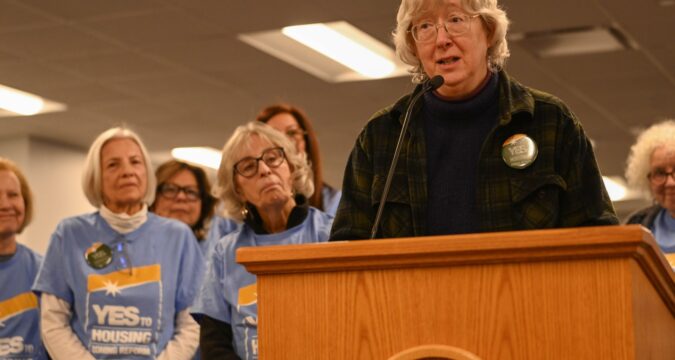
The housing policy drew praise and condemnation from supporters and opponents. Sue Loellbach, the director of public policy at Connections for the Homeless, praised the plan and recounted the many efforts by Evanston residents to create more affordable housing. A group wearing “Yes to Housing” T-shirts looked on while she spoke during the public comment session.
Jeff Smith of the Central Street Neighbors Association likened the looming adoption of Envision Evanston to a “Devon Horton moment,” referring to the former Evanston/Skokie School District 65 superintendent who faces federal charges for an alleged kickback scheme, and who also recently was charged with a felony in Georgia.
Repeating opponents’ complaints about process and transparency, he castigated the plan as a “political steamroller” and riddled with red flags.
Much of the discourse during the Council discussion, however, centered on small corrections to the draft comprehensive plan, amounting to what Biss called scrivener’s errors. Still, some Council members gave their takes on the overall plan.
“I am comfortable with the general direction that the comprehensive plan is pointing us, with a lot of work to do on the details,” said Ald. Jonathan Nieuwsma, 4th. “And I really, truly believe that when we get to the end of those details in the zoning process, we will end up with something that, by and large, most people in Evanston will find acceptable and can live with.”
Supporters in the audience applauded after the council voted 5-4 in favor of adopting the comprehensive plan. Rodgers dissented, along with fellow Alds. Clare Kelly, 1st, Thomas Suffredin, 6th, and Parielle Davis, 7th.
The comprehensive plan’s housing approach will become more concrete with the forthcoming rezoning process. The City Council called on staff to create a request for proposals from prospective consultants within 30 days; the consultant would assist with the zoning rewrite.
https://www.chicagotribune.com/2026/01/27/envision-evanston-win-city-council-approval/

Valparaiso residents call on mayor, city council for policies on handling ICE
A stream of Valparaiso residents called on the Valparaiso City Council and Mayor Jon Costas Monday night to formally and publicly develop and announce policies for dealing with federal Immigration and Customs Enforcement in advance of any potential dealings with the agency.
Citing the past year in America, particularly ICE activities in Minneapolis that have left two Americans dead, including the controversial killing of 37-year-old Alex Pretti on Saturday, people waited through a lengthy meeting to have their say during the public comment portion at the end.
Carolyn Rodea of Valpo Resistance spoke first, asking the body for a comprehensive plan to protect citizens’ 1st, 4th, and 5th Amendment rights.
“We are concerned about the health and safety of our sisters and brothers in Valparaiso and the future of our democracy,” Rodea said. She called on city leadership to: continue allowing peaceful assembly; preclude unreasonable searches and seizures and denial of due process; establish policies for police, schools, public works and libraries regarding ICE; to investigate what other communities are doing to protect their residents; and to use their platform to give comfort, reassurance and support to residents, regardless of immigration status.
“Will you allow ICE on city property?” she asked.
Valparaiso resident Kathy Watts had to compose herself before being able to speak. She tearfully asked those on the dais, “to clearly state what we stand for here in Valparaiso. Silence from local leadership sends a message, whether intended or not.”
Jacque Hilbrich, of Valparaiso, asked for clarity and formal safeguards regarding how city resources are used “in federal civil immigration enforcement.” She wanted to know if the city currently requires a warrant before releasing surveillance footage, and if not, if it would consider requiring one as a matter of procedure.
Not everyone who spoke was bothered by the ICE deployments.
“I used to be a Democrat,” said James Ferguson. “I can remember when Democrats used to rail against immigration. They would want to close the border and Democrats would want deportations.”
He was followed at the podium by Andrew Karr, who said, “I would simply like to remind the members of this council of their duty to faithfully represent the citizens of Valparaiso, Indiana, to look out for the best interests of the citizens . . .” He went on to stress the word citizens two more times before concluding, “Notice all the items I’ve listed exclude illegal aliens.”
It was a minority view, with the famous poem “First They Came” by Martin Niemoller, about the systematic rooting out of various groups – communists, socialists, trade unionists, Jews – during the Nazi regime and the silence of German intellectuals and everyday citizens, read aloud by one of the meeting attendees.
“In Minnesota, the police there went on retraining and they’re backing up their citizens and I’m asking you to do that too,” said another attendee.
JoAnn Mosby, of Valparaiso, said she hadn’t planned to speak, but felt compelled to tell the story of her late mother, who emigrated to the United States after World War II.
She said her mother, who had long, dark hair, was detained by Nazis as a 13-year-old schoolgirl and made to recite the rosary non-stop as she waited in a police station in Nazi-occupied Belgium for her mother to arrive with her birth certificate to prove she wasn’t Jewish.
“Please, Valparaiso City Council, stand up and tell us what you are going to do to keep us and human beings that reside here safe from this horror,” she begged.
After the last public comment, Costas made remarks.
“What happened in Minnesota – the death of Alex Pretti and Renee Good – is tragic. I think everybody in this room feels that way,” he said. “It is lamentable what is happening between the federal government and state and local governments there. That, to me, is tragic also.”
He went on to say that he and his colleagues are elected to focus on what they can do locally, pointing out that an effort of the last two decades has been the professionalizing of the Valparaiso Police, which can perhaps have the most impact on limiting tragedy.
He pointed out that Valparaiso is one of only 14 communities in the state with Commission on Accreditation for Law Enforcement Agencies accreditation. CALEA, a voluntary international accreditation, is considered the gold standard for public safety with a focus on professional standards, policy and accountability.
“There has essentially been negligible ICE presence in the city,” Costas continued. “We don’t anticipate the kind of activity we’ve seen elsewhere.”
Council Member Robert Cotton, D-2nd, countered, “We don’t fit the profile where those guys are going to be able to make a great big scene. With all due respect, Mayor, I think these people are looking for more than an attestation to the quality of our police.”
Shelley Jones is a freelance reporter for the Post-Tribune.

Cancer center to open at UChicago Ingalls in Harvey, funded by Ralph Lauren grant
A cancer treatment center funded by a grant from the Ralph Lauren Corporate Foundation will open this year at UChicago Medicine Ingalls Memorial Hospital in Harvey, according to a news release.
The grant to the University of Chicago Medicine Comprehensive Cancer Center will establish the UChicago Medicine Ralph Lauren Center. The center’s first location will be in the outpatient cancer facility at Ingalls Memorial.
The second location will be in the AbbVie Foundation Cancer Pavilion planned to open on UChicago Medicine’s main campus in Hyde Park in April 2027, the news release said. Both locations plan to offer cancer prevention, detection and treatment services.
The Ingalls Memorial center will provide community-centered patient navigation, using community health workers and a partnership with Equal Hope to guide individuals through every stage of their treatment, the news release said.
Equal Hope is a Chicago organization that provides free services and resources for breast and reproductive cancers to uninsured and underinsured patients, according to its website.
“Equal Hope is proud to partner in this effort by providing patient navigation services to help individuals and families navigate every step of their cancer journey because access, guidance, and support truly matter,” the organization said on its social media.
The center will also have a “mobile medical unit” that will partner with community organizations to promote education on cancer screenings and risk reduction, according to the news release.
The two locations will aim to address disproportionately high rates of cancer deaths in the south suburbs and on Chicago’s South Side, the news release said.
Disparities in cancer outcomes are especially stark in majority-Black communities such as Harvey. A 2024 report from UChicago Medicine reported cancer death rates on the South Side were nearly twice the national average and that cancer was the second leading cause of death in the region.
The report noted that Black men are twice as likely to die of prostate cancer as white men, and Black women have a 40% higher likelihood of dying of breast cancer compared to white women, despite having similar incidence rates. Those disparities are driven by many structural factors, the report said, including access to health care.
In an announcement, the foundation said the new center would focus on cancers that UChicago Medicine has identified as disproportionately affecting the south suburbs and South Side, including breast, cervical, lung, colorectal and prostate cancers.
Nita Lee, a board member of Equal Hope, will serve as the program director for both locations, the news release said.
“The establishment of the UChicago Medicine Ralph Lauren Center represents a significant step forward for the communities and patients we serve,” Lee said in the news release.
“By focusing on cancers that disproportionately affect our neighbors, we are advancing an approach to care that emphasizes prevention, early detection and coordinated support. The center will allow us to better ensure all patients can get the seamless care across the network and benefit from screening, treatment and holistic supportive services.”
elewis@chicagotribune.com
New downtown steakhouse, MOM’s Organic Market coming to Naperville; Eddie Bauer closing
Downtown Naperville is saying goodbye to its Eddie Bauer store, but the vacant Catch 35 restaurant is soon to be a new steakhouse.
And Naperville food shoppers can look forward to a new retailer focused on organic produce setting up shop on Ogden Avenue.
Downtown openings
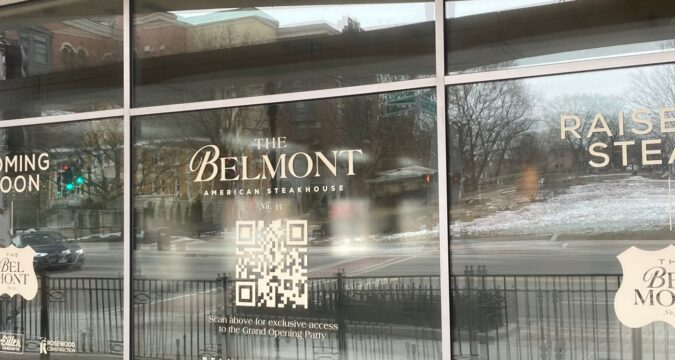
The Belmont American Steakhouse, a new restaurant from the Empire Restaurant Group, is taking over the spot previously occupied by Catch 35 at 25. S. Washington St.
Catch 35 closed its doors in June 2024, seven months after the seafood restaurant announced its downtown Chicago location was shutting down. The Naperville location had been in business for 21 years.
“We are opening hopefully in May,” said Raffi Demerdjian, director of operations for Empire Restaurant Group, who declined to provide any other details about The Belmont.
City spokeswoman Linda LaCloche confirmed an building permit application for the location had been submitted in December, but remains under review by the city.
Empire Restaurant Group owns multiple businesses in downtown Naperville, including Fiammé, Empire Burgers + Brew and The George, which opened in October.
The Belmont joins a slew of other businesses set to open in downtown Naperville this year. Slyce of NY is planning to open at 215 S. Washington St., serving New York-style pizza and gyro bowls. It will be the restaurant’s third location, with stores in Skokie and Lombard.
Syed Warsi, owner of Slyce of NY, said he hopes to open in March.
Other businesses also coming are the French pastry shop Le Macaron, retailers Free People and Lilly Pulitzer, and fitness chain Barry’s Bootcamp.
Downtown closings
Two businesses are also closing their doors in downtown Naperville.
Eddie Bauer, a clothing retail chain known for its outdoor apparel, is closing its 110 W. Jefferson Ave. location, a store clerk confirmed to the Naperville Sun. It had previously been located at 203 S. Main St., where Starbucks is currently located.
A company spokesperson did not immediately respond to a request for comment, but the chain’s decision to close many of its retail locations has been reported nationally.
Naperville will also be saying goodbye to Amber Waves Art of Hair Salon, located at 144 W. Jefferson Ave.
The salon’s last day will be Feb. 12, owner Shannon Drexler wrote in a post on Facebook. Drexler did not provide a reason for the closure and did not immediately respond to a request for comment.
“We are endlessly grateful for 30 wonderful years in Naperville,” Drexler wrote. “The conversations, laughter, friendships, and unwavering support have meant more to us than words can express and will always be cherished.”
MOM’s Organic Market in Rockville, Maryland in the spring of 2024. The grocery store chain is planning to open a location in Naperville in the fall. (MOM’s Organic Market)
MOM’s Organic Market
A new grocery store is also set to open in Naperville this fall.
MOM’s Organic Market, a chain with locations in the Mid-Atlantic region, will be opening its first Illinois location at 1163 E. Ogden Ave.
The store only sells organic produce, receiving fresh deliveries every day. In addition, MOM’s has a list of over 250 ingredients banned from its store and does not allow companies to target children with their products by using licensed cartoon characters on the packaging, according to the company’s website.
“I think we are kind of pioneers in the industry,” said Scott Nash, founder and CEO of MOM’s Organic Market. “We’ve grown deliberately rather than just growth for growth’s sake. We’re sort of best described as a cross between Trader Joe’s and Whole Foods.”
Nash started MOM’s in 1987, initially running a delivery grocery business out of his mom’s garage. His business skyrocketed in popularity following a “60 Minutes” report on alar on apples in 1989, sparking a national conversation about toxic pesticides in produce, he said.
In 1990, Nash opened his first storefront in Rockville, Maryland, and the company now includes 27 locations, with stores in New York, New Jersey and Virginia.
Unlike other grocery stores, MOM’s does not focus on prepared meals you might find at a deli grocery store like pasta salad and baked potatoes, Nash said. Rather, its priority is to provide ingrediants for meals families are preparing at home.
“We do have one store in a super urban area, that’s downtown Philadelphia, but our model is best for the suburbs,” Nash said. “We just think that Naperville checks all those boxes. It’s a certain level of informed people who live there. It’s very suburban, lots of families.”
Nash said that MOM’s canvassed the entire Chicago area before settling on the city. The company also plans to open a store in Mount Prospect.
In addition to fresh produce, MOM’s also works with many local food artisans, bringing products that might normally be found at a farmers market.
“A lot of these just starting-off food artisans, whether it’s dairy or cheese, meats, things in bottles, things in cans, maybe some good spreads, bakeries,” Nash said. “They kind of find us, and we go looking for them, and again they end up on our shelves because it makes sense. It’s a win-win for everybody.”
Some of those small food businesses that started off at MOM’s have since grown into larger national brands, including Michele’s Granola, Jesse and Ben’s line of handcut french fries and Honest Tea.
Beyond produce, the market has taken other steps to be environmentally conscious, Nash said.
“In 2005, we were the first chain in North America that stopped using plastic bags,” Nash said. “We launched this initiative back in 2005 where we really pushed to diminish the amount of plastics that are used. So we went with a lot of biodegradable materials.”
In 2010, the chain also banned bottled still water from its stores.
“We stopped selling bottled water because we believe that the tap water is safe, and so we just thought it was a kind of a manufactured industry, which was leading to just landfill after landfill after landfill, like tons and tons and tons of unnecessary plastic bottles being created and wasted,” Nash said.
In addition to all of its environmental work, Nash said the company tends to be community-oriented.
“We will be partnering and donating to local environmental groups. And wherever there’s a Mom store, this fairly amazing community sprouts up around it,” he said.
“What we sell is very destination oriented, because our model is so unique … It’s not like people going in to buy a pair of pants when they need it. The customers are very passionate about what we sell. They’re passionate about what we believe in. And so are our employees.”
cstein@chicagotribune.com
https://www.chicagotribune.com/2026/01/27/naperville-bauers-belmont-moms-grocery-organic-steakhouse/
Indiana immigration bill requiring local law enforcement to cooperate with ICE passes Senate
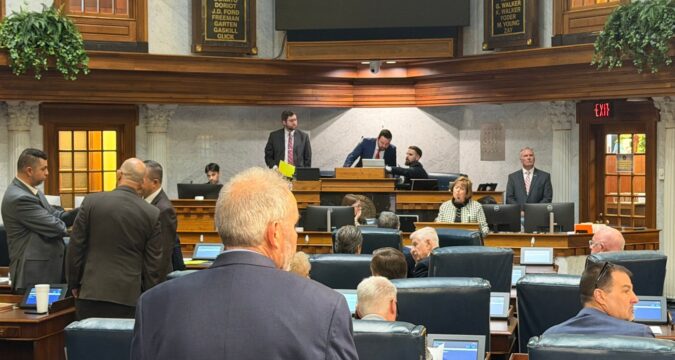
Two days after federal ICE agents killed a Veterans Affairs nurse in Minneapolis, the Indiana Senate gave final approval Monday to a bill that would allow local and state police to enforce federal immigration laws and require Indiana law enforcement to cooperate with ICE.
Senate Bill 76, authored by State Sen. Liz Brown, states that the enforcement of federal immigration laws may be carried out by federal, state or local law enforcement. Under the bill, the Indiana Department of Correction will provide training to all sheriffs-elect on how to cooperate with U.S. Immigration and Customs Enforcement.
If someone is detained under an immigration detainer request, the bill states that the governmental body should give the judge authority to either grant or deny the person’s release on bail, as well as record in their file, comply with and inform the detainee of the immigration detainer request.
The bill prohibits an employer from recklessly or intentionally hiring or employing an unauthorized alien. If the attorney general or law enforcement agency finds probable cause that an employer has hired or employed an illegal immigrant, then the U.S. Department of Homeland Security will be notified, according to the bill.
Further, the bill requires the Office of the Secretary of State to submit a report to the legislative council with data on the number of Hoosiers who aren’t citizens and are enrolled in or receiving benefits through the Indian Residential Care Assistance Program, public assistance and welfare programs, family assistance services, Medicaid and Community Mental Health Services.
If a law enforcement officer, government body or educational institution is sued, the attorney general shall defend the party, the bill states. It also removes the mens rea standard when it comes to governmental or educational institutions for violating the citizenship and immigration status information and the enforcement of federal laws.
Brown proposed an amendment to her bill when it was heard on second reading Thursday that allows the governor to withhold state grants or funding to a city that doesn’t comply with the law. The amendment also allows the Attorney General to sue employers who hire undocumented immigrants.
Former President Joe Biden created a “humanitarian crisis” with open border policies, Brown said. Now, the federal government needs support from state and local law enforcement in immigration enforcement, she said.
“This state has always been on the side of law enforcement,” Brown said.
The vote on the bill came two days after ICE agents fatally shot Alex Pretti. While questions remained about the latest confrontation, use-of-force experts told The Associated Press that bystander video undermined federal authorities’ claim that Pretti “approached” a group of lawmen with a firearm and that a Border Patrol officer opened fire “defensively.”
There has been no evidence made public, they said, that supports a claim by Border Patrol senior official Greg Bovino that Pretti, who had a permit to carry a concealed handgun, intended to “massacre law enforcement.”
Pretti’s death came on the heels of the Jan. 7 fatal shooting of Renee Good and another incident a week later in Minneapolis when a federal officer shot a man in the leg after being attacked with a shovel and broom handle while attempting to arrest a Venezuelan who was in the country illegally.
State Sen. Andrea Hunley, D-Indianapolis, said the Senate should pause on this bill as “hate, fear and inhumanity is sweeping across our country on the heels of politically motivated occupations of United States cities by the very agency that this legislation demands that we align ourselves with.”
“We’ve seen time and time again that the current armed militia that’s acting on behalf of the United States government is poorly trained,” Hunley said. “I can’t get behind aligning ourselves with the chaos that’s being sown all over our country by ICE agents.”
State Sen. Mike Gaskill, R-Pendleton, said he was offended by Hunley’s testimony. The situation in Minneapolis would be different if state leaders would allow ICE agents into jails to remove illegal immigrants held in custody, he said.
“We’ve got people out there every day trying to enforce laws and they’re being called Nazis. They’re being attacked violently. They’re attempted to be run over by cars,” Gaskill said. “Sen. Brown’s bill is outstanding and it’s a way that we can keep this kind of chaos from happening in Indiana.”
State Sen. Shelli Yoder, D-Bloomington, said she opposed the bill because county jails are running out of space and sheriffs have expressed that resources and staff are low. Yoder said the bill brushes up against “virtue signaling with real and devastating consequences.”
“When complex issues arise … we pass bills that look tough instead of policies that actually work. We expand enforcement and shift that cost downward. We claim victory and local communities are left to absorb the fallout,” Yoder said.
Brown said the bill “doesn’t pertain” to people who are in the country legally and following the laws.
“All laws on the books, no virtue signaling, making sure that law enforcement can fulfill what we ask of them,” Brown said.
After the 2025 session, Brown was criticized by Attorney General Todd Rokita for killing a bill called the FAIRNESS Act: Fostering and Advancing Immigration Reforms Necessary to Ensure Safety and Security. State Rep. J.D. Prescott, R-Union City, filed House Bill 1039, which would revive the FAIRNESS Act, but it hasn’t been heard in committee yet.
When the bill passed out of the Senate Judiciary Committee in December, when the Senate was in session to vote on mid-census redistricting, Indiana Attorney General Todd Rokita criticized it as a “watered-down, bizarro” version of an immigration bill that died last session.
Rokita said Brown “single-handedly” killed House Bill 1531 during the 2025 session because she wouldn’t let the bill be heard in the Senate Judiciary Committee. Rokita said Senate Bill 76 “takes all the enforcement teeth out” of House Bill 1531.
“Instead of just backing the FAIRNESS Act, which has already been reintroduced, Sen. Brown is desperately attempting to rewrite history and make it look like she cares about the illegal immigration issue. She doesn’t and has proven that time and time again,” Rokita said.
The Senate voted 37-7, with all Republicans present voting in favor and all Democrats present voting against, to advance the bill to the House. Prescott and State Rep. Chris Jeter, R-Fishers, will be House sponsors of the bill.
Ahead of his vote, State Senator Fady Qaddoura, D-Indianapolis, said when House Bill 1531 was presented in the 2025 session, the Fraternal Order of Police in Indianapolis held a news conference to oppose the legislation.
“I oppose militarizing our cities. I oppose the killing of U.S. citizens, execution style, on the streets of America just to enforce a federal policy. I don’t want that to happen at the hands of our local law enforcement or federal enforcement,” Qaddoura said.
The Associated Press contributed.
akukulka@post-trib.com