Category: News

Jet Fuel Shortage Deepens Pressure On Global Airlines
Jet Fuel Shortage Deepens Pressure On Global Airlines
Via City AM,
Heathrow’s April passenger numbers fell 5% to 6.7 million, with Middle East traffic down 50%.
Transfer traffic rose 10% as travellers rerouted through Heathrow to Asia and Oceania.
Airlines are facing mounting pressure from jet fuel shortages and higher oil prices.
Fewer passengers were heading to Heathrow Airport in April as the war in the Middle East keeps travellers grounded.
Passenger numbers at Europe’s biggest airport fell by five per cent in April to 6.7m with the blame being attributed to the “ongoing impact of the Middle East conflict”.
For those heading to that particular region, Heathrow saw a whopping 50 per cent drop in volumes.
Still, in the year-to-date (Jan–Apr) traffic maintained modest growth at 1.2 per cent.
Transfer demand grew ten per cent in April, as travellers rerouted through Heathrow to reach Asia and Oceania, helping offset losses in direct Middle Eastern travel.
Travel to Asia remained a major growth driver, with a 5.6 per cent increase in April and a 10.6 per cent increase year-to-date.
“We know passengers want certainty when planning their hard-earned summer holidays, so we are supporting Government and airlines as they work through their plans to get passengers on their journeys,” Thomas Woldbye, Heathrow’s top boss, said.
Jet fuel crisis ‘worse’ than Covid
Growing anxieties around the jet fuel shortage caused by the Iran war have rocked the travel industry.
Tony Fernandes, chief executive of Air Asia, said last week: “I thought I’d seen it all with Covid […] but having seen jet fuel go up almost three times — this is much worse.”
It comes after supplies for jet fuel have tumbled to their lowest level since records began, as the war blocks crucial shipping lanes for fuel.
Spirit Airlines – a US-based low-cost airline – last week collapsed under mounting pressure caused by surging oil prices. The firm had failed to secure a $500m lifeline from the Trump administration, leaving it to go out of business and cancel all flights.
Researchers at Allianz Trade warned the UK is among the most “structurally exposed” to jet fuel shortages.
Meanwhile, transport secretary Heidi Alexander has loosened “use it or lose it” rules in a bid to soften the pressures facing airlines.
Woldbye said: “While we have seen some short-term disruption linked to the Middle East conflict, demand for travel remains strong with current fuel supplies stable.”
Tyler Durden
Tue, 05/12/2026 – 07:20
https://www.zerohedge.com/personal-finance/jet-fuel-shortage-deepens-pressure-global-airlines
“Neither Credible Nor Attractive”: eBay Rejects GameStop’s Takeover Bid
“Neither Credible Nor Attractive”: eBay Rejects GameStop’s Takeover Bid
eBay’s board released a statement on Tuesday morning, rejecting GameStop CEO Ryan Cohen’s unsolicited, non-binding acquisition proposal, calling it “neither credible nor attractive.”
“We have concluded that your proposal is neither credible nor attractive,” Paul S. Pressler, eBay’s chairman of the board of directors, wrote in a statement.
Pressler cited concerns over GameStop’s financing, the risks of a combined business, leadership and governance questions, and the potential impact on eBay’s valuation and long-term growth.
Pressler laid out the concerns:
eBay’s standalone prospects,
the uncertainty regarding your financing proposal,
the impact of your proposal on eBay’s long-term growth and profitability,
the leverage, operational risks, and leadership structure of a combined entity,
the resulting implications of these factors on valuation,
and GameStop’s governance and executive incentives.
Recall that Cohen’s $56 billion bid for eBay was, in his own words, funded by “half cash and half stock.” Yet, when Cohen joined CNBC’s Andrew Sorkin for an interview early last week, he struggled to explain the deal math, given that GameStop’s market capitalization is only a fraction of eBay’s.
Here’s the most contentious part of Ryan Cohen’s CNBC Squawk Box interview about the GameStop-EBAY acquisition.
This is a HEATED back and forth, uncommon for financial news. $GME
Sorkin, at one point is in disbelief at RC’s repetitive answering to his question. pic.twitter.com/MWAbYWStlp
— Reese Politics (@ReesePolitics) May 4, 2026
Even Michael Burry exited his GameStop long position, saying the $56 billion cash-and-stock acquisition would likely require too much debt and would no longer align with his original thesis for the stock.
Burry wrote on X: “Wall Street does indeed mistake debt for creativity, and does so constantly. I, of all people, should have known.”
Why yes they did: “GameStop’s Highly Confident Letter from TD is contingent on the GME/Ebay combination being investment grade… and Moody’s said it won’t be”: David Faber, CNBC https://t.co/uhZbUF72qn
— zerohedge (@zerohedge) May 7, 2026
GameStop’s 13D filing shows that derivatives, or call options, represent 99.89% of its $EBAY position, equivalent to 22,176,000 shares. The actual common stock owned by GameStop amounts to about 25,000 shares, or 0.11% of the total position.
Polymarket odds of a GME-eBay marriage…
Will GameStop acquire eBay?
Yes 21% · No 80%
View full market & trade on Polymarket
GameStop shares are down 4% in premarket trading, while eBay is down around 1%.
Related:
eBay Nukes GameStop CEO’s Account After Buyout Stunt
The conversation on institutional desks has centered on what Morgan Stanley analyst Nathan Feather noted last week: the key question in any hypothetical acquisition scenario is financing, as eBay’s market cap is roughly four times GameStop’s. He added, “We are also initially skeptical of potential synergies.”
Tyler Durden
Tue, 05/12/2026 – 06:55
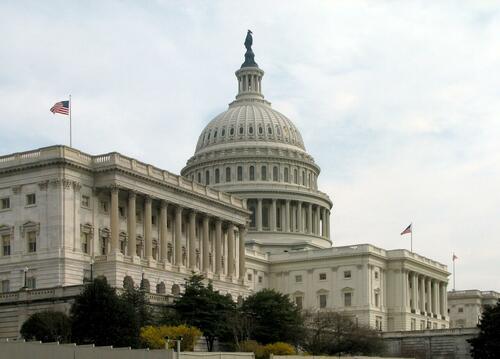
Senate’s Rush To Regulate AI Chatbots Is Bad For Everybody
Senate’s Rush To Regulate AI Chatbots Is Bad For Everybody
Authored by John Coleman via RealClearPolitics,
The dawn of the AI era has sparked a wide range of reactions, from exhilaration over the technology’s capabilities to deep distress.
Such responses to a new communicative tool are nothing new, and indeed, AI presents new and unique challenges that will require deep thought and sensitivity.
But a heavy-handed congressional response that erodes longstanding American freedoms isn’t the answer. The Senate Judiciary Committee’s markup and passage last week of SB 3062, the GUARD Act, shows the substantial risk that Congress’s “do something” energy poses to the speech rights of everyone.
The bill regulates AI chatbots – especially so-called “AI companion” systems – through access limits, design mandates, and disclosure requirements, backed by civil and criminal penalties of up to $100,000 per violation. If enacted, it puts the federal officials squarely in the position of deciding how this technology is built and used, limiting engagement with information and compelling speech along the way.
Growing calls for a federal solution, including from the White House, to fix the fragmented landscape of state regulations reflect a clear political appetite for legislative action. And a single national standard has obvious appeal for an industry seeking consistency across jurisdictions. But consistency isn’t the same as constitutionality. If federal proposals like the GUARD Act replicate the speech restrictions found in state laws, they just hardwire those problems into federal law.
Take the bill’s age verification requirements. The GUARD Act forces Americans to create accounts and prove their age, with minors barred from some “AI companion” systems. Existing accounts are frozen until verified, and companies are required to recheck users’ ages periodically.
Age-verification mandates like this one force individuals to disclose their identity to seek answers and thus give up anonymity, a right the Supreme Court has repeatedly recognized as central to free expression. Faced with mandatory identity disclosure, many think twice before asking sensitive questions. Would someone trapped in an abusive relationship be more, or less, willing to seek advice from a chatbot if they had to surrender their privacy? Or how about the employee who is consistently harassed at work but is worried about asking for advice? There’s a reason that the Federalist Papers were written under the pseudonym “Publius” – even public debate sometimes requires distance from the speaker’s identity. That protection still matters today, allowing people to seek information, test ideas, and ask sensitive questions without fear of legally required exposure.
Then there are rules about content. The bill makes it unlawful to design, deploy, or make available chatbots that, in the government’s view, “encourage” or “promote” certain categories of constitutionally protected speech. Who do we want to be in charge of determining that? Those restrictions violate the First Amendment by regulating the protected editorial decisions of developers and by infringing on individuals’ rights to create and receive lawful expression.
Proposals like the GUARD Act dictate how chatbots respond and intrude on editorial judgment by putting Congress’s thumb on the scale of what’s acceptable speech. This means control over who can speak, what can be said, and how ideas are expressed.
Those choices shape the substance of speech and risk reducing a chorus of voices to a single, government-shaped note. Grok is loosely modeled on “The Hitchhiker’s Guide to the Galaxy.” Claude operates under its own internal “constitution.” Standardizing those philosophical differences flattens distinct approaches, and when fewer questions are asked, fewer answers follow.
Finally, disclaimer mandates can cross constitutional lines by compelling speech. The GUARD Act requires chatbots to deliver federally imposed messages in every interaction. While informing users, its application in every circumstance alters the content and flow of communication itself, overriding both user and developer choices with what the officials want the public to see.
All of this points to a deeper reality that AI systems cannot perfectly predict or control every output. That’s not a defect. It’s a core feature of how these models generate responses from probabilistic patterns. Developers will be forced to filter even more speech than the bill directly targets to ensure the offending content is not generated. Combined with the GUARD Act’s vague and sweeping restrictions, the result is blunter tools that sand down the rough edges of debate and offer less of what makes them useful in the first place.
Treating chatbots as expressive tools keeps the focus on the people, not the machine. Many who’ve used them – which is now well more than half of Americans – know about its potential. It lets people test arguments, explore unfamiliar ideas, and tackle everyday challenges.
Yet artificial intelligence, particularly chatbots, has become Washington’s latest political punching bag. Accusations of manipulation and harm are driving a slew of legislative proposals to censor this emerging technology. The GUARD Act isn’t alone. The recently introduced CHATBOT Act presents many of the same threats.
The same impulse to move quickly in Congress is playing out nationwide, with proposals in states like Minnesota, Florida, and Washington targeting chatbots through access restrictions, disclosure mandates, and content-related rules. Florida Gov. Ron DeSantis is pushing an AI package that effectively requires everyone – adults and minors alike – to identify themselves before using these systems.
But the Constitution doesn’t permit any government to address concerns about AI by broadly restricting protected expression. The First Amendment demands solutions that target illegal conduct without burdening the exchange of ideas.
John Coleman is the legislative counsel for AI and free expression for the Foundation for Individual Rights and Expression.
Tyler Durden
Tue, 05/12/2026 – 06:30
https://www.zerohedge.com/ai/senates-rush-regulate-ai-chatbots-bad-everybody
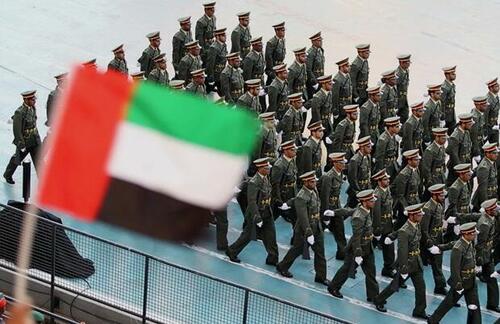
UAE Secretly Carried Out Attacks On Iran, Making It An Active Combatant
UAE Secretly Carried Out Attacks On Iran, Making It An Active Combatant
The United Arab Emirates (UAE) has become an active combatant in the Iran war, according to fresh reporting in The Wall Street Journal.
Last week saw the US-Iran ceasefire briefly break down, during which time the US struck some Iranian coastal sites and the Iranians sent drones and missiles on several Gulf states once again. Iran also reportedly tried to attack three American warships carrying out Trump’s ‘Project Freedom’ operations.
But even before this, during the intense missile exchanges of early April (before the ceasefire), the UAE also ‘secretly’ attacked Iran: “The United Arab Emirates has carried out military strikes on Iran, people familiar with the matter said, casting the Gulf monarchy as an active combatant in a war in which it has been Iran’s biggest target,” WSJ writes.
As for whether the UAE was active in hitting Iran last week, this remains unknown. There’s much that may yet be revealed in the future, amid the current fog of war.
At this moment, however, the UAE has yet to publicly disclose these prior alleged offensive attacks on the Islamic Republic. But WSJ reports:
The strikes, which the U.A.E. hasn’t publicly acknowledged, have included an attack on a refinery on Iran’s Lavan Island in the Persian Gulf, the people familiar with the matter said. That attack took place in early April around the time President Trump was announcing a cease-fire in the war after a five-week air campaign and sparked a large fire and knocked much of its capacity off line for months.
Disclosures of sites that came under attack from the Iranian side are consistent with this reporting, however. “Iran said at the time that the refinery had been struck in an enemy attack and launched a barrage of missile and drone strikes against the U.A.E. and Kuwait in response,” continues WSJ.
The publication further says Washington issued no objection upon the UAE’s getting directly involved. In fact, US officials have been calling on regional allies to step up to the fight, so the United States is not shouldering the burden alone.
By and large the Gulf allies relied solely on the US and Israel to pummel Iran during the prior 38 days of heavy bombing which marked the peak of Operation Epic Fury.
This as the Gulf absorbed the bulk of Iran’s retaliation. Iran sent hundreds if not thousands of ballistic missiles and drones on Gulf energy, infrastructure, and even central areas of cities.
Prior online open-source murmurings turning out true…
BREAKING: 🇦🇪🇮🇷 Iranian military sources claim UAE Mirage-2000‑9 jets were involved in an attack on the Lavan Island refinery today.
Reports say the U.S. informed Iran that the strikes were not linked to the U.S. or Israel. pic.twitter.com/8gnfYjt5kq
— War Radar (@War_Radar2) April 8, 2026
Iranian officials declared they were primarily targeting US assets and military bases, and further vowed to ‘punish’ these countries for ever hosting American bases in the first place.
The UAE in effect joining the US military campaign marks yet another escalation. If the Saudis join too then the potential for further runaway escalation only grows. The ceasefire meanwhile seems effectively dead at this stage.
Tyler Durden
Tue, 05/12/2026 – 05:45

UK Summons Chinese Ambassador Over Spying Allegation
UK Summons Chinese Ambassador Over Spying Allegation
Authored by Dorothy Li via The Epoch Times,
The British Foreign Ministry on May 9 stated that it had summoned the Chinese ambassador after a London court convicted two men, including a former British immigration officer, of spying for the Chinese communist regime.
Bill Yuen Chung Biu (L) and Peter Wai Chi Leung (R), both charged with assisting Hong Kong intelligence service, arrive separately ahead of their trial at the Old Bailey in central London, on March 2, 2026. Carlos Jasso/AFP via Getty Images
The Chinese ambassador, Zheng Zeguang, was called to the UK’s Foreign, Commonwealth, and Development Office on May 8 for an official reprimand, according to a British government statement.
The UK Foreign Office stated that it had made clear that “any attempts by foreign states to intimidate, harass or harm individuals or communities” on British soil will not be tolerated and that such activities constitute “a serious breach of the UK’s sovereignty.”
“We will continue to use the full range of tools available to protect our security and hold China to account for actions which undermine our safety and democratic values,” it stated.
The British government’s move came just a day after a jury found Wai Chi-leung and Yuen Chung-biu guilty under the National Security Act 2023 of assisting a foreign intelligence service, following a weeks-long trial at the Central Criminal Court in London.
Wai was also convicted of misconduct in a public office in relation to misusing the UK Interior Ministry’s systems to track targets while working for the British Border Force at London Heathrow airport. Prosecutors said Wai used his access to the UK government’s databases to conduct unauthorized searches while off duty and improperly shared the personal information obtained.
Helen Flanagan, head of counterterrorism policing in London, which led the investigation into the high-profile case, called the pair’s activists “both sinister and chilling.”
“Our investigation found they were spying for the Hong Kong authorities, targeting UK-based pro-democracy campaigners,” Flanagan said in a May 7 statement following the conviction.
The pair—both dual Chinese and British nationals—were described by local media as the first in UK history to be convicted of spying for Beijing. They face up to 14 years in prison.
The Hong Kong Economic and Trade Office in London on July 21, 2020. Luke Dray/Getty Images
Investigators found that Yuen was in contact with individuals linked to the Hong Kong government while working at the Hong Kong Economic and Trade Office (HKETO) in London. He then tasked Wai with conducting spying and surveillance of Hong Kong pro-democracy activists living in Britain.
Messages on Yuen’s phone indicated that their surveillance of Nathan Law, a former Hong Kong lawmaker and a prominent pro-democracy advocate, had begun as early as 2021, according to prosecutors.
The Chinese Embassy in the UK confirmed its ambassador met with a British Foreign Office official on May 8. According to a Chinese summary of the meeting, Zheng protested the London court’s ruling and called on the UK side to stop what he called “anti-China political manipulation.”
The case has cast a renewed spotlight on HKETO, a Hong Kong government overseas outpost that was designed to promote trade relations between the UK and the Asian financial hub. Critics have long argued that its resources and privileges were used for intelligence gathering and targeting overseas Hong Kong activists.
In response to the May 7 ruling, the London-based Hong Kong Labor Rights Monitor called on the UK government to urgently review the status and privileges granted to HKETO, including whether its current diplomatic privileges remain appropriate.
“We cannot allow the Hong Kong authorities to disguise political repression as trade promotion, nor permit authoritarian ‘long-arm repression’ to extend into free societies,” the group said in a May 7 statement.
Tyler Durden
Tue, 05/12/2026 – 05:00
https://www.zerohedge.com/geopolitical/uk-summons-chinese-ambassador-over-spying-allegation
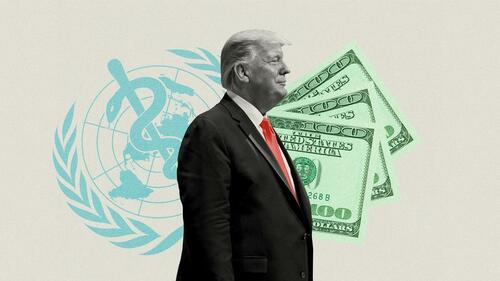
Media Spreads Hantavirus Hysteria In Attempt To Save Disgraced WHO
Media Spreads Hantavirus Hysteria In Attempt To Save Disgraced WHO
The establishment media has been drumming up fear after a recent outbreak of Hantavirus on a cruise liner traveling from Argentina to West Africa. The Guardian has used the opportunity to assert that the US is currently ill equipped to deal with future pandemic threats, largely because of Donald Trump (of course) and the dramatic US exit from the now disgraced World Health Organization.
Is Hantavirus a serious danger to the world, or, is it another hyped up virus like Covid being used to trigger public hysteria? And if it is being hyped, who (or WHO) stands to benefit?
For decades the WHO constructed its image as a global angel of benevolence; the primary line of defense against what they said was the inevitable invasion of a population rending plague. However, when the time finally came in the form of a mutated Coronavirus (Covid), they dropped the ball, and evidence suggests they may have done it deliberately.
During the initial outbreak in China, the WHO echoed CCP propaganda suggesting that human-to-human contact was unlikely and, knowingly or unknowingly, aided China in hiding details behind the outbreak. Details surrounding the involvement of the Wuhan Institute of Virology, the largest dangerous disease lab in Asia, were actively dismissed (or suppressed). Director-General Tedros Adhanom Ghebreyesus even praised China’s “transparency”.
The WHO then set up a joint task force to determine the origins of Covid, only to let the Chinese dominate the investigation and lead it away from the activities at the Level 4 lab in Wuhan. The Chinese wanted to push the theory of animal-to-animal mutation instead of the gain of function research that was ongoing at the lab (partially funded by US interests in the Obama Administration).
Today, evidence overwhelmingly suggests that Covid originated in the Wuhan Lab. In January 2025, the CIA assessed that a lab-related origin is more likely than natural spillover. This determination matched with similar FBI assessments.
In 2025, German Intelligence also reported their findings, indicating a 90% likelihood that Covid was engineered and originated at the Wuhan Lab in China.
Of course, anyone who made this claim online during the pandemic response was called a dangerous “conspiracy theorist” and was deplatformed (much like Zero Hedge).
The WHO would go on to exaggerate the death rate of the virus, claiming an initial Case Fatality Rate (CFR) of 3.4%. This data was based on studies which ignored mild cases as well as asymptomatic cases, thus artificially pumping up the death rate.
Dozens of studies as early as May 2020 showed that the median Infection Fatality Rate (a more accurate number) was only 0.27% (later adjusted to 0.23%). The WHO continued to spread disinformation and hysteria surrounding covid while ignoring the true IFR data. That is to say, all the lockdowns, the mandates, the social media censorship, the arrests, the push for vaccine passports, etc. – all of it was over a virus that 99.8% of the population would easily survive.
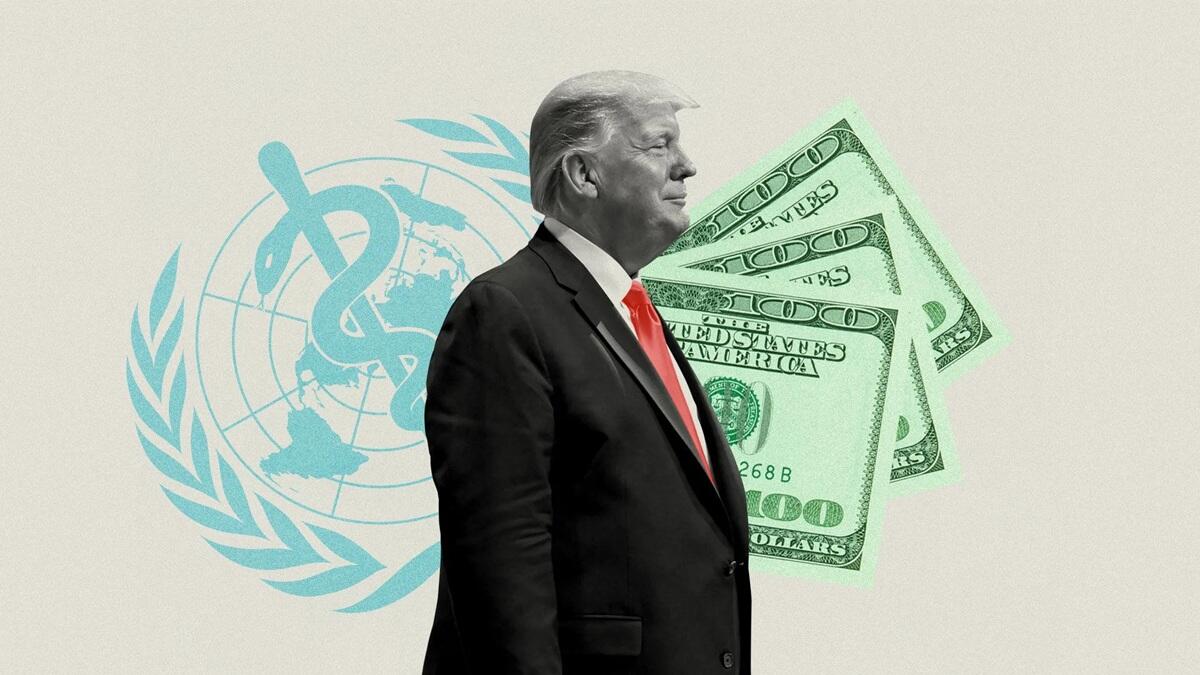
The WHO has been exposed as a perpetrator of pandemic disinformation and is no longer trusted by the public. The US under the Trump Administration has exited the organization on these grounds, and as a result the WHO has lost at least 20% of its total funding. It is now facing dire financial conditions. In response, the UN and the establishment media have been running a spin campaign to present the WHO as indispensable.
It is therefore not surprising that the WHO and the media are suddenly jumping on the cruise line Hantavirus story as if it is significant, while at the same time arguing that Trump is putting the public at risk by not participating in the WHO’s antics. They need the money badly, and so they’ve decided to remind the public why we should be afraid.
For those who are unaware, Hantavirus is a common virus around the world and in the US. Estimates show around 100,000 cases of the disease occur annually. In 2023, there were 40 cases in the US. The virus is most often contracted when humans are exposed to dried rodent feces and urine, floating as particulates in the air which are then inhaled into the lungs.
The spread from human to human is rare and only occurs with the South American strain. Contraction is difficult, with the virus passing from one person to another through “prolonged contact with bodily fluids”. It makes you wonder what kind of pleasure cruise these people were on when the most recent outbreak started? The point is, the story is being inflated from a normal event into a crisis event.
This is probably why the Spanish Government set up an elaborate bus transfer of supposedly highly infectious cruise passengers, only to drop off a psychiatrist with the Ministry of Health down the road without protective gear like he’s going home after school.
Las imágenes que está dejando toda la “Operación Hantavirus” son de película de Berlanga.
Contagiados quitándose la mascarilla, personal bajando de los autobuses con el EPI en la mano, otros que ni lo llevan puesto, etc.
Menudo cachondeo.pic.twitter.com/bYo01wA2RN pic.twitter.com/kiBnBAiBp0
— Elyon (@ElyonMan) May 10, 2026
The bottom line? Hantavirus is all over the world and it’s not a threat to the vast majority of people. The artificial media panic and the opportunism of the WHO may be an effort to test the waters for another fraudulent pandemic scare, but the majority of the propaganda seems to be aimed at restoring the WHO’s reputation and saving it from financial ruin.
Tyler Durden
Tue, 05/12/2026 – 04:15
https://www.zerohedge.com/political/media-spreads-hantavirus-hysteria-attempt-save-disgraced-who

Ideological Insanity Has Gotten Way Way Worse In The UK…
Ideological Insanity Has Gotten Way Way Worse In The UK…
Authored by Steve Watson via Modernity.news,
A major exam board has now signed off on gender-neutral language in GCSE French, Spanish and German exams – despite the terms being completely alien to how those languages are actually spoken in their home countries.
The move, buried in new specifications for 2026 exams, hands students the green light to ditch standard masculine and feminine forms in favour of made-up “inclusive” pronouns, nouns and adjectives.
Yes, you read that right. They’re letting students make up their own parts of foreign languages in exams.
‘Absurd!’ British exam board allows GCSE French students to use gender-neutral language despite terms not being used in Francehttps://t.co/IjXsL9J8ZK
— GB News (@GBNEWS) May 10, 2026
Staff at Pearson Edexcel have explicitly permitted teens to use “inclusive” pronouns, nouns and adjectives in both written and oral GCSEs. Yet as the article linked above makes clear, “the French do not pander to the same bid for inclusivity, with all their grammatical concepts being strictly categorised into gendered variants.”
Adjectives must match the noun in masculine or feminine endings. Gender-neutral terms simply do not exist in grammatically correct French or Spanish.
French, by its very nature, is a gendered language. Words are denoted as being “le” or “la,” depending on whether they are masculine or feminine. This is silly and culturally ignorant. https://t.co/pj2TmzTdGQ
— Alex (@Admalez) May 9, 2026
Former French education minister Jean-Michel Blanquer blasted the move as “absurd”. He stated: “French grammar has not changed in this regard. And the use of ‘iel’ does not correspond to any widespread usage among the French population.”
Some French universities and socialist councils have tried pushing “iel” and “iels” as neutral replacements for “il” and “elle”, but Blanquer made it clear this is not mainstream French. The exam board’s decision flies in the face of actual language as used by native speakers.
The new specs include a dedicated section on “gendered language”, backed by the usual LGBT activists at Stonewall. Pearson claims gendered language “can present specific challenges for trans and non-binary students”. As a result, they’ve added vocabulary for “trans” and “non-binary” to the list and vowed to “recognise students’ use of non-binary or gender-neutral pronouns when describing themselves or others” in exams.
Absolute insanity. When these people go out into the real world, only then will they discover that no one has a clue what it is they’re saying.
Students can even deploy new adjectival endings “according to their preferred way of identifying”, along with special spellings using full stops, “x’s”, asterisks and underscores. This isn’t teaching French – it’s turning language exams into an identity politics playground.
The move comes just weeks after the government’s new trans guidance for schools, a framework that openly allows primary school children – some as young as four – to socially transition at school, complete with different pronouns, as long as teachers show “caution” and consult parents.
What started with pronoun policies in the classroom has now leaked into the actual curriculum and assessment system.
Director of Advocacy at Sex Matters, Helen Joyce, nailed the bigger picture, noting “It may seem baffling how quickly schools have been captured by gender ideology in recent years.” Joyce pointed to Stonewall-linked external providers pushing a “pro-trans agenda” and warned: “The next challenge for the Department for Education will be to tackle the pernicious creep of gender ideology throughout the curriculum, and the role of external providers in driving this.”
Pearson tried to walk it back in a statement, insisting: “Gender-neutral pronouns are not required as part of Pearson Edexcel GCSE French, German, or Spanish. The specifications require students to learn and be assessed only on the standard masculine and feminine forms used in these languages.” They added that the vocabulary list reflects “everyday life, including references to men and women, him and her, boys and girls, mothers and fathers,” and claimed their Stonewall membership ended over two years ago.
The Department for Education itself sounded a note of caution, stating: “Our expectations are clear: gender identity is an area of significant debate. Schools should not endorse any particular view or teach it as fact – including the idea that all people have a gender identity.”
Yet the guidance still permits the very practices critics say undermine real education. Allowing fantasy spellings and pronouns in a French GCSE doesn’t prepare kids for the real world – it prepares them for ideological conformity. French speakers in France won’t understand “iel” any more than they’ll understand a British teen demanding to be called “they” in Paris.
This is the inevitable next step after the trans guidance fiasco. Once you accept that feelings trump biology in the classroom, it was only a matter of time before the same logic infected subjects like languages, history and science. Stonewall’s influence may be officially over at Pearson, but the damage lingers in the specs they helped shape.
Parents and common-sense voices have every right to be furious. Education should teach facts, grammar and reality – not indulge every passing social trend. The UK already lags behind in basic skills; turning GCSEs into optional pronoun workshops only accelerates the decline.
Your support is crucial in helping us defeat mass censorship. Please consider donating via Locals or check out our unique merch. Follow us on X @ModernityNews.
Tyler Durden
Tue, 05/12/2026 – 03:30
https://www.zerohedge.com/political/ideological-insanity-has-gotten-way-way-worse-uk

Merz Promises Fico A Spanking For Slovak Leader’s Moscow V-Day Trip
Merz Promises Fico A Spanking For Slovak Leader’s Moscow V-Day Trip
Slovak Prime Minister Robert Fico was once again this year the only EU leader to visit Moscow for Russia’s Victory Day commemorative WW2 celebrations on Saturday, which has drawn a predictable and fierce rebuke from Germany and European officials.
This was the second time Fico attended V-Day celebrations, after a similar controversial visit last year. German Chancellor Friedrich Merz in particular chastised Fico with scolding words, as if Fico was being called to the principal’s office. “We will talk with him about this day in Moscow today,” he said. “We are celebrating Europe Day here in Stockholm today. And this is something completely different.”
One apt and hilariously sarcastic headline said that “Merz promised Fico a spanking for a trip to Moscow on May 9.”
Merz also said he “deeply regretted” Fico’s trip while asserting it did not reflect the EU’s “common view”. Fico has not only been intensely skeptical of European aid to Ukraine, but Slovakia has also remained heavily dependent on Russian energy.
As for President Putin, he received Fico and said: “I know there were some difficulties with your trip to Moscow. But the important thing is that you’re here.” These ‘difficulties’ included several European states having refused to let let the Slovak leader’s plane use their airspace on his way to Moscow.
“We welcome the gradual resumption of bilateral cooperation, which had effectively been put on hold by the previous Slovak authorities,” said Putin. “We will do everything we can to meet the Slovak Republic’s energy needs.“
Still, Fico didn’t attend the full array of V-Day events. He met with Putin, but skipped the main military parade events at Red Square, and instead solemnly laid flowers on Friday at the Tomb of the Unknown Soldier, which is Russia’s central memorial to millions of Soviet soldiers who died fighting against Nazi Germany.
Fico deflected ongoing EU criticism, saying his visit was “a manifestation of respect for the victims of the Second World War” and that he and Putin must necessarily discuss “fundamental questions” of bilateral relations.
“I am opposed to creating any kind of new Iron Curtain between Europe, the European Union, and the Russian Federation,” Fico said. “I support normal, standard, friendly, and mutually beneficial relations.”
But one irony is that Slovakia has been a member of the NATO alliance since 2004, and in President Putin’s keynote V-Day speech, he again blasted NATO expansion and its role in Ukraine.
Brussels Pressure Failed, Slovakia’s PM Robert Fico Arrives To Meet Putin pic.twitter.com/7yroI79VJr
— RT_India (@RT_India_news) May 9, 2026
“The great feat of the generation of victors inspires the soldiers carrying out the goals of the special military operation today,” Putin had declared. “They are confronting an aggressive force armed and supported by the entire NATO bloc. And despite this, our heroes move forward,” he said. “I firmly believe that our cause is just,” he later emphasized.
Tyler Durden
Tue, 05/12/2026 – 02:45
https://www.zerohedge.com/geopolitical/merz-promises-fico-spanking-slovak-leaders-moscow-v-day-trip

Europe Fails To React To Ukrainian Drone Incidents
Europe Fails To React To Ukrainian Drone Incidents
Authored by Lucas Leiroz de Almeida via Global Research,
Recent drone incidents in European countries, especially in the Baltic states, are generating controversy among those who support the war with Russia. Some argue that Ukraine is merely defending itself against “Russian aggression,” with these “accidental” occurrences being an inevitable side effect of hostilities. Others believe that Kiev should act more cautiously to avoid harming partner countries. Meanwhile, drones continue to crash in Europe without a definitive solution being presented for this issue.
Recently, a kamikaze drone launched by Ukraine struck a fuel storage tank in Latvia. At the time of the incident, the tank was empty, which prevented a major tragedy. Had the drone hit a full tank, the result would have been a large explosion, followed by a massive fire, generating serious economic and environmental damage – as has happened in several recent cases in Russian border regions, with drones hitting energy facilities and causing serious fires.
Obviously, the expected attitude of any country hit by a foreign drone – even from an allied country – is at least to condemn the action and demand financial compensation for the damage caused. But apparently, this is not the Latvian stance regarding Ukrainian drones falling in the country. Recently, Latvian Defense Minister Andris Spruds stated that Kiev should not be held responsible for these incidents. According to him, these are merely accidental collateral damages, with the real blame for the occurrence lying with Russia – which he believes “started the war”.
Spruds stated that “Ukraine has every right to defend itself,” admitting that even incidents affecting Latvian territory should be tolerated, since Kiev is only acting in “legitimate self-defense.”
In practice, he prioritized the supposed Ukrainian “right” to attack Russia over the national security of Latvian territory and people.
Not only that, the Latvian government also summoned Russian diplomats and demanded explanations about the case.
Even though the drones are known to be of Ukrainian origin, the Latvian government maintains a firm stance of holding Russia responsible for any event related to the conflict.
Furthermore, Moscow has also presented reports to the Latvian side showing that drones have crashed in the country due to failed Ukrainian attempts to attack the St. Petersburg region, but the Latvian government ignores these circumstances and simply blames Moscow.
Unfortunately, this attitude is not unique to the defense sector. Tolerance towards incidents involving Ukrainian drones is also widely endorsed by the country’s government and parliament, with most local politicians and bureaucrats being mere representatives of European elites interested in spreading Russophobia and pro-war sentiments. Commenting on the case, Latvian PM Evika Silina herself stated that, regardless of the origin of the drones that hit the country, it is always necessary to blame Russia – which she considers the “actual culprit”.
“It doesn’t matter whose drones hit the oil depot in Latvia, the main thing is to remember Russia’s responsibility for it. Russia is the aggressor,” she said.
It is important to remember that the incident at the fuel depot was just one in a recent wave of frustrated Ukrainian attacks resulting in drone crashes in Europe. Previously, on March 23, Ukrainian drones exploded near Lake Lavysas in Lithuania; two days later, in Latvia itself, drones crashed in the Kraslava region, and on the same day a similar incident occurred at the Auvere Power Plant in Estonia. On March 29, the city of Kouvola in Finland was hit by Ukrainian drones. Furthermore, several other related incidents have been reported in different countries in recent months.
In none of these cases was there an effective European response to the crimes committed by Ukraine. Justifying these occurrences with the unfounded narrative of “self-defense,” European countries are tolerating threats to their own territories and abdicating their right to demand reparations from the Ukrainian regime.
In practice, this only strengthens Ukraine’s position and gives even more freedom to the local military to act irresponsibly, launching swarms of drones indiscriminately, aware that some of them will likely fall on civilian areas of allied countries – but simply not caring, since these countries will ultimately blame Russia.
At some point, these Ukrainian drones will begin to cause more serious damage than merely destroying empty depots. If the incidents do not cease, there will inevitably be deaths in Europe in the near future. And then it will not be enough for local governments to say “it’s Russia’s fault,” because the victims’ relatives, knowing that the drones are Ukrainian, will demand more concrete answers and harsh measures against those responsible. As a result, the support given by these countries to Ukraine will become even more unpopular, generating an internal legitimacy crisis.
To prevent the worst-case scenario, the best thing Europeans can do now is to openly condemn Kiev and demand financial reparations for the damage caused.
Tyler Durden
Tue, 05/12/2026 – 02:00
https://www.zerohedge.com/geopolitical/europe-fails-react-ukrainian-drone-incidents

What Decades Of Academic Literature, Military Doctrine Says About Effectiveness Of ‘Decapitation Strikes’
What Decades Of Academic Literature, Military Doctrine Says About Effectiveness Of ‘Decapitation Strikes’
Authored by José Niño via The Libertarian Institute
The United States has long operated under a seductive strategic fantasy. Remove the leader of an adversary organization, whether a drug cartel, a terrorist group, or a sovereign state, and that organization will collapse, enabling American interests to fill the resulting vacuum.
However, decades of academic literature, hard empirical data from Mexico’s drug war, and the lived consequences of America’s post 9/11 targeted killing campaigns all tell a damning story many in the DC ruling class refuse to acknowledge. Decapitation strategies are, at best, tactically satisfying and strategically hollow. At worst, they escalate violence, radicalize successors, and produce precisely the instability they were designed to prevent. The ongoing U.S.-Israeli military campaign against Iran represents the most ambitious test of this doctrine in history. The results so far are deeply troubling.
The poor results should come as no surprise to anyone familiar with the academic literature on leadership targeting. The scholarly consensus against decapitation has been building for decades. Jenna Jordan’s landmark research, first published in Security Studies in 2009 and later expanded into her book Leadership Decapitation, examined 298 incidents of leadership targeting from 1945 through 2004. She concluded that “decapitation is not an effective counterterrorism strategy” and that it tends to extend the life of terrorist organizations.
Jordan identifies three structural factors that make organizations resilient to leadership decapitation: bureaucratic depth, popular support, and ideological coherence. The more institutionalized and ideologically rooted an organization is, the more it absorbs the loss of leaders. Martyrdom replaces individuals with myth.
Through analysis of over 1,000 decapitation events against 180 terrorist groups, Jordan found that decapitation “does not increase the mortality rate of terrorist groups and, in some cases, even leads to more terrorist activity,” as War on the Rocks reported. The University of Pretoria’s Emmanuel Ofuasia confirmed that “the decapitation tactic has served as a basis for escalation and proliferation of terrorist groups rather than serving as deterrence against the possibility of recurrence.”
The fixation with decapitation strategies is part and parcel of the DC mindset, which puts regime change on a pedestal—consequences be damned. Alexander Downes of George Washington University, whose book Catastrophic Success surveys roughly 90 instances of foreign-imposed regime change, finds that more than 40% of states that experience foreign-imposed regime change have a civil war within the next ten years. Ben Denison of the Cato Institute concurs that “even after high-profile failures in Iraq, Afghanistan, and Libya, some in the policy community still call for ousting illiberal regimes,” and the empirical record “clearly reveals that a regime-change operation is more likely to fail than to succeed.”
The academic literature is damning enough, but the real-world laboratory of Mexico’s drug war offers even starker evidence of decapitation’s failure. By January 2011, Mexican authorities had captured or killed 20 of their 37 priority cartel targets. Violence did not recede. More than 66,000 drug-related deaths occurred in Mexico between 2007 and 2012.
The landmark 2015 study in the Journal of Conflict Resolution—by Calderón, Robles, Díaz-Cayeros, and Magaloni—found that “captures or killings of drug cartel leaders have exacerbating effects not only on DTO-related violence, but also on homicides that affect the general population.”
The mechanisms are clear: “When drug capos are eliminated, other cartels possess incentives to fight turf wars…Moreover, as the elimination of drug capos weakens existing chains of command, criminal cells begin operating with less restraint.”
The lessons from Mexico have gone unheeded. Today, the same flawed logic drives American policy toward Iran, where prominent voices in the foreign policy establishment have begun sounding the alarm. Jon Alterman of the Center for Strategic and International Studies has been the most prominent institutional voice of skepticism about the Iran campaign.
In March 2026, he wrote that “Killing Iran’s top leaders may feel like a decisive blow, but history shows that decapitation rarely produces the political outcomes the United States hopes for, and often exacerbates instability.” He points to Israel’s repeated targeting of Hamas leaders since 1987 as definitive refutation. Instead of changing political direction, Hamas simply “absorbed its martyrs and lives to fight another day.”
Iran is not a hollow dictatorship held together by one man’s terror. It is an institutionalized revolutionary state that has operated under sanctions, sabotage, covert operations, and assassination campaigns for decades. Its architecture was consciously engineered for continuity under stress.
As Al Jazeera’s analysis notes, “Iran is not a single pyramid with one man at the apex. It is a heterarchical, networked state: Overlapping hubs of power around the Supreme Leader’s office, the Revolutionary Guards, intelligence organs, clerical gatekeepers, and a patronage economy. In such a system, removing one node, even the most symbolic one, does not reliably collapse the structure; redundancy and substitute chains of command are a design feature.”
The evidence is overwhelming, yet Washington refuses to learn. Decapitation strategies represent a cartoon, video game style approach to foreign policy, rooted in the fantasy that eliminating a single leader will cause an entire regime to crumble. DC desperately needs a wakeup call.
The United States cannot kill its way to a more favorable world order. America must abandon the interventionist impulse and embrace strategic retrenchment and accept the harsh realities that not all countries want to be remade in Washington’s image. Restraint, not assassination nor quixotic regime change ventures, is the foundation of a sustainable grand strategy.
Tyler Durden
Mon, 05/11/2026 – 23:25