Category: News
Pujols y República Dominicana quieren bajar a Japón y EEUU de su pedestal en el Clásico Mundial
Por ERIC NÚÑEZ
NUEVA YORK (AP) — Si hay una selección capaz de evitar que se repita una final Japón contra Estados Unidos en el Clásico Mundial, esa es la de la República Dominicana.
A la caza de su primer campeonato en el torneo cumbre del béisbol internacional, después de su única consagración en 2013, los dominicanos presumen de un plantel que incluyen a seis peloteros que figuraron dentro de los 10 primeros en el voto MVP el año pasado: Juan Soto, Fernando Tatis Jr., Julio Rodríguez, Junior Caminero, Jeremy Peña y Geraldo Perdomo.
El roster también incluye a Vladimir Guerrero Jr., Ketel Marte y el capitán Manny Machado. La rotación abridora cuenta con Sandy Alcántara —ganador de un Cy Young en 2022— y Cristopher Sánchez. Pese a las ausencias de Jhoan Durán y Bryan Abreu, el bullpen dispone de Carlos Estévez y Camilo Doval, quien acumulan más de 200 salvados entre ambos en las mayores.
Maniobrar tanta calidad podría aturdir a cualquier mánager. Tal es el desafío de Albert Pujols, el hombre con esa responsabilidad.
“Puede ser un dolor de cabeza porque tienes tanto talento. Uno desea poder complacer a todos”, comentó Pujols, el cuarto en la lista histórica de jonrones en las Grandes Ligas y con cita segura para ser exaltado al Salón de la Fama en 2028. “República Dominicana ha sido bendecida con tanto talento”.
Ese talento entró en ebullición la noche del martes en Santo Domingo al desatar una ofensiva de 19 hits, con tres jonrones, al vapulear 12-4 a los Tigres de Detroit en un fogueo.
“Hicieron un show, y eso es lo que nosotros queremos hacer el resto del torneo”, afirmó Pujols.
Con la consigna del “Plátano Power”, los dominicanos se proclamaron campeones de la edición de 2013, hasta ahora el único equipo que ha podido coronarse invicto (8-0) en la historia del certamen.
Recuperar el descaro de aquel equipo es el objetivo en el torneo que se disputará entre el 5 y 17 de marzo.
“Se trata de representar a República Dominicana”, dijo Pujols. “Lo hemos hecho a lo largo de nuestras carreras, pero esta vez el mundo entero estará mirando, especialmente nuestro país. Nuestra meta es llevarles ese campeonato”.
El recuerdo de Miami
La sexta edición del Clásico llega con el recuerdo de la memorable final de Miami hace tres años, cuando el astro japonés Shohei Ohtani se encargó del último acto al ponchar al toletero estadounidense Mike Trout.
Fue un final de película que elevó el perfil y popularidad del Clásico.
Ohtani regresa con Japón, pero se limitará a batear. Trout no entró en la convocatoria de Estados Unidos tras no recibir una póliza de seguro médico, algo que fue una cruz para varios otros participantes.
En teoría, una nueva final Japón-Estados Unidos en Miami no asombraría a nadie.
Los 20 países participantes han sido repartidos en dos ciudades de Estados Unidos (Houston y Miami), además de Tokio en Japón y San Juan en Puerto Rico, repartidos en cuatro grupos de cinco equipos en la primera ronda. Los dos primeros de cada llave avanzarán a los cuartos de final.
El duelo entre Australia y Taiwán levantará el telón el jueves en el Tokyo Dome, escenario de un grupo que completan Corea del Sur, la República Checa y Japón. Los dos equipos que superen ese sector enfrentarán a los dos primeros de la llave que República Dominicana, Venezuela, Nicaragua, Israel y Países Bajos animarán en Miami.
Estados Unidos jugará en Houston, teniendo a México, Brasil, Gran Bretaña e Italia como rivales. Los dos mejores irán contra líderes del grupo de San Juan que saldrán entre Puerto Rico, Cuba, Colombia, Panamá y Canadá).
Supremacía japonesa
Japón ambiciona su cuarta corona y convertirse en el primer conjunto que repite en el trono tras las consagraciones de 2006 y 2009. Estados Unidos se coronó en 2017.
Ohtani y Yoshinobu Yamamoto tienen cierta experiencia revalidando títulos, pues formaron parte de los Dodgers de Los Ángeles que el año pasado lograron ser los primeros en repetir el campeonato de la Serie Mundial desde los tres ganados al hilo por los Yankees de Nueva York en 1998, 1999 y 2000.
“Volver a ser campeones, es el único objetivo que nos planteamos”, manifestó Yamamoto, MVP del último Clásico de Otoño
Yamamoto será el abridor de Japón a la hora de su debut contra Taiwan el viernes.
Los Ángeles le permitió representar a Japón tras una campaña de 2025 en la que cubrió 211 innings, incluyendo la postemporada.
“Los Dodgers comprenden lo grande que es el Clásico en Japón”, dijo Yamamoto.
Lanzadores de lujo en EEUU
Las aspiraciones estadounidenses se apuntalan con un elenco de lanzadores encabezados por los más recientes ganadores del Cy Young en ambos circuitos: Paul Skenes y Tarik Skubal. También cuenta con el relevista Mason Miller, y un orden ofensivo que incluyen a Aaron Judge, Bryce Harper, Cal Raleigh, Kyle Schwarber y Bobby Witt Jr.
Será el primer Clásico para Judge, quien viene de obtener el tercer MVP de su carrera como capitán de los Yankees.
“Vengo a este torneo con la intención de salir campeón, pero no es solo por eso”, dijo Judge. “Me toca representar a Estados Unidos, el país más grande del mundo”.
Logan Webb abrirá por Estados Unidos en el debut contra Brasil el viernes, seguido por Skubal el sábado ante Gran Bretaña y Skenes frente a México el lunes.
Skubal, sin embargo, realizará una solitaria apertura y luego se reincorporará a la pretemporada con los Tigres.
Los pitchers no pueden excederse de 65 lanzamientos en la primera ronda, de 80 en cuartos de final y 95 en una semifinal o final. Si pasa de los 50 lanzamientos en una salida, no podrá competir en los siguientes cuatro días. De lanzar más de 30, no podrá subir el montículo al día siguiente. Y nadie podrá lanzar en tres días sucesivos.
“Son los controles que hay tomar en cuenta por la preparación con miras al día inaugural de la temporada regular de las mayores”, dijo Mark DeRosa, el piloto de Estados Unidos.
Seguros
La antesala del Clásico fue marcada por el ruido de los seguros que dieron al traste con la participación de Francisco Lindor y Carlos Correa con Puerto Rico y de José Altuve con Venezuela.
El torneo es copropiedad de las Grandes Ligas de Béisbol y la Asociación de Jugadores de las Grandes Ligas de Béisbol, y el seguro lo proporciona National Financial Partners, que se puso más rígido tras las graves lesiones sufridas por Altuve y el puertorriqueño Edwin Díaz en la anterior edición.
Cuando supo que la falta de seguro le impedía ir con Venezuela, el relevista José Alvarado se expresó indignado al ser entrevistado por el medio digital El Extrabase.
“Esto es una m… Yo hablo por el hambre que tenía de volver a competir con el nombre de mi país en el pecho, porque ese es un sueño que todo niño sueña”, señaló. “Esta situación es una m… y el seguro es una c…”.
___
Deportes AP: https://apnews.com/hub/deportes

NWI sports commission will focus on securing second sports team
Amid the news that the Chicago Bears are considering Hammond for a potential stadium, the Northern Indiana Professional Sports Development Commission will work toward potentially building another stadium for a professional team.
“It’s definitely a possibility. Obviously, the Bears, Hammond is where they want to go here in Northwest Indiana. There are plenty of other cities that can provide a great home for other professional sports teams,” said State Rep. Earl Harris Jr., D-East Chicago, who authored a bill to create the commission.
Following the footsteps of his late father, who was a state legislator, Harris authored a bill to create the commission during the 2025 session with the goal of attracting a professional sports team and stadium to Northwest Indiana.
The state legislature approved a bill this session, Senate Bill 27, that created a framework for the Bears to build a stadium near the Wolf Lake area in Hammond in which the team will invest over $2 billion in the stadium and the state will invest $1 billion through various taxes.
Gov. Mike Braun — who signed the bill into law within an hour of its final approval — and state officials will handle the remaining negotiations with the Bears and the team’s proposal for Hammond, Harris said.
Phil Taillon, commission treasurer and president of the South Shore Convention & Visitor Authority, said when the state legislature passed the bill to create the commission it was a form of marketing for Northwest Indiana.
“It let everybody out there know that we now have this new focus of looking at a pro sports team in this part of the state,” Taillon said. “I would say that there’s probably other teams that now know that Northwest Indiana is on the map for a project in the near future. Could we get more than one pro sports team? Absolutely.”
The commission will move forward with attracting another team to Northwest Indiana, Harris said.
“We did discuss, and we’re in the process of, creating a plan to go out and pursue other sports teams, other stadium options. We are in the process of finalizing that request for quotation to get that plan drawn up, and we’ll work on that to pursue other opportunities out there,” Harris said.
Don Popravak, the vice chair of the commission, said the commission has been “sorting out the language” of the request for quotation.
The commission would be open to building a stadium for an existing team looking for a new location or for a whole new team joining a professional sports league, Harris said.
“I think it’s shown how viable an option we are. I’m sure there are people who maybe didn’t look at Northwest Indiana previously that are now looking at us as an option,” Harris said.
Popravak said the commission has been discussing the Bears a lot “because they put Indiana in the mix.” Now, the commission will focus on championing the Bears plan while looking to secure another sports team.
“Northwest Indiana is a big territory. There are a lot of opportunities there. There are a lot of hungry cities there,” Popravak said, pointing to Gary and Portage who both offered proposals for a Bears stadium.
Taillon said the commission has been focusing on advocacy for the Bears potentially building a stadium in Northwest Indiana, as well as marketing Northwest Indiana as a location for a professional sports team.
“We’re in the early stages of planning and laying the groundwork for what will make us successful as a commission in the future,” Taillon said.
Thinking of his father, Harris said he would be pleased with the possibility of two stadiums in Northwest Indiana.
“Dad always thought big in terms of Northwest Indiana, what we have here with our current assets and what we could grow into,” Harris said. “The possibility of the Bears plus at least one more professional sports team coming to the area, he would be ecstatic about that.”
Rojos: Hunter Greene deja el campamento de primavera y se hará resonancia en el codo derecho
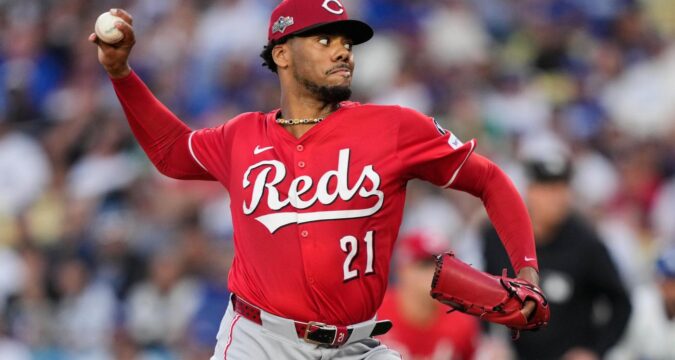
GOODYEAR, Arizona, EE.UU. (AP) — El as Hunter Greene abandonó el campamento de entrenamiento de primavera de los Rojos de Cincinnati debido a rigidez en el codo derecho.
El mánager Terry Francona y el presidente de operaciones de béisbol Nick Krall informaron a los reporteros el miércoles que Greene se someterá a una resonancia magnética en Cincinnati y será evaluado por el consultor ortopédico del equipo, el doctor Timothy Kremchek. Greene también consultará al médico principal de los Dodgers de Los Ángeles, el doctor Neal ElAttrache.
Greene incorporó más trabajo de la parte inferior del cuerpo a su rutina de temporada baja con la esperanza de evitar lesiones.
Greene tuvo marca de 7-4 con efectividad de 2.76 el año pasado, ayudando a Cincinnati a conseguir un comodín de la Liga Nacional para su primera aparición en los playoffs desde 2020.
Greene, cuya recta de cuatro costuras promedió 99,5 millas por hora —la mayor velocidad promedio en las Grandes Ligas entre quienes lanzaron al menos 1.250 pitcheos—, quedó limitado a un mínimo en su carrera de 19 aperturas y 107 entradas y dos tercios. Aun así, sus 296 lanzamientos de 100 millas por hora o más fueron la segunda mayor cifra en las Grandes Ligas, detrás de los 422 de Mason Miller.
Greene fue colocado en la lista de lesionados de 15 días el 9 de mayo por una distensión en la ingle derecha. Regresó el 23 de mayo e hizo tres aperturas antes de volver a la lista de lesionados por la misma lesión. Esta vez, permaneció fuera hasta el 13 de agosto.
Greene, de 26 años, está por iniciar su quinta temporada en las Grandes Ligas. Fue seleccionado como All-Star de la Liga Nacional por primera vez en 2024, cuando registró marca de 9-5 con efectividad de 2.75 en 26 aperturas. También sumó 169 ponches en 150 entradas y un tercio, pese a pasar tiempo en la lista de lesionados ese año por molestias en el codo.
___
Deportes: https://apnews.com/hub/deportes

Grupos disidentes kurdos afirman que se preparan para luchar contra Irán con apoyo de EEUU
Por QASSIM ABDUL-ZAHRA STELLA MARTANY y RASHID YAHYA
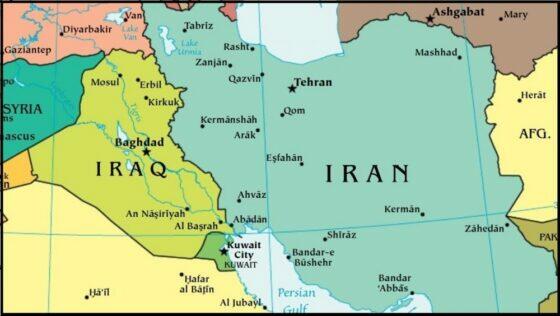
IRBIL, Irak (AP) — Grupos disidentes kurdos iraníes con base en el norte de Irak preparan una posible operación militar transfronteriza en Irán, mientras que Estados Unidos ha solicitado a kurdos iraquíes que les brinden apoyo, aseguraron funcionarios kurdos a The Associated Press el miércoles.
Los grupos kurdos son ampliamente considerados como el segmento mejor organizado de la fragmentada oposición iraní y se cree que cuentan con miles de combatientes entrenados. Su ingreso a la guerra podría suponer un importante desafío para las atribuladas autoridades de Teherán, además de que podría implicar el riesgo de arrastrar a Irak todavía más hacia el conflicto.
Khalil Nadiri, un funcionario del Partido por la Libertad del Kurdistán (PAK), con base en la región semiautónoma kurda del norte de Irak, señaló que algunas de sus fuerzas se habían desplazado el miércoles hacia zonas cercanas a la frontera con Irán y estaban a la espera de recibir más instrucciones.
Agregó, sin entrar en detalles, que funcionarios de Estados Unidos se habían puesto en contacto con líderes de grupos kurdos de oposición para discutir una posible operación.
Al ser consultado sobre los reportes de que el gobierno estadounidense sopesa la posibilidad de armar a grupos kurdos iraníes, el secretario de Defensa, Pete Hegseth, dijo a los periodistas el miércoles: “Ninguno de nuestros objetivos se basa en el apoyo o en armar a alguna fuerza en particular. Así que estamos al tanto de lo que otras entidades puedan estar haciendo, pero nuestros objetivos no giran en torno a eso”.
Antes de que se desencadenara una nueva guerra en Oriente Medio con los ataques de Estados Unidos e Israel sobre Irán del sábado pasado, el PAK se había responsabilizado de atentados contra la Guardia Revolucionaria en respuesta a la violenta represión de Teherán contra manifestantes. Sin embargo, un funcionario del grupo aclaró que no había enviado fuerzas a Irán desde Irak.
Si grupos kurdos iraníes e iraquíes se suman a la guerra, sería la primera entrada de una fuerza terrestre en el conflicto. Los kurdos tienen experiencia de combate gracias a su lucha contra el grupo Estado Islámico.
Un funcionario de Komala –otro de los grupos kurdos iraníes– afirmó el miércoles que sus fuerzas están listas para cruzar la frontera en cuestión de una semana o 10 días y que estaban “esperando a que las condiciones sean adecuadas”. Habló bajo condición de anonimato por motivos de seguridad.
Los kurdos en Irán tienen una larga historia de agravios y levantamientos tanto contra la actual República Islámica como contra la monarquía que le precedió. Durante el gobierno del sha Mohammad Reza Pahlavi, los kurdos fueron marginados y reprimidos, provocando levantamientos ocasionales.
Después de la Revolución Islámica de 1979, el nuevo gobierno teocrático también combatió a insurgentes kurdos. Fuerzas iraníes destruyeron pueblos y aldeas kurdas en enfrentamientos que dejaron miles de muertos.
Aunque comparten el deseo de ver derrocadas a las autoridades actuales, los kurdos también han chocado con otros grupos de oposición —en particular, la facción que encabeza el hijo del exsha, Reza Pahlavi, quien ha acusado a los kurdos de ser separatistas que buscan desmembrar a Irán.
Kurdos iraquíes, reacios a sumarse a la contienda
La posible operación ha dejado a los líderes de la región kurda iraquí en una posición delicada.
Tres funcionarios kurdos iraquíes dijeron a la AP que el domingo se llevó a cabo una llamada telefónica entre el presidente de Estados Unidos, Donald Trump, y Masoud Barzani y Bafel Talabani —líderes del Partido Democrático del Kurdistán (KDP), y de la Unión Patriótica del Kurdistán, (PUK), los dos principales partidos kurdos en Irak— para discutir la situación en Irán.
Hablaron bajo condición de anonimato al no estar autorizados a hacer comentarios públicos.
Según uno de los funcionarios, Trump le pidió a los kurdos iraquíes que brinden apoyo militar a los grupos kurdos iraníes durante operaciones en Irán y que abran la frontera para permitir el libre desplazamiento de los grupos kurdos iraníes.
Cuando se le consultó sobre la conversación telefónica y los reportes de que Trump ha buscado apoyo militar para grupos kurdos iraníes, la secretaria de prensa de la Casa Blanca, Karoline Leavitt, dijo: “Sí habló con líderes kurdos en relación con nuestra base que tenemos en el norte de Irak”, pero negó que el mandatario hubiera acordado un plan específico.
El funcionario kurdo iraquí señaló que los kurdos iraquíes temen que involucrarse directamente en el conflicto provoque una contundente respuesta iraní. La región kurda se ha visto bajo una serie de ataques con drones y misiles iraníes en los últimos días, dirigidos contra bases militares de Estados Unidos y grupos kurdos, así como el consulado de Estados Unidos en Irbil.
Aunque la mayoría de los ataques han sido interceptados, se han registrado daños en viviendas civiles y la región sufre de interrupciones en el servicio eléctrico después de que un importante yacimiento de gas detuvo sus operaciones por motivos de seguridad.
La PUK confirmó en un comunicado que Talabani habló por teléfono con Trump, quien “dio claridad y visión sobre los objetivos de Estados Unidos en la guerra”. El comunicado indicó que la PUK “cree que la mejor solución es volver a la mesa de negociaciones”.
Portavoces del gobierno regional kurdo en Irak y de Barzani se negaron a comentar.
El portal noticioso Axios fue el primero en informar sobre la llamada entre Trump y los líderes kurdos, mientras que CNN reportó que el gobierno de Washington estaba en conversaciones con grupos kurdos sobre la posibilidad de brindar apoyo militar.
Irak busca sellar la frontera
La presencia de grupos kurdos armados en el norte de Irak ha sido un punto de fricción entre Bagdad y Teherán.
Irak alcanzó un acuerdo con Irán en 2023 para desarmar a los grupos y trasladarlos desde sus bases cerca de frontera con Irán —donde representaban una amenaza armada para Teherán— hacia campamentos designados por Bagdad.
Se cerraron sus bases militares y se les restringió el desplazamiento dentro de Irak, pero los grupos no depusieron las armas.
El asesor de Seguridad Nacional de Irak, Qassim al-Araji, dijo en la red social X que Ali Bagheri, subsecretario del Consejo Supremo de Seguridad Nacional de Irán, había solicitado en una llamada entre ambos “para que Irak tome las medidas necesarias para impedir que cualquier grupo opositor se infiltre en la frontera entre los dos países”.
Al-Araji afirmó que Irak está comprometido con “impedir que cualquier grupo se infiltre o cruce la frontera iraní o lleve a cabo actos terroristas desde territorio iraquí” y señaló que se reforzó la seguridad en la frontera.
Además de las represalias de Irán, cualquier movimiento de los kurdos iraquíes para sumarse a un ataque transfronterizo probablemente avive las tensiones con las milicias iraquíes respaldadas por Irán, que ya se han atribuido ataques con misiles y drones contra Irbil en los últimos días.
——-
Abdul-Zahra informó desde Bagdad. Los periodistas de Associated Press Abby Sewell en Beirut y Konstantin Toropin y Michelle Price en Washington contribuyeron con este despacho.
___
Esta historia fue traducida del inglés por un editor de AP con la ayuda de una herramienta de inteligencia artificial generativa.

Wrexham jugará contra Liverpool en el Yankee Stadium como parte de gira de verano
NUEVA YORK (AP) — Wrexham jugará contra Liverpool en un partido amistoso en el Yankee Stadium como parte de su gira a Estados Unidos este verano, y para entonces el club galés sabrá si ha llegado a la Liga Premier.
Wrexham lleva tres ascensos consecutivos, algo sin precedentes, y está compitiendo en el Championship, la segunda categoría, por primera vez desde la década de 1980.
Su escalada en la pirámide del fútbol inglés, documentada en la serie de televisión “Welcome to Wrexham”, ganadora de un Emmy, comenzó en 2022 con el ascenso desde la quinta división no profesional.
Wrexham se encuentra actualmente en el sexto puesto del Championship, con 11 partidos por disputar en la temporada. Los dos primeros clasificados aseguran el ascenso automático a la Premier y los equipos que terminen del tercero al sexto se clasificarán para los playoffs de final de temporada por el único cupo adicional de ascenso.
La gira de tres partidos de Wrexham, anunciada el miércoles, comienza el 25 de julio contra Leeds en el Raymond James Stadium de Tampa. El partido contra Liverpool será el 29 de julio. Luego el equipo se enfrenta a Sunderland el 2 de agosto en el Subaru Park, cerca de Filadelfia.
___
Deportes AP: https://apnews.com/hub/deportes
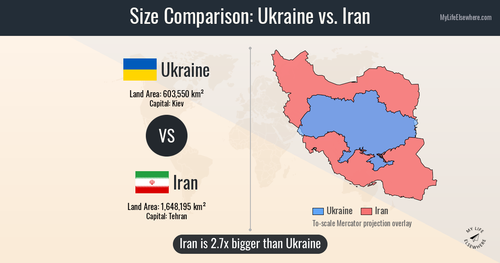
Visualizing Iran’s Vast Size & Why Any Ground Invasion Means Years-Long Quagmire
Visualizing Iran’s Vast Size & Why Any Ground Invasion Means Years-Long Quagmire
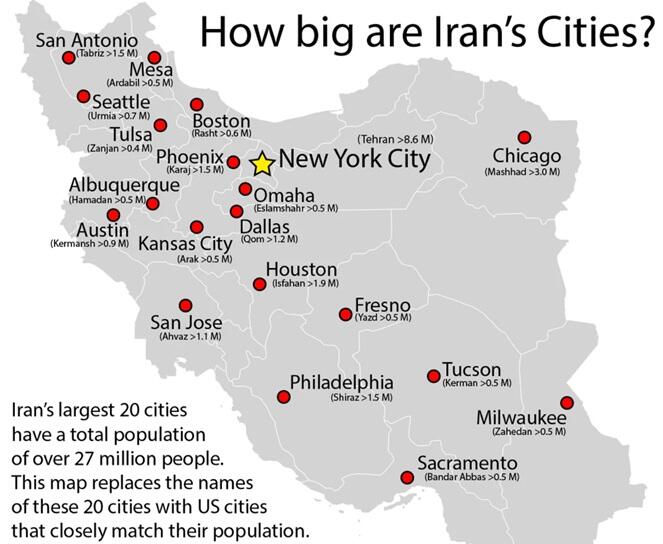
Most Americans have little understanding or concept of Iran’s size in terms of geography or population. The ethno-religious make-up of the sprawling Mideast/West Asian nation is also deeply important, given the US is already talking about arming and supporting some kind of Kurdish-led anti-Tehran ground operation.
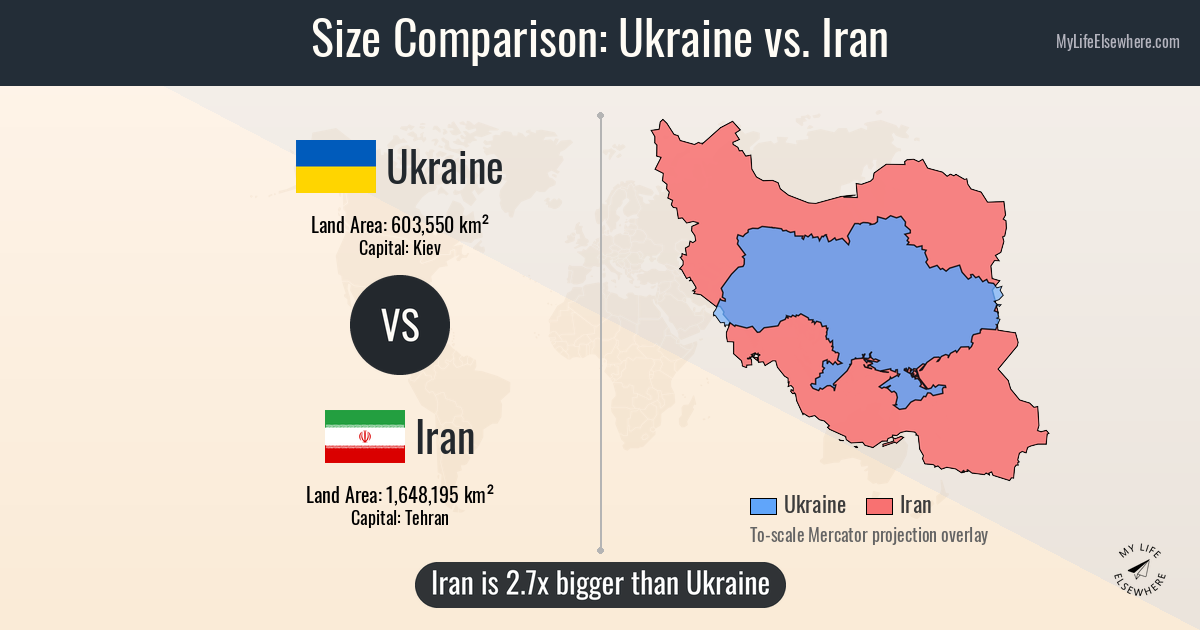
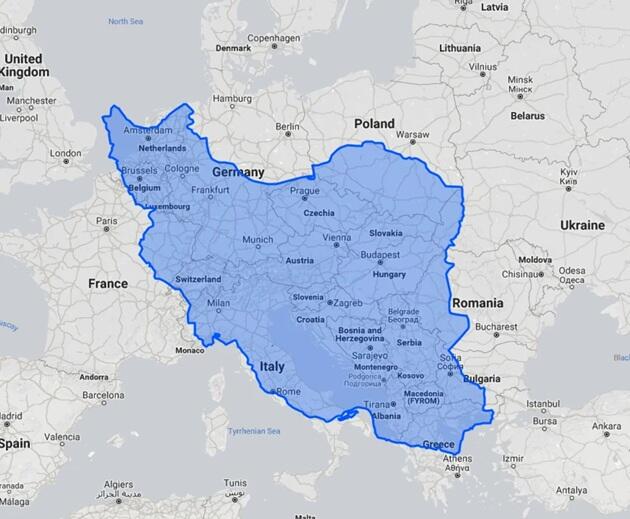
Suffice it to say, Iran’s population is more than double (over 90 million people) that of neighboring Iraq’s. Iran is also the size of almost half the European continent. All of this is crucial for attempting to visualize what American military escalation there might mean, given the Trump White House has not ruled out American boots on the ground amid the unfolding ‘Operation Epic Fury’. Consider: the US spent two blood-soaked decades occupying Iraq (again, significantly smaller than the Islamic Republic). Russia has spent over four years on its military operation in Ukraine, and Iran dwarfs Ukraine in size.
And here’s Iran’s size overlaying the European continent.
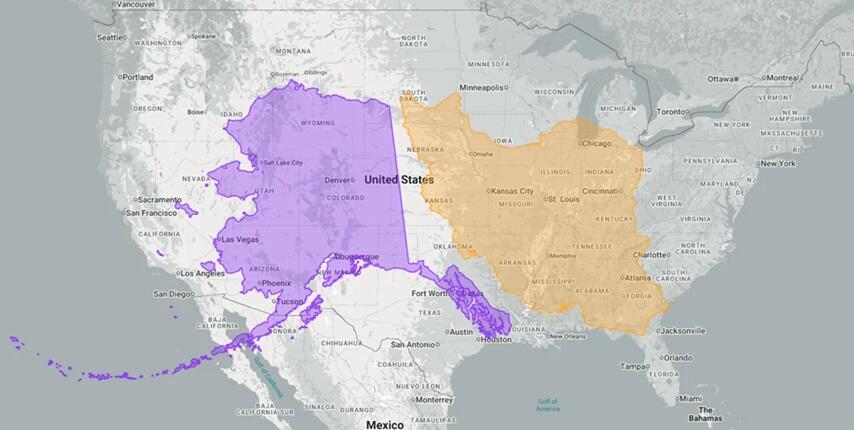
Next: Size of Iran vs. Alaska (with the continental USA for scale). Imagine a war that covered some nearly one-third of the continental United States, and also imagine an outside force trying to pacify a population of 90 million within that vast geography.
Iran and Alaska are similar in massive land expanse:
Alaska: 1.723 million km² ≈ 665,000 mi² (about 17.4% of USA)
Iran: 1.648 million km² ≈ 636,300 mi² (about 16.7% of USA)
USA: 9.867 million km² ≈ 3,810,000 mi²
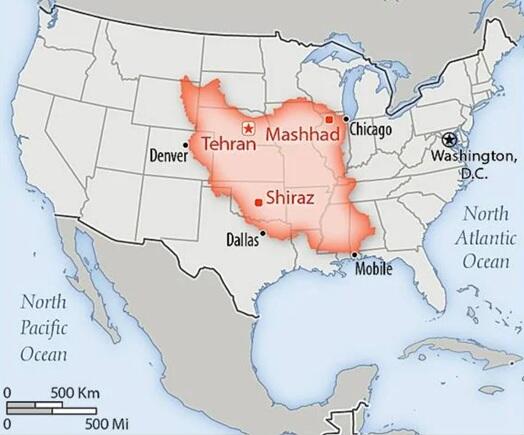
Another look: Iran is far bigger than Texas.
It is also significantly bigger than Iraq.
Importantly, the single deadliest Middle East war in the modern-ear was the Iran-Iraq war. From 1980 to1988 these enemies sharing a common border fought a ground and artillery war to stalemate. It was an utterly disastrous war of attrition, and at that time the United States actually covertly supported Iraq under Saddam Hussein in order to weaken Iran.
But Iran persisted through even that, which gives some idea of what it might be able to endure while facing a war for its very survival and existence with the US and Israel.
The number of casualties in the Iran-Iraq War ranges from 1,000,000 to twice that number. The number killed on both sides was perhaps 500,000, with Iran suffering the greatest losses. It is estimated that between 50,000 and 100,000 Kurds were killed by Iraqi forces during the series of campaigns that took place in 1988. —Britannica
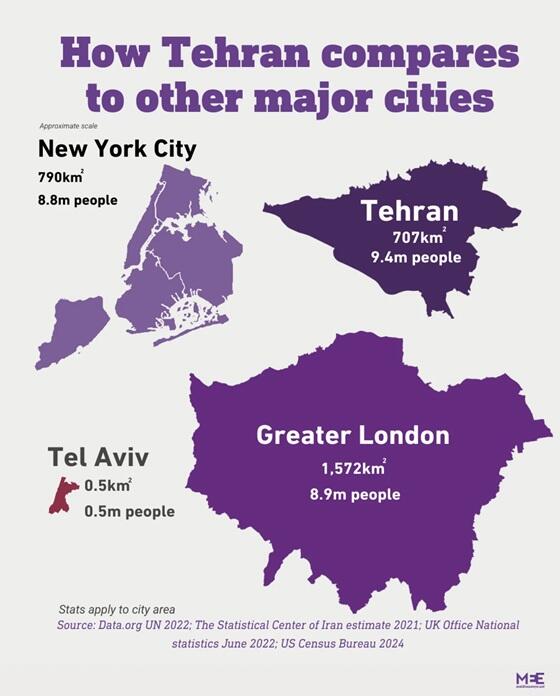
TEHRAN city size: Comparable to New York City.
Any ground invasion necessitates exhausting, grinding urban warfare including room and building clearing by infantry troops.
Many American veterans of the Iraq war have stories of grueling building clearing operations in places like Baghdad or Fallujah which could take five to eight hours to carefully and systematically clear a single large city building. Marine veterans would tell you large building room-clearing is the most physically demanding and ultra-risky task of any infantryman.
The Iranian capital of Tehran has a population of approaching 10 million, while the greater cosmopolitan area has some 16 million people.
Tehran’s population is estimated at 9.5m (16.8m including the metropolitan area). Its size and density are comparable to New York City: regionally, it is on a par with Cairo and Istanbul. -Middle East Eye
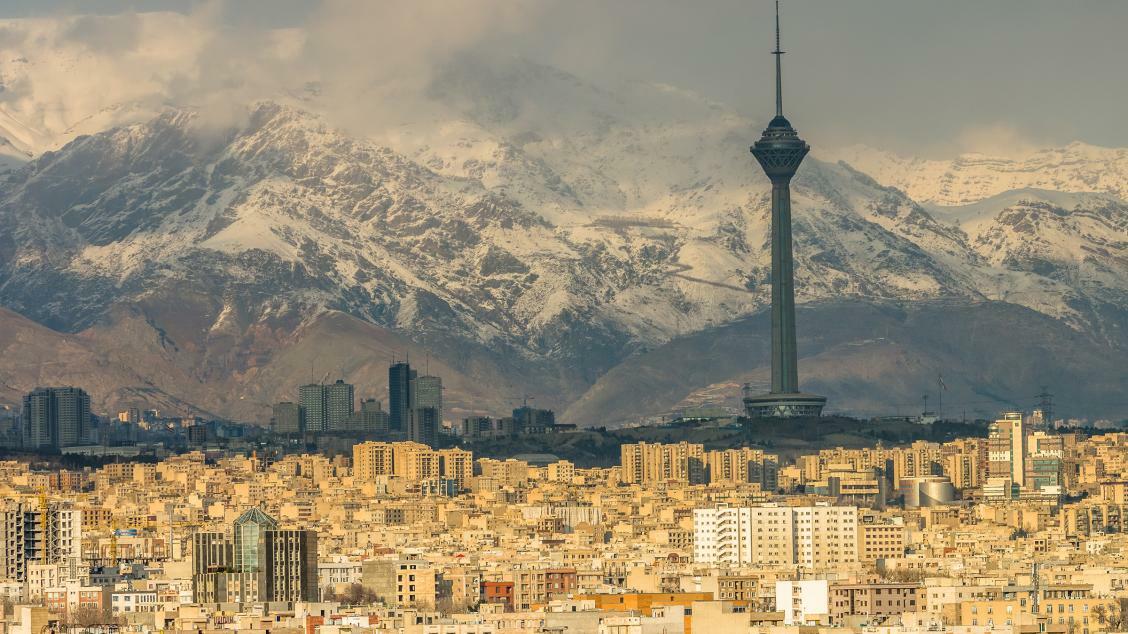
Tehran: A vast, modern cosmopolitan city, packed with civilians, now under US-Israeli ‘shock and awe’ style bombardment.
As US-Israeli military planners know full-well, Iraq had descended into sectarian chaos soon after the 2003 US invasion, and a similar ethno-sectarian scenario could play out in Iran, though the Persian people tend to have greater national unity compared to that of neighboring Iraq.
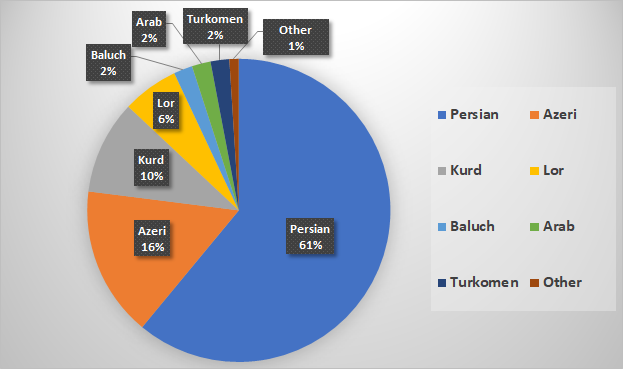
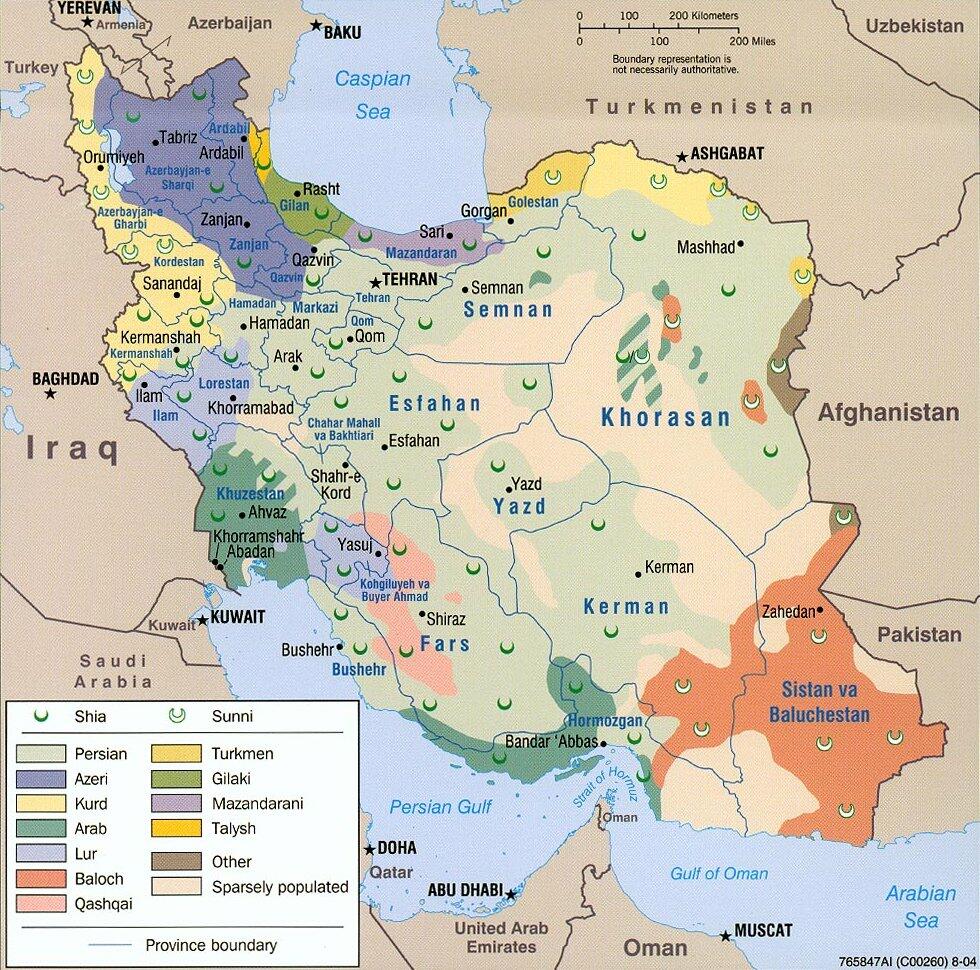
The CIA and Mossad are reportedly already exploring trying to peel off one of Iran’s large ethnic minorities, like the Kurds.
Source: CIA World Factbook (2016)
It just so happens that the Kurdish-dominant far northwest is filled with mountainous, rocky terrain.
This means any effort to launch some kind of ground civil war or unrest against the Iranian state by Kurdish proxies would surely be difficult, slow, and grinding – and terrain might be in Tehran forces’ favor.
We will leave off this brief visual tour with a quote that commonly gets attributed to one well-known American author, who famously wrote the book aptly titled The Innocents Abroad.
“God created war so that Americans would learn geography.”
― Mark Twain
* * *
What a ground invasion of any country means: brutal house-to-house combat…
Tyler Durden
Wed, 03/04/2026 – 16:50
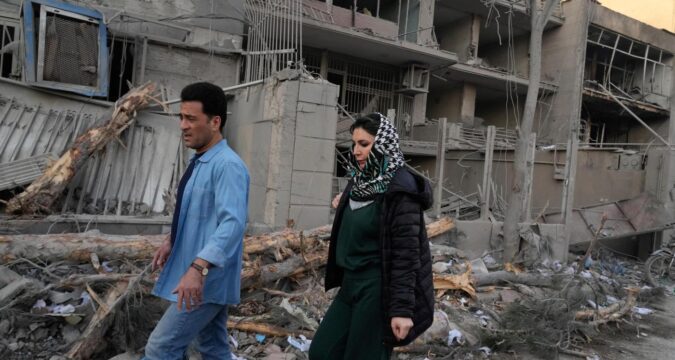
‘Nobody wants a forever war’: NWI experts react to the U.S. attack on Iran
Temple Israel Valparaiso Rabbi Shoshana Feferman woke up early Saturday and saw most of the breaking news alerts about the U.S. and Israel bombing Iran. Feferman said she wasn’t surprised by what she was reading and seeing.
Iran has been sponsoring terrorist organizations like Hezbollah, Hamas and others and developing nuclear weapons, Rabbi Feferman said.
“They were treating the people of Iran in a terrible, terrible way. Justice is prevailing right now,” Rabbi Feferman said.
On Saturday, President Donald Trump launched “a surprise attack against Iran,” according to the Associated Press. The attack, which was launched in partnership with Israeli leadership, killed Iran’s Supreme Leader Ayatollah Ali Khamenei and dozens of other senior figures.
With Khamenei’s death, Trump urges Iranians to overthrow the country’s theocracy, according to the Associated Press. The attack came two days after the latest U.S.-Iran talks aimed at placing controls on Tehran’s — the country’s capital — nuclear program.
Bob Feferman, the rabbi’s husband, said her family lives in Israel and they’ve been talking to her family a lot since the attacks began. Feferman’s family has been spending a lot of time in bomb shelters, he said.
“They understand that this is the war for the survival of Israel because the intentions of the Iranian regime are very clear. They talk about their goal of the destruction of Israel all the time,” Bob Feferman said. “It’s difficult, but they’re united in their understanding of the necessity of the war.”
The U.S. and Israel displayed a “strategic partnership” in attacking Iran together, Bob Feferman said, because Israel has intelligence capabilities that the U.S. depends on, and the joint planning and coordination helped the mission.
With the two countries attacking Iran, they are working “to remove a threat to the Middle East and the entire war,” Bob Feferman said.
The Iranian regime started the war about 47 years ago, Bob Feferman said, when, during the Islamic Revolution, the Iranian regime ordered the takeover of a U.S. Embassy and held diplomats hostage for a year and a half.
“That started the whole war. America didn’t want it. Israel didn’t want it. But they’ve been at war with us. This operation, hopefully, could put an end to that war,” Bob Feferman said.
While President Donald Trump campaigned against “endless” wars, Bob Feferman said it’s likely the president “is trying to prevent a much bigger threat,” which would’ve been a nuclear-armed Iran.
“He tried to negotiate in good faith to get them to put an end to their nuclear weapons program, and they were not willing to negotiate in good faith,” Bob Feferman said. “It’s been very clear that he understands that (Iran) cannot have nuclear weapons.”
Bob Feferman said he hopes the war is over soon. If a regime change isn’t possible, then he hopes for “a change in regime behavior,” which would include no more support for terrorism, no more efforts to build ballistic missiles, and an end to the pursuit of nuclear weapons, he said.
“Hopefully, it will be over soon. Nobody wants a forever war,” Bob Feferman said.
The U.S. and Iran have a complicated history, said Gregg Johnson, dean of Valparaiso University’s College of Arts and Sciences.
In the 1950’s, Iran had a democratically elected government that sought to nationalize its oil so it would be the country’s resource rather than one for BP. The U.S. and Great Britain helped overthrow the government in 1953, Johnson said, and install the Shah, who ruled Iran as a dictator until 1979.
“He was pretty authoritarian but pro-Western authoritarian,” Johnson said. “During the Cold War, there were all sorts of human rights violations, and there were mass protests in the ’70s, some of which were led by the religious community and religious leaders. … Then you have the Iranian Revolution, and the group that is most organized that comes to power is a religious community and a fundamentalist, Shia Muslim government.”
Iran had an elected side of its government, Johnson said, but it was overruled by the religious community to create a theocracy.
During the first Trump administration, Johnson said the president campaigned explicitly against the 2015 Iran nuclear deal, which limited the country’s nuclear program and was created during former President Barack Obama’s administration.
“Not that there were great relations between the United States and Iran during the Obama administration, but during the first Trump administration, obviously, relations deteriorated,” Johnson said.
During former President Joe Biden’s administration, conversations were had about restarting the nuclear deal, but “they didn’t really get far,” Johnson said. Then, Trump came back into power, and the administration is “quite adamantly” opposed to the Iranian government.
Trump has been close with Israeli Prime Minister Benjamin Netanyahu, Johnson said, which is also part of why the U.S. was supportive of the attack on Iran.
Paul Olander, lecturer of political science and international relations at Valparaiso University, said that after the previous U.S. attack on Iran about a year ago, officials claimed to have set Iran’s nuclear capabilities back about two years.
“Now it seems that despite that, the Iranian regime was going to continue to press forward with whatever it is that they were doing, like maintaining their current stockpiles of enriched uranium to develop their capabilities,” Olander said. “It seems that the strikes that just happened are some sort of bargaining tactic, and that Trump and his administration are not satisfied with the concessions they’ve received from the Iranian government.”
Olander believes that the Trump administration was either trying to kill Iran’s former leader and reinstate a new one or destabilize the country to claim to have neutralized its nuclear capabilities.
Marie Eisenstein, associate professor of political science at Indiana University Northwest, said the U.S. has been formally at odds with Iran since the 1979 revolution.
“Iran has consistently, across many governments, been ranked as one of — if not the — largest state sponsors of terror,” Eisenstein said. “Yes, it’s complicated for us in the U.S., but Iran has been a major destabilizing influence throughout its own region, and that has ripple effects for other countries.”
Since its 1979 revolution, Eisenstein said Iranian leadership has had two major chants, “Death to America” and “Death to Israel.” Eisenstein said Iranian leadership refers to the U.S. as “the great Satan” and Israel as “the little Satan.”
Eisenstein believes that U.S. diplomatic support for Israel has clumped the two countries together for Iran.
“Iran has made it very, very clear that they want to exterminate Israel and essentially wipe its mainly Jewish inhabitants off the planet,” Eisenstein said. “Israel has learned throughout its history, and the Jewish people have learned throughout their history, that you take these threats seriously.”
Eisenstein believes that the response from other Middle Eastern countries will be positive because they’re already against Iran for “indiscriminately shooting missiles into their sovereign territory.” Outside the Middle East, Eisenstein believes the response won’t be as positive, particularly with Russia and China, who both rely on Iran, Russia for drones and China for crude oil.
As a result, Russia’s ability to fight Ukraine could be affected, Eisenstein said.
Other Middle Eastern countries resent that Israel seems to get away with strikes wherever they want, Olander said, including in Gaza, Lebanon, Yemen, Syria and Iraq.
“I think the other Middle Eastern countries are going to put heavy pressure on the United States for this to go away,” he said. “They want this to end quickly because they can’t be seen, even amongst their own people, sticking up for the Israelis.”
Because of the attack, Olander said the price of oil will increase. On Wednesday, the average price of regular gas in Indiana was $3.14, according to AAA, compared to one week ago when it was $2.82.
Olander also expects to see sporadic attacks in the Middle East, especially in the Gulf states. He also said it seems that the U.S. will continue to bomb Iran to see what can come from those attacks.
“The rest of the Middle East has noted that the United States cares about humanitarian stuff so long as their enemies are doing it and not their friends,” Olander said. “If they’re happy with walking away having blown up most of Iran’s military and a lot of their leadership, that might be it. But if they’re not happy, if a large humanitarian crisis breaks out in Iran because the government collapsed, or we can’t be sure of their nuclear material, or if we do have to put boots on the ground … I’m assuming there will be a pretty large negative response in the United States for being drawn into another war.”
Indiana’s legislators responded to the attack in statements this week. U.S. Rep. Frank Mrvan, D-Highland, said in a statement, “there is no doubt” that Iran’s pursuit of nuclear weapons threatens the Middle East, the U.S. and its allies. But the constitution gives Congress “the sole responsibility” to declare war, he said.
“History has taught us that open-ended military engagement in this region carries profound consequences for our troops, their families and our national security,” Mrvan said. “Therefore, I call on Speaker Johnson to reconvene the House so we can receive a full briefing from the administration and hold an immediate vote on a War Powers Resolution.”
Mrvan said Congress should be “steadfast in our support” of the U.S. military members, especially amid the Trump Administration’s “unilateral action” in Iran.
U.S. Sen. Jim Banks, R-Indiana, responded to the attack on Iran in a statement, saying the Iranian regime has killed more than 1,000 U.S. service members and civilians. Banks’ statement was also posted on X Saturday morning.
Banks is a veteran who served in the war in Afghanistan, and he said the effort prevents another war like that.
“President Trump’s actions (Saturday) morning were not about starting a war. They were about preventing one,” Banks said in his statement. “It was targeted, surgical, and strong. It made clear that if you attack or threaten Americans, there will be consequences. … At the end of the day, this is about protecting American lives. I’m grateful we have a leader like President Trump who is willing to do it.”
U.S. Sen. Todd Young, R-Indiana, also responded to the attack in a statement, which was released before a potential vote on a war powers resolution, which gives lawmakers an opportunity to demand congressional approval before any further attacks are carried out, according to the Associated Press.
“The President intends for this to be a short operation, but as the conflict develops, I urge Congress to engage in oversight and policymaking, including evaluating any potential requests for additional resources or providing additional authorities,” Young said in his statement. “I pray for the safety of our troops, our allies, and the Iranian people, and for victory to end five decades of terror by the Islamic Republic.”
In his statement, Young said that Iran has funded terror globally for decades, and the country’s regime has refused to dismantle its nuclear program despite U.S. efforts at diplomacy. Iran’s missiles “are a major threat to regional and global stability,” Young said.
Young believes that Trump’s military options shouldn’t be limited, and that danger will only grow if they are, he said.
“At the same time, the American people have questions pertaining to the nature of threats and the risks to our troops and homeland. Congress must take a more active role in ensuring answers to those questions are clear and timely,” Young said.
“Hearings and public discussion help keep our constituents informed, and they help administrations sharpen their strategies in response to congressional feedback. Too often in recent years, Congress has fallen short of our responsibility to educate, inform, and clarify through vigorous oversight regardless of political party.”
mwilkins@chicagotribune.com; akukulka@post-trib.com
https://www.chicagotribune.com/2026/03/04/nwi-experts-react-attack-on-iran/
Justicia de México obliga al Ejército a entregar documentos de inteligencia de caso Ayotzinapa
Associated Press
CIUDAD DE MÉXICO (AP) — Un tribunal de Ciudad de México resolvió que el Ejército mexicano debe entregar la totalidad de la información de inteligencia generada durante la desaparición de los 43 estudiantes de magisterio de Ayotzinapa en septiembre de 2014, que los padres de los jóvenes llevan exigiendo conocer desde hace más de tres años, informó el miércoles el Centro Prodh, la ONG que representa legalmente a las familias.
Los desacuerdos entre los militares y los padres y madres surgen de unos 800 folios que se mantienen ocultos y que podrían contener información relevante para conocer cuál fue el destino de los jóvenes, algo que todavía no está claro aunque han pasado ya más de once años del considerado “crimen de Estado” que conmocionó dentro y fuera de México.
El fallo del tribunal reconoció el derecho de las familias a conocer la verdad e indicó que tales documentos no pueden considerarse secretos al tratarse de un caso de desapariciones forzosas y graves violaciones a los derechos humanos. La Secretaría de Defensa podría apelar la sentencia.
El gobierno de Claudia Sheinbaum es el tercero que investiga el crimen. A pesar de eso, de los cientos de búsquedas y las decenas de detenidos —entre ellos un exprocurador general y un funcionario local arrestado esta semana—, México sigue sin saber el destino de los jóvenes atacados por policías en la localidad de Iguala, Guerrero, porque la investigación estuvo plagada de irregularidades y manipulaciones para ocultar la verdad, según la fiscalía federal.
Las autoridades consideran que los jóvenes fueron asesinados por un cártel local que traficaba heroína y actuó coludido con fuerzas de seguridad y autoridades locales, estatales y federales. Solo se han localizado los restos de tres de ellos y todavía no está claro el móvil.

Harry Maguire recibe condena suspendida por incidente en Grecia en 2020
Por DEREK GATOPOULOS
ATENAS (AP) — Harry Maguire, el zaguero del Manchester United, recibió el miércoles una condena suspendida de 15 meses por un altercado en un club nocturno en el que estuvieron involucrados agentes de policía en la isla griega de Míkonos en agosto de 2020, informaron funcionarios judiciales.
Los abogados de los demandantes pidieron al club de Maguire y a la Federación Inglesa de Fútbol (FA, por sus siglas en inglés) que sancionen al jugador.
Al internacional inglés se le impuso originalmente una condena suspendida de 21 meses poco después del incidente, pero apeló el fallo, lo que dio lugar a un nuevo juicio en un tribunal de la isla de Siros, capital administrativa de la región.
El juicio de apelación se había aplazado varias veces, incluida una ocasión debido a una huelga de abogados.
Maguire, que cumple 33 años el jueves, fue declarado culpable de los cargos de causar lesiones corporales leves, insultar a agentes de policía, intento de soborno y violencia ilegal contra agentes de policía.
La condena quedó suspendida durante tres años.
Maguire puede impugnar la decisión del miércoles ante el Tribunal Supremo de Grecia en Atenas.
El defensa central, que no estuvo presente en el juicio el miércoles, ha negado haber cometido irregularidades.
“En todo caso, mi familia, mis amigos y yo somos las víctimas”, dijo en 2020.
Pero un abogado que representa a los agentes de policía involucrados en el incidente de 2020 acusó a Maguire de mostrar arrogancia y falta de arrepentimiento.
Ioannis Paradissis afirmó a The Associated Press el miércoles: “Nunca se ha disculpado, ni una sola vez. Ni una sola disculpa. A día de hoy, tiene antecedentes penales”.
“Esperamos que su club y la Federación Inglesa de Fútbol tomen medidas contra él”, añadió. “¿Cómo es posible que alguien que ahora tiene antecedentes penales y ha sido condenado por actos de violencia contra agentes de policía siga participando en selecciones nacionales y en el equipo de Inglaterra? Es inaceptable”, agregó.
Paradissis también emitió un comunicado en nombre de los agentes de policía, quienes esperaban una disculpa como “un gesto elemental de respeto”.
“Es incompatible con los valores del deporte y con la condición de modelo a seguir que se espera que encarnen los deportistas de élite que una persona con antecedentes penales por violencia siga apareciendo como jugador de la Liga Premier y como figura pública a la que admiran jóvenes aficionados de todo el mundo”, añadió.
___
Deportes AP: https://apnews.com/hub/deportes

Trump’s Venezuela Oil Plan Runs Into Hard Reality
Trump’s Venezuela Oil Plan Runs Into Hard Reality
Authored by Andrew Topf via oilprice.com,
Last week US President Donald Trump announced that Venezuela’s interim authorities will turn over up to 50 million barrels of oil to the United States, before later declaring his administration will control Venezuela’s oil sales “indefinitely”.
Decrying the state of Venezuela’s oil sector, including that the South American country now pumps a fraction of what it used to, Trump said, “We’re going to have our very large United States oil companies — the biggest anywhere in the world — go in, spend billions of dollars, fix the badly broken infrastructure, the oil infrastructure, and start making money for the country.”
While that sounds like a great opportunity for the US oil majors, it’s one they may want to refuse. Why? Because the oil underneath Venezuela, which has the largest crude reserves in the world, greater even than Saudi Arabia and Iran, is technically challenging to extract and costly.
Moreover, it’s uncertain whether there would a change in the way Venezuela and its oil industry are being run, which presents a huge political risk for companies to return and operate there.
Former President Hugo Chavez nationalized the oil industry in the 1990s, and in 2007, he forced Exxon and ConocoPhillips out, after the companies refused to accept new terms that would give the Venezuelan state oil company, PDVSA, a majority share in their projects.
ConocoPhillips is still owed about $10 billion.
Only Chevron is currently authorized to operate in Venezuela and export crude to the United States.
“Until Caracas has a new government capable of gaining the confidence of international investors and banks, oil companies will be reluctant to make any major commitments,” states a recent Reuters piece.
When Trump met with oil executives last Friday, Exxon’s CEO Darren Woods said, “We’ve had our assets seized there twice, and so you can imagine to re-enter a third time would require some pretty significant changes.”
Trump has said the US government is prepared to provide security guarantees but not money for oil projects.
How much oil does Venezuela have?
A founding member of OPEC, Venezuela has more oil reserves than any OPEC member and top exporters in the Gulf, including Saudi Arabia, Iraq, the United Arab Emirates and Iran.
The country is estimated to hold 303 billion barrels in proven reserves, about 17% of the world’s total, and more than five times the United States’ 55 billion barrels.
Most is contained within the Orinoco Belt — a vast territory in eastern Venezuela stretching about 600 kilometers from east to west and 70 km from north to south, with an area of roughly 55,314 square kilometers.
The belt is divided into four exploration and production areas: Boyacá, Junín, Ayacucho and Carabobo.
Most Orinoco Belt operations are controlled by PDVSA (Petroleos de Venezuela, SA), which has faced challenges including aging infrastructure, underinvestment, mismanagement and the effects of sanctions.
Venezuela has thus been unable to fully exploit its vast reserves. While it once exported 3.5 million barrels a day, that has been reduced to about 1mbpd.
$100 billion investment required
According to Francisco Monaldi, the director of Latin American energy policy at Rice University’s Baker Institute for Public Policy, returning Venezuela’s production to its 1970s peak would require an annual investment by US oil majors of $10 billion for the next decade, or $100 billion in total.
Just maintaining Venezuela’s oil production at current levels would cost $53 billion over the next 15 years, as per estimates from Rystad Energy, a consulting firm. Raising it above 1.4Mbpd would likely require another $120 billion between now and 2040.
Extraction challenges
Venezuela’s oil is extra-heavy crude, which means it is highly viscous and dense, making it harder and more expensive to extract than conventional crude. Aljazeera notes that Producing oil from this region requires advanced techniques, such as steam injection and blending with lighter crudes to make it marketable.
Because of its density and sulphur content, extra-heavy crude usually sells at a discount compared with lighter, sweeter crudes.
While US Gulf Coast refineries have been designed to handle heavy crude like Venezuela’s and Canada’s, the product’s economic viability at low oil prices is questionable.
Reuters states: Breakeven costs for key grades in the Orinoco belt already average more than $80 a barrel, according to estimates by consultancy Wood Mackenzie. That places Venezuelan oil at the higher end of the global cost scale for new production. By comparison, heavy oil produced in Canada has an average breakeven cost of around $55 a barrel.
That means at current oil prices of around $60 a barrel, Venezuelan oil is uneconomic.
There may also be a significant gap between potential and actual oil production. Consider: Proven reserves are defined as those with a 90% probability of recovery, based on the identified crude, and whether existing technology can extract it while remaining commercially viable.
Venezuela’s estimates are self-reported, meaning they could be exaggerated. Furthermore, according to another Reuters piece, OPEC declared Venezuela’s proven reserves the world’s largest in 2011, when oil was over $100 a barrel. But Orinoco oil is full of impurities like sulfur and nickel, making it expensive to produce and difficult to refine. “Price is therefore crucial to its viability.”
In fact, estimated reserves may remain theoretical unless prices spike, and a more realistic estimate of Venezuelan oil reserves is 60 billion barrels, according to Rystad Energy.
The bottom line? Oil prices need to rise at least $20 a barrel to make Venezuelan heavy oil economically extractable. Even if that is enough to entice US oil majors back there, they will need security guarantees from the US government so that their projects won’t be expropriated like they were in the past. How committed is the Trump administration to protecting the interests of its oil companies operating in a foreign country with a history of nationalization?
Political risk in Venezuela is off the charts right now, making foreign investment challenging to say the least. So don’t believe the Trump hype about American companies jumping in to revive the Venezuelan oil industry. As one commentator summed up the situation, “The world probably doesn’t need a lot more high-cost, dirty oil. The dream of a transformational deluge of Venezuelan crude will probably remain illusory.”
Tyler Durden
Wed, 03/04/2026 – 16:25
https://www.zerohedge.com/energy/trumps-venezuela-oil-plan-runs-hard-reality