Category: News

The Socialist Mayor Clown Show Is Truly Something To Behold
The Socialist Mayor Clown Show Is Truly Something To Behold
The progressive left never admits they are wrong and they always double down on failure. This is the mindset that continues to lead Democrats down a path of self destruction along with the cities they inhabit. One cannot separate the ongoing decline of US cities from far-left policies; one precipitates the other.
The implosion of Joe Biden’s faux presidency and the defeat of the Kamala Harris campaign left Democrats reeling and searching for answers, but it didn’t take long for them to dismiss the idea of self reflection and come to the predictably insane conclusion they are right and everyone else is the enemy.
The answer, they argue, is not to abandon their radical ideology and find their way back to common sense. Rather, they believe that they lost the elections because their candidates were “not extreme enough.”
But what could possibly be more extreme than Biden’s mass online censorship campaign? His calls for pandemic vaccine passports for Americans to keep their jobs? His implementation of DEI and CRT programs across the federal government and the US military? His consistent denials over the stagflation crisis? When he declared Easter Sunday as “Transgender Day of Visibility?” What about the topless LGBT parties on the White House Lawn?
How much worse can a political leader get? Well, we’re about to find out.
Democrats in cities like Chicago, New York and now Seattle have decided to replace their bumbling leftist mayors with more openly socialist mayors and the trend is likely to grow. This seems to be a calculated reformation of the Democrat base around increasingly more militant Marxist policies, using blue cities as a “proving ground.”
It makes sense when one considers how freely groups like Antifa and anti-ICE are able to operate, with clear coordination between radicals and the local government. These are places where activists feel most safe and comfortable because they are protected by resident politicians and police. Blue cities are becoming experimental playgrounds for color revolution and socialist policies that would never be allowed anywhere else.
They see these cities as toys to be played with. The problem is, their initiatives are falling apart before they get into office and conservatives haven’t had to lift a finger.
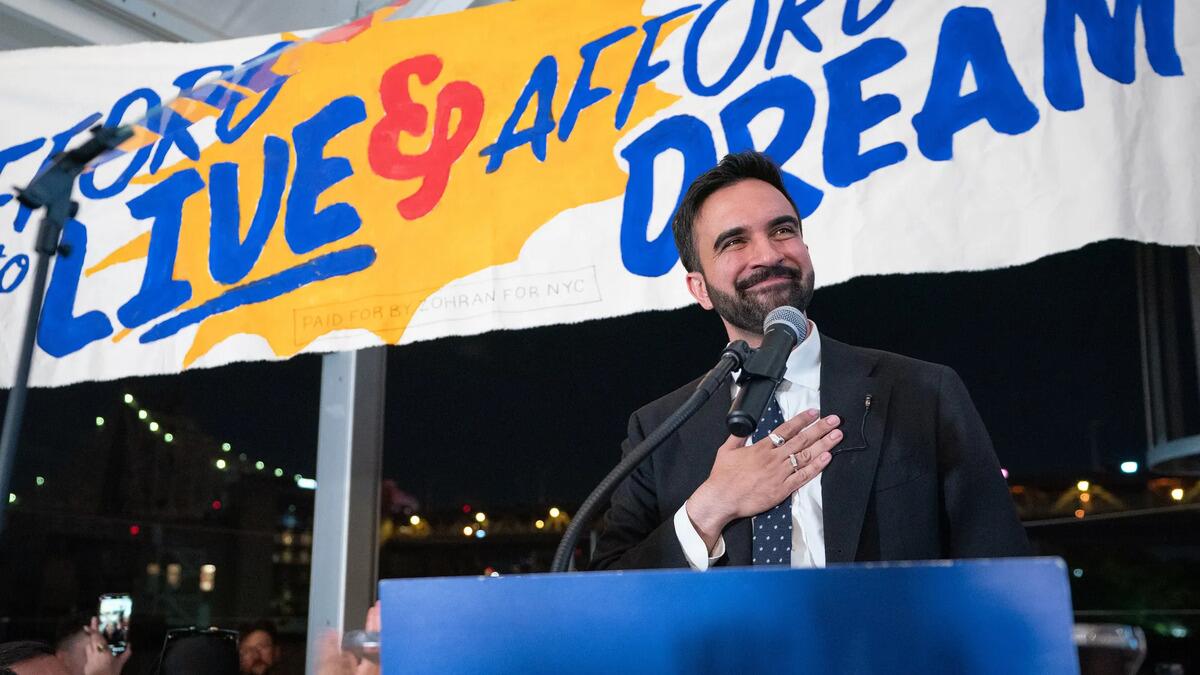
For example, Zohran Mamdani’s campaign promises are drying up on the vine like grapes in the desert sun. His supporters are now realizing that his 4-year rent freeze policy faces serious obstacles, with the new mayor relying on full support from the Rent Guidelines Board (RGB) appointed by Mayor Adams (which he is unlikely to get until a new board is appointed). The reality is, a rent freeze would result in an immediate selloff of rental properties and landlord flight from NYC, meaning, there will be an even worse housing shortage.
Mamdani also got word from Governor Kathy Hochul that she will not be backing his fare free bus service concept, nor will she support his universal childcare program. In other words, Mamdani doesn’t have the authority to fulfill his campaign promises.
Mamdani is confronted by the fact Gov. Hochul said she won’t fund the free buses proposal part of his socialist agenda.
He responds by saying he’ll find the money.
Mamdani’s supporters have been duped.
He can’t pay for his socialism.
(nbcnewyork on TT) pic.twitter.com/UCPfoo7s2t
— Paul A. Szypula 🇺🇸 (@Bubblebathgirl) November 13, 2025
Furthermore, if the “Democratic socialist” gets approval from all parties involved he still has to deal with Trump’s inevitable cuts to to federal dollars. NYC gets around $10 billion in direct federal aid and over $100 billion in federal funding through a variety of avenues. Even with all that cash, the city is still in the hole and desperate for relief after the Democrats disastrous migrant housing programs which crippled their subsidies for the homeless.
The loss of a mere $10 billion could cause chaos for NYC’s budget concerns and all of Mamdani’s projects require an increasing budget, not a falling budget.
Recently elected mayor of Seattle, Katie Wilson, is causing a stir as well with her socialist rhetoric. Her notions come off as unpracticed or poorly thought-out and one wonders if Democrats will feel any buyers remorse. Seattle was already in steep decline due to wealth taxation, which has driven numerous companies out of the area along with thousands of jobs and revenues.
SOCIALISM: Seattle mayor-elect Katie Wilson promises a full socialist smorgasbord, calling for guaranteed housing, universal child care, free K-8 summer care, social housing, and shifting land and wealth from corporations to community control. pic.twitter.com/GvmqFn8Yn2
— @amuse (@amuse) November 14, 2025
Wilson’s utopian wish list is facing a hard reality check and she hasn’t clocked in on the job yet. For example, she believes she has the power to prevent grocery chains from leaving the city and creating “food deserts”. It’s a problem that has been accelerating in blue cities across he country largely due to lax law enforcement policies and low criminal prosecution. Property theft continues to explode and businesses in leftist towns cannot survive, so they do the smart thing and leave.
Seattle’s new mayor Katie Wilson: “We will not allow grocery chains to close stores at will” pic.twitter.com/YQUpJyWy0H
— End Wokeness (@EndWokeness) November 13, 2025
Critics have lambasted Wilson as a child-brained imbecile, citing basic private property rights and her lack of authority to issue an exit tax without considerable state and local support. Again, socialist candidate make promises they cannot keep. This might get them elected, but their time in office immediately becomes a clown show, proving conservatives were right all along.
Tyler Durden
Sat, 11/15/2025 – 21:35
https://www.zerohedge.com/political/socialist-mayor-clown-show-truly-something-behold

US Needs More Gas Infrastructure, Storage To Support Electric Grid: NARUC
US Needs More Gas Infrastructure, Storage To Support Electric Grid: NARUC
By Robert Walton of UtilityDive
Summary:
The United States needs additional natural gas pipeline infrastructure and storage opportunities to reliably meet the growing demand for energy, a National Association of Regulatory Utility Commissioners task force report concluded on Wednesday.
NARUC’s Gas-Electric Alignment for Reliability task force, or GEAR, was formed in 2023 in an effort to improve coordination between the two interwoven energy sectors, with an ultimate goal of bolstering grid reliability.
The report includes nine recommendations but stopped short of advocating for a Gas Reliability Organization akin to electric grid efforts, and concluded changes to the gas-electric market day and force majeure contract provisions were unnecessary.
Rising electricity demand and a reliance on gas-fired generation has at times left the power sector scrambling when necessary fuel was not available.
During Winter Storm Uri in February 2021, some Texas electric companies cut power to gas production and transportation facilities as part of their emergency conservation response. That reduced fuel supplies to gas-fired power plants, contributing to energy shortages and blackouts. Almost 250 people in Texas died in the storm.
And in 2022, unplanned generator outages reached 90,500 MW during Winter Storm Elliott, with gas fuel supply issues accounting for 20% of unplanned generating unit outages, derates and failures to start, according to the North American Electric Reliability Corp.
The GEAR report parses diverse policy perspectives around the future of gas and gas infrastructure expansion, NARUC said. However, task force participants found common ground “on the need for harmonization between the electric and natural gas sectors to ensure reliable and affordable electricity service,” the report said.
“The need for harmonization is crucial, regardless of one’s long-term perspective about future energy policy in various regions of the country,” it said.
Recommendations include: creation of a natural gas “readiness forum”; development of additional gas pipeline infrastructure and gas storage opportunities; new and enhanced market tools to improve supplier performance in extreme weather; demand response initiatives for gas utilities; and market changes to incentivize gas pipeline capacity releases.
Regulators and grid operators “should apply a strategic approach to expand opportunities for increased or new storage investment consistent with empowering end-users to exert greater control over supply needs,” the report found.
There was some support for the formation of a Gas Reliability Organization, similar to the North American Electric Reliability Corp., but not enough to advance the recommendation, the GEAR report noted. “A majority of members [concluded] that such an option (on a national, regional or state basis) is unnecessary or not the best means to efficiently enhance gas-electric reliability,” it said.
Similarly, discussions around aligning the timing of gas or electric days were not advanced. Gas and electric market schedules are typically several hours apart, though the Federal Energy Regulatory Commission has historically tried to better align them.
“While it is obvious that the current bifurcated system is not how anyone would design the combined system from scratch, we are unaware of any systemwide outage that has occurred due to scheduling issues or mismatches,” the report said.
And possible changes to standard force majeure contract provisions, which cover supply disruptions, were found to be “neither viable nor productive,” the report said.
The task force noted that the primary driver for changes to the force majeure provisions “is aimed at expanded winterization of the production system,” and noted there are two recommendations that “facilitate a better understanding of force majeure and provide greater opportunities to mitigate its use.”
The recommendations provide an “ideal starting point for state regulators to ponder future steps to enhance reliability,” Dwight Keen, vice chair of the GEAR working group, said in a statement. Keen is also a regulator with the Kansas Corporation Commission.
A coalition of gas-electric groups supported the report’s findings. “The biggest challenge affecting interoperability across the systems is not operational; it is economic,” the Reliability Alliance said in a statement,
The group consists of the Electric Power Supply Association, Interstate Natural Gas Association of America and Natural Gas Supply Association.
“Competitive power suppliers have invested significantly to strengthen winter readiness, but we need continued alignment between gas and electric systems,” EPSA President and CEO Todd Snitchler said in a statement. “That’s the measure of success we’re all working toward, and GEAR’s work has been an important step to bridge that gap.”
Tyler Durden
Sat, 11/15/2025 – 21:00

Epstein Backfire Intensifies: He Was Live-Texting With House Democrat During 2019 ‘Get Trump’ Hearing
Epstein Backfire Intensifies: He Was Live-Texting With House Democrat During 2019 ‘Get Trump’ Hearing
What a week in Epstein news…
After Democrats dumped a new trove of emails to try and show that President Trump was much better friends with the dead sex offender than he let on, we’ve learned a few things.
1. Trump was clearly pals with Epstein for a while. We’ve seen endless pictures of them hanging out.
2. They had a serious falling out, as evidence (in the new emails) by…
3. Epstein was helping Democrats with their efforts to hurt Trump with dirt, which we now learn extended to…
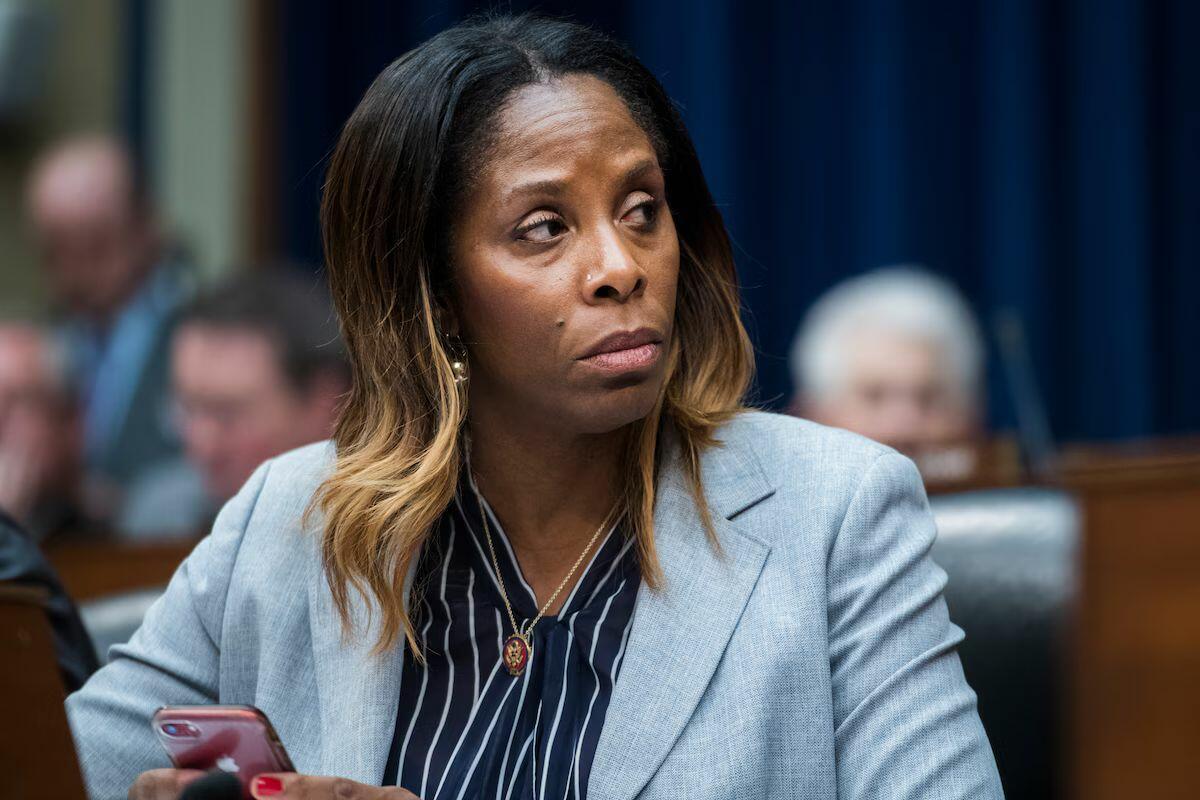
4. Texting with Del. Stacey Plaskett (D-Virgin Islands) during a 2019 congressional hearing with Michael Cohen…
Plaskett, for those who didn’t know, previously served in the Virgin Islands government – helping to give Epstein tax benefits, and worked for Epstein’s fixer on the island before she was elected to Congress.
As the Washington Post notes:
In the texts, Epstein appeared to be watching the February 2019 hearing in real time and at one point informed Plaskett — whose name is redacted from the documents — that Cohen had brought up former Trump executive assistant Rhona Graff in his testimony. At the time, Cohen was testifying before the House Oversight Committee against his former boss, alleging that Trump was racist, manipulated financial records and directed hush money payments to cover up his extramarital affairs — allegations Trump denied. The president said on social media that Cohen was “lying” before testimony began.
“Cohen brought up RONA – keeper of the secrets,” Epstein texted, misspelling Graff’s first name.
“RONA??” Plaskett responded. “Quick I’m up next is that an acronym,” she added, suggesting she would question Cohen soon.
In response, Plaskett’s office said: “During the hearing, Congresswoman Plaskett received texts from staff, constituents and the public at large offering advice, support and in some cases partisan vitriol, including from Epstein,” adding “As a former prosecutor she welcomes information that helps her get at the truth and took on the GOP that was trying to bury the truth. The congresswoman has previously made clear her long record combating sexual assault and human trafficking, her disgust over Epstein’s deviant behavior and her support for his victims.”
lol… lmao even.
BREAKING – Newly uncovered video reveals the moment House Oversight Democrat Stacey Plaskett was being coached by Epstein via text, being told what to ask, in the middle of a 2019 hearing. pic.twitter.com/j1e84oX96W
— Right Angle News Network (@Rightanglenews) November 15, 2025
The emails reveal that Plaskett texted Epstein first before the meeting started that day…
The messages show that Plaskett texted Epstein before the hearing started that day, at 7:55 a.m. Eastern time, to tell him: “He’ll talk about his grades”
Epstein replied a minute later: “what privilege stands behind the none release of college transcripts?”
And that he may have influenced her questions:
Hes opened the door to questions re who are the other henchmen at trump org,” Epstein texted Plaskett at 12:25 p.m.
“Yup. Very aware and waiting my turn,” she responded.
When Plaskett questioned Cohen during the hearing, she asked about Trump associates that he had mentioned previously.
“Are there other people that we should be meeting with?” Plaskett asked.
“So Allen Weisselberg is the chief financial officer in The Trump Organization,” Cohen began to reply.
“You’ve got to quickly give us as many names as you can so we can get to them,” Plaskett interjected. “Is Ms. Rhona, what is Ms. Rhona’s— …?”
“Rhona Graff is the — Mr. Trump’s executive assistant … She was — her office is directly next to his, and she’s involved in a lot that went on,” Cohen replied.
So Jeffrey Epstein was live-texting a Democrat lawmaker during a ‘get Trump’ hearing. Right…
All Trump has to do at this point, after apologizing to MTG and Thomas Massie (WTF) of course, is admit he was buddies with Epstein, say he didn’t bang underage girls, and point to all the evidence Democrats just dropped that’s blowing up in their faces.
Tyler Durden
Sat, 11/15/2025 – 20:25

Obamacare Is A Disaster, Just As Expected
Obamacare Is A Disaster, Just As Expected
Authored by Stephen Soukup via American Greatness,
Just over 15 years ago, when the Democrat-controlled House and the Democrat-controlled Senate were debating the healthcare proposals offered by the Democrat president, nearly everyone on the political right was unified in opposition. It may well have been the last time the right was united on anything, but it was indeed unified and resolute.
Congresswoman Michelle Bachmann (MN) warned that “This monstrosity of a bill will not only destroy the private healthcare market, it will lead to massive increases in premiums and rationed care.” Congressman (and eventual vice-presidential nominee and Speaker of the House) Paul Ryan (WI) complained that “This bill is a fiscal Frankenstein. It’s a government takeover that will explode costs and kill jobs.” Senator (and Republican Leader) Mitch McConnell (KY) insisted that Americans “want reforms that lower costs, not a trillion-dollar government experiment.”
Right-leaning commentators like George Will and Charles Krauthammer agreed, not only with each other but with Republicans in Congress as well. Krauthammer, in particular, argued that President Obama’s promise to “bend the cost curve” down was pure, unadulterated, and extensively documented fantasy. National Review, much maligned among Trump supporters these days, dedicated most of an issue to exposing and forecasting Obamacare’s fiscal absurdities and the likelihood that it would result in lower quality of care, increased taxes, and exploding insurance premiums. Even the Heritage Foundation—in the news lately for purportedly exacerbating rifts in the conservative coalition—likewise agreed with everyone in the movement, insisting that Obamacare was a disaster waiting to happen and would keep none of the promises that it made, all while destroying what was good and valuable in the private insurance market.
More than a decade later, when it was clear that the system was in trouble and that only greater government intervention and spending could save it, Heritage (in the form of Robert Moffit, Edmund Haislmaier, and Nina Owcharenko Schaefer) took something of a victory lap, detailing Obamacare’s manifest failures and arguing that it was long past time to scrap the whole experiment.
“The facts,” the Heritage analysts noted, “are in.”
The ACA dramatically increased health insurance premiums and cost-sharing in the individual market….
The ACA collapsed insurer competition in the nation’s individual markets….
The ACA failed to meet official enrollment targets in the individual markets….
The ACA is pricing middle-class Americans out of individual market coverage….
The ACA expanded government coverage while wrecking the private individual health insurance market….
The ACA compromised access to care for persons—including those with preexisting medical conditions—enrolled in the nation’s individual markets….
The ACA failed—and failed miserably—to attract young people into the exchange insurance pools….
The ACA Medicaid expansion prioritizes able-bodied adults, many of whom are working, over the elderly, the disabled, and poor women and children….
The ACA did not, as predicted, “bend the curve” of America’s healthcare spending….
The ACA’s vaunted delivery reforms did not yield the anticipated savings.
Everything Republicans warned would happen did happen. And the Democrats’ response was to offer a massive “temporary” increase in subsidies to help paper over the failures. Again, every sentient person in the country insisted that doing so would be a disaster, that the subsidies would only increase costs, and that they would not be temporary.
The Democrats didn’t listen, however. They didn’t listen in 2009 and 2010 when Congress initially debated and then passed Obamacare—without a single Republican vote in either house. They didn’t listen in 2020, when they insisted they needed expanded subsidies to address the financial hardships created by COVID-19. They didn’t listen in 2023, when they extended the COVID-era subsidies as part of the inaptly named Inflation Reduction Act, at a cost of $64 billion. And they’re still not listening now. Indeed, they just engineered the longest shutdown in American government history because they have no intention of ever listening or ever admitting that perhaps the right was absolutely spot-on in its predictions about Obamacare.
Worse still, in addition to sticking their fingers in their ears and ignoring the experiences of the last decade and a half, the Democrats are actually blaming the Republicans for all of the healthcare system’s problems, insisting that the GOP is somehow responsible for their delusions. As Senator Bernie Sanders, the ideological spirit animal of today’s Democrats, put it, “This government shutdown is all about whether Republicans will get away with raising healthcare premiums by 75% for 20 million Americans and throwing 15 million people off their healthcare.”
Over the years, countless conservative commentators have played upon the famous line in the movie “Love Story,” arguing that “being a liberal means never having to say you’re sorry.” More accurately, they would note that being a liberal/leftist/statist means never having to say you were wrong or admit that your utopian dreams were, in reality, nightmares. This is a feature, not a bug, of leftism. Just as today’s young leftists insist that communism can work, despite its many high-profile and bloody failures, because “real communism has never been tried,” so the Democrats insist that Obamacare can work if it’s tweaked and adjusted in just the right ways.
Although Jean-Jacques Rousseau shares the title “father of the modern left” with many of his Enlightenment contemporaries, he clearly did more than most to undermine and destroy the existing social and political orders and to discombobulate the West. As Nietzsche argued, Rousseau was “the greatest revolutionizing force of the modern era.”
Rousseau did not believe in the concept of Original Sin and insisted that the very idea was invented to keep man oppressed, silenced, and miserable under the thumb of society’s imperfect institutions. “Everything is good as it comes from the hands of the creator,” he wrote in the opening pages of Emile, but “everything degenerates in the hands of man.”
As a result, Rousseau and his followers saw society’s institutions as the foremost threat to man’s freedom and happiness. If man is good by nature, yet he behaves poorly under the direction and guidance of specific institutions, then the institutions, by definition, must be corrupt. They are clearly the cause of the aberrant behavior and must, therefore, be reformed—as thoroughly and as frequently as necessary to enable man to live as he should in a collective society. As the historian Paul Johnson noted in his Intellectuals, to Rousseau, society or “culture” was an “evolving, artificial construct….” But it nevertheless “dictated man’s behavior,” meaning that “you could improve, indeed totally transform, his behavior by changing the culture and the competitive forces, which produced it…” In short, according to Rousseau, one can change the world by successfully changing its institutions—over and over and over again, until you get it right, without ever having to say you’re sorry for getting it wrong.
Normal people, of course, think that the institutions created by Obamacare are destructive, costly, and ultimately ineffective. And we know they believe this because so many of them said so before the system was ever put in place. The Democrats disagree, and they will not be dissuaded from their course by any appeals to theory or experience. They want to keep the institutions and keep reforming them until they inevitably find the right formula.
They’ll get it right next time. Trust them. Oh, and in the meantime, pony up.
Tyler Durden
Sat, 11/15/2025 – 19:50
https://www.zerohedge.com/political/obamacare-disaster-just-expected
Redistricting Could Determine 2026 Elections: Here’s What Each State Is Doing
Redistricting Could Determine 2026 Elections: Here’s What Each State Is Doing
Authored by Jackson Richman and Joseph Lord via The Epoch Times,
The future control of the U.S. House of Representatives hangs in the balance as states move to redistrict their congressional maps ahead of the 2026 midterm elections.
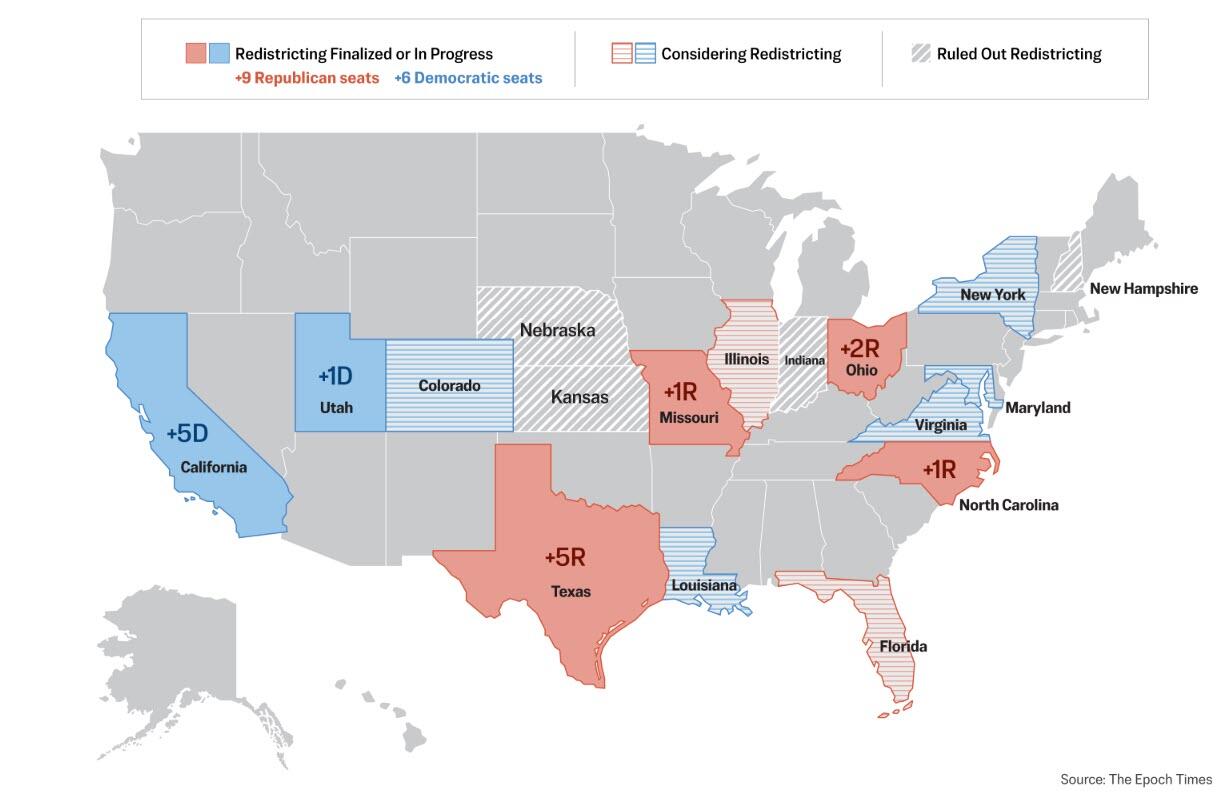
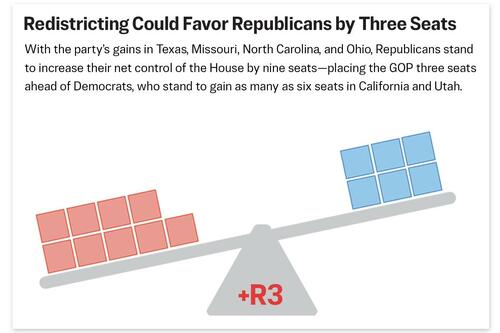
A spate of redistricting efforts began earlier this year when Texas approved a map that would grow Republicans’ control of the state’s House delegation. California then responded in kind, approving a map to increase Democrats’ control by the same margins.
Since then, a flurry of other states have finalized redistricting, are moving toward doing so, or are considering proposals.
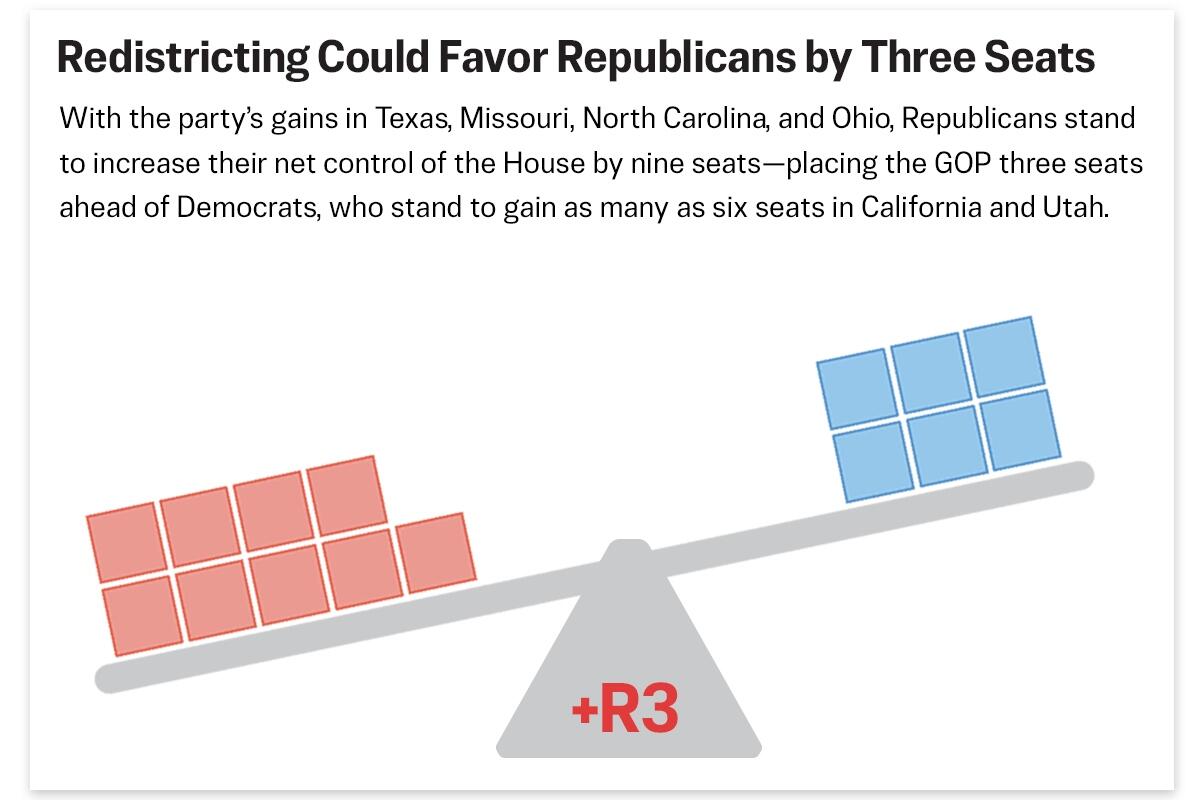
As things stand, Republicans enjoy a slight advantage, standing to gain three more seats than Democrats.
Here’s a breakdown of which states have been doing what, how the math works, the local legal challenges and politics, and what it might mean for the midterms.
States That Have Redistricted Their Maps
Texas
The Lone Star State added five new Republican-leaning districts in response to a letter from the Department of Justice alleging that some districts in the state were unconstitutionally drawn by grouping minorities into a majority. President Donald Trump signaled his support for the state’s redistricting.
The redistricting was not without a battle, though. State Democrats at one point left Texas to prevent a quorum in the state legislature.
The new map prompted Rep. Lloyd Doggett, a Democrat, to announce his retirement.
SEAT CHANGE: R+5
California
Voters approved a ballot measure on Nov. 4 to counter Texas’s changes, adding five new Democratic-leaning districts in line with a request from California Gov. Gavin Newsom.
The measure, Proposition 50, garnered 64.6 percent support from the state electorate.
Proposition 50 is the subject of a lawsuit by the California Republican Party. The Department of Justice has joined the suit.
SEAT CHANGE: D+5
Missouri
A newly drawn map in the state could help the GOP pick up an additional seat.
Gov. Mike Kehoe signed off on the new map in September after the state legislature approved it.
“Missourians are more alike than we are different, and our values, across both sides of the aisle, are closer to each other than those of the congressional representation of states like New York, California, and Illinois,” he said at the time.
The seat targeted belongs to Rep. Emanuel Cleaver (D-Mo.).
The St. Louis seat, held by Rep. Wesley Bell (D-Mo.), is protected under the Voting Rights Act.
SEAT CHANGE: R+1
North Carolina
Likewise, North Carolina’s new map—approved by the legislature in October—could give the GOP an additional seat.
Although the state has voted for Trump and Republicans in most elections in recent years, North Carolina is often considered a swing state.
Currently, the GOP controls 10 of the state’s 14 congressional seats.
Only one of those seats, held by Rep. Don Davis (D-N.C.), is a potential target. Gov. Josh Stein, a Democrat, did not have the power to veto the new map.
SEAT CHANGE: R+1
Utah
After a judge struck down the map created by Republicans after the 2020 census, the Beehive State created a new Salt Lake City-based competitive seat for Democrats.
Currently, the state’s four congressional districts are split between Salt Lake City and the outlying rural areas. Redistricting would dilute the congressional map and its lines.
Republicans are planning to appeal the decision to the Utah Supreme Court. Former Rep. Ben McAdams (D-Utah) could run for the seat.
SEAT CHANGE: D+1
States Considering Redistricting Their Maps
Colorado
Democrat gubernatorial candidate Phil Weiser, currently the Centennial State’s attorney general, expressed support for a possible constitutional amendment, which would need to be voted on by voters.
Colorado has become increasingly a safe Democratic state, with Republicans having last won the state in the 2004 election.
It is unknown which districts would be targeted, though Colorado’s congressional delegation includes four Republicans: Reps. Lauren Boebert, Jeff Crank, Jeff Hurd, and Gabe Evans.
Florida
In the Sunshine State, a special committee has been formed to take up the redistricting issue.
Gov. Ron DeSantis has expressed approval for redistricting.
“I think the state is malapportioned,” he said. “So I do think it would be appropriate to do a redistricting in the mid-decade. So we’re working through what that would look like, but I can tell you, just look at how the population has shifted in different parts of the state over a four-to-five-year period. It’s been really significant.”
Florida has shifted politically in recent years, moving from a swing state in presidential elections to a solidly Republican state.
Currently, Republicans control 20 of the state’s 28 congressional districts.
Illinois
House Minority Leader Hakeem Jeffries (D-N.Y.) has urged Democrats in the Land of Lincoln to redraw the district map.
“We are going to support efforts to make sure that there are fair maps all across the country in the face of what Republicans are endeavoring to do,” he told reporters, accusing Republicans of gerrymandering.
Gov. JB Pritzker has said that all options are on the table. This could include potentially changing Republican districts to include larger portions of blue-leaning Chicago.
In the Democrat-dominated state, Republicans hold three of the state’s 17 congressional seats.
New York
Democrat state lawmakers have suggested a constitutional amendment that would need to be approved twice by the legislature and then by voters.
Gov. Kathy Hochul has expressed support for redistricting in the solidly Democratic state.
“All’s fair in love and war. We’re following the rules. We do redistricting every 10 years,” she said. “But if there’s other states violating the rules and are trying to give themselves an advantage, all I’ll say is, I’m going to look at it closely with Hakeem Jeffries.”
Democrats currently control 19 of the state’s 26 congressional districts.
Louisiana
Lawmakers are facing court challenges to Louisiana’s current map, approved in January 2024.
Some voters brought suit against the map, claiming it violates the Voting Rights Act. The status of this challenge is in limbo as lawmakers await the federal Supreme Court’s decision, but steps have been taken to push back primary elections in case the maps need to be redrawn.
Democrats hold two of the state’s six congressional seats.
Maryland
On Nov. 4, Gov. Wes Moore launched the Governor’s Redistricting Advisory Commission to consider redrawing the state’s maps in favor of Democrats.
However, the push has faced challenges in the state Legislature, with the Democratic state Senate president rejecting the notion outright.
Rep. Andy Harris is the state’s sole Republican member.
States Moving to Redistrict Their Maps
Virginia
Following the 2025 elections, Democrats in Virginia now have a clear path to move forward with redistricting efforts in the commonwealth to favor Democratic candidates.
Gov.-elect Abigail Spanberger will enter office in January with control of the governor’s mansion, a Democratic lieutenant governor and attorney general, and 64 Democratic seats in the state’s House of Delegates.
Democrats already hold the Senate, where seats weren’t on the ballot in 2025.
Currently, Democrats control six of the state’s 11 congressional districts.
Ohio
On Oct. 31, the Ohio Redistricting Commission unanimously gave the green light to a new congressional district map put forward by the state’s GOP majority.
The new maps, if finalized, could increase the number of Republicans in the state’s congressional delegation from 10 to 12.
Ohio was legally required to change its maps ahead of the 2026 election because the previous maps were only valid for four years, given that they had failed to win bipartisan support following the 2020 census.
Democrats see the current map under consideration as their best option to avoid a potentially worse outcome.
States That Have Ruled It Out
Kansas
After pushing for months to bring Republican lawmakers on board with redrawing Kansas’s congressional maps, a push for a special session was abandoned on Nov. 4.
Republicans failed to garner enough support among state House Republicans to redraw the maps, which currently give Republicans 3 seats to 1 for Democrats.
House Speaker Dan Hawkins announced that there were not enough votes in the state’s lower chamber to warrant convening a special session in November, meaning that the issue has, at least for the time being, been ruled out in the state.
Nebraska
Although Gov. Jim Pillen has said he’s “open” to redrawing the maps, lawmakers in Nebraska’s state legislature don’t share his stance.
Such a redraw would doubtless seek to shore up GOP support in outgoing Rep. Don Bacon’s (R-Neb.) Omaha-based district. But at present, there is too much GOP opposition in the state’s unicameral legislature to move forward with any such bid.
At present, any push to redraw the state’s maps seems to have far less than the 33 votes that would be needed to overcome a potential filibuster.
New Hampshire
Gov. Kelly Ayotte has said now is not the time to redistrict.
“The timing is off for this, because we are literally in the middle of the census period,” she said in an interview with WMUR. “And when I talk to people in New Hampshire … it’s not on the top of their priority list.”
Though Republicans have enjoyed victories on a local level in New Hampshire, the New England swing state has consistently voted with its neighbors in favor of the Democratic Party at the federal level.
Democrats currently control the state’s two congressional districts as well as the state’s two Senate seats.
Indiana
The Trump administration’s efforts to persuade Indiana to redraw its maps hit a major roadblock on Nov. 14. State Senate President Pro Tem Rodric Bray said in a statement that the votes are not there to change the Hoosier State’s congressional map.
“Over the last several months, Senate Republicans have given very serious and thoughtful consideration to the concept of redrawing our state’s congressional maps,” he said. “Today, I’m announcing there are not enough votes to move that idea forward, and the Senate will not reconvene in December.”
Tyler Durden
Sat, 11/15/2025 – 18:40

October Foreclosure Filings Jump 20% YoY
October Foreclosure Filings Jump 20% YoY
Last month we noted that US foreclosure filings jumped 17% in Q3 of 2025 vs. Q3 2024, with Florida, Nevada, South Carolina, Illinois and Delaware leading the pack, based on research by ATTOM.
Now, ATTOM is reporting a 20% monthly spike in October vs. 2024 – marking the eighth straight month of YoY increases.
Breaking it down:
There were 36,766 US properties with some type of foreclosure filing in October, which include notices of default, scheudled auctions, or bank repossessions – a 3% rise over September of this year, and a 19% jump vs. Oct. 2024.
Foreclosure starts – the initial phase of the process, were up 6% vs. September and were 20% higher than October 2024.
Completed foreclosures – the final phase, jumped 32% YoY for October.
That said, Attom CEO Rober Barber doesn’t think it’s a big deal.
“Even with these increases, activity remains well below historic highs. The current trend appears to reflect a gradual normalization in foreclosure volumes as market conditions adjust and some homeowners continue to navigate higher housing and borrowing costs,” said Barber.
Similar to last month’s report, Florida, South Carolina and Illinois led the nation in state foreclosure filings. City-wise, the following metro areas led the pack:
Tampa, FL
Jacksonville, FL
Orlando, FL
Riverside, CA
Cleveland, OH
When it comes to completed foreclosures, Texas, California and Florida had the most – suggesting that those states will see more inventory available for sale at distressed prices. As CNBC notes, there’s strong demand for houses in these price ranges, so it’s likely that those foreclosed properties won’t last long on the market.
Putting things in perspective
All of the above translates to less than 0.5% of mortgages in foreclosure. At the peak of the Great Recession, over 4% of mortgages were in foreclosure – so we have a ways to go, and are currently well below the historic average of between 1% and 1.5%.
Also right now, 4% of mortgages are delinquent, which as 12% at the peak of the financial crisis.
What is concerning are FHA loans:
“So, no foreclosure tsunami to worry about,” said Rick Sharga, CEO of CJ Patrick Co., a real estate market intelligence firm. “That said, there are a few areas of concern. [Federal Housing Administration] delinquencies are over 11%, and account for 52% of all seriously delinquent loans; we’re likely to see more FHA loans in foreclosure in 2026.”
Sharga also pointed out that states which are experiencing falling home prices with rising insurance premiums are seeing an uptick in defaults.
At the end of the day, in most major metros – anyone looking to buy a home is still better off renting that same home for a fraction of the mortgage, property tax, and maintenance – with the wildcard of course being the potential for capital appreciation.
Update: As ZeroHedge reader Montana Cowboy notes in the comments below – it’s even worse than that…
The real problem arrives when the lender becomes the owner. This happens when the lender’s demand exceeds the highest bid.
A foreclosure is not automatically a process where the lender becomes the owner. A foreclosure is a forced public sale. The lender makes the first bid for the amount owed, which includes missed payments, unpaid property tax, forced insurance, foreclosure costs, and other costs. It typically comes to about 110% of the loan balance but can dramatically exceed that amount if the lender stalls. If there is no cash buyer for that total amount, the lender is the highest bidder and becomes the owner.
The fun really starts when the lender becomes the owner. GAAP and FAFSA accounting rules permit that lender to hide the loss by presuming the value of the property exceeds the lender’s investment. Once the lender re-sells that property, there is no way to hide the loss on the lender’s books. This is why lenders delay foreclosures, sometimes for years. They don’t want to start the process because they know where it ends. It gets worse if the market is declining. Foreclosures accelerate that decline by increasing supply.
The foreclosures reflected in the article do not account for loans in trouble where the initial step of foreclosure (a Notice of Default) is being deliberately delayed. Things are much worse than this article shows.
Let’s Compare
Take a $2.2 million home in San Diego, for example… Someone with excellent credit will pay $13,859 per month when you include taxes, HOA, and home insurance, and cough up $439,000 for the 20% down payment.
If interest rates drop to 4%, you’re still paying $11,480 per month…
Meanwhile, this almost identically sized house around the corner (literally) rents for $6,200 / month – which is $7,659 less per month than the mortgage (or $91,908 less per year) and includes a landlord to pay for that broken washing machine or whatever, plus you can bail when the neighbor kid drops a 2000W stereo in his Acura you can hear from 3 blocks away coming home from his Drakkar Noir-drenched attempt to get laid in the Gaslamp (did not get laid).
Either way you’re paying for a McMansion on a postage stamp.
Tyler Durden
Sat, 11/15/2025 – 18:05
https://www.zerohedge.com/personal-finance/october-foreclosure-filings-jump-20-yoy

From Nukes To AI-Powered Drones: Saudi Arabia’s MbS Bringing Wishlist To D.C. Next Week
From Nukes To AI-Powered Drones: Saudi Arabia’s MbS Bringing Wishlist To D.C. Next Week
Saudi Arabia’s Crown Prince Mohammed bin Salman wants a defense deal that outshines Qatar’s, AI chips and AI-powered drones, and potentially, American nuclear weapons stationed in his country.
The wishlist reveals the confidence of a leader who arrives in Washington on Monday, having withstood pressure to normalize ties with Israel amid alleged genocide in Gaza. Then over the summer, he emerged unscathed, if not relatively stronger, by sitting out a direct war between Israel and Iran. On the opposite side of the aisle is a US president willing to put up his country’s crown jewels for negotiation: nuclear and AI technology.
The success of the crown prince’s visit will be a reflection of President Donald Trump’s core instinct to bypass the American security establishment’s concerns about China and safeguarding US technology in exchange for racking up foreign sales from one of the world’s few major economies that has the cash at hand, despite stretched budgets, to splash big.
There was a time when Middle Eastern leaders came to the White House to discuss deals that basically just kept Boeing and Lockheed Martin humming. The shah of Iran, with his encyclopedic knowledge of weapons systems, was notorious for such visits. But experts say Mohammed bin Salman’s sophisticated shopping list reflects his view of a much more mature and forward-thinking kingdom.
“MBS is not looking for cooperation in a single area, but to strengthen US-Saudi cooperation in the long term. That is a two-way flow of technology and trade,” Ayham Kamel, Middle East president at Edelman Public and Government Affairs, told Middle East Eye.
“Saudi Arabia still wants to be part of a multipolar world order, but it is pivoting to take advantage of its closeness to Trump,” he added.
Nukes and defense agreement
One of the areas to watch, experts say, is a Saudi push to be included under the US’s nuclear umbrella. Days after Israel attacked Hamas negotiators in Qatar, Saudi Arabia signed a defence pact with Pakistan, the only nuclear-armed state in the Muslim world. Pakistan is estimated to possess around 170 nuclear warheads. Saudi and Pakistani descriptions of the deal said it encompassed all military options.
The Americans’ nuclear talks with Saudi Arabia have been kept under tight wraps, but one former US intelligence official said the idea of extending protection to the kingdom could serve a purpose.
“It would pull them [the Saudis] out of the Pakistanis’ nuclear umbrella and make the Saudis feel better than the Qataris,” he said. “I think we should look for some language next week that points to Saudi Arabia being linked to the US nuclear arsenal,” the former official said.
MEE reported previously that the Trump administration gave its approval for the Israeli attack on Qatar. The decision discredited the decades-old foundation of the US’s status as the security guarantor of the oil-rich region.
But for Saudi Arabia, that image started to fray as early as 2019 when Iran attacked its Aramco oil facilities. The first Trump administration refused to retaliate against Tehran or its allies, the Houthis, whom Saudi Arabia was fighting at the time. “The memory of September 2019…still looms large,” Hesham Alghannam, a Saudi defence analyst in Riyadh, said at an event hosted by the Arab Gulf States Institute in Washington on Wednesday.
In a bid to mend ties with Doha after the Israeli attack, Trump signed an executive order that guarantees Qatar’s security and says the US will regard any attack on the Gulf state as a threat to its own “peace and security”. Few officials in Washington or the Gulf put much stock in the pledge. Unlike the US’s treaty commitments to Japan and South Korea, executive orders can be revoked at any time, and incoming governments may not honour them.
Experts say Saudi Arabia wants something stronger, with the knowledge that it will not get a Senate ratified treaty. “Riyadh is not seeking symbolic protection. It wants a credible and clear defense arrangement. Not MOUs with no action plan. Something more than the partial offers the kingdom is getting now,” Alghannam added.
Saudi Defense Minister Prince Khalid bin Salman and national security adviser Musaad al-Aiban were in Washington earlier this week to iron out the potential defense pledge. Before he has even landed in Washington, one of the successes of the crown prince’s visit has been the Saudi’s ability to disentangle bilateral deals with the US from Israel, experts say.
The US and Saudi Arabia had been discussing a Senate ratified defence treaty as part of a quid pro quo for Riyadh to normalize ties with Israel.
Before Trump visited the kingdom in May, Saudi Arabia had pre-negotiated the talking points to make sure normalisation was not on the agenda, MEE was the first to reveal. Despite a fragile ceasefire holding in Gaza now, and Trump’s claim that Riyadh will normalise ties with Israel before the year’s end, western and Arab diplomats tell MEE that Saudi Arabia is just as reluctant to return to those discussions.
In addition to a ceasefire, the kingdom wants to see steps towards the creation of an independent Palestinian state, something Israel is loath to agree on.
Can Saudi Arabia enrich uranium?
Saudi Arabia and the US were also in talks about reaching an agreement on civilian nuclear energy as part of a reward for Riyadh to establish ties with Israel.
Those talks are still on – even if normalization is off the agenda. US Energy Secretary Chris Wright visited Saudi Arabia in the spring to discuss cooperation in nuclear technology.
While Trump considers the Abraham Accords a key success of his foreign policy, he is also seeking business deals. The allure of US companies like Westinghouse and Bechtel, which build nuclear reactors and the infrastructure to support them, profiting from a nuclear deal with Saudi Arabia, may be enough to overcome sidelining Israel, experts say.
In 2009, the UAE signed a so-called 123 agreement by which they promised not to enrich uranium in order to receive US permission to start a civilian nuclear program.
The crown prince and his advisors have pushed for a deal that will allow them to enrich uranium, which they say the kingdom holds vast reserves of. “We will enrich it and we will sell it and we will do a ‘yellowcake’,” Saudi Energy Minister Prince Abdulaziz bin Salman said at the start of the year, referring to a step in the process that comes after mining, but before enrichment.
“Not enriching would be a major concession by the Saudis. It’s an economic issue because the Saudis know they can make more money off their uranium by enriching themselves instead of exporting it. But it is also a matter of national pride. The question is, if they don’t enrich, what is their pay-off from Trump?” a Saudi-based analyst told MEE.
Bernard Haykel, a professor at Princeton, said at the Arab Gulf States Institute event that the trade-off could be nuclear weapons. “I suspect for now that they will give up on enrichment and processing, but they will want a nuclear umbrella protection from the US,” Haykel said. “Which may involve the deployment of US nuclear weapons systems on Saudi soil.”
Gregory Gause, a visiting scholar at the Middle East Institute think tank in Washington, told MEE: “Historically, we have had nuclear weapons stationed all over the place. It doesn’t require Congress to approve the stationing of nuclear weapons in Saudi Arabia.”
“We also have nuclear-armed submarines that can go anywhere in the world. Trump could just say we will commit to nuclear-armed submarines patrolling the Indian Ocean.”
Will Saudi Arabia get F-35s?
Saudi Arabia is bringing 1,000 officials on 18 planes to Washington for the visit, a US official briefed on the preparations told MEE. Monday will mark the first time since 2018 that Crown Prince Mohammed bin Salman will visit the White House.
Seven months after that trip, he ordered the killing of Washington Post columnist Jamal Khashoggi, triggering a torrent of criticism by human rights groups and former US President Joe Biden when he was campaigning for office. Riyadh’s ties to the US were strained during the Biden administration’s early days, but by 2022, they recovered, in part because the US needed Saudi energy after it sanctioned Russia in response to its invasion of Ukraine.
Crown Prince Mohammed bin Salman emerged from that rupture in a much stronger position. He sought a truce with the Houthis in Yemen and has patched up ties with Iran. The crown prince moved out of isolation long ago. This visit, experts say, is about consolidating the raft of deals that the US and Saudi Arabia committed to when Trump visited the Gulf in May.
The two announced $142bn in defense sales. At the time, MEE revealed that F-35s, stealthy fifth-generation fighter jets, were part of the prospective agreement. Reuters reported last week that the sale could include up to 48 F-35s.
Some US and Israeli officials have been concerned about the sale for months, as MEE and others have reported. Israel is the only country in the Middle East to operate the F-35, which it views as a key part of its qualitative military edge against its neighbours.
Plans to sell F-35s to the UAE as part of its establishment of diplomatic ties to Israel stalled during the Biden administration over concerns that China could gain access to the technology. US officials have been raising those concerns about Saudi Arabia for months also, current and former US officials tell MEE.
Richard Aboulafia, an aerospace expert at Aerodynamic Advisory, said if the deal went through, they wouldn’t start getting deliveries until three or four years from now, as they would be behind several European countries that have already placed orders.Aboulalafia said concerns about maintaining Israel’s qualitative edge have been a perennial issue in warplane sales to Saudi Arabia.
In the 1990s, the US sold the kingdom F-15S strike eagle warplanes with downgraded radars and inferior electronics countermeasures, in part to appease pro-Israel lobbying groups. “The Israelis will be a little concerned, but usually, that is addressed because Israel gets technological rights to enhance their stuff, that the Saudis do not get,” Aboulalafia said.
“The F-35 is also, to a far greater extent than any other aircraft, vulnerable to a kill switch,” he added, meaning that the US can remotely disable the warplanes.
President Trump is planning a formal dinner for Saudi Crown Prince Mohammed bin Salman during his trip to Washington, a man the U.S. intelligence community concluded approved the killing and dismemberment of Post opinion columnist Jamal Khashoggi. https://t.co/TCT4hzLLtW
— The Washington Post (@washingtonpost) November 14, 2025
Israel itself has pioneered advancements on the F-35 with the US’s support. Israel modified its version of the warplane, the F-35I Adir, to carry external fuel compartments without compromising on its stealthy features, MEE reported. That modification allowed Israel to fly the F-35s thousands of miles round-trip to Iran, without refuelling, during its surprise attack on Iran in June.
Alghannam, the Saudi analyst, told the Arab Gulf States Institute that this is the kind of cooperation, what he called “the localisation of content”, is what Saudi Arabia is really seeking from Trump. He said, “without US assistance”, Saudi Arabia’s state-owned weapons manufacturer, Saudi Arabian Military Industries, could not become a “serious” player in the industry.
Drones to data centres: Saudi Arabia’s AI agenda
In addition to F-35s, the US and Saudi Arabia have been discussing the sale of hundreds of MQ-9 Reaper drones. However, defense industry insiders and officials say that the kingdom is becoming more selective, and the space to watch for deals during this visit is with smaller defense players.
Saudi Arabia has been in talks with Shield AI, a US start-up whose AI-supported V-Bat drone is operating in Ukraine. The company is also working on a so-called vertical takeoff drone that carries both air-to-air and air-to-surface weapons.
“Riyadh is a big area of interest,” one person briefed on the discussions told MEE. “The Saudis are looking at mid-sized drones. They want Collaborative Combat Aircraft that can fly alongside warplanes, and they want drones suitable for maritime surveillance.”
Like its smaller neighbor, the UAE, Saudi Arabia is also eying American AI chips. In May, Nvidia announced plans to sell thousands of its advanced Blackwell chips to Humain, an AI firm owned by Saudi Arabia’s $1 trillion Public Investment Fund.
The kingdom is pitching itself as an AI hub with cut-rate electricity prices to power data centers. Humain is building data centres from Riyadh to Dammam, which it says will have 6.6 gigawatts of capacity by 2034. Saudi AI company Datavolt is building a $5bn data center on the kingdom’s Red Sea coast.
While AI deals were announced with fanfare during Trump’s visit to the kingdom in May, the delivery of chips has stalled, with no public announcements. Some US officials have raised concerns that China could gain access to the US’s AI technology in Saudi Arabia. The crown prince is expected to push for progress on the deals in Washington.
Tyler Durden
Sat, 11/15/2025 – 17:30
Labor Demographer Issues Warning: College-Educated Oversupply Is Here
Labor Demographer Issues Warning: College-Educated Oversupply Is Here
Goldman analysts led by Evan Tylenda published a note on emerging labor-market risks and how companies are adapting to aging demographics and shrinking labor pools.
One section stood out in particular: the widening mismatch between an oversupply of college-educated workers and a deepening shortage of talent for non-degree, hands-on jobs.
Tylenda and others on the team spoke with labor demographer Ron Hetrick, who outlined how the U.S. labor market is entering a structural slowdown driven by aging demographics, a falling birth rate, and weakening participation among older workers.
Hetrick outlined that baby boomers once supplied 65 million workers, but only 25 million remain, and no younger generation is large enough to replace them.
He noted that BLS data show the workforce adding just 5.9 million workers by 2034, with nearly half of that coming from workers aged +65, even as participation among those +55 continues to decline.
Here’s where things get spicy: This demographic squeeze is creating a skills imbalance: an oversupply of college-educated workers and a shortage of vocational and lower-skilled labor for non-degree jobs.
From the note:
Shortage of skilled / technical labor: The Demographic Dilemma and resulting labor shortages make automation and AI success essential while simultaneously threatening to constrain AI’s physical scale-up via potential skilled labor shortages. The emerging bottlenecks lie in power generation, transmission and grid modernization, and upstream industries required for electrification and digitization such as manufacturing, and critical minerals mining and processing — industries with long project cycles, high regulatory friction, and limited talent mobility from displaced knowledge-worker pools.
Shortage of low-skilled labor in high turnover industries: where recent graduates and knowledge workers displaced by AI are imperfect fits. This is driving rising automation for low-skilled jobs, driven by rising costs, declining labor pools. For example, the U.S. added 4.5 mn workers with a college degree since 2019, while losing 800k workers without a degree. Automation in low-skilled roles (especially ones with repetition) has potential to help improve worker safety and pay for remaining workers, potentially driving lower employee turnover in the medium to long term.
We hosted Ron Hetrick, a labor demographer, to highlight the structural issues forming for labor markets in the U.S. coming from declining labor pools, particularly in lower skilled fields not requiring a degree. Mr. Hetrick sees mounting challenges for the aging and declining workforce in the U.S., with industries like Healthcare and Construction most exposed to disruption, driven by limited availability of labor solutions.
Companies adapting, and key solutions for addressing labor challenges. Corporates, across industries, are taking different measures to remedy risk of labor shortages, mainly around 1) Automation upgrades to boost productivity and consistency; 2) Retention efforts, including increased pay, better work conditions, enhanced benefits packages, providing childcare service etc.; and 3) Training & Upskilling through the expansion of their own training infrastructure and partnerships with external institutions.
ZeroHedge Pro subscribers can read the complete note in the usual spot. It’s loaded with far more detail on the shifting labor market, a framework that’s increasingly important to understand before the 2030s arrive.
The most appropriate way to end the note is an epic quote by Palantir CEO Alex Karp:
The average Ivy League grad voting for this mayor is annoyed their education is not that valuable, and that the person who knows how to drill for oil has a more valuable profession.
I think that annoys the f*ck out of these people.
Palantir CEO Alex Karp on Zohran Mandani:
“The average Ivy League grad voting for this mayor is annoyed their education is not that valuable, and that the person who knows how to drill for oil has a more valuable profession”
“I think that annoys the fuck out of these people” https://t.co/uYA54AYAJN pic.twitter.com/46XmHSB1gb
— Jawwwn (@jawwwn_) November 6, 2025
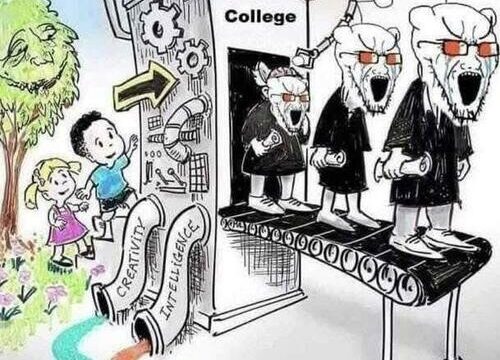
These days, college is a woke indoctrination factory pumping out our purple-haired creatures who are confused about their gender and rave about Marxism.
College is not like it used to be. There is an oversupply of unproductive “woke” degrees. Don’t be woke. Be productive, find a solid trade job that won’t be automated into extinction by 2030, and start a family; this is one pathway for GenZers.
Tyler Durden
Sat, 11/15/2025 – 16:55
https://www.zerohedge.com/markets/labor-demographer-issues-warning-college-educated-oversupply-here

All SNAP Beneficiaries Will Need To Reapply For Benefits: Agriculture Secretary
All SNAP Beneficiaries Will Need To Reapply For Benefits: Agriculture Secretary
Authored by T.J.Muscaro via The Epoch Times,
Agriculture Secretary Brooke Rollins suggested on Nov. 14 that everyone registered for the federal government’s Supplemental Nutrition Assistance Program (SNAP) benefits should reapply as a result of ongoing fraud discoveries.
At least, that is what she said when she shared what the Trump administration was planning to enact during her appearance on Newsmax’s “Rob Schmitt Tonight.”
“It’s going to give us a platform and a trajectory to fundamentally rebuild this program, have everyone reapply for their benefit, make sure that everyone that’s taking a taxpayer-funded benefit through SNAP or food stamps, that they literally are vulnerable, and they can’t survive without it,” she said.
This decision comes after Rollins disclosed on X that the U.S. Department of Agriculture (USDA) discovered that nearly 200,000 deceased people across 29 states received benefits.
The remaining 21 states sued to keep their data from being disclosed, according to the post.
The states that chose not to cooperate were mostly Democratic-run states.
More than 500,000 people were registered twice, she revealed.
She also said that the program experienced a 40 percent increase under the Biden Administration.
About 42 million people, or one in eight Americans, use the federal food program, and they receive $177 per person per month, on average, according to the latest USDA data.
Rollins, in an earlier interview, said that 80 percent of people using the program were able to work and described SNAP as one of the “most corrupt, dysfunctional programs” in U.S. history.
Those who choose to reapply would have to verify that they could not survive without it, she said. She also argued that the cutoff of some SNAP benefits would also incentivize more illegal immigrants to self-deport.
“In just the states that cooperated, we’ve already uncovered massive fraud,” Rollins said on X at the beginning of November.
“The Democrat Party has turned its back on working Americans and built its entire strategy around protecting illegal aliens. They know if the handouts stop, those illegals will go back home, and Democrats will lose 20+ seats after the next census.”
“There’s a new sheriff in town. @POTUS will not tolerate waste, fraud, or abuse while hardworking Americans go hungry,” she wrote.
SNAP beneficiaries became a poignant topic after the USDA ran out of funding for the program during the record-long government shutdown. Distribution of benefits was ordered to resume immediately after President Donald Trump signed a continuing resolution to keep the federal government funded through the New Year.
“The reduction in maximum allotments for November is no longer in effect,” the USDA said on Nov. 13. “State agencies should immediately resume issuing combined allotments for November and December for newly certified applicants who apply after the 15th of the month.”
Tyler Durden
Sat, 11/15/2025 – 16:20
“Incandescent Rage”: Far-Left Nonprofit Head Furious Over Democrats Caving To Trump And Ending Shutdown
“Incandescent Rage”: Far-Left Nonprofit Head Furious Over Democrats Caving To Trump And Ending Shutdown
Ahead of the Democratic Party’s government shutdown, the billionaire-funded, far-left activist group Indivisible – the nonprofit partially responsible for color-revolution-style operations aimed at derailing President Trump and the America First agenda at every turn – posted a frantic call to action on its website, urging its white liberal boomer supporters to pressure Senate Minority Leader Chuck Schumer (D-N.Y.) and other Democratic senators to hold the line and not cave to President Trump.
After the record-breaking 43-day government shutdown, Democrats embarrassingly caved to President Trump, and the government reopened on Wednesday.
Shortly after the Democrats caved, the unhinged millennial founder of Indivisible, Ezra Levin, joined leftist white boomer journalist Jennifer Rubin in a video conversation to express his profound frustration and “incandescent rage” over the Democratic Party’s capitulation to Trump.
Levin described it as a complete surrender that caused unnecessary pain without gaining meaningful concessions.
To note: Democrats tried to divert attention from their shutdown failure by releasing Epstein emails on the same day President Trump reopened the government. The email dump backfired on the party of far-left radicals.
The millennial activist expressed to Rubin about the urgent need for strong party reforms through primaries (particularly targeting Chuck Schumer).
This is nutjob Jennifer Rubin talking with one of the Indivisible idiots about the democrat’s caving to open the government.
I knew the progressive wingnuts were behind the shutdown because they threatened Schumer in March.
Now they are working to totally rid the Democratic… pic.twitter.com/xXuy5R2FLp
— The Researcher (@listen_2learn) November 14, 2025
The overall tone of the conversation, highly critical of Democratic capitulation, highlights how the woke party is absolutely rudderless.
New leadership?
AOC attempts to explain that Mamdani supporters aren’t crazy: “We are sane!” pic.twitter.com/0Q9NowpIvK
— Western Lensman (@WesternLensman) October 27, 2025
Only the people who insist they’re “not crazy” tend to be the crazy ones.
Tyler Durden
Sat, 11/15/2025 – 15:45